

Executive Summary
The Crisis
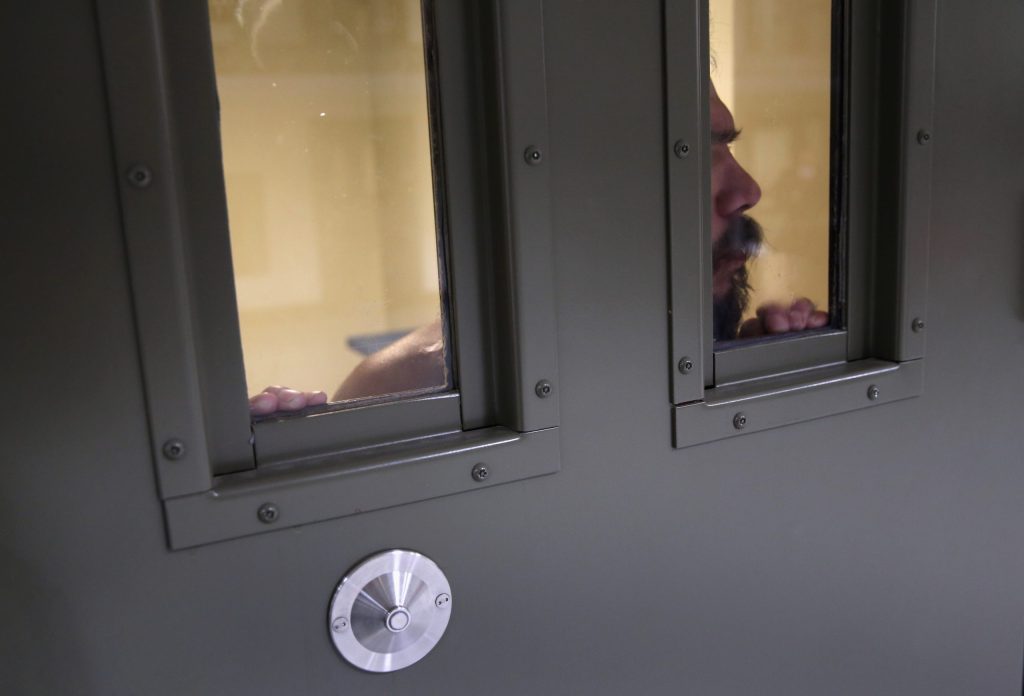
The United States maintains the world’s largest immigration detention system, detaining an average daily population of nearly 60,000 people in immigration detention.¹ U.S. Immigration and Customs Enforcement (ICE) detains people in a network of facilities across the country where they often endure inhuman conditions, including solitary confinement.² Solitary confinement is the practice of isolating people in small cells without meaningful human contact for 22 hours or more per day.³
Over the past decade, the use of solitary confinement in immigration detention has risen at an alarming rate, with unprecedented numbers of immigrants held in isolation.⁴ Congress recently authorized a significant increase in funding to expand immigration detention, which will likely exacerbate this widespread, prolonged use of solitary confinement as detention capacity increases.⁵
The effects of prolonged solitary confinement can be lethal, as in the case of Charles Leo Daniel, who died after spending more than 13 years of his life in solitary confinement in various detention settings, including almost four years in solitary confinement in ICE detention.⁶ The adverse health effects of solitary confinement are well-established, extensively researched, and thoroughly documented across decades of literature,⁷ including post-traumatic stress disorder, self-harm, elevated suicide risks, lasting brain damage, and hallucinations.⁸ These effects often persist beyond the confinement period, resulting in enduring physical and psychological disabilities, especially among people with preexisting medical and mental health conditions.⁹ Vulnerable populations, including those with medical and mental health conditions, are often subjected to solitary confinement at high rates despite ICE’s own directives mandating its use as a last resort.¹⁰
Key Findings
This report, “Cruelty Campaign: Solitary Confinement in U.S. Immigration Detention,” authored by faculty and students from Harvard Law School’s Empirical Research Services and the Harvard Immigration and Refugee Clinical Program (HIRCP), the Peeler Immigration Lab, and Physicians for Human Rights (PHR), provides an updated analysis of solitary confinement in U.S. immigration detention with an additional regional focus on facilities in New England. It builds on the February 2024 report, “‘Endless Nightmare’: Torture and Inhuman Treatment in Solitary Confinement in U.S. Immigration Detention,” by the same authors.¹¹
Based on publicly available ICE data and records obtained through Freedom of Information Act (FOIA) requests, “Cruelty Campaign” reveals alarming trends in the use of solitary confinement:
- Over a span of just 14 months, from April 2024 to May 2025, more than 10,500 people were placed in solitary confinement in immigration detention centers across the United States.
- In the first four months of the second Trump presidency, the monthly increase in the use of solitary confinement was twice the rate observed between 2018 and 2023, and more than six times higher than during the end of the previous administration.¹²
- On average, during the first three months of 2025, solitary confinement placements involving people with vulnerabilities lasted more than twice as long as they did in the first fiscal quarter of 2022, when ICE began reporting statistics on the solitary confinement of vulnerable populations.¹³ This increase is evident in both the average consecutive days per placement (38 days in early 2025 compared to 14 days in late 2021) and the average cumulative days per person (44 days in early 2025 compared to 20 days in late 2021).¹⁴
- Detailed analysis of facilities in New England shows that between 2018 and 2023, nearly three out of four solitary confinement placements lasted 15 days or longer, the threshold that UN human rights experts consider to be torture.¹⁵ On average, people spent about a month in solitary confinement, and some were isolated for more than a year.¹⁶
- Where mental health status was reported, almost half of the solitary confinement placements in immigration detention in New England involved individuals with reported mental health conditions,¹⁷ contrary to ICE directives requiring its use only as a last resort for vulnerable populations.¹⁸
- Notably, the average number of vulnerable individuals subjected to solitary confinement nationally increased by approximately 56 percent per quarter in fiscal year 2025 compared to 2022, with increasing numbers of individuals experiencing multiple placements.¹⁹
- Individual case analysis in New England reveals systemic use of solitary confinement for arbitrary and retaliatory purposes, including punishing people for filing grievances; requesting basic needs like showers; sharing food; or reporting sexual assault, practices that violate international prohibitions on arbitrary detention independent of duration.²⁰
Data Shortcomings
This analysis is constrained by fundamental flaws in ICE’s data collection and reporting systems.²¹ Recent independent analysis has found significant mathematical discrepancies in ICE detention data, and unexplained facility count changes.²² These systematic reporting failures mean that the findings in this report, while based on the best available data, may still underestimate the true scope of solitary confinement abuses, adding another layer to the transparency and accountability failures that advocates have documented for over a decade.
Sounding the Alarm for Years
This report adds to over a decade of persistent advocacy and research by PHR,²³ the National Immigrant Justice Center,²⁴ Solitary Watch,²⁵ whistleblowers,²⁶ and others; investigations, inquiries, and reports by government oversight bodies,²⁷ independent journalists,²⁸ and members of Congress;²⁹ briefings to high-level government officials;³⁰ and multiple congressional hearings focused on solitary confinement.³¹ The 2024 findings presented in “‘Endless Nightmare’: Torture and Inhuman Treatment in Solitary Confinement in U.S. Immigration Detention” revived congressional inquiries, media investigations, and urgency about ICE’s use of solitary confinement.³²
Leaders at the U.S. Department of Homeland Security (DHS) and ICE faced pressure to end solitary confinement altogether or, at the very least, make major changes to reduce its use, particularly among the most vulnerable people in ICE detention.³³ In December 2024, ICE introduced new reporting requirements,³⁴ representing a modest transparency improvement.
Trump Administration Escalation
Rather than implementing recommendations to protect vulnerable people and end solitary confinement, the Trump administration has doubled down on the use of detention. The “One Big Beautiful Bill Act,” signed on July 4, 2025, more than quadruples ICE’s detention budget, which amounts to $45 billion through 2029.³⁵ This massive expansion of resources for a system already characterized by torturous conditions,³⁶ combined with little to no oversight, creates the conditions for catastrophic human rights violations on an unprecedented scale.
ICE’s continued lack of transparency hinders a comprehensive assessment of solitary confinement practices in immigration detention because granular data specific to each placement is not publicly reported.³⁷ While the new reporting requirements shed additional light on the use of solitary confinement in immigration detention, publicly released national data from April 2024 to May 2025 still omit key details, including circumstances and duration of each solitary placement.³⁸
Abuse in New England Facilities
Furthermore, the analysis of New England facilities demonstrates that county and state-run facilities are critical sites for intervention by state policymakers and advocates.³⁹
This regional focus exposes harmful practices and equips policymakers and advocates with actionable insights to dismantle systems of abuse.
Immediate Action Required
ICE’s use of detention has only increased under the current administration.⁴⁰ Given ICE’s planned continued expansion of detention and escalating use of solitary confinement, immediate action is required at all levels of government.
This report presents comprehensive recommendations across multiple levels of government to end solitary confinement in immigration detention. Given significant obstacles to federal reform, state and local action has become essential. The authors make the following recommendations:
State and local governments should renegotiate contracts with ICE to assert stronger control over detention standards and accountability measures.
Federal Government:
- ICE must publicly commit to ending solitary confinement entirely through a binding directive that includes presumptive release for vulnerable populations.
- The president should immediately halt immigration detention expansion at a minimum and eliminate solitary confinement in all immigration facilities.
- Sign the UN Optional Protocol Against Torture to enable international oversight.
- Congress must defend its constitutional oversight authority against ICE’s unprecedented obstruction by passing emergency legislation to restore unannounced inspection rights, strengthen civil rights oversight mechanisms, and ratify international monitoring protocols.
State and Local Government:
- States should pass legislation eliminating or reducing solitary confinement in facilities within their borders.
- States should increase procedural protections for those placed in isolation.
- State Attorneys General should conduct regular unannounced inspections.

Cover image: In an aerial view, detained people form an “S.O.S.” while displaying a banner saying “Help we want to be deported we are not terrorists, S.O.S.,” in the courtyard at the Bluebonnet Detention Center in May 2025 in Anson, Texas. (Photo by Brandon Bell/Getty Images)
Endnotes
1 “ICE Detention Statistics,” U.S. Immigration and Customs Enforcement, https://www.ice.gov/detain/detention-management (last accessed August 15, 2025) [hereinafter “ICE Detention Statistics”]. According to ICE there were 59,380 people in immigration detention as of August 10, 2025. ICE Detention data excludes Office of Refugee Resettlement transfers/facilities, as well as U.S. Marshals Service prisoners.
2 See generally Harvard Immigration and Refugee Clinical Program, Peeler Immigration Lab, Physicians for Human Rights,“‘Endless Nightmare’: Torture and Inhuman Treatment in Solitary Confinement in U.S. Immigration Detention” (2024)[hereinafter “Endless Nightmare”]; National Immigrant Justice Center, Physicians for Human Rights, “Invisible in Isolation”(2012) [hereinafter “Invisible in Isolation”].
3 The United Nations Standard Minimum Rules for the Treatment of Prisoners, Rule 44 (2015), https://www.unodc.org/documents/justice-and-prison-reform/Nelson_Mandela_Rules-E-ebook.pdf [hereinafter “Mandela Rules”]. ICE maintains that they do not use solitary confinement but rather “segregation.” However, ICE “segregation” allows for people to be detained alone in a small cell for at least 22 hours a day, meeting the generally accepted definition of solitary confinement. See, e.g., “ICE Needs to Improve its Oversight of Segregation Use in Detention Facilities,” Dept. Homeland Sec. Office of Inspector General (2021) (https://www.oig.dhs.gov/sites/default/files/assets/2021-10/OIG-22-01-Oct21.pdf) [hereinafter “2021 DHS OIG Report”].
4 “The Solitary Confinement Crisis in Immigration Detention,” 25 Nev. L.J. 617 (2025) at 619 (https://scholars.law.unlv.edu/cgi/viewcontent.cgi?article=1968&context=nlj#page=26&zoom=auto,-47,750) (documenting over 7,000 immigrants placed in solitary from April 2024 to February 2025, surpassing the total of 3,775 placements recorded during the entire year of 2023).
5 See, e.g., “Immigration Challenges and Concerns in Implementing the ‘One Big Beautiful Bill,’” American Immigration Council, https://www.americanimmigrationcouncil.org/blog/immigration-challenges-implementing-the-one-big-beautiful-bill/ (July 15, 2025).
6 “Charles Leo Daniel’s Death in NWDC in Context,” University of Washington Center for Human Rights, https://jsis.washington.edu/humanrights/2024/03/15/nwdc-conditions-research-update-daniel-death-in-context/ (March 15, 2024); seealso Nina Shapiro, “Immigrant who died in ICE custody spent 13 years in solitary — many in WA prisons,” The Seattle Times (April 4, 2024), https://www.seattletimes.com/seattle-news/immigrant-who-died-in-ice-custody-spent-13-years-in-solitarymany-in-wa-prisons/.
7 Peter Scharff Smith, “The Effects of Solitary Confinement on Prison Inmates: A Brief History and Review of the Literature,” 2006, 34(1) Crime and Justice 441, https://doi.org/10.1086/50062; Louis Favril, Rongqin Yu, Keith Hawton, and Seena Fazel, “Risk factors for self-harm in prison: a systematic review and meta-analysis,” (August 2020). The Lancet Psychiatry 7 (8): 682-691. doi: 10.1016/S2215-0366(20)30190-5
8 Christopher Wildeman and Lars H. Andersen, “Solitary confinement placement and post-release mortality risk among formerly incarcerated individuals: a population-based study,” The Lancet no. 5, (February 2020): e107 to e113, https://doi.org/10.1016/S2468-2667(19)30271-3.
9 Lauren Brinkley-Rubinstein, et al. “Association of Restrictive Housing During Incarceration with Mortality After Release,” 2(10) JAMA Network Open (2019), doi:10.1001/jamanetworkopen.2019.12516.
10 Caitlin Patler, Altaf Saadi, and Paola Langer, “The health-related experiences of detained immigrants with and without mental illness,” Journal of Migration and Health 11 (2025): 100302, https://doi.org/10.1016/j.jmh.2025.100302; Endless Nightmare; U.S. Immigration and Customs Enforcement, 11065.1, “Review of the Use of Segregation for ICE detainees,” 2013 (https://www.dhs.gov/sites/default/files/publications/segregation_directive.pdf) [hereinafter “2013 ICE Segregation Directive”].
11 Endless Nightmare.
12 ICE Detention Statistics; Harvard Law School FOIA: Updated Spreadsheet Showing Solitary Confinement Stays Between September 4, 2018, and September 13, 2023, released by ICE on December 30, 2024 [hereinafter HLS FOIA: Spreadsheet]. On average, from April to November 2024 (before ICE changed its policy on reporting), the number of individuals reported in solitary confinement increased by one percent each month. From February to May 2025 (following the presidential inauguration), this rate increased sixfold, reaching 6.5 percent. By comparison, between September 2018 and September 2023, the number of solitary confinement placements increased by an average of 3.4 percent per month. Replication data and analysis for “Cruelty Campaign: Solitary Confinement in U.S. Immigration Detention” is available on Harvard Dataverse, https://doi.org/10.7910/DVN/45K4PC.
13 ICE Detention Statistics.
14 Id. ICE operates on a fiscal year, which runs from October 1 to September 30. The first calendar quarter of 2025 corresponds to the second fiscal quarter of 2025, and the last calendar quarter of 2021 corresponds to the first fiscal quarter of 2022. The number of consecutive days refers to the duration of each individual placement in solitary confinement, while the number of cumulative days represents the total duration of all solitary placements experienced by each individual with an identified vulnerability.
15 HLS FOIA: Spreadsheet; Mandela Rules.
16 IHLS FOIA: Spreadsheet.
17 Id. Over 44 percent of solitary confinement placements in New England facilities between 2018 and 2023, for which mental health status of the detained individual was documented, reported a mental illness.
18 See, e.g., 2013 ICE Segregation Directive.
19 ICE Detention Statistics. On average, 265 individuals with vulnerabilities were reported in solitary confinement each quarter in fiscal year 2022, compared to 413 each quarter in fiscal year 2025.
20 The Mandela Rules; United Nations, International Covenant on Civil and Political Rights, Articles 9 and 10, Office of the High Commissioner for Human Rights (last accessed August 13, 2025), https://www.ohchr.org/en/instruments-mechanisms/ instruments/international-covenant-civil-and-political-rights; Convention Against Torture and Other Cruel, Inhuman or Degrading Treatment or Punishment, arts. 1 and 16; Inter-American Commission on Human Rights, Principles and Best Practices on the Protection of Persons Deprived of Liberty in the Americas (2008).
21 See, e.g., 2021 DHS OIG Report, Endless Nightmare
22 See “ICE Can’t Add: Recent Data on Detention Facilities Hogwash,” TRAC Reports, Inc. (July 18, 2025), https://tracreports.org/whatsnew/email.250718.html. For example, ICE reported 56,816 detained individuals nationally in July 2025, yet the sum of facility-level average daily population (ADP) figures amounted to 42,221, a discrepancy of nearly 14,000.
23 Endless Nightmare.
24 Invisible in Isolation.
25 “New Fact Sheet on Solitary Confinement in Immigration Detention Warns of Growth Under Trump,” Solitary Watch (February 6, 2025), https://solitarywatch.org/2025/02/06/new-fact-sheet-on-solitary-confinement-in-immigrant-detentionwarns-of-growth-under-trump/.
26 “Immigrants, Doctors & Whistleblowers report to Congress failed mental health care and abuse in ICE detention,” National Immigrant Justice Center (September 23, 2022), https://immigrantjustice.org/press-release/immigrants-doctors-whistleblowerreport-to-congress-failed-mental-health-care-and-abuse-in-ice-detention/.
27 2021 DHS OIG Report.
28 Spencer Woodman, “ICE’s use of solitary confinement ‘only increasing’ under Biden, new report reveals,” International Consortium of Investigative Journalists (February 6, 2024), https://www.icij.org/investigations/solitary-voices/ices-use-ofsolitary-confinement-only-increasing-under-biden-new-report-reveals/.
29 “Warren Questions ICE About Reports of Misuse of Solitary Confinement at Immigration Detention Facilities,” U.S. Senator Elizabeth Warren (June 2, 2019), https://www.warren.senate.gov/oversight/letters/warren-questions-ice-about-reports-ofmisuse-of-solitary-confinement-at-immigration-detention-facilities.
30 “Immigration Detention: Actions Needed to Collect Consistent Information for Segregated Housing Oversight,” U.S. Government Accountability Office (October 2022), https://www.gao.gov/assets/gao-23-105366.pdf. [hereinafter “2022 GAO Report”].
31 See, e.g., “Ahead of U.S. Senate Hearing on Solitary Confinement, Survivors of Solitary Confinement & Allies Rallied to Urge President Biden and Congress to Enact the End Solitary Confinement Act, American Civil Liberties Union” (April 16, 2024), https://www.aclu.org/press-releases/ahead-of-u-s-senate-hearing-on-solitary-confinement-survivors-of-solitary-confinementallies-rallied-to-urge-president-biden-and-congress-to-enact-the-end-solitary-confinement-act; “Legacy of Harm: Eliminating the Abuse of Solitary Confinement: Hearing before the Comm. on the Judiciary,” 188 Cong. (2024), https://www.congress.gov/event/118th-congress/senate-event/LC74471/text; see also “Reassessing Solitary Confinement: The Human Rights, Fiscal, and Public Safety Consequences: Hearing before the Subcomm. on the Constitution, Civil Rights, and Human Rights,” 112 Cong. (2012), https://www.judiciary.senate.gov/imo/media/doc/CHRG-112shrg87630.pdf.
32 See Endless Nightmare. See also, e.g. Letter from Senator Edward J. Markey and others to Secretary Alejandro Mayorkas and Deputy Director Patrick J. Lechleitner (March 29, 2024), https://www.warren.senate.gov/imo/media/doc/letter_solitary_confinement_in_immigration_detention_32924.pdf; “Arrests, Removals, and Detentions Varied Over Time and ICE Should Strengthen Data Reporting,” U.S. Government Accountability Office (July 2024), https://www.gao.gov/assets/gao-24-106233.pdf; “[VIDEO] ‘Last Week Tonight with John Oliver’ Features PHR’s Investigations into Abuses in ICE Detention,” Physicians for Human Rights (March 9, 2025), https://phr.org/our-work/resources/video-last-week-tonight-with-john-oliverfeatures-phrs-investigations-into-abuses-in-ice-detention/.
33 Id.
34 Immigration and Customs Enforcement, Policy Number 24002, “Review of the Use of Special Management Units for ICE Detainees” (December 6, 2024), https://assets.aclu.org/live/uploads/2025/04/ICE-Special-Management-Units-for-ICEDetainees-Policy_Final.pdf, [hereinafter “2024 ICE SMU Directive”].
35 U.S. Congress. One Big Beautiful Bill Act, H.R. 1, 119th Cong., 1st sess., Public Law 119 21, enacted July 4, 2025, https://www.congress.gov/bill/119th-congress/house-bill/1/text.
36 See FN29.
37 ICE Detention Statistics.
38 Id.
39 This is reflected in evidence from a multitude of FOIA productions on file with the author that will be discussed throughout this report.
40 ICE Detention Statistics.