Since assuming office in January, the second Trump administration has actively pursued a variety of detention and deportation practices that tear parents from their children and leave them at risk of long-term, even permanent separation.
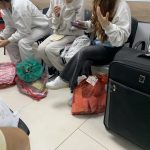
Over six days in late November 2025, the Women’s Refugee Commission (WRC) and Physicians for Human Rights (PHR) traveled to Honduras, where approximately 300 people are being returned every day, to speak with people immediately after their deportation from the United States. Our delegation spoke with service providers, doctors, psychologists, government officials, and newly arrived deported adults who had just disembarked from deportation flights. Through interviews with dozens of adults who arrived without their children, WRC and PHR learned the nature of the family separation crisis currently unfolding.
In contrast to prior years, when most deportees were individuals who had been detained while trying to cross the border, the majority of returnees with whom we spoke were longtime US residents. Many of their children are US citizens. Of the parents we spoke to, more than half had been deported without being given an opportunity to bring their children with them. Some of them described that, despite their efforts, they were unable to obtain basic information about their children’s location or care.
In some cases, we spoke with mothers who arrived in acute distress because they had been unable to speak with their children or the person caring for them. One father, who had been apprehended by US Immigration and Customs Enforcement (ICE) at work while his children were at home with a babysitter, had been able to make a telephone call while in the US to make temporary childcare arrangements. One mother, who had been deported without being given the opportunity to bring her two month-old child, a US citizen, back with her, could talk of little more than her frantic desperation to have her newborn baby back.
What we saw violates longstanding US policy to preserve family unity. Read In Parents’ Own Words: Documenting the Stories of Separated Parents in Honduras.