Executive Summary
After Hamas’ brutal October 7, 2023 attack on Israel, subsequent Israeli military operations in Gaza have caused devastation and displacement. Beginning early in the conflict, humanitarian actors and civil society raised significant concerns about the likely impact on the health and survival of pregnant women1 and infants – two groups granted specific protection during armed conflict.2 The UN Independent International Commission of lnquiry on the Occupied Palestinian Territory, including East Jerusalem, and Israel (UN COI) reviewed evidence through July 2025 and found that Israel’s attacks on facilities providing reproductive health care and restrictions on food and medical supplies were intentional and systematic and resulted in devastating harm to the reproductive capacity of people in Gaza.3
This report affirms the UN COI’s findings and presents new evidence of the continued and worsening harms of the conflict on pregnant and postpartum women and infants from January through October 2025. The report analyzes how the health impacts of (i) attacks on health care facilities, (ii) restrictions on humanitarian aid, and (iii) acute malnutrition have translated into violations of the rights of women and infants in Gaza and constitute reproductive violence in violation of international law. Finally, drawing on this evidence, the report outlines urgent recommendations to ensure that people in Gaza receive adequate medical care and nutrition assistance, accountability, and justice.
Despite these reports, throughout early 2025, Israel continued to restrict access to humanitarian aid in Gaza.4 This occurred through a complete humanitarian aid blockade from March to May 2025, the subsequent introduction of the humanitarian aid distribution mechanism, the Gaza Humanitarian Foundation (GHF). which was widely critiqued as “engineered scarcity”,5 and despite the ceasefire reached in October. Following repeated warnings issued by the Integrated Food Security Phase Classification (IPC). famine ‘with reasonable evidence’ was finally determined in Gaza in August 2025.6
Between May and June 2025, the Palestinian Ministry of Health reported a 41 percent decrease in birth rate in Gaza compared to the same time period in 2022; there was a significant increase in miscarriages that affected more than 2,600 women, and 220 pregnancy-related deaths that occurred before delivery. 7 The ministry also reported a sharp increase in premature births and low birth weight cases; over 1.460 babies were reported to be born prematurely, while more than 2,500 were admitted to neonatal intensive care. Newborn deaths also increased, with at least 21 babies reported to have died on their first day of life.8 However, due to the near-complete collapse of Gaza’s health information system after October 7, 2023, systematic data collection was severely limited, making it likely that these numbers represent a significant undercount. Even since the ceasefire was reached these conditions continue; in October 2025, UNICEF reported that they identified 9,300 children under five years of age with acute malnutrition and that 8,300 pregnant and breastfeeding women were admitted to health facilities for treatment for acute malnutrition.9
In this study, Physicians for Human Rights (PHR) and the Global Human Rights Clinic at the University of Chicago Law School (GHRC) assess the foreseeable risks to pregnancy and neonatal health posed by these developments and examine the impact of attacks on health and restrictions on food and medical supplies on women of reproductive age, including those trying-to-conceive as well as pregnant, postpartum, and lactating women, and newborns from January to October 2025 when a ceasefire was signed.
The destruction of Gaza’s health infrastructure, combined with restrictions on food and medical supplies including baby formula, has created an environment in which the fundamental biological processes of reproduction and survival have been systematically destroyed, resulting in known and foreseeable harm, pain, suffering, and death.
Analyzing 78 testimonies of international health care providers who worked in Gaza on short-term medical missions, this report documents the maternal and neonatal deaths, physical and mental suffering, and infertility experienced because of the compounded impacts of malnutrition and the inability to access reproductive health care supplies and services. To determine the foreseeability and preventability of these harms, PHR and GHRC reviewed these accounts against the record of warnings issued concerning risks to reproductive capacity as a result of the tactics of war used in Gaza, 23 reports of attacks on reproductive health care facilities in Gaza from January to September 2025,10 and the established medical literature on the known reproductive harms resulting from acute malnutrition and denial of proper prenatal and postpartum care.11
Key Findings
a. Inability to access medical care and proper nutrition harmed reproductive capacity by causing infertility, miscarriage, complications, and maternal death for women, as well as poor health outcomes for newborns
Israel’s restrictions on medical supplies in Gaza are extreme, inconsistent, and deliberately opaque, and have resulted in significant harm to reproductive services.12 A broad range of essential items, from medications to non-pharmaceutical products, have been denied under the “dual-use” designation or delayed due to unclear bureaucratic policies.13 Moreover, the food rations GHF distributed in Gaza had been characterized as far from enough to meet the basic needs of people in Gaza and did not meet minimum requirements of international humanitarian standards.14 Clinicians interviewed by PHR and GHRC reported the severe impacts oflimited access to food – including medically indicated baby formula for malnourished or premature infants – and health care on women and children in Gaza. These clinicians described increased maternal and neonatal deaths, life-threatening complications that would have been preventable or treatable elsewhere, ongoing physical and mental suffering, and long-term harm to fertility.
Malnutrition leading to infertility, miscarriages, complications, and death
Health care providers reported women presenting with menstruation issues, infertility, and anemia due to prolonged malnutrition. Similarly, pregnant women developed critical complications during pregnancy, some of which resulted directly from acute malnutrition and some of which were made more difficult to manage due to acute malnutrition; this resulted in observed increases in miscarriage and preterm birth.15
A nurse who worked in Gaza in January 2024 shared:16
“[W]e clinically saw it in women not having periods because they’re so severely malnourished. We saw it in women who were having miscarriages, women who weren’t lactating, because when you’re pregnant or lactating, your caloric intake requirement increases. And these otherwise healthy women with no comorbidities were not producing any breastmilk, even though they had in previous pregnancies.”
A gynecologist who worked in Gaza in February 2024 noted:
“Every single woman I’ve seen pregnant or not was malnourished.”
Lack of supplies for labor and delivery
Those women in Gaza who became pregnant frequently experienced preterm and prolonged labor requiring medical services, including cesarean sections. However, the supplies needed for these procedures, including anesthesia medications, blood products, and sterile equipment to ensure safe delivery, were not available or accessible due to restrictions on medical supplies and destruction of medical infrastructure. 17
Limited lactation and access to formula
Mothers struggled to feed newborns and infants due to impeded lactation resulting from severe maternal malnutrition accompanied by micronutrient deficiencies, dehydration, severe maternal anemia, and extreme mental and physical stress. In cases where breastfeeding was not possible despite clinical support, infants, including preterm babies who met the medically recognized indications for breastmilk substitutes, required access to age-appropriate therapeutic formulas.18 Yet, severe restrictions on bringing baby formula into Gaza further limited clinicians’ ability to ensure babies had the nutrition they needed to survive and avoid malnourishment.19 These compounding challenges placed already vulnerable infants at heightened risk of malnutrition, infection, preventable illness, and death.
b. Attacks on reproductive health facilities limited access to care to prevent and treat pregnancy and neonatal complications and health harms
Attacks on health care facilities offering or specializing in reproductive health care across Gaza have been extensively documented by the UN COI. 20 For more than two years, Israel has repeatedly attacked hospitals providing broad reproductive services, as well as more specialized units. These attacks destroyed all facilities providing infertility treatment and further limited the availability of specialized services that were already limited before October, 2023.21
Clinicians highlighted that treating the consequences of malnutrition in pregnancy was made more difficult due to limited beds in blockaded facilities, damaged hospitals and inoperable facilities, and barriers to accessing medical supplies. Between January and September 2025, the World Health Organization (WHO) reported that multiple health facilities providing reproductive health care were attacked, blockaded, and raided.22 According to the World Health Organization, as of March 14, 2025, only eight out of 21 hospitals and four field hospitals were partially operational for maternal health care.23
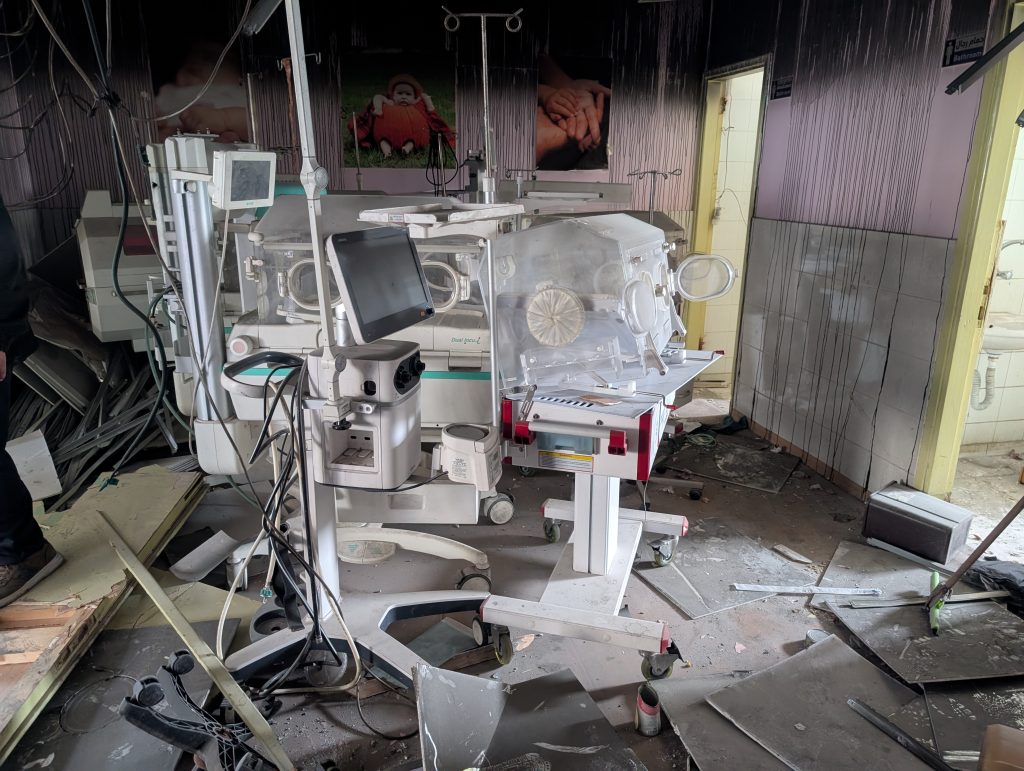
An interviewed health care provider who visited Gaza in early 2025 described what Kamal Adwan Hospital looked like after being attacked and raided by Israeli forces:
“It was just toxic. There is this poisonous smell in the air, acrid smoke still hanging, everything burned and charred, crunching medication vials under our boots. Kamal Adwan had one of the only functioning neonatal ICUs in the North at the time. We walked through the neonatal ICU, which hadn’t been burnt, but had been destroyed. There were incubators that had been smashed and strewn about. The whole facility was destroyed.”
Health care providers interviewed were reluctant to use surgical interventions due to lack of medical supplies, equipment, and critical sanitation and infection control measures, which could also endanger preterm babies and women. Health care providers were forced to discharge acutely malnourished women within hours after delivery because of space constraints despite their concerns about the high risk of post-surgical infections compounded by malnutrition and shortage of medical supplies. Neonatal intensive care units were also destroyed or lacked supplies and equipment, leading to predictable fatalities among premature babies who, under normal circumstances, could have survived.
c. Suffering and death of pregnant, postpartum, and lactating women and newborns were foreseeable and predicted
The death and serious mental and physical suffering experienced by women and infants in Gaza during the ongoing conflict were both foreseeable and predicted. Despite the known and predicted risks of pregnancy complications, impeded lactation, and poor newborn health, attacks on hospitals and restrictions on humanitarian aid persisted from January through October 2025.
Since the beginning of the war in Gaza, humanitarian organizations, human rights groups, and multiple UN agencies warned that Israel’s restrictions on humanitarian aid – including food, fuel, and medical supplies – would have catastrophic consequences for maternal and neonatal health due to the anticipated collapse of essential health services and the compounded vulnerability of women and children in conflicts.24 Access to food and medical care in Gaza fell far short of international standards on nutrition and health care in conflict.25 Despite the recommendations of the UN COI, the advisory opinion issued by the International Court of Justice in relation to the obligations of Israel in Gaza, and three provisional measures rulings by the International Court of Justice warning of the risk of genocide in Gaza,26 Israel continued to restrict food and medical supplies and to destroy medical infrastructure between January and October 2025.27
The available evidence indicates that the predicted and predictable consequences of food deprivation, destruction of medical infrastructure, and restrictions on medical supplies in Gaza were deliberately or recklessly disregarded, resulting in an avoidable crisis that has harmed women’s ability to menstruate, have healthy pregnancies, give birth safely, and breastfeed, and caused infants to die of dehydration and malnutrition. Beyond the immediate impact, future generations may suffer from the physical, social, and even genetic effects.28 Collectively, the outcome is devastating the reproductive capacity of Palestinians in Gaza.29
d. Tactics of war in Gaza constitute reproductive violence, demanding investigation, accountability, and reparations
Pregnant, postpartum, and lactating women in Gaza suffered negative reproductive health outcomes because of (i) targeting of health care facilities, (ii) restrictions on essential medical supplies entering Gaza, and (iii) acute malnutrition due to limits on essential humanitarian food aid, should be considered victims and survivors of reproductive violence.
Reproductive violence is defined as acts or omissions that cause harm by interfering with reproductive autonomy and rights or violence directed at people because of their actual or perceived reproductive capacity.30 Reproductive violence is prohibited under provisions of international humanitarian law (IHL) and international human rights law (IHRL) and can constitute international crimes, including war crimes, crimes against humanity; or acts of genocide.31 Our research supports the findings of the UN COI that shows a pattern of perpetration of attacks on hospitals in violation of the IHL special protections for and prohibition on attacks on medical facilities.32 Under IHL warring parties must take precautions during hostilities to minimize harm to civilians; any harm caused by attacks must be proportionate to the direct military advantage gained. Israel has stated that its attacks on hospitals are justified under IHL because of “militarization” of hospitals by Hamas.33 It is important to note that none of the clinicians we interviewed reported any misuse of hospitals by any Palestinian armed groups for improper military purposes. Regardless of the ultimate accountability of the armed parties for any particular attack, which requires independent investigation and adjudication, the overall destruction of the health care system in Gaza as a result of these attacks is incontrovertible, as is the foreseeable harms of this destruction on mothers and newborn infants. Beyond this, the report findings underscore the importance of ensuring that the harms to pregnant and postpartum women and newborns documented as arising from the direct and reverberating impacts of strikes be considered in any assessment of adherence to the principles of proportionality and precaution in attacks on hospitals in Gaza.
In addition, this report presents evidence relevant to determinations of other breaches of international law by Israel, including violations of the IHL obligation on occupying powers to ensure adequate supply of medical supplies and food in Gaza; war crimes of starvation, inhuman acts, and willfully causing great suffering; crimes against humanity of persecution and other inhumane acts; and genocidal intent to destroy the group of Palestinians in Gaza and genocidal acts of causing serious bodily and mental harm and inflicting conditions of life calculated to bring about physical destruction of the group.
In light of the evidence implicating reproductive violence, there must be thorough and independent documentation and evidence preservation, investigation of allegations of crimes, and prosecution to hold perpetrators accountable and ensure compliance with international law. Further, survivors and families of victims must have access to remedies and reparations, including access to care and nutrition to prevent worsening health harms caused by reproductive violence.
e. Restoration of access to reproductive health care and adequate water, nutrition, and sanitation is urgently needed to halt the harms documented
The report documents the suffering and biological damage inflicted on pregnant and lactating women and their newborns and underscores the urgent need for justice and accountability as well as long-term interventions to restore medical services, remedy malnutrition, and support the affected populations with rehabilitation and recovery. At the time of publication of this report, immediate action is required to ensure unrestricted humanitarian access so that food, clean water, fuel, and medical supplies can enter Gaza at the scale necessary to meet the health and nutritional needs, restore reproductive and neonatal medical services, and reverse the negative impacts of acute malnutrition.
One immediate priority is to implement high-dose micronutrient supplementation protocols – specifically for iron, folate, and calcium – for all women of reproductive age to reverse the physiological effects of prolonged acute malnutrition beyond just ensuring caloric needs are met. Additionally, it will be critical to prepare facilities and staff to manage refeeding syndrome, including developing protocols for gradual nutritional rehabilitation, electrolyte monitoring, and medical stabilization and to ensure that therapeutic foods, micronutrient supplements, and therapeutic milks for infants with severe wasting are readily available.
In the mid- and long-term, significant investment is needed to address the lasting impacts of acute malnutrition and reestablish systems to provide reproductive and neonatal health care aligned with international standards. This includes rebuilding and restoring damaged or destroyed health facilities, including maternity wards, neonatal intensive care units, nutrition services, and fertility services, and restoring access to lifesaving medications, equipment, and reproductive health services. Additionally, efforts should be made to ensure specialized treatment for complex, conflict-related obstetric trauma is available, including surgical repair for obstetric fistulas, severe pelvic floor trauma, and chronic reproductive tract infections.
Additionally, there is a need for further documentation to study the long-term impact and potential mental health and intergenerational harms on the affected population and to devise reparations and remedies to address these long-term and intergenerational harms. Finally, comprehensive reparations measures should be implemented, which include rebuilding essential services like medical care, psychosocial support, and nutritional rehabilitation, along with restitution, compensation, satisfaction, and guarantees of non-repetition as necessary.34
Conclusion
At the time of writing this report, there is a ceasefire in place in Gaza. While reports of hostilities and repeated violations of the ceasefire continue to emerge, progress toward accountability for violations of international law, including reproductive violence, remains slow. Restrictions and limited access to food and other humanitarian aid, including health care, have continued and remain inadequate to meet current needs.35 Further, the gendered harms of the conflict in Gaza remain largely obscured. The scope and nature of reproductive violence – including its impact on the survival of Palestinians in Gaza – require comprehensive and independent investigation, documentation, and accountability. The harms caused by reproductive violence and acute malnutrition are ongoing and urgently need to be remedied. Our findings underscore that each day that passes without adequate food and access to medical care for pregnant and lactating women and newborns diminishes the reproductive capacity, safety, and autonomy of Palestinians in Gaza.
Our findings underscore that each day that passes without adequate food and access to medical care for pregnant and lactating women and newborns diminishes the reproductive capacity, safety, and autonomy of Palestinians in Gaza.
While the UN Security Council adopted a resolution on November 17, 2025 endorsing the United States’ “Comprehensive Plan to End the Gaza Conflict,”36 which included commitments concerning humanitarian aid and the establishment of a temporary transitional governance body in the form of a technocratic, apolitical Palestinian committee, it is essential that the needs of women of reproductive age and infants are not overlooked in rehabilitation and recovery efforts.37 PHR and GHRC urge all actors to cease violence against health care; ensure unconditional and unhindered humanitarian access in accordance with international humanitarian principles; and advance accountability, justice, and reparations.
Recommendations
To All Parties to the Conflict:
– Immediately cease all forms of violence against health care facilities, health care workers, and humanitarian personnel in compliance with international law;
– Ensure the protection and unhindered functioning of humanitarian actors and facilitate their safe and sustained access throughout Gaza; and
– Grant full and safe access to independent international investigative mechanisms to assess the humanitarian situation; document and investigate all alleged violations and preserve evidence where relevant; and evaluate the impacts of parties’ policies and practices on civilians’ rights.
To the Government of Israel:
– Immediately cease targeting civilians and civilian objects and revise military protocols to conform to the principles of discrimination, proportionality, and precaution, including the reverberating impact of attacks on health care, in order to ensure effective and adequate protection of pregnant and lactating women, infants, and other atrisk populations;
– Respect and implement the orders of the International Court of Justice requiring that Palestinians in Gaza have access to supplies of daily life, including food, medical care and services;
– Immediately lift all restrictions on the entry of specialized neonatal nutrition products, including hydrolyzed formulas and liquid ready-to-feed formulas, indicated in medically recognized situations where breastfeeding is not possible or sufficient; and
– Fully cooperate with international accountability mechanisms and facilitate their access to Israel and the occupied Palestinian territory to conduct independent and impartial investigations.
To Hamas and Other Palestinian Armed Groups:
– Refrain from any conduct that places civilians, health care workers, or humanitarian personnel at risk;
– Ensure that humanitarian aid reaches civilians without diversion or interference, in line with obligations under international humanitarian law; and
– Refrain from any actions, including militarization, that compromise the neutrality of health facilities and humanitarian sites.
To the Transitional Palestinian Body Governing Gaza:
– Prioritize the rehabilitation and rebuilding of Gaza’s health system, including restoring essential reproductive, maternal, and neonatal services;
– Support Palestinian health workers in Gaza by providing adequate training, protection, and compensation; and
– Strengthen coordination with humanitarian partners to ensure continuity of care for pregnant and lactating women and newborns.
To the United States and Other Members of the Board of Peace:
– Ensure the unconditional entry of humanitarian aid, including medical supplies, fuel, clean water, and food, through all viable routes, without restrictions or delays, and at a scale sufficient to meet current needs and enable long-term recovery; and
– Support UN-led efforts, including World Health Organization, UN Population Fund, and UN Children’s Fund programs focused on reproductive and neonatal health.
To UN Member States:
– Urge all parties to the conflict to abide by international humanitarian law and all UN Security Council resolutions on humanitarian aid, access, and reconstruction;
– Strengthen the implementation of UN Security Council Resolution 2286 to protect health facilities and personnel, investigate attacks on health care, and hold perpetrators of these violations accountable;
– Pursue accountability through all relevant avenues for violations of international law in Gaza; and
– Support the reconstruction of Gaza’s health system and ensure the reinstatement of the right to health as a human right in Gaza.
To International Accountability Mechanisms and UN Human Rights Mechanisms:
– Investigate, pursue accountability, and secure reparations for reproductive harm resulting from attacks on health care, restrictions on humanitarian aid, and starvation; and
– Recognize reproductive harm – such as preventable miscarriages, stillbirths, maternal morbidity and mortality, neonatal deaths, and long-term health consequences of starvation and denial of care – as a distinct category of injury warranting appropriate reparative measures.
To Health Actors and Donors:
– Prioritize the rapid scale-up of maternal and neonatal services, including emergency obstetric care, neonatal intensive care units, safe delivery services, and postnatal care, in accordance with internationally recognized humanitarian standards;
– Deploy medical teams with specialized expertise in obstetrics, neonatology, malnutrition treatment, fertility treatment, and trauma-informed care to support and rebuild the collapsing health system in Gaza; and
– Prepare facilities and staff to manage complex heath presentations related to reproductive health harm, acute malnutrition, and refeeding challenges, including through ensuring the availability of necessary supplies including food aid and therapeutic food products.
End Notes
- We recognize that those with reproductive capacity include cis-gender women, non-binary, and other gender-diverse individuals. Throughout this report, we will use the term women to refer specifically to females with reproductive capacity, which may include where relevant, adolescent girls, while acknowledging the limitations of this terminology.
- United Nations Relief and Works Agency for Palestine Refugees in the Near East (UNRWA), “Rapid Gender Analysis: Gendered Impacts of the October 2023 Escalation in Gaza,” October 23, 2023, https://www.unrwa.org/resources/reports/rapid-gender-analysis-gendered-impacts-october-2023-escalation-gaza; Oxfam International, “Babies Dying from Preventable Causes in Besieged Gaza – Oxfam,” November 23, 2023, https://www.oxfam.org/en/press-releases/babies-dying-preventable-causes-besieged-gaza-oxfam; Global Nutrition Cluster, “Nutrition Vulnerability and Situation Analysis / Gaza,” February 2024, https://www.nutritioncluster.net/sites/nutritioncluster.com/files/2024-02/GAZA-Nutrition-vulnerability-and-SitAn-v7.pdf; World Health Organization, “Women and Newborns Bearing the Brunt of the Conflict in Gaza, UN Agencies Warn,” November 3, 2023, https://www.who.int/news/item/03-11-2023-women-and-newborns-bearing-the-brunt-of-the-conflict-in-gaza-un-agencies-warn; United Nations Office for the Coordination of Humanitarian Affairs, “Humanitarian Situation Update #239 | Gaza Strip,” November 19, 2024, https://www.ochaopt.org/content/humanitarian-situation-update-239-gaza-strip; Fionnuala Ní Aoláin KC (Hons), “A Zone of Silence: Obstetric Violence in Gaza and Beyond,” Just Security, February 21, 2024, https://www.justsecurity.org/92562/a-zone-of-silence-obstetric-violence-in-gaza-and-beyond/.
- Independent International Commission of Inquiry on the Occupied Palestinian Territory, including East Jerusalem, and Israel, “Legal Analysis of the Conduct of Israel in Gaza Pursuant to the Convention on the Prevention and Punishment of the Crime of Genocide,” September 16, 2025, https://www.un.org/unispal/wp-content/uploads/2025/09/a-hrc-60-crp-3.pdf.
- United Nations Office for the Coordination of Humanitarian Affairs – Occupied Palestinian Territory, “Gaza Humanitarian Response Update | 11-24 May 2025,” May 27, 2025, https://www.ochaopt.org/content/gaza-humanitarian-response-update-11-24-may-2025.
- United Nations, “UN Aid Teams Plead for Access amid Reports Gazans Shot Collecting Food,” UN News, May 28, 2025, https://news.un.org/en/story/2025/05/1163756; Office of the United Nations High Commissioner for Human Rights, “UN Experts Call for Immediate Dismantling of Gaza Humanitarian Foundation,” August 5, 2025, https://www.ohchr.org/en/press-releases/2025/08/un-experts-call-immediate-dismantling-gaza-humanitarian-foundation; International Court of Justice (ICJ), “Advisory Opinion: Obligations OF Israel in Relation to the Presence and Activities of the United Nations, Other International Organizations and Third States in and in Relation to the Occupied Palestinian Territory,” October 22, 2025, https://www.icj-cij.org/sites/default/files/case-related/196/196-20251022-adv-01-00-en.pdf.
- Integrated Food Security Phase Classification (IPC), “IPC ALERT: Worst-Case Scenario of Famine Unfolding in the Gaza Strip,” July 29, 2025, https://www.ipcinfo.org/ipcinfo-website/countries-in-focus-archive/issue-133/en/; United Nations Children’s Fund (UNICEF), “UN Agencies Warn Key Food and Nutrition Indicators Exceed Famine Thresholds in Gaza,” July 29, 2025, https://www.unicef.org/press-releases/un-agencies-warn-key-food-and-nutrition-indicators-exceed-famine-thresholds-gaza.
- United Nations, “UNFPA Situation Report on the Crisis in the Occupied Palestinian Territory -May/June 2025,” July 17, 2025, https://www.un.org/unispal/document/unfpa-situation-report-on-the-crisis-in-the-occupied-palestinian-territory-may-june-2025/.
- Ibid.
- “Malnutrition Persists as Winter Sets in, Threatening Children’s Lives and Wellbeing in Gaza,” accessed December 17, 2025, https://www.unicef.org/press-releases/malnutrition-persists-winter-sets-threatening-childrens-lives-and-wellbeing-gaza; “Born Vulnerable: The Toll of Maternal Malnutrition and Stress in Gaza,” accessed December 17, 2025, https://www.unicef.org/press-releases/born-vulnerable-toll-maternal-malnutrition-and-stress-gaza.
- An “attack” on health care facilities refers to any type of violence, obstruction, or threat of violence that results in physical damage to the facility or causes a temporary or permanent suspension of its operations in a way that negatively affects the availability of or accessibility to medical services.
- See Annex: Health Consequences of Starvation Compounded by Limited Access to Health Care.
- Physicians for Human Rights and Global Human Rights Clinic, “‘We Could Have Saved So Many More’: Anguish and Death Caused by Israel’s Restrictions on Medical Supplies in Gaza,” July 9, 2025, https://phr.org/our-work/resources/we-could-have-saved-so-many-more-anguish-and-death-caused-by-israels-restrictions-on-medical-supplies-in-gaza/.
- Physicians for Human Rights and Global Human Rights Clinic, “FAQs: Access to Health Care Supplies and ‘Dual Use’ Items and Restrictions,” July 9, 2025, https://phr.org/our-work/resources/faqs-access-to-health-care-supplies-and-dual-use-items-and-restrictions/.
- United Nations, “UN Aid Teams Plead for Access amid Reports Gazans Shot Collecting Food.”
- International Planned Parenthood Federation (IPPF), “Press Release: Gaza Nine Months on, Pregnant Women Carry the Burden of Conflict,” July 9, 2024, https://www.ippf.org/media-center/press-release-gaza-nine-months-pregnant-womencarry-burden-conflict.
- Interviews conducted before January 2025 were included to contextualize and illustrate the cumulative impact of Israel’s policies, including those in place before the March 2025 complete humanitarian aid blockade.
- Physicians for Human Rights and Global Human Rights Clinic, “‘We Could Have Saved So Many More’: Anguish and Death Caused by Israel’s Restrictions on Medical Supplies in Gaza,”
- United Nations Children’s Fund (UNICEF), “UNICEF Programming Guidance: Procurement and Use of Breastmilk Substitutes in Humanitarian Settings,” June 2021, https://www.unicef.org/media/100911/file/BMS-Procurement-Guidance-Final-June-2021.pdf.
- European Parliament, “Parliamentary Question | Access to Baby Formula in Gaza,” July 7, 2025, https://www.europarl.europa.eu/doceo/document/O-10-2025-000023_EN.html.
- The Independent International Commission of Inquiry on the Occupied Palestinian Territory and Israel, “Treatment of Detainees and Hostages and Attacks on Medical Facilities and Personnel (7 October 2023 to August 2024),” September 11, 2024, https://docs.un.org/en/A/79/232.
- Health Information Unit – Ministry of Health, “Annual Report 2022 – Ministry of Health: Southern Governorates – Gaza Strip,” May 2023, https://www.moh.gov.ps/portal/wp-content/uploads/2023/07/annual-english-202218-7-2023.pdf; United Nations Office for the Coordination of Humanitarian Affairs – Occupied Palestinian Territory, “Gaza Humanitarian Response Update | 31 August – 13 September 2025,” September 17, 2025, https://www.ochaopt.org/content/gaza-humanitarian-response-update-31-august-13-september-2025.
- World Health Organization, “oPt Emergency Situation Update: Issue 65,” September 28, 2025, https://www.emro.who.int/images/stories/palestine/Sitrep_65.pdf.
- World Health Organization, “oPt Emergency Situation Update: Issue 57,” March 14, 2025, https://www.emro.who.int/images/stories/palestine/Sitrep_57.pdf.
- United Nations Relief and Works Agency for Palestine Refugees in the Near East (UNRWA), “Rapid Gender Analysis”; Oxfam International, “Babies Dying from Preventable Causes in Besieged Gaza – Oxfam”; Global Nutrition Cluster, “Nutrition Vulnerability and Situation Analysis / Gaza”; World Health Organization, “Women and Newborns Bearing the Brunt of the Conflict in Gaza, UN Agencies Warn”; United Nations Office for the Coordination of Humanitarian Affairs, “Humanitarian Situation Update #239 | Gaza Strip.”
- “UNRWA Situation Report #184 on the Humanitarian Crisis in the Gaza Strip and the West Bank, Including East Jerusalem,” UNRWA, accessed September 8, 2025, https://www.unrwa.org/resources/reports/unrwa-situation-report-184-situation-gaza-strip-and-west-bank-including-east-jerusalem; United Nations Relief and Works Agency for Palestine Refugees in the Near East (UNRWA), “UNRWA Situation Report #197 on the Humanitarian Crisis in the Gaza Strip and the Occupied West Bank, Including East Jerusalem,” November 18, 2025, https://www.unrwa.org/resources/reports/unrwa-situation-report-197-situation-gaza-strip-and-west-bank-including-east-jerusalem.
- International Court of Justice (ICJ), “Advisory Opinion: Obligations of Israel in Relation to the Presence and Activities of the United Nations, Other International Organizations and Third States in and in Relation to the Occupied Palestinian Territory”; Independent International Commission of Inquiry on the Occupied Palestinian Territory, including East Jerusalem, and Israel, “Legal Analysis of the Conduct of Israel in Gaza Pursuant to the Convention on the Prevention and Punishment of the Crime of Genocide”; International Court of Justice, “Application of the Convention on the Prevention and Punishment of the Crime of Genocide in the Gaza Strip (South Africa v. Israel): Orders,” accessed November 21, 2025, https://www.icj-cij.org/case/192/orders.
- United Nations Office for the Coordination of Humanitarian Affairs – Occupied Palestinian Territory, “Gaza Humanitarian Response Update | 11-24 May 2025.”
- Elmar W. Tobi et al., “DNA Methylation Signatures Link Prenatal Famine Exposure to Growth and Metabolism,” Nature Communications 5 (November 26, 2014): 5592, doi:10.1038/ncomms6592.
- For further detailed information on the medical literature related to the physiological impacts of acute malnutrition on women and newborns, see the annex.
- ICC Office of the Prosecutor, Policy on Gender-Based Crimes, pg. 14 (2023). See also Rosemary Grey,, The ICC’s First “Forced Pregnancy” Case in Historical Perspective, Journal of International Criminal Justice, Vol. 15, Issue 5 (Dec. 2017); UN Women and Global Justice Center, “Documenting Reproductive Violence: Unveiling Opportunities, Challenges, and Legal Pathways for UN Investigative Mechanisms,” September 2024, https://www.unwomen.org/sites/default/files/2024-09/research-paper-documenting-reproductive-violence-en.pdf.
- ICC OTP, Policy on Gender-Based Crimes, pg. 14 (2023). See also Rosemary Grey, The ICC’s First “Forced Pregnancy” Case in Historical Perspective, Journal of International Criminal Justice, Vol. 15, Issue 5 (Dec. 2017); Ibid.; International Criminal Court, “Rome Statute of the International Criminal Court,” 2021, https://www.icc-cpi.int/sites/default/files/2024-05/Rome-Statute-eng.pdf. For crimes against humanity, see Art. 7(1)(g). For war crimes, see Art. 8(2)(b)(xxii), 8(2)(e) (vi))
- Independent International Commission of Inquiry on the Occupied Palestinian Territory, including East Jerusalem, and Israel, “Legal Analysis of the Conduct of Israel in Gaza Pursuant to the Convention on the Prevention and Punishment of the Crime of Genocide.”
- Israel Defense Forces (IDF), “Exploitation of Civilian Infrastructure: Hamas’ Operations in Hospitals | IDF,” accessed November 30, 2025, https://www.idf.il/en/mini-sites/hamas-operations-in-hospitals/.
- Office of the United Nations High Commissioner for Human Rights, “Basic Principles and Guidelines on the Right to a Remedy and Reparation for Victims of Gross Violations of International Human Rights Law and Serious Violations of International Humanitarian Law,” accessed November 30, 2025, https://www.ohchr.org/en/instruments-mechanisms/instruments/basic-principles-and-guidelines-right-remedy-and-reparation.
- United Nations, “Aid Deprioritised as Commercial Goods Flow into Gaza, UN Warns,” December 15, 2025, https://news.un.org/en/story/2025/12/1166595.
- United Nations Security Council, “Security Council Resolution 2803 (2025),” November 17, 2025, https://docs.un.org/en/S/RES/2803(2025).
- BBC, “What Does Wording of Gaza Ceasefire Agreement Tell Us?,” October 10, 2025, https://www.bbc.com/news/articles/ckgyr8e0gl2o; United Nations, “Israel Has Rejected over 100 Aid Requests since Gaza Ceasefire, UN Say,” UN News, November 6, 2025, https://news.un.org/en/story/2025/11/1166295.