Executive Summary
Starting in 2025, the Trump administration abruptly slashed and disrupted funding for global health, jeopardizing hard won public health gains and irreplaceable investments in infrastructure and partnerships for disease response, health security, and research. As of late March 2026 – more than a year after the disruptions began – HIV, tuberculosis (TB), and malaria programs, along with basic health services and many other humanitarian programs, remain impaired in countries around the world, and particularly in the Africa region.1 As this report went to press in April 2026, frameworks guided by the America First Global Health Strategy, the U.S. Department of State’s new approach to U.S. foreign aid for global health focused on advancing American economic and security interests, and securing co-investments for funded countries, had not yet been funded or implemented. This strategy, published in September 2025, covers health areas including, HIV, malaria, TB, polio, and global health security. Available information on these secretive bilateral agreements or memoranda of understanding (MOUs) between the United States and countries receiving U.S. funding has raised concerns about the lack of evidence-based, epidemiologically sound programming, and the extractive terms set by the U.S. government.2
South Africa is unique among the many countries impacted by the Trump administration’s actions, having experienced triple blows of cuts to HIV funding, research, and cooperative diplomatic relations. Prior to 2025, South Africa was the recipient of the largest amount of funding from the National Institutes of Health (NIH) outside of the United States, with additional investments from the U.S. Centers for Disease Control and Prevention (CDC) and the U.S. Agency for International Development (USAID). These investments supported a robust research infrastructure that linked American and South African research institutions in partnerships that produced groundbreaking findings. The country is also home to the largest HIV epidemic in the world, with persistently high incidence in cisgender women, particularly adolescent girls and young women.34 5 An upper-middle income country, South Africa’s national health system and HIV program are predominantly supported with domestic resources, spending 16.8 percent of the annual budget on domestic health priorities.6 While U.S. funding paid for 80 to 90 percent of some countries’ HIV programs prior to 2025, U.S. funding only accounted for 17 percent of the South African HIV response in recent years.7 8 However, these resources supported much and, in some instances, all tailored programming for specific populations including adolescent girls and young women at risk of acquiring HIV, sex workers and key populations.9 It also resourced key elements such as pediatric HIV diagnosis, data collection and cleaning, and community-based services.10
Eliminating crucial funding for prevention, treatment, and research systems has consequences far beyond the dollar amount removed.
The Trump administration has disrupted every aspect of these longstanding partnerships and programs both through the elimination of USAID-supported programs, elements of the President’s Emergency Plan for AIDS Relief (PEPFAR), the United States’ flagship foreign aid program to respond to the global HIV crisis, and through a Trump executive order banning all foreign aid and assistance and suspended all funding for research to South Africa based on spurious claims of white genocide.11 12 13 14 As a likely result of the collapse of cooperative diplomatic relations, the U.S. government has not, to date, sought to develop an MOU with South Africa for continued health-related funding. While these agreements are extractive and centered on U.S. interests they can provide critical assistance and technical partnership to countries to support transition planning and programming that ensures U.S. investments through PEPFAR, USAID and other partners are not altogether wasted as the result of abrupt cuts to global health funding. As of April 2026, this option was not available to South Africa. Instead, the United States government was on track to abandon virtually all of its investments in research, programming, and longstanding collaboration with a country at the epicenter of the global HIV pandemic and at the forefront of scientific innovation.
With the trio of dismantling of HIV programs, research funding, and cooperative diplomatic relations, the Trump administration has made South Africa a proving ground for its “America First” foreign policy.15 It is crucial to document the current and future impacts of this global health policy approach.

Over the past year, South African advocates, activists, clinicians, researchers, and people living with HIV have systematically documented the impacts of the abrupt funding cuts.16 Advocates for the Prevention of HIV in South Africa (APHA), Emthonjeni Counseling & Training, and PHR co-created a project to document the harms, bear witness to the impacts, and highlight the implications of the Trump administration’s actions. In September 2025, PHR and collaborators conducted 20 oral history interviews with 40 participants, including South African doctors, nurses, clinical officers, peer counselors, peer navigators, people living with HIV, young people, transgender men and women, men who have sex with men, government health workers, and researchers, who shared their experiences of the immediate psychological, physical, and public health harms caused by these losses. All participants were contacted again in March 2026 to validate quotes and provide updates.
These accounts depict how the triple blows to U.S. funding for HIV programs, research infrastructure, and civil diplomatic relations with South Africa have diminished the quality of HIV treatment and prevention, strained the broader health system, and are wasting billions of dollars of U.S. investment in research infrastructure and health delivery platforms, particularly for primary prevention. With no relief in sight in the form of transitional funding or resumption of robust research collaborations, the United States has helped make a future surge in otherwise-preventable new HIV infections all but inevitable.
Key Findings
In the Community: Diminished Community-Based Testing and Programming for Primary Preventive Health Care
“The only way to get tested for HIV now is to go inside the clinic and test. Whereas we had people that were working in the streets for the community doing just HIV testing. You didn’t need to go to the clinic, you didn’t need to wait in long queues. You just went in the tent and said, ‘I’m here for HIV testing.’ You get tested, if you’re positive, they link you to care. It’s no waiting, no… It gave dignity, in a sense. Now you need to imagine now, someone is going to have to wait for them to really get sick, so that they can say, ‘No man, I’m really sick, I need to go to the clinic.’”
-Young cisgender woman HIV prevention advocate and educator
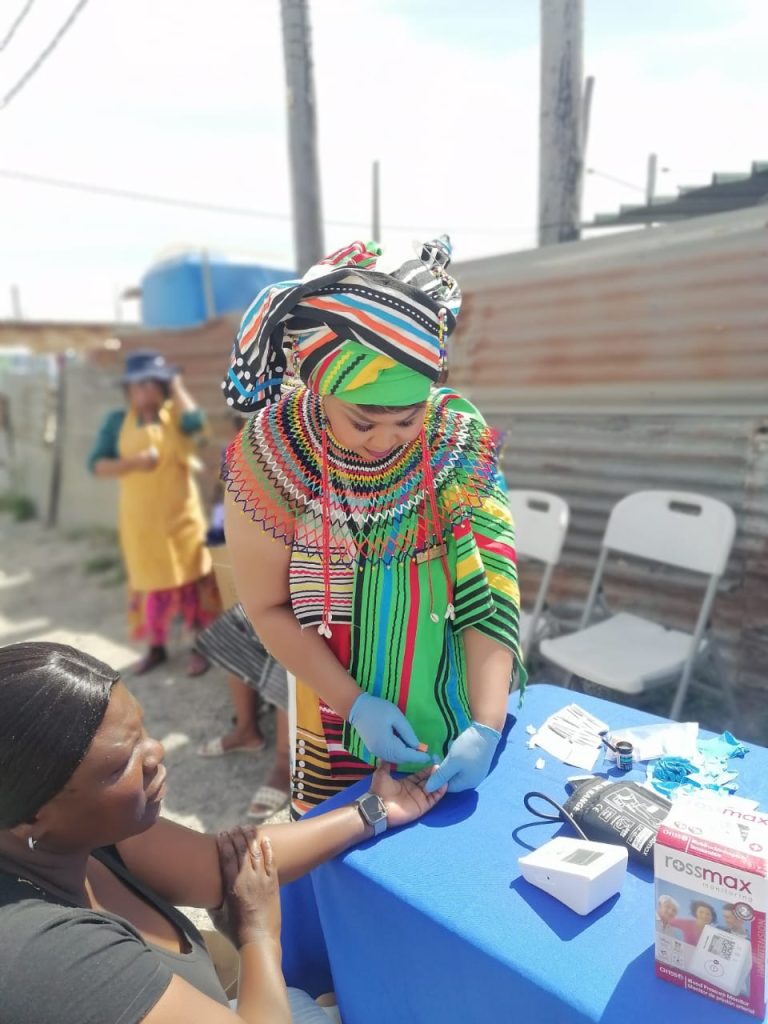
Participants including government health workers, young peer educators, and people living with HIV described a significant reduction in the availability of community-based health services including HIV and sexually transmitted infection (STI) testing, linkage to pre-exposure prophylaxis (PrEP), a biomedical strategy in which people who are HIV-negative use antiretroviral medications to eliminate their risk of acquiring the virus, HIV treatment, and primary health services like blood pressure monitoring, immunization catch-up and body mass index testing to support management of non-communicable diseases. In some instances, the services have vanished because the U.S.-funded entity that provided them lost resources. In other instances, the government-supported community outreaches have scaled back due to staffing shortages at the physical clinic locations. This is one of many ways that the U.S. cuts to PEPFAR-funded programs have diminished the quality and accessibility of care for other non-HIV related health issues. The loss of HIV testing in the community puts timely linkage to testing and treatment in peril.
An HIV diagnosis is the entry point for effective services. People who are HIV positive should be linked to antiretroviral treatment and other services; those who are HIV negative but at risk of acquiring the virus should be linked to comprehensive HIV prevention, including PrEP. Structural barriers such as long wait times, travel costs, and lost income associated with obtaining an HIV test at a clinic may reduce testing uptake if inconvenient and community-based services are no longer available. Many participants reported extended wait times in clinics and predicted that people will delay testing until symptoms are unavoidable. One participant warned, “If we do not take care of our health, we will be forced to take care of our illness.”
In the Clinic: Diminished Quality of Clinic-Based Primary Prevention and Treatment Services
“So I went in there, so I told her [the nurse] that I wanted to return to my PrEP, and I asked her, ‘Why now there’s no counselors? […] Why are the processes not the same?’ And then she’s like, ‘Sis we have a lot of work here. We only test you when you ask, as now you are asking me to test you. If you did not ask, then I was not going to test you.’”
-Cisgender woman, PrEP user
PrEP, like antiretroviral therapy, continues to be available in South African government-funded health facilities, private clinics, and in programs run by local organizations with existing CDC-PEPFAR and other funding sources. However, participants in this study described extended wait times, over-burdened staff, abandonment of standard protocols for HIV testing prior to PrEP provision, the loss of health workers who followed up with clients newly diagnosed with HIV and TB to ensure they understood and remained on treatment, and with people with HIV returning to the clinic after missed appointments to ensure they are fully re-engaged in care. PrEP, HIV, and TB treatment all work when the medications are taken as prescribed, following an accurate diagnosis that the client understands. Many people living with HIV take antiretrovirals regularly and as prescribed, achieving the virologic suppression that preserves health and reduces risk of HIV transmission. However, some people including newly-diagnosed individuals, members of marginalized groups who encounter or expect stigma at the health facility, and people with income and housing precarity may struggle to start or stay on regular treatment. The loss of health workers to support these segments of the population puts hard-fought gains in the HIV response at risk.
In the Dark: Diminished Availability of Timely, Actionable Data
“I’m waiting for a big bomb to blow on our face at any time. Because people, the truth is people are not taking the treatment. And because we can’t see that they’re not taking it. And even when they come, we don’t have time for them because we are overwhelmed. I’m here today for a meeting to look at why is this clinic not seeing the [same] number of patients.”
-Cisgender woman, government-employed data quality officer
Effective public health programs depend on timely, accurate, evidence-based, and actionable data. In the context of HIV, this includes data on the number of new HIV diagnoses in a given population over a period of time (incidence), the percentage of people returning for their refills of antiretroviral therapy or PrEP, the percentage of people on antiretroviral therapy who are virologically suppressed, and the percentage of people on antiretroviral therapy who have disengaged from care. These data can be used to trigger targeted problem-solving actions, from a home visit to a client who has missed a refill, to tailored engagements with communities where there are high rates of new infections. Data can support allocation of scarce resources and it can yield warning signs when programs are not performing. In this study, participants described data-entry backlogs related to U.S. foreign aid cuts that meant clinic staff had little real-time information about key metrics of HIV program success. They did not know whether clients recorded as “disengaged,” meaning they had missed one more refill appointment, or had in fact come for their refill, without that visit being logged in the system that generates usable data reports. Taken together, disrupted community-based services, diminished quality of facility-based primary prevention, and degraded timeliness and quality of data create conditions in which surges of new HIV infections could occur without awareness and action by public health stakeholders including health workers, impacted communities, and leadership at local, subnational, and national levels.
Irretrievable Waste: Squandered Investments in Research Infrastructure
“The worst part is I’m currently recruiting for a study that requires clinic assistants. They are not there, the people in the clinics [formerly employed by PEPFAR]. The clinics are in crisis…I work with many clinics here. The [health workers] that I would go and know that they’ll be there: data capturers, there will be counselors, I will be able to interact with this person and that person, they are not here.”
-Cisgender woman, staff member at a major research institution
Prior to 2025, South Africa received an estimated $100 to $150 million annually in direct grants from the NIH, for a total of approximately $400 million including sub-grants, in addition to PEPFAR funds.17 Much of that funding was lost over the past year via the termination of research and grant funding by the NIH, non-renewal of awards for ongoing clinical trials, and an NIH directive banning foreign sub-award grants. South African researchers have described these cuts as catastrophic.
The United States was a direct beneficiary of these research collaborations, including products developed by U.S. private sector companies such as the injectable PrEP medication lenacapavir. South Africa has also played a major role in evaluating effective strategies for treating and preventing TB, including development of the diagnostic called Xpert MTB/RIF test, capable of detecting Mycobacterium tuberculosis and rifampicin resistance, genomic research revealing human genetic variations linked to increased TB susceptibility, and TB vaccine research.18 Cost-effective, efficient development of new drugs and preventive measures requires trials in communities where there are high rates of new infections and/or a high prevalence of the disease in question. Without these conditions, clinical trials of, for example, a new HIV PrEP strategy would require huge enrollments, lengthy timeframes, and prohibitive cost. The persistently high rates of HIV, TB, and other infections in South Africa and its exceptional infrastructure make efficient, ethical research possible, with worldwide benefits, including for populations in the United States.
Overall, this report finds that The Trump administration’s “America First” foreign policy approach as implemented in South Africa via cuts to HIV programs, research, and civil diplomatic relations wastes resources, undermines progress against HIV/AIDS, and diminishes U.S. national and global health security.
In this report, PHR and collaborators provide narrative evidence that the Trump administration’s cuts to global health funding and halt of foreign aid and assistance to South Africa have:
- Wasted hundreds of millions of dollars of investments by abandoning primary prevention programs and technologies designed to support large-scale prevention efforts, including the new PrEP drug lenacapavir;
- Squandered hundreds of millions of dollars of investments by failing to continue engaging with a unique collaborative research infrastructure including laboratories, data systems, clinical trial platforms, and highly skilled personnel; and
- Recklessly disregarded the dramatic consequences of failing to maintain funding to reduce new HIV infections among infants, young people, and adults, and preventing unnecessary suffering and death among people living with HIV, ultimately leaving populations worldwide, including in the United States, less secure and more vulnerable to illness.
In short, the America First Global Health Strategy aims to reduce the perceived inefficiencies and waste in foreign assistance through mechanisms like the bilateral health agreements.19 However, the abrupt cuts to global health aid themselves have created inefficiencies and risk waste, fraud, and abuse, directly contradicting the strategy’s stated objectives. Disruptions and reductions in aid jeopardize decades of U.S. investment in HIV prevention and response infrastructure. Primary prevention initiatives and clinical trials and the broader research ecosystem, which were established in South Africa over many years through billions of dollars in funding, are particularly vulnerable. These cuts not only weaken the resilience and durability of local health systems but also dismantle the critical clinical research pipeline in South Africa on which the United States has relied for innovations in treatment, prevention, and disease management. The disruption of these programs threatens both ongoing research and the capacity to generate new scientific knowledge, undermining the long-term effectiveness of U.S. foreign assistance, U.S. national security, and the global fight against HIV.
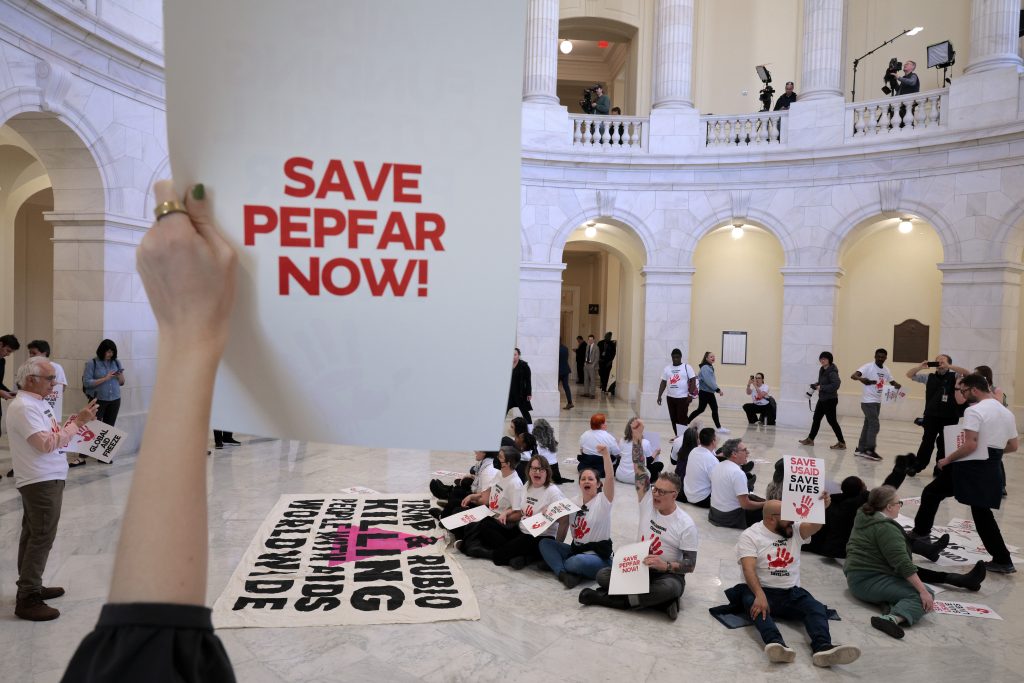
Photo: Chip Somodevilla/Getty Images
Recommendations
This report demonstrates that eliminating crucial funding for prevention, treatment, and research systems has consequences far beyond the dollar amount removed. These findings underscore the urgent need to restore investments in prevention, rebuild community-based outreach, HIV research, and data tracking to prevent further damage to South Africa’s and the global HIV response. The report also identifies crucial shifts undermining the availability, accessibility, acceptability, and quality of HIV prevention and treatment services, particularly for key populations, signaling clear backsliding in realizing the right to health and other human rights.20
Key Recommendations
To the United States Government
- Mobilize, safeguard, and spend funding appropriations for HIV prevention, treatment, primary health care, and collaborative HIV and TB research.
- Extend the Bridge Plan through the end of FY2026 at levels commensurate with appropriation, with options for countries to ‘roll off’ as memoranda of understanding with aid recipient countries are signed.
- Ensure that appropriated funds necessary for programmatic implementation still being performed by the CDC and Department of Defense are transferred with sufficient buffer time and funding for budget reserve and planning.
- Ensure that shifts in global health policy do not undermine decades of investment.
- Ensure that global health engagements and aid agreements with partner countries are grounded in human rights, equity, and mutual accountability.
- Reinvest in funding for community health workers, peer educators, health ambassadors, and other community outreach professionals globally.
- Ensure sustained, rights-based funding and programming for key populations.
- Lift the restriction on U.S. federal funding for research in South Africa.
- Ensure transparency and data access by publicly releasing disaggregated programmatic and financial data on a regular basis.
To Other Donor Governments
- Increase funding to address prevention and primary care gaps by urgently increasing bilateral HIV and primary health care support in high-burden countries.
- Collaborate with recipient countries to gradually transition them from reliance on donor funding through carefully planned, phased reductions, ensuring continuity of essential health services and minimizing disruptions to care.
To the Government of South Africa and Other Governments Responding to HIV Epidemics in the Context of Diminished Donor Financing
- Prioritize prevention, treatment, and primary care as part of the HIV response in domestic budgets.
- Act on warning signs of stress placed on domestic HIV programs by collecting data to understand the full extent of the impact of the funding cuts.
- Reaffirm, fully implement, and surpass the Abuja Declaration commitment to allocate at least 15 percent
- of national budgets to health and adopt progressive increases beyond 15 percent to reflect current funding realities.
- Prioritize ring-fenced funding for HIV prevention, particularly for adolescent girls and young women and key populations.
- Reduce reliance on a single donor by expanding domestic resource mobilization.
- Explicitly fulfill constitutional duties by taking proactive steps to ensure equitable access to essential health services for all populations, particularly key populations.
- Insulate critical programs from external shocks by strengthening the resilience of HIV and key population programs to funding fluctuations.
- Ensure provincial accountability and oversight by holding provincial health departments accountable for delivering services, ensuring that their resource allocations meet minimum service levels and reflect the progressive realization of the right to health as required under the constitution.
- Integrate anti-discrimination and equity measures by implementing explicit protections to protect marginalized and vulnerable populations.
- Monitor and publicly report impact by requiring transparent, regular reporting on access gaps, service disruptions, and health outcomes for key populations.
To the Global Fund to Fight AIDS, Tuberculosis and Malaria, the World Health Organization, Africa CDC, the African Union, and Other Multilateral Entities
- Ensure that prevention remains a core funding priority and invest in community health workers and peer-led models.
- Strengthen global and regional surveillance and reporting systems to document impacts associated with funding disruptions.
- Sustain and expand funding for HIV research.
- Establish an Africa-wide HIV emergency coordination mechanism.
- Lead development of an African HIV financing transition framework.
- Coordinate pooled procurement and regional manufacturing of HIV commodities in Africa.
To International and Human Rights Mechanisms and Bodies, including the United Nations, African Union, and World Health Assembly
- Monitor the human rights impacts of global shifts in funding
Endnotes
- Physicians for Human Rights. “The System is Folding in on Itself”: The Impact of U.S. Global Health Funding Cuts in Kenya”. Physicians for Human Rights, July 24, 2025, accessed April, 7 2026. https://phr.org/ourwork/resources/the-system-is-folding-in-on-itself-the-impact-of-u-s-global-health-funding-cuts-in-kenya/
- Stephanie Nolen, “U.S. Considers Withholding H.I.V. Aid Unless Zambia Expands Minerals Access. The New York Times, March 16, 2026, accessed April 7, 2026, https://www.nytimes.com/2026/03/16/health/zambiahiv-aid-minerals-trump.html
- Joint United Nations Programme on HIV/AIDS (UNAIDS), “AIDSinfo,” UNAIDS, accessed March 12, 2026, https://aidsinfo.unaids.org/
- Naseem Cassim, Lindi-Marie Coetzee, Manuel P. da Silva, Deborah K. Glencross, and Wendy S. Stevens, “Assessing Very Advanced HIV Disease in Adolescent Girls and Young Women,” Southern African Journal of HIV Medicine 24, no. 1 (2023), accessed March 12, 2026, https://sajhivmed.org.za/index.php/HIVMED/article/view/1501
- Monjurul Hoque et al., “Prevalence, Incidence and Seroconversion of HIV and Syphilis Infections among Pregnant Women of South Africa,” Southern African Journal of Infectious Diseases 36, no. 1 (2021), https://doi.org/10.4102/sajid.v36i1.296.
- World Health Organization. Global Health Expenditure Database. Geneva: World Health Organization. Accessed April 2, 2026. https://apps.who.int/nha/database/ViewData/Indicators/en
- Kerry Cullinan, “Millions at Risk of HIV Infection and Death After US funding Cuts, Warns UNAIDS.” Health Policy Watch. October 7, 2025, accessed April 7 2026, https://healthpolicy-watch.news/millions-at-risk-ofhiv-infection-and-death-after-us-funding-cuts-warns-unaids
- Gesine Meyer-Rath and Lise Jamieson, “The Cost of the Plunge: The Impact and Cost of a Cessation of PEPFAR-Supported Services in South Africa,” AIDS 39, no. 10 (August 1, 2025): 1476–1480, accessed March12, 2026, https://journals.lww.com/aidsonline/fulltext/2025/08010/the_cost_of_the_plunge__the_impact_and_cost_of_a.20.aspx
- U.S. Department of State, “DREAMS Fact Sheet,” December 4, 2024, accessed March 12, 2026, https://www.state.gov/wp-content/uploads/2024/12/DREAMS-Fact-Sheet_WAD-2024_FINAL.pdf
- U.S. Department of State, Reimagining PEPFAR’s Strategic Direction (Washington, DC: U.S. Department of State, 2022), https://www.state.gov/wp-content/uploads/2022/09/PEPFAR-Strategic-Direction_FINAL.pdf.
- The White House, “Addressing Egregious Actions of the Republic of South Africa,” Executive Order 14204, February 7, 2025, Federal Register 90, no. 28 (February 12, 2025): 9497–9498, https://www.whitehouse.gov/presidential-actions/2025/02/addressing-egregious-actions-of-the-republic-of-south-africa/.
- BBC News. “South Africa’s Cyril Ramaphosa Hits Back After Donald Trump Says US Won’t Invite It for G20Summit.” BBC News, accessed March 20, 2026. https://www.bbc.com/news/articles/cq8dq47j5y8o.
- Bartlett, Kate. “Trump Ambushes South Africa’s President with False Claims of ‘White Genocide.’” NPR, May 21, 2025. https://www.npr.org/2025/05/21/nx-s1-5404667/south-africa-white-house-visit-ramaphosa-trumptensions.
- Cohen, Jon. “’Orchestrated Assault’: New Tsunami of NIH Grant Cuts Hits South Africa Hard.” Science, March 21, 2025. https://www.science.org/content/article/orchestrated-assault-new-tsunami-nih-grant-cutshits-south-africa-hard.
- U.S. Department of State, “America First Global Health Strategy,” U.S. Department of State (2025), accessed March 12, 2026, https://www.state.gov/wp-content/uploads/2025/09/America-First-Global-Health-Strategy-Report.pdf
- Treatment Action Campaign (TAC), 5th Edition Ritshidze Report Reveals Increased Delays and Unfriendliness in Gauteng after PEPFAR Disruptions (October 22, 2025), available at https://www.tac.org.za/news/5thedition-ritshidze-report-reveals-increased-delays-unfriendliness-in-gauteng-after-pepfar-disruptions/ (accessed April 7, 2026)
- Lyle W Murray and Francois Venter. The impact of United States Government cuts to funding on South African Healthcare and Research. Wits Journal of Clinical Medicine. 2025. Vol. 7(2):87-90, accessed March 16, 2026 https://www.scienceopen.com/hosted-document?doi=10.18772/26180197.2025.v7n2a8
- Cara Olivier and Laneke Luies, “WHO Goals and Beyond: Managing HIV/TB Co-infection in South Africa,” SN Comprehensive Clinical Medicine 5, no. 251 (2023), accessed March 26, 2026, https://link.springer.com/article/10.1007/s42399-023-01568-z.
- U.S. Department of State, America First Global Health Strategy, 8, 18 (Washington, DC: U.S. Department of State, September 2025), accessed March 12, 2026, https://www.state.gov/wp-content/uploads/2025/09/America-First-Global-Health-Strategy-Report.pdf
- Office of the United Nations High Commissioner for Human Rights and World Health Organization, The Right to Health, Human Rights Fact Sheet No. 31 (Geneva: OHCHR and WHO, June 2008), accessed March 12, 2026, https://www.ohchr.org/sites/default/files/Documents/Issues/ESCR/Health/RightToHealthWHOFS2.pdf