

Executive Summary
Since the U.S. Supreme Court ruled to overturn the federal constitutional right to abortion in Dobbs v. Jackson in June 2022, 28 states have introduced legislation banning or curtailing access to abortion care.1 Most of this legislation includes criminal or civil penalties on health care providers who provide abortion care. Physicians for Human Rights (PHR) and partners have conducted research with health care providers in Oklahoma, Idaho, Louisiana, and Florida to document the multiple ways that state abortion bans have harmed the health of pregnant patients.2 In this research, providers repeatedly emphasized the cascading impact of abortion bans on other forms of care and the need for peer clinicians from multiple specialties to work together to address restrictions that impede quality of health care.
To further investigate the impact of abortion bans on health care beyond reproductive health care, PHR conducted 33 semi-structured interviews with physicians from reproductive and non-reproductive health specialties across 20 states in three different policy environments: states with abortion bans before 12 weeks, states with abortion bans after 12 weeks, and states with abortion protections. PHR’s research team spoke with physicians providing reproductive health care (specialties included obstetrics-gynecology, family medicine, and emergency medicine) to understand the continued and changing impacts of abortion bans on reproductive health care beyond abortion provision three years post-Dobbs. Our research team also interviewed physicians from non-reproductive health specialties – such as rheumatology, dermatology, pulmonology/critical care medicine, oncology, hematology, neurology, and cardiology – who regularly prescribe teratogenic medications, treat patients with health complications that are contraindicated for continuing pregnancy, or treat patients who develop medical conditions (e.g., cancer) for which immediate treatment would necessitate abortion care.
These shared and widespread impacts of abortion restrictions highlighted in this research reinforce the need for physicians and other clinicians across specialties to engage in joint advocacy to ensure that additional rollbacks, such as restrictions on mifepristone and misoprostol, do not go into effect.
Our research highlights how abortion bans and restrictions create cascading effects that extend far beyond reproductive health care, compromising the quality and effectiveness of medical care across reproductive and non-reproductive specialties. As one participant in a state with abortion protections stated:
“It’s really, really, really hard to document all of the ways that these laws are harming and frankly killing women. And so when we get the report that these are the number of women who died because of restricted access to [abortion] care, that number is 100 percent going to be an underestimate. We are not going to include in that number the women who had pulmonary hypertension and their doctor didn’t talk to them about abortion as an option. We’re not even going to know about the women who wanted abortion but couldn’t put together the resources to get out of state to get that abortion. There are so many women that it is going to be impossible for us to consistently count how many are going to be harmed, that are women who are going to have a complication that isn’t going to be addressed until it’s too late and they lose their ovary or they lose their uterus and they lose their ability to have children forever. That’s another thing that’s going to be so hard for us to count and say, ‘This is the impact of this law’.” – Participant 25
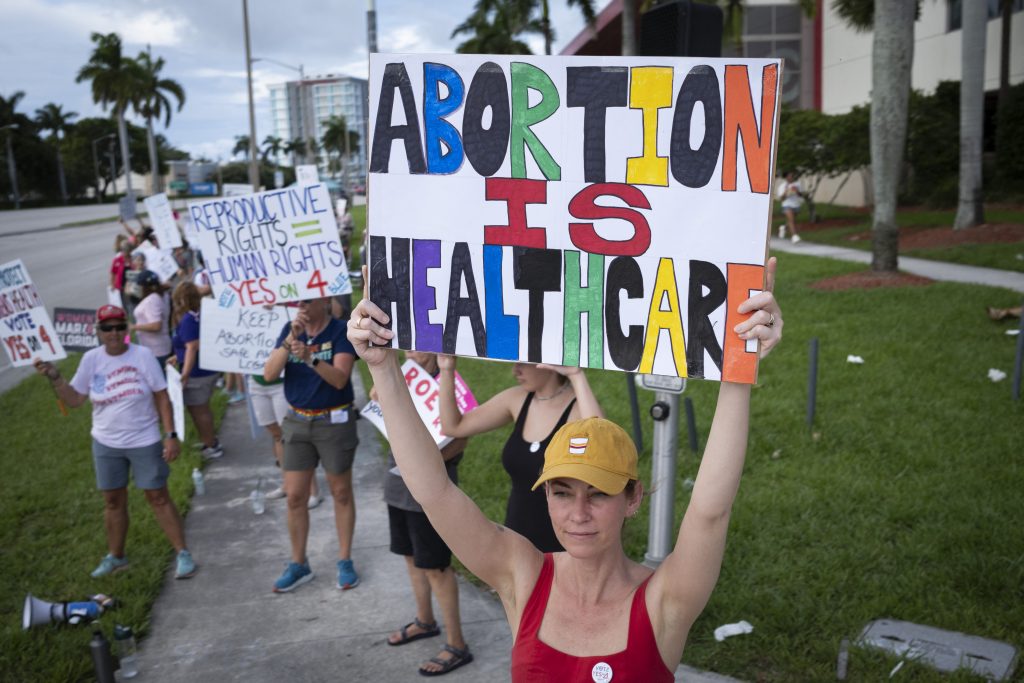
These restrictions have hindered the ability of providers in diverse medical fields to follow evidence-based practices and standards of care, creating a pervasive chilling effect that results in substandard care and discriminatory treatment for reproductive-age women and pregnant patients.
Physicians highlighted:
- Delays in care for patients who experienced complications from acute or chronic medical conditions during pregnancy.
- Delays and denials of abortion care in cases of worsening acute and chronic medical conditions during pregnancy.
- Changes in prescribing teratogenic medications to reproductive-age patients due to a fear that patients might become pregnant and be unable to access abortion care, with particular impacts on individuals from marginalized communities and lower socioeconomic statuses.
- Physician concerns about including abortion care as a possible option when counseling patients in the face of severe comorbid medical conditions in pregnancy.
- Difficulty with pharmacies dispensing medications associated with pregnancy termination, such as mifepristone and misoprostol.
- Continued fear of providing abortion care under confusing exceptions and severe criminal and civil penalties in state-level abortion bans.
The striking similarity of these impacts across both reproductive and non-reproductive specialties highlights the urgent need for joint action across medical specialties to prevent further restrictions, including on medications used for abortion. The findings add to a strong and growing body of evidence of the chilling effect of abortion bans on the provision of high-quality, evidence-based health care and their adverse impact on pregnant and reproductive-age patients.3 As an obstetrician-gynecologist in a state with an abortion ban before 12 weeks shared:
“I had a patient the other day who came to me at 15 weeks and had chronic kidney disease. And at the start of her pregnancy her creatinine was 4 [normal range is generally up to about 1.1 mg/dL for women depending on lab and muscle mass], which is not a good predictor of a healthy and uneventful pregnancy. And by the time she had gotten to us at 15 weeks, her creatinine was [at a dangerously high level]…. But if you just were to look at her and talk to her, you would say, ‘Oh, you’re stable, you look healthy.’ The problem here is that many people are construing threat to maternal life as actually seeing a sick person in front of them, a physically ill-appearing sick person, and kind of just disregarding all of our training and evidence-based education to know that a rising creatinine, although someone might not physically look ill, is an extremely concerning sign in early pregnancy. And one that without a doubt will become worse as the pregnancy progresses .… And what we are doing is sitting and waiting almost for irreversible damage to occur before we do something and offer them [abortion care].” – Participant 3
At their core, these restrictions – both current abortion bans and proposed measures to further restrict mifepristone and misoprostol access by the U.S. Food and Drug Administration and state governments – are attacks on science, health care, and medical and individual autonomy. As physicians described, the failure to provide patients with the full range of options for treatment, including the option for abortion care, harms treatment practices for a wide variety of conditions and results in discriminatory care for patients.
These shared and widespread impacts of abortion restrictions highlighted in this research reinforce the need for physicians and other clinicians across specialties to engage in joint advocacy to ensure that additional rollbacks, such as restrictions on mifepristone and misoprostol, do not go into effect. These restrictions do not just harm reproductive health; they undermine the fundamental principles of medicine by restricting clinical autonomy, limiting physicians’ ability to counsel patients effectively, and preventing them from offering the most effective treatments. Health care professionals have an obligation to stand against policies that interfere with their duty of care and deny patients the right to comprehensive medical care to help ensure that patients can make the best decisions for their health and lives.
Based on these findings, Physicians for Human Rights recommends the following:
To the U.S. Government and Congress:
- Enact and implement national laws and policies that ensure rights and remove barriers to abortion care and maternal health care.
- Ensure that all people can access comprehensive reproductive health care with dignity, free from discrimination and criminalization, regardless of where they live.
- The U.S. Food and Drug Administration (FDA) must refrain from further restrictions on the medications mifepristone and misoprostol given rigorous evidence of their safety.
- Continue and reaffirm the longstanding interpretation that the Comstock Act does not apply to the mailing of medication or supplies for legal abortion.
- Monitor the impact of abortion bans on the provision of reproductive and other health care and on health inequities, including by employing U.S. Congressional authority to investigate discrimination in programs and services funded by the U.S. Department of Health and Human Services.
- Support legislation that prohibits clinicians’ civil or criminal liability, disbarment, loss of license, or other retribution or reprimanding measures where clinicians provide life- or health-preserving abortion care in line with medical standards.
To State Governments and Legislatures:
- Repeal state-level abortion bans as well as all other restrictive laws and regulations that effectively obstruct access to abortion. This includes enacting legislation that:
- Decriminalizes abortion and removes professional, civil, and criminal penalties for health care workers who provide abortion care to patients.
- Repeals laws that could be used to prosecute or penalize people for having an abortion, including a self- managed abortion, assisting another person to access abortion care, or for pregnancy outcomes.
- Removes all medically unnecessary requirements for provision of abortion care.
- Establishes shield laws to protect patient access to abortion and protect health care providers.
To Health Care Providers and Institutions:
- Speak out against laws criminalizing abortion or otherwise restricting access to abortion, including by raising awareness of the harms caused to patients and health care systems and ensuring clinicians are not prohibited by their medical institutions from speaking out against such laws.
- Assist clinicians in navigating abortion bans and restrictions and providing patients with the proper standard of care, including by providing them with accurate and up-to-date legal guidance as well as guaranteed and timely legal support for abortion-related investigations or legal proceedings.
- Continue to support clinicians and medical students of all specialties to attend trainings on abortion and other reproductive health care, including clinical training and ethical guidance.
To State and National Medical Associations:
- Vigorously advocate for the repeal of abortion bans and restrictions and continue to speak out against the range of injuries – criminal, civil, and moral – caused by abortion bans and restrictions.
Endnotes
- Talia Curhan. State Bans on Abortion Throughout Pregnancy | Guttmacher Institute. Guttmacher Institute, 2024. https://www.guttmacher.org/state-policy/explore/state-policies-abortion-bans.
- Christian De Vos, Michele Heisler, William Jaffe, Payal Shah, Tamya Cox-Touré, Priya Desai, Nimra J. Chowdhry, Risa Kaufman, and Rabia Muqaddam. No One Could Say: Accessing Emergency Obstetrics Information as a Prospective Prenatal Patient in Post-Roe Oklahoma 5. Physicians for Human Rights, OCRJ, and CRR, 2023. Accessed March 22, 2025. https://phr.org/our-work/resources/oklahoma-abortion-rights/. Lift Louisiana, Physicians for Human Rights, Reproductive Health Impact, and Center for Reproductive Rights. Criminalized Care: How Louisiana’s Abortion Bans Endanger Patients and Clinicians. Accessed August 12, 2025. https://phr.org/our-work/resources/louisiana-abortion-bans/. Whitney Arey, Michele Heisler, Payal Shah, and Danielle Whisnant. Delayed and Denied: How Florida’s Six- Week Abortion Ban Criminalizes Medical Care. Physicians for Human Rights. Accessed August 12, 2025. https://phr.org/our-work/resources/delayed-and-denied-floridas-six-week-abortion-ban/.
- Daniel Grossman, Carole Joffe, Shelly Kaller, Katrina Kimport, Elizabeth Kinsey, Klaira Lerma, Natalie Morris, and Kari White. Care Post-Roe: Documenting Cases of Poor-Quality Care since the Dobbs Decision. Advancing New Standards in Reproductive Health (ANSIRH), University of California, San Francisco, 2023. Whitney Arey, Klaira Lerma, Anitra Beasely, Laurie Harper, Ghazaleh Moyayedi, and Kari White. “A Preview of the Dangerous Future of Abortion Bans — Texas Senate Bill 8 | New England Journal of Medicine.” New England Journal of Medicine 38, no. 5 (2022). https://doi.org/10.1056/NEJMp2207423.