
Russian forces must immediately cease their mounting attacks on medical warehouses, transport, and distribution infrastructure, Physicians for Human Rights (PHR) said today, following multiple strikes against medical supply facilities over twelve days that reportedly destroyed hundreds of metric tons of medicines and the storage capacity that Ukraine’s health system and population depends on.
“Destroying a medicine warehouse is an attack on the very supplies civilians need to survive,” said Michele Heisler, MD, MPA, medical director at PHR and professor of internal medicine and public health at University of Michigan. “It is an attack on a child with type 1 diabetes who cannot fill an insulin prescription, an attack on a woman with cancer whose chemotherapy treatments are postponed, an attack on a man who had a stroke and can no longer access blood thinner medication.”
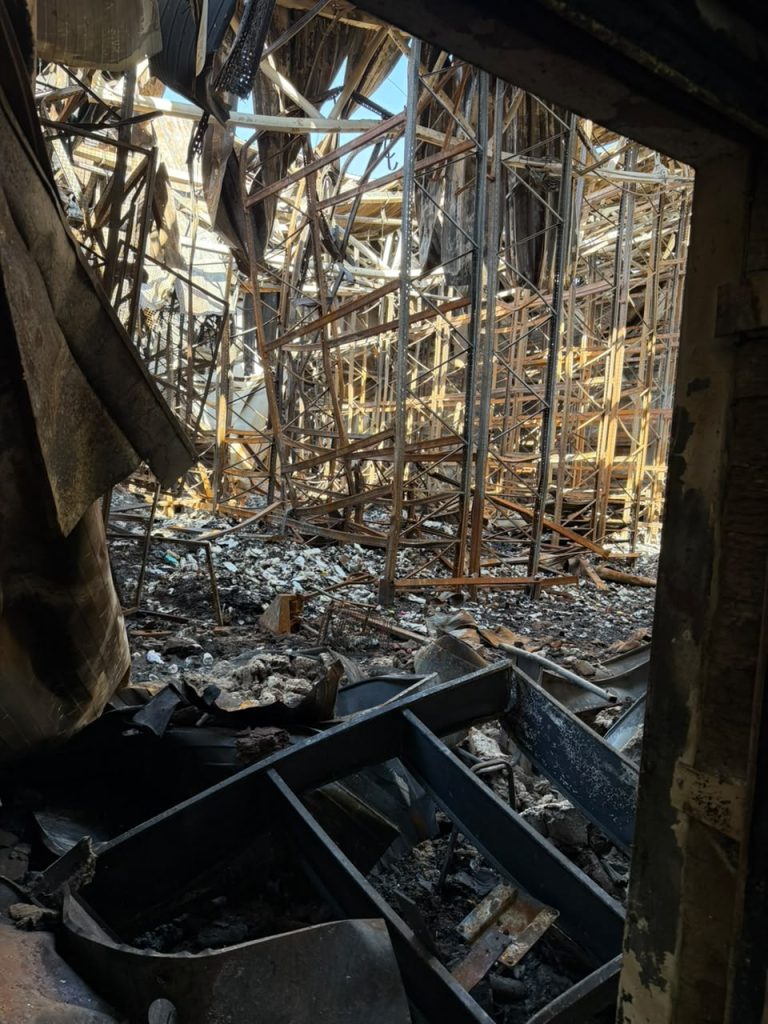
Between September 3 and September 14, 2026, Russian forces struck medical supply infrastructure in Ukraine including:
- The Biokon logistics complex in Boryspil district, Kyiv Oblast — a 45,000-square-meter facility and the country’s largest specialized pharmaceutical warehouse;
- The central warehouse of Apteka Dobroho Dnya, a chain of more than 800 pharmacies;
- Facilities of Teva Pharmaceuticals, hit twice;
- One of the World Health Organization’s main humanitarian warehouses;
- An Optima-Pharm warehouse in Kyiv, hit by two ballistic missiles at a site Russian forces had already destroyed in 2025;
- Universal Logistic, a 21,000-square-meter temperature-controlled warehouse struck on two consecutive days;
- and a BaDM distribution complex in Odesa, set on fire during an attack involving 108 drones.
“These warehouses hold temperature-controlled medications – insulin, vaccines, biologic drugs, chemotherapy – that are destroyed both by direct attacks and by the loss of refrigeration,” said Dr. Heisler. “Medicines are not interchangeable. Replacing a specific product means re-importing it, clearing regulatory requirements, and rebuilding refrigerated distribution. These all take weeks to months. In that time patients with diabetes, cardiovascular disease, cancer, HIV, tuberculosis, and other life-threatening illnesses go without treatment. Interrupted antiretroviral and tuberculosis therapy does not harm only the individual patient; it drives drug resistance that will outlast the war.”
Two companies, BaDM and Optima-Pharm, distribute roughly three-quarters of all medicines sold in Ukraine, and both have now lost warehouses repeatedly. Optima-Pharm lost facilities in Kyiv and Dnipro in 2025, in addition to the September 2026 attack. BaDM lost complexes in Kyiv and Poltava oblasts in 2022, in Dnipropetrovsk oblast in December 2025, and the Odesa complex this month. Several sites have been struck a second time after being rebuilt.

Humanitarian medical supplies have also been directly hit. In July 2026, a Russian attack destroyed one of Ukrainian Red Cross’s key logistics hubs which stored critical equipment such as generators, heat pumps and medical equipment as well as humanitarian relief items intended for emergency response to shelling, fires, evacuations and other crises. On September 4, 2026, WHO reported that attacks had destroyed three of its humanitarian warehouses in three months.
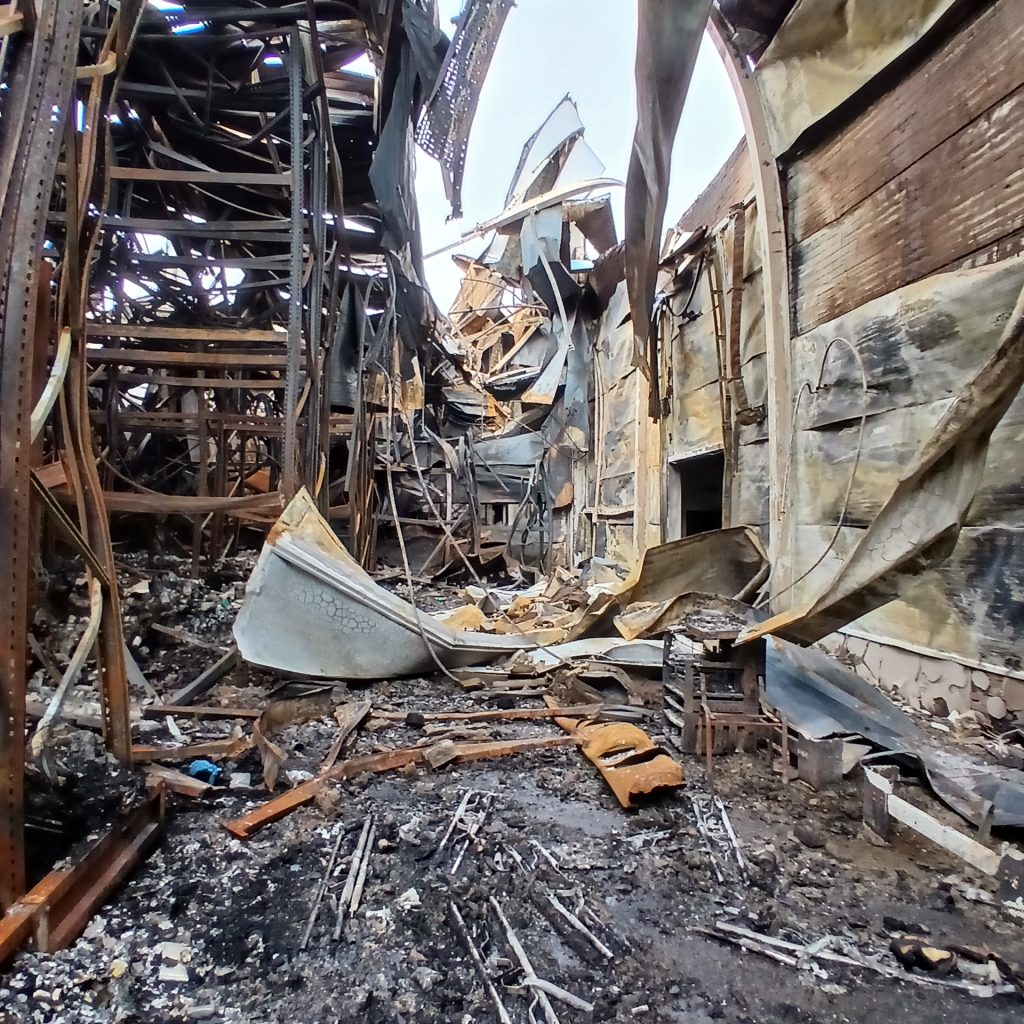
One of such warehouses, run by a pharmaceutical logistics company “Farmasoft”, was the largest specialized warehouse for imported humanitarian medical supplies. PHR experts have interviewed employees at Farmasoft about the impacts of Russia’s recent attacks.
“Our warehouse supplied all of Ukraine, every region, even remote villages and frontline areas,” says Yuriy Yeretin, director of development at Farmasoft LLC, told PHR. “About 90 percent of the supplies in the warehouse belonged to international humanitarian organizations. These supplies were intended for hospitals, especially hospitals in affected regions, as well as vulnerable population groups. For example, cholera medication and insulin – we used to have enough stored to quickly respond, but now we don’t. Everyone is at risk now. The destruction of this warehouse effectively means a deterioration in access to medical care.”
“It is currently very difficult to replace the functions of this warehouse with other logistics facilities, because all similar facilities have been destroyed, and what remains does not meet proper storage conditions. Even the medicines that survived – unique neurological drugs, antiretrovirals, and medications for reproductive care – are no longer being supplied because there is nowhere to store them, and no one wants to build new facilities due to the risk of attacks. Even if the war ends tomorrow, it will take several more years to restore all of this.”
“We have documented the pattern of Russia targeting Ukraine’s health system for more than four years,” said Uliana Poltavets, Ukraine program coordinator at Physicians for Human Rights. “With over 3,300 attacks on health care in Ukraine documented, Russian forces struck hospitals, ambulances, and health workers, and they are now systematically destroying the supply chain those hospitals depend on.”
International humanitarian law protects medical units and objects indispensable to the survival of civilians, including medical supplies and the facilities that store them. Parties must ensure the safe and uninterrupted provision of health care to civilians, consistent with their obligations under international human rights law, including the right to health. Despite these protections, PHR and partners have documented patterns of attacks on health care in Ukraine likely constituting war crimes and potentially crimes against humanity. Attacks on health care, including medical supplies, have nonetheless largely fallen outside of existing accountability processes.
PHR calls on the Russian Federation to cease all attacks on health care, including on medical warehouses, transport, and distribution infrastructure. We also urge United Nations members states, the United Nations, international and regional bodies, and accountability mechanisms to press for an immediate end to attacks on Ukraine’s health infrastructure, including its medical supply chain, and to investigate such attacks as potential war crimes and crimes against humanity. They should also support the emergency replacement and protected storage of medicines and ensure that destruction of Ukraine’s health system and medicine supply is reflected in accountability, compensation, reparations, and any future negotiated settlement.
An interactive map of attacks on health care in Ukraine is available at attacksonhealthukraine.org. Physicians for Human Rights (PHR), eyeWitness to Atrocities, Media Initiative for Human Rights, Truth Hounds, and the Ukrainian Healthcare Center have been working with Insecurity Insight, which monitors and compiles data on these incidents.

Physicians for Human Rights (PHR) is a New York-based advocacy organization that uses science and medicine to prevent mass atrocities and severe human rights violations. Learn more here.