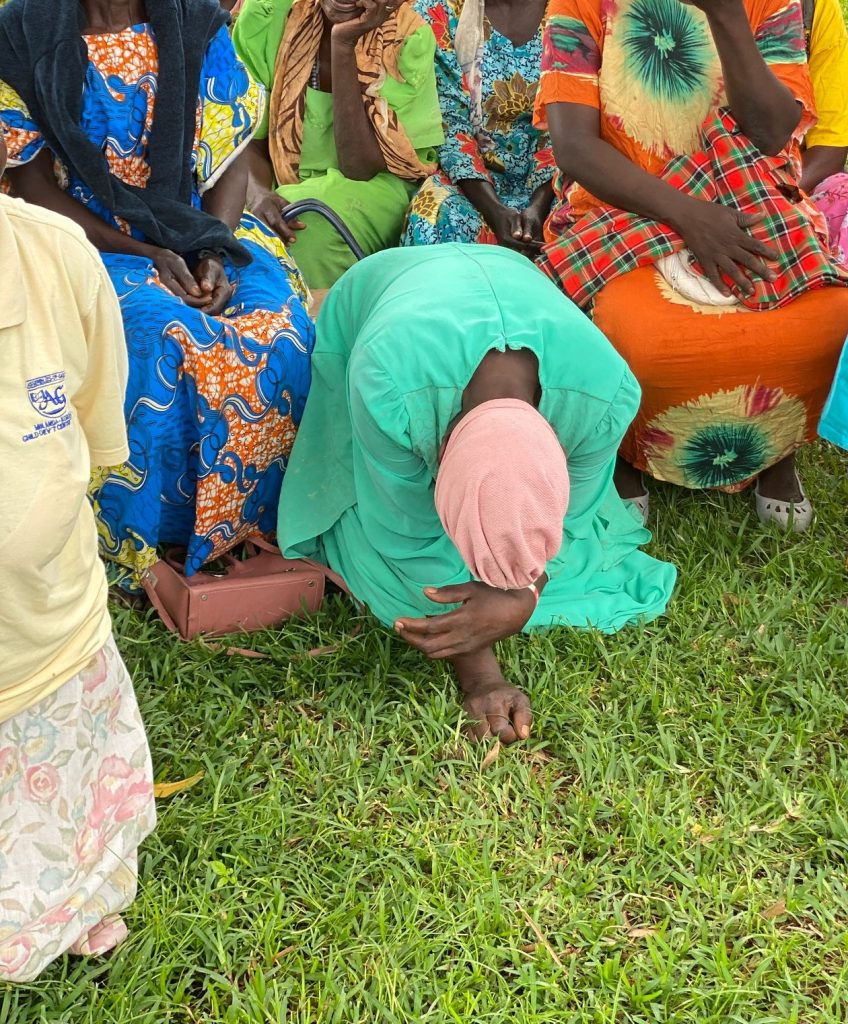
In a health clinic in Uganda, a doctor recounted to PHR that five babies were born HIV positive among the 20 deliveries at the facility between mid-January and mid-April 2025 – a devastating setback after years of virtually eliminating mother-to-child transmission of HIV. The head of another Ugandan health facility described his feeling of helplessness at seeing babies who required HIV treatment for a condition that was preventable:
“It’s like a mother seeing the children dying of hunger and yet you don’t have anything to feed them,” he said. “You see someone who [is] declining slowly-by-slowly, really. Something should be done.”
This new reality for families in Uganda is among the many alarming consequences resulting from the Trump administration’s actions to freeze U.S. foreign aid and eliminate crucial global health programs.
In 2025, PHR emerged as a leading organization exposing the profound harm caused by the Trump administration’s decimation of U.S. foreign aid on global health and human rights and advocating for this key funding stream to be salvaged. PHR launched investigations in Ethiopia, Kenya, the Democratic Republic of the Congo (DRC), Tanzania, Uganda, and South Africa, tapping into our extensive networks of partner health professionals in these regions to gather testimonies and data that show the catastrophic harms experienced by marginalized communities, and the legal, political, and ethical responsibility for the severe repercussions of the aid cuts.
PHR’s investigations revealed that these sudden aid cuts reversed decades of progress in areas including HIV/AIDS, maternal health, infectious disease response, and conflict recovery. Health clinics have been closed. Newborn care has been disrupted. Trauma care and services for sexual violence survivors in conflict zones have been dismantled. HIV outreach services have been cancelled. Infectious disease is rapidly spreading. And preventable deaths are mounting. These are not abstract losses – they are measurable harms affecting millions of people around the world.
By centering the testimonies of local health care workers and people living with HIV, among others, in our research briefs, PHR has empowered those most affected by the cuts to safely tell their stories and speak out for reform. A health care worker in Kenya told us: “programs on maternal health, HIV/AIDS, malaria, and even clean water have taken a hit, and it’s increasing the disease burden and mortality…We’re seeing stockouts of vaccines and [antiretrovirals] (ARVs). Basically, health interventions have been disrupted.”
A transgender woman living with HIV in Tanzania told PHR how the experience of receiving care has changed due to rising discrimination against LGBTQI+ community members following the Trump administration’s funding cuts to PEPFAR, the U.S. government’s global HIV/AIDS program: “even in the hospitals there has also been word going round… there has been stigma, like it was back then [before PEPFAR],” she said. “In the hospitals where we go to get services, they speak badly to us because of Trump’s remarks. They say that ‘Trump has made changes; because of that, what’s left for you is death, so you should repent.’”
PHR has led efforts to explain that the aid cuts are not only a policy shift, but a profound human rights crisis. These reductions in funding are not isolated budgeting decisions. They are a coordinated and systemic retreat from public health and – given the abruptness of the aid freeze – an assault on the world’s most vulnerable populations. These funding cuts also have broader global ramifications including the weakening of global health security, increasing the risk of infectious disease emergence that could threaten people worldwide.
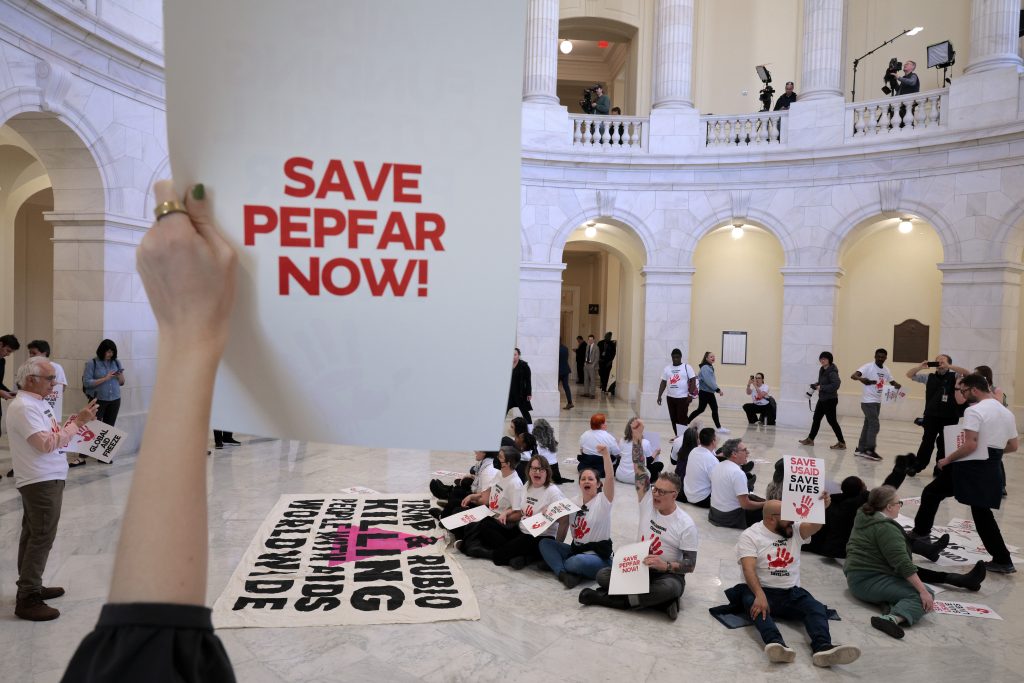
PHR squarely challenged the Trump administration’s dismantling of USAID and cuts to lifesaving foreign aid by bringing the fight to the courts. Together with the Open Society Justice Initiative, PHR filed amicus briefs in Global Health Council v. Trump and Personal Services Contractor Association v. Trump at the U.S. Court of Appeals for the District of Columbia Circuit. We offered the court perspectives otherwise absent: the voices of those who deliver care, advance lifesaving research, and bear the human cost of the U.S. government’s actions.
PHR and the Council for Global Equality also filed a lawsuit in the U.S. District Court for the Southern District of New York to compel the U.S. State Department to release critical PEPFAR data. For years, the State Department routinely released PEPFAR data on the number of people receiving lifesaving HIV treatment and prevention services as well as how the program was being implemented around the world. Under the Trump administration, that transparency abruptly stopped – a deliberate strategy to obscure the human cost of its policies. As a direct result of our legal pressure, the State Department released some of the PEPFAR data we requested.
Meanwhile, given the dearth of information available on the impacts of the U.S. aid cuts, the testimonials and data that PHR gathered in across Africa provided a rare, much-needed resource to policymakers. PHR briefed members of the U.S. House of Representatives and Senate, including the Senate Foreign Relations Committee, on our findings and urged immediate action.
PHR’s advocacy yielded concrete legislative results. The Consolidated Appropriations Act, 2026 incorporated language we recommended on protections for PEPFAR funding, continued funding for sexual and gender-based violence services in crisis settings, and data transparency. PHR’s research was also extensively covered by dozens of media outlets including The New York Times, The Guardian, NPR, The Washington Post, Vox, CNN, and The Independent, bringing our findings to a wide public audience.
The United States built PEPFAR and the broader architecture of U.S. foreign aid over decades, yet the Trump administration decimated much of it in a matter of months. The devastating consequences of this manmade humanitarian catastrophe will compound with every passing day that aid funding and crucial global health programs remain cut or compromised.
PHR will continue to pursue every avenue available to reverse this trajectory – documenting the harmful impacts, elevating the voices of those most affected, equipping policymakers with the evidence they need to act, and challenging the Trump administration in court. PHR was built for exactly this kind of sustained, evidence-driven fight and we will not stand down until the people whose health and lives have been put at risk by these policy decisions are protected.
This story was adapted from PHR’s 2025 Annual Report.