
Blog

Medical Text Drive a Success in Zimbabwe!


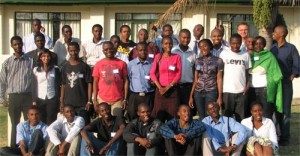
Medical Students During PHR Training

Medical students during PHR's human rights training, Fall 2008.

Last year, thanks to the dedication of our wonderful PHR intern Margeaux Fischer, a donation of 441 medical textbooks was shipped to the Zimbabwe Association of Doctors for Human Rights (ZADHR), with whom we helped organize a health and human rights training for medical students in 2008.

One of the ways we were able to help satisfy the needs of the students we met was through the donation of these medical texts. Our friends at ZADHR wrote about it in their recent eNewsletter:

ZADHR in conjunction with Physicians for Human Rights (USA) has donated books worth more than US$ 50,000 to the College of Health Sciences at the University of Zimbabwe. The total number of books donated is 441 and of these books 37 have already been selected for the reserve section as they are deemed very important and needs close surveillance on their usage.

ZADHR continues working with Physicians for Human rights in trying to improve access to medical books to medical students in Zimbabwe.

ZADHR would like to continue with such a positive relationships with the College of Health Sciences and they are looking for more ways they can improve access to information and other necessary resources at the College of Health Sciences.

College staff examining books

Senior staff from the college examine the donated books.

The ZADHR student leadership PHR trained two years ago have just conducted their own training for 37 students. Norman Matara, one of the leaders, writes:

We have just held a health and human rights where we have trained 37 students in HHR. What was really exciting was that we were the ones who made the presentations, sharing what you have taught us with our young brothers. We still fight for health rights.
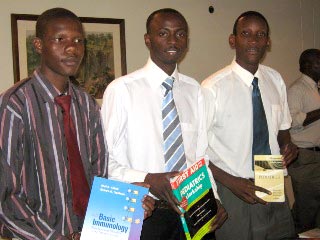
Students with donated books

Norman Matara (l) and fellow students with donated books.

PHR is proud to support these students and others around the world. We are in discussions with other US student chapters to see if another book donation drive can be put together. Let us know if you're interested or can help!

Blog

Post-Election, Progress on Protecting Refugees is Still Possible

The common ground and purposes that bound together the two houses of Congress and the Presidency may have narrowed since last Tuesday, but progress on immigration policy is still possible. Over at The Huffington Post, blogger and doctoral student Philip Wolgin has put together a list of modest proposals for the next two years of sharply-divided government, to ensure that we welcome deserving immigrants. Two of his suggestions in particular speak to the concerns of health professionals working to promote the human rights of vulnerable migrants: amending the material support to terrorism bar, and the one-year asylum filing deadline.PHR has long championed the cause of health professionals affected by overzealous interpretation of the law prohibiting anyone who has provided “material support” to terrorists from receiving humanitarian protection in the US (see, for example, this statement submitted to the Senate). “Material support” has been read by the Department of Homeland Security to include providing medical care, even where that care is rendered merely out of duty to care for whomever is in need of treatment, regardless of the person’s race, religion, beliefs, or other personal characteristics. Ironically, medical neutrality is a principle otherwise embraced by the US government, enshrined in documents including the Army Field Manual and State Department Human Rights Reports. Scores of health professionals who clearly are not terrorist supporters have been, and are being, senselessly denied protection under the present "material support" policy, including:

  • A Colombian emergency room doctor who treated a guerrilla brought into his hospital. After he reported the incident, as required, to the Colombian government, the guerrilla group began to threaten his life.
  • A West African woman who answered a human rights group’s call for volunteers and provided emergency first aid to fighters on both sides of her country’s civil war.
  • A Nepalese health professional who worked for a local Health Department, and in that role provided treatment to prisoners who included captured Maoist rebels.

Another unjustified barrier to gaining humanitarian protection in the US exists in the form of the asylum filing deadline: individuals must request asylum within one year of arriving in the US. Refugees miss this deadline for a variety of reasons, often having roots in their histories of persecution, and their struggles. Many are socially and linguistically isolated in this country, and do not become aware that they qualify for asylum protections until long after their arrival; others, such as LGBTI individuals, are frightened about revealing themselves and put off confronting their pasts for as long as they can. Our colleagues at Human Rights First recently released this report which shows how the filing deadline only serves to put legitimate refugees in peril, ultimately harming their health and well-being.Mr. Wolgin’s post is highly-recommended reading. Please join him and PHR in calling for our representatives in Congress to find common ground in a commitment to protect survivors of human rights abuses, and to take on these two much-needed reforms.

Blog

US Supports UN Commission of Inquiry to Investigate Crimes in Burma

Embarking on a trip through several Asian nations last week, Secretary of State Hillary Clinton publicly announced the United States’ support for the establishment of a United Nations Commission of Inquiry to investigate crimes in Burma. Unofficially announced months earlier, Clinton’s affirmation of support for an international investigation reflects the demands of Physicians for Human Rights and allied organizations which have been urging states to support an impartial inquiry into crimes in Burma.

Hillary Clinton speaking on US involvement in the Asia-Pacific region

Secretary of State Hillary Rodham Clinton discusses America's engagement in the Asia-Pacific region, Thursday, Oct. 28, 2010, in Honolulu, Hawaiicredit: Evan Vucci, Pool / AP Photo

Clinton’s remarks were part of a speech that largely focused on Burma’s upcoming elections, the country’s first in twenty years. United States officials and others in the international community have recognized that the elections scheduled for November 7 will be neither free nor fair. Government officials and human rights organizations from around the world have clamored for the military regime to release the approximately 2100 political prisoners and allow opposition parties to fairly contest the election. The constant crackdowns on opposition voices and political critics, however, including the recent sentencing of a monk to 15 years of hard labor for anti-election campaigning, indicate that the election will be yet another display of the regime’s disregard for international norms.

The Burmese regime, called the State Peace and Development Council (SPDC), designed the elections to silence opposition and keep its members and allies in power. The SPDC’s Political Parties Registration Law excludes significant numbers of opposition leaders and demands allegiance to the flawed 2008 constitution from all prospective candidates. The Election Commission, hand-picked by the junta, can cancel elections in areas deemed insecure and answers to no independent body. The Commission has already indicated that it will cancel elections in parts of Kachin, Karenni, Karen, Mon, and Shan states, areas where minority ethnic groups have long opposed the military rulers.

The world should remember, however, that even if the elections were openly participatory and peaceful, significant problems would persist after the elections when the 2008 constitution is implemented. The constitution was crafted unilaterally by the regime to perpetuate military rule, ensure impunity for even the most serious of crimes, and continue abuses against political opponents and members of ethnic groups.

The constitution does not provide for true civilian rule in Burma but rather allows the military to retain ultimate control over all levels of government. The constitution affords the Commander-in-Chief of the military significant power over civilian leaders. There are no standards for approval, qualifications, or term limits for the Commander-in-Chief, as there are for other posts listed in the constitution. The Commander-in-Chief is also responsible for the Ministries of Home Affairs, Defense, and Border Affairs, and can appoint these ministers without any significant check from the President or other civilian leader. The constitution allows the Defense Services to enlist the entire population into its service in the name of national security without any check from a civilian body. This extreme control over the people of Burma is the cornerstone of a military dictatorship, not a genuine civilian government.

The constitution goes even further to make sure that the military leadership controls significant portions of the government. For example, the Commander-in-Chief of the military effectively controls the National Defense and Security Council, a body that can declare states of emergency. In such a situation, the Commander-in-Chief would assume power of the legislative, executive, and judicial branches. The constitution permits no governmental body or individual, even the President, to impeach the Commander-in-Chief, who answers to no one regarding the actions of the military. The Commander-in-Chief can, however, through his control of the military-appointed members of the legislature, enact impeach proceedings against the President. The Commander-in-Chief also plays a greater role in selecting the President than the President does in appointing the Commander-in-Chief.

Other articles of the constitution demonstrate the regime’s effort to continue the militarization of politics that has taken hold over the past several decades. In an effort to perpetuate the systematic gender discrimination that has thus far marked the rule of the SPDC, the constitution limits key posts to men. The constitution refers to positions that are “suitable for men only”, indicating entrenched opposition to allowing women to fully participate in political life. By requiring the President and Vice-President to be well-acquainted with the military, which is made up of men only, the constitution effectively bars women from contesting the highest offices of civilian government. These parts of the constitution ensure that men, and most likely military-aligned men, will continue to control the civilian government after the election.

Perhaps the most jarring part of the constitution is article 445, which purports to grant a blanket amnesty to all military personnel for all crimes ever committed – even acts which may amount to crimes against humanity or war crimes under the Rome Statute. Although a culture of impunity currently protects criminals from accountability, the constitution will codify impunity and render victims of heinous crimes permanently unable to seek any measure of justice through the domestic legal system.

Physicians for Human Rights’ recent research shows evidence of the SPDC’s serious crimes which include killings, acts of sexual and gender based violence, the use of child soldiers, torture, and forced labor. When the constitution is enacted following the elections, the regime will continue its history of abuse. The election will not significantly change the current leadership of Burma but instead will allow criminals to get away with their crimes and enable the abuses of today to continue well into the future. Because the constitution excludes the Burmese legal system as an avenue to justice, the people of Burma and the international community must support other available methods of holding perpetrators of serious crimes accountable. Secretary Clinton’s addition to the chorus of voices calling for the United Nations to establish a Commission of Inquiry is a welcome first step to holding perpetrators of serious crimes accountable.

International attention is rightly focused on Burma leading up to the elections, but our demands for justice and accountability must not end on November 7. By moving forward with the creation of a commission of inquiry the international community can come closer to ensuring justice for the people of Burma.

Blog

Join PHR at the APHA Annual Meeting!

We're celebrating the power of health and human rights at the 2010 APHA Annual Meeting, November 6-10, 2010, in Denver.Join us for the Health Activist Dinner, which we're co-sponsoring on Sunday, November 7, 6-9 p.m. at Maggiano's Little Italy Restaurant, 500 16th St., just 3 blocks from the Convention Center. It's not too late to RSVP: call 312-996-5804. (Cost is $50, checks made payable to OHSI-Activist Dinner.)We're also giving several presentations throughout the meeting.

  • Chronic Problems, Common-Sense Cures: Volunteer Health Professionals Bring Expertise to Detention Health Care ReformMonday, November 8, 8:30 a.m. — Christy Carnegie Fujio (cfujio@phrusa.org)
  • Roles, Opportunities, and Current Dilemmas for Health Professionals in the Midst of Armed ConflictsMonday, November 8, 8:30 a.m. — Susannah Sirkin (ssirkin@phrusa.org)
  • Weaponizing Medicine: The Health Worker Campaign to Stop Torture and Reclaim Medical EthicsMonday, November 8, 10:30 a.m. — Susannah Sirkin (ssirkin@phrusa.org)
  • Population-Based Survey of Health and Human Rights: Documenting Crimes Against Humanity in BurmaMonday, November 8, 4:30 p.m. — Richard Sollom (rsollom@phrusa.org)
  • Human Rights, Social Justice, and AccountabilityTuesday, November 9, 8:30 a.m. — Hope O’Brien (hobrien@phrusa.org)
  • Drawing Outside the Lines: Building a Social Mechanism for Human Rights AccountabilityTuesday, November 9, 8:30 a.m. — Christy Carnegie Fujio (cfujio@phrusa.org)
  • Dr. Smith Goes to Washington: An NGO Effectively Deploys Volunteer Health Professionals to Reform Health Care for Immigration DetaineesTuesday, November 9, 10:30 a.m. — Christy Carnegie Fujio (cfujio@phrusa.org)

We'd love to see you there. Please email any of us for more information on our talks, or just to get together.

Blog

Still Not Out Of "El Pozo": Immigrants With Mental Disabilities Face Continuing Threats to Their Health and Human Rights

Confinement in detention is among the most painful indignities that a mentally ill immigrant can suffer. Consider the words of detainees themselves:

It was when I got into detention that I started losing hope and thought that it is useless to live. I grabbed a bed sheet and tied it to a piece of metal between the television and the wall…[but] one of my friends, a roommate, saw what I was about to do. She came and calmed me down. I didn’t tell the health staff, because if they had found out about it, they would have put me in a room that was much worse. I think many detainees would not tell the medical staff if they were thinking about killing themselves. They would be afraid of being put in segregation." (From Persecution to Prison: The Health Consequences of Detention for Asylum Seekers, p.76-78.)

This interview took place in the early part of the George W. Bush administration. Physicians for Human Rights has been working to preserve the health and human rights of immigrants with mental disabilities since then. Sadly, in all this time, little has changed. Accounts published in 2010 seem to concern the very same overzealous detention system and abusive practices documented close to ten years ago. One contemporary report states, “detainees are frequently segregated into special housing units or isolation when they are on suicide watch, [or] when they have exhibited symptoms of mental illness” (Justice for Immigration's Hidden Population, Texas Appleseed, p. 22). A recently released detainee told this report’s authors:

When they put you in “el pozo” [“the hole,” or solitary confinement] you only have a little space. You have a toilet and a little place where you can sleep. And there is a little place where they put the food, but they throw it without caring. They throw it as if you were an animal. It makes you lose control mentally. That is why I did not come out so well, mentally. I would lose my mind—I would lose my mind severely. I even wanted to commit suicide.

Throughout the duration of immigration hearings—not just in detention—the deck is stacked against people with mental illnesses. Unlike in criminal court, immigrants who can’t understand and defend their own interests due to mental disability, are not entitled to any legal help, or even to representation by a guardian. Upon being taken into immigration custody, people with mental illness are particularly likely to be transferred to long-term detention. The Department of Homeland Security (DHS) does not have authority to exempt many non-dangerous immigrants with mental illnesses from mandatory detention provisions.

Caring for people with advanced mental health needs in the detention context is never easy, and anecdotal reports abound of immigrants decompensating due to misdiagnosis, questionable medication choices, harsh punitive reactions to manifestations of mental illness, and simple lack of mental health care resource availability. No attempts are currently made to uniformly determine immigrants’ competence to participate in immigration hearings, nor are incompetent individuals offered treatment to restore them to competency.

As a result of these unethical practices, US citizens with mental illnesses have been mistakenly deported. Green card holders have been indefinitely confined to detention for years because Immigration Courts were uncertain about what to do with people with severe mental disability who could not participate meaningfully in their hearings. Severely traumatized survivors of persecution have given up their requests for humanitarian protection because they could not endure the conditions they faced while their cases were being decided.

With more information coming to light about the human rights abuses and suffering to which people with mental disabilities are subjected in the immigration detention system, there is renewed energy behind demands for reformed policies. In recent communications with officials at DHS, the Department of Justice (DOJ), and in Congress, PHR has been joined by numerous colleague organizations in calling for:

  • Use of proven methods to protect the rights of immigrants with mental disabilities: appointment of attorneys and requisition of competency evaluation by licensed health professionals trained in forensic psychology/psychiatry.
  • Reduction in detention of immigrants with mental illnesses, so that only those who are dangerous or flight risks are incarcerated.
  • Improvement in detention care, practices and record-keeping, including instituting mental health screening performed by health professionals, making more treatment options available to detainees at their choice, and limiting use of restraint and seclusion to instances in which there is an immediate threat of harm.
  • Release under safe circumstances: detainees with mental illnesses have a particular need for time to communicate with family and friends who may meet them on the outside; for help with basic needs such as climate-appropriate clothing, money for transportation, and a supply of medication; and for release at appropriate times and places—not in rural areas or the middle of the night, as has happened in the past.

Some of these recommendations would be implemented by passage of the Comprehensive Immigration Reform Act of 2010, recently introduced by Senators Menendez (D-NJ) and Leahy (D-VT). This bill would place strict limitations on the detention of vulnerable people like immigrants with mental disabilities, as well as on the use of solitary confinement, shackling, and strip searches. It would also impose higher and more effective standards for detention health care systems and for discharge medical planning.

Some recommendations are within DHS’s and DOJ’s discretion to implement. These agencies need to know that health professionals support common sense reforms to protect the health and human rights of immigrants with mental disabilities.

Please consider weighing in by signing a petition started by our colleagues at Change.org.

Dr. Kristen Ochoa is a forensic psychiatry fellow and clinical instructor at the USC Institute of Psychiatry and Law, and a member of Physicians for Human Rights' Asylum Network. She has published and presented on the subject of people with serious mental disabilities held in US immigration detention, most recently in the Journal of the American Academy of Psychiatry and the Law.

Blog

PHR Mourns the Untimely Passing of Student Advisory Board Member Sujal Parikh

PHR has sadly received word of the untimely death of?Student Advisory Board Member Sujal Parikh.Sujal, a student at the University of Michigan Medical School, was spending a year in Kampala, Uganda, as a Fogarty Fellow doing long-term research with children with HIV, after which he would have returned to UM for his 4th year. His death is a great loss for the health and human rights movement.UM's Center for Global Health says: "We are heartbroken as we inform you of the passing of our dear friend Sujal Parikh, an exemplary human being and colleague. Among other accomplishments and honors, Sujal was a member of our internal advisory committee and a CGH awardee for several initiatives. All of us at CGH benefited immensely from his advice and from his example of humble service to global health. Although his life was cut so short, his achievements were many and he touched and enlightened many lives."Sujal was the 2009 recipient of PHR's Emerging Leader Award, presented at the 2009 National Student Conference, in recognition of his dedication to human rights advocacy. Sujal's untimely death is a loss not only for those who knew and loved him but for the thousands whose lives his work would have doubtless touched as a leading human rights activist.>?We invite you to learn more about Sujal and offer your own comments and remembrances on our tribute page.

Blog

Update: Current Status of the Doctors Alaei

Kamiar and Arash have no more legal appeals left. Based on current understanding of political prisoners in Iran, inmates are eligible for release on special pardon occasions (such as religious or state holidays), provided they serve one-third of their respective sentences. On the eve of such major holidays, Iranian authorities make promises about imminent releases, thus encouraging family members to keep silent in exchange for freedom. Sadly, in the Alaeis’ case, these promises have not been kept. Kamiar has served about two-thirds of his original three-year sentence without a pardon, and is expected to remain imprisoned through 2011, while Arash has served two years of his six-year sentence, and will be imprisoned through 2014. Kamiar and Arash have received occasional furloughs, the most recent being a two-week furlough during Ramadan when they stayed with their mother. In prison, after an initial period of solitary confinement, the brothers have been placed together in the same cell. However, their prison jobs (working in the bakery and kitchen) have been revoked, and they are no longer allowed to volunteer in the prison health center as they had done earlier. Neither Arash nor Kamiar is seriously ill; however, they are reportedly having a very difficult time with their current situation. Reliable sources believe that the decision to free the brothers lies now in the hands of the Supreme Leader Ayatollah Seyyed Ali Khamenei. PHR continues to strongly advocate for their pardon and release.

Blog

The Obama Administration's Double Standard on Illegal Human Experimentation

Recent revelations that the US government conducted medical experiments in the 1940s in which Guatemalan soldiers, prisoners, and mental patients were intentionally infected with syphilis, gonorrhea, and other sexually transmitted diseases are truly horrific, and have generated widespread outrage and remorse.Top government officials — including President Obama, Secretary of State hillary Clinton, and Health and Human Services Secretary Kathleen Sebelius — have rightfully been quick to apologize to the President, government, and people of Guatemala for "such reprehensible research" (quote from joint statement issued by Secretary Clinton and Secretary Sebelius) which represented gross and unconscionable violations of ethical standards of human subject research.The director of the National Institutes of Health, Francis Collins, has said the Guatemalan research “represents an appalling example from a dark chapter in the history of medicine,” and has assured that American public that “today, the regulations that govern research funded by the United States government, whether conducted domestically or internationally, would absolutely prohibit this type of study.”But PHR is not convinced of the truth of Collins’s statement. In a June 2010 report,?Experiments in Torture: Human Subject Research and Evidence of Experimentation in the ‘Enhanced’ Interrogation Program, PHR detailed and analyzed evidence indicating that the Bush administration may have conducted illegal human research and experimentation on people in CIA custody. The research, which apparently was used to insulate interrogators from potential prosecution and to standardize the use of torture, may have violated the Nuremberg Code and other standards of medical ethics.The Obama administration, so quick to disavow unethical human subject research that occurred more than 60 years ago in Guatemala, so far has proved unwilling to investigate allegations of medical research abuses that occurred within the past decade under the previous administration.Creation of a federal commission to investigate abuses in Guatemala is certainly a welcome step, but also serves to underline the Obama administration’s double standard for such inquiries. The US public should demand to know not only what happened in Guatemala in the 1940s, but also?what medical abuses might have been committed in our name during the past decade to people in CIA custody. Until those potential crimes are investigated, the administration’s apologies have a hollow ring indeed.

Blog

President Obama Should Have Gone Farther on Human Rights in His UN Speech

In his speech before the UN General Assembly yesterday, President Obama took some important initial steps in laying out his vision for the role of human rights in achieving long-term foreign policy goals. The President rightly recognized that human rights go beyond just political and civil rights and he explored themes tying human rights to development and government accountability. But he didn’t take these ideas all the way to where his vision seems to lead: A full embrace of all the concepts in the Universal Declaration of Human Rights, including economic, cultural, and social rights.The President cited the UDHR as his starting point:

One of the first actions of this General Assembly was to adopt a Universal Declaration of Human Rights in 1948. That Declaration begins by stating that, “recognition of the inherent dignity and of the equal and inalienable rights of all members of the human family is the foundation of freedom, justice, and peace in the world.” The idea is a simple one — that freedom, justice and peace for the world must begin with freedom, justice, and peace in the lives of individual human beings.

Through this focus on the impact of human rights on the lives of individual human beings, the President acknowledges the essence of the UDHR. What the President does not make explicit, though, is that the rights that potentially impact on the greatest number of lives — especially those of poor and marginalized populations — are embodied in the Declaration as economic, social, and cultural rights.That’s a missed opportunity. As crafted under the leadership of Eleanor Roosevelt, the UDHR viewed all human rights as intertwined and mutually dependent. Civil and political rights were only a part of a broader conception of justice and human dignity which addressed the needs of the whole person. The drafters believed that the full potential of the human being could only be reached within a framework that included social, economic, and cultural rights.Philosophically, there is no essential difference between these categories of rights; only the politics of the Cold War led to an artificial division between them and a false perception of a hierarchy in which civil and political rights took precedence. The Declaration’s blueprint and the international laws flowing from it recognize that a decent standard of living, jobs, housing, health care, education and food are rights just as fundamental as voting, fair trials, and freedom of expression. These essentials for human survival are not matters of charity or benefits, but rights. When people have rights, governments have obligations and citizens can make claims upon them. Officials are accountable for delivery, budgets are transparent, and people must be able to participate in planning and provision of services. The international standard requiring “progressive realization” of these rights means that governments cannot backslide. It means that advocacy to assure rights is in order, not merely sympathy for the victims or half-measures to fill gaps when governments do not deliver.The President showed that he understands the importance of accountability when he observed:

The common thread of progress is the principle that government is accountable to its citizens. And the diversity in this room makes clear — no one country has all the answers, but all of us must answer to our own people.

The logic of focusing on the impact of rights on individuals and a recognition of the crucial need for government accountability seems to lead inevitably to acceptance of the importance of economic, social, and cultural rights alongside political and civil rights. The full exercise of political rights can only occur with a foundation of health, security, and education. Those who are sick and lack medical care, for example, are unable to exercise their political and civil rights. In this context, PHR places special emphasis on the right to the highest attainable standard of health. The right to health, grounded in Article 25 of the UDHR, and expanded on in the International Covenant on Economic, Social, and Cultural rights, should be fully integrated into US human rights policy both abroad and at home, along with all the other rights in the Covenant. The failure of a nation to provide the highest attainable standard of living adequate for health and well-being as guaranteed in Article 25 of the UDHR is a human rights violation.To complete the vision he began to set out yesterday, the President should signal that his Administration will take another look at the possibility of submitting to the Senate for ratification the treaty on Economic Social and Cultural Rights which the US signed in 1979.After more than 60 years of willful neglect, it is time for the United States to fully and explicitly recommit to the full range of human rights it accepted by approving the UDHR in 1948. As the Declaration recognizes, human rights are indivisible and all must be respected if, as Eleanor Roosevelt put it, human beings are to be lifted to “a higher standard of life and a greater enjoyment of freedom.”

Blog

PHR and ACP Support Saudi Doctors Who Refuse to Harm Patients

PHR and the American College of Physicians (ACP) have sent a letter to the Saudi Minister of Health to support Saudi physicians and hospitals who have refused to inflict punitive harm on their patients.

Amnesty International has reported that a court in Tabuk, in the northwest of Saudi Arabia, has approached a number of hospitals asking about the possibility of cutting a man's spinal cord in order to carry out a punishment of "qisas" (retribution), which has been requested by the injured victim, as is his right to seek under sharia law.

One hospital did say it would be possible to injure the man's spinal cord in the same place as the damage he was alleged to have caused his victim in a fight more than two years ago. The accused used a cleaver which resulted in the victim's paralysis.

In previous retribution cases, Saudi courts have passed sentences that have include eye removal and tooth extraction, in a literal interpretation of "an eye for an eye, a tooth for a tooth". The court may decide, however, not to impose the paralysis punishment; the man has already been sentenced to seven months imprisonment for the crime. 

The British Medical Journal's Peter Moszynski, in writing about this judgment, quotes Frank Donaghue, PHR's CEO, who said, “In this day and age it is unthinkable that medical doctors would consider using their training and skill to intentionally harm another human being as part of a judicial process. It would be a violation of medical ethics in the extreme. This case is cause for legal institutions everywhere to scrutinize their laws to ensure that doctors are able to comply with their most basic duty to do no harm.”

Get Updates from PHR