Report

Aiding Torture: Health Professionals' Ethics and Human Rights Violations Demonstrated in the May 2004 CIA Inspector General's Report

This six-page white paper (PDF) shows that the extent to which American doctors and psychologists violated human rights and betrayed the ethical standards of their professions by designing, implementing, and legitimizing a worldwide torture program is worse than previously known.

Blog

Training Opportunities for Health Professionals Interested in Helping Torture Survivors

There are several upcoming training opportunities for health professionals interested in learning more about the medical documentation of survivors of torture and trauma.PHR is hosting two trainings for current and prospective Asylum Network volunteers on how to diagnose, evaluate and document the physical and psychological after-effects of torture and other severe human rights violations.Save the date and stay tuned for more details on how to register:

Aiding Survivors of Torture: Medical Documentation of Asylum SeekersSaturday, October 24, 2009Miami Miller School of Medicine; Miami, Florida

February, 2010New Orleans, LouisianaExact date and location to be determinedHuman rights colleagues are sponsoring the following training sessions which you also may be interested in attending:

New England Survivors of Torture and Trauma Program (NESTT) is hostingBuilding NESTT:? Working with Survivors of TortureSeptember 23-25, 2009, Burlington, VermontRegister by September 11, 2009 [download id="13"] [download id="14"]

Boston University School of Social Work is hosting a workshop entitledEffective Practice with Refugees and ImmigrantsOctober 3, 2009Call (617) 353-3756 for more information [download id="15"]

Blog

Mugabe threatens repeat of 2008 disaster

President Robert Mugabe today threatened to ban humanitarian organizations from operating in Zimbabwe. Calling these nongovernmental organizations (NGOs) "a type of government in the background of a formal government," Mugabe questioned the "advisability of having NGOs" remain in the country.As PHR reported in its January 2009 report, Health in Ruins: A Man-Made Disaster in Zimbabwe, Mugabe's

policy of restricting food aid to areas that support the opposition party … has persisted and was used during the recent 2008 elections…. ?This restriction of food became most blatant in June through August 2008, when the Mugabe government banned all charitable organizations from distributing food or from operating in Zimbabwe's rural areas.

Banning NGO operations and politicizing humanitarian aid in Zimbabwe is the surest way to deteriorate people's health. ?Such myopic action would also quash any hope for a resolution to the current crisis.

Blog

Ask the Special Envoy to Sudan the Hard Questions

This week, congressional hearings will give the crisis in Darfur the attention it deserves. Using the script below, call your Senator today to urge them to ask the tough questions and demand a US plan of action on Darfur (instructions below the jump).The United States has been without a comprehensive strategy for Sudan for too long. At these hearings, the House and Senate will question influential figures such as U.N. Ambassador Susan Rice and U.S. Special Envoy to Sudan Major General Scott Gration on the United States’ plan for promoting peace in the Sudan. By calling your Senator today, you can help us expedite a comprehensive peace plan for Sudan that will end abuses and enable refugees and the internally displaced to return home and rebuild their lives in safety.Hundreds of thousands of people have already died and at least two million civilians have been displaced in the ongoing genocide in Darfur. Sudanese are continually tortured and killed, evident in Nowhere to Turn: Failure to Protect, Support and Assure Justice for Darfuri Women, a report released by PHR in May 2009. The report examines the long-term impacts of rape and other sexual violence experienced by women who fled attacks on their villages in Darfur and are now refugees in neighboring Chad. These women and other innocent civilians continue to be abused and murdered every day.The most important hearing—with US Special Envoy Scott Gration–happens tomorrow. Call your Senator today to urge them to attend this hearing and press Gration for an effective peace plan for Darfur. (Instructions and call script are below the jump.)Want to do more? Meet with your Senator’s office in your state. Email us at sudan [at] phrusa [dot] org and we can help you set up an in-district meeting in August where you can urge your Senator to take action to achieve peace, security and justice for the people of Sudan.

Instructions and Script for Calls

  • Call 202-224-3121 and ask to be connected to your Senator.
  • Introduce yourself as a member of Physicians for Human Rights and a constituent of your Senator.
  • Use the call script below:
  • "I am calling to urge Senator ____ to attend the Senate Foreign Relation Committee hearing on Thursday, July 30th. The Committee will question Special Envoy to Sudan Major General Scott Gration on progress in Darfur, and it is essential that Senators press the Special Envoy for a clear and effective US policy on Sudan. People continue to be killed and abused in Darfur and Chad. These hearings must demonstrate that the Obama Administration is ready to press the Government of Sudan and stakeholders in the region to assure immediate cessation of atrocities, protection of civilians and a more effective peace process. Senator ___ can help by asking the tough questions of Special Envoy Gration tomorrow."

  • Got an extra minute? Call Senator Kerry and/or Senator Lugar, the Chair and ranking minority member of the Foreign Relations Committee respectively, and send them the same message.
  • After you've called your rep, send an email to Sarah Kalloch (skalloch [at] phrusa [dot] org) and tell us how the call went.
Blog

Harvard International Review Features PHR Zimbabwe Investigation

Based on findings from a recent PHR investigation, the Harvard International Review yesterday published a feature article on Zimbabwe's Man-Made Disaster.The article traces the antecedents to the current health crisis and the unprecedented national regression that occurs when a government reverses its population’s access to food, clean water, sanitation and healthcare.? It concludes with a prescription for redress.

Blog

Act Now to End the HIV Travel Ban

The US government is very close to ending the discriminatory HIV Travel Ban, which prohibits people living with AIDS from entering the United States. Take action today by telling the Department of Health and Human Services (HHS) to end the HIV Travel Ban.Feel free to use the following talking points and your own experience to draft your comment to HHS, which is sponsoring a public comment period on lifting the travel ban July 2nd through August 17th, 2009. The more comments they receive urging them to lift the ban, the better!Restricting entrance to the US based on HIV status has not been shown to protect the public's health. The restrictions are discriminatory, violate basic human rights, and limit effective responses to HIV:

  • Introduction of disease: The World Health Organization, the CDC, and public health groups around the world have stated that banning the entry of HIV-positive immigrants into a country is not an effective method of keeping HIV from spreading throughout the country. Studies show that immigrants are more likely to contract HIV in the US and spread it to their country of origin than to spread the disease within the US.
  • Stigma: The Travel Ban promotes discrimination against HIV-infected immigrants in the US and causes many immigrants to avoid getting tested or seeking treatment, for fear of deportation and stigma. The ban also reinforces stigma against all HIV-infected individuals, discouraging US citizens from seeking testing and treatment.
  • Treatment barriers: If people entering the US are caught carrying HIV medications, they can be questioned or denied entry. This pushes people with HIV to suspend their treatment while traveling to the US, causing them to potentially develop drug resistant strains of the virus and increasing the likelihood of treatment failure.
  • Resource allocation: Every person over the age of fifteen who is applying to be a permanent resident of the US is tested for HIV by the US Immigration and Naturalization Service; this is the largest HIV testing program in the world. The resources used for this testing could be better allocated by providing HIV education, testing, and treatment in immigrant communities. Due to poverty and to feelings of isolation and alienation, immigrants are more likely to engage in risky sexual behavior or drug use. The language barrier often limits immigrants' access to HIV education.
  • Freedom of movement: The Travel Ban limits choice of country of residence based solely on HIV status. The ban also restricts HIV-positive immigrants' trips to their countries of origin because they fear being denied entry back into the US.
  • Economic contribution of immigrants: In 1987, when the Travel Ban was first instituted, HIV infection often barred people from leading healthy, productive lives. With the development of new treatments, that is no longer the case. HIV-positive immigrants can often make positive contributions to the US economy. Many of life-extending treatment options available in the US may not be obtainable or affordable in an immigrant's country of origin.
  • Expert opinion: Over 200 health groups, including the American Medical Association, the American Public Health Association, the World Health Organization, and Physicians for Human Rights have opposed the current US policy.
  • Immigrants in detention: Over 30,000 immigrants are detained in the US at any one time while they await deportation or an immigration hearing or verdict. The detention facilities often fail to provide adequate HIV treatment and testing services to immigrants.
Blog

Susannah Sirkin Discusses Afghan Mass Grave on PBS Worldfocus

Obama pledges review of alleged mass grave in AfghanistanSeven years ago, investigators for the Boston-based group Physicians for Human Rights discovered what appeared to be a mass grave in northern Afghanistan.The bodies, they were told, were those of Taliban fighters who had been rounded up by Northern Alliance forces shortly after the U.S. invasion in 2001 and stuffed into metal shipping containers for transport to a nearby prison.By the time they arrived, allegedly hundreds — perhaps thousands — were dead from suffocation, while others were shot by guards, and their bodies dumped in a field.Susannah Sirkin, the deputy director of Physicians for Human Rights, joins Martin Savidge to discuss the Obama administration’s position on the case and the current state of the grave site in Afghanistan.

Blog

PHR Dasht-e-Leili Investigators on Fresh Air Today

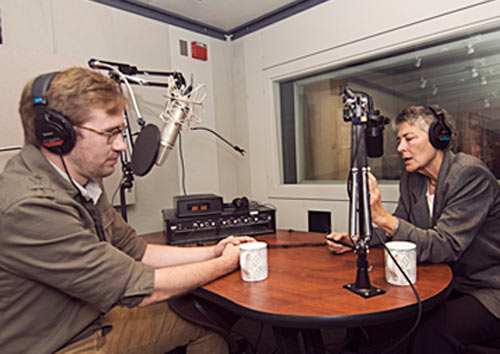
Nathaniel Raymond and Dr. Jennifer Leaning speak on Fresh Air about the mass grave at Dasht-e-Leili, Afghanistan

Nathaniel Raymond has been leading the investigation into the alleged 2001 Dasht-e-Leili massacre in Afghanistan. Dr. Jennifer Leaning discovered the mass grave of Taliban prisoners. (Photo: Ben Greenberg)


A Mass Grave In Afghanistan Raises Questions

Fresh Air from WHYY, July 23, 2009 – In 2001, shortly after the American invasion of Afghanistan, hundreds or possibly thousands of Taliban and Al Qaeda prisoners surrendered to Gen. Abdul Rashid Dostum, an Afghan warlord on the payroll of the CIA.

Over the course of three days, the captured prisoners were allegedly packed into shipping containers without food or water. Many suffocated, while others were reportedly shot by guards. The mass grave has never been fully exhumed, and human rights groups allege that the Bush administration discouraged investigation of the matter, even after the urging of officials from the FBI, the State Department and the Red Cross.

Dr. Jennifer Leaning, Nathaniel Raymond, and Dr. Nizam Peerwani of Physicians for Human Rights discuss their investigation of the alleged massacre and how the Obama administration is dealing with the issue.

Blog

Rally on July 25 for the Global Day of Action for Iran!

Stand in solidarity with political prisoners unjustly detained in Iran by taking part the Global Day of Action for Iran on July 25 in cities around the world. United for Iran, a non-partisan collaborative of individuals (including? Nobel Prize winners Archbishop Desmond Tutu, Shirin Ebadi, Jody Williams) and human rights organizations (including PHR), is bringing people together to rally in support of human rights for the people of Iran during this violent time in Iran's history.

The Iranian government has arrested hundreds of people following the June 12 elections. These prisoners risk torture, execution and other violations of their basic human rights. Human rights lawyers and activists have been particularly targeted, and many are now being detained in section 209 of Tehran's notorious Evin prison.

The Global Day of Action for Iran is the first global rally for human rights in Iran. Events are being held in more than fifty cities around the world—from Boston to Berlin, New York to Los Angeles to Lahore, Oslo to Ouagadougou. Don't miss this opportunity to join with the international community to rally for human rights in Iran!

United For Iran

Blog

Domestic Violence Survivors Seeking Refuge in the US Get Great News, But Need Your Help

Gender-based violence threatens the lives and safety of millions of people around the world each year. In the US alone, approximately 1.3 million women and 835,000 men are victims of gender-based violence annually. Sadly, violence against women is more the rule than the exception in many parts of the world. Rape is a routinely-used tool of war. Brutal domestic violence against women—and also men—goes unnoticed by neighbors and unpunished by authorities.

For over a decade, survivors of gender-based violence who have fled their home countries to seek safety in the United States have been in legal limbo: unable to return home for fear of brutality, yet not knowing if the US government will let them remain in safety.

While countries including Sweden and Spain permit asylum claims based upon sex or gender, the Bush Administration never completed rules that would make asylum a possibility for immigrant survivors of domestic and sexual violence.

The Obama Administration now has opened the door for survivors of gender-based violence to apply for asylum in US, giving hope for both women and men survivors to rebuild their lives in safety. While this move is good news, the next hurdle for survivors—making a successful asylum claim—will be very difficult.

Fearing critics’ warnings that its policies will “open the floodgates” to domestic violence survivors from around the world, the US government will require a very high level of proof in asylum cases based on domestic violence. In order for most applicants to succeed, they will need to provide the government with detailed and persuasive affidavits from health professionals based upon an expert assessment of forensic evidence.

PHR’s Asylum Network plans to play a key role in these cases by matching volunteer health professionals with pro bono lawyers working to help survivors to rebuild their lives free from violence in the US.

For more information on PHR’s Asylum Network and how you can join an extraordinary national network of health professionals and volunteer your time to provide forensic evaluations for survivors of abuse, please email asylum [at] phrusa [dot] org.

Get Updates from PHR