Blog

Finding Evidence: Inside PHR's Asylum Training

PHR Asylum Training - New Haven

On a recent Saturday this October, a group of 40 health professionals squinted at two photos projected onto a screen in a Yale Medical School classroom. The photos showed a man’s ears—left and right—and atop each ear a pea-shaped mound of scar tissue.

“I’d say this scarring is consistent with an injury received after electrodes were attached to both ears,” said Dr. Katherine McKenzie, an internist and director of the Yale Center for Asylum Medicine in New Haven, Connecticut.

“Could it also be scarring from ear piercings?” asked one of the health professionals gathered in the room.

“That’s possible,” said Dr. McKenzie. The class then reviewed together what it means to classify a scar as “consistent with” a particular type of injury – the very nature of the definition acknowledges there are many possible causes.

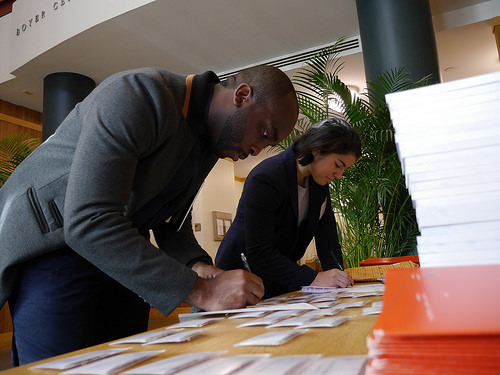
The exercise was part of a daylong training run by the Asylum Program at Physicians for Human Rights (PHR) to teach doctors, psychologists, social workers, and other health practitioners how to recognize and document evidence of torture, sexual violence, and ill-treatment. Those health professionals can then use the skills to help people seeking asylum in the United States.

Dr. McKenzie has evaluated some 70 asylum seekers who have been tortured or abused back in their home countries and are now seeking refuge in the United States. Under federal law, people can be granted legal protection in the United States if they have a well-founded fear of persecution in their home countries based on their race, religion, national origin, membership in a particular social group, or political opinion. Evidence of torture or ill-treatment is often used to bolster claims of persecution in immigration court.

“There’s something about the work of seeing asylum seekers, interacting with them,” said McKenzie, who has been working as an asylum trainer with PHR for two years. “Hearing what happens to people, seeing their resilience — it inspires you, and you really feel like you’re able to contribute in a positive way to all the global displacement and global issues that are occurring.”

The health professionals gathered in New Haven—and at similar trainings PHR holds throughout the United States—come from many backgrounds but share an interest in helping people who have left behind homes and jobs and families to seek safety in the United States. After attending a PHR training, those health professionals can then sign up with PHR’s Asylum Network, a group of more than 500 volunteers who conduct assessments of asylum applicants nationwide.

“People always forget that you have to first document something that’s going on, and you have to do it in a way that it’s reliable and it can be used consistently,” said Dr. Husain Poonawala, a 31-year-old clinical fellow in microbiology who attended the Yale training this October. “People assume that, because you’ve trained as a clinician, it will be easy for you to do it. Not necessarily.”

Using slides and anecdotes, Dr. McKenzie shows trainees how to recognize and document scars that show evidence of torture and ill-treatment. A small circular scar might indicate burning with a hot poker; a ragged line may indicate someone was cut with a serrated knife.

At times, asylum applicants have physical scars that help bolster their claims of persecution. But increasingly, applicants evaluated through PHR’s network have no physical evidence of the trauma they’ve endured. During the October training, clinical psychologist Dr. Judy Eidelson discussed how best to conduct a psychological assessment of asylum seekers and detect the sometimes hidden signs of their suffering.

“Many of these people arrive and all they really have is their story. They don’t have the kind of evidence that the legal system would really like for them to prove their claims,” said Dr. Eidelson. “Health professionals are among those people who can bridge that gap by understanding and interpreting the physical and psychological symptoms that people carry with them, sometimes as the only evidence of what they’ve been through.”

Whether their scars are physical or psychological, the idea isn’t just to document the evidence — but to show whether or not the evidence gathered is consistent with the story an asylum applicant is telling, and then communicate that evidence to a judge in immigration court, often in the form of a written affidavit.

“Part of what we do here is bridge the gap between the medical world and the legal world,” said PHR’s Meredith Fortin, an attorney who runs the organization’s asylum program. “We want to show health professionals that they can use their skills to help to the influx of people seeking safety in the United States.”

Indeed, PHR has seen an upswing in the number of requests for asylum evaluations for people from Central America, in particular women and children fleeing domestic violence. Fortin said a majority of PHR’s asylum evaluations are now conducted on behalf of people from that region, and lawyers are often seeking psychological evaluations more than medical ones.

“The immigration court system in the United States can feel a bit like the wild west,” said Fortin. “The grant rates of asylum judges nationwide vary wildly, and asylum seekers often have little access to evidence to prove what happened to them. Our volunteer health professionals can help asylum applicants use the power of science and medicine to back up their claims. And we hope our volunteers can also become human rights defenders, advocating for a more just, more humane immigration system.”

Blog

Suffering Ex-Guantánamo Detainees Deserve Medical Care and Support

Former Guantánamo detainee Abu Wa’el Dhiab, who was resettled to Uruguay and recently went missing for several weeks, is in the midst of a hunger strike. He is reportedly refusing food, and now liquids, to protest his inability to leave the country and join his family abroad. Dhiab accepted the transfer to Uruguay, reasonably expected to be reunited with his wife and children, and has felt frustrated and disheartened by the delays.

Dhiab fell off the radar this summer, sparking international speculation and apprehension based on the assumption that any former detainee might be up to something sinister. Instead, Dhiab traveled to a Muslim community near Brazil’s border. “It was the first Ramadan that I was going to spend among Muslims in 15 years,” he told the Associated Press. He then went to the Uruguayan consulate in Venezuela, pleading with officials there to send him to Türkiye to see his family for the first time since he was detained.

To be clear, Dhiab is legally entitled to leave Uruguay. The United States never charged him with a crime, he was formally cleared of any ties to terrorism, and he can hardly walk without crutches. Nonetheless, he was treated as a security threat and jailed in Venezuela before being deported back to Uruguay, where he’s been unable to get the social and medical support he needs.

Dhiab’s situation is tragic. It was also entirely avoidable. We were among the independent medical professionals who evaluated Dhiab and examined his medical records while he was held at Guantánamo from 2002 until 2014. Years of prolonged detention, emotional and physical distress, and the death of his son in Syria’s ongoing conflict inflicted deep psychological trauma. In addition, Dhiab suffers from chronic pain and partial paralysis from a prior car accident.

Our review showed that the staff at Guantánamo routinely withheld Dhiab’s crutches and wheelchair and refused to give him basic over-the-counter painkillers. They also subjected him to repeated “forcible cell extractions” – a tactic typically reserved for non-compliant prisoners, which was unnecessary in Dhiab’s case and aggravated his medical condition. After he and dozens of other detainees began a hunger strike, Dhiab was forcibly fed while strapped into a five-point restraint chair.

The American and World Medical Associations prohibit force-feeding of competent adults under any circumstance, and Dhiab was certainly competent – just desperate to be heard. In a lawsuit filed by Dhiab’s lawyers, a federal judge said the procedure caused “unnecessary pain” and “agony.” There was no medical basis for force-feeding Dhiab. He was simply punished for protesting.

As a result of these experiences, Dhiab has complex medical, psychological, and social needs. Research shows that people who have been tortured in detention need a range of services to support their reintegration and rehabilitation. Yet upon Dhiab’s release, instead of making an individualized transfer plan to address those complex needs, the U.S. government loaded him on to a plane to a place far from anything or anyone familiar.

Many former Guantánamo detainees are being released with serious medical conditions. Earlier this year, a morbidly obese, chronically ill Egyptian man was transferred to Bosnia without adequate medical support. Another detainee was released in April weighing around 75 pounds, after a decade of force-feeding. Last year, a former detainee in Kazakhstan died of kidney failure just six months after his release.

The conditions at Guantánamo Bay inflicted lasting physical and psychological harm on many men. The Obama Administration has commendably worked to free as many detainees as possible. But the plan to expedite transfers has shortchanged the men who need more extensive care in the countries where they are resettled. As a recent New York Times investigation shows, many men detained in CIA and military custody suffer from lasting mental and physical harm as a result of their mistreatment. They have not received support.

As physicians, before we release a patient from the hospital, we plan a therapeutic handoff which includes medical needs down the road. That’s exactly what’s needed here. Authorities already review the medical condition of each detainee as part of a rigorous, pre-transfer security review process. This information should also be used to devise an appropriate post-detention care plan, one that addresses each detainee’s medical and psychological needs.

Dhiab’s tragic circumstances serve as a teaching case. Individualized treatment and support could have alleviated the stress of being alone in an unfamiliar country, after years of indefinite detention. When the U.S. government released him, it gave him a letter stating unequivocally that he is not a terrorist. That letter helps, but these men need much more to reverse the impact of Guantánamo. Ensuring that they receive rehabilitation and support in the countries that accept them should take the highest priority.

Report

Where There is Police, There is Persecution

Minority groups living in Myanmar have faced profound and pervasive human rights violations for decades. This report documents widespread abuse by military and security forces in Myanmar’s Rakhine State, including detentions, extortion, beatings, raids, and restrictions on movement targeting the mostly Muslim Rohingya minority. It concludes that the Rohingya face such a systematic denial of rights that it pervades nearly every aspect of daily life.

Rakhine State, in western Myanmar, is among the country’s poorest regions, and PHR found that systematic abuse of the Rohingya – as well as of the minority Buddhist Rakhine people – is only serving to exacerbate poverty and deprivation. As part of the report, PHR’s investigators documented and mapped a network of 86 security checkpoints scattered across northern Rakhine State, where Rohingyas are routinely forced to pay bribes or face jail time and other types of brutality at the hands of security forces. Many Rohingyas told PHR that they often avoided seeking advanced medical care because of their fear of passing through checkpoints and suffering the consequent abuse and humiliation.

In addition to the system of checkpoints, PHR gathered evidence of raids and a pervasive surveillance system in Rohingya-populated areas, as well as instances of forced labor and arbitrary detention and fines. These include onerous fees that Rohingyas must pay to leave their villages, register fishing nets, fix their homes – even slaughter their own animals.

While Myanmar has made major strides toward democratization, until changes are made to the country’s Citizenship Law – which denies more than a million Rohingyas the right to a nationality – and military forces end their campaign of subjugation, there will be little hope for peace and development in northern Rakhine State and elsewhere in Myanmar.

Blog

Israel’s New Force-Feeding Law Violates Medical Ethics and Human Rights

Introduction

Around the world, the principle of medical neutrality – that doctors first and foremost have duties to their patients in accordance with medical ethics and without interference, is under attack. For decades, Physicians for Human Rights (PHR) has documented how health professionals in a range of situations face pressure from powerful authorities to violate professional ethics by using their skills to harm, rather than heal. The use of doctors and other medical personnel to force-feed prisoners on hunger strike is a key example. As the article below, by guest bloggers Dana Moss and Amany Dayif makes clear, the international medical community considers the force-feeding of competent individuals to be unethical, and international law establishes that it is a form of cruel, inhuman, or degrading treatment, and sometimes amounts to torture.

At PHR, we have advocated for the U.S. government to end its policy of force-feeding detainees at Guantánamo Bay, and to stop using health professionals to carry out this form of punishment masquerading as medicine. We’ve also worked to protect the obligation of health professionals to refuse to take part in any form of torture or ill-treatment. Yet the policy of force-feeding to break hunger strikes not only persists at Guantánamo; it has been used to justify force-feeding in other countries, such as Israel.

Our friends at PHR-Israel, which is an independent organization that collaborates as an ally with us in the Safeguarding Health in Conflict Coalition, similarly oppose the Israeli government’s recent policies authorizing force-feeding of hunger strikers who, like the Guantánamo detainees, have taken up this form of non-violent protest as a desperate measure to press for an end to indefinite detention without charge and other abuses. We join our colleagues in supporting their message below and reiterate: force-feeding is a form of ill-treatment, in some cases rising to torture, and health professionals must not take part.

-Susannah Sirkin, Director of International Policy and Partnerships

The news that three Palestinian hunger strikers – one of them on the verge of death – have recently secured an end to administrative detention in Israeli prisons is welcome. Twenty-year-old Malik al-Qaadi and two brothers, Muhammed and Mahmoud al Balboul, had all been refusing food since July, and al-Qaadi was in an induced coma when a deal was struck with Israeli authorities for their release.

But Israel’s ongoing unethical treatment of Palestinian detainees on hunger strike – by now an established pattern – should alarm domestic and international observers alike. The most recent case to hit the courts and headlines involved Bilal Kayed, a 35-year-old man from Nablus who fasted for 71 days to protest his administrative detention. Kayed ended his hunger strike on August 25th, after he reached a deal with the Israeli authorities that his administrative detention would not be renewed. Now, a new landmark decision by Israel’s High Court of Justice (HCJ) essentially renders Israel’s “force-feeding law” legal, to the detriment of detainees like Kayed who have lost one of their only avenues to protest this human rights violation.

Kayed’s case is closed, yet it comes after a long line of similar hunger strikes launched by Palestinian prisoners protesting administrative detention. This system subjects Palestinians to secretive military tribunals and often jail for months and even years without formal charges or a trial. Israeli authorities justify this parallel system that rejects due process by claiming such people are too dangerous to release. This form of detention is a violation of international human rights law.

Until now, each hunger striker has ended his campaign in a last-minute deal with the Israeli authorities, despite prior government pronouncements that the hunger striker had to be held in lengthy administrative detention due to the threat he allegedly posed. In reality, detainees do not take up hunger striking lightly, as it carries the risk of severe medical complications, some of them irreversible. Hunger strikes are a tactic of non-violent resistance by people compelled to risk their health for their freedom. So, as long as the arbitrary and abusive policy of administrative detention continues, so will hunger strikes.

The practice of making last-minute deals with hunger strikers as they approach death is now complicated by the High Court’s decision. The ruling paves the way for the force-feeding of hunger strikers, which deprives detainees of one of the only means they have to drive the Israeli authorities to the negotiating table to end their illegal detention.

The medical community considers force-feeding a form of ill-treatment. The procedure violates international human rights standards as well as domestic and international codes of ethics codes, including the World Medical Association’s Declaration of Malta – which both the Israeli and American Medical Associations have adopted. In fact, the Israeli Medical Association has come out publicly against the new law and the recent High Court of Justice decision.

Israel’s High Court decision comes at a time of increasing pressures on hunger strikers to break their strikes. In Kayed’s case, the Israeli courts showed an increased reluctance to allow an independent doctor to visit or render a medical opinion. While Israeli courts were once more vigilant in terms of ensuring that the Israeli Prison Service grant minimal protection to hunger strikers, they are now less willing to enforce these protections. By depriving hunger strikers of access to an independent medical opinion, the courts are in effect breaking the detainees’ morale and impeding hunger strikes, ultimately suppressing their right to this desperate form of protest.

Kayed’s case mirrors that of journalist Mohammad al-Qeeq, whose situation hit the headlines when he launched his hunger strike early this year in protest of his administrative detention. After a record 94 days, a deal was struck with the Israeli authorities in February 2016 and al-Qeeq’s administrative detention order was not renewed – again, despite earlier claims that his detention was required for security reasons. In reviewing his appeal, the Supreme Court criticized earlier court decisions permitting shackling – a heinous practice designed to humiliate hunger strikers – and questioned the state’s reasoning for continuing this practice.

Similarly, in the case of Khader Adnan, his administrative detention ended after a 56-day hunger strike and a deal struck with the Israeli authorities. Again, this case echoed the pattern by which Israeli authorities claim detainees cannot be released due to security risks, but once they launch a lengthy hunger strike, this determination is withdrawn. Physicians for Human Rights-Israel (PHRI) was able to secure a visit by an independent doctor to evaluate Adnan but was unable to score a legal victory regarding shackling.

Israel’s desire to break the morale of hunger strikers ensures that force-feeding and other abusive practices will continue, in contravention of medical and humanitarian guidelines. The UN Committee Against Torture has stated that Israel must “guarantee that persons deprived of liberty who engage in hunger strikes are never subjected to ill-treatment or punished for engaging in a hunger strike, and are provided with necessary medical care in accordance with their wishes.” Instead, Israel’s latest strategy has helped erode respect for medical ethics and human rights in national and international standards. PHRI and Physicians for Human Rights have been vital medical voices in challenging these practices both in Israel and in the Guantánamo Bay detention center.

Meanwhile, hunger striking will continue as a tool of protest for Palestinian prisoners desperate to challenge Israel’s administrative detention policies. According to the human rights organization Addameer, there are some 700 Palestinians currently held in administrative detention in Israeli prisons, and nearly 100 detainees on hunger strike. They should not have to go to the brink of death in order to secure their rights.

Blog

The U.N. General Assembly Can’t Let Syria Become Another Rwanda

This post originally appeared on Syria Deeply.

World leaders have been given the opportunity to change the situation in Syria and end the ongoing violence at the U.N. General Assembly in New York this week, writes Donna McKay, the executive director of Physicians for Human Rights.

Presidents, prime ministers and foreign secretaries gathered in New York this week for the opening of the 71st annual U.N. General Assembly. As has become custom, they will take turns at the podium calling for an end to the bloodshed in Syria, a conflict that has claimed hundreds of thousands of lives and has led to the largest displacement of people since World War II.

This year’s meeting will immediately follow a new cessation of hostilities in Syria, an agreement that has tamped down the violence but is hardly a total cease-fire. Under the mostly undisclosed terms, the Syrian regime and its Russian allies can continue pounding targets they claim are affiliated with the so-called Islamic State or the former al-Qaida affiliate Jabhat Fatah al-Sham. But with past experience as a guide, it’s clear that we cannot trust the Syrian or Russian governments to stop targeting civilians and health facilities.

Syrian and Russian forces have claimed that they are striking legitimate targets before, but, as we at Physicians for Human Rights (PHR) have documented, they have intentionally pummeled civilians and essential infrastructure, raining barrel bombs down on hospitals and dropping indiscriminate weapons over residential neighborhoods. They have repeatedly shown a willingness to shred the norms of international law as they succeed in making attacks on hospitals and civilians the new normal in warfare.

What’s more, despite the cessation deal’s requirement to allow humanitarian aid deliveries, the Syrian government continues to stonewall. Earlier this month, it approved convoys to areas under siege, and promised the facilitation letters required to carry out aid deliveries, but those letters never came. U.N. warehouses in Damascus remain full of food and medicine that Syria’s civilians desperately need. U.N. trucks filled with supplies also idle on the Turkish-Syrian border.

U.N. humanitarian officials insist they are doing all they can to deliver supplies, but they have failed to reach hundreds of thousands of civilians in besieged areas. Earlier this year, PHR documented dozens of deaths from malnutrition in the Syrian town of Madaya, where residents continue to suffer. Even if the tenuous cease-fire holds, countless Syrians still face the very real prospect of dying a slow death from starvation and illness rather than a quick death from a barrel bomb.

So what will the world’s presidents, prime ministers and foreign secretaries accomplish this year? Will leaders again offer platitudes and take no action? Will they return home thinking they’ve accomplished something, when really they’ve accomplished nothing but more rhetoric?

Or will things be different?

This year, there are opportunities to act. First, at the U.N.- and U.S.-sponsored refugee summits in New York at the beginning of the week, wealthier countries in particular have a chance to make substantive commitments to accepting refugees, to treating those refugees as fellow humans instead of treating them as criminals and to ensuring that refugees have opportunities for work, education and health care.

Later in the week, New Zealand’s prime minister will host a high-level Security Council meeting aimed at getting peace negotiations back on track. While much of the peacemaking is now in the hands of Russia and the U.S., the Security Council has an opportunity this week to move beyond the stalemate we’ve seen for the past five years and live up to its mandate to maintain international peace and security, with respect for human rights at the core.

Since the conflict in Syria began, the Security Council has been at an impasse. Russia and China have repeatedly vetoed broader attempts at peace and accountability in Syria. Those vetoes have weakened the council and sapped it of much-needed credibility. And because of that impasse – which has allowed Syrian president Bashar al-Assad to continue waging warfare against his population year after year – Syrians have paid an unthinkable price.

This week, member states should use the spotlight of the General Assembly to press for peace and accountability in Syria. The cessation of hostilities, while shaky, shows that diplomacy can have an effect on the ground. If efforts like these can halt the violence, get aid where it’s needed, and stop the total assault on Syria’s health infrastructure, the Security Council should use this moment to restart diplomacy and regain its relevance.

After Auschwitz, after Cambodia, Rwanda and Yugoslavia, the world pledged never again – again and again. We can either look back on this moment as a time when our leaders failed or we can look back on this moment as a time when our leaders stepped up to put an end to the greatest humanitarian crisis and the greatest shame of the 21st century.

So to world leaders gathering in New York this week: Now’s your chance. Commit to caring for those who have fled for their lives to seek haven in your countries. Commit to providing life-saving aid. Commit to holding the war criminals who attack civilians accountable. And commit to ending the Syrian conflict once and for all.

Other

Letter to Indian Minister of Home Affairs

Physicians for Human Rights (PHR) sent a letter to the Indian Minister of Home Affairs, Rajnath Singh, regarding recommendations issued by an Expert Committee on the use of force by police and security forces against protesters in Jammu and Kashmir.

Of particular concern is the proposal that pellet guns will continue to be used in the “rarest of the rare” cases. Our review of medical literature shows that pellet guns should never be used for crowd control.

Pellet guns are inherently indiscriminate, particularly at a distance. Fired at close range, pellets are likely to penetrate the skin in a manner similar to live ammunition, significantly increasing their risk of inflicting severe injury on protesters and bystanders.

PHR encourages the Expert Committee and the Ministry of Home Affairs to recognize the need for police to respect their role as facilitators of freedom of assembly and freedom of expression, while ensuring public safety. In all cases, the most effective method to prevent violence in the context of protests is to engage in negotiations and open a dialogue with protesters.

Read our full letter to see our recommendations to the Indian Ministry of Home Affairs.

The fact sheets referenced in the letter can be found below:
Chemical Irritants
Kinetic Impact Projectiles
Stun Grenades

Blog

Doctors of Aleppo Abandoned, Again

This post originally appeared in The Huffington Post.

In their letter to U.S. President Barack Obama, Aleppo’s remaining doctors pleaded not for tears but for a plan to end the Syrian government’s all-out assault on hospitals and medical workers. And the response from the White House was the same as it’s been for months: we’re working on it.

Yet again, Aleppo’s doctors feel abandoned. And rightfully so. Last summer, when Physicians for Human Rights (PHR) documented the effect of the Syrian government’s systematic assault on doctors, health professionals, and the health care infrastructure of eastern Aleppo city, the sense of abandonment was palpable.

For the duration of the conflict, the U.S. and other governments have remained passive in the face of unprecedented violations of the Geneva Convention – the laws of war adopted in an effort to make conflict a little less hellish for civilians – including the imperative to protect hospitals and medical personnel.

And then, in February of this year, things appeared to shift.

The U.S. and Russia, co-chairs of the International Syria Support Group, announced they were “seeking to achieve a peaceful settlement of the Syrian crisis.” That meant establishing a cessation of hostilities and calling on all parties to “allow immediate humanitarian assistance to reach all people in need.”

To people living in opposition-held areas, it appeared that an effective cease-fire might take hold. While civilians continued to be killed and some hospitals were hit, the number of such incidents indeed dropped for much of March. But the respite was all too brief, and the United Nations failed miserably to deliver aid that would effectively break the sieges of cities and towns across the country and save lives.

The cessation crumbled, and the ensuing weeks and months have witnessed the most egregious, sustained attacks on medical facilities since the conflict began – indeed the worst campaign against health care anywhere in the world in recent memory.

Which raises the question: what plan did the U.S. have when it entered into this agreement with Russia? And that’s exactly what the doctors of Aleppo want to know.

They want to know how the U.S. government entered into an agreement with Russia, yet apparently had no plan to ensure Russia would comply with the terms of the agreement and enforce those terms if their Syrian allies or other parties violated them. They want to know what measures were in place to ensure that life-saving aid, including medical supplies, would reach people living in besieged areas.

The plan was: there was no plan. And the United States should’ve known better. Since the start of the conflict, the Syrian government has attacked hospitals nearly 300 times. Once the Russian government went from backing Syrian President Bashar al-Assad with military aid and political support to actually engaging in the conflict, the Russian air force also joined in attacking hospitals. PHR was able to document at least 16 strikes by Russian planes in the first four months of their military engagement.

The U.S. agreement with Russia was unenforceable from the start, with the U.S. knowing full well that Russia was willing to support and engage in unlawful tactics of warfare. In fact, many of the tactics being deployed in Syria are reminiscent of Russia’s approach in the second Chechen War under President Vladimir Putin that left Chechnya in ruins. As in Syria, respect for the principle of distinction – that is, confining attacks to combatants and not civilians – was non-existent.

Yet knowing Russia’s willingness to defy international law – and fully aware that the Syrian government could use a cessation to regroup and then continue to block humanitarian aid – the United States made a bad bet on an untrustworthy partner. And lost.

For the people living in eastern Aleppo city, now besieged themselves, and with bombs raining down on them from Syrian and Russian aircraft, it is unimaginable to think that the U.S. would be so indifferent to the suffering of civilians as to have no plan.

But it’s perhaps more appalling for the doctors. They have lived the last few years of their lives in the crosshairs as they work round the clock in partially destroyed hospitals, holding out hope that the United States had a strategy to stop the bloodshed. The White House response to their letter proved that there was never a plan, much less a backup plan. It was a rhetorical gesture at best, a betrayal at worst.

A call for leadership can seem amorphous at times. When the U.S. government stepped forward to play a leadership role with the International Syria Support Group, it needed to understand that leadership is not about symbolic actions or rhetoric. And the U.S. government needs to understand that in having made what appears to be a grave miscalculation, it has abandoned the people of eastern Aleppo again – in all likelihood with deadly consequences.

Blog

World Must Not Overlook Violence in Türkiye’s Southeast in Wake of Failed Coup

Dr. B.K. was performing her rounds at Cizre State Hospital when she heard the sound of gunshots.

“The nurses from the first floor came rushing through the door saying that security forces were downstairs,” she said. “We could hear gunfire on the roof, as well as from the first floor. We moved all the patients into the corridors, away from the windows and tried to use shelving units as shields. The hospital was under attack for the whole night.”

Dr. B.K. was working in Türkiye’s restive southeast in the summer of 2015 when hostilities broke out between Kurdish youth militias and Turkish security forces. Dr. B.K., originally from western Türkiye, had no idea that she would complete her medical residency in what she calls a virtual war zone.

In April and May 2016, PHR conducted field research into reported human rights violations committed over the past year of civil unrest in Kurdish-dominated southeast Türkiye. PHR’s report, “Southeastern Türkiye: Health Care Under Siege,” details the persecution faced by health professionals treating the sick and wounded in towns under 24-hour lockdowns known as “curfews,” and other grave human rights violations being committed against residents of the southeast with absolute impunity.

Türkiye’s southeast has been under a de facto state of emergency for the past year. Turkish authorities placed cities and towns under round-the-clock curfews while Kurdish fighters and Turkish security forces clashed in the streets. Both sides committed human rights violations, and victims have been unable to seek justice. The nationwide state of emergency declared on July 20 after the failed military coup to overthrow Turkish President Recep Tayyip Erdoğan’s government only deepened the threat of further instability, suffering, and impunity in the country.

In order to prevent more loss of life, Turkish authorities must cease unlawful practices that obstruct access to health care, and commit to investigating all allegations of human rights violations committed since July 2015 in the southeast. Even more importantly, the suffering and abuses committed in the southeast must not be ignored in the wake of Türkiye’s national upheaval after the attempted coup.

Of particular concern is the dismissal of nearly 3,000 judges in the first few days after the coup attempt, which have stripped the judiciary of the little independence and impartiality it had left in the government’s quest to erase any and all dissent. The judiciary was often the one safeguard preventing human rights defenders in Türkiye from being imprisoned, and a last small hope for justice for those in the southeast who have been detained, displaced, or killed during the past year of fighting.

Sitting in a café in Istanbul, Dr. B.K. described the destruction she saw in the streets of Cizre, one of the southeast’s most devastated towns. She recounted the killings of dozens of people under a six-day lockdown of the entire city in September 2015. A friend of hers at the hospital, a nurse named Eyüp Eren, was among those killed, allegedly shot by police on his way home from the hospital on September 25 of last year.

Eren’s death, like hundreds of others, has not been investigated. In fact, crimes committed over the past year may never be investigated, as the government appears to be covering-up or destroying evidence. In one case, more than 100 people died after being trapped in a series of basements in Cizre, and instead of gathering evidence to find out what happened, government officials bulldozed the buildings.

Besides failing to investigate human rights violations, Turkish military officials have contributed to the deterioration of the health care system in the southeast. In cities under curfew, the Turkish military took over state hospitals, turning the facilities into headquarters and barracks for security forces. In turn, the military occupation of these hospitals – often the only remaining health facilities in operation in cities under curfew – deterred local residents from seeking health care. The result: dozens of preventable deaths as Turkish security forces impeded access to urgent medical care for wounded and sick residents.

Turkish authorities have also targeted health care workers with legal actions. Authorities have charged them with crimes such as “making terrorist propaganda,” and “being part of an illegal organization,” or subjecting them to administrative inquiries by the Ministry of Health for participating in protests calling for peace in the southeast, or in some cases, for treating suspected rebel fighters.

As a result of prolonged unrest, the health care system in southeast Türkiye has deteriorated, with many family health centers – residents’ primary public health provider – destroyed, and others struggling to re-open with inadequate staff and resources. It will require roughly one billion Turkish liras – or $340 million U.S. dollars – to rebuild destroyed infrastructure. In the meantime, local residents, many who have lost their homes, are still displaced. They will continue to struggle through ongoing unrest and violence with little hope for remedy, reparation, or justice for human rights violations committed during the fighting.

Türkiye must uphold its human rights obligations, and the international community must hold the government accountable for its crimes – otherwise, thousands in Türkiye’s southeast will continue to live in fear of further death and destruction, without hope for justice for those who have already fallen victim to the violence.

Other

Letter to Vice President Biden on Crisis in Türkiye

Physicians for Human Rights (PHR) sent a letter to U.S. Vice President Biden – ahead of his upcoming visit to Türkiye – to express concern about the ongoing crisis in Türkiye’s southeast. In a report titled “Southeastern Türkiye: Health Care Under Siege,” we detail how Turkish authorities committed, and continue to commit, serious human rights violations in their pursuit of quelling unrest among its Kurdish minority.

In the letter, we ask Vice President Biden to do all that is necessary to defend human rights for the people of Türkiye, and in particular to implore his Turkish counterparts to 1. Investigate the violations associated with the security operations in the southeast; 2. Immediately release and drop charges against all those wrongfully detained, imprisoned, or charged for exercise of their rights, and 3. Allow international monitors and other observers into the southeast.

Read the full letter here.

Report

Southeastern Türkiye: Health Care Under Siege

This report details the widespread grave human rights violations committed by Turkish security forces in the country’s southeast. Since July 2015, the Turkish authorities have waged a campaign against the population of southeastern Türkiye, imposing a succession of 24-hour sieges, known as curfews, which have blocked access to health care – including emergency medical treatment for life-threatening injuries or illnesses – cut off water, food, and electricity to whole cities, and resulted in thousands of deaths.

During 11 months of curfews, Turkish security forces deliberately and illegally obstructed access to health care by using state hospitals for military purposes, preventing the free movement of emergency medical vehicles, and punishing health professionals for delivering treatment to the wounded and sick. Several emergency medical personnel came under active fire, as security forces did not respect their neutrality and status as humanitarian workers. Local residents were shot at, and some were killed, for attempting to move their wounded family members to safety.

The shutdown of the health care system during the prolonged unrest and persistent curfews has had predictably disastrous effects on people’s ability to access health care services – resulting in death and exacerbating the consequences of untreated injuries and illnesses – and has debilitated the region’s health care infrastructure and resources. It has also potentially given cover to serious human rights violations that have not been effectively investigated.

Get Updates from PHR