
At a school-turned-shelter in Panama City, where scores of asylum seekers who were expelled from the United States had taken refuge, PHR’s medical director conducted a forensic medical evaluation of a woman from Afghanistan who had worked for a women’s rights organization. After the Taliban takeover in 2021, her organization’s offices were ransacked and directors imprisoned. Despite going into hiding, a group of men found her and beat and raped her, warning they would return to imprison and kill her. She fled Afghanistan and made her way to the U.S.-Mexico border with the goal of requesting asylum and joining her family members in California. Instead, upon arriving at the border, she was detained in a U.S. detention center before being forced onto a military plane to Panama, where she was then detained in abhorrent conditions and held incommunicado for several weeks.
This is just one of many harrowing stories told to PHR’s team of expert clinicians who deployed to Panama last year to support a lawsuit brought by the Global Strategic Litigation Council against the Panamanian government for the detention and treatment of 112 migrants expelled from the United States without due process.
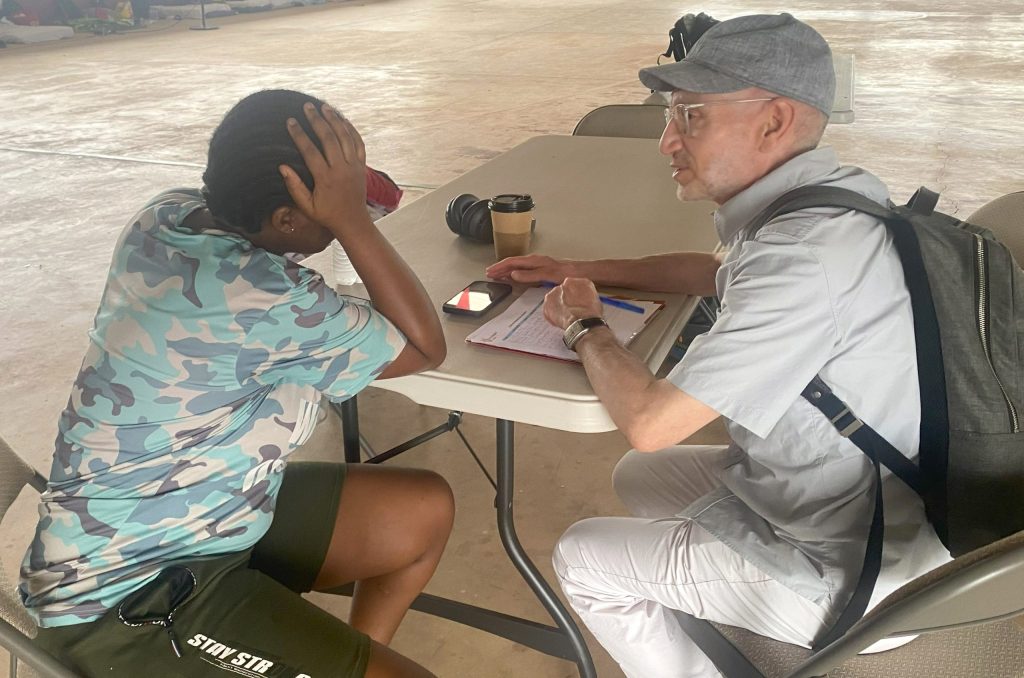
PHR’s team conducted evaluations of 29 people seeking asylum from countries such as Cameroon, China, Eritrea, Iran, and Russia. We captured physical and psychological evidence of the persecution, torture, and ill-treatment they had faced in their countries of origin that substantiated their claims of “credible fear of return,” as well as chilling accounts of their treatment by U.S. and Panamanian officials.
PHR’s findings from these evaluations provided critical evidence that was submitted as part of the Global Strategic Litigation Council’s lawsuit. After the lawsuit was filed, the Panamanian government extended the period that these migrants were able to remain in the country and allowed them to seek asylum. PHR also mobilized the powerful evidence we documented in Panama to fuel legal action against the Trump administration, including at the U.S. Court of Appeals and the Inter-American Commission on Human Rights.
The fight against the U.S.’s inhumane immigration policies did not stop there. We used our expertise documenting the harms experienced by children in immigration detention to defend the Flores Settlement Agreement – the foundational framework that has governed the treatment and release of immigrant children in U.S. custody for three decades – against the Trump administration’s attempts to dismantle it. PHR and partners submitted an amicus brief in a case at the U.S. Court of Appeals for the Ninth Circuit arguing that the lifesaving protections in the Flores Settlement Agreement remain medically necessary and legally indispensable for protecting immigrant children.
Meanwhile, as protests grew in response to U.S. immigration raids across the country in 2025, U.S. federal law enforcement repeatedly misused crowd-control weapons – such as rubber bullets and flash-bang grenades – against peaceful protestors, journalists, and medics, causing serious injury and violating the right to peaceful assembly.
PHR met this moment by leveraging our expertise from nearly four decades of research on the health harms of crowd-control weapons to provide expert submissions in three lawsuits challenging the U.S. Department of Homeland Security’s (DHS) use of force during protests in Los Angeles, California; Chicago, Illinois; and Portland, Oregon. In each case, the district court granted a preliminary injunction or temporary restraining order halting DHS’s use of crowd-control weapons against non-violent protestors, often citing declarations by PHR experts in their decision.
PHR’s Forensic Evidence in Service of Justice Around the World
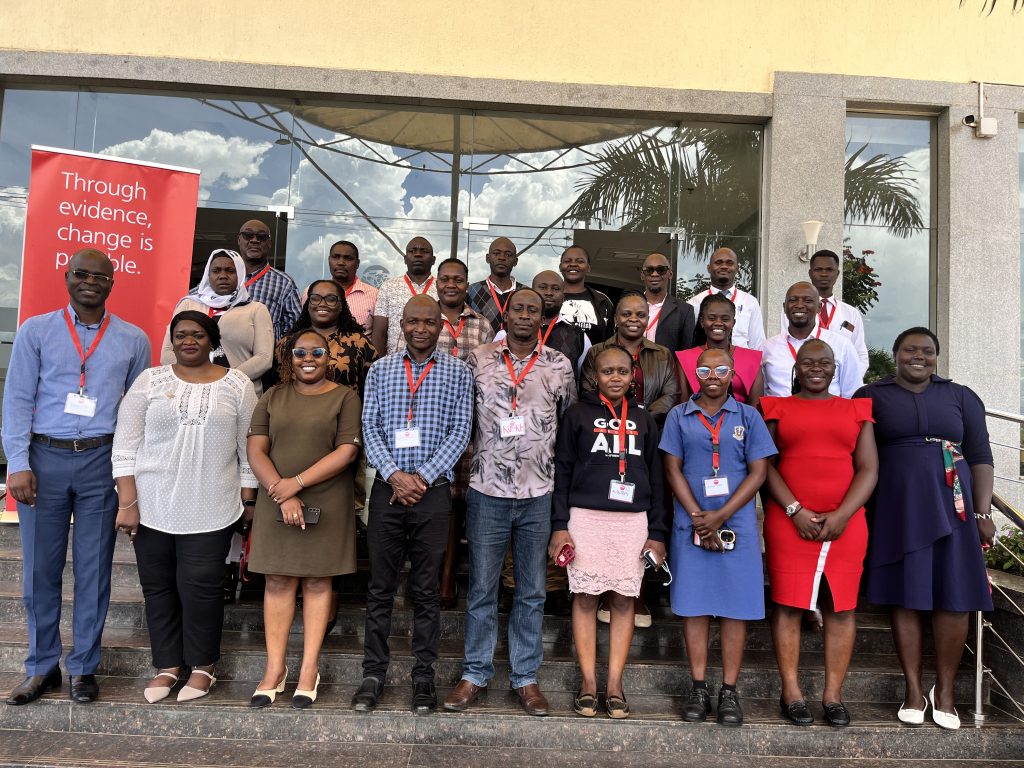
Kenya: While many of the strategic litigation initiatives above have swiftly catalyzed change, securing justice for human rights violations often takes years, if not decades. In 2025, we reached a landmark milestone in a case that PHR, three Kenyan NGOs, and eight sexual violence survivors brought at the High Court in Nairobi in 2013 to hold the government of Kenya accountable for sexual violence committed in the wake of the country’s 2007 violent presidential election.
In a historic move, the government of Kenya paid 16 million Kenyan shillings (approximately $124,000) in compensation to four of the eight survivors, marking the first time in Kenya’s history that survivors of conflict-related sexual violence received financial remedy for the harm they endured. This long-awaited payment came nearly five years after the High Court awarded the compensation in its groundbreaking judgment in 2020 and 12 years after the case was initiated. For these four survivors – who believed they would never receive their court-ordered compensation – as well as for sexual violence survivors across the country, this victory serves as an affirmation that justice, even if long delayed, is indeed possible.
Myanmar: PHR’s forensic medical evidence is informing a landmark genocide case brought by The Gambia against Myanmar at the International Court of Justice. After Myanmar’s security forces launched widespread and systematic violence targeting the Rohingya people in northern Rakhine State, PHR launched a series of investigations into the crimes committed – including mass killings, torture, mutilations, and sexual violence – that drove more than 900,000 Rohingyas into makeshift refugee camps in Bangladesh.
During oral arguments, The Gambia’s legal team cited PHR’s findings extensively, including our evidence on crimes against children, sexual violence, and long-term disability resulting from injuries sustained during the clearance operations. This historic moment is the culmination of years of sustained collaboration with The Gambia’s legal team. The reliance on PHR’s forensic medical evidence in a case at the highest level of international law – which will help define state accountability for genocide – underscores the vital role that our forensic expertise plays in advancing justice and reaffirms that persistence pays off.
Peru: In 2025, Peru’s National Court of Justice convicted three police officers for the 2008 aggravated torture and rape of an LGBTQI+ Peruvian, Azul Rojas Marín, sentencing each to 17 years in prison and ordering compensation for Ms. Rojas. This marked the first time in Peru that state agents were convicted for torture due to prejudice against an LGBTQI+ person. PHR experts supported the case by conducting a forensic medical evaluation of Ms. Rojas. Along with submitting a medical affidavit on the findings to the court, our experts were cross-examined in the trial. The lead prosecutor credited the forensic medical evaluation as indispensable to the case’s outcome.
When PHR’s founders first brought forensic medical evidence to bear on human rights atrocities, the idea that medicine could be a tool for international accountability was still novel. Four decades later, forensic medical expertise and evidence are a cornerstone of justice processes and PHR regularly receives requests for support from justice mechanisms. In a major development last year, PHR formalized a partnership with the Office of the UN High Commissioner for Human Rights to support their investigations around the world.
To meet the growing demand for case support from partner organizations and justice mechanisms, PHR recently formed a new Medical Expert Taskforce (MET). The MET brings together more than 25 expert clinicians from PHR’s wider pro bono global network who we will mobilize to provide cross-specialty forensic expertise to support justice and accountability efforts around the world. With this dedicated taskforce, PHR is better equipped than ever to deploy forensic expertise in service of justice and accountability wherever it is needed.
This story was adapted from PHR’s 2025 Annual Report.