
As the 16 Days of Activism Against Gender-Based Violence unfolds around the world, conversations often center on the scale of the problem. We hear about alarming statistics, stories of harm, and the persistent barriers survivors face in their pursuit of justice, like how only 14 per cent of all women and girls worldwide (about 557 million) live in countries with robust legal protections guaranteeing women’s fundamental human rights.
But in a meeting room in the heart of Nairobi this November, the focus shifted from what is broken to what is beginning to work. Not only the problems, but the solutions.
As the 16 Days of Activism Against Gender-Based Violence reminds the world that violence thrives in silence, the work of PHR and its partners in Kenya and the DRC tells another story: one where innovation, collaboration, and courage are rewriting what is possible.
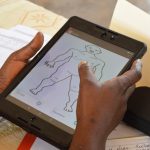
On November 19th and 20th, Physicians for Human Rights (PHR) convened a roundtable on scaling MediCapt and strengthening forensic evidence documentation, bringing together innovators from Kenya and the Democratic Republic of Congo (DRC). MediCapt is a secure digital application that enables clinicians to document medical evidence of sexual violence, capture forensic photographs, and store information safely in the cloud. It replaces unreliable paper systems with structured, standardized, and secure digital documentation, preserving the chain of custody and improving the quality of evidence presented in court. PHR developed MediCapt in response to the very challenges that participants at the roundtable know all too well: lost or damaged files, insecure storage, inconsistent documentation, overworked staff, and broken links between the health, police, and justice sectors.
Among the participants of this forum sat clinicians, heads of medical facilities, law enforcement officers, magistrates, government officials and digital health specialists, all of whom play a role in the documentation and prosecution of sexual and gender-based violence cases. Many in the room had never met before. But they shared one common reality: too often, people who survive sexual violence have their court cases collapse not because justice is impossible, but because critical evidence is missing, incomplete, or lost.
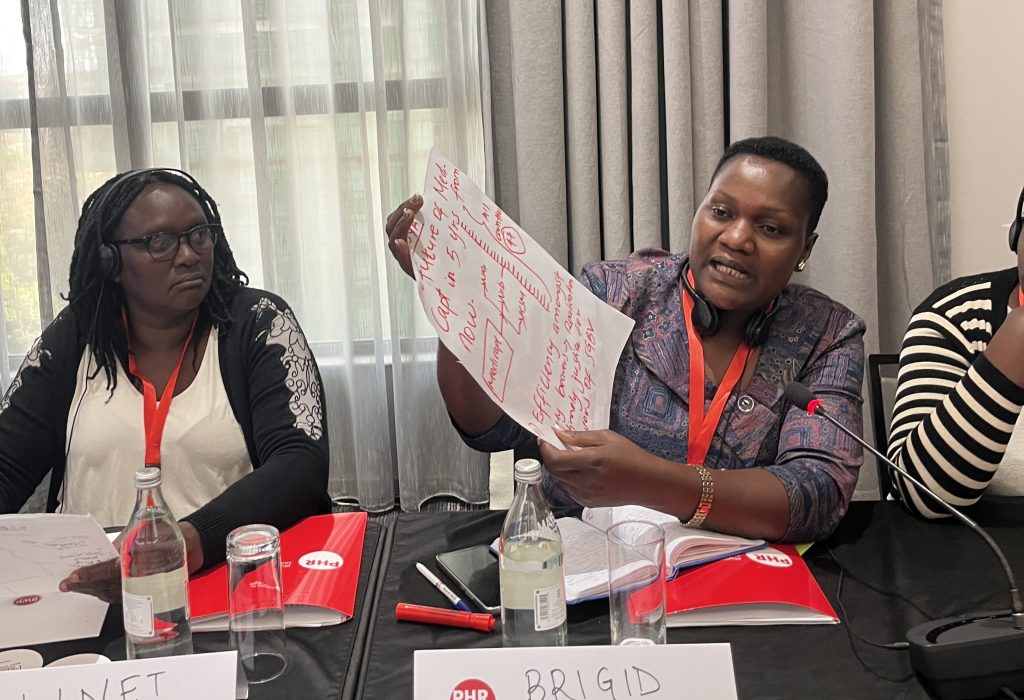
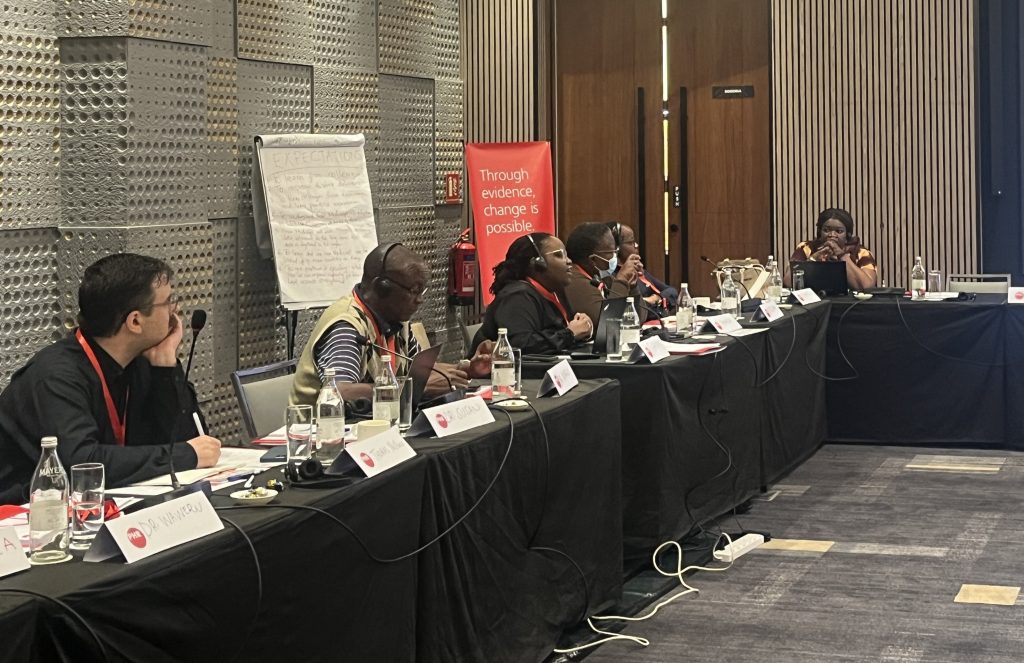
One participant from a medical facility in Nakuru, Kenya shared that in a recent sexual violence case, the physical PRC (Post Rape Care) form, a crucial piece of medical evidence, had gone missing. Without the PRC form, there is simply nothing to corroborate the findings of the medical examination, effectively stripping the case of its evidentiary backbone, even when a survivor was ready to pursue justice. Instead, because the data collected with MediCapt was safely preserved in the cloud, the clinician simply reprinted the MediCapt-generated digital PRC form. The court accepted it. Justice did not stall. The court proceedings were able to proceed because critical medical evidence was preserved. Other clinicians shared similar stories. These accounts have enormous implications: in a system where paper is fragile and accountability depends on precision, a digital record protected a survivor’s chance at justice.
MediCapt is also proving effective and adaptable in vastly different contexts; from the dense informal settlements of Mukuru in Nairobi to the fast-growing metropolitan landscape of Naivasha and at varying levels of health facilities. Despite differences in infrastructure, security, and population dynamics, MediCapt continues to respond to the realities on the ground. Participants also shared excitement about its next frontier: expansion to enable wider reach in Kenya and DRC, and potentially into new geographies such as Tanzania and Iraq. It is this flexibility, the ability to function across crisis and conflict, urban, and peri-urban spaces, that has positioned MediCapt as not just a regional solution, but potentially a global one.
In her address, PHR’s Director of Programs, Karen Naimer, JD, LLM, reminded participants that technology alone cannot deliver justice.
“Each of your roles, when taken together, collectively supports survivors’ access to justice through proper documentation. Clinicians, police officers, magistrates, technologists, policymakers; none of these roles stand alone. It is your collaboration that gives survivors a real chance at justice. And that work must continue long after this roundtable ends.”
Her message underscored a simple but powerful truth: innovation is only as strong as the people who carry it forward.
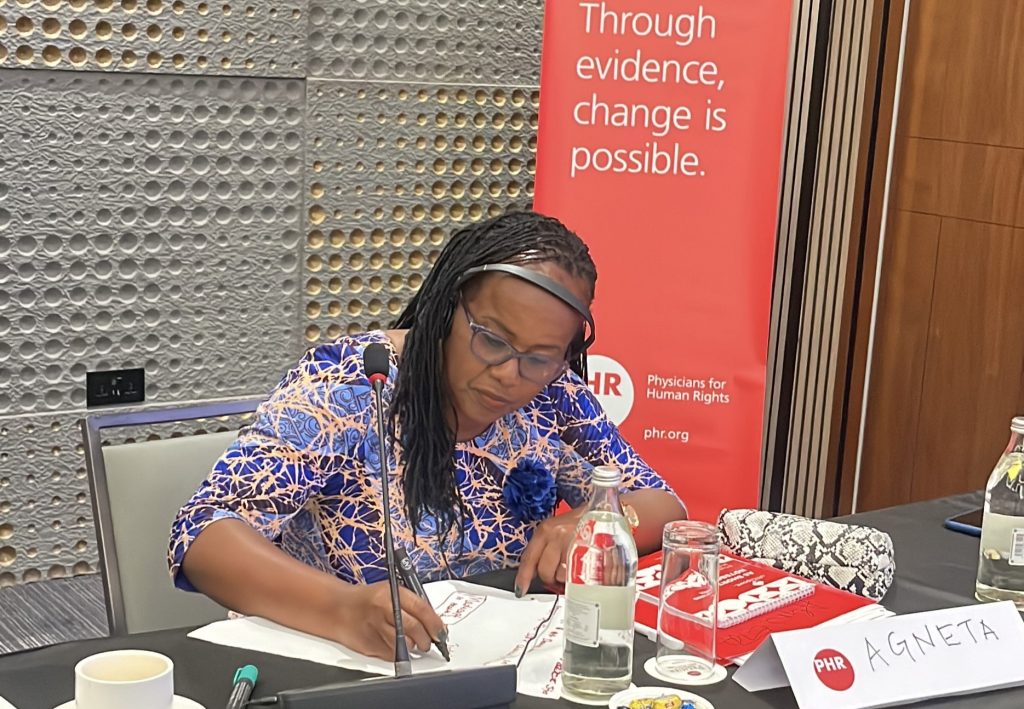
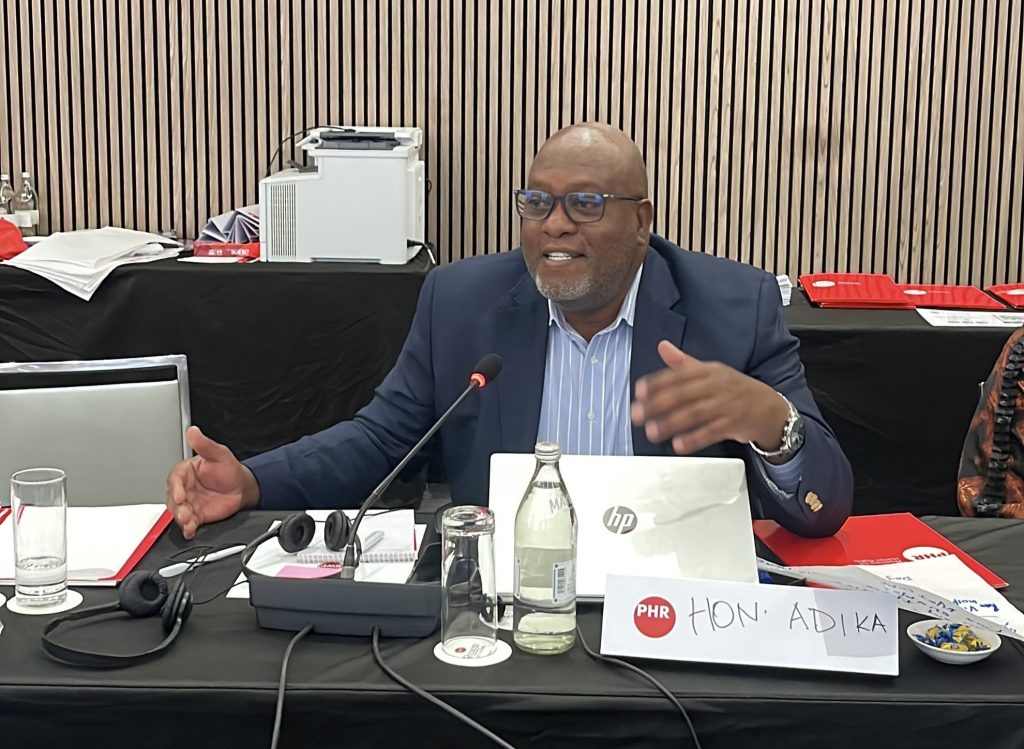
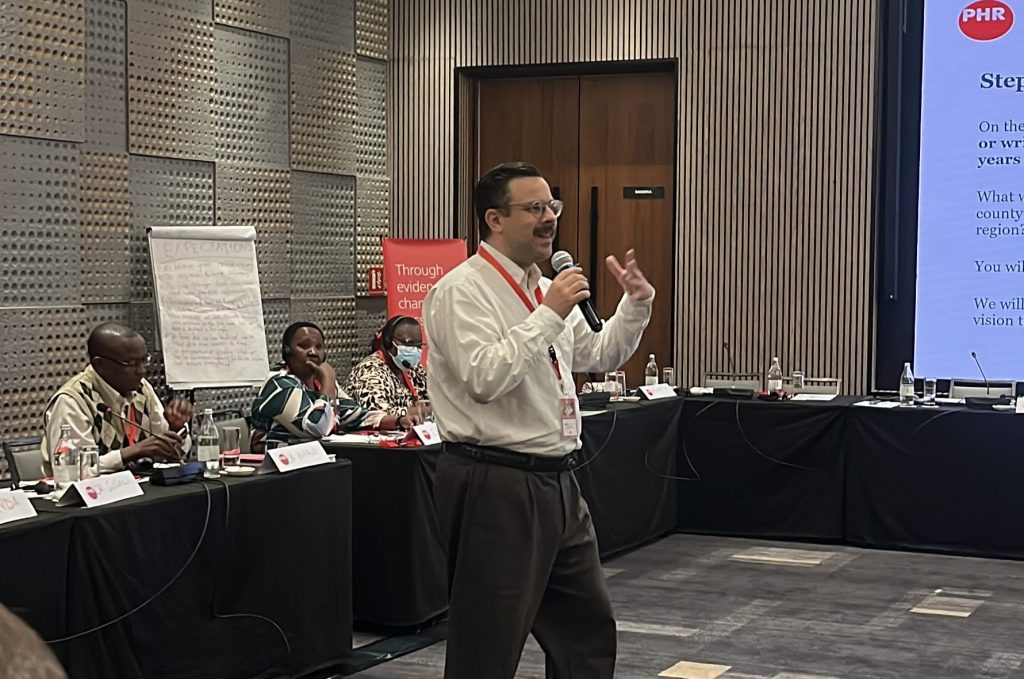
By the close of the roundtable, participants had co-created a set of practical, context-specific recommendations aimed at improving MediCapt’s functionality, strengthening integration into national systems, and ensuring its long-term sustainability. Just as importantly, they left with renewed commitment; not only to a tool, but to a shared vision of justice for survivors.
As the 16 Days of Activism Against Gender-Based Violence reminds the world that violence thrives in silence, the work of PHR and its partners in Kenya and the DRC tells another story: one where innovation, collaboration, and courage are rewriting what is possible.
One case. One clinic. One country. One survivor at a time.
And through MediCapt, their stories are no longer lost.