Blog

S-Comm’s Unintended Side Effects

On February 6th, 2011, 20-year-old Isaura Garciacalled 911 from her apartment in Hollywood, California. She was being beatenagain by her boyfriend and thought that this time he might kill her. When thepolice arrived on the scene, Isaura tried to explain, with her limited English,what had happened, but the police didn’t believe her story and ended uparresting her for domestic violence. Shewas brought in for booking and, in accordance with the Secure Communities(S-Comm) program, her fingerprints were crosschecked with Immigration andCustoms Enforcement’s (ICE) central database. The system revealed that she wasan undocumented immigrant, and Isaura was immediately put in deportation proceedings.

Stories like Isaura’s highlightsome of the major problems with S-Comm. Even though the explicit goal of S-Commis to improve public safety by increasing deportations of undocumented criminals,in practice the program catches many non-criminals in its net and can actually decrease public safety by eroding trust between immigrants and local police.Mistrust between police and immigrant communities can lead to underreporting ofcrimes, leaving these communities vulnerable to violence and impairingofficers’ ability to investigate and solve crimes. In fact, Isaura admits that,if she had known about S-Comm, she would have avoided calling 911. As she putsit, “I never would have called had I known I could face deportation.”

Another consequence of S-Comm is its impact on the mentaland physical health of immigrants. It has increased fear of deportation in manycommunities, not only among undocumented immigrants, but also among their UScitizen children and networks of families and friends. This pervasive fearleads to social isolation and health care avoidance.Healthcare avoidance and social isolation can limit patients’ ability toprevent the onset of diseases; avoid costly, catastrophic health problems;manage chronic disease; and minimize the spread of contagious diseases thatpose public health threats (tuberculosis, flu, etc). Chronic stress and anxietyalso contribute to increased cardiovascular disease, gastrointestinal problems,chronic pain, and decreased immune function. As Isaura puts it, “SecureCommunities turned my life upside down.” The stress and strain have negative effectson the health of the entire community, including the lives of her family andher 1-year-old daughter.

Started in 2008, S-Comm is currently in effect in over 1,000jurisdictions across the US and is poised to grow rapidly. The Department ofHomeland Security (DHS) has announced its intention to expand the programnationwide, and has denied the requests of a number of states and cities to optout of the program. In the face of this expansion, many communities andimmigrant rights groups have begun to debate the legitimacy of S-Comm, soundingthe call to terminate the program. Health professionals can play a critical rolein this debate by learning about the issue, paying attention to the ways S-Commaffects patients and communities, and by advocating for government action torespect human rights and promote immigrant health.

Sign the petition to put a moratorium on SecureCommunities.
Blog

Sudan, Divided: Addressing the Primary Challenges to the South’s Development (part 3 of 3)

Tuesday, August 9, marked one month since South Sudan’s official independence and international recognition as Africa’s 54th state. As the new nation begins to form its policies on development issues, its leadership and citizenry must successfully overcome several obstacles. The international community must remain apprised of – and involved in – South Sudan’s progression toward stability and state building. This is the third post in a three-part series that will address the major questions central to South Sudan’s development.

Read the first post and the second post.

Resolving the Remaining Secession Negotiations

How will South Sudan go about settling the remaining secession negotiations with the north, avoiding further armed conflict with Sudan President Omar al-Bashir’s government? How and to what extent should international actors arbitrate these negotiations?

As Sudan and South Sudan finalize the remaining secession negotiations, several interrelated points of contention may lead to continued political dispute and even more violence. These include:

  • sharing the oil revenue;
  • determining the citizenship status of those residing north or south of the partition;  and
  • officially demarcating the border, which will influence both of the other concerns.

A remaining complication involves the destabilization campaign by militant groups trained by and aligned with the north that currently reside in South Sudan. International action may be necessary to prevent this destabilization campaign, promoted by President al-Bashir, from disrupting South Sudan’s development process.

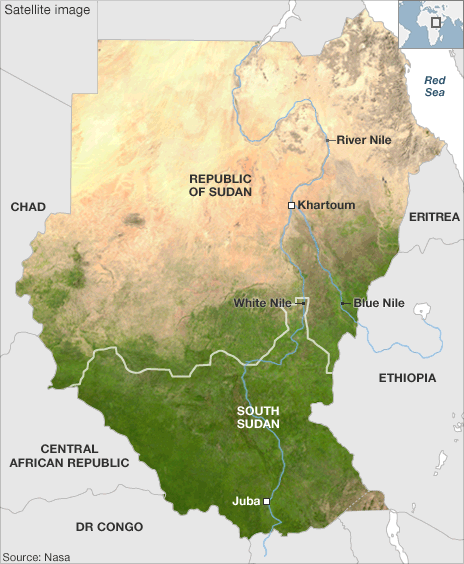
Map of Sudan, Satellite Image, NASA

Border demarcation, oil revenue sharing, and citizenship policy are three major concerns in the final secession negotiations between Sudan and South Sudan.

Oil Revenue Sharing

A major factor precluding peaceful resolution in South Kordofan, an oil-rich border state, regards the sharing of oil revenues between the north and South Sudan. Three-quarters of Sudan’s oil is produced in the south, but the oil is piped, refined, and exported from the north. As Khartoum has already lost a majority share of its primary income source upon the South’s secession, the two nations continue to dispute the terms for dividing overall oil revenue. Hostilities — and therefore violence — persist, particularly along border areas where both nations are unlikely to further compromise.

Determining Citizenship Policy

Determining citizenship policies is an additional issue in need of resolution. Though South Sudan President Salva Kiir announced South Sudan would grant dual citizenship to northerners in the south, Sudan’s governing National Congress Party (NCP) has refused to grant dual citizenship to southerners living in the north. The NCP has already ended the employment of southern Sudanese in the north’s government and military, and argues that granting citizenship to southerners would enable seven million of them to remain in the north, sapping public resources. The issues regarding citizenship are also implicated in the ongoing violence in the Nuba region, where southern-aligned forces now find themselves north of the partition.

The concerns over revenue sharing, citizenship policy, and border demarcation must be negotiated in a constructive manner by Sudan and South Sudan. Notably, these issues are all closely linked to the ongoing armed violence along border areas. Growing discontent in the north is also likely linked with President al-Bashir’s sustained efforts to further destabilize the South, ideations of rekindled civil war distracting from the declining economic conditions throughout the north country. Thus, it is probable that addressing each of these final negotiations will require international arbitration or pressure, to ensure the rights and lives of citizens in both nations are protected throughout the continued divisionary and reconciliation process.

Blog

Obama’s Attempt to Prevent Mass Atrocities is Positive First Step

Recently the Obama Administration unveiled landmarklegislation which has the potential to strengthen how the US deals with theprevention of mass atrocities and serious human rights violations. The interagencyAtrocities Prevention Board (PSD-10) aims to close existing gaps in US law andprovide new economic, diplomatic, and political deterrents to ensure that the USresponds swiftly and unequivocally to all manner of human rights violators. 

I personallyhave investigated mass atrocities and human rights violations in Rwanda, the former Yugoslavia, Iraq,Liberia, Guatemala, Honduras, El Salvador, Colombia, Algeria, Russia, andKyrgyzstan. For the last two years, much of my work with PHR has beenhelping to develop local forensic capabilities so the people of Afghanistan canaddress past abuses and begin the process of transitional justice, turning fromviolence to peace.PHRhas also been investigating human rights violations for 25 years and has been inAfghanistan since 1998, when we first focused on the abuses of women under therule of the Taliban.

There arecountless mass graves bearing testimony to Afghanistan’s history of abuses, yetmeaningful attempts to deal with the injustices of the past have been virtuallynon-existent. This is not only due to the ongoing hostilities, the precarioussecurity situation and the weakened status of many governmental institutions,but also because many of the perpetrators of past and present atrocities remainin positions of power within the government. Fault does not lie solely withAfghanistan, but also with the international community, which after the country’sinvasion failed to install a process based on the concept of “No peace withoutjustice.”

With PSD-10 and theestablishment of the Atrocities Prevention Board, President Obama issued a proclamation that “explicitly bars entryinto the United Statesof persons who organize or participate in war crimes, crimes against humanity,and serious violations of human rights.” While the United States already prevents somehuman rights violators from entering the country, will put greater pressure on thosethat have committed such crimes. PSD-1o could also impact some of the allegedAfghan war criminals and human rights abusers.

Fortunately, President Obama’s new directive alsocould empower groups in Afghanistanto be proactive in measures that will help prevent mass atrocities, such asengaging in transitional justice and truth seeking. PSD-10 addresses the needto adequately train and prepare those spearheading the fight against massatrocities and human rights violations. PHR has been doing just that in Afghanistan.  Recently, a PHR trained team of policeofficers, medical doctors, archaeologists, human rights officers and civilsociety representatives founded the Afghanistan Forensic Science Organization(FSO). The members of this team are trained on how to scientifically documentmass graves and evidence of past atrocities as a first step towards addressingthe violence of the past.

Truth based on fact is a cornerstone of justice. Afghanistanis but one example of a country where there can be no peace without justice. 

Blog

Balancing National Security Concerns with the Right to Seek Asylum

A June 16 decisionfiled by the US Court of Appeals for the Third Circuit (comprised ofDE, NJ, and PA) offered a ray of hope to asylum seekers facing the daunting andambiguous “national security bar.” The decision prevented the deportation oftwo Uzbek men and likely saved their lives. On a larger scale, the decision isa step forward for all those seeking asylum from torture who would otherwise bebarred because of tenuous national security concerns.

The “national security bar” was established so thegovernment could deport a noncitizen on the basis of a belief that he or shemay be “a danger to the security of the United States,” even if there is a highlikelihood of that individual being tortured upon deportation to their homecountry. The Third Circuit, in unambiguous language, said “If we were to allowthe [Board of Immigration Appeals] decisions to stand, it would run counter tothis country’s strong tradition of granting protection to individuals sought byauthoritarian regimes based on politically motivated charges.”

In the past, the national security bar prevented manylegitimate asylum seekers from finding safe haven in the US. Up until 2008,even Nobel Peace Prize Winner Nelson Mandela was barred entry to the US becausethe African National Council, of which he was the leader, was considered by theUS to be a “terrorist organization.”Overly-broad definitions of what constitutes threats to national security andterrorism have barred desperate and vulnerable noncitizens from seeking asylumin the US.  

For example, under the “material support to terrorism” bar, the US can deny asylum and other immigration protections to those who haveassisted terrorist organizations. Health professionals who provided medicalcare to members of terrorist organizations or armed groups are prevented fromgaining asylum in the US, despite being threatened with torture or death intheir home countries. Individuals forced to perform domestic duties fordesignated terrorist groups are also barred from seeking asylum despite thethreat of being harmed upon return home. These are exactly the kind of populationsUS asylum law was designed to protect.

This decision in the Third Circuit may seem like a smallvictory for asylum rights advocates, and it is. Circuit court decisions arebinding law only within the Circuit, and the value of this decision as“persuasive law” for other parts of the country remains unclear. But for two people who would undoubtedly sufferphysical harm and fear upon return to Uzbekistan, the decision was overwhelminglya relief.

There is still a long way to go to ensuring that those whomost need protection from torture and violence in their home countries can findit here in the US, however. Redefining what must be shown by the government toprove an asylum seeker is a threat to national security is a step in the rightdirection.

Blog

Secure Communities Goes Yet Another Step Too Far

In June, PHR blogged its concerns that the Immigration and Custom Enforcement’s (ICE)“enhancements” to its controversial Secure Communities (S-Comm) program weremerely cosmetic and would do nothing to protect people who are unfairly sweptup in its overly broad net. Now, itseems that those concerns are well-founded.

On Friday, ICE made an announcement to clarify that S-Commis a federal issue and that states are not free to opt in or out of theprogram. This is in direct contradiction to early ICE statements aboutimplementation of S-Comm. 

Since S-Comm‘s inception, ICE has worked with almost 40states in 1,500 jurisdictions to issue individual “memoranda of agreement”outlining each party’s responsibilities in implementing the program. Now, ICE isunilaterally rescinding those MOA and saying that no such agreements arerequired for it to continue implementing this controversial program.

S-Comm has been criticized for targeting nonviolentcriminals, wasting millions in taxpayer dollars, and undermining police effortsto cooperate with local citizens in arresting violent criminals. The governorsof New York, Massachusetts, and Illinois have said they would not comply with S-Comm,but now it appears that compliance is not only mandatory, but will be completedin every jurisdiction by 2013.

This step confirms suspicions that ICE Director John Morton’s June memopromising to listen to concerns over the implementation of S-Comm was merelylip service. ICE has demonstrated that it is simply not interested in improvingthe program based on legitimate concerns. Instead, ICE is imposing S-Comm onstates and localities wholesale.

This latest attempt by ICE to force participation in S-Comm isa repudiation of its willingness to listen to concerns about the program, andit poses a significant danger to immigrant communities. It remains unclear whatwill happen in Illinois, Massachusetts, and New York. There are good reasons thosegovernors do not want the program implemented in their states – and now itremains to be seen what will happen when this ill-conceived and wastefulprogram expands to all US jurisdictions in the next couple of years.

Blog

Sudan, Divided: Addressing the Primary Challenges to the South’s Development (part 2 of 3)

Tuesday, August 9, marks one month since South Sudan’s official independence and international recognition as Africa’s 54th state. As the new nation begins to form its policies on development issues, its leadership and citizenry must successfully overcome several obstacles. The international community must remain apprised of – and involved in – South Sudan’s progression toward stability and state building. This is the second post in a three-part series that will address the major questions central to South Sudan’s development. Read the first post and check back later this week for the third.

Ending the Border Conflicts

How can South Sudan move towards peaceful resolution of the ongoing border conflicts with the north? How and to what extent should the international community intervene in ending this violence?

The border disputes between Sudan and South Sudan, discussed in our previous post, persist. Particularly in South Kordofan and the Nubamountains, the media continues to highlight allegations of ethnic cleansing,extra-judicial and indiscriminate killings, direct targeting of civilians, and evidenceof mass graves. Sudan President Omar al-Bashir’s government forces areimplicated as the primary perpetrator of systemic killing and human rightsviolations in the contested areas.

Media and humanitarian access to the conflict regions isseverely restricted. Both national and ex-pat aid workers have been targets ofthe violence. Sudanese authorities obstruct the UN peacekeeping force fromfulfilling its mandate in the region, and UN investigators cannot gain the necessaryaccess to look into the alleged atrocities.

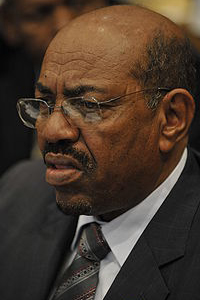
Omar al-Bashir

Sudan President Omar al-Bashir is wanted by the International Criminal Court for atrocities in Darfur. (photo: US Navy/Specialist 2nd Class Jesse B. Awalt)

In the border states of Blue Nile and South Kordofan,residual problems from the 2005 Comprehensive Peace Agreement (CPA) continue tocomplicate the border demarcation. The CPA ended Sudan’s long-running civil warbetween the Islamic north and Christian and Animist south, allowing South Sudanto become an autonomous region in 2005. However, Blue Nile and South Kordofanstates, both aligned with the SPLM (the south’s rebel military) during thecivil war, fell north of the border.

To mitigate further disputes between SPLM militias in thesenorth Sudan states, the CPA mandated a mechanism known as the popularconsultation for Blue Nile and South Kordofan. The popular consultationprotocol allowed these two states to either fully adopt the conditions of theCPA or to renegotiate its terms to better fit the needs and aspirations of theBlue Nile and South Kordofan populations. Yet, implementation of the CPA andthe popular consultation has not started in South Kordofan, and has been slowand largely ineffective in Blue Nile.

Upon South Sudan’s official independence from the north lastmonth, the Sudanese government aimed to absorb the Blue Nile and South Kordofanmilitias. However, dissidents in these states argue the popular consultationprocess failed and thus refuse to align with President al-Bashir’s government.This has led to military strikes by al-Bashir’s forces against SPLM groups inSouth Kordofan, resulting in widespread destruction and reported atrocities. Theviolence threatens to spill over into Blue Nile.

The historically contested, oil-rich region of Abyei isanother concern requiring resolution. An international arbitration tribunal in2008-2009 resulted in a revision of Abyei’s borders and a power-sharingnegotiation in which Abyei would be controlled by both the north and the south;however, by 2010 the borders had yet to be officially demarcated or recognizedby the Sudanese government.

Territorial and tribal disputes within Abyei were compoundedby the ongoing north-south debate over control of the region. Violent conflictescalated in May 2011, resulting in looting and burning of homes and massivepopulation displacement. Despite the deployment of United Nations peacekeepingforces and a current ceasefire, both Sudan and South Sudan continue to laygeographic claim to this region.

Identifying a resolution to each of these conflicts is asurmountable challenge, particularly in light of President al-Bashir’s statedmotivation of suppressing ethnic diversity to establish an Arab-Islamic regime.Thus, the international community must immediately take a more robust stanceand enforce a zero-tolerance policy for human rights abuses wielded by theSudanese government. Global actors mustpressure President al-Bashir’s regime to immediately cease all militaryoffensives that result in widespread civilian casualties and threaten todestabilize the South’s peace and development process.

History shows us that peaceful compromises regarding theborder disputes are unlikely to succeed without significant internationalarbitration and action on behalf of innocent civilians.

Emily Winter is a graduate student and programs intern at PHR.

Blog

Changes to Burmese Travel Ban Are Only a Partial Solution

According to a recent news story in the Democratic Voice of Burma, Muslim people in partsof western Burma can now travel outside of their villages without obtaining governmentpermission.  However, the travel ban onlyapplies to select townships and Muslims are still required to carry identificationcards. Muslims in other parts of Burma are still unable to move freely; in factsecurity is tightening. Last week Burmese border security troops in Arakanstate, western Burma, posted flyers listing increased punishments fortravelling without government permission.

Movement restrictions place a huge burden on the people ofArakan state. They restrict access to healthcare, impede trade and limit jobopportunities. The Irish Center for Human Rights reported in 2010 that government authorities regularly use the restriction to controland take bribes from the population.

Although the recent change to travel restrictions may be astep in the right direction, it does not go nearly far enough. If the Burmesegovernment is truly pursuing a course of democracy, it should act to ensurecivil rights for everyone and lift the travel ban for everyone in the country.

Blog

Torture Lawsuits against Rumsfeld Move Forward

In the last week, two different federalcourts have demonstrated a commitment to accountability for torture perpetratedby US officials. 

The DC District Court allowed a lawsuit fordamages to go forward against former Secretary of Defense Donald Rumsfeld andother high-ranking officials, including Secretary of Homeland Security JanetNapolitano, and FBI Director Robert Mueller. At the heart of the case is aUS citizen and army veteran who went to Iraq as a civilian employee of anAmerican defense contractor. The man, John Doe, claims that as he was on hisway home for leave, he was abducted by the American military, handcuffed,blindfolded, held in solitary confinement for 72 hours, and then detained in amilitary jail and subject to abuse for several months. Doe alleges that US prison guards tortured him using “psychologically-disruptivetactics designed to induce compliance” and exposed him to extreme cold andcontinuous artificial light, blindfolded and hooded him, and subjected him to“intolerably” loud music and noises. In his lawsuit, the army veteran claims thatRumsfeld personally approved torture on a case-by-case basis and did not allowhim an attorney or access to US courts.

Although the Department of Justice sought to dismiss the case altogether,arguing that Rumsfeld cannot be sued personally for official conduct and thatthe courts should not be inquiring into wartime decisions, Judge James Gwinrejected those arguments. Gwin said that American citizens are protected by theConstitution at home or when detained in a conflict zone abroad.

Similarly, the US Court of Appeals for the Seventh Circuit also refused to dismiss a torture case against Rumsfeld. The plaintiffs — both Americancitizens — claim they were tortured whilein US military custody after blowing the whistle on alleged illegalactivities by their employer, a private contracting company. They say they were subjected to sleepdeprivation, blasting music, hunger, and various threats. They also allege that Rumsfeldpersonally took part in approving the methods for use by the US military inIraq.

In a 2-1 opinion, the court found that damages could be “available for the alleged torture of civilian US citizensby US military personnel in a war zone." The court also saw nojustification for the defendants' arguments, which would “deprive civilian UScitizens of a civil judicial remedy for torture or even cold-blooded murder byfederal officials and soldiers, at any level, in a war zone."

In light of previous court decisions involving torture by US officials ofnon-US citizens, the decisions are a welcomed and important step towardholding the United States accountable when it engages in torture and abuse — evenin wartime. As retired Supreme CourtJustice Sandra Day O’Connor stated in Hamdiv Rumsfeld, “A state of war is not a blank check for the president when itcomes to the rights of the nation’s citizens.” 

Despite the human rights victory the judicial opinions bring, the fundamentalhuman right to be free from torture and abuse is guaranteed, if just barely,for US citizens only. Accountabilityfor misconduct should be the standard when any human being is tortured,regardless of citizenship.

Blog

Sudan, Divided: Addressing the Primary Challenges to the South’s Development (part 1 of 3)

Tuesday, August 9, marks one month since South Sudan’sofficial independence and international recognition as Africa’s 54th state. Asthe new nation begins to form its policies on development issues, itsleadership and citizenry must successfully overcome several obstacles. If thefledgling nation is to surmount its history of protracted violence and denial ofcivilians’ most basic rights, the development of South Sudan must be aconstructive and inclusive process. The international community must remainapprised of – and involved in – South Sudan’s progression toward stability and state building. This is the first post in a three-part series that will address themajor questions central to South Sudan’s development. Check back later thisweek for the second and third posts.

Human Rights and Sustainable Development

Flag of South Sudan

Following the admission of South Sudan as the UN’s 193rd member state on July 14, the South Sudan flag was raised outside the United Nations headquarters, joining the flags of all other member states.

How can South Sudan ensure its state building process and fundamentalpolicies are sound, sustainable, and based on human rights principles?

South Sudan faces substantial challenges to development,which largely stem from social and economic concerns. These issues must beaddressed in South Sudan’s earliest legislative and policy actions, to ensurethe South Sudanese population has opportunities for financial stability, accessto public services, and a strong prospect for lasting peace. The world mustsupport South Sudan as the nation takes its first steps towards sustainabledevelopment.

A foremost economic concern is that oil generates nearly allof South Sudan’s domestic revenue. According to arecent article on The Guardian’s Poverty Matters Blog, the nation’soil resources will only last between eight and 22 years. Thus, the implicationsof South Sudan’s poorly diversified economy are worrisome for its developmentprogress even in the short-term. Consideration must be afforded to the ways inwhich current revenues can be used for robust and positive change, as well asto identifying novel opportunities for economic strengthening.

The potential impact of these economic issues (and how theyare addressed) on civilians’ livelihoods is compounded by the already alarmingdearth of public services. In South Sudan, development is starting near groundlevel. The country has some of the lowest social indicators worldwide, andproposals for short-term or unsustainable solutions should be viewed withcaution. It is imperative to support South Sudan in strategic, long-termplanning, to ensure its fragile economy is strengthened and made sustainable,and that a rights-based approach is used in building the nation’s fundamentalpolicies and public programs.

Only through strong political action, grounded in humanrights principles, will the world’s newest nation truly flourish. South Sudan’sleaders must firmly reject policies that could lead to further oppression orsuffering of citizens.

Emily Winter is a graduate student and programs intern at PHR.

Blog

LGBT Detainees at Increased Risk for Abuse and Mistreatment

WhenAlejandro Cortez-Reyna, a transgender immigration detainee in California,questioned why recreation time for LGBT noncitizens was reduced to less thantwo hours, the guard responded, "Because you need to learn not to be afaggot."

Unfortunately,this was not an isolated incident. Several egregious examples of abuse of LGBTdetainees, including sexual and physical assault, prolonged isolation, andwithholding of medical care, have been documented in two reports this year. TheACLU recently documented extensive abuse of immigration detainees in Arizona,including examples of specific and targeted abuse of LGBT individuals. And in April, theNational Immigrant Justice Center (NIJC) filed 13 complaints of abuse of LGBTdetainees with the Department of Homeland Security’s (DHS’s) Office of CivilRights and Civil Liberties and Office of Inspector General. 

These andother accounts paint an extreme and horrific picture of the impact that USimmigration detention system has on LGBT detainees. Ironically, many aredetained awaiting decisions on their applications for asylum based onpersecution for their sexual orientation or gender identity.

NIJC’sreport describes instances of homophobic abuse directed at LGBT detainees. AtTheo Lacy, a prison in Orange County, California, guards harassed atransgender, HIV-positive individual with anti-gay epithets and jokes about herdying of AIDS. The report further alleges that guards withheld HIV medicationfrom HIV-positive noncitizens and forced an HIV-positive detainee to have bloodpainfully drawn from the veins in the back of his hands so they did not have tounshackle him, despite protests from the physician.

For LGBTdetainees like Cortez-Reyna, many of whom are seeking asylum for persecution onthe basis of their sexual orientation or gender identity, abuse during detentionis all too common. As the immigration detention web continues to expand,ensnaring more people who are held indefinitely while their cases are pending, theplight of LGBT detainees is worsening. DHS needs to reform the way detaineesare housed, ensure that detention periods are as short as possible, and providespecial protection to the vulnerable LGBT population. Until then, stories like Cortez-Reyna’swill multiply, and safe haven in the US from persecution will only be anunrealized dream.

Get Updates from PHR