Blog

PHR Urges the US to Play a Strong Role at the UN Human Rights Council

PHR recently joined other organizations in sending a letter to key Administration officials outlining the priorities the US should take regarding the United Nations Human Rights Council. The Council has taken important steps regarding recent violence in Libya, including suspending Libya’s membership in the Council and establishing a Commission of Inquiry to investigate human rights violations in the country. Given this recent showing of strength by the Council in response to a serious human rights crisis, PHR and partner organizations called on the US to harness this momentum and advance the Council’s power to combat human rights violations internationally. The letter called on the Administration to establish a UN special rapporteur on the situation in Iran so that the international community will be better able to focus its efforts on preventing and combating human rights violations in Iran. PHR also called on Administration officials to push for an international Commission of Inquiry to investigate international crimes in Burma. PHR’s recent report, Life Under the Junta: Evidence of Crimes Against Humanity in Burma’s Chin State, provides quantitative data that demands such a response. The letter also highlighted the importance of US engagement and leadership on the Council, cautioned about the need to have competitive elections for Council membership, and urged the US to declare its candidacy for a seat on the Council in upcoming elections.Read the letter:[download id=”30″]

Blog
Burma Human Rights Day: Calls for a Commission of Inquiry

As Burma Human Rights Day on March 13 approaches, PHR welcomes Latvia and Denmark as they join the countries calling for an International Commission of Inquiry to investigate crimes in Burma. PHR has recently documented evidence of crimes against humanity in Chin State, western Burma. Our research uncovered sobering facts: approximately 92% of households surveyed reported at least one incident of forced labor in the previous twelve months. PHR’s report also documents the incidence of other human rights violations, including torture, rape, and killings. These crimes fester in a system of total impunity. PHR has been pressing the United States government to strengthen its support for an investigation into these and other crimes, and we are encouraged by the growing support internationally for this effort. The support of Latvia and Denmark comes at an important time. The Special Rapporteur on the Situation of Human Rights in Myanmar (Burma), Tomás Ojea Quintana, recently issued his progress report to the United Nations Human Rights Council in which he reiterated his recommendation for the establishment of a Commission of Inquiry. Mr. Quintana will present oral remarks on this report to the Human Rights Council on Monday, March 14. While the support of Latvia and Denmark is important, there is more work to be done. PHR urges the US to encourage additional countries to join the movement for justice and accountability in Burma. The US should use its influence at the Human Rights Council in order to build upon the growing momentum for a Commission of Inquiry. Such an investigation will be an essential step to uncovering the truth about crimes in Burma and initiating mechanisms of accountability.

Blog

Arizona's Latest Immigration Bill: How the Sick are at Risk

Update belowArizona’s infamy for creating draconian anti-immigrant legislation was already well established before Senate Bill 1405 was introduced to state lawmakers in January; however, the bill brought the state to a new low. If passed, SB 1405 would require Arizona hospitals to check on the immigration status of every patient, and report results to state or federal law enforcement authorities. There are numerous problems with forcing health professionals to serve as immigration agents, and so it is not surprising that health care organizations have uniformly opposed the bill. To begin with, its passage foreshadows a public health crisis. The knowledge that seeking care at a hospital will lead to scrutiny by law and immigration authorities is certain to deter many thousands from seeking care. Even if a prospective patient has legal status in the US, he or she may fear consequences for undocumented loved ones, or simply be repulsed at the prospect of having to defend against baseless suspicions. A population that does not seek care when it is needed is a population that will increasingly spread sickness. As anyone who has waited too long to see a doctor knows, our health care system is already heavily burdened.? Health care professionals have their hands full keeping up with the various requirements and paperwork needed by the many different organizations that authorize and pay for medical services. The addition of more, unnecessary responsibilities imperils hospitals’ ability to help the sick.By passing SB 1405, Arizona legislatures would compromise health professionals’ ethical commitments. The foremost duty of any health care provider is, of course, to “do no harm.” Reporting a patient for a suspected violation that poses no immediate danger to anyone, however, does serious harm by leading directly to detention, separation from family and friends, and forced migration. A law that keeps individuals from seeking care violates the principle, embraced by the American Medical Association among other groups, that health professionals must support access to medical care for all people.Dr. Lucas Restrepo of Phoenix expressed the troubling issues best in a June 2010 letter to the New England Journal of Medicine, “Asking patients to produce immigration documents violates the trust that physicians, nurses, and other health care workers endeavor to earn from them.” Health professionals have a responsibility to support laws that promote the best interests of their patients, and to speak out when those interests are threatened. Please join PHR, the Mayo Clinic in Arizona, the Arizona Hospital and Healthcare Association, and many others in opposing SB 1405. If you are an Arizona resident, you can send a responsive letter created by the Arizona Public Health Association to your state representatives. Residents of other states will want to stay tuned for related news: in the past year, anti-immigrant initiatives originating in Arizona have spread in near-identical form to dozens of additional states.Update: On March 17, 2011, the Arizona Senate responded to the widespread concerns of the medical community and rejected SB 1405 by a vote of 18 opposed, 12 in favor. Although this victory is heartening, health professionals must remain vigilant as similar proposals are virtually certain to be made in states across the country in the coming years.

Blog

PHR Applauds New Legislation Discouraging Support for Uganda's LRA

PHR, along with a collection of advocacy groups, applauds U.S. Representatives Ed Royce (R-CA) and Jim McGovern (D-MA) for introducing legislation last week that discourages support or safe haven for the rebel Lord’s Resistance Army (LRA). The legislation encourages the Obama Administration efforts to pressure the Sudanese government to deny support to the Lord’s Resistance Army (LRA).?The Lord’s Resistance Army is a military group based in northern Uganda which is engaged in an armed rebellion against the Ugandan government.In January, South Sudan voted overwhelmingly in an historic self-determination referendum to secede from Sudan and form Africa’s newest country. Following the historic referendum, the LRA continues to attack South Sudan’s states, threatening the security of the future state.The newly introduced legislation, Sudan Cessation of Support for the Lord’s Resistance Army Certification Act of 2011, would require the Obama Administration to certify to Congress that the Sudanese government is “no longer engaged in training, harboring, supplying, financing, or supporting in any way the Lord’s Resistance Army, its leader Joseph Kony, or his top commanders” before Sudan could be removed from the U.S. State Sponsor of Terrorism List (SSTL).The full letter is included below.**FOR IMMEDIATE RELEASE**ADVOCACY GROUPS APPLAUD BIPARTISAN SUPPORT FOR LEGISLATION TO PREVENT RENEWAL OF SUDAN SUPPORT FOR LORD’S RESISTANCE ARMY Tuesday, March 8 – WASHINGTON, D.C. – A collection of advocacy groups applauded U.S. Representatives Ed Royce (R-CA) and Jim McGovern (D-MA) for introducing legislation last week that would encourage Obama Administration efforts to pressure the Sudanese government not to support or give safe haven to the rebel Lord’s Resistance Army (LRA).The Sudan Cessation of Support for the Lord’s Resistance Army Certification Act of 2011 would require the Obama Administration to certify to Congress that the Sudanese government is “no longer engaged in training, harboring, supplying, financing, or supporting in any way the Lord’s Resistance Army, its leader Joseph Kony, or his top commanders” before Sudan could be removed from the U.S. State Sponsor of Terrorism List (SSTL).In January, South Sudan voted overwhelmingly in an historic self-determination referendum to secede from Sudan and will form Africa’s newest country on July 9, 2011. However, the LRA has repeatedly attacked South Sudan’s Western Equatoria and Western Bahr El Ghazal States since 2009, displacing tens of thousands of civilians. A surge of attacks in the past two months has underlined the threat the LRA poses to the security of the future state.“One of the biggest wild cards in terms of the ability of the LRA to destabilize Southern Sudan will be whether the regime in Khartoum provides covert support,” said John Prendergast, Co-Founder of Enough. “Given the Sudan government’s lengthy history in this regard, it is imperative that the Obama administration take extra steps to ensure against any further support to the LRA from Khartoum.”The Government of Sudan, based in Khartoum in northern Sudan, armed and supplied the LRA between 1994 and 2005, giving it safe haven and using it as a proxy force to disrupt South Sudan. Though Sudanese support to the LRA is thought to have stopped since then, LRA commanders met with the Sudanese Armed Forces (SAF) in South Darfur in 2009 and 2010 and allegedly requested renewed support from Sudan. The LRA is on the State Department’s “Terrorist Exclusion List,” and its leader, Joseph Kony has been named a “specially designated global terrorist.” Kony and two other LRA commanders are also indicted by the International Criminal Court on charges of war crimes and crimes against humanity.President Obama indicated to Khartoum that the U.S. would accelerate the process of removing Sudan from the SSTL if it fully implements its 2005 Comprehensive Peace Agreement (CPA) with South Sudan and respects the results of the referendum vote. Existing law requires the President to certify that the Sudanese government has not supported international terrorism for the prior six months before removing it from the SSTL, but last week’s legislation seeks to spur greater efforts to ensure recent contacts between the LRA and the Sudanese government does not result in a renewed alliance.“Given the LRA’s ability to destabilize South Sudan, it would be irresponsible for the United States to take Sudan off the State Sponsors of Terrorism List without first certifying that it is not supporting the LRA,” said Sam Bell, Executive Director of Genocide Intervention Net/Save Darfur Coalition. “If Sudan is removed from the SSTL, U.S. officials should make clear to Khartoum that it will be re-added to the list if there is any new evidence of support for the LRA.”Representatives McGovern and Royce introduced the Lord’s Resistance Army Disarmament and Northern Uganda Recovery Act, passed in May 2010, which mandated that President Obama report to Congress a strategy to deal with the LRA. The President’s strategy, released in November 2010, stated that the U.S. will seek to ensure that “the LRA receives no support or safe haven.”“This legislation will encourage efforts by the Obama Administration to isolate the LRA from any potential supporters,” said Paul Ronan, Director of Advocacy at Resolve, a Washington, D.C.-based advocacy group. “By ensuring Sudan avoids future relations with the LRA and spurring greater efforts to investigate contacts between the LRA and Sudan, President Obama can demonstrate how serious he is about a peaceful future for both South Sudan and Sudan.”Advocacy Groups Applauding The SUDAN CESSATION OF SUPPORT FOR THE LORD’S RESISTANCE ARMY CERTIFICATION ACT OF 2011:ResolveThe Enough ProjectGenocide Intervention Net/Save DarfurCitizens for Global SolutionsInvestors Against GenocideJewish World WatchMassachusetts Coalition to Save DarfurPhysicians for Human RightsStop Genocide Now

Blog

PHR trip to Kenya and Congo, Day 2

Kenya Journal

Day 2:

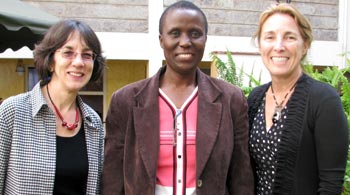
Susannah Sirkin with two doctors

Susannah Sirkin, Dr. Emily Rogena, and Dr. Coleen Kivlahan

Dr. Emily Rogena teaches forensic pathology at the University of Nairobi School of Medicine. Her soft voice and sweet smile belie a hard-nosed scientist who has worked for years to develop better systems to deal with sexual abuse, torture, and violence. Together with our colleague, obstetrician-gynecologist Dr. Odongo Odiyo, she helped found the Tukomeshe Unajisi Network [TUN] in 2003.

TUN is a coalition of groups working to stop violence against women in Kenya. They’ve represented the Kenya Medical Association within this coalition. All together these professionals and activists helped gain the passage of Kenya’s Sexual Offenses Act of 2006, a law which allows forensic evidence to be entered into court evidence to demonstrate the circumstances of an assault and its impact on sexual violence victims. No one anticipated the widespread rape that would occur a year later in the devastating post-election rampages, including rape by the police. At the time as well, a Kenya Medical Association doctor was arrested for documenting some of the attacks.

We meet several TUN members at Amnesty International, which has hosted the Network in recent years. Charity and Purity are among the impressive younger women engaged in TUN. Charity works for a shelter as a legal officer, supporting through the court process women who have fled unbearable situations, including beatings and banishment for being raped, repeated violence at the hands of boyfriends and other men, and gang rapes.

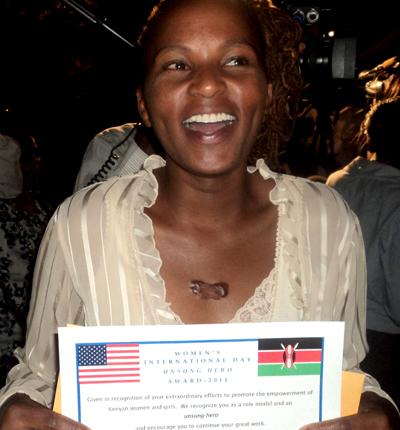
Another young woman, Wangu Kanja, has a quiet confidence which has launched an activist foundation in her own name. She hands out multi-colored bookmarks to all of us which say “Rise Up Against Sexual Assault & Abuse” on one side, and a six-step list of instructions for women and girls in the aftermath of sexual violence on the other. The first is “Ensure your personal safety by going to a safe place (hospital or police station).” The last is “Seek legal redress.” During the next ten days in Kenya and eastern Congo, we’ll see how responsive the systems are to a woman who follows this advice

Activist working against sexual violence holds up her award

Wangu Kanja shows her Unsung Hero Award certificate

UPDATE: PHR would like to offer a warm congratulations to Wangu Kanja, who was awarded the Women’s International Day UNSUNG HERO AWARD 2011 by the US Embassy in Nairobi on March 8th. She received it in recognition of her extraordinary efforts to promote the empowerment of Kenyan women and girls.


Blog

Join PHR's next Asylum Training: Houston on April 9

The American Academy of Family Practice (AAFP) has approved this training for 6.5 CME creditsThe needs of asylum seekers, refugees, and other immigrants are acute in Texas, where detention centers are numerous, but volunteer health professionals are scarce. Join PHR in responding to those needs by participating in the PHR Asylum Program Training in Houston on Saturday, April 9, 2011. This is an excellent opportunity to enhance clinical skills, make new connections, and learn about a compelling volunteer opportunity. All health professionals, including medical students, are welcome to participate.Seasoned forensic evaluation experts Coleen Kivlahan, MD, MSPH and Joanne Ahola, MD will provide health professionals with the skills necessary to perform physical and psychological evaluations for survivors of human rights abuses.Session highlights:

  • Human rights, asylum law, and the role of health professionals in the immigration process;
  • Detention of immigrants;
  • Evaluating and documenting the physical and psychological sequelae of torture and other human rights abuses;
  • Effective affidavit writing and providing oral testimony in Immigration Court;
  • Working effectively with volunteer attorneys to help indigent immigrants.

Tuition for this unique, all-day seminar is $85 and includes lunch, coffee breaks, afternoon refreshments, and training materials. CME certificates will be provided at the end of the training day.Register here: http://phr.convio.net/site/Calendar?id=100162&view=DetailPlease email Kelly Holz (kholz@phrusa.org) with any questions.

Blog

Marking the 100th Anniversary of International Women's Day

Today marks the 100th anniversary of International Women’s Day, a day set aside to celebrate the political, economic, and social achievements of women around the world. To recognize this historic day, PHR is highlighting the enormous challenges we face in addressing mass rape in armed conflicts.

susannah sirkin with women in Congo
Marking the 100th International Women’s Day

This blog post is the first of a series of 10 posts that will chronicle PHR Deputy Director Susannah Sirkin’s recent 13-day trip to Kenya and the Democratic Republic of the Congo (DRC) accompanied by PHR Asylum Network member Dr. Coleen Kivlahan. This diary of their assessment trip seeks to highlight the small — but seminal — achievements of grassroots organizations, women’s rights groups, health professionals, and legal advocates working to serve women and girl survivors of sexual assault in Eastern and Central Africa. The blog series will also underscore the challenges and hurdles that remain.

Kenya Journal

Nairobi, Kenya: How to combat widespread impunity for rape in Central and East Africa, starting here in Kenya? As PHR and other experts have documented for more than a decade, tens of thousands of women and girls have been — and continue to be — sexually assaulted by government soldiers, rebel forces, and civilians, both during and following armed conflict.A critical problem in addressing this crisis has been the difficulty of prosecuting crimes of sexual violence, to enable survivors to seek justice and to help deter future crimes. Groups who seek to support survivors’ needs face daunting obstacles: shame, stigma, rejection, lack of political will and poor resources. Perpetrators act with impunity and medical and legal capacity and forensic training required to support prosecutions against these perpetrators are lacking.We’re here to learn more about this crisis and challenge in Nairobi, and then we’re heading West in a few days to eastern Congo. Dr. Coleen Kivlahan, a veteran PHR doctor, has joined me. She’s a pioneer in setting up SAFE (Sexual Assault Forensic Evaluation) programs in the US, one of our expert asylum evaluators in the DC area, and what’s more, a marathon runner, experienced trainer, and intrepid traveler. I’d go anywhere with her. Day 1: All over town we see the bold black words on posters, key chains, flyers, wall paintings: Sita Kimya (“I will not keep quiet” in Kiswahili): Say No to Rape — a new awareness or “sensitization” campaign funded by USAID, the US Agency for International Development.

Sita Kimya means ‘I Will Not be Quiet!’, a rape
awareness campaign funded by USAID

Our aim is to check out the gaps in forensic evaluation — the best practices for health professionals who respond to victims in gathering physical and psychological evidence that can be used in prosecution — and documentation needed to hold perpetrators accountable for this crime. As we know, this all-too-silent crime is suffered by countless women in war as well as in the fragile peace that follows mass violence or armed conflicts. We’re meeting with doctors, lawyers, nurses, police, program administrators, government officials in health and justice, women’s rights activists, and aid workers.These are travel impressions. The full assessment will come as we pack in our days and peel the onion, since every time we think we understand something, a new layer of complexity reveals itself. Each interview on this trip unravels another set of challenges: policies that seem great versus practices that don’t resemble them at all:

  • Standards for treatment of victims and documentation of injuries that exist on paper but are not widely known or understood.
  • Confusion about police and/or medical forms required for criminal investigation or evidence.
  • Incomplete or inadequate formats for forms.
  • Who does what in the investigation and justice systems to prosecute sexual violence?
  • What capacities do professionals gathering evidence have and need? Do they have basic equipment?
  • Extraordinary people here are making change and pioneering new approaches. Is there the necessary political will to end impunity for rape and serve justice to survivors?
Blog

Immigrants in Custody Should be Protected from Sexual Assault

When reports surfaced last year that a guard at the T. Don Hutto Detention Center in Texas had sexually assaulted several detainees there, advocates familiar with the US’s immigration detention system were saddened, but not surprised. There has been a steady stream of news reports over the past several years of similar assaults on immigrants in custody:

  • In May 2007, a guard at the same facility was accused of sexual assault.
  • In December 2008, the public learned of reported sexual assaults by guards against detainees at Pearsall Detention Center, also in Texas.
  • In September 2009, a former guard at the Port Isabel facility in Texas admitted to forcing detainees to strip in isolation cells so he could molest them.

Despite clear evidence of a pattern of sexual abuse in immigration detention facilities, the Department of Justice’s recently proposed regulations to implement the Prison Rape Elimination Act of 2003 (PREA) exempts all immigration detention facilities from their reach.

This conscious omission is particularly troubling when considering that immigrant detainees are particularly vulnerable to sexual abuse. Many detainees are survivors of persecution who have come to the US from countries in which reporting state-sanctioned or even private domestic abuse only results in further persecution and danger. Unlike criminal detainees, immigrants do not have government-provided attorneys to advocate for them. Language and cultural barriers further imperil immigrants in detention, and make it extremely difficult to resist or report sexual assaults.

By turning a seemingly blind eye to this population, the Department of Justice is ignoring its obligations under international human rights treaties.

The International Covenant on Civil andPolitical Rights, which the US has signed and ratified, requires us to ensurethat people deprived of liberty are treated with humanity and respect for theirinherent dignity. Failure to prevent sexual assault in detention also amountsto a violation of our responsibility as a signatory of the Convention AgainstTorture.

It does not take an international agreement, however, to know that sexual assault is a grave abuse of human rights, whether it occurs abroad or on our own shores. In fact, we welcome as refugees thousands of sexual assault survivors from around the world each year to protect them from additional abuse. It is inconsistent and unconscionable for the US to act decisively to prevent rape and sexual assault abroad and in our own criminal detention facilities, but to ignore similar abuse occurring in our own immigration detention centers.

Blog

Boston Globe Letter to the Editor: Computer game cruelly mocks vulnerable group

Christy Fujio, director of PHR’s Asylum Program, responds to a Boston Globe article on a computer game that cruelly mocks a vulnerable population that faces extortion, theft, rape, murder, torture, assault, and other dangers as it crosses the border. In the game, Smuggle Truck: Operation Immigration, a “battered-looking pickup truck careens over a Southwestern United States landscape, with cartoon men, women, and children bouncing out of the back. As the passengers land on the ground, the truck moves on, belching thick exhaust.”

“Women, children, torture survivors, and other asylum seekers are among those who cross into this country every day, and many of them have valid claims to residency in the United States. Having escaped from persecution, war, natural disasters, and other humanitarian crises, many people have no other option but to seek residency here. The alternative for them is frequently death,” writes Fujio.

You can read the full letter to the editor here.

Blog

Rumsfeld Denies Systematic Torture in New Memoir

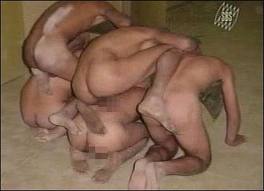
Torture victims at Abu Ghraib

Torture at Abu Ghraib authorized by Rumsfeld.

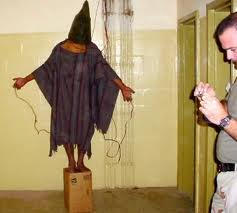
As we know from internal memos and the work of investigative journalists, former Secretary of Defense Donald Rumsfeld authorized torture under the guise of “enhanced interrogation techniques,” violating both international and domestic laws. But Rumsfeld’s memoir, released today, tells a different story. In Known and Unknown, Rumsfeld claims the torture and abuse of detainees, specifically at Abu Ghraib, were the result of a few rogue individuals. Rumsfeld shrugs off the word “torture” as a mantra of “partisan critics” and brushes aside calls for accountability as a “damaging distraction.” All the while, he continues to ignore the profound illegality of his policies.

Readers should not be fooled into believing that the abuse detainees suffered was random and individualized, as Rumsfeld claims.

Cloaked torture victim at Abu Ghraib

Torture at Abu Ghraib

Physicians for Human Rights (PHR) has long documented the former administration’s system that was developed to codify and excuse torture of detainees. Most recently, PHR published Experiments in Torture, which unveiled information about medical professionals’ involvement not only in torture, but in unethical research on detainees.

The policies that Rumsfeld executed not only normalized torture, but had devastating effects on our national security. According to several reporters and former interrogators, those at the highest levels of the former administration wanted to identify a link between al-Qaeda and Iraq – a link that intelligence officials could not find. Instead of protecting the United States from further attack, the use of torture gave interrogators false information that seemed to show this link. Torture appeared to justify the decision to invade Iraq – a foray that has since cost thousands of lives and has further jeopardized our security.

Former president Bush admits in his own recent memoir that he ordered waterboarding for Khalid Sheik Mohammed, an alleged plotter of the September 11 attacks – why then does Rumsfeld gloss over his role in the use of torture in the so called “war on terror?” While Bush was cavalier about his support for a practice widely considered to be torture, Rumsfeld appears more cautious in his approach.

In Known and Unknown, the former Secretary of Defense passes the responsibility to low-level military officers – individuals who were working under his authority. Rumsfeld stood at the helm of the administration’s development of torture and he should take responsibility for his actions instead of editing his involvement in institutionalizing torture.

Get Updates from PHR