
Blog

Available Now: Global Fund Round 10 Toolkit on Health Systems Strengthening

The Global Fund to Fight AIDS, TB and Malaria launched its Round 10 call for proposals on May 20. Round 10 gives countries around the world another opportunity to utilize the Global Fund to support health systems strengthening (HSS) and build health systems that can tackle AIDS, TB, and malaria, as well as provide better overall healthcare for all.To this end, PHR, the Health Workforce Advocacy Initiative (HWAI), and the USAID-funded Health Systems 20/20 have just released a toolkit that provides information and tips to applicants on how to use Global Fund to support HSS in Round 10. The Global Fund has great potential to support health workforce and other health system strengthening activities. Countries are increasingly taking advantage of the Fund’s possibilities. In Round 7 (in 2007), countries secured at least $186 million for HSS over the first two years of Global Fund grants approved that Round. By Round 9, which concluded last year, the two-year total had nearly doubled to $363 million.Despite these gains, the current level of HSS grants still represents only a fraction of what countries might collectively secure from the Global Fund. The Fund supports HSS activities needed to improve AIDS, TB, and/or malaria outcomes specifically, but these activities can—and often do—impact entire health systems. Programs such as training new health workers and deploying them to rural areas, educating people on their health-related rights, rehabilitating health facilities, and improving drug distribution systems will not only help People Living with AIDS but will also benefit expectant mothers, sick children, people with diabetes—indeed, the health of the whole community.Our advice in approaching the Fund for HSS grants is to be creative, be bold, and be consistent with your country’s national health policies and strategies. You can read about some of the most ambitious Round 9 HSS-related proposals in the toolkit, as well as some significant investments in the health workforce from earlier rounds.Since Round 6, PHR has developed and published our own guides to using the Global Fund to support health workforce strengthening and HSS . The Round 10 toolkit includes a short reference guide (pdf) that answers frequently asked questions about the Global Fund, PHR’s Guide to Using Round 10 of the Global Fund to Fight AIDS, Tuberculosis and Malaria to Support Health Systems Strengthening (pdf), as well as other material focused on the Global Fund and HSS, including documents on developing rights-based approaches to health workforce and health systems strengthening, a list of technical support providers, and more.Have a look. If you have contacts in countries that are eligible for Global Fund support, let them know about the toolkit and the opportunity the Global Fund presents. And if you work in one of these countries, talk to your colleagues and your Country Coordinating Mechanism members (available through the Global Fund’s website) about incorporating HSS into a Round 10 proposal. This Round of the Global Fund represents an opportunity for strengthening health systems not to be missed!

Blog
Experiments in Torture


Cover of PHR's Torture Report

Visit http://phrtorturepapers to learn more and take action.

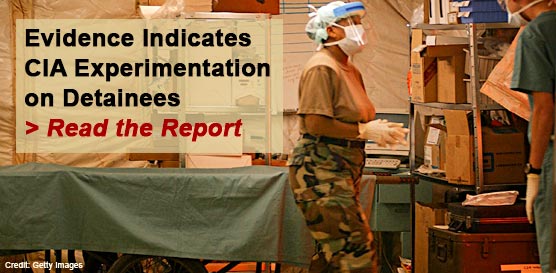
Today PHR has released a new report, Experiments in Torture: Human Subject Research and Experimentation in the “Enhanced” Interrogation Program. It is the first report to reveal evidence indicating that CIA medical personnel allegedly engaged in the crime of illegal experimentation after 9/11, in addition to the previously disclosed crime of torture. In their attempt to justify the war crime of torture, the CIA appears to have committed another alleged war crime—illegal experimentation on prisoners.

The report is available for download here: phrtorturepapers.org.

The report has already been covered in the New York Times and Associated Press and in a number of prominent blogs, including: Boing Boing, Balkinization, Firedoglake and Mother Jones.Please join PHR in our call to President Obama to order Attorney General Eric Holder open an investigation into alleged illegal and unethical human experimentation and research on detainees in CIA custody. If a crime is found to have been committed, the Obama Administration must prosecute those responsible. The integrity of America's commitment to human rights and international law stands in the balance.

Our colleagues at the National Religious Campaign Against Torture have posted a powerful video, "Accounting for Torture," featuring Scott Allen, MD, lead medical author of Experiments in Torture.

Blog

Take Action: Tell Obama to Join the Mine Ban Treaty Today

The Obama Administration has initiated a comprehensive review of US landmines policy to decide whether or not the US will join the Mine Ban Treaty. President Obama needs to hear from you about how harmful landmines are to the health and human rights of people worldwide.Email President Obama today and tell him to join the Mine Ban Treaty.PHR shared the 1997 Nobel Peace Prize for our work to ban landmines. Since then, 156 countries have signed onto the treaty, which bans the use, trade, production and stockpiling of antipersonnel mines.However, the US has refused to join. President Obama now has the opportunity to partner with every member of NATO—and every country in the Western Hemisphere, save Cuba—in supporting this critical treaty. Tell him to take action today.Landmines kill thousands of people a year, with millions more affected by the agricultural, economic and psychological impact of the device. While landmines are a weapon of war, most casualties are civilians: indeed, UNICEF estimates that 30-40% of landmine victims are children. And landmines don't just kill in conflict zones: there are millions of landmines and unexploded ordinances in more than 80 countries worldwide.These indiscriminate weapons maim and kill, and destroy families and communities. The US has not used landmines since the 1991 Gulf War; it is time for us to promise never to use them again. Tell Obama to join the Mine Ban Treaty today.68 Senators co-signed a letter to President Obama in May, showing their support for the Mine Ban Treaty. Now Obama needs to hear from you. Email him today, and ask 6 friends to do the same. PHR members have been advocating to ban landmines for more than 15 years. This is our best chance to join the Mine Ban Treaty in years, and we need your support.Take action today!Want to do more? We are asking major US health professional associations to sign a letter to the Administration against the use of landmines. If you have any contacts at health professional associations who might be able to help, please email Gina at gcoplon-newfield[at]phrusa[dot]org.

Blog

Why the US Should Ban Landmines: Facts and Figures

As you read in our previous landmines blog post, the Obama Administration is reviewing current US landmine policy right now, and will soon decide whether or not the US will join the Mine Ban Treaty.?Why should the US join? Check out these compelling facts and see why this is a critical health and human rights issue:Injury and Death:

  • The International Campaign to Ban Landmines (ICBL) estimates that 15,000-20,000 people are maimed or killed by landmines yearly, with millions more affected by the agricultural, economic and psychological impact of the weapon.
  • UNICEF estimates that 30-40% of mine victims are children under 15 years old.
  • Landmines are responsible for the injury and death of thousands of US and allied troops in all US-fought conflicts since World War II, including dozens in Iraq and Afghanistan. In the 1991 Gulf War, landmines caused 34% of US casualties.
  • At the beginning of the 20th century, nearly 80% of landmine victims were military personnel. Today, 90% of landmine victims are civilians.

The Economic and Social Cost:

  • The ICBL estimates that there are millions of landmines and other unexploded ordnance in the ground in over 80 countries.
  • Landmines cost as little as $3 to produce and up to $1,000 per mine to clear.
  • Most kinds of landmines last forever. Mines laid during WWII are still killing and maiming civilians.
  • It costs $100 to $3,000 to provide an artificial limb to a landmine survivor. Adults require a prosthesis replacement every two to three years and a child must have a new one every six months to a year.
  • Landmines cause environmental damage in the forms of soil degradation, deforestation, and the pollution of water resources with heavy metals. Subsistence farmers are unable to work the land in mined areas.
  • Landmines affect all aspects of human life, including the ability of refugees to return home. A report from the United Nations High Commissioner for Refugees (UNHCR) published in 1997 stated that 13.2 million refugees, 4.9 million internally displaced people and 3.3 million returnees were at risk from landmines.

The US and Landmines:

  • The United States is one of only 39 countries that have not yet joined the Mine Ban Treaty; in the Western Hemisphere, only the U.S and Cuba are non-signatories.
  • The US has the third largest mine arsenal in the world—a stockpile of 11 million Anti-Personnel Landmines (APLs)—despite not using landmines since 1991 or producing them since 1997. Enormous amounts of taxpayer money are used to maintain these weapons.
  • The United States is one of only 13 countries that refuse to halt production of APLs.
  • The Bush Administration’s landmine policy, announced in February 2004, represented a major rollback of US progress on the landmine issue. The policy increased funding for mines, permitted indefinite US use of self-destructing mines, and refused to phase out long-lived mines until 2010. The Obama Administration has yet to revise the Bush policy.

These indiscriminate weapons maim and kill, and destroy families and communities.?President Obama is currently reviewing US landmine policy. We need your voice to tell the President to ban mines now! The US has not used landmines since the 1991 Gulf War. It is time for us to promise never to use them again.Take action today: email Obama and tell him to join the Mine Ban Treaty!

Blog

The Mine Ban Treaty and Obama: To Sign or Not to Sign

The Obama Administration has initiated a comprehensive review of the US landmines policy to decide whether or not the US will join the Mine Ban Treaty.

PHR has re-engaged in this campaign at the request of The US Campaign to Ban Landmines (USCBL) and members of the Administration, and we are hopeful that this will be an opportunity to show the world that the US respects health and human rights.

Over the next few months, we’ll be updating you on the treaty via a new blog series (this is post #1) and asking for your help to urge President Obama to join the Mine Ban Treaty.

One immediate action item: We are asking the presidents of major US health professional associations to sign a letter to the Administration [pdf] showing the unity of the medical, public health and nursing community against the use of landmines. If you have any contacts at major health professional associations who might be able to help, please email Gina Coplon-Newfield at gcoplon-newfield[at]phrusa[dot]org as soon as possible.

As you may know, PHR is a founding member of the International Campaign to Ban Landmines (ICBL), a grassroots movement that brought the international community together to form the 1997 Mine Ban Treaty, which bans the use, trade, production, and stockpiling of antipersonnel mines. PHR and the other ICBL founding groups were awarded the Nobel Peace Prize for their work toward achieving the treaty, which 156 countries have signed.

As with many international human rights treaties, the US has refused to sign, arguing that US soldiers are exposed to risk if the country can’t use landmines as a deterrent weapon. The United States’ position sets us apart from most other countries: indeed, all other member countries of NATO are signatories to the treaty (Poland plans to ratify the treaty in 2012). By refusing to sign, the US joins China, Russia, Cuba, India, and Pakistan among the countries that have not committed to stop using landmines.

The US has not used landmines since the 1991 Gulf War, yet previous administrations have chosen to keep the weapon available, just in case.

Early in his tenure, it appeared President Obama had made the same decision. In November 2009, a White House spokesman stated that after reviewing the matter, the Obama Administration had decided not to sign the Mine Ban Treaty. The announcement prompted public outcry among human rights groups, and the following day, the White House insisted the issue was still under review. The current review is headed by Samantha Power and Barry Pavel at the National Security Council.

We expect the Obama Administration to make a decision in the next few months, making it critically important that the President hear from health professionals and human rights activists about how harmful landmines are to humanity. We will soon send out an action alert, which will give you the chance to email Obama and urge him to sign onto the Mine Ban Treaty. Please take action, and urge friends and family to do the same.

Congress is joining in the advocacy too. On May 22, Senator Patrick Leahy of Vermont sent a letter co-signed by 68 senators (including 10 Republicans) to President Obama, encouraging him to develop a plan to overcome any obstacles to joining the Convention. 68 is a magic number: international treaties must be approved by a 2/3 majority in the Senate, so if Obama decides to sign onto the treaty, 68 Senators would be enough to accede to it (of course, though this letter is a good indication of potential votes, it's not a guarantee).

PHR members have been advocating to ban landmines for more than 15 years, and we need your help again at this critical juncture. Keep an eye out for more actions alerts and blogs. And spread the word—this is our best chance to join the Mine Ban Treaty in years, and we need your voice!

Blog

Syringe Exchange Victory Celebration

Pelosi accepting awardRecently it was my honor to be a moderator at the Syringe Exchange Victory Celebration in the US Capitol. We celebrated that after 21 years, Congress had finally repealed the ban on federal funding of syringe exchange. The celebration recognized leaders in Congress, honored community advocates, and reminded everyone that there is still work to be done to ensure these lifesaving services are fully implemented.The event was really amazing – so many key leaders actually attending to receive their awards in person and speak about the importance of syringe exchange services. Speaker Pelosi (CA) and Representatives David Obey (WI), Jos_ Serrano (NY), Henry Waxman (CA), Barbara Lee (CA),Lucille Roybal-Allard (CA), and Mike Castle (DE) joined us to accept their Champion of Public Health awards in person. Representatives Jim Moran (VA) and Steve Cohen (TN) also attended and received certificates of appreciation for their support in lifting the ban. Honoring their dedication and advocacy leadership in the community, awards were also presented to the Harm Reduction Coalition (accepted by Allan Clear) and to Dave Purchase of the North American Syringe Exchange Network.The Celebration was taking place on World Hepatitis Day and I had attended a Hill rally call on Congress to support increased federal funding for viral hepatitis. Lorren Sandt, one of the rally organizers, spoke at the Syringe Exchange Victory Celebration about the importance of syringe exchange in the prevention of hepatitis.

The press release from Rep. Serrano’s office on his receiving awards for his leadership on ending the federal (and local DC) syringe exchange funding ban, includes a link to this YouTube video of his acceptance speech (above). I didn’t know his people were recording, but he’s a real champion on this issue and wanted to share with his district.

Report

Experiments in Torture

Evidence of Human Subject Research and Experimentation in the "Enhanced" Interrogation Program

Following the Sept. 11, 2001 attacks, the Bush administration initiated new human intelligence collection programs. To that end, it detained and questioned an unknown number of people suspected of having links to terrorist organizations. As part of these programs, the Bush administration redefined acts — such as waterboarding, forced nudity, sleep deprivation, temperature extremes, stress positions, and prolonged isolation — that had previously been recognized as illegal, as “safe, legal, and effective” “enhanced” interrogation techniques.

Multimedia

Exposing Statelessness: Understanding the Plight of Burma's Rohingya

For decades, the xenophobic military junta in Burma has refused to recognize the Rohingya, a distinct Muslim ethnic minority living in western Burma, as one of the country's many ethnic nationalities. As a result the Rohingya have suffered human rights violations, and a vast majority of them have been denied official recognition of citizenship.Panel discussion on the Rohingya, sponsored by the Open Society Institute and featuring PHR's Richard Sollom.

Watch or Listen Now »


Source: Open Society Institute


Blog

Eliminating Fear of Abuse From the Dangers of Detention

The Prison Rape Elimination Act (PREA) became law in 2003, but it was not until earlier this year that regulations to implement the law were proposed to be enacted by the Department of Justice. In early May, Physicians for Human Rights submitted comments in support of these proposed standards to prevent, and offer treatment to victims of, sexual abuse in prison.

The guidelines apply to facilities that hold immigration detainees, in addition, to those that house children and accused and convicted criminals. Immigrants in detention are particularly vulnerable to sexual abuse because of:

  • fear and lack of understanding of the immigration detention system and their rights within it;
  • language barriers and cultural attitudes towards experiencing and reporting abuse; and
  • prior histories of victimization, sometimes state-sanctioned.

It is critical, as the proposed standards recognize, that noncitizens receive information about sexual abuse and have access to confidential reporting mechanisms and sources of support, all provided with cultural sensitivity, in order to protect their right to be free from all forms of torture.

Just Detention International has more information about the proposed standards to implement the Prison Rape Elimination Act, and a fact sheet on sexual abuse in immigration detention (pdf).

PHR's comments in support of the proposed standards:

Physicians for HumanRights submits these comments in support of the recommended national standardsdeveloped by the National Prison Rape Elimination Commission, with an emphasison their vital importance for immigration detention.

Physicians for HumanRights (PHR) is a nonprofit organization that mobilizes health professionalsacross the United States to advance health, dignity and justice. Harnessing thespecialized skills, rigor, and passions of doctors, nurses, public healthspecialists, and scientists, PHR investigates and exposes human rightsviolations in the US and internationally. Health professional members of PHRhave evaluated the mental and physical health of detained and non-detainedasylum seekers and torture survivors since 1992.

Sexual abuse andassault are grave human rights violations. The UN Convention Against TortureCommittee recognizes sexual abuse as a form of torture within its mandate towork to prevent. Torture, including sexual violence, is prohibited by multipleinternational agreements that bind the US, such as the Universal Declaration ofHuman Rights and the International Covenant on Civil and Political Rights. Inrecognition of the common-sense measures proposed by the Commission to stopthis particularly widespread human rights violation, recent revisions toImmigration and Customs Enforcement’s performance-based national detentionstandards (PBNDS) incorporate many of the Commission’s recommended standards.

However, the PBNDSare not codified in statute or regulation and therefore are not legallyenforceable. Application of the PREA standards to facilities with immigrationdetainees will ensure that, at a minimum, immigration detainees receive thesame basic protections from the terror of sexual abuse as prison and jailinmates.

Such protections areurgently needed for immigration detainees, whether they are housed in afacility run by Immigration and Customs Enforcement (ICE), an institution withwhich ICE contracts, a short-term setting run by Customs and Border Control, ora juvenile setting while under the care and custody of the Office of RefugeeResettlement.

In addition to thedangers faced by other inmates, immigration detainees are especially vulnerableto abuse. Language and cultural barriers and a fear that reporting abuse willresult in retribution or deportation increase the likelihood that a non-citizenwill be sexually abused while in immigration detention and not feel safereporting it. The experience of sexual violence in confinement that one feelspowerless to stop has a particularly devastating impact on immigrationdetainees, whom our research has shown suffer from poor and worsening mentaland physical health while incarcerated.

A significant numberof detainees are survivors of trauma who are both particularly susceptible tovictimization, and acutely harmed by further abuse. For example, one femaledetainee who was a survivor of rape reported to PHR, as described in our study From Persecutionto Prison: The Health Consequences of Detention for Asylum Seekers(pgs.66-67), that,

Since being indetention, I think more and more about the rape…Here, I am locked up, and everyday is the same. And I’m thinking about what happened to me…I keep seeing thosepeople and what happened to me.

A male rapesurvivor-detainee told PHR,

when I first camehere I thought it’s where they protect people, but that’s not what it’slike…I’m worried about my mental health…I cannot cry in here. My feelings aredead.

The terrible impactthat further abuse would have on vulnerable individuals like these two isclear, particularly in light of the retraumatization that merely beingincarcerated provoked in both.

Although immigrationdetainees ostensibly receive necessary medical and mental health care, inpractice this system of care is oriented to responding to emergencies andensuring merely that individuals are alive and well enough to take part inproceedings and be deported. Advocates have repeatedly documented failures inthe system to provide detainees with even minimal and basic counseling andhealth care services that health professionals have deemed essential. Moreover,unlike criminal defendants, immigration detainees are not represented bygovernment-provided counsel, and in recent years approximately 84% of them havenot been able to find or pay for attorneys.

This lack of medicaland legal support makes it especially crucial that immigration detaineesreceive culturally appropriate information in their own language about theirright to be free from sexual abuse and who they can contact if they aresexually assaulted (Standards TR-3, ID-3, ID-4).

Access to outsideorganizations that provide counseling, medical and mental health supportservices, and advocacy for immigrant victims of violence is likewise critical(Standards RP-2, ID-1).

The different sets ofstandards and the supplemental standards for facilities with immigrationdetainees provide common-sense measures that are needed to improve safety. Theyrepresent a compromise, balancing the fiscal and security interests ofdetention administrators with the basic right of all people, regardless of citizenshipand custody status, to be free from sexual abuse. Swift ratification of theseprovisions will spare thousands of men, women, and children the devastation ofsexual abuse behind bars.

Response to thequestions in the Advanced Notice of Proposed Rulemaking

1.What would be the implications of referring to “sexual abuse” as opposed to“rape” in the Department’s consideration of the Commission’s proposed nationalstandards?

Trulyestablishing a zero-tolerance standard for prison rape requires addressing thefull spectrum of sexual violence. The national standards should take anexpansive approach and incorporate all staff sexual misconduct and all coercivesexual activity between detainees.

Theterm “rape,” however, is often understood to have a narrow definition inaccordance with its use in criminal law. Using the widely recognizedterminology of “sexual abuse” in the standards will minimize confusion with thecriminal standard for rape—which varies by state— and will conform to theexpectations and intent of PREA. 

PREA’sdefinition of rape includes all of the conduct within the Commission’sdefinition of sexual abuse except for sexual harassment (inmate-on-inmate andstaff-on-inmate), staff-on-inmate voyeurism, and staff-on-inmate indecentexposure.

Beyondconstituting abusive conduct that should not be tolerated, harassment,voyeurism, and indecent exposure are known precursors to assaultive sexualabuse. Addressing these forms of sexual misconduct will enable officials toprevent rapes from occurring. 

Whilethe full spectrum of sexual abuse must be addressed as part of a comprehensiveresponse to prison rape, consensual sexual activity between detainees shouldnot be incorporated into the definition of sexual abuse. Detention agenciesremain free to establish disciplinary rules and regulations as they see fit,but conflating consensual sexual activity between detainees with the crime ofrape serves no legitimate purpose and thwarts many of PREA’s goals. On thecontrary, doing so will force survivors of sexual abuse to suffer in silence,as fear that sexual abuse will be misconstrued as prohibited consensual sexualactivity and that they will face punishment, will prevent survivors fromreporting their abuse or seeking medical assistance.

Thisdisincentive to reporting will allow sexual violence to flourish—and will increase the vulnerability of manydetainees, such as those who are gay or transgender, who are known to be atespecially high risk for abuse but are often mistakenly assumed to have consentedto any sexual activity.

2. Would any of theCommission’s proposed standards impose ‘‘substantial additional costs’’?

Relativeto the billions of dollars spent on immigration detention every year, the costsfor implementing these standards in facilities run by or contracted with ICE,Border and Customs Enforcement, and the Office of Refugee Resettlement will besmall.

Facilitiesthat have basic policies and practices in place to protect people in theircharge, as they are legally required to do regardless of PREA, can meet thestandards’ requirements through low and no-cost options, such as repurposingstaff and incorporating information about sexual abuse into existing trainingand orientation materials.

Anyconsiderations of the cost of protecting detainees from sexual abuse must beunderstood in light of the dramatic benefits of doing so. For example,implementing the standards’ provisions will promote safety and efficiency,resulting in net savings in areas such as staffing, investigations, and detaineehealth care.

Beyondthe economic impact, the moral costs of allowing sexual violence to continuemust also be considered. Every person has the right to be free from sexualabuse, regardless of custody and citizenship status. Ultimately, the Office ofManagement and Budget will require the Department to conduct a cost-benefitanalysis of the standards. An examination of costs alone, such as the costprojection study currently being conducted by Booz Allen Hamilton, will notmeet this requirement.

Weurge you to begin the required analysis by examining the full range of benefitsthat will come from implementing the recommended standards.

3. Should the Departmentconsider differentiating within any of the four categories of facilities forwhich the Commission proposed standards?

Thestandards represent basic measures that all facilities must put in place tomeet their constitutional obligation to protect inmates from abuse. Varyingcompliance requirements based on factors such as the size and resources of a facilitywill undermine the standards and will needlessly complicate their otherwisestraightforward expectations.

ICEcontracts with facilities of different sizes and different staffing levelsthroughout the US. Creating distinctions for the level of compliance requiredwill make it especially difficult for ICE to assess whether each contractedfacility is conforming to the requirements applicable to it. It will also senda dangerous message that certain types of facilities do not need to put inplace the measures necessary to protect vulnerable immigration detainees fromsexual abuse.

Comments onSupplemental Standards for Facilities with Immigration Detainees

PHR applauds theCommission’s efforts to address the particularized needs and concerns ofimmigration detainees. The Supplemental Standards for Facilities withImmigration Detainees contain well-considered and essential guidelines forpreventing and responding to abuse involving noncitizens.

In addition tostrongly supporting the ratification of these standards into regulations, weadvocate strengthening the protections they provide in the following importantways:

1.ID-5: Supplement to SC-1: Screening for risk of victimization and abusiveness

Standard ID-5 callsfor efforts to be made to obtain detainees’ institutional and criminal records,and for screening to be done on that basis for detainees who are vulnerable toabuse or likely to be abusers. To minimize the dissemination of sensitivepersonal information, PHR recommends that detention facility authorities drawon risk assessments completed by DHS personnel upon entry of individuals intoICE’s custody to identify and appropriately house detainees with propensity tobe victims or abusers. Any determination that an individual has eitherpropensity should be made only by personnel with training and professionalexpertise in that area, including social workers, psychiatrists, andpsychologists.

2.ID-7: Supplement to RE-1: Inmate reporting

Standard ID-7 aims toenable detainees to report abuse directly to the ICE Office of Civil Rights andCivil Liberties and the DHS Office of the Inspector General. In order to beeffective, this measure must provide for the same private, confidential, andprivileged use of phones contemplated by standard ID-8, regarding access tooutside victim advocates.

These Standardsconsistently recognize the particular cultural sensitivities of detainees tosexual abuse, and the difficulties many detainees will have talking aboutincidents that do occur. To work around these barriers, the Standards mustguarantee to the maximum extent possible that detainees are able to reportsexual abuse in private, beyond earshot of other detainees and facilitypersonnel. Facilities may guarantee this right at minimal cost by making a freephone line available in a quiet, closed area outside everyday housing “pods”,and informing immigration detainees that they may request to use this phone forthe specific purpose of calling either of the named offices.

Conclusion

Immigration detainees are at especially highrisk for sexual violence and have clear disincentives to reporting when suchabuse does occur. Strong standards are urgently needed to protect detaineesfrom this devastating but all too common abuse. PHR strongly urges you to promulgatethe Commission’s standards without delay. Every day that these criticallyimportant measures are not in place, men, women, and children will continue tobe subject to harrowing abuse and rape while in custody.

Get Updates from PHR