Blog

The 16 Days Campaign: Hope, Strength and Power Prevail

“Action is the antidote to despair.” — Joan Baez

So often, stories of sexual violence leave one with a debilitating sense of hopelessness and despair at the extent of the problem and the wide-ranging and enduring effects on survivors and their communities.

For this year’s 16 Days Campaign, PHR is pleased to relay the hope, strength, and power that we’ve witnessed while traveling in Kenya and the Democratic Republic of the Congo, where mass rape in conflict situations has been so extreme.

PHR joins our partner organizations and colleagues in celebrating the significant new strides being made in addressing sexual violence in meaningful and sustainable ways for survivors and for their communities. We acknowledge our partners — health, legal and law enforcement professionals — in Kenya and the Democratic Republic of the Congo (DRC). Their action is indeed the antidote to despair. They deserve recognition for the concrete actions they are taking to address sexual violence, actions which are celebrated in the series of photos that follow:
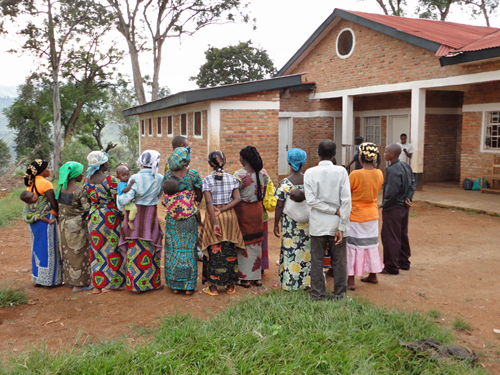
Kalehe Tribunal (Women with backs to Camera)

The courage to confront their attackers: 29 brave women wait patiently outside this rural courthouse in eastern Congo to testify against perpetrators of crimes against humanity. They bear witness to brutal attacks on their villages, including mass rape, murder and pillaging. “We want convictions and reparations,” they told PHR.


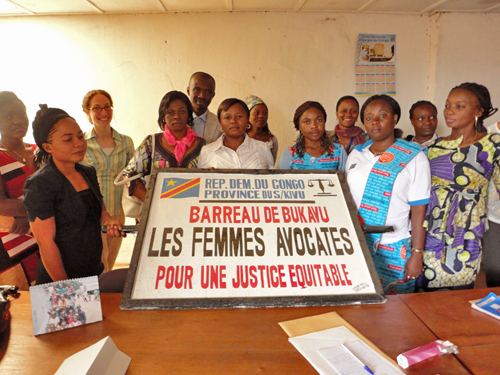
Bukavu Bar Assocation Women Lawyers

The power to defend: The newly formed Women’s Bar Association of South Kivu, DRC, organized to fight discrimination against women, educate communities about women’s rights, and end impunity for violence against women. “We want to address the dysfunction of the justice system,” they told PHR. “For that, we need to be together.”


Goma ABA Lawyer

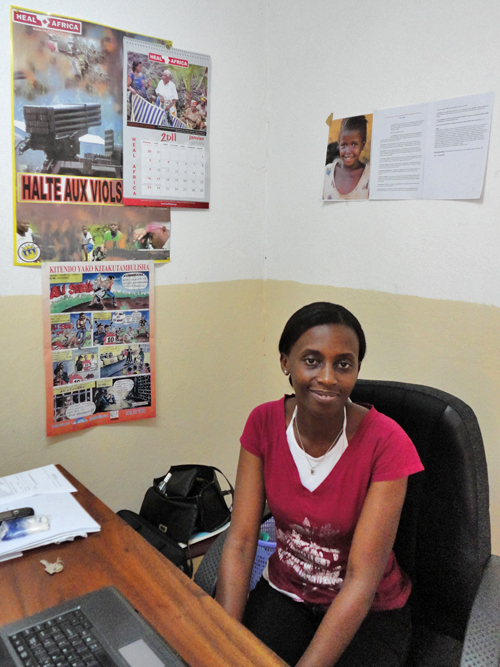
The strength of medical-legal cooperation: “Stop Rape” proclaims the poster this attorney’s wall. Working within Goma’s Heal Africa Hospital as a lawyer employed by the American Bar Association’s Rule of Law Initiative, she guides survivors of sexual violence through their choices in bringing legal action against their attackers.


Counselor with

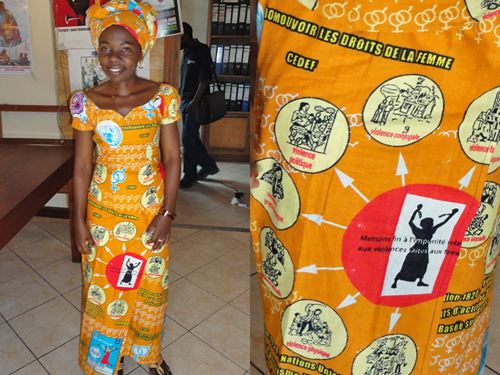
Wearing your rights: Denise, representing the “Synergie des Femmes” in eastern Congo, coordinates legal support and counseling for survivors of rape, while proudly parading words and images “promoting women’s rights” on her fabulous fabric.


Women Sewing

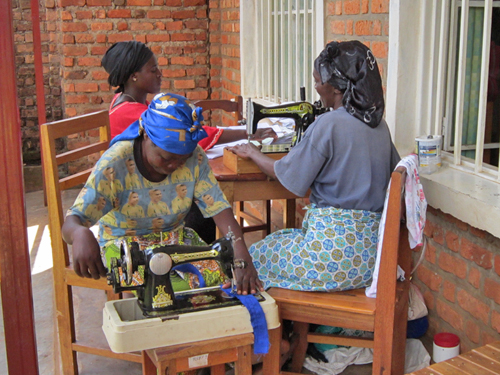
Creating and earning for survival: At Bukavu’s counseling and economic recovery center for survivors of sexual violence, women create clothing and miniature representations of their active Congolese sisters.


Sewing Creations

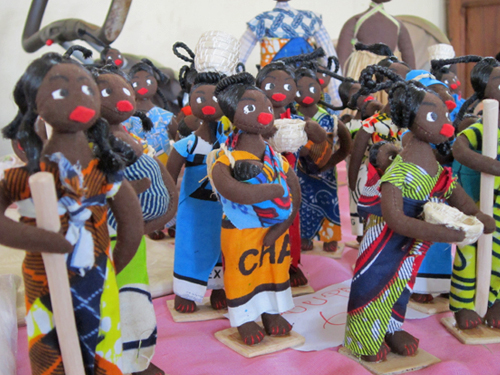
Creating and earning for survival: Some of the miniature representations of their active Congolese sisters: farming, trading, nurturing.


Kenyatta National Hospital

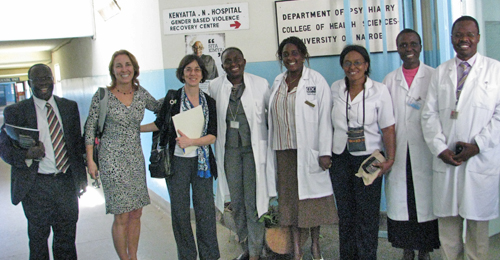
Providing Medical Care – Collecting Forensic Evidence: Here at Kenyatta Hospital in Nairobi is one of the first integrated Rape Crisis Centers in the region. Doctors, nurses, social workers are building a “one-stop” locus where care and evidence can support survivors in achieving comprehensive justice.


Rachel Muthoga with PHR T-Shirt

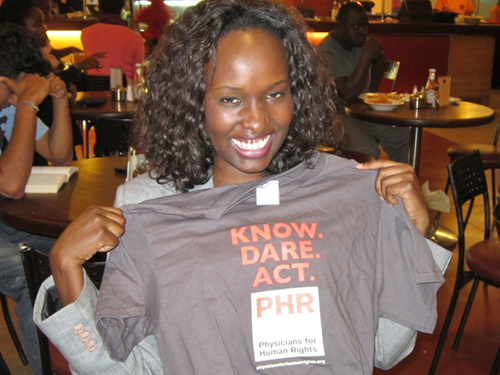
Building a Network to End Impunity: Our new colleague Rachel Muthoga, Kenya Coordinator of PHR’s initiative to convene health professionals, law enforcement, attorneys, and judges. Through collaborative training, together we will build capacities and help reform systems to better serve and empower survivors of sexual violence in conflict.


The 16 Days Campaign — formally the 16 Days of Activism Against Gender Violence Campaign — symbolically links November 25 (International Day for the Elimination of Violence against Women) with December 10 (Human Rights Day). First conceived at the 1991 Women’s Global Leadership Institute (WGLI) as an opportunity to strategize and advocate for more unified efforts to address gender violence, the 16 Days Campaign has evolved, gathered strength, and in many ways, has now become a celebration of action. For more information, please visit 16 Days of Activism Against Gender Violence Campaign.

>> Back to top

Blog

Pat Daoust Wins ANAC Public Service Award, Thanks to You!

I just returned from an inspiring?ANAC conference (Association of Nurses in AIDS Care). It is always fun, fabulous and totally energizing to be around ANAC members, who are deeply committed to stopping AIDS, supporting people living with AIDS and building an amazing community of caregivers, educators and advocates.Former PHR Health Action AIDS Campaign Director Pat Daoust was honored with one of ANAC's most prestigious awards, the Public Serive Award, for her three decades in AIDS care and her amazing advocacy work through Health Action AIDS. Her acceptance speech is below. In it she thanks all of you, the campaign's supporters, for your deep commitment to stopping AIDS. Read and be inspired!

First of all, thank you very much. I am extremely humbled and honored by this recognition, especially because it comes from this organization—ANAC—my fellow nurses.When I received word that I would be the recipient of the Public Service Award, the letter noted that this is in large part an acknowledgment of the work accomplished as Director of the Health Action AIDS Campaign while at PHR. While I am extremely proud of the campaigns’ successes, I am the first to emphasize that without our coalition partners and the commitment of our members—particularly the thousands of nurses both here in the US and abroad—we would never been able to reach our goals!

  • Wen we called upon you to write or sign on to letters to members of congress calling for the repeal of the HIV travel ban.
  • When we asked you to set up in-district meeting with your representatives to help educate them on the importance of women’s rights and the need to integrate FP and reproductive health care with HIV service.
  • Whenever we held summits or organized hill meetings to advocate for US investment in health systems and health workers in the developing world.
  • Whenever we urged op-eds or LTEs that addressed human rights or the right to health for the most vulnerable including IDUs , MSN or women and children at risk for HIV.

You never let us down. You always rallied above and beyond.The powerful voice of the nurse truly made a significant impact. The wins for AIDS, human rights and global health could never have happened with out the expertise, the dedication, the passion and the commitment of the largest group of health professional in the world. NURSES!!!Our size as a profession—comprising close to 80% of all health professionals in the world—gives us power but also holds us responsible, obligates us to be advocates for those who voices are not hear. Our work is not done: appropriations for PEFAR and global health is still an unknown and with 70% of those in need of treatment lacking access and infection rates continuing to grown we have to keep our mission on the front pages and at the top of the USG agenda.In closing I want to acknowledge and thank Deb von Z for nominating me for this award, the ANAC board for approving the nomination, my mentor Larry Kessler, the founder of the AIDS Action Committee in Mass, who first taught me about advocacy and? the entire HAA team at? PHR? and, last, my biggest supporter, ?my husband Paul, who for years has put up with my international travel, my long absences and my obsessive behavior. He has never once complained.Thank you all once again.

Multimedia

President Obama orders review of alleged massacre of Taliban in Bush era. PHR responds.

In the wake of a major New York Times story revealing new evidence that the Bush Administration impeded at least three federal investigations into alleged war crimes in Afghanistan in 2002, President Obama told CNN in an interview broadcast July 13th that having now learned about the allegations he has instructed his national security team to gather all the facts about the case for his review. It was PHR who first discovered evidence of these alleged war crimes.

Blog

Learn to Document War Crimes and Atrocities

We are now accepting applications for the PHR International Forensic Program's spring training program in Crime Scene and Evidence Documentation, which will be held from April 26-30, 2010?in Tallahassee, Florida. The course is led each spring by IFP Director Stefan Schmitt, who?has been providing forensic expertise to human rights investigations including work in Guatemala, Iraq, Bosnia, Rwanda, Liberia and Afghanistan.Over five days, students? attend lectures and engage in practical training, including the documentation of mock crime scenes. They? learn the essentials of digital forensic photography, basic sketching techniques and note taking. There is also a section on the photo documentation of evidence of alleged torture and abuse. Those who successfully complete the program will be qualified to document evidence of human rights violations in a manner which will be admissible in court.

There are many small things that make up an effective investigation and I think it’s very easy for the layman to miss out on some of the steps. This course fills in all of those small pieces, which together, makes an effective investigation.(James Welsh, Amnesty International, UK)

For 22 years, PHR has been at the forefront of using forensic science in the investigation of human rights violations. Many human rights cases hinge on the quality and custody of the first photography, sketches and notes. Each year, the International Forensic Program at PHR offers two courses designed to share knowledge with human rights field workers.These courses are designed for anyone who might be a first responder to a human rights violation or may need to evaluate the quality of documentation in human rights cases. Past participants have included human rights field investigators, NGO workers, UN officers, ICC investigators, doctors, nurses, journalists and attorneys.Our fall course, Forensic Laboratory and Medical Examiner Office Operations, will be held in Fort Worth, Texas from October 18-30, 2010. The objective of this course is to develop a working knowledge of available forensic services and reporting, and an understanding of the necessary quality control measures in producing court usable evidence. Alumni of this course will gain an understanding of commonly available forensic laboratory services and the forensic standards required in order to assess the collection, analysis, and reporting of evidence.More information on the training programs offered by the IFP is available on the courses homepage. In addition to our annual courses, the International Forensic Program can offer customized training programs in forensic services and documentation. Contact Lindsay Welch, Forensic Coordinator, for more information – lwelch [at] phrusa [dot] org.

Blog

37,000 Darfur Refugees at Risk in Eastern Chad as NGOs Suspend Aid

The UN reported last week that six aid groups have suspended operations in eastern Chad. Nearly 300,000 Darfuri refugees have fled across the the Sudan-Chad border to escape violence in Darfur. Among the groups suspending operations are the International Committee of the Red Cross (ICRC), which reported the kidnapping of a French ICRC worker and five Chadian colleagues near the Sudanese border this week, and French NGO Solidarités, which lost a Chadian employee earlier this month.

As reported by PHR investigators in Nowhere to Turn: Failure to Protect, Support, and Assure Justice for Darfuri Women, Darfuri refugees in the Farchana Camp in eastern Chad are entirely reliant on the aid provided by UN and humanitarian agencies and face daily threats to their health and security. A September report from Amnesty International supported PHR’s findings at Camp Farchana and further spoke to the volatile security situation in eastern Chad, where more than 50 armed attacks on humanitarian workers have taken place during 2009. Armed banditry has been a persistent security threat, and is cited as the biggest danger facing Darfuri women and girls when they leave UNHCR camps to collect water and firewood.

PHR and other groups have long called for the implementation of firewood patrols around UNHCR camps in eastern Chad, where women and girls have to travel up to 30 kilometers away from camp to collect firewood for cooking, water to supplement the inadequate rations available in the camps and hay or straw to feed animals they raise for milk and meat.

Forced to leave the camp in order to satisfy basic human needs of themselves and of their family members, Darfuri refugees plead with peacekeepers assigned to their protection, with little effect. The MINURCAT peacekeeping force and Détachement intégré de Sécurité (DIS) police units fail to provide for the security needs of the refugees; as reported in the September Amnesty International report, refugees report rebukes by DIS, telling refugees to take up their issues with camp administrators.

It is clear from events in recent weeks that the security situation in eastern Chad is insufficient for humanitarian access: aid agencies providing life-saving assistance to Darfuri refugees must be assured security for their convoys and for their international and Chadian employees. The UN should immediately review MINURCAT operationality and renew calls to donor governments to ensure full deployment of MINURCAT uniformed personnel to protect Darfuri refugees and humanitarians in Chad, along with all necessary military and other material, including military helicopters.

PHR continues to encourage all troop-contributing countries and police-contributing countries to recruit female officers for protection units trained to address sexual and gender-based violence and to increase funding of humanitarian operations in Chad and Sudan, to ensure the provision of healthcare services to survivors of gender-based violence.

Blog

2010 PHR National Conference FAQs

With an innovative approach and new format to this year's annual PHR National Conference, you may have a few questions about what to expect and how to attend. Below, we've answered some "Frequently Asked Questions" about this year's conference, Health and Human Rights Education in 2010, being held on February 20 at Boston University School of Medicine (Boston, MA).

Who should attend the conference?

We hope that the majority of our National PHR chapters will attend, with two to three students and a faculty member or dean representing each school. We also welcome applications from medical students who may not have a PHR student chapter but are committed to furthering human rights education in their curriculum. Students are encouraged to apply online. If you are a Dean or faculty member and are interested in attending, email Sarah Kalloch, PHR Director of Outreach, at skalloch@phrusa.org.

What will the conference include?

The National Conference will feature world-renowned speakers, panel discussions, strategy plenary sessions, skill development workshops and action planning sessions to address all aspects of integrating health and human rights into the health education field. The jam-packed day will provide information on the critical need to integrate health and human rights into education, strategies for incorporating quality human rights education in curriculum, as well as tangible skills and solutions to help lead your campus on this issue.

How does this conference differ from previous PHR National Student Conferences?

This year’s conference is the first of its kind. It will focus on empowering students and faculty to change the paradigm of medicine to one which embraces human rights through the incorporation of human rights in health professional education. We will bring together a select group of roughly 150 committed students and faculty members who plan to be the frontrunners of the curriculum change movement on their campuses. This select group will gain vital ideas, strategies, skills, and connections to make health and human rights education a reality for their student bodies.

What will I gain from attending?

The conference will provide an excellent opportunity to network and strategize with dedicated students, faculty members and Deans who strive to bring a greater understanding of human rights to their classrooms, and to meet experts in the human rights field who have dedicated their careers to furthering this cause. You will learn from and engage with student leaders around the country who are passionate about health and human rights in their education. You will also gain new insights on the health and human rights approach, tools to create electives at your school, valuable resources and connections, and tangible ideas for getting your campus involved to shape your own education and that of your peers.

How should I prepare to have the best conference experience?

If you are accepted to represent your chapter and/or campus, you will be called on to prepare a preliminary plan for a tangible educational-change project you would like to see on your campus. As the conference approaches, we will also give you a short reading assignment to help you prepare for some of the conference’s key topics.Whether you are looking to improve a current project or proposing a new initiative for you school, we recommend you draw on our Health and Human Rights Education Toolkit for guidance and resources for your planning process.

Questions?

 Email us at conference@phrusa.org.

Download a printable version of the National Conference FAQs (pdf).

(Cross-posted on the PHR Student Blog.)

Blog

PHR Board Chair and Co-Founder Bob Lawrence Receives Public Health's Premiere Award

Robert S. Lawrence, MD, a founding member of PHR and the Chair of PHR’s Board of Directors, has been awarded the Sedgwick Memorial Medal at the 137th Annual Meeting of the American Public Health Association (APHA). The medal, considered the APHA’s most prestigious award, was presented at a ceremony in Philadelphia on November 10, 2009. The Medal recognizes Dr. Lawrence as

an individual who has demonstrated a distinguished record of service to public health while tirelessly working to advance public health knowledge and practice.

Upon learning of the award, PHR’s CEO, Frank Donaghue, said:

Physicians for Human Rights warmly congratulates and applauds our Board Chair, Robert Lawrence, MD, the recipient of one of the highest honors bestowed by the APHA. The 2009 Sedgwick Memorial Medal—a true accolade of the profession—signals colleagues’ recognition of Dr. Lawrence’s exemplary accomplishments in the field of public health. His leadership has helped PHR bring a human rights perspective to vital issues such as fighting global AIDS, strengthening the health workforce, addressing inequities faced by women and children, and promoting accountability and governance in health systems.

The Sedgwick Medal honors Dr. Lawrence’s long and remarkable career in public service. As Professor and Director of the Center for a Livable Future at The Johns Hopkins University Bloomberg School of Public Health, Dr. Lawrence has worked to eliminate racial and income-based disparities in health-care access across the United States. Educated at Harvard College and Harvard Medical School, Dr. Lawrence has taught at top US universities, served as a director of health sciences at the Rockefeller Foundation and has been a principal force for establishment of human rights programs in schools of public health. He is a member of the prestigious Institute of Medicine and is a past recipient of the Albert Schweitzer Humanitarian Prize.Dr. Lawrence co-founded PHR, and has participated in human rights investigations with PHR and other organizations in countries including Chile, the former Czechoslovakia, Egypt, El Salvador, Guatemala, Kosovo, the Philippines, and South Korea and South Africa.

Blog

DHS Official Tells APHA Conference More Effective Detention Healthcare Is Being Planned

Homeland Security official Beth Gibson tried to put a kinder face on immigration detention health care in a November 9 talk to health professionals at the American Public Health Association annual meeting in Philadelphia. Instead of making detention center health staff pre-clear, and therefore pre-justify, every medical procedure that is referred to health professionals outside the prison walls, Homeland Security policy under consideration, according to Gibson, would devise a list of treatments that are "pre-approved." Only more unusual services—such as CAT scans—would require special advance approval.This is welcome news from Ms. Gibson, who, as Senior Councilor to the Assistant Secretary of Homeland Security?John Morton, surely appreciates the human costs of unjustified delays in detention health care that have been reported in the press and by human rights groups.Still, the policy doesn't go far enough in the opinion of a number of health professionals who attended the APHA session, chaired by detention health expert Homer Venters, MD, at which Ms. Gibson spoke. One participant called for health professionals to support comprehensive immigration reform, which would decrease the number of persons in the US who are amenable to detention in the first place. Leaders in the Jail and Prison interest group of APHA also called on health professionals to become much more involved in supporting reforms to immigration detention policy.

Blog

Health Needs in Sudan Conflict Zones

The World Health Organization's representative to Sudan, Mohammad Abdur Rab, told reporters yesterday that 10 percent of children in Darfur and in South Sudan die before their first birthday, and that 15 percent of children in western Darfur were malnourished. This immense figure provides a quantitative background to PHR’s work on food security issues, as well as sanitation and health needs of displaced Darfuris living in UNHCR camps for the past five years.In meetings held with members of Congress in Washington, DC last week, PHR doctors briefed co-Chairs from the House Commission on Human Rights, Congressional Women’s Caucus and Congressional Caucus on Sudan on the urgent health, food and security needs in Camp Farchana. The camp was the site of PHR’s 2008 investigation into the impact of sexual violence on survivors of the Darfur conflict (see the report here), which found high levels of malnourishment, lack of healthcare, insufficient sanitation and lack of protection for women and girls in the face of daily risk of attack.The food security issues and the health needs are closely linked—and an integrated strategy between UN agencies and aid organizations on the ground is desperately needed—on both sides of the Sudan/Chad border. Although the World Food Program (WFP) target caloric intake of 2,100 kilocalories is formally being provided to the refugees by WFP rations, the type and quantities of food apparently are seriously inadequate.WFP rations consist of only five items (sorghum, oil, salt, sugar, corn-soy blend) and the sorghum rations are distributed in an un-ground form, which means that the refugees themselves have to pay the cost of grinding the grain.The lack of milk, meat or vegetables has consequences for the health needs of refugees, particularly vulnerable groups like children and pregnant women. Even where fortunate refugees receive the target caloric intake, they don’t receive sufficient nutrients because of the limited diet.We must commit to reducing child malnutrition by providing milk and meat to pregnant women and children. PHR has been working to encouraging UN agencies to coordinate sufficiently so that refugees themselves can be involved in the solution to this issue.Currently, women are forced to sell their meager sorghum rations for milk or meat, travelling to a local market where they receive a vastly reduced price for their sorghum due to market saturation. However, if UN peacekeepers would provide protection for women and girls outside the camps, they could collect the necessary hay and water and raise livestock around the camp. This would give them a supply of milk and meat to add to their diet, and also provide them with the opportunity to provide for their family’s livelihood.In his briefing yesterday, Abdur Rab also mentioned that international donors need to increase their support for fragile health services in Sudan, with special attention to secondary and tertiary care centres. Next week PHR will be doing more work on the issue of Sexual and Gender-based Violence (SGV) programming, and the need to provide?emergency assistance for injuries, documentation of injuries, access to HIV/AIDS prophylactic treatment, pregnancy testing, psychological and social support—none of which are currently being provided to women and girls in Darfur.

Blog

Sri Lankan Colleagues at Risk Event in Toronto: Be There!

For PHR members in Canada, we’d like to extend an invitation to an important meeting in Toronto on the case of three Sri Lankan doctors detained earlier this year:

Human Rights, Politics and the Hippocratic Oath:

Exploring Physicians' Roles in Conflict Situations

Monday November 2

5:30-9:00 pm

Vivian and David Campbell Conference Facility

Munk Centre for International Studies

University of Toronto’s St. George Campus

1 Devonshire Place, Toronto, Ontario, M5S 3K7 Canada

T. Sathiyamoorthy, MD, V. Shanmugarajah, MD and T. Varatharajah, MD were government-employed physicians detained without charge after saving thousands of lives during the war in Sri Lanka in 2009. This panel discussion will focus on the circumstances around their cases, and explore the concepts of medical neutrality and ethical duty to patients during war. Panelists will also touch on the broader themes of press freedom, detention without charge, and human rights violations as they pertain to the doctors’ story.Speakers Include:

  • James Orbinski BSc, MSc, MA, MD
  • Sharryn Aiken BA, LLB
  • Craig Scott BA, LLM, LLB

Moderators:

  • Meera Selvakone BSc, MD, CCFP
  • John Argue, Amnesty International Canada

Sponsored by:

  • Save the Doctors Campaign
  • Amnesty International Canada

Co-sponsored by:

  • Centre for South Asian Studies
  • Asian Institute

To RSVP, visit http://www.savethedoctors.com/rsvp.html

Get Updates from PHR