Report

The Syrian Conflict: Eight Years of Devastation and Destruction of the Health System

As the eighth year of the crisis in Syria comes to a close, civilians continue to suffer through a conflict defined by human rights abuses and violations of international humanitarian law. PHR has researched, documented, and mapped widespread and systematic attacks on medical infrastructure in Syria since March 2011. While battlefield developments wound down and the conversation on Syria drifted toward refugee returns and reconstruction, 2018 was marked by phases of extreme violence as the Syrian government consolidated its hold over much of Syria’s territory. Within the shifting landscape of the Syrian conflict, it is more important than ever to maintain focus on past and ongoing crimes and to intensify calls for justice and accountability for the Syrian people.

PHR has corroborated 553 attacks on 348 separate Syrian medical facilities from March 2011 through December 2018.

The Systematic Targeting of Health Facilities

Attacks on health care, in gross violation of humanitarian norms and the Geneva Conventions, have been a distinctive feature of the conflict in Syria since its inception. PHR has documented and mapped 553 attacks on at least 348 separate facilities from March 2011 through December 2018. The reduction in the number of attacks over the past year is a clear reflection of the diminishing intensity of the conflict, which came as a direct result of the Syrian government’s takeover of most opposition-held areas. The systematic targeting of health facilities has been a crucial component of a wider strategy of war employed by the Syrian government and its allies – who are responsible for over 90 percent of attacks – to punish civilians residing in opposition-held territories, destroy their ability to survive, and draw them into government-held areas or drive them out of the country. This strategy of unbridled violence – which in addition to attacks on healthcare has included chemical strikes, sieges, and indiscriminate bombing of predominantly civilian areas – has devastated the civilian population, weakened opposition groups, and translated into direct military gains for the Syrian government.
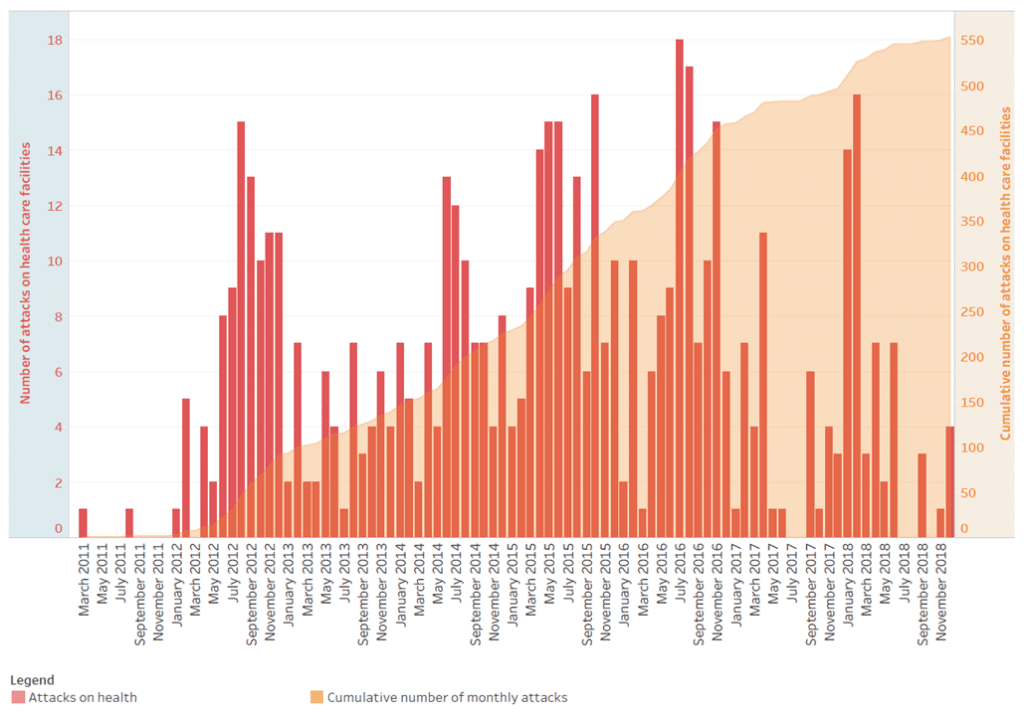
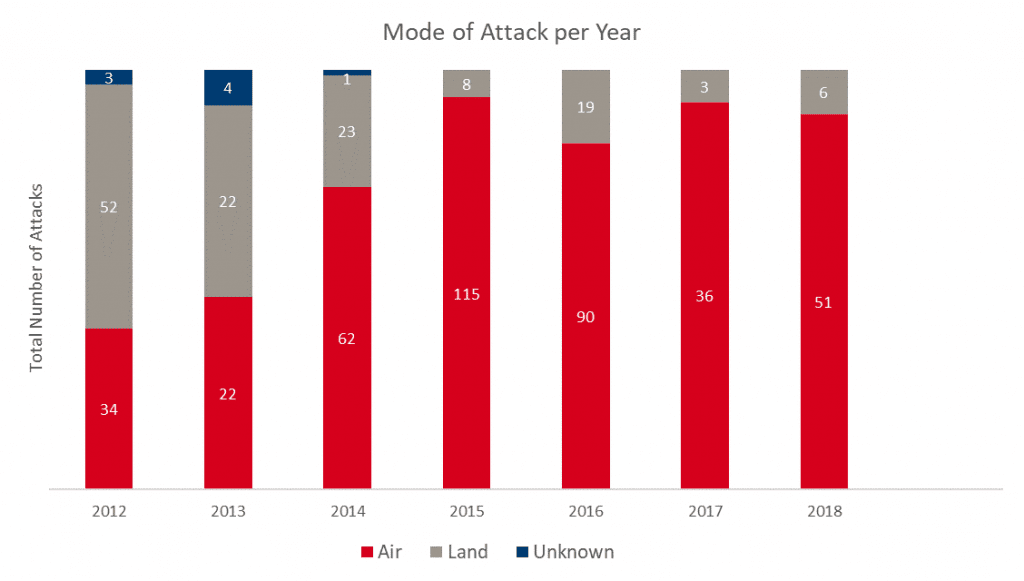
Graph courtesy of the Lancet-AUB Commission on Syria based on Physicians for Human Rights data

Raining Terror from the Air

Of the total number of documented attacks on health facilities, nearly 73 percent were carried out from the air. Nearly 98 percent of attacks on health facilities perpetrated from the air are attributable to the Syrian government and its ally Russia, which entered the conflict in 2015.

The share of attacks on health facilities from the air has grew from 38 percent of the total in 2012 to 90 percent in 2018. The Syrian government became steadily more reliant on airpower as the conflict evolved. Through their air forces, the Syrian government and Russia extended their strategy of collective punishment deep into opposition-held territory and far beyond hardened front lines. The Syrian government and its allies disabled or destroyed hundreds of facilities through aerial bombardment, leaving countless civilians without access to vital medical services.
A Widespread Assault on Health Care

Attacks on health facilities have been verified in 12 out of Syria’s 14 governorates. Opposition strongholds and heavily contested areas – Aleppo (159), Idlib (123), Hama (40), and Rif Dimashq (84) – bore the brunt of the violence, incurring over 73 percent of all attacks on health facilities documented since 2011. These areas witnessed clear increases in attacks on health care during government military campaigns, and sharp falls in attacks once government control was re-asserted. Aleppo, for example, suffered 54 attacks in 2016, and only nine since its fall to the Syrian government in December of that same year. Idlib, the only remaining opposition stronghold, incurred a total of 123 attacks since 2011 and over a third of all attacks documented in 2018.
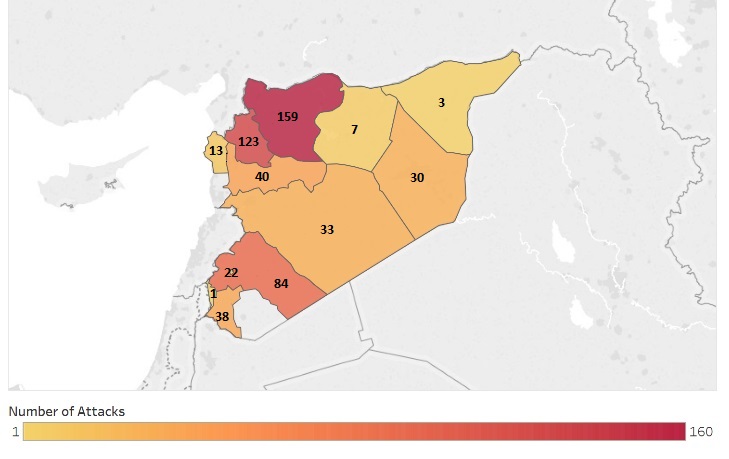

Map courtesy of the Lancet-AUB Commission on Syria based on Physicians for Human Rights data

Conclusion and Recommendations

The magnitude, frequency, and distribution of attacks on health care in Syria over the past eight years reveal a widespread and systematic pattern of violations. These attacks rise to the level of war crimes and, in PHR’s assessment, crimes against humanity. PHR calls on the international community to put a stop to these crimes and assure that any resolution to the conflict in Syria carries justice and accountability at its center. PHR calls on:

  • All parties to the conflict in Syria to immediately end attacks on unlawful targets, including civilians, health facilities, and medical personnel;
  • Russia, Türkiye, and the United Nations to maintain the de-militarized zone in northwest Syria and prevent military escalation in the area;
  • The United Nations and individual member states to maintain financial, political, and diplomatic support for efforts to document violations of international human rights and humanitarian law and principles, with insistence on justice and accountability for war crimes and crimes against humanity;
  • The United Nations and states supporting a political solution to the Syrian conflict to integrate accountability into efforts to bring the conflict to an end, knowing that sustainable peace can only be built on the foundations of justice.
Blog

Defense Can Be the Best Offense in Protecting Human Rights

Sometimes, success is measured by how firmly you hold the line.

In December 2017, survivors of sexual violence in the Democratic Republic of the Congo (DRC) witnessed a milestone in justice. In a landmark judgment, a mobile court convicted 11 men, including a sitting member of a provincial parliament, of crimes against humanity for raping dozens of young girls in the village of Kavumu, and sent them to prison for life. It was the first ruling of its kind in Congolese history. Physicians for Human Rights (PHR) and our partners were elated that the court held powerful men to account and that the survivors obtained justice.

Just a few months earlier, we had celebrated that the world’s largest organization of psychologists stood up against torture and ill-treatment. The American Psychological Association (APA) reaffirmed its 2015 resolution banning psychologists from participating in national security interrogations and serving at illegal detention sites like Guantánamo Bay. PHR has documented human rights abuses of Guantánamo detainees and exposed how psychologists committed, concealed, and justified torture and abuse of detainees. Since 2005, following the Abu Ghraib scandal, we have relentlessly pushed for a ban on these practices, consistent with the medical ethics of “do no harm.”

But as human rights defenders the world over know, successes seldom go unchallenged. It wasn’t long before both of these landmark victories were contested. The Kavumu verdict was appealed in July 2018, and the APA decision was put to a renewed vote in August 2018 by those seeking a return of military psychologists to Guantánamo.

We in the human rights world fight every day to ensure that our hard-won victories on behalf of victims and survivors are not reversed. Each day we fight to preserve these gains for health and human dignity, and we are careful never to become complacent, even following unambiguous successes. A policy that protects the vulnerable against abuses of power could be adopted today, but summarily revoked tomorrow – sometimes openly, and sometimes in secrecy. Fighting for human rights can sometimes seem like an endless struggle where even as one battle is won, another hard-won gain is eroded.

Given the human rights crises we are witnessing globally and domestically, it has become increasingly evident over the past few years that the human rights movement must embrace an additional metric for defining success: not just moving forward, but securing progress against efforts to move backward; of maintaining gains in the face of escalating disregard for the rule of law, for science, and for evidence. In this shifting paradigm, the tools of law, science, and evidence are even more critical and powerful. Any win must not be taken for granted, but understood as a step forward along the long road that lies ahead.

In July 2018, PHR and our partners exhaled and rejoiced as a DRC appeals court upheld the original Kavumu convictions against lawmaker Frederic Batumike and the militia members he directed. One month later, the APA voted to retain its ban on psychologists at Guantánamo – reinforcing that torture and indefinite detention are unlawful, and that psychologists should have no part in supporting these violations. But any sense of relief is tempered by the knowledge that those indifferent to medical complicity in abuses will not stop.

For every activist who is honored, there is another whose testimony is ignored. For each perpetrator convicted of a war crime, there is another whose massacre is denied. And for each health professional trained to collect forensic evidence, there are many others whose hospitals are bombed. So much of the work done to ensure human rights are upheld is done quietly, and behind the scenes. For this reason, it was especially heartening to see the Nobel Committee award the 2018 Peace Prize to heroes like Nadia Murad, a Yazidi woman and outspoken survivor of sexual violence, and Congolese doctor Denis Mukwege, who treats survivors and who courageously advocates domestically and globally for their meaningful access to justice.

Each of these victories provides inspiration to continue the fight and to ensure that whatever gains are made – whether by a vote, a policy, a resolution, or a ruling – are never reversed, but rather, built upon. They are a constant reminder to human rights activists never to be idle, but to anticipate rollbacks and be ready to fight back with the tools we’ve always used – evidence, facts, and survivors’ testimonies. Because, at the moment, preventing the reversal or rollback of rights is the only way to continue defending established human rights successes.

A version of this article originally appeared on the Oak Foundation’s blog.

Blog

Investment Whitewash for Rohingya Bloodshed

This post originally appeared in the Asia Times

Historic temples. Sandy beaches. Fishing grounds and farmland galore.

This is the idyllic and profitable picture that the government of Myanmar painted last week for potential investors in the country’s troubled Rakhine state. The government sought to allure crowds of potential investors from countries including Japan and South Korea who attended the Rakhine State Investment Fair in the town of Thandwe, with descriptions of Rakhine’s “untapped” investment potential.

What those potential investors didn’t hear was any mention of Rakhine’s Muslim Rohingya ethnic minority population. Or the brutal spree of state-backed violence targeted at Rakhine’s Rohingya population in August 2017 that killed thousands and prompted  720,000 Rohingya to flee to Bangladesh, where they remain to this day.

That omission was no mistake. According to Aung Naing Oo, director general of Myanmar’s Directorate of Investment and Company Administration, the failure to mention the humanitarian catastrophe inflicted on the Rohingya in Rakhine and the Myanmar government’s singular failure to take any meaningful steps toward accountability for those outrages reflect the government’s position that “investment is not political.”

Elsewhere at the fair, Myanmar’s minister for investment and foreign economic relations, Thaung Tun, sought to negate decades of well-documented systematic abuses against the country’s ethnic minorities by touting ethnic diversity as Myanmar’s “great potential” for investors.

That cravenly self-serving government propaganda is as sinister as it is dishonest. And it reflects the role of the Rakhine State Investment Fair as part of a wider government campaign to attempt to paper over the monstrous crimes perpetrated in Rakhine with a veneer of business-as-usual normalcy.

The Myanmar government’s apparent gambit is that if it turns a deaf ear long enough to the international opprobrium about the slaughter of the Rohingya and the humanitarian crisis of the refugee camps in neighboring Bangladesh, foreign investor interest in Rakhine’s oil and gas, agriculture, and fishing sectors will inevitably help mute the calls for accountability.

The Myanmar government’s apparent gambit is that if it turns a deaf ear long enough to the international opprobrium about the slaughter of the Rohingya and the humanitarian crisis of the refugee camps in neighboring Bangladesh, foreign investor interest in Rakhine’s oil and gas, agriculture, and fishing sectors will inevitably help mute the calls for accountability.

Indeed, while Myanmar has rolled out the red carpet for foreign investors to Rakhine, it has forbidden international organizations seeking to investigate the slaughter of 2017 from accessing the area. Most notably, the government has blocked UN Special Rapporteur to Myanmar Yanghee Lee, who is tasked with assessing the human-rights situation in Myanmar.

In 2017, the government placed restrictions on an official fact-finding mission led by Lee that she described as an “affront to the independence of my mandate as Special Rapporteur.” That December, it announced it was denying her access to the country, including to Rakhine state.

In June last year, the government announced the creation of an “independent commission of inquiry” to investigate further allegations of human-rights abuses in Rakhine state. Given Myanmar’s limited past efforts on justice and accountability, there are reasonable grounds for concern about whether these investigations will be carried out effectively or in accordance with credible international standards.

Those efforts dovetail with moves by the Myanmar government and security forces to erase the sites of mass slaughter of Rohingya in Rakhine. Over the past two years, satellite images have revealed that the locations of former Rohingya villages in Rakhine have been “flattened and scraped by bulldozers.” In what appears to be a blatant form of post-conflict elimination of physical remnants left behind by the dead or fled Rohingya,  those villages have been replaced by facilities for the security forces as well as hundreds of new homes built for mostly Buddhist residents from other areas of Rakhine.

Potential foreign investors who attended the Rakhine State Investment Fair should be under no illusions about the grim recent history of Rakhine state and the horrors that the Myanmar military inflicted on its Rohingya population. UN-appointed investigators concluded last August that Myanmar’s state-backed violence against the Rohingya constituted the “gravest” crimes against civilians under international law, including genocide.

Investigations by Physicians for Human Rights over the past two years put a tragic human face to that UN assessment and provide scientific objectivity in refuting the government’s repeated denials. In 2018, PHR surveyed leaders from 604 Rohingya hamlets in Rakhine state encompassing more than 916,000 people. The findings, coupled with in-depth interviews and forensic medical examinations of Rohingya survivors, point to a widespread and systematic pattern of targeted violence – including rapes and killings of women, men and children.

The Rakhine State Investment Fair reflects the Myanmar government’s desperation to change the narrative of its security forces’ well-documented role in the targeted killings of the Rohingya and their harrowing journey to safety in Bangladesh. It is a cynical official attempt to parry international demands for accountability with the prospect of financial profit.

Foreign governments and foreign investors alike should dismiss such craven cover-up efforts by the Myanmar government and make clear that normal diplomatic and economic relations hinge on respecting human rights and ensuring accountability in Rakhine, not undermining it.

Blog

International Justice Closes in on Syria’s State-backed Killers

On Tuesday, February 19, nine Syrian survivors of torture filed a criminal complaint in Stockholm, Sweden, against 25 senior Syrian government intelligence officials. That complaint is the latest in a series of similar moves in countries – including France, Germany, Austria, and other European countries – aimed at rendering accountability for actions by the Syrian government that may constitute war crimes and crimes against humanity.

The abuses that the nine plaintiffs in Stockholm allegedly endured illustrate the Syrian government’s savage zero-tolerance approach toward perceived dissidents. According to the European Center for Constitutional and Human Rights (ECCHR), the plaintiffs were arrested on separate occasions between 2011 and 2015 and subsequently subjected to torture by agents of four of Syria’s five intelligence branches. The plaintiffs’ allegations include illegal abduction, rape, torture, war crimes, and crimes against humanity – patterns of abuse that have been extensively documented by human rights monitoring organizations, including Physicians for Human Rights (PHR).

The motion in Sweden comes on the heels of an unprecedented accountability milestone in a grinding eight-year conflict that has been characterized by gross violations of human rights and international law. Until recently, these violations have taken place in a context of utter impunity. But on February 13, German and French officials arrested one former high-ranking Syrian intelligence official and two of his subordinates on suspicion of torture and crimes against humanity. The arrests ended the complete failure of the international community to hold perpetrators of these vicious crimes to account. Those arrests, together with criminal complaints filed and warrants issued over the past year, have sparked renewed hope in the prospect for justice. This despite coming at a particularly hopeless moment in the crisis – when the Syrian government’s apparent military victory has all but cemented its reign of impunity.

Syria presents a particularly complicated context for accountability, primarily because the party responsible for perpetrating the majority of crimes – the Syrian government – remains in power. The international criminal justice system has not yet determined a way to address this problem. Because Syria is not a party to the Rome Statute, the International Criminal Court which it established is not authorized to investigate crimes in Syria without a referral by the United Nations Security Council. Russia and China have blocked attempts at such a referral.

In the absence of large-scale international options, the struggle against impunity has begun in countries outside Syria, where survivors, legal advocates, and judicial institutions are employing universal jurisdiction to launch investigations and prosecutions of those responsible for war crimes and crimes against humanity. We have seen this taking shape in Sweden, France, Germany, Austria, and other European countries. A similar example of efforts toward justice in national courts outside Syria involves the case of Colvin v. Syrian Arab Republic, prosecuted in the United States.

Since the early days of the conflict in Syria, PHR has conducted painstaking research to document violations of international humanitarian law, including war crimes and crimes against humanity, while advocating for justice. To date, PHR has confirmed 550 attacks on health facilities and the killing of more than 890 medical professionals. Our recently updated map provides a snapshot of the intentionality and scale of the assault on health care in Syria, while giving users the ability to zoom in on the details and documentation of each verified attack.

In a landscape fraught with political and procedural obstacles, avenues to justice must be pursued at every opportunity. The seeds of justice are sown where circumstances allow, but justice cannot flourish without the immense efforts of those dedicated to the ideal of accountability: victims and witnesses who courageously give testimony; human rights organizations that conduct research, advocate, and litigate; and government authorities that assume their responsibilities to investigate the most heinous crimes and prosecute those responsible.

Blog

I Saw the Emergency at the U.S. Border. It Doesn’t Require a Wall.

Thousands of distraught asylum seekers, waiting weeks and months at border shelters, their futures in limbo. Children – and teens – so traumatized that they wet their sleeping bags in the tiny tents they share with four other family members. Mothers and fathers, physically and emotionally exhausted from long journeys through Central America, now stranded at the U.S. border, too frightened to venture onto the streets for fear that the gangs they escaped in Honduras, or El Salvador, or southern Mexico have followed them here and will kill them.

That’s the emergency I witnessed at the U.S. border last week. In Tijuana with a team of doctors from Physicians for Human Rights (PHR), I met family after desperate family who had fled their homes after threats against their safety, and, often, their lives. Unable to receive protection from the police in their home countries, most had left with little more than the clothes on their backs in the hope of finding the safety and shelter they so urgently need. Yet the very country they hoped would offer them safe haven is forcing them – in violation of U.S. and international law – to wait in terror and danger, sometimes indefinitely, on the other side of the border.

The Trump administration’s declaration of a state of emergency to fund a border wall ignores the real emergency: the human suffering of an already extremely vulnerable population, exacerbated by cruel and illegal U.S. policies. 

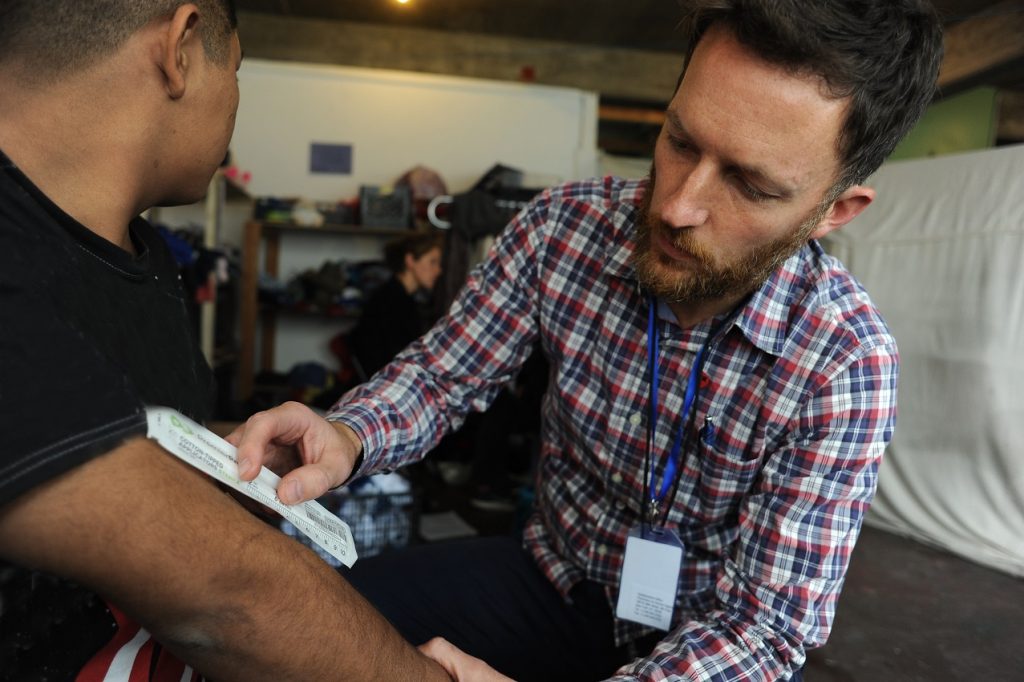
PHR Asylum Network’s Dr. Craig Torres-Ness measuring a scar on Fernando’s arm.

“My brother was killed by gang members,” Fernando,* an 18-year-old from Central America, told us at a clinic in Tijuana. His brother had refused to join a local gang, who was recruiting him in the hope of later pressuring his younger siblings to join. “They ended up taking him away, and the next day his body was found in the canal. They then started hunting me because they knew that I knew who did it.” Fernando fled to a nearby town, but was pursued there and finally headed to the U.S. border. In Tijuana, he was found again and severely beaten; he said only the police’s intervention saved him from being killed.

Maria and her family fled their Central American country after she was repeatedly pressured by gangs to kill her own husband, who had refused to comply with the gang’s extortion demands. Her husband and eight-year-old son, Pablo, were attacked by gang members, who narrowly missed killing Pablo with a machete. Now at the U.S. border, Maria is too terrified to leave the shelter where they live. Pablo is convinced they are still being chased by the gang. He has nightmares and wets his bed. Some days, he asks Maria, “Why don’t you just kill me?”

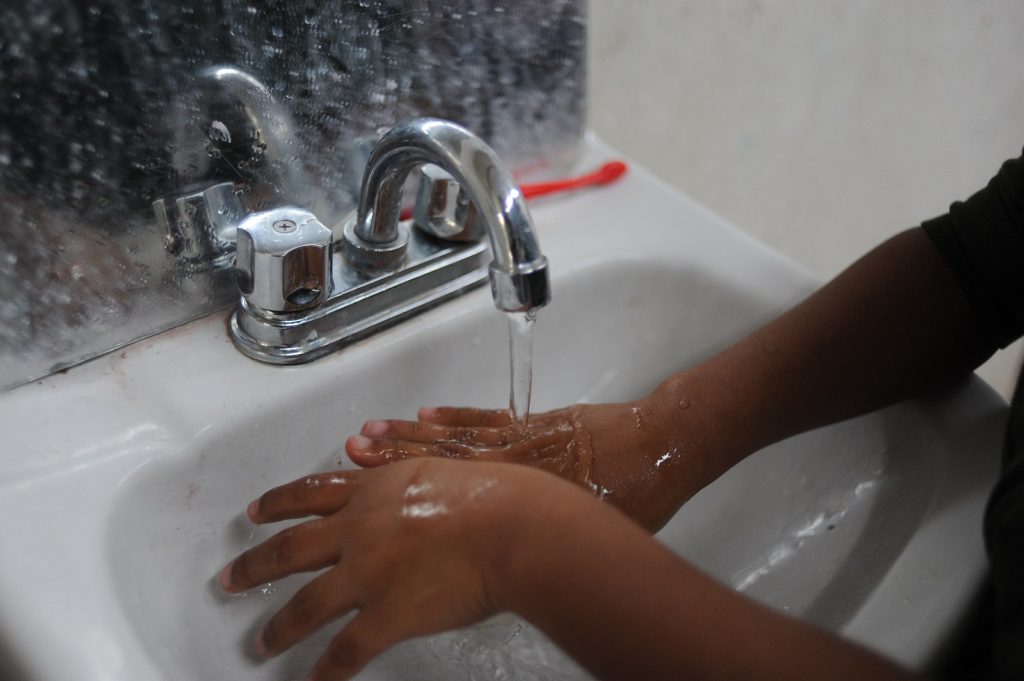
Pablo, 8, washing his hands at the shelter where he lives with his family at the U.S.-Mexico border. 

Every day that people like Fernando, Maria, and Pablo have to wait at the border is another day of suffering and fear. Yet U.S. policies that “meter” the number of people permitted to cross at ports of entry like Tijuana mean that only a few dozen of them – often fewer – are allowed to present their cases for asylum to U.S. authorities each day. And with the recent enactment of the Trump administration’s Migrants Protection Protocols, most of those who have finally been allowed to cross will be swiftly returned to wait in Mexico for their U.S. court dates – a process that can take years.

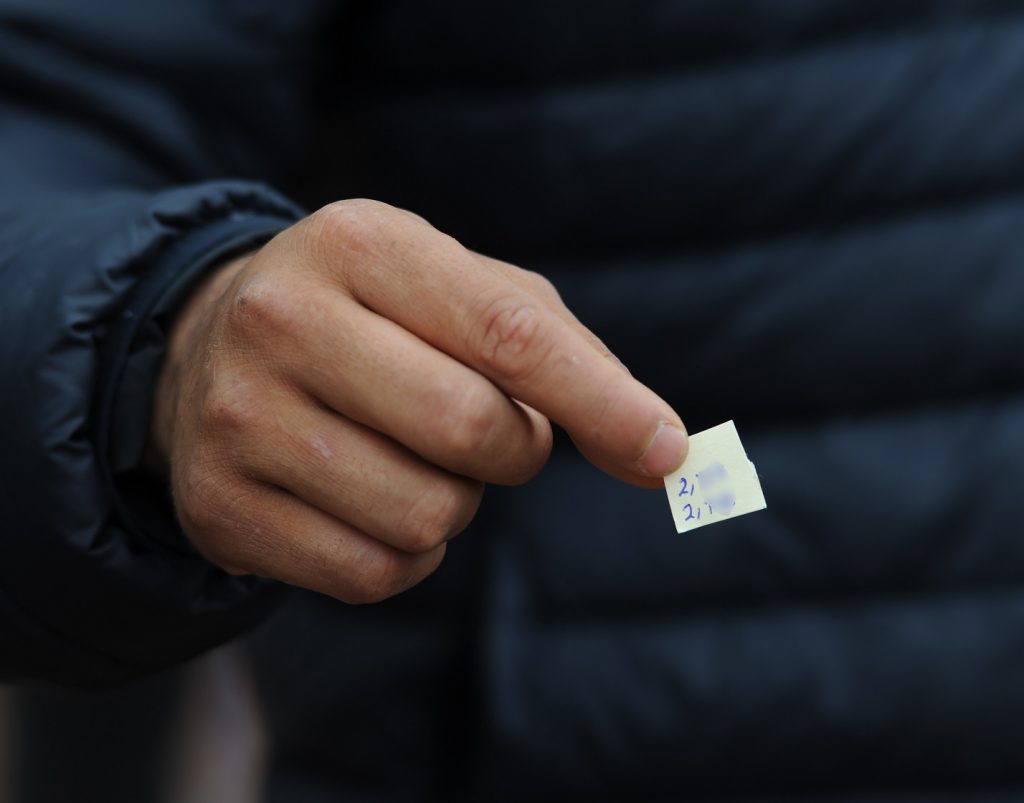
“We left as soon as we had buried them,” a young man told me at El Chaparral, the square in Tijuana where pedestrians cross into the United States. Four days earlier, he had laid to rest his brother and another family member, who had been killed by gangs – and then decapitated. “We were scared. We knew we had to leave right away.” With his elderly parents, siblings, nieces, and nephews, he had spent three days making his way to Tijuana. Now he clutched in his hand a number scrawled on a tiny slip of paper – their place in the line to apply for asylum in the United States. It’s an informal process organized by migrants themselves to introduce a semblance of order to the chaos imposed by unpredictable metering at U.S. ports of entry. This family’s turn lay weeks – at least – in the future.

The United States has a legal and moral responsibility to process asylum seekers in safety and dignity. Building a wall diverts funds that should instead be used to increase staff at ports of entry, so that asylum seekers can be processed more quickly and humanely, to provide adequate medical care to migrants in custody on the U.S. side, and to reduce the risk of further physical and psychological trauma to those waiting in Mexico.

PHR is working at the U.S-Mexico border to collect physical and psychological documentation of asylum seekers. Our preliminary findings show us that they have strong claims that must be heard immediately, that they are still under imminent threat in Mexico, and that U.S. policies that prevent them from crossing promptly are putting them at risk of irreparable harm.

PHR doctors who examined Fernando found that he is likely suffering from PTSD. He has trouble sleeping most nights. He can’t concentrate and has flashbacks. While he waits in Tijuana for his appointment to enter the United States, he knows he is being watched and followed. Sometimes he thinks he would be better off dead.

When we left the clinic where me met him, Fernando was sitting listening to music, headphones on, looking like any other 18-year-old. We wondered if he would make it alive to his crossing day.

*All names and some details changed for security reasons.

Blog

Syria’s War on Health Workers and Facilities Puts Children at Risk

For a snapshot of the slow-motion human catastrophe that is the Syrian conflict, look to the plight of internally displaced Syrians at the Rukban camp near the Jordanian border. As winter approaches, freezing weather, snowfall, and floods further endanger an extremely vulnerable population in Syria. UNICEF has documented the deaths of at least eight children in the camp over the past month due to a combination of “extreme cold and the lack of medical care for mothers before and during birth, and for new infants.” Those same factors have claimed the lives of an additional seven children – the majority of them infants – in the eastern Hajin area of Deir al-Zour province.

These deaths and the absence of adequate medical treatment that contributed to them speak to the long, malign impact of attacks on health facilities and workers during the conflict. The eight-year conflict has eviscerated the country’s health care system. From March 2011 through December 2018, Physicians for Human Rights corroborated 550 attacks on 348 separate medical facilities and documented the killing of 892 medical personnel in that same period. Ninety percent of these attacks were likely perpetrated by the Syrian government and allied forces. Syrians in both government- and opposition-held areas across Syria suffer from a lack of reliable and accessible health care as a direct result of the targeting and intentional strangulation of the medical system.

The result? A growing list of infectious diseases that were rare or easily treatable in pre-conflict Syria and have now become widespread. Over the past six years, outbreaks of diseases, including water-borne diseases such as Acute Jaundice Syndrome and vaccine preventable diseases such as measles, have become commonplace. After 15 years without polio in Syria, WHO officials confirmed a polio outbreak in 2017. In northeastern Syria, 845 new cases of acute bloody diarrhea were reported in November 2018 alone. Typhoid also continues to be a concern, as heavy rain and flooding increase the likelihood of water-borne diseases. Clearly, the destruction of Syria’s medical infrastructure has continued to have severe consequences on the Syrian population throughout the changing kinetic dynamics of the conflict.

This is an appalling and unacceptable status quo. These humanitarian crises are man-made. Physicians for Human Rights has called on all parties to the conflict to abide by international humanitarian law and international human rights law, and to prioritize the protection of civilian lives and the maintenance of civilian infrastructure. The special status of medical personnel and facilities must also be universally acknowledged and respected.

The international community has an obligation to hold all sides of the conflict accountable for these abuses and to seek to mitigate their longer-term impact. Failure to do so will only condemn more Syrian children to early graves.

Blog

Debunking President Trump’s U.S. “Border Crisis”

On Tuesday evening, U.S. President Donald Trump solemnly declared “a growing humanitarian and security crisis” on the U.S. border with Mexico that demands urgent action in the form of billions of dollar to erect a border wall.

The “crisis” that Trump described echoed his standard anti-immigrant rhetoric, referencing “dozens of families whose loved ones were stolen by illegal immigration” through violent crimes allegedly committed by undocumented immigrants. It was his latest evocation of an “invasion” of dangerous migrants whose access to the United States presents a clear and present danger to American citizens.

Tragically, there is indeed a humanitarian crisis underway at the border, but it’s of the U.S. government’s own making. It’s a crisis rooted in the fear and suffering that the Trump administration willfully imposes on asylum seekers by impeding their ability to apply for asylum in the United States – in direct violation of the United States’ obligations under both domestic and international law. It does so via a policy called “metering,” the equivalent of a bureaucratic war of attrition which strictly limits the flow of asylum seekers awaiting initial interviews to a trickle of only 15 to 30 per day.

The result? Thousands of asylum seekers with little or no means of subsistence are relegated to weeks or months of uncertain waiting at the border for an opportunity to apply for asylum. “Metering” pits the limitless resources of the U.S. government against those of desperate, impoverished asylum seekers, and effectively weaponizes hunger, fear, and frustration to drive them away more effectively and discreetly than tear gas or truncheons.

“Metering” condemns asylum seekers to penury and humiliation and fuels desperation that can prompt them to return home to potentially deadly peril or seek alternate routes over the border in search of sanctuary in the United States. Those alternate routes may be dangerous, but might offer asylum seekers better odds of getting to the United States than formal asylum claim channels. Syracuse University’s Transactional Records Access Clearinghouse (TRAC) last month published a report indicating that immigration judges rejected a record-high number of asylum cases in 2018 – 65 percent of the more than 42,000 total asylum cases decided in the fiscal year ending September 30, 2018. That total marks the highest number of such rejections since the TRAC started compiling data in 2001.

Trump has also created a legal crisis on the U.S.-Mexico border by flouting domestic and international legal obligations to asylum seekers. People escaping persecution and torture who come to the United States have the right to apply for asylum and protection under the UN Protocol Relating to the Status of Refugees, an international treaty which the United States signed and ratified. The Protocol stipulates that asylum seekers are legally allowed to remain in the country where they have sought asylum and avoid deportation to countries where they may be harmed. The U.S. government also has a legal obligation under the Protocol to conduct individualized screenings of migrants arriving at the U.S. border who are fleeing persecution in their countries of origin.

Refugee status was established in order to provide international protection for those with no other option – those whose governments are unable or unwilling to protect them at home. In countries where widespread violence and intimidation of citizens go unchecked, and where governments refuse to investigate or punish perpetrators, survivors may have no choice but to flee.

In his address, Trump declared that the situation at the U.S.-Mexico border leaves the United States with “a choice between right and wrong, justice and injustice.” Trump should recognize the inherent wrong and injustice of his administration’s current border policies and instead establish a humane immigration system and border enforcement policies that preserve health and human rights, rather than scapegoating people desperately seeking protection from violence and persecution.

Report

Zero Protection: How U.S. Border Enforcement Harms Migrant Safety and Health

Executive Summary

Over the past three decades, U.S. administrations from both parties have introduced border enforcement strategies that have led to the deaths or injuries of a growing number of migrants at the U.S.-Mexico border. Public health research has documented widening racial and ethnic health disparities as a result of punitive and discriminatory immigration enforcement practices within the militarized border zone. This policy brief provides an analysis of current concerns at the border, including ways that health professionals are implicated in human rights violations, and provides recommendations for the U.S. government and for health systems to protect the rights and health of migrants.

Physicians for Human Rights (PHR) analyzed documentation with respect to several ongoing areas of harmful practices arising from border enforcement activities and found numerous human rights violations, including that:

  • Despite the existence of the U.S. Customs and Border Protection (CBP) Use of Force Policy, Guidelines and Procedures Handbook, migrants are still being injured and killed in the course of enforcement activities;
  • CBP officials impede and criminalize volunteer first responders who are providing lifesaving assistance to migrants in the field by arresting them and filing federal charges against them;
  • CBP officials have been documented destroying humanitarian assistance;
  • CBP officials have used medical personnel to conduct body searches without warrants or consent;
  • In violation of U.S. asylum law, CBP is preventing asylum seekers from crossing legally at ports of entry, and deporting individuals with medical conditions through official ports of entry without having secured safe medical release; and
  • CBP’s law enforcement arm, the U.S. Border Patrol (USBP), conducts enforcement actions in and around hospitals, in violation of the Sensitive Locations policy, and violates U.S. and international law by using hospitals as de facto detention centers where patients are denied access to legal counsel and contact with family members.

In summary, CBP officials regularly misinterpret or even disregard the limits of their legal authority while conducting border enforcement activities, constituting human rights violations and resulting in harms to health.

PHR calls on the CBP to improve staff compliance with existing border enforcement guidelines by clarifying guidelines and improving training, as well as investigating and sanctioning all violations committed by personnel. CBP must also work with civil society groups operating at the border in order to prevent fatalities and decrease health risks. The U.S. Congress can support rights-respecting border management by codifying existing CBP operational guidelines into law, and exercising oversight over the Department of Homeland Security and its agencies in regard to compliance with legal obligations.

Public health research has documented widening racial and ethnic health disparities as a result of punitive and discriminatory immigration enforcement practices within the militarized border zone.

Introduction

Overview  

This policy brief combines individual interviews conducted by PHR staff and board members and reports from a range of civil society organizations and open media sources with a review of forensic, medical, and public health research related to border enforcement, health, and human rights. From June to October 2018, PHR engaged in a series of consultations with groups and individuals at the U.S.-Mexico border during visits by PHR staff, board members, and volunteer medical experts. PHR teams traveled to Brownsville, McAllen, Alamo, Houston, El Paso, and Sierra Blanca in Texas, and Tucson and Arivaca in Arizona in order to assess possible human rights violations at the U.S.-Mexico border. In total, PHR met with 18 organizations working at the border, speaking with more than 60 individuals in total. Interlocutors included immigration attorneys and paralegals, physicians, social workers, EMTs, nurses, human rights activists, immigration detention facility staff, detained immigrants, asylum seekers waiting at ports of entry, U.S. Customs and Border Protection agents at ports of entry, and local border community members. In Tucson, PHR held a consultation workshop with 11 experienced border activists representing six organizational and institutional affiliations in order to deepen and validate our analysis. This preliminary analysis suggests key areas of concern that require more in-depth and rigorous research to systematically document the prevalence and impact of human rights violations occurring in the context of border enforcement.

The Relationship between Border Control and Human Rights

According to U.S. government interpretation in the post-WWII period, basic constitutional protections are not fully applicable within 100 miles of the U.S. border; however, this interpretation has not been subjected to meaningful review in Congress.[1] Since migration is a global issue, it is instructive to measure U.S. government interpretation of state obligations against international standards. Border enforcement agencies ensure the orderly, safe, and humane movement of people across borders, while the law enforcement function of border control can also protect rights by dismantling transnational criminal networks engaged in smuggling or trafficking.[2] On the other hand, border control policies can also inflict or exacerbate human rights abuses. For example, state criminalization of irregular migration is linked with increased vulnerability to smuggling, extortion, kidnapping, or trafficking.[3]

Although there are no legally binding international standards for border governance, the United Nations has developed guidelines to clarify states’ obligations as they apply to border governance under existing human rights instruments. The guidelines emphasize core human rights principles such as the right to non-discrimination, due process, non-refoulement (the right to not be returned to a country of origin in which persecution is likely), best interests of the child, and the state obligation to provide protection.[4] States have an obligation to strengthen rescue capacity and protect individuals from harm during rescue.[5] Excessive use of force is prohibited, delays at crossing points should be minimized, and appropriate humanitarian assistance should be provided during delays at ports of entry.[6] Border personnel should be trained, and any violations of agency policies and guidelines should be investigated and sanctioned.[7] These basic humanitarian standards, which are consistent with United States constitutional principles, should be seriously considered for informing comprehensive reform of U.S. border policy. 

Customs and Border Protection officials impede and criminalize volunteer first responders who are providing lifesaving assistance to migrants.

Borders in Context: In the United States and Globally

The geographical terrain along the U.S.-Mexico border is harsh; much of it is desert, where wildly variable temperatures reach as high as 118 degrees Fahrenheit in summer months, with daily variations of up to 59 degrees.[8] Natural clean water sources are scarce, and rivers have strong currents which makes them dangerous to cross.[9] According to U.S. Border Patrol estimates, from 1998 to 2015, more than 6,500 migrants died on the U.S. side of the border, with an annual rate of approximately 250 to 500 migrant deaths; the International Organization for Migration (IOM) estimates a similar number, with at least 320 migrant deaths along the border in 2015.[10] The majority of deaths are related to exposure to the elements, with one study based on coroners’ reports estimating that deaths due to environmental heat exposure represent approximately 73 percent of deaths of migrants crossing between ports of entry, followed by vehicle crashes (eight percent) and drownings (six percent).[11] Sporadic efforts to strengthen search and rescue capacity are insufficient.[12]

Deaths of migrants at the U.S. border are part of a worrisome trend worldwide. When states withdraw from search and rescue operations and impede civil society rescue efforts, more migrants die.[13] The IOM estimates that in the past 20 years, more than 60,000 migrants globally have died while crossing borders, many of whom are never found or identified.[14] As in the United States, European authorities are prosecuting NGOs operating rescue activities[15] and criminalizing assistance to migrants,[16] including restricting delivery of food and water to migrants.[17] Migrants in Europe as well as the Unites States are vulnerable to violence by community members and even by state agents. A study by Médecins Sans Frontières (MSF) found that almost one third of migrant and refugee patients in MSF clinics in northern Europe had suffered physical violence in transit through the Balkans – with local authorities, rather than protecting migrants, actually directly perpetrating more than half of the assaults.[18]

Why Are Migrants Dying?

U.S. Border Enforcement Policies are Linked with Rising Death Rates

Starting in the mid-1990s, U.S. Border Patrol initiated a policy of “prevention through deterrence,” militarizing border areas in order to funnel migrants into more remote and impassable areas. According to the 1994 U.S. Border Patrol Strategic Plan, changes to enforcement infrastructure and practices would ideally “force [migrants to cross] over more hostile terrain, less suited for crossing and more suited for enforcement.”[19] According to both U.S. government experts[20] and academic analyses of medical examiners’ records,[21] this policy is connected with a 100 percent increase in the annual number of migrant deaths on the border. A University of Houston study of migrant crossing deaths from 1985 to 2000, comparing before and after the “prevention through deterrence” policy, found that the only period when deaths decreased was in the late 1980s, after the legalization of the status of more than two million undocumented immigrants allowed immigrants to cross through legal channels.[22] Prevention through deterrence, both by natural hazards and also through criminalization and incarceration, has increased the risk of harm to migrants.

“A young man detained at the border was bitten by a rattlesnake, but Border Patrol didn’t believe him. They brought him to the detention center for two days, where he started manifesting acute symptoms and was then in the hospital for a week.”

 
Claire Lamneck, medical student at the University of Arizona and border activist

At the same time, these policies have not been demonstrated to be effective in deterring migrants from attempting to cross into the United States,[23] nor has “tactical infrastructure,”— walls, gates, grates, and roads – made unauthorized crossing impossible.[24] Border crossers do not stop crossing, but simply face increased risks of serious injury and death. Epidemiological analysis of injuries from falling from a border fence demonstrated a significant increase in the number of injured crossers after the San Diego border fence was reinforced in the late 1990s; from 2000 to 2007, injuries increased from 3.34 to 24.96 for every 100,000 apprehensions.[25] In southern Arizona, emergency medical teams refer to the path by the border wall as “the ankle alley,” due to the high number of trauma patients with orthopedic injuries such as lower-extremity and spinal fractures.[26]

Border Agents’ Use of Lethal Force is Hidden from Accountability

In addition to the higher risk of deaths due to the harsh terrain, U.S. Border Patrol operational practices themselves are likely to increase the risk of death. Use of lethal force by U.S. Border Patrol agents has resulted in the deaths of as many as 97 people over the last 15 years on both sides of the border, yet investigations into killings by Border Patrol agents are not reported publicly, evading institutional oversight and accountability.[27] Since 2010, watchdog groups have documented 77 Customs and Border Protection (CBP)-related fatalities – at least one fifth of them of U.S.citizens.[28] Media reports have raised issues about the circumstances in which force is used against unarmed migrants.[29]CBP is resistant to civil society scrutiny; a Cato Institute Freedom of Information Act request to CBP filed in 2015, which requests more detail about use of force incidents, has been on administrative appeal for two years.[30] In 2016, the Homeland Security Advisory Council determined that CBP disciplinary processes for agent violations were too slow to be effective deterrents, requiring increased training for agents on the use of nonlethal force.[31]

Border Patrol High-speed Chases Cause Injuries and Death

Community groups have also voiced serious concerns about excessive force resulting in injury and death caused by Border Patrol’s preferred apprehension methods, which may be characterized as “weaponizing” the terrain.[32] Use of helicopters, SUVs, ATVs, horses, dogs, and Tasers in chases over rough terrain have been reported to cause serious injuries and deaths, especially when combined with insufficient efforts to locate those wounded during the chase.[33] Chases during the night are particularly dangerous, as those being chased cannot see where they are running. Medical volunteers have documented severe foot injuries as well as serious blunt-force trauma from falling on rocks or off cliffs.[34] Chases also increase the likelihood that those who are chased may be separated and find themselves alone, disoriented, and without supplies to survive. Chasing migrants back into dangerous water crossings, where the risk of drowning is increased due to exhaustion from being pursued by agents, is another cause of death documented by local groups.[35] Said one rancher in Arizona: “It is kinda like a sick prison movie. [Border Patrol] let [migrants] come across and then chase them until they drop. That’s what kills a lot of people.”[36]

Border Patrol Agents Destroy Humanitarian Assistance

Every year, hundreds of people die of dehydration and hypothermia in the desert on the U.S.-Mexico border, yet agents in the field prioritize enforcement over lifesaving assistance. Community groups have documented widespread intentional vandalism and destruction of water, food, and blankets left for migrants in the desert, particularly at points in the terrain where border crossers are unlikely to survive without such assistance.[37]

“Dehydration is the most common cause of migrant deaths…. This past year, the human remains of 123 people were found in desert near southern Arizona, but we know that many more die and are undiscovered. Volunteer organizations … place water out in the desert to prevent deaths, despite many gallons being destroyed by U.S. border patrol agents.”


Norma Price, MD, PHR Asylum Network member and Tucson Samaritans medical advisor 

From 2012 to 2015, humanitarians recorded a total of 3,586 vandalized gallon jugs of water, slashed with knives and emptied.[38] They logged a total of 415 incidents of vandalism, averaging two per week, and recorded agents on video destroying water jugs as recently as 2017.[39] In addition to slashed and emptied water jugs, humanitarian groups have also documented vandalism of food cans which are emptied or stabbed so the food spoils.[40] Although official Border Patrol policy does not condone intentional destruction of food and water, no sanctions have been implemented against agents who have been documented destroying humanitarian aid, which may amount to tacitly condoning the practice, especially if it may be seen as furthering the goal of “prevention through deterrence.”[41]

From 2012 to 2015, humanitarians recorded a total of 3,586 vandalized gallon jugs of water, slashed with knives and emptied…. and recorded agents on video destroying water jugs as recently as 2017.

Border Patrol Agents Arrest Medical First Responders and Interrupt Medical Treatment

Volunteers in community groups have been subjected to criminal prosecution for providing medical and other lifesaving assistance to migrants.[42] For example, nine volunteers of a local group that provides water, food, and medical care to migrants in the desert were charged with federal crimes and misdemeanors in 2017, mostly “littering.”[43] In 2007 and 2008, eight humanitarian volunteers were detained by Border Patrol on federal charges of “littering” for leaving water jugs in the desert.[44] Humanitarian volunteers report that Border Patrol agents have threatened physical violence and arrest, subjected them to aggressive interrogation, forced volunteers’ vehicles off the road, and brandished their firearms.[45]

Border agents have also been documented overtly interfering with potentially lifesaving medical treatment by arresting individuals suspected to be unauthorized migrants while they were receiving medical treatment in the field for injuries sustained while crossing the desert.[46] In a 2017 tactical raid involving 30 agents, 15 trucks, and a helicopter, Border Patrol arrested four migrants receiving medical care during a record heat wave.[44] The ACLU documented instances in several New Mexico communities where CBP stopped and demanded to search ambulances and impeded and interrogated first responders who were providing emergency treatment to patients, jeopardizing the health of the patients and increasing the risk of negative health outcomes.[47] A 10-year-old girl with cerebral palsy was arrested by CBP agents in an ambulance heading towards the hospital for her emergency gallbladder surgery.[48] These cases represent a disproportionate and unnecessary exercise of discretionary authority, which puts patients at unknown risk and obstructs the ethical duty of health professionals to provide medical care.

Search without Rescue: When 911 Is Border Patrol

Walking for days through the harsh desert environment without water, border crossers regularly need urgent medical assistance. Common ailments requiring hospitalization include severe dehydration, injuries to the legs and feet, gastrointestinal illness from contaminated water, poisonous animal bites, and ingestion of cactus.[49] An investigation of 55 border crossers admitted to intensive care units in southern Arizona from 2010 to 2012 showed that the most common diagnoses for those crossing in the desert were physical trauma injuries, rapid muscle dissolution, acute liver injury, dehydration, acute kidney injury, brain damage, and respiratory failure.[50] These health complications may also be found in patients far from the border, who have rejoined family or friends without receiving adequate medical care after their grueling journey.[51]

However, in some border counties, people calling 911 for emergency medical services from the borderlands are automatically re-directed to Border Patrol Search, Trauma, and Rescue (BORSTAR), the search and rescue unit of Border Patrol. BORSTAR agents are Border Patrol agents who volunteer to complete additional training, including EMT certification.[52] Callers are not informed that their call has been re-directed to immigration authorities. In some counties, emergency calls are not even sent to BORSTAR, but directly to regular Border Patrol agents.[53]

In some border counties, people calling 911 for emergency medical services from the borderlands are automatically re-directed to Border Patrol Search, Trauma, and Rescue.

While search and rescue and calls for emergency assistance should be completely separate from border enforcement in order to safeguard the delivery of care, in some border counties these functions are combined. Moreover, even when there is an effort to separate them, there is a lack of coordination and oversight. Within the current system, those in emergency situations are bounced from one agency to another. There is no interagency mechanism for tracking the re-directed calls to ensure that assistance is provided or to record callers who have not been helped. As a result, calls from desperate people in the desert are dropped, and rescue teams never arrive. In interviews, Border Patrol agents reported recording a much smaller number of calls than did sheriff’s offices, possibly indicating that many 911 callers who are transferred from the sheriff to Border Patrol are simply dropped – and that people desperate for help in the desert are not able to access emergency services. In a 2015 interview, BORSTAR officers in Tucson sector stated that they responded to 138 callers, while 911 dispatchers in Ajo, Arizona stated that they transferred 681 calls to BORSTAR during the same period – indicating that BORSTAR only picked up 20 percent of the transferred calls. In Pima County, emergency responders estimated that around 70 percent of the 911 calls they refer to BORSTAR do not go through at all.[54]

There are also reports of Border Patrol failure to respond when witnessing injuries from tactical infrastructure. In Arizona, a woman deported to Nogales, Mexico after fracturing her ankles when she fell off the border fence, stated that she was left lying there for hours; though Border Patrol agents had seen her, they did not stop to help.[55] Those who are rescued by ambulances and taken to the hospital will be stabilized and then discharged for deportation – in some cases with a permanent disability, and in many cases in spite of inaccessibility of the necessary treatment in their country of origin.[55]

Consistent with U.S. Customs and Border Protection’s primary mission of law enforcement, as a general policy, border crossers who are rescued are often subject to enforcement as a first priority, with medical care as secondary.[56] Referral to treatment at a medical facility is at the discretion of the Border Patrol agent, who is empowered to detain or deport without further treatment, if such treatment is assessed to be unnecessary, even by non-medical personnel.[57] In one tragic case in December 2018, a seven-year-old girl apprehended in the desert underwent “medical screening” by agents with no medical training and was determined to be healthy; she died eight hours later, reportedly from severe dehydration.[58]

BORSTAR agents, many of whom are EMTs, represent a small percentage (as low as two percent in some areas) of Border Patrol agents, most of whom do not have any medical training.[59] A recent Department of Homeland Security statement stated that 1,300 Border Patrol agents are trained as EMTs, out of a total of 19,437 agents.[60] Nevertheless, it is the agent who decides on the level of treatment a migrant will receive. Statistical analysis of data in 2007 from the U.S. Border Patrol Border Safety Initiative Incident Tracking System found that migrant deaths were not reduced by the Border Safety Initiative,which established BORSTAR.[61] However, the ratios of deaths to rescues is significantly lower for BORSTAR agents. According to 2003 data, the probability of death for migrants responded to by regular Border Patrol agents was 47 percent, compared to seven percent for migrants responded to by BORSTAR agents, even when controlling for other variables, including death type, geographic sector, age, gender, and number of accompanying migrants.[62]

Rights Violations and Harms Committed by Border Patrol Agents in Hospitals

Violation of Patients’ Right to Privacy

For the migrants who are referred to health care facilities, Border Patrol agents often remain in exam rooms while their charges are receiving treatment, violating the patient’s right to privacy regarding their protected health information.[63] Doctors must elicit the patient’s history of what occurred during transit, but patients may withhold this important information for fear that such information will be used against them or that they will incriminate themselves, thus compromising the medical encounter and resulting treatment plan.[64] An attorney in Arizona told PHR, “Border Patrol presence is so pervasive at [hospitals] – they’re profiling in the waiting rooms, they’re roaming the halls, they’re swarming all over that place.”[65] Providers in Arizona reported that Border Patrol agents are present in labor and delivery rooms.[66] Providers also describe the dehumanizing impact of the lack of privacy on patients, from nursing mothers to patients with severe gastrointestinal problems using bedpans while shackled and watched by agents.[67]

“Border Patrol presence is so pervasive at [the hospital] – they’re profiling in the waiting rooms, they’re roaming the halls, they’re swarming all over that place.”


A human rights lawyer in Tucson, Arizona   

Shackling and Medical Harms

Agents have the discretion to handcuff or shackle patients while they are receiving care, instead of the treating physician making a decision about whether those restraints will negatively impact their quality of care.[68]As a result, Border Patrol uses physical restraints, including five-point shackles, even on patients with very severe medical conditions.[69] One oncologist described how she could not examine a terminally ill, “gaunt” patient with metastatic cancer with only weeks to live because officers would not remove the restraints that ran across the patient’s chest, arms, and feet.[70] In another case, Border Patrol agents refused to unshackle an HIV-positive patient brought in from the desert. “I couldn’t think of the rationale of chaining someone who is so sick he almost died,” said the attending physician.[71] Hospital staff report feeling intimidated by Border Patrol agents who bring in shackled patients and refuse to leave the room during exams.[72] Physical restraints can pose health dangers to patients; thus, the current standards of the Joint Commission, the oldest and largest standards-setting and accrediting body in U.S. health care, require that the least restrictive intervention be used at all times.[73]

“They physically restrain the patients, even in severe medical condition. The guards are there at all times.  Sometimes they are in the hallway, and sometimes they are in the room. [There’s] no doctor-patient confidentiality.” 


A human rights lawyer in Tucson, Arizona

Prohibition of Contact with Friends, Family, and Legal Counsel

Patients in Border Patrol custody while in the hospital are also subject to “no-contact” lists while facing expedited removal, without access to family, friends, or legal counsel.[74]When bringing people to the hospital, Border Patrol agents do not register patients under their real names, making them impossible for lawyers or family members to find.[75] One physician told PHR, “I gave my patient’s room and phone number to his wife, but when she called, the Border Patrol agents would answer [the phone] and threaten her. So, she wasn’t able to talk to her husband and understand how he was.”[76] A lawyer described how, after she found a patient by going from room to room, Border Patrol told her that the patient was considered equivalent to someone held at a port of entry and could not speak with counsel.[77] Although patients are regarded as “in custody” for the purposes of denying family visits and access to counsel, if they are in the hospital, patients can be held beyond the 72-hour limit in CBP’s National Standards on Transport, Escort, Detention, and Search handbook.[78]

Rights Violations by Customs Officers at Ports of Entry

Violations of U.S. Asylum Law at Ports of Entry

According to U.S. law, aliens who are physically present or arriving in the United States may apply for asylum if they have a well-founded fear of persecution due to their race, religion, nationality, or membership in a particular social group or political opinion.[79] The right to seek asylum applies to those who cross the border, with or without prior authorization. Nevertheless, migrants seeking to cross the border through legal ports of entry also face rights violations and health harms at the hands of U.S. authorities. U.S. Customs and Border Protection (CBP) has the legal responsibility to inspect and process individuals presenting at ports of entry who have a credible fear of persecution if they were to return to their country. The stated goal of the“prevention through deterrence” strategy is to ensure that asylum seekers present for regular inspection at official ports of entry. However, the CBP practice of “metering,” or admitting very limited numbers of asylum seekers per day, has resulted in vulnerable groups – including children and pregnant women– being exposed to the elements and to possible exploitation or abuse for weeks or months before being admitted for processing.[80] The legality of this practice under U.S. law is under litigation, but in order for the right to seek asylum to be meaningful, it must be exercised within a reasonable length of time.[81] Internal documents by U.S. Citizenship and Immigration Services asylum officers also provide evidence about more than 100 cases where CBP personnel intimidated and misled asylum seekers about their right to seek asylum, while failing to adequately ascertain whether they had an asylum claim.[82]

Abusive Treatment at Ports of Entry Causes Bodily Harm and Serious Health Consequences

There are also credible reports that human rights violations are taking place at U.S. ports of entry in the context of regular border crossing. Documented customs officer conduct shown to endanger life has been met with a dangerous lack of accountability. For example, customs officers at the San Ysidro port of entry near San Diego, California, are recorded on video in 2017 seemingly encouraging a 16-year-old boy to drink liquid methamphetamine from a bottle he was smuggling to prove it was apple juice; he died of an overdose while handcuffed to a gurney.[83] The officers were never disciplined, as CBP’s Office of Professional Responsibility “determined that no further action was warranted.”[84] In another case, border officers beat and Tased a handcuffed man, who suffered a heart attack and stopped breathing while being held face down with an agent kneeling on his back.[85] One million dollars in damages was awarded to the family, but the agents involved were not disciplined in any way.[86]

Unjustifiable Body Cavity Searches

U.S. Customs officers have conducted invasive and traumatizing body cavity searches without warrants or voluntary consent, in violation of CBP’s National Standards on Transport, Escort, Detention, and Search handbook. In many cases, these searches could not be justified for any law enforcement reason as they did not result in arrest, detention, or deportation, because no contraband was found through the searches. Medical personnel in hospitals have carried out procedures, including pelvic exams, anal and genital probing, X-rays, catheterization, and CT scans at the request of government officers, without a warrant or patient consent.[87] CBP does not release information about the number of body searches conducted by medical professionals at the request of CBP personnel which did not result in arrest, detention, or deportation.

The Center for Public Integrity has investigated 11 lawsuits that have been filed over body cavity searches since 2011, but emphasizes that these cases are likely to be significantly underreported due to the trauma experienced by the victims.[88] The involvement of medical personnel can lend a veneer of legitimacy to this violation of CBP guidelines and the right to bodily integrity, potentially further suppressing reporting. In one case reported in the media, a U.S. citizen of Mexican origin who was arrested without a warrant was subjected to a vaginal and rectal search using a speculum, followed by an X-ray and a full-body scan; she reports that the nurses told her to “calm down” and acted as if these invasive procedures were normal.[89] A journalist following the case filed a FOIA request and was informed that CBP has no information about drug searches not resulting in charges,[90] even though CBP’s National Standards handbook requires that all body cavity searches be documented in “appropriate electronic systems of record.”[91] In another case, a woman was tied to a bed with restraints; medical staff then stripped her naked, removed a tampon from her vagina, administered sedatives using an IV, catheterized her for urine collection, and put her through X-rays and abdominal and pelvic CT scans.[92] Cases investigated by the Center for Public Integrity have resulted in hefty financial settlements to the victims, which have allowed state agents to avoid incriminating testimony or criminal conviction.[93] Strategic litigation in previous cases mandated additional training on searches and Fourth Amendment law for Border Patrol agents and hospital staff. Trainings were conducted on the legal standards for body searches, which require informed consent or a warrant from a judge; however, violations continue to be reported.[94]

Unsafe Medical Discharge through Ports of Entry

International “patient-dumping,” or medical repatriation, is another medical ethical concern raised about the health and survival of immigrants who are deported after seeking emergency medical care, even if continuing care for their condition is not accessible to them in their home country.[95] The American Medical Association’s Council on Ethical and Judicial Affairs has recommended as a minimum standard for safe patient discharge that all repatriation be voluntary and carried out with informed consent, including information about the medical consequences of the removal.[96] Health professionals in border communities have described practices which would not meet any minimum standard for safe discharge of patients – for example, patients deported to Mexico from U.S. hospitals with IVs, catheters, and stents in place but without anyone having checked if resources for ongoing care are present in the removal destination.[97]

Afraid to Go to the Hospital: Public Health in the Borderlands

Border Enforcement Limits Access to Hospitals

Border enforcement does not only encompass actions in the immediate vicinity of the border; U.S. Customs and Border Protection (CBP) has authority to operate within 100 miles of the international border.[98] The increased presence of border and immigration enforcement agents at medical facilities has led to patients missing or cancelling routine appointments in greater numbers, or even refusing to seek medical services altogether.[990] One health center reported a drastic drop in patient visits – a decrease of 1,000 visits from 2016 to 2017 – as discriminatory routine road stops by agents increased in intensity, including even the stopping and detaining of people with valid visas.[100] A provider from the health center described borderland residents as “essentially imprisoned” in a limited area without access to medical care, which is only available at hospitals past the checkpoints.[101] A researcher found that a roadblock in Arizona was well known as a barrier to accessing emergency health care, as ambulances must pass cameras, dogs, and agents at the checkpoint in order to reach the hospitals in Tucson, the nearest location with advanced care.[102] Anecdotally, in a number of interviews, counterparts told Physicians for Human Rights (PHR) that Border Patrol agents were known to wait in hospital parking lots and to racially and ethnically profile people in hospital waiting rooms, leading residents to fear and avoid seeking emergency medical care.[103]

Discrimination Negatively Affects Physical and Mental Health

Public health research has documented widening racial and ethnic health disparities as a result of punitive and discriminatory immigration enforcement practices within the militarized border zone. Discrimination is linked with worsened health and mental health outcomes for immigrants, including symptoms of anxiety, depression, and low self-esteem, while immigration raids and discretionary stops have been documented as causing post-traumatic stress disorder (PTSD) symptoms.[104] Chronic minimization and internalization of these traumas may increase the risk of both physical and mental health conditions, including impaired immune function, inflammation, obesity, and chronic diseases.[105]

Anecdotally, health professionals with years of clinical experience in health facilities at the border reported to PHR that stress-related complaints like headaches and pain are exacerbated by patients’ concerns about their immigration status,[106] which are also causing higher levels of depression.[107] In a study in which 90 percent of the respondents were U.S. citizens living in the borderlands, more than 30 percent reported experiencing intense stress due to militarization (“pervasive encounters with immigration officials … with military-style tactics and weapons”) throughout local institutions and community spaces, including residential and commercial areas.[108] Researchers highlighted the bio-psychological significance of elevated stress levels, as harsh immigration policies have been linked with decreased rates of access to health, education, and social services.[109] An October 2018 study shows that deportation and family separation harm both child and adult health, with nearly one in five children in the Rio Grande Valley (regardless of immigration status) experiencing symptoms of PTSD, compared with one in 20 children in the general population. Adults in the area also experience mental and physical health challenges, as well as difficulty accessing medical care.[110]

Legal Framework

U.S. Policies Should Protect Patients and Communities

U.S. policies and federal agency guidelines recognize legal obligations to protect all those within U.S. jurisdiction from arbitrary deprivation of life, and to ensure respect for bodily integrity and freedom from ill-treatment. For example, the U.S. Emergency Medical Treatment and Labor Act respects the obligation to protect life by enabling emergency responders to provide evidence-based treatment regardless of insurance or ability to pay, including for undocumented immigrants. The Customs and Border Protection’s (CBP) Use of Force Policy, Guidelines and Procedures Handbook regulates use of force and requires that all use of force be necessary and proportionate in order to prevent arbitrary deprivation of life. The establishment of BORSTAR,with its search and rescue mandate, affirms the state obligation to preserve and protect life, and to provide lifesaving rescue assistance as a priority. The Sensitive Locations directive, which governs the scope of CBP enforcement in relation to community institutions such as courtrooms and schools, recognizes that hospitals should be safe places to receive treatment. The directive stipulates that immigration enforcement should not take place in hospitals except in the most extreme circumstances, allowing health professionals to treat patients without interference. The CBP’s National Standards on Transport, Escort, Detention, and Search handbook prohibits body cavity searches without a warrant or voluntary consent.

The Right to Life Must Be Respected at All Times

The U.S. Constitution states that no individual may be deprived of the right to life without due process of law.[111] The right to life is the paramount right, which must be respected in order to access any other rights.[112] All U.S. policies and practices should aim to ensure protection of life, regardless of migration status. Where policies are designed with a foreseeable increased risk of death, fatalities are tolerated and a culture of impunity develops. The overall result will be an increase in preventable deaths, tantamount to assisting in arbitrary deprivation of life. At the border, the U.S. government must uphold mandatory obligations to relieve imminent danger to lives and safety as a first priority.[113] The legal obligation to save lives must be implemented through evidence-based policy decisions, refining practices based on rigorous evaluation.[114] The UN Special Rapporteur on the human rights of migrants noted with grave concern that intensified border control has resulted in a cascade of side-effects that increase dangers to migrants, including death.[115]

Use of Force Must Be Necessary, Proportionate, and Non-discriminatory

The U.S. obligation to respect the right to life includes the duty to ensure that all use of force is strictly necessary, proportionate to its aim, and implemented in a non-discriminatory manner. It also requires that the government exercise due diligence to prevent foreseeable and preventable deaths through its policies and the acts and omissions of state agents. Force may not be employed in a discriminatory manner. The state is obligated to properly investigate all unlawful deaths in order to ensure accountability, provide remedies to victims, and to end or reform any policies which directly or indirectly cause violations of the right to life.[116] Due diligence doctrine requires an assessment of: 1) how much the state knew or should have known about the risk of harm; 2) the objective risk or likelihood of harm; and 3) the seriousness of the harm.[117] Indirect use of force must also respect legal limits. Policies and practices mentioned throughout this report predictably increase the risks of health harms and death across the migration cycle.[118] For example, policies which push asylum seekers back when they have expressed that they are fleeing persecution, which intentionally funnel migrants toward natural hazards such as the desert, and which purposely expand the use of man-made hazards such as tactical infrastructure are documented as resulting in health harms.[119] Criminal prosecution of those offering lifesaving assistance impedes civil society actors from treating injuries and providing lifesaving assistance, such as water, at the border, and increases the risk that migrants will not survive the journey.

Non-discriminatory Access to Emergency Health Care Is a U.S. Obligation

The right to non-discriminatory access to emergency health care is closely linked with the right to life. Emergency health care must be provided without discrimination. Government bodies must respect the constitutional right to equal protection and may not deny or diminish protective services to “certain disfavored minorities,” including those believed to be unauthorized immigrants.[120] The state obligation to respect the right to equal protection and non-discrimination includes the obligation not to interfere arbitrarily in the provision of medical care and to eliminate systemic discrimination in health care systems. Under U.S. domestic law, the right to emergency medical care regardless of ability to pay or immigration status is well established.[121] In these laws, emergencies are defined as situations where the absence of immediate medical attention could reasonably be expected to place the health of the individual in serious jeopardy.[122] International human rights mechanisms also enjoin states to ensure that lifesaving emergency medical care is provided without discrimination, including for asylum seekers and other migrants.[123]

Hospitals Must Not Be Used as De Facto Detention Centers

The delivery of medical care must respect medical ethics and human rights standards, protections which apply also to non-citizens. Hospitals should not be treated as de facto detention centers, lacking in due process protections. According to the existing Immigration and Customs Enforcement (ICE) and CBP Sensitive

Locations directive, hospitals should be respected as protected locations where patient medical needs are paramount.[124] The constitutional right to privacy and non-interference with family and private life requires that medical patients’ confidential health information be protected, that health care providers have autonomy to provide evidence-based treatment in the patients’ best interest, and that families know of the whereabouts of their family members and are able to contact them in the hospital during their treatment. Due process protections apply also to non-citizens under U.S. law. “No contact” lists for hospital patients in Border Patrol custody call into question meaningful access to due process, as those affected will not have access to legal counsel. Depriving patients of contact with family and friends, who may not know the whereabouts of the individual, may facilitate temporary (or even permanent) disappearances; disappearances, no matter how temporary, should be strenuously avoided.[125] Codifying the Sensitive Locations policy into the Immigration and Nationality Act would help to end these practices and protect the right to non-discriminatory access to emergency medical services.

“You think of a hospital as a place of healing…and there are Border Patrol officers interfering with that place of healing.”


Claire Lamneck, medical student at the University of Arizona and border activist

Policy Recommendations

To the U.S. Congress:

  • Ensure non-discriminatory access to emergency medical services through adoption of legislation that codifies the Sensitive Locations policy into the Immigration and Nationality Act;
  • Ensure that access to lifesaving medical and other humanitarian assistance is safeguarded by explicitly protecting from prosecution those who offer medical or humanitarian services to migrants;
  • Separate search and rescue from law enforcement by clarifying the respective mandates of Border Patrol and local search and rescue efforts, to ensure that medical personnel and activities are protected from pressures to prioritize immigration policy enforcement over medical care, and to ensure that those who are rescued have access to medical care; 
  • Review U.S. Customs and Border Protection authority under the “100-mile rule” to determine how constitutional protections can be preserved in and around medical facilities while implementing border enforcement activities.

To the Department of Homeland Security and U.S. Customs and Border Protection (CBP):

  • Rigorously evaluate border enforcement practices for negative impact on the right to life, including through ongoing consultations with independent medical professionals to evaluate health consequences of existing policies and practices and during development of new policies and guidelines;
  • Publicly clarify CBP’s existing Sensitive Locations policy, which prohibits enforcement actions that impede first responders from delivering lifesaving treatment;
  • Train agents to effectively avoid any excessive use of force and to respect medical ethics and medical professional opinions regarding the medical needs of patients impacted by enforcement actions at all times, including updating the CBP Use of Force Policy, Guidelines and Procedures Handbook and improving training for agents;
  • Fully investigate allegations of harm perpetrated by agents, sanction agents who violate guidelines, and make the results of those investigations public;
  • Abide by the standards in the CBP National Standards on Transport, Escort, Detention, and Search handbook that strip-searches, X-ray searches, body cavity searches, and monitored bowel movements must be recorded in an electronic system of record, including the reason for the search and who authorized the search;[126]
  • Enforce the standards in the CBP National Standards on Transport, Escort, Detention, and Search handbook that body cavity searches are conducted “only under the most exceptional circumstances,”[127] by medical practitioners in a medical facility, with either the individual’s consent or a search warrant from a judge;
  • Foster closer collaboration with community groups, including those providing medical assistance to migrants.

What Can Health Professionals Do?

  • Academic institutions can support research on the overall impact of immigration enforcement actions on health and on the health care system, individual health, and population health in border regions;   
  • U.S. health professional associations can publish policy and position statements, as well as medical ethics standards related to immigration enforcement activities and their impact on migrant populations and the health care workforce;
  • Hospitals can develop internal policies and protocols to protect patient rights regardless of immigration status and to uphold U.S. law, including by protecting confidential patient information and patients’ right to informed consent, and by consistently opposing arbitrary interference in patient care;
  • Hospitals and other health facilities can educate staff on immigration issues, applicable laws, and the Immigration and Customs Enforcement (ICE) and CBP Sensitive Locations policy and prepare staff for interaction with border and immigration enforcement;
  • Health professional organizations, state and institutional ethics boards should enact policies protecting doctors from reprisal in cases where they act in accordance with medical ethics and U.S. law to protect patient privacy and bodily integrity and to prioritize patient health during border enforcement activities;
  • Health professionals can inform themselves about patients’ rights in order to actively ensure protection of human rights in their clinical setting, including by reporting suspected violations by ICE or CBP to ICE Enforcement and Removal Operations, and speaking out through op-eds and social media to advocate for border and immigration management which respects health and human rights.

Endnotes


[1] 8 U.S.C. §1357(a)(3), 8 C.F.R. § 287.1(b); American Civil Liberties Union, “Fact Sheet on U.S. ‘Constitution Free Zone,’” August 24, 2014, accessed January 8, 2018, http://www.aclu.org/technology-and-liberty/fact-sheet-us-constitution-free-zone.   

[2] “Immigration and Border Management,” International Organization for Migration, accessed January 8, 2019, https://www.iom.int/immigration-and-border-management-0.

[3] Pia Oberoi and Eleanor Taylor-Nicholson, “The Enemy at the Gates: International Borders, Migration and Human Rights” Laws 2, 3 (2013): 171, accessed January 8, 2019, https://www.mdpi.com/2075-471X/2/3/169.

[4] “Recommended Principles and Guidelines on Human Rights at International Borders,” United Nations Office of the High Commissioner for Human Rights, 2014: 8-9, accessed January 8, 2019, https://www.ohchr.org/Documents/Issues/Migration/OHCHR_Recommended_Principles_Guidelines.pdf.

[5] Ibid 24.

[6] “Principles and Guidelines, Supported by Practical Guidance, on the Human Rights Protection of Migrants in Vulnerable Situations,” United Nations Office of the High Commissioner for Human Rights, 29, accessed January 8, 2019, https://www.ohchr.org/Documents/Issues/Migration/PrinciplesAndGuidelines.pdf.

[7] Ibid 30.

[8] “Sonoran Desert Network Ecosystems,” National Park Service, updated November 7, 2018, accessed January 1, 2019, https://www.nps.gov/im/sodn/ecosystems.htm.

[9] For example, the Colorado River in Yuma County, Arizona and the Rio Grande in El Paso, Texas.

[10] Tara Brian and Frank Laczko, “Migrant Deaths around the World in 2015,” in Fatal Journeys Volume 2: Identification and Tracing of Dead and Missing Migrants, eds. Tara Brian and Frank Laczko, (International Organization for Migration, 2016), 16. https://publications.iom.int/books/fatal-journeys-volume-2-identification-and-tracing-dead-and-missing-migrants.

[11] Sanjeeb Sapkotaet et al., “Unauthorized Border Crossings and Migrant Deaths: Arizona, New Mexico,and El Paso, Texas, 2002–2003,” American Journal of Public Health 96, 7 (2006): 1284.

[12] Samuel M. Keimet et al., “Wilderness Rescue and Border Enforcement Along the Arizona Mexico Border – The Border Patrol Search, Trauma and Rescue Unit,” Wilderness and Environmental Medicine, 20, 1 (2009): 39-41; “Rio Grande Valley Border Patrol agents Responding to 911 Calls Save Lives,” U.S. Customs and Border Protection, July 20, 2018, accessed January 1, 2019, https://www.cbp.gov/newsroom/local-media-release/rio-grande-valley-border-patrol-agents-responding-911-calls-save-lives.

[13] “Death by Rescue: The Lethal Effects of the EU’s Policies of Non-Assistance,” Forensic Oceanography and Watch The Med,accessed January 8, 2018, https://deathbyrescue.org/.

[14] Brian and Lazco, “Fatal Journeys Volume 2,” iii.

[15] Chico Harlan,“The Retreat of Rescue Ships from the Mediterranean is a Sign of Changing Odds for Migrants,” The Washington Post, June 16, 2018, accessed January 8, 2019, https://www.washingtonpost.com/world/europe/the-retreat-of-rescue-ships-from-the-mediterranean-is-a-sign-of-changing-odds-for-migrants/2018/06/15/099b74f0-6e61-11e8-b4d8-eaf78d4c544c_story.html?utm_term=.9cceb2fc7474; Sally Hayden, “Refugee Ship Aquarius to Stop Rescue Mission in the Mediterranean,” Al Jazeera, December 7, 2018, https://www.aljazeera.com/news/2018/12/refugee-ship-aquarius-stop-rescue-mission-mediterranean-181207062845983.html.

[16] Marton Dunai,“Hungary Approves ‘STOP Soros’ Law, Defying EU, Rights Groups,” Reuters, June 20, 2018, accessed January 8, 2019, https://uk.reuters.com/article/uk-hungary-soros/hungary-approves-stop-soros-law-defying-eu-rights-groups-idUKKBN1JG1V1.

[17] “Hungary: Asylum Seekers Denied Food,” Human Rights Watch, August 22, 2018, accessed January 8, 2019, https://www.hrw.org/news/2018/08/22/hungary-asylum-seekers-denied-food.

[18] Jovana Arsenijević et al., “A Crisis of Protection and Safe Passage: Violence Experienced by Migrants/Refugees Traveling along the Western Balkan Corridor to Northern Europe,” Conflict and Health, 11, 6 (2017): 1-9, https://conflictandhealth.biomedcentral.com/articles/10.1186/s13031-017-0107-z.

[19] “Border Patrol Strategic Plan: 1994 and Beyond,” U.S. Border Patrol, July 1994, accessed January 8, 2019, http://cw.routledge.com/textbooks/9780415996945/gov-docs/1994.pdf.

[20] “Illegal Immigration: Border-Crossing Deaths Have Doubled Since 1995; Border Patrol’s Efforts to Prevent Deaths Have Not Been Fully Evaluated,” U.S. Government Accountability Office, August 2006, accessed January 8, 2019, https://www.gao.gov/products/GAO-06-770.

[21] Raquel Rubio-Goldsmith et al., “The ‘Funnel Effect’ and Recovered Bodies of Unauthorized Migrants Processed by the Pima County Office of the Medical Examiner, 1990-2005,” BinationalMigration Institute, Mexican American Studies and Research Center, University of Arizona, October 2006, accessed January 8, 2019, https://www.researchgate.net/publication/280134474_The_Funnel_Effect_Recovered_Bodies_of_Unauthorized_Migrants_Processed_by_the_Pima_County_of_the_Medical_Examiner_1990-2005.

[22] Karl Eschbach, Jacqueline Hagan and Nestor Rodriguez, “Deaths During Undocumented Migration:Trends and Policy Implications in the New Era of Homeland Security,” In Defense of the Alien, vol. 26 (2003):37-52.

[23] Emily Peiffer et al., “In Harm’s Way: Family Separation, Immigration Enforcement Programs and Security on the US – Mexico Border,” Journal on Migration and Human Security, 3, 2 (2015): 109.

[24] Ieva Jusionyte, “What I Learned as an EMT at the Border Wall,” The Atlantic, October 20, 2018, accessed January 1, 2019, https://www.theatlantic.com/amp/article/572833/.

[25] Alexandra Mary Kelada et al., “The U.S.–Mexico Border: A Time-Trend Analysis of Border-Crossing Injuries,” American Journal of Preventive Medicine, 38, 5 (2010): 548 –550. https://www.ajpmonline.org/article/S0749-3797(10)00116-9/fulltext.

[26] Jusionyte, “What I Learned as an EMT.”

[27] Jesse Frantzblau, “The Border Is a Dark Zone for Government Accountability,” Huffington Post, updated November 6, 2018, https://www.huffingtonpost.com/entry/opinion-trump-border-troops_us_5be07332e4b01ffb1d04c240.

[28] Melissa del Bosque, “Checkpoint Nation,” Texas Observer, October 8, 2018, accessed January 8, 2019, https://www.texasobserver.org/checkpoint-nation/?fbclid=IwAR2D-w1O7OC8TopN_qybrWyTIrpgc9zCyesKIsCvCLvX-AjBUsbN3QKEAZU.

[29] John Burnett and Richard Gonzales, “Border Patrol Shooting Death of Immigrant Woman Raises Tensions in South Texas,” NPR Morning Edition, May 24, 2018, accessed January 8, 2019, https://www.npr.org/sections/thetwo-way/2018/05/24/614268206/border-patrol-shooting-death-of-immigrant-woman-raises-tensions-in-south-texas.

[30] “Checkpoint America: Monitoring The Constitution Free Zone,” CATO Institute, accessed January 8, 2019, https://www.cato.org/checkpoint-america; “Fatal encounters with CBP,” American Civil Liberties Union, April 26, 2017, accessed January 8, 2019, https://www.aclu.org/fact-sheet/fatal-encounters-cbp.

[31] “Final Report of the CBP Integrity Advisory Panel,” Homeland Security Advisory Council, March 15, 2016: 4-5, accessed January 8, 2019, https://www.dhs.gov/sites/default/files/publications/HSAC%20CBP%20IAP_Final%20Report_FINAL%20(accessible)_0.pdf.

[32] Agnes Callamard, “Unlawful Death of Refugees and Migrants,” Report of the United Nations Special Rapporteur on Extrajudicial, Summary or Arbitrary Executions, August 15, 2017: 10, accessed January 8, 2019, https://www.refworld.org/docid/59b923524.html.

[33] PHR interviews with medical providers, Tucson, Arizona, June 2018; Rory Carroll, “US Border Patrol Uses Desert as ‘Weapon’ to Kill Thousands of Migrants, Report Says,” The Guardian, December 7, 2016, accessed January 8, 2019, https://www.theguardian.com/us-news/2016/dec/07/report-us-border-patrol-desert-weapon-immigrants-mexico.

[34] “Disappeared Part I: Deadly Apprehension Methods- The Consequences of Chase & Scatter in the Wilderness,” La Coalicion de Derechos Humanos and No More Deaths, 8-9, accessed January 8, 2019, http://www.thedisappearedreport.org/reports.html.

[35] Ibid 10.

[36] Paul Lewis, “Arizona’s High Desert:Where Border Politics Become a Harsh, Almost Sinister Experience,” The Guardian, October 7, 2014, accessed January 8, 2019, http://www.theguardian.com/us-news/2014/oct/07/arizona-democrats-border-midterms-ranchers-latinos-immigration.

[37] PHR interviews with No More Deaths volunteers, Tucson, Arizona, June and September 2018; “Disappeared Part II: Interference with Humanitarian Aid, Death and Disappearance on the US–Mexico Border,” La Coalicion de Derechos Humanos and No More Deaths, 2016: 11, http://www.thedisappearedreport.org/reports.html.

[38] “Disappeared Part II”, 1.

[39] Ibid, 1, 10.

[40] Ibid, 7.

[41] Harriet Agerholm, “US Border Patrol Exposed Kicking Over Water Bottles Left for Migrants,” Independent, January 18,2018, accessed January 8, 2019, https://www.independent.co.uk/news/world/americas/us-border-patrol-mexico-water-bottles-video-migrants-kick-over-video-illegals-mexicans-hispanics-a8165591.html.

[42] Amy B Wang,“Border Patrol Agents were Filmed Dumping Water Left for Migrants. Then Came a‘Suspicious’ Arrest,” The Washington Post,  January 24, 2018, accessed January 8, 2019, https://www.washingtonpost.com/news/post-nation/wp/2018/01/23/border-patrol-accused-of-targeting-aid-group-that-filmed-agents-dumping-water-left-for-migrants/?utm_term=.7d160e4cab5f.

[43] Ibid; Ryan Devereaux, “Nine Humanitarian Activists Face Federal Charges after Leaving Water for Migrants in the Arizona Desert,” The Intercept, January 23, 2018, accessed January 8, 2019, https://theintercept.com/2018/01/23/no-more-deaths-arizona-border-littering-charges-immigration/.

[44] “Disappeared Part II”, 13, 14.

[45] Fernanda Santos,“Border Patrol Raids Humanitarian Aid Group Camp in Arizona,” The New York Times, June 16, 2017, accessed January 8, 2019, https://www.nytimes.com/2017/06/16/us/border-patrol-immigration-no-more-deaths.html.

[46] “Guilty Until Proven Innocent: Living in New Mexico’s 100 Mile Zone,” American Civil Liberties Union of New Mexico, May 2015: 8, accessed January 8, 2019, https://www.aclu-nm.org/sites/default/files/wysiwyg/aclu-nm_guiltyuntilproveninnocentfinal5_15_2015_2.pdf.

[47] “Disappeared Part II”, 13.

[48] John Burnett and Scott Neuman, “10-Year-Old Girl is Detained by Border Patrol after Emergency Surgery,” NPR, October 26, 2017, https://www.npr.org/sections/thetwo-way/2017/10/26/560149316/10-year-old-girl-is-detained-by-ice-officers-after-emergency-surgery.

[49] PHR interviews with Rosa Goldberg, medical provider and volunteer with No More Deaths, and Geena Jackson, volunteer with No More Deaths, Tucson, Arizona, 27 September 2018.

[50] Wong C, Hsu W, Carr GE, “Spectrum of critical illness in undocumented border crossers: The Arizona–Mexico border experience,” Annals of the American Thoracic Society, 2015;12:410–4.

[51] McVane, Benjamin A. et al, “Exertional Rhabdomyolysis in a Long-Distance Migrant,” Journal of Emergency Medicine, 2019: 0; 0; 1-3.

[52] “Border Patrol Search, Trauma and Rescue (BORSTAR) fact sheet,” Customs and Border Protection, May 2009, accessed January 8, 2019, https://www.hsdl.org/?abstract&did=29222.

[53] Brad Wong, “For U.S. Border Control, Call 911: Latino Residents in Blaine, Lynden and Sumas Face Discrimination as U.S. Border Patrol Agents Respond to their Emergency Calls,” Crosscut, June 23, 2013, accessed January 8, 2019, https://crosscut.com/2013/06/equal-voice-news-latinos-civil-rights-violated.

[54] Puck Lo, “For Migrants in Arizona who Call 911, it’s Border Patrol on the Line,” Al Jazeera, March 25, 2015, accessed January 8, 2019, http://america.aljazeera.com/articles/2015/3/25/for-migrants-in-arizona-who-call-911-its-border-patrol-on-the-line.html.

[55] Jusionyte, “What I Learned as an EMT.”

[56] “CBP Mission and Vision Statements,” U.S. Customs and Border Protection, updated November 21, 2016, https://www.cbp.gov/about; Lo, “For migrants in Arizona,” [quoting BORSTAR supervising agent John Redd].

[57] Jill Williams,“From Humanitarian Exceptionalism to Contingent Care: Care and Enforcement at the Humanitarian Border,” Political Geography, 47 (2015): 16, https://www.sciencedirect.com/science/article/pii/S0962629815000025?via%3Dihub.

[58] Robert Moore and Nick Miroff, “Attorneys for Father of Deceased Migrant Girl Say Border Agents did not Provide Water,” The Washington Post, December 19, 2018, https://www.washingtonpost.com/world/national-security/border-officials-issue-new-prompt-notification-policy-after-migrant-childs-death-went-undisclosed/2018/12/19/70ff43ba-0399-11e9-8186-4ec26a485713_story.html?utm_term=.b58016b54cc3.

[59] Williams, “From Humanitarian Exceptionalism to Contingent,” 16.

[60] DHS Statement on Tragic Death of Minor at Border, Department of Homeland Security, December 14, 2018, accessed on January 9, 2019, https://www.facebook.com/homelandsecurity/posts/2256926350986655?__tn__=-R; U.S. Customs and Border Protection Snapshot – December 2018, accessed January 9, 2019, https://www.cbp.gov/sites/default/files/assets/documents/2018-Dec/cbp-Snapshot-12102018-508.pdf.

[61] Rob Guerrette, “Immigration Policy, Border Security, and Migrant Deaths: An Impact Evaluation of Life-saving Efforts under the Border Safety Initiative,” Criminology and Public Policy, 6, 2 (2007): 254.

[62] Ibid 256.

[63] PHR interviews with Claire Lamneck, medical student at the University of Arizona and No More Deaths volunteer, and Cameron Jones, No More Deaths volunteer, Tucson, Arizona, June 2018.

[64] PHR interview with a human rights lawyer, Tucson, Arizona, June 2018.

[65] PHR Interview with an attorney, Arizona, June 2018.

[66] PHR interviews during a workshop with medical providers and volunteers, Tucson, Arizona, September 26, 2018.

[67] PHR interview with Rosa Goldberg, medical provider and volunteer with No More Deaths, Tucson, Arizona, September 27, 2017 and PHR interviews during a workshop with medical providers and volunteers, Tucson, Arizona, September 26, 2018.

[68] Williams “From Humanitarian Exceptionalism to Contingent,” 16; PHR interview with Cameron Jones, volunteer with No More Deaths, Tucson, Arizona, June 2018.

[69] PHR interview with a human rights lawyer, Tucson, Arizona, June 2018.

[70] PHR Interview with a medical provider, Houston, Texas, September 29, 2018.

[71] PHR interview with Sara Vasquez, medical provider and volunteer with No More Deaths, Tucson, Arizona, June 2018.

[72] PHR interview with a medical provider, Brownsville, Texas, August 2018.

[73] The Joint Commission is a non-profit organization which is the oldest and largest standards-setting and accrediting body in health care in the United States.“Joint Commission Standards on Restraint and Seclusion: Nonviolent Crisis Intervention Training Program,” Crisis Prevention Institute, 2009, accessed January 8, 2019, https://www.crisisprevention.com/CPI/media/Media/Resources/alignments/Joint-Commission-Restraint-Seclusion-Alignment-2011.pdf.

[74] PHR interview with a family medicine physician, Tucson, Arizona, June 2018; Lo, “For Migrants in Arizona.”

[75] PHR interviews with Geena Jackson, No More Deaths volunteer, Norma Price, MD, medical provider and No More Deaths and Tucson Samaritans Medical Adviser, and Sara Vasquez, medical provider and No More Deaths volunteer, Tucson, Arizona, June 2018; Jusionyte, “What I Learned as an EMT.”

[76] PHR interview with Sara Vasquez, medical provider and No More Deaths volunteer, Tucson, Arizona, June 2018.

[77] PHR interview with an immigration lawyer, El Paso, Texas, September 24, 2018.

[78] PHR Interview with a human rights lawyer, Tucson, Arizona, June 2018.

[79] 8 U.S.C. § 1158.

[80] “Special Review– Initial Observations Regarding Family Separations under the Zero Tolerance Policy,” Department of Homeland Security Office of the Inspector General, September 27, 2018, accessed January 8,2019, https://www.documentcloud.org/documents/5115596-OIG-18-84-Sep18.html; Michele Heisler, “How U.S. Immigration Policies Threaten Access to Health,” Physicians for Human Rights (blog), November 15, 2018, https://phr.org/resources/solitary-confinement-and-communities-under-fear-how-u-s-immigration-policies-threaten-access-to-health/; Kevin Sieff and Sarah Kinosian, “3 Women and their Toddlers are Steps from the U.S. Border but Months from the Dream,” Washington Post, December 1, 2018, accessed January 9, 2018, https://www.washingtonpost.com/world/the_americas/steps-from-the-border-but-miles-from-the-dream/2018/11/30/ef3a6946-f2a8-11e8-99c2-cfca6fcf610c_story.html?utm_term=.34f4a06a0874.

[81] Al Otro Lado, Inc. v. Nielsen, No. 3:17-cv-02366-BAS-KSC, First Amended Complaint for Declaratory and Injunctive Relief, 1, 1 (S.D.C.A. 2018), https://ccrjustice.org/sites/default/files/attach/2018/10/AmendedComplaint.pdf.

[82] “US: FOIA Suiton Border Guards’ Right Abuses,” Human Rights Watch, March 26, 2018, accessed January 8, 2019, https://www.hrw.org/news/2018/03/26/us-foia-suit-border-guards-rights-abuses.

[83] Rachael Revesz, “Mexican Teenager Dies after Drinking Liquid Meth in Front of Smiling US Border Officers,” Independent, July 31, 2017, accessed January 8, 2019, https://www.independent.co.uk/news/world/americas/mexican-teenager-crystal-meth-death-us-border-officers-cruz-velazquez-apple-juice-cctv-footage-a7868411.html.

[84] Jean Guerrero,“After Death of Teen Who Drank Liquid Meth at Checkpoint, Lawmakers Call for Action,” NPR, August 1, 2017, accessed January 8, 2019, https://www.npr.org/2017/08/01/540870150/after-death-of-teen-who-drank-liquid-meth-at-checkpoint-lawmakers-call-for-actio.

[85] Kristina Davis,“$1M Settlement Reached in Border Death Lawsuit,” The San Diego Union-Tribune, February 23, 2017, accessed January 8, 2019, http://www.sandiegouniontribune.com/news/courts/sd-me-border-settlement-20170223-story.html.

[86] “Federal Officials Close the Investigation into the Death of Anastasio Hernandez-Rojas,”Department of Justice Office of Public Affairs, November 6, 2015, accessed January 8, 2019, https://www.justice.gov/opa/pr/federal-officials-close-investigation-death-anastasio-hernandez-rojas.

[87] Susan Ferriss,“In horrifying detail, women accuse U.S. customs officers of invasive body searches,” The Washington Post, August 19, 2018, accessed January 8, 2019, https://www.washingtonpost.com/amphtml/world/national-security/in-horrifying-detail-women-accuse-us-customs-officers-of-invasive-body-searches/2018/08/18/ad7b7d82-9b38-11e8-8d5e-c6c594024954_story.html?noredirect=on.

[88] Susan Ferriss,“‘Shocked and Humiliated’: Lawsuits Accuse Customs, Border Officers of Invasive Searches of Minors, Women,” The Center for Public Integrity, September 12, 2018, https://publicintegrity.org/immigration/shocked-and-humiliated-lawsuits-accuse-customs-border-officers-of-invasive-searches-of-minors-women/.

[89] Melissa del Bosque, “Checkpoint Nation.”

[90] Ibid.

[91] “National Standards on Transport, Escort, Detention, and Search,” Customs and Border Protection, 2015: 9, accessed January 8, 2019, https://www.cbp.gov/sites/default/files/assets/documents/2017-Sep/CBP%20TEDS%20Policy%20Oct2015.pdf.

[92] Ferriss, “‘Shocked and Humiliated’: Lawsuits.”

[93] Ibid.

[94] “Jane Doe v. El Paso Hospital District, et al,” American Civil Liberties Union of Texas, accessed January 8, 2019, https://www.aclutx.org/en/cases/jane-doe-v-el-paso-hospital-district-et-al.

[95] Shannon Fruth,“Medical Repatriation: The Intersection of Mandated Emergency Care, Immigration Consequences, and International Obligations,” Journal of Legal Medicine, 36, 1(2015): 45-72.

[96] Danielle Chaet, “American Medical Association Code of Medical Ethics’ Opinions on International Health and Research,” AMA Journal of Ethics, July 2016, accessed January 8, 2019, https://journalofethics.ama-assn.org/article/ama-code-medical-ethics-opinions-international-health-and-research/2016-07.

[97] PHR interviews during a workshop with medical providers and volunteers, June 2018, Tucson, Arizona, September 26, 2018.

[98] “The Constitution in the 100 Mile Zone,” American Civil Liberties Union accessed January 8, 2019, https://www.aclu.org/other/constitution-100-mile-border-zone.

[99] Rajeev Bais, Breanne L. Grace, and Benjamin J. Roth, “The Violence of Uncertainty – Undermining Immigrant and Refugee Health,” New England Journal of Medicine, 10, 379 (2018):904.

[100] PHR interview with a medical provider, Brownsville, Texas, August 2018.

[101] PHR interview with a medical provider, Brownsville, Texas, August 2018.

[102] Jusionyte, “What I Learned as an EMT.”

[103] PHR interviews with Claire Lamneck, medical student at the University of Arizona and No More Deaths volunteer, Sara Vasquez, medical provider and No More Deaths volunteer, and a human rights lawyer, Tucson, Arizona, June 2018.

[104] Cecelia Ayon,“Economic, Social and Health Effects of Discrimination on Latino Immigrant Families,” Migration Policy Institute,September 2015, accessed January 8, 2019, https://www.migrationpolicy.org/research/economic-social-and-health-effects-discrimination-latino-immigrant-families.

[105] Samantha Sabo etal., “Everyday Violence, Structural Racism and Mistreatment at the US-Mexico Border,” Social Science and Medicine,vol. 109 (2014): 67, 72.

[106] PHR interview with a medical provider, Los Angeles, California, June 13, 2018.

[107] PHR interview with a medical provider, Brownsville, Texas, August 2018.

[108] Alison Elizabeth Lee and Samantha Sabo, “The Spillover of US Immigration Policy on Citizens and Permanent Residents of Mexican Descent: How Internalizing ‘Illegality’ Impacts Public Health in the Borderlands,” Front Public Health 3, 155 (2015): 3.

[109] Lee and Sabo, “The Spillover of US Immigration,” 6; Sabo, “Everyday Violence, Structural Racism,” 68.

[110] “The Effects of Forced Family Separation in the Rio Grande Valley: A Family Unity, Family Health Research Update,” Human Impact Partners and La Unión Del Pueblo Entero, October 2018, https://familyunityfamilyhealth.org/wp-content/uploads/2018/10/HIP-LUPE_FUFH2018-RGV-FullReport.pdf.

[111] U.S.Constitution, Amend. 5. The Fifth Amendment protections apply also to non-citizens, which protects ‘persons’ from unlawful interference. See also Plyler v. Doe, 457 U.S. 202 (1982).

[112] “International Covenant on Civil and Political Rights,” opened for signature (December 16, 1966), United Nations Office of the High Commissioner for Human Rights, Article 6 (1), https://www.ohchr.org/en/professionalinterest/pages/ccpr.aspx.

[113] “Recommended Principles and Guidelines,” 1.

[114] Guerette, “Immigration Policy, Border Security,” 262.

[115] Jorge Bustamante, “Final Report of the Special Rapporteur on the Human Rights of Migrants,” UN General Assembly, March 21, 2011, accessed January 8, 2019, https://reliefweb.int/sites/reliefweb.int/files/resources/N1722093.pdf.

[116] Callamard, “Unlawful Death of Refugees and Migrants,” 14.

[117] Case of Velásquez-Rodríguez v. Honduras, Inter-Am.Ct.H.R. (Ser. C) No. 4, (1988).

[118] Ian Kysel and Jennifer Podkul, “Interdiction, Border Externalization, and Protection 
of Human Rights of Migrants,” Women’s Refugee Commission and Human Rights Institute of Georgetown Law,  2015: 11, https://www.law.georgetown.edu/human-rights-institute/wp-content/uploads/sites/7/2017/07/2015-WRC-HRI-Submission-to-IACmHR.pdf.

[119] Kelada, “The U.S.–Mexico Border,” 548-50.

[120] “Letter to Sheriff Tony Estrada, Santa Cruz County Sherriff’s Office,” American Civil Liberties Union of Arizona, May 27, 2015, accessed January 8, 2019, https://bloximages.chicago2.vip.townnews.com/tucson.com/content/tncms/assets/v3/editorial/d/49/d49d5018-1344-5f4a-9e26-61e91a0bd4f9/560aeb903a9f5.pdf.

[121] “Emergency Medical Treatment and Labor Act (EMTALA),” Centers for Medicare and Medicaid Services, updated March 26, 2012, accessed January 8, 2019, https://www.cms.gov/Regulations-and-Guidance/Legislation/EMTALA/; Alicia Yamin, “The Right to Health Under International Law and Its Relevance to the United States,” American Journal ofPublic Health, 95, 7 (2015): 1156–1161, https://www.ncbi.nlm.nih.gov/pmc/articles/PMC1449334/.

[122] “The Right to Treatment,” U.S. Legal, accessed January 8, 2019, https://healthcare.uslegal.com/patient-rights/the-right-to-treatment/.

[123] United Nations General Assembly, “International Convention on the Protection of the Rights of All Migrant Workers and Members of Their Families,” Res. 45/158, December 18, 1990, Art. 28;  Bustamante, “Final Report of the Special Rapporteur”; Committee on Economic, Social and Cultural Rights(CESCR), CESCR General Comment No. 14, “The Right to the Highest Attainable Standard of Health” (Art. 12), E/C. Doc. 12/2000/ 4: 4, http://www.refworld.org/pdfid/4538838d0.pdf.

[124] “Memorandum from John Morton, Director, U.S. Immigration and Customs Enforcement, to Field Office Directors, et al., subject: Enforcement Actions at or Focused on Sensitive Locations,” U.S. Immigration and Customs Enforcement, October 24, 2011, accessed January 8, 2019, https://www.ice.gov/doclib/ero-outreach/pdf/10029.2-policy.pdf.

[125] “Report of the Working Group on Enforced or Involuntary Disappearances on Enforced Disappearances in the Context of Migration,” United Nations Human Rights Council, July 28, 2017, accessed January 8, 2019, https://reliefweb.int/sites/reliefweb.int/files/resources/G1722672.pdf.

[126] “National Standards on Transport, Escort,” 9.

[127] Ibid.

Blog

A Tech Solution to Documenting Sexual Violence

This post originally appeared on OpenGlobalRights.

It’s not uncommon to see Post-Rape Care (PRC) forms, the standardized medical intake document for sexual violence in Kenya, scattered across clinicians’ desks and counters in hospitals throughout the country. These PRC forms include the survivor’s history, a report of the incident, the results of a physical examination, and documentation of injuries. When the forms are not stored securely, this highly sensitive information, along with the survivor’s name and contact information, can be seen or potentially stolen by anyone walking by.

Sexual violence is a massive issue in Kenya: 47% of Kenyan women and girls aged 15-49 report that they have experienced physical or sexual violence. Yet, many attempts to prosecute cases of sexual violence fail due to lack of evidence. Clinicians play a critical role in securing justice for survivors by documenting forensic medical evidence of sexual violence on the PRC form, which is a vital source of evidence in court.

However, although the PRC form is a crucial tool, there are significant challenges with the paper version of the document. Clinicians do not always fill it in thoroughly or legibly. There is often no secure storage for the completed forms and, due to routine stock outs, the forms themselves are not always available. Long distances between hospitals and police stations, or even a lack of fuel for vehicles, make it difficult for clinicians and police officers to share evidence.

Through Physicians for Human Rights’ (PHR) close partnerships with clinicians, police officers, lawyers, and judges in Kenya and the Democratic Republic of Congo (DRC), we saw an opportunity to digitize the medical intake forms used for sexual violence cases and help reduce the barriers for survivors to access justice. Using a collaborative or “co-design” approach, we worked closely with our clinical partners in the DRC and Kenya – the end-users – to create MediCapt, an android application that helps clinicians more easily document sexual violence cases and securely store the data.

With ongoing input and feedback from the end-users, we designed and developed MediCapt to facilitate forensic documentation during a patient encounter. By walking clinicians through a step-by-step intake process, MediCapt ensures that all vital details are captured, and allows clinicians to take forensic photographs of the patient’s physical injuries. The application includes sophisticated encryption, secure printing via Bluetooth (without routing the data through the internet, which can compromise chain of custody and patient confidentiality), and skip-logic for user efficiency (changing which questions appear based on previous answers; for example, questions on female genitals do not appear if the clinician indicates that the survivor is male). MediCapt also includes cloud data storage, which means the evidence and documentation are securely preserved – a significant improvement over the paper form.

MediCapt also addresses some physical limitations of the paper form. As Sylvester Mesa, a clinical officer in Naivasha noted, “On the PRC form, you are supposed to write what, where, how, and you are only given two lines. But on MediCapt, it will have unlimited characters.” We are currently working with our tech team to ensure that the printing template for MediCapt can accommodate longer answers to respond to this user feedback.

We have included the voices of our medical partners at each stage of the design process for the clinician-facing application. This co-design process has ensured that the application is well-suited for the contexts they work in. For example, MediCapt works in areas with low or no internet connectivity, which is a reality for many clinicians in Kenya and the DRC. We plan to further support better communication and collaboration across sectors by developing a web-based online portal for police, lawyers, and judges to securely access case information uploaded by clinicians.

The collaborative development of MediCapt has not been without challenges. The first iteration used off-the-shelf technology. But feedback from end-users in 2014 suggested the app was too cumbersome, so we started over and developed the tool from scratch. Throughout the process, we took the time to understand current patient pathways and information flows of the hospitals where the app is or will be used, and how MediCapt fits into the clinicians’ workflow. It was also vital to ensure that the code used for the app guaranteed confidentiality and had robust security features, given the sensitivity of sexual violence data. Finally, obtaining local buy-in for MediCapt has required many rounds of field testing and engaging hospital administrators, archive officials, and members of relevant ministries of health. These upfront investments slowed down our ability to roll out the app with patients, but this sequencing was crucial for its responsible and ethical development.  

The co-design process means that we are constantly receiving recommendations for improvement and updating the application. For example, our end users identified the need to add additional information to an existing case, such as lab results. We quickly developed an addendum feature through which new information can be added to a forensic record already uploaded to the cloud without compromising the integrity of the original form. Without a collaborative approach, we might have missed this critical piece of the puzzle.

It has been a long journey, but on October 31 we reached a new milestone: clinicians in Naivasha, Kenya started using MediCapt with patients for the first time. The “Pioneers” – the designation adopted by the group of 11 clinicians piloting the app – have so far processed more than two dozen cases using MediCapt. To date, the feedback from the Pioneers has been positive – 58 percent report that the app helps them complete the PRC form in less time. Importantly, the quality of the forms submitted via MediCapt has increased substantially throughout the pilot.

We are at a critical moment for MediCapt – we are piloting the app with patients and learning about the concrete potential of the application. Though we are still in the early stages of the pilot, the successful benchmarks we have reached are due to our close collaboration with our clinician partners in Kenya. For Emily Kiragu, a senior nursing officer in Naivasha and MediCapt Pioneer, the power of MediCapt is that “it is available for the police, it is available for the judiciary, and our clients can reach justice and be sure that their data is in good custody because it is being stored on the cloud. So anytime we need it, we will have it.”

Press Release

U.S. Immigration Policy Contributes to Another Child Death

Following the second death of a child in U.S. Border Patrol custody in recent weeks, Physicians for Human Rights (PHR) urgently calls for the immediate release of all detained children to community-based settings, access to independent medical providers for all detained children, and an independent investigation into the deaths. An eight-year-old boy from Guatemala, identified as Felipe Alonzo-Gomez, died on Christmas Eve in New Mexico, just two and a half weeks after seven-year-old Jakelin Caal Maquin died in Texas.

Kathryn Hampton, PHR’s Asylum Network program officer, said, “The death of this eight-year-old is a damning indictment of U.S.immigration policy. The Trump administration’s policy of mass detention of children and families is endangering the lives of children and has contributed to an environment that has now led to the deaths of two children in recent weeks. These fatalities are not isolated incidents, but rather represent an institutional failure, both to provide adequate conditions for migrants being held in U.S. custody and also to conduct transparent, timely investigations into repeated failures. The Department of Homeland Security (DHS) and Customs and Border Protection (CBP) are responsible for all those in their custody and must be held accountable when policies are implemented that increase the risk that children will die, or face inadequate conditions that could have long-lasting effects on their development.”

A CBP statement indicates that the boy had been detained at a highway checkpoint since December 18, which would violate CBP guidelines that cap short-term detention at 72 hours due to inadequate conditions for longer detention, including a lack of beds and sanitation facilities. While CBP has not yet disclosed the cause of death, the cells are known as “hieleras” (ice boxes) and “perreras” (dog kennels), due to the extremely cold conditions and chain link fencing at detention facilities.

 “The 72-hour guideline is not followed or enforced, as Felipe Alonzo-Gomez’s case clearly shows,” Hampton added. “The DHS Office of the Inspector General has recorded the detention of children by CBP for as long as 25 days. Notably, DHS’s medical experts, Drs. Scott Allen and Pamela McPherson, warned of a significant risk of harm to children from an escalation of family detention. These risks are materializing, resulting in flagrant violations of human rights, including child deaths, which can only be expected to increase. PHR and medical professionals have repeatedly called out the health risks of child detention, particularly under the inhumane conditions implemented by the Trump administration as part of its ‘zero-tolerance’immigration enforcement policy. The health risks of detention only increase as the duration of detention and number of children detained increase,particularly in light of DHS’s inability to enforce even its own inadequate safeguards. We know from media reports that the El Paso sector Border Patrol,which had custody of both children who died, had 700 children in its custody as of December 25, despite not having adequate measures in place for caring for children,” added Hampton.

PHR calls for the immediate implementation of the following measures, consistent with U.S.obligations under international human rights law and best practices for child welfare:

  1. A transparent, impartial, and independent investigation into the deaths of these children which must involve medical professionals, including pediatric specialists, with access to all medical information related to the case. The proposed internal review by the CBP Office of Professional Responsibility is insufficient and the DHS Office of the Inspector General must investigate overall conditions in CBP short-term holding facilities and all other DHS facilities holding children.
  2. DHS must transfer all children held in Border Patrol custody to developmentally appropriate settings, allow independent experts to evaluate conditions of confinement, and must pursue community-based alternatives to detention.
  3. Congress must prioritize oversight of DHS operational agencies, including the introduction of legally-binding standards related to medical screening and medical care for all detainees and financial support for alternatives to detention, especially for children and families.
  4. CBP must ensure thorough medical screening by qualified health professionals for all those in its custody without delay, with adequate provision for language interpretation.
  5. CBP must provide safe channels for asylum seekers and ensure capacity at ports of entry to process those who come to the border with a credible fear of persecution in a safe, timely, and humane manner.

Get Updates from PHR