Blog

The Devastating Impact of “Excited Delirium”

Campaign Zero and Physicians for Human Rights partner to develop a resource website on “excited delirium”

Campaign Zero (CZ) and Physicians for Human Rights (PHR) are partnering to raise awareness about the medically-baseless concept of “excited delirium,” which has been misused to explain deaths in police custody for decades, disproportionately those of Black men in the United States.

This jointly-led initiative challenges the baseless concept often cited to justify excessive force and obscure links between force and death, disproportionately affecting Black and Brown communities. The initiative’s launch is marked by a comprehensive resource hub at EndExcitedDelirium.org to help a wide range of audiences to understand the problematic history of “excited delirium” and to support the ongoing advocacy efforts underway across the country to end use of “excited delirium” once and for all. 

The website is based on the 2022 PHR report titled “Excited Delirium” and Deaths in Police Custody: The Deadly Impact of a Baseless Diagnosis. Since the report’s release, every major U.S. medical association has disavowed the concept of “excited delirium”. The state of California has banned the use of the concept, as has Colorado’s Peace Officer Standards and Training (POST) Board, the Bay Area Rapid Transit Police Department, and the police training company Lexipol. 

Using this momentum, PHR and CZ are collaborating to share resources to educate the public and support advocacy efforts to address police violence across the United States. Both organizations will continue to work with impacted families and communities to change medical practice, law enforcement policy, and state law in order to end “excited delirium.” 

“Excited delirium” is a non-scientific diagnosis used by law enforcement and first responders to justify use of force against civilians, and by medical examiners and coroners to obscure any connection between the cause of death and the use of force. The concept garnered national attention after one of the officers involved in the killing of George Floyd asked whether Mr. Floyd was experiencing “excited delirium.”

For more information, visit our website EndExcitedDelirium.org. Please email us at exciteddelirium@campaignzero.org to work with this campaign. If you or someone you know has been involved with an incident of “excited delirium,” please report it to us. 


About Physicians for Human Rights

For more than 35 years, Physicians for Human Rights (PHR) has used science and the uniquely credible voices of medical professionals to document and call attention to severe human rights violations around the world. PHR, which shared in the Nobel Peace Prize for its work to end the scourge of landmines, uses its investigations and expertise to advocate for persecuted health workers and facilities under attack, prevent torture, document mass atrocities, and hold those who violate human rights accountable.

About Campaign Zero 

Campaign Zero is a data-driven organization started by activists to provide information and tools to end police violence. Campaign Zero encourages organizers, activists, and policymakers to focus on solutions with the strongest evidence of effectiveness at reducing police violence. 
Blog

Clinicians to Lawmakers: Abortion Bans in the United States are Causing a Health and Human Rights Crisis 

On the 51st anniversary of Roe v. Wade, abortion bans continue to harm patients and put clinicians in impossible situations. Physicians for Human Rights joins the renewed call for protection of fundamental rights to health and reproductive justice.

January 22 will mark the 51st anniversary of Roe v. Wade, which established federal protection of the right to abortion in the United States. Since June 2022, when the Supreme Court reversed Roe, at least 14 states have adopted abortion bans imposing severe civil and criminal penalties on clinicians for providing abortion except in very narrow circumstances.  

Health and human rights advocates across the United States – including Physicians for Human Rights (PHR) – oppose these bans and the profound harm they cause, to patients and clinicians alike. Read on for a recap of PHR’s work on reproductive justice at the national and international arenas, and a look at how we’re gearing up for the year ahead. 

Exposing a Health and Human Rights Crisis in the United States 

Since Roe was overturned in 2022, PHR has worked with partners across the country to document the harm of abortion bans in the United Staes and bring evidence of the resulting health and human rights crisis to state legislatures, courts, the U.S. Congress and federal agencies, and regional and international human rights mechanisms. Our message is clear: State bans criminalizing abortion are incompatible with medical standards of care and the ethical practice of medicine, and therefore must be overturned.

Drawing on our research, including our groundbreaking April 2023 report “No One Could Say: Accessing Emergency Obstetrics Information as a Prospective Prenatal Patient in Post-Roe Oklahoma,” jointly published with the Center for Reproductive Rights and the Oklahoma Call for Reproductive Justice, we have called for recognition of the human rights violations caused by criminalizing abortion and the need for urgent reform. Our research revealed that due to abortion bans, no hospital in Oklahoma appeared able to articulate clear, consistent policies that empower clinicians’ to use their medical judgement nor support pregnant patients’ stated preferences and needs. The report was read into the Congressional record on April 27, 2023.

We continue to document clinicians’ and patients’ experiences under such bans and are pursuing accountability with key decision-makers. In November 2023, we submitted an amicus brief to the Texas Supreme Court in the case Zurawski v. State of Texas originally filed by the Center for Reproductive Rights on behalf of 20 people denied abortions under Texan law and two physicians. The PHR amicus brief argues that Texas statutes do not align with medical standards, thereby placing clinicians’ medical and ethical duties to their patients in direct conflict with the law; the penalties for performing an abortion, which a clinician deems medically necessary, can result in a jail term up to 99 years, $100,000 fines, and the potential loss of one’s medical license. Ultimately, this case will determine whether Texan clinicians are granted greater autonomy when deciding whether to provide care or will worsen the environment of fear and confusion within the medical community. 

Advocacy at the International Level 

PHR submitted evidence to the United Nations special procedures as well as the United Nations Human Rights Committee as part of its periodic International Covenant on Civil and Political Rights (ICCPR) review of the United States’ human rights record. The Committee found that abortion bans violate the rights to “life, privacy, and not to be subject to cruel and degrading treatment” and called on the United States to end the criminalization of abortion, remove barriers to care, and strengthen privacy protections for patients and clinicians.  

We also worked with partners to share the experiences of abortion patients and providers with the Inter-American Commission on Human Rights (IACHR), a regional human rights body in the Americas, in November. During the hearing, PHR and our partners called on the federal government to end the criminalization of abortion, strengthen privacy protections, and combat maternal morbidity and mortality. The commissioners strongly condemned state-level abortion bans as constituting ill-treatment and torture and expressed concerns that criminalizing abortion would exacerbate health inequities and maternal mortality rates, particularly for communities of color. By denying necessary health care to pregnant persons and imperiling their physical and mental health and safety, abortion bans rise to the level of torture and ill-treatment.  

By denying necessary health care to pregnant persons and imperiling their physical and mental health and safety, abortion bans rise to the level of torture and ill-treatment.  

We reiterated the concern that the costs of abortion criminalization disproportionately affect communities of color to various special mandates of the United Nations, including the Special Rapporteur on Contemporary Forms of Racism and the Expert Mechanism to Advance Racial Justice and Equality in Law Enforcement. Notably, communities of color in the United States already experience reduced access to quality reproductive health care and women of color are more likely to fall below the poverty line than white women, therefore feeling the costs of interstate travel for health care acutely. 

A Look Ahead 

The reversal of Roe v. Wade and 51 years of protection for abortion rights underscores the critical need for a holistic approach to enshrining sexual and reproductive health and rights. These rights remain under threat, including two looming legal challenges before the U.S. Supreme Court this year. Negative rulings on these cases would restrict Emergency Medical Treatment and Labor (EMTALA) guidance that protects the rights of patients in emergency rooms, and limit access to mifepristone for medication abortion. EMTALA guarantees all Americans emergency care at Medicare-participating hospitals with emergency departments and requires that hospitals stabilize patients when detecting a medical emergency.  

Ultimately, these broad attacks on abortion present an urgent health care crisis; clinician and patient autonomy is at risk, barriers in access to reproductive health care are increasing, and maternal mortality rates will likely rise significantly. As this crisis unfolds, PHR has been working with partners to interview clinicians at the state level in Louisiana to understand how medical personnel navigate bans in their practice and to assess the implications for human rights and health.  

This year promises to be another pivotal year for reproductive rights in the United States as the public goes to the polls to vote, including on state level ballot initiatives concerning reproductive rights. Other opportunities for reform, through state ballot measures, strengthening Health Insurance Portability and Accountability Act (HIPAA) protections that would safeguard the confidentiality of patient records, and more proactive measures from the Executive Branch, are all avenues available to reproductive rights advocates to use in the upcoming year. PHR is committed to building evidence of the health and human rights harms of abortion bans and will continue to push for reform.  

Other

Unleashed Brutality: An Expert Medical Opinion on the Health Harms from California Police Attack Dogs

Introduction

In January 2015, Mr. Richard May entered a construction site in Half Moon Bay, California, with his neighbor to help retrieve the neighbor’s cat. An alarm was set off, summoning sheriff’s deputies to the site with a canine. The canine bit Mr. May, who was not resisting, fleeing, or armed, inflicting multiple puncture wounds in his right calf, deep enough to expose underlying fat and limit his ability to bear weight on his injured leg for several weeks.

In August 2019 in West Covina, California, Ms. Laureen Frausto was asleep under a desk inside an abandoned post office when police officers, responding to a call about a possible burglary in the area, deployed a police dog to search the building. Ms. Frausto awoke to excruciating pain from her arm, which was trapped between the dog’s clenched teeth and bleeding profusely. The laceration from the dog’s bite was deep enough to expose fat, muscle, and bone. Ms. Frausto had to undergo more than four surgeries to address the bite injuries that included multiple fractures. She sustained permanent deformation and loss of function in her injured arm. (See Appendix B for descriptions of her injuries and other reported health sequelae from medical records.)

Ms. Frausto and Mr. May are two of hundreds of people who over the past years have been harmed by police canine bites in California. Others include Talmika Bates, Jennifer Fink-Carver, Ronnie Ledesma, Gary Gregory, Jordan Gutierrez, and Jesse Porter, all of whom experienced both acute and long-term – even permanent – health harms as a result of such bites.

In November 2023, a team of five physicians affiliated with Physicians for Human Rights (PHR) conducted an independent review of available data on 30 cases in California involving police canine bites at the request of the American Civil Liberties Union of Southern California (ACLU SoCal).[1] In 2023, ACLU SoCal had requested, under the California Public Records Act (“CPRA”), records from 28 county and city law enforcement agencies relating to canine apprehension and/or use of force. These requests included, among other things, use of force reports relating to canine apprehensions and/or use of force and information under Senate Bills 1421 and 16 for canine use of force that resulted in serious bodily injury and/or death. These records covered 2019 to the present.[2]

Additionally, ACLU SoCal staff compiled documents made public during litigation filed on behalf of people injured by California police canines. These additional documents, which include pleadings, medical reports, depositions and records of medical examiners, photographs, and other documentation of injuries, covered 2012 to the present although most involved litigation within the past six years.

The ACLU SoCal staff reviewed hundreds of cases through FOIA requests and legal cases and sent PHR 49 cases for medical review. These cases sent to PHR in November 2023 were cases that included at least some medical information such as substantive descriptions of injuries, medical expert reports, medical records, deposition transcripts of medical examiners, photographs, and so on. Cases were not sent if there was no substantive description of injuries due to redactions, failure of the officer to record, or if descriptions of injuries were not entered into court records. PHR reviewed the cases in the order they had been uploaded into the shared electronic folder and was able to complete review of 30 cases within the time constraints of the request.

The available data from each case for this review varied. It ranged from only police reports for many cases to more detailed police records, legal complaints, and depositions in others. Only six cases also included medical record documentation, thus enabling a more detailed medical review. (See Appendix B for brief reviews of medical documentation for these cases.) This variability of available data precluded systematic comparison across cases. The focus, instead, of this assessment is to identify the short- and long-term health effects of canine violence in the reviewed cases. Of note, however, is that documentation of psychological effects such as post-traumatic stress disorder (PTSD), anxiety, or depression stemming from the canine violence were not available for most cases.

In the reviewed cases, police canines were deployed against people who appeared to pose no threat of danger to the police officers or others. Rather, the canines were deployed in cases of minor crimes like petty theft, nonviolent crimes, and even traffic violations. The canines were also deployed on several occasions in buildings or open areas to look for suspects or trespassers. The canines were further deployed when police were called to conduct wellness checks requested by concerned neighbors and toward persons seeking help, such as those experiencing behavioral health crises or intimate partner violence. Police canines did not discriminate in who they attacked and bit young children and other uninvolved bystanders at or near the scene. Those bites were often deep, penetrating multiple layers of skin, fat, and in some of the reviewed cases, even underlying muscle, and exposed bone. In multiple cases, police canines failed to release their bites after a single verbal command or required being pulled away manually by a police officer, resulting in worse injuries.

Health harms were varied. Immediate harms included severe pain from deep wounds requiring extensive stitches or multiple surgical repairs given the depth and severity of the wounds, skin grafting, infectious complications, and traumatic brain injuries. Long-term harms, many lifelong, included disfigurement, scarring, nerve injury, loss of function of arms and legs, cognitive impairment, chronic pain, sequelae from traumatic brain injuries, post-traumatic stress disorder, and other mental health disorders. Costs for medical care in those cases where costs could be estimated were exorbitant, requiring consultations with specialists, surgical procedures, hospitalizations, multiple medications, and frequent medical visits for ongoing medical issues.

The health harms are described below with illustrative examples from the cases sent by ACLU SoCal. In addition, a search was conducted on PubMed using terms like “police canine” and “injuries or bites.” Relevant scientific and medical literature about police canine bites is described below and particular concerns are noted for special populations that were harmed, including children, unhoused people, and people with disabilities.

The physician team conducting the review of these records spanned multiple medical specialties. These include an emergency medicine physician (Dr. William Weber), an infectious disease physician (Dr. Kathryn Himmelstein), a medicine-pediatrics-trained hospitalist physician (Dr. Nora Abo-Sido), and two neurologists (Drs. Altaf Saadi and Minali Nigam). PHR medical director Dr. Michele Heisler, a general internist, conducted a secondary review of the provided documents, contributed to the report, and provided a more detailed discussion of the six cases with medical records/statements. (See Appendix A for physician qualifications.)


[1] Physicians for Human Rights is a U.S.-based not-for-profit human rights NGO that uses medicine and science to document and advocate against mass atrocities and severe human rights violations around the world. It has a long history of documenting injuries and other adverse effects from police use of excessive force in countries throughout the world.

[2] SB-1421 Peace officers: release of records,” California Legislative Information, October 1, 2018, https://leginfo.legislature.ca.gov/faces/billTextClient.xhtml?bill_id=201720180SB1421; “SB-16 Peace officers: release of records,” California Legislative Information, October 1, 2021, https://leginfo.legislature.ca.gov/faces/billTextClient.xhtml?bill_id=202120220SB16

Case Study

Coercion and Control: Ukraine’s Health Care System under Russian Occupation

Press release available in English and Ukrainian.

Executive Summary

This case study expands on existing documentation of Russia’s widespread and systematic attacks on Ukraine’s health care system. It explores ways in which Russia has sought to systematically target health care as an apparent means of degrading resistance and, in Ukraine’s occupied territories, as a means of enforcing control over the civilian population, including by limiting and conditioning access to health care through a range of coercive practices. These practices include: (1) Russian forces misusing civilian health facilities for nonmedical purposes; (2) requiring forced changes of nationality as a precondition for gaining access to health care (otherwise known as “passportization”); and (3) threatening and harassing health care professionals as a way to further limit care and assert control over Ukraine’s health care system.

Based on a joint dataset, the study details a range of reported incidents that collectively suggest an apparent pattern of illegal attacks on health by Russia that both limit and violate the right to health of Ukrainian civilians. These attacks are violations of both international humanitarian law (IHL) and international human rights law. They also threaten the integrity of Ukraine’s health care system, which, while resilient, faces ongoing challenges following Russia’s full-scale invasion in February 2022.

The destructive impact of a compromised health care system threatens to impose long-lasting and severe hardship on Ukraine’s people. The Russian Federation must end its aggression, cease its violations, and return the administration of Ukraine’s health care system in the occupied territories back to the Ukrainian government. 

The destructive impact of a compromised health care system threatens to impose long-lasting and severe hardship on Ukraine’s people. Russia must end its war of aggression and return the administration of Ukraine’s health care system in the occupied territories back to the Ukrainian government. At the same time, there remains a pressing need to ensure accountability for violations of IHL with respect to health care, for which there has been almost complete impunity in both Ukraine and globally. All investigative and prosecutorial bodies with relevant jurisdiction – including the International Criminal Court’s Office of the Prosecutor, the Prosecutor General of Ukraine, the UN’s Independent International Commission of Inquiry on Ukraine, and other national prosecutors – must prioritize the investigation of attacks on health care as both war crimes and crimes against humanity, including the range of violations discussed herein.

Introduction

Since the onset of Russia’s full-scale invasion of Ukraine in February 2022, there have been a staggering 1,154 attacks[1] on the country’s health care facilities, workers, and medical infrastructure, amounting to approximately two attacks per day.[2] In 2022 alone, Ukraine’s health care system constituted more than one-third of all reported health-related attacks globally.[3] Hospitals and clinics have been damaged or destroyed in over 500 incidents and at least 40 facilities were damaged more than once since February 2022.[4] The violence has not been limited to striking hospitals and clinics. It includes the shelling of ambulances, the looting of pharmacies, and acts of violence – killing, arbitrary detention, and torture – against health care personnel.[5]

The report “Destruction and Devastation: One Year of Russia’s Assault on Ukraine’s Health Care System” – published in February 2023 by eyeWitness to Atrocities, Insecurity Insight, the Media Initiative for Human Rights (MIHR), Physicians for Human Rights (PHR), and the Ukrainian Healthcare Center (UHC) – established a reasonable basis to believe that attacks on Ukraine’s health care system constitute war crimes and potentially crimes against humanity as well.[6] Drawing on 10 case studies and a joint dataset of attacks, it showed how Russian forces appear to be deliberately and indiscriminately targeting Ukraine’s health care system as part of a broader attack on its civilian population and infrastructure.

There remains a pressing need to ensure accountability for violations of International Humanitarian Law with respect to health care, for which there has been almost complete impunity in both Ukraine and globally.

The scale of such attacks underscores their destabilizing impact on Ukraine’s civilian population, from limited access to vital medicines to reduced access to critical health care services. While Ukraine’s health care system has shown resilience, it still faces enormous public health challenges, including fewer routine vaccinations, a rise in heart attacks and strokes, increased hospitalizations for infectious diseases in regions hosting many internally displaced persons, and growing financial barriers to obtaining necessary medicines.[7] The primary health care system is in a state of deep crisis, struggling to meet the basic health care needs of the population.[8] The Russian invasion has also led to a significant increase in mental health issues and stress for all segments of the Ukrainian population.[9] Notably, there is a particular need for systemic rehabilitation services for Ukrainian veterans and military service members.[10] Rebuilding facilities also demands substantial investments, with an estimated cost of $16.4 billion over the next decade for full reconstruction and recovery.[11]

At the same time, ongoing attacks on health comprise more than physical acts of destruction. They also include other, less visible attacks often inflicted upon civilian populations and the community of health care professionals who labor amid conflict. In particular, in the Russian-occupied territories of Ukraine,[12] several patterns have emerged that profoundly affect civilians’ access to crucial health care services and medications as well as the health and safety of Ukrainian health care professionals.

This case study explores ways in which Russia has sought to systematically target health care as an apparent means of degrading resistance and, in Ukraine’s occupied territory, as a means of enforcing control over the civilian population, including through access to health care. It demonstrates what is happening to patients, providers, and the health system in these regions, where access remains exceedingly rare.

Covering the period from the start of the full-scale invasion in February 2022 to September 2023, the study explores these phenomena in the following ways:

  1. The misuse of health facilities for nonmedical purposes: The use of Ukrainian hospitals by Russian forces for military purposes is a violation of their protected status under international law. It has also exposed patients and health care workers to a greater risk of violence. The repurposing of facilities for military medical care has severely limited civilian access to health care. The seizure of health infrastructure, including medical equipment, which often occurs during (or immediately after) occupation, further disrupts the provision of health care and likely violates the law of occupation as well.
  • Forced change of nationality (“passportization”) of population through medical services: The practice of “passportization,” whereby civilian access to health care is conditioned upon a forced change of nationality, is increasingly used in Ukrainian territories currently under Russian occupation. This not only imposes an external identity on Ukrainians – a forced change of nationality – but also restricts their ability to access health care and other medical support.
  • Threatening and harassing health care personnel: Health care workers in Ukraine’s occupied territories are laboring under immense duress. Local medical personnel face significant pressure as they are forced to work in occupied hospitals, compelled to operate under Russian law, and to deny care to Ukrainian citizens resisting “passportization,” pushed to undergo retraining in Russia, or even replaced by Russian doctors. The persistent risk of detention and other punitive measures creates a hostile and perilous environment for health care professionals, inflicting a range of physical, mental, and moral injuries.

Based on the dataset maintained by our organizations, there have been at least:

  • 16 reported incidents where a health facility was repurposed for nonmedical purposes, including as a military base, to store weapons, or to otherwise plan military action;
  • 34 reported incidents where civilian patients were forcefully evicted from a health facility or denied access to health care, and the facility was then reportedly repurposed for the use of wounded soldiers;
  • 23 reported incidents where medical supplies were requisitioned by Russian forces;
  • 15 reported incidents of “passportization” – denying medical care to people without a Russian passport or coercing civilians into obtaining one to access health care; and
  • 68 health care workers who were detained in 17 separate reported incidents.[13]

Collectively, these incidents suggest an apparent pattern of conduct by Russia that both limits and violates civilians’ right to health and imperils their ability to access essential health services. They undermine not only the efforts of those interested in upholding care amidst conflict but serve to expand Russia’s coercion of and control over Ukraine’s civilian population.

In detailing these incidents, the case study also identifies some of their potential implications under international law, with reference both to international humanitarian law (IHL) and human rights law. Its conclusions underscore a grim reality but affirm a critical obligation in the context of Russia’s full-scale invasion of Ukraine: violations of the protected status of health care and health personnel must be prioritized for investigation and prosecution.

Methodology

The information cited in this study is based on reported incidents. It remains exceedingly difficult to access Ukraine’s occupied territories and data on health attacks – as well as their impact – remains limited and incomplete. The ability to physically document and verify attacks on the ground remains out of reach, constraining this study’s scope. To that end, the cited incidents should be understood as examples and not as representing a complete count of all incidents across Russian-occupied territories. Indeed, the examples are almost certainly an undercount.

This study has sought data from multiple sources, including audiovisual evidence, open-source research, and interviews with Ukrainian health care workers interviewed by MIHR, PHR, and UHC. It also draws upon reported incidents collected by Insecurity Insight from open sources and data provided by the World Health Organization (WHO).

Incident data was collected through collaborative efforts among the partner organizations as well as from UHC.[14] The dataset brings together individual incidents from a range of sources, including open-source research, the eyeWitness app, witness and victim accounts, site visits undertaken by UHC and PHR[15], and networks from organizations working on the ground. It has been compiled using an incident-based approach to evidence collection, where individual incidents are collected, verified, and combined to allow for an analysis of patterns of violence over time and in different locations.[16] All incidents were then reviewed, verified based on a range of criteria within the limits of research partners’ technical and resource capacity, and assigned an incident number. The dataset is regularly updated on a digital, interactive map at www.attacksonhealthukraine.org.

This study’s methodology was approved by PHR’s Ethics Review Board (ERB) to ensure compliance with U.S. requirements for human subject research.[17] All interviews were conducted using a range of security precautions and protections. The incident data collection follows Insecurity Insight’s ethical guidelines on documenting and reporting incidents of attacks on health care. Certain incident data collected by other organizations like the WHO, however, remains unavailable for comprehensive analysis.[18]

As part of the methodology for this report, the research team submitted an official request for information to Ukraine’s Ministry of Health to confirm the number of health facilities in Ukraine’s occupied territories, which is discussed below.[19] It also submitted an information request for more detail on events reported by the WHO; however, at the time of publication, no response had been received.

For the purpose of this study, Russian-occupied territories were defined within the framework established by the Ministry of Reintegration of the Temporarily Occupied Territories of Ukraine, including territories that were occupied and have since been liberated by the Ukrainian forces and territories that are still under occupation.[20] A case-by-case decision as to whether an incident occurred in an occupied territory was taken based on the best available information at the time.

Applicable Law

Under IHL, a “territory is considered occupied when it is actually placed under the authority of the hostile army. The occupation extends only to the territory where such authority has been established and can be exercised.”[21] This case study references several towns, cities, and oblasts that are either currently, or were for a certain period, under the effective control of Russia. With regard to Donetska, Khersonska, Luhanska, and Zaporizka oblasts as well as Crimea, the study accepts the proposition that, consistent with international consensus,[22] these areas are only temporarily occupied and continue to remain part of Ukraine.[23] Given this context, IHL, and more specifically a subset of rules known as “occupation law,”[24] as well as human rights law, form the applicable legal framework for this study.[25] As supported by a wealth of international jurisprudence, human rights law does not cease to apply in situations of armed conflict,[26] and binds states even when they operate outside their territory, and “particularly in occupied territories.”[27]

Serious violations of IHL may constitute war crimes under international criminal law (ICL).[28] Specifically, the Geneva Conventions and Additional Protocol I establish that certain violations of IHL are to be considered “grave breaches” and must be prosecuted by state parties.[29] Individual criminal responsibility for other serious violations of IHL is established by customary international law and by international criminal law treaties, such as the Rome Statute of the International Criminal Court. Such violations, together with grave breaches, constitute war crimes. Some of these violations may also constitute crimes against humanity if they are committed “as part of a widespread or systematic attack directed against any civilian population, with knowledge of the attack.”[30]

Occupation law. The rules included within this specific branch of IHL rest on the fundamental premise that the Occupying Power – here, Russia – has not acquired sovereignty over the occupied territory and that the occupation is merely temporary. Existing laws and institutions should thus be respected and maintained as far as possible in order to preserve the status quo ante in the occupied territories.[31] In a balancing exercise between the Occupying Power’s purported military interests and those of the local population, occupation law fundamentally aims “to ensure the protection and welfare of the civilians living in occupied territories.”[32] In this sense, the Occupying Power must leave any local legislation in force provided that it does not constitute a threat to security or an obstacle to the application of the law of occupation.[33]

Right to health. Article 12 of the International Covenant on Economic, Social and Cultural Rights (to which both Ukraine and Russia are party) “recognize[s] the right of everyone to the enjoyment of the highest attainable standard of physical and mental health.”[34] States have an obligation to maintain a functioning health care system in all circumstances, including during armed conflicts and in occupied territories. With regard to the situation in Ukraine’s occupied territories, IHL already imposes certain positive obligations upon the Occupying Power in relation to health.[35] The human rights framework goes further by clarifying that states have an obligation to take all necessary steps and use their resources to the maximum extent available to maintain, at the very least, essential primary health care, ensuring access to health facilities, goods, and services, as well as to the minimum essential amount of food, adequate supply of safe and potable water, basic shelter, housing, and sanitation. They should also provide essential drugs, while respecting the principles of nondiscrimination and equitable access.[36]

Health Care Under Occupation: Repurposing of Health Facilities and Seizing of Health Supplies

According to the most recent information provided to the research team by Ukraine’s Ministry of Health, as of October 2023, there were or are 364 health facilities registered on territories temporarily occupied by Russia,[42] out of a total of 3,555 health facilities in Ukraine.[43]

In 2023, the Ukrainian government has financially supported (at a cost totaling $48.5 million) 143 health facilities in the occupied territories through the National Health Service of Ukraine (NHSU),[44] with the declared intention of “[e]nsuring the preservation of human resources to provide medical care to the population in the temporarily occupied territory.”[45] The payment mechanism to support these facilities involves cross-referencing employee information from multiple sources, including official authorities like the Security Service of Ukraine, to determine access to health care funds, disconnecting health care facilities from the electronic system, and halting payments if irregularities are found.[46]

Based on the number of hospitals receiving financial support from Kyiv, it is estimated that up to 60 percent – or 221 health facilities – in the occupied territories remain disconnected from the Ukrainian health system. According to the International Organization for Migration’s GPS reporting, since December 2022, 28 percent of Ukrainians residing under current Russian occupation have insufficient access to medical services and medicines.[47]

Patients thus face the risk of significantly reduced access to health care. They may be less likely to seek access to care under occupation out of fear for their safety, particularly where health facilities have been repurposed for nonmedical purposes. Logistical hurdles – such as the inability to access transportation to travel to an available civilian hospital, or financial difficulties, including the inability to cover expenses for services from private health care facilities or providers – can further restrict patients’ access to medical services. Collectively, these obstacles can lead to an increased risk of health complications. Although NHSU receives reports from the contracted hospitals, the real picture of the health care situation in areas currently under Russian occupation is not fully known.

Repurposing Health Facilities for Nonmedical Purposes

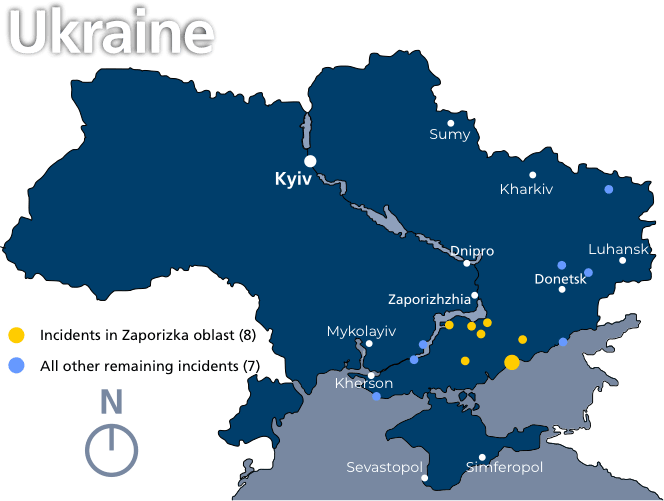
Based on the research team’s dataset, 16 health facilities in five of Ukraine’s oblasts were reportedly repurposed into military bases or for other nonmedical purposes. In all 16 cases, the health facility was fully functioning at the time of their repurposing. Most of these incidents were reported in Zaporizka oblast, where seven such cases were recorded. Five incidents took place during the first three months of the full-scale invasion, with cases being more frequently reported after November 2022. For instance:

  • One former children’s hospital used as a COVID-19 hospital in Zaporizka oblast was reportedly repurposed into a military base in November 2022 (incident 35830).[52]
  • A women’s hospital in Luhanska oblast was reportedly repurposed into a military base in January 2023 (incident 36931).[53] In March 2022, a psychoneurological boarding facility in Bucha, Kyiv was seized by Russian forces who fired artillery from its premises (incident 33352).[54]
  • In March 2023, a hospital in Luhanska oblast was reportedly turned into barracks for Russian soldiers (incident 37605).[55]
  • In July 2023, a hospital in Luhanska oblast was reportedly occupied by the paramilitary Chechen unit Special Rapid Response Unit (SOBR) “Akhmat” under the instruction of Russian authorities (incident 39938).[56]
  • The repurposing of health facilities was also accompanied by other takeovers. For example, in Osypenko village, Zaporizka oblast, Russian military forces reportedly occupied the local hospital and civilian homes (incident 40276).[57]
Dr. Oksana Kyrsanova, an anesthesiologist at the Regional Intensive Care Hospital in the city of Mariupol, spoke to MIHR researchers about the occupation of the hospital by Russian forces on March 12, 2022[58], describing how doctors provided care during the occupation, and the conditions under which staff worked (incident 36432).[59]  

“They made our hospital their headquarters. They had a rotation, first there were some, then others came. They occupied the entire building, completely surrounded and controlled the hospital, all entrances, exits, and stairs. They were on the roof of our hospital. We had a very big building, and they had a view of everything.”   “And indeed, we saw it all, they [Russian forces] set up their equipment and shot from the hospital buildings. Military equipment was placed around the perimeter of the hospital. Armored personnel carriers stood on all sides of the hospital. There were snipers on the roof and top floors. There were probably four soldiers on each floor. There were a lot downstairs, probably 10 [soldiers] and three armored personnel carriers. The soldiers would rotate; the armored personnel carriers hid, for example, between two houses right in front of the windows.”

Other incidents appear to have also involved repurposing for military use, but no details of how they were so used were provided. For example, in March 2022, a hospital in Slavutych city, Kyivska oblast, was taken over by Russian forces during their invasion of the city (incident 31988).[60] And in November 2022, an infectious diseases hospital in Melitopol city, Zaporizka oblast, was occupied by the Russian military (incident 35831).[61] 

There have also been nonspecific reports about the use of health care facilities by the Ukrainian forces.[62] However, our organizations have not been able to independently verify such misuse.

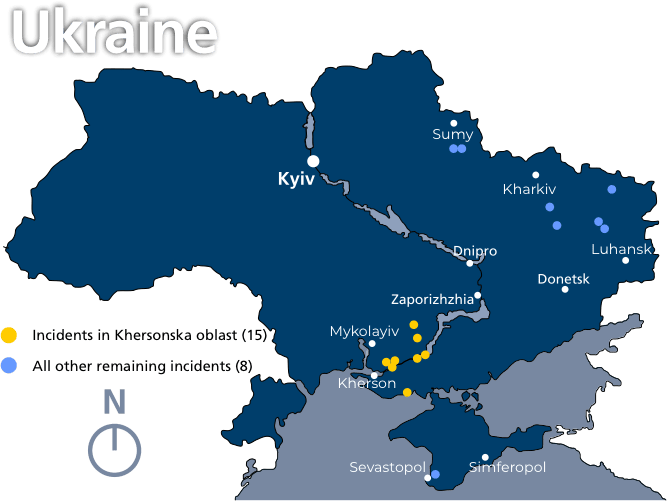
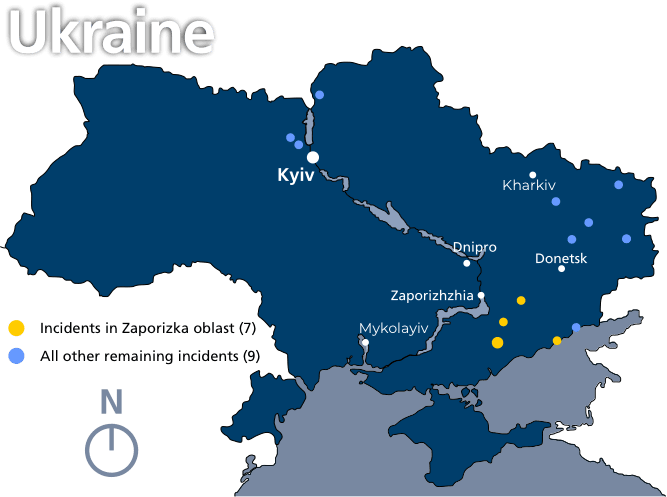
Reported locations of health facilities in Ukraine repurposed into military bases by Russian forces, February 2022 – August 2023

On at least 16 occasions, fully functioning health facilities were taken over by Russian forces and turned into military bases. Most of these incidents were documented in Zaporizka oblast.    
Source: Attacks on Health Care in Ukraine. Data as of September 11, 2023.  

Military use of protected infrastructure is a violation of IHL, as it infringes the protected status of such sites and personnel. In addition to the risk that such “dual purpose” use of hospitals and health facilities poses to the civilian population – exposing them to greater risk of attack by combatant forces – the occupation of civilian hospitals also strains health care resources.

Items, including food rations, left by the Russian military in the Hostomel Primary Care Center after they retreated. April 2022. Screenshot from a video provided by a hospital representative.
Olena Yuzvak, head of the Primary Care Center in Hostomel, Kyivska oblast, spoke to PHR about the occupation of the clinic (incident 41998)[63] from February through March 2022:[64]  

“In the building of this primary clinic was the base of the Russian military, and in the basement of this building were children, civilians who were not even allowed to go outside and cook some food, because it was dangerous, no one allowed them to do so. And the people who tried to leave on their own because they were losing it and wanted to leave this hell, […] their cars were shot, they were civilians.”  

Olena’s husband and son, both civilians, were taken prisoner by Russian forces. Her husband, who was shot when Russian soldiers entered their private house, has since been released in a prisoner exchange, but her son, Dmytro, remains in captivity.

Repurposing health facilities as military bases violates IHL and may constitute war crimes. The incidents narrated by doctors from Mariupol and Hostomel, in particular, raise concerns that merit further investigation.

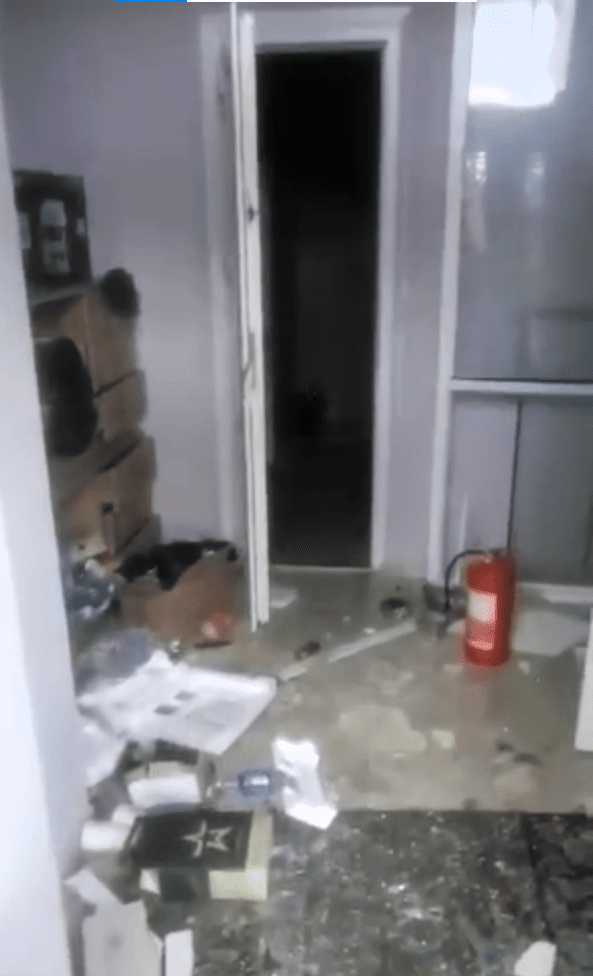
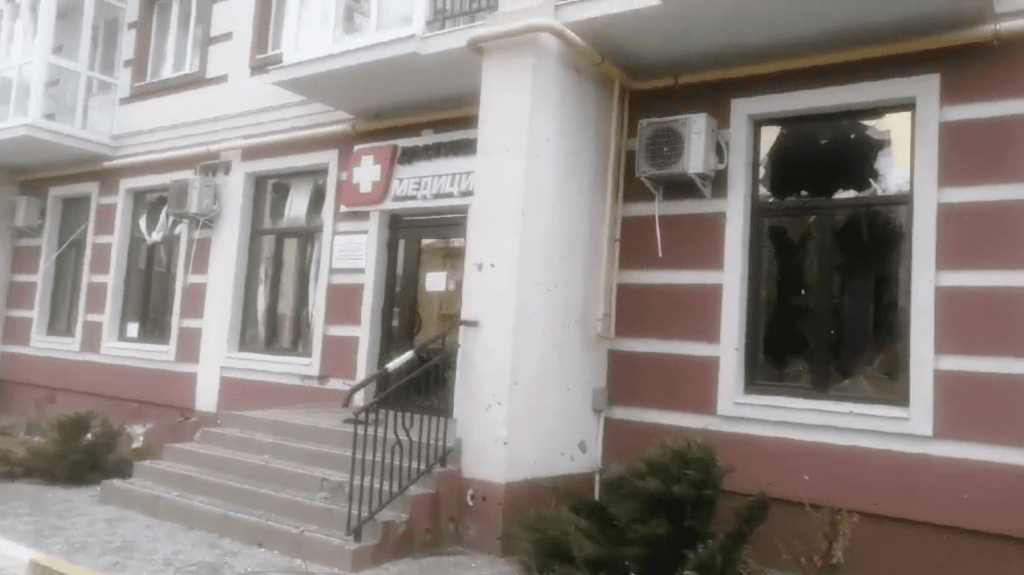
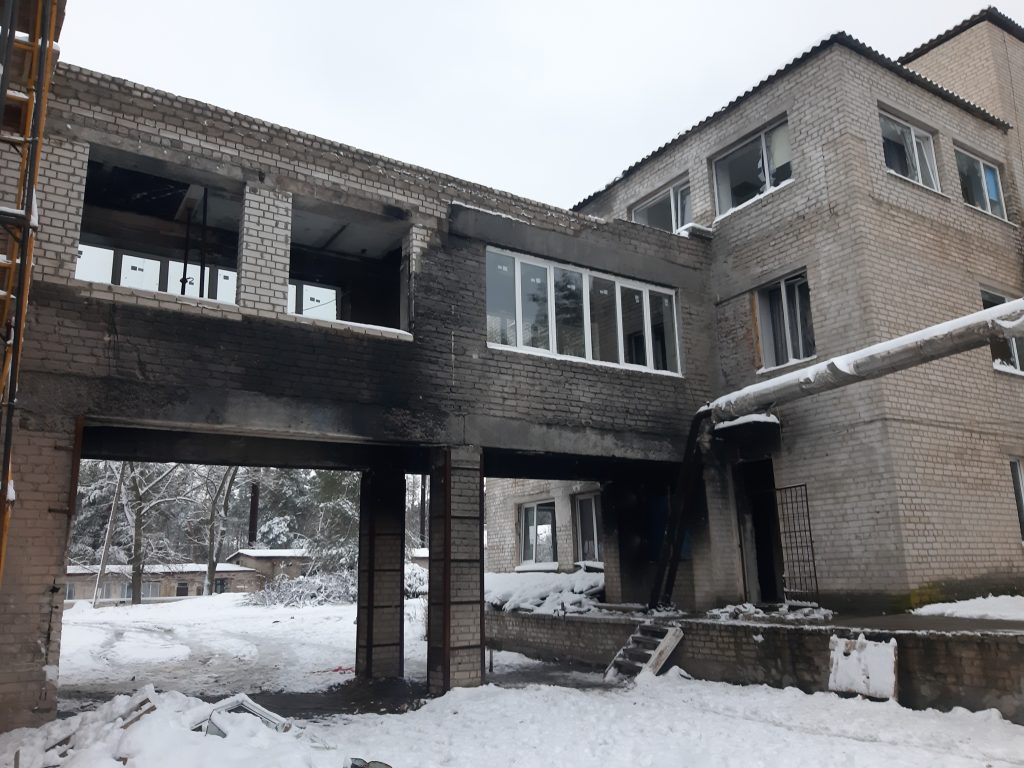
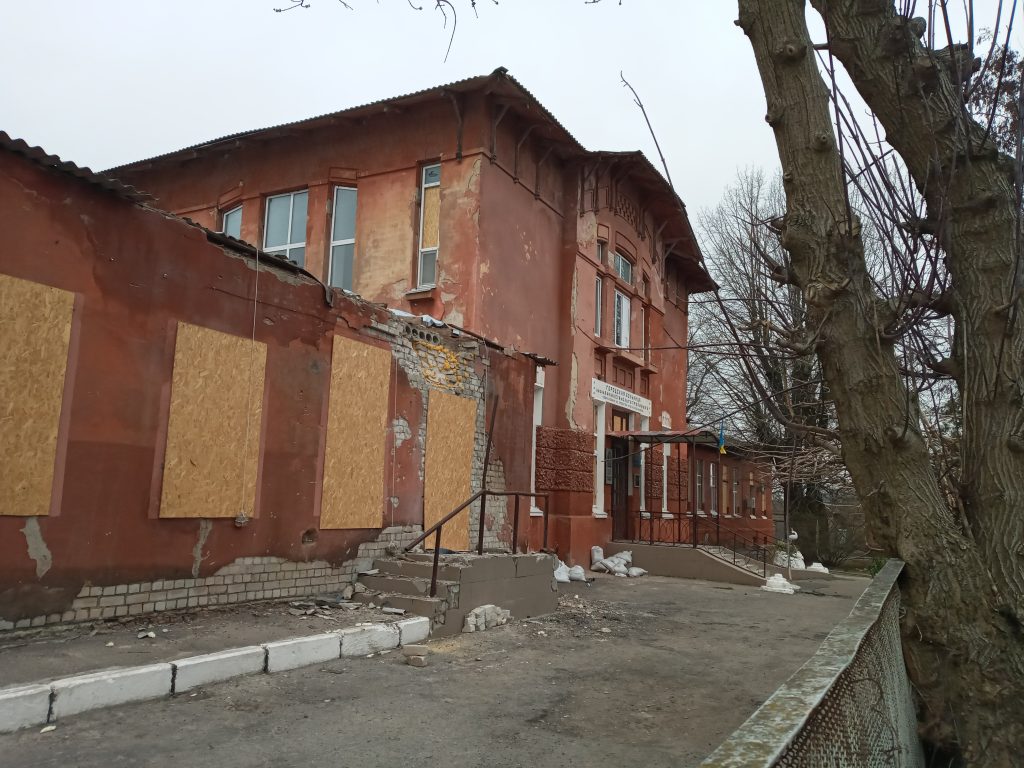
The facade of the damaged Hostomel Primary Care Center. April 2022. Screenshot from a video provided by a hospital representative.
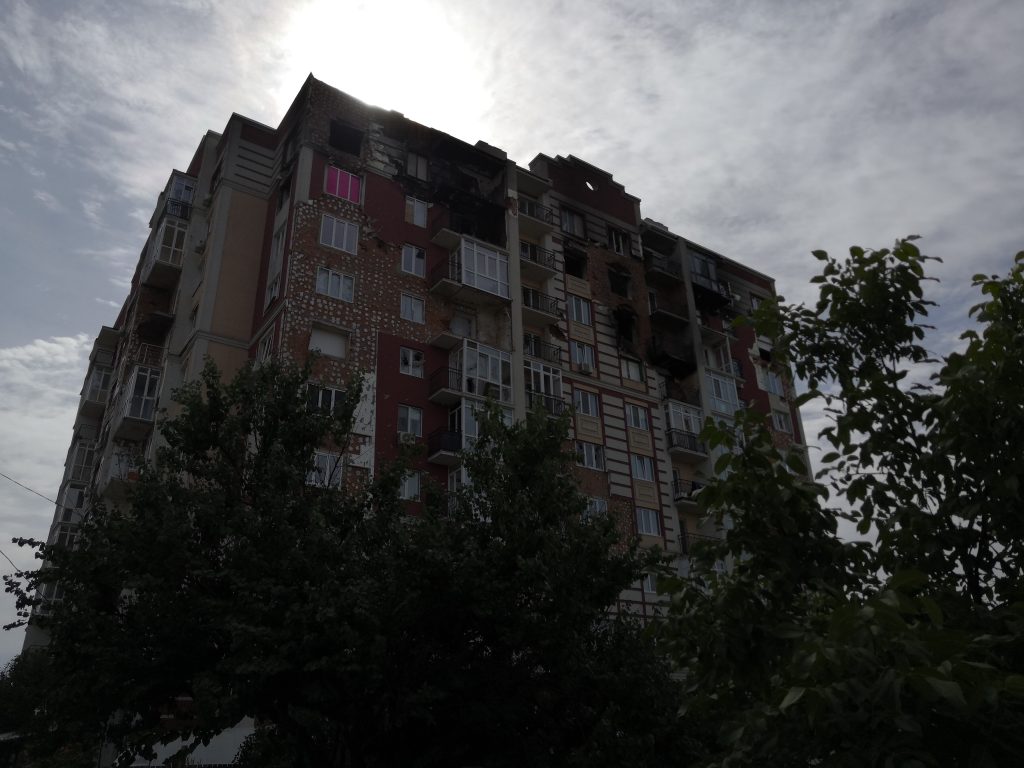
Photo of a building located near the Hostomel Primary Care Center captured with the eyeWitness to Atrocities App by a user on September 9, 2022.

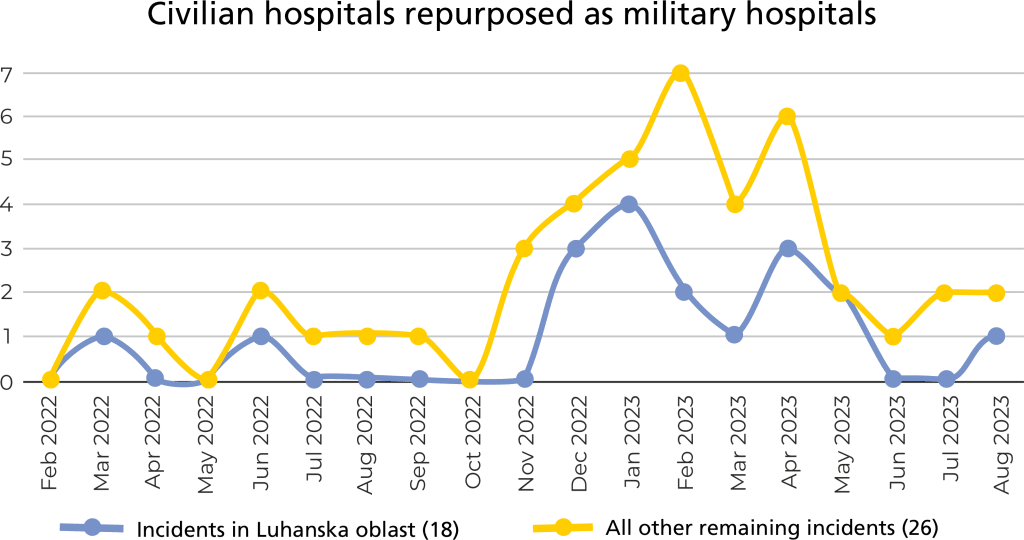
Civilian hospitals repurposed as military hospitals

Civilian hospitals – whether public or privately owned – may only be requisitioned in cases of urgent necessity for the care of military wounded and sick and on a temporary basis, provided that suitable arrangements are made in due time for the care and treatment of patients and for the needs of the civilian population as a whole for hospital accommodation.[65] It follows that the Occupying Power must not do so if its own medical establishments can cope with the wounded and sick of the army.[66] Additionally, hospitals need to be returned to their normal use “as soon as the state of necessity ceases to exist, that is as soon as the medical services of the occupation forces are able to cope with the needs of their wounded and sick.”[67]

In 44 reported incidents, health facilities in seven of Ukraine’s oblasts were reportedly repurposed for the use of Russian soldiers. These takeovers of civilian facilities for military medical use were particularly frequent in February 2023 and the number of reported new takeovers increased between February and April 2023. In all 44 cases, the health facility was fully functioning at the time that it was repurposed from civilian use for the use of soldiers. 

Most of these incidents were documented in Luhanska oblast, where 18 cases were recorded, with most taking place between December 2022 and May 2023. Incidents were also common in Zaporizka oblast with 10 and Kherson with seven. Of note:

  • Six women’s hospitals were reportedly repurposed for the use of soldiers, five of which were in Luhansk and one in Zaporizhzhia.
  • Three children’s hospitals were reportedly repurposed for the use of soldiers: two in Zaporizhzhia and one each in Kharkiv.

In 34 of the 44 incidents, it was specifically reported that civilians were forcibly evicted from a health facility or denied access to health care, and the facility was then repurposed for the exclusive use of wounded soldiers. For example:

  • In November 2022, Russian forces reportedly expelled patients from an emergency hospital in Melitopol, Zaporizka oblast (incident 35779).[68]
  • In March 2023, a maternity hospital in Luhansk was allegedly taken over and turned into a military hospital by Russian forces. Women in labor were transferred to the two remaining maternity hospitals in the city (incident 37751).[69]
  • Later in May, Russian forces reportedly handed the hospital over to the Russian-government–linked Wagner Group private military for the use of treating their wounded soldiers (incident 39079).[70] 
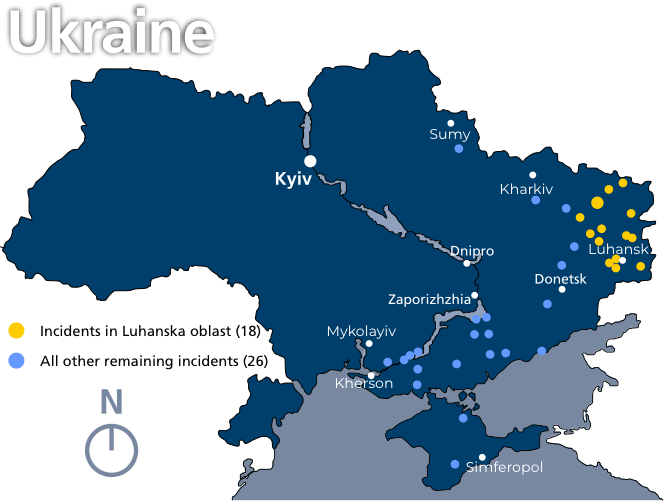
Reported locations of health facilities in Ukraine repurposed for the use of wounded Russian soldiers, February 2022 – August 2023

Fully functioning health facilities were repurposed from civilian use to soldiers by Russian forces at least 44 times. A great number of incidents was documented in Luhanska oblast between December 2022 and May 2023  
Source: Attacks on Health Care in Ukraine. Data as of September 11, 2023.

Based on available information, it is unclear whether these incidents satisfied the “urgent necessity” threshold of the Fourth Geneva Convention, nor is it clear if the health needs of specific patients, and access to health care for the civilian population as a whole, were adequately taken into account in these incidents. However, the way in which the use of beds and infrastructure were reportedly requested and taken over raises significant concerns about the equitable provision of care to all wounded and sick people.

The extent to which civilians were cut off from care as a result of requisitioning underscores the harmful health impacts of the continued occupation. Indeed, the reported medical needs within areas currently occupied by Russian forces are often so great that local health care capacities cannot cope with both Russian military and civilian populations. In Luhansk city, for instance, as well as in towns of the oblast, hospitals reportedly operate at full capacity. One person, whose father had a broken hip but was turned away at the hospital, reported that doctors “received an instruction from Luhansk to give hospital beds to wounded soldiers, and to send civilians back if they do not have a heart attack.”[71] Similarly, in Dovzhansk, a maternity ward was reportedly vacated to accommodate wounded Russian soldiers instead (incident 41997).[72]

The redirection of medical care to wounded combatants may have implications for civilians in the occupied territories. For instance, more than 450 wounded Russian military personnel were reportedly being treated in the city hospital of the occupied city of Dniprorudne, Zaporizka oblast, likely impacting the availability of medical services for civilians (incident 37004).[73] A similar situation is observed in Donetsk, where routine surgeries for civilian patients are reportedly being canceled (incident 42120),[74] making it increasingly difficult for the civilian population to access medical services across the region (incident 38618).[75] Additionally, in the occupied part of Khersonska oblast in January 2023, particularly in Kakhovka, a tuberculosis dispensary was transformed into a military hospital to treat Russian soldiers (incident 37667).[76]

In Crimea, increasingly more hospitals are reportedly being reoriented into military hospitals, restricting the civilian population’s ability to receive medical services.[77] The new Semashko Medical Center in Simferopol, with the capacity to treat 650 patients, was turned over to the Russian military (incident 39428).[78]

The conversion of civilian hospitals located in former or current occupied areas of Ukraine into military hospitals – such as the ones reported in Donetska, Khersonska, Luhanska, and Zaporizka oblasts – suggests a worrisome pattern by Russian forces. Further investigation is required, however, to confirm whether there was an “urgent necessity” in each instance and, if so, whether hospitals were restored to their normal use as soon as that urgency ceased to exist. There has also been no documented effort to expand the capacity of care for soldiers and civilians alike.

Seizure of Medical Supplies and other Forms of Appropriation

Specific rules regulate the Occupying Power’s ability to requisition articles and medical supplies available in the occupied territory. According to the IHL framework, such requisitions are only allowed for use by occupying forces and administration personnel,[79] provided that the requirements of the civilian population have been taken into account and that fair value is paid in return.[80] Requisitioning equipment and medical supplies on an excessive scale would amount to the grave breach of the norm prohibiting appropriation of property.[81] Other forms of appropriation are also prohibited, namely pillaging and seizing the enemy’s property. [82]

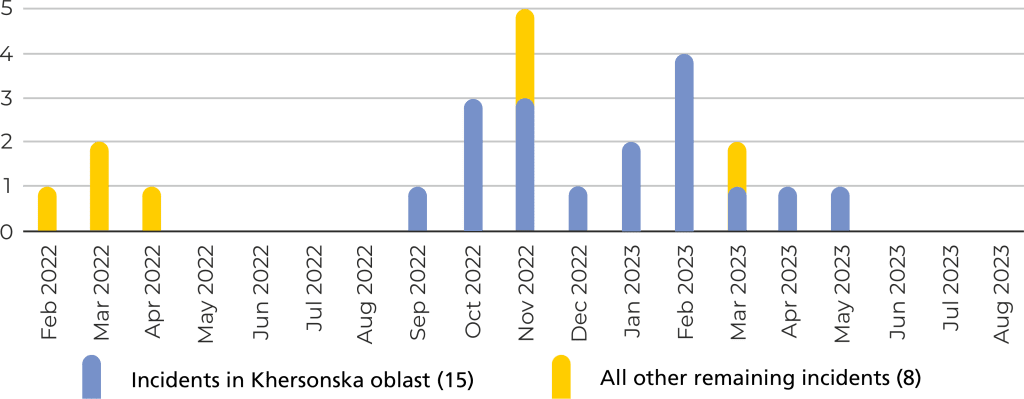
The research team identified 23 reported incidents, in six of Ukraine’s oblasts, where Russian forces requisitioned medical supplies and equipment needed for the running of the health system, including computers, digital and medical equipment, hospital furniture, medicine and blood supplies, and, in one case, building supplies from a hospital under construction. While the details about the specific circumstances are not always clear, there is indication that requisitioning occurred in the context of armed threats, coercion, or harassment.

Such incidents were more frequently reported between October 2022 and March 2023, with three incidents reported as taking place during the first two months of the full-scale invasion.

  • Nearly two-thirds of the incidents were reported in Khersonska oblast, where 15 cases were recorded. In June 2023, one women’s hospital in Luhansk oblast had reportedly all its furniture placed into military trucks and taken away after Russian forces converted it into a field hospital for wounded Russian soldiers (incident 39856).[83]
  • In eight incidents, medical supplies were specifically reported to have been requisitioned and removed by Russian military vehicles. For example:
    • In October 2022, medical equipment was taken from a hospital in Bilozerka, Khersonska oblast, and transferred to Skadovsk and Henichesk (incident 35337).[84]
    • In March 2023, blood supplies were taken by Russian forces from transfusion centers in Sevastopol city, Crimea, to a military hospital, which caused a shortage in civilian institutions (incident 37907).[85] While there are few details available, it appears they were taken without proper procedures.
  • In the remaining 15 incidents, medical supplies were removed from a health facility. However, it is unclear if they were removed to supply health care facilities they had repurposed to treat wounded soldiers or for other unspecified purposes.
Reported locations of medical supplies requisitioned from health facilities by Russian forces, February 2022 – August 2023
On at least 23 occasions, medical supplies and equipment needed for the operation of the health system were taken by Russian forces. A large number of incidents were reported in Khersonska oblast between October 2022 and February 2023.  
Source: Attacks on Health Care in Ukraine. Data as of September 11, 2023.

In Kharkivska oblast, Dr. Maryna Rudenko, director of the Balakliia Clinical Multiprofile Intensive Care Hospital, recounted living inside the facility until April 4, 2022, when Russian forces seized the hospital (incident 36559).[86] Upon her return five months later, Dr. Rudenko described the situation in this way:

“Almost everything was stolen. They took away everything that could be taken away. They couldn’t move the CT scanner, so they looted the electronics from it. … We had two surgical stands … We hid them in the basement, but they found them and stole them. All the tools were stolen. The diagnostic department: there is nothing at all, everything was stolen; they lived there. That is, all ultrasound machines, cardiographs, encephalographs; nothing. They took it out … We also had a generator for 100 kilowatts: disappeared. Out of 15 [ambulance] cars, 14 disappeared with them. Telephones, 37 washing machines, microwave ovens [were also removed].”[87]

Another doctor spoke to the MIHR researchers about the seizure of property in then-occupied Kherson before they left the city in July 2022 (incident 42145):[88]

“At the beginning of the spring of 2022, the occupation authorities banned the import of medicines into Kherson; this spurred an ‘underground’ trade in medicines throughout the city. From the start of the occupation, Russian ‘entrepreneurs’ appropriated Ukrainian pharmacies and started selling Russian medicines. They were of much lower quality than Ukrainian and European ones.”[89]

In addition to diminished access to medical services, property seizure and willful destruction have led to greater scarcity of medications and limited equipment to perform necessary tests or surgeries. Ukraine’s Ministry of Health has described the current supply levels of medicines to health care facilities and pharmacies in the areas currently occupied by Russian forces as “catastrophic,” as there are no deliveries to the occupied areas of Khersonska and Zaporizka oblasts, and the information from Donetska and Luhanska oblasts is scarce.[90]

Credible reports of medical supplies and equipment stolen by retreating Russian forces, such as the ones highlighted in Balakliia Clinical Multiprofile Intensive Care Hospital and in Kherson, require further investigation. They may amount to IHL violations and, possibly, war crimes of pillage and/or seizure of property.[91]

Photo of the Balakliia Clinical Multiprofile Intensive Care Hospital captured by UHC with the eyeWitness to Atrocities App on November 18, 2022.

Forced Change of Nationality and its Consequences

Forced change of nationality – or as it is referred to in Ukraine, “passportization” – involves mandating the acquisition of Russian passports in the areas currently occupied by Russian forces, including by making access to health care conditional on one’s nationality. In this context, “passportization” refers to the coerced adoption of Russian nationality through control of access to several areas of civilian life, including access to health care.[92]

Coerced adoption of Russian nationality began prior to the February 2022 invasion, when Russian citizenship was automatically granted to residents of occupied Crimea and simplified procedures for Russian passport applications were introduced for Ukrainian citizens of the occupied territories of Donetska and Luhanska oblasts.[108] On April 27, 2023, President Vladimir Putin of Russia signed a decree establishing a procedure to issue Russian passports to residents of the Russian-occupied territories of Donetska, Khersonska, Luhanska, and Zaporizka oblasts of Ukraine.[109] According to the decree, residents have until July 1, 2024 to accept Russian citizenship; otherwise, they will be considered foreigners or stateless and can be detained or deported.[110] As was the case in Crimea after Russia’s occupation in 2014, they may face threats and discrimination, including in accessing medical care and social services.[111]

Concurrently, on June 20, 2023, Decree No. 186 was issued in the occupied territories of the self-proclaimed “Donetsk People’s Republic,” establishing a working group vested with executive authority to expel, deport, and detain all Ukrainians who did not obtain Russian citizenship in designated camps.[112]

Conditioning Access to Care on Change in Nationality

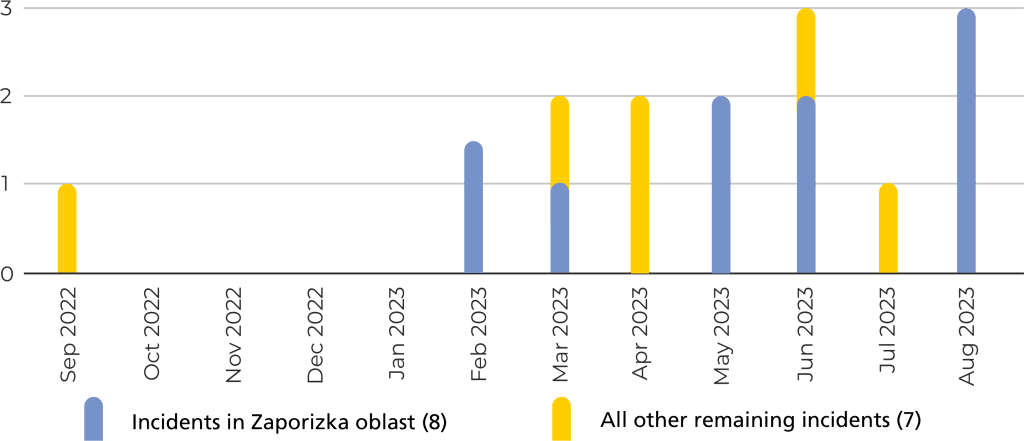
The research team documented 15 incidents of “passportization” through medical services between February 2023 and August 2023. Most incidents took place from March 2023 onwards, with one recorded incident in September 2022 in Donetska oblast. Cases were documented in four of Ukraine’s oblasts and were most frequent in Zaporizka oblast, where eight cases were recorded. Of note:

  • Five incidents involved health care workers being affected by “passportization.” During these incidents, health care workers were reportedly ordered to deny medical services to people who did not hold a Russian passport or a receipt of application.
  • In some hospitals, administration points were set up for civilians to then apply for a Russian passport.
  • In other cases, health care workers were reportedly forced to hand over their Ukrainian passports and obtain a Russian passport within a strict time frame or face being dismissed from their positions if they refused and their positions filled by Russian staff.
  • In one case in June 2023, Russian authorities reportedly closed a health facility in Zaporizka oblast after most of the employees refused to obtain Russian passports (incident 39417).[113]

In ten incidents, civilians carrying Ukrainian passports were reportedly unable to access medical services. Five of these incidents were reported in Zaporizka oblast.

Reported locations of “Passportization” of Population Through Medical Services by Russian forces, February 2022 – August 2023

Incidents became more frequent from March 2023 onward, with most taking place in Zaporizka oblast  
    Source: Attacks on Health Care in Ukraine. Data as of September 11, 2023.
    Source: Attacks on Health Care in Ukraine. Data as of September 11, 2023.

“Passportization”: Before and After February 2022

Before the 2022 invasion, human rights organizations in Ukraine had reported on limited access to medical services for civilians without Russian passports who were living in previously occupied territories.[114] In Crimea, for instance, medical services should have been provided free of charge, but after 2014, according to local practices these services were only available to holders of a compulsory health insurance policy for Russian citizens. Those who did not have such documentation could not obtain an appointment at a public hospital.[115]

In the words of a patient from Crimea who spoke with the human rights organization ZMINA in 2017, “I was sick, I had a fever, a cough, I went to the receptionist at the seventh polyclinic. They did not give me a referral to a doctor because I did not have their insurance, and I did not have insurance because I did not have a passport. I had to go to a doctor I knew. As a result, it turned out that I had pneumonia, and I was treated at home, with the advice of a doctor I knew.[116]

Elsewhere, “passportization coercion is gaining momentum,” according to the advisor to the mayor of Mariupol Petro Andriushchenko.[117] In Mariupol, the advisor reports that people are now “being denied treatment and/or examination […] without state health insurance. To get insurance, you need to have a Russian passport.”

Khersonska oblast is another area that has suffered devastating destruction –from the bombing of the Kakhovka dam in June 2023[118] to incessant shelling of civilian infrastructure, including health care.[119] According to a report by the Center for Investigative Journalism, a local resident in Hornostaiyivka reportedly died because doctors refused to provide him with medical care without a Russian passport (incident 42057).[120]

In May 2023, the Russian government announced that all residents of areas occupied by Russian forces, including children, would need to obtain compulsory health care insurance available only for Russian citizens by the end of 2023.[121] According to Yuriy Sobolevsky, first deputy chairman of the Khersonska Oblast Council, doctors have already refused to provide services to those who do not have a Russian compulsory insurance policy: “Fortunately, most of the doctors are our [Ukrainian] Kherson doctors, they are sabotaging this and quietly continue to provide medical services, but some health facilities already have managers and medical staff, partly people who came from Russia to Khersonska oblast, and they are putting the most pressure on our people.”[122]

A similar situation obtains in Donetska and Luhanska oblasts. The Ukrainian government’s National Resistance Center reports that, to specifically control the process of “passportization” – and the provision of medical services based on one’s passport – the Russian “administration” is increasing the number of doctors brought in from Russia.[123]

Russian officials and their appointees confirmed the existence of these policies. In Lazurne (Khersonska oblast), for instance, the Russian-appointed head of the town, Oleksandr Dudka, stated that Russian authorities would not provide medicines and humanitarian aid to Ukrainian citizens who rejected Russian passports. In his words, “Medicines purchased from the budget of the Russian Federation will not be distributed to Ukrainian citizens. This applies to insulin users who have already experienced what it is like to be a citizen of another country.” (incident 42060)[124] Similar accounts of deprivation of access to insulin have also been reported from areas near Genichesk of Khersonska oblast.[125] The Russian-appointed head of the occupation administration of Zaporizka oblast, Yevhen Balitskyy, said that residents of the Russian-controlled part of the oblast who do not have Russian passports will not be able to use medical services from 2024.[126]

Such barriers to access to lifesaving medicines are erected throughout many areas currently under Russian occupation, in addition to the unavailability of medical services. In Enerhodar of Zaporizka oblast, which hosts the threatened Zaporizhzhia Nuclear Power Plant, the largest nuclear power plant in Europe,[127] the Russian administration prohibited the distribution of vital medicines to residents without a Russian passport. According to the mayor, Dmytro Orlov, all the pharmacies were seized and now refuse to provide vital medicines, including insulin and thyroid medicines, to citizens without Russian passports (incident 42062).[128] A resident of Enerhodar said that the occupation “administration” announced that an ambulance would not come “if you did not have a Russian passport. Then they warned us that they would not sign us up for scheduled surgeries, and before the urgent ones, they force [us] to sign a commitment to get this passport or at least to sign up for it.”[129]

Amid occupation, health care workers at public health facilities are often compelled to be the initial subjects for testing the newly implemented “passportization” policies. In Mariupol, for instance, health care workers were reportedly ordered to obtain Russian passports (incident 34715).[130] Meanwhile, they were also obliged to unconditionally hand over their Ukrainian passports, making it virtually impossible for them to leave the occupied city.

Impact of “passportization” on Children and Vulnerable Groups

These restrictions are particularly harmful to vulnerable groups, including people with disabilities, chronic diseases, critical conditions, the elderly, and low-income people. Women and girls may often struggle to access essential gynecological and reproductive health care in situations where health decisions are primarily shaped by scarcity, safety concerns, and ongoing conflict.[131] Patients may not seek necessary care, subjecting themselves to greater risk of health complications.

This is especially concerning for children, given reports of denial of access to insulin or hospitalization for children whose parents do not have Russian passports or who have resisted “passportization” (incident 42120).[132] These practices are also occurring against the backdrop of mass deportations of Ukrainian children to Russia, with 150,000 to 300,000 children subjected to forcible transfer and/or deportation.[133]

Russia’s “passportization” policy seeks to forcibly change the nationality of deported and forcibly displaced citizens of Ukraine, including orphans and children left without parental care. The latter are particularly vulnerable to the policy: as per the “passportization” laws, representatives from health care facilities,[134] as well as schools and social institutions in whose care these children are kept, can request to Russian authorities on their behalf that they no longer want Ukrainian citizenship. Human rights organizations have documented deportations of entire orphanages, with more than 2,000 orphans, children without status, and children deprived of parental care taken to Russia from boarding schools and orphanages in the occupied parts of Luhanska and Donetska oblasts alone since the beginning of May 2022.[135]

Ukrainian people are being forced to choose between their well-being, even their lives, and their citizenship in exchange for basic services, including health care; indeed, Russia appears to be aiming to expedite its “passportization” of the population in Ukraine’s occupied territories. Such violations urgently require further investigation.

Health Care Workers: At Risk and Under Duress

Doctors and other health care workers in conflict find themselves working in incredibly challenging conditions, often amid constant shelling. Many health care workers have become displaced, increasing the burden on the existing staff. The total health care workforce within Ukraine’s national health care system experienced a 13.7 percent reduction in 2022 compared to the previous year.[157]

Since the onset of the full-scale invasion, 160 health workers have been killed and 119 have been injured in 185 incidents.

    Source: Attacks on Health Care in Ukraine. Data as of September 11, 2023.

Doctors are often sources of support; in conflict and occupation, it is common for them to assume leadership roles in their communities. Dr. Yuzvak, who was the only active doctor in Hostomel during the occupation, described her role as follows: “People, civilians, kept coming to me for medical help. We were already running out of medicines, basic medicines, for hypertension, diabetes, and it was clear that there was nowhere to buy them, people were getting contusions from explosions, they were dying, and there was nowhere to bury them. They started turning to me because they knew I was a doctor. I had to take on some kind of a leadership role.”[158]

Precisely for these reasons, however, health care workers are often singled out and targeted during conflict, particularly in situations of occupation.[159] In relation to the Russian occupation of Balakliia, Dr. Rudenko stated that: “[t]he FSB [Russia’s Federal Security Services] came to us on April 3 in the evening. They gathered all the medical staff … and said, ‘Don’t even think about going anywhere, you have to live here, you have to work here. We need to establish communication with the local population, so we will not let the doctors leave the city.’”[160]

A doctor from the Kherson Regional Clinical Hospital spoke to MIHR about providing health care under occupation on the condition of anonymity:[161]  

“On July 1, 2022, representatives of the Federal Security Service of Russia came to the Regional Clinical Hospital; they detained the director of medical affairs and the head of the hospital’s personnel department. In order to contain the doctors’ discontent, the Federal Security Service took some of the Ukrainian doctors away for “a conversation” or summoned them to the occupied Department of Health [to limit the spread of rebellion].”

Detention of Health Care Workers

During Russia’s invasion, hundreds of health care workers have been detained, arrested, or otherwise persecuted by Russian forces. Although the Russian Federation refuses to provide access to detention centers and confirm the exact numbers of civilians in captivity as well as prisoners of war, “Military Medics of Ukraine,” a nongovernmental organization that works to help free Ukrainian medics who are being held captive, indicates that, based on information from Ukrainian state bodies, approximately 500 medics, both military and civilian, are currently thought to be held captive by Russian forces.[162] MIHR researchers identified 42 places of detention in the Russian Federation – pretrial detention centers and penal colonies, located both in the regions bordering Ukraine and farther in the country. Some prisoners are also held in the occupied territories of Donetska and Luhanska oblasts.[163]

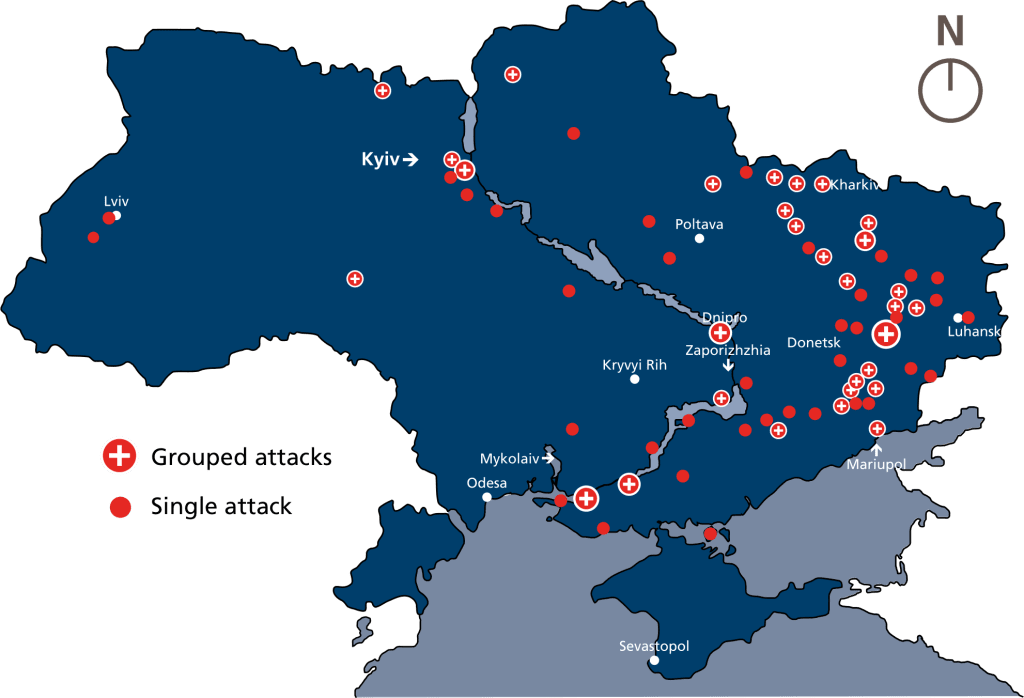
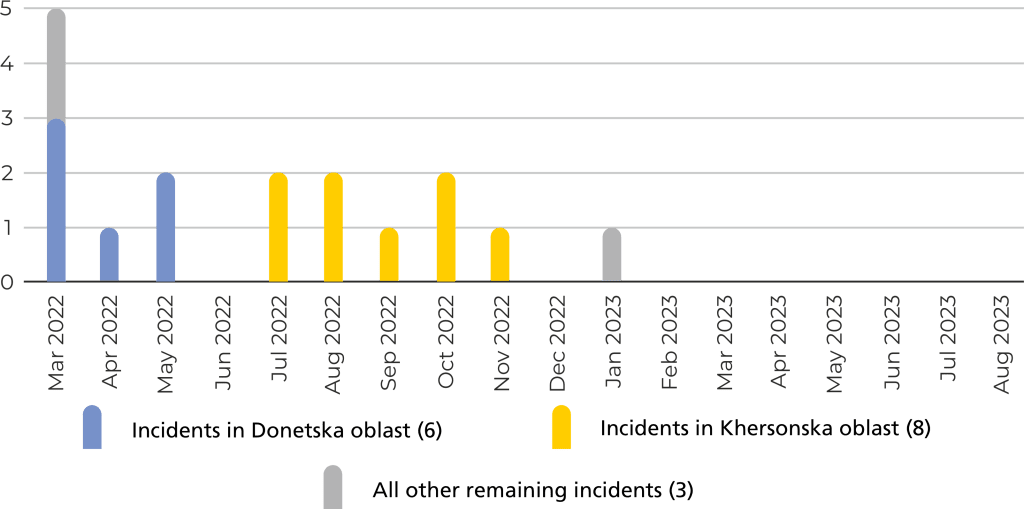
According to the research team’s database, at least 68 health care workers were detained by Russian forces or supporting forces in 17 incidents between February 2022 and August 2023. These arrests occurred in four of Ukraine’s 24 oblasts and were most frequent in Khersonska oblast, which documented eight incidents and Donetska which documented six incidents. Kharkivska, Kyivska, and Zaporizka oblasts each recorded one incident respectively. Of note:

  • Health worker detentions were most common in 2022, with one incident reported in 2023 involving a female paramedic being taken from her home in Tarasivka village, Zaporizka oblast, in January by Chechen forces who threatened to deport her for refusing to cooperate (incident 36880).[164]
  • Health workers were mostly detained in small groups (numbering between one and three) with one incident where 42 medics were arrested in April and May 2022 (incident 34716).[165] During that incident, and notwithstanding the special status afforded medics under IHL, Russia held an unspecified number of doctors of Hospital No. 555 as “prisoners of war” who were sheltering at the Ilyich metallurgical plant.[166]
Reported locations where health workers were arrested by Russian forces, February 2022 – August 2023

At least 68 health care workers were detained in 17 incidents by Russian or supporting forces. All but one arrest occurred in 2022, with incidents frequent in Donetska and Khersonska oblast and one each in Kharkivska, Kyivska, and Zaporizka oblasts.    
    Source: Attacks on Health Care in Ukraine. Data as of September 11, 2023.

A doctor from the Kherson Regional Clinical Hospital in then-occupied Kherson, who was interviewed by MIHR researchers on the condition of anonymity, stated that, “It was dangerous for Ukrainian doctors to work under occupation, especially in small villages, as they could become victims of abductions. First, there are fewer witnesses to abductions in towns and villages; second, it is easier to pressure and force cooperation. The reason for the abduction could be the refusal to take Russian salaries or social assistance, or the compulsion to travel for retraining, which had been announced in June 2022.”[167]

During the occupation of Hostomel in Kyivska oblast in March 2022, Olena Yuzvak, head of the Hostomel Primary Care Center, was taken for interrogation by Russian soldiers where she had a plastic bag put over her head and was suffocated for up to 30 seconds (incident 42071): [168]  

“On March 20, Russian soldiers came to our home in a private house. The Russian soldiers shot my husband in the knee and thigh with a gun, put him on the ground, and put the gun to his head. My son came out of the house [….] They put the three of us in an armored personnel carrier, blindfolded us and took us to their headquarters in Hostomel in the Yagoda residential complex. The interrogation was tough [….] Moreover, my husband was not provided with medical care, he was bleeding from the leg, he had two bullet wounds. During the interrogation, they asked me what I do, and I said that I am a doctor and that I have been working only in health care for more than 20 years. And after the interrogation, they put us in the corridor, put bags on our heads, tied our hands with tape, and started twisting and strangling us with tape around our necks.   [….] As a doctor, I understand that asphyxiation is an easy death [….] I accepted it, that that’s the way it should be. Then, when they saw that we started to suffocate, they cut holes in our bags and took us all to Antonov airport for further interrogation. They left my husband and son there. And I was brought back to this Yagoda residential complex, where I was held captive for a day.”

Health care workers, among many other prisoners held by Russia that return from captivity, report poor living conditions, torture, and ill-treatment.[169] A military medic, who was captured in Mariupol and later released as part of an exchange of prisoners, recounted:

“Upon arriving at the colony, we underwent an ‘admission’ procedure. As soon as we got off the bus, the jailers identified and continued to beat us: while we were saying our names, then again along a corridor they formed, and finally after they forced us to squat down. There was constant physical violence. They could have let this bus in without this ‘ritual,’ everyone knew the bus was carrying wounded people and doctors. But the wounded were not spared. There was a guy with a crutch; they took the crutch from him and beat him with it, even as he fell to the ground. A wounded prisoner of war, who survived two airstrikes and had facial burns, was beaten to death.” [170]

These reports, including that of Dr. Yuzvak, demand investigation, together with other allegations of torture and ill-treatment of doctors emerging from places of internment.[171]

Coercion of Doctors: Violations of Medical Ethics

Russian authorities have often forced health care workers to violate their professional and ethical obligations to their patients. As PHR has documented in other contexts, such circumstances could be characterized as “dual loyalty” situations, in which compliance with Russian demands conflicts with their professional and ethical obligations to their patients.[174]

Being coerced to deny medical care to persons who refuse to secure a Russian passport is one such example of direct interference with medical ethics. Furthermore, clinicians who refuse to obtain a Russian passport may also face sanctions or reprisals. In September 2023, Russian military reportedly abducted and killed 26-year-old Anastasia Saksaganska, a doctor from the village of Mali Kopani, Khersonska oblast, as well as her husband.[175] Their relatives stated that the reason for their death was their refusal to obtain Russian passports and submit to Russian demands. Another example was provided by a doctor from the Kherson Regional Clinical Hospital in then-occupied Kherson, who was interviewed on the condition of anonymity. They described medical personnel being commanded to transfer confidential patient data to Russian government authorities:

“The new occupation authorities demanded access to the electronic database of patients, ‘e-Health,’ from Ukrainian doctors; they asked which of my patients receive insulin and how much it costs. The database stores confidential information, accessible only to medical personnel. In addition to home addresses and phone numbers, it stores passport data and contact information. Special population groups are also indicated, including veterans of [Ukraine’s] Anti-Terrorist Operation. I was worried, because the week before, I had received a patient from the occupied city of Mykolaiv oblast; he was a former member of the Anti-Terrorist Operation suffering from diabetes. The Russians found out about his illness, arrested him, and waited for him to die slowly without insulin. The man somehow managed to escape. I gave him the contacts of acquaintances who [later] sheltered him.” [176]

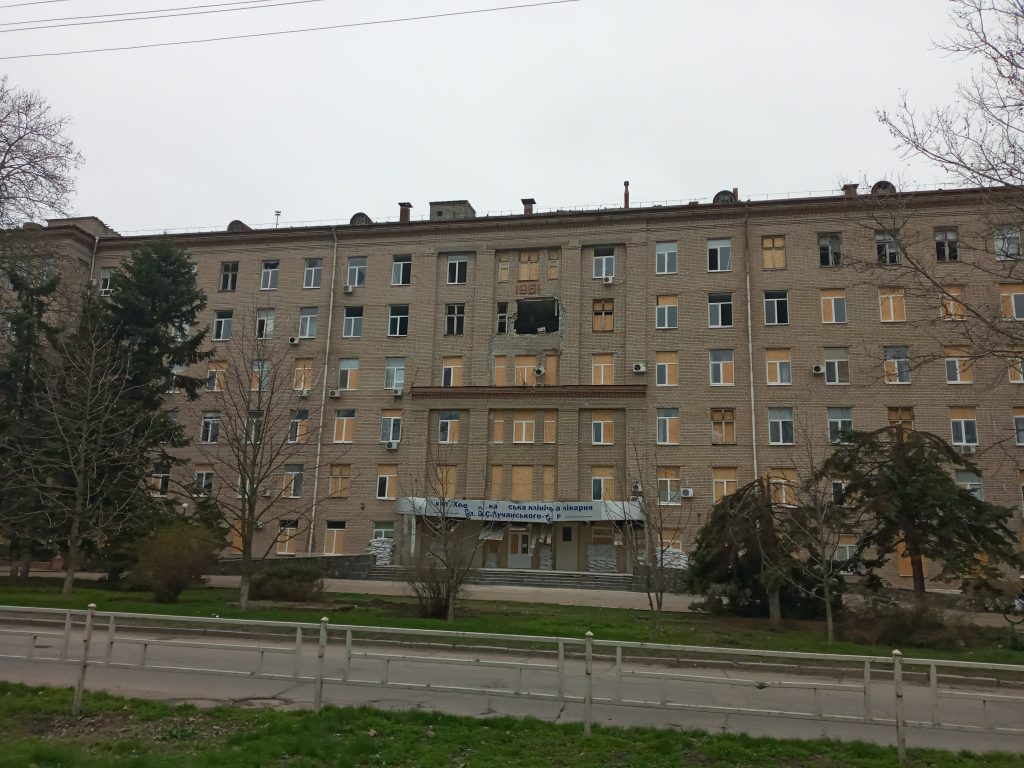
Following the liberation of Kherson, there has been a significant surge in attacks on its health care infrastructure. Photo of the Kherson city Clinical Hospital named after Oleksandr Luchansky captured with the eyeWitness to Atrocities App by a user on March 28, 2023.

Russian-controlled Health Service Delivery

The full-scale invasion has paralyzed the health care system in areas currently under Russian occupation. While exact numbers are unknown, in Mariupol alone, over 30 doctors were confirmed to have been killed during the first months of the invasion.[177] Increasingly, because of the shortage of medical personnel, Russian doctors are being brought into the occupied regions to replace Ukrainian doctors, work alongside them, and often lead health care facilities or departments. Working alongside doctors from an aggressor country is not only difficult on a personal level for many Ukrainian health care workers, but also poses logistical and administrative challenges: the health care systems of Ukraine and Russia are organized very differently. In addition, this often causes conflicts among medical personnel. As the doctor from the Kherson Regional Clinical Hospital explained:

“They [Russian doctors] said that we had destroyed the health care system, that we had few hospitals, few departments. They did not understand what electronic databases were, what confidentiality meant, that not everyone should see the data. [….] They did not communicate with our staff. Our staff were used only as servants. They cleaned up after the Russians, did laundry, and organized their everyday life. The Russians treated the Ukrainian workers with disdain.[178]

In Mariupol, for example, Russian doctors reportedly came to work at the city emergency hospital led by the chairman of the State Duma Committee on Health, who publicly cheered Russia’s invasion of Ukraine and was later sanctioned by a number of states.[179] Russian doctors were also reportedly brought to Zaporizka oblast,[180] where, according to other reports, hospitals barely had a hundred employees instead of the required 500.[181]

A Ukrainian doctor from the Kherson Regional Clinical Hospital spoke to MIHR about providing health care under occupation. In their words:[182]  

Some of them [Russian doctors] came under duress, but there were also those who openly said that they came here to earn money. They were paid 200–300 thousand rubles, like the military. But there were also the ideologically driven who came to ‘help.The Russians forcibly gathered all the doctors [at the occupation administration]. The illegal director of the Skadovsk hospital was there, and someone else came from the medical directors of the left bank [of the river]. They were gathering us there to ask us to cooperate on documents. They wanted to appoint us to positions in the Russian occupation administration in the ‘Ministry of Health’ so that we could re-register as Russian doctors and undergo retraining. The meeting was chaired by the former Minister of Health of the [Russian] Republic of Tyva. He was appointed as a curator from Moscow.”

It is currently unclear what protocols are being followed, if any, in the health facilities of Ukraine’s occupied territories. A new Russian federal law regulating the health care system on the occupied territories mandates Ukrainian doctors and pharmacists to obtain accreditation in accordance with Russian health care laws by the end of 2025.[183] Particularly concerning is a provision of the law that allows medical care to be provided without taking into account clinical practice guidelines for the duration of the transition period until 2025, likely eroding the standards of an already weakened health care system in these areas. Such immediate rescission of administrative regulations would also appear to run afoul of IHL’s requirement that the status quo ante in Ukraine’s occupied territories be preserved to the extent possible. Moreover, the negative impact such Russian-imposed changes are likely to have on the broader civilian population’s access to health service delivery further underscores the coercive aspect of these regulations.

Following the liberation of Kherson, there has been a significant surge in attacks on its health care infrastructure. Photo of the Kherson city Clinical Hospital named after Afanasiy and Olha Tropin captured with the eyeWitness to Atrocities App by a user on March 18, 2023.

Accountability for Attacks on Health Care: An Urgent Priority

The destructive impact of a compromised health care system threatens to impose long-lasting and severe hardship on Ukraine’s people. The Russian Federation must end its aggression, cease its violations, and return the administration of Ukraine’s health care system back to the Ukrainian government. 

Pending such a return, protecting health care remains an obligation under international humanitarian law. This includes the protection of health care personnel, patients, and facilities from attack and ensuring the access of all populations in need of health care to adequate and timely care, with no adverse discrimination. Detained medics must also be released.

There remains a pressing need to ensure accountability for violations of IHL with respect to health care, for which there has been almost complete impunity in both Ukraine and globally. To that end, this study urges all investigative and prosecutorial bodies with relevant jurisdiction – including the International Criminal Court’s Office of the Prosecutor, the Prosecutor General of Ukraine, the UN’s Independent International Commission of Inquiry on Ukraine, and other national prosecutors – to prioritize the investigation of attacks on health care. This includes the unlawful repurposing of civilian hospitals and the ill-treatment of health care workers in Ukraine’s occupied territory, which may constitute war crimes, and the policy and practice of conditioning access to health care and other services on the forced change of nationality.


Acknowledgments

This case study is a joint product of eyeWitness to Atrocities (eyeWitness), Insecurity Insight, the Media Initiative for Human Rights (MIHR), and Physicians for Human Rights (PHR).

It was researched and written by Christian De Vos, MSc, JD, PhD, PHR director of research and investigations; Anna Gallina, LLM, advanced LLM, eyeWitness associate legal advisor; the MIHR team; Uliana Poltavets, MSc, PHR Ukraine emergency response coordinator; and Christina Wille, MPhil, Insecurity Insight director. Will Jaffe, PHR advocacy coordinator, also contributed to the drafting and preparation of the study.

The case study was reviewed by the eyeWitness team; the MIHR team; and PHR staff members Erika Dailey, MPhil, director of advocacy and policy; Michele Heisler, MD, MPA, medical director; Karen Naimer, MA, JD, LLM, director of programs; Kevin Short, deputy director, media and communications; and Sam Zarifi, JD, executive director.

Interviews were carried out by staff members of the Ukrainian Healthcare Center (UHC) and published here with UHC’s permission; Uliana Poltavets, PHR; and by the MIHR research team.

The report received external review from Leonard S. Rubenstein, JD, LLM, distinguished professor of the practice at Johns Hopkins Bloomberg School of Public Health and chair of the Safeguarding Health in Conflict Coalition, as well as Ana Elisa Barbar, formerly of the International Committee of the Red Cross, and Rudi Coninx, MD, MPH, formerly of the World Health Organization.

The study was reviewed, edited, and prepared for publication by PHR’s senior publications consultant, Rhoda Feng.

Endnotes

[1] The World Health Organization defines an attack on health as “any act of verbal or physical violence, obstruction, or threat of violence that interferes with the availability of, access to, and delivery of curative and/or preventive health services during emergencies.” In this sense, attacks on health happen not only when hospitals and clinics are damaged and destroyed but also when access to health services is impeded or denied through an array of other methods, such as described below. “Attacks on Health Care Initiative,” World Health Organization, July 22, 2020, https://www.who.int/news-room/questions-and-answers/item/attacks-on-health-care-initiative.

[2] “Attacks on Health Care in Ukraine,” eyeWitness to Atrocities, Insecurity Insight, Media Initiative for Human Rights, Physicians for Human Rights, and Ukrainian Healthcare Center, last modified September 11, 2023, https://www.attacksonhealthukraine.org/.

[3] “Attacked and Threatened: Health Care at Risk,” Insecurity Insight, accessed September 4, 2023, https://mapaction-maps.herokuapp.com/health.

[4] “Attacks on Health Care in Ukraine,” eyeWitness to Atrocities, Insecurity Insight, Media Initiative for Human Rights, Physicians for Human Rights, and the Ukrainian Healthcare Center.

[5] The Independent International Commission of Inquiry on Ukraine deplored “that attacks continue to take place harming civilians and medical institutions which have protected status.” “Oral Update of the Independent International Commission of Inquiry on Ukraine,” United Nations Human Rights Council, September 25, 2023, https://www.ohchr.org/sites/default/files/documents/hrbodies/hrcouncil/coiukraine/20230923-Oral-Update-IICIU-EN.pdf; The UN Special Rapporteur on torture and other cruel, inhuman or degrading treatment also noted that the “volume of credible allegations of torture and other inhumane acts […] appear neither random nor incidental, but rather orchestrated as part of a State policy to intimidate, instill fear, punish, or extract information and confessions.” “Russia’s war in Ukraine synonymous with torture: UN expert,” United Nations Office of the High Commissioner for Human Rights, September 10, 2023, https://www.ohchr.org/en/press-releases/2023/09/russias-war-ukraine-synonymous-torture-un-expert#:~:text=%E2%80%9CThese%20grievous%20acts%20appear%20neither,an%20official%20visit%20to%20Ukraine.

[6] “Destruction and Devastation: One Year of Russia’s Assault on Ukraine’s Health Care System,” eyeWitness to Atrocities, Insecurity Insight, Media Initiative for Human Rights, Physicians for Human Rights, and Ukrainian Healthcare Center, February 2023, https://phr.org/our-work/resources/russias-assault-on-ukraines-health-care-system.

[7] “Healthcare at War: The Impact of Russia’s full-scale Invasion on the Healthcare in Ukraine,” Ukrainian Healthcare Center (UHC), April 2023, p. 3-4, https://web.archive.org/web/20230528004056/https://uhc.org.ua/en/2023/04/26/healthcare-at-war-eng/.

[8] UHC’s research indicates that the overall number of primary care encounters in Ukraine dropped by 28.8 percent since Russia’s full-scale invasion began – from 92.4 million in 2021 to 65.8 million in 2022. “Healthcare at War,” UHC, https://web.archive.org/web/20230528004056/https://uhc.org.ua/en/2023/04/26/healthcare-at-war-eng/.

[9] Ukraine’s current mental health situation is mirrored across other regions affected by protracted conflicts and war. One in five (22 percent) people who have experienced war or other conflict in the previous 10 years will have anxiety, bipolar disorder, depression, post-traumatic stress disorder, or schizophrenia. In applying these estimates to Ukraine, the WHO expects that approximately 9.6 million people in Ukraine may have a mental health condition. “Scaling-up mental health and psychosocial services in war-affected regions: best practices from Ukraine,” World Health Organization, December 16, 2022, https://web.archive.org/web/20230207062235/https://www.who.int/news-room/feature-stories/detail/scaling-up-mental-health-and-psychosocial-services-in-war-affected-regions–best-practices-from-ukraine. There is a high level of exposure to war-related stressors among parents living in Ukraine during the Russian war. Rates of ICD-11 PTSD and CPTSD were 25.9 percent and 14.6 percent, respectively. See Thanos Karatzias, et al. “War exposure, posttraumatic stress disorder, and complex posttraumatic stress disorder among parents living in Ukraine during the Russian war,” Acta Psychiatrica Scandinavica 147, no. 3 (March 2023): 276-285, https://archive.ph/L1AVg.

[10] “Scars on Their Souls: PTSD and Veterans of Ukraine,” GLOBSEC, September 5, 2023, p. 4-6, https://www.globsec.org/what-we-do/publications/scars-their-souls-ptsd-and-veterans-ukraine.

[11] “Ukraine Rapid Damage and Needs Assessment: February 2022 – February 2023,” World Bank Group, Government of Ukraine, European Union, and United Nations, March, 2023, p. 49-50, https://web.archive.org/web/20230829122318/https://documents1.worldbank.org/curated/en/099184503212328877/pdf/P1801740d1177f03c0ab180057556615497.pdf.

[12] Russian-occupied territories of Ukraine are referred to as “temporarily occupied territories of Ukraine” in the Law of Ukraine 1207-VII. “On ensuring the rights and freedoms of citizens and the legal regime in the temporarily occupied territory of Ukraine” from October 15, 2014 and are defined there as “parts of the territory of Ukraine within which the armed forces of the Russian Federation and the occupation administration of the Russian Federation have established and exercise actual control or within which the armed forces of the Russian Federation have established and exercise general control with the aim of establishing the occupation administration of the Russian Federation.” Cognizant of this nomenclature, this study also variously uses the terms “occupied territories” or “Russian-occupied territories.” “Ukraine: Law No. 1207-VII of 2014, on Securing the Rights and Freedoms of Citizens and the Legal Regime on the Temporarily Occupied Territory of Ukraine,” April 15, 2014, accessed November 14, 2023 https://www.refworld.org/docid/5379ab8e4.html.

[13] Several of the detentions are reported as “arrests”; however, there is insufficient information to understand the precise circumstances for these detentions and to what extent they might be considered lawful arrests or whether they were an unlawful deprivation of liberty.

[14] UHC participated in documenting attacks on health in Ukraine until October 2023.

[15] UHC’s research teams visited hospital sites in four different regions of Ukraine now under the control of the Ukrainian government – Chernihiv (Chernihivska oblast, July 14-15, 2022), Izium and Balakliia (Kharkivska oblast, November 18, 2022), Makariv (Kyivska oblast, May 23, 2022), and Trostianets (Sumska oblast, August 11, 2022). This study uses information and testimonies from their visit to Balakliia. PHR visited Hostomel (Kyivska oblast) on September 22, 2023.

[16] In its monitoring of attacks, Insecurity Insight uses established online data search methods, including both algorithms and manual searches. It then combines this information with confidential event contributions from long-term partner organizations to compile its dataset of attacks on health care in Ukraine. For more information on Insecurity Insight’s SIND database, used for the Safeguarding Health in Conflict Coalition, see SHCC methodology. “Methodology,” Insecurity Insight, accessed November 14, 2023, https://shcc.pub/2021Methodology.

[17] PHR’s Ethics Review Board provided guidance and approved this study based on regulations outlined in Title 45 CFR Part 46, which are used by academic Institutional Review Boards in the United States. All of PHR’s research and investigations involving human subjects are conducted in accordance with the Declaration of Helsinki 2000, a statement of ethical principles for medical research involving human subjects, including research on identifiable human material and data. For all interviews, the research teams obtained informed written consent from each subject after the subject received a detailed explanation of the partner organizations, the purpose of research, and the potential benefits and risks of participation.

[18] The WHO Surveillance System for Attacks on Health Care (SSA) reported “the militarization of a health asset” on 22 occasions for dates where this research project did not identify any reports of misuse of use for military medical care and “the removal of health care assets (e.g., transport, supplies and materials)” 37 times for dates for which this research did not identify any such incidents. In addition, the lack of any detail on the location or the nature of these incidents of “militarization” makes it impossible to determine if the facility was repurposed into a military base or for the use of wounded soldiers. Because these incidents were reported to have occurred on days where no open-source or private information available for this study suggested such repurposing, they are assumed to have happened in addition to the documented cases described above. “Surveillance System for Attacks on Health Care (SSA),” World Health Organization, accessed November 14, 2023, https://extranet.who.int/ssa/LeftMenu/Index.aspx

[19] Response І7-05/17/2624/ЗПІ-23//3360, Ministry of Health of Ukraine, November 2, 2023. This was in response to the official request by the coalition on October 5, 2023.

[20] “On the Approval of the Amendments to the List of Territories where Hostilities Are (Were) Conducted or Temporarily Occupied by the Russian Federation,” Ministry of Reintegration of the Temporarily Occupied Territories of Ukraine, December 22, 2022, https://minre.gov.ua/en/2023/10/03/on-the-approval-of-the-list-of-territories-on-which-hostilities-are-were-conducted-or-temporarily-occupied-by-the-russian-federation-2/. For up-to-date information on the changes in the situation on the frontline, see the following. “Territories State Map,” Ministry of Reintegration of the Temporarily Occupied Territories of Ukraine, accessed November 14, 2023, https://map.minre.gov.ua/en; “Deep State Map,” Deep State, accessed November 14, 2023, https://deepstatemap.live/en#6/49.438/32.053.

[21] Hague Convention IV: respecting the Laws and Customs of War on Land, Regulations, Art. 42, October 18, 1907.

[22] “Territorial integrity of Ukraine: defending the principles of the Charter of the United Nations,” UN General Assembly, October 12, 2022, https://press.un.org/en/2022/ga12458.doc.htm; “Statement by the Members of the European Council,” EU Council, September 30, 2022, https://www.consilium.europa.eu/en/press/press-releases/2022/09/30/statement-by-the-members-of-the-european-council/.

[23] Natasha Arnpriester, Laura Bingham, and James A. Goldston, “Written Comments of the Open Society Justice Initiative In the European Court Of Human Rights Application No. 29627/16 – Sentsov and Kolchenko v. Russia,” Open Society Justice Initiative, accessed November 14, 2023, https://www.justiceinitiative.org/uploads/96b60b45-eb97-4a5d-b2b6-942486d7ae5c/litigation-echr-sentsov-20190530.pdf.

[24] Provisions regulating occupation are contained in The Hague Regulations of 1907, the Fourth Geneva Convention of 1949, and Additional Protocol I of 1977, all of which have been ratified by both Russia and Ukraine, as well as customary international law.

[25] Ukraine and Russia are parties to most international human right treaties, including the following: International Covenant on Civil and Political Rights (ICCPR), December 16, 1966, 999 UNTS 171, http://www.ohchr.org/en/professionalinterest/pages/ccpr.aspx; International Covenant on Economic, Social and Cultural Rights (ICESCR), December 16, 1966, 993 UNTS 3, https://www.ohchr.org/en/instruments-mechanisms/instruments/international-covenant-economic-social-and-cultural-rights; International Convention on the Elimination of All Forms of Racial Discrimination (ICERD), December 21, 1965, 660 UNTS 195, http://www.ohchr.org/EN/ProfessionalInterest/Pages/CERD.aspx; Convention on the Rights of the Child (CRC), November 20, 1989, 1577 UNTS 3, http://www.ohchr.org/en/professionalinterest/pages/crc.aspx.  

[26] International Court of Justice (ICJ), “Legality of the Threat or Use of Nuclear Weapons, Advisory Opinion,” July 8, 1996, para. 25, https://www.icj-cij.org/sites/default/files/case-related/95/095-19960708-ADV-01-00-EN.pdf; ICJ, Legal Consequences of the Construction of a Wall in the Occupied Palestinian Territory, Advisory Opinion, July 9, 2004, paras 105-106, https://www.icj-cij.org/sites/default/files/case-related/131/131-20040709-ADV-01-00-EN.pdf; ICJ, “Armed Activities on the Territory of the Congo (Democratic Republic of the Congo v. Uganda), Judgment,” December 19, 2005, para. 216, https://www.icj-cij.org/sites/default/files/case-related/116/116-20051219-JUD-01-00-EN.pdf; Human Rights Committee, General Comment No. 31: The Nature of the General Legal Obligation Imposed on States Parties to the Covenant, CCPR/C/21/Rev.1/Add. 13, May 26, 2004, para. 11, https://www.refworld.org/docid/478b26ae2.html; Human Rights Committee, General Comment 29: states of emergency (Article 4), CCPR/C/21/Rev.1/Add.11, August 31, 2001, para. 3, https://www.refworld.org/docid/453883fd1f.html; Committee on Economic, Social and Cultural Rights, Concluding observation: Israel, U.N. Doc. E/C.12/1/Add.69 (August 31, 2001), para. 12, https://undocs.org/Home/Mobile?FinalSymbol=E%2FC.12%2F1%2FAdd.69&Language=E&DeviceType=Desktop&LangRequested=False. The General Assembly and Security Council have also condemned violations of human rights in armed conflict. General Assembly, Situation of human rights in the Democratic Republic of the Congo, U.N. Doc. A/RES/57/233, January 28, 2003, https://undocs.org/Home/Mobile?FinalSymbol=A%2FRES%2F57%2F233&Language=E&DeviceType=Desktop&LangRequested=False; Security Council, Resolution 1181 (1998), U.N. Doc. S/RES/1181, July 13, 1998, https://undocs.org/Home/Mobile?FinalSymbol=S%2FRES%2F1181(1998)&Language=E&DeviceType=Desktop&LangRequested=False.

[27] ICJ, “Democratic Republic of the Congo v. Uganda,” para. 216; ICJ, Legal Consequences of the Construction of a Wall in the Occupied Palestinian Territory,” para. 107-113, https://www.icj-cij.org/sites/default/files/case-related/131/131-20040709-ADV-01-00-EN.pdf; Human Rights Committee, Concluding Observations of the Human Rights Committee: Israel, CCPR/C/79/Add.93, August 18, 1998, https://undocs.org/Home/Mobile?FinalSymbol=CCPR%2FC%2F79%2FAdd.93&Language=E&DeviceType=Desktop&LangRequested=False; Committee on Economic, Social and Cultural Rights, Concluding observation: Israel, para. 11, https://undocs.org/Home/Mobile?FinalSymbol=E%2FC.12%2F1%2FAdd.69&Language=E&DeviceType=Desktop&LangRequested=False; Economic and Social Council, “Report on the Situation of Human Rights in Kuwait under Iraqi Occupation, prepared by Mr. Walter Kälin, Special Rapporteur of the Commission on Human Rights, in Accordance with Commission Resolution 1991/67,” U.N. Doc. E/CN.4/1992/26 (January 15, 1992), para. 55-59, https://digitallibrary.un.org/record/225886#:~:text=SymbolE%2FCN.4%2F1992%2F26%20TitleReport%20of%20the%20situation%20of%20human%20rights,Human%20Rights%2C%20in%20accordance%20with%20Commission%20resolution%201991%2F67; Loizidou v. Turkey, Application No. 15318/89, European Court of Human Rights (ECtHR), paras 62-64 (March 23, 1995), https://hudoc.echr.coe.int/fre?i=001-57920; Cyprus v. Turkey, Application No. 25781/94, ECtHR, para. 77 (May 10, 2001), https://hudoc.echr.coe.int/Eng?i=001-59454. The rationale of this rule can be found in the premise that “the Occupying Power is acting as the administrator of the territory and, as such, must abide by human rights obligations in its dealing with individuals in the territory under its control.” Noam Lubell, “Human rights obligations in military occupation,” International Review of the Red Cross 94 No. 885 (Spring 2012), 319, https://international-review.icrc.org/sites/default/files/irrc-885-lubell.pdf.

[28] ICRC, “Rule 156 Definition of War Crimes,” International Humanitarian Law Databases, accessed November 14, 2023, https://ihl-databases.icrc.org/en/customary-ihl/v1/rule156; Ryan Goodman, Michael W. Meier, and Tess Bridgeman, “Expert Guidance: Law of Armed Conflict in the Israel-Hamas War,” Just Security, October 17, 2023, section 4, https://www.justsecurity.org/89489/expert-guidance-law-of-armed-conflict-in-the-israel-hamas-war/.

[29] Geneva Convention I, Arts. 49-50; Geneva Convention II, Arts. 50-51; Geneva Convention III, Arts. 129-130; Geneva Convention IV, Arts. 146-147; Additional Protocol I, Arts. 11(4), 85.

[30] “Report on Violations of International Humanitarian and Human Rights Law, War Crimes and Crimes against Humanity Committed in Ukraine since 24 February 2022,” Organization for Security and Co-operation in Europe, April 22, 2022, p. 8-9, https://www.osce.org/files/f/documents/f/a/515868.pdf.

[31] Geneva Convention IV, Section III; Mikhail Orkin and Tristan Ferraro “IHL and occupied territory,” Humanitarian Law & Policy, July 26, 2022, https://blogs.icrc.org/law-and-policy/2022/07/26/armed-conflict-ukraine-ihl-occupied-territory/.

[32] “Contemporary challenges to IHL – Occupation: overview,” International Committee of the Red Cross (ICRC), June 11, 2012, https://www.icrc.org/en/document/occupation.

[33] Hague Regulations, Art. 43; Geneva Convention IV, Art. 64.

[34] ICESCR, Art. 12.

[35] Geneva Convention IV, Arts. 55-56.

[36] Committee on Economic, Social and Cultural Rights, General Comment No. 14: The Right to the Highest Attainable Standard of Health (Art. 12), U.N. Doc. E/C.12/2000/4 (August 11, 2000), para. 43, https://docstore.ohchr.org/SelfServices/FilesHandler.ashx?enc=4slQ6QSmlBEDzFEovLCuW1AVC1NkPsgUedPlF1vfPMJ2c7ey6PAz2qaojTzDJmC0y%2B9t%2BsAtGDNzdEqA6SuP2r0w%2F6sVBGTpvTSCbiOr4XVFTqhQY65auTFbQRPWNDxL.

[37] Additional Protocol I, Arts. 8(e), 12; ICRC, Customary International Humanitarian Law, Rule 28. Medical units are defined as establishments and other units, whether military or civilian, organized for medical purposes, be they fixed or mobile, permanent or temporary, including, for example, hospitals and other similar units, blood transfusion centers, medical depots, and the medical and pharmaceutical stores of such units.

[38] “Report on Violations of International Humanitarian and Human Rights Law,” p. 36.

[39] Geneva Convention IV, Art. 18; Additional protocol I, Art. 12.

[40] Geneva Convention IV, Art. 56(1).

[41] Geneva Convention IV, Art. 55(1), Geneva Convention IV, Commentary of 1958, Art. 55, https://ihl-databases.icrc.org/en/ihl-treaties/gciv-1949/article-55/commentary/1958?activeTab=undefined; Additional Protocol I, Art. 69(1).

[42] According to the Ministry’s official response to the research team’s public request, as of October 23, 2023, the Electronic Health Care System (EHCS) contains data on 364 health care facilities in the occupied territories in accordance with the order of the Ministry of Reintegration of the Temporarily Occupied Territories of Ukraine No. 309 dated December 22, 2022 (as amended by order 254 dated September 22, 2023). Health facilities from territories occupied prior to 2022 are likely not connected to EHCS, which was created in 2017; thus, the total number of health facilities in Russian-occupied territories might be higher. Elsewhere, Ukraine’s Minister of Health has mentioned 650 health facilities being on the occupied territories. “Almost 650 hospitals are located in the temporarily occupied territories, the Ministry of Health maintains contact with them and pays salaries to doctors – Liashko,” Ukrainian Radio, August 25, 2023, http://www.nrcu.gov.ua/news.html?newsID=99403.

[43] This figure was derived from data available on the National Health Service of Ukraine’s (NHSU) Dashboard, specifically the “Contracts for medical care of the population under the program of medical guarantees.” While this data encompasses health facilities under contract with the NHSU and may not include all private specialized health facilities, it provides the most comprehensive and current assessment of the health care system. This dataset allows for a comparison of the total number of health facilities in Ukraine with those presently funded in the Russian-occupied territories. “Contracts for medical care of the population under the program of medical guarantees,” National Health Service of Ukraine, accessed November 21, 2023,  https://edata.e-health.gov.ua/e-data/dashboard/pmg-contracts.

[44] The NHSU is a central executive body that was created in 2018 to facilitate state financial guarantees for contracting and payment arrangements for health care —this includes medical services, medicines, and medical supplies that the state guarantees to the population and pays for from the state budget at the same rates for all facilities. It consists of packages of medical services – a list of medical services, guaranteed by the state, which each person can receive in accordance with the grounds specified in these packages. “Guide to the Medical Guarantee Program for the Patient,” NHSU, October 2023, https://nszu.gov.ua/storage/editor/files/gid-dlya-patsientiv.pdf. The data was drawn from the NHSU’s Dashboard “Contracts for medical care of the population under the program of medical guarantees,” accessed November 21, 2023, https://edata.e-health.gov.ua/e-data/dashboard/pmg-contracts. The Ministry’s response to the research team’s inquiry states that, as of October 23, 212 facilities on the occupied territories have contracts for medical care for the population under the medical guarantee program for 2023.

[45] As of now, payments have been made to 146 health facilities for $43.9 million under the package “Ensuring the preservation of human resources to provide medical care to the population in the temporarily occupied territory.” “Contracts for medical care of the population,” NHSU; “Payments to healthcare providers under the medical guarantees program,” NHSU, accessed November 21, 2023, https://edata.e-health.gov.ua/e-data/dashboard/pmg-pay.

[46] Anna Levchenko, “Head of the National Health Service: The decision to suspend payments to healthcare facilities located in the occupied territories is not made by the NHS alone,” Interfax, April 24, 2023, https://interfax.com.ua/news/interview/905827.html.

[47] “Ukraine Internal Displacement Report: General Population Survey,” International Organization for Migration (IOM), December, 2022, https://dtm.iom.int/sites/g/files/tmzbdl1461/files/reports/IOM_Gen%20Pop%20Report_R11_IDP_final_Publ.13122022.pdf.

[48] Geneva Convention IV, Commentary of 1958, Art. 57, https://ihl-databases.icrc.org/en/ihl-treaties/gciv-1949/article-57/commentary/1958?activeTab=undefined.

[49] Geneva Convention I, Art. 19; Geneva Convention IV, Art. 18; Additional Protocol I, Art. 12(4).

[50] Geneva Convention, Additional Protocol I, Art. 12(4).

[51] Geneva Convention I, Art. 21; Geneva Convention IV, Art. 19; Additional Protocol I, Art. 13; Additional Protocol I, Commentary of 187, Art. 13, https://ihl-databases.icrc.org/en/ihl-treaties/api-1977/article-13/commentary/1987?activeTab=undefined; ICRC, Customary International Humanitarian Law, Rule 28; ICC, “Situation in the Democratic Republic of the Congo, Prosecutor v. Ntaganda,” ICC-01/04-02/06, July 8, 2019, para. 1147, https://www.icc-cpi.int/sites/default/files/CourtRecords/CR2019_03568.PDF. Note that certain domestic military manuals include an express rule providing that the improper use of privileged buildings, such as hospitals, for military purposes is a war crime. Refer tothe military manuals of Canada, New Zealand, Nigeria, United Kingdom, and United States. In this sense, see Jean-Marie Henckaerts and Louise Doswald-Beck, “Customary International Humanitarian Law Volume I: Rules”, ICRC, 2009, p. 96, https://www.icrc.org/en/doc/assets/files/other/customary-international-humanitarian-law-i-icrc-eng.pdf

[52] “Attacks on Health Care in Ukraine”, eyeWitness to Atrocities, Insecurity Insight, Media Initiative for Human Rights, Physicians for Human Rights, and the Ukrainian Healthcare Center; Victoria Kolomiets, “Ukrainian Armed Forces destroy occupants’ base in Vesele village, Zaporizhzhia region,” Hromadske, November 21, 2022, https://hromadske.ua/posts/u-seli-vesele-na-zaporizhzhi-zsu-znishili-bazu-okupantiv.

[53] “Attacks on Health Care in Ukraine”; “Russians set up “field hospital” in Luhansk Oblast, treating over 300 soldiers,” Ukrainska Pravda, January 20, 2023, https://www.pravda.com.ua/eng/news/2023/01/20/7385694/.

[54] “Attacks on Health Care in Ukraine”; “Borodianka psycho-neurological boarding facility may have been captured by occupiers firing artillery from there – local authorities,” Interfax, March 5, 2022, https://ua.interfax.com.ua/news/general/807853.html.

[55] “Attacks on Health Care in Ukraine”; Victoria Kolomiets, “Occupants decided to locate barracks in a hospital in Luhansk – General Staff,” Hromadske, March 7, 2023, https://hromadske.ua/posts/u-lugansku-okupanti-virishili-rozmistiti-kazarmu-v-poliklinici-z-paciyentami-genshtab.

[56] “Attacks on Health Care in Ukraine”; Natalia Kava, “In Lysychansk, occupants deployed Chechen ‘Akhmat’ unit in city hospital – General Staff,” RBC, July 18, 2023, https://www.rbc.ua/rus/news/lisichansku-okupanti-rozmistili-miskiy-likarni-1689696929.html.

[57] “Attacks on Health Care in Ukraine”; General Staff of the Armed Forces of Ukraine, “Update as of 06 AM on August 26, 2023 on the Russian invasion,” Facebook, August 26, 2023, https://www.facebook.com/GeneralStaff.ua/posts/pfbid023mJy3QDBKGnyMBeCEGrG5xUyrdBmp57ZHmStF5bAzZaAR7ebGubSLrYhHUZXNdxtl.

[58] The dates of the occupation differ: the witness first said, “around March 10”, then later clarified “on March 12.” Some other witnesses mentioned March 11; however, most accounts agree that it was March 12. See also “Armoury, Prison, Graveyard: Mariupol Intensive Care Hospital under Russian Occupation,” International Partnership for Human Rights, Truth Hounds, Global Diligence, November 2022, p.9, https://www.iphronline.org/wp-content/uploads/2022/11/Mariupol-report_for_distribution_final_1.pdf. The difference in dates can also be due to the fact that there were several squads entering the hospital in waves – first the assault squad, then, the ‘DPR’ squad. See Volodymyr Konoshevych, “I loaded the child’s body into the car myself – I wanted to protect the psyche of my colleagues.” Diary of a doctor from Mariupol”, Bird in Flight, April 29, 2022, https://birdinflight.com/nathnennya-2/dosvid/20220429-shhodennik-likarya.html; “Armoury, Prison, Graveyard: Mariupol Intensive Care Hospital under Russian Occupation,” International Partnership for Human Rights, Truth Hounds, Global Diligence, November 2022, p.9, https://www.iphronline.org/wp-content/uploads/2022/11/Mariupol-report_for_distribution_final_1.pdf.

[59] Attacks on Health Care in Ukraine”; Dr. Oksana Kyrsanova, “Interview with Dr. Oksana Kyrsanova,” Media Initiative for Human Rights (MIHR), March 19, 2022; Dr. Oksana Kyrsanova, “Interview with Dr. Oksana Kyrsanova,” MIHR, December 2, 2022 from “Destruction and Devastation.”

[60] “Attacks on Health Care in Ukraine”; Victoria Kolomiets, “Occupants invaded Slavutych and seized the hospital. They may have kidnapped Mayor Yuriy Fomichev (Update),” Hromadske, March 26, 2022, https://hromadske.ua/posts/okupanti-vtorglisya-v-slavutich-ta-zahopili-likarnyu-jmovirno-voni-vikrali-mera-yuriya-fomicheva.

[61] “Attacks on Health Care in Ukraine”; “Ukrainian Armed Forces destroy occupants’ base in Vesele village.”

[62] Oleg Chenysh, “Can the military use schools and hospitals?,” BBC, August 11, 2022, https://www.bbc.com/ukrainian/features-62503609.

[63] “Attacks on Health Care in Ukraine.”

[64] Clarissa Ward, et al., “This teacher was tortured by the Russians and held for six months before returning to her town in Ukraine in a prisoner swap,” CNN, October 21, 2022, https://edition.cnn.com/2022/10/21/europe/ukraine-civilians-kidnapped-filtration-russia-intl/index.html.

[65] Geneva Convention IV, Art. 57; Geneva Convention IV, Commentary of 1958, Art. 57.

[66] Ibid.

[67] Ibid.

[68] “Attacks on Health Care in Ukraine”; Tetiana Lozovenko, “Injured Russians taken to hospital in Melitopol after loud night in city of Vasylivka,” Ukrainska Pravda, November 17, 2022, https://www.pravda.com.ua/eng/news/2022/11/17/7376770/.

[69] “Attacks on Health Care in Ukraine”; Sergey Albul, “Occupants hand over maternity hospital to Wagner PMC in Luhansk, – Ukrainian Armed Forces General Staff,” Livyi Bereh, May 27, 2023, https://lb.ua/society/2023/05/27/557457_lugansku_okupanti_viddali.html

[70] “Attacks on Health Care in Ukraine”; Maria Iovova, “Occupants organized another military hospital in one of Luhansk’s hospitals,” Hronikers, May 19, 2023, https://hronikers.com/2023/05/19/okupanty-orhanizuvaly-cherhovyy-viyskovyy-shpytal-v-odniy-z-likaren-luhanska/.

[71] “Only wounded soldiers are admitted. Residents of the occupied Luhansk region tell about the work of hospitals,” Suspilne, January 15, 2023, https://suspilne.media/358912-prijmaut-tilki-poranenih-vijskovih-ziteli-okupovanoi-lugansini-rozpovili-pro-robotu-likaren/.

[72] “Attacks on Health Care in Ukraine”; Ibid.

[73] “Attacks on Health Care in Ukraine”; “Hundreds of wounded Russians treated in hospitals in occupied parts of Zaporizhzhia Oblast,” Ukrainska Pravda, January 24, 2023, https://www.pravda.com.ua/eng/news/2023/01/24/7386343/.

[74] “Attacks on Health Care in Ukraine”; “Donetsk hospitals are overcrowded with wounded occupants. Surgeries for civilians postponed indefinitely – General Staff,” Hromadske, December 4, 2023, https://hromadske.ua/posts/likarni-donecka-perepovneni-poranenimi-okupantami-operaciyi-civilnim-perenesli-na-neviznachenij-termin-genshtab.

[75] “Attacks on Health Care in Ukraine”; Evgenia Sokolenko, “In the occupied part of Donetsk region, most hospitals accept only invaders – the CNS,” Unian, April 23, 2023, https://www.unian.ua/war/na-okupovaniy-chastini-donechchini-bilshist-likaren-priymaye-lishe-zagarbnikiv-cns-12230445.html.

[76] “Attacks on Health Care in Ukraine”; Anastasia Gorbacheva, “Russians turn hospitals in the occupied territories of Ukraine into military hospitals”, Unian, January 16, 2023, https://www.unian.ua/war/viyna-v-ukrajini-rosiyani-peretvoryuyut-likarni-na-okupovanih-teritoriyah-na-viyskovi-shpitali-12111513.html.

[77] Victoria Veselova, “Servants of war. In Crimea, more and more civilian objects are being given to the Russian army,” Krym.Realii, July 5, 2023, https://ua.krymr.com/a/krym-armiya-infrastruktura-viyna-likarnya-vidpochynok-zemlya-transport-kursy/32489982.html.

[78] “Attacks on Health Care in Ukraine”; “CrimeaSOS: hospital in occupied Simferopol was given to the needs of the Russian military,” Crimea SOS, June 21, 2023, https://krymsos.com/krymsos-likarnyu-v-okupovanomu-simferopoli-viddaly-pid-potreby-vijskovyh-rf/.

[79] Geneva Convention IV, Art. 55(2).

[80] Ibid.

[81] Geneva Convention IV, Commentary of 1958, Art. 55. This includes a direct reference to the wording of Geneva Convention IV, Art. 147; Rome Statute, Art. 8(2)(a)(iv).

[82] Pillage is prohibited under Geneva Convention IV, Art. 33(2); ICRC, Customary International Humanitarian Law, Rule 52; Rome Statute, Article 8(2)(b)(xvi). Case law defines it as “all forms of appropriation, public or private, including organized and systematic appropriation, as well as acts of appropriation committed by combatants in their own interest.” ICC, Situation in the Democratic Republic of the Congo, Prosecutor v. Katanga (ICC-01/04-01/07), Judgment pursuant to Article 74 of the Statute, March 7, 2014, para. 905, https://www.icc-cpi.int/sites/default/files/CourtRecords/CR2015_04025.PDF; ICC, Situation in the Democratic Republic of the Congo, Prosecutor v. Ntaganda (ICC-01/04-02/06), July 8, 2019, para. 1028, https://www.icc-cpi.int/sites/default/files/CourtRecords/CR2019_03568.PDF; ICC, Situation in Uganda, Prosecutor v. Ongwen (ICC-02/04-01/15), February 4, 2021, para. 2763, https://www.icc-cpi.int/sites/default/files/CourtRecords/CR2021_01026.PDF. As such, the provision requires the perpetrator to appropriate certain property without the consent of the owner, for private or personal use. By contrast, seizing the enemy’s property (Article 8(2)(b)(xiii)) only covers property protected from seizure under IHL; Geneva Convention IV, Arts. 18, 21, 57. Aside from the nature of the property, the perpetrator’s intent to obtain the property for private or personal use is the main distinctive element between pillage and seizure of the enemy’s property, where such requirement does not need to be met; Law of the International Criminal Court, Article 8(2)(b)(xvi), last modified June 30, 2016, https://cilrap-lexsitus.org/en/clicc/8-2-b-xvi/8-2-b-xvi. Under both provisions, however, appropriations of property justified by military necessity do not constitute war crimes.

[83] “Attacks on Health Care in Ukraine”; “Russian forces loot maternity hospital in Luhansk region, set up field hospital there – General Staff,” Espresso, June 30, 2023, https://global.espreso.tv/russian-forces-loot-maternity-hospital-in-luhansk-region-set-up-field-hospital-there-general-staff.

[84] “Attacks on Health Care in Ukraine.”

[85] Ibid; Olha Hlushchenko, “Civilians in Crimean hospitals experience blood and medicine shortages due to Russian military being treated there,” Ukrainska Pravda, March 20, 2023, https://www.pravda.com.ua/eng/news/2023/03/20/7394156/.

[86] “Attacks on Health Care in Ukraine.”

[87] Dr. Maryna Rudenko, “Interview with Dr. Maryna Rudenko,” Ukrainian Healthcare Center, November 18, 2022 from “Destruction and Devastation.”

[88] “Attacks on Health Care in Ukraine.”

[89] “Interview with a doctor at the Kherson Regional Clinic Hospital [anonymous],” MIHR, October 23, 2022; “Interview with a doctor at the Kherson Regional Clinic Hospital [anonymous],” MIHR, October 28, 2022 from “Destruction and Devastation.”

[90] “Almost 650 hospitals are located in the temporarily occupied territories,” Ukrainian Radio.

[91] “Destruction and Devastation.”

[92] Dr. Kaveh Khoshnood, et al., “Forced Passportization in Russia-Occupied areas of Ukraine,” Humanitarian Research Lab at Yale School of Public Health, August 2, 2023, p.9, https://web.archive.org/web/20230804000628/https://hub.conflictobservatory.org/portal/sharing/rest/content/items/e280a7eeb7bf4dc588ed50ee655b9858/data; Neha Jain, “Weaponized Citizenship: Should international law restrict oppressive nationality attribution?,” EUI Global Citizenship Observatory, June 20, 2023, https://globalcit.eu/weaponized-citizenship-should-international-law-restrict-oppressive-nationality-attribution/. On the relationship between “passportization” and “Russification,” see also “Russification in Occupied Ukraine: An investigation by the EBU Investigative Journalism Network,” https://investigations.news-exchange.ebu.ch/russification-in-occupied-ukraine/index.html#:~:text=Passportisation%20is%20just%20one%20of,in%20every%20sphere%20of%20life.

[93] 1907 Hague Regulations, Art. 45.

[94] 1899 Hague Regulations, Art. 45.

[95] “Human Rights in the Context of Automatic Naturalization in Crimea,” Open Society Justice Initiative, June 2018, https://www.justiceinitiative.org/publications/human-rights-context-automatic-naturalization-crimea.

[96] Universal Declaration of Human Rights, Art. 15.

[97] ICCPR, Art. 24(3); ICERD, Art. 5; CRC, Arts. 7-8.

[98] “D.H. and others v. Czech Republic,” ECtHR Grand Chamber, November 13, 2007, para. 202-203, https://hudoc.echr.coe.int/fre?i=001-83256.

[99] “Report of the Secretary-General on Human rights and arbitrary deprivation of nationality,” Human Rights Council, U.N. Doc. A/HRC/13/34, December 14, 2009, https://undocs.org/Home/Mobile?FinalSymbol=A%2FHRC%2F13%2F34&Language=E&DeviceType=Desktop&LangRequested=False.

[100] Geneva Convention IV, Art. 47.

[101] Additional Protocol I, Art. 69(1), https://ihl-databases.icrc.org/en/ihl-treaties/api-1977/article-69/commentary/1987?activeTab=undefined.

[102] Ibid.

[103] George Dvaladze, “Unveiling claims of discrimination based on nationality in the context of occupation under international humanitarian and human rights law,” International Review of the Red Cross 105, no. 923 (2023): 961, https://international-review.icrc.org/sites/default/files/reviews-pdf/2023-06/unveiling-claims-of-discrimination-based-on-nationality-923.pdf.

[104] Ibid, 949 and 952. The use of different terminology in the different legal frameworks does not imply a difference in substance; terms can be used interchangeably.

[105] Human Rights Committee, “CCPR General Comment No. 18: Non-discrimination,” November 10, 1989, para. 7, https://www.refworld.org/docid/453883fa8.html.

[106] Geneva Convention IV, Art. 49 (1); Rome Statute, Art. 8(2)(b)(viii).

[107] Geneva Convention IV, Art. 51; Rome Statute, Art. 8(2)(a)(v). The Rome Statute lists the “compelling [of] a … protected person to serve in the forces of a hostile Power” as a war crime. The prohibition is absolute and admits no derogations. Its rationale is to protect the inhabitants of the occupied territory from attempts to undermine their allegiance to their own country or from actions against their patriotic feelings;Geneva Convention IV, Commentary of 1958, Art. 51, https://ihl-databases.icrc.org/en/ihl-treaties/gciv-1949/article-51/commentary/1958?activeTab=undefined.

[108] Dr. Kaveh Khoshnood, et al., “Forced Passportization in Russia-Occupied areas of Ukraine,” 9; “Report: Human Rights in the Context of Automatic Naturalization in Crimea,” Open Society Justice Initiative, June 2018, https://www.justiceinitiative.org/uploads/5ce04ddd-0fda-470c-9f94-eaa5bf928768/report-osji-crimea-20180601.pdf. The Open Society Foundation concludes that “a clear pattern of coercive and occasionally violent suppression of ethnic identity has emerged under Russian occupation.”

[109] President of the Russian Federation, “Decree No. 307: On the Specifics of the Legal Status of Certain Categories of Foreign Citizens and Stateless Persons in the Russian Federation,” April 27, 2023, https://web.archive.org/web/20230831113639/http://publication.pravo.gov.ru/Document/View/0001202304270013?rangeSize=1&pageSize=100&index=1.

[110] Dr. Kaveh Khoshnood, et al., “Forced Passportization in Russia-Occupied areas of Ukraine,” 9.

[111] Kseniya Kvitka, “Russia Threatens Ukrainians Who Refuse Russian Citizenship,” Human Rights Watch, May 16, 2023, https://web.archive.org/web/20230525215721/https://www.hrw.org/news/2023/05/16/russia-threatens-ukrainians-who-refuse-russian-citizenship.

[112] Head of the Donetsk People’s Republic “Oder No. 186, On the establishment of a working group,” June 20, 2023, http://npa.dnronline.su/2023-06-20/rasporyazhenie-vrio-glavy-donetskoj-narodnoj-respubliki-186-ot-20-06-2023-g-o-sozdanii-rabochej-gruppy.html.

[113] “Attacks on Health Care in Ukraine”; “Occupants close a hospital in Zaporizhzhia oblast,” Pershyi Zaporizkyi, June 15, 2023, http://1news.zp.ua/v-zaporozhskoj-oblasti-okkupanty-zakryli-bolniczu/.

[114] “List of the territories where military operations are (were) conducted or temporarily occupied by Russia.”

[115] Iryna Sedova, “How do Ukrainians in Crimea live without Russian citizenship?,” ZMINA, February 10, 2017, https://web.archive.org/web/20210423132513/https://zmina.info/articles/kak_zhivut_ukraincy_v_krymu_bez_rossijskogo_grazhdanstva-2/.

[116] Ibid.

[117] Petro Andriushchenko, “Mariupol. As of now,” Telegram, January 30, 2023, https://archive.ph/vaVOE.

[118] “The explosion at the Kakhovka Hydroelectric Power Plant Dam has caused Ukraine at least $2 billion in direct damages,” Kyiv School of Economics, June 30, 2023, https://web.archive.org/web/20230630104503/https://kse.ua/about-the-school/news/the-explosion-at-the-kakhovka-hydroelectric-power-plantdam-has-caused-ukraine-at-least-2-billion-in-direct-damages-according-to-the-initial-calculations-of-kse-institute/.

[119] “Kherson after occupation: Mapping Russian attacks on medical infrastructure,” Center for Information Resilience, September 19, 2023, https://www.info-res.org/post/kherson-after-occupation-mapping-russian-attacks-on-medical-infrastructure; Stanislav Pohorilov, “Ukraine’s Security Service tracks down resident of Kherson who guided invaders’ Shahed drones to medical institutions,” Ukrainska Pravda, August 28, 2023, https://web.archive.org/web/20230829022647/https://www.pravda.com.ua/eng/news/2023/08/28/7417365/.

[120] It remains unclear to what extent the doctors acted under order and duress. “Attacks on Health Care in Ukraine”; “In Hornostaivka, Kherson region, the occupiers deny medical care to residents without Russian passports and steal businesses of those who have left the occupation,” Center for Investigative Journalism, July 11, 2023, https://web.archive.org/web/20230712035006/https://investigator.org.ua/ua/news-2/256528/.

[121] Dr. Kaveh Khoshnood, et al., “Forced Passportization in Russia-Occupied areas of Ukraine,” 12.

[122] “In the occupied territory of Khersonska oblast, the occupation authorities are forcing local residents to take Russian passports,” Suspilne, September 21, 2023, https://web.archive.org/web/20230603154337/https://suspilne.media/421041-na-livobereznij-hersonsini-okupacijna-vlada-primusue-miscevih-ziteliv-brati-rosijski-pasporti/.

[123] Yurii Korogodskyi, “In the occupied Donetska oblast, most hospitals accept only Russian military personnel,” Livyi Bereh, April 23, 2023, https://lb.ua/society/2023/04/23/552862_okupovaniy_donechchini_bilshist.html.

[124] “Attacks on Health Care in Ukraine”; Lyudmila Zhernovska, “In Khersonska oblast, a gauleiter cynically threatens those who refused to give up their Russian passports,” Unian, August 11, 2023, https://web.archive.org/web/20230814063318/https://www.unian.ua/society/lazurne-gaulyayter-pogrozhuye-ukrajincyam-yaki-vidmovilisya-vid-pasporta-rf-12357855.html; “Diabetes patients with Ukrainian passports in the occupied territories will not be given insulin,” Protests in the world, Telegram, August 11, 2023, https://web.archive.org/web/20230823084821/https://t.me/worldprotest/33698.

[125] “‘The policy of pressure is centralized’: Kherson Regional Council tells about new options for coercion of occupants regarding Russian passports,” Espreso, August 15, 2023, https://web.archive.org/web/20230814164821/https://espreso.tv/politika-tisku-tsentralizovana-u-khersonskiy-oblradi-rozpovili-pro-novi-varianti-primusu-okupantiv-shchodo-pasportiv-rf.

[126] “Occupation authorities in Zaporizka oblast threaten to stop medical care for residents without Russian passports,” BBC News Russian Service, Telegram, October 6, 2023, https://t.me/bbcrussian/53377.

[127] Felipe Dana, “Land mines placed around Russian occupied Zaporizhzhia nuclear plant, UN says,” PBS, July 25, 2023, https://web.archive.org/web/20230726023822/https://www.pbs.org/newshour/world/land-mines-placed-around-russian-occupied-zaporizhzhia-nuclear-plant-un-says.

[128] “Attacks on Health Care in Ukraine”; “Mayor: Occupants in Enerhodar forbid to give out medicines to residents without Russian passports”, Espreso, August 15, 2023, https://web.archive.org/web/20230815110944/https://espreso.tv/okupanti-v-energodari-zaboronyayut-vidavati-zhitelyam-liki-bez-rosiyskogo-pasporta-mer. These medicines are subsidized categories of medication that Ukrainian citizens usually have the right to receive completely or partially free of charge.

[129] Ihor Burdyga and Anastasia Shepeleva, “What residents of the Russian-occupied territories of Ukraine say,” Deutsche Welle, September 30, 2023, https://web.archive.org/web/20230930155543/https://www.dw.com/uk/rik-pisla-aneksii-so-rozpovidaut-ziteli-okupovanih-rf-teritorij-ukraini/a-66951391.

[130] “Attacks on Health Care in Ukraine”; Petro Andriushchenko, “Mariupol. For now. Post-referendum,” Telegram, September 29, 2022, https://t.me/andriyshTime/3218.

[131] “She Pays the Highest Price: The Toll of Conflict on Sexual and Reproductive Health in Northwest Syria,” Physicians for Human Rights, March 2023, p.7-8, https://phr.org/wp-content/uploads/2023/03/REPORT-The-Toll-of-Conflict-on-Sexual-and-Reproductive-Health-in-Northwest-Syria_March-2023.pdf

[132] “Attacks on Health Care in Ukraine”; “Fedorov: Russians Are Endangering Children to Force Russian Passports on Residents of Zaporizka Oblast,” Dzerkalo Tyzhnia, June 03, 2023, https://web.archive.org/web/20230603195055/https://zn.ua/ukr/war/rosijani-stavljat-pid-udar-ditej-shchob-navjazati-zhiteljam-zaporizkoji-oblasti-pasporti-rf-fedorov.html.

[133] Veronika Bilkova, Dr. Cecilie Hellestveit, and Dr. Elīna Šteinerte, “Report On Violations and Abuses of International Humanitarian and Human Rights Law, War Crimes and Crimes Against Humanity, Related to the Forcible Transfer and/or Deportation of Ukrainian Children to the Russian Federation,” Organization for Security and Co-operation in Europe Office for Democratic Institutions and Human Rights, May 4, 2023, p.12-13, https://web.archive.org/web/20230707014607/https://www.osce.org/files/f/documents/7/7/542751_0.pdf. The National Information Bureau (NIB) of Ukraine for Prisoners of War, Forcibly Deported and Missing Persons, established by the Cabinet of Ministers of Ukraine in March 2022, maintains a registry of officially verified deported and/or forcibly displaced children on the territory of the Russian Federation. At the time of the report’s writing, this figure was 19,546 children. See “Children of War”, https://childrenofwar.gov.ua/en/.

[134] There are 36 such institutions (orphanages) in the health care system. “Report on the network and activities of health care facilities for 2022 (Form 47),” Center for Public Health of the Ministry of Health of Ukraine, accessed November 14, 2023, http://medstat.gov.ua/ukr/statdanMMXIX.html.

[135] “Deportation of Ukrainian citizens from the territory of active military operations or from the temporarily occupied territory of Ukraine to the territory of the Russian Federation and the Republic of Belarus,” 5 AM Coalition, February 2023, p.16, https://zmina.ua/wp-content/uploads/sites/2/2023/01/deportation_eng.pdf.

[136] Geneva Convention I, Arts. 24-26; Geneva Convention IV, Art. 20; Additional Protocol I, Art. 15; ICRC, Customary International Humanitarian Law, Rule 25.

[137] Geneva Convention IV, Art. 56(1).

[138] Geneva Convention IV, Commentary of 1958, Art. 56, https://ihl-databases.icrc.org/en/ihl-treaties/gciv-1949/article-56/commentary/1958?activeTab=undefined.

[139] Geneva Convention IV, Art. 56(1).

[140] Geneva Convention IV, Commentary of 1958, Art. 56.

[141] Ibid.

[142] Geneva Convention IV, Art. 49(6); ICRC, Customary International Humanitarian Law, Rule 130.

[143] Geneva Convention IV, Art. 49(1); ICRC, Customary International Humanitarian Law, Rule 129; Geneva Convention IV, Commentary of 1958, Art. 49, https://ihl-databases.icrc.org/en/ihl-treaties/gciv-1949/article-49/commentary/1958?activeTab=undefined.

[144] Rome Statute, Art. 8(2)(b)(viii).

[145] Geneva Convention IV, Art. 49(2); Geneva Convention IV, Commentary of 1958, Art. 49.

[146] Ryan Goodman, Michael W. Meier, and Tess Bridgeman, “Expert Guidance: Law of Armed Conflict in the Israel-Hamas War,” Just Security, October 17, 2023, Section 16, https://www.justsecurity.org/89489/expert-guidance-law-of-armed-conflict-in-the-israel-hamas-war/.

[147] Additional Protocol I, Commentary of 1987, Art. 17, https://ihl-databases.icrc.org/en/ihl-treaties/apii-1977/article-17/commentary/1987?activeTab=undefined.

[148] ICRC, Customary International Humanitarian Law, Rule 99; ICCPR, Art. 9.

[149] Geneva Convention IV, Art. 42.

[150] Geneva Convention IV, Art. 78.

[151] Geneva Convention I, Art. 28. For a definition of “permanent personnel,” see the following. Geneva Convention I, Art. 24.

[152] Geneva Convention I, Art.  29. For a definition of “auxiliary personnel” see the following. Geneva Convention I, Art. 25.

[153] Geneva Convention IV, Art. 147; Rome Statute, Art. 8(2)(a)(vii). Note that the definition of unlawful confinement under the Rome Statute is broader than the one found in the Fourth Geneva convention as it can refer to any protected persons under the Geneva Conventions, not only civilians.

[154] Rome Statute, Art. 8(2)(a)(ii). The definition of torture as a war crime, which requires that the victims be “protected persons” (as doctors and medics are), differs slightly from the definition of torture as a crime against humanity, which requires the victims to be in the custody of, or under the control of the perpetrator; Rome Statute, Elements of Crimes, fn. 35. Further, unlike the definition of torture under the United Nations Convention against Torture, the Rome Statute does not require the perpetrator to hold the status of a public official or to have acted in an official capacity; UN Convention against Torture, Art. 1.

[155] Rome Statute, Elements of Crimes, Art. 8(2)(a)(ii)-2.

[156] ICRC, Customary International Humanitarian Law, Rule 90.

[157] “Healthcare at War,” Ukrainian Healthcare Center, p. 34-36.

[158] Interview with Dr. Olena Yuzvak, PHR, September 22, 2023.

[159] “’My Only Crime Was That I Was a Doctor’: How the Syrian Government Targets Health Workers for Arrest, Detention, and Torture,” Physicians for Human Rights, December 2019, https://phr.org/our-work/resources/my-only-crime-was-that-i-was-a-doctor/. Ukrainian human rights organizations have documented similar patterns of harassment of health care workers. As told to the Ukrainian Helsinki Human Rights Union, the head of a hospital in Kherson was arrested and tortured: “Ilmiyev told everyone that I was a pro-Ukrainian person, cooperated with the SBU, helped the Armed Forces, so I was ‘not worthy of the position’ and should be suspended from work. He immediately offered me a choice: either I sign a paper on cooperation or I am arrested and taken to Perekopsk (to a pre-trial detention center). I replied that they could take me out to the yard and shoot me right away, but I would not sign any agreement with them“; “For refusing to cooperate, he was imprisoned: Kherson hospital chief doctor kidnapped by occupiers,” Ukrainian Helsinki Human Rights Union, May 26, 2023, https://www.helsinki.org.ua/articles/za-vidmovu-spivpratsiuvaty-potrapyv-do-kativni-holovnoho-likaria-khersonskoi-likarni-vykraly-okupanty/.

[160] “Interview with Dr. Maryna Rudenko.”

[161] “Interview with a doctor at the Kherson Regional Clinic Hospital [anonymous],” MIHR, October 23, 2022; “Interview with a doctor at the Kherson Regional Clinic Hospital [anonymous],” MIHR, October 28, 2022.

[162] Ed Holt, “Ukrainian medic prisoners of war speak out,” The Lancet 402, no. 10405 (September 9, 2023), https://www.thelancet.com/journals/lancet/article/PIIS0140-6736(23)01885-8/fulltext; “Military Medics of Ukraine,” Military Medics of Ukraine, accessed November 14, 2023, https://military-medics-ua.org/en/home-en/.

[163] “In Russian captivity: what happens to Ukrainian soldiers behind the walls of Russian prisons,” Media Initiative for Human Rights, June 23, 2023, https://mipl.org.ua/v-rosijskomu-poloni-shho-vidbuvayetsya-z-ukrayinskymy-vijskovymy-za-stinamy-rosijskyh-tyurem/.

[164] “Attacks on Health Care in Ukraine”; Dmytro Romanov, “Ambulance nurse disappeared during deportation by Russians: what is known about her fate,” Telegraf, January 25, 2023, https://telegraf.com.ua/ukr/obshhestvo/2023-01-25/5776702-feldsherka-shvidkoi-dopomogi-znikla-pid-chas-deportatsii-rosiyanami-shcho-vidomo-pro-ii-dolyu.

[165] “Attacks on Health Care in Ukraine”; “42 doctors from the military hospital in Mariupol are in captivity. Some of them are on the verge of death,” 0629.com.ua, September 27, 2022, https://www.0629.com.ua/news/3469288/42-likara-z-vijskovogo-spitalu-v-mariupoli-perebuvaut-u-poloni-dehto-z-nih-na-grani-zitta-ta-smerti.

[166] Some of the detainees have since been identified by the NGO “Military Medics of Ukraine.” It has confirmed the identities of 54 military medics (53 men, 1 woman) held by Russia, including those from Hospital no. 555. Thirty six were subsequently freed in prisoner exchanges. “Military Medics of Ukraine,” accessed November 14, 2023, https://military-medics-ua.org/en/home-en/; Valerie Hopkins, Ukrainian Medic’s Months in Russian Cell: Cold, Dirty and Used as a Prop,” New York Times, July 11, 2022, https://www.nytimes.com/2022/07/11/world/europe/ukraine-medic-russia-captive.html.

[167] Interview with a doctor at the Kherson Regional Clinic Hospital [anonymous], MIHR, October 23, 2022; Interview with a doctor at the Kherson Regional Clinic Hospital [anonymous], MIHR, October 28, 2022.

[168] Interview with Dr. Olena Yuzvak.

[169] Hopkins, “Ukrainian Medic’s”; “Russia’s war in Ukraine synonymous with torture: UN expert,” United Nations Office of the High Commissioner for Human Rights, September 10, 2023, https://www.ohchr.org/en/press-releases/2023/09/russias-war-ukraine-synonymous-torture-un-expert#:~:text=%E2%80%9CThese%20grievous%20acts%20appear%20neither,an%20official%20visit%20to%20Ukraine.

[170] “Interview with Dr. Y,” MIHR, November 24, 2022 from “Destruction and Devastation.”

[171] “Destruction and Devastation.”

[172] Additional Protocol I, Art. 16(1) and (2); ICRC, Customary International Humanitarian Law, Rule 26.

[173] Additional Protocol I, Art. 16(3).

[174] “Dual Loyalty & Human Rights in Health Professional Practice: Proposed Guidelines & Institutional Mechanisms,” Physicians for Human Rights and the School of Public Health and Primary Health Care, University of Cape Town, 2002, p.11-12, https://phr.org/wp-content/uploads/2003/03/dualloyalties-2002-report.pdf.

[175] “In the occupied Khersonska oblast, the Russian military abducted and killed the spouses Anastasia and Valery Saksaganski from the village of Mali Kopani,” Center of Journalistic Investigations, September 18, 2023, https://investigator.org.ua/ua/news-2/258612/.

[176] “Interview with a doctor at the Kherson Regional Clinic Hospital [anonymous],” MIHR, October 23, 2022; “Interview with a doctor at the Kherson Regional Clinic Hospital [anonymous],” MIHR, October 28, 2022 from “Destruction and Devastation.”

[177] Ihor Romanov, “Over 30 medics killed in active hostilities in Mariupol,” Mrpl.city, January 29, 2023, https://mrpl.city/news/view/pid-chas-aktivnih-bojovih-dij-v-mariupoli-zaginuli-ponad-30medikiv.

[178] “Interview with a doctor at the Kherson Regional Clinic Hospital [anonymous],” MIHR, October 23, 2022; “Interview with a doctor at the Kherson Regional Clinic Hospital [anonymous],” MIHR, October 28, 2022. By the time Russian doctors arrived in Kherson, the interviewed doctor has already escaped Kherson (on July 7, 2022) and received this information from his colleagues. His story is described in “Destruction and Devastation.”

[179] Yana Osadcha, “Occupants are building a medical center with a morgue in Mariupol and brought doctors from underdeveloped regions of the Russian Federation – city authorities,” Ukrainska Pravda, June 24, 2022, https://life.pravda.com.ua/health/2022/06/24/249249/; “Sanctioning Additional Members of Russia’s Duma, Russian Elites, Bank Board Members, and Defense Entities,” Department of State, March 24, 2022, https://www.state.gov/sanctioning-additional-members-of-russias-duma-russian-elites-bank-board-members-and-defense-entities/.

[180] Anastasia Gurin, “Invaders Rotate Medics in Occupied Territories of Zaporizhzhia – CNS,” Dzerkalo Tyzhnia, August 3, 2023, https://zn.ua/ukr/war/zaharbniki-proveli-rotatsiju-medikiv-na-okupovanikh-teritorijakh-zaporizhzhja-tsns.html.

[181] “‘You can’t go there for money. Fate will punish you.’ Who leaves Russia to work in the occupied cities of Ukraine and why,” BBC, April 1, 2023, https://www.bbc.com/ukrainian/features-65345635.

[182] “Interview with a doctor at the Kherson Regional Clinic Hospital [anonymous],” MIHR, October 23, 2022; “Interview with a doctor at the Kherson Regional Clinic Hospital [anonymous],” MIHR, October 28, 2022.

[183] Federal Law No. 16-FZ: “On the Specifics of Legal Regulations in Health Protection, Mandatory Medical Insurance, Medicine Circulation, and Medical Device Circulation in Connection with the Accession of the Donetsk People’s Republic, the Luhansk People’s Republic, Zaporizka Oblast, and Khersonska Oblast to the Russian Federation, Russian Federation,” February 17, 2023, http://publication.pravo.gov.ru/Document/View/0001202302170003?pageSize=100&index=1.

Blog

Celebrating 75 Years of the Universal Declaration of Human Rights: A Q&A with PHR Executive Director Sam Zarifi

As we mark International Human Rights Day and the 75th anniversary of the Universal Declaration of Human Rights, we spoke with PHR Executive Director Sam Zarifi. In this Q&A, he reflects on the state of the human rights movement today, and provides a look ahead to how PHR is preparing for the next era of defending health and human rights around the world.


Looking back at the past 75 years of the Universal Declaration of Human Rights, what do you see as some of the biggest successes of the human rights movement?  

The Universal Declaration was a response to the horrors of the Second World War and the First World War, the Holocaust, the various colonization and decolonization movements, the women’s rights campaigns, and of course the ongoing struggle against racism that we had seen in the first half of the previous century. As such, the Declaration was intended as guidelines and a set of restrictions for what governments and humans could do to one another, and in that sense we can say it has been successful.  

This is no less an effort at changing human culture, at disrupting human history, at setting boundaries on how states and people can treat one another based on the very revolutionary concept that all individuals everywhere have and are entitled to the same rights. Everywhere I have worked over the past 30 years around the world, on all continents, I have seen people, no matter their background or wealth or degree of education or awareness, point to those rights and demand those rights. I think that has been an amazing achievement for the Universal Declaration of Human Rights. 

“We think that the arc of the moral universe can bend toward justice, but this is not inevitable. It requires hard work and dedication to support the voices of those who are defending their own human rights.”

Sam Zarifi

What are the main challenges since the UDHR came into being? 

People look at the ongoing atrocities, the horrors, the violations that, unfortunately, are happening in so many different places on the planet and they ask, “Well what has the Universal Declaration ever done for us?” One of the great challenges is to work on improving and strengthening the implementation of the Universal Declaration while perpetuating its usefulness, and while asking the global community to still adhere to those principles that were declared 75 years ago. The violations that we now see are not an indication of the weakness of the Declaration, but rather that we are now seeing the world through the lens of violations and respect, or unfortunately lack of respect, for the rights embodied in that declaration. To me this is not a sign of the weakness of the Declaration, which, after all, is just a declaration. It’s not a binding treaty. It’s not a convention, it doesn’t have direct legal force. It’s a declaration of humanity and its aspirations. 

I would argue that another success of the Universal Declaration of Human Rights has been the growth of civil society across the world in almost every country. A lot of this has been significantly aided by developments in modern communication technology.  

What has been the role of health care workers in defending human rights and achieving accountability for human rights violations? How have they themselves been subjected to such violations? 

A crucial element that was codified in the Universal Declaration as well as in the Geneva Conventions was the notion that even in the most extreme conditions of warfare or emergencies, human rights must be protected. Health care workers in particular must be protected and health care facilities cannot be targeted. This is a reflection of the very beginnings of what we now call the laws of war – International Humanitarian Law – and it has been one of the foundational norms for human rights. In the past few years, we have seen a serious erosion in terms of respect for that right. That is a matter of real concern for Physicians for Human Rights (PHR), and it should be of concern to all of us.  

A central aspect of our work has been to protect members of the medical community in many places around the world. When they speak out about human rights or improving care for their patients, they can become targets of political attacks. We have also seen physical attacks on health care personnel and facilities, and a serious erosion of the foundational norm that health care providers must be protected. We have been working tirelessly to identify these attacks, to bring them to the attention of justice mechanisms and to provide what protection we can to our colleagues who are working in these very difficult conditions.  

Today’s headlines are pretty grim: From Gaza to Sudan to Ukraine, it is often easier to see the profound failures of the international human rights movement, than its successes. What gives you hope for the future of human rights? 

This is a moment to be sober about the promise made in the Universal Declaration. I think there are real reasons to question whether we could bring together the same constellation of actors of powerful states as we did 75 years ago, to make that declaration. At the same time, I think it is fair to say that the Declaration has found its way into global culture, into the hearts and minds of people everywhere. That is a huge success, but it is a victory that needs to be defended from challenges every day. 

We think that the arc of the moral universe can bend toward justice, but this is not inevitable. It requires hard work and dedication to support the voices of those who are defending their own human rights. A corollary to the Universal Declaration of Human Rights is that those who violate those rights should be held to account. This is the space that PHR has been working on for the last three decades, making sure that we push for accountability and that we are able to gather evidence to seek accountability, justice, and remediation for violations.  

An important advance in the last 75 years has been the development of mechanisms at the national, regional, and global levels for defending human rights. These instruments include the International Criminal Court, the European Court of Human Rights, as well as the use of universal jurisdiction in several countries around the world are really very new, about 20 or 30 years old. We have seen some successes and part of that success has been people demanding a lot more. They now ask, “Well, why can’t we put the perpetrators immediately on trial? Why can’t we take them to The Hague?” We have to work toward ensuring that expectations are reasonable but hopeful. 

One element of improving these justice mechanisms is ensuring that they have better evidence, better information. A great part of that comes from the kind of forensic and medical analysis and public health lens that physicians and health care professionals can provide. And in that regard, PHR occupies a fairly unique niche in providing that kind of analysis, that kind of evidence toward accountability and the search for justice. 

How is PHR looking ahead to meet the new era of human rights protection? 

Given our resources, we cannot address every situation that demands justice. But we have done quite a bit. And we are working to strengthen our ability to present and gather more evidence, and to use them more effectively in support of human rights, defenders of the people whose rights have been violated, working together with lawyers and prosecutors and academicians around the world. 

After 25 years of working in defense of human rights around the world I have been privileged and very excited to join PHR this year that marks the 75th anniversary of the Universal Declaration of Human Rights. I have seen what PHR can achieve by marshalling evidence, by using the power, frankly the prestige, of the medical community to defend, to promote human rights around the world. 

To take one example, the impact of PHR’s work on issues such as excessive use of force by the police around the world has been amazing to see. We have seen various UN mechanisms take note of the evidence provided by PHR, and respond to it. We have seen real reaction – from governments, for instance, in the United States, where PHR has been working to get rid of the false diagnosis of “excited delirium” – something that police still use to justify using excessive force. PHR has now worked with physicians’ organizations in the United States to ensure that they are clear that this diagnosis is not medically sound. And we are now starting to see state legislatures move to ban the use of this diagnosis by the police. That is real, concrete movement, inspired by the principles embodied in the Universal Declaration of Human Rights. This is just one of many examples of the impact PHR is having every day. 

The medical community and health care professionals play a unique role in defending and providing the basic rights that were embodied in the Universal Declaration of Human Rights: the right to life, the right to health and dignity all require functioning health care systems and require policies that are based on science and on medical evidence. That is why at PHR we say that we work at the intersection of law, medicine, and science, to defend human rights and to establish policies that support and promote human rights. The role of the medical community has been really highlighted, especially in the last few years with the pandemic and the ongoing effects of conflict, war, and climate change. We need to harness the expertise and evidence that can be provided by the medical community to respond to these huge challenges. 

On this Human Rights Day celebrating the 75th anniversary of the Universal Declaration of Human Rights, I hope that you will consider supporting the work of Physicians for Human Rights. 

Blog

United States’ Human Rights Record Criticized by the UN

This month, the United States received a stinging indictment of its human rights record spanning the Trump and Biden administrations. As a signatory to the International Covenant on Civil and Political Rights (ICCPR), the United States must periodically report to the United Nations Human Rights Committee on its efforts to respect, protect, and fulfill basic civil and political rights. In its Concluding Observations, the Committee found that the United States failed to uphold human rights obligations in over 30 distinct thematic issues.  

Several areas of concern include the human rights and health harms of U.S. immigration policies, violations of medical ethics and the right to health caused by abortion bans, and the excessive use of force by law enforcement against individuals in police custody and peaceful protestors.

Based on the evidence PHR shared in two formal submissions to the Committee and conversations with Committee members and U.S. government officials in Geneva, it is apparent that despite some good faith efforts, the United States still falls short in upholding some basic international human rights standards. Several areas of concern include the human rights and health harms of U.S. immigration policies, violations of medical ethics and the right to health caused by abortion bans, and the excessive use of force by law enforcement against individuals in police custody and peaceful protestors, among other issues.

The United States is obliged to respond within a year and explain how it will comply with its human rights obligations under the ICCPR.  

Immigration 

Immigration policies adopted under the Trump and Biden administrations violate the human right to seek asylum, according to the Committee. Administrative rule “Circumvention of Lawful Pathways,” the CBP One mobile application, the “enhanced expedited removal” procedure, and the “Zero Tolerance Policy” were specifically criticized by the Committee for causing discrimination on the basis of nationality and risking the safety of asylum seekers, including their unlawful repatriation to potentially dangerous environments (refoulement). The Committee also flagged that reports of the U.S. government’s extensive use of solitary confinement and poor health conditions for detained asylum seekers violate international standards.

The Committee’s Concluding Observations align with evidence submitted by PHR that the “Zero Tolerance Policy” led to psychological trauma and constituted torture for asylum seekers. Our submission to the Committee highlighted that: 

More than 5,000 children were forcibly separated from their parents at the U.S.-Mexico border – 860 of whom remain separated from their parents – causing lasting physical and mental trauma for families. 

We also shared evidence of inhumane conditions, medical neglect, and abusive treatment in immigration detention, including during the height of the COVID pandemic in PHR’s report “Praying for Hand Soap and Masks: Health and Human Rights Violations in U.S. Immigration Detention during the COVID-19 Pandemic” and in our subsequent report “Behind Closed Doors: Abuse and Retaliation Against Hunger Strikers in U.S. Immigration Detention.” 

We urged the Committee to take a stronger stance toward the United States by calling for the end of immigration detention and adopting alternative, non-surveillance, community-based measures. We concur with the Committee that the United States also must improve accountability for excessive use of force and poor conditions in detention and provide reparations to families affected by family separation policies.

Reproductive Rights 

The assault on reproductive rights in the United States, particularly in the aftermath of the Dobbs v. Jackson Women’s Health Organization decision, was another area of concern for the Committee. In its Concluding Observations, the Committee stated that it  

“is alarmed at the increase of legislation, barriers and practices at the state level that impede women’s access to safe and legal abortion, inter alia, the criminalization of various actors linked to their role in providing or seeking abortion care, including health care providers.” 

These barriers, it explained, violate the rights to “life, privacy, and not to be subject to cruel and degrading treatment” which disproportionately impact women and girls with low incomes from vulnerable groups. Committee members cautioned that restricting access to reproductive health services will greatly exacerbate maternal mortality rates – a significant concern given that the United States already has the highest rate of maternal mortality among developed countries.

The Committee’s conclusions come as no surprise. PHR’s report “No One Could Say: Accessing Emergency Obstetrics Information as a Prospective Prenatal Patient in Post-Roe Oklahoma” found that state laws criminalizing abortion in Oklahoma have caused widespread fear and confusion among medical personnel when providing obstetric services and limit patients’ abilities to access information about care options. These findings reflect a growing trend across the United States and highlight the country’s backsliding on sexual and reproductive health and rights.

The federal government must take a more active role in challenging state bans and strengthening shield laws that protect cross-state travel and clinicians’ medical licenses across states. The United States should also redouble its efforts to prevent maternal mortality and eliminate health care disparities, particularly racial and ethnic disparities, as highlighted by the Committee.

Torture 

The Committee made it apparent that the United States has not fully reckoned with and ensured accountability for its use of torture. In 2019, PHR helped bring to light that in the Guantánamo Bay Detention Facility, detainees’ medical needs were regularly subordinated to security functions, medical records were incomplete and withheld from prisoners, and health services were often insufficient.

The Committee decried “the lack of specialist care and facilities to address the complex health issues of detainees” at the Guantánamo Detention Facility and called on the United States to hold perpetrators of torture in the Armed Forces criminally accountable. It recommended investigating allegations of torture using the Istanbul Protocol, the international standard for documentation of torture which PHR helped develop. It is alarming that the United States has no formal human rights mechanism to investigate these allegations as exists in many other countries.   

Policing 

The Committee also decried the United States’s policing practices that violate the rights to nondiscrimination and freedom of assembly. As noted by the Committee, racial profiling is still used by law enforcement and leads to the overrepresentation of racial minorities in the criminal legal system. PHR’s research has demonstrated that deaths in police custody, particularly of people of African descent, are undercounted across the country and that the use of excessive force against peaceful protestors is most pronounced against the same group of people.  

Similarly, the Committee called on the United States to comply with international standards on the use of force and to improve accountability by mandating that law enforcement agencies report all excessive or deadly use of force to the public. “Less lethal” crowd-control weapons used by law enforcement can cause serious health and human rights harms and can constitute collective punishment. Nonetheless, these weapons are often used indiscriminately against peaceful protestors in the United States and throughout the world. These demands for accountability align with PHR’s research and recommendations, such as in the 2023 report “Lethal in Disguise 2: How Crowd-Control Weapons Impact Health and Human Rights.” 

As raised in our submission to the UN Human Rights Committee, almost 40 percent of records sent to the U.S. Department of Justice by law enforcement bodies in 2021 did not include the required descriptions of the circumstances surrounding deaths in custody. Even when reported, the baseless medical diagnosis of “excited delirium” is often misused as a legal defense by law enforcement agencies despite being unscientific and rooted in racist stereotypes. While we align with the Committee’s calls for transparency and accountability, we further recommend that the United States support state efforts to ban “excited delirium” as a cause of death, as was achieved in California, and invest in alternative models of mental and behavioral health crisis response. 

Next Steps 

In conclusion, the United States urgently needs to improve its policies on immigration, reproductive rights, accountability for torture, and excessive force by law enforcement, among other areas. That is not to say that the government has made no efforts to rectify its human rights record – several initiatives shared with the Human Rights Committee represent promising, albeit limited, policy improvements. We encourage the U.S. government to take the Human Rights Committee’s concluding observations seriously to protect the health, safety, and rights of those currently neglected or abused. PHR will continue to monitor and document U.S. adherence to the ICCPR and other international human rights obligations in these crucial areas.


Photo: PHR Medical Director Dr. Michele Heisler speaks at the 6th civil society consultation in advance of the October 17-18 ICCPR periodic review at the United Nations. Credit: United States mission in Geneva.

Blog

United States: UN Human Rights Mechanism Finds Excessive Force, Racism in Policing

A new report from the UN “George Floyd Mechanism” highlights the damage caused when police use excessive force or misuse crowd-control weapons, two areas PHR has researched extensively. We endorse the Mechanism’s findings and urge the United States to adopt its recommendations at the federal, state, and local levels.

More than three years after the Black Lives Matter movement swept the United States and brought renewed attention to racial injustice, a UN human rights monitoring mechanism has issued a groundbreaking new report about excessive use of force and racism in policing. The report from the Expert Mechanism to Advance Racial Justice and Equality in Law Enforcement (EMLER), commonly referred to as the “George Floyd Mechanism,” lays out a detailed review of how systemic racism and inequality lead to harmful practices in law enforcement and the criminal justice system that disproportionately affect people of color across the United States.

What is the Mechanism?

The “George Floyd Mechanism” was established in December 2021 by the United Nations Human Rights Council in part as a response to the tragic murder of George Floyd in 2020 and the subsequent public calls to address systemic racism in law enforcement globally. Headed by commissioners Justice Yvonne Mokgoro (chair), Dr. Tracie L. Keesee, and PHR board member Professor Juan E. Méndez, the Mechanism is tasked with advocating for racial justice and equality in law enforcement, investigating governments’ responses to peaceful anti-racism protests, and ensuring accountability for victims of structural racism.

The commissioners completed their first country visit to the United States in May 2023, during which they met with community organizations and civil society in Atlanta, Los Angeles, Minneapolis, New York City, and Washington, D.C. The Mechanism’s visit and recently published report are important steps to promote criminal justice and racial justice reform by investigating the root causes and effects of systemic racism in U.S. law enforcement. This was the Mechanism’s first in-depth study of U.S. law enforcement practices, state laws, and other policies, and can serve as a basis for reform.  

The report from the “George Floyd Mechanism,” lays out a detailed review of how systemic racism and inequality lead to harmful practices in law enforcement and the criminal justice system that disproportionately affect people of color across the United States.

Key Conclusions from the U.S. Country Report

  • The report speaks extensively about the need to demilitarize police departments and reduce excessive use of force, especially against protestors. As noted by the Mechanism, during the 2020 protests, law enforcement “confronted peaceful manifestations with riot gear as a first level response, rather than only in response to specific incidents of violence.” PHR’s report “Shot in the Head” was cited as evidence of the unjustified level of force used against peaceful protestors in violation of human rights law.
  • The Mechanism encourages law enforcement to “reimagine policing practices” by adopting a human rights approach. According to the Mechanism, “this approach provides a framework for law enforcement institutions to build public trust and ensures confidence in the commitment of public officials to respect and protect the communities they serve.” The report lists several alternative methods that law enforcement can use in situations that have resulted in killings by police, noting that 59 percent of all killings by police in 2022 involved interactions at traffic stops, responding to mental health crises, or situations with people not alleged to be threatening others with a gun.
  • The Mechanism calls on state and local governments to develop policies and oversight institutions for investigating and ensuring accountability for abuses by law enforcement. The Mechanism found that in the United States, “only 1.9% of all killings by police in the last decade resulted in police officers being charged with a crime.” The commissioners voiced concerns that police officers found responsible for misconduct have been able to assume posts in other agencies. The report also called for improvements to the reparations process for victims of police violence.
  • The Mechanism also calls on law enforcement to address the ramifications of racial bias in police interactions that lead to over-incarceration and racial disparities. The report notes that the United States imprisons more people than nearly every other UN Member State and that “Black people are the most incarcerated and most criminally supervised persons in the United States.” According to a U.S. Department of Justice special report cited by the Mechanism, Black people were three times more likely to experience the threat of force, three times more likely to be shouted at by police, and 11 times more likely to experience police misconduct than white people in 2020. Similarly, Black people were four and a half times more frequently incarcerated, nearly three times more often under probation or parole, and more than three times more likely to experience criminal supervision than white people in the United States in 2021. “More than one out of six men of African descent between the ages of 25 and 54 years old are missing from daily life.”
  • The Mechanism joins other UN special procedures in stating that “the ‘war on drugs’ has been more effective as a system of racial control than as a tool to reduce drug markets.” Black people are more impacted by the use of military equipment in drug related raids, even though people of all races use and sell drugs at similar rates.
  • Lastly, the Mechanism expressed grave concern about practices in places of detention. For instance, the commissioners received firsthand testimony from pregnant women who had been shackled during labor, some of whom lost their babies due to the restraints. Solitary confinement is also a commonly used practice – an estimated 80,000 prisoners are held in isolated confinement in the United States on any given day. This worsens the mental health of detainees and can amount to torture in severe cases. Finally, the report condemned the use of unpaid and poorly paid forced prison labor for its role in perpetuating slavery into the present day. As the Mechanism emphasized, these practices are an affront to human dignity and violate the UN Standard Minimum Rules for the Treatment of Prisoners (Nelson Mandela Rules).

“Only 1.9% of all killings by police in the last decade resulted in police officers being charged with a crime.”

PHR’s Concerns

PHR welcomes the work of the Mechanism as a vital forum for raising multiple concerns about racism and policing in the United States.

For instance, as noted by the “George Floyd Mechanism”, PHR has long condemned U.S. police departments’ use of policies that are rooted in systemic racism. One of these policies, the concept of “excited delirium,” was found by PHR to be an invalid medical diagnosis steeped in racist tropes that has become a catch-all explanation to explain and often excuse deaths in police custody. Nonetheless, physicians serving as legal defense experts or researchers for law enforcement agencies continue to use this medically baseless term, such as in the deaths of Daniel Prude, Elijah McClain, and Manuel Ellis. The last major medical association to support the concept, the American College of Emergency Physicians, recently publicly disavowed the term, and the state of California banned its use in death certificates and autopsy reports, police reports, and civil litigation, after concerted advocacy efforts from PHR, victims’ families, and many others.

PHR is also encouraged by the Mechanism’s condemnation of excessive force and misuse of crowd-control weapons by police departments in response to the 2020 George Floyd protests. PHR conducted several investigations about the unlawful use of force against peaceful Black Lives Matter protestors in New York City, Portland, and across the country; one of our investigations led to the establishment of a community reparations fund in New York City. PHR and INCLO also published an updated report on the health and human rights impacts of crowd-control weapons globally and offered recommendations for their safe use and accountability for abuses.

We also believe that the Mechanism can use its position to speak more generally about how criminalization of any form disproportionately affects Black, Indigenous, and people of color (BIPOC). As noted in our recent report on abortion bans in Oklahoma, abortion criminalization exacerbates health inequalities and is more likely to target BIPOC communities for detention and other penalties.

What’s Next

We encourage the “George Floyd Mechanism” to express its concern publicly about “excited delirium” to challenge the unscientific and racist legal defenses used to create impunity for killings by police.

Building on the findings of the report, U.S. lawmakers can combat structural racism and promote accountability for police abuses by passing the “End Racial and Religious Profiling Act”; ensuring better implementation of the “Death in Custody Reporting Act” of 2013; and creating an effective nationwide data base of people under investigation or found guilty for police misconduct. Law enforcement agencies should adopt a human rights-based approach to policing that limits the use of force and crowd-control weapons; strictly regulates practices in detention facilities like solitary confinement; and implements processes to prevent impunity for police misconduct.

PHR also joins the international Alliance for Torture-Free Trade in calling for the negotiation and adoption of a legally binding Torture Free Trade Treaty. As outlined in the UN Group of Governmental Expert’s 2022 report and reinforced days ago by the UN Special Rapporteur on Torture in her report to the UN General Assembly, such a treaty would help ban the trade and manufacturing of inherently abusive law enforcement equipment and regulate equipment that can be used to torture. We hope that the “George Floyd Mechanism” will voice public support for this initiative as well, and that the US government will robustly advance the effort as a member of the Alliance.

Blog

UN Human Rights Council 54th Session sends Mixed Signals to Perpetrators  

PHR experts were in Geneva to advocate for health, human rights, and accountability for Ethiopia, Syria, and Ukraine.

The 54th session of the UN Human Rights Council (HRC) concluded last week with at best mixed results – and certainly mixed signals – regarding the Council’s commitment to health and human rights. Together with national, regional, and international partners, Physicians for Human Rights (PHR) urged Member States and Special Procedures to seek accountability for gross human rights and humanitarian law violations in Ethiopia, Syria, and Ukraine. Across those countries, we saw abdication of responsibility (Ethiopia), stalemate (Syria), and one positive signal (Ukraine), though no progress toward prevention or accountability in any of these crisis situations. 

Ethiopia 

Armed conflict erupted in the Tigray region of Ethiopia in November 2020 between the government of Ethiopia and the Tigray People’s Liberation Front. For the last year, the Human Rights Council’s own independent investigative body, the International Commission of Human Rights Experts on Ethiopia (ICHREE), has asserted “reasonable grounds to believe that all parties to the conflict committed serious violations and abuses, including war crimes and crimes against humanity.” They persist even following the signing of the Cessation of Hostilities Agreement almost a year ago.  

PHR and the Organization for Justice and Accountability in the Horn of Africa (OJAH) reviewed 305 medical records from health facilities across Tigray. Our recent joint report documented that survivors experienced sexual violence at the hands of multiple perpetrators – sometimes in the form of sexualized enslavement – and faced significant delays in reporting and seeking medical care. Our findings were consistent with those in ICHREE’s final report, which found that combatants violated international human rights and humanitarian law and bear responsibility for “crimes of rape and sexual violence against women and girls in Tigray.” Survivors of sexual violence, primarily women and girls, who sought care between November 2020 and July 2023 in Tigray alone exceeded 10,000, according to ICHREE.  

Calling the conflict “one of the deadliest of the 21st century,” ICHREE delivered a report and comprehensive investigative findings and legal determinations in this Session, concluding with a clear warning of the “acute risk of further atrocity crimes in Ethiopia.” The UN Special Adviser on the Prevention of Genocide has also warned of “the continued presence of risk factors for genocide and related atrocity crimes in the country.” 

With this in mind, PHR, OJAH, the Health Professionals Network for Tigray, and other partners spent months advocating with Human Rights Council Member States to call for sustained independent monitoring. Together with Amnesty International and the International Bar Association’s Human Rights Institute, PHR and partners presented the findings of our research during the interactive dialogue on Ethiopia, side events, and briefings to highlight the urgent need for sustained monitoring and accountability, including the extension of ICHREE’s mandate. 

Yet on October 4, survivors and affected communities in Ethiopia and abroad watched in disbelief as the Council let ICHREE’s mandate lapse. Member States even declined to call for weaker forms of engagement. Not even the European Union, which had called for ICHREE’s creation in the first place, took action to renew it. The resulting lack of sustained independent monitoring will inevitably lead to further impunity and unchecked abuse. The Council’s inaction has effectively eliminated its ability to scrutinize one of the most egregious human rights crises in the world today.  

According to ICHREE, “The vast majority of Ethiopians asked by the Commission about accountability and healing expressed their complete lack of trust in Ethiopian State institutions to carry out a credible process of transitional justice.” Yet, in ICHREE’s place, responsibility devolves to the African Union and the joint investigative team of the Office of the High Commissioner of Human Rights (OHCHR) and the Ethiopian Human Rights Commission. Neither of these mechanisms is sufficiently independent or impartial to ensure accountability. Indeed, the African Union failed to release its own report, effectively silencing itself, and the government of Ethiopia has barred independent monitors from conducting investigations on the ground. 

The Council should be credited for fully extending 14 other thematic and country mandates during this Session and for creating an independent international fact-finding mission on Sudan. But its readiness to ensure investigation of patterns of violations in Sudan but not in neighboring Ethiopia sent mixed messages about the Council’s will to pursue truth-telling and accountability on behalf of all equally. That inconsistent application of its mission risks fueling impunity for similar crimes elsewhere. 

PHR is committed to working with partners to provide ongoing documentation of sexual violence, sexual slavery, and attacks on health care in Ethiopia as the conflict continues.  

Syria 

The 54th Council Session marked the 12th year of reporting on the human rights and humanitarian crisis in Syria through its Independent International Commission of Inquiry on the Syrian Arab Republic. As PHR’s report She Pays the Highest Price: The Toll of Conflict on Sexual and Reproductive Health in Northwest Syria documents and the Commission’s new report affirms, the situation in Syria remains dire. Debates and recommendations to the Human Rights Council on the situation in Syria have stagnated; the Commission is merely able to “reiterate” its past demands due to stark political divides among Member States.  

Nonetheless, the Council’s vote to extend the Commission of Inquiry’s mandate for another year signals some commitment to seeing that one of the most entrenched and catastrophic human rights crises in the world remains part of the Council’s docket. Violations committed by the Syrian government with Russian support are still ongoing, with the most recent attack on medical facilities documented a few days ago in northwest Syria. 

Ukraine  

The 54th Session of the Human Rights Council provided scrutiny of ongoing war crimes and crimes against humanity in Ukraine – and, to a degree, the crime of aggression. 

PHR reiterated its calls for prevention and accountability for the pattern of attacks on health care systems and medical professionals since Russia’s full-scale invasion of Ukraine in February 2022 in the form of three interventions this session. The first was via PHR’s ongoing engagement with the Commission of Inquiry on Ukraine, which presented an oral update to the Council, and engagement with Member States during the Interactive Dialogue.  

The second was calling for accountability in the context of the UN Special Rapporteur on the human rights situation in the Russian Federation’s first report to the Council. PHR condemned the more than 1,000 attacks that have been perpetrated against Ukraine’s health care system; called for restitution for the $2.5 billion in damage to health infrastructure; and called out Russia’s policy of “passportization” in the temporarily occupied territories, under which access to health care and essential medicines is restricted to those with Russian passports, jeopardizing the right to health and to life.  

The third intervention was calling on Member States to vote against Russia’s bid for readmission to the Human Rights Council because of its flagrant human rights violations at home and atrocity crimes in Syria, Ukraine, and elsewhere. Together with Ukrainian partners, PHR plans to build on this momentum at the Universal Periodic Review of the Russian Federation in November.   

Widespread human rights abuses persist in Ukraine with near impunity. Although the Commission took tentative steps in this session to condemn violations by the Russian Federation, more sustained efforts to promote accountability are necessary. The Commission of Inquiry’s oral update, following its most recent visit to Ukraine, previewed a strong report next month to the UN General Assembly. The Council secured sustained documentation of Russia’s human rights record by extending the mandate of the Special Rapporteur on Russia for another year. And, perhaps most significantly, the UN General Assembly denied the Russian Federation’s application for renewed membership in the Human Rights Council, extracting a political price for its appalling human rights record.  

It was a reminder of the power the Council can wield when it chooses to. 

Photo: A view of a meeting during the fifty-fourth session of the Human Rights Council. UN Photo/Jean Marc Ferré

Statements

PHR Contributes to International Human Rights Treaty Review of the United States

PHR is in Geneva this week to spotlight evidence of human rights violations in the United States before one of the most wide-ranging international human rights treaties. 

The International Covenant on Civil and Political Rights (ICCPR) touches on a wide array of rights ranging from the freedoms of assembly and expression to freedom from torture to equality under the law. On October 17 and 18, the United States will undergo its next regular review under the ICCPR, which it ratified in 1992. The review will be conducted by the Human Rights Committee (CCPR), the treaty body created to oversee monitoring and reporting on states parties’ compliance with the treaty. While scheduled for every five years, the United States has not undergone a review since 2014, after the process was delayed first by request of the U.S. government and then due to the COVID-19 pandemic.  

The review process is an opportunity to advance PHR’s U.S. advocacy priorities on asylum and immigration detention, U.S. policing reform, and reproductive justice. Among the key advocacy goals are: (1) defending clinicians and their work in a human rights framework; (2) debunking the racist pseudoscience of “excited delirium”; (3) increasing regulation of “less-lethal weapons”; and (4) protecting the right to abortion. 

PHR has engaged in formal submissions consultations, and briefings to confront the U.S. government’s human rights record and support the work of the CCPR. PHR has collaborated with many key U.S. civil society partners to increase our strategic impact throughout the process. 

Today marks the beginning of the two-day formal CCPR review session for the United States, where a delegation of U.S. government officials must respond to questions and concerns raised by the Committee on how the United States has failed to meet its treaty obligations under the ICCPR. The Committee will ultimately issue a series of concluding observations and will recommend reforms for the United States to implement to address the concerns raised during the review.  

Asylum and Immigration Detention  
  
Since the 2014 review, the U.S. asylum system has been drastically undermined by policies, including “Zero Tolerance,” “Migrant Protection Protocols,” “Title 42” and, more recently, the introduction of “Circumvention of Legal Pathways,” all of which create undue barriers to asylum. The physical and legal barriers violate the principles of domestic and international law, and continue to cause significant physical and psychological harm, at times amounting to torture, which PHR has extensively documented.    
 
The U.S. asylum system fundamentally does not support a trauma-informed approach, including a needless reliance on systems of detention. U.S. immigration detention lacks independent oversight, and PHR has documented violations of domestic and international standards of care. While PHR has long supported noncustodial, community-based case management alternatives to immigration detention, we are deeply concerned that new policy initiatives that claim to represent “alternatives to detention,” in fact represent an expansion to the total number of people under some form of government control or surveillance.  

One of the key advocacy goals for the review session will be to guard against further deterioration of the U.S. asylum system and work toward a system that abides by international human rights principles as well as U.S. and international law.  
 

Policing and Use of Force  
  
PHR has extensively reported on the health and human rights impacts of various forms of “less-lethal weapons” used in policing, as well as police use of force in crowd-control settings. In response to racial justice protests in 2020, PHR documented how various law enforcement agencies in cities like Portland and New York indiscriminately deployed crowd-control weapons that caused significant injuries as well as rights abuses. The United States should work to mainstream UN-backed international standards on the use of force, including on the use of crowd-control weapons. Current police standards and oversight mechanisms across much of the United States are insufficient.   

Since publishing a groundbreaking 2022 report, PHR has been campaigning to end the use of the discredited diagnosis known as “excited delirium,” which has been used in a wide range of contexts to deny police accountability for excessive force and deaths in police custody. “Excited delirium” is an unscientific term with racist origins that has become a catch-all explanation for many deaths occurring in the context of law enforcement restraint, often coinciding with mental illness. It has disproportionately been used to explain the deaths of Black men in police encounters. Today, the term lacks support from any major medical association. PHR has concluded that “excited delirium” is not a valid medical or psychiatric diagnosis and should not be used by clinicians, attorneys, or law enforcement.  
  
PHR has also noted that deaths in law enforcement custody, including in-custody deaths wrongly attributed to “excited delirium,” are undercounted across the United States, including by multiple federal agencies. The U.S. Department of Justice must take drastic steps to fulfill its reporting requirements under the 2013 Death in Custody Reporting Act.    

Reproductive Justice 
  
Another goal for the review session will be to re-establish and strengthen federal reproductive health, rights, and justice protections. The U.S. Supreme Court’s decision in Dobbs v. Jackson Women’s Health Organization marked the most widespread rollback in the protection of previously recognized constitutional rights in the country’s history. The loss of federal protection for the right to abortion has made access to abortion care much more fragmented and limited across the country and has contributed to a wider chilling effect on reproductive and maternal health. Additionally, abortion bans in restrictive states contribute to a strain on abortion care systems in haven states.   
  
State bans leave clinicians in a situation known as “dual loyalty,” a position where they must navigate arbitrary and punitive state laws while also seeking to comply with their ethical duty to provide the appropriate standard of care for their patients and ensure patient autonomy. In addition to undermining the provision of care, abortion bans undermine providers’ ability to provide — and patient’s ability to access — accurate information from their trusted health care providers about safe and legal abortions.  
  
Prior to Dobbs, Black, indigenous, and Latinx populations already experienced stark inequities in access to reproductive health care in the United States; these disparities are likely to be further exacerbated as abortion access becomes increasingly limited.  

PHR calls on the U.S. federal and state governments to restore and strengthen abortion rights to ensure access without discrimination. PHR further calls on the federal government to adopt legal measures to shield clinicians from prosecution and other penalties for providing safe abortion-related information and care, and to utilize its oversight authority to monitor the impact of abortion bans on the provision of reproductive health care and on health disparities, and the effectiveness of legislative measures. Finally, PHR calls on the U.S. government to meaningfully engage with heightened criminalization and retrogression in abortion rights as a human rights crisis. 

What’s Next? 

After two days of scrutiny and interrogation of the U.S. government delegation on the country’s human rights record, the Committee will issue a series of concluding observations and recommendations at the conclusion of the 139th CCPR session on November 3. These observations and recommendations will inform the U.S. government on steps that need to be taken to bring U.S. policy, law, and practices in line with its international human rights treaty commitments. These obligations under international law will be a critical tool that civil society, the media, activists, and the general public will use to hold the government accountable and advocate for change to advance universal human rights and freedoms in the United States.  

See the full text of the PHR submission here.  

See the full text of the PHR joint submission with CRR, Lift Louisiana and RH Impact here.

Open Letter

PHR to President Erdoğan: End Harassment of Turkish Physician Ayşe Uğurlu

PHR joins the call for the immediate end to ongoing administrative harassment of eminent physician Ayşe Uğurlu and all attempts to silence and punish medical professionals and professional organizations in Türkiye for their defense of human rights.

Get Updates from PHR