
Blog

Ten Years Too Long: Time to Close Guantanamo

January 11,2012 marks the ten-year “anniversary” of the first detainees imprisoned at theUS Naval Base at Guantanamo Bay, Cuba. Today, nearly 170 men remain inGuantanamo–incarcerated without ever having been tried for a crime, yet livingin severe conditions and cut off from their families and communities. Many havesurvived torture and abuse at the hands of their American captors. They do notknow when, if ever, they will leave the prison. It is time to close Guantanamoand stop this illegal and immoral practice.

Despitehaving promised to shutter the prison three years ago, President Obama recentlysigned into law the National Defense Authorization Act for 2012 (NDAA), whichmakes military indefinite detention permanent for some individuals and placesextraordinary restrictions on the ability to transfer the men at Guantanamo—themajority of whom have been cleared for release—home or to other safe countries.With these laws in place, it will be difficult for the President to make goodon his promise to close Guantanamo, unless the American people stand up for justiceand human rights.

On January 11,PHR joins a broad coalition of human rights groups and like-mindedorganizations to mark the ten-year existence of a prison that symbolizestorture and the absence of the rule of law. On Wednesday, January 11, 2012, in Washington DC, a rally will be held at Lafayette Parkbeginning at 12 p.m., followed by a human chain vigil at 1 p.m. that extendsfrom the White House to the Capitol, illustrating the complicity of theAmerican government in human rights violations. Participantsare expressing their opposition of the detention provisions in the NDAA and areurging President Obama to keep his promise and shut down the detentionfacility.

Speakersat the rally include Colonel Morris Davis, executive director of the Crimes ofWar Education Project, who previously served as the chief prosecutor for theoffice of military commissions at Guantánamo Bay; Talat Hamdani, mother ofSalman Hamdani, an emergency medical technician who died in the September 11,2001 attacks while helping people at the Twin Towers in New York City, andRamzi Kassem, an attorney who represents Guantanamo and Bagram detainees.

Guantanamohas become a place to hold human beings indefinitely, without charge or trial. AsPHR has reported, medical evidence demonstrates thatindefinite detention can cause lasting physical and psychological damage thatmay rise to the level of torture and cruel, inhuman and degrading treatment. Wethe People must insist our government stop violating the same human rights weare trying to promote worldwide. Guantanamo and the practice of indefinitedetention committed at home and on our behalf must end.
Statements

PHR Condemns President Obama’s Signing of National Defense Authorization Act for 2012 (NDAA)

Physicians forHuman Rights (PHR) condemned today President Barack Obama’s signing of theNational Defense Authorization Act for 2012 (NDAA). On the eve of 2012,President Obama signed the NDAA into law, making military indefinite detention inAmerica permanent. Although the President’s signing statement expressed “seriousreservations” about the provisions, the statement applies only to the current administrationand does not impact how future administrations interpret the law.

Previously, PHR called on President Obama to veto the NDAA for 2012 which: 

  • Establishes by statute a permanentregime of indefinite detention of a broad category of individuals under the“laws of war.”
  • Continues to severelyrestrict the ability to transfer the men at Guantanamo to their home or othersafe countries.

The NDAA contains no time or geographical boundariesand can be used to militarily detainindividuals, including American citizens and residents, far from anybattlefield until the “end of hostilities."  It allows Americanforces and officials to pick up individuals almost anywhere in the world anddetain them without charge or trial. 

NDAA restrictions will alsokeep Guantanamo open as it imposes an extraordinary constraint on the President’sability to close Guantanamo and send the men—themajority of whom have been cleared for release—home.

“PHR is extremely disappointed with PresidentObama’s action. By signing the NDAA, he continues to extend indefinitedetention, which moves America farther away from adhering to the principleunder international law and norms that basic fairness and justice apply equallyto every human being,”  stated KristineHuskey, PHR’s Director of the Anti-Torture Program.

Statements

PHR Applauds New Government Guidance on Sexual Orientation Asylum Claims

PHR welcomes the release of a new training course for Asylum Officers charged with hearing claims from lesbian, gay, bisexual, transgender, and intersex asylum applicants. Given the increasing volume of people who seek asylum in the US after facing persecution and torture in their home countries because of their sexual orientation or gender identity, this new training course is a sorely-needed resource for government officials who hold the fates of LGBTI asylum applicants in their hands.

The training course, issued by US Citizenship and Immigration Services (USCIS), provides comprehensive and invaluable guidance on numerous aspects of LGBTI asylum claims. In the past, LGB asylum applicants had to “prove” their sexual orientation or gender identity in order to win asylum claims. The new training module explicitly rejects the idea that LGBTI applicants must “look gay” or “act gay” in order to present a compelling asylum claim.

The new guidance also takes into account a number of factors that are particularly applicable to people who apply for asylum after suffering persecution or torture because of their sexual orientation or gender identity.For example, it notes that LGBTI individuals in many countries are at heightened risk for criminal prosecution, sexual violence, and forced medical and psychiatric treatment as a result of their status. It also explores the relationship between sexual orientation and HIV status.

In many countries and cultures, those identified as homosexual are presumed to have HIV, and those who have HIV are presumed to be homosexual. Furthermore, the guidance notes that some LGBTI applicants may miss the one-year filing deadline for a variety of reasons: they may have only recently “come out,” recently received a diagnosis of HIV, or may have been forced to suppress their sexual orientation or gender identity for so long that they were unable to discuss it for sometime. Explicitly discussing these unique concerns fills in many of the gaps in asylum procedures that lead to the denial of numerous bona fide asylum claims from LGBTI applicants.

While this guidance is an important step, it only applies to USCIS. Many LGBTI asylum seekers must apply for asylum in the Immigration Courts, and many more are held for long periods of time in immigration detention facilities run by Immigration and Customs Enforcement (ICE), local law enforcement agencies, or private prison contractors.

PHR encourages ICE and the Department of Justice, which oversees the Immigration Courts, to promulgate similar guidance and rules for all government officials who come into contact with LGBTI asylum seekers to ensure that they are treated fairly and humanely.

Statements

Release of Political Prisoners in Burma is Positive Step

New U.S. ambassador should push for more changes

Physicians for Human Rights (PHR) welcomes the Government of Burma’s release of political prisoners. On Thursday more than 650 prisoners were released, including high-profile prisoners such as pro-democracy leaders Min Ko Naing and Ko Ko Gyi and Saffron Revolution leader U Gambira, according to estimates from PHR’s partner organizations. Releasing hundreds of political prisoner is a significant step forward for Burma, whose leaders have for decades responded to political activism with harsh prison sentences.  

In response, the Obama Administration announced today its intention to send an ambassador to Burma. The announced exchange of ambassadors should not be merely an award to the Government of Burma—it must be an instrument through which the U.S. can listen to local voices and push for more significant progress.

 A U.S. ambassador should push for additional and significant changes that must take place in Burma. The Government should:

  • Adhere to the rule of law to ensure that those released from prison will not be re-arrested solely on the basis of their political activism.
  •  Build upon this momentum of reform and ensure that positive changes reach all corners of the country. In Kachin State, for example, tens of thousands of internally-displaced people remain in urgent need of humanitarian assistance.
  • Immediately allow humanitarian aid organizations unfettered access to those in need.
  • Cease all hostilities against ethnic groups and ensure that any ceasefire is fair, transparent, and sustainable.

The U.S. and the rest of the international community should carefully monitor the actions of Burma’s government to ensure that reforms are sustainable and continued.

Statements

PHR Remembers Genocide Victims on the International Day of Remembrance of the Holocaust

Today marks the 67th anniversary of the liberation of Auschwitz-Birkenau—a date designated by the United Nations General Assembly as the International Day of Commemoration in Memory of the Victims of the Holocaust.

This year, the United Nations has chosen to focus on child victims of the Holocaust, which numbered over 1.5 million. Despite international calls to ensure that such atrocities never occur again, systemic violence against civilians during times of conflict or unrest has not subsided.

The memory of victims of the Holocaust inspires Physicians for Human Rights to continue documenting grave human rights violations and demanding an end to mass atrocities.

[Image: Hungarians search for their relatives' names on the wall of victims in the Holocaust Museum in Budapest on January 27, 2012. Ferenc Isza/AFP/Getty Images]

Blog

Bogus Charges Against Bahraini Human Rights Activist Must Be Dropped

Last week, Bahraini authorities wrongfully detained humanrights activist Zainab al-Khawaja,while she engaged in nonviolent, peaceful protest against Bahraini governmentpolicies. As this video shows, Zainab was dragged away by law enforcement officers who, according to Amnesty Internationalallegedly beat her outside the view of cameras before taking her into custodyagainst her will.

Zainab’s violent arrest shows that Bahraini authorities havenot lived up to their pledge to address allegations of excessive force against peaceful protesters.In November, the Bahrain Independent Commission of Inquiry (BICI) released a report which uncovered systematic torture, excessive use of force, and otherserious human rights violations against the citizens of Bahrain. If the King Al Khalifa is serious aboutaddressing allegations of these severe rights abuses, his government must stoplocking up and beating its citizenry.

While Zainab has been released on bail,Bahrain has not dropped the politically motivated charges against her. Andwhile Zainab’s release may be encouraging, Zainab’s husband and father – alsohuman rights activists – remain imprisoned and have been allegedly torturedfor their pro-democracy activism.

King Al Khalifa: Drop the bogus charges against Zainab andhonor your pledge to improve the human rights situation in your Kingdom.

Blog

A Step Toward Lawyers for Mentally Ill Immigrants

Immigrants, especially those with mental disabilities, facenearly insurmountable odds in trying to prevent their deportation and gainlegal status in the US. US immigration law is a complicated jumble of statutesenacted over the past 60 years that is in desperate need of wholesale reform.The Immigration Courts are severely understaffed, and the huge backlog of casesmeans that many immigrants spend years in limbo before a judge decides whetherthey can stay in the US. Immigrants who have been convicted of crimes, as wellthose who arrive at the border seeking asylum, are kept in immigrationdetention centers that are often purposely constructed in remote locations, faraway from legal service providers. While the law allows immigrants to hireattorneys, the government does not provide lawyers to immigrants who cannotafford to hire a private attorney.

The end result is that the vast majority of detainedimmigrants are forced to represent themselves in Immigration Court. For most,this is a daunting task; for those with serious mental disabilities, who maynot even understand what is happening to them, it is next to impossible.

The good news is for detained immigrants with serious mentaldisabilities in California, Arizona, and Washington, help may be on the way. Afederal judge in California recently certified a class action lawsuit thatwould force the government to provide attorneys for detained immigrants withserious mental disabilities. While the government does not track how manyimmigrants fall into this category, it is estimated that about 1,000 of thenearly 33,400 immigrants who are detained every day have a severe mentaldisability. Most of them are likely to be unrepresented. With no system inplace to provide attorneys for detained immigrants, those with mentalillnesses, including some who are actually US citizens, are at high risk ofbeing deported without a meaningful chance to contest their removal from theUS.

The outcome of this lawsuit, Franco v. Napolitano, is far fromcertain. But the fact that a federal judge granted class certification meansthat the problem is too big to ignore any longer. While an Immigration Judgecannot sentence someone to prison or order him to pay a fine, in many cases thestakes in Immigration Court are much higher. The assistance of a competent,committed lawyer for detained immigrants is vital; for those with seriousmental disabilities, a lawyer could be the difference between life and death.

Blog

On 10 Year Anniversary of ‘Convoy of Death’, President Obama Must Keep His Promise to Investigate

Afghan Mass Grave

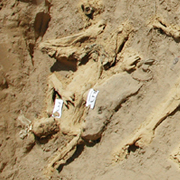
ThisDecember marks the 10-year anniversary of the “Convoy of Death.”  During Operation Enduring Freedom inAfghanistan, 2,000 prisoners who had surrendered to the US and the AfghanNorthern Alliance were shot or suffocated to death in sealed truck containerswhile being transferred by Northern Alliance forces. The dead prisoners – someof who had been tortured – were then buried in a mass grave in a northernAfghanistan desert at Dasht-e-Leili. 

In2002, PHR discovered the mass graves and since then has led advocacy and investigations into the Dasht-e-Leili massacre. Evidence andeye-witness accounts revealed that several sealed containers held hundreds ofmen each, and that when the men, stacked like plywood in the containers, begancrying out for air and water, holes were shot into the sides of the metal containers,killing many inside.  

AhmatAbdulahad, an ethnic Uighur released from Guantanamo to the Republic of Palau,recounts the horror:

"With an open wound on my leg, I was packed into a shipping container withhundreds of men. I could hardly breathe.  My leg was losingblood.  I thought I was going to die. The men in my container werebeating on the walls, begging for mercy. Others were dying. I was prayingfor my life. When we reached Sheberghan, many of the men in my container weredead." 
 
"I wish I could forget this harrowing experience, but these are memories Ican never forget."


PHRwill not forget the hundreds of men who suffered or the need for justice. For thepast 10 years, PHR has called on both the Bush and ObamaAdministrations to investigate what happened at Dasht-e-Leili and to holdaccountable the people who committed these crimes. Instead of providinganswers, the Bush Administration reportedly impeded at least three federal probes into the massacre. In 2009, during an interview by CNN’s Anderson Cooper, President Obama promised to ask hisnational security team to investigate the alleged war crimes and cover up. Howeverdespite significant news coverage and PHR’s repeated requests seeking answers, President Obama hasnever made public the results of the investigation.

PHRcalls upon President Obama to issue a public statement as to who is responsible for themassacre, whether US troops were involved, or whether any US officials hadsought to prevent an investigation of these events. It has been 10 years andstill we have no answers. The US should lead, rather than ignore, the effort tofind them.   

Blog

ICE Cuts Cooperation with Maricopa County over Racial Profiling and Discrimination

To anyone who has worked in the immigration detentionsystem, last week’s news that the Department of Justice (DOJ) has uncovered evidence of systematic profiling and discrimination against Latinos in MaricopaCounty, Arizona comes as no surprise. While Maricopa County Sheriff Joe Arpaiohas gained a reputation for aggressively targeting Maricopa County’sundocumented immigrant communities for arrest, the DOJ’s findings– including pervasive discrimination against non-English speaking inmates,raids in Latino communities based on complaints about people with dark skinspeaking Spanish, and failure to investigate sex crimes committed againstLatinos, including Latino children – are stunning.

The DOJ’s Civil Rights Division has given Sheriff Arpaio 60days to show that he will cooperate with them in correcting the deficiencies itidentified before filing a lawsuit against the Sheriff’s Department. But thefederal government, apparently unaware of Arpaio’s overtly discriminatorypractices before last week, has already taken steps to limit its cooperationwith Maricopa County. Shortly after the DOJ issued its findings, the Departmentof Homeland Security terminated its 287(g) agreementwith the Maricopa County Sheriff’s Office (MCSO). Under the 287(g) program,Immigration and Customs Enforcement (ICE) trains local law enforcement officersin identifying, processing, and detaining immigrants who may have violatedfederal immigration laws until ICE can take custody of them. ICE director JohnMorton later notified Arpaio that ICE would be withdrawing immigrationdetainees from MCSO facilities, restricting its access to the Secure Communities program,and ceasing ICE responses to MCSO traffic stops, civil infractions and otherminor offenses.

While the government’s actions are good news for Latinos andother immigrants in Maricopa County, they hint at a much larger problem thatpervades immigration enforcement. Latinos, whether they are here legally ornot, are frequently targeted by local law enforcement for minor or pretextualoffenses in order to funnel them into the immigration detention system.Programs like 287(g), which allows ICE to delegate much of its enforcementauthority, empower local law enforcement to decide whether someone has violatedfederal immigration laws. And local law enforcement agencies benefit fromincreased immigration enforcement through the money they receive from ICE fordetaining potential immigration offenders. In short, the federal government hascreated an immigration enforcement system that rewards local law enforcementagencies for racial profiling and discrimination.

While the MCSO’s behavior is particularly egregious, it isby no means uncommon in communities across the country with large immigrantpopulations. While PHR applauds the government’s actions in restricting itsties with Maricopa County, it must do more to ensure that its enforcement ofimmigration laws does not violate the basic civil and human rights ofimmigrants.

Blog

Fatou Bensouda to take the helm as ICC’s new prosecutor

Earlier this week, Gambian lawyer Fatou Bensouda was chosento be the new Chief Prosecutor at the International Criminal Court. She will bethe second person, and the first African, to hold this position. Bensouda wasthe likely choice for the position given her professional qualifications,including serving as Deputy Prosecutor to Luis Moreno-Ocampo during hisnine-year tenure as Chief Prosecutor of the Court. Given the extent of theICC’s work in Africa – all seven of the countries with cases before the courtare African – the choice of an African prosecutor seems especially appropriate.

PHR is especially thankful for Bensouda’s commitment toprosecuting crimes of sexual violence, which she reiterated this week. PHR hasdocumented sexual violence in conflict andsupports the work of the ICC to hold perpetrators of these crimes accountable.The work of the ICC is but one important element in the struggle to endimpunity and complements other efforts at reaching accountability. PHR hasdeveloped a program to assure accountability for crimes of sexual violence bytraining medical professionals, lawyers, security officials, and judges todocument evidence of sexual violence for use in local prosecutions.

PHR congratulates Ms. Bensouda on her new position, andlooks forward to her continued efforts to bring perpetrators of the world’smost serious crimes to justice.

Get Updates from PHR