
Blog

Refugee Camp in Bangladesh Hit by Storm

Heavy rains and high winds have stuck an unofficial refugee camp in Bangladesh, destroying makeshift shacks and other residences. Life inthe camp before the disaster was precarious—external aid is limited and theresidents are forced to fend for themselves. A vulnerable population such asthis will take a long time to recover, as many people there may not have theresources to rebuild.

About 28,000 Burmese ethnic Rohingya live in the unofficialKutapolong camp, having fled persecution at home. The government of Bangladeshrefuses to recognize them as refugees and has hampered international assistanceefforts, which has exacerbated the public health crisis there.

PHR investigators documented conditions in Kutapolong camp in 2010. They found almost no water and sanitation infrastructure and highrates of child malnutrition and diarrhea. The camp residents reportedharassment and arrest from local authorities when they left the camp, thus limitingtheir ability to find work and to buy food. One aid worker called the camp “anopen-air prison.”

By blocking aid, the government of Bangladesh is violatingright to heath of these people. This isa vulnerable population that needs outside help. The government of Bangladesh shouldofficially recognize the residents as refugees and accept offers ofinternational assistance.
Blog

PHR Calls on Obama Administration to Press for a Commission of Inquiry in Burma

Physiciansfor Human Rights (PHR) joined more than 20 other organizations in calling onPresident Obama to commit his Administration to enacting financial and bankingsanctions and to pressing for an international Commission of Inquiry toinvestigate crimes in Burma. The letter, sent today, urges the President to use all the tools athis disposal to stem the ongoing human rights violations in Burma. The BlockBurmese JADE Act of 2008, for example, includes banking and financial sanctionsthat have so far have not been fully implemented. Enacting these sanctionswould target specific leaders of Burma’s regime and their cronies as well asthe banks that hold the government’s currency reserves. One effect ofimplementing these necessary tools would be the regime’s weakened ability tocontinue its campaigns of violence against ethnic minorities. 

Theletter also stressed the importance of the United States making a ferventeffort to establish an international Commission of Inquiry. PHR’s recent reporton crimes against humanity in Chin State stressed the need for such an investigation, which has beenrecommended by United Nations Special Rapporteur Tomas Ojea Quintana and issupported by Burma’s pro-democracy leader Daw Aung San Suu Kyi. Given therecent escalation in violence against minority groups, an investigation is needed now more thanever. PHR will continue to press the Administration for these important stepsto end human rights violations in Burma.

Blog

Amidst Violence, A Human Rights Agenda for South Sudan

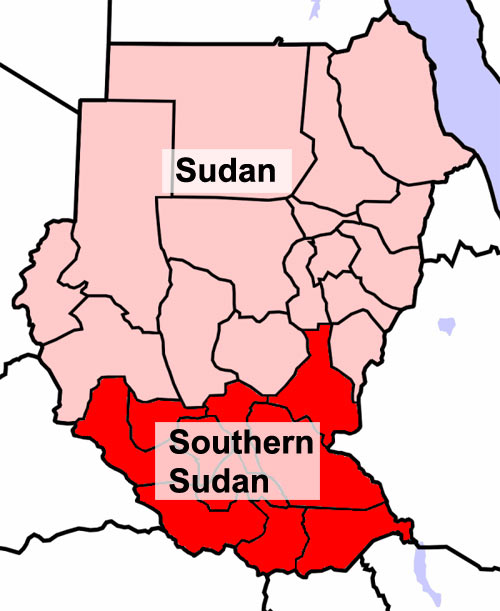
In January 2011, the worldobserved with apprehension South Sudan’s relatively peaceful vote to secedefrom the north. This referendum followed a precarious 2005 peace agreement thataimed to end Africa’s longest-running conflict, an appallingly destructive warthat killed and displaced millions of civilians. As the South Sudanese enjoyedubiquitous elation at the news – nearly 99 percent voted for secession – tensionsrose between the Sudanese military and the SPLA, South Sudan’s secessionistforce, along border areas. Sporadic reports of violence, pillaging and burningsurfaced. Now, six months later and mere days before South Sudan officially gainsindependence on July 9, the border disputes threaten to spiral into yetanother civil war.


Map of Sudan and Southern Sudan

On July 9, South Sudan will celebrate its official independence. Credit: Commons/Wikimedia.org

In the contested regions ofAbyei, South Kordofan State, and the Nuba Mountains, the Sudanese military perpetratesflagrant violations of civilians’ most basic rights, including murder, rape,torture, pillaging and arson of homes, and alleged ethnic cleansing. Alreadywanted by the International Criminal Court (ICC) for the atrocities in Darfur,Sudan President Omar al-Bashir and South Kordofan Governor Ahmed Haroun continue to wield the power of the north's militaryagainst civilians with marked brutality, provoking similarly deadly responses fromthe SPLA.

Compounding the border attacks is internal tribal conflict in theSouth, as SPLA combatants clash with numerous armed groups in several of theSouth’s ten states; between January and April, the states of Jonglei, Lakes,and Unity witnessed the most violence. Accordingto the United Nations, more than 260,000 people are displaced in SouthSudan as a result of the conflicts, and more than 1,800 have been killed sincethe January referendum. Civilians’ rights to life, health, livelihood, property,and protection have been egregiously assaulted.

Amidst the violence, theoutlook for July 9 might be seen with a cautious hope. Last week, the UNauthorized deployment of 4,200 Ethiopian peacekeeping forces to Abyei, a region straddling the border between the two countriesthat has seen intense violence but that warring factions now plan todemilitarize ahead of the South’s independence.

Additionally, in an effort toavoid escalating clashes on South Sudan’s day of celebration, the African Unionmediated a tense agreement between SPLA and Sudanese forces to withdraw fromborder regions prior to July 9. A 12-mile buffer zone will remain between thenations. Despite this potential progress, monitoring and supporting the securitysituation and basic rights of civilians in the South must remain a priority ofthe international community throughout the inauguration of the world’s youngestcountry.

On June 30, AmnestyInternational and Human Rights Watch co-released a list of recommendationsfor South Sudan, to ensure the rights of its people are recognized and grantedas the new nation determines its policies and affirms its stance on humanitarianconsiderations.

Physicians for Human Rightssupports this rights agenda, and encourages the new government of South Sudanto enforce the recommendations in full.

The list prioritizes sixactions for South Sudan:

  1. Ensure accountability for human rights violations carried out by security forces, and put an end to impunity.
  2. Promote freedom of expression, association and assembly.
  3. Release detainees whose imprisonment is unfounded or unjustified, particularly children.
  4. Immediately place a moratorium on the death penalty.
  5. Promote and protect the rights of women and girls, including condemning all forms of sexual and gender-based violence, and increasing women’s access to justice.
  6. Ratify international human rights treaties, including the Convention on the Elimination of All Forms of Discrimination Against Women (CEDAW), the Rome Statute of the International Criminal Court (ICC), and the Convention Against Torture and Other Cruel, Inhuman or Degrading Treatment or Punishment.

By elevating these issues inits constitution, legal code, and early initiatives, South Sudan will send a powerfulmessage to its people – and to the world – that the enforcement of essentialhuman rights is central to the young nation’s politics. National developmentthat builds upon a foundation of human rights will gain the South Sudanesepeople’s trust in their new government, a welcome reprieve for a populationthat has endured a legacy of violence and rights violations at the hands oftheir leaders.

Emily Winter is aPrograms Intern at Physicians for Human Rights.

Blog

A Dangerous Time for Human Rights in Zimbabwe

Accordingto recent reports from watchdog organization Sokwanele,politically-motivated human rights abuses are on the rise in Zimbabwe.

PresidentRobert Mugabe and his ZANU-PF party employed brutal tactics to garner votes inZimbabwe’s March 2008 elections. His main political rival and leader of theMovement for Democratic Change (MDC) Morgan Tsvangirai became Prime Ministerafter a Southern African Development Community (SADC)-brokered deal which created anartificial “unity government” featuring leadership positions for both men. AsMugabe expresses growing dissatisfaction with this joint political arrangement,ZANU-PF has begun mobilizing its many troops for a campaign of violence andintimidation, hoping to scare the people of Zimbabwe into voting it into poweryet again.

Recently,ZANU-PF-controlled police arrested a top aide to Morgan Tsvangiraiat his home in Harare. The aide, Jameson Timba, was accused of “insulting Mr.Mugabe,” a criminal act under Mugabe’s autocratic rule, and thrown into one ofthe country’s lice-infested prisons. Tsvangirai himself has been labeled a “security threat”in a flagrant attempt to vilify him in the face of the country’s upcomingelections. Even churchesdeemed sympathetic to the MDC have become targets for threats andaggression. 

In December 2009, Physicians for Human Rightsinvestigated systematic human rights violations by Mugabe and his cronies thatwere directly linked to the collapse of the nation’s health system as well asthe raging epidemic of cholera that ensued. In its report,PHR called on the UN Security Council to refer the crisis in Zimbabwe to theInternational Criminal Court for investigation into crimes against humanity onthe part of the Mugabe regime. Mr. Mugabe must no longer be allowed to violatethe rights of his people and the terms of agreements he has signed onto with impunity. 

Blog

In Burma, Rape is Rife

Earlier this month fighting erupted between the Burmese army and theKachin Independence Army (KIA) in Kachin State in northeastern Burma. Thefighting marked the end of a 17-year peace agreement between two parties and ispart of a trend of increased conflict between the Burmese army and ethnicminority groups throughout eastern Burma. 

Civilians in Kachin State are suffering the effects of the recent conflict.According to the Kachin Women’s Association Thailand (KWAT), 18 Kachin women andgirls have been raped by Burmese army soldiers since the beginning of June. Fourof the rape victims, ranging in age from 15 to 50-years-old, were also killed.

KWAT accused the Burmese army of using rape as a weapon of war in a press release issued last week.

This isn’t the first time that rapes by Burmese army havebeen documented. PHR’s recent report, Life Under the Junta,found that 2.8% of 603 households surveyed in Chin state reported that a memberof the household was raped by a Burmese soldier between March 2009 and February2010. The Shan Women’s Action Network, the Karen Women Organization, Women’sLeague of Chinland, and Refugees International have also published reportsdocumenting rapes of ethnic minority women by the Burmese army.

Aung San Suu Kyi, thepreeminent pro-democracy leader in Burma, said in a speech last month,"Rape is used in my country as a weapon against those who only want tolive in peace, who only want to assert their basic human rights. Especially inthe areas of the ethnic nationalities, rape is rife."

Although the army commandhas been accused of encouraging rape outright, concrete evidence remainselusive. It is clear, however, that soldiers are raping women, and this muststop. The Burmese government should take action to prevent soldiers from committingrape and should prosecute and punish those who carry out or condone thesecrimes. Systematic and widespread sexual violence in the context of thecontinuing assaults on ethnic minorities in Burma constitute crimes againsthumanity. PHR continues to call for aninternational Commission of Inquiry to investigate these horrific acts ofviolence against civilian populations.

Blog

Response to News Article "Immigrant Checks Urged"

In an article in the Worcester Telegram & Gazette, Massachusetts State Representative Ryan Fattman, R-Sutton, dismissed concerns of state law enforcement officials about using local police to enforce immigration laws under the Secure Communities program, and said he "was not worried about [the] implications" of a woman without legal status who was raped and beaten, being afraid to come forward to report the crime, due to her immigration status. He said, "My thought is that if someone is here illegally, they should be afraid to come forward."

PHR Asylum Director Christy Fujio immediately sat down to write to the Editor of the paper. Her letter, published on June 27 in the Letters to the Editor (not available online), refutes the idea that a woman, or anyone, should be "afraid to come forward."

StateRep. Ryan Fattman, R-Sutton’s comment that an undocumented woman“illegally…should be afraid to come forward” to the police even if she wereraped and beaten indicates a level of misogynistic racism that should beanathema to the people of his district and the entire Commonwealth.Furthermore, his dangerously uninformed conclusions demonstrate hismisunderstanding of the critical importance that victim and police cooperationplays in keeping all of us safe.

Any law preventing a victimof a violent crime from reporting it to the police endangers the entirecommunity. Most violent offenders do not stop after the first crime – theycontinually harm others until they are caught and convicted. Governor Patrick’srefusal to join the federal Secure Communities program is a victory for all ofus in Massachusetts who want to keep our streets safe.  We applaud his wisdom in putting the safety of the Commonwealth ahead of provincial concerns regarding immigration policy.

Blog

Burma Representative’s Confirmation Hearing Only an Initial Step

On Wednesday morning, the Senate Foreign Relations Committeeheld a hearing for Derek Mitchell’s nomination to be the US SpecialRepresentative and Policy Coordinator for Burma, an ambassadorial level postunfilled since its creation in the 2008 Tom Lantos Block Burmese JADE Act.

Inhis testimony, Mitchell stated that his

“objective will be to implement US lawfaithfully and coordinate efforts to advance the common internationalobjectives of bringing about in Burma the unconditional release of allpolitical prisoners, respect for human rights, an inclusive dialogue betweenthe regime and the political opposition, including Aung San Suu Kyi, and ethnicgroups that would lead to national reconciliation, and Burma’s adherence to itsinternational obligations, including all UN Security Council resolutions onnonproliferation.”

PHR applauds the nomination of Mr. Mitchell tothis post, which had remained empty for far too long. However, PHR is concernedthat there was scant mention at Wednesday’s hearing of the military regime’scontinued criminality, Burma’s rampant impunity for regime leaders, or theimportant need to establish rule of law in the country.

If Mr. Mitchell isconfirmed, PHR urges that he use this new position to press for the creationof an international commission of inquiry to investigate the continuing andegregious human rights abuses perpetrated by the Burmese military junta againstits own people. Only when the truth has been brought to light can the countrytruly change.

Blog

Burmese Government Warns Suu Kyi to End Political Activity

The Burmese government yesterday warned pro-democracy leader Aung San Suu Kyi to “end political activities,” in aletter addressed to her and the chairman of her political party, the NationalLeague for Democracy (NLD).  

The government disbanded the NLD as a political groupbecause it refused to participate in last year’s elections. The government is now saying that since theNLD has been disbanded, it needs to re-register as a social organization. TheNLD had claimed that the elections would be unfair and refused to bringlegitimacy to process by fielding candidates. Their suspicions were based onpast experience, in 1990, the NLD won a majority of the vote, but the incumbentjunta refused to give up power and cancelled the results. 

The Burmese governmentclaims it is on the road to democracy, but its actions have not backed thisclaim. Their recent harassment of the biggest pro-democracy party is yetanother indication that the new government continues to embrace policies of thepast.

PHR urges the international community to continue support forpro-democracy movements in Burma and to maintain pressure on the Burmesegovernment to act in accordance with its pro-democracy words.

Other

Guide to Reducing Stigma and Discrimination in the Health Sector

Health workers, medicines, facilities – as necessary as all these are, they are not enough to achieve the goal of universal access to health services, much less to fulfill key aspects of the right to health, unless another critical obstacle to quality care is addressed. This is the pernicious, even lethal, stigma and discrimination that impedes people’s ability to access quality health services that respect the dignity of all users. It is incumbent upon governments, which should collaborate with health workers, civil society, and members of stigmatized populations, to develop and implement comprehensive strategies to reduce and eliminate this stigma and discrimination.
 
Physicians for Human Rights has created a guide to assist policymakers, health workers, and civil society comprehensively respond to stigma and discrimination in the health sector, and to secure patients’ rights:

PHR has also created factsheets targeting these three key audiences to help orient them to their roles in this response:

Blog

Unpaid Hospital Bill Leads to Deportation

Could deportation be a consequence for an unpaid hospitalbill? It was for Quelino Ojeda Jimenez, a young day laborer who, up until thispast February, had been receiving long-term care at the AdvocateChrist MedicalCenter in Chicago. Mr. Ojeda was admitted to thehospital in October of 2010, in critical condition after falling off a roof atwork. After being stabilized by the hospital medical team, he continued torequire long-term care.

But since Mr. Ojeda is an undocumented immigrant withno insurance, a limited social network in the US, and no access to privatelong-term care facilities, no one was able to pay the bill. Advocate Christ wasstuck – they could either continue to provide costly, daily medical care forMr. Ojeda for an indeterminate amount of time, or they could arrange for histransfer to a facility that would care for him in his home country. Theadministrators at Advocate Christ opted for the latter.

Mr. Ojeda’s case is hardly unique. Each year there are 100 similar cases ofmedical repatriations. To discharge the patient, hospitals typically hire acompany that specializes in international medical transfers, for a lump sum ofapproximately $60,000 per patient. Before the repatriation can take place, thecompany has the patient sign a form indicating their consent to the transfer.The hospital must also go through the discharge process and a physician mustauthorize the transfer.

Unfortunately, in most cases it is not simply atransfer from one facility to another of equal quality. Patients typically aremoved to resource-poor settings where they receive significantly decreasedquality of care and negative health outcomes. When Mr. Ojeda returned toMexico, his nurses were reusing old filters in his ventilator due to theirlimited availability and high cost. Even if Mr. Ojeda himself had consented tothe transfer, the harm caused to his health by the change in care qualityraises serious ethical questions.

What can be done to begin to address this issue? Hospitalsare suffering from real financial challenges, immigrant patients have limitedresources, and many physicians are paralyzed by this “dual loyalty” dilemma:should they approve transfers because their employer cannot afford to continueproviding care, or should they insist on the best care possible for theirpatients even if it bankrupts the hospital?

To date desperate hospitals have quietly carried out thesetransfers, and while they effectively operate as deportations, US Citizenshipand Immigration Services has failed to oversee or govern the process as itshould.

Since this is a complex issue involving multiple government agencies,private actors, and the entire health care industry, solutions will be hard tofind. But systems need to be developed that will preserve human rights for immigrantpatients in long-term hospital care while allowing hospitals to do what isnecessary to remain solvent. At aminimum, guidelines and proper oversight of the process of medicalrepatriations process must be introduced immediately.

To learn more about this issue and find out how you can getinvolved, visit the related webpage by New York Lawyers for the PublicInterest.

Get Updates from PHR