Blog

As Gay Marriage is Legalized in New York, LGBT Immigrants are Cautiously Optimistic

WhileLGBT immigrant groups celebrated the recent passage of the right for same-sexcouples to marry in New York, their response was more subdued than other gayadvocacy groups. Even though civil rights progress for one group often benefitsthe other, there are still major hurdles same-sex immigrant couples mustovercome to fully participate in the victory.

Immigrantsto the US face discrimination similar to LGBT individuals here –marginalization and prejudice are hallmarks of their shared experience. Eachgroup understands oppression and may feel the necessity to hide theiridentities to protect themselves. However, there is a tension between thesegroups despite their mutual struggles.

Immigrantcommunities, especially their older members, may continue to harborconservative views toward homosexuality. LGBT individuals coming to the US maynot feel comfortable being open about their sexual identities if their primaryaffiliation is to these communities.

Forthose fleeing persecution on the basis of their sexual identity, the US canseem like a haven. However, there are numerous challenges facing LGBTimmigrants. First of all, many LGBT individuals fleeing persecution may not beaware of the possibility of applying for asylum, leading many to miss theone-year filing deadline. Second, these individuals often seek out communitiescomposed of people from their home country, preventing them from comfortablyexpressing their sexual identities out of fear of rejection or persecution.Third, LGBT groups in the US may express racial, cultural, or economicprejudice against immigrants, forcing them to remain closeted within theircultural communities.

Additionally,even though gay immigrants in New York may now be able to marry their partners,there are no immigration benefits conferred as a result of that marriage. Untilsame-sex marriage legislation is passed at the federal level, immigrants arenot able to obtain permanent residence or citizenship if they marry a UScitizen. Nor may a gay “green card” holder petition to bring a same-sex partnerfrom another country to the US on a fiancé visa. In many ways, gay immigrants’reality changes little despite this landmark legislation.
Blog

Secure Communities Threatens Asylum Seekers

Lastweek, Immigration and Customs Enforcement (ICE) announced changes to itscontroversial Secure Communities program in response to condemnation fromgovernors, police chiefs, and immigration advocates.Criticshave derided the changes as merely cosmetic revisions to practices that targetracial minorities, waste taxpayer dollars, undermine police efforts to obtaincooperation from immigrant communities, and result in the deportation ofthousands of nonviolent immigrants.

The program has also been slammed for ensnaringmany noncriminals and preventing victims from reporting crimes out of fear ofthe police. Even some US citizens have been detained and questioned for theirimmigration status, fueling fears that Secure Communities contributes to racialprofiling. Despite public outcry, the Obama administration has signaled itscommitment to Secure Communities and has stated that it will enforce states’participation over governors’ protests.

Accordingto ICE director, John Morton, the changes to Secure Communities include providingguidance to immigration officers and lawyers to ensure that the program targetsdangerous criminals, not misdemeanor offenders or traffic violators. Among thefactors to be weighed, immigration officers and attorneys can consider whetheran individual “is likely to be granted temporary or permanent status or otherrelief from removal including as an asylum seeker or victim of domesticviolence, human trafficking, or other crime.”

Evenwith this discretion, however, asylum seekers are still at risk of being caughtup in the pursuit of undocumented criminals and are particularly vulnerable toimmigration enforcement programs like Secure Communities. Asylum seekers cometo the US to flee persecution and torture, but their status upon arrival may beundocumented until their cases are filed and approved. Many arrive in the UStraumatized from the abuses they have endured, and many are suffering from physicaland psychological distress.

Dueto trauma or other impediments (economic, social, or medical), asylees may notbe prepared to file for “legal” status immediately upon arrival into the US.Many are not even aware that they are eligible to apply for asylum. As theynavigate life in a new country, traffic violations or other noncriminal, minorinfractions may result in deportation under Secure Communities.

Asof April 2011, 60% of those deported under Secure Communities were eitherconvicted of a Level 3 offense (i.e., a traffic violation) or for a noncriminalimmigration offense. Given theprogram’s history and its track record of sweeping up all undocumentedindividuals (not just serious criminals), it is likely that legitimate asylumseekers and other vulnerable immigrant groups will continue to be at risk fordeportation.

PHRurges the Obama administration to reconsider Secure Communities and its impacton the most vulnerable immigrant populations in the US – those seeking asylumfrom persecution and torture in their countries of origin.

Report

Forensic Review of Sergei Magnitsky documents

After reporting an alleged $230 million tax fraud perpetrated by a group of Russian government officials and senior police officers, Sergei Magnitsky, a lawyer stationed in Russia for the UK‐based investment firm Hermitage Fund, was arrested and jailed on November 24, 2008. Magnitsky died following 358 days in prison under progressively worsening conditions. PHR’s International Forensic Program reviewed documents relating to Magnitsky’s death in order to identify key irregularities, inconsistencies or gaps in the medical investigations carried out by the Russian authorities into the cause and manner of his death.

>> Learn more about the Sergei Magnitsky death investigation

Blog

Dr. Alumeti and Panzi Hospital: Symbols of Health and Hope for Survivors of Sexual Violence in Congo

It’s infrequent that stories of hope, compassion, andprogress emerge from the war-torn Kivu provinces in eastern Democratic Republicof Congo (DRC). But in early June, the staff of PHR was honored to hear from Dr. Désiré Munyali Alumeti, a pediatric surgeon and forensic doctorat the renowned Panzi Hospital in Bukavu, South Kivu province. Dr. Alumeti enthusiastically recounted hisexperience working with survivors of sexual violence at Panzi, his wordsholding promise for the thousands of women who survive rape at the hands ofarmed combatants in the dense forests and remote villages of eastern DRC.

Rape has been used as a war tactic in this region of Congo, systematicallyperpetrated against civilian women to destabilize entire communities, breakapart families, and humiliate suspected supporters of opposition militias.Various rebel factions, government soldiers, and – alarmingly – an increasingnumber of civilians are all known to carry out these atrocities, unimpeded by ajustice system that rarely functions and incentivized by a culture of near-total impunity. Though armed violence in eastern Congo is geographicallysporadic, with some areas enjoying prolonged periods without conflict, Dr.Alumeti symbolically describes the institutionalization of rape in Congo as“une guerre dans la paix” – a war within the peace. For thousands of sexualviolence survivors whose health, livelihoods, and capacity to thrive have beentremendously affected by these human rights abuses, Panzi Hospital offers abeacon of hope.

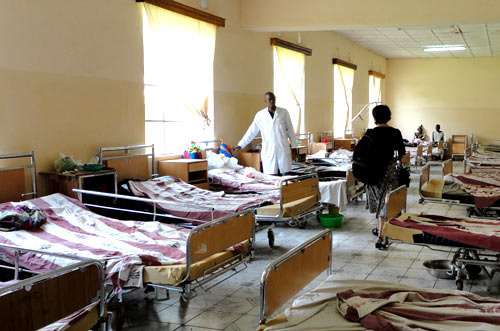
Ward at Panzi Hospital, DRC

Beds are ready for women's recovery at Panzi Hospital, DRC.


During his visit to PHR’s office,Dr. Alumeti discussed the services his hospital provides, free of charge, torape survivors from all over the DRC. Women even travel across the border fromRwanda to access the health care, psychological support, respite, and securityoffered by Panzi Hospital. Between thehospital’s establishment in 1999 and June 2010, health providers at Panzitreated over 25,000 women for gynecological conditions, many of whom were rapesurvivors with severe physical and psychological trauma.

In 2004, PanziHospital broadened its response to the systemic sexual violence occurring inthe region, establishing a specific program for survivors seeking help at thefacility. Providing care and treatment to women suffering the many physical andpsychosocial consequences of rape, medical professionals repair fistulae, treatHIV/AIDS and other sexually transmitted infections, and conduct psychosocialcounseling. In addition to health services, Panzi Hospital providessocio-economic reintegration assistance and legal aid to survivors in severalareas of South Kivu, helping women support their families and encouraging themto seek justice and reparations for the abuses they have endured.

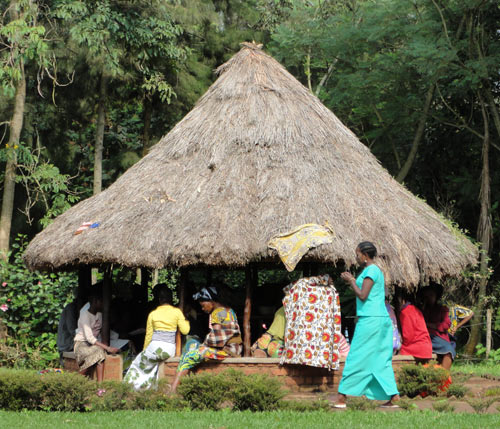
Women's recovery group, Panzi Hospital, DRC

Women recovering together from fistula and rape, Panzi Hospital, DRC.


Dr. Alumeti also noted the immensechallenges Congolese women face in accessing the legal system, gaining thejudicial support to prosecute perpetrators, and garnering the political will toensure their families and communities are protected from repeated attacks.While the DRC has several relatively new laws regarding sexual violence,implementation and enforcement of this legislation is often impeded by lack ofgovernmental capacity, poor accountability mechanisms, and protracted insecurityand instability throughout the country.

Another major obstacle to connectingsurvivors of sexual violence to the justice system in the DRC is the nation’slow number of forensically-trained medical professionals. Dr. Alumeti isapparently one of the only forensic doctors in the DRC professionally trainedin the collection and documentation of forensic evidence of rape and sexualassault, making him a key resource for women seeking assistance at PanziHospital. However, successfully linking forensic evidence gathered in thehealth system to police, lawyers, judges, and advocates is an enduring hardshipin DRC, even with the ample resources and broad connections of Panzi Hospital.

Given the incredible workof Dr. Alumeti and other professionals at Panzi Hospital providing care andsupport to rape survivors, PHR is looking forward to apartnership with Panzi Hospital and many others in the DRC to help buildcapacity for ending impunity for sexual violence. This project will involvetraining health, legal, and law enforcement professionals in best practices offorensic evidence documentation and prosecution of perpetrators of sexualviolence, and aims to strengthen the linkages between the medical, legal, andlaw enforcement sectors to improve survivors’ access to justice. Stay tuned forupdates!

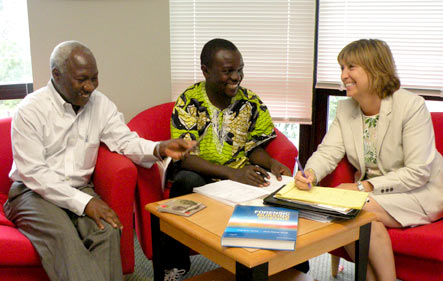
Dr. Mohammed Eisa, Dr. Désiré Alumeti, and Dr. Nancy Cabelus

Dr. Mohammed Eisa, Dr. Désiré Alumeti, and Dr. Nancy Cabelus at PHR's offices.
Blog

Witnesses at Burma Hearing Give US Advice on Strengthening Support for Democracy and Human Rights

The Subcommittee on Asia and the Pacific of the HouseForeign Affairs Committee held a hearing on Wednesday entitled “PiercingBurma’s Veil of Secrecy: The Truth Behind the Sham Election and the DifficultRoad Ahead.” The hearing was notable because it was the first time that DawAung San Suu Kyi, leader of the National League for Democracy, addressed theCommittee. Freed from house arrest last November, the Nobel Peace Prize winner spoke to the Subcommittee members through a pre-recorded video. An empty seatwas reserved for Aung San Suu Kyi between hearing witnesses Aung Din, ExecutiveDirector of the US Campaign for Burma, and Dr. Chris Beyrer, Director of theJohns Hopkins Center for Public Health and Human Rights. 

During her video testimony, Aung San Suu Kyi highlighted theimportance of the Human Rights Council resolution on Burma from March of thisyear, which noted consistent human rights violations throughout Burma. Suu Kyifocused in particular on the importance of an independent judiciary, the plightof political prisoners, and the value of a Commission of Inquiry. Suu Kyi wasunequivocal in her support for a Commission, which she said would exist not asa tribunal but as a truth-seeking mechanism that would uncover informationabout past crimes and stop future abuses. 

Aung Din highlighted the need to fully implement all thetools included in the 2008 JADE Act, including yet unutilized targetedfinancial sanctions. Dr. Beyrer discussed the health and human rightscatastrophe in Burma, drawing on his extensive work in the region. Dr. Beyrerwas instrumental in researching PHR’s recent report on human rights violationsin Chin State, western Burma. During his testimony he called attention to theregime’s violence against ethnic nationalities and reported on the regime’ssystematic use of rape as a weapon of war. The current conflict in Kachin Stateis but one example – since June 9 there have been 18 reported rapes of womenand girls, some of whom were also killed. 

The Chin Human Rights Organization (CHRO) submitted testimony for the record which highlighted the lack of positive changefollowing elections in Burma last November. CHRO noted the increased reprisalsand militarization in and around Chin State directly following the elections.Perhaps most shockingly, CHRO indicated that Zaw Min Oo, a Burmese militarycommander who was implicated in serious human rights violations against thepeople of Chin State, was one of the military appointees to the Chin State Legislature.Despite his record of abuses, many of which were captured in PHR’s report, ZawMin Oo is now the Minister of Security and Border Affairs in a region he hasterrorized for so long. CHRO’s testimony highlighted the fact that an electionthat ushers human rights violators to positions of power is not a shift towardsdemocracy but a codification of military dominance.

The takeaway from the testimony of the three witnesses isthat the US government can do significantly more in its effort to supportdemocracy and human rights in Burma. The US administration can and should usemore vigorous leadership in its effort to establish an international Commissionof Inquiry to investigate crimes in Burma. The US should also fully implementfinancial and banking sanctions against the regime, and ensure thathumanitarian support is accessible and transparent. 

PHR is hopeful that the US will implement the advice givenby the witnesses and will continue to advocate for these necessary policychanges.

Blog

Today, Do One Thing to Help Refugees

The United Nations High Commissioner for Refugees hasproclaimed June 20 World Refugee Day. This year’s theme is “Do 1 thing to help refugees.”

In Southeast Asia, PHR is lobbying to improvethe conditions of refugees escaping war and oppression in Burma.

Last year, PHR published the report, Stateless and Starving: Persecuted Rohingya Flee Burma and Starve in Bangladesh. The report found that Bangladeshi authorities waged anunprecedented campaign of arbitrary arrest, illegal expulsion, and forcedinternment against Burmese refugees.

Unfortunately, things are not much better for Burmeserefugees today:

  • In Bangladesh, 28,000 minority Rohingya areregistered in UNHCR camps, and the UN estimates that about 200,000 more are living undocumented in makeshift camps along the border. A State Department official recently visitedBangladesh and has called for more aid for Rohingya refugees.
  • According to the US Campaign for Burma, more than 2,000 people have recently fled fighting in Kachin State following thelifting of a cease fire in the region. 
  • In Thailand the UNHCR estimates there are 100,000 registered and 50,000 unregistered refugees. Aid to these refugees has been reduced infavor of humanitarian aid programs implemented inside Burma, cuts which couldresult in food shortages.

In honor of World Refugee Day, PHRcontinues calls for improved conditions for all refugees from Burma and beyond.

Blog

On Suu Kyi's Birthday, PHR Calls for Release of Burma's Political Prisoners

Sundayis Aung San Suu Kyi’s 66th birthday. Suu Kyi, a pro-democracy leaderin Burma, has spent 15 years under house arrest as a political prisoner. Shewas finally released late last year, and has since called for the release ofall political prisoners.

"Until political prisoners havebeen released, and until we are all allowed to take part in the politicalprocess in the country, I do not think we can call it real change," SuuKyi has said.

Thereare currently 1,992 political prisoners in Burma, including more than 140 womenand 200 monks. Some are servingsentences of 100 years or more. A few weeks ago in response to a visit by a UNofficial, 77 prisoners with less than a year left on their sentences were releasedwhen the government granted “amnesty” and reduced all prison sentences by oneyear.

Hungerstrikes are occurring in prisons throughout Burma as political prisonersprotest conditions in the prisons, the government’s “amnesty” releases, andlack of access to healthcare. Although most of the political prisoners in Burma weresentenced by the previous administration and the administration has changed,the political prisoners remain in jail. 

Inhonor of the birthday of Burma’s most famous political prisoner, PHR calls forthe release of all of the country’s political prisoners.

Blog

Alaeis Honored at Global Health Council Event

Last night, I had the privilege of attending the Global Health Council’s Annual Awards Banquet. During the banquet, Drs. Kamiar and ArashAlaei received the Jonathan Mann Award for Global Health and Human Rights fortheir significant achievements in fighting HIV/AIDS in the face of seriousopposition. The awards banquet was aptly described by emcee Ray Suarez of PBS’ NewsHouras the “Oscars of global health.” 

Indeed – the individuals and organizations honored were examples ofexcellence, ingenuity, and perseverance in the field of global health. Eachaward recipient shared stories from their work – a journalist described thepreventable death of a young child with whose mother she had worked; anacademic discussed how a failed malaria vaccine trial actually laid thefoundation for further scientific advances in health; and Mr. Suarez describeda hospital in Mozambique that served thousands of patients despite its lack ofrunning water. 

The recipients’ stories captured a range of emotions. Tales of the tirelessefforts of doctors and other medical professionals who cared for their patientsgiven significant obstacles were truly inspiring. But recounts of thepreventable deaths that plague communities facing discrimination and otherabuse were angering. A general theme that emerged throughout the event was thatdeath and disease is not only linked to elements such as infection or injury,but to systematic human rights abuses that allow these elements to take root. 

The evening was filled with inspirational stories from individualsworking on the front lines of global pandemics and other scourges, but oneawardee’s story certainly rose from the pack. Kamiar Alaei accepted the award on behalf of himself and his brother,who remains in Evin prison in Tehran, Iran. Making his first official public appearance since his release fromprison several months ago, Kamiar shared his story with those gathered there. He talked about how he and his brother sought to overcome the deeply-rootedstigma against people living with HIV/AIDS, and how their fervor for socialjustice extended even after they were arrested in 2008. While in prison, Kamiarand Arash continued to educate their fellow prisoners not only about HIV/AIDSbut about a range of public health issues. Kamiar discussed how he and Arash sought every opportunity to brightenthe lives of those around them. 

While the evening was a celebration of their work, the event was marredby Arash’s absence. Kamiar remarked thatit was the first time he was doing something alone – that he had always workedalongside his brother. PHR joins Kamiarand his family in continuing to call for the release of Arash, and we remainhopeful that the brothers will be able to work alongside each other again soon.

As PHR’s Deputy Director Susannah Sirkin said when presenting Kamiarwith the award, “This is a bittersweet moment because even as we celebrate, ourcups are only half full tonight. Arash remains in prison in Tehran and weappeal to authorities to release him promptly to continue his vital work forthe health of his fellow Iranians, for populations in Central Asia andglobally.”

Since the brothers’ arrests in June 2008 an international campaignspearheaded by PHR has called for their release, engaging hundreds of leadingAIDS experts, health organizations, and thousands of supporters from more than80 countries.  

To learn more about the event and the work of the Alaei brothers, readtoday’s Boston Globe, AFP or USA Today stories or visit IranFreeTheDocs.org.

Blog

PHR Endorses Refugee Protection Act

“On World Refugee Day,let us reaffirm the importance of solidarity and burden-sharing by theinternational community. Refugees have been deprived of their homes, but theymust not be deprived of their futures.”
     ~ UN Secretary-GeneralBan Ki-moon

With World Refugee Day just around the corner on June 20,Congress has introduced the Refugee Protection Act (RPA) of 2011. In a worldmarred by armed conflict and mass atrocities, the legislation is needed nowmore than ever, and the US has a moral obligation to enact it.

People around the globe have delighted over the past severalmonths to see millions of ordinary citizens across Africa and the Middle East standup to their governments and fight against systemic human rights abuses in theircountries. Victories have come at great cost, however. TIME estimated that 50,000 Libyan refugees have fled the countrysince civil war broke out. Last week, a UNHCR official expressed concern abouta worsening situation in Yemen, where hundreds of thousands of displacedYemenis are now seeking assistance alongside an equally large group of refugeesfrom the Horn of Africa who have been living temporarily in Yemen. The UN haslikewise registered several hundred thousand Ivoirian refugees in recent weekswho fled political violence and are still too afraid to return to theirhomes. 

In fiscal year 2010, the US welcomed 83,180 refugees andasylees, but we can and must do more to ensure that they find security in ourcommunities. We must not turn away others desperately in need of our help.

The Refugee Protection Act seeks to change policies thathave denied safety to deserving people by:

  • Eliminating the arbitrary 1-year filing deadlinethat prohibits people who apply for asylum more than one year after arriving inthe US from receiving it;
  • Preventing people forced to serve as childsoldiers from being unfairly labeled as “terrorists” and being permanentlybarred from the US;
  • Relieving the suffering of immigrants awaitingcourt decisions by ending the mandatory detention of people who ask for asylumat our borders;
  • Imposing tougher standards on all immigrationdetention centers. (These would guarantee health professionalsperforming forensic exams the right of generous access to contact visitation withimmigrants); and
  • Giving the President the flexibility to grantrefugee status quickly to targeted groups of people in response to emerginghumanitarian crises like the revolutionary movements in the Middle East andNorth Africa.

The Refugee Protection Act is a timely expression of USsupport for the brave people around the world who must struggle for thefundamental rights we are lucky enough to take for granted: freedom fromslavery, oppression, and torture; freedom to vote, organize, and speak freely,and more. Physicians for Human Rights stronglyendorses the bill and Congress’s commitment to protecting survivors ofpersecution.

Blog

PHR Calls For Open and Fair Trials in Bahrain

PHRdelivered 815 letters from concerned individuals all over the world to theEmbassy of Bahrain. The letters expressed the outrage of the internationalcommunity at the government attacks on doctors and medical facilities in thewake of popular protests earlier this year. PHR thanks all those who wroteletters and took a stand against the illegal treatment of the Bahraini medicalprofessionals. 

Butour work is not yet done. 48 medical professionals who were arrested fortreating protesters are now facing trial before a hybrid military court. Thesetrials are troubling for several reasons. PHR documented extensive violations by the Bahraini government after the protests that cast doubt on thelegitimacy of the charges against the defendants. The government’s use of amilitary trial for these cases raises serious doubts about how the rights ofcivilians can be adequately protected.

Additionally, PHR has received callsfrom the defendants’ families that indicate that the defendants have beentortured and forced to sign false confessions in detention. PHR has alsoreceived information that the court prevented the defendants from speakingabout the torture they suffered at the hands of the government. Acts of tortureand ill-treatment are egregious violations of the Kingdom of Bahrain’sobligations under international human rights law. 

PHRcalls on the Kingdom of Bahrain to ensure that all court proceedings adhere tointernational legal standards and remain open to observers. Given the reportsof torture and ill-treatment of individuals in detention, the Kingdom ofBahrain must immediately conduct an investigation of the treatment of those indetention, hold perpetrators of abuses accountable, and provide reparation tovictims.

Get Updates from PHR