Open Letter

An Open Letter to President Biden

A People’s Vaccine – Free and Fair for All – to End the COVID-19 Crisis

This public letter to President Biden was updated on February 23, 2021 with new signers, totaling 222.

A safe, effective and accessible COVID-19 vaccine is vital to bring an end to today’s dual economic and health crisis – so our families are safe, so people can get back to work, so we can live our lives again. No one anywhere is safe from this disease until everyone everywhere is safe.

As a cross-section of leaders from public health, development, faith-based, racial justice and labor organizations, public service, entertainment and economics, we join our voices to call on President Biden to commit to a People’s Vaccine, which provides protection as a global public good, freely and fairly available to all, prioritizing those most in need worldwide.

President Biden has tremendous power to help decide who gets access to protection from this virus, when and at what cost. With this power comes an historic opportunity for America to lead again by leveraging the strength, know-how and generosity of our people to combat this disease here at home and wherever it resides.

A People’s Vaccine is a medical necessity, an economic priority, and a moral imperative. The COVID-19 virus ruthlessly exploits existing inequalities, disproportionately affecting seniors, frontline healthcare and other essential workers, communities of color, people living in poverty, and people at more risk due to pre-existing conditions. Conflict over access to a vaccine that is distributed based on one’s wealth or nationality – rather than on need – will risk millions of lives, delay our economic recovery and exacerbate the crisis. A safe, effective, free and fairly-distributed People’s Vaccine is the fastest and most effective way to fight this pandemic, reopen our businesses and schools, protect Americans and our interests, and save lives here in the US and around the world. At a time when millions of Americans and people around the world face the dual-ills of health and economic insecurity, with communities of color facing disproportionate burdens, and where too many households stand only one health crisis away from poverty, it has never been more important to deliver a vaccine that can serve to protect working people.

Toward this end, the technology and know-how to make a COVID-19 vaccine should be shared with the world. Patents should be licensed, data published and technical assistance provided to teach appropriate vaccine production, so that qualified manufacturers everywhere can help expand the world’s supply and prevent the type of artificial scarcity which will cost lives and livelihoods at home and abroad.

US taxpayers have already committed more than $10 billion in public money towards a COVID 19 vaccine. A vaccine paid for by the people should work for the people and remain of the people.

We call on President Biden to:

  1. Empower scientists to independently determine – without fear or favor – if each vaccine is safe and effective for approval. Neither politics nor profits have a place in the vaccine approval process.
  2. Ensure full transparency and accountability over US funding for the development of COVID-19 vaccines.
  3. Guarantee all vaccines are sold at affordable prices, as close to cost as possible, to ensure that the US and other governments can provide protection to people for free.
  4. Ensure that companies and research institutions share vaccine technologies and know-how nationally and globally to overcome price and supply barriers, especially for those vaccines developed with taxpayer money.
  5. Prevent monopoly control of production in order to mobilize large-scale and decentralized manufacturing of COVID-19 vaccines to adequately supply safe and effective vaccines for people here and around the world.
  6. Work collaboratively with world leaders and health authorities worldwide to deliver and implement a fair and equitable global distribution plan for the vaccine and all COVID-19 products and technologies.
  7. Prioritize protection for those people most in need and most at risk, including frontline healthcare and social-care workers, essential workers, older people, people with pre-existing conditions at higher risk, and high-transmission communities here and around the world.

* * *

Signed,

Frederick Abbott – Edward Ball Eminent Scholar Professor, Florida State University College of Law; Co-Chair of the Global Health Law Committee of the International Law Association

Joyce Ajlouny – General Secretary, American Friends Service Committee

Bisrat Aklilu, PhD – Senior Development Advisor, Oxfam Board of Directors

Philip Alston – John Norton Pomeroy Professor of Law, New York University School of Law; Co-Chair, NYU Center for Human Rights and Global Justice

Nancy Altman – President, Social Security Works

Sharif Aly – CEO, Islamic Relief USA

Joe Amon, PhD MSPH – Director of Global Health and Clinical Professor, Dornsife School of Public Health, Drexel University

José Andrés – Founder, World Central Kitchen; Chef/Owner, ThinkFoodGroup

Armand H. Matheny Antommaria, MD, PhD – Director, Ethics Center, Cincinnati

Children’s Hospital Medical Center

Stuart Appelbaum – President of the Retail, Wholesale and Department Store Union (RWDSU/UFCW)

Hale Appleman – Actor

Shahzeen Attari, PhD – Associate Professor, O’Neill School of Public and Environmental Affairs, Indiana University Bloomington

Ricardo A. Ayala – Ethicist and Visiting Scholar, Division of Medical Ethics at New York University; Researcher in Business Ethics, University of Amsterdam

Luke Baines – Actor

Brook Baker – Professor, Northeastern University School of Law; Senior Policy Analyst, Health Global Access Project

Radhika Balakrishnan, PhD – Faculty Director, Center for Women’s Global Leadership; Professor of Women’s and Gender Studies, Rutgers University; President, International Association for Feminist Economics

Robert Bank – President and CEO, American Jewish World Service (AJWS)

Sara Barellies – Singer; Actress

Ady Barkan – Co-founder, Be a Hero PAC; Organizer, Center for Popular Democracy

Donna Barry, MSN, MPH – Director, Global Nursing; Assistant Professor, Regis College

Michele Barry, MD, FACP, FASTMH – Professor of Medicine and Tropical Diseases, Stanford University; Director, Center for Innovation in Global Health; Senior Associate Dean for Global Health, Stanford University*

Monica L. Baskin, PhD – President, Society of Behavioral Medicine Rania Batrice – Interim Executive Director, March for Science Sister Ruth Battaglia – Congregation of Sisters of St. Agnes

Alicia Bazzano, MD, PhD, MPH – Chief Health Officer, Special Olympics, Inc.

Carol Bellamy – Former Executive Director, UNICEF (1995-2005)

Avril Benoît – Executive Director, Doctors Without Borders / Médecins Sans Frontières USA

Ven. Bhikkhu Bodhi, PhD – Chairperson, Buddhist Global Relief

George Biddle – Chairman, World Connect

Paul Bland – Executive Director, Public Justice

Sister Pegge Boehm – Sisters of the Presentation of the Blessed Virgin Mary of Aberdeen, South Dakota

Ali Bokhari, DO, MPH – President, American Medical Student Association

Rabbi Sharon Brous – Senior and Founding Rabbi, IKAR

Rev. Jennifer Butler – Founding Executive Director, Faith in Public Life; Author, Who Stole My Bible?

Kate Campana – Founder and CEO, The Access Challenge

Bonnie Campbell – Former Attorney General of Iowa

Melanie Campbell – President and CEO, National Coalition on Black Civic Participation; Convener of the Black Women’s Roundtable

Sister Simone Campbell, SSS – Executive Director, NETWORK Lobby for Catholic Social Justice

Sharon Carpenter – TV Personality and Host Marco Castillo – Co-Director, Global Exchange Oscar Chacón – Executive Director, Alianza Americas

Martin Chalfie – University Professor, Columbia University (2008 Nobel Prize in Chemistry)

R. Alta Charo, JD – Warren P. Knowles Professor of Law & Bioethics, University of Wisconsin Law School

Lincoln Chen, MD, MPH – President Emeritus, China Medical Board Foundation

Eliza Lo Chin, MD, MPH – Executive Director, American Medical Women’s Association

Rev. Eugene Cho – President and CEO, Bread for the World

Noam Chomsky, PhD – Institute Professor (Emeritus), MIT; Laureate Professor, University of Arizona

Chelsea Clinton, DPhil, MPH – Vice Chair, Clinton Foundation; Board Member, Clinton Health Access Initiative; Board member, Alliance for a Healthier Generation

Jonathan Cohen – Director, Public Health Program at Open Society Foundations

Ronald Coleman – President, New Orleans Chapter of the NAACP

Chuck Collins – Director of the Program on Inequality and the Common Good, Institute for Policy Studies

Misha Collins – Actor

Christopher Cox, M.Div. – Associate Director, Seventh Generation Interfaith Coalition for Responsible Investment

Ophelia Dahl – Co-founder and Chair, Board at Partners in Health

Patricia Davidson, PhD – Dean and Professor, Johns Hopkins University School of Nursing; Counsel General, International Council on Women’s Health Issues; Secretariat, World Health Organizations Collaborating Centers for Nursing and Midwifery

Sheila Davis, DNP – CEO, Partners in Health

Marie Dennis – Senior Advisor, Pax Christi International

Abigail Disney – Documentary Film Producer, Philanthropist, and Social Activist

Yacine Djibo – Founder and Executive Director, Speak Up Africa

John C. Dorhauer – General Minister and President, United Church of Christ

David J. Doukas, MD – James A. Knight Chair, Humanities and Ethics in Medicine and Director, Program in Medical Ethics and Human Values, Tulane University School of Medicine

Jason T. Eberl, PhD – Professor of Health Care Ethics and Philosophy and Director, Albert Gnaegi Center for Health Care Ethics, Saint Louis University

Gloria Estefan – Musician

Malu Fairley-Collins, Rev, BCC, ACPE Certified Educator – Vice President, Alliance of Baptists

Paul Farmer, MD, PhD – Co-founder and Chief Strategist, Partners in Health; Professor, Kolokotrones University; Chair, Department of Global Health and Social Medicine, Harvard Medical School; Chief of the Division of Global Health Equity, Brigham and Women’s Hospital

Kathleen Foley, MD – Member Emeritus, Memorial Sloan Kettering Cancer Center New York , NY

Phyllis Freeman, JD – Editor Emerita, Journal of Public Health Policy

Latanya Mapp Frett – President and CEO, Global Fund for Women

Sakiko Fukada-Parr – Professor of International Affairs, The New School; Director, Julien J. Studley Graduate Programs in International Affairs

Martha Gaines, JD, LLM – Distinguished Clinical Professor of Law, University of Wisconsin Law School; Founder, Center for Patient Partnerships

Jason George – Actor

Daniel Gillies – Actor

George Goehl – Director, People’s Action

Marcy Goldstein-Gelb – Co-Executive Director, National Council for Occupational Safety and Health

Gregg Gonsalves, PhD – Assistant Professor in Epidemiology of Microbial Diseases, Yale School of Public Health; Associate Professor of Law, Yale Law School; Co-director, Global Health Justice Partnership and the Collaboration for Research Integrity and Transparency

Bob Goodfellow – Interim Executive Director, Amnesty International USA

Kenneth W. Goodman, PhD, FACMI, FACE – Professor of Medicine and Philosophy and Director, Institute for Bioethics and Health Policy, University of Miami Miller School of Medicine

Genevieve Gorder – Designer, Television Personality, Activist

Lawrence Gostin, JD – Professor of Global Health Law, Georgetown University; Founding O’Neill Chair in Global Health Law; Director, WHO Center on Public Health Law and Human Rights

Rebecca L. Gould – Executive Director, Nebraska Appleseed

Sharon Groves, PhD – Vice President, Partner Engagement at Auburn Seminary

Susan Gunn – Director, Maryknoll Office for Global Concerns

Rhiana Gunn-Wright – Director of Climate Policy, Roosevelt Institute

Arjun Gupta – Actor

Jeb Gutelius – Executive Director, The Ally Coalition

Rohini Haar, MD, MPH – Adjunct Professor, University of California at Berkeley School of Public Health; Research Fellow, Human Rights Center at UC Berkeley School of Law; Medical Advisor, Physicians for Human Rights

Maya Haile – Chef, Marcus Samuelsson Group

Darrick Hamilton – Henry Cohen Professor of Economics and Urban Policy and University Professor, The New School

Rosa Handelman – TV Writer and Producer, Little Fires Everywhere

Chelsea Handler – Comedian, Actress, Writer, TV Host, Producer and Activist

Mona Hanna-Attisha, MD, MPH, FAAP – Director, Pediatric Public Health Initiative; C.S. Mott Endowed Professor of Public Health, Division of Public Health; Associate Professor, Department of Pediatrics and Human Development, Michigan State University College of Human Medicine

Lisa Haugaard – Co-director, Latin America Working Group

Mary Annaise Heglar – Climate Justice Writer; Co-creator and Co-host, Hot Take podcast and newsletter

Michele Heisler, MD, MPA – Medical Director, Physicians for Human Rights; Professor of Internal Medicine and Public Health, University of Michigan

Rev. Katharine Henderson, PhD – President, Auburn Seminary

Rev. Dr. Susan Henry-Crowe – General Secretary and General Board of Church and Society, The United Methodist Church

Claire Holt – Actor

Peter Hotez, MD, PhD – Director, Center for Vaccine Development, Texas Children’s Hospital; Dean, National School of Tropical Medicine, Baylor College of Medicine; Professor, Departments of Pediatrics and Molecular Virology & Microbiology, Baylor College of Medicine

Chaz Howard, Rev. Dr. – University Chaplain and Vice President for Social Equity and Community, University of Pennsylvania

Margaret Huang – President and CEO, Southern Poverty Law Center (SPLC) Action Fund

Eddie Iny – Director, Corporate Accountability Program at United for Respect

Frederick Isasi – Executive Director, Families USA

Klaus H. Jacob, PhD – Geophysicist, The Earth Institute of Columbia University

Rabbi Jill Jacobs – Executive Director, T’ruah: The Rabbinic Call for Human Rights

Saru Jayaraman – President, One Fair Wage; Co-founder, Restaurant Opportunities Centers (ROC) United; Director, Food Labor Research Center at the University of California, Berkeley

Sherine Jayawickrama – INGO Consultant and Former Executive Director, NGO Leaders Forum; Oxfam Board of Directors

Martha Jeffries – Film and Television Director, Producer, and Writer; Founding Member, Ocean Collectiv

Maz Jobrani – Comedian and Actor

Robert Johnson – President, Institute for New Economic Thinking (INET); Senior Fellow, the Roosevelt Institute

Margarida Jorge – Campaign Director, Lower Drug Prices Now

Amy Kapczynski, JD – Professor of Law, Yale Law School

Michael Katz, MD – Carpentier Professor of Pediatrics, emeritus, Columbia University, President of Oxford Maternal and Perinatal Health Institute, University of Oxford, UK

Kerry Kennedy – President, Robert F. Kennedy Human Rights

Vanessa Kerry, MD, MSc – Co-founder and CEO, Seed Global Health; Director of the Program in Global Public Policy and Social Change, Harvard Medical School; Physician, Massachusetts General Hospital

Aaron Kesselheim, MD, JD, MPH – Professor of Medicine, Harvard Medical School; Faculty Member, Brigham and Women’s Hospital

Navina Khanna – Executive Director, HEAL Food Alliance

Mary Jo Kilroy – Former Representative for Ohio’s 15th District

Michael J. Klag, MD, MPH – Second Century Distinguished Professor and Dean Emeritus, Johns Hopkins Bloomberg School of Public Health

Kendall Kliewer – Treasury Director, Avera Health

Viviana Krsticevic, LLM – Executive Director, Center for Justice and International Law

Lake Street Dive – Musicians

Robert S. Lawrence, MD, MACP – Professor Emeritus, Center for a Livable Future, Johns Hopkins Bloomberg School of Public Health; Founding Member, Board Member Emeritus, and Past Board Chair, Physicians for Human Rights

Barbara Lawton – Former Lieutenant Governor of Wisconsin

Jennifer Leaning, MD, SMH – Senior Research Fellow and former Director, FXB Center for Health and Human Rights, Harvard University; Professor of the Practice (retired), Harvard Chan School of Public Health; Associate Professor of Emergency Medicine, Harvard Medical School

Sander Levin – Former Representative for Michigan’s 9th District and Former Chairman of the Ways and Means Committee; Professor of Practice, University of Michigan’s Ford School of Public Policy

Maggie Lindemann – Musician

Natalia Linos, MSc, ScD – Executive Director, FXB Center for Health and Human Rights at Harvard University; Member of Poor People’s Campaign COVID-19 Health Justice Advisory Committee

Michael C. Lu, MD, MS, MPH – Dean, School of Public Health, University of California, Berkeley

Sean Maguire – Actor

Tessie San Martin – CEO, Plan International USA

Jessica E. Martinez – Co-Executive Director, National Council for Occupational Safety and Health

Kate Marvel, PhD – Climate Scientist and Science Writer; Associate Research Scientist, NASA Goddard Institute for Space Studies (GISS) and Columbia Engineering’s Department of Applied Physics and Mathematics

Abby Maxman – President and CEO, Oxfam America

Mariana Mazzucato, PhD – Professor in the Economics of Innovation and Public Value, University College London (UCL); Founder/Director, UCL’s Institute for Innovation and Public Purpose

Benjamin Mason Meier, JD, LLM, PhD – Associate Professor of Global Health Policy, Department of Public Policy, University of North Carolina at Chapel Hill

Amy L. McGuire, JD, PhD – Leon Jaworski Professor of Biomedical Ethics Director, Center for Medical Ethics and Health Policy, Baylor College of Medicine

Tjada D’Oyen McKenna – CEO, Mercy Corps

Donna McKay – Executive Director, Physicians for Human Rights

Debra Messing – Actor

David Michaels, PhD, MPH – Epidemiologist and Professor, Milken Institute School of Public Health, George Washington University

Alyssa Milano – Actor, Producer, and Political Activist

David Miliband – CEO, International Rescue Committee

Ranit Mishori, MD, MHS, FAAFP – Senior Medical Advisor, Physicians for Human Rights; Professor of Family Medicine, Georgetown University School of Medicine

Javier Muñoz – Actor

Thao Nguyen – Musician

Elena Nightingale – Member and Emerita Scholar-in-Residence, National Academy of Medicine; Adjunct Professor Emeritus of Pediatrics, George Washington University School of Medicine and Health Sciences

Abel Nunez – Executive Director, Central American Resource Center

Michelle Nunn – President and CEO, CARE USA

José Antonio Ocampo – Professor of Professional Geophysicist, The Earth Institute of Columbia University in International and Public Affairs; Director, Economic and Political Development Concentration in the School of International and Public Affairs at Columbia University; Member, the Committee on Global Thought; Co-President, Columbia’s Initiative for Policy Dialogue; Chair, Committee for Development Policy

Raymond Offenheiser – Director, Pulte Institute of Global Development, Keough School of Global Affairs, University of Notre Dame

OK Go – Musicians

Harriet Jane Olson – General Secretary/CEO, United Methodist Women Ole Petter Ottersen, MD, PhD – President, Karolinska Institutet in Sweden Laura Packard – Founder, Health Care Voices

Morris Pearl – Former Managing Director, BlackRock; Chairperson, Patriotic Millionaires

Monica E. Peek, MD, MPH, MS – Associate Professor of Medicine and Director of Research, MacLean Center of Clinical Medical Ethics; Associate Director, Chicago Center for Diabetes Translation Research; Executive Medical Director, Community Health Innovation, The University of Chicago

Reshma Ramachandran, MD, MPP – Physician-Fellow, Yale National Clinician Scholars Program

Jonathan Reckford – CEO, Habitat for Humanity

John Regan – Veteran’s Legal Clinic, Legal Services Center, Harvard Law School,

Oxfam Board of Directors

Robert Reich – Chancellor’s Professor, University of California at Berkeley; Former

U.S. Secretary of Labor

Arthur Reingold, MD – Professor and Division Head of Epidemiology, School of Public, UC Berkeley

Henry S. Richardson, PhD – Professor of Philosophy, Georgetown University; Senior Scholar, Kennedy Institute of Ethics

Les Roberts, PhD – Professor, Program on Forced Migration and Health, Columbia University Mailman School of Public Health

Sir Richard J. Roberts – Chief Scientific Officer, New England Biolabs; Co-recipient 1993 Nobel Prize in Prize in Physiology or Medicine

Emily Robinson – Actor

Dani Rodrik, PhD – Ford Foundation Professor of International Political Economy, John F. Kennedy School of Government, Harvard University; President-Elect, International Economics Association; Co-director, Economics for Inclusive Prosperity

Joseph S. Ross, MD, MHS – Professor of Medicine and Public Health, Yale School of Medicine

Kenneth Roth – Executive Director, Human Rights Watch

Kristin Rowe-Finkbeiner – Co-founder and Executive Director/CEO, Moms Rising

Leonard Rubenstein, JD, LLM – Professor of the Practice, Johns Hopkins Bloomberg School of Public Health

Mark Ruffalo – Actor

John Ruggie, PhD – Berthold Beitz Professor in Human Rights and International Affairs, Harvard Kennedy School of Government; former UN Special Representative of the Secretary-General on Business and Human Rights

Mohammed Zaher Sahloul, MD – Co-founder and President, MedGlobal; Associate Professor, University of Illinois in Chicago, Founder, Syria Faith Initiative

Marcus Samuelsson – Chef, Marcus Samuelsson Group

Angela Sanbrano – Co-Executive Director, National Day Laborer Organizing Network

Claudine Schneider – Former Representative for Rhode Island’s 2nd District

Bill Schultz, JD – Former General Counsel, Department of Health and Human Services; Former Deputy Commissioner, FDA; Board of Trustees, Partners in Health; Leadership Council, Yale School of Public Health; Board Co-chair, National Health Law Project; Board Member, Center for Science in the Public Interest

Jamey Shachoy – Chief Tax Officer, Accenture; Oxfam Board of Directors

Donna Shelley, MD, MPH – Professor, Public Health Policy and Management and Global Health, Vice Chair of Research, Department Public Health Policy and Management, NYU School of Global Public Health

Sekou Siby, DBA – Executive Director, Restaurant Opportunities Center (ROC) United

Gayle Smith – President and CEO, the ONE Campaign

Rev. Jason Smith – Congregational Engagement Specialist, Alliance of Baptists

Anthony D. So, MD, MPA – Professor of the Practice and Director, Innovation + Design Enabling Access (IDEA) Initiative, Johns Hopkins Bloomberg School of Public Health*

Ben Sollee – Musician; Activist

Paul B. Spiegel MD, MPH – Director, Johns Hopkins Center for Humanitarian Health; Professor of Practice, Department of International Health and Johns Hopkins Bloomberg School of Public Health

Rev. Sharon Stanley-Rea, DMin – Director of Refugee & Immigration Ministries (RIM) for the Christian Church (Disciples of Christ)

Joseph Stiglitz, PhD – Nobel Laureate in Economics; University Professor, Columbia University; President, Columbia’s Initiative for Policy Dialogue; Chief Economist and Senior Fellow, the Roosevelt Institute

Chadwick Stokes – Musician; Activist

Eric Stover – Faculty Director, Human Rights Center; Adjunct Professor of Law and Public Health, University of California, Berkeley

Cheryl Strayed – Award-winning author of 4 books, including #1 New York Times bestselling memoir Wild; Podcast host

Rev. Cathy Tamsberg – Secretary of the Alliance of Baptists Rev. Adam Russell Taylor – Executive Director, Sojourners Alice Carbone Tench – Chef; Author

Benmont Tench – Musician

Bishop Efraim Tendero – Secretary General and CEO, World Evangelical Alliance

Geoff Thale – President, Washington Office on Latin America (WOLA)

Rev. Liz Theoharis – Co-chair, Poor People’s Campaign: A National Call for Moral Revival; Director, the Kairos Center for Religions, Rights, and Social Justice at Union Theological Seminary

Liz Tigelaar – TV Writer, Producer, and Author – Little Fires Everywhere

Aisha Tyler – Actor, Comedian, Director, and Talk show host

Gabrielle Union – Actor

Kristin Urquiza, MPA – Co-founder and Chief Activist, Marked by COVID

Baldemar Velasquez – Founder and President, Farm Labor Organizing Committee (FLOC)

Sten Vermund, MD, PhD – Pediatrician and Infectious Disease Epidemiologist; Dean and Professor, Yale School of Public Health

Melanne Verveer – Executive Director, Georgetown Institute for Women, Peace and

Security; Former U.S. Ambassador, Global Women’s Issues

Anjelika Washington – Actor

Randi Weingarten – President, American Federation of Teachers (AFT)

Michael Weinstein – President, AIDS Healthcare Foundation

Robert Weissman – President, Public Citizen

Amy Westervelt – Environmental Print and Radio Journalist; Founder, Critical

Frequency Podcast Network; Host of the popular podcast “Drilled”

Forest Whitaker – Artist; Social Activist; Founder/CEO, Whitaker Peace & Development Initiative

Bradley Whitford – Actor

Katharine Wilkinson, DPhil – Climate Author, Strategist, Teacher; Principal Writer and Editor-in-Chief, Project Drawdown

James Winkler – President, National Council of Churches (NCC)

Lynn Woolsey – Former Representative for California’s 6th District

Sam Worthington – CEO, InterAction

Matthew K. Wynia, MD, MPH – Director, Center for Bioethics and Humanities and Professor, University of Colorado School of Medicine and Colorado School of Public Health; Advisory Council, Physicians for Human Rights*

Alicia Yamin, JD, MPH – Senior Fellow, Petrie-Flom Center for Health Law Policy, Biotechnology and Bioethics at Harvard Law School (PFC); Senior Scholar, Global Health Education and Learning Incubator at Harvard University (GHELI); Adjunct Lecturer on Global Health and Population, Harvard T.H. Chan School of Public Health; Senior Advisor on Human Rights, Partners in Health

Muhammad Yunus – 2006 Nobel Peace Prize Laureate; Founder, Grameen Bank

Monette Zard – Allan Rosenfield Associate Professor of Forced Migration and Health and Director of the Forced Migration and Health Program, Heilbrunn Department of Population and Family Health, Columbia University Mailman School of Public Health

Jane Zelikova – Co-founder, 500 Women Scientists; Chief Climate Scientist, Carbon180; Researcher, University of Wyoming; Co-founder, Hey Girl Productions

Josh Zinner – CEO, Interfaith Center on Corporate Responsibility (ICCR)

Johnny Zokovitch – Executive Director, Pax Christi USA

* Affiliation for identification purposes only.

Report

Silenced and Endangered: Clinicians’ Human Rights and Health Concerns about Their Facilities’ Response to COVID-19

Executive Summary

Health care workers have been fired, faced new restrictions, and even been detained for voicing their safety concerns. Many governments and employers have praised health care workers as heroes, while silencing their voices and denying them basic, life-saving protections.

Public health and health care systems throughout the world were woefully unprepared for the COVID-19 pandemic. As hospitalizations surged, frontline health care workers caring for patients with COVID-19 have grappled with shortages of protective personal equipment (PPE) and of necessary resources and equipment for patient care, often with little guidance to inform their allocation decisions. Many health care workers have been infected with and died from COVID-19. And many more have experienced high levels of stress, anxiety, and burnout. Such stress may be compounded by moral distress, defined as knowing the right thing to do but finding it impossible due to institutional or other constraints. This results from clinical decision-making in a resource-constrained environment without clear ethically grounded guidance. And in the face of all these threats and challenges, health care workers who have spoken out about their safety concerns or allocation decisions have faced reprisals and retaliation worldwide, from both their employers and their governments. Health care workers have been fired, faced new restrictions, and even been detained for voicing their safety concerns. Many governments and employers have praised health care workers as heroes, while silencing their voices and denying them basic, life-saving protections. Such reprisals have created a climate of fear for health care workers and have had a chilling effect on their freedom of expression – all at a time when the world needs to listen to its medical and public health professionals more than ever.

Early in the pandemic, from May to June 2020, a team of researchers from Physicians for Human Rights (PHR) and the University of California, Berkeley sought to better understand the human rights and health concerns of health care workers who provide direct patient care. An online survey was sent to PHR’s network of clinicians and through nurse and physician membership organizations. The survey asked about their experiences with 1) access to adequate resources such as PPE and necessary materials for patient care; 2) retaliation or reprimands from employers or government officials for speaking out in defense of the safety and rights of patients and health care workers; and 3) provision of clear, transparent guidelines and training around resource allocation. Almost all of the 901 health care workers who completed the survey were physicians and nurses practicing at urban or semi-urban U.S. academic medical centers and private health systems, a majority in California, Massachusetts, and New York. These are relatively highly resourced health care settings, far more privileged than most health care facilities in the world and compared to other settings, such as rural health care systems or most health care facilities in low- and middle-income countries.

Yet, even in these high-resource health care settings, 63 percent of health care workers reported PPE shortages at their place of work. Of those respondents who worked in health facilities that faced PPE shortages, 76 percent were worried about their personal health. Twenty-five percent of the surveyed health care workers reported the rationing of disinfectants, sanitizers, and other cleaning supplies in their workplace. Health care workers also commonly reported an insufficient amount of diagnostic testing, such as COVID-19 tests or antibody tests, with 23 percent of respondents experiencing active rationing and limiting of these tests in their workplace.

While 68 percent of health care workers reported feeling comfortable communicating internally with their health system administrations about safety concerns, only 37 percent reported that they would feel confident speaking publicly about safety issues without facing retaliation from their institution. One New York hospitalist physician described a “pervasive and chilling fear of reprisals from management” that created a great deal of moral distress for hospital workers.

In the face of widespread shortages of essential resources, a majority of health care workers felt unprepared for allocating scarce resources to their patients. Some 54 percent of respondents stated that they had not received sufficient training or preparation in how to allocate scarce resources to patients during the COVID-19 pandemic. In contrast, only 26 percent reported that they had received sufficient training.  Similarly, 46 percent of respondents felt that their health care facility had not given them clear information about how scarce resources would be allocated, if necessary, in order to prevent the burden of making decisions from falling on the bedside team. Only 32 percent felt that they had, in fact, been given clear information on this process. In contrast, more than half of health care worker survey respondents were concerned that their belief in what is right would conflict with institutional constraints or procedures when allocating limited resources. At the time of this survey in May-June 2020, 17 percent of respondents reported that they already had concerns and conflicts of this type, while 49 percent of respondents were worried about such conflicts in the future.

This snapshot of experiences from the first wave of the pandemic illuminates the lack of preparation and the shortages of PPE and medical resources even at high-resource health care facilities. As many countries and U.S. states continue to experience additional surges of COVID-19 cases and increased hospitalizations, it becomes even more crucial to ensure that the human rights and safety of health care workers are protected.

Health care workers are protected by international human rights law and various domestic laws and are entitled to workplace safety and a right to health. In the context of this pandemic, these rights are being violated and employers and governments are failing to meet their legal obligations to the rights of health care workers. The following measures continue to be urgently needed.

Recommendations

  • Governments worldwide must set and enforce emergency standards for worker protections, workplace safety standards, transparency, accurate reporting, and accountability. National, state/provincial, and local governments need also to act to implement clearly defined and universally enforceable workplace safety standards for health care settings.
  • National, state/provincial, and local governments need to coordinate and work together to ensure an adequate supply of PPE and other critical resources to maintain the safety of health care workers and patients. If necessary, legislation providing emergency powers needs to be passed or strategically deployed, such as the Defense Production Act in the United States, to increase supplies for the current response to COVID-19 and to restore stockpiles for future epidemics.
  • Employers, state/provincial, and local governments, and all other relevant actors, must refrain from taking retaliatory actions or any form of harassment against health care workers, including those speaking out publicly about workplace safety concerns.  Whistleblower protections need to be strengthened to safeguard health workers’ ability to raise the alarm about dangerous conditions without fear of discrimination or retribution.
  • Health care facilities must be required to develop and communicate clear training and explicit guidance for scarce resource allocation;
  • Health systems must operate under the principle that transparency and regular communication, internally and externally, regarding shortages and protection measures in the face of the COVID-19 emergency are the best way to build and ensure trust and safety in an environment of severe constraints.
Health workers protest over lack of protective equipment outside a hospital in the Bronx, New York in April 2020. Photo: Giles Clarke/Getty Images

Introduction

Since December 2019, when reports of the novel coronavirus SARS-CoV-2 first appeared in Wuhan, China, the virus has spread rapidly across the globe. In March 2020, the World Health Organization (WHO) declared COVID-19 a pandemic, and, in the months since, the highly infectious respiratory disease has disrupted the social, economic, and political fabric of countries and sickened and killed people worldwide. As of February 1, 2021, the WHO has documented 102,399,513 confirmed cases of COVID-19, and 2,217,005 people have died from the illness.[1] As the virus continues to spread and many governments continue to fail to implement appropriate policies to stem the rate of infection, the coming months will continue to be a time of great loss and uncertainty.

Health care workers who engage in direct patient care have tirelessly fought to save lives amidst a global pandemic. But since the beginning of the pandemic in early 2020, their governments and employers have, in many cases, failed to protect them adequately. In addition to the existing occupational health hazards in their regular professional duties, health care workers have faced shortages of personal protective equipment (PPE), resulting in even greater risk of infection while providing care to COVID-19 patients. Health care workers also, in some cases, have faced insufficient numbers of ventilators and other critical medical supplies, raising concerns about whether and how scarce resources should be prioritized. As a result, many health care workers have had to labor in unsafe environments without appropriate protections for themselves or adequate care resources for their patients.

Since the start of the pandemic, health care workers have provided care and essential services to those in need, often at great risk to their own personal health and safety. Health care workers without adequate protective garb such as face shields and appropriate masks are particularly vulnerable to infection, both in the current COVID-19 pandemic and in previous health crises. A study published in The Lancet found that front-line health care workers had at least a threefold risk of contracting COVID-19 in comparison to the general population.[2] In mid-July 2020, the WHO reported that more than 1.4 million health care workers were infected with COVID-19, representing a stunning 10 percent of all global cases at that time.[3] In mid-September, the International Council of Nurses released a report that similarly found health care workers made up 10 percent of global cases, on average, and constituted 32 percent of cases in at least one country.[4] Over the course of the pandemic, health care workers have remained at risk and continued to become infected and die from the virus. While there remains no systematic tracking of COVID-19 infections or deaths among health care workers in the United States or globally, as of December 2020, it was estimated that more than 3,300 health care workers had died in the United States alone and nearly 400,000 had been infected by February 2021.[5] Although 60 percent of American health care workers are white, almost 60 percent of health care workers whose lives were taken by the virus were people of color: among those, 27 percent were Black, 14 percent were Latino, and 18 percent were Asian or Pacific Islander.[6]

This situation is particularly serious among U.S. nurses, many of whom belong to immigrant communities. For example, about a third of deaths in the nursing workforce have occurred among Filipino nurses, who make up only four percent of the workforce.[7] While there is no systematic documentation of the global pandemic-related death toll among health care workers, in September 2020, Amnesty International was able to document at least 7,000 health care worker deaths worldwide from COVID-19. That figure was an undercount at the time, and the numbers have continued to grow since then.[8]

As COVID-19 cases again surged in late 2020, after months of heavy workloads and health risks, health care workers are experiencing even greater levels of stress, anxiety, and burnout, with deleterious effects on their mental as well as physical health.[9] Such health care worker stress may be compounded by moral distress, defined as knowing the right thing to do but finding it impossible due to institutional or other constraints. This results from clinical decision making in a resource-constrained environment without clear ethically grounded guidance. Without a sufficient supply of key material and human resources – and often with a lack of clear institutional guidelines – health care workers are exposed to situations of moral distress when determining how to allocate these limited resources to patients in need. Some health care workers may be facing a complete lack of guidance, while others may experience distress when their institutions’ resource allocation guidelines differ from the moral calculus and decisions they would personally make.

As of December 2020 … more than 3,300 health care workers had died in the United States alone and nearly 400,000 had been infected by February 2021.

In the face of all these threats and challenges, health care workers who have spoken out about their safety concerns or allocation decisions have faced reprisals and retaliation worldwide, from both their employers and their governments. Health care workers have been fired, faced new restrictions, and even been detained for voicing their safety concerns.[10] Many governments and employers have praised health care workers as heroes, while silencing their voices and denying them basic, life-saving protections. Such reprisals have created a climate of fear for health care workers and had a chilling effect on their freedom of expression – all at a time when the world needs more than ever to listen to and rely on its medical and public health professionals.

After months of heavy workloads and health risks, health care workers are experiencing even greater levels of stress, anxiety, and burnout, with deleterious effects on their mental as well as physical health.

To better understand the concerns and experiences of health care workers during the COVID-19 pandemic, a team of researchers from Physicians for Human Rights (PHR) and the University of California, Berkeley from May to June 2020 queried health care workers who provide direct patient care through an online survey to PHR’s network of clinicians and through nurse and physician membership organizations. We asked frontline health care workers about their perceptions of risks, challenges with supply shortages, and experiences with allocating resources and addressing concerns in their workplaces during the first few months of the COVID-19 pandemic. We augmented the survey with open-ended interviews with a subset of the health care workers who agreed to be interviewed to gain more insight into their concerns. Almost all of the 901 health care workers who completed the survey were physicians and nurses practicing at urban or semi-urban U.S. academic medical centers and private health systems. These are relatively highly resourced health care settings, far more privileged than most health care facilities in the world and compared to other settings, such as rural health care systems or most health care facilities in low- and middle-income countries. The findings of this survey shed light on the challenges facing frontline health care workers at even the most well-resourced health care facilities in the course of their vital work to inform the development of a more just and effective response to this crisis – one that protects the safety and wellbeing of the people providing life-saving care to those with COVID-19. Specifically, we examined respondents’ experiences with the following:

  1. Access to adequate resources such as PPE and essential equipment and materials for patient care;
  2. Retaliation or reprimands from employers or government officials for speaking out in defense of the safety and rights of patients and health care workers; and
  3. Provision of clear, transparent guidelines and training around resource allocation.  

As COVID-19 cases are again overwhelming hospitals and health workers, this snapshot of experiences from the first wave of the pandemic illuminates how the lack of preparation and the shortages of PPE and medical resources continue to be problematic. While at the time of this writing in February 2021, frontline health care workers have begun to be vaccinated with highly effective vaccines and the promise of these vaccines is raising new hope that the worst of the pandemic may be soon be over, many public health experts warn that we can still expect many difficult months ahead. Given this, it is critically important to reflect on the experiences of frontline clinicians in the first months of the pandemic and glean key lessons from how their health care institutions responded. Such an inquiry can help us better understand how we can support health care workers more effectively in the months ahead and better prepare for emergencies in the years ahead.

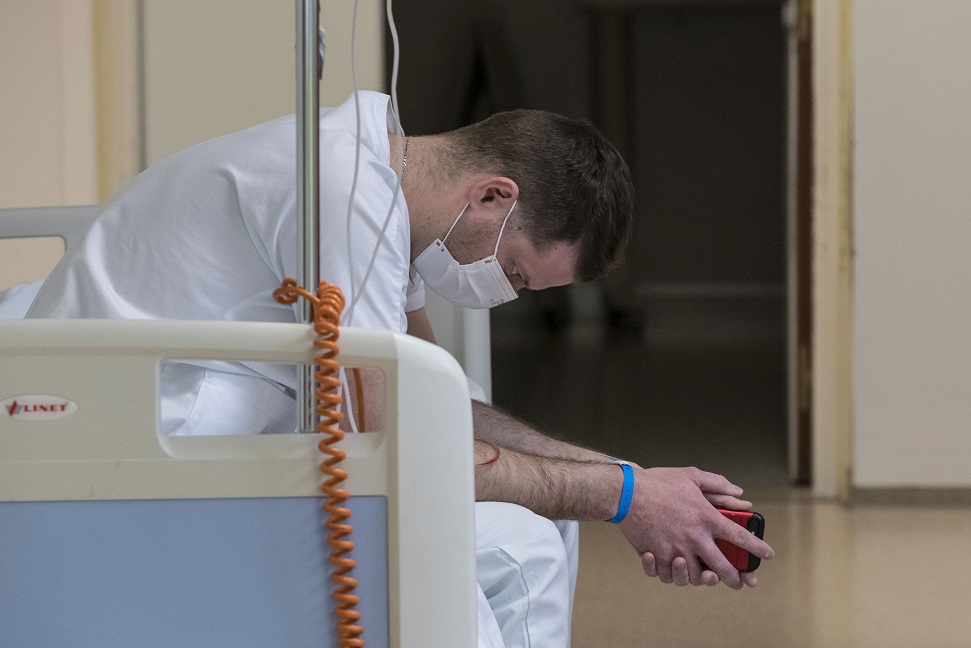
An emergency room medic takes a break at a hospital in Colmar, France in March 2020. Photo: Sebastien Bozon/AFP/Getty Images

Methodology

The team of investigators from Physicians for Human Rights (PHR) and the University of California, Berkeley conducted an online, cross-sectional survey and a follow-up open-ended interview with a small subset of the surveyed health care workers. We aimed to better understand the concerns and experiences of health care workers addressing the COVID-19 pandemic.

The anonymous survey contained 26 questions asking health care workers about their demographic information; their perceptions of risk when treating COVID-19 patients; their experiences making decisions about limited resources; their comfort expressing safety concerns about their workplace; and other related topics. All health care workers who reported providing clinical care to patients during the pandemic – including physicians, nurses, paramedics, respiratory therapists, and medical assistants – were eligible to participate in the survey. Participants were included regardless of geographic location, practice setting, or medical specialty. To reach survey participants, the team used purposive sampling through electronic listservs for health care institutions and professional medical associations. The team also used snowball sampling by encouraging participants to forward the survey link to other health care workers in their professional and personal networks. The survey was conducted for one month from May to June 2020, and survey data was collected using Qualtrics software. 

PHR also conducted more in depth, open-ended interviews with 10 health care workers who noted on the survey that they had personal experiences to share and agreed to be contacted for a semi-structured interview. While the health care workers interviewed were few in number and not representative of all survey participants, their responses provided greater detail and insight into the experiences described in the results of this survey.

The demographic information provided by respondents offers important context for analyzing and interpreting the survey results. The majority, 69 percent, of respondents were physicians, and 76 percent of all respondents delivered direct clinical care, either in person or via telemedicine, for patients with or suspected of having COVID-19. Respondents worked in a variety of facility types; however, most provided care in either academic medical centers – 35 percent – or in private health care facilities in their communities (31 percent). Women comprised the majority of respondents (67 percent). Lastly, the survey drew responses from health care workers employed in 27 countries, though the vast majority – 91 percent – worked in the United States. Canada and Kenya were the next most common countries where respondents worked, with three percent and one percent of participants, respectively. Of surveyed health care workers within the United States, 37 percent practiced in California, 16 percent worked in New York, and 7 percent practiced in Massachusetts.

While the survey drew respondents from a wide range of health care professions, countries, and care facility types, a majority were physicians practicing in academic medical centers or private health systems in California, Massachusetts, and New York. Because respondents were disproportionately in these relatively privileged U.S. settings, the findings of this study are limited in their ability to broadly represent the experiences of health care workers globally. As a cross-sectional survey administered over only one month, this data is able to provide a snapshot at a single point in time of attitudes of health care workers during the COVID-19 pandemic; however, the ever-changing nature of this global health crisis across time and geographic regions limits the survey’s generalizability.

This research was approved and deemed exempt by the Institutional Review Board of the University of California, Berkeley and the PHR Ethics Review Board.

Findings

We surveyed 901 health care workers between May and June 2020 and conducted in-depth telephone interviews with 10 health care workers who noted on their surveys that they were willing to be interviewed about their personal experiences. The results of the survey and the interviews are broken down into three sections: (1) availability of adequate resources; (2) ability to voice concerns and (3) availability of guidelines on resource allocation.

Lack of Adequate Resources

Widespread PPE Shortages

A majority of health care workers surveyed faced shortages of personal protective equipment (PPE) and other essential resources in their workplaces. Sixty three percent of health care workers reported PPE shortages at their place of work. The proportion of health care workers facing these shortages was consistent across the three countries with the most respondents – the United States, Kenya, and Canada – with 63 percent, 64 percent, and 60 percent reporting insufficient PPE, respectively. Respondents from the U.S. states with the highest survey participation – California, Massachusetts, and New York – reported similarly high rates of PPE shortages: 60 percent, 77 percent, and 67 percent, respectively.

“No one was taking this seriously…. [it seemed] that marketing, that optics were what [was] most important, not my health and not really the health of patients.”

Tennessee emergency medicine physician

Each type of care delivery setting in which respondents worked experienced PPE shortages. A majority of health care workers reported a shortage of PPE at their workplace in all care settings except for long-term care facilities.  Shortages of PPE have increased health care workers’ perceptions of risk and their concerns for their own health. Of those respondents who worked in health facilities that faced PPE shortages, 76 percent were worried about their personal health, whereas, among those who did not report PPE shortages in their workplace, 63 percent expressed concerns for their own health. Without the proper resources to protect themselves from infection, health care workers treating COVID-19 patients are fearful for their safety.

A majority of health care workers, 53 percent, believed that it was not their professional duty to provide in-person care to COVID-19 patients without adequate PPE. This was true both of health care workers in facilities with PPE shortages, 51 percent, and in those without, 56 percent.

“No one was taking this seriously”: Restrictions on Health Care Workers’ Resourcefulness

In addition to shortages, some facilities actively restricted the ability of health care workers to wear what PPE they themselves possessed. A Tennessee emergency medicine physician reported that her workplace did not provide adequate PPE, and, to stay safe, she purchased her own. Her workplace then tried to prevent her from wearing it. In mid-March 2020, she felt that “no one was taking this seriously.” In her facility, it seemed “that marketing, that optics were what [was] most important, not my health and not really the health of patients.” Her facility had been sending the message that “if people think they should be wearing PPE or more extensive PPE, they will panic.”

After spending $6,000 of her own personal funds on three powered air purifying respirators (PAPRs) to “be able to keep caring for patients but not risk [her] health,” she was denied the ability to wear her own PPE. Her department chair told her she could not wear her gear and must only wear what management was telling her to wear. “At that point,” she told PHR, “we were given an N95 mask that you are supposed to wear until it falls apart.” When it came to her PAPR, “He said I could not wear it because I would cause panic, I was going to make my patients afraid and make my colleagues afraid.”

“We were given an N95 mask that you are supposed to wear until it falls apart… [My department chair] said I could not wear [my own PPE] because I would cause panic, I was going to make my patients afraid and make my colleagues afraid.”

Tennessee emergency medicine physician

Willingness to Perform Tasks Outside of Formal Training in Context of Insufficient Human Resources

When asked if they would complete tasks outside of their own formal training to care for patients with COVID-19, a majority of health care workers, 67 percent, agreed that they would be willing to do so. This widespread willingness to perform tasks outside of formal training did not, however, extend to situations in which health care workers did not have PPE. Half of respondents, 50 percent, were unwilling to provide in-person care to patients with COVID-19 if their workplace ran out of adequate PPE. Only 26 percent reported that they would be willing to do so.

Ability to Voice Concerns and Fear of Retaliation

Health care workers identified myriad concerns about their safety and the safety of others stemming from shortages of life-saving medical equipment, and a lack of training to allocate scarce resources during this pandemic.

“The staff members berated me for asking them to wear a mask. One of the senior physicians told me I was creating fear by wearing a gown.”

Ohio family medicine doctor

Lack of Ability to Address Concerns Internally

A majority of respondents, 68 percent, felt comfortable communicating internally with their administration about safety issues in their institution related to COVID-19 care. While these findings are largely positive, a significant 20 percent of respondents reported that they did not feel comfortable discussing these concerns internally with their administration.

A family medicine doctor in a private practice in Ohio faced consequences for insisting on wearing and requesting others to wear PPE. The health care workers in the practice fortunately had all received N95 masks; however, there was no consistent policy and staff were often not wearing masks. “The staff members berated me for asking them to wear a mask,” this doctor told PHR. “One of the senior physicians told me I was creating fear by wearing a gown,” and human resources and a supervising physician in the owning health system “have reprimanded me for ‘fearmongering.’”

This Ohio doctor reported being called in for disciplinary action and accused of “creating a toxic environment” after requesting that staff members wear masks in communal spaces. “They said that I was ‘not following the rules’. But there are no rules [in their system] for public health. They have no limits on how many people can come into the clinic, no screening before people coming into urgent care.” The doctor was given 30 days to “clean up [their] act.” They explained to PHR, “I just want people to wear masks and be careful about the patients we see in person and what practices are when we are seeing patients face-to-face.”

“A pervasive and chilling fear of reprisals”: Speaking out Publicly

Though a majority of health care workers felt comfortable communicating their concerns internally, a much smaller proportion would feel confident speaking publicly about safety issues without facing retaliation from their institution – only 37 percent of respondents. Another New York hospitalist physician described a “pervasive and chilling fear of reprisals from management” that created a great deal of moral distress for hospital workers. This physician explained how health care workers trying to advocate for their patients felt they “weren’t getting any traction through the system,” and, as a result, “lots of people started talking to the press.” However, this physician told PHR that they and their colleagues faced a type of “corporate authoritarianism,” where they “felt it was not okay to speak out.” Stories of a medical director losing their directorship after speaking on television helped further produce a chilling climate that stifled dissent in this New York hospital.

“There was a pervasive and chilling fear of reprisals from management and that created a lot of moral distress. You want to advocate for your patients when what is going to help them is better management and redistribution of resources. We would speak out and they would say that ‘you need to simmer down.’”

New York hospitalist physician
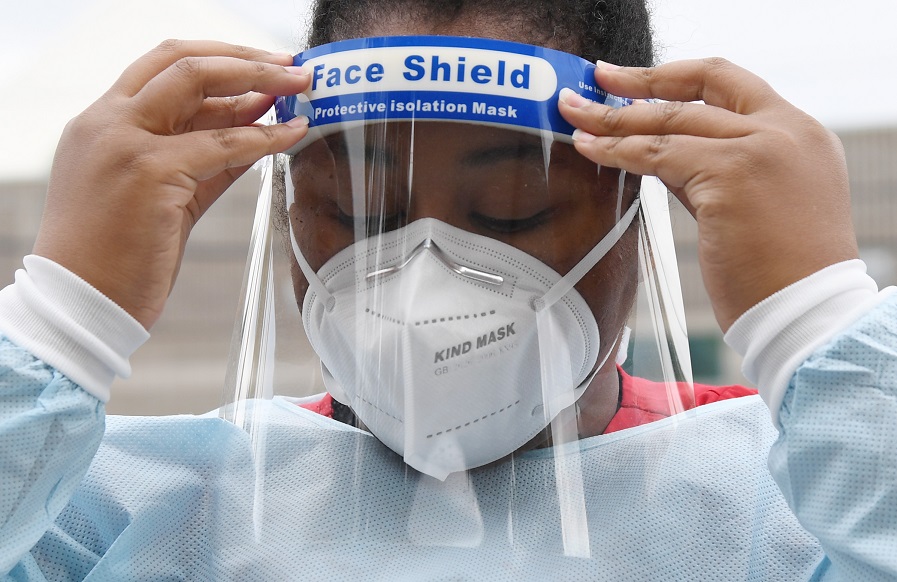
A medical assistant at the University of Nevada Las Vegas Medicine puts on personal protective equipment before conducting COVID-19 tests in April 2020. Photo: Ethan Miller/Getty Images

Lack of Transparency and Training for Resource Allocation

Rationing Critical Medical Supplies for Providers

Facing widespread shortages of PPE and other critical supplies and equipment, medical facilities have turned to rationing or limiting these resources. All health care workers who responded to at least one of PHR/Berkeley’s survey questions about limiting and rationing resources reported limited availability in their workplace of at least one of the seven listed critical medical supplies or equipment.

PPE was the most commonly rationed resource, with 37 percent of respondents reporting that their workplace was actively limiting or rationing its use. Twenty-five percent of the surveyed health care workers reported the rationing of disinfectants, sanitizers, and other cleaning supplies in their workplace. Health care workers also commonly reported an insufficient amount of diagnostic testing, such as COVID-19 tests or antibody tests, with 23 percent of respondents experiencing active rationing and limiting of these tests in their workplace.

While these three types of resources were the most widely rationed, other respondents reported that their inpatient facilities were actively rationing hospital beds, therapeutic equipment, ventilators, respirators, and other modes of assisted ventilation (such as bilevel positive airway pressure [BiPAP] and continuous positive airway pressure [CPAP]).

Lack of Guidance on Resource Allocation

Facing such widespread shortages of essential resources, a majority of health care workers felt unprepared for allocating scarce resources to their patients during a crisis of this scale. Though similar proportions of health care workers had training or significant experience in priority setting with limited resources (44 percent agreed or strongly agreed, while 44 percent disagreed or strongly disagreed), 54 percent of respondents stated that they had not received sufficient training or preparation in how to allocate scarce resources to patients during the COVID-19 pandemic. In contrast, only 26 percent reported that they had received sufficient training for this crisis.

“We have no guidance on how to allocate resources…. I can see very clearly that I am not going to be able to provide the care that I know patients will need when we run out of capacity and resources. There is nothing worse than standing in front of a patient and not being able to help them.”

Tennessee emergency medicine physician

Similarly, 46 percent of respondents felt that their health care facility had not given them clear information about how scarce resources would be allocated, if necessary, in order to prevent the burden of making decisions from falling on the bedside team. Only 32 percent felt that they had, in fact, been given clear information on this process.

Despite insufficient training, a larger proportion of health care workers did not feel worried that they would be required to personally make decisions about allocating limited resources, such as determining which patients get ventilators or other life-saving resources, based on their own judgment in the moment. Thirty-four percent of respondents were worried about personally making resource allocation decisions, while 47 percent did not feel worried about such situations.

In contrast, more than half of health care worker respondents were concerned that their belief in what is right would conflict with institutional constraints or procedures when allocating limited resources. At the time of this survey, 17 percent of respondents reported that they already had current concerns and conflicts of this type, while 49 percent of respondents were worried about such conflicts in the future.

“We have no guidance on how to allocate resources,” the Tennessee emergency medicine physician told PHR. She reported that it was incredibly difficult to know who to call and what to say in the event that resources needed to be rationed. She expressed how the personal responsibility and weight of these decisions affected health care workers in this context: “I can see very clearly that I am not going to be able to provide the care that I know patients will need when we run out of capacity and resources,” she told PHR. “There is nothing worse than standing in front of a patient and not being able to help them.”

In another case, an internal medicine physician working at a New York community hospital told PHR: “We had no ethical guidance.” They reported that their ethics department would “tell us to call them about individual cases but they did not give us general guidance about resource allocation. They basically said ‘do no harm.’” Overwhelmed and operating above capacity, health care workers were left with incredibly difficult decisions about life-saving care. This physician reported having to make these decisions “at the bedside” and “on the fly.” In one case, they had 34 people in an ICU meant for 12 people. In another, the physician had to decide who would be intubated when they had a list of 18 patients and the ICU could only take one that day. In a third case, after a difficult resource allocation decision about which patient would get the only negative pressure room, this physician recounted, “I had to deal with wondering if any staff or others got COVID due to that decision.” The physician told PHR that this lack of guidance “was really shocking to me, and I still have a lot of anger about [it].”

In diagnosing the cause of this failure, the New York physician felt that the lack of systematic guidelines for prioritizing “was a collective action problem – no hospital wanted to be the first to do it.” They argued that it was a form of “brand management,” as no facility wanted to be on the front page of the New York Times. “In a privatized environment, the first to act pays a penalty – a case of market failure.” The physician believed that hospitals should have all been required to release their ethical guidelines or be subject to state guidelines to solve this issue.

“We had no ethical guidance…. They basically said, ‘Do no harm.’ [The lack of guidance] was really shocking to me, and I still have a lot of anger about [it].”

Internal medicine physician at a New York community hospital

“The biggest issue was the lack of human resources.”

In addition to the shortages and rationing of PPE and other medical equipment, some health care workers reported that the shortages of health care workers and other staff was a major challenge. “The biggest issue was a lack of human resources,” the same New York internal medicine doctor told PHR, who reported that they were “stuck in situations where our patients were taken care of with unsafe nursing ratios and could not get access to respiratory therapists. [The] biggest issue was lack of organization. You only learned that respiratory therapy was not going to come when they didn’t show up. You only found out what was missing when there were gaps leading to bad outcomes. There were no announcements that things were not going to be done, you had to find out yourself.” They recalled that their facility frequently had unsafe health care worker-to-patient ratios, with five critically ill patients to one critical care nurse in cases where the ratio would normally be one-to-one. According to this physician, this situation created “lots of vicarious trauma” for health care workers.

Despite this New York hospital being overwhelmed, ambulances and patients kept coming and were not diverted elsewhere, including to another hospital in the same system that was bigger and not facing the same staffing crisis. The same physician told PHR “the fact is that expert surge protocols were not developed years ago. This was a policy failure. It was a governmental failure.” They explained the source of this failure: “corporatized health care is about the bottom line – doing more with less. If you are able on a shoestring to make problems disappear then you are rewarded… It was infuriating. It wasn’t a lack of resources. It was mismanagement of resources.”

“The fact is that expert surge protocols were not developed years ago. This was a policy failure. It was a governmental failure…. Corporatized health care is about the bottom line – doing more with less.… It was infuriating. It wasn’t a lack of resources. It was mismanagement of resources.”

New York internal medicine doctor

Continued Issues through Fall 2020

With continuing surges in COVID-19 cases, access to resources, such as personal protective equipment, continues to be an issue in many health care facilities in states throughout the United States.[11] Of even greater concern with the fall 2020 surge of cases is the inadequate supply of trained health care professionals. While some survey respondents already noted the lack of trained personnel in PHR’s interviews earlier in 2020, health care workers from health systems throughout the United States now report that while they have adequate medical equipment such as ventilators, they lack trained respiratory therapists and other specialists to staff them.[12] Nursing shortages are acute especially in under-resourced rural health systems.[13] Moreover, unlike in Spring 2020, when trained health care professionals deployed from throughout the country to assist in hard-hit cities such as New York, with surging cases all over the country such deployments from one region to another are impossible. 

The months of caring for high numbers of COVID-19 patients have also continued to wear down health care worker morale and resiliency. Due to the impact of long hours of arduous work over months, many frontline health care workers are reporting feeling burnt out and some are reporting depression and PTSD. Especially in states and localities in which elected officials are failing to enact mask mandates and other public health measures, health care professionals have spoken out in frustration and continued to petition governors across the United States to enact more stringent COVID-19 public policies to mitigate the number of sick patients coming to seek health care.[14] As of January 2021, 13 U.S. states still had no mask mandate. There are ongoing reports of health workers being fired for speaking out, at a time when every health worker is needed to fight the pandemic.[15]

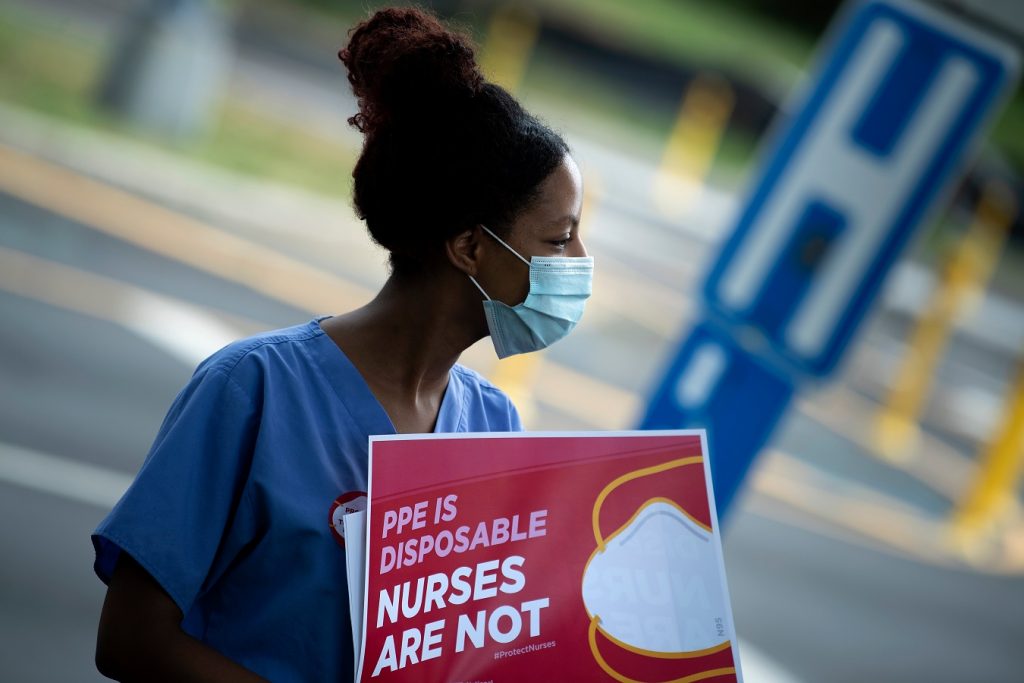
A nurse protests outside Washington Hospital Center in Washington, DC in July 2020. Photo: Brendan Smialowski/AFP/Getty Images

Legal and Policy Framework

International Obligations

Right to Occupational Health

International human rights law guarantees all people the right to health. Governments have legal obligations to protect the health and safety of their residents, including through “[t]he prevention, treatment and control of epidemic, endemic, occupational and other diseases.”[16] Moreover, Article 7(b) of the International Covenant on Economic, Social and Cultural Rights declares the state’s responsibility to ensure safe and healthy working conditions. These legal obligations require governments to protect the safety of workers, including health care workers.

In the context of the current COVID-19 pandemic, these rights have been reiterated by relevant international bodies. Interim guidance from the World Health Organization states that COVID-19 should be “considered as an occupational disease arising from occupational exposure,” and that health care workers are entitled to protections, compensation, and rehabilitation when it comes to this disease.[17]

In May 2020, the Special Procedures Group of the UN Human Rights Council released a statement urging governments and businesses to ensure all workers are protected from exposure to COVID-19. The statement emphasized that “[e]very worker has the right to be protected from exposure to hazards in the workplace, including the coronavirus,” and urged action to protect vulnerable workers:

“We are concerned at the number of frontline workers who have not been given adequate protection during peak periods of contagion in various countries and economic sectors. And as Governments continue to reduce restrictions and workers begin to return to work, we urge all States and businesses to ensure preventative and precautionary measures are in place to protect every worker.”[18]

The UN Office of the High Commissioner for Human Rights’ May 2020 guidance on COVID-19 stresses the importance of protecting the occupational health and safety of health care workers and support staff in this crisis: “Health workers and others working in at-risk environments should be provided with quality personal protective equipment as needed. No one should feel forced to work in conditions that unnecessarily endanger their health because they fear losing a job or a paycheck.”[19]

Freedom of Expression

International human rights law also protects the rights of people to freedom of expression without fear of retribution or punishment. Article 19 of the International Covenant on Civil and Political Rights guarantees this freedom of expression, as well as the right to hold opinions without interference.[20] The Human Rights Committee’s General Comment 34 elaborated on this right, specifying that this obligation “requires States parties to ensure that persons are protected from any acts by private persons or entities that would impair the enjoyment of the freedoms of opinion and expression to the extent that these Covenant rights are amenable to application between private persons or entities.”[21]

The rights of whistleblowers, specifically, are also protected under international law. A 2015 report of the Special Rapporteur on the promotion and protection of the right to freedom of opinion and expression states that whistleblowers “deserve the strongest protection in law and in practice.”[22] The report also highlights that “Whistle-blowers must be protected from the threat or imposition of retaliation, remedies should be made available to targets and penalties should be imposed on those who retaliate.”[23]

United States Law

National Workplace Protections

Within the United States, the country in which most of the respondents to this survey work, workplace protections for speaking out about safety concerns have traditionally been within the jurisdiction of the Occupational Safety and Health Administration (OSHA), as well as under various state equivalent organizations. Under Section 11(c) of the Occupational Safety and Health Act, private sector workers – including in the health care sector – are protected from retaliation if they raise health- and safety-related concerns about their workplace.[24]

Unfortunately, by all reports, OSHA (or the Department of Labor leadership) has so far either been unwilling or unable to address many of the complaints that have stemmed from the COVID-19 pandemic. Nor, to date, has OSHA issued a further emergency temporary standard to definitively protect health care workers in the current context.

To date, OSHA has only issued voluntary standards for worker protections in health care settings. Thus, these standards are unenforceable, leaving state governments to set and enforce workplace protection standards for health care facilities. The new Biden administration in January 2021 took an important first step toward this end and issued executive orders seeking to tighten OSHA enforcement efforts to better protect workers, including health care workers.

Other U.S. federal labor laws provide for certain protections that many health care workers are not receiving during this pandemic. Under Section 7 of the National Labor Relations Act, a nonsupervisory employee (even in a nonunionized environment) has the right to engage in concerted activity to effect change to improve working conditions.[25] Retaliatory firings for these efforts are not permissible. Additionally, under Section 502 of the Labor Management Relations Act (the Taft-Hartley Act) of 1947, workers may refuse to work under “unusually dangerous conditions.”[26]

OSHA also provides protections for whistleblowers through its multiple statutes on the subject.[27] However, despite these regulations, health care workers have not been safe from threat of retaliation. Although numerous U.S. associations of health professionals have issued statements calling on employers to refrain from such retaliation, the actual protections and recourses for health care workers are not always evident, often varying from state to state and even from one institution to another.

State Workplace Protections

Various U.S. states have their own occupational health requirements and workplace protections.[28] Since the start of the COVID-19 pandemic, many states have adopted additional regulations and legal safeguards for health care workers and other essential workers. In June, Virginia proposed the country’s first-ever pandemic emergency workplace safety standards, a necessary response to OSHA’s neglect of its own duty to protect health workers.[29] The new state regulations include mandatory guidelines for PPE, sanitation, and other workplace safety guidance, as well as protections from retaliation for health workers who speak out about safety concerns.

Other states and municipalities have since passed additional COVID-19 worker safety protections. These include laws that prohibit employers from retaliating against workers for raising COVID-19 safety concerns, for refusing to work in unsafe conditions, and for taking time off to minimize transmission of the virus; other laws require the provision of adequate PPE and that workers be notified when workplace COVID-19 cases are found. As of late October 2020, 14 states had adopted significant COVID-19 worker safety protections.[30] Cities like Chicago, Philadelphia, and Raleigh have also issued their own laws and ordinances to protect workers from COVID-19 and employer retaliation.[31]

Other states, such as California, Maryland, and New York, already have various forms of OSHA-approved state plans that meet or exceed federal OSHA standards.[32] These can be used to protect state and local workers, and in some states these protections extend to cover private and federal workers. In states where there is no state plan, governors and state legislatures have the authority to institute emergency standards for worker safety and enforcement that go beyond OSHA’s ineffective voluntary standards and enforcement mechanisms and that provide enhanced whistleblower protections.

Under the 2009 California OSHA Aerosol Transmissible Disease Standards, there are standards set and generally enforced by the state for social distancing, face masks, hand sanitizing, washing, and gloves.[33] California also boasts regular workplace disinfection, increased ventilation, and notification of infections. National Nurses United has compiled a state-by-state list of whistleblower protection laws for health care workers.[34]

In both the United States and the rest of the world, health care facilities and governments need to be legally required to ensure that health care workers are protected and not vulnerable to disease or retaliation if they speak up about unaddressed safety concerns.

Given the failure of the U.S. federal government to enact emergency OSHA standards, it is incumbent upon states and cities to enact further protections to ensure the safety of health care workers as they provide essential aid during this deadly pandemic and beyond.

In countries such as Kenya, where three percent of survey respondents work, while individual laws offer some protections for whistleblowers, to date there are no comprehensive national laws providing whistleblower protections. In both the United States and the rest of the world, health care facilities and governments need to be legally required to ensure that health care workers are protected and not vulnerable to disease or retaliation if they speak up about unaddressed safety concerns.

Conclusion

This study finds that health care workers, many of whom, remarkably, work in some of the best-resourced health care settings in the United States, have concerns about their own safety and report not receiving all the workplace protection and equipment to which they are legally entitled. While our survey provides only a snapshot of the experiences of health care workers early in the pandemic, from May to June 2020 among a self-selected sample of U.S.-based clinicians, many of the issues and concerns raised continue to be of concern more than half a year later. Moreover, although due to the nature of our sampling, this study’s findings cannot be generalized to all health care workers, the results demonstrate how the experiences of many health care workers during the early months of the COVID-19 pandemic have been defined by a lack of adequate resources, guidance, and protection from their employers and governments and that many of these issues persist today.

Health care workers have faced and continue to face widespread shortages of PPE and other critical resources. They have been asked to provide care without the workplace protections to which they are entitled, putting themselves, their loved ones, and patients at risk. They have had to ration critical resources, often without sufficient guidance or training from their employers. Some have faced retaliation from their employers for speaking out about their health and safety concerns; others have remained silent about their concerns for fear of retaliation. This all occurs in a climate of great insecurity, as health care workers are disproportionately affected by COVID-19 and have suffered harassment, and even detention, from governments around the world.

Health care workers are protected by international human rights law and various domestic laws and are entitled to workplace safety and a right to health. In the context of this pandemic, these rights are being violated and employers and governments are failing to meet their legal obligations to the rights of health care workers.

As many countries and U.S. states are experiencing additional surges of COVID-19 cases and increased hospitalizations, it becomes even more crucial to ensure that the human rights and safety of health care workers are protected.

Recommendations

  • Governments worldwide need to set and enforce emergency standards for worker protections, workplace safety standards, transparency, accurate reporting, and accountability. National, state/provincial, and local governments also need to act to implement clearly defined and universally enforceable workplace safety standards for health care settings.
  • Governments worldwide and the World Health Organization should systematically track and report on work-related infections, injuries, and deaths of health care workers to better inform necessary responses.
  • National, state/provincial, and local governments need to coordinate and work together to ensure an adequate supply of PPE and other critical resources to maintain the safety of health care workers and patients. If necessary, legislation providing emergency powers needs to be passed or strategically deployed, such as the Defense Production Act in the United States, to increase supplies for the current response to COVID-19 and to restore stockpiles for future epidemics.
  • Employers, state/provincial and local governments, and all other relevant actors must refrain from taking retaliatory actions or engaging in any form of harassment against health care workers, including those speaking out publicly about workplace safety concerns. Whistleblower protections need to be strengthened to safeguard health workers’ ability to raise the alarm about dangerous conditions without fear of discrimination or retribution.
  • Health care facilities must be required to develop and communicate clear training and explicit guidance for scarce resource allocation.
  • Health systems must operate under the principle that transparency and regular communication, internally and externally, regarding shortages and protection measures in the face of the COVID-19 emergency is the best way to build and ensure trust and safety in an environment of severe constraints.

Acknowledgments

This report was written by Joseph Leone, Physicians for Human Rights (PHR) research and investigations fellow, and co-authored by Rohini Haar, MD, MPH, PHR medical advisor, Michele Heisler, MD, MPA, PHR medical director, and Ranit Mishori, MD, MHS, PHR senior medical advisor. Lauren O’Neal, MPH conducted the analysis and contributed to the writing while a student at the University of California Berkeley MPH program. Dr. Haar, Dr. Heisler, and Dr. Mishori conceived of and designed the research study. Dr. Heisler conducted the interviews. Sarah Bakir (UC Berkeley MPH candidate), Will Bruno, MD (University of Southern California Department of Emergency Medicine), Rasmi Davu (undergraduate at the University of Michigan) and Nikhil Ranadive, MD, MS (UC San Francisco-Fresno Department of Emergency Medicine) all provided research assistance support.

PHR leadership and staff contributed to the writing and editing of this report, including DeDe Dunevant, director of communications; Donna McKay, executive director; Karen Naimer, JD, LLM, MA, director of programs; Joanna Naples-Mitchell, U.S. researcher; Michael Payne, senior advocacy officer; and Susannah Sirkin, MEd, director of policy. The report benefited from review by PHR board member Kathleen Foley, MD. It was reviewed, edited, and prepared for publication by Claudia Rader, MS, PHR senior communications manager, with assistance from Isa Berliner, communications intern. Hannah Dunphy, MA, digital communications manager, prepared the digital presentation.


Endnotes

[1] World Health Organization, ‘WHO Coronavirus Disease (COVID-19) Dashboard,” accessed on February 1, 2021, https://covid19.who.int/.

[2] Long H. Nguyen et al, “Risk of COVID-19 among front-line health-care workers and the general community: a prospective cohort study,” The Lancet Public Health, vol. 5, no. 9, (September 2020): E475-E483,https://www.thelancet.com/journals/lanpub/article/PIIS2468-2667(20)30164-X/fulltext#seccestitle130.

[3] World Health Organization, Twitter Post, July 17, 2020, 11:29 AM, https://twitter.com/WHO/status/1284148139797209093.

[4] International Council of Nurses, “Protecting nurses from COVID-19 a top priority: A survey of ICN’s national nursing associations,” September 14, 2020, https://www.icn.ch/system/files/documents/2020-09/Analysis_COVID-19%20survey%20feedback_14.09.2020.pdf

[5] “Lost on the Frontline,” the Guardian and Kaiser Health News, accessed February 4, 2021, https://www.theguardian.com/us-news/ng-interactive/2020/aug/11/lost-on-the-frontline-covid-19-coronavirus-us-healthcare-workers-deaths-database; “COVID Data Tracker,” Centers for Disease Control and Prevention, accessed February 4, 2021, https://covid.cdc.gov/covid-data-tracker/#health-care-personnel.

[6] The Staffs of KHN and The Guardian, “Lost on the Frontline: Explore the Database,” Kaiser Health News, December 16, 2020, https://khn.org/news/lost-on-the-frontline-explore-the-database/.

[7] Catherine E. Shoichet, “Covid-19 is taking a devastating toll on Filipino American nurses,” CNN, December 11, 2020,https://www.cnn.com/2020/11/24/health/filipino-nurse-deaths/index.html.

[8] Keith A. Reynolds, “Coronavirus: At least 7,000 healthcare workers have died globally,” Medical Economics, September 18, 2020, https://www.medicaleconomics.com/view/coronavirus-at-least-7-000-healthcare-workers-have-died-globally.

[9] Bryan Nelson and David B. Kaminsky, “COVID‐19’s crushing mental health toll on health care workers,” Cancer Cytopathology, vol. 128, no. 9, (September 2020): 597-598, https://acsjournals.onlinelibrary.wiley.com/doi/10.1002/cncy.22347.

[10] Amnesty International, “Exposed, Silenced, Attacked: Failures to Protect Health and Essential Workers During the COVID-19 Pandemic,” July 13, 2020, https://www.amnesty.org/download/Documents/POL4025722020ENGLISH.PDF.

[11] Damian McNamara, “PPE Shortage Crisis Continues at Most Hospitals, Survey Shows,” Medscape, December 4, 2020, https://www.medscape.com/viewarticle/942064; Helena Oliviero, “Georgia Still Has PPE Shortage Seven Months into Pandemic,” Government Technology, October 8, 2020, https://www.govtech.com/em/safety/Georgia-Still-has-PPE-Shortage-Seven-Months-into-Pandemic-.html.

[12] Andrew Jacobs, “Now the U.S. Has Lots of Ventilators, but Too Few Specialists to Operate Them,” New York Times, November 22, 2020, https://www.nytimes.com/2020/11/22/health/Covid-ventilators-stockpile.html?searchResultPosition=8.

[13] Lenny Bernstein, “Some places were short on nurses before the virus. The pandemic is making it much worse,” Washington Post, November 16, 2020, https://www.washingtonpost.com/health/some-places-were-short-on-nurses-before-the-virus-the-pandemic-is-making-it-much-worse/2020/11/16/8d3755a0-25c4-11eb-a688-5298ad5d580a_story.html; Brooke Facer, “Dear rural hospitals: Where are your nurses?” Rural Health Voices, December 14, 2018, https://www.ruralhealthweb.org/blogs/ruralhealthvoices/december-2018/dear-rural-hospitals-where-are-your-nurses#:~:text=The%20nursing%20shortage%20has%20become,harder%20than%20their%20urban%20counterparts.&text=According%20to%20the%20American%20Nurses,nurses%20and%20555%2C100%20replacement%20nurses.

[14] Lenny Bernstein, “With hospitals slammed by covid-19, doctors and nurses plead for action by governors,” Washington Post, December 3, 2020, https://www.washingtonpost.com/health/doctors-demand-covid-restrictions/2020/12/03/88c1afc6-34e1-11eb-8d38-6aea1adb3839_story.html.

[15] Jamie Landers, “’A slap in the face’: Arizona ER doctor fired after talking about severity of COVID-19 pandemic,” USA Today, December 11, 2020, https://www.usatoday.com/story/news/nation/2020/12/11/cleavon-gilman-fired-arizona-hospital-posting-coronavirus/3894723001/.

[16] Committee on Economic, Social and Cultural Rights, General Comment No. 14, 2000, http://docstore.ohchr.org/SelfServices/FilesHandler.ashx?enc=4slQ6QSmlBEDzFEovLCuW1AVC1NkPsgUedPlF1vfPMJ2c7ey6PAz2qaojTzDJmC0y%2B9t%2BsAtGDNzdEqA6SuP2r0w%2F6sVBGTpvTSCbiOr4XVFTqhQY65auTFbQRPWNDxL; Committee on Economic, Social and Cultural Rights, General Comment No. 23, 2016, https://www.escr-net.org/resources/general-comment-no-23-2016-right-just-and-favorable-conditions-work; United Nations Office of the High Commissioner of Human Rights, “International Covenant on Economic, Social and Cultural Rights,” accessed on December 16, 2020, https://www.ohchr.org/en/professionalinterest/pages/cescr.aspx.

[17] World Health Organization, “Coronavirus Disease (COVID-19) Outbreak: Rights, Roles, and Responsibilities of Health Workers, Including Key Considerations for Occupational Safety and Health,” accessed December 16, 2020, https://www.who.int/docs/default-source/coronaviruse/who-rights-roles-respon-hw-covid-19.pdf?sfvrsn=bcabd401_0.

[18] United Nations Office of the High Commissioner of Human Rights, “’Every worker is essential and must be protected from COVID-19, no matter what’ – UN rights experts,” May 18, 2020, https://www.ohchr.org/EN/NewsEvents/Pages/DisplayNews.aspx?NewsID=25892&LangID=E.

[19] Committee on Economic, Social and Cultural Rights, “Statement on the coronavirus disease (COVID-19) pandemic and economic, social and cultural rights,” April 17, 2020, http://docstore.ohchr.org/SelfServices/FilesHandler.ashx?enc=4slQ6QSmlBEDzFEovLCuW1AVC1NkPsgUedPlF1vfPMKXidSV%2fGyVFSAvr6nizxSlX6zd%2bu5KD26NraabiJKaWMnkFhhMb4MahybE5l%2foU5sQSh6PCbcepqzl0iCYkIyq; Employment Injury Benefits Convention, 1964 (No.  121):194; Nursing Personnel Convention, 1977 (No. 149):196; Occupational Safety and Health Convention, 1981 (No.  155):192; The Occupational Safety and Health Recommendation, 1981; Organization of American States, “IACHR and OSRESCER Urge States to Guarantee Comprehensive Protection for Human Rights and Public Health during the COVID-19 Pandemic,” March 20, 2020, http://www.oas.org/en/iachr/media_center/PReleases/2020/060.asp; United Nations Office of the High Commissioner of Human Rights, “COVID-19 Guidance,” May 13, 2020, https://www.ohchr.org/Documents/Events/COVID-19_Guidance.pdf.

[20] United Nations Office of the High Commissioner of Human Rights, “International Covenant on Civil and Political Rights,” December 16, 1966, https://www.ohchr.org/en/professionalinterest/pages/ccpr.aspx.

[21] Human Rights Committee, “General Comment No. 34,”  September 12, 2011, https://www2.ohchr.org/english/bodies/hrc/docs/gc34.pdf; United Nations Office of the High Commissioner of Human Rights, “International Covenant on Civil and Political Rights,” December 16, 1966, https://www.ohchr.org/en/professionalinterest/pages/ccpr.aspx.

[22] United Nations Secretary General, “Report of the Special Rapporteur on the promotion and

protection of the right to freedom of opinion and expression,” September 8, 2015, https://www.un.org/en/ga/search/view_doc.asp?symbol=A/70/361.

[23] Ibid.

[24] Section 11(c) of the Occupational Safety and Health Act

[25] Section 7 of the National Labor Relations Act

[26] Section 502 of the Labor Management Relations Act (the Taft-Hartley Act) of 1947

[27] Occupational Safety and Health Administration, “OSHA Fact Sheet: Your Rights as a Whistleblower,” accessed December 16, 2020, https://www.osha.gov/OshDoc/data_General_Facts/whistleblower_rights.pdf.

[28] Occupational Safety and Health Administration, “State Plans,” accessed December 16, 2020, https://www.osha.gov/stateplans.

[29] Eli Rosenberg, “Virginia poised to create first pandemic workplace safety mandates in nation, as Trump labor agency sits on sidelines,” Washington Post, June 24, 2020, https://www.washingtonpost.com/business/2020/06/24/virginia-safety-rules-covid/?fbclid=IwAR3qeNlZ1eu7KGki8HfWthAGkD213SFX8RCObH9NFNpD3U3biD3E7DM1QbI.

[30] Deborah Berkowitz, “Which States and Cities Have Adopted Comprehensive COVID-19 worker Protections,” National Employment Law Project, last updated on December 1, 2020, https://www.nelp.org/blog/which-states-cities-have-adopted-comprehensive-covid-19-worker-protections/.

[31] Michelle Andrews and Kaiser Health News, “Workers are getting fired and penalized for reporting COVID safety violations,” Fortune, October 23, 2020, https://fortune.com/2020/10/23/workers-are-getting-fired-and-penalized-for-reporting-covid-safety-violations/.

[32] Occupational Safety and Health Administration, “State Plans,” accessed December 16, 2020, https://www.osha.gov/stateplans.

[33] California OSHA, Title 8 regulations, §5199. Aerosol Transmissible Diseases, 2009, accessed December 16, 2020, https://www.dir.ca.gov/title8/5199.html.

[34] National Nurses United, “Whistleblower Protection Laws for Healthcare Workers,” accessed December 16, 2020, https://www.nationalnursesunited.org/whistleblower-protection-laws-for-healthcare-workers.

Statements

PHR Joins Coalition to Call for the Biden Administration to Repeal ICC Sanctions

The undersigned organizations urge the Biden Administration to engage constructively with the International Criminal Court (ICC). The U.S. government’s support for the ICC could help secure justice for victims in situations from Myanmar to Darfur, just as it helped facilitate the February 4 historic conviction of a former leader of an armed rebel group for war crimes and crimes against humanity in northern Uganda.

There is an immediate need to act to reset U.S. policy regarding the ICC. Most urgently, we are alarmed by recent calls for the U.S. government to maintain or even expand the sanctions put into place by the Trump administration in June 2020 currently targeting the court’s work.

These actions were an unprecedented attack on the court’s mandate to deliver justice and the rule of law globally, an abuse of the U.S. government’s financial powers, and a betrayal of the U.S. legacy in establishing institutions of international justice. They were also an attack on those who engage with the court, including human rights defenders and victims. These extraordinary measures have put the U.S. at odds with many of its closest allies. They also have been challenged on constitutional grounds domestically.

Keeping in place the executive order authorizing sanctions would be inconsistent with the new administration’s laudable commitments to respecting the rule of law and pursuing multilateral cooperation in support of U.S. interests.  It would also transform a shameful but temporary action into a standing license for other governments to attack multilateral institutions when they disagree with those bodies’ actions.

We call upon the U.S. government to rescind Executive Order 13928 and all sanctions measures against ICC officials at the earliest possible opportunity. We appeal for constructive engagement with the ICC and we urge the Biden administration and members of Congress to support that approach.  

This statement was coordinated by the Washington Working Group for the International Criminal Court (WICC), an informal and nonpartisan coalition of diverse NGOs, including human rights organizations, faith based groups, professional associations, and others.

The Advocates for Human Rights

Allard K. Lowenstein International Human Rights Clinic, Yale Law School

American Civil Liberties Union (ACLU)

American Jewish World Service (AJWS)

Amnesty International USA

Anti-Torture Initiative, American University Washington College of Law

Associazione Luca Coscioni

Center for Civilians in Conflict (CIVIC)

Center for Constitutional Rights (CCR)

Center for Justice and Accountability

Center for the Study of Law & Genocide, Loyola Law School

Center for Victims of Torture (CVT)

Congregation of Our Lady of Charity of the Good Shepherd, US Provinces

Darfur Women Action Group

Democracy for the Arab World Now (DAWN)

Eumans

European Center for Constitutional and Human Rights

Fortify Rights

Global Centre for the Responsibility to Protect

Global Justice Center

Global Justice Clinic, New York University School of Law

Guernica 37 Chambers and Centre for International Justice

Human Rights and Gender Justice Clinic, City University of New York School of Law

Human Rights First

Human Rights Institute, Georgetown University Law Center

Human Rights Watch

Institute for Policy Studies, Drug Policy Project

Institute for Policy Studies, New Internationalism Project

International Association of Democratic Lawyers

International Center for Transitional Justice (ICTJ)

International Commission of Jurists (ICJ)

International Criminal Court Alliance (ICCA)

International Federation for Human Rights (FIDH)

International Human Rights Clinic, Boston University School of Law

International Human Rights Clinic, Harvard Law School

InterReligious Task Force on Central America 

J Street

Justice for Muslims Collective

Leitner Center for International Law and Justice

National Advocacy Center of the Sisters of the Good Shepherd

Never Again Coalition

No Peace Without Justice

Open Society Foundations

Operation Broken Silence

Parliamentarians for Global Action (PGA)

Partners in Justice International

Pax Christi USA

Physicians for Human Rights

Presbyterian Church (USA), Office of Public Witness

Project Blueprint

The Promise Institute for Human Rights, UCLA School of Law

REDRESS

The Rendition Project

Reprieve

Science for Democracy

The Sentry

September 11th Families for Peaceful Tomorrows

StoptheDrugWar.org

Students for Sensible Drug Policy

The Syria Justice and Accountability Centre

TRIAL International

United Church of Christ, Justice and Witness Ministries

The United Methodist Church – General Board of Church and Society

University of Southern California (USC) Gould International Human Rights Clinic

US Human Rights Network (USHRN)

US Filipinos for Good Governance DC/MD/VA Chapter

Victim Advocates International

War Crimes Research Office, American University Washington College of Law

Western New York Peace Center

Win Without War 

Witness Against Torture

Women’s Initiatives for Gender Justice (WIGJ)

World Federalist Movement/Institute for Global Policy (WFM/IGP)

World Organisation Against Torture (OMCT)

World Without Genocide at Mitchell Hamline School of Law

Webinar

Pandemic Burnout: Health Care Workers and Beyond

On Friday, February 12, 2021, Physicians for Human Rights (PHR) hosted a discussion on the mental health impacts of the COVID-19 pandemic and solutions to expanding and encouraging access to mental health care.

PHR board member Gail Saltz, MD, a clinical associate professor of psychiatry at the New York Presbyterian Hospital Weill-Cornell School of Medicine and a psychoanalyst with the New York Psychoanalytic Institute, moderated the discussion.

Featured panelists:

  • Felton Earls, MD is emeritus professor of human behavior and development at the Harvard T.H. Chan School of Public Health and emeritus professor of social medicine at Harvard Medical School.
  • Jessica Gold, MD, MS is assistant professor and director of wellness, engagement, and outreach at the department of psychiatry at the Washington University School of Medicine in Saint Louis.
  • Matthew Howard, DNP, RN, CEN TCRN, CPEN, CPN is director of scholarship and leadership resources at Sigma Theta Tau International Honor Society of Nursing, part-time staff nurse in the emergency department at Eskenazi Health in Indianapolis, and nursing faculty in the graduate and doctoral programs at Northern Kentucky University.

See all events in PHR’s COVID-19 Webinar Series.

Webinar

Tom Frieden, in Conversation on U.S. COVID-19 Priorities

On Thursday, February 4, 2021 PHR hosted a special conversation with Tom Frieden, MD, MPH, former director of the U.S. Centers for Disease Control and Prevention and former commissioner of the New York City Health Department.

There are few public health leaders better able to address the current COVID-19 “syndemic” – a combination of a highly infectious virus with the pandemic of noncommunicable diseases that disproportionately afflict those affected by social and economic inequalities and structural injustices. Since 2017, Frieden has served as president and CEO of Resolve to Save Lives, an initiative of the global health organization Vital Strategies, which aims to save millions of lives from cardiovascular diseases and to prevent epidemics.

In a conversation with Michele Heisler, MD, MPA, medical director of PHR and professor of internal medicine and public health at the University of Michigan, Frieden will discuss how the new U.S. administration can and should prioritize public health and COVID-19 responses, both domestically and internationally.

See all events in PHR’s COVID-19 Webinar Series.

Webinar

Vaccine Distribution: Ethics and Human Rights Considerations

The largest vaccine distribution campaign in history is underway – yet the rate of vaccination and decisions on when certain population groups will receive the vaccine vary greatly across the globe. Physicians for Human Rights (PHR) hosted a discussion on the ethical and human rights considerations of vaccine distribution and the importance of vaccine uptake given vaccine hesitancy, particularly among certain populations.

The conversation was moderated by Chris Beyrer, MD, MPH, the Desmond M. Tutu Professor of Public Health and Human Rights and professor of epidemiology, international health, health, behavior and society, nursing, and medicine at the Johns Hopkins Bloomberg School of Public Health. He also is director of the Johns Hopkins HIV Epidemiology and Prevention Science Training Program, and is a member of PHR’s Advisory Council. Beyrer serves as senior scientific liaison to the COVID-19 Prevention Network, established by the National Institute of Allergy and Infectious Diseases.

Featured panelists:

  • Marine Buissonnière, MPP is a practitioner and researcher on global health and humanitarian action. She serves as senior advisor to the Prevent Epidemics team at Resolve to Save Lives (RTSL) and co-chairs Médecins Sans Frontières (MSF) Transformational Investment Capacity.
  • Ruth R. Faden, PhD, MPH is the founder of the Johns Hopkins Berman Institute of Bioethics.
  • Ali H. Mokdad, PhD is the chief strategy officer for population health at the University of Washington and a professor of health metrics sciences.
  • David R. Wilson, PhD is the first director of the Tribal Health Research Office at the National Institutes of Health.

See all events in our COVID-19 webinar series

Blog

6 Ways the Biden-Harris Team Can Show Leadership

Originally published on Global Health Now

Across the US, the country with the most reported cases of COVID-19 in the world, an unfamiliar feeling is emerging: hope.

Although catastrophic infection rates and death tolls continue, cautious optimism is growing as the country’s besieged health workers and others who are most at risk receive their first dose of the vaccine, with 2 vaccines now approved and additional ones soon to come. 

A vaccine roll-out, however haphazard, is not the only reason to be hopeful. 

After pandemics, societies transform. Each of the devastating pandemics throughout history have fundamentally reshaped the way humans view and approach science, government, and society. From the horrors of the 1918 influenza pandemic emerged the early foundations of multilateral cooperation on science and health, the public’s demand for universal health coverage, newfound support for the scientific method, and a more robust social safety net.

The COVID-19 pandemic is another opportunity for transformation. With a new administration in Washington, DC, the months ahead will be pivotal in determining just how society can be transformed. As veterans of the global health and human rights movement, we offer 6 guiding principles to the Biden-Harris administration on how to ensure the coming paradigm shift results in a more healthy, equitable, and just society. 

After pandemics, societies transform. Each of the devastating pandemics throughout history have fundamentally reshaped the way humans view and approach science, government, and society

Make no mistake: We are in for a grueling period before this transformation. Recent models from the Institute for Health Metrics and Evaluation project that the US will reach 500,000 COVID-19 deaths by the end of February. Many hospitals are at or beyond capacity around the country, and health workers have been pushed to the brink.

But of course, the deaths and severe illness from COVID-19—appalling as they are—represent only part of the story. 

We don’t just face a pandemic; we face a syndemic: a synthesis of multiple epidemics. The coronavirus itself has combined with the epidemic of noncommunicable diseases such as hypertension and diabetes that disproportionately afflict those affected by deeply rooted social and economic inequalities and injustices. It has combined with longstanding human rights violations stemming from structural racism and a broken social safety net that could have protected many who instead face exposure to the coronavirus and increased vulnerability to its most dangerous effects. If we focus on the virus alone, we will fail. We must address the virus, but also confront the underlying inequalities and inequities that have fueled this global crisis.  

In just one year, we have gone from failing to appreciate the scope of COVID-19’s deadly potential to delivering multiple highly effective, safe vaccines to millions of people—clearly one of the greatest scientific accomplishments in our time. But vaccines alone are not enough. The trust between the public and government around science has been frayed. Anti-vaccination movements are mobilizing in the US and elsewhere. They’re powerful, they’re insidious, they’re propagandists, and too often, they’re winning. These movements, fed by misinformation and rejection of science, also risk further alienating communities of color in the US, whose mistrust of medical institutions is an understandable response to longstanding discriminatory care and a legacy of abusive research. 

The crucial task of remedying these barriers to widespread vaccination and preparing the public for what is to come will fall not just on the new presidential administration, but on everyone.   

To counter the syndemic and lay the foundation for positive, equitable post-pandemic transformation, we call for the Biden administration to focus on these 6 key strategies: 

REBUILD TRUST: First and foremost, President Biden must rebuild trust with the American people. He must be a communicator-in-chief, set positive examples, let science lead, and partner with key trusted community leaders to help develop and spread effective messages. Biden has assembled an excellent COVID-19 team with enormous experience in global health and equity, so he must harness their knowledge and convey both science and empathy with the public regularly. The team’s national strategy for COVID-19 is a positive first step.

CALL ON ALL OF SOCIETY: Neither the US, nor any government, can solve a syndemic alone. We need a “whole of society” response; leaders everywhere must answer the call. Business, the private sector, academia, entertainment, faith and community organizations, philanthropy, sports—every organization must be part of the solution.

MOBILIZE COMMUNITIES: Communities across the country need to step up to confront this syndemic. Responses to the syndemic cannot succeed without local community networks and organizations being actively engaged and empowered to respond to the pandemic in their localities. This includes the need for robust government and philanthropic funding of the nonprofit and civil society groups that know their own communities best and have earned their trust. We need to build a culture of mutual trust and respect. 

ENHANCE THE TATTERED PUBLIC HEALTH SYSTEM: The Biden administration also needs to rebuild what has been one of the most shocking failures in the US: its public health infrastructure. COVID-19 has made it painstakingly clear how much the US suffers without strong primary care systems, universal health coverage, and well-funded and strong public health departments. The legacy of structural racism begins in medical school training and is embedded in every aspect of the delivery of care. In addition, this year has exposed the failures of an “America First” global health strategy, and the Biden administration must double down on contributions of resources and expertise toward global health. We need to strengthen the global health infrastructure to get through COVID-19, but also to protect from the epidemics and pandemics to come. 

PROTECT AND ENHANCE SUPPORT FOR HEALTH CARE WORKERS: The pandemic has also demonstrated the pressing need to increase workplace protections and supports for frontline health care workers, together with all essential workers who have bravely held the country together throughout the pandemic. This includes implementing workplace safety and whistleblower protections that to-date are inadequate. It also requires ensuring adequate funding and coordination so that health systems are well-stocked with personal protective equipment, have necessary resources to ensure adequate staffing—with necessary benefits and manageable working hours—and have implemented appropriate protocols and contingency plans to address future catastrophic health emergencies. Funds need to be directed toward increasing the numbers of BIPOC healthcare workers and addressing racist practices and structures throughout health care systems, which the pandemic has revealed. 

RESTORE HOPE: And finally, the Biden administration needs to spread a unifying message of hope and shared common cause. His inaugural address last week was an important step in this direction. We need to look to the future and unite all sectors to develop and implement a plan for national regeneration, not just in the health sector but in our economy, our politics, and our culture. Approaching COVID-19 as a syndemic rather than a pandemic allows for this larger vision—one of equity and social justice. It is time to embrace the transformative opportunity ahead of us, informed by the lessons of history. 

One reason to hope: In our decades of work in global health and human rights, the kind of cooperation, solidarity, and unity of purpose that we have seen amongst our colleagues in health and science this year is unprecedented. The collaboration across disciplines, across communities, across borders in the past year has been astonishing and gives us a sense of what’s possible in the future. 

COVID- 19 has divided and challenged us, but it has also shown the best of who we are and the best of who we can be. This is a moment to rewrite a different future for ourselves, for our families, and for our communities. We must and can do it.

Richard Horton, FRCP, FMedSci,is editor-in-chief of The Lancet, a position he has held since 1995. Horton was the first president of the World Association of Medical Editors and he is a past president of the US Council of Science Editors. He is a member of the Physicians for Human Rights board of directors.

Donna McKay, MS joined PHR as executive director in February 2012. Before PHR, McKay served for nearly a decade as the director of institutional advancement and special projects at the American Civil Liberties Union.

Webinar

COVID-19 in Detention: Conditions, Ethics, and Solutions

Negligent treatment and inadequate medical care have long been hallmarks of U.S. Immigration and Customs Enforcement (ICE) facilities. The situation was only made worse by the COVID-19 pandemic, leaving detainees without access to recommended protective measures such as soap, hand sanitizer, and the space to socially distance.

Physicians for Human Rights (PHR) will hosted a discussion on the realities of COVID-19 in detention and solutions needed to ensure the health and human rights of people in detention. The conversation was moderated by Ranit Mishori, MD, MHS, PHR senior medical advisor and Asylum Network member and trainer, professor of family medicine at the Georgetown University School of Medicine, and interim chief public health officer at Georgetown University.

Panelists:

  • Dana Gold, JD is senior counsel and director of education at the Government Accountability Project.
  • Katherine Peeler, MD is a practicing pediatric critical care physician at Boston Children’s Hospital, instructor of pediatrics at Harvard Medical School, medical director of Harvard Medical School’s Asylum Clinic, and a PHR medical expert.
  • Dawn Wooten, LPN is a nurse at the Irwin County Detention Center, an ICE detention center in Ocilla, Georgia, who was demoted after raising concerns about inadequate medical care of detainees during the COVID-19 pandemic.
Report

Forced into Danger: Human Rights Violations Resulting from the U.S. Migrant Protection Protocols

Executive Summary

For the last two years, the Trump administration’s Migrant Protection Protocols (MPP), or “Remain in Mexico” policy, have forced almost 70,000 people seeking asylum in the United States to wait in dangerous Mexican border towns while their cases pend – in violation of U.S. and international law, which prohibits returning asylum seekers to places where they fear that they may be persecuted. With the indefinite postponement of immigration hearings due to COVID-19, asylum seekers in MPP face ever-lengthening periods of stay in Mexico, where many have experienced violence, trauma, and human rights abuses.

Since the start of MPP, Physicians for Human Rights (PHR) has responded to more than 100 requests by attorneys for pro bono forensic evaluations of asylum seekers enrolled in the program, most in support of asylum claims and a few in support of requests for MPP exemption due to health issues. To quantify the extent of reported health and human rights violations affecting asylum seekers in MPP, PHR partnered with the University of Southern California’s Keck Human Rights Clinic (KHRC) to review 95 deidentified affidavits based on forensic evaluations of asylum seekers from Central and South America ranging in age from 4 to 67 years. We found that at least 11 people belonged to categories that should have been exempt from MPP enrollment.  Although most affidavits focused on the harms migrants fled in their home countries, most documented compounding harms to the migrants after they were returned to Mexico under MPP, including physical violence, sexual violence, kidnapping, theft, extortion, threats, and harm to family members. The affidavits also reported unsanitary and unsafe living conditions, poor access to services, family separations, and poor treatment in U.S. immigration detention. Nearly all of those evaluated were diagnosed with post-traumatic stress disorder, and many exhibited other debilitating psychological conditions or symptoms.

This study adds to the considerable evidence that it is not safe for migrants to remain in Mexico while their U.S. asylum cases are pending, and forcing them to do so violates U.S. and international law. The incoming Biden administration should immediately admit all people enrolled in MPP into community settings in the United States, rescind MPP, and initiate an investigation to determine appropriate redress for people harmed by this policy.

Introduction

The Trump administration introduced the Migrant Protection Protocols (MPP),[1] or “Remain in Mexico” policy regarding asylum seekers on January 29, 2019, in San Diego, California, and in subsequent months expanded the policy[2] along the border to the Mexican locations of Ciudad Juárez, Matamoros, Mexicali, Nogales, Nuevo Laredo, Piedras Negras, and Tijuana. To date, the policy has forced at least 69,333[3] people seeking asylum in the United States to remain in Mexico while their asylum cases were being decided in U.S. immigration courts, a process that likely would take months or years even without delays due to the pandemic. The policy has left migrants trapped in Mexican border cities and states where they are targeted for violence and persecution while waiting for their asylum hearings in courts across the U.S. border.

This policy is currently being challenged in U.S. courts as a violation of U.S. immigration law, administrative law, and international human rights law, which prohibits returning people to places where they fear persecution.  Although one federal appeals court has decided[4] that the policy is unlawful, to date the Supreme Court has allowed the policy to proceed,[5] relying on assurances from the U.S. government that asylum seekers will be safe in Mexico – which is supposed to provide visas and work permits – and that other policy calculations outweigh the risks. But, to date, those affected by this policy have not been “safe” in any way that the government represented to the court. As of December 15, 2020, there have been at least 1,314 public reports[6] of rape, kidnapping, torture, and other violent attacks against asylum seekers and migrants returned to Mexico under MPP.

For more than 30 years, members of the Physicians for Human Rights (PHR) Asylum Network,[7] comprising 1,900 volunteer health professionals, have conducted pro bono forensic evaluations for asylum seekers involved in U.S. immigration proceedings. These evaluations – conducted in accordance with the principles and methods of the Istanbul Protocol,[8] the UN manual for documenting and investigating torture and other cruel, inhuman, or degrading treatment – are generally requested by attorneys, who identify a need for trained clinicians to assess the consistency of a client’s physical and psychological signs and symptoms with the client’s account of alleged torture or persecution.  PHR partners with 21 medical school asylum clinics around the country, including with the University of Southern California’s Keck Human Rights Clinic (KHRC), a student-run organization that connects asylum seekers and their legal representation with volunteer clinicians trained to provide forensic medical examinations.

PHR and KHRC assessed forensic evaluations conducted for asylum seekers enrolled in MPP in order to quantify the extent of reported health and human rights violations affecting those subjected to the policy. Most of these evaluations were requested in support of the client’s asylum claim, or for other forms of relief if they were ineligible for asylum; several were requested by legal counsel as part of the application for humanitarian parole or for the client to be removed from MPP based on likelihood of persecution or torture in Mexico.

Background

As of December 2020, although the U.S. government had sent 69,333 asylum seekers to Mexico under MPP, there were only 22,777[9] pending cases because many asylum seekers have given up their cases. There have been many factors contributing to this, especially the dangers faced in Mexican border towns. Asylum seekers face the daunting reality that, to date, only 615 people enrolled in the Migrant Protection Protocols (MPP) (just over one percent) have been granted asylum[10] or another form of relief since the program was initiated. This stands in contrast with a fiscal year 2018 nationwide asylum grant rate of 35 percent.[11] Asylum seekers have limited access to attorneys in Mexico, with just seven percent having legal counsel.[12] With the closure of immigration courts and postponement of immigration hearings due to COVID-19, scheduled proceedings have been delayed, subjecting asylum seekers to nearly indefinite periods of stay in Mexico.

Homicide rates in Mexican border states[13] are at their highest in decades. Criminal cartels often target migrants with kidnappings, beatings, and murders,[14] due to migrants’ perceived vulnerability and potential U.S. contacts who might be extorted for ransoms. There have been multiple reports of unsafe and unsanitary living situations,[15] as well as the dangerous[16] conditions many migrants are subjected to when living along the border. MPP has created a humanitarian crisis, strained the capacity of Mexican shelters and social services, and created overcrowded and unsafe conditions for migrants. The pandemic made it even more difficult for migrants to find work or to obtain essential services, with one Tijuana non-profit coordinator describing conditions as “a living hell.”[17] Infectious diseases were already a danger in crowded shelters and camps; since the pandemic, public health services[18] have been restricted to Mexican citizens, while migrants must pay cash for private medical care, including for childbirth, pediatric vaccines, and other essential health care. Exposure to extreme weather conditions, lack of clean water and food, and poor sanitation have further increased health risks,[19] especially during the pandemic.

Methodology

Physicians for Human Rights (PHR) and Keck Human Rights Clinic (KHRC) conducted a content analysis of 95 affidavits written by experienced clinicians performing medical-legal evaluations of migrants seeking asylum in the United States who were part of the Migrant Protection Protocols (MPP) program. Since the introduction of the MPP policy, PHR has responded to 116 requests from attorneys representing people enrolled in MPP. Affidavit narratives include a description of harms experienced by family members when relevant, but the exam and diagnosis in each evaluation focused on the individual client. Although a few of these evaluations were conducted during visits of clinicians to the border, the majority were conducted remotely, first as a way to increase the capacity to provide evaluations and then due to pandemic-induced travel restrictions. PHR requested the deidentified forensic asylum affidavits of these clients, receiving 82 affidavits, which were stored in a password-protected folder only accessible to two PHR staff. KHRC similarly responded to 13 requests from attorneys for clients living in Tijuana and stored the deidentified affidavits on a protected server. PHR staff and KHRC researchers (two medical students and one resident, supervised by an attending physician) shared the affidavits through a secure OneDrive folder which was only accessible to the researchers for the period of time needed for coding.

All researchers used a secure Qualtrics database in order to extract the data. The Qualtrics survey form was developed jointly by the researchers based on previous experience with asylum seekers enrolled in MPP. 

Researchers chose a content analysis methodology[20] to analyze the data set in order to quantify and count types of trauma experiences of asylum seekers enrolled in MPP.  The researchers’ detailed knowledge and experience with MPP clients over the past two years enabled them to pre-define a set of content categories for coding. These included demographics, harm experienced in their country of origin, harm experienced in Mexico, and their diagnoses and health and mental health issues. This was mainly done through multi-check boxes to aid analysis. The form also contained a number of free text boxes to capture any themes which emerged outside of these categories as well as notable quotes from the affidavits.

Qualitative analysis of asylum affidavits was approved by both the University of Southern California Social Behavioral Institutional Review Board and the Physicians for Human Rights Ethics Review Board.

Several limitations of this study must be noted. First, the narratives were obtained by clinicians who did not use a structured or standardized form to collect the information as part of forensic evaluations. As a result, the type of information at times can vary between evaluators, meaning that the data set is not uniform. Further, this is not a representative sample of all people enrolled in MPP but is rather an intensity sample of people enrolled in MPP who were referred for physical or psychological evaluations. It is possible, therefore, that this is a group with higher needs or a more pronounced history of trauma. This review is also based on the narratives of a self-selected group which includes only people who had legal representation, thus not representative of the majority of those under MPP, who do not have legal representation.  Finally, 111 of the placed cases were conducted to support asylum claims and four to support requests to be exempt from MPP due to known physical or mental health issues; one more was for both asylum and MPP exemption. The primary aim of many medical-legal affidavits was to examine physical and psychological harms caused by experiences of persecution in the migrants’ home countries for their ongoing asylum case, rather than their experiences in MPP for the purpose of a non-refoulement interview,[21] a fear-assessment interview[22] to determine whether it is likely that a person will be tortured or persecuted if returned to Mexico while their case is pending. Thus, our findings may underestimate harm migrants experienced while in MPP, resulting in undercounting of the findings where they are tangential to the main purpose of the affidavit.

Findings

Demographics of Interviewees

Of the 95 asylum seekers who were evaluated, 34 were male, 60 were female, and one was non-binary. Their ages ranged from 4 to 67 years old, with the mean and median ages both 29. Eighteen were children, 12 under the age of 12. They came from eight different countries: Honduras (35), El Salvador (19), Guatemala (13), Cuba (10), Nicaragua (9), Venezuela (6), Ecuador (2), and Bolivia (1). Eleven belonged to categories that should have been exempt from MPP enrollment, such as having severe known mental or physical health issues. Most of the people evaluated were residing in Matamoros (69), with some in Tijuana (13), Ciudad Juárez (3), Monterrey (2), Reynosa (2), and Nuevo Laredo (1). Thirty-one of the interviewees reported having strong connections in the United States, 30 of them with family and one with friends.

Reasons Asylum Seekers Fled Their Countries

Out of the 95 people evaluated, all reported experiencing harm in their country of origin. Eighty reported experiencing threats in their country of origin, including death threats. Sixty-six of the 95 experienced physical violence, 24 experienced sexual violence, 40 witnessed violence, 12 were kidnapped, and 24 experienced other forms of violence, such as incommunicado detention, extortion, land confiscation, and having family members or colleagues kidnapped, murdered, tortured, or raped. Some 83 of the respondents experienced two or more types of violence, 54 experienced three or more, and 10 people experienced four or more types of violence. Perpetrators were most commonly gang members (47). However, official state actors like police (22) and other government actors, including the military (25), also played a significant role in persecution. Family members (26) and community members (19) also inflicted harm. Forty-two people reported being harmed by two or more types of perpetrators. People reported that they were specifically targeted for a number of reasons, including being indigenous, LGBTQ or non-binary, HIV+, belonging to an opposition party, or participating in protests against government policies, as well as working as police officers who were resisting illegal orders or testifying against gang members, or being business owners who refused to pay extortion money to gangs.

Harms Experienced in Mexico

Out of the 95 people evaluated, 18 experienced physical violence, four experienced sexual violence, 15 witnessed violence, 16 were kidnapped, 24 were targeted for theft or extortion, and 32 were threatened with violence in Mexico. Fourteen reported that family members were harmed, including family members being beaten, robbed, kidnapped, molested, or sexually assaulted. Thirty-four of the respondents experienced two or more types of violence, 19 experienced three or more, and 10 people experienced four or more types of violence in Mexico. Perpetrators were most commonly gang members (19), but community members (17) and Mexican government actors, including police (8), were also reported as having harmed the asylum seekers in Mexico. Six people reported being harmed by two or more types of perpetrators, and others did not identify the perpetrator. Clinical evaluations did not always distinguish between harms which took place before or after the person was processed by the U.S. government and placed in the MPP program, because the evaluations primarily focused on the physical or psychological consequences of these traumatic events. Nevertheless, whether before or after enrollment in the Migrant Protection Protocols (MPP) program, the majority of asylum seekers evaluated by Physicians for Human Rights (PHR) (58 out of 95) experienced some form of harm in Mexico. These data indicate that Mexico is not providing safe conditions for migrants and that people waiting in Mexico while their asylum case is pending are likely to experience harm.

In one case, the asylum seeker was assaulted in the tent camp the night before the evaluation with the PHR psychologist, who observed that she was very distraught and experiencing physical pain during the evaluation, necessitating the interview to be cut short.

Many reported difficulty sleeping because of fear and sounds of potential dangers in the camp due to targeting of migrants in cartel territory. However, camps and shelters at least offer some level of protection. People reported to evaluators that they tried to limit their movement outside their tent or house in order to reduce their risk. A Cuban asylum seeker reported that he had to quit a job in Mexico which required late hours because he is afraid of being outside at night after being kidnapped in Mexico, and now he regularly experiences verbal abuse with derogatory slurs about his sexual orientation. Another LGBT asylum seeker who had been kidnapped in Mexico said that his kidnappers took his photo while he was kidnapped and threatened to use the photo to find him again; he has not reported the crime to Mexican officials out of fear for his life.

Even those who do not leave their home may still be targeted. As one clinician reported about an asylum seeker they evaluated:

“She and her son were kidnapped from a house in which they were staying [in Mexico]. Ms. K and her child were held captive, along with other migrants [for five days]. During that time, she was at times separated from the child, whom she was still nursing. During two of those days, she was raped by some of her captors and her child was forced to watch. She and her child were released only after her family paid a ransom. They had no shoes or belongings; the kidnappers had taken her money and her phone…. [Since release,] she has been getting harassing and threatening phone calls, which she believes are from her kidnappers and rapists, trying to force her into a sex ring.  She is extremely afraid and does not leave the encampment.”

The length of stay in Mexico at the time of the evaluation was mentioned in 48 affidavits; at the time of the evaluations the mean duration of time in Mexico was seven months and the median was six months. MPP was introduced almost two years ago, but the majority of the evaluations in this study were conducted in Matamoros, where MPP was introduced later, and many evaluations took place in the first half of 2020. By the time of this report’s publication, the length of stay in Mexico would likely be much longer for these interviewees.

Family Separation Due to MPP

Family separations caused by MPP were a persistent theme. In some cases, parents and children were separated due to the dangerous conditions at the border. One child was kidnapped and taken from his mother by smugglers back to the United States as they crossed the border into Mexico; the mother told the PHR evaluator that she is considering drowning herself in the river if she is not granted asylum and reunited with her child in the United States. In other cases, knowing that unaccompanied children are exempt from the policy, parents described the pain of making the difficult decision to send their child back across the border alone to pursue asylum in the United States. One six-year-old was so traumatized by being kidnapped with his father after the two were sent back to Mexico that he lost half his body weight; as a result, his terrified father sent the boy to the U.S. border bridge so that he could find safety in the United States, where his mother lives. A young boy told his mother that he was so afraid of being sent back to El Salvador that he wanted to try to cross the border, although he had already heard multiple reports of other children drowning in similar attempts. Some U.S. border agents separated children from parents or guardians while enforcing MPP. One father was separated from his pregnant wife at the border when she was admitted to the United States and he was sent to Mexico; he has only seen his newborn son on video calls. A grandmother, the guardian for her six- and nine-year-old grandchildren, told the evaluator that she is constantly re-experiencing the trauma of being separated from them when she was sent to Mexico under MPP while they remained in the United States; she said she worries that her grandchildren will never be the same.


A Mother and Daughter, Separated and Traumatized Under MPP

Natalia* and her young daughter, Maria,* fled domestic and political violence in Central America, only to be subjected to MPP when they sought asylum at the U.S. border. Sent back to Mexico, they were abducted by a criminal organization. Natalia was abducted a second time while Maria hid herself in a stove.

The second time she was abducted, Natalia was separated from Maria and only later found out that her daughter had escaped to the United States, crossing the border as an unaccompanied child.

Of the first kidnapping, Maria states that:

“When we were heading to the store, three men with their faces covered placed a gun to my head and my mother’s head…. They would come and take my mother all the time. They would ask her to dress pretty and they would come get her. My mother would tell me not to scream or cry and just to hide when she was not there. She would ask me to cover my ears and my eyes as well.… I have a lot of nightmares in which I am taken from my mother’s side. I dream of people coming after me with guns and they kill me. I have an ongoing dream where I am in the park and I see two men coming after me and shooting me. I see my body filled with blood and, in the dream, I find myself running to a house in construction and hiding there scared while the men continue to search for me.”

At the time of their evaluations, Natalia and Maria were still separated. The evaluator in this case identified that both Natalia and Maria suffer from post-traumatic stress disorder and that Maria also suffers from depression; the evaluator stated that mother and daughter should be permitted to reunite in the United States, citing the significant, ongoing risk Natalia faces in Mexico as well as the destructive impact of family separation.[23]

*  Names changed for security reasons.


Abuse by U.S. Officials

Some people reported poor treatment in U.S. immigration detention before they were returned to Mexico. People reported very cold temperatures, no changes for wet clothes, no privacy for the toilet, constant illumination and noise so that they had trouble sleeping, and insufficient and very poor food, such as only an apple or frozen sandwiches, which were not defrosted. Several others stated that U.S. officials asked them to sign documents in English which they couldn’t understand, did not ask them if they were afraid to return to Mexico, and did not provide information about what was happening or going to happen to them. Two parents reported being separated from their children at times in U.S. detention without explanation. One mother reported that a U.S. official kicked her children as he was walking by and said she had seen him do the same to other children.

Another father spoke about his experience with U.S. authorities. His evaluation stated that when the father was apprehended by U.S. authorities after being kidnapped by gangs in Mexico:

“[H]e had injuries from the beating and could barely walk. He begged to be seen by a doctor but was never allowed to. He and his son were put in the ‘ice chest,’ the cold holding facilities. They were sometimes separated…. He begged not to be sent back, telling the officials about his kidnapping just near Reynosa and threats of worse harm if he were returned to Mexico. He was sure that the kidnappers knew of the forced return to Mexico and would be waiting for him. He pleaded for his child to be allowed to stay in the U.S., only to keep him safe. ‘I told them I didn’t even care about myself anymore, with everything I’d been through. I said I would rather be sent back to Venezuela to be killed – at least someone would bury me. Just take my child.’ He and his son were released on the [U.S. border] bridge with nothing but their passports and permission to remain in Mexico for 180 days while their asylum case was being adjudicated. His phone and the rest of their meager possessions had been taken by the U.S. officials and never returned.”

Violations of MPP Exemption Rules

The Department of Homeland Security outlines several categories of people who are exempt from MPP, including those with known physical or mental health issues. However, the medical records of a seven-year-old child enrolled in MPP revealed that she has lissencephaly, a rare brain disorder causing severe developmental delays and seizures. The data set also includes: people with autism (two); epilepsy (one); HIV (two); diabetes and hypertension (one); heart arrythmia (one); bacterial infection (one); a six-year-old child with Down syndrome, who has a congenital heart defect causing low oxygen levels and cyanosis of the lips; and a non-binary person with known mental health issues. Psychological conditions resulting from trauma (addressed in the Clinical Findings section below) may also qualify people for exemption from MPP.

People with medical vulnerabilities face even greater danger under MPP. Of note, the six-year-old with Down syndrome was kidnapped and held at a hotel with her mother and then provided no food or water until a $5,000 ransom fee was paid to the kidnappers. Likewise, according to a clinician who evaluated a child with autism, “Though the living conditions in Matamoros are difficult for everyone, for a child with autism the conditions are akin to psychological torture with around-the-clock exposure to his triggers.”

The affidavits also demonstrate that U.S. officials are returning people to Mexico with medical needs without their medications. A 19-year-old man with epilepsy who fled gang violence in Honduras states that when he appeared at the U.S. border to request asylum, he told officers that he had epilepsy and that he was carrying medication for his condition. The officers took the medication from him and placed him in a cell before returning him to Mexico without his medication. He had a seizure as a result.

Clinical Findings

Of the 95 evaluations, clinicians made a diagnosis of post-traumatic stress disorder in 84 people, major depressive disorder in 44, and generalized anxiety disorder in 14. Many debilitating psychological symptoms were documented by clinicians, including inability to sleep at night, frequent flashbacks, crying, irritability, hyperarousal, nightmares, and difficulty concentrating.

For 21 people, clinicians made other psychological diagnoses, including dissociative disorder, panic disorder, and somatic symptoms consistent with trauma. In 12 of the cases, clinicians documented dermatological findings, including linear scars on the torso, arms, legs, or face consistent with being cut, and thickened hyperpigmented skin consistent with being burned.

For 64 people, clinicians found two or more diagnoses. Clinicians concluded in several cases that living in an insecure environment was exacerbating the client’s psychological symptoms. In others, although the symptoms the clients reported did not meet criteria for a diagnosis of post-traumatic stress disorder or clinical major depression, clinicians still documented trauma symptoms consistent with a diagnosis of acute stress reaction, including hypervigilance, flashbacks, intense fear, and headaches.

Conditions at the Border

People reported unsanitary and unsafe living conditions, with poor access to services. Several people mentioned food and housing insecurity due to not being able to find work. The asylum seekers’ housing situation was not mentioned in all affidavits, but, of the affidavits reporting on housing, most respondents were either living in a tent camp (23) or in a rented apartment, house, or room (22), often shared with others. Several others reported living in a shelter (six), hotel (three), with community hosts (three), or in a church (one). One man mentioned being unable to find basic necessities like diapers for his child, or even food. Although a few people reported having access to non-profit medical assistance for migrants, others reported that they did not have access to medical and mental health services. One evaluator reported:

“The client notes that it has been very difficult for her in the camp with HIV, as she gets intermittent fevers and diarrhea, and her health has been precarious. Her HIV can be well managed in a stable environment, but it has been very difficult for her in the camp. Chronic medical conditions such as HIV cannot be easily supported in an outdoor encampment.”

A number of parents (six) mentioned their concern that their children did not have access to schooling.

Policy Framework

In February 2019, immigrant advocacy organizations challenged the Migrant Protection Protocols (MPP), alleging violations of the U.S. Immigration and Nationality Act, the Administrative Procedure Act, and U.S. legal obligations under international law not to return people to countries where they face severe harm or death (a human rights violation known as refoulement). The union of asylum officers submitted an amicus brief[24] in support of the case, stating that MPP “violates our international and domestic legal obligations” and is “entirely unnecessary” to respond to people arriving at the border.

A federal appeals court has ruled[25] that MPP “clearly violates” U.S. immigration law by not allowing asylum seekers to remain in the United States during their proceedings and exposes people to “extreme and irreversible harm” by returning them to Mexico without rigorously assessing the danger they face prior to sending them back. Subsequently, in March 2020, the U.S. Supreme Court allowed[26] the government to continue to implement the policy while its legality was being assessed. In October 2020, the Supreme Court granted certiorari, saying it would hear the MPP case[27] Innovation Law Lab v Wolf.[28]

The United States has ratified the 1967 UN Protocol Relating to the Status of Refugees[29] and the UN Convention Against Torture,[30] committing to a legal obligation to provide international protection to people fleeing persecution and torture. This commitment includes respect for the prohibition on refoulement (a French term meaning “repulsion” or “return”), that “No Contracting State shall expel or return (refouler) a refugee in any manner whatsoever to the frontiers of territories where his life or freedom would be threatened on account of his race, religion, nationality, membership of a particular social group or political opinion.” Non-refoulement also implies an obligation to temporarily admit asylum seekers at the border in order to assess their asylum claims and to ensure meaningful review of their case, including an assessment of the harm they will face if removed to another country.

The Trump administration stated that it would make exceptions for “vulnerable” migrants on a case-by-case basis, with the Department of Homeland Security (DHS) MPP Guiding Principles[31] specifying that migrants with “known physical/mental health issues” should not be sent to Mexico under the policy. Where DHS enforcement practices knowingly create serious health risks, for example by sending people to Mexico who have known physical or mental health issues, the U.S. government may not be meeting its obligation to respect, protect, and fulfill the right to life.[32] Under the U.S. Constitution, no person may be deprived of life or liberty without due process of law; this right must be respected in tandem with international rights not to be subjected to persecution or torture.

The Trump administration’s MPP policy marks the first time that the U.S. government has systematically returned people presenting at the border to another country while considering their cases for asylum in the United States. The incoming Biden administration has pledged to reverse MPP[33] within its first 100 days, stating: “Biden will end [the Trump administration’s detrimental asylum] policies, starting with Trump’s Migrant Protection Protocols, and restore our asylum laws.” People enrolled in MPP have already been processed by U.S. Customs and Border Protection; thus, admitting them into the United States only requires signing their parole form and permitting them to enter through the port.

Conclusions

Considerable evidence indicates thatit is not safe for migrants to remain in Mexico while they await the determination of their U.S. asylum status. Bona fide refugees, seeking asylum in the United States, have faced severe harm and violence in Mexico as a result of the so-called Migrant Protection Protocols (MPP), which violate established international human rights and U.S. law. Resilient people fleeing harm have been forced to expose themselves to further harm. These traumatic experiences compound the trauma experienced in their home country and have had a significant negative impact on their physical and mental health. Vulnerable people, including those with significant medical conditions and small children, have also been subjected unnecessarily to inhumane conditions, including lack of food and housing insecurity, as well as lack of access to medical care and exposure to extreme weather conditions. Moreover, at least 11 people in Physicians for Human Rights’ data set belonged to categories which should have exempted them from being enrolled in MPP in the first place, and at least one third of those evaluated had a stable and safe living plan in the United States with family and friends.  Ultimately, the asylum seekers in this study chose to continue waiting in Mexico because, as our data indicates, the dangers they faced in their home countries were even greater. Forcing people to make this dangerous choice is heinous, and it is also a violation of obligations under U.S. and international law.

Policy Recommendations

To the U.S. Government:

Once in office, President Biden should issue an executive order to:

  • Parole people enrolled in the Migrant Protection Protocols (MPP) into the United States to await their immigration proceedings in community settings, such as through the family case management program. The order should clarify that people paroled in from MPP should not be sent to immigration detention;
  • Ensure adequate resources are provided for surge capacity of trained personnel, such as medical and mental health professionals and child welfare experts, to ensure that immigrants have a humane reception at the border, and support to state agencies to provide social services and mental health counseling to people harmed by MPP; and
  • Pledge to consider establishing a commission and a victims’ compensation fund for all those wrongfully impacted by these policies.

The Department of Homeland Security (DHS) should:

  • Immediately admit all people enrolled in MPP into the United States, paroling them into community settings, and rescind MPP so that no one else will be sent back to Mexico under the program;
  • Issue clarifying guidance that Section 235 of the Immigration and Nationality Act does not permit return to countries not covered by a safe third country agreement without full consideration of dangers the individual may face if returned;
  • Follow Public Health Recommendations for Processing Families, Children and Adults Seeking Asylum or Other Protection at the Border[34] while re-opening the border; and
  • Announce admissions periods at the border which would prioritize admission for the following groups of asylum seekers: 1) those waiting the longest; 2) those in imminent danger; and 3) those with significant health conditions. Announcements regarding the new procedure should be made widely available at both sides of the border, and Customs and Border Protection should ensure that people can travel safely to their next destination, including in coordination with shelter providers and with asylum offices to facilitate change of venue.

The Department of Justice should:

  • Withdraw the appeal on Innovation Law Lab v Wolf and dismiss the case by agreeing to a settlement on MPP in the pending litigation; and
  • Work with DHS and congressional oversight bodies to initiate an investigation to determine appropriate redress for people harmed by this policy. This includes restoring eligibility for relief for people removed under these policies and considering the negative impact on their physical and mental health, as well as the harm to their asylum case, from lack of access to legal counsel and forensic evaluations.

To the Government of Mexico:

  • Ensure that people seeking asylum in the United States are able to access ports of entry, including by helping the U.S. government to widely publicize necessary new policies which reverse MPP, not deporting migrants still in Mexico to other countries, releasing any migrants seeking asylum in the United States currently held in Mexican immigration detention, and informing the United States that Mexico will no longer accept anyone returned to Mexico under MPP;
  • Grant humanitarian visas and work permits to immigrants and asylum seekers and allow non-citizens to access public health facilities for emergency and preventative care, while working with civil society and UN agencies to improve access to other essential services; and
  • Address human rights violations in Mexico that drive asylum seekers toward the U.S. border, including violence by state and non-state actors and impunity caused by a failure of accountability for violence.

Acknowledgments

Physicians for Human Rights thanks the legal and humanitarian partners on the U.S.-Mexico border, without which these evaluations would not be possible, including Las Americas, Lawyers for Good Government (Project Corazon), Matamoros Resource Center, and Project Lifeline. Most of all, we thank the courageous and resilient asylum seekers and their legal representatives who shared their stories.

This report was written by PHR staff Kathryn Hampton, MSt, senior asylum officer; Michele Heisler MD, MPA, PHR medical director and professor of internal medicine and of public health at the University of Michigan; Ranit Mishori MD, MHS, PHR senior medical advisor, professor of family medicine at the Georgetown University School of Medicine, director of the department’s Global Health Initiatives, and interim chief public health officer for Georgetown University; Joanna Naples-Mitchell JD, U.S. researcher; and Elsa Raker, asylum program associate; and by researchers at the University of Southern California Keck School of Medicine Human Rights Clinic (KHRC) medical students Rebecca Long and Madeleine Silverstein, resident Madeline Ross, MD and the faculty advisors for KHRC: Mary Cheffers MD, clinical faculty of emergency medicine and Todd Schneberk MD, MS, MA, assistant professor of clinical emergency medicine and Gehr Center for Health Systems Science and Innovation faculty.

This report has benefitted from review by PHR staff, including DeDe Dunevant, director of communications; Karen Naimer, JD, LLM, MA, director of programs; Donna McKay, MS, executive director; Michael Payne, senior advocacy officer; Susannah Sirkin, MEd, director of policy, and Raha Wala, JD, director of advocacy. Hajar Habbach, MA, former Asylum Program coordinator, Phelim Kine, former director of research and investigations, and Tamaryn Nelson, MPA, former interim and deputy director of research and investigations, helped develop the research methods, ethics review, and data collection for this report. The report also benefitted from external review by PHR Board Member Gail Saltz, MD and by PHR Advisory Council Member Gerson Smoger, JD, PhD.

The report was reviewed, edited, and prepared for publication by Claudia Rader, MS, PHR senior communications manager. Hannah Dunphy, digital communications manager, prepared the digital presentation.


Endnotes

[1] Department of Homeland Security, Migrant Protection Protocols, Jan. 24, 2019, https://www.dhs.gov/news/2019/01/24/migrant-protection-protocols.

[2] Stephanie Leutert and Savitri Arvey, “Immigrant Protection Protocols Update,” Strauss Center, University of Texas at Austin, Dec. 2020, https://www.strausscenter.org/wp-content/uploads/MPPUpdate_December2020.pdf.

[3] TRAC Immigration, Details on MPP (Remain in Mexico) Deportation Proceedings, Syracuse University, data through Nov. 2020, accessed on Jan. 13, 2020, https://trac.syr.edu/phptools/immigration/mpp/.

[4] “ACLU Comment on Appeals Court Stay Order in Remain in Mexico Challenge,” ACLU, Mar. 4, 2020, https://www.aclu.org/press-releases/aclu-comment-appeals-court-stay-order-remain-mexico-challenge.

[5] “ACLU Comment on Supreme Court Stay Ruling in Remain in Mexico Challenge,” ACLU, Mar. 11, 2020, https://www.aclu.org/press-releases/aclu-comment-supreme-court-stay-ruling-remain-mexico-challenge.

[6] “Publicly Reported MPP Attacks,” Human Rights First, Dec. 15, 2020, https://www.humanrightsfirst.org/sites/default/files/PubliclyReportedMPPAttacks12.15.2020FINAL.pdf

[7] PHR Asylum Program, Physicians for Human Rights, https://phr.org/issues/asylum-and-persecution/phr-asylum-program/.

[8] Istanbul Protocol, Manual on the Effective Investigation and Documentation of Torture or Other Cruel, Inhuman or Degrading Treatment or Punishment, Office of the United Nations High Commissioner for Human Rights, 2004, https://phr.org/issues/asylum-and-persecution/phr-asylum-program/.

[9] Leutert and Arvey, Immigrant Protection Protocols Update.

[10] TRAC Immigration, Details on MPP Deportation Proceedings.

[11] “’Like I’m Drowning’: Children and Families Sent to Harm by the US ‘Remain in Mexico’ Program,” Human Rights Watch, Jan. 6, 2021, https://www.hrw.org/report/2021/01/06/im-drowning/children-and-families-sent-harm-us-remain-mexico-program.

[12] TRAC Immigration, Details on MPP Deportation Proceedings.

[13] EFE, “Homicidios en México alcanzarían nuevo récord en 2020 pese al confinamiento, prevé gobierno,” Forbes Mexico, Sept. 2, 2020, https://www.forbes.com.mx/noticias-homicidios-mexico-nuevo-record-2020-pese-confinamiento-preve-gobierno/.

[14] Caitlin Dickerson, “Inside the Refugee Camp on America’s Doorstep,” New York Times, Oct. 23, 2020, accessed Jan. 13, 2021, https://www.nytimes.com/2020/10/23/us/mexico-migrant-camp-asylum.html.

[15] Lucy Bassett, Kathryn Laughon, Nora Montalvo, and Jennifer Glazier, “Living in a tent camp on the US/Mexico border: The experience of women and children in Matamoros, Mexico,” Apr. 27, 2020, https://bf7531e6-1ba5-423b-885b-debb873c76a5.filesusr.com/ugd/2fed06_a6bd4c27c6c141338caae0e424287eac.pdf.

[16] Todd Schneberk, “Testimony Submitted for the Record to the House Committee on Homeland Security Hearing on: ‘Examining the Human Rights and Legal Implications of DHS’ “Remain in Mexico” Policy,’” Physicians for Human Rights, Nov. 19, 2019, https://phr.org/our-work/resources/house-committee-on-homeland-security-hearing-migrant-protection-protocols/.

[17] Jose Mares, “Voices from the COVID-19 Pandemic: ‘In Tijuana or Matamoros, it’s become a living hell,’” Physicians for Human Rights, Sept. 1, 2020, https://phr.org/our-work/resources/voices-from-the-covid-19-pandemic-in-tijuana-or-matamoros-its-become-a-living-hell/.

[18] Hannah Janeway and Tamaryn Nelson, “Voices from the Pandemic: A Looming COVID-19 Outbreak in Tijuana,” Physicians for Human Rights, May 26, 2020, https://phr.org/our-work/resources/voices-from-the-pandemic-a-looming-covid-19-outbreak-in-tijuana/.

[19] Global Response Management, “Medical Summary for Refugee Camp: Matamoros,” Human Rights First, https://www.humanrightsfirst.org/sites/default/files/GRM%20Report%20on%20Conditions%20in%20Matamoros.pdf.

[20] Content Analysis, Population Health Methods, Columbia Mailman School of Public Health, https://www.publichealth.columbia.edu/research/population-health-methods/content-analysis.

[21] Bianca Bruno, “Judge Finds Asylum Seekers Have Right to Counsel,” Courthouse News Service, Jan. 15, 2020, https://www.courthousenews.com/judge-finds-asylum-seekers-have-right-to-counsel/.

[22] U.S. Department of Homeland Security, Assessment of the Migrant Protection Protocols (MPP), Oct. 28, 2019, https://www.dhs.gov/sites/default/files/publications/assessment_of_the_migrant_protection_protocols_mpp.pdf.

[23] Hajar Habbach, Kathryn Hampton, and Ranit Mishori, “’You Will Never See Your Child Again’: The Persistent Psychological Effects of Family Separation” Physicians for Human Rights, Feb. 25, 2020, https://phr.org/our-work/resources/you-will-never-see-your-child-again-the-persistent-psychological-effects-of-family-separation/.

[24] USCIS AFGE Union Local 1924, Amicus Curiae brief for Innovation Law Lab v McAleenan, United States Court of Appeals for the Nineth Circuit, Case: 19-15716, 06/26/2019, https://www.splcenter.org/sites/default/files/documents/2019.06.26_-_039_-_brief_of_amicus_curiae_local_1924_iso_plfs-appellees_answering_brief_affirmance_of_dcs_decision_0.pdf.

[25] Stay Order, Court of Appeals for the Ninth Circuit, No. 19-15716 D.C. No. 3:19-cv-00807-RS Northern District of California, San Francisco.

[26] Vanessa Romo, “U.S. Supreme Court Allows ‘Remain In Mexico’ Program To Continue,” NPR WNYC, Mar. 11, 2020, https://www.npr.org/2020/03/11/814582798/u-s-supreme-court-allows-remain-in-mexico-program-to-continue.

[27] Bill Chappell, “Supreme Court To Hear Cases Tied To Trump’s Policies On Mexico Border,” NPR WYNC, Oct. 19, 2020, https://www.npr.org/2020/10/19/925371839/supreme-court-to-hear-cases-tied-to-trumps-polices-on-mexico-border.

[28] Innovation Law Lab v Wolf, https://www.aclu.org/cases/innovation-law-lab-v-wolf.

[29] UN General Assembly, Protocol Relating to the Status of Refugees, 31 Jan. 1967, United Nations, Treaty Series, vol. 606, p. 267.

[30] UN General Assembly, Convention Against Torture and Other Cruel, Inhuman or Degrading Treatment or Punishment, 10 December 1984, United Nations, Treaty Series, vol. 1465, p. 85.

[31] U.S. Department of Homeland Security Migrant Protection Protocols Guiding Principles, Jan. 28, 2019, https://www.cbp.gov/sites/default/files/assets/documents/2019-Jan/MPP%20Guiding%20Principles%201-28-19.pdf.

[32] Kathryn Hampton, “Zero Protection: How U.S. Border Enforcement Harms Migrant Safety and Health,” Physicians for Human Rights, Jan. 2019, https://phr.org/our-work/resources/zero-protection-how-u-s-border-enforcement-harms-migrant-safety-and-health/.

[33] The Biden Plan for Securing Our Values as a Nation of Immigrants, https://joebiden.com/immigration/.

[34] Columbia Mailman School of Public Health, Physicians for Human Rights, et al., “Public Health Recommendations for Processing Families, Children and Adults Seeking Asylum or Other Protection at the Border,” Dec. 2020, https://www.publichealth.columbia.edu/sites/default/files/public_health_recommendations_for_processing_families_children_and_adults_seeking_asylum_or_other_protection_at_the_border_dec2020_0.pdf.

Webinar

Medical Students in a Pandemic

Throughout the COVID-19 pandemic, we have heard from many frontline health care workers — but how has the pandemic impacted those who are the future of our health care system, our medical students?

On Friday, January 15, at 1:00 p.m. EST, Physicians for Human Rights (PHR) held a discussion on how the pandemic has affected the medical school experience and students’ views on their future in medicine. Medical students from PHR’s Student Advisory Board discussed changes in both pre-clinical education and clinical training, how the pandemic has altered medical practice, and how the shift from intense, hands-on and in-person education to virtual learning has created new opportunities for students and – perhaps – changed their own view of future practice opportunities.

The conversation was moderated by David Dantzker, MD, treasurer of PHR’s Board of Directors, former president of the North Shore-Long Island Jewish Health System, and former chair of the American Board of Internal Medicine.

Panelists:

  • Michael Dorritie is a fourth-year student at Touro College of Osteopathic Medicine in New York, where he is pursuing emergency medicine for residency. He serves as co-chair of the PHR Student Advisory Board.
  • Katrin Jaradeh is a third-year student at the University of California, San Francisco (UCSF), where she served as a co-founder and coordinator of the UCSF Human Rights Cooperative. She serves on the PHR Student Advisory Board’s asylum and refugee outreach committee.
  • Veena Mehta is a third-year student at the Medical University of South Carolina in Charleston. She serves as the PHR Student Advisory Board’s South regional chapter mentor.
  • Michelle Munyikwa, PhD is a fourth-year student at the University of Pennsylvania. She is co-chair of the PHR Student Advisory Board and previously served on the board’s advocacy committee. Upon graduation, she plans to pursue residency training in combined internal medicine and pediatrics.

Get Updates from PHR