Blog

Duterte’s Callous Disregard for Health Workers’ Lives

Philippine President Rodrigo Duterte has a perverse message for health workers who have died of COVID-19 contracted in the country’s struggle against the novel coronavirus: Be grateful.

Duterte on March 31 dismissed reports of the rising number of doctors and nurses who have succumbed to the disease, stating that, “They are so lucky. They died for the country.”

“It would be an honor to die for your country, I assure you,” he added.

Duterte’s comments followed revelations on March 26 that at least 9 Philippine doctors have died of COVID-19 while working in hospital emergency rooms treating patients infected with the novel coronavirus. Hundreds of other Philippine doctors and nurses have gone into 14-day quarantine after exposure to patients who have tested positive for coronavirus.

The president’s comments are unsurprising in the context of his blatant disregard for the lives of Filipinos in his government’s ongoing war on drugs, that has resulted in the extrajudicial killings of an estimated more than 20,000 of his fellow citizens since 2016. That slaughter has prompted the International Criminal Court to launch a preliminary examination into possible crimes against humanity linked to the anti-drug campaign.

The Philippine Medical Association has expressed concern that, as in many countries, a national shortage of personal protective equipment (PPE) has put health workers at unusually high risk of contracting COVID-19. In the face of these constraints, the professional grouping has called for restricting hospital use of PPEs to only those health workers directly treating suspected or confirmed novel coronavirus infections.

The shortages of PPEs for health workers, particularly N95 masks, during this pandemic is an international crisis. Shortages of surgical and N95 masks and equipment rationing for health workers have become the hallmark of inadequate government preparation and responses to the crisis worldwide. Those shortages are forcing some doctors and nurses to create homemade masks of dubious efficacy.

The deaths of health workers due to inadequate supplies of PPEs are national tragedies to be mourned, not patriotic sacrifices to be celebrated. Duterte and his government should be working around the clock to secure the PPEs that Philippine medical first responders require to protect them from the “honor” of dying of COVID-19.

Originally published on Rappler

Blog

COVID-19 Imperils World’s Most At-risk Populations

COVID-19 has come to Cox’s Bazar, Bangladesh  

Health authorities confirmed on March 24 the first case of COVID-19 in Cox’s Bazar, adjacent to the teeming refugee camps where more than 700,000 Rohingya refugees have taken shelter since fleeing a campaign of widespread and systematic violence perpetrated by Myanmar security forces in late 2017.  

The Rohingya, along with refugee and internally displaced populations in Syria, asylum seekers on the U.S. border, and the people of war-torn Yemen, are populations whose rights Physicians for Human Rights (PHR) works to protect. And those populations are now at high risk of coronavirus infection. The immense pressures that the pandemic has imposed on developed countries with modern health and sanitation systems, including France, Germany, Italy, and the United States, underscores the deadly danger that those at-risk populations face in areas where health systems are underdeveloped, decimated by armed conflict, or virtually nonexistent. Protection measures for these abandoned populations hinge on timely, cooperative, multilateral action that ensures humanitarian access and medical services, unhindered access to accurate information, and science-based public health approaches that respect human rights.

The price of a failure to protect these populations at highest risk during this pandemic will be calamitous.

The physical reality of the Rohingya refugee camps offers a frighteningly perfect location for mass  transmission of the novel coronavirus. The camps are crowded and their residents have limited access to health services or potable water to enable basic sanitation. Standard preventive measures including frequent handwashing are not within reach.

A continent away, the millions of Syrians internally displaced in the country’s northwest are facing the threat of a similar human catastrophe from the COVID-19 pandemic. Conditions there parallel the intensive overcrowding and inadequate sanitation and health services of Rohingya refugee camps. But, shockingly, the deficit in essential health services is the result of a deliberate policy by the Syrian government and its Russian allies to target health infrastructure and health workers – a blatantly unlawful strategy of war.  

The months-long brutal assault on the northwest has displaced more than one million women, men, and children, who now cluster in dense urban centers and camps close to the Turkish border. Those camps are the potential epicenter for infection that health officials there warn will constitute a “tsunami” of coronavirus contagion that could kill up to 100,000 people in the coming months without a lasting cessation of hostilities and urgent international assistance. This will require governments that have pledged humanitarian support in the context of the Syrian crisis to deliver rapidly on their lagging promises.

For the millions of Syrian refugees scattered across Jordan, Lebanon, Türkiye, and beyond, the risk presented by COVID-19 is just as significant. With severely limited access to health services, a COVID-19 outbreak in refugee communities could have disastrous consequences. In addition to the threat to their physical well-being, refugees face the added risk of being scapegoated for the spread of the illness in their host communities. As a matter of both public health and human rights, it is extremely important that refugees be fully included in national response strategies to COVID-19 and be able to access adequate and timely health care when needed.

The people of Yemen are also uniquely vulnerable to the COVID-19 infection due to sustained and ongoing attacks on health care infrastructure and health workers over the course of the now-six-year conflict. Warring parties in Yemen have carried out at least 120 violent attacks on medical facilities and health workers, exposed by a joint investigation undertaken by PHR and Mwatana for Human Rights (Mwatana). The routine destruction and repeated occupation of health care facilities and the killing and wounding of medical workers both directly and indirectly contribute to the denial of health care in Yemen. That’s a recipe for heightened vulnerability to coronavirus transmission, and that can only be mitigated by measures including a cessation of hostilities and an urgent deployment of international medical resources and expertise

And along the Mexican border with the United States, tens of thousands of asylum seekers denied access to the United States under the Migrant Protection Protocols (MPP), also known as the “Remain in Mexico” policy, are at high risk of coronavirus infection and without any access to adequate medical care. That’s because they live in unsafe, unsanitary, and inhumane conditions in open-air encampments and shelters. Their legal limbo has worsened due to a March 20 Trump administration directive for US border officials to immediately turn back asylum seekers for the next 30 days without affording them any legal process. The administration sought to justify the order by citing the public health risk of potentially rapid coronavirus transmission in asylum-seekers encampments. Instead, the U.S. government should conduct health screenings of asylum seekers and wherever possible parole them into the United States to relieve the huge numbers of asylum seekers at risk in those encampments.

The price of a failure to protect these populations at highest risk during this pandemic will be calamitous. As the world watches COVID-19 bring to the brink of collapse even modern, well-resourced health systems in places like New York City, a concerted, collaborative worldwide response is essential to confront this truly global challenge with unity and resolve.

Blog

Syria’s Northwest Is on the Brink of a Coronavirus Disaster

Syria’s northwest – the country’s last rebel-held tract of territory – is facing a looming COVID-19 health catastrophe.

The immediate reason for the heightened health risk is the enormous number of people displaced by the Syrian conflict who now congregate in overflowing camps and congested towns. Over the past four months alone, nearly one million people have been displaced as a result of the Syrian government and Russia’s military campaign to re-take the area. The offensive has squeezed civilians into a shrinking area along the Turkish border, increasing the population density, stretching health services beyond their limits, and overwhelming humanitarian response efforts.

In the northwest regions of Idlib and western Aleppo, clinicians tell Physicians for Human Rights (PHR) that living conditions make the population highly susceptible to COVID-19.

“They are destitute. Their access to water is extremely limited. They are malnourished. They haven’t had decent health care in nine years. And they are under constant and extreme stress,” said Ahmad Dbeis, a health professional working on northwest Syria with the Union of Medical and Relief Organizations. “God forbid we see a spread of the (COVID-19) illness in the area. It would be an absolute disaster.”

But there’s another reason why people in Syria’s northwest are at a particularly high risk of an uncontrollable outbreak of the novel coronavirus. Over the past five years, the Syrian government and Russia have deliberately and systematically eviscerated the region’s health care infrastructure through targeted bombing and shelling. Since the beginning of the Syrian conflict in 2011, PHR has been documenting attacks on health facilities and health workers, most of which were perpetrated by the Syrian government and its allies. Of the 595 attacks we have documented since 2011, 312 hit hospitals, clinics, and other medical units in the governorates of Idlib and Aleppo. Over the past year alone, the Syrian government and Russia have carried out at least 40 attacks on health facilities in the northwest as part of their campaign to recapture the enclave.

“They are destitute. Their access to water is extremely limited. They are malnourished. They haven’t had decent health care in nine years. And they are under constant and extreme stress.”

Ahmad Dbeis, a health professional working on northwest Syria

That systematic assault on medical facilities has left the health system barely able to respond to existing needs. With so many hospitals damaged beyond repair over the past year, some health workers and humanitarian aid providers in Idlib and west Aleppo worry that any effort to expand the medical system’s capacity would be a losing battle. According to Dr. Munther al-Khalil, head of the Idlib Health Directorate, Idlib now has only one hospital bed for every 1,592 people – five times less than the number of hospital beds per capita in Italy. Hospitals in all of northwestern Syria, an area with an estimated population of more than four million people, are operating with a total of 201 intensive care beds and 95 adult ventilators. Of those, not a single bed or ventilator is currently available, said Dr. Munther.  

To date, no COVID-19 cases have been confirmed in Idlib or western Aleppo. The handful of suspected cases that have been tested in the central laboratory in the city of Idlib have all come back negative, according to local sources. But across the line in government-controlled territory, cases have started popping up – an extremely worrying development, given the level of destruction and displacement the Syrian government and its allies have inflicted on most regions in the country. Despite the closure of all crossing points between government- and rebel-held areas, authorities in the northwest still fear that the virus will make its way into their area – if it’s not already there.

That prospect is alarming. We have seen how well-resourced countries with well-functioning health systems – Italy, and now parts of the United States – are being overwhelmed by the pandemic. In Syria, where the population’s vulnerability to the illness is inextricably linked to the Syrian government’s deliberate destruction of medical facilities and forced population displacement, the outlook is extremely grim. 

In Syria, where the population’s vulnerability to the illness is inextricably linked to the Syrian government’s deliberate destruction of medical facilities and forced population displacement, the outlook is extremely grim. 

In order to be able to mitigate the impact of a potentially widespread contagion, the northwest of Syria desperately needs more hospital beds, more functional intensive care units, more medical equipment and supplies, from ventilators, to oxygen, medication, and personal protective gear. But the most crucial component of the impending battle against the coronavirus is a lasting cessation of hostilities. While the recent Russian-Turkish ceasefire seems to be holding, it remains very fragile. There is no chance the area can confront the pandemic should the bombs start falling again.

Without a sustainable, nationwide ceasefire, all other actions to counter coronavirus in northwest Syria are likely to fail, adding a potentially catastrophically high death toll to a conflict that has already claimed hundreds of thousands of civilian lives.  

Webinar

COVID-19 Mental Health Impacts with Dr. Gail Satz and Dr. Kerry Sulkowicz

Psychiatrists and PHR board members Drs. Gail Saltz and Kerry Sulkowicz hold a discussion on the mental health impacts of the coronavirus pandemic. This discussion focuses on tips for self-care as we adapt to the new norms of physical distancing, working from home, and as some of us face anxieties related to the uncertainty of the pandemic.

See all events in PHR’s COVID-19 Webinar Series.

Blog

Internet Curbs on Rohingya Risk Wider Virus Outbreak

Bangladesh's block on Internet access in the Cox’s Bazar camps has obstructed refugees’ right to information on how to protect themselves

The Bangladeshi government is denying the hundreds of thousands of Rohingya refugees in Cox’s Bazar a vital protection from Covid-19 infection: access to information.

Bangladeshi authorities confirmed the first case of Covid-19 in Cox’s Bazar on March 24, adding to the more than three dozen other confirmed cases elsewhere in the country. That diagnosis puts the potentially deadly virus on the doorstep of the teeming camps where more than 700,000 Rohingya refugees have taken shelter since fleeing a campaign of widespread and systematic violence perpetrated by Myanmar security forces in late 2017. 

The Bangladeshi government has responded by preparing a Covid-19 testing lab in Cox’s Bazar and restricting all public activities in the camps to “emergency” functions related to access to food and medical services.

But Bangladeshi authorities through their official block on Internet access in the Cox’s Bazar camps have obstructed those refugees’ right to information on how to protect themselves from contracting the virus. Those restrictions also hobble the efforts of aid groups and government agencies effectively to communicate urgent health messaging to a Rohingya refugee community spread across 34 separate camps.

The government imposed the restrictions on telecommunication and Internet access in the Cox’s Bazar camps last September in response to the mass protests for accountability by Rohingya refugees on August 25, the second anniversary of the start of the bloodshed of 2017. The restrictions have included government directives to telecom service providers to cut services in the camps as well as efforts by security forces to destroy SIM cards and confiscate the mobile phones of Rohingya refugees.

The Bangladeshi government is already aware that these restrictions involve serious denials of fundamental human rights. United Nations human-rights experts warned last year that “these restrictions have been applied in a discriminatory manner against members of the Rohingya minority who are refugees in Bangladesh, but also that curfews and communications shutdowns could facilitate further serious human-rights abuses against them.”

And on March 19, the UN expert on the right to freedom of expression, David Kaye, issued a stark warning that “Internet access is critical at a time of crisis” and urged that all governments refrain from blocking it; “in those situations where Internet has been blocked, governments should, as a matter of priority, ensure immediate access to the fastest and broadest possible Internet service.”

Internet access restrictions in the Cox’s Bazar camps compound their existing risk of Covid-19 infection. The camps are  overcrowded and access to potable water to enable basic sanitation and preventive measures including frequent hand-washing remains precarious.

The seasonal timing of the pandemic also heightens the vulnerability of Rohingya refugees to infection. The pandemic is unfolding on the eve of Bangladesh’s April-November rainy season, when the immune systems of refugees in the camps are already degraded or at risk from rampant waterborne illnesses including upper- and lower-respiratory infections, tropical parasites, and acute diarrhea.

The Bangladeshi government has a vested national public health interest in ensuring conditions – including unrestricted access to Internet and telecommunications – that mitigate the risk of a serious outbreak of Covid-19 in the Cox’s Bazar camps. An outbreak in the camps would inevitably spread through the rest of the country, severely straining the capacity of the country’s health system, which the World Health Organization has cautioned already suffers from  “a shortage of human resources for health, high turnover and absenteeism of health workers, and poor maintenance of health facilities and medical equipment.”

The financial costs to address a widespread outbreak would also be crushing at a time when Bangladesh’s entire economy is under severe strain due to pandemic-related prevention measures and shutdowns across the world.

The reassuring news is that it will cost the Bangladeshi government nothing to restore essential Internet and telecommunications access to the Rohingya camps. But it must do so as soon as possible to mitigate the potential of a health disaster.

Originally published in Asia Times

Webinar

Health Professionals Combating COVID-19: Science-driven Solutions

PHR senior medical advisor Dr. Ranit Mishori holds a Q&A with emergency room physician Dr. Josh Lerner about working on the front lines of the coronavirus pandemic. The second installment of our webinar series, this discussion focuses on the increased dangers for front-line health care workers, their patients, and their families from shortages of personal protective equipment (PPE). Featuring introductory and closing remarks by PHR Executive Director Donna McKay, who shares insight on how to engage with PHR to help combat the novel coronavirus.

Distinguished panelists:

  • Dr. Joshua Lerner, MD Emergency Room Physician, UMass Memorial HealthAlliance-Clinton Hospital Dr. Joshua Lerner is an attending emergency department physician at the University of Massachusetts Memorial Health Alliance-Clinton Hospital with more than 10 years of experience. In a Facebook post that went viral, Lerner demanded that the U.S. government address the national PPE shortage by providing front line health professionals with the gloves, masks, N95 respirators, and gowns they so desperately need. He has also spoken about working on the front line of the COVID-19 pandemic on ABC’s Good Morning America.
  • Ranit Mishori, MD, MHS Senior Medical Advisor, Physicians for Human Rights Ranit Mishori is PHR’s senior medical advisor, professor of family medicine at the Georgetown University School of Medicine, and director of the department’s Global Health Initiatives. Dr. Mishori has been a champion of migrant health for the past two decades, through intensive engagement in various activities, including clinical care of refugees and asylum seekers
  • Donna McKay Executive Director, Physicians for Human Rights Donna McKay joined PHR as executive director in February 2012, bringing more than 20 years of international and domestic nonprofit experience to the organization. Before PHR, McKay served for nearly a decade as the director of institutional advancement and special projects at the American Civil Liberties Union (ACLU).

See all events in PHR’s COVID-19 Webinar Series.

Blog

COVID-19 Shows Us Why We Should Keep ICE Out of Hospitals

The global Covid-19 pandemic caused by the novel coronavirus has been met with rapid public health and policy responses. Shops and restaurants are closed. Entire cities and states have essentially shut down. Clinical trials seeking to identify treatments have been fast-tracked. Public officials continue to beat the drum on the importance of social distancing.

Our success in combating this public health emergency depends on all affected communities engaging in testing, treatment, and prevention.

Yet for many immigrants and their family members, the status quo prevails — in large part due to widespread fear and mistrust of government agencies generated by the anti-immigrant policies of U.S. President Donald J. Trump. Years of mounting xenophobia have dissuaded many immigrants from seeking needed health care, which can have devastating health consequences for them and for society as a whole. Now, as coronavirus spreads across the country, news reports have already indicated that many immigrants are avoiding needed care out of fear that federal immigration officials will intervene and jeopardize their status.

I have seen this reflex firsthand. As a physician at Massachusetts General Hospital in Boston, I care for immigrant patients, and I have also conducted extensive research on health care for immigrants under the Trump administration. During the summer of 2018, I traveled across five states (California, Texas, Florida, New York, and Illinois) to better understand the heightened fears among immigrant communities. One health care administrator in Texas described checking on a sick patient who had remained in a waiting room for several hours. Although his name had been called hours earlier, the patient refused to stand and identify himself because he was worried about being exposed to Immigration and Customs Enforcement (ICE) agents.

A few weeks ago at my clinic in Boston, I had an asylum-seeking patient from Central America who, although pregnant and experiencing debilitating headaches, was reluctant to obtain government-funded health care because the Trump Administration’s new “public charge” rule can deny green cards to immigrants perceived as dependent on public services like Medicaid. While the “public charge” rule does not apply to asylum seekers, fear and confusion still permeate immigrant communities.

At this critical time when we all must come together to reduce the spread of the coronavirus, the Trump administration must create conditions that foster trust between immigrant communities and public health officials so everyone feels safe enough to access needed health care services. The Department of Homeland Security, which oversees ICE and Customs and Border Protection (CBP), has a “sensitive locations” policy that limits immigration enforcement activities at health care facilities, but this policy is not legally enforceable, nor has it been consistently followed under the Trump Administration. Indeed, immigration enforcement has at times targeted patients and family members.

Although ICE has said that “individuals seeking medical treatment for the [corona]virus should continue to do so without fear or hesitation,” the agency’s track-record has contributed to a climate of fear and hesitation. For example, last week ICE indicated that, because of the current pandemic, it would only pursue individuals it deems “public safety” threats. However, the next morning, Ken Cuccinelli, the acting deputy secretary for the Department of Homeland Security, walked back that promise, stating that ICE’s enforcement priorities have not changed.

We clearly need a permanent solution that does not depend on the Trump administration’s whims and includes a mechanism for accountability.

That is why Congress must pass the Protecting Sensitive Locations Act to ensure immigrants are able to access health care and other important social services without fear of deportation. Absent certain exigent circumstances, the proposed law prohibits immigration enforcement actions within 1,000 feet of sensitive locations like hospitals, schools, and places of worship without prior approval obtained from certain high-level government officials. Immigration enforcement agencies should not be allowed to contribute to a public health crisis like the Covid-19 pandemic by targeting vulnerable patients and their family members.

At the same time, health care professionals can also ensure their immigrant patients feel welcome and protected at health care facilities. My multi-state research study identified over a dozen policies and actions that health care facilities can implement to address the fears of their immigrant patients and become “sanctuary hospitals.” These include limiting documentation of immigration status in medical records and establishing partnerships to offer legal support to patients.

Simply put, health care systems must be kept separate from immigration enforcement. The threat of this deadly pandemic should push us once and for all to eliminate policies that target immigrants and sow fear, which not only discourage care among the most vulnerable but also pose a public health threat to all communities. Viruses do not target patients based on immigration status, but policies can. Our coordinated success in adequately responding to public health emergencies like the Covid-19 pandemic depends on addressing our immigration enforcement policies head-on.


Altaf Saadi, M.D. MSc, is a neurologist at Massachusetts General Hospital (MGH) and an instructor of neurology at Harvard Medical School. She is also an expert member of the Physicians for Human Rights Asylum Network and associate director of the MGH Asylum Clinic. She can be found on Twitter @AltafSaadiMD.

This article was originally published on Undark. Read the original article.

Statements

Responding to the COVID-19 Crisis While Protecting Asylum Seekers

Amnesty International USA, Doctors Without Borders/Médecins Sans Frontières USA, Human Rights First, Physicians for Human Rights, Refugees International, and Women’s Refugee Commission call on the Trump Administration to cease its reported plan to shut the border to people seeking asylum in the United States. Turning back men, women and children seeking refuge is not in accordance with public health guidance and will only endanger more lives and will make all of us less safe. We also call upon Congress to deny the Administration’s request for over $800 million for facilities to detain asylum seekers and immigrants in conditions that contravene the recommendations of public health experts.

Banning Asylum Seekers Endangers Lives

Many unlawful and dangerous restrictions to seeking refuge along the southern border were in place before the COVID-19 pandemic. Those restrictions have made us all less prepared and less safe. Through the Remain in Mexico policy, the administration has already sent tens of thousands of people seeking refuge to some of the most dangerous parts of Mexico, where they are currently forced to live in unsafe, unsanitary, and inhumane conditions in open-air encampments and shelters that endanger their health and safety. An even broader ban on asylum will endanger the lives of even more refugees and further jeopardize our collective public health. 

Instead, the administration must uphold U.S. refugee laws and treaties and implement measures – with the guidance and involvement of public health, refugee assistance and medical professionals – to protect public health and the health of men, women and children seeking safety here. All outbreak response measures should be based on data and known public health best practices. U.S. border officials should continue to allow people to follow the U.S. legal process to request asylum, be properly screened and referred to health facilities if necessary, as should be the case for all individuals crossing the southern border. These measures protect both the individual and the public. Asylum seekers should then be released to continue their cases in immigration court through parole or other community-based alternatives to detention. The medical literature has shown that community-based alternatives to detention support substantially better health outcomes.

The administration cannot suspend U.S. obligations to people seeking safety. A blanket ban on asylum seekers violates the U.S. government’s domestic and international legal obligations. Legal guidance issued by the UNHCR, the U.N. Refugee Agency, on asylum protections in the COVID-19 pandemic makes clear that states may not put in place measures that categorically deny people seeking protection an effective opportunity to seek asylum. 

The authority cited by the administration as justification for the ban, 42 U.S.C. § 265, does not supersede the United States’ domestic and international obligations to protect asylum-seekers. That provision allows certain measures to avoid the “introduction” of communicable diseases, but COVID-19 has already spread within all 50 states: indeed, the U.S. currently has the highest infection rate of all countries in the Americas. Furthermore, nothing in 42 U.S.C. § 265 allows the government to derogate its legal obligations under the U.S. law and treaties to asylum-seekers, which allow anyone who enters the US, whether or not at an official port of entry, to apply for asylum

Scientific research indicates that social distancing and home isolation are the measures most likely to limit the spread of the outbreak; there is no evidence that a ban on asylum seekers would improve public health. The Canadian government has responded to the pandemic with border policies that preserve the right to seek asylum and also protect public health through non-discriminatory screening and self-isolation measures that avoid the use of detention. The U.S. government could similarly create a public health policy at the border which upholds the right to seek asylum.  

Congress Must Deny Funding Request for CBP and ICE Detention Facilities

Our organizations are also alarmed by the administration’s March 17 request for over $800 million in additional Department of Homeland Security (DHS) funding for “quarantine facilities” to be built at the southwest border. Medical professionals advise that to prevent transmission, individuals should not be congregated in enclosed or densely populated spaces, including detention facilities or mass quarantine centers. Public health experts universally agree that limiting detention, not expanding it, is one of the most important steps authorities can take to combat the spread of COVID-19. 

Further, both Customs and Border Protection (CBP) and Immigration and Customs Enforcement (ICE) have an abysmal track record of protecting the most vulnerable in its care: in the first six months of this fiscal year, eight immigrants have died in ICE custody, and six children have recently died in border facilities, where CBP holds asylum seekers in dangerously overcrowded and unsafe conditions. Under no circumstances should ICE and CBP be in charge of facilities for medically vulnerable individuals. Rather, these agencies should use their more than ample funding to safely and expeditiously process and parole those in its custody to avoid potential rapid transmission of the virus in the midst of this pandemic.

Instead of resorting to tired, failed strategies of bans and jails that do nothing but stoke xenophobia and make us all less safe, the administration and Congress should follow the measures listed below: 

  • Apply to asylum seekers the same health screening processes currently used by CBP for other individuals crossing the land border – including referral to health officials for additional testing of any individuals with symptoms of illness and those who have recently traveled to high-prevalence areas – and provide them health information (in their own language) on prevention, isolation and treatment measures;
  • Parole arriving asylum seekers at ports of entry as expeditiously as possible, release other asylum seekers on recognizance or using other community-based ​alternatives to detention, and avoid holding asylum seekers in enclosed or densely populated spaces;
  • End Remain in Mexico and parole asylum seekers subjected to it – who have already been processed by CBP – into the United States, a step that would reduce the significant risks of returning asylum seekers to dangerous places where they will later be at risk of infection due to the existence of crowded encampments and shelters along the Mexico/U.S. border;
  • End the Prompt Asylum Claim Review program (PACR) and the Humanitarian Asylum Review Process (HARP), which have led to lengthy detentions in CBP custody and which block asylum seekers from legal representation; 
  • Abandon permanently plans to pressure El Salvador, Honduras, and Guatemala into implementing or continuing to implement the so-called Asylum Cooperative Agreements (ACAs), which curtail asylum seekers’ access to a fair process in the United States and forcibly transfer them to neighboring countries after prolonged detention in unsafe and overcrowded U.S. border facilities; 
  • Coordinate and communicate with local groups to ensure that housing and transportation can be arranged for asylum seekers upon their release; and
  • Do not provide CBP and ICE funds to create “quarantine” detention facilities that contradict the recommendation of public health experts on how to prevent the spread of COVID-19.

Decisions relating to the COVID-19 pandemic should be driven by science and public health expertise. We urge Congress and the administration to urgently take the steps we have outlined above. Our organizations are prepared to discuss these recommendations in greater depth to find solutions that respect the right to seek asylum.

For further information, please contact:

Report

“I ripped the IV out of my arm and started running”: Attacks on Health Care in Yemen

Press release here

Executive Summary

For the past decade, Yemen has been wracked by multiple armed conflicts. The parties to these conflicts have flouted the most basic international laws and norms, including by disregarding the special protections afforded by international humanitarian law to medical facilities and personnel. A particularly destructive phase for Yemen began in 2014, when the Houthi armed group (also known as Ansar Allah) took over Yemen’s capital, Sana’a, by force, and escalated in 2015 with the intervention of the Saudi-Emirati-led coalition on behalf of the internationally-recognized government of Yemen against the Houthis. Even prior to that escalation, Yemen was one of the poorest countries in the world, with the lowest human development indicators in the Middle East and North Africa.

The years of conflict have turned Yemen into a humanitarian catastrophe. Its economy is crumbling. Its infrastructure is in tatters. Its health care system has almost collapsed. This state of affairs is not an arbitrary consequence of war. It is the direct result of how the conflict has been prosecuted by warring parties: with utter disregard for international law and humanitarian norms. The parties to the conflict in Yemen have waged war with a disregard for international norms that has increasingly obliterated Yemenis’ capacity to survive. Aerial attacks by the Saudi-Emirati-led coalition have taken a particularly devastating toll on the country’s critical infrastructure, including its medical units.

The warring parties in Yemen – including the Saudi-Emirati-led coalition, the Houthi armed group, and the Yemeni government – have over the course of the conflict perpetrated serious violations of international human rights law and international humanitarian law. One of the more distinctive—and devastating—abuses of the conflict has been attacks on medical infrastructure and health workers. The warring parties have damaged or destroyed health facilities through airstrikes and shelling, depriving Yemeni civilians of desperately-needed medical services. Parties to the conflict have also occupied medical facilities, commandeered the provision of medical facility services to exclude large swathes of the population, and assaulted medical professionals, among other abuses. Together, these actions violate standards firmly rooted in international humanitarian law and international human rights law to protect health facilities, health workers, and patients during conflict. They further interfere with health professionals’ ability to act in accordance with their ethical obligations. 

This research report, produced by Physicians for Human Rights (PHR) and Mwatana for Human Rights (Mwatana), examines attacks on medical facilities and personnel by parties to the Yemen conflict that took place between March 2015 and December 2018.

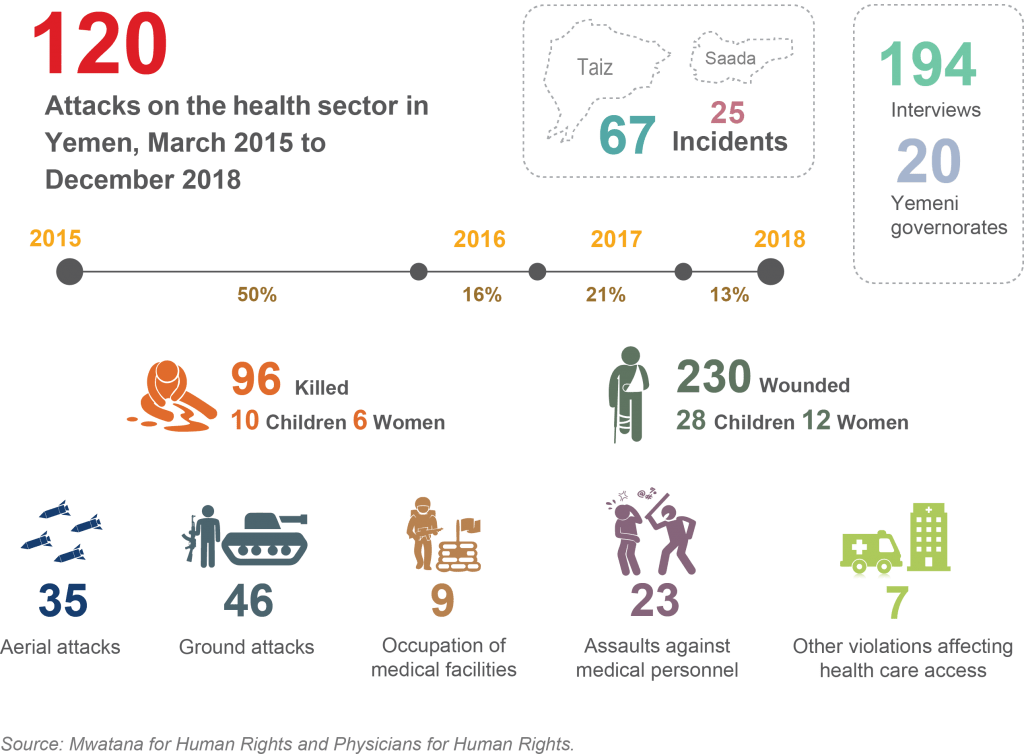
Based primarily on testimonies of witnesses and survivors, this report documents 120 attacks on health facilities and medical personnel in Yemen over a 45-month period. According to data collected by Mwatana, nearly 50 percent of all documented attacks took place in 2015, 16 percent in 2016, 21 percent in 2017, and 13 percent in 2018. The attacks killed at least 96 civilians and health workers, including 10 children and six women, and wounded 230 others, including 28 children and 12 women. Taiz was the governorate most affected by attacks on medical facilities, with 67 documented incidents. Saada governorate was also significantly affected by attacks on health care facilities, with 25 documented incidents, 22 of them airstrikes. The impact of each attack goes far beyond the civilians killed or injured. These attacks have contributed to the virtual collapse of Yemen’s health system, an outcome that has had devastating impacts on the country’s civilian population.

The documented incidents fall into four main categories of attacks: aerial attacks (35), ground attacks (46), occupation of medical facilities (10), assaults against medical personnel (24), and other violations affecting health care access (7). These categories overlap in many of the documented incidents, with aerial and ground attacks often affecting medical personnel, and occupation and militarization leading in some cases to the direct targeting of health facilities by opposing forces.

The documented incidents are not comprehensive and do not represent the total number of attacks on the health sector. Nevertheless, they illustrate patterns of attacks on health, their impact, and specific violations committed in their execution.

Saudi-Emirati-led coalition forces have primarily destroyed and damaged hospitals, clinics, vaccination centers, and other medical points through aerial attacks. The coalition’s attacks impacting health facilities assigned exclusively to medical purposes are evidence of its disregard for these structures’ protected status and apparent unwillingness or inability to comply with the principles of distinction and proportionality – including through target verification, timing of attacks, weapons choice, and prior warning. The Houthi armed group’s and other warring parties’ use of indirect fire weapons with wide-area impact– including mortars – that affected health facilities as documented in this report appears indiscriminate in nature. The Houthis’ and other armed groups’ occupation of health facilities points to a more deliberate violation of the protected status of medical structures and effectively denies medical services to populations in need. Other armed forces, including those supported by individual coalition member states, have commandeered and looted medical facilities and intimidated, and threatened health workers.

International humanitarian law provides special protection for medical personnel and facilities to ensure the functioning of health care throughout a conflict. Yet, attacks on health care, many appearing to amount to serious violations of international humanitarian law, have been routine throughout the course of the conflict in Yemen. The coalition forces’ airstrikes on civilians and civilian infrastructure and the Houthis’ use of weapons with wide-area impact in densely populated urban settings have–over and over again–violated the principles of distinction, proportionality, and precaution set out in treaty and customary international humanitarian law. In Mwatana’s and PHR’s assessment, many of these violations may amount to war crimes. Military commanders and civilian leaders may be prosecuted for war crimes when they knew or should have known about these crimes and took insufficient measures to prevent them or punish those responsible. 

The warring parties in Yemen have repeatedly violated foundational principles of international humanitarian law in their attacks on health care and have perpetrated these abuses with total impunity. This report seeks to contribute to documentation and investigation efforts, so that perpetrators of war crimes and other violations can be held accountable and survivors given redress.

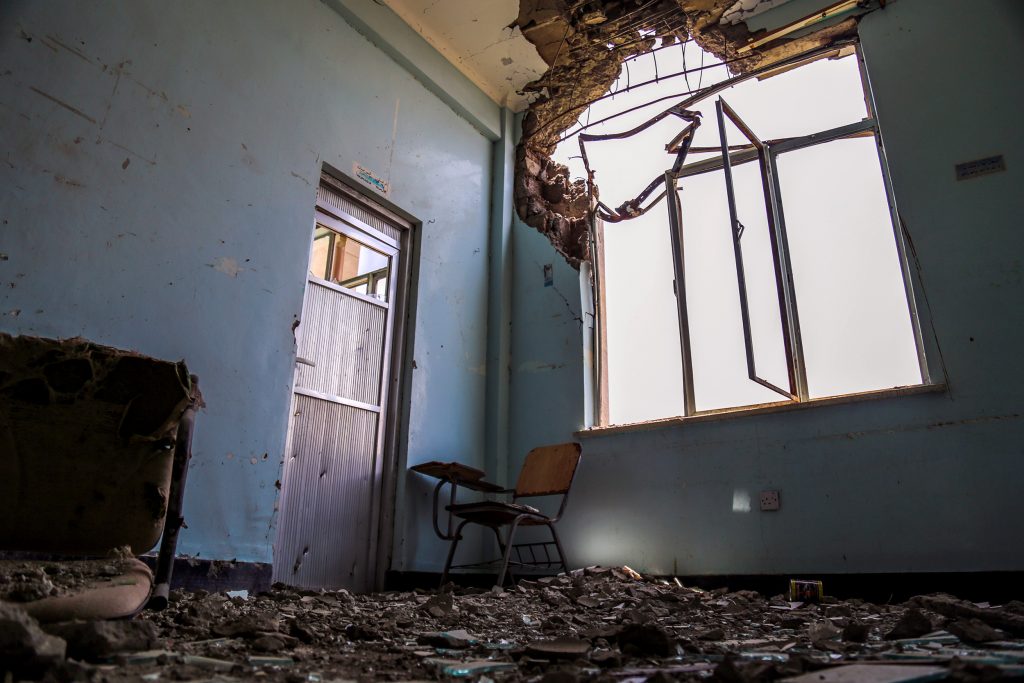
The Post-op Department and Operations Department of al-Thawra Hospital Authority, which was put out of service as a result of shelling (June 2017). Photo: Ahmad al-Basha

Key Recommendations

To the Parties to the Conflict:

  • Respect the protection afforded to medical units and health services and permit health workers to fulfill their ethical responsibilities of providing impartial care to those in need.
  • Facilitate safe, rapid, and unhindered access for humanitarian supplies and personnel to all affected governorates in Yemen.

To the Houthi Armed Group:

  • Respect the protected status of medical facilities and withdraw armed personnel from in or around medical centers.
  • Cease using medical centers for military purposes.
  • Abide by the “no weapons” policies of hospitals and other health facilities.
  • Investigate all incidents of restricting, denying, or confiscating humanitarian aid, and hold those responsible accountable.

To the Yemeni Government and Saudi-Emirati-led Coalition:

  • Abide by the principles of distinction, proportionality and precaution in conducting military operations.
  • Conduct credible, impartial, and transparent investigations into alleged violations of the laws of war and prosecute military personnel, including as a matter of command responsibility, responsible for war crimes in Yemen.
  • Provide prompt and adequate redress for civilian victims and their families for deaths, injuries, and property damage resulting from wrongful attacks, and adopt a unified, comprehensive, and easily accessible mechanism for providing ex gratia (condolence) payments to civilians who suffer losses due to military operations, regardless of the attack’s lawfulness.
The Post-op Department and Operations Department of al-Thawra Hospital Authority, which was put out of service as a result of shelling (June 2017). Photo: Ahmad al-Basha

Background

The Development of the Conflict

For the past decade, Yemen has been wracked by multiple armed conflicts. The parties to these conflicts have flouted the most basic international laws and norms, including by disregarding the special protections afforded by international humanitarian law to medical facilities and personnel throughout a conflict.[1] The latest and most destructive phase of the conflict began in September 2014, when the Houthi armed group,[2] along with forces loyal to former president Ali Abdullah Saleh,[3] forcibly seized the capital, Sana’a, from the control of forces loyal to President Abd Rabbu Mansour Hadi.[4] From that point, the conflict between the Houthis and forces loyal to President Hadi steadily intensified.[5]

In March 2015, President Hadi called first on the Gulf Cooperation Council (GCC) and the Arab League and then on the United Nations Security Council to intervene on his government’s behalf against the Houthi armed group.[6],[7] Saudi Arabia and other members of the GCC responded by forming a military coalition[8] and intervening in Yemen in support of President Hadi. The United States, the United Kingdom, and members of the European Union backed the Saudi-Emirati-led coalition, providing its members with weaponry and operational support. The United Nations Security Council responded to that intensification of the Yemen conflict with the adoption of resolution 2216 on April 14, 2015. Resolution 2216 demanded an end to violence in Yemen and imposed sanctions – including an asset freeze, arms embargo, and a travel ban – on leaders of the Houthi and Saleh armed groups.[9] Several rounds of peace talks have, as of this writing, failed to produce a sustainable ceasefire agreement.[10] The last negotiated ceasefire agreement, centered on the port city of al-Hudaydah, was reached in Sweden on December 13, 2018. It includes the ceasefire in al-Hudaydah, as well as a prisoner exchange agreement and a “statement of understanding” on the status of the city of Taiz, one of the main points of convergence of the conflict.[11] Implementation of these agreements has stalled, however, and the conflict, with its ongoing unlawful targeting of health care infrastructure and health workers, continues.[12]

Al-Muzzafar Hospital in Taiz, which was attacked by gunmen following clashes between armed groups (March 2019). Photo: Ahmad al-Basha/AFP/Getty Images

The Human Toll of the Conflict

Even prior to the most recent escalation of the conflict, Yemen was one of the poorest countries in the world, with the lowest human development indicators in the Middle East and North Africa.[13] The years of intense fighting have led to tens of thousands of casualties[14] and produced a humanitarian catastrophe.[15] Conflict and instability have pushed Yemen to the brink of socioeconomic ruin.[16] These economic conditions, combined with the warring parties’ relentless destruction of infrastructure and denial of humanitarian access, have led to the virtual collapse of basic social services, including Yemen’s fragile health care system.[17] Attacks on health care infrastructure have damaged or destroyed a large number of medical facilities at a time when the need for health care is more pressing than ever.[18] Motivated by alarming patterns of systematic destruction of health facilities in Yemen and other countries, the UN Security Council in 2016 adopted Resolution 2286 condemning attacks on the medical sector and demanding an end to impunity for those responsible. Many health care facilities have shut down due to a lack of funding, medicine, and staff.[19] By the end of 2016, more than half of Yemen’s health facilities had closed,[20] and those that remained operational lacked specialists, essential equipment, and medicines.[21] There is a significant shortage of medical professionals, with only 10 health workers per 10,000 people. This ratio is far below what WHO considers a minimum of 22 health workers per 10,000 people necessary to provide the most basic health coverage.[22] Considering that 19.7 million people in Yemen lack adequate health care, the costs of the death of a health worker or the loss of another hospital are immense.[23] Outbreaks of communicable diseases, including diphtheria and cholera, are affecting a large number of Yemenis, amplified by a conflict-linked drop in vaccination and the breakdown in the country’s water and sanitation systems.[24] As of August 2018, there had been approximately 2,036,960 suspected cases of cholera, including 3,716 fatal cases of the disease.[25]

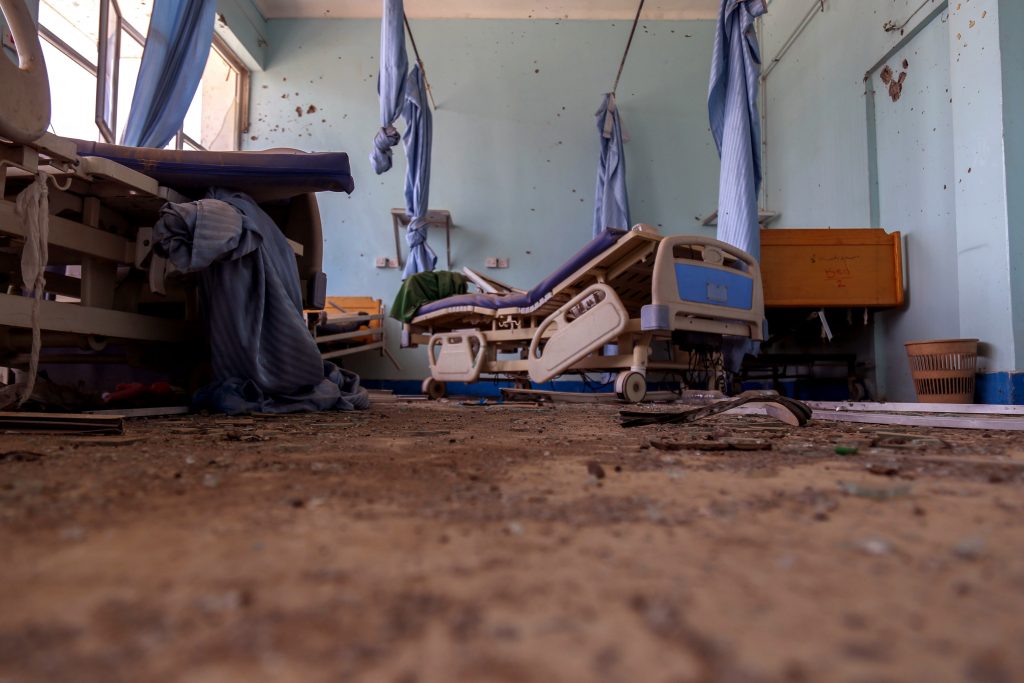
The intensive Care Department of alThawra Hospital Authority in Taiz city after it was shelled in clashes (May 2016). Photo: Ahmad al-Basha

Methodology 

Mwatana for Human Rights (Mwatana) and Physicians for Human Rights (PHR) co-authored this report. The findings are based on data collected by Mwatana between 2015 and 2018 and analyzed by both Mwatana and PHR. The data examined in this report was gathered as part of a wider effort by Mwatana to document human rights abuses and violations of international humanitarian law within the context of the conflict in Yemen. Twenty-four Mwatana researchers in 20 Yemeni governorates collected data through semi-structured interviews with more than 194 witnesses and survivors and direct observation of scenes of attacks. Mwatana researchers obtained verbal informed consent from every survivor and witness whose testimony was included. The information was de-identified by PHR researchers to maintain full confidentiality.

Through their extensive local networks, Mwatana’s researchers investigated reports of specific violations – including attacks on medical facilities – by parties to the conflict. Researchers visited the locations of attacks when conditions permitted and gathered multiple testimonies and photographic evidence where possible to document and verify the details of each incident. Researchers aimed to corroborate each incident with a minimum of three independent witness statements. They relied upon fewer testimonies when security conditions prevented them from collecting more information. The research team cross-checked testimonies internally and verified them against other sources of information, including news, human rights, and investigative reports for validation. It should be noted that security conditions often prevented field researchers from visiting attack sites immediately following the occurrence of attacks.

This report groups documented incidents under thematic headings to highlight the primary patterns of attacks on health that have been a defining feature of the conflict in Yemen. The report describes a limited number of attacks on health in Yemen and does not represent a comprehensive documentation of such violence. While Mwatana has documented 120 attacks on health from 2015 to 2018 (a complete list is provided in the annex), this report highlights only a portion of those incidents, selected to reflect examples of types of attacks by different perpetrators of the attacks. PHR and Mwatana scrutinized all available documentation, including witness statements, photos, and research notes to provide an in-depth analysis of individual incidents as well as to document the patterns and impact of attacks on health in the Yemen conflict. The report aims to provide a snapshot of unlawful attacks on health facilities and personnel by parties involved in the Yemen conflict.

Findings

Mwatana has documented 120 attacks on the health sector in Yemen between 2015 and 2018 affecting health facilities, medical professionals, and patients’ access to health care. According to data collected by Mwatana, nearly 50 percent of all documented attacks took place in 2015, 16 percent in 2016, 21 percent in 2017, and 13 percent in 2018. The attacks killed at least 96 civilians and health workers, including 10 children and six women, and wounded 230 others, including 28 children and 12 women. Taiz was the governorate most affected by attacks on medical facilities, with 67 documented incidents.[26] Saada governorate was also significantly affected by attacks on health care facilities, with 25 documented incidents, 22 of them airstrikes.

The documented incidents fall into four main categories of attacks: aerial attacks (35), ground attacks (46), occupation of medical facilities (9), assaults against medical personnel (23), and other violations affecting health care access (7). These categories overlap in many of the documented incidents, with aerial and ground attacks often affecting medical personnel, and occupation and militarization leading in some cases to the direct targeting of health facilities by opposing forces. The highlighted cases indicate that the parties to the conflict in Yemen have repeatedly violated foundational principles of international humanitarian law in their attacks on health care.

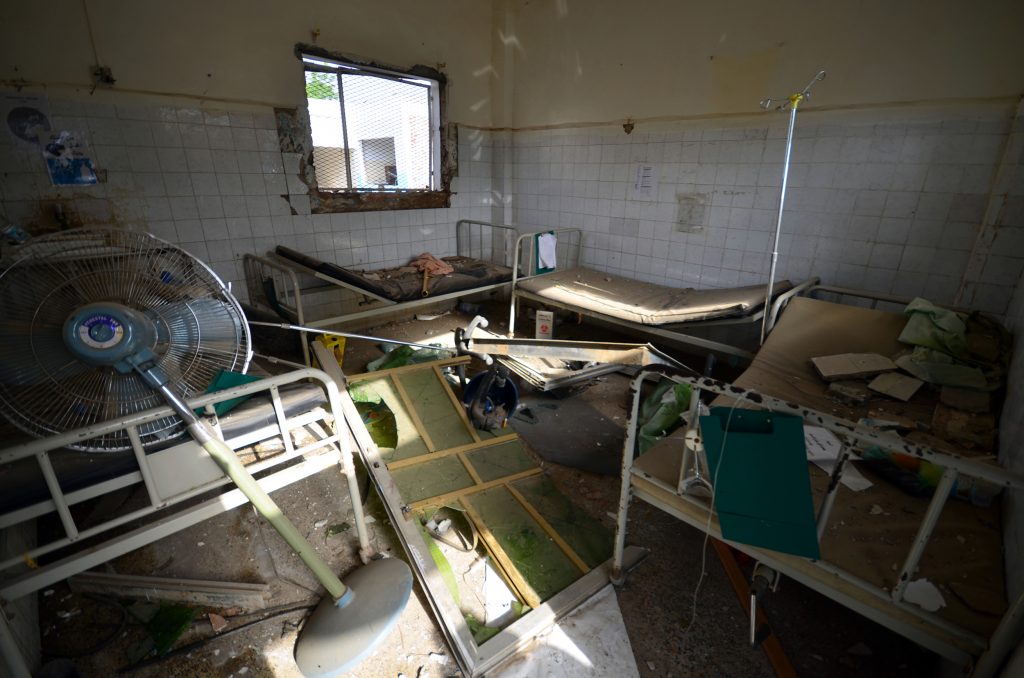
A hospital operated by Doctors Without Borders (MSF) in Abs after Saudi-Emirati-led coalition aircraft bombed the courtyard, killing 19 people, including five children (August 2016). Photo: Essa Ahmed/AFP/Getty Images

Airstrikes on Health Facilities

Airstrikes have been a defining feature of the Yemen conflict, devastating the country’s infrastructure and causing significant civilian casualties.[27] The Saudi-Emirati-led coalition – the party which maintains near-exclusive control over airpower in the conflict – has conducted an estimated 19,512 air raids[28] since its intervention in Yemen began in 2015.[29] The coalition has repeatedly carried out attacks that have impacted civilians and civilian objects protected under international humanitarian law. As of June 2019, coalition airstrikes remain the leading cause of conflict-related civilian deaths, with 67 percent of civilian fatalities resulting from direct strikes, despite the significant decrease in the number of airstrikes impacting civilians in Yemen since November 2018.[30]

Mwatana has documented 35 coalition aerial attacks on 32 individual health facilities between 2015 and 2018. The 35 airstrikes killed at least 31 people and medical workers and wounded 56 civilians and health workers in 10 governorates: Amanat al-Asimah, Amran, Hajjah, al-Hudaydah, al-Jawf, Lahj, Marib, Saada, Sana’a , and Taiz. Most airstrikes caused significant damage to the facilities in question, destroying vital medical units and causing widespread disruptions in access and service provision.

In six of the documented cases, Houthi forces had been occupying the facility on or near the date of attack, thereby compromising its protected status. The majority of coalition attacks took place in 2015, September being a particularly violent month, with six recorded incidents. Saada governorate, the heartland of the Houthi movement, was the most affected by coalition airstrikes, with 27 documented attacks on health facilities.

Saudi Arabia and the United Arab Emirates (UAE) have played leading roles in the aerial campaign. The coalition they lead has relied on aircraft, munitions, and maintenance provided by the United Kingdom,[31] the United States,[32] and members of the European Union.[33] In addition, the United Kingdom[34] and the United States have provided intelligence and operational support to the coalition, including through the deployment of military advisors at coalition command level.[35] From April 2015 to November 2018, the United States provided mid-air refueling to coalition air forces.[36] Rising public outrage over the bloodshed – especially in the aftermath of the extrajudicial killing by Saudi officials of journalist Jamal Khashoggi[37] in Istanbul – has led several governments to decrease their cooperation with and support of the coalition. The Danish, Dutch,[38] Finnish[39] and German governments, have all restricted or suspended arm sales to Saudi Arabia, and Norway has suspended exports of munitions to the UAE.[40] Calls for restrictions of arms continued to grow into 2018. Despite growing internal opposition and legislative and judicial efforts to halt arms sales to members of the coalition, France,[41] Spain[42], the United Kingdom, and the United States continue to support the coalition with weapons and other military materiel.

In addition to carrying out indiscriminate and disproportionate airstrikes, the Saudi-Emirati-led coalition has been criticized for lack of transparency in its operations.[43] It remains unclear what precautions the coalition has adopted to minimize harm to Yemen’s health facilities and personnel.[44] These precautions would include clarifying the methods the coalition uses to carry out proportionality assessments or to distinguish between civilians and combatants, as well as the steps, if any, the coalition has taken to discipline or hold accountable members of its armed forces credibly implicated in international humanitarian law violations or to provide redress to civilian victims of unlawful attacks.[45] A report published in August 2018 by the UN Group of Eminent Experts on Yemen highlighted the coalition’s failure to abide by the laws of war and pointed to repeated violations of the principles of distinction and proportionality.[46] The report also criticized the use of double-tap attacks[47] and disregard for no-strike lists.[48],[49] The Group’s findings bring into question the coalition’s willingness or ability to abide by  international law – or even to stick to its own procedures – and demonstrate the coalition’s disregard for the protection of civilians and civilian structures.[50] Evidence of the coalition’s continued failure to comply with international law has led the Group of Eminent Experts – the body mandated by the UN with investigating violations and abuses in Yemen – to conclude that specific coalition air strikes may have amounted to war crimes.[51]

The case below, of an attack by coalition forces on a hospital in Hajjah Governorate, highlights one example of coalition aerial attacks on medical facilities in Yemen.

August 15, 2016 – Airstrike on Abs Governmental Hospital, Abs District, Hajjah Governorate

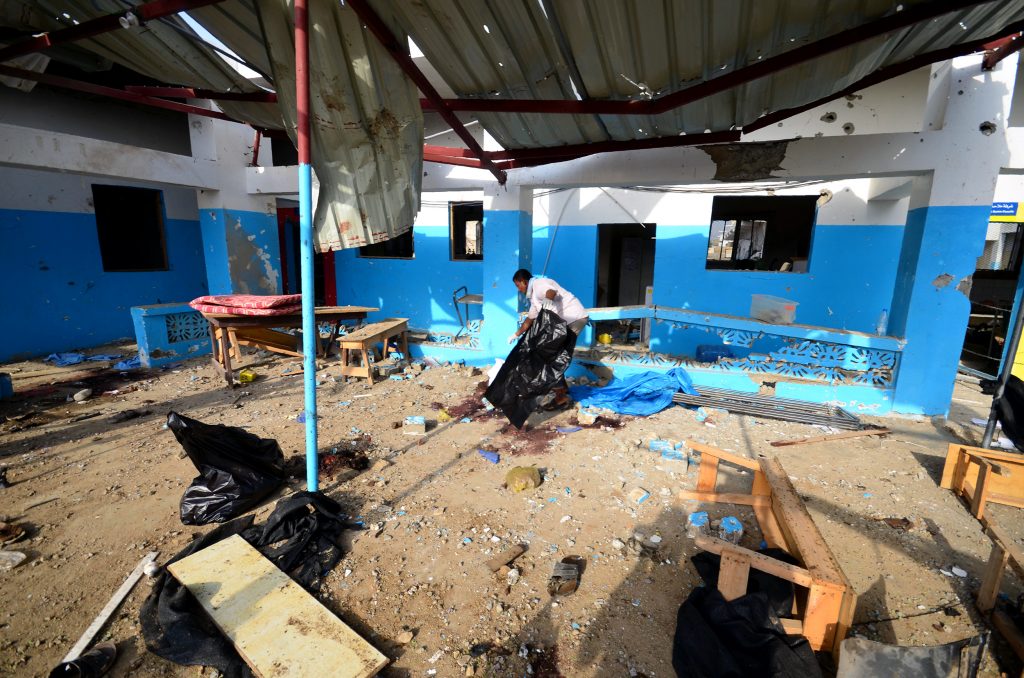
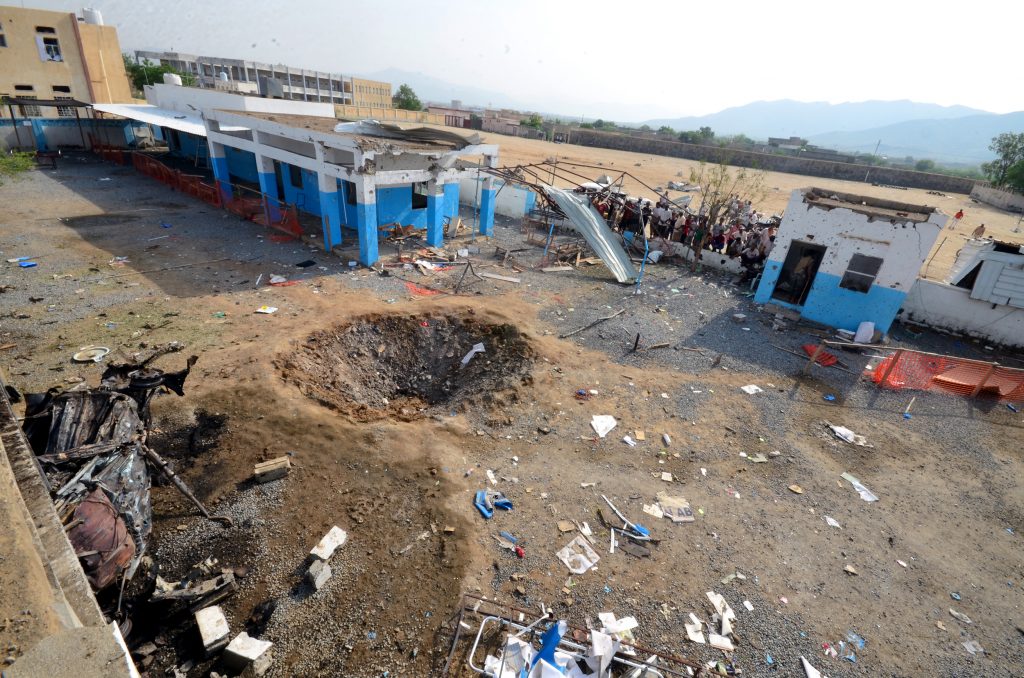
At approximately 3:40 p.m. on Monday, August 15, 2016, coalition aircraft bombed the Medecins Sans Frontières (MSF)-supported Abs Governmental Hospital in Hajjah governorate. According to witnesses and survivors interviewed by Mwatana’s researchers in the aftermath of the attack, the strike hit the hospital’s main courtyard, severely damaging the emergency room, the maternity ward, and the pharmacy, among other sections. The facility was clearly identified by six MSF logos visible from the air,[52] and MSF had repeatedly shared its coordinates with coalition forces. The attack occurred without prior warning and killed 19 people, including five children, and injured 24 others.[53] There are no indications that the facility’s protected status was compromised in any way (such as by having sheltered able-bodied combatants or being used for other military purposes) prior to the attack, which could have caused it to lose its protected status under the Geneva Conventions.[54] In its assessment of the incident, the Joint Incident Assessment Team (JIAT)[55] – a body created by the coalition to investigate claims of civilian casualties – classified the attack as an “unintended error.” The attack forced the facility’s closure for three months. In PHR and Mwatana’s assessment, the attack against the Abs Rural Hospital was a serious violation of the laws of armed conflict and appears to constitute a war crime.  

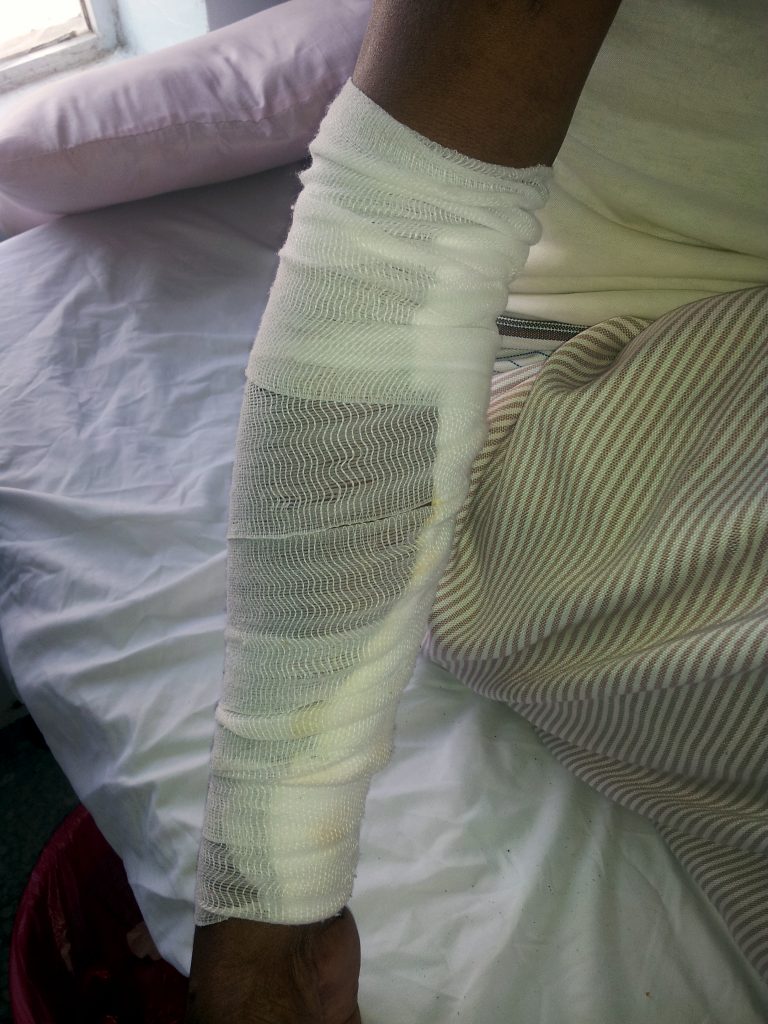
A patient at Abs Governmental Hospital in Abs district, Hajjah governorate after it was attacked by coalition aircraft (August 2016). © Mwatana

Witnesses stated that 10 to 15 minutes prior to the attack, a vehicle drove into the courtyard of the hospital, transporting at least one civilian who had been injured in a coalition airstrike on a Houthi checkpoint in the town of Beni Hassan, about 16 km northwest of Abs.[56] “He came in with shrapnel wounds to his face and body. He was an ice cream salesman, not a Houthi,” one of the hospital guards said.  In its investigation report on the attack,[57] MSF stated that the car was visually inspected by an employee at the hospital gate – as is standard practice in that facility – who reported that the passengers wore civilian clothes and that he observed no weapons in the vehicle. The air strike landed directly on the vehicle shortly after the injured man was put on a gurney and taken into the emergency room. A local school teacher who was close to the hospital when it was struck described the scene:

“When we entered the hospital courtyard, we saw a large crater, about three meters wide. All around it were car parts, bits of metal, and pieces of flesh. There was a severed human head resting on the ground. There was an overturned car in flames. There was shrapnel everywhere, and fragments of people’s bodies – halves, quarters. It was a slaughter. Many people were unidentifiable, torn apart and burnt to ashes. There was a woman’s body hanging from the metal fence. Another woman was still holding her child. Both of them were dead. We collected all the pieces and put them in a large tarpaulin.”

A Saudi general informed MSF about an hour-and-a-half after the air strike that the objective of the attack was a “moving vehicle that had entered the hospital compound.”[58] In its investigation of the attack, JIAT concluded that,[59] following an airstrike on a “gathering of Houthi leaders in the north of Abs,” coalition forces tracked a vehicle that left the location heading south. According to JIAT, the vehicle was directly targeted when it stopped by a building that “displayed no signs of being a medical facility,”[60] but turned out to be the Abs Governmental Hospital. The JIAT spokesperson went on to specify that the damage to the Abs Hospital was the unintended consequence of an attack on a “legitimate military target” – i.e. the vehicle – that happened to be in the vicinity of the medical facility.[61]

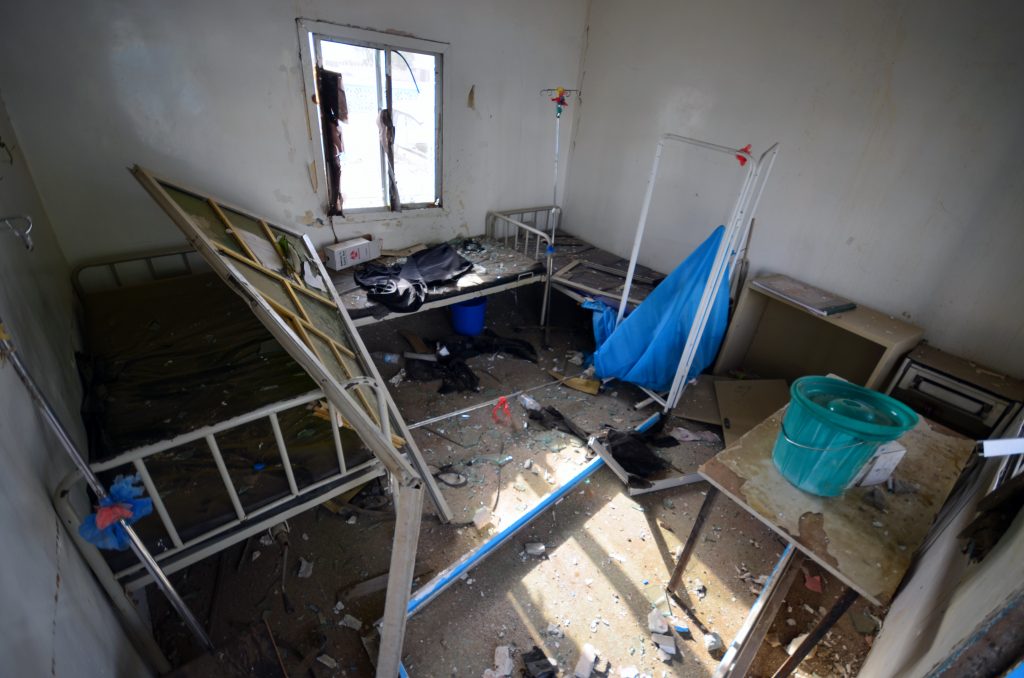
A hospital operated by Doctors Without Borders (MSF) in Abs district, Hajjah governorate after it was hit by a coalition airstrike (August 2016). Photo: Abduljabbar Zeyad

The MSF report on the incident directly contradicted JIAT’s findings. MSF specified that the facility was being used exclusively for the provision of medical services and that there were measures in place that ensured “the transparent and neutral functioning of the Abs hospital as a medical facility protected under international humanitarian law.”[62] Every witness statement collected by Mwatana described a regularly functioning medical facility packed with patients and visitors.

Shelling of Health Facilities

The use of land-based explosive weapons with wide-area impact by parties to the Yemen conflict has also caused widespread death and devastation. Mwatana has documented 46 cases of ground attacks between 2015 and 2018, which killed at least 45 civilians and wounded 14 civilians and health workers in five governorates: Aden, Amanat al-Asimah, al-Hudaydah, Marib, and Taiz. Around two thirds were directed at al-Thawra hospital in Taiz.

The inherent inaccuracy and often indiscriminate nature of weapons like mortars, unguided rockets, and artillery and their large destructive radius makes harm to civilians and vital civilian infrastructure extremely likely when these weapons are deployed in populated areas,[63],[64] as has been typical in Yemen. In fact, a 2015 study on the use of explosive weapons in Yemen by the non-profit organization Action Against Armed Violence[65] and the United Nations Office for the Coordination of Humanitarian Affairs found that three-quarters of ground-launched incidents targeted populated areas.[66] Houthi and pro-Houthi forces have been particularly – though not exclusively – implicated in indiscriminate ground-launched attacks on civilian areas,[67] many of which have directly or indirectly affected medical facilities.

Al-Thawra Hospital in Taiz was the victim of at least 45 documented attacks, including ground-launched attacks, armed incursions, and looting. In August 2015, the facility was attacked eight times and was hit with 22 shells in two days, damaging the hospital’s buildings and equipment and putting the facility out of service. Of the 45 attacks, 26 involved mortar shells and five involved missiles that hit the hospital. The apparent indiscriminate use of mortar shells caused severe and repeated damage to the burn center, surgical unit, emergency room, morgue, internal medicine department, gynecology department, resuscitation department, and nephrology department, as well as the doctors’ residence. The case of Taiz’s al-Thawra Hospital, as well as the other case below, highlights the severity of damage that ground-launched weapons can inflict on health facilities.

August 2, 2018 – Mortar Attack on al-Thawra Hospital, al-Hudaydah

At approximately 4:45 p.m. on August 2, 2018, al-Thawra Hospital,[68] about 1.5 kilometers south of al-Hudaydah’s harbor, was hit by three mortars. The attack killed four women and one child, wounded six adults and one child, and put thousands of civilians at risk of losing essential medical services. Mwatana and PHR found no evidence indicating the status of al-Thawra Hospital had been compromised in any way that could have led to the medical facility losing its protection from attack. In its assessment of the incident, the Panel of Experts on Yemen also stated not having “received any evidence, nor seen any allegations, that the al-Thawra Hospital was being used to commit acts harmful to the enemy on 2 August 2018.”[69] The Panel of Experts has concluded that “[the attack] amounts to an indiscriminate attack and constitutes a serious violation of international humanitarian law.”[70] Mwatana and PHR have concluded that the party responsible for the attack should have been aware that the area was teeming with civilians, and that it was home to an extremely important medical facility. While the existing evidence does not lend itself to a conclusive verdict on the perpetrator of the attack, the details of the incident indicate the attack constituted a serious violation of international humanitarian law, and an apparent war crime.  

The attack on al-Thawra hospital occurred while first responders were bringing dozens of civilians into the hospital who were wounded in a mortar attack on the fish market at the al-Hudaydah harbor.[71] As casualties from the harbor attack were streaming into al-Thawra Hospital about half a kilometer away, three mortars fell around the facility. A fish trader injured by a mortar explosion at the harbor, who had been taken immediately to al-Thawra Hospital by his brothers, described the scene:

“I got to the emergency room, where doctors put me on an IV. Barely 10 minutes had passed when we heard a very close explosion. We were told by people in the emergency room that the hospital’s gate was just hit. I ripped the IV out of my arm and started running. I was in one of the hospital’s halls when I heard a second explosion, and then a third. I left the hospital from the northern gate, got on a motorbike and rode home.”

The first mortar landed on busy al-Thawra street right in front the hospital’s eastern gate, killing and injuring a number of bystanders. A local shop owner told Mwatana “One of the mortars landed as a pregnant woman was getting off a bus. There were about four girls around her. They were all hit, along with others, including some of the casualties of the attack on the fish market. I watched all of this unfold and I was completely frozen. I couldn’t move.” A second mortar landed less than a minute later on the hospital’s statistics center, in the hospital compound, puncturing its roof, followed by a third that landed about 200 meters north of the hospital’s entrance in front of Ibn al-Nafis Pharmacy.

While the targeted areas are at least 500 meters apart, the attacks on the harbor and the attacks on the area surrounding al-Thawra Hospital occurred within the same area of al-Hudaydah city, around the same time of day, and were carried out using the same type of munitions. It is difficult to know whether the hospital was the target of the attack due to the extensive damage to the surrounding area. Based on analyses of open sources, both the international investigative group Bellingcat[72],[73] and the UN Panel of Experts on Yemen[74] separately determined that the attacks were most likely perpetrated using 120mm mortars that have characteristics consistent with ordnance produced by German manufacturer Rheinmetall or its South African subsidiary Rheinmetall Denel Munitions, noting that these munitions have been supplied to Saudi and Emirati forces. Bellingcat concluded that the mortars were most likely launched from an area south of al-Thawra Hospital based on an examination of the shape of one of the craters caused by the explosions.

At the time of the attack, the Houthis were in control of most of al-Hudaydah, and the area had been witnessing a significant escalation in violence since the coalition and affiliated forces launched their offensive on the port city in June. Although within Houthi-controlled territory, the fishing harbor and the hospital were not far from an active front line, with coalition forces stationed about three kilometers south, near al-Hudaydah Airport. While both the type of munition used and the direction of the attack point to coalition forces as the perpetrators, neither Bellingcat nor the Panel of Experts was able to positively attribute responsibility, primarily due to the possibility that Houthi forces could have acquired the ordnance in question through illegal means or battlefield recovery.

A hospital operated by Doctors Without Borders, which was hit by a Saudi-Emirati-led coalition airstrike that killed 19 people (August 2016). Photo: Essa Ahmed/AFP/Getty Images

Occupation of Health Facilities

In addition to air and land attacks by a variety of explosive munitions, parties to the conflict in Yemen have frequently occupied medical facilities. The Houthis and pro-Saleh military forces – including the Hassam and Abu al-Abas brigades – have used occupation and militarization of hospitals to exert control over medical services in areas under their authority. Health services have been weaponized to deny care to populations in need or to impose conditions on service providers. Armed groups have commandeered medical facilities as a means to prioritize care to their members or supporters, a direct violation of the laws protecting medical facilities and personnel and an interference with health workers’ professional ethic of nondiscriminatory health care provision. Armed groups have also used their control of medical facilities as a revenue generator by imposing access fees on civilians who need medical services.

In the documented cases, the occupation of medical facilities by armed groups was often accompanied by assaults on medical workers, the eviction of health workers and patients, the looting of equipment and medicine, and the positioning of armed groups in and around a given facility. In some cases, the occupation of medical facilities also included a temporary or permanent takeover of facilities and the replacement of civilian administrations with members of an armed group. In addition to occupying health facilities, armed groups often invaded medical facilities for short-term purposes. Mwatana has documented cases of armed groups entering hospitals and forcing medical professionals to prioritize the treatment of injured combatants, searching for and executing patients suspected of belonging to rival armed groups, and temporarily deploying armed elements within these facilities for military purposes.

In addition to restricting access to already scarce services and disrupting the normal functioning of medical facilities, occupation by armed groups also compromises the protected status of those facilities and the health workers within, thereby increasing the likelihood of attack by other parties to the conflict. In at least five cases documented by Mwatana, the occupation of medical facilities by Houthi forces was followed by coalition airstrikes on those facilities.

2011-2018 – The Occupation and Destruction of al-Ghail Medical Center, al-Ghail, al-Jawf

On July 10, 2011, Houthi forces commandeered the al-Ghail Medical Center and converted it into a military health facility dedicated to the treatment of their members and supporters as they expanded their territorial control from Saada into al-Jawf governorate. The Houthis dismissed the four medical professionals who worked at the hospital prior to the Houthi occupation and brought in their own medical staff.

The Houthi occupation of the al-Ghail Medical Center deprived the local civilian population of access to medical care, which forced them to take long, expensive, and often risky journeys for basic health services. Many residents had to drive to al-Hazem, about 40 minutes away, while others had to travel about five hours to Sana’a  for specialized treatment. A local resident told Mwatana researchers how ordinary illnesses and injuries became costly and potentially debilitating in the absence of immediate access to medical care. “We’re really suffering because of the Houthi occupation of the medical center here in al-Ghail,” he said. “If one of our children or women becomes ill, even if it’s a fever or some other minor indisposition, we have to go to private clinics out of town. Many people around here don’t have the means to pay for the services, much less the travel. God only knows how they live.” Another resident echoed the same sentiments, telling Mwatana how, when his own daughter came down with a case of food poisoning, he had to pay the equivalent of $40 – a sum he could barely afford, and an insurmountable fee for many in Yemen – to transport her to a hospital in al-Hazem.

The Houthis continued to occupy the medical center for the next five years, denying its services to the local population. Following the Saudi-Emirati-led intervention in Yemen in March 2015, the area witnessed a significant escalation in violence. On February 24, 2016, coalition forces attacked the Houthi-occupied medical facility in al-Ghail with three missiles, almost entirely destroying it. After the aerial attack, one local resident lamented the state of affairs in al-Ghail: “Our directorate is completely cut off from the state. We have no access to basic services: no electricity, no water, no education, and no health services except for that one center which is now destroyed.”

Eight months after the airstrike, as lines of control shifted, forces associated with the Yemeni Popular Resistance[75] took over the ruined, inactive facility, looted what they could salvage of the medical equipment and furniture, and converted the building into a military base. A local official recalled trying to re-establish the medical center after the Houthi pull-out: “We tried to get some of the leaders at the governorate level and in the military to dissociate the medical center from all things related to combat, recover some of the looted equipment and rehabilitate the building. We’re still waiting on promises they made to us.”

The occupation, bombing, and looting of al-Ghail Medical Center is a tangle of violations that exemplifies the complexities of the conflict in Yemen. The Houthi take-over of the facility and the subsequent arbitrary denial of medical access to most civilians in the area is a violation of international humanitarian law.[76] The Houthis, when they controlled the area, denied care to the sick and wounded and failed to respect the right to access health care on a nondiscriminatory basis and to abstain from arbitrarily limiting or denying such access to the wounded and sick.

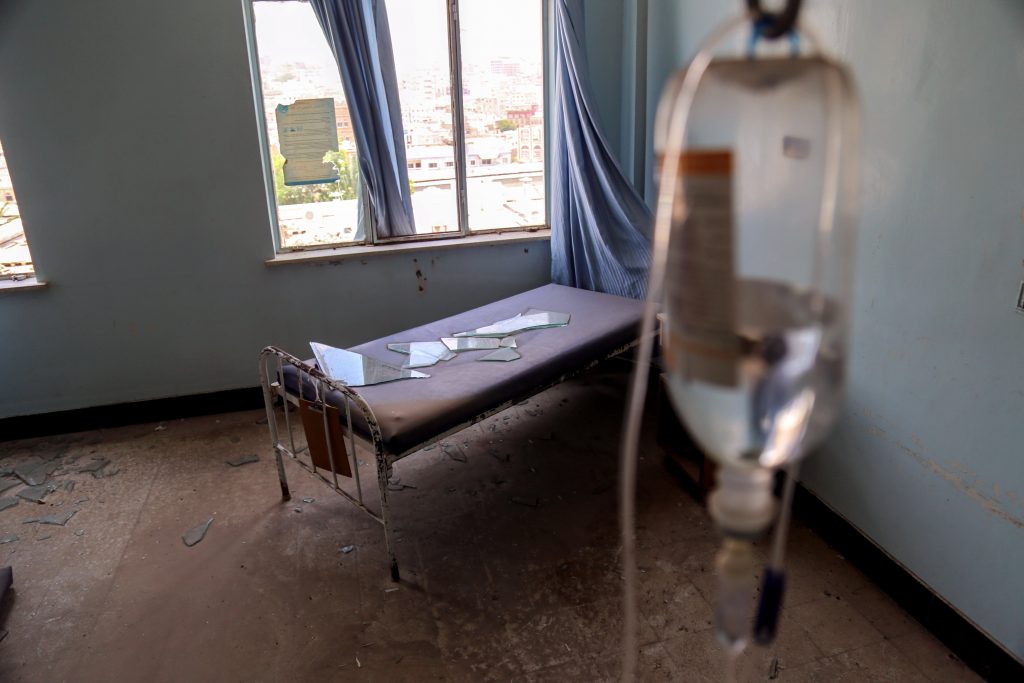
A patient room of a hospital operated by Doctors Without Borders (MSF), which was hit by an airstrike by Saudi and UAE-led coalition in Abs district, Hajjah governorate (August 2016). Photo: Abduljabbar Zeyad
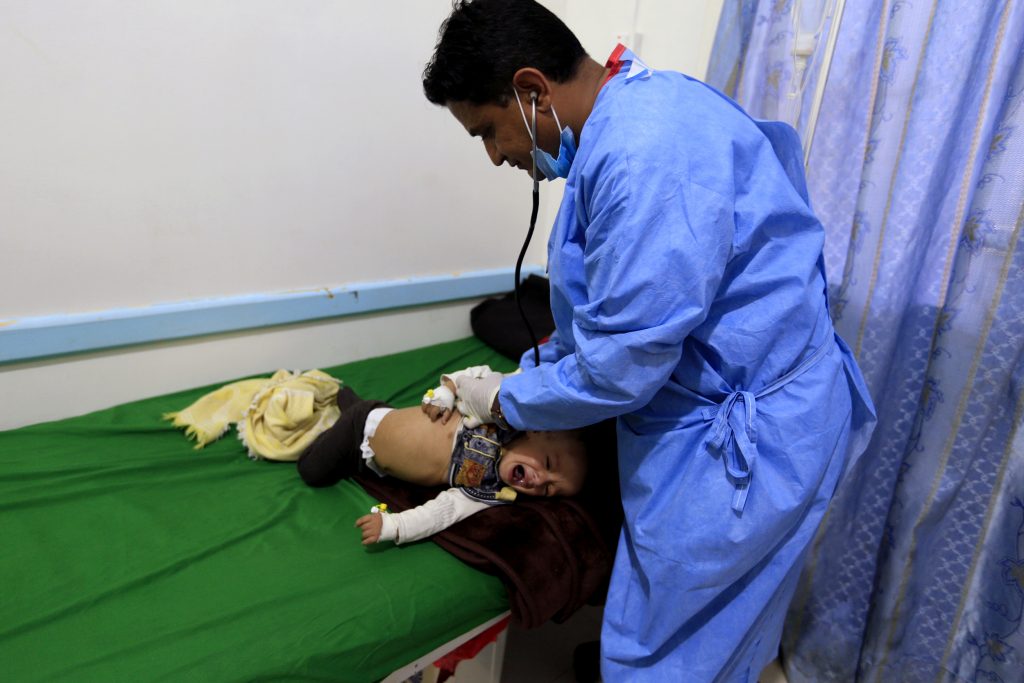
A Yemeni child suspected of being infected with cholera is treated at a hospital in Sanaa (October 2015).Photo: Mohammed Huwais/AFP/Getty Images

Assaults on Health Workers

Both internationally recognized government authorities and de facto authorities have a responsibility under international humanitarian law to minimize harm to civilians and civilian infrastructure, including medical infrastructure, and to allow the unhindered and impartial provision of medical care. The breakdown in the rule of law in Yemen has created a security vacuum in which the protected status of medical facilities and personnel has lost meaning. Health workers in Yemen have been seriously affected by the widespread disregard for international humanitarian law and international human rights law by all parties to the conflict. Parties to the conflict, including coalition forces, forces affiliated with the Yemeni government, and Houthi forces, have threatened, denied payment, intimidated, injured, abducted, detained, and killed health workers. Health workers in Yemen have also been repeatedly exposed to the shelling, bombing, looting, and takeover of the facilities in which they work.

Mwatana has documented a variety of attacks on medical personnel in at least nine different hospitals in Abyan, Aden, Lahj, Sana’a, and Taiz. These attacks range from intimidation and threats to physical assault. Groups including the Emirati-supported Security Belt Forces, the Houthis, al-Qaeda-affiliated armed groups, and pro-government forces have all been identified as responsible for such attacks.

Mwatana has documented 17 cases of death and injury of medical personnel working in hospitals that were attacked. In addition to the risks associated with attacks on medical facilities, health workers have also faced more specific assaults that have prevented them from providing their services to people in need. For example, on April 11, 2015, five Houthi fighters forced their way into al-Waht Hospital in Lahj Governorate. They harassed the medical staff for seven hours before evicting them from the hospital. The fighters accused the medical staff of treating terrorists (ISIS) and actively prevented them from carrying out their duties in a nondiscriminatory manner and in line with medical ethics.

In several documented cases, health workers suffered numerous abuses at the hands of hospital authorities supported by specific armed groups. Between 2016 and 2017, following months of being denied payment and benefits, a group of medical professionals working at al-Thawra Hospital in Sana’a decided to start protesting for their rights. Doctors, nurses, midwives, medical technicians, and administrators were arbitrarily arrested, disappeared, fired, and otherwise threatened and intimidated by the hospital upper administration and Houthi forces – the de facto authority in the area.

The levels of lawlessness and insecurity have also placed medical professionals and support staff at the mercy of local armed groups. Incursions into health facilities have contributed to the growing sense of fear and lack of safety associated with medical facilities. On March 19, 2017, armed members affiliated with the Yemeni Popular Resistance specifically tasked by local authorities with the protection of al-Thawra Hospital in Taiz attempted to set up a protection racket, demanding the hospital’s treasurer pay them a percentage of the institution’s earnings. When the treasurer refused, members of the armed group pulled him out of his office and physically assaulted him in front of hospital staff and patients. Five days later, at the same facility, a group of unknown gunmen forced their way into the hospital and, in full view of health workers, shot dead a patient who had just undergone surgery. The incident led to the full evacuation of the hospital and a general strike by its staff in protest. Thousands of patients were deprived of critical care for five days as a result.

These incidents illustrate how medical professionals have been the victims of a range of human rights abuses and international humanitarian law violations that have profoundly affected their ability to provide care. Because of the warring parties’ abusive practices and the failure of authorities to protect

health professionals’ independence and impartiality, many have fled areas where their services are most needed. Prior to the latest phase of the conflict in 2014, foreign medical workers comprised approximately 25 percent of the health workforce.[77] By the middle of 2015, 95 percent of foreign medical professionals had left the country, depriving Yemenis of nearly a quarter of the country’s desperately-needed health service providers.[78] Since then, the situation has only deteriorated, with medical workers reporting working in constant fear and instability.[79]

A patient room at a hospital operated by Doctors Without Borders (MSF) which was struck by an airstrike by Saudi and UAE-led coalition in Abs district, Hajjah governorate (August 2016). Photo: Abduljabbar Zeyad

December 12, 2017 – Intimidation and Threatening of Hospital Staff, al-Thawra Hospital, Taiz

A harrowing armed incursion into al-Thawra Hospital occurred on December 12, 2017. That afternoon, armed elements believed to be affiliated with al-Qaeda attacked a group of Central Security[80] soldiers, loyal to the Hadi government, guarding the Taiz University campus. Two of the injured soldiers were evacuated to al-Thawra and were pursued by four vehicles full of armed men. The armed group shot its way past the hospital guards, into the courtyard and, from there, into the emergency ward. They then opened fire inside the emergency ward, threatening to execute doctors, nurses, and other staff members if they did not reveal the whereabouts of the two injured soldiers who were brought in earlier. A man who was visiting a patient described the scene:

“I was standing outside the intensive care unit with a number of other visitors and we see this silver [Toyota] Landcruiser and three other cars pull up to the main gate. There was a lot of screaming. I think the hospital guards were trying to prevent the men from entering the hospital’s grounds with their weapons. Moments later, we start hearing heavy gunfire and see the hospital guards running into the courtyard. The bullets got closer to us and we ran to the very end of the courtyard and hid by the burn unit. The armed men entered the main building and we kept hearing gunfire from the emergency room area for the next 30 minutes. I have no idea what happened in there.”

In the firefight that took place in the emergency ward and various hospital halls, the hospital guards managed to repel the armed men while the injured soldiers were moved to the intensive care unit on the first floor. Security reinforcements eventually reached the hospital and the armed group retreated. The attack resulted in the temporary closure of the majority of the hospital’s departments. According to a high-ranking hospital official, the psychological toll of the attack on the hospital’s staff and its patients was enormous. The official referred to the attack as a “full-fledged terrorist act,” adding that it was a “violation of all humanitarian values, religious norms, and international laws, and a heinous war crime.”

Other Violations Affecting Health Care Access and Services

Looting and restrictions on humanitarian aid have also greatly affected the medical system’s capacity to respond to Yemenis’ surging health needs.

On one side, the Saudi-Emirati-led coalition has severely limited imports of medicine, fuel, humanitarian aid, and food by imposing far-reaching restrictions on humanitarian and commercial shipping and a wide range of bureaucratic impediments[81] that have had a devastating effect on the civilian population across Yemen, especially in areas under Houthi control. Between November and December 2017, the coalition imposed a total blockade and, in the first days, prevented all humanitarian aid and commercial trade from entering the country. It then maintained extreme restrictions, including preventing much aid and nearly all commercial imports to some of the country’s most important ports, as well as humanitarian flights to Sana’a , for a period of weeks. The Group of Eminent Experts on Yemen concluded that naval and air restrictions imposed by the coalition and Yemeni government were in violation of international human rights law and international humanitarian law, including restrictions at sea and the closure of Sana’a  Airport. The Group noted that “such acts, together with the requisite intent, may amount to international crimes. As these restrictions are planned and implemented as the result of State policies, individual criminal responsibility would lie at all responsible levels, including the highest levels, of government of the member States of the coalition and Yemen.”[82]

Houthi forces have also imposed local sieges,[83] routinely diverted aid, and confiscated medical and humanitarian supplies. The gravity of the situation is apparent in the recent World Food Program decision to cut general food distribution to some areas in Houthi-controlled territory.[84] This decision came after revelations of systemic abuses of aid by Houthi authorities[85] and their refusal to implement a biometrics system intended to prevent aid fraud. WFP resumed its distribution of food in Sana’a  following a two-month stoppage after reaching an agreement with Houthi authorities on safeguards to ensure assistance goes to those most in need.[86]

In addition, parties to the conflict have turned visas and permissions for internal travel into mechanisms to control humanitarian assistance.[87] Delaying or denying the issuance of visas to humanitarian workers has become standard practice. In 2016, it took MSF five months of “intense negotiations” to get approval for the delivery of two trucks full of essential medical supplies into Taiz, leaving the civilian population there to deal with extreme shortages of supplies in the meantime.[88]

According to a Watch List[89] report, the UN verified 65 incidents of denial of humanitarian access by parties to the conflict between July and September 2017 in Taiz and Saada governorates.[90] Mwatana has also recorded incidents of looting of medical supplies in Taiz and al-Jawf. On July 21, 2016 armed groups affiliated with Yemeni Popular Resistance forces raided the psychiatric hospital in Taiz and looted its pharmacy. In another incident on July 5, 2017, Houthi soldiers ordered a mobile clinic to stop operating in Saada governorate, thereby suspending access to medical care to vulnerable civilians for three months. 

The intensive care unit of al-Thawra Hospital Authority in Taiz city after it was shelled during clashes (May 2016). Photo: Ahmad al-Basha

Attacks on Health and International Law

Conflict Classification and Applicable Law

The conflict in Yemen is a non-international armed conflict in which international law obligations arise under both treaty and customary law. The fundamental principles of both treaty and customary law are that any and all parties to a conflict have an obligation to minimize harm to civilians and civilian infrastructure. Medical units have special protection. Yemen ratified the four Geneva Conventions in 1970.[91] It also ratified the two additional protocols to the Geneva Conventions in 1990.[92] In 1987, Yemen ratified the Convention on the Non-Applicability of Statutory Limitations to War Crimes and Crimes against Humanity.[93] Applicable law in the context of Yemen includes Common Article 3 to the Geneva Conventions of 1949, Additional Protocol (II) to the Geneva Conventions of 1977, and customary international law.

International humanitarian law is binding on both states and non-state armed groups engaged in the conflict in Yemen. All parties to the conflict, including the government of Yemen, Saudi-Emirati-led coalition forces, Houthi forces, and other non-state actors must abide by the fundamental principles of distinction, proportionality, and precaution in the conduct of hostilities.

Protections Related to Health Care under International Humanitarian Law and Customary International Law

International humanitarian law (IHL) and customary IHL provide special protections to certain civilian objects, including hospitals, clinics, medical centers, and similar facilities.[94] Hospitals may lose their protection from attack only if they are being used, outside their humanitarian function, to commit “acts harmful to the enemy.”[95] Even if a hospital is being used by an opposing force to commit acts harmful to the enemy – for example, to store weapons, shelter combatants capable of fighting, or to launch attacks – the attacking force must issue a warning to the opposing party to cease the misuse of the medical facility, set a reasonable period of time for the misuse to end, and attack only if and after the warning has gone unheeded.  

International humanitarian law and customary IHL also requires that medical personnel, like doctors and nurses, and those in charge of searching for, collecting, transporting, and treating the wounded, are permitted to deliver their services impartially and are protected.[96] Punishing a person for performing medical duties in line with medical ethics or compelling a person to engage in medical activities contrary to medical ethics, is prohibited. Medical transportation, like ambulances, must also be permitted to function and be protected. Like facilities, medical personnel and transport lose their protection only if they commit acts “harmful to the enemy,” outside their humanitarian functions.[97]

International humanitarian law compels parties to a conflict to respect and protect humanitarian relief personnel, including from harassment, intimidation, and arbitrary detention. Parties to the conflict must allow and facilitate the rapid passage of humanitarian aid and not arbitrarily interfere with it. They must also ensure that humanitarian workers enjoy freedom of movement, which may only be restricted temporarily in cases of military necessity.

Yemen – like most members of the coalition, with the exception of Jordan and Senegal – is not a party to the Rome Statute of the International Criminal Court. Nevertheless, many of the provisions of the Rome Statute are reflected in customary international law. Intentionally directing attacks against buildings, materials, medical units and transport, and personnel using the distinctive emblems of the Geneva Conventions in conformity with international law is a war crime, as is intentionally directing attacks against hospitals and places where the sick and wounded are collected, provided they are not military objectives. Deliberately using the presence of civilians to protect military forces from attack is also considered a war crime.

Protections of Health Care under International Human Rights Law

Yemen is a signatory to core international human rights treaties,[98] including the International Covenant on Civil and Political Rights, the International Covenant on Economic, Social and Cultural Rights, the Convention against Torture, and the Convention on the Rights of the Child, all of which provide specific protections to medical workers and to access to health services. These treaties remain in effect in periods of armed conflict. The government of Yemen remains responsible under the treaties in areas that fall within and outside of its effective control. De facto authorities controlling large portions of Yemen’s territory and population and exercising government-like functions, like the Houthi armed group, also have obligations to respect international human rights law.[99]

The intensive care unit of al-Thawra Hospital Authority in Taiz city after it was shelled during clashes (May 2016). Photo: Ahmad al-Basha

Conclusion

The findings of our investigations indicate that, over the past four years, the parties to the conflict in Yemen have committed and continue to commit serious violations of international humanitarian law and to disregard the norms that protect the sick and wounded by attacking medical facilities and medical personnel. Parties to the conflict have damaged or destroyed health facilities through airstrikes and shelling, occupied medical facilities, commandeered facilities and excluded civilians from accessing their services, and assaulted medical professionals, among other abuses. Together, these actions violate both national and international laws as well as basic norms of medical ethics and care for the sick and wounded.

These findings provide compelling evidence of abuses in Yemen. The disregard for the protected status of medical facilities and personnel has been systemic and consistent with the warring parties’ demonstrated contempt for their international legal obligations. Since 2015, the parties to the conflict have deployed strategies of war that flout international protections for health care facilities and health workers in ways that have resulted in the denial of essential health care for Yemeni civilians. These violations have been a determining factor in the virtual collapse of Yemen’s health system. Mwatana and Physicians for Human Rights call upon all warring parties in the Yemeni conflict to respect the rights and dignity of civilians in Yemen and the health workers on whom the country’s beleaguered civilian population desperately relies.

Recommendations

To Parties to the Conflict:

  • Immediately cease unlawful attacks on medical facilities and personnel and end occupation of medical facilities.
  • Facilitate safe, rapid, and unhindered access for humanitarian supplies and personnel to all affected governorates in Yemen.
  • Abide by the core international humanitarian law principles of distinction, proportionality, and precaution.
  • Comply with international humanitarian law and international human rights law, including respecting the protection afforded to medical units and health services and permitting health workers to fulfill their ethical responsibilities of providing impartial care to those in need.
  • Ensure the full implementation of UN Security Council resolution 2286, including by adopting additional practical measures to enhance the protection of, and access to, health care, such as incorporating the protection of medical facilities and personnel into all military training and expanded, real-time access to a comprehensive “no-strike-list” for all active combatants.
  • Conduct prompt, full, impartial, and effective investigations into attacks and other forms of interference with health care to ensure accountability for perpetrators and offer redress to victims.
  • Cooperate fully with UN investigations of attacks against medical facilities and personnel, including providing unfettered access to the UN Group of Eminent Experts on Yemen.
  • Where possible, ensure the prompt payment of civil servant salaries, including medical workers.

To the Houthi Armed Group:

  • Respect the protected status of medical facilities and withdraw armed personnel from in or around medical centers.
  • Cease using medical centers for military purposes.
  • Abide by the “no weapons” policies of hospitals and other health facilities.
  • Investigate all incidents of restricting, denying, or confiscating humanitarian aid, and hold those responsible accountable.

To the Yemeni Government and the Saudi-Emirati-led Coalition:

  • Conduct credible, impartial, and transparent investigations into alleged violations of the laws of war and appropriately prosecute military personnel – including as a matter of command responsibility – responsible for war crimes in Yemen.
  • Provide prompt and adequate redress for civilian victims and their families for deaths, injuries, and property damage resulting from wrongful attacks, and adopt a unified, comprehensive and easily accessible mechanism for providing ex gratia (condolence) payments to civilians who suffer losses due to military operations, regardless of the attack’s lawfulness.
  • Establish a specialized oversight body to monitor compliance by coalition forces with operational rules in place for the protection of medical care and other protected structures.

To Canada, France, the United Kingdom, the United States and Other States Supplying Weapons to the Saudi-Emirati-led Coalition:

  • Immediately cease the sale or transfer of weapons to members of the Saudi-Emirati-led coalition contingent upon full respect for international humanitarian and human rights law in coalition operations in Yemen, and comprehensive efforts toward effective accountability for all alleged crimes and violations committed throughout the conflict.

To Iran:

  • Immediately cease the sale or transfer of weapons to the Houthi armed group.

To UN Member States:

  • Support efforts to cease hostilities, reach a sustainable and inclusive peace, and ensure accountability for serious violations and crimes.
  • Maintain financial, political, and diplomatic support for efforts to document violations of international human rights and international humanitarian law and principles, with insistence on justice and accountability for possible war crimes, and civilian redress.

To the UN Human Rights Council:

  • alleged serious violations and abuses and related crimes, with an aim toward ensuring full accountability for perpetrators and justice for victims.

To the UN Security Council:

  • Formally adopt the Secretary-General’s 2016 recommendations toward implementation of resolution 2286 and urge member states to abide by the recommendations.
  • Use tools at the Council’s disposal, including the imposition of sanctions on persons or entities responsible for attacks on health, where appropriate under existing authorities, to push for the full and unimpeded delivery of humanitarian aid, and to support a political process as the only meaningful way of bringing an end to the conflict.
  • Emphasize the human rights dimensions of the conflict in Yemen and ensure that there will be no impunity for the most serious crimes.
  • Direct the Secretary-General to publish a complete and accurate list of perpetrators in the annual report on children and armed conflict, holding all of them to the same standard.

Annex: Summary of Documented Attacks on Health Facilities

Full annex available here.

Endnotes


[1] M. Goniewicz and K. Goniewicz, “Protection of medical personnel in armed conflicts-case study: Afghanistan,” European Journal of Trauma and Emergency Surgery 39, no. 2 (2013), 107-112, https://www.ncbi.nlm.nih.gov/pmc/articles/PMC3611028/.

[2] The Houthi movement, also known as Ansar Allah, is a predominantly Zaydi Shiite revivalist political armed movement formed in the northern governorate of Saadah in 2004 under the leadership of the Houthi family. The Houthis fought six wars against the Yemeni government between 2004 and 2010. The Houthi armed group has been one of the primary parties to the going conflict that escalated in 2014.

[3] A former military officer, Ali Abdullah Saleh became president of Yemen in 1978 and ruled Yemen for the next 34 years. He left the office of the presidency in February 2012 but continued to play a significant role in Yemeni politics and the conflict itself. He died in December 2017; Brian Whitaker, “Ali Abdullah Saleh obituary,” The Guardian, December 4, 2017, https://www.theguardian.com/world/2017/dec/04/ali-abdullah-saleh-obituary.

[4] Abd Rabbu Mansour Hadi was deputy to President Ali Abdallah Saleh for nearly two decades; he came to power through a one-candidate election; “How Yemen’s capital Sanna was seized by Houthi rebels,” BBC World News, September 27, 2014, https://www.bbc.com/news/world-29380668.

[5] On January 19 2015, the Houthis attacked president Hadi’s residence (Halim Almasmari and Martin Chulov, “Houthi rebels seize Yemen president’s palace and shell home,” the Guardian, January 20, 2015, https://www.theguardian.com/world/2015/jan/20/houthi-rebels-seize-yemen-presidential-palace) and eventually placed him under house arrest. (“How Yemen’s capital Sanaa was seized by Houthi rebels,” BBC World News, September 27, 2014, https://www.bbc.com/news/world-29380668). Over the course of the next year, the Houthis expanded their control into the key port city of al-Hudaydah in western Yemen, and Taiz in the southwest(Mohammed Mukkashef, “Houthis seize strategic Yemeni city, escalating power struggle,” Reuters, March 22, 2015, https://www.reuters.com/article/us-yemen-security/houthis-seize-strategic-yemeni-city-escalating-power-struggle-idUSKBN0MI08B20150322). In February 2015, President Hadi escaped his Houthi captors in Sana’a and fled to the southern port city of Aden. (Mohammed Ghobari, Mohammed Mukhashaf, “Yemen’s Hadi flees to Aden and says he is still president,” Reuters, February 21, 2015, https://www.reuters.com/article/us-yemen-security/yemens-hadi-flees-to-aden-and-says-he-is-still-president-idUSKBN0LP08F20150221.) The Houthis moved to take over Aden soon after (Mukhashaf, Ghobari, “Over 120 die in Yemen as Houthis take key Aden district,” Reuters, May 6, 2015, https://www.reuters.com/article/us-yemen-security/over-120-die-in-yemen-as-houthis-take-key-aden-district-idUSKBN0NR0QH20150506).

[6] United Nations Security Council, Identical letters dated 26 March 2015 from the Permanent Representative of Qatar to the United Nations addressed to the Secretary-General and the President of the Security Council, March 27, 2015, https://www.securitycouncilreport.org/atf/cf/%7B65BFCF9B-6D27-4E9C-8CD3-CF6E4FF96FF9%7D/s_2015_217.pdf.

[7] “Yemen’s President Hadi asks UN to back intervention,” BBC World News, March 25, 2015, https://www.bbc.com/news/world-middle-east-32045984.

[8] The coalition initially included Bahrain, Egypt, Jordan, Kuwait, Morocco, Qatar, Senegal, and Sudan. Its makeup would shift through the conflict. (“Saudi Arabia launches air strikes in Yemen,” BBC World News, March 26, 2015, https://www.bbc.com/news/world-us-canada-32061632.) Qatar eventually left the coalition in 2017, as the Gulf Crisis unfolded.

[9] “Security Council Demands End to Yemen Violence, Adopting Resolution 2216 (2015), with Russian Federation Abstaining,” United Nations, April 14, 2015, https://www.un.org/press/en/2015/sc11859.doc.htm.

[10] Alkhatab Alrawhani, “Yemen’s peace process is almost dead. Here’s how to revive it,” the Washington Post, June 12, 2019, https://www.washingtonpost.com/opinions/2019/06/12/yemens-peace-process-is-almost-dead-heres-how-revive-it/.

[11] “Briefing of the UN Special Envoy of the Secretary-General for Yemen to the Open Session of the UN Security Council, Office of the Special Envoy of the Secretary-General for Yemen, June 17, 2019, https://osesgy.unmissions.org/briefing-un-special-envoy-secretary-general-yemen-open-session-un-security-council.

[12] Rick Gladstone, “Saudi Airstrike Said to Hit Yemeni Hospital as War Enters Year 5,” The New York Times, March 26, 2019, https://www.nytimes.com/2019/03/26/world/middleeast/yemen-saudi-hospital-airstrike.html.

[13] See note 3.

[14] By November 2018, the office of the United Nations High Commissioner for Human Rights (OHCHR) reported that the Yemen conflict had resulted in 17,640 civilian casualties, including 6,872 dead and 10,768 injured. The UN recognizes these numbers likely undercount the true civilian death toll. Another estimate by an independent monitoring group puts the number of civilian deaths closer to 12,000 and the number of overall reported deaths at 90,000 by June 2019. “Bachelet urges States with the power and influence to end starvation, killing of civilians in Yemen,” OHCHR, November 10, 2018, https://www.ohchr.org/EN/NewsEvents/Pages/DisplayNews.aspx?NewsID=23855&LangID=E; UN General Assembly, “Situation of human rights in Yemen,” Section V, Paragraph 23; “Yemen Snapshots: 2015-2019,” ACLED Data, 2019, https://www.acleddata.com/2019/06/18/yemen-snapshots-2015-2019/.

[15] The UN has declared Yemen to be the world’s worst humanitarian disaster, with an estimated 80 percent of the population – 24 million people – requiring some form of humanitarian or protection assistance, including 14.3 million in acute need. The needs are daunting in every sector, including health, food security, and protection, and humanitarian organizations are struggling to meet them. The expansion of the conflict has resulted in the displacement of 3.3 million people. Malnutrition affects millions, with an estimated 7.4 million people requiring services to treat or prevent malnutrition, including 3.2 million people who require treatment for acute malnutrition. “Yemen Snapshots: 2015-2019,” ACLED Data.

[16] A dramatic deterioration in economic conditions has occurred as defined by a collapse in purchasing power, a significant reduction in jobs, a cutout of salaries for civil servants, and an increase in the prices of goods, fuel, and services in the north and the south of the country; World Bank Group, “Yemen Economic Monitoring Brief,” Winter 2019, https://reliefweb.int/sites/reliefweb.int/files/resources/135266-YemEconDevBrief-Winter-2019-English-12-Mar-19.pdf.

[17] “Health system in Yemen close to collapse,” World Health Organization, 2015, http://origin.who.int/bulletin/volumes/93/10/15-021015/en/; “IRC report: Failed public health system ‘quiet killer’ in Yemen,” International Rescue Committee (IRC), March 26, 2018, https://www.rescue.org/press-release/irc-report-failed-public-health-system-quiet-killer-yemen; “Health crisis in Yemen,” International Committee of the Red Cross (ICRC), https://www.icrc.org/en/where-we-work/middle-east/yemen/health-crisis-yemen.

[18] Safeguarding Health in Conflict, “Impunity Remains: Attacks on Health Care in 23 Countries in Conflict, 2018,” https://www.safeguardinghealth.org/sites/shcc/files/SHCC2019final.pdf;  Yemeni Archive, “Attacks against Hospitals,” Observation Database, https://yemeniarchive.org/en/database?collection=Attacks%20against%20hospitals.

[19]  World Health Organization, “WHO Annual Report 2017: Yemen,” https://www.who.int/emergencies/crises/yem/yemen-annual-report-2017.pdf?ua=1, pg. 23.

[20] World Health Organization, “Survey reveals extent of damage to Yemen’s health system,” http://www.emro.who.int/media/news/survey-reveals-extent-of-damage-to-yemens-health-system.html.

[21] Health Cluster Bulletin, February 2019.

[22] “Global key messages,” Global Health Workforce Alliance, 2014,https://www.who.int/workforcealliance/media/key_messages_2014.pdf

[23] Reliefweb, “Yemen: 2019 Humanitarian Needs Overview,” UN Office for the Coordination of Humanitarian Affairs (UNOCHA), UN Country Team in Yemen, Published on Feb 14, 2019, visited on Feb 28, 2019, https://reliefweb.int/report/yemen/yemen-2019-humanitarian-needs-overview.

[24] Fekri Dureab, Maysoon Al-Sakkaf, Osan Ismail, Naasegnible Kuunibe, Johannes Krisam, Olaf Muller, and Albrecht Jahn, “Diphtheria outbreak in Yemen: the impact of conflict on a fragile health system,” Biomed Central (Vol 19, 2019), https://conflictandhealth.biomedcentral.com/articles/10.1186/s13031-019-0204-2.

[25] World Health Organization, “Cholera Situation in Yemen,”August 2019, https://reliefweb.int/sites/reliefweb.int/files/resources/EMROPub_2019_cholera_August_yemen_EN.pdf.

[26] Taiz has been one of the main points of convergence in the Yemen conflict and the site of the some of the brutal front line fighting since 2015. The city endured a violent siege by the Houthi-Saleh alliance between 2015 and 2017, and remains one of the most contested areas of Yemen. “Crisis Group Yemen Update #8,” International Crisis Group, April 5, 2019, https://www.crisisgroup.org/middle-east-north-africa/gulf-and-arabian-peninsula/yemen/crisis-group-yemen-update-8.

[27] “Yemen Snapshots: 2015-2019,” ACLED Data.

[28] “Yemen Data Project,” ACLED, https://yemendataproject.org/data.html.

[29] See note 2.

[30] “Yemen Snapshots: 2015-2019,” ACLED Data.

[31]   United Kingdom Parliament, “Yemen: Giving Peace a Chance, 2019,” https://publications.parliament.uk/pa/ld201719/ldselect/ldintrel/290/29003.htm; under “UK military support to the Saudi-led coalition.”

[32] Congressional Research Service, “Yemen: Civil War and Regional Intervention,”September 17, 2019, https://fas.org/sgp/crs/mideast/R43960.pdf, p. 3.

[33] “US and European Arms Used to Attack Yemeni Civilians,” Mwatana for Human Rights, March 6, 2019, http://mwatana.org/en/us-and-european-arms-used-to-attack-yemenis/.

[34] Arron Merat, “’The Saudis couldn’t do it without us’: the UK’s true role in Yemen’s deadly war,” The Guardian, June 18, 2019, https://www.theguardian.com/world/2019/jun/18/the-saudis-couldnt-do-it-without-us-the-uks-true-role-in-yemens-deadly-war.

[35] “Yemen Data Project,” ACLED. 

[36] Congressional Research Service, “Yemen: Civil War and Regional Intervention,” September 17, 2019, https://crsreports.congress.gov/product/pdf/R/R43960.

[37] “Khashoggi killing: UN human rights expert says Saudi Arabia is responsible for ‘premeditated execution,’” OHCHR, June 19, 2019, https://www.ohchr.org/EN/NewsEvents/Pages/DisplayNews.aspx?NewsID=24713&LangID=E.

[38] Jon Stone, “Germany, Denmark, Netherlands and Finland stop weapons sales to Saudi Arabia in response to Yemen famine,” The Independent, November 23, 2018, https://www.independent.co.uk/news/world/europe/saudi-arabia-arms-embargo-weapons-europe-germany-denmark-uk-yemen-war-famine-a8648611.html.

[39] Dominic Dudley, “Why More and More Countries are Blocking Arms Sales to Saudi Arabia and the UAE,” Forbes, September 7, 2018, https://www.forbes.com/sites/dominicdudley/2018/09/07/why-more-and-more-countries-are-blocking-arms-sales-to-saudi-arabia-and-the-uae/#6609f6fc580a.

[40] “Norway suspends arms sales to UAE over Yemen war,” Reuters, January 3, 2018, https://uk.reuters.com/article/uk-yemen-security-norway-emirates/norway-suspends-arms-sales-to-uae-over-yemen-war-idUKKBN1ES1EN?feedType=RSS&feedName=worldNews.

[41] John Irish, “French weapons sales to Saudi jumped 50 percent last year,” Reuters, June 4, 2019, https://uk.reuters.com/article/uk-france-defence-arms/french-weapons-sales-to-saudi-jumped-50-percent-last-year-idUKKCN1T51C3.

[42] Samuel Perlo-Freeman, “Who is arming the Yemen war? An update,” World Peace Foundation, March 19, 2019, https://sites.tufts.edu/reinventingpeace/2019/03/19/who-is-arming-the-yemen-war-an-update/.

[43] Human Rights Watch, “Hiding Behind the Coalition.”

[44] The Joint Incident Assessment Team (JIAT) has only investigated a fraction of attacks that raised laws-of-war concerns and has provided very little detail on coalition forces rules of engagement and targeting practices when it comes to incidents it did investigate; Human Rights Watch, ibid.

[45] “Situation Of Human Rights In Yemen, Including Violations And Abuses Since September 2014 (A/HRC/39/43) (Advance Edited Version) [EN\AR] – Yemen,” 2018, Reliefweb, https://reliefweb.int/report/yemen/situation-human-rights-yemen-including-violations-and-abuses-september-2014-ahrc3943.

[46] HRC, “Situation of human rights in Yemen.”

[47] A double tap attack is a military tactic which entails launching two strikes against the same target in close succession, with the second strike aiming to injure or kill those responding to the initial strike.

[48] No-strike lists are lists of objects or entities characterized as “protected” from targeting by military actors during the course of an armed conflict. These lists usually include verified civilian structures – e.g. health facilities, schools, water reservoirs, aid distribution points, and places of worship. 

[49] HRC, “Situation of human rights in Yemen,” paragraphs 35 and 37.

[50] “Some Saudi-Led Coalition Air Strikes In Yemen May Amount To War Crimes: U.N,” Reuters, August 28, 2018, https://www.reuters.com/article/us-yemen-security-un-rights-idUSKCN1LD0KZ.

[51] Nick Cumming-Bruce, “War Crimes Report on Yemen Accuses Saudi Arabia and U.A.E,” the New York Times, August 28, 2018, https://www.nytimes.com/2018/08/28/world/middleeast/un-yemen-war-crimes.html.

[52] Robin Stein, Caroline Kim, Malachy Browne, and Whitney Hurst, “Why U.S. Weapons Sold to the Saudis Are Hitting Hospitals in Yemen,” the New York Times, May 23, 2019, https://www.nytimes.com/video/world/middleeast/100000006466384/yemen-war-saudi-arabia-usa.html?rref=collection%2Ftimestopic%2FYemen&action=click&contentCollection=world&region=stream&module=stream_unit&version=latest&contentPlacement=1&pgtype=collection.

[53] “Yemen: Death Toll Rises To 19 In Airstrike On MSF-Supported Abs Hospital In Hajjah,” 2016, Médecins Sans Frontières (MSF) International, https://www.msf.org/yemen-death-toll-rises-19-airstrike-msf-supported-abs-hospital-hajjah. According to hospital staff members interviewed by Mwatana, those injured included two nurses, one physician, a technician, and a hospital guard.

[54] Geneva Convention IV article 19 [1949] states that medical facilities forfeit their protected status if they are “used to commit, outside their humanitarian duties, acts harmful to the enemy.” International Committee of the Red Cross, “Practice Relating to Rule 28. Medical Units,” International Humanitarian Law Database, https://ihl-databases.icrc.org/customary-ihl/eng/docs/v2_rul_rule28

[55] “The Joint Incident Assessment Team (JIAT), a body established and run by the Saudi/UAE-led coalition in 2016 in response to claims of potential IHL violations, has been roundly condemned as ineffectual by Human Rights Watch and the United Nations Group of Eminent Experts,” “Yemen Project Release: Attacks Causing Grave Civilian Harm,” Bellingcat, September 2, 2019, https://www.bellingcat.com/news/mena/2019/09/02/attacks-causing-grave-civilian-harm/.) The JIAT is a team originally composed of 14 individuals seconded from coalition members. The team is mandated with investigating the facts, collecting evidence and producing reports and recommendations on claims and accidents during coalition operations in Yemen; Human Rights Watch, “Hiding Behind the Coalition.”

[56] In its investigation report, MSF stated that three airstrikes were reported in the area between the villages of Al-Raboa and Al-Bidah, where the village of Beni Hassan is located; Médecins Sans Frontières (MSF) International, “MSF internal investigation of the 15 August attack on Abs hospital Yemen: summary of findings,”September 27, 2016, https://www.msf.org/sites/msf.org/files/yemen_abs_investigation.pdf.

[57] Ibid.

[58] Ibid.

[59] Nayef Al-Rasheed, “The Yemen Incident Assessment Team refutes 4 allegations made to the Arab Coalition Forces,” Asharq Al-Awsat, December 8, 2016, https://bit.ly/2N2x38z.

[60] Ibid.

[61] Ibid.

[62] MSF, “MSF internal investigation,” p. 11. According to the MSF report, there were 23 people in the surgical unit, 25 in the maternity ward, and 13 newborns and 12 children in pediatrics.

[63] Maya Brehm, “Unacceptable Risk: Use of Explosive Weapons in Populated Areas through the Lens of Three Cases before the ICTY,” PAX, November 2014, https://www.paxforpeace.nl/media/files/pax-rapport-unacceptable-risk.pdf.

[64] “Indirect Fire: A technical analysis of the employment accuracy and effects of indirect-fire artillery weapons,” ICRC,February 7, 2017, https://www.icrc.org/en/document/indirect-fire-technical-analysis-employment-accuracy-and-effects-indirect-fire-artillery.

[65] Action on Armed Violence seeks to reduce the impact of armed violence through monitoring and research of the causes and consequences of weapon-based violence. “What do we do to address the impact of weapons?,” Action on Armed Violence, https://aoav.org.uk/acting-on-weapons/key-work/.

[66] Robert Perkins, “State of Crisis: Explosive Weapons in Yemen,” Action on Armed Violence and UNOCHA,  https://aoav.org.uk/wp-content/uploads/2015/09/State-of-Crisis.pdf.

[67] “Yemen: Houthi Artillery Kills Dozens in Aden,” Human Rights Watch, July 29, 2015, https://www.hrw.org/news/2015/07/29/yemen-houthi-artillery-kills-dozens-aden#.

[68] Humanitarian conditions were deteriorating rapidly at the time the attack took place. Al-Hudaydah had been the epicenter of a cholera outbreak a year earlier, and the number of reported cases was on the rise again when the attack was carried out. Al-Thawra was the largest hospital in Yemen and one of the few medical facilities that were still operational in al-Hudaydah. In addition, the ICRC-supported facility housed one of the best-equipped cholera centers, with hundreds of thousands of people depending on it for their survival.

[69] United Nations Security Council, “Letter dated 25 January 2019 from the Panel of Experts on Yemen addressed to the President of the Security Council,” January 25, 2019, https://reliefweb.int/sites/reliefweb.int/files/resources/S_2019_83_E.pdf, p.198.

[70] “Situation of human rights in Yemen,” Group of Eminent International and Regional Experts, A/HRC/42/17.

[71] The attack on the harbor came at a time of high traffic, when the area was bustling with fishermen, traders, and other civilians, and resulted in a large number of casualties. A security guard working at a warehouse near the market on the day of the attack told Mwatana researchers that the first strike hit the pier where fishermen unload their catch. By Mwatana’s count, the attack on the fishing harbor killed at least 36 people, including five children, and injured 102 others, including 16 children.

[72] Bellingcat is “an independent international collective of researchers, investigators and citizen journalists using open source and social media investigation to probe a variety of subjects,” including the Saudi-Emirati-led coalition aerial campaign in Yemen; “Yemen Project,” Bellingcat, https://yemen.bellingcat.com.

[73] Nick Waters, “Who Attacked the Hodeidah Hospital? Examining Allegations the Saudi Coalition Bombed a Hospital in Yemen,” Bellingcat, August 9, 2018, https://www.bellingcat.com/news/mena/2018/08/09/attacked-hodeidah-hospital-examining-allegations-saudi-coalition-bombed-hospital-yemen/.

[74] United Nations Security Council, “Letter dated 25 January 2019.”

[75] The Yemeni Popular Resistance is a collection of armed insurgent groups formed in 2015 in response to the Houthi armed group’s military expansion.

[76] It should be noted here that, while the focus of this report is on incidents that took place between 2015 and 2018, the non-international armed conflict began earlier.

[77] Watchlist and Save the Children, “Every Day Things are Getting Worse: The Impact on Children of Attacks on Health Care in Yemen,”April 2017, https://watchlist.org/wp-content/uploads/2212-watchlist-field-report-yemen-lr.pdf.

[78] UNOCHA, “Yemen: Humanitarian Catastrophe,”June 22, 2015, https://reliefweb.int/sites/reliefweb.int/files/resources/OCHA%20Yemen%20Situation%20Report_No.%2012_on%2022_June%202015.pdf.

[79] MSF, “Yemen: Healthcare under siege in Taiz,” January 30, 2017,  https://www.msf.org/yemen-healthcare-under-siege-taiz.

[80] The Central Security Forces is a paramilitary organization focused on domestic threats, including terrorism. The organization has benefitted from substantial U.S. and E.U. assistance in training and equipment. International Crisis Group, “Yemen’s Military-Security Reform: Seeds of a New Conflict,” April 4, 2013, http://www.observatori.org/paises/pais_64/documentos/139-yemens-military-security-reform-seeds-of-new-conflict.pdf.

[81] “Yemen: Coalition Blockade Imperils Civilians,” Human Rights Watch, December 7, 2017, https://www.hrw.org/news/2017/12/07/yemen-coalition-blockade-imperils-civilians.

[82] HRC, “Situation of Human Rights in Yemen,” p. 9

[83] The siege imposed by Houthi and Saleh-affiliated forces is an example of the collective punishment of more than 700,000 of the city’s residents.

[84] “WFP begins partial suspension of Yemen food aid,” Reuters, June 20, 2019, https://www.reuters.com/article/us-yemen-security-wfp/wfp-begins-partial-suspension-of-yemen-food-aid-idUSKCN1TL2RH?feedType=RSS&feedName=worldNews&utm_source=feedburner&utm_medium=feed&utm_campaign=Feed%3A+Reuters%2FworldNews+%28Reuters+World+News%29.

[85] Sam Kiley, Brice Laine, and Sarah El Sirgany, “CNN exposes systematic abuse of aid in Yemen,” CNN, May 20, 2019, https://www.cnn.com/2019/05/20/middleeast/yemen-houthi-aid-investigation-kiley/index.html.

[86] World Food Programme, “World Food Programme welcomes progress on key accountability measures with the Sana’a-based authorities,” WFP, August 9, 2019, https://www.wfp.org/news/world-food-programme-welcomes-progress-key-accountability-measures-sanaa-based-authorities

[87] Mark Lowcock, “Yemen: As conflict escalates, more than 22M people are left in dire need of assistance and protection,” UNOCHA,May 24, 2018, https://www.unocha.org/es/node/950434.

[88] “Yemen: Medical supplies reach hospitals in besieged Taiz,” MSF,January 20, 2016, https://www.msf.org.za/stories-news/press-releases/yemen-medical-supplies-reach-hospitals-besieged-taiz.

[89] Watchlist on Children and Armed Conflict is a consortium of human rights and humanitarian organizations that collect and disseminate information on violations against children in conflicts, including Yemen. “Yemen,” Watchlist on Children and Armed Conflict, https://watchlist.org/countries/yemen/.

[90] Watchlist and Save the Children, “Every Day Things are Getting Worse.”

[91] “Treaties, States Parties and Commentaries: Yemen,” ICRC, https://ihl-databases.icrc.org/applic/ihl/ihl.nsf/vwTreatiesByCountrySelected.xsp?xp_countrySelected=YE.

[92] Ibid.

[93] United Nations General Assembly, Convention on the non-applicability of statutory limitations to war crimes and crimes against humanity, November 11, 1970, https://treaties.un.org/Pages/ViewDetails.aspx?src=TREATY&mtdsg_no=IV-6&chapter=4&clang=_en.

[94] ICRC, “Rule 25. Medical Personnel,” International Humanitarian Law Database, https://ihl-databases.icrc.org/customary-ihl/eng/docs/v1_rul_rule25.

[95] First Geneva Convention, Article 21 (ibid., § 586); Fourth Geneva Convention, Article 19 (ibid., § 588); Additional Protocol I, Article 13 (adopted by consensus) (ibid., § 589); Additional Protocol II, Article 11(2) (adopted by consensus) (ibid., § 590); https://ihl-databases.icrc.org/customary-ihl/eng/docs/v1_rul_rule28#Fn_E202BFD7_00037

[96] ICRC, “Rule 25. Medical Personnel,” International Humanitarian Law Database, https://ihl-databases.icrc.org/customary-ihl/eng/docs/v1_rul_rule25.

[97] Ibid.

[98] “UN Treaty Body Database: Yemen,” OHCHR, https://tbinternet.ohchr.org/_layouts/15/TreatyBodyExternal/Treaty.aspx?CountryID=193&Lang=EN.

[99] “Situation of human rights in Yemen,” Group of Eminent International and Regional Experts.

Statements

PHR Letter to Turkish Officials regarding Dr. Serdar Küni

President of Türkiye Recep Tayyip Erdoğan,

Cumhurbaşkanlığı Külliyesi 06560 Beştepe-Ankara,

Via E-mail at: contact@tccb.gov.tr

Mr. President,

I am writing on behalf of Physicians for Human Rights to respectfully request the immediate and unconditional dismissal of all charges against Dr. Serdar Küni. Dr. Küni is a physician at the Human Rights Foundation of Türkiye Şırnak Reference Centre, a non-profit organization dedicated to the provision of treatment and rehabilitation services to survivors of torture, as well as the president of the Şırnak Medical Chamber.

We are fast approaching the final hearing in Dr. Küni’s three and half year-old case, scheduled for April 1, 2020 before the Şırnak Heavy Penal Tribunal, and I write to you now to urge you to drop all legal action against him.

Dr. Küni, who is originally from Cizre, has worked as a physician since 2005 with the Biseng Public Health Centre in Cizre, and became the representative of the Human Rights Foundation of Turkey’s center in Cizre in October 2015. On October 19, 2016 Dr. Küni was arrested and detained in Şırnak Prison on charges that he provided medical treatment to alleged members of Kurdish armed groups during the curfews in 2015 and 2016. The arrest and detention of Dr. Küni is emblematic of other arrests, detentions, and dismissals of hundreds of doctors, forensic experts, and other health professionals that took place in Türkiye after July 2015 when unrest broke out in the southeast.

On April 24, 2017, Dr. Küni was sentenced to 4 years 2 months imprisonment and then subsequently released 6 months later, pending the final decision of the Regional High Court. The Gaziantep Regional High Court reversed the judgement by the local court and the proceedings were re-launched on April 25, 2018 in Şırnak.

These proceedings have taken place entirely in the presence of national and international organizations, including representatives of Physicians for Human Rights. These observers have witnessed the erosion of international fair trial standards in Türkiye, as revealed by the arbitrary nature of the charges brought against Dr. Küni, and the complete lack of evidence to support those charges. This was made abundantly clear in a hearing that PHR observers attended. The witness statements, which served as the only basis of evidence in the case, were not only irrelevant to the charges, but were actually disavowed by the witnesses themselves, who stated in court that they had given their testimony under torture.

Despite these due process concerns, during the most recent and sixth hearing of the case on February 19, 2020, the Prosecutor expressed an opinion linking Dr. Küni to “terror” crimes, demanding a sentence of imprisonment from seven and a half to fifteen years, under articles of the Turkish Penal Code and the Anti-Terror Law.

We urge you to cease the arbitrary prosecution of Dr. Küni, who remains a widely respected health professional for his provision of medical treatment without discrimination, as is required by medical ethics. Legal actions, both criminal and administrative, that only serve to punish health professionals for carrying out their duties are in direct violation of the Turkish state’s international human rights obligations. International humanitarian and human rights law both mandate the protection of health professionals in order to allow them to fulfill their duties to provide care for those in need, without regard to any element of identity, affiliation, or political opinion; therefore, these medical professionals should not be criminalized.

Further, the 2016 UN Security Council Resolution on Health Care in Armed Conflict (S/RES/2286) mandates that states should not punish medical personnel for carrying out medical activities compatible with medical ethics or compel them to undertake actions that contravene these standards. The UN General Assembly resolution on the Principles of Medical Ethics (A/RES/37/194), which is applicable in and outside of armed conflict situations, likewise obligates states not to compel medical personnel to undertake actions that contravene medical ethics, including refusing to provide treatment.

Under international human rights law, states have the obligation to maintain a functioning health care system in both peacetime and in times of armed conflict or internal unrest. States are also obligated to provide care and treatment to all people without discrimination.

On all of these grounds, we strongly urge that you drop all legal action against him without delay.

Sincerely,

Donna McKay

Executive Director

CC:

1. Şırnak 2nd Heavy Penal Court, Atatürk mahallesi, A. Gaffar Okan Caddesi, Hükümet Konağı yanı/Şırnak- Türkiye

2. Minister of Foreign Affairs, Mr. Mevlüt Çavuşoğlu, Dr. Sadık Ahmet Cad, No: 8 Balgat / Ankara – Türkiye 06100; Phone : +90 (312) 292 10 00

3. Minister of Justice, Mr. Abdulhamit Gül, 06659 Kizilay, Ankara; Phone: +90 (312) 417 77 70; Fax: +90 (0312) 419 33 70; E-mail: info@adalet.gov.tr

4. Minister of Interior, Mr. Süleyman Soylu, Bakanlıklar Ankara; Phone: +90 (312) 422 40 00; Fax: 90 312 418 1795; Email: ozelkalem@icisleri.gov.tr

5. Minister of Health, Mr. Fahrettin Koca, Bilkent yerleşkesi , Üniversiteler mah. Dumlupınar bulvarı 6001. Cad. No:9 Çankaya/Ankara 06800-Türkiye; Phone: +90 (312) 585 10 00; Email: eposta@saglik.gov.tr

Get Updates from PHR