Blog

A Science-driven Approach to the COVID-19 Pandemic

These are uncertain times.

As the world faces the COVID-19 pandemic, we at Physicians for Human Rights (PHR) truly understand the very real ways this has already affected your families and communities. We urge you to take the necessary measures – as instructed by public health experts – to stay healthy and safe at this time.

We have watched over these past weeks as our friends and colleagues around the world have combatted COVID-19 both in their clinics, communities, and cities. And now, we’re seeing fear about the virus set in around us, misinformation spread, and deep anxiety take hold. Governments on the state and national level failed to respond quickly, and people are frustrated with the lack of transparency offered from policymakers. In addition to the disruption of daily life and concern about our own well-being, many of us fear for friends and loved ones who we already know are susceptible to the virus.

In times like this, we turn to the experts: doctors, nurses, public health specialists, and the wide range of medical professionals whom we trust. We all want answers. We want guidance on how to keep ourselves and our families safe. But mostly, we want to understand how to combat COVID-19: to beat it together, and to beat it quickly.  

PHR puts its full faith in the rigorous analysis and guidance continually being offered by medical professionals around the world. Physicians were the first to sound the alarm about the gravity of COVID-19, and refused to stay silent about its danger, even when their own governments ignored the evidence. Some even sacrificed their own lives in the pursuit of caring for their patients.

PHR and our community of health professionals are reflecting and responding to what lies ahead. Here’s what we know:

  • Health professionals are on the front lines of this fight. Now more than ever, governments must heed the sound guidance and recommendations from public health specialists; they are our true north, and politics should never get in the way of ensuring the health or safety of our communities. By listening to their analysis, amplifying their voices, and acting on their recommendations, we know we will beat this, and be better prepared for the future. PHR and our network of experts will be there to make demands of politicians and world leaders to help resource them and protect all of us during this time.
  • Migrants who have been detained in U.S. immigration custody are at risk and need immediate protection. The migrants who are being held in U.S. Immigration and Customs Enforcement (ICE) detention are living together in confined settings, completely unable to “self-quarantine” or to exercise the “social distancing” advised by health authorities. They face extremely high risks from a worsening COVID-19 outbreak. We are also working to identify the barriers to health care that undocumented communities face amid the Trump administration’s restrictive immigration policies and practices. These individuals also need adequate care; and we know when any large population fears accessing health care during an epidemic, the resulting consequences can be grave.
  • Access to health care is a human right – and we will be vigilant in our efforts to hold anyone accountable who willfully denies access or care or resources to those in need. Even in times of crisis, everyone has the right to adequate medical care and necessary social services, and the right to security in the event of unemployment, sickness, or disability. PHR is proud to stand with the dedicated health professionals working around the clock to care for those in need.

Know that we will continue working tirelessly with our experts and networks of health professionals who are on the front lines of this crisis. Stay tuned to PHR for more on how you can join us to support science-driven solutions to protect the most vulnerable and stand with the brave health care workers who are putting themselves in danger as we work together to end this pandemic.

Thank you,

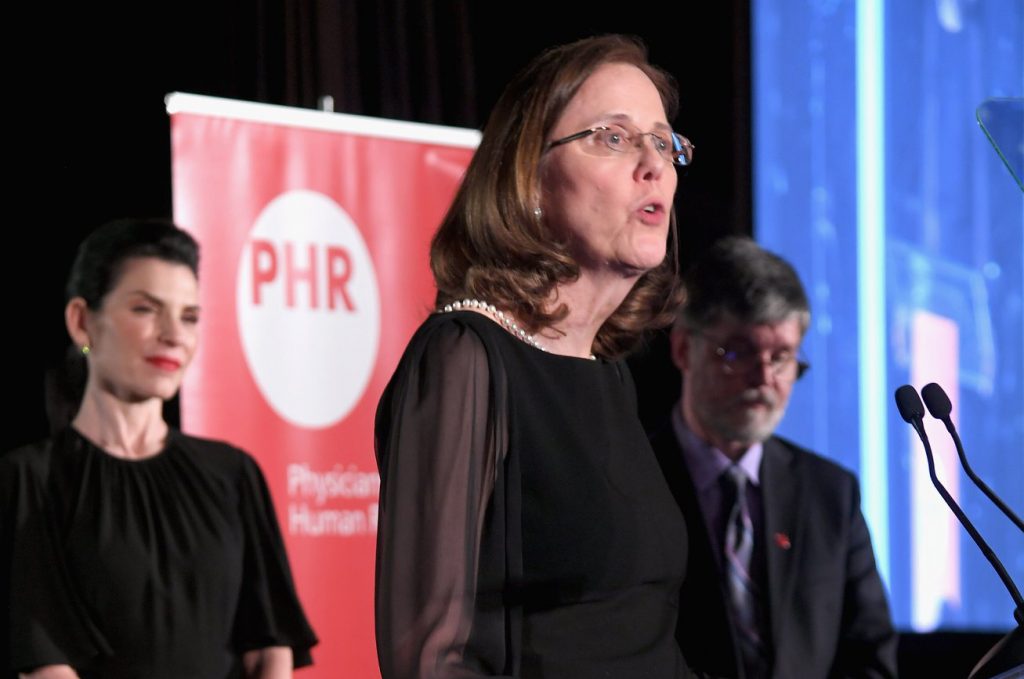
Donna McKay, PHR Executive Director

Michele Heisler, MD, MPA, PHR Medical Director
Blog

“As You’re Waiting for Death, You Pray”: The Syrian-Russian Assault on Idlib

For Dr. Mohammad, there is nothing abstract about the Syrian government and Russian military offensive on the last rebel-held tract of territory in Syria’s northwest. As a physician managing a hospital in the town of Darat Izza, western Aleppo, he’s experiencing it first-hand in all its cruelty.

“It’s a peculiar feeling, knowing that in a matter of seconds, a missile will land on you,” Dr. Mohammad told me during a call about a recent attack on his hospital. “As you’re waiting for death you pray, and you look around. You see one colleague covering his head with his bare hands to shield himself from the rubble that’s about to fall. Another is hugging a wall so closely she’s almost melting into it. And you’re standing there, utterly powerless.”

What Dr. Mohammad described next is all too familiar to so many of those who have worked and continue to work on providing health care in opposition-controlled areas of Syria. A series of explosions in quick succession, screams, dust, and destruction. Another hospital taken out. Another area starved of desperately needed medical services.

“As you’re waiting for death you pray, and you look around. You see one colleague covering his head with his bare hands to shield himself from the rubble that’s about to fall. Another is hugging a wall so closely she’s almost melting into it. And you’re standing there, utterly powerless.”

Dr. Mohammad

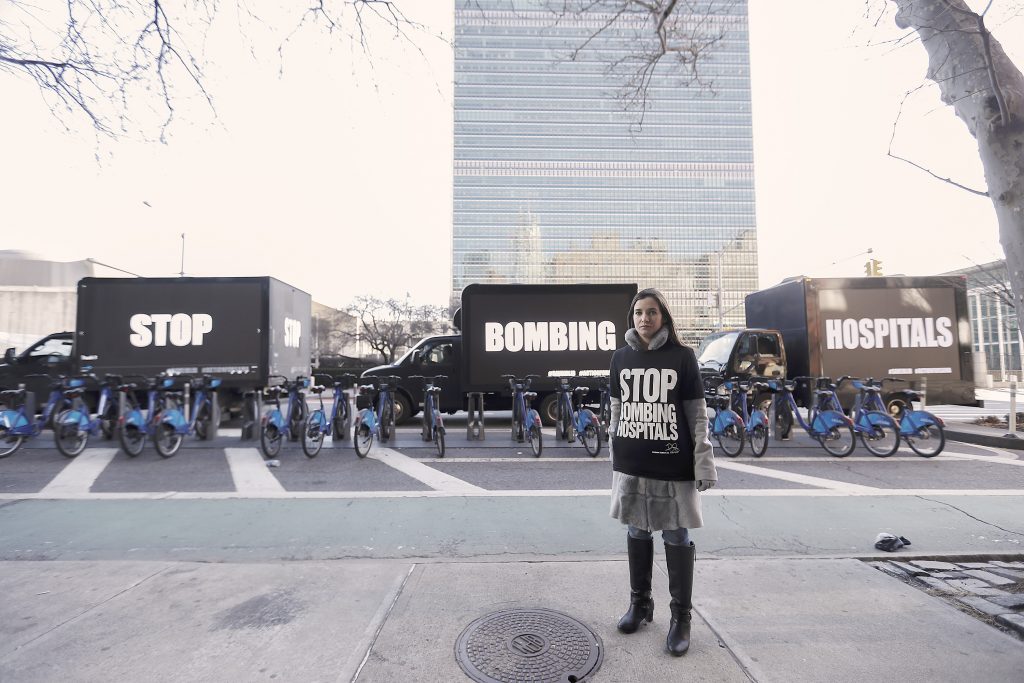
PHR has documented 595 such attacks since 2011. In 595 separate instances, hospitals, clinics, vaccination centers, and other medical structures were attacked and put out of service in violation of the most basic international norms. The Syrian government and Russia are responsible for more than 90 percent of those attacks.

For the past 10 months, the Syrian government and its Russian backer have ramped up this targeted destruction – among a slew of other criminal tactics – as they have pounded their way into the northwest. True to form, they have pursued a strategy of territorial conquest with maximum civilian pain at its core. They have deliberately bombed residential areas, hospitals, and other vital infrastructure to drive civilians out of their towns and incrementally recapture territory.

The human toll of this grueling ground offensive has been extreme. Since the beginning of December 2019, an estimated one million people – 80 percent of whom are women and children – have been driven from their homes toward the Turkish border. This figure represents the largest wave of displacement since the conflict began in 2011. This exodus ranks among the greatest the world has seen in recent times, drawing parallels with the mass flight of the Rohingya from Myanmar in 2017. The estimated three million people living in the northwest are being crowded into a rapidly shrinking area between a maniacal Syrian government on one side and a sealed Turkish border on the other.

The situation in northwest Syria has all the makings of an unparalleled humanitarian disaster. Yet the world has chosen to turn away from this deliberate tragedy with callous indifference. Russian and Chinese vetoes have stymied meaningful action by the United Nations Security Council (UNSC) and effectively paralyzed substantive UN action to stop these crimes or to offer the Syrian people a humanitarian lifeline.  

Even worse, UN passivity in the face of the horrors unfolding in Idlib extends to the office of UN Secretary-General António Guterres. Nowhere has this been more evident than Guterres’s failure to denounce the Syrian and Russian governments for their relentless, unlawful assault on civilians in Idlib during his February 21 press conference. Instead, Guterres spoke of “international humanitarian law and the protection of civilians [that] have been systematically ignored,” without specifying the perpetrators of those violations.

Three days after this dismal performance, Guterres repeated his unwillingness to publicly condemn UN member states implicated in gross human rights violations in his issuance of a so-called “call to action for human rights” from Geneva. The only apparent reference to the carnage in Syria’s northwest was a cursory comment on “civilians being trapped in war-torn enclaves.” It’s clear that the voice and prayers of Dr. Mohammad in Darat Izza aren’t reaching the halls of the United Nations. Nor are the voices of the millions of Syrian civilians whose lives are currently in the balance in Idlib and western Aleppo.

Guterres can’t change the dynamics of the UNSC that give China and Russia veto power over substantive UN action to protect the people of Syria. But he can and should move from his current entanglement in futile risk-aversion to direct confrontation with the perpetrators of human rights violations. He should bring the full weight of his title and his office to bear by speaking out about the plight of Dr. Mohammad and the millions of other civilians in Idlib in imminent risk of death, injury, or dislocation.

Guterres repeated his unwillingness to publicly condemn UN member states implicated in gross human rights violations

That shift should start with publicly scorning the perpetrators of those atrocities. Guterres has an opportunity to do so at the end of the week when his office receives the results of the findings of the UN Board of Inquiry into “destruction of, or damage to, facilities on the UN deconfliction list and UN-supported facilities” in northwest Syria. Guterres should make those results public and ensure that they name the parties responsible for those attacks. The evidence of Syrian government and Russian culpability for the perpetration of intentional and egregious crimes is out there and has been reported by multiple credible sources, including Physicians for Human Rights. Not attributing responsibility will be a gross betrayal of the patients, health care workers, and staff of humanitarian organizations who have died or suffered in the wake of these attacks. It will also ensure that the Syrian and Russian governments continue to lay waste to northwest Syria with utter impunity and at a cost of more displacement, suffering, and death of Syrian civilians.

Blog

Forced Family Separation Isn’t Just Traumatic. It’s Torture

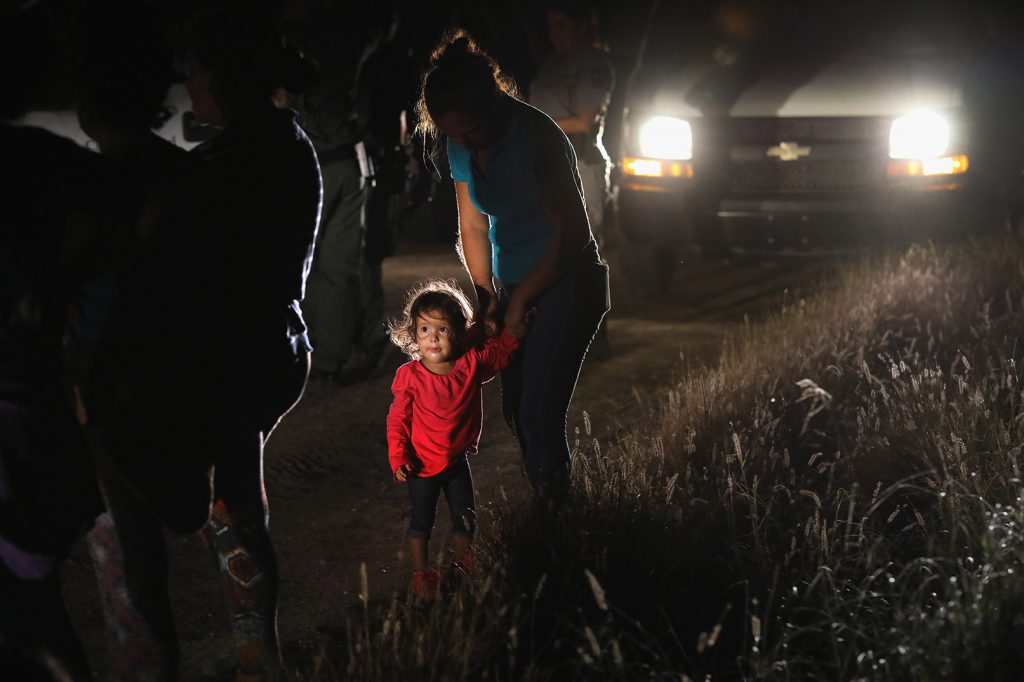
It was 10 a.m. on a Tuesday. My children in Boston were doing what most young children do at 10 a.m. on a weekday – exploring new concepts in school, climbing a jungle gym or perhaps sneaking an extra fruit roll-up. But on that day in October 2018, I was in the South Texas Family Residential Center in Dilley, Texas, the largest immigrant family detention center in the United States.

There, I saw a 9-year-old boy lying listlessly in his mother’s arms as she attended a session about the U.S. asylum process. Another child, no more than 7 years old, played quietly in the corner of the room where her mother and I met. She listened while her mother recounted the horrific physical and sexual abuse she had endured in Guatemala. Another 12-year-old boy preferred to watch TV in the nearby playroom while his mother met with me, but both made sure they could always see one another. All of these young children and their parents were clearly grappling with severe trauma — trauma from persecution in their home countries, as well as trauma experienced at the hands of the U.S. government.

As a practicing pediatrician, I had been sent to Dilley as a volunteer for Physicians for Human Rights (PHR) to evaluate asylum-seeking women who had not passed their “credible fear interview.” This is the critical first step in the process of applying for asylum in the United States. If you do not convince an asylum officer of your credible fear of torture or persecution if you were to return home, you cannot proceed with the asylum process and are almost always promptly deported.

I learned that each of these women had to participate in these sensitive interviews within mere days of having their children suddenly and inexplicably taken from them during the height of the family separation policy.

The interview transcripts I reviewed at Dilley often read like this:

Asylum Officer: “Why did you decide to come to the United States?

Mother: “Please, where is my son/daughter?”

You don’t have to be a clinician to appreciate how incredibly inappropriate and ineffective it is to force asylum seekers to undergo an interview of that magnitude during a time of profound mental distress, confusion and anguish.

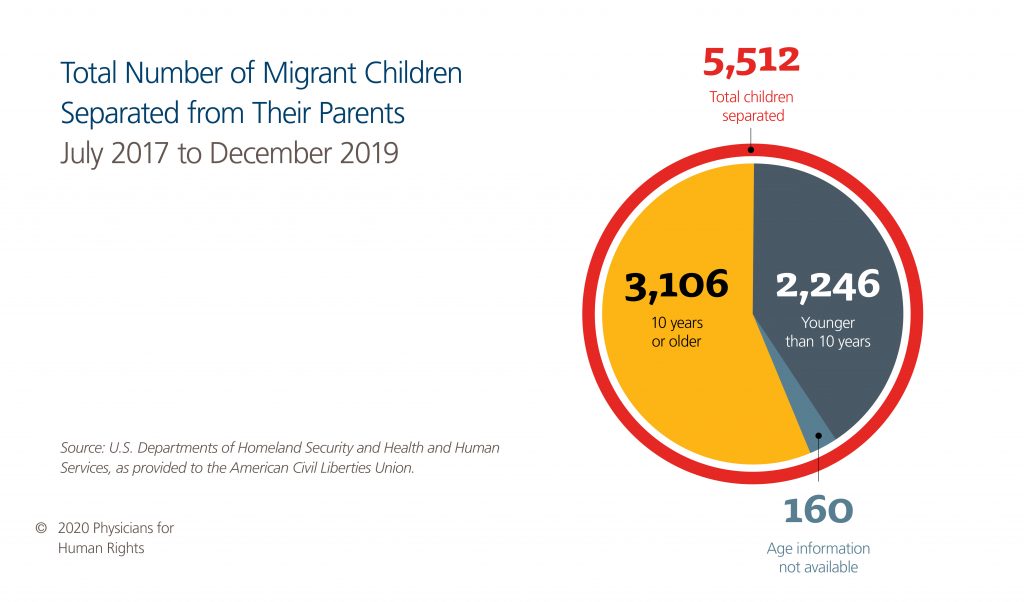
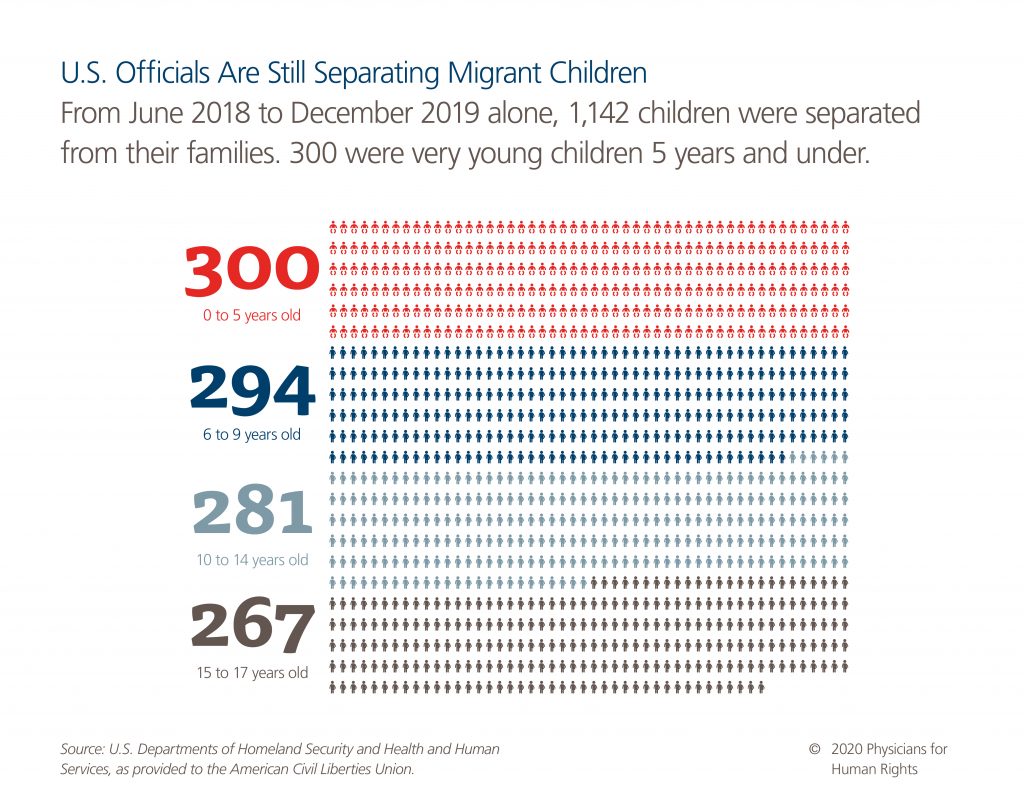
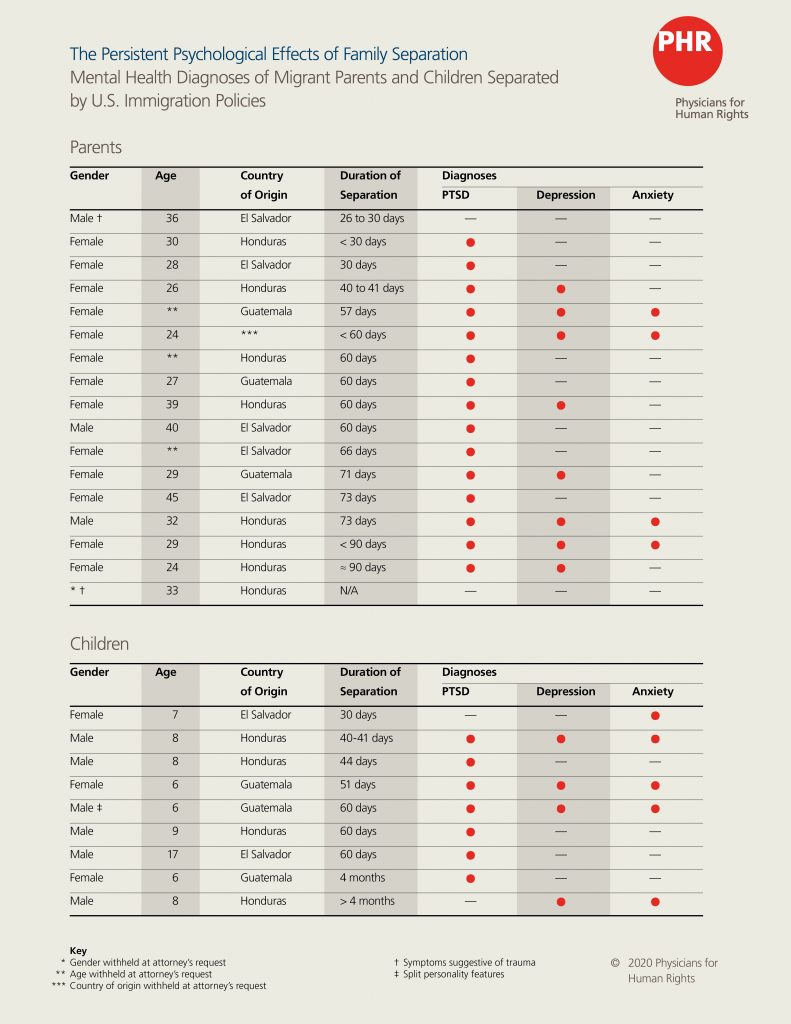
Tragically, these were not isolated incidents. More than 5,500 children were separated from their families by the U.S. government from 2017 to 2019. And this week we learned more about the long-lasting psychological harm that these families experience from the family separation policy.

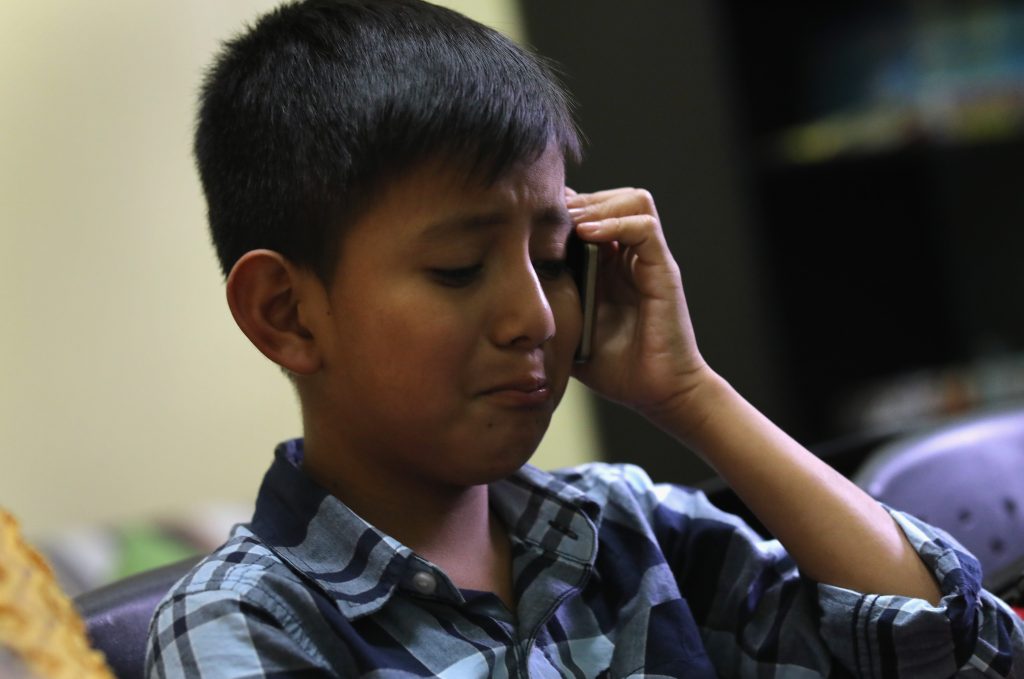
PHR report published Tuesday systematically analyzed the psychological evaluations of 17 adults and nine children who had been separated, including two of the mothers in Texas who I evaluated. PHR found that all of the children and all but two of the adults met diagnostic criteria for post-traumatic stress disorder (PTSD), depression or anxiety. Notably, the symptoms persisted months or a year after these kids and their parents had been reunited. After careful evaluation of the circumstances and effects of such policies, PHR boldly called out these cases of family separation for what they are: torture.

The United Nations Convention against Torture, which the United States has ratified, defines torture as an act which causes severe physical or mental suffering, done intentionally, for the purpose of coercion or punishment, by a state official or with state consent. Clearly, the U.S. family separation policy meets those criteria. I stand with PHR and call on the government to abide by U.S. and international law. This means providing reparations to the families affected by this heinous policy, including providing access to high-quality mental health treatment.

It also means acting in the best interest of the child, the human rights imperative at the heart of the United Nations Convention on the Rights of the Child (CRC). Adopted in 1989, the overarching message of the CRC is that all actions involving children — from health to education to asylum — must have the best interests of the child as the primary consideration. This should not be controversial or difficult to endorse. And yet, every single country in the world except the United States has ratified the CRC. Instead, the U.S. government expressly violates children’s rights, acts with impunity and then expects to be able to lecture other countries about human rights.

As a pediatrician, a mother, a human, I refuse to allow family separation to wash over me with the rest of the global tidal wave of atrocities we hear about daily. We cannot let this crime and the quest for justice for its survivors be drowned out by the outrage of the day — particularly when family separation is still happening.

I try to put myself in these parents’ shoes, daring to imagine what it would be like if my own children were suddenly taken away from me, with no explanation, not knowing where they are, if I will ever see them again, or if they are even alive. It is unfathomable.

These parents risk their lives by making the heart-wrenching decision to flee their homes and trek to the United States. They are guided by the sole desire to act in the best interests of their children. It’s time our government did the same.


This essay was originally published on Cognoscenti, wbur.org’s ideas and opinion page. It was reposted with permission.

Blog

Five Women Changemakers You Should Know

Since it was created in 1911, International Women’s Day has been an opportunity to recognize the social, economic, cultural, and political achievements and contributions of women globally. In our work at Physicians for Human Rights at the intersection of science, medicine, and human rights, we see daily how women from around the world continue to lead, innovate, and create energy and resources behind the global movement for justice and accountability.

Here are five women who are in the forefront of the struggle for human rights. They’re speaking out. And they’re making a difference.

Want to recognize another trailblazing woman? Tweet @P4HR with #IWD2020.


Waad Al-Kateab

Syrian Filmmaker (Syria)

“The hardest way to be killed is in silence, so I keep telling our stories.”

In 2011, Syrian journalist Waad Al-Kateab began documenting the airstrikes being rained down on Aleppo by the Syrian government at the start of the protracted conflict in her country. What began as a tribute to her newborn daughter, Sama, became a feature-length film, for which Waad and co-director Edward Watts earned sweeping international accolades, including an Oscar nomination for Best Documentary Feature. As a fearless advocate for her fellow Syrians, Waad has used her autobiographical film to raise awareness about the systematic and deliberate attacks on civilians and health care infrastructure during the nine-year conflict, and is actively bringing her story and the stories of countless Syrian civilians to bodies like the United Nations and global governments. PHR is proud to join forces with Waad to draw attention to the years-long attacks on hospitals in Syria; this year, PHR will honor her and her husband, Dr. Hamza Al-Kateab, at our upcoming 2020 gala.


Pamela McPherson

Immigration Policies Whistleblower (United States)

“Wherever you have influence to make change, use that power. Change the world around you. You can make a difference.”

In the United States, the Trump administration has responded to the influx of asylum seekers at the border by implementing isolationist, nativist, and inhumane policies that endanger the health and wellbeing of children and families – among them, family separation and migrant child detention. Dr. Pamela McPherson, working as a medical and psychiatric expert for the Department of Homeland Security, inspected facilities where immigrant families were detained. The conditions she and Dr. Scott Allen discovered were shocking: Bleeding inside a baby’s skull. Children’s fingers crushed by cell doors. Severe weight loss.

In a July 17, 2018 letter to the U.S. Senate Whistleblower Protection Caucus, Drs. McPherson and Allen exposed these disgraceful conditions. While others employed by the government might have remained silent, Dr. McPherson took great professional risks to speak up about the deplorable and unacceptable conditions in migrant detention centers.

PHR honored Dr. McPherson with the 2019 Physicians for Human Rights Award.


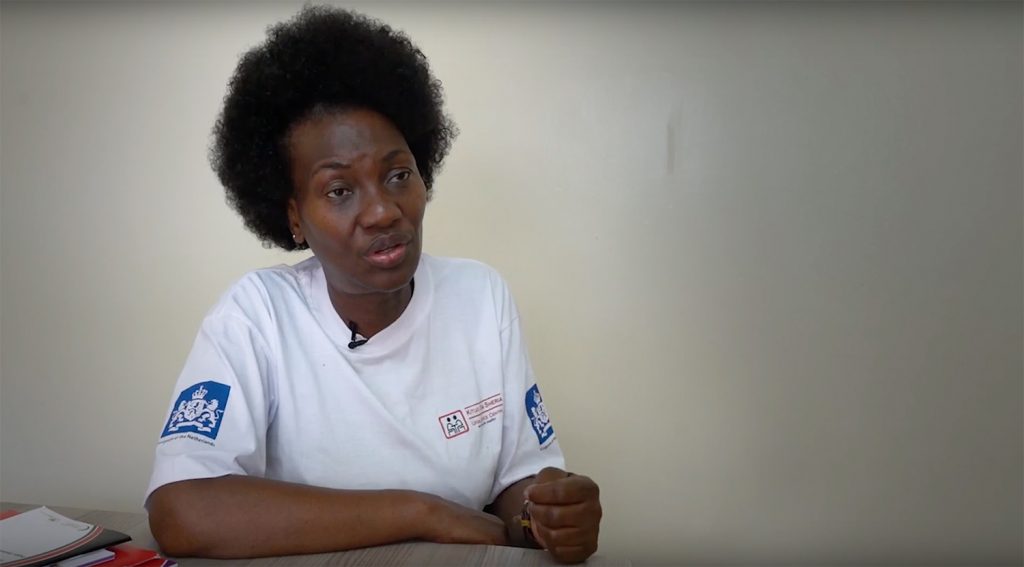
Jaqueline Mutere

Sexual Violence Survivor and Advocate (Kenya)

“…The pathway to justice requires many voices, including survivors, lawyers, police, justice, and community doctors…”

In Kenya, in the wake of contested elections in 2007, at least 900 women, girls, men, and boys were sexually assaulted. Very few cases were ever prosecuted, fueling a culture of impunity for perpetrators and continued suffering for survivors.

Jaqueline Mutere, a post-election sexual violence survivor, bore a child following her rape. The decision she made to keep a baby fathered by her rapist was one of the most difficult in her life. But Mutere knew she wasn’t alone.

Together with other women enduring the lasting effects of election-related sexual violence, Mutere co-founded the Survivors of Sexual Violence in Kenya Network, a movement building survivors’ capacity for self-agency and offering them a way to amplify their message across Kenya. Mutere is also founder and director of Grace Agenda, aimed at breaking the stigma around children born of rape and at healing their mothers and empowering them to better access justice in Kenya. In 2019, PHR honored Mutere and the Network with the Physicians for Human Rights award.


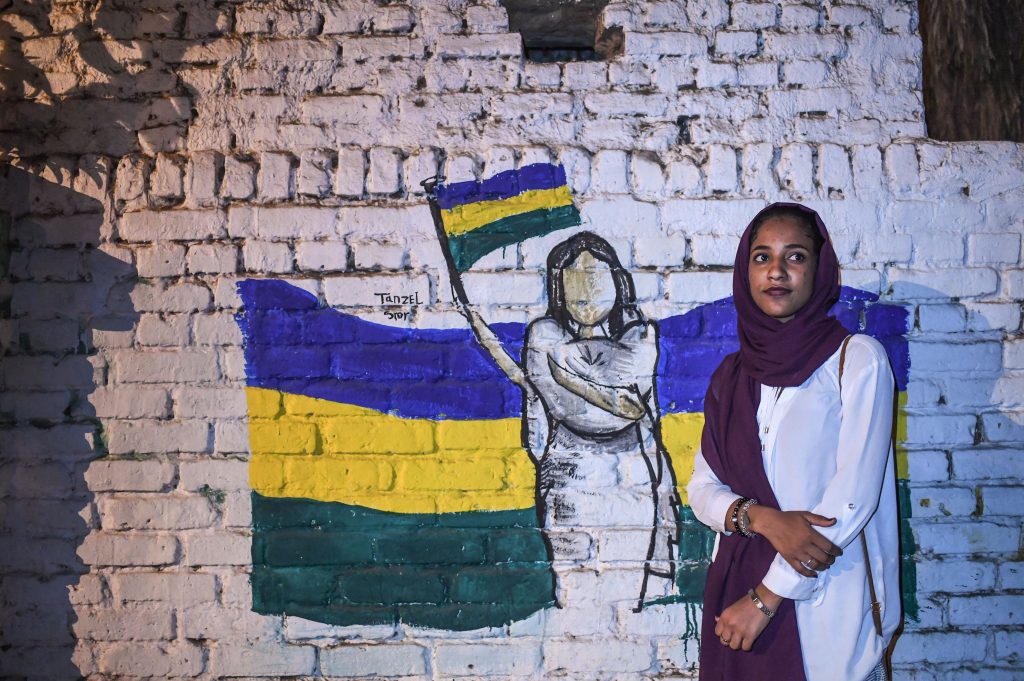
Alaa Salah

Sudanese Activist (Sudan)

“After decades of struggle and all that we risked to peacefully end Bashir’s dictatorship – gender inequality is not and will never be acceptable to the women and girls of Sudan.”

You may not know her name, but if you followed the Sudanese uprising which led to the ouster of 30-year authoritarian president Omar al-Bashir, you’ve definitely seen her: Alaa Salah is the woman in a traditional white dress pictured in the iconic photo, standing atop a car amid male and female protesters in front of Khartoum’s military headquarters, just a day before al-Bashir’s April 11, 2019 ouster. The 22-year-old Sudanese activist was on the front lines of the pro-democracy peaceful protests.

Women often outnumbered men in the 2018-9 protests – and suffered brutal violence at the hands of security forces for their participation. In fact, according to our new report, Sudan’s Rapid Support Forces deliberately isolated female detainees and subjected them to sexual violence. Yet despite their heavy involvement in the protests, women were marginalized in the formal political processes in subsequent months. Under al-Bashir, only 31 percent of seats in Sudan’s parliament were reserved for women. Salah and other activists are pushing to achieve 50 percent female representation in their new government. In 2019, Salah addressed a United Nations Security Council meeting on women, peace, and security. Read her full statement here.


Yasmin Ullah

Rohingya Survivor and Student (Canada)

“There is hope. And it is up to us to change the story of the Rohingya to become a more heartening and vibrant one.”

Following a wave of widespread killings and brutal violence by the Myanmar government against its Rohingya minority population in 2017, more than 700,000 survivors fled to neighboring Bangladesh. Nearly three years later, many remain in refugee camps. This violent crackdown was not the first time Myanmar’s Rohingya communities had been targeted.

In 1995, activist Yasmin Ullah and her family fled years of persecution in Myanmar for Thailand, where she remained a stateless refugee – without legal protection and without fundamental rights – until 2011. Today, as a student of political science in Vancouver, Ullah leads the Canada-based non-profit Rohingya Human Rights Network. In late 2018, Ullah gave testimony and statements on her own behalf and on behalf of the Network before the human rights committees of the Canadian legislature and she has also been a representative of the Rohingya community at the International Court of Justice, where judges last month ordered Myanmar to enact provisional protective measures for remaining Rohingya communities as part of the genocide case brought by The Gambia against Myanmar. Finally, Ullah is involved in creating more accessible mosques and places of spirituality for those with special needs.

Report

“Chaos and Fire”: An Analysis of Sudan’s June 3, 2019 Khartoum Massacre

Read press release here

Executive Summary

In the early morning hours of June 3, 2019, Sudanese security forces launched a violent attack against pro-democracy demonstrators at the protests’ central sit-in site in Khartoum, near the headquarters of the army, navy, and air force – a neighborhood known in Khartoum as “al-Qiyada,” or headquarters. Reports in the aftermath of that attack indicated that the violence resulted in the deaths of scores of people and injured hundreds more.[11] Witnesses and survivors of the violence – referred to as the June 3 massacre – reported that various uniformed elements of Sudan’s security forces were responsible for extrajudicial killings and forms of torture, including excessive use of force; cruel, inhuman, and degrading treatment; and sexual and gender-based violence.[12] In addition, there have been allegations that the security forces forcibly disappeared[13] dozens of protesters detained on or around June 3.[14] 

This extraordinary political moment in Sudan was a crucial turning point in the revolution which had started on December 18, 2018, when civilians began protesting for an end to 30 years of dictatorship. The National Intelligence and Security Service (NISS), along with other security forces, had attacked multiple protest sites, causing deaths and injuries. On April 6, 2019, civilians protested at al-Qiyada, and responded to attacks by security forces who used tear gas and crowd-control weapons by creating a public sit-in camp there. Following violent attacks on civilians from April 6 to 10, President Omar al-Bashir stepped down on April 11. The protesters remained at the sit-in to demand civilian rule. Security forces attacked protesters on multiple occasions in early and late May, but the civilian communities that had formed within the sit-in persevered. After April 11, many civilian groups raised tents and chose to live communally within the sit-in area. Participants recalled that the evenings in the sit-in area were full of social and political activities, and that this experience led to a powerful shared vision of a civilian-led Sudan in which freedom, peace, and justice would be available for all.

The June 3 violence against protestors – including the massacre by security forces – shocked participants and observers with its disproportionate ferocity and scale; those violations are the focus of this report. But instead of retreating from further protest in the face of unknown numbers of deaths and injuries, Sudanese citizens persisted in demanding civilian governance. The protests helped sustain negotiations between the Forces of Freedom and Change and the Transitional Military Council, which culminated in the signing of a new Constitution and the formation of a civil-military transitional government on August 17, 2019.

Witnesses and survivors … reported that uniformed elements of Sudan’s security forces were responsible for extrajudicial killings and forms of torture, including excessive use of force; cruel, inhuman, and degrading treatment; and sexual and gender-based violence.

Physicians for Human Rights’ (PHR) investigation into the violations that occurred on June 3 focused on: the nature of the injuries and other physical trauma resulting from events on June 3, 2019 in Sudan; patterns in the testimonies of interviewees and medical evidence to assess allegations of a systematic, widespread, and premeditated campaign of human rights violations by Sudanese security forces; and to what extent, if at all, security forces targeted health workers for detention and ill-treatment due to their emergency medical response and other efforts to support the provision of medical care for injured pro-democracy protesters. These issues are central to the discussion among citizens, democratic forces, and human rights defenders in Sudan, where the new transitional government has formed a national commission to investigate the violence. Victims’ families and survivors of these and other serious violations await truth and accountability.

For this report, a PHR clinician-investigator conducted semi-structured interviews and brief structured clinical evaluations based on the Istanbul Protocol[15] in Khartoum between August 23 and November 9, 2019 with 30 survivors and witnesses to the June 3 violence, of whom four were women and 26 were men. These included 21 pro-democracy protesters, and health workers working in a wide range of health sectors: four physicians, one pharmacist trained as a medic, one medical coordinator, one volunteer, and one psychologist.

In many cases, perpetrators identified themselves to their victims as belonging to the Rapid Support Forces (RSF), a then-paramilitary group now incorporated into the Sudan Armed Forces (SAF).[16] This report documents the nature of the injuries resulting from events on June 3, as well as patterns in the testimony and medical evidence that support allegations of a systematic, widespread attack. While more data may be necessary to generalize knowledge about the intentionality and purpose of the attack, this investigation contributes to the public record of violence carried out against civilians on June 3.

This report indicates that Sudanese authorities had in the days prior to the June 3 violence purposefully pre-positioned large numbers of security forces in and around the sit-in site, particularly in late May, in what appeared to be part of coordinated pre-attack planning. Interviewees who participated in the sit-in from April 6 through the end of May noted that security forces who had interacted peacefully with protesters were withdrawn in the weeks prior to the June 3 attack and replaced with forces that were openly hostile to protesters, including many with accents and features identified as belonging to the Rizeigat tribe from the Sudanese region of Darfur, long known for its participation in the Janjaweed militia, which in 2013 was formed into the RSF. Those forces were armed with weapons including tear gas, whips, batons, sticks, pieces of pipe, and firearms, including Kalashnikov assault rifles.

That hostility and weaponry was deployed in the violence that security forces unleashed on the sit-in participants on June 3 in the form of extrajudicial killings and excessive use of force. Interviewees described how they witnessed security forces shoot unarmed protesters in the head, chest, and stomach from a distance. Large groups of armed men in RSF and riot police uniforms surrounded and beat people with batons, whips, and the butts of their rifles. Interviewees recounted how security forces taunted them while beating, burning, and cutting them. The brutality described by interviewees was supported by PHR’s clinical evaluations of wounds of survivors of the violence. Survivors and witnesses described how security forces continued to victimize pro-democracy demonstrators that they detained through torture and other deliberately degrading treatment, including forcing detainees observing the daylight fasting of the Muslim holy month of Ramadan to drink from puddles of dirty water on the street.

Sexual and gender-based violence was also a key component of the abuse that security forces inflicted on pro-democracy demonstrators. Interviewees described how forces grabbed the genitals of both male and female protesters and threatened to take off women’s pants. A witness described an attempt by armed men to sexually assault him after they detained and tortured him, cutting open a healed wound and putting out cigarettes in it. Several interviewees reported witnessing gang rapes of women in open-air settings. Another described encountering rape survivors while being held in a women’s jail. 

The June 3 assault continued a pattern of attacks by Sudanese security forces on health care providers, institutions, and patients, as well as the blocking of access to care at surrounding hospitals. Relevant RSF violations against health workers and health infrastructure included the imposition of siege-like conditions on health facilities, restricting ambulances and other vehicles from transporting injured protesters to health care facilities, and beating or shooting health care workers, patients, or visitors who tried to enter or leave health care facilities on foot.

On August 17, 2019, Sudan established a transitional civil-military government and adopted a new constitution containing explicit commitments to promote human rights and access to justice. Article 7(16) of the Constitutional Declaration created a commission tasked with conducting a “transparent, meticulous investigation” of the violations that were committed on June 3, 2019 but did not provide a clear accountability mechanism. In addition, the Constitutional Declaration did not abrogate or otherwise modify laws that prevent access to justice for survivors and families of the dead, instead incorporating existing laws governing security forces that provide immunity for acts committed in the line of duty.[17] PHR welcomes official reports that victims and family members of the dead will be provided access to justice through the legal system,[18] yet it remains concerned with the well-documented flaws in Sudanese criminal and immunity-from-prosecution laws that remain unchanged by the adoption of the new constitution.[19] The leader of the RSF, General Mohamed “Hemedti” Hamdan Dagalo, serves as the vice president of the governing Sovereign Council. Advocates in Sudan may therefore find it difficult to prosecute cases against members of the armed forces, including the RSF, at the highest levels of command responsibility.[20]

PHR urges all Sudanese organizations – as well as international organizations and governments with an interest in promoting peace and democracy by rejecting impunity in Sudan – to support the pursuit of justice and accountability for the abuses of June 3, 2019 through impartial and independent investigations. Those same organizations should support the longer-term strengthening of human rights mechanisms in Sudan by providing international technical and financial assistance. PHR supports its Sudanese colleagues in rejecting impunity and pursuing justice and accountability for victims, survivors, and their families in every forum available, including, where necessary, in international courts as provided for in Article 67(g) of the new constitution. Experience has shown that peace and justice are mutually reinforcing, and that without acknowledgement of suffering, justice cannot be achieved.

Key Recommendations

To the Sovereign Council of the Government of Sudan:

  • Support fully the national commission established to investigate violations that occurred on June 3; permit the commission to accept support from international entities with a demonstrated record of undertaking or supporting impartial and independent efforts for justice and accountability;
  • Hold all perpetrators of rights violations related to the June 3 massacre accountable in fair and transparent legal procedures;
  • Adhere to provisions of Sudanese law that affirm basic human rights principles, including Chapter 14 of the Constitutional Declaration of 2019, and ratify the Convention against Torture and Other Cruel, Inhuman or Degrading Treatment or Punishment;
  • Fully investigate the deaths that occurred as a result of the June 3 violence, identify bodies, provide families with adequate reparations, including all available information about the fate of their relatives, and return remains to families for proper burial. 

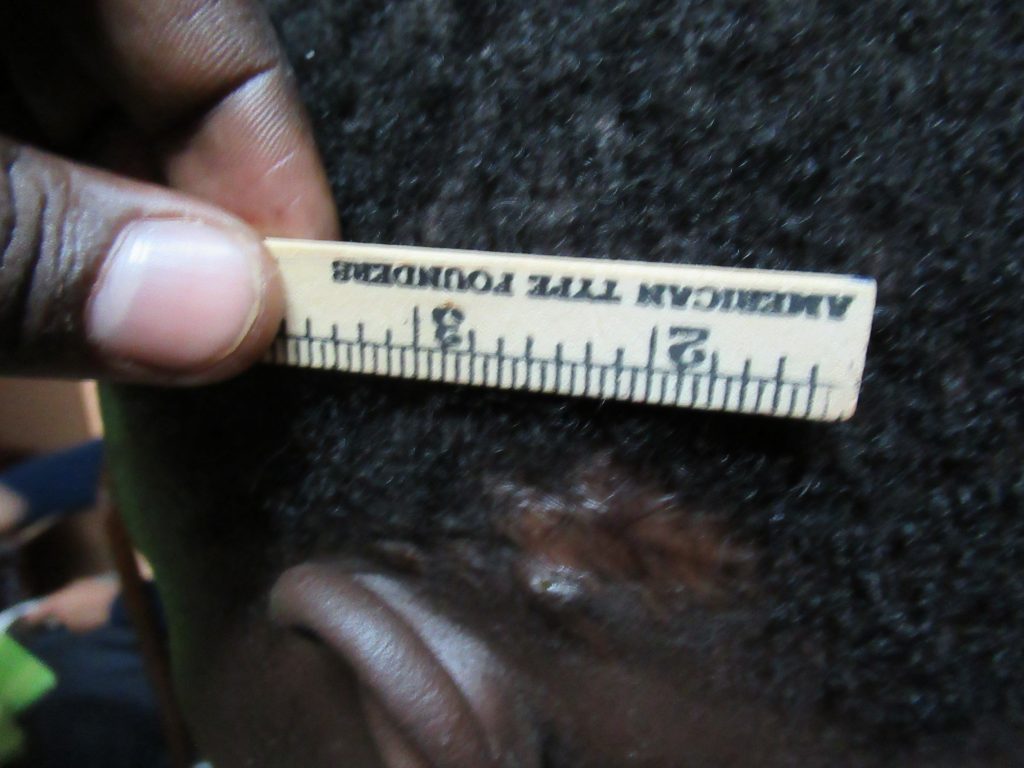
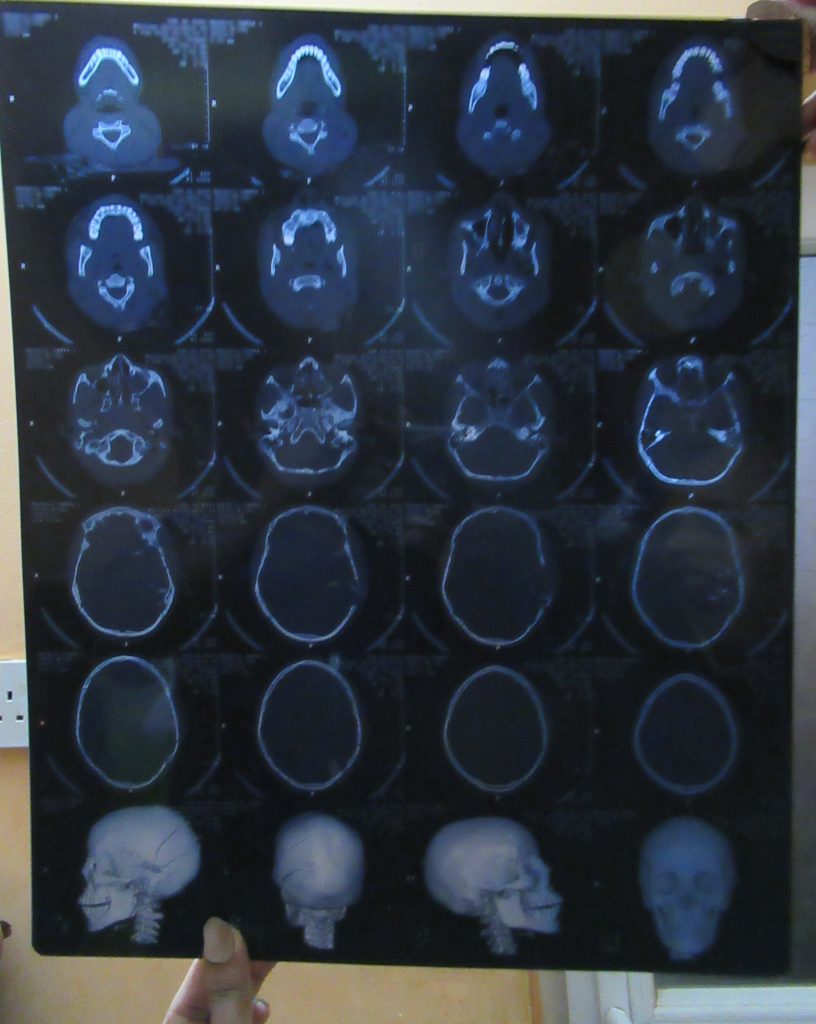
Shot in the Head: Nassir’s Story

Nassir, 15, was shot behind the left ear as he fled the sitin site in Khartoum on the morning of June 3. PHR’s
physical examination, which found that Nassir has
difficulties in motor function and speech while retaining
the ability to think and draw, are entirely consistent with a
deep left-sided injury to the parietal lobe of the brain.
PHR’s clinician said that his continued seizures and his
inability to articulate clearly three months after the injury
raise concerns about Nassir’s ability to recover fully

Fifteen-year-old Nassir[21] often attended the protests when he was not working. On the morning of June 3, he was at the sit-in, where he sustained a gunshot wound behind the left ear. Nassir was admitted to Dar el-Elaj Hospital at 6 a.m. on June 3; the medical staff did not expect him to survive. Although it was difficult because of the ongoing violence, the staff located a neurosurgeon to remove the bullet from his brain.

Nassir spent two days in the ICU but, unable to speak because of his brain injury, he remained in the hospital as an anonymous patient for weeks. He showed compulsive behaviors and had to be tied to his bed so that he would not fall out. A group of volunteers working to help the injured from the sit-in put him in contact with a psychotherapist. The therapist, who attended the PHR interview with Nassir and an adult guardian, explained, “He was very scared of us, and he wouldn’t even eat or drink the first few days.”

Although he could not express himself because of the injury, the staff surmised that Nassir had been at the sit-in from drawings he did of the navy headquarters and men wearing Rapid Support Forces (RSF) uniforms with their trademark red hats. Nassir experienced severe episodes of post-traumatic stress and would get scared when anyone came into his hospital room, covering his face to hide from the volunteers. His symptoms improved with antidepressants; however, because he couldn’t communicate, he remained unidentified.

His therapist described how Nassir would become uncomfortable looking out the window. Eventually she realized that Nassir was disturbed by seeing the al-Bashir Medical City construction site, from which witnesses reported seeing snipers on June 3. “He would get uncomfortable and close the curtains. He started drawing the sit-in, the pick-up trucks and officers and blood…. He would draw red hats [the RSF uniform].”

“He couldn’t speak, and we didn’t know his name,” she continued. The volunteers asked Nassir names of areas and he would shake his head or nod until they determined his neighborhood. They made missing person posters and hung them there, with no result. Finally, they recited numbers to him, and he nodded until the volunteers were able to construct a phone number. After multiple attempts, they were able to reach Nassir’s uncle.

According to a clinical consultation carried out by PHR’s investigator, Nassir’s continued seizures and inability to articulate clearly more than three months after the injury raise concerns about his ability to recover fully. For many like Nassir, the extreme violence unleashed upon them on June 3 is highly likely to lead to a lifetime of chronic pain and disability.

* All names in this report are pseudonyms, to protect the participants’ identities.

According to a clinical consultation carried out by PHR’s investigator, Nassir’s continued seizures and inability to articulate clearly more than three months after the injury raise concerns about his ability to recover fully. For many like Nassir, the extreme violence unleashed upon them on June 3 is highly likely to lead to a lifetime of chronic pain and disability.


Introduction

This report focuses on the significant human rights violations against civilians that occurred in Sudan on June 3, 2019 during a large-scale attack by government security forces on the site of a pro-democracy sit-in in central Khartoum. An interdisciplinary team conducted English and Arabic open-source investigation and extensive field-based interviews using established methods, including those informed by medical-legal assessments of injuries. While clear patterns and key events can be established based on the data collected, the data does not permit a forensic reconstruction of the June 3 attacks. Rather, this report demonstrates the need for further in-depth investigations within Sudan by the Sudanese legal and human rights communities, or international bodies such as the United Nations or the African Union.

The report focuses on violations within the sit-in area that occurred on June 3 because of the high number of severe injuries and deaths reported in that location. However, these incidents make up only a portion of the violations that occurred during this period in Sudan. Other serious violations occurred across the country as security forces cracked down brutally on demonstrations in Kordofan, Darfur, and Blue Nile States.

At the time of writing, the political situation in Sudan is dynamic, yet much opportunity for progress exists. On August 17, 2019, Sudan established a transitional civil-military government and adopted a new constitution containing explicit commitments to promote human rights and access to justice. Unfortunately, the new constitution did not abrogate or otherwise modify laws that currently deny justice for survivors of violations carried out by security forces, and families of those killed by them. Instead, it preserves existing laws, in particular those that provide immunity for acts committed by security forces in the line of duty.[22] The future of Sudan’s new democracy in large part depends on how the transitional government fulfills the promise of the constitution for which so many protesters have suffered and died.

Background to the June 3 Incidents and Massacre

As detailed in PHR’s April 2019 report, “Intimidation and Persecution: Sudan’s Attacks on Peaceful Protesters and Physicians,” Sudanese civilians have mobilized in increasingly large protests since December 18, 2018.[23] These protests were triggered by spiraling inflation and the rising cost of bread and fuel and culminated in mass demonstrations demanding that then-President Omar al-Bashir – who had ruled as Sudan’s dictator for 30 years, and who the International Criminal Court formally charged with genocide in 2010[24] – step down.[25] Between December 2018 and April 11, 2019, government security forces, especially the National Security and Intelligence Service (NISS), responded to the protests with excessive force, detaining many protesters. Doctors’ organizations[26] played an important role in organizing and maintaining the protests, in particular as active members of the Sudanese Professionals Association.[27].

After President al-Bashir’s ouster on April 11, 2019,[28] a Transitional Military Council led by General Abdel Fattah al-Burhan took power, with General Mohamed “Hemedti” Hamdan Dagalo as his deputy. [29] Hemedti leads the Rapid Support Forces (RSF) which would be widely blamed for the June 3 massacre.[30] Under the Constitutional Charter for the Transitional Period, the RSF has been incorporated into the armed forces.[31] Sudanese and foreign commentators agree that the RSF currently dominates the security establishment in Sudan, eclipsing the power of the other armed forces,[32] and witnesses later interviewed by PHR would report seeing armed men in RSF uniforms kill and injure protesters at the sit-in.

The lead-up to the violence of June 3 was a prolonged, mass pro-democracy sit-in that began on April 6, 2019 and sprawled across much of the University of Khartoum’s central campus, as well as in front of the Sudanese army, navy, and air force and artillery headquarters.[33] The participants at the peaceful sit-in were periodically attacked by security forces, including RSF and NISS, who killed and injured dozens of protesters. A well-publicized shooting on May 13 resulted in the death of five protesters.[34] These attacks mirrored previous patterns of violence against health care workers and peaceful protesters in Sudan.[35] These violations, and the many that have occurred across Sudan since the June 3 massacre, lie outside the ambit of this report. However, numerous publicly available media reports and investigations,[36] including those by independent Sudanese civil society groups and international observers, demonstrate that human rights violations committed against civilians involved in peaceful protests from December 2018 through the present constitute serious crimes and merit full and impartial investigation.[37]

Methodology

Physicians for Human Rights’ (PHR) interdisciplinary team of investigators included legal and regional experts, physicians, forensic experts, and investigative personnel.[38] The Khartoum-based team consisted of a clinician supported by three assistants during the interview process. Investigators employed purposive sampling to recruit interviewees who had witnessed or experienced violence during protests from December 18, 2018 through August 2019. The team collaborated with local organizations, health facilities, and community networks to identify initial interviewees and utilized their networks and contacts to recruit additional participants via a chain sampling methodology. Respondents included individuals who sustained physical injuries, or who directly witnessed violations. Health care workers were specifically sought for their knowledge of protesters’ injuries, in addition to their own injuries.

The PHR clinician-investigator obtained consent from each interviewee following a detailed explanation of PHR’s work, the purpose of the investigation, and the voluntary nature of participation, and an explanation of the potential risks of participation. If they provided consent, survivors participated in a semi-structured interview and physical examination based on the Istanbul Protocol, the United Nations guidelines for the investigation and documentation of torture and ill-treatment. [39] To minimize the risk of participation and to preserve the confidentiality of the participants, PHR has replaced their names with pseudonyms in this report and used pictures taken in an anonymized manner.

PHR’s team determined consistency between survivor narratives and physical findings. Investigators evaluated how each injury was sustained; characteristics of any resulting wound, such as depth, shape, scarring pattern, and time frame of the healing pattern; and any additional scars that resulted from secondary infection or surgical treatment. The clinician-investigator corroborated this information with individual testimony and any additional data or medical records in order to make an assessment of consistency for each individual wound and scar, as well as for the totality of the injuries evaluated. In-depth qualitative analysis was then undertaken to determine legally significant fact patterns.

Interviews were conducted between August and November 2019 in secure, anonymous locations in Sudan. Interview questions focused on violence experienced and injuries sustained, and consequences, such as physical disabilities and ongoing psychological issues. For those with physical injuries and scars, the clinician-investigator conducted detailed physical examinations of scars resulting from gunshot wounds, blunt or penetrating trauma, burns, and any other physical injuries. The clinician-investigator used sketches and photographs to document survivors’ scars, and assessed signs and symptoms of psychiatric distress, including depression and post-traumatic stress disorder. These assessments were reviewed by a U.S.-based medical expert. However, given time, privacy, linguistic, and other resource constraints, the team did not conduct full psychiatric evaluations. To maintain participants’ anonymity, investigators coded demographic data, incident descriptions, types of injuries suffered, any ensuing disabilities, descriptions of witnessed abuses, and, when known, perpetrator identities – including the specific force to which they belonged.

Contemporaneous with the field investigation, PHR’s partners at the Human Rights Center Investigations Lab (HRC Lab) at the University of California, Berkeley conducted an open-source investigation of social media posts from Sudan at the time of the protests. [40] Using a multi-source verification process, the HRC Lab researchers verified instances of human rights violations in Sudan in June and July 2019. As discussed below, the HRC Lab found significant open-source evidence that the Rapid Support Forces conducted attacks on two private hospitals on June 3, which corroborated information about these attacks provided in interviews.

PHR obtained a list of 71 mortuary admissions related to the events from June 3, 2019 through June 6, 2019 in Khartoum, Sudan.[41] The data included name (where known), age, and cause of death. The locations of these deaths and the contexts in which they occurred were not provided. The data corroborated reports of extrajudicial killings, as detailed below.

PHR’s Ethics Review Board reviewed and approved this report based on regulations outlined in Title 45 CFR Part 46, which are used by academic institutional review boards in the United States. All PHR’s research and investigations involving human subjects are conducted in accordance with the Declaration of Helsinki 2000, a statement of ethical principles for medical research involving human subjects, including research on identifiable human material and data.[42]

Terminology 

In this report, the term “health worker” refers to individuals who, at the time of attack or detention, were engaged professionally or as volunteers in the search for, or collection, transportation, diagnosis, or treatment of the wounded and sick (including provision of first aid); in the prevention of disease; or in the provision of logistical or administrative support to health services. Health workers can include physicians, nurses, paramedics, ambulance drivers, search and rescue personnel, pharmacists, and others.

Limitations

The sample size and purposive sampling methodology was intended to explore the range of injuries, establishing the geographic, temporal, and legal scope and scale of the abuse, and to gather physical evidence of reported human rights violations. This report was not designed to provide prevalence of specific types of injuries, or of exposure to violence. To our knowledge, there are no reliable estimates of how many people were injured during these events, and death estimates vary. Our analysis of the mortuary admissions report was limited by a lack of contextual detail and the unavailability of information about the number of deaths in months in which no violence allegedly took place.

A number of practical constraints may have affected the findings. We attempted to interview an equal number of women and men; however, PHR was able to interview only four female respondents with relevant experience. Although some observers estimate that the gender composition of participants at the sit-in was roughly equal,[43] the chain sampling may have led to introductions to more men than women. The team did not interview anyone who directly experienced sexual violence. This may have been be due to security concerns, religious taboos in this conservative predominantly Muslim country, cultural constraints, and stigma attached to sexual violence. As a result, both male and female rape survivors may be underrepresented in this group. While investigators asked about psychological symptoms, formal psychological assessments were not performed. Finally, we focused our interviews on incidents that occurred only on June 3, potentially limiting our knowledge of other human rights violations that may have occurred on other dates.

Note on Internet Suppression

The lack of internet in Sudan beginning June 3 may have limited the availability of open-source material related to the June 3 massacre and later violence. The Transitional Military Council (TMC) governing Sudan suspended the internet during the day of June 3, making visual documentation of the June 3 massacre and the violence that continued afterwards more difficult to obtain. Although witnesses described many videos and photos of attacks on health care that were taken on June 3, many of these were not posted, or were taken down. Protesters filming or taking photos reported they were targeted for violence.[44] Tamador, a protester at the sit-in on June 3, described urging witnesses inside Moallem Hospital, where many of the injured were first taken, not to film the forces outside, because she was afraid this would provoke a more violent attack. Access to social media was limited due to government suppression of mobile networks beginning June 3,[45] with increasing restrictions[46] leading to what the UN independent expert on Sudan described as a “countrywide shutdown” of the internet by the TMC from June 10 to July 9.[47] Zain, the largest internet provider in Sudan, restored service only in response to a Khartoum district court order.

Findings

Of the 83 survivors invited to participate in the report between August and October 2019, 37 accepted: five women and 32 men. The most frequent reason for declining participation was lack of time, followed by fear of persecution and lack of trust. This analysis focuses on the reports of 30 of these survivors – four women and 26 men – who experienced or witnessed human rights violations on June 3, 2019.[48]

Table 1: Demographic Summary of Participants

Age Group 11-17 18-29 30-45 All
Number of Survivors 1 17 12 30
Number of Males 1 16 9 26
Number of Survivors
Injured on June 3
1 11 3 15

Countdown to a Massacre

The June 3 attacks occurred on the last day of Ramadan, prior to a three-day celebration known as Eid al-Fitr that marks the culmination of the month of ritual fasting. While there is no consensus on the exact number of demonstrators at the sit-in site, there is agreement among interviewees that numbers had declined as the holiday approached. A focal point of the sit-in and the subsequent violence on June 3 was an area adjacent to the University of Khartoum campus to the north near the Blue Nile Bridge, known, according to interviewees, widely but informally as “Colombia.” The area gained that name because of the widespread illicit trade in marijuana, alcohol, and other drugs that occurred there.[49] Lower-ranking officers in the Sudanese Armed Forces (SAF) allegedly permitted and at times consumed the illegal drugs.[50] The Transitional Military Council (TMC) would later state publicly that the attacks of June 3 were prompted by complaints about the need to “clean up” the drug dealing and other activities taking place in the area locally referred to as “Colombia.”[51]  PHR’s interviews indicate this explanation is not credible, since people living in that area had already been dispersed violently by security forces, including Rapid Support Forces (RSF) personnel, between May 29 and June 2. These attacks appear to have facilitated the placement in strategic areas of RSF transport vehicles, open-bed land cruisers commonly referred to in Sudan as “Thatchers.”[52] 

Meanwhile, sit-in participants had undertaken extensive preparations in anticipation of public prayers and communal feasting, and a chef had been brought in by organizers to make ­­­traditional food at an on-site kitchen. Many protesters slept on-site in large community tents organized by town, profession, neighborhood, or professional group affiliation. Groups from Darfur and distant towns camped at the sit-in, congregating in the large tents and preparing to celebrate the holiday.[53]

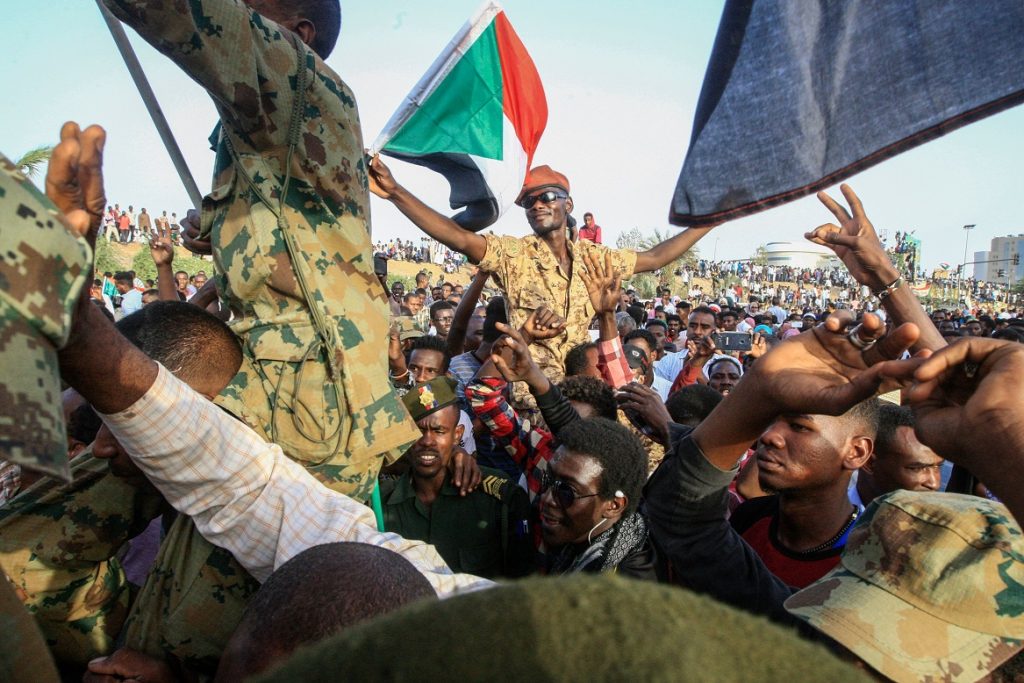
Sudanese protesters carry soldiers, including Rapid Support Forces (RSF) in trademark red caps, during a rally outside Khartoum’s army headquarters in April 2019. In the months before the June 3 massacre, interviewees told PHR that protesters and RSF soldiers had positive interactions. Photo: Ebrahim Hamid/AFP/Getty Images

Eyewitness accounts provide insight into the lead-up to the violence against pro-democracy demonstrators on June 3 as well as the size and composition of the security forces implicated in that violence. Interviewees told PHR that during the preceding months of pro-democracy protests in Khartoum, protesters and RSF soldiers interacted positively. Dr. Amina, a witness to the June 3 violence who is a therapist and professor, spent significant amounts of time at the sit-in from its beginning on April 6. She recounted spending most evenings there, returning home often at 3 a.m. She described how the RSF soldiers “used to even eat with protesters…. I remember one time they were sleeping, and protesters were guarding [their posts] for them…. They used to pray with them and everything.”[54] Witnesses reported a shift in the composition of the troops in the weeks before the massacre. Interviewees thought that this reflected a plan to remove soldiers from the sit-in post who might have developed an affinity for the protesters, and which could reduce the likelihood that the soldiers would protect protesters from attack, as they had in the past. Interviewees indicated that during the weeks prior to June 3, the soldiers were replaced with new, antagonistic RSF personnel brought in from Darfur, notable for their distinct accents, Rizeigat features, and lack of familiarity with central Khartoum.[55]

Witnesses said that this change in the composition of the security forces in and around the sit-in area was reflected in the uniforms those forces were wearing. Previously, RSF soldiers in uniform guarded the perimeter of the sit-in, and barricades manned by volunteers kept security forces out of the area used by protesters.[56] Witnesses on June 3 reported seeing soldiers in a mix of uniforms, including RSF, riot police, military police, and military special forces. Other personnel present were reported to resemble the operational unit of the National Intelligence and Security Service (NISS),[57] NISS officers in plainclothes, as well as special forces wearing black. Witnesses also spoke of irregular forces deployed to the area. Ahmed, a survivor of the June 3 massacre, reported seeing security force personnel “not wearing the same uniform; some of them were wearing half of their uniforms. Some of them were wearing slippers.” Murad, a protester present at the sit-in on June 3, reported that “mostly they had traditional whips … batons, sticks, every kind of thing someone could use to attack someone…. Metal rods … they would just attack anyone they could get their hands on.”

Usman, an active protester, reported that the forces deployed to the sit-in area on June 3 included boys who appeared to be between 12 and 15 years old, wearing new, oversized riot police uniforms, “like when a child wears their dad’s clothes,”[58] and armed with pieces of metal pipe. 

“They had traditional whips … batons, sticks, every kind of thing someone could use to attack someone…. Metal rods … they would just attack anyone they could get their hands on.”

Murad, a protester present on June 3, describing the security forces’ assault

Numerous interviewees told PHR that they heard rampant rumors of an impending attempt to break up the sit-in in the days prior to the June 3 violence. Several noted awareness of unusual troop movements in Khartoum, and particularly on the perimeter of the sit-in area after May 29. However, sit-in participants did not anticipate the brutality that security forces would deploy against them on June 3. In the days prior, buses reportedly dropped off large numbers of newly released criminals, riot police trainees, and RSF in areas of Khartoum North close to the Blue Nile Bridge. Many interviewees reported seeing large numbers of Thatchers[59] dispatched to areas just outside the boundary of the sit-in. Usman was a university student who had been expelled for his activism and who joined the “barricade boys,” groups of young men who guarded the barricades day and night at the sit-in after April 6. He recounted that, after crossing the Blue Nile Bridge to purchase Eid clothing in the neighborhood of Bahri on June 2, he saw “four Thatchers filled with whips…. As I walked along, there were ten Alwali coaches, and I was a bit surprised where they were going towards [North Khartoum Communications Unit of the army]…. They were wearing civilian clothes, but they looked like they were coming from a training camp. I started worrying.[60]

In the hours prior to the attack, witnesses described hearing reports on social media and receiving phone calls alerting them to the possibility of attack, which began around 5 a.m. on June 3.

“They were so many, they looked like ants, when you’d look at the bridge, you’d just see a blue cover walking … huge amounts of them coming down the bridge towards the barricades.”

Rania, describing riot police arriving at the sit-in site

A Planned, Systematic Attack

While further investigation is warranted, the contours of what transpired on June 3 are clear. Witnesses described seeing a large mass of armed men in uniform, outnumbering the demonstrators in some areas by as many as 10 to 1. Rania, a teacher and frequent protester, described watching the riot police forces approach across the Blue Nile Bridge: “They were so many, they looked like ants, when you’d look at the bridge, you’d just see a blue cover walking … huge amounts of them coming down the bridge towards the barricades.”[61]

Interviewees described attackers wearing the regulation RSF uniform, a well-known beige camouflage with a red hat for officers, and beige or maroon hats for lower-ranking soldiers, with beige boots. Others reported seeing the NISS uniform, which is similar to but distinct from that of the RSF.[62] Some witnesses reported seeing forces in riot police uniforms of either dark blue camouflage or plain blue, with black or beige boots. At least some of these appeared to be brand new and ill-fitting. Dr. Abbas, a physician present at the sit-in on June 3 who was detained, reported being told by his captor under the Blue Nile Bridge that many of the forces were RSF personnel dressed in other uniforms because, he said, “We were too many. We did not have enough uniforms for ourselves, so we take uniforms from other forces.”[63]

Witnesses reported that many RSF could be distinguished by their features and dialect, which they identified as being from the Arab tribes of Darfur, and the Rizeigat tribe in particular. In addition to being deployed within Sudan, the RSF has reportedly brokered deals with Gulf countries for use of its troops abroad. In particular, reports indicate Rizeigat soldiers have entered into lucrative contracts with the Kingdom of Saudi Arabia to fight as proxies in its war in Yemen. Murad, a protester at the sit-in, recalled, “One of the ones hitting us was mad at us because he was brought from the airport immediately to the sit-in instead of being taken to Yemen.”[64]

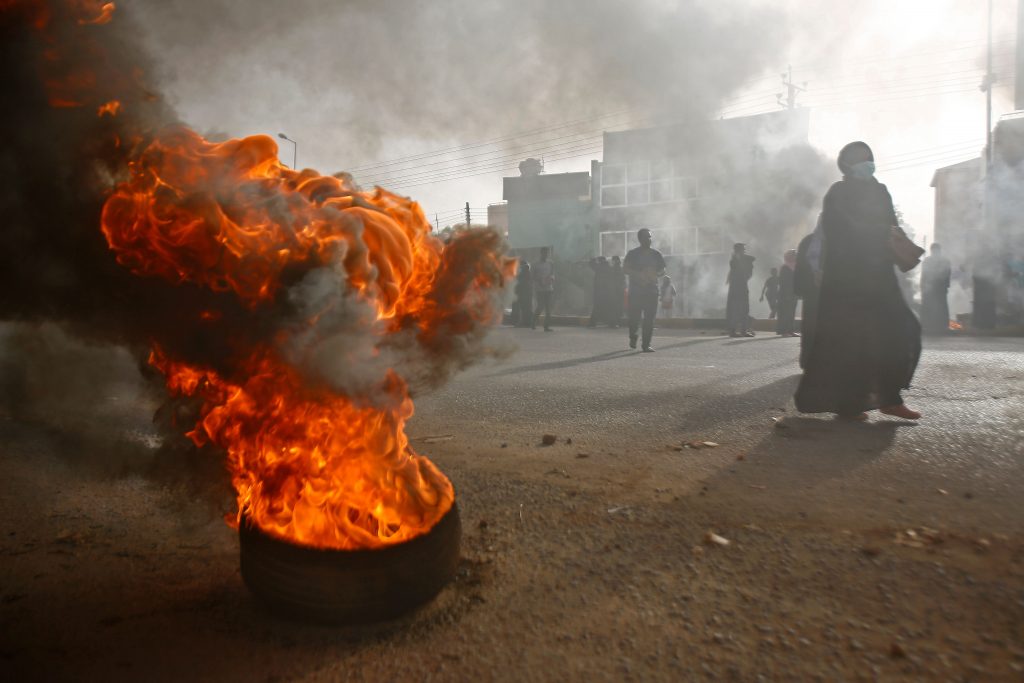
Protesters walk by burning tires in Khartoum on June 3. 2019. Photo: Ashraf Shazly/AFP/Getty Images

The Massacre Begins: “It was just chaos and fire.”

When the security forces began their attack on the sit-in participants around 5 a.m. on June 3, witnesses and survivors said that army personnel at the site, who had defended civilians in past attacks from the RSF and other forces, denied protection to protesters. Witnesses reported that Sudan Armed Forces personnel had been told not to get involved if an attack against the protesters occurred, and that the army, navy, and air force had been disarmed, an allegation repeated in media reports after June 3.[65] Murad explained what happened when he and other protesters tried to access the army headquarters for refuge from the attack, as protesters had in the past. “We started pleading to provide us any help, to let us in, and they said, ‘We’re sorry, there’s nothing we can do today.’” Witnesses also described senior army officers ordering the junior officers to surrender the protesters to the RSF. Naseem, a student activist present at the sit-in on June 3, reported that army soldiers were escorting him and other protesters away from an area where RSF and riot police were burning tents and stacking bodies.[66] Naseem explained that a higher-ranking officer receiving orders by walkie-talkie instructed the army officers not to protect them.  e added, “He told the officers to move away from us, the heartbreak was evident in their faces, but they couldn’t react and just moved,” allowing the RSF forces to beat him and others. Another witness, Karim, described the scene at the sit-in: “All the tents were burnt. They took over. The forces took over, it was just chaos and fire. They came around us and beat us.”[67]


Beaten and Blinded: Adam’s Story

Adam[68] was a 36-year-old professional who was fairly active during the protests before April 6. Beginning April 6, when the sit-in was established, he became more active, staying in the large tent set up for people from his neighborhood. During this period, prior to June 3, he experienced tear gas and other crowd-control weapons and was shot at with live bullets.

Adam was present the morning of June 3. He heard reports on social media around 2 a.m. that security forces were going to disperse the protests. By 5:15 a.m., he witnessed what he estimated were two hundred white pick-up trucks known as Thatchers enter from Mak Nimir Bridge, each carrying security forces in RSF uniform. Adam described seeing approximately the same number of Toyota pick-ups enter after them, transporting security forces in blue riot police uniforms. He explained, “I headed to Nile Street, and walked on the high railway toward Blue Nile Bridge. I saw a huge force of riot policemen entering the sit-in area. It shook me…. They wore the blue camouflage uniform and they stood up on the railway.” Adam noted the leader was holding a gun, but the rest were armed with sticks.

He heard and saw bullets being shot. While people were running away, a small group, including Adam, started throwing rocks at the forces while hiding by the side of the Continuing Professional Development Center. The leader fired at this group and they began to run. While fleeing toward the main stage near the army headquarters, Adam fell into a hole full of rainwater. He got up, dripping wet, and an assailant in riot police uniform beat him on the back with a stick. He escaped but stumbled on the sidewalk when he tried to look back while running and fell again. RSF forces surrounded him. He recounted, “They made a circle of seven or eight soldiers around me, hitting me at the same time, with whips, sticks, and water hoses, for more than 10 minutes.” He sustained three blows to the head and was beaten on his back, legs, and arms; bones in both his hands were broken while he was trying to protect himself. Adam described the sensation of being struck in the eye with a traditional whip: “I closed my eye and felt like something was wrong.… One of them kicked me from the back so it was hard for me to breathe and walk.” He estimated that this beating occurred at 6 a.m. The attackers in riot police uniform instructed him to leave after they tired of beating him.

“They made a circle of seven or eight soldiers around me, hitting me at the same time, with whips, sticks, and water hoses, for more than 10 minutes.”

Adam, who suffered multiple broken bones at the hands of the RSF

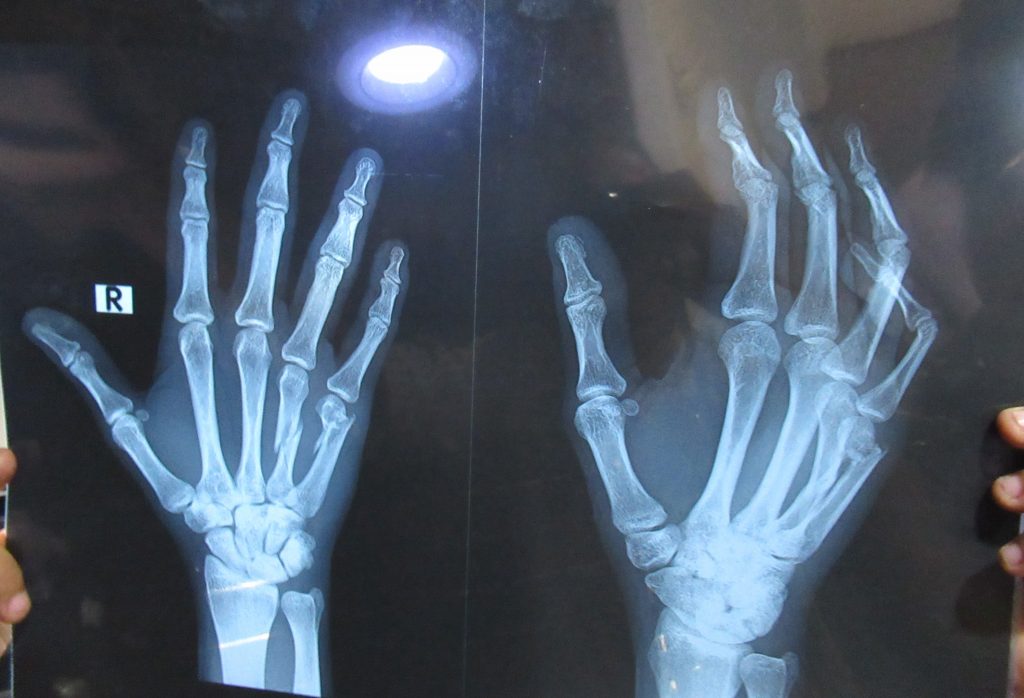
Weak, bleeding, and confused, Adam limped toward the Mak Nimir Bridge, where he had seen the trucks enter. He hid in a tent and wrapped himself in a carpet. A different RSF officer discovered Adam hiding there and ordered two other protesters to help hold him up as he walked to Nile Street. “On the way my phone and keys were taken. I arrived at Nile Street and found a lot of injured people. One person was laying on his stomach in his vomit; I didn’t know if he was dead or alive.” He estimated seeing hundreds of injured detainees at the site, including older women and children, being kept there by RSF soldiers armed with whips and sticks. Adam was physically unable to mount the large truck that had come to transport injured people, so he was placed in an ambulance and taken to Omdurman Military Hospital at around 7 a.m. at the Military Hospital, he received treatment for a large laceration on his forehead and several others on his scalp. His left eye was cleaned and bandaged, but no ophthalmologists were available to attend to the tears in his cornea and retina. His arms were both swollen and X-rays taken several days later at Feda’il Hospital confirmed multiple fractures in his hands.

Adam was unable to receive necessary surgery in time to save his sight, and explained, “The doctor told me I was too late. He told me if I came earlier it could be treated but that will not work now.”

Clinical examination confirmed that Adam’s visible scars and injuries are consistent with defensive wounds from blunt trauma, highly consistent with beating from sticks, whips, and water hoses. He sustained fractures in his hands, lacerations over his forehead and scalp, and severe trauma to his eye causing vitreous hemorrhage and retinal detachment and resulting in permanent vision loss in the left eye.


Adam’s right and left hands were broken and he suffered permanent vision loss in one eye when he was surrounded and brutally beaten by Sudanese security forces. His physical examination revealed injuries and scars highly consistent with blunt trauma from sticks, whips, and water hoses that he described being used in his attack.

Targeted Violence Against Health Care

The June 3 assault continued a pattern of attacks on health care providers, institutions, and patients, as well as prevention of access to care at nearby hospitals. Relevant violations against  health workers – whose ethical duty is to treat the sick and wounded without discrimination – and interference with health infrastructure and delivery of medical care included the imposition of siege-like conditions on health facilities; restricting ambulances and other vehicles from transporting  injured protesters to health care facilities; and beating or shooting health care workers, patients, or visitors who tried to enter or leave health care facilities on foot. This animus toward health care workers and facilities may reflect the security forces’ recognition of the role that health care workers, and particularly doctors, have played in pro-democracy protests in Sudan since December 2018. PHR documented in its April 2019 report that at least 136 physicians were arrested and detained as a result of providing care to protesters, making statements supporting the protest movement, or participating in protests.[69] Doctors were arrested while participating in protests, working in hospitals or clinics, and in their homes.

Targeting Doctors

RSF forces specifically targeted doctors and other health care workers with harassment, intimidation, and violence on June 3. Dr. Abbas, a young doctor captured by the RSF while hiding with others on the roof of the University of Khartoum Clinic, reported that when he was forced to show his identification, the soldiers said, “Oh, so you’re a doctor.” They then yelled at him:

“You’re the reason for all this chaos and this whole mess … you’re the reason why the country’s like this, you’re the reason why we kill people, you’re the reason why people die, you’re the reason, you’re the reason!”[70]

The RSF soldiers then separated Dr. Abbas from the other detainees, saying, “This is a doctor so we’re gonna deal with him on his own.” Two soldiers pointed automatic weapons[71] at him and marched him to a nearby shaded area with trees, where they continued to berate him:

“They were yelling at me again like, ‘You’re the reason, you did this, you got us here, you’re the reason we don’t get sleep anymore, you’re the reason we work all the time, you’re the reason, you’re the reason’ and I just basically said my Shahada (prayer) … they took off my glasses from my face and threw them on the ground. Then they just stepped on it, [saying] ‘You’re not going to see anything today, this is the last thing you will see.’”[72]

He reported that the commanding officer came back and asked if he was a doctor, saying, “Leave him, we’re not going to do anything to him today, today is not his day.” Dr. Abbas was then brought to a detention area under the Blue Nile Bridge, where he was required to care for wounded protesters.

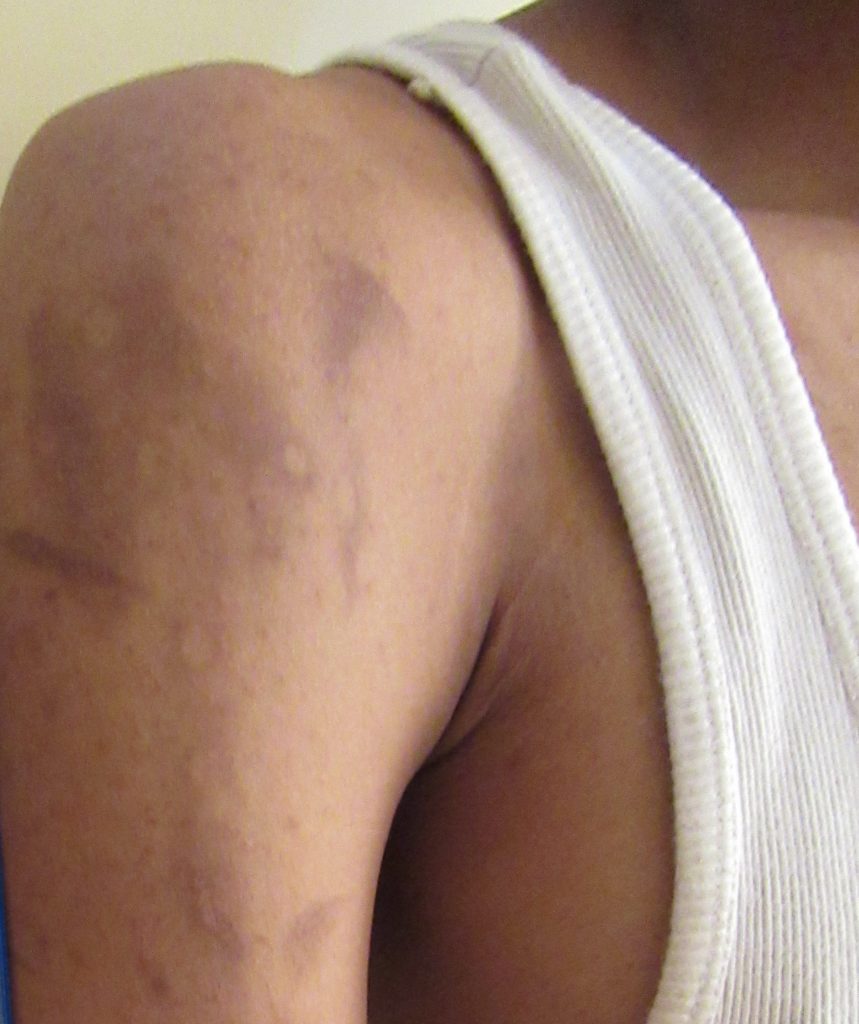
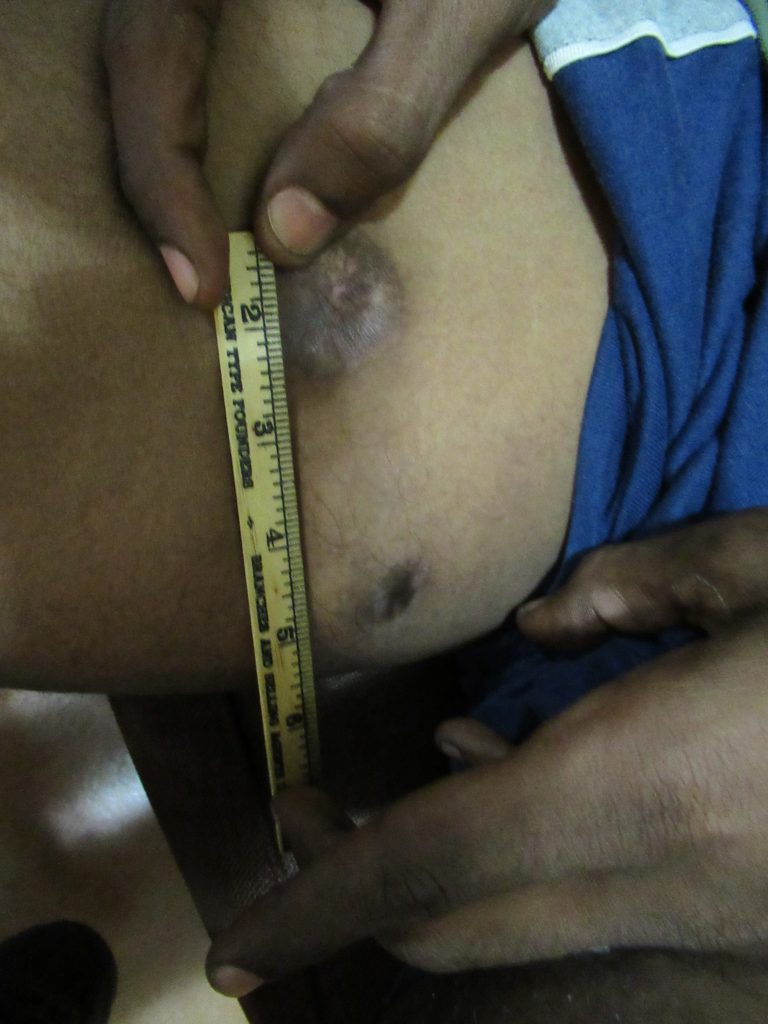
Ahmed, trained in first aid and active in providing frontline care to protesters during the sit-in, reported how RSF personnel singled him out from other detainees for specific, targeted torture while detaining him in an empty office building because they mistakenly believed he was a doctor. He said, “They grabbed me down to the floor.” The soldiers then used a pocketknife to re-open a healed surgical scar. Ahmed described how they then made him lie on his back, saying, “Oh, you’re a doctor … OK, we will let you know how we treat bleeding outside the capitol.” The RSF soldiers lit cigarettes, took a few puffs, and put them out in the incision they had made.[73]  Ahmed’s physical examination was highly consistent with his description of these events, with cigarette burns and multiple healing bruises and abrasions corresponding to his description of multiple beatings and burns adjacent to a laceration.

Dr. Asim, an orthopedic surgeon treating trauma patients on June 3 at Royal Care International Hospital, reported that on the day after the June 3 massacre, security forces detained fellow physicians returning to their homes from the hospital:

“The level of suppression was unbelievable … the roads were already all barricades and blocked, but anything that proves that you are a doctor you’d have to hide … we heard that some of our colleagues were on their way home, and were arrested on the way just because they are doctors.”[74]

“The level of suppression was unbelievable … the roads were already all barricades and blocked, but anything that proves that you are a doctor you’d have to hide … some of our colleagues were on their way home, and were arrested on the way just because they are doctors.”

Dr. Asim, reporting on security forces’ targeting of health professionals

Forced Medical Care in RSF Detention 

Witnesses reported that the RSF forces on June 3 forced physicians to work while held in detention after the dispersal of the sit-in. Dr. Abbas recounted how RSF personnel brought him with other doctors to an RSF site under the Blue Nile Bridge. The RSF soldiers screamed at him, “Aren’t you a doctor? You’re going to save these people.” Dr. Abbas explained that “the doctors with me … were beaten up as well … but almost all of us doctors could function, so we started helping patients.” He was detained there for seven hours, providing treatment at the direction of an RSF doctor, with RSF-provided medical supplies. Dr. Abbas reported that during this time he saw four critically injured patients transferred to Omdurman Military Hospital in military ambulances.[75]

Attacks on Informal Sit-In Clinics

Ahmed, active in providing frontline first
aid to protesters, was detained and
tortured by Rapid Support Forces
soldiers, who cut open a healed scar
(visible at the left middle of the photo)
and then extinguished lit cigarettes in
and around the open wound. Ahmed’s
physical examination by a PHR clinician
was highly consistent with his narrative,
with cigarette burns and multiple
healing bruises and abrasions.

PHR interviewed multiple health care workers and former patients who worked in different clinical settings inside the sit-in.[76] All described similar patterns of violent behavior by security forces on June 3: attacks on medical staff, and patients, and the creation of threatening and insecure conditions in and around areas designated for medical treatment.

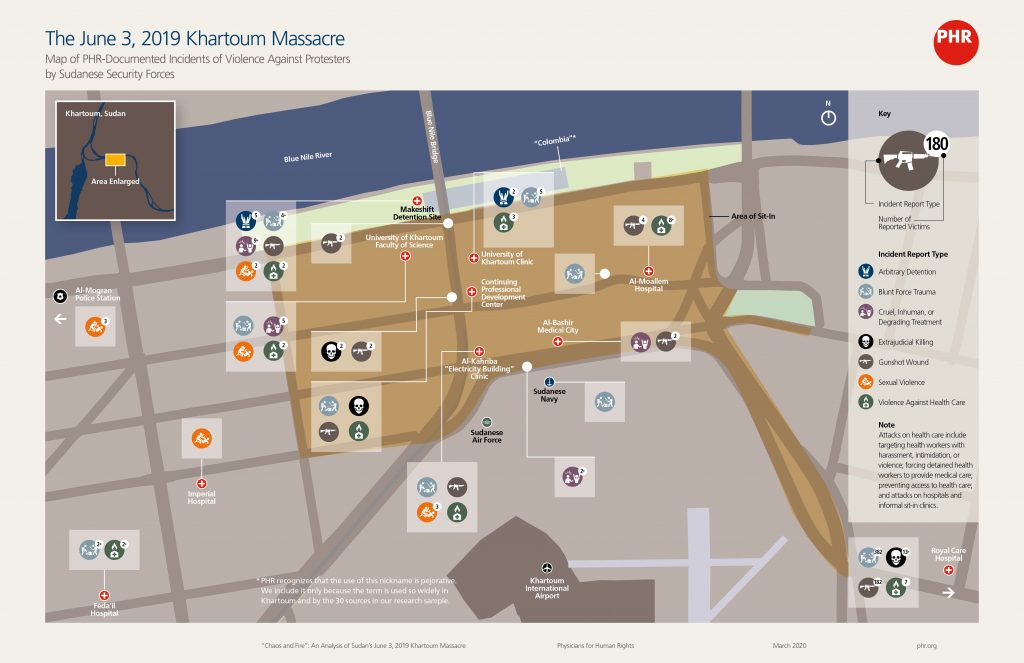
Security forces attacked the makeshift clinics that had served the sit-in population, including those inside the protester care center staffed by volunteers housed inside of the University of Khartoum Clinic. Other well-staffed clinics were attacked, including one at the Continuing Professional Development Center (CPD) near the navy headquarters and the makeshift medical clinic in the Electricity Building near the navy headquarters. Security forces also attacked smaller, less permanent medical stations, including two organized by Ahmed near the Blue Nile Bridge, and one located inside a small campus mosque near Nile Street.[77]

Dr. Abbas observed the attack on the University Clinic by RSF forces wearing riot police uniforms as he hid on a rooftop nearby: “They broke [into] almost all the rooms; you could hear glass shattering, people screaming afterwards, and then you hear them threatening [people] to get out or they’re going to shoot them.” He and his fellow protesters were eventually discovered. The RSF soldiers stole their belongings and beat and detained them.[78]

Dr. Yaseen, a general surgeon, was in the CPD clinic around 6 a.m. on June 3 preparing to perform surgery on a protester with a head wound when a bullet pierced a window near the ceiling. The bullet narrowly missed Dr. Yaseen but struck his patient’s chest, killing the patient. Despite his outrage, Dr. Yaseen maintained his ethical obligation to treat the sick and wounded without discrimination throughout the morning, treating an injured RSF soldier in civilian clothes. Dr. Yaseen explained, “He said ‘I belong to the RSF but I’m not happy about what they are doing…. We must move on to a civilian government.’ Then I started to treat him because I’m a doctor at the end.”[79]

Munir, a protester at the sit-in on June 3, described seeing large numbers of wounded brought to the clinic in the Electricity Building with wounds from live bullets. He noted that many of them were already dead upon arrival.[80] Usman, the student who had joined the ranks of the “barricade boys” defending the sit-in, was shot multiple times in the right thigh on June 3. Usman was brought by fellow protesters to the Electricity Clinic several hours after the attack began.  While receiving IV fluids and resting on a cot, he watched a “large force” of RSF storm the Electricity Clinic:

“They broke [into] almost all the rooms; you could hear glass shattering, people screaming afterwards, and then you hear them threatening [people] to get out or they’re going to shoot them.”

Dr. Abbas, describing an RSF attack on the University Clinic

“We were around seven injured, and there were children hiding under a table … people hiding inside the Electricity Building to protect themselves.… [The RSF] entered with whips and started hitting everyone randomly.”[81]

Usman described how, during the raid, a protester applied pressure to Usman’s gunshot wounds “at the same time the RSF were beating him.” Eventually an SAF captain arrived and ordered the RSF soldiers to stop torturing the detainees and “made them leave.”

Attacks on Hospitals

The RSF attacked multiple hospitals during the June 3 massacre, preventing access to care for injured protesters and severely restricting the flow of medical supplies and health care worker access.[82] The World Health Organization issued a statement that the violence to hospitals in Khartoum “resulted in emergency services being shut down, the unwarranted transfer of patients, injuries to five medical staff and patients, and threats to others.”[83] The Central Committee of Doctors reported on June 9 that the RSF targeting of medical personnel had led to the closing of eight hospitals.[84] PHR interviewed multiple witnesses, including former patients and care providers, who confirmed the impact on Moallem Hospital and Royal Care International Hospital. Other witnesses reported observing a security force presence while receiving treatment at Omdurman Military, Feda’il, Imperial, and al-Saha hospitals.


Verifying an Assault on Health

PHR’s research partner, the Human Rights Center Investigations Lab at the University of California, Berkeley, identified the following verified examples of video documentation of violence against health care perpetrated in Khartoum on June 3:[85]               

Attack on Royal Care International Hospital

On June 3, security forces attempted to enter the Royal Care International Hospital, blocking access for ambulances carrying injured protesters, attacking medical staff, and firing into the hospital. Forces ordered the hospital staff to evacuate protesters. This video uploaded to Twitter shows soldiers arguing with doctors and hospital staff, beating a man on the hospital grounds with a stick, and then walking quickly toward the hospital entrance.

Violence at Al-Moallem (Teaching) Hospital

On June 3, security forces chased protesters into al-Moallem Hospital grounds and beat them. Reports detail forces preventing ambulances from dropping off wounded protesters at the hospital. This video on Twitter, tweeted by the television channel al-Jazeera Mubasher, shows a man inside Moallem Hospital compound being beaten with sticks by security forces.

Al-Moallem Hospital

PHR interviewed survivors who were in or around al-Moallem Hospital on June 3. Several described al-Moallem as effectively besieged by forces wearing RSF, riot police, and black military uniforms. These forces prevented patients and treating physicians from accessing the hospital by beating, detaining, and threatening them. All interviewees mentioned attempts by the security forces to raid the building, although some expressed their belief that the nearby presence of the army intelligence headquarters forced the RSF to exercise restraint. Dr. Amina, who had fled with colleagues to al-Moallem, reported that forces wearing RSF and riot police uniforms “tried to break in three times.”[86] While the role of the army in the June 3 attacks on health care require further investigation, some witnesses reported violent clashes between members of the army and the RSF near hospitals. For example, at 6 a.m., Dr. Yaseen reported seeing a Sudanese army officer in military uniform being beaten by RSF outside the hospital.[87]

Mu’min, an attorney at the sit-in, described the injuries security forces inflicted on him at the Clinic Gate at the University of Khartoum campus: “They started attacking me because I was carrying a phone…. Five of them surrounded me and [were] hitting me with sticks.”[88] Mu’min was rescued by protesters who threw rocks at his assailants, but he fell while running and lost consciousness. He vaguely remembers someone taking him for admission to Moallem Hospital at 5:20 a.m. on June 3 for a hand injury and eye laceration.

Dr. Amina explained that she fled towards al-Moallem after witnessing gunshot fatalities: “I could hear the barricade boys shouting, and … I started seeing people falling.” She added that the shots were coming “from above” and caused protesters to flee toward the hospital. Dr. Amina recounted that the RSF attacks on the clinics outside the main hospital building began around 6 a.m. and resulted in the destruction of an area for conducting magnetic resonance imaging (MRI), a costly and sophisticated diagnostic technology.[89]

Inside the hospital, Dr. Amina described how terrified people hid under the reception table in the lobby while the sounds of shooting and screaming continued outside. “After a while, there was no fewer than 700 persons in the hospital … [and] about 300 injuries. At about seven or eight a.m. we had seven martyrs at the hospital. Five of them were known, and two were unknown.” (Protest fatalities in Sudan are commonly referred to as martyrs, because they died for their belief in civilian rule).[90] While the circumstances of each of the dead held at Moallem are not clear, several witnesses recounted bringing injured people for care who died upon arrival. Jamal, a teaching assistant active in the protests and present on June 3, reported finding the prominent 26-year-old activist Mohammed Mattar shot dead,[91] and bringing his body to al-Moallem.[92] He also reported seeing two people injured by shots fired by forces surrounding the hospital. 

As the siege of the hospital continued throughout the day, it interfered with medical treatment, including transfers to better-equipped hospitals. Moneim, a protester who had accompanied injured friends early in the morning to al-Moallem, described hiding there for 12 hours with acquaintances from the sit-in, including a 15-year-old boy who had sustained a gunshot wound to his arm.[93] By 11 a.m., the surrounding RSF and riot police forces beat anyone who tried to enter or leave al-Moallem, blocking access of injured protesters to medical treatment and functionally closing the hospital. Dr. Amina reported that there weren’t enough medical supplies or staff to take care of all the injured people who were stuck inside.[94]

Suleiman was shot in both hips while
trying to save a gunshot wound victim
who died in his arms. He was carried to
al-Moallem Hospital, which was attacked
by security forces as he arrived. PHR’s
clinical examination of Suleiman showed
bullet entry and exit wounds consistent
with his report of being shot while trying to
run away

Suleiman, who had been shot in both hips while trying to save a gunshot wound victim who died in his arms, was carried to al-Moallem by other protesters. He witnessed RSF forces breaking the door to al-Moallem hospital; after they withdrew, fellow protesters carried him inside, where he reported seeing a fellow patient with “his stomach cut open” and another with multiple gunshot wounds to the chest.[95] Because there were insufficient medical staff and supplies to deal with the severity of his wounds, Suleiman was transferred to al-Saha hospital by ambulance. He reported that al-Saha was “also surrounded by RSF and they tried to get into it multiple times.”[96]

“[Forces] carrying whips and in police uniforms … tried to attack the hospital. One of them shot tear gas … they were trying to kick down the doors.”

Bilal, an injured protester, describing the assault on Moallem Hospital

While hiding on the grounds outside the hospital compound, Murad described seeing armed men on “the rooftops that were around us … [with] long-range firearms weapons, AK 47s, and sniper rifles.” Murad recounted watching protesters run inside al-Moallem, while being pursued by “people … wearing black uniforms, special forces, uniforms of policemen, different uniforms of police, purely blue, blue and black. Some of the group we were with ran into the al-Moallem Hospital and were followed by forces of different uniforms…. I saw forces running into the hospital holding sticks and batons.”[97]

Bilal, a protester who had sustained a bullet graze wound, witnessed the assault on al-Moallem from nearby, while hiding inside a compound wall. He said forces “carrying whips and in police uniforms … tried to attack the hospital. One of them shot tear gas … they were trying to kick down the doors.” Bilal made it inside the hospital after the troops sought another entrance. Once he was let in, he said,

“They closed the doors with sacks of sugar; … someone immediately came to wrap up my wound.… there were no beds or anything, the entire hospital was basically just blood everywhere. They stitched my leg on the ground, without anesthesia, there was none.”[98]

Dr. Amina recalled that, even after the shooting subsided, RSF forces remained, with no guarantees of safety for health care workers or patients:

“Although the gunfire stopped around 3:00 or 3:30, no one left the hospital because they [RSF] were standing outside. After that, a young man from the Army Intelligence came and said people can go out. I said to him that we can leave the hospital, but can you guarantee the safety of these people? He said no.”[99]


Royal Care International Hospital

Royal Care International Hospital received transfers of critically injured protesters from al-Moallem. Emergency Medicine specialist Dr. Haitham was treating patients there, and explained, “In the early morning we were contacted and told that there are a lot of injured people starting to arrive at Royal Care Hospital.” Witnesses and staff members reported that armed forces wearing RSF and riot police uniforms surrounded the hospital and prevented the injured from accessing it, as early as noon.[100] By later afternoon, Royal Care International Hospital was surrounded by RSF pursuing protesters fleeing the sit-in site who were seeking safety in the hospital. Dr. Asim, an orthopedic surgeon who worked at Royal Care on June 3 because both al-Moallem and Imperial Hospitals were inaccessible, reported that what provoked the RSF to come and beat up people at the hospital was that “they saw people leave al-Qiyada (the central sit-in area) and come into Royal Care Hospital.”

Witnesses and staff members reported that armed forces wearing RSF and riot police uniforms surrounded the hospital and prevented the injured from accessing it, as early as noon.

Dr. Asim described the aggressiveness of the RSF troops outside the hospital:

“[W]hen we were giving emergency aid … we had people (medical staff) stand in front of the hospital emergency gates at Royal Care [to prevent RSF intrusion into the premises], and [the RSF] would come and beat them.”

Dr. Asim noted, “[Injured protesters] couldn’t come into Royal Care,” which forced patients to go to other hospitals nearby. He described how the Royal Care ground floor was “filled with patients,” and that an RSF soldier “wanted to fire an RPG [rocket propelled grenade] at us at the hospital” but was stopped by an officer.[101]

Abdelaziz, a medical services coordinator working with protest organizers, described how forces in blue camouflage uniforms flooded the streets surrounding Royal Care, attacking those trying to approach and blocking people from entering the hospital. When he was able to enter the hospital, Abdelaziz and his colleagues attempted to collect data on the numbers of injured. He noted, “When we finally … did the information gathering … it was around 380-something injured people on that day, just in Royal Care.”[102]

“They told us that if the protesters were not evacuated from the hospital within two hours, they would use aggressive force, even shooting and killing.”

Dr. Haitham, reporting on RSF demands at the Royal Care Hospital

A member of the Royal Care medical team, Dr. Haitham, told PHR that the RSF forces demanded that the medical director at Royal Care evacuate all protesters sheltering inside the hospital: “They told us that if the protesters were not evacuated from the hospital within two hours, they would use aggressive force, even shooting and killing.” The medical director responded by instructing the protesters to leave the building “out the back door.” Dr. Haitham reported that despite the hospital complying with the evacuation order, RSF forces continued to surround it for two days, firing so much tear gas that he could feel its effect inside the building.[103]

Extrajudicial Killings

While the total number of dead from the sit-in massacre remains contested, many activists and organizations have compiled lists of civilians reportedly killed on June 3. On June 6, 2019, Sudan’s Ministry of Health acknowledged 61 deaths,[104] although by June 27 it had acknowledged 87.[105] In contrast, a Sudanese lawyers association in the United Kingdom lists the names of 241 dead.[106] Based on eyewitness reports of shootings, including from people injured on June 3, PHR believes that the larger number of fatalities is more accurate. Reports of dozens of alleged enforced disappearances by security forces on and following June 3 could increase the death toll if more victims are discovered. Interviewees reported witnessing the extrajudicial killing of individuals, as well as seeing dead bodies in streets or clinical settings. For example, Ahmed reported giving first aid to “a man who died in front of me while I was treating him from a direct gunshot in his heart.” He also recalled seeing two dead women, although he noted that identifying the gender of corpses was difficult because their heads were covered “with clothes.”

“I saw bodies scattered around the gardens to the left and right, nearby the main road, with blood all around.”

Ahmed, describing the 37 dead bodies he counted near the University of Khartoum gates

In total, Ahmed counted 37 dead bodies lying near the main gate of the University of Khartoum, as he fled the sit-in area. He explained, “I saw bodies scattered around the gardens to the left and right, nearby the main road, with blood all around.”[107] In some cases, witnesses knew those they saw killed, such as Suleiman, who personally knew many of the young male activists killed that day.  More often, witnesses described the dead as fellow protesters fleeing the attack. A member of the medical community provided PHR a morgue census of 71 bodies for the week of June 3 through 6.[108] Although this record does not represent all deaths resulting from the sit-in massacre, an independent analysis prepared for PHR indicates that most deaths on the list were due to violence: gunshot wounds were the primary cause of death in 72 percent of cases, including 10 children under the age of 18, the youngest of whom was six years old. The second most frequent cause of death was stab wounds (20 percent).[109]

Table 2: Sample of Mortuary Admissions, Greater Khartoum Area, Sudan June 3-6, 2019

Reported Cause of Death Number %
Gunshot Wounds 51 71.8%
Stab Wounds (Sharp Force) 14 19.7%
Drowning 3 4.2%
Traffic Accidents 1 1.4%
Run Over 1 1.4%
Crushed Skull (Blunt Force) 1 1.4%
Combined (Sharp/Blunt) 0 0%
Undetermined 0 0%
Total 71 100%

Multiple witnesses reported their impression that much of the shooting was from the rooftops or elevated structures such as the railway or the al-Bashir Medical City Center.[110] Ahmed described watching a soldier in black uniform shoot protesters with a weapon outfitted with a sniper scope near the army headquarters.[111] Usman watched two snipers position themselves on the railway near the Blue Nile Bridge. He saw one of them shoot an unknown protester in the head and noted, “Around sunrise, I began to hear the sound of the bullets hitting the metal close to me.”

Ahmed described watching a soldier in black uniform shoot protesters with a weapon outfitted with a sniper scope near the army headquarters. Usman watched two snipers position themselves on the railway near the Blue Nile Bridge. He saw one of them shoot an unknown protester in the head.

Usman reported that later in the morning he was with a group of friends attempting to defend the sit-in by throwing rocks. When he stood to look for his friend who had advanced toward the Blue Nile Bridge, a different sniper in black positioned on the top of a tunnel nearby shot him in the right leg.[112]  Dr. Haitham noted that the sniper bullets removed from patients on June 3 at Royal Care were “quite big compared to those of the M16 [an assault rifle designed to provide maximum firepower].” He described the types of injuries Royal Care received the morning of June 3:

“I arrived there around 7:30 a.m. A lot of patients started coming to the ER with different types of injuries … gunshot to the lower limb, to chest, even the head…. I cannot recall the exact number actually, but most were in the lower limb…. We made a triage area according to the severity. When Royal Care hospital is full (around 40), we move the rest of the patients (30 or more) to al-Saha Hospital.” [113]

Dr. Yaseen described the injuries he was forced to treat near the Blue Nile Bridge on June 3 while he was detained there:

“What was strange is that they didn’t shoot in the limbs … in the arms, in the legs, no. They were shooting either directly to the chest or to the head…. Even the tear gas should not kill you, but rather than using the tear gas just to shoot in the air, no, they shoot directly to the head.”[114]

Multiple witnesses saw RSF soldiers shoot unarmed protesters. Murad, who was also at the Blue Nile Bridge detention site, reported seeing a fellow detainee shot under the Blue Nile Bridge:

“There was this guy shouting and screaming ‘What are you doing?’ He was very angry and traumatized…. I looked at them [RSF] and then I saw him get shot…. Then even the floor we were sitting on, our pants, our clothes, were covered in blood.”[115]

Suleiman described carrying a man in his 40s whom he had seen shot: “We reached the Resilience Barricade and this person I was carrying became very heavy and his mouth was bleeding. He passed away.”[116]

Excessive Use of Force, Torture, and other Cruel, Inhuman, and Degrading Treatment

Sudanese authorities have claimed that the events of June 3 were part of an effort to “clean up” the reputed drug dealing area north of the sit-in, known locally as “Colombia.”[117]

Multiple witnesses reported that conditions in the area did not justify the use of force; even had force been justified to dispel illegal activity, the force was excessive, in that it was not necessary or proportionate, and extended far into the area of the sit-in.

Survivors of the sit-in massacre reported being assaulted with tear gas, rubber bullets, whips, sticks, batons, rifle butts, and pieces of pipe. Gunshot wounds on victims of the violence revealed that security forces deployed live ammunition against these unarmed civilians.[118] Interviewees reported seeing uniformed security forces personnel, men in civilian garb carrying assault rifles, and snipers on rooftops.

As demonstrated in the table below, half of the 30 people interviewed had injuries with visible scars. A third sustained gunshot wounds, and two-thirds experienced blunt force trauma. Almost a third of those injured had permanent disabilities.

Table 3: Injuries, Disabilities, and Symptoms among 15 respondents with Physical Injuries

Age Group 0-17 18-29 30-45 All
Number of People Injured with Physical Injuries 1 11 3 15
Gun Shot Wounds 1 4 0 5
Blunt Force Trauma 0 7 3 10
Permanent Disabilities 1 2 1 4

One of the victims of that excessive use of force was Muna, a sit-in participant.  Muna was hiding from security forces with four other young women in the University of Khartoum clinic. A group of RSF, led by a helmet-wearing soldier in a black uniform carrying a large gun, broke into the clinic and beat them: 

“[T]hey started beating us up…. He was beating me on the head and beating all of us a lot…. [Using] a baton, some others were carrying whips, and … thin sticks, they were beating us everywhere, they didn’t care what part of the body it was, whether it was the head or the body.… They were fighting within each other, saying ‘Take them outside, let them kill them,’ and others were saying ‘No leave them here,’ there was a good cop, bad cop situation.”[119]

Survivors of the sit-in massacre reported being assaulted with tear gas, rubber bullets, whips, sticks, batons, rifle butts, and pieces of pipe. Gunshot wounds on victims of the violence revealed that security forces deployed live ammunition against these unarmed civilians.

Rania, a teacher who had participated in the sit-in and other protests since April 6, described being beaten by uniformed soldiers while attempting to find shelter in the nearby navy headquarters:

“We headed toward the Navy quarters to try and get inside…. At a point, RSF men came down off of their trucks with their sticks and started beating us with them…. We were getting beaten for a while there, then some army soldiers came out and told us to just leave.”

Rania then recounted how she ran through the streets in an effort to escape the beating, but eventually collapsed:

“I had my arms up to cover my head until they were broken … a broken bone on my left hand, and a broken wrist on my right…. I felt like something was wrong with my hands, but I didn’t know what was going on, my arms fell to my sides, so I just kept running…. Since the first hit, my entire body went numb, so I didn’t feel all those beatings. The last hit I got was in the face, I could taste blood and that’s when I fell.… RSF soldiers would walk by and antagonize me, saying ‘I thought you said you wouldn’t leave the sit-in,’ and they kicked and stepped on me.”[120]

Dr. Abbas described hearing beatings while hiding on the roof of the University clinic: “You can hear them screaming, and then you can’t hear them anymore. Some people were begging for them to stop.” Dr. Abbas reported that, later in the day, he treated injuries caused by severe beating with batons and “the backs of guns” (rifle butts, or dibshik):

“[T]he minimum injury is … [a] broken arm or lashes on the back, like very deep [abrasions] .… Some of the patients had both arms broken … an arm or a leg or two legs broken…. Some had all their limbs broken.”[121]

Multiple interviewees reported that pregnant women miscarried as a result of beatings. Murad described seeing the RSF in the detention area under the Blue Nile Bridge beating a visibly pregnant women of “darker ethnicity” with “very African features,” and therefore more likely to be targeted. He recounted,

“Some of these soldiers were holding whips and beating her up, asking who the father is. And then one of the doctors [being forced to work in the detention area] said, ‘She’s gonna go into labor. Leave her, she’s gonna go into labor.’ And then they were like ‘Who cares about this bastard child of this woman?’ And they continued beating her up until she lost consciousness.”[122]

I had my arms up to cover my head until they were broken.… Since the first hit, my entire body went numb, so I didn’t feel all those beatings. The last hit I got was in the face, I could taste blood and that’s when I fell…. RSF soldiers would walk by … and they kicked and stepped on me.”

Rania, who was beaten by RSF soldiers while trying to flee

Samir, an active protester, witnessed the RSF shaving the dreadlocks of six young men near Feda’il Hospital, and was himself shaved at a checkpoint after being questioned about his participation in the sit-in.  He explained, “They shaved me with a pair of scissors. For some other people it was a razor, for some other people it was a knife.” [123]

Murad described seeing an acquaintance whose dreadlocks were ripped out by hand, while he was beaten: “Some of them were pulled out of his head when they brought him in. You could tell some of the bones in his arms were broken. The bones were not straight.”[124] Mustafa recalled seeing soldiers wearing the RSF uniform with red caps stop cars and force people to get out for beatings near Mak Nimir bridge. He heard soldiers say, “[Y]our hair is long,” and then give the order to administer “30 lashes with sticks and cut his hair.”[125]

Intimidation, Humiliation, and Ethnic, Racial, Religious, and Sexual Insults

In addition to beatings, interviewees reported that security forces forced them to do and say things designed to humiliate them under threat of physical violence. Witnesses reported watching RSF forces strike detained protesters with sticks, batons, rifle butts, and whips and force them to say “Askariya” or “Military rule” as an act of symbolic submission. Some of these interactions indicate the attackers’ allegiance to Hemedti and their status as RSF troops drawn from the ranks of the Janjaweed militia. Dr. Abbas described RSF officers insisting that he say “Janjaweed,” explicitly referring to the role of the Rizeigat Abbala in the paramilitary from which the RSF emerged:[126]

“They wanted me to say Janjaweed and I [said] … ‘I know only Rapid Support Forces … I don’t know, what do you call yourself?’ ‘Janjaweed.’ And then he asked me again, ‘What do you call [Hemedti]?’ I [said], ‘Vice President’…. [I asked] ‘What do you call him’… He [replied] ‘ra’iy abl (camel herder).’”[127]

Multiple interviewees described the RSF forcing detainees to dismantle barricades while beating and humiliating them. In addition to taunting their captives, the RSF forced them to walk at extremely fast or slow speeds, repeatedly raise and lower their hands, and in some cases crawl or roll on the ground while beating them. Murad described his experience of being beaten in RSF detention:

“They had us crawl on the street, roll on our backs while whipping us with different types of blunt objects and whips until they had us move in the direction of Nile street. When we got there, they had us walk to beneath the Blue Nile bridge where there was a barricade. They told us to start moving it…. They told us to move the stones and I couldn’t.”[128]

Security personnel prevented detained protesters from praying, even though it was Ramadan, depriving them of a critical aspect of religious practice during the holy month.[129] Dr. Abbas reported that during his seven-hour detention under the Blue Nile Bridge, when he asked his captors if he could pray, the RSF soldiers said, “You are a communist and a nonbeliever, why do you want to pray? You are all kuffar,[130] why are you praying? You’re just wasting your time.”[131]

“If you say you are fasting they beat you up, they take you to water and they say, ‘There is nothing called fasting.’”

Dr. Abbas, describing how RSF soldiers humiliated protesters observing Ramadan by forcing them to drink.

The RSF also forced detained sit-in participants to sit in the blazing summer sun on a day in which temperatures reached a midday high of 105 degrees Fahrenheit,[132] beating them if they tried to move to the shade of the nearby Blue Nile Bridge.[133] Dr. Abbas recounted that the soldiers asked their captives if they were fasting, and “If you say you are fasting they beat you up, they take you to water and they say, ‘There is nothing called fasting,’” and forced detainees to drink. Others reported being forced to drink from puddles of water in the street.[134] Murad recounted that, while he was detained near the Blue Nile Bridge, a soldier wearing a military police uniform asked him if he was fasting and “made me drink water from the [ground], me and another group of people. As soon as we put our heads on the water, they started stepping on our faces, on the back of our heads.”[135]

Karim, a protester at the sit-in on June 3, described how he and others were made to drink water from a sewage pipe:

“RSF forces … called us communists and ‘faggots’…. They made us carry random stones even though the road was cleared. Someone else came and told us to move them again. After we moved them, he was like ‘You seem tired, drink some water.’ There was a broken sewage pipe under the bridge, and they made us drink.”[136]

Karim indicated that he and others were also made to lie in the street without protection from the sun “with our hands on our backs.” Muna reported seeing “an area that had some rain puddles, and some guys were laying in them, their faces were in the water, I feel like they were dead, because they weren’t moving.”[137]

Upon reaching the detention area near the Blue Nile bridge, Muna observed that her RSF captors were “children, really young.”[138] Murad recounted, “They were just boys. One of them looked me in the eye and told me, ‘Do you feel like this is bad? This is what we do every day back in Darfur before breakfast and after lunch.’”[139]

Many survivors mentioned their attackers’ racial hostility.[140] Murad explained that while in RSF detention near the Blue Nile Bridge, he was seated next to “a person of darker ethnicity, more African features. Then one of the RSF soldiers looked at me and then he looked at him. He said to me, ‘You’re Arab. He’s not. What are you doing together?’ I just couldn’t reply. He took him away and beat him up even more. Then they separated us by color. They were like, ‘Arabs this way and Abeed (slaves) this way.’”

Rania recounted that “RSF soldiers said to her and other female detainees, ‘You are Arab girls, why are you sitting with these khaddam [slaves]?’”[141] Malik, a university graduate who was present at the sit-in on June 3, described being beaten by an RSF officer after revealing the tribe to which he belonged.[142] 

Sexual and Gender-based Violence

Interviewees indicated that multiple forms of sexual and gender-based violence (SGBV) against both men and women occurred on June 3. Social stigma results in under-reporting of SGBV in Sudan, and Sudanese SGBV victims are less likely to report because of legal hurdles and a conservative culture that penalizes sexual activity outside of marriage, even punishing and stigmatizing victims of rape.[143]

Muna, a teacher active in the protests, recounted that she was wearing skinny jeans, and many other women wore trousers. Muna recalled that the RSF soldiers who brought her and the other women to the detention area under the Blue Nile Bridge threatened them with sexual assault while beating them. She reported that an RSF soldier grabbed her and said, “How do we get her pants off her? Give me a blade so we can tear it off her.”[144]

Many interviewees described how security forces groped detainees’ genitals. Usman witnessed RSF soldiers hitting female medical staff when they attacked the Electricity Clinic, and “touch[ing] their breasts” and buttocks. Witnesses also described incidents in which RSF personnel deliberately isolated female detainees and subjected them to sexual violence. Usman reported seeing a veiled woman in a lab coat being dragged to the other side of the Electricity Building by RSF personnel out of sight of the other detainees. “I heard her scream as if they were molesting her, and she was screaming for help.”[145]

“How do we get her pants off her? Give me a blade so we can tear it off her.”

Muna, quoting RSF soldiers who threatened to sexually assault her after detaining and beating her

Multiple male interviewees reported that security forces in RSF and riot police uniforms insulted them with sexually demeaning terms including “faggot” and “pimp.”[146] Dr. Amina reported witnessing attackers “touching the men, mostly touching them from behind.” She also reported that

“[Men] were kicked with boots on their penises … [s]ome of them faint and vomit because of it…. They … hit them with the backs of their guns on their anuses, sometimes they just touch their anuses with it. They do not shove it in, they just put it there for humiliation, while being sworn at…. This was the system they followed.”[147]

PHR did not speak directly with anyone who was raped; however, several interviewees reported witnessing rape throughout the day. Malik witnessed RSF personnel gang raping a young woman near Imperial Hospital as he ran there to escape RSF soldiers who were beating him while forcing him and others to dismantle the barricades. “She was wearing trousers.… [T]hey had her T-shirt covering her head, as she was bent over, two of the RSF officers were holding her.” [148]

Ahmed, who worked as a medic during the protests, also witnessed a gang rape while hiding with another protester in an empty university office building. They heard women screaming and when they went outside to investigate, they saw six RSF soldiers raping two young women. The rapists ran away when Ahmed approached, after which he and the other protester took the women, who were crying inconsolably, to a small mosque near Nile Street equipped with medical supplies. Ahmed hoped to get the women medical care; however, after they arrived, different RSF personnel entered the mosque and took the two young women into custody after insinuating that Ahmed and the other protester had raped them. He doesn’t know what became of them.

Ahmed himself was detained later on June 3 and tortured by several armed men. They stripped him of his clothes and forced him to lie face down on the ground. They then began burning papers on his back and stuffing his mouth full of tobacco. Ahmed explained that one of the armed men said, “I want to take my thing,” and that this statement, combined with the sound of him taking off his clothes, made Ahmed feel “like it will go to rape.” He recounted:

“I was hearing him take off his clothes. Then I started screaming. They closed my mouth and said, ‘shut up.’ A soldier got a gun and put it to my head ‘like we’re going to kill you if you don’t stop screaming.’”[149]  

“I was hearing him take off his clothes. Then I started screaming. They closed my mouth and said, ‘shut up.’ A soldier got a gun and put it to my head ‘like we’re going to kill you if you don’t stop screaming.’”

Ahmed, who was tortured and feared he would be raped by several armed men

Ahmed stated that despite this warning, he began screaming, which caught the attention of a commanding officer in the building. The officer entered the room and ordered the men to let him go free.

Other respondents stated that sit-in participants who were victims of rape on June 3 later told them of their ordeals. While being held with other female protesters at the al-Mogran Public Order Jail, several of the detainees told Muna they had been raped, without identifying the perpetrator: “There were two tea ladies [vendors] next to me, they said they were at the University of Khartoum mosque…. [where] they were raped inside.”  Muna explained that another girl in the jail told her that

“she was raped in one of the buildings, and when she went to … the police station, they just brushed her off and told her it wasn’t the time for that now, they wouldn’t let her file a complaint.”[150]


Anxiety and Nightmares: Usman’s Story

Usman was a 23-year-old man active in the protests throughout the revolution. He describes attending many protests and being arrested several times but never being injured prior to June 3. During Ramadan, Usman began to work on the barricades as one of the young men known as “barricade boys,” spending all of his time at the sit-in and “sleeping there until the day of the last event (June 3).”[151]

Usman was at the protests early in the morning on June 3 when security forces raided the sit-in. He ran with friends until they reached a barricade and were blocked in. They tried to resist the attack by throwing bricks at the security trucks. At the barricade, Usman realized there were snipers on the tops of buildings, in a nearby tunnel, and on top of a bridge. His friend had run into an open area to throw a brick at approaching security forces, and Usman stood up to see what was happening when he was shot in the right leg. Usman immediately fell to the ground and friends carried him around the barricade to an open area where injured people were waiting for transport to Moallem hospital. The fighting intensified, blocking access to Moallem. Fellow protesters carried Usman to the Electricity Building clinic, a makeshift medical center in a nearby building. When he eventually got to the clinic, he was bleeding heavily; another protester who he did not know was keeping pressure on his wound.

Security forces in RSF uniforms raided the clinic. Usman reported that they verbally harassed the women and took one female health provider in a lab coat to the back, where he heard her scream but didn’t see her again. The security forces beat the man who was keeping pressure on Usman’s leg. An army captain entered the building and forced the RSF forces out of the building. The captain instructed his soldiers to carry Usman to the front entrance of the navy headquarters nearby. Usman was told to get into an ambulance, which he refused to do, so they eventually put him in a small bus to transport him to the Feda’il Hospital in Khartoum north. He was in the hospital for seven days. Because of the violence on the streets, the doctors could not treat him, so he was splinted for four days before they had time to operate on his leg.

Clinical examination revealed that Usman was shot three times in the right leg. He noted that he fell to the ground immediately when shot and suffered heavy bleeding. X-rays at the time, he says, showed that he had a compound fracture of the femur bone near his hip. He walks with a severe limp and is unable to walk without the assistance of a crutch. Usman notes that he often can’t sleep all night because of anxiety and nightmares. He is unemployed and has not accessed psychological care.


Legal Standards

International Legal Obligations

See the full report for table containing a non-exhaustive summary of Sudan’s international legal obligations, either as a party, signatory, or as a matter of customary international law.

Human Rights and the Constitutional Declaration of 2019

Sudan’s Sovereign Council adopted a new constitution on August 17, 2019, which includes a “Rights and Freedoms Charter,” characterized as a pact between the government and the people of Sudan creating “an obligation on their part to respect the human rights and fundamental freedoms contained in the document and to work to advance them … they shall be considered the cornerstone of social justice, equality and democracy in Sudan.”[174] While this is a welcome development, the constitution did not abrogate or otherwise modify laws that prevent access to justice for survivors and families of the dead; instead, it incorporated existing laws governing security forces that provide immunity for acts committed in the line of duty.[175] In order for Sudan to realize the promise of its constitutional goals, these laws must be amended to preclude immunity from prosecution for acts committed in the line of duty, and to ensure that the  criminal code fully comports with international legal standards.

The Constitutional Declaration contains language adopting international human rights standards in domestic law: “All rights and freedoms contained in international human rights agreements, pacts and charters ratified by the Republic of Sudan shall be considered to be an integral part of this document.”[176]  The Declaration also includes the prohibition of torture or “harsh, inhumane, or degrading treatment or punishment, or debasement of human dignity.”[177]

National Legislation

Sudan’s national legislation has prevented access to justice for victims of human rights violations. For example, Sudan’s Criminal Procedure Code (1991) does not define torture as a crime except in the limited case of “influencing the course of justice,” and provides inadequate custodial safeguards against arbitrary detention.[178]

Immunity from prosecution for acts committed in the course of their work is provided for police officers under 45(1) of the Police Forces Act (2008);[179] for the military under Article 42(2) of the Armed Forces Act (2007);[180] and for the National Security Services under Article 52 of the National Security Act (NSA) (2010).[181] While the NSA provides limited safeguards, it does not guarantee the right to legal representation or medical care; nor does it provide for habeas corpus. These laws provide conditional immunity that can be lifted only by the head of the branch to which the alleged criminal belongs, a process that is unregulated, with no published criteria for when prosecution should be authorized. In theory, Article 37 of the Constitutional Declaration governing military courts states, “Crimes against civilians or relating to the rights of civilians over which the regular courts of the judiciary are competent” are not to be “excepted” from military tribunals. In practice, very few cases proceed in civil or military courts, with many cases reportedly stalled at the authorization-to-lift-immunity phase.[182] 

Sudanese media has reported that the president of the Transitional Sovereign Council, General al-Burhan, has promised the group known as the “Association of Families of the Martyrs of the December Revolution” their full legal rights;[183] that Prime Minister Hamdok has met with the group to discuss their concerns about the investigation and the need for legal recourse;[184] and that the attorney general has pledged to pursue cases against those responsible for the sit-in massacre.[185] This may indicate that individual cases on behalf of victims and families of the dead will be successfully brought within the criminal legal system. Without further reforms, however, Bashir-era practices and regulations could continue to prevent access to basic rights in the context of violence by security forces and military against civilians. For example, families of the dead have complained that current forensic records policy bars them from accessing information about their loved ones in a situation, such as the June 3 massacre, where criminal action may have occurred.[186] Cases of interment without family notification have also been reported.[187] Although this is an emerging area of international law, scholars argue that families should have the right under Article 23 of the International Covenant on Civil and Political Rights and UN General Assembly resolution 47/133 to be notified of and given full information about their dead and missing relatives; states must facilitate the return of the remains of the dead to their next of kin, upon request.[188] The right to truth, outlined in the African Commission on Human and Peoples’ Rights, General Comment No. 4 on the African Charter on Human and Peoples’ Rights, includes:

The State’s recognition of its responsibility, the effective recording of complaints, and investigation and prosecution. Satisfaction also includes: effective measures aimed at the cessation of continuing violations; verification of the facts and full and public disclosure of the truth to the extent that such disclosure does not cause further harm or threaten the safety and interests of the victim, the victim’s relatives, witnesses or persons who have intervened to assist the victim or prevent the occurrence of further violations; the search for disappeared victims, abducted children and the bodies of those killed, and assistance in the recovery, identification and reburial of victims’ bodies in accordance with the expressed or presumed wishes of the victims or affected families; official declaration or judicial decision restoring the dignity, reputation and rights of the victims and of persons closely connected with the victims; judicial and administrative sanctions against persons liable for the violations; public apologies, including acknowledgement of the facts and acceptance of responsibility; and commemorations and tributes to the victims.[189]

Reforms to practices in forensic medicine may provide a chance to improve accountability mechanisms and trust in government processes in a concrete manner. The forensic medical community has reportedly called for the development of best practices, with increased transparency and access for next of kin.[190] Medical examiners have indicated a desire to report to the Ministry of Justice in criminal cases, and not to the Ministry of Interior (as is currently the case). They have also called for the Ministry of Health to regulate and implement the hoped-for reforms.[191]

Analysis and Conclusions

How the current transitional government of Sudan addresses the June 3 violations will be among the critical indicators of Sudan’s new path toward democracy and chances for peace following decades of repression and conflict. The independent national commission established through Article 7(16) of the Constitutional Declaration has been tasked with conducting “a transparent, meticulous investigation of violations committed on 3 June 2019.” The Constitutional Declaration guarantees the commission will “possess full powers to investigate,” but restricts international assistance to “African support if necessary as assessed by the national committee.” [192] The Sovereign Council has publicly committed to bringing perpetrators to justice, but commentators have expressed concern that no clear judicial mechanism has been identified.[193] The “Association of Families of the Martyrs of the December Revolution,” which includes relatives of those killed during the protests, has raised concerns about the independence and effectiveness of the investigation committee, although it reportedly is participating. [194]

As detailed in this report, the Rapid Support Forces (RSF) and other forces are allegedly among the perpetrators of the June 3 violence. The delicate political agreement on which the transitional government is based means that in practice at least half of those on the Sovereign Council have close ties to the RSF or other armed forces. There are inherent risks to conducting prosecutions while these forces retain the majority of the country’s weapons and govern, even in tandem, with civilian leadership. Leaders implicated in violations typically are disinclined to support proceedings in which they may be found legally responsible. This can impact whether victims and their families are willing and able to bring cases against governing members of the armed forces or their allies, and whether those proceedings are free and fair.[195]

Further, while Sudanese officials have claimed to support the commission, in practice it has received little assistance. Sources in contact with the commission have reported to PHR that the government did not make available the commission’s first choice of location and suggested instead that it be located in the Sudan Air Training Center in the heart of the sit-in area. PHR interviewed witnesses who experienced violence there, and others indicated profound psychological distress when approaching the sit-in site. For example, Tamador, a 30-year-old woman, described sobbing and “losing sensation in her legs” when her friends tried to bring her to the area. The government’s choice of location could therefore be considered an attempt to chill victim and witness participation.[196]

None of this diminishes the importance of the commission and the efforts to bring cases within Sudan. In addition to collecting testimony for prosecutions, the commission’s work is critical for truth-telling and preserving the national memory of the massacre, both of which are central to a transitional justice process. The challenge of bringing cases against actors within the security establishment may indicate, however, the need for a longer-term strategy involving international cooperation and resources to complement these efforts. For example, Physicians for Human Rights and other organizations have called for a UN Independent Investigation Commission to promote accountability for the wider set of human rights violations occurring in the context of the protests beginning December 18, 2018.[197]

The Constitutional Declaration contains language that could be interpreted to allow for referral to international tribunals, where desired by Sudanese civil society. Article 67(g) includes in relevant part: “The government of Sudan should start implementing transitional justice and accountability measures for crimes against humanity and war crimes, and also present the accused to national and international courts, applying the no impunity principle.” Sudan’s judicial system is undergoing a transformation after 30 years of al-Bashir’s rule, and many activists reportedly hope for exclusively domestic trials. However, Article 67(g) permits Sudan to refer the accused to an international court for international crimes for which immunity is impermissible under the “no impunity principle,”[198] should the judiciary prove unable or unwilling to prosecute human rights violations that also constitute international crimes.[199]

The findings in this report indicate that the violations committed on June 3, 2019 could rise to the level of international crimes for which there should be no immunity, including the crimes against humanity under Article 7 of the Rome Statute of murder, torture, rape, sexual violence, enforced disappearance of persons, and potentially other inhumane acts. These violations warrant a complete and transparent investigation. Survivors and family members of the dead and missing have the right to access justice.

There are some promising signs. The Sovereign Council has taken important steps to dissolve oppressive al-Bashir-era public order laws and dismantle the former regime.[200] Among other things, the “Dismantling of the Salvation Regime Act” provides for the creation of a committee with a range of reform powers, and an ambitious anti-corruption mandate[201] of critical importance in a country experiencing deep financial struggles. This mandate could be quashed, however, given the alleged involvement of current Sovereign Council members in ongoing corruption.[202] At this critical juncture, legal reforms need to be maintained and accelerated, regardless of any alleged involvement of powerful persons in corruption.

The violations committed on June 3, 2019 could rise to the level of international crimes for which there should be no immunity, including the crimes against humanity … of murder, torture, rape, sexual violence, enforced disappearance of persons, and potentially other inhumane acts.

Recommendations

Sudan is obligated to uphold its commitments under international law and to respect the fundamental rights of its citizens, as described in the Constitutional Declaration of August 17, 2019. Attacks on Sudanese citizens – which erode basic rights and damage health – must stop, and those who are responsible must be held accountable. Physicians for Human Rights calls on all parties to make efforts to strengthen the Sudanese human rights community, and to support the survivors, witnesses, and families of those who died at the hands of the security forces, as well as those of the missing, in seeking justice.

Physicians for Human Rights calls on the government of Sudan, international bodies, and the United States and other governments to implement the following recommendations without delay:

To the Sovereign Council of the Government of Sudan:

  • Support fully the national commission established to investigate violations that occurred on June 3. Permit the commission to accept support from international actors with relevant knowledge and expertise;
  • Hold perpetrators of violations related to the June 3 massacre accountable in fair and transparent legal procedures;
  • Ensure accountability mechanisms for all those responsible for excessive use of force and other human rights violations. Specifically, remove the immunity provisions for the uniformed forces and revise laws in accordance with the recommendations of the African Commission on Human and Peoples’ Rights;
  • Adhere to provisions of Sudanese law that affirm basic human rights principles, including Chapter 14 of the Constitutional Declaration of 2019;
  • Address the rights and needs of Sudanese citizens impacted by violations, including the families of victims. Create responsive and accessible health care programming for survivors of sexual and gender-based violence and other forms of torture. Revise laws preventing families from accessing forensic medical records;
  • Create a registry for the missing and investigate alleged cases of enforced disappearances of pro-democracy demonstrators in order to determine the circumstances of those disappearances, the whereabouts of the disappeared, and the alleged perpetrators;
  • Create a legal framework to facilitate the return of the remains of the dead to their next of kin. Where the return of remains is impossible, family members should be fully informed about the location of grave sites and have unrestricted access to them. They should be given the opportunity to erect memorials and conduct religious ceremonies as needed;
  • Prohibit all forms of violence against peaceful protesters and respect United Nations standards for the use of force, which must always be based on the principles of necessity, proportionality (minimum level of force), legality, and accountability, and enforce these laws;
  • Ratify the Convention against Torture and other Cruel, Inhuman or Degrading Treatment or Punishment; sign and ratify the Optional Protocol to the Convention against Torture;
  • Implement the national action plan developed with the Office of the Special Representative of the Secretary-General for Children and Armed Conflict in 2018 to prevent and end child recruitment and the use of child soldiers;
  • Respect and protect the independence and autonomy of the Sudan Doctors’ Syndicate, Central Committee of Sudan Doctors, Sudanese Professionals Association, and other respected independent organizations for their critical contributions to the health and human rights of Sudanese citizens;
  • Extend an open invitation to all UN Special Procedures to visit the country;
  • Continue and expand cooperation with the UN Office of the High Commissioner for Human Rights (OHCHR), including by welcoming the establishment of an OHCHR office in Sudan for technical cooperation and with a full reporting mandate.

To Norway, the United Kingdom, and the United States and others in a position to promote and support the development of human rights and accountability in accordance with national and international law in Sudan:

(Collectively known as “the Troika,” which has historically monitored, supported, and facilitated regional discussions related to the promotion of peace in Sudan and South Sudan):

  • Support the development of human rights accountability in Sudan by providing expertise and other resources, as desired by the Sudanese human rights community;
  • Introduce and support a resolution at the United Nations Human Rights Council addressing the current situation in Sudan related to accountability for violence against protesters and subsequent human rights violations;
  • Identify suppliers of tear gas, lead pellets, and other crowd-control weapons to Sudanese security forces and make concrete efforts to limit export of these weapons and promote transparency in their chemical make-up, concentrations, and quantities supplied until the government of Sudan has ensured adherence to regulations on their use;
  • Request that Sudan extend an open invitation to the UN Independent Expert on the situation of human rights in the Sudan, the Special Rapporteur on torture and other cruel, inhuman or degrading treatment or punishment, the Special Rapporteur on the situation of human rights defenders, the Special Rapporteur on extrajudicial, summary or arbitrary executions, and the Special Rapporteur on the rights to freedom of peaceful assembly and of association;
  • Introduce targeted sanctions against identified individuals responsible for extrajudicial killings and/or torture, including against all branches of the Sudanese armed forces, including security forces and the Rapid Support Forces (RSF).

To the United States Government and Congress:

  • Reintroduce and pass a “Protection of Health Care in Conflict Act” (previously introduced as the Medical Neutrality Protection Act – H.R. 2033, 113th Congress), which authorizes accountability mechanisms for governments that attack medical personnel, facilities, transport, or supplies;
  • Sanction senior Sudanese officials responsible for gross human rights abuses under the Global Magnitsky Act;
  • Include firm requirements in any future investment or trade agreements that require the government of Sudan to take tangible steps toward transparent, independent accountability for the gross human rights abuses committed in Sudan;
  • Condition any review of Sudan’s State Sponsor of Terrorism designation upon the success of justice and accountability mechanisms in Sudan.

To the United Nations Special Procedures:

  • Request a country visit to Sudan by the UN Independent Expert on the situation of human rights in the Sudan, the Special Rapporteur on torture and other cruel, inhuman or degrading treatment or punishment, the Special Rapporteur on the situation of human rights defenders, the Special Rapporteur on extrajudicial, summary or arbitrary executions, and the Special Rapporteur on the rights to freedom of peaceful assembly and of association;
  • Monitor and report back on the situation to the UN Human Rights Council.

To the United Nations Security Council:

  • Closely monitor and evaluate the impact of the planned drawdown of the African Union-United Nations Hybrid Operation in Darfur (UNAMID) from Darfur and ensure that bases and assets are not given to the RSF;
  • Ensure that the post-UNAMID follow-up mechanism has a robust human rights component.

To the African Union:

  • Request visits by regional Special Rapporteurs and Working Groups of the African Commission on Human and Peoples’ Rights to investigate and report publicly on gross human rights violations committed, and to supplement national accountability efforts;
  • Support technical capacity building for national justice and accountability mechanisms;
  • Encourage member states to sign and ratify the International Convention on the Protection of all Persons from Enforced Disappearance, and to adopt the necessary framework to investigate, prosecute, and provide reparations to victims of enforced disappearances.

Abbreviations/Glossary of Useful Terms

FFC Forces of Freedom and Change; the FFC is an alliance of main opposition parties, including traditional political parties and the Sudanese Professional Association, a group of academics, doctors, teachers, journalists, and lawyers, who mainly organized the protests. It negotiated with the Transitional Military Council to establish the joint civil-military Sovereign Council which currently governs Sudan.
NISS     National Intelligence and Security Service; the NISS was, until July 29, 2019, a powerful intelligence gathering and advisory agency whose members had immunity from prosecution for all crimes committed in the course of their work. The 2019 Constitutional Declaration replaced the NISS with a General Information Service (GIS).[1] While in theory the Constitutional Declaration limits GIS powers, at the time of writing the security legislation granting its members immunity remains in place.
RSF             Rapid Support Forces; a former paramilitary group made up of former members of the Janjaweed militia, which has been implicated in mass atrocities in the Sudanese region of Darfur beginning in 2003. The RSF is headed by General Mohammed Hamdan Dagalo, known as “Hemedti,” who had been a close ally to former president Omar al-Bashir but chose to ally with the Sudan Armed Forces (SAF) in ousting him. The RSF was formally incorporated into the SAF in the 2019 Constitutional Declaration.
SAF     Sudan Armed Forces; the SAF include land, navy, and air forces, led by General al-Burhan,who is also a member of the Sovereign Council. It is estimated to comprise around 80,000 troops, more than half of whom are stationed in the Darfur region. Historically, the SAF have received financial support and been provided arms by Russia and China. More recently, significant support has come from Egypt, the Kingdom of Saudi Arabia, and the United Arab Emirates.[2]
SC         Sovereign Council; since August 17, 2019, this 11-member body has been the collective head of state. It has equal numbers of members selected by both the Transitional Military Council and the Forces of Freedom and Change alliance, and one civilian agreed to by both parties.
SPA     Sudan Professionals Association; an umbrella group of 17 trade organizations heavily involved in organizing the protests from December 2018 through August 2019.[3]
TMC    Transitional Military Council; a seven-member council led by generals that took power from April 11 to August 20, 2019. General Abdel Fattah Abdelrahman al-Burhan was the head of the TMC.  
Abbala Arabic term for camel herders, an important livelihood in Northern Darfur.
Armed Forces Bridge                           Also known as the Kober Bridge.
Blue Nile Bridge Also known as the Kubri al-Hadeed, Iron Bridge, and Railway Bridge.
Colombia        Unofficial but common name for an area in Khartoum where prolific drug use occurs, and in which drugs have been sold for decades.[4]
Da’ama Slang for the RSF.
Janjaweed Name commonly used to refer to a government-sponsored proxy militia in Darfur, historically composed of Arab nomadic tribes.[5] Former President Omar al-Bashir employed pro-government militias as an inexpensive form of counterinsurgency against opposition movements in Darfur,[6] while attempting to avoid accountability for state-sponsored atrocities.[7]
Rizeigat tribe A camel-herding (Abbala) tribe living in Northern Darfur to which Hemedti belongs. The Rizeigat Abbala have maintained a nomadic lifestyle and do not have a specific tribal homeland. This lack of territory has resulted in political and economic marginalization, as well as vulnerability to recruitment into government-sponsored militias. The Rizeigat fought for the government in the 1983-2005 civil war with the Sudan People’s Liberation Army in what is now South Sudan, and provided the core of the Janjaweed militia, which the al-Bashir government funded to carry out counterinsurgency operations in Darfur.[8] Beginning in 2013, Rizeigat militiamen began seizing productive gold mines by force, a critical source of national wealth.[9] Hemedti draws on Rizeigat tribesmen, among others, to maintain RSF troops.
Dibshik Sudanese Arabic term for the butt of a rifle.[10]
Thatcher         Toyota Land Cruiser vehicles frequently converted into “technicals,” or military vehicles mounted with machine guns.
Kalishnikov/AK-47                          Soviet-designed assault rifle widely deployed among Sudanese security forces.
Kuffar A highly derogatory Arabic term meaning “infidels,” used to refer to non-Muslims, as well as to Muslims who are perceived not to act according to acceptable Islamic standards. Under Islamist regimes like the one imposed by former Sudanese president Omar al-Bashir, individuals with this label enjoy fewer rights and protections, and may have additional obligations imposed on them. 
Mak Nimr Bridge             Also known as the Eastern Bridge.

Acknowledgments

This report was written by Physicians for Human Rights (PHR) Expert Consultant Adrienne L. Fricke, JD, MA, senior research fellow, Harvard Humanitarian Initiative, and visiting scientist at the Harvard T.H. Chan School of Public Health. Interviews, medical evaluations, desk research, and transcriptions were undertaken by committed colleagues in Sudan who must remain anonymous for their safety. PHR Medical Expert Rohini J. Haar, MD, MPH provided medical analysis and support. Contributions to the research and writing were made by current and former PHR staff, including Maryam al-Khawaja, former Europe director and interim advocacy director, Phelim Kine, deputy program director and director of research and investigations, Elsa Raker, program associate, and Susannah Sirkin, director of policy.

Open-source data verification was provided by the Human Rights Center Investigation Lab’s researcher, Michael Elsanadi, and student investigators Catherine Chang, Mariam Daoud, Ceren Fitoz, Hannah Hartt, Rose Joseph, Kavya Nambiar, Brian Perlman, A.J. Shumann, Meher Wadhawan, and Feng Yin. The lab, based at the University of California, Berkeley School of Law, is directed by Stephanie Croft and overseen by Alexa Koenig. PHR joins the lab in recognizing the tireless efforts of unnamed Sudanese activists on the ground who have uploaded media to open-source platforms. Forensic records were reviewed by Nizam Peerwani, MD, D-ABFP, chief medical examiner for Tarrant County, Texas.

The report benefited from comments by Lutz Oette, PhD, director of the Centre for Human Rights Law, SOAS, University of London, UK. It was reviewed by PHR Board Member Deborah D. Ascheim, MD and PHR staff, including DeDe Dunevant, director of communications; Michele Heisler, MD, medical director; Derek Hodel, interim program director; Donna McKay, executive director; and Michael Payne, advocacy officer and interim advocacy director. The document was edited and prepared for publication by Claudia Rader, MS, PHR senior communications manager, with assistance from Itteka Khan and Camila Santibanez, research and investigations interns, and Maya Tessler, communications intern.

PHR is indebted to our Sudanese colleagues, both in Sudan and abroad, who gave their time and efforts to this report, and who are unnamed here to protect their safety.


Endnotes

[1] Sudan Transitional Military Council, “Draft Constitutional Charter for the 2019 Transitional Period,” August 4, 2019, Art. 36, constitutionnet.org/sites/default/files/2019-08/Sudan%20Constitutional%20Declaration%20%28English%29.pdf. Note that Article 37, “Military Courts,” provides “Notwithstanding the general jurisdiction of the judiciary, military courts may be established for the armed forces, Rapid Support Forces, police forces, and the General Intelligence Service in order to try their members with regards to their violations of military laws. Crimes against civilians or relating to the rights of civilians over which the regular courts of the judiciary are competent are be excepted therefrom.” (Ibid., Art. 37)

[2] Declan Walsh, “Amid U.S. Silence, Gulf Nations Back the Military in Sudan’s Revolution,” New York Times, April 26, 2019, nytimes.com/2019/04/26/world/africa/sudan-revolution-protest-saudi-arabia-gulf.html.

[3] “About Us,” Sudanese Professionals Organization, sudaneseprofessionals.org/en/about-us/.

[4] PHR recognizes that a municipal geographical nickname equating the country of Colombia with narcotics trafficking is unfair and pejorative. PHR includes the nickname in this report only because the term is used so widely in Khartoum and by the 30 sources in our research sample. See Max Bearak, “Troops Disrupt Sit-in in Sudan,” The Washington Post, June 4, 2019, A10.

[5] Enough Project, “Janjaweed Reincarnate: Sudan’s New Army of War Criminals,” June 2014, enoughproject.org/files/JanjaweedReincarnate_June2014.pdf.

[6] Alex de Waal, “Counter-Insurgency on the Cheap,” London Review of Books 26, no. 15 (August 5, 2004), lrb.co.uk/the-paper/v26/n15/alex-de-waal/counter-insurgency-on-the-cheap.

[7] Sabine C. Carey, Neil J. Mitchell, and Will Lowe, “States, the Security Sector, and the Monopoly of Violence: A New Database on Pro-Government Militias,” Journal of Peace Research 50, no. 2 (2013): 249-258, doi.org/10.1177/0022343312464881.

[8] Yousif Takana, Afaf Rahman, and A. Hafiz E. Mohamed Ada, “Darfur Pastoralists Groups: New Opportunities for Change and Peace Building,” Feinstein International Center at Tufts University, 2012, fic.tufts.edu/assets/Darfur-Pastoralist-Groups.pdf.

[9] Ulf Laessing, “Special Report: The Darfur conflict’s deadly gold rush,” Reuters, October 8, 2013, tinyurl.com/sx857ux.

[10] Captain H.F.S. Amery, English-Arabic vocabulary for the use of officials in the Anglo-Egyptian Sudan, (Cairo: 1905) archive.org/stream/cu31924026887301/cu31924026887301_djvu.txt.

[11] Alan Yuhas, “100 Killed in Sudan and Dozens of Bodies Are Pulled From Nile, Opposition Says,” June 4, 2019, nytimes.com/2019/06/04/world/africa/sudan-war-facts-history.html; A Sudanese lawyers and legal practitioner’s association in the UK lists the names of 241 dead: “Sudanese army headquarters massacre,” August 10, 2019. On file with PHR.

[12] Sexual and gender-based violence (SGBV) refers to any harmful act that is perpetrated against one person’s will and that is based on socially ascribed (gender) differences between males and females, and includes acts that inflict physical, mental, or sexual harm or suffering, threats of such acts, coercion and other deprivations of liberty, whether occurring in public or in private life.Inter-agency Standing Committee, Guidelines for Gender-Based Violence Interventions in Humanitarian Settings, September 1, 2005, unhcr.org/refworld/docid/ 439474c74.html.

[13] The UN Convention on Enforced Disappearances defines “enforced disappearance” as the “arrest, detention, abduction or any other form of deprivation of liberty by agents of the State or by persons or groups of persons acting with the authorization, support or acquiescence of the State, followed by a refusal to acknowledge the deprivation of liberty or by concealment of the fate or whereabouts of the disappeared person, which place such a person outside the protection of the law.” UN General Assembly, “International Convention for the Protection of All Persons from Enforced Disappearance,” December 20, 2006, ohchr.org/en/hrbodies/ced/pages/conventionced.aspx.

[14] “More than 100 Sudanese still missing after ‘June 3 Massacre,’” Radio Dabanga, August 9, 2019, dabangasudan.org/en/all-news/article/more-than-100-sudanese-missing-after-june-3-massacre.

[15] The Istanbul Protocol is a UN document that outlines international legal standards related to, and sets out specific guidelines for, conducting effective legal and medical investigations into allegations of torture and ill-treatment. Office of the United Nations High Commissioner for Human Rights, “Istanbul Protocol Manual on the Effective Investigation and Documentation of Torture and Other Cruel, Inhuman or Degrading Treatment or Punishment,” 2004, ohchr.org/Documents/Publications/training8Rev1en.pdf.

[16] While the RSF is now a formal military service under the command of SAF and no longer a paramilitary force, it remains a separate entity from the other service branches. See Constitutional Declaration, Art. 34 (a), n.6, stating that “The armed forces and Rapid Support Forces are a national military institution …. subordinated to the Supreme Commander of the Armed Forces and subset to the sovereign authority” (Sudan Transitional Military Council, “Draft Constitutional Charter”). See also, السودان: خبراء يطالبون بإعادة هيكلة الجيش ودمج الدعم السريع (“Sudan: Experts demand the restructuring of the army and the integration of Rapid Support”), Al Jazeera Al Mubasher, September 19, 2019, tinyurl.com/r4ayhjw.

[17] Sudan Transitional Military Council, “Draft Constitutional Charter,” Art. 36. Note that no clear changes to the existing immunity provisions have occurred to date.

[18] “Sudan A.G.: ‘Perpetrators of human rights violations will be held to account,’” Radio Dabanga, October 31, 2019, tinyurl.com/rbz9f4q.; النائب العام السوداني يؤكد استمرار التحقيقات في  بلاغات شهداء الثورة (“The Sudanese Attorney General confirms continued investigations into the reports of the martyrs of the revolution,”) Al Bawab News, December 8, 2019, albawabhnews.com/3826577;  See also “Sudanese Public Prosecutor announces the lifting of immunity for those accused of killing protesters,”( النائب العام السوداني يعلن رفع الحصانة عن متهمين بقتل متظاهرين) Al-Alam News Network, December 8, 2019, tinyurl.com/w7c5gsa. Note that Attorney General Taj Alsir Al Hibr stated publicly that investigations are still ongoing, and only the public prosecutor or a competent court may request that the cases be withdrawn.

[19] For detailed analysis of Sudanese immunity laws and suggested reforms in light of the political developments of 2019, see African Centre for Justice and Peace Studies and REDRESS, A Way Forward? Anti-torture reforms in Sudan in the post-Bashir era, December 2019, redress.org/wp-content/uploads/2019/12/REDRESS_Sudan-Report_final.pdf. See also African Centre for Justice and Peace Studies (ACJPS), International Federation for Human Rights (FIDH), and International Refugee Rights Initiative (IRRI), “Submission to the Universal Periodic Review of Sudan 2016,” September 2015, fidh.org/IMG/pdf/20150922_pj_joint_submission_upr_sudan_2016.pdf.

[20] See also Sudan Transitional Military Council, “Draft Constitutional Charter,” Art. 21.

[21] Interview with Nassir, his treating therapist, and his guardian. Khartoum, September 17, 2019. On file with PHR.

[22] Sudan Transitional Military Council, “Draft Constitutional Charter,” Ch. 11: Uniformed Agencies.

[23] Rohini Haar, “Intimidation and Persecution: Sudan’s Attacks on Peaceful Protesters and Physicians,” Physicians for Human Rights, April 5, 2019, phr.org/our-work/resources/intimidation-and-persecution-sudans-attacks-on-peaceful-protesters-and-physicians/.

[24] The Prosecutor v. Omar Hassan Ahmad Al Bashir, Second Decision on the Prosecution’s Application for a Warrant of Arrest, Pre-Trial Chamber I, July 12, 2010, ICC-02/05-01/09-94.

[25] Nasreddin Abdulbari, “The Strong and Beautiful Message of Sudan’s Young Protesters,” The New York Times, January 29, 2019, nytimes.com/2019/01/29/opinion/sudan-protests-bashir.html.

[26] See, e.g., the Central Committee of Sudanese Doctors, Sudan Doctors Syndicate, and the Sudanese Professionals Association.

[27] Physicians for Human Rights,Intimidation and Persecution.”

[28] Fergal Keane, “Omar al-Bashir: Sudan military coup topples ruler after protests,” BBC News, April 11, 2019, bbc.com/news/world-africa-47891470.

[29] The RSF first emerged as a militia in 2013 in Darfur and have been implicated in ongoing violence there. “Remote-control breakdown: Sudanese paramilitary forces and pro-government militias,” Human Security Baseline Assessment for Sudan and South Sudan no. 27 (April 2017), smallarmssurveysudan.org/fileadmin/docs/issue-briefs/HSBA-IB-27-Sudanese-paramilitary-forces.pdf. See also International Crisis Group, Safeguarding Sudan’s Revolution, October 21, 2019, d2071andvip0wj.cloudfront.net/281-safeguarding-sudans-revolution_0.pdf.

[30] Max Bearak, “Troops disrupt sit-in in Sudan”; See also, UN Human Rights Council, “Report of the Independent Expert on the situation of human rights in the Sudan,” A/HRC/42/63, July 26, 2019, reliefweb.int/sites/reliefweb.int/files/resources/G1922722.pdf.

[31] Sudan Transitional Military Council, “Draft Constitutional Charter,” Ch. 11: Uniformed Agencies.

[32] International Crisis Group, Safeguarding Sudan’s Revolution.

[33] Participants described the sit-in as an important exercise in social cohesion and civic engagement. Positive experiences included the exercise of free speech, art and education initiatives, raising awareness of social issues, and mixing between Khartoum activists and those who travelled from Darfur and other peripheral areas.

[34] Deadly attacks by RSF with Special Forces and others were reported on May 13, 2019. See “Sudan crisis: Clashes in Khartoum leave several dead,” BBC, May 14, 2019, bbc.com/news/world-africa-48264876; U.S. Embassy Khartoum, “Statement: May 14 2019,” Facebook, May 14, 2019, facebook.com/khartoum.usembassy/posts/2765797570131471.

[35] Physicians for Human Rights, “Intimidation and Persecution.”

[36] See, e.g., Sudanese lawyers and legal practitioner’s association in the UK, “Sudanese army headquarters massacre,” August 10, 2019. On file with PHR; UN Human Rights Council, “Report of the Independent Expert on the situation of human rights in the Sudan,”; International Crisis Group, Safeguarding Sudan’s Revolution.; Hilary Matfess, “The Rapid Support Forces and the Escalation of Violence in Sudan,” Armed Conflict Location & Event Date Project, July 2, 2019, acleddata.com/2019/07/02/the-rapid-support-forces-and-the-escalation-of-violence-in-sudan/; They Were Shouting “Kill Them”: Sudan’s Violent Crackdown on Protesters in Khartoum, Human Rights Watch, November 2019, hrw.org/report/2019/11/17/they-were-shouting-kill-them/sudans-violent-crackdown-protesters-khartoum.; “Exposing the RSF’s Secret Financial Network: the Money behind Sudan’s Most Powerful Militia,” Global Witness, December 9, 2019, globalwitness.org/en/campaigns/conflict-minerals/exposing-rsfs-secret-financial-network/.

[37] The violence against civilians preceded the June 3 massacre, and continued well after it, including but not limited to killings and other violations on June 30 and July 29 throughout Sudan. Attacks occurred on June 3 throughout Khartoum, and violence in the following days occurred all over Sudan. These violations deserve full investigation and victims should be provided access to justice. 

[38] A clinician investigator, supported by two research assistants, conducted all of the in-person interviews cited to in this report in Khartoum, Sudan. An interdisciplinary US-based team provided analysis and additional desk research.

[39] Office of the United Nations High Commissioner for Human Rights, “Istanbul Protocol Manual on the Effective Investigation and Documentation of Torture and Other Cruel, Inhuman or Degrading Treatment or Punishment.”

[40] The HRC lab researchers conducted an open source investigation using guidelines established in the International Protocol of Open Source Investigations. Methods were developed in collaboration with PHR and focused on six areas of interest: excessive use of force; extrajudicial killings; sexual violence; attacks on healthcare; torture; and forced disappearances. Searches were conducted in both English and Arabic. Full investigation methods and findings are outlined in Findings Report: Human Rights Violations during Sudan’s Governance Transition in June-July 2019,Human Rights Center Investigations Lab, November 20, 2019, on file with PHR.

[41] Summary of Mortuary Admissions, 3 – 6 Jun 2019. On file with PHR.

[42] World Medical Association, Declaration of Helsinki 2000: Ethical Principles

For Medical Research Involving Human Subjects, June 1964, amended October 2000, wma.net/what-we-do/medical-ethics/declaration-of-helsinki/doh-oct2000/.

[43] Azza Ahmed Abdel Aziz, “Sudan revolution: How women’s participation reveals societal fissures,” Middle East Eye, July 4, 2019, middleeasteye.net/opinion/sudan-revolution-how-womens-participation-reveals-societal-fissures. Aziz observes that “the proportion of men to women was quite equitable” at the main sit-in site.

[44] Interview, Mu’min, Khartoum, August 23, 2019. On file with PHR.

[45] “Internet disrupted in Sudan amid unrest at Khartoum sit-in,” NetBlocks, June 3, 2019, NetBlocks.org/reports/internet-disrupted-in-sudan-amid-unrest-at-khartoum-sit-in-98aZoQAo.

[46] “Further internet cuts target Sudan’s pro-democracy movement with nationwide impact,” NetBlocks, June 6, 2019, NetBlocks.org/reports/further-internet-cuts-target-sudan-pro-democracy-movement-with-nationwide-impact-XB7wj0B7.

[47] UN Human Rights Council, “Report of the Independent Expert on the situation of human rights in the Sudan.”; Khalid Abdelaziz, “Sudan court orders company to end military-ordered internet blackout, Reuters, June 23, 2019, reuters.com/article/us-sudan-politics-internet/sudan-court-orders-company-to-end-military-ordered-internet-blackout-lawyer-idUSKCN1TO0FV. Service was restored on July 9, 2019, although the media analyst NetBlocks found that many users were still offline.; “Sudan internet shows signs of recovery after month-long shutdown,” NetBlocks, July 9, 2019, NetBlocks.org/reports/sudan-internet-recovery-after-month-long-shutdown-98aZpOAo.

[48] The seven participants with no experience of the sit-in on that day are not included in the sample.

[49] Jason Patinkin, “Sudan’s Revolution Is Being Burned to the Ground by the Military,” Vice News, June 7, 2019, vice.com/en_us/article/7xgdze/sudans-revolution-is-being-burnt-to-the-ground-by-the-military.

[50] Mohammed Amin, “Sudanese forces violently crack down on Nile-side neighbourhood,” Middle East Eye, June 1, 2019, middleeasteye.net/news/sudanese-forces-violently-crack-down-louche-nile-side-neighbourhood.

[51] See note 4 regarding use of this name. “Sudan military admits it ordered brutal crackdown on protesters,” Al Jazeera, June 14, 2019, aljazeera.com/news/2019/06/sudan-military-admits-ordered-brutal-crackdown-protesters-190614042623354.html; see also Human Rights Watch, They Were Shouting “Kill Them.”

[52] Interviewees explained this nickname for the open bed trucks used by security forces reportedly comes from former UK prime minister Margaret Thatcher, referred to widely as the “Iron Lady.”

[53] Kaamil Ahmed, “Barricades, tents and community: A guide to Sudan’s sit-in,” Middle East Eye, May 12, 2019, middleeasteye.net/news/barricades-tents-and-community-guide-sudans-sit.

[54] Interview, Dr. Amina, Khartoum, September 12, 2019. On file with PHR.

[55] Interview with Naseem, Khartoum, October 20, 2019, and Esmail, Khartoum, June 12, 2019. On file with PHR.

[56] Attempts in April by security forces allied with Bashir to raid the sit-in caused armed clashes between Bashir’s forces and low-level SAF soldiers stationed around the sit-in who sided with the protesters. This resulted in the raising of crude barricades to stop Bashir-loyalist forces from entering (Kaamil Ahmed, “Barricades, tents and community”).

[57] The NISS was until July 29, 2019 a powerful intelligence gathering and advisory agency whose members had immunity from prosecution for all crimes committed in the course of their work. See Amnesty International, Sudan: Agents of Fear: The National Security Service in Sudan, July 19, 2010, tinyurl.com/vsetv9w. The NISS was dissolved and replaced by Constitutional Decree with the Directorate of General Intelligence Service. See“Sudan issues decree to restructure national security body,” Xinhua, July 30, 2019, xinhuanet.com/english/2019-07/30/c_138268173.htm.

[58] Interview Usman, Khartoum, June 12, 2019. On file with PHR.

[59] Toyota Hilux and Land Cruiser vehicles frequently converted into “technicals” or military vehicles mounted with machine guns.

[60] Interview, Esmail, Khartoum, September 12, 2019, On file with PHR.

[61] Interview, Rania, Khartoum, October 29, 2019. On file with PHR.

[62] The NISS has historically wielded great power in Sudan, and the shift from the NISS to the RSF, now integrated fully into the Army, continues to be a source of potential violence. Hilary Matfess, “The Rapid Support Forces and the Escalation of Violence in Sudan.”

[63] Interview, Dr. Abbas, Khartoum, September 4, 2019. On file with PHR.

[64] Interview, Murad, Khartoum, August 27, 2019. On file with PHR. See David D. Kirkpatrick, “On the Front Line of the Saudi War in Yemen: Child Soldiers From Darfur,” The New York Times, December 28, 2018, nytimes.com/2018/12/28/world/africa/saudi-sudan-yemen-child-fighters.html.

[65] “Sudan: Freedom under fire,” Africa Confidential, June 14, 2019, africa-confidential.com/article/id/12662/Freedom_under_fire. The author notes “continuing reports of schisms within the ruling Transitional Military Council, arrests, detentions or banishments of dissident junior officers.”

[66] Interview, Naseem, Khartoum, October 20, 2019. On file with PHR.

[67] Interview, Karim, Khartoum, September 12, 2019. On file with PHR.

[68] Interview, Abdullah, Khartoum, October 23, 2019. On file with PHR.

[69] Physicians for Human Rights, “Intimidation and Persecution.” 

[70] Interview, Dr. Abbas, Khartoum, September 4, 2019. On file with PHR.

[71] Dr. Abbas states, “I think they were AK 47’s but I don’t know.” Interview, Dr. Abbas, Khartoum, September 4, 2019. On file with PHR.

[72] Interview, Dr. Abbas, Khartoum, September 4, 2019. On file with PHR.

[73] Interview, Ahmed, Khartoum, September 7, 2019. On file with PHR.

[74] Interview, Dr. Asim, Khartoum, October 30, 2019. On file with PHR.

[75] Interview, Dr. Abbas, Khartoum, September 4, 2019. On file with PHR.

[76] Eight of those interviewed at length by PHR were active in supporting health care during the sit-in. Four were treating physicians; one was a pharmacist who was active in providing first aid and staffing makeshift medical areas; one is a psychotherapist specializing in sexual violence; one coordinated patient care between hospitals; and one delivered medicine to clinics on his motorbike.

[77] It is likely other medical care stations were affected. These were the only two examples of medical points in PHR’s sample of June 3 survivors.

[78] Interview, Dr. Abbas, Khartoum, September 4, 2019. On file with PHR.

[79] Interview, Dr. Yaseen, Khartoum, November 5, 2019. On file with PHR.

[80] Interview, Munir, Khartoum, October 19, 2019. On file with PHR.

[81] Interview Usman, Khartoum, June 12, 2019. On file with PHR.

[82] Dr Ahmed Al-Mandhari, “Statement on Sudan by the WHO Regional Director for the Eastern Mediterranean,” World Health Organization, June 7, 2019, reliefweb.int/report/sudan/statement-sudan-who-regional-director-eastern-mediterranean-dr-ahmed-al-mandhari-enar.

[83] Ibid.

[84]‎‏ Sudanese Doctors Central Committee, “A Statement About the Current Hospitals Situation,” Facebook, June 9, 2019, ko-kr.facebook.com/Sudandoctorscommittee/posts/2342346552717914/. Describes a “complete shutdown” of  Omdurman Teaching Hospital, Mohammed Al Ameen Hamid Hospital for Children, Al-Balak Children’s Hospital, El Nou-Omdurman Hospital, Bahri Hospital, Bachair Hospital, and Turkish Hospital; also cited in African Centre for Justice and Peace Studies, “30 CSOs Appeal to UN Security Council for Urgent Intervention to Prevent further Bloodshed in Sudan,” June 11, 2019, acjps.org/30-csos-appeal-to-un-security-council-for-urgent-intervention-to-prevent-further-bloodshed-in-sudan/. See also African Centre for Justice and Peace Studies and REDRESS, “A Way Forward? Anti-torture reforms in Sudan in the post-Bashir era.

[85] Human Rights Center Investigations Lab, Findings Report: Human Rights Violations during Sudan’s Governance Transition in June-July 2019. The Human Rights Investigations Lab researchers verified instances of attacks on health care among other violations in Sudan in June and July 2019. The open-source analysis indicates that protestors were at risk of violence from government security forces in many locations on these dates throughout Sudan.

[86] Interview, Dr. Amina, Khartoum, September 12, 2019. On file with PHR.

[87] Interview, Dr. Yaseen, Khartoum, November 5, 2019. On file with PHR.

[88] Interview, Mu’min, Khartoum, August 23, 2019. On file with PHR.

[89] Interview, Dr. Amina, Khartoum, September 12, 2019. On file with PHR.

[90] Although the term “martyr” in English often refers to a person who is killed because of religious beliefs, the definition includes those who die for other beliefs. In Sudan, activists, media and government officials commonly refer to protesters who died from attacks by security forces as martyrs because they were killed for their belief in the need for reforms and civilian government. See e.g., “Hundreds march in Sudan to honour ‘martyrs’ of protests,” Al Jazeera, July 18, 2019, aljazeera.com/news/2019/07/hundreds-march-sudan-honour-martyrs-protests-190718131052882.html

[91] Martin Belam, “#BlueforSudan: social media users show solidarity for protester,” The Guardian, June 14, 2019, theguardian.com/world/2019/jun/14/blueforsudan-social-media-users-show-solidarity-for-protester.

[92] Interview, Jamal, Khartoum, October 26, 2019. On file with PHR.

[93] Interview, Moneim, Khartoum, September 2, 2019. On file with PHR.

[94] Interview, Dr. Amina, Khartoum, September 12, 2019. On file with PHR.

[95] Interview, Suleiman, Khartoum, November 2, 2019.On file with PHR.

[96] Interview, Suleiman, Khartoum, November 2, 2019. On file with PHR.

[97] Interview, Murad, Khartoum, August 27, 2019. On file with PHR.

[98] Interview, Bilal, Khartoum, October 22, 2019. On file with PHR.

[99] Interview, Dr. Amina, Khartoum, September 12, 2019. On file with PHR.

[100] Interview, Bilal, Khartoum, October 22, 2019. On file with PHR.

[101] Interview, Dr. Asim, Khartoum, October 30, 2019. On file with PHR.

[102] Interview, Abdelaziz, Khartoum, October 11, 2019. On file with PHR.

[103] Interview, Dr. Haitham, Khartoum, October 4, 2019. On file with PHR.

[104] ”Death toll rises to 61: health ministry,” Reuters, June 6, 2019, reuters.com/article/us-sudan-politicscasualties/death-toll-from-violence-in-sudan-rises-to-61-health-ministry-idUSKCN1T717S.

[105] “Sudan says 87 killed when security forces broke up protest site,” Al Jazeera, July 27, 2019, aljazeera.com/news/2019/07/sudan-87-killed-security-forces-broke-protest-site-190727133342900.html.

[106] Sudanese lawyers and legal practitioner’s association in the UK, “Sudanese army headquarters massacre,” August 10, 2019. On file with PHR.

[107] Interview, Ahmed, Khartoum, September 7, 2019, On file with PHR.

[108] Summary of Mortuary Admissions, 3 – 6 Jun 2019. On file with PHR.

[109] Dr. Nizam Peerwani, Analysis of 71 deaths admitted to mortuary in various hospitals, Khartoum Sudan, November 16, 2019, on file with PHR.

[110] Interviews with Ahmed (August 23, 2019), Usman (June 12, 2019), Abdelaziz (October 11, 2019), Ayman (October 25, 2019), Samir (October 28, 2019). On file with PHR.

[111] Interview, Ahmed, Khartoum, September 7, 2019. On file with PHR.

[112] Interview, Usman, Khartoum, June 12, 2019. On file with PHR.

[113] Interview, Dr. Haitham, Khartoum, October 4, 2019, On file with PHR.

[114] Interview, Dr. Yaseen, Khartoum, November 5, 2019. On file with PHR.

[115] Interview, Murad, Khartoum, August 27, 2019. On file with PHR.

[116] Interview, Suleiman, Khartoum, November 2, 2019.On file with PHR.

[117] See note 4 for use of this term.

[118] Shannon Van Sant, “Sudanese Security Forces Open Fire On Protesters In Capital,” NPR, June 3, 2019, npr.org/2019/06/03/729329601/sudan-security-forces-open-fire-on-protesters-in-capital.

[119] Interview, Muna, Khartoum, November 3, 2019. On file with PHR.

[120] Interview, Rania, Khartoum, October 29, 2019. On file with PHR.

[121] Interview Dr. Abbas, Khartoum, September 4, 2019. On file with PHR.

[122] Interview Murad, Khartoum, August 27, 2019. On file with PHR.

[123] Interview, Samir, Khartoum, October 28, 2019. On file with PHR.

[124] Interview, Murad, Khartoum, August 27, 2019. On file with PHR. 

[125] Interview, Ahmed, Khartoum, September 7, 2019. On file with PHR.

[126] The term Janjaweed has been used to describe pro-government proxy militias linked to systematic human rights abuses in the Darfur region between 2003 and 2008. The Prosecutor of the International Criminal Court has noted that the RSF members include Janjaweed. Office of the Prosecutor, “Statement to the United Nations Security Council on the Situation in Darfur, pursuant to UNSCR 1593 (2005),” December 18, 2019, icc-cpi.int/Pages/item.aspx?name=2019-12-19-otp-stat-UNSC-sudan.

[127] Hemedti’s clan, the Abbala of the Rizeigat tribe, were historically camel herders. The reference to Hemedti being a camel herder is an outsider identity marker that is a source of pride and reinforces that Hemedti seeks to represent the marginalized against the Khartoum elites. Reportedly Hemedti recruits for the RSF heavily from within his tribe, as well as from other ethnic groups historically disenfranchised by Khartoum elites. See Alex de Waal, “From camel herder to dictator,” Foreign Policy, July 2, 2019, foreignpolicy.com/2019/07/02/from-camel-herder-to-dictator/.

[128] Interview, Murad, Khartoum, August 27, 2019. On file with PHR.

[129] For a full description of the religious significance of Ramadan for Muslims, see Anis Ahmad, “Ramadan,” The Oxford Encyclopedia of the Islamic World, oxfordislamicstudies.com.ezp-prod1.hul.harvard.edu/article/opr/t236/e0667. Article 18 of the International Covenant on Civil and Political Rights (ICCPR) provides for the right to freedom of thought, conscience and religion. See Office of the High Commissioner for Human Rights, “General Comment No. 22: The right to freedom of thought, conscience and religion (Art. 18),” July 30, 1993, CCPR/C/21/Rev.1/Add.4, uio.no/studier/emner/jus/humanrights/HUMR5508/v13/undervisningsmateriale/general-comment-no22-religion-and-belief.pdf.

[130] Kaffir, kuffar (plural) is a highly derogatory Arabic term meaning “infidel” used to refer to non-Muslims. Under Islamist regimes like the one imposed by the former Sudanese president Omar al Bashir, non-Muslims enjoy fewer rights and protections, and may have additional obligations imposed on them. 

[131]Interview, Dr. Abbas, Khartoum, September 4, 2019. On file with PHR.

[132] “Weather for June 2019 in Khartoum, Sudan,” AccuWeather,  accuweather.com/en/sd/khartoum/308406/june-weather/308406?year=2019.

[133] Interview, Dr. Abbas, Khartoum, September 4, 2019. On file with PHR.

[134] Interview, Dr. Abbas, Khartoum, September 4, 2019. On file with PHR.

[135] Interview, Murad, Khartoum, August 27, 2019. On file with PHR.

[136] Interview, Karim, Khartoum, September 12, 2019. On file with PHR.

[137] Interview, Muna, Khartoum, November 3, 2019. On file with PHR.

[138] Interview, Muna, Khartoum, November 3, 2019. On file with PHR.

[139] Interview, Murad, Khartoum, August 27, 2019. On file with PHR.

[140] Sudan is a racially heterogenous state, and ethnicity has long been employed by armed actors as a basis for targeted violence. Tribes in Darfur and elsewhere were described to PHR as having “African” features and “dark skin,” in distinction to the “Arab” features and lighter skin of the Arab tribes of the west, including the Rizeigat, the tribe to which the Vice President of the Sovereign Council, Hemedti, belongs.

[141] Interview, Rania, Khartoum, October 29, 2019. On file with PHR.

[142] Interview, Malik, Khartoum, October 9, 2019. On file with PHR.

[143] Liv Tønnessen and Samia al-Nagar, Women and Girls Caught between Rape and Adultery in Sudan: Criminal Law Reform, 2005–2015, Chr. Michelson Institute (CMI), November 2015, cmi.no/publications/5661-women-and-girls-caught-between-rape-and-adultery.

[144] Interview, Muna, Khartoum, November 3, 2019. On file with PHR.

[145] Interview, Usman, Khartoum, June 12, 2019. On file with PHR.

[146] Interviews with Ayman (October 25, 2019), Malik (October 9, 2019), Dr. Abbas (September 4, 2019), and Karim (September 12, 2019), all in Khartoum. On file with PHR.

[147] Interview, Amina, Khartoum, September 12, 2019. On file with PHR.

[148] Interview, Malik, Khartoum, October 9, 2019. On file with PHR.

[149] Interview, Ahmed, Khartoum, September 7, 2019. On file with PHR.

[150] Interview, Muna, Khartoum, November 3, 2019. On file with PHR.

[151] Interview, Usman, Khartoum, June 12, 2019. On file with PHR.

[152] UN General Assembly, “International Covenant on Civil and Political Rights,” December 16, 1966, ohchr.org/en/professionalinterest/pages/ccpr.aspx.

[153] African Commission on Human and People’s Rights, “African Charter on Human and Peoples’ Rights,” 1987, achpr.org/legalinstruments/detail?id=49. General Comment 4 on the Right to Redress for Victims of Torture, adopted in 2017, articulates the right to redress for victims of torture under the mandate of the African Commission.

[154] International Criminal Court, “Rome Statute of the International Criminal Court,” July 17 1998, icc-cpi.int/resource-library/documents/rs-eng.pdf. Sudan signed the Rome Statute September 8, 2000.

[155] Ibid.

[156] OHCHR, “International Covenant on Civil and Political Rights.”

[157]ACHPR, “African Charter on Human and Peoples’ Rights.”

[158] ACHPR, Guidelines and Measures for the Prohibition and Prevention of Torture, Cruel, Inhuman or Degrading Treatment or Punishment in Africa, (the Robben Island Guidelines), October 2002, hrlibrary.umn.edu/achpr/tortguidelines.html.

[159] ACHPR, Principles and Guidelines on the Right to a Fair Trial and Legal Assistance in Africa, 2003, achpr.org/legalinstruments/detail?id=38.

[160] UN General Assembly, “Convention against torture and other cruel, inhuman or degrading treatment or punishment,”December 10, 1984, 66, ohchr.org/en/professionalinterest/pages/cat.aspx.

[161] UN Human Rights Committee, “General Comment No. 20: Prohibition of torture or other cruel, inhuman or degrading treatment or punishment,” Art. 7, 1992, https://www.refworld.org/docid/453883fb0.html.

[162] ICC, “Rome Statute of the International Criminal Court.”

[163] UN General Assembly, “International Covenant on Civil and Political Rights.”

[164] United Nations Human Rights Committee, “General comment No. 34” Art. 19, July 2019, CCPR/C/GC/34, refworld.org/docid/4ed34b562.html.

[165] United Nations Office of the High Commissioner for Human Rights, “International Covenant on Economic, Social and Cultural Rights,” 1966, https://www.ohchr.org/en/professionalinterest/pages/cescr.aspx.

[166] International Conference on Primary Health Care, “Declaration of Alma-Ata,” 1978, who.int/publications/almaata_declaration_en.pdf.

[167] Diplomatic Conference on the Reaffirmation and Development of International Humanitarian Law applicable in Armed Conflicts “Protocol Additional to the Geneva Conventions of 12 August 1949 and relating to the Protection of Victims of Non-International Armed Conflicts (Protocol II),” 8 June, 1977, ihl-databases.icrc.org/applic/ihl/ihl.nsf/INTRO/475.

[168] UN General Assembly, “Convention on the Rights of the Child,” November 20, 1989, ohchr.org/en/professionalinterest/pages/crc.aspx. Sudan ratified the CRC in August 2000.

[169] UN General Assembly, “Code of Conduct for Law Enforcement,” December 17, 1979, A/RES/34/169, ohchr.org/EN/ProfessionalInterest/Pages/LawEnforcementOfficials.aspx.

[170] United Nations Congress on the Prevention of Crime and the Treatment of Offenders, “Basic Principles on the Use of Force and Firearms by Law Enforcement Officials,” 1990, ohchr.org/en/professionalinterest/pages/useofforceandfirearms.aspx.

[171] UN General Assembly, “Convention on Enforced Disappearance.” While Sudan has not signed or ratified the International Convention for the Protection of All Persons from Enforced Disappearance, it entered into force on December 23, 2010. As of October 2019, 98 states have signed the convention and 62 have ratified it, which supports the argument that the prohibition on enforced disappearances is emerging customary international law.

[172] ACHPR, “General Comment No. 4 on the African Charter on Human and Peoples’ Rights: The Right to Redress for Victims of Torture and Other Cruel, Inhuman or Degrading Punishment or Treatment,” March 4, 2017, Art. 5March 4, 2017, achpr.org/public/Document/file/English/achpr_general_comment_no._4_english.pdf.

[173] Office of the United Nations High Commissioner for Human Rights, 

“Study on the right to the truth,” February 8, 2006, documents-dds-ny.un.org/doc/UNDOC/GEN/G06/106/56/PDF/G0610656.pdf?OpenElement.

[174] ACHPR, “Robben Island Guidelines.”,

[175] Sudan Transitional Military Council, “Draft Constitutional Charter.”

[176] Ibid, Article 41 (2).

[177] Ibid, Article 50.

[178] Republic of Sudan, Criminal Procedure Code, 1991.

[179] Republic of Sudan, Police Forces Act, 2008, Article 45.

[180] Republic of Sudan, Armed Forces Act, 2007, Article 42.

[181] Republic of Sudan, National Security Act, Sudan, 2010, p. 29.

[182] ACJPS and REDRESS, note 84.

[183] “Al-Burhan meets the families of martyrs (28) Ramadan,” Baj News, December 11, 2019, https://bajnews.net/73356/. For more information about the group, see its Facebook page, https://www.facebook.com/Fomosudan/?epa=SEARCH_BOX.

[184] “Hamdok meets the families of the victims of the revolution to inform them of the course of the investigations,” Rokoba News, December 12, 2019, https://rakobanews.com/sudan-news/political/23853/.

[185]  Name withheld for security, Research dispatch: December 8-9, 2019, received December 10, 2019, Arabic version on file with PHR.

[186] Interview, Forensic Pathologist from Khartoum, November 18, 2019, notes on file with PHR.

[187] “On October 3, three bodies identified as victims of the June 3 attack were buried without proper authorization from medical officials or communication with the families,” Human Rights Watch, “They Were Shouting ‘Kill Then,’” note 36.

[188] For an extensive analysis of the emerging rights of the families of the missing and the dead in the European context, see Last Rights, “The Dead, the Missing and the Bereaved at Europe’s International Borders,” Proposal for a Statement of the International legal obligations of States, May 2017, https://www.ohchr.org/Documents/Issues/Migration/36_42/TheLastRightsProject.pdf

[189] ACHPR, General Comment No. 4, note 172.

[190] Interview, unnamed Forensic Pathologist from Khartoum, November 23, 2019, notes on file with PHR.

[191] Ibid.

[192] Constitutional Declaration, Article 7(16), note 17.

[193] ACJPS and REDRESS, n0te 74.

[194] Name withheld for security, Research brief: Dec 10-13, Received December 14, Arabic version on file with author.

[195] Mohammed Elgizoly Adam, “Interview – Elin Skaar on Sudan transitional justice,” Dabanga Sudan, January 19, 2020, https://www.dabangasudan.org/en/all-news/article/interview-elin-skaar-on-sudan-transitional-justice-no-victorious-army-has-ever-been-prosecuted.

[196] Interview, Tamador, November 9, 2019, Khartoum. On file with PHR.

[197]  “30 CSOs Appeal to UN Security Council for Urgent Intervention to Prevent Further Bloodshed in Sudan,”African Centre for Justice and Peace Studies, June 11, 2019, https://www.acjps.org/30-csos-appeal-to-un-security-council-for-urgent-intervention-to-prevent-further-bloodshed-in-sudan/.

[198] In the official Arabic text, “مبدا عدم الافلات من العقاب.”

[199] Of note is the Sovereign Council’s recent announcement that the country has agreed to send those wanted by the ICC to The Hague. PHR, “Sudan’s Government Agrees to Send Those Wanted by the ICC, Presumably to Include Former Dictator al-Bashir, to the Court to Stand Trial for Darfur Killings,” February 11, 2020, https://phr.org/news/phr-sudans-government-agrees-to-send-those-wanted-by-the-icc-presumably-to-include-former-dictator-al-bashir-to-the-court-to-stand-trial-for-darfur-killings/.

[200] Dismantling of the Salvation Regime Act (DSRA), signed November 28, 2019. Arabic version on file with PHR. See also “Sudan dissolves National Congress Party, repeals Public Order Bill,” Radio Dabanga, November 29, 2019, https://www.dabangasudan.org/en/all-news/article/sudan-dissolves-national-congress-party-repeals-public-order-bill.

[201] Ibid., Article 5, Section 1.

[202] For example, a recent international investigation described Hemedti as the “apex of a paramilitary-industrial complex,” controlling both a powerful military force and an independent source of wealth from gold mining. “Exposing the Secret Financial Network behind Sudan’s Most Powerful Militia,” Global Witness, (London), December 9, 2019, note 36.

Statements

PHR Urges Renewed Human Rights Council Mandate on Human Rights Situation in Myanmar

Read the full statement here.

In its 43rd Regular Session, the Human Rights Council is due to again extend the mandate of the Special Rapporteur on the situation of human rights in Myanmar, providing an opportunity for the Council to send a robust message to the Government of Myanmar that it must end its attacks on civilians and to lend support to wider efforts seeking justice and accountability.

In this regard, PHR calls on the Council to support a resolution which:

  • Recognizes the ICJ case against Myanmar under the Genocide Convention, and the Court’s preliminary relief order in the case;
  • Renews the mandate of the Special Rapporteur on the situation of human rights in Myanmar for at least one more year;
  • Mandates the Special Rapporteur to gather information on the current state of the human rights of the Rohingya and other minorities, both inside and outside Myanmar, including a clear reporting mandate;
  • Demands that Myanmar fully cooperates with the Special Rapporteur, including providing unconditional access to Rakhine state where the violence of 2017 unfolded;
  • Extends the mandate of the Special Rapporteur to monitor and report on Myanmar’s adherence to the ICJ preliminary relief order, and to communicate its findings to international justice mechanisms;
  • Reiterates the need for full legal recognition and protection of the Rohingya in Myanmar, including full citizenship rights, and the safe, dignified, and voluntary return of refugees.

Read the full statement here.

Webinar

Science-driven Solutions for Combating COVID-19

PHR medical director Dr. Michele Heisler holds a Q&A with science writer and founder of the Council on Foreign Relations’ Global Health Program Laurie Garrett on how governments and health professionals can fight the coronavirus while preserving human rights. Featuring an introduction and closing remarks by PHR Executive Director Donna McKay, who shares insight on how PHR is taking steps to help combat the novel coronavirus.

See all events in PHR’s COVID-19 Webinar Series.

Blog

Myanmar Pays Rising Price for Rohingya Crisis

The list of countries planning economic and legal measures against Myanmar is growing

Last week, the government of Myanmar started paying a real price for its failure to provide meaningful accountability for its security forces’ widespread and systematic violence against the country’s Muslim Rohingya minority in northern Rakhine state in late 2017.

Literally.

On February 26, Germany’s development minister, Gerd Müller, announced that Berlin was suspending development cooperation with Myanmar because of its “ethnic cleansing” of its Rohingya minority. Müller said the suspension would remain in place until Myanmar delivered on its commitment to “guaranteeing the safe return of the more than 700,000 Rohingya who fled for their lives to Bangladesh in late 2017 and protecting the Rohingya who still live in the country.”

Although Müller didn’t specify the financial cost of that suspension, he simultaneously announced an additional German government contribution of €15 million (US$16.5 million) to support Bangladesh’s Rohingya refugee population.

Müller indicated that the financial cost imposed by for Myanmar’s failure to provide meaningful accountability and to create the conditions for safe, voluntary, and dignified repatriation of Rohingya refugees will continue to rise if Myanmar refuses to comply. Müller mooted additional punitive sanctions against Myanmar aimed at punishing it for its “unacceptable crimes” against the Rohingya. Those sanctions include restrictions on visa issuance to Myanmar government and military officials as well as trade sanctions.

Germany’s moves are a stark reminder for Myanmar’s government and its de facto leader, Aung San Suu Kyi, that there is growing international frustration with Myanmar’s failure to acknowledge its culpability for 2017 slaughter of the Rohingya and to undertake the necessary steps for repatriation of Rohingya refugees in Bangladesh who fled that violence.

Myanmar has refused to bring to account government and military officials implicated in the mass killings, gang rapes, mutilations, and forced dislocation inflicted by security forces on the Rohingya. That state-sanctioned violence killed at least 10,000 Rohingya, left many others with potentially life-long physical disabilities, and caused the largest flight of civilians since the Rwandan genocide

Myanmar has defied international moves toward meaningful accountability at every turn. In response to The Gambia’s official complaint of Myanmar’s alleged violation of the United Nations’ 1948 Genocide Convention  initiated in November 2019, the Myanmar government’s November 13 statement to the International Court of Justice (ICJ) asserted that The Gambia’s allegations were based on a “incomplete and misleading factual picture of the situation in Rakhine state.”

That statement peddled the Myanmar military‘s long-discredited narrative that its activities in northern Rakhine state in August 2017 constituted legitimate “clearance operations” in response to attacks on police posts by the Arakan Rohingya Salvation Army. Aung San Suu Kyi told ICJ justices last December that what transpired in northern Rakhine in late 2017 was merely “an internal armed conflict started by coordinated and comprehensive attacks by the Arakan Rohingya Salvation Army, to which Myanmar’s Defense Services responded.”

The ICJ delivered a stinging rebuke of that narrative on January 23 by supporting The Gambia’s request for urgent provisional measures to protect the Rohingya population while the court undertakes the longer-term judicial consideration of The Gambia’s genocide allegations.

This past week there were indications of growing international support for The Gambia’s ICJ genocide complaint against Myanmar. On February 25, Maldives announced that it would file a written “declaration of intervention” at the ICJ in support of The Gambia’s genocide complaint. Maldives’ minister of foreign affairs, Abdulla Shahid, said that intervention – the details of which are yet to be made public – demonstrated his country’s support for “the ongoing efforts to secure accountability for the perpetrators of genocide against the Rohingya people.”

Other states are likely to initiate similar ICJ interventions over the coming weeks, including Canada and the Netherlands, whose governments announced in December that they planned to “jointly assist Gambia at the International Court of Justice.”

Meanwhile, The Gambia’s complaint at the ICJ is just one of a growing number of judicial processes that Myanmar will need to contend with over the coming months and years.

Last November 13, Rohingya and Latin American human-rights organizations filed a case with an Argentine court against Myanmar government and military officials under the principle of universal jurisdiction, which allows that people implicated in the most serious international crimes may be arrested, prosecuted, and convicted in countries other than their own. The Argentine court filing seeks “the criminal sanction of the perpetrators, accomplices and cover-ups of the genocide” perpetrated by Myanmar security forces against the Rohingya.

The very next day, the International Criminal Court (ICC) announced that it had authorized a formal investigation into Myanmar government abuses against the Rohingya in 2017 based on an acceptance that “widespread and/or systematic acts of violence may have been committed that could qualify as the crimes against humanity of deportation across the Myanmar-Bangladesh border and persecution on grounds of ethnicity and/or religion against the Rohingya population.”

Prior efforts to initiate an ICC investigation of the bloodshed have been complicated by the fact that Myanmar is not a signatory to the Rome Statute that established the court. International efforts to trigger an ICC probe via a resolution of the UN Security Council have been stymied by the opposition of Russia and China.

Meanwhile, the UN-created Independent Investigative Mechanism for Myanmar officially began operations in September 2019 to gather evidence of crimes against humanity against Myanmar’s ethnic minorities, including, but not limited to, the Rohingya, nationwide over the past eight years.

Germany’s and Maldives’ initiatives to spur accountability for the Rohingya have delivered an unambiguous message that other states dedicated to rule of law, human rights and the protection of vulnerable minorities should echo. That message is that Myanmar should stop obstructing Rohingya accountability efforts, or pay the price of pariah-state status synonymous with murderous impunity.

Originally published in Asia Times

Report

“You Will Never See Your Child Again”: The Persistent Psychological Effects of Family Separation

Executive Summary

The Trump administration’s crackdown on asylum seekers has included the brutal intimidation tactics of family separation and family detention. These policies have profound health implications for migrant adults and children and violate basic human rights, including the right to be free from torture and enforced disappearance.

A new Physicians for Human Rights (PHR) investigation, based on psychological evaluations of asylum-seeking parents and children who were separated by the U.S. government in 2018, found pervasive symptoms and behaviors consistent with trauma; most met diagnostic criteria for at least one mental health condition, such as post-traumatic stress disorder, major depressive disorder, or generalized anxiety disorder consistent with, and likely linked to, the trauma of family separation.

PHR evaluated 17 adults and nine children who had been separated under the policy for an average of 60-69 days; all but one child had been reunited at the time of evaluation. The investigation sought to explore two key questions: 1) What traumatic experiences did these asylum seekers report in their home countries, during their journey to the United States, and during and after their apprehension at the border?; and 2) What were the psychological effects associated with the forced separation of children from their parents and other family members after entry into the United States? The rich and intense narratives of our illustrative cohort help shed light on the experiences of separated families.

Due to targeted acts of violence in their home countries, all parents arrived at the U.S. border having already been exposed to trauma – most often as victims of gang activity – from death threats, physical assault, relatives killed, extortion, sexual assault, or robbery. All parents expressed fear that their child would be harmed or killed if they stayed in their home country. In almost all cases, their children had already faced severe harm before fleeing – gangs drugged, kidnapped, poisoned, and threatened children, including threats of death, violence, or kidnapping, if they or their parents did not comply with the gang’s demands. Parents were confident that the journey to the United States would result in protection for their children.

When they arrived in the United States, however, parents reported that immigration authorities forcibly removed children from their parents’ arms, removed parents while their children slept, or simply “disappeared” the children while their parents were in court rooms or receiving medical care. Almost all reported that immigration authorities failed to provide any explanation as to why they were being separated, where their family members were being sent, and if or how they would be reunited. In addition, the asylum narratives documented instances of four parents who were taunted and mocked by immigration authorities when asking for the whereabouts of their children. Half of the parents interviewed by PHR clinicians reported poor conditions at the detention facilities where they were held, and the children also reported being mistreated or living in poor conditions while detained and while in foster care.

PHR clinicians chronicled that nearly everyone interviewed exhibited symptoms and behaviors consistent with  trauma and its effects: being confused and upset, constantly worried, crying a lot, having sleeping difficulties, not eating well, having nightmares, being preoccupied, having severely depressed moods, overwhelming symptoms of anxiety, and physiological manifestations of panic and despair (racing heart, shortness of breath, and headaches), feeling “pure agony” and hopelessness, feeling emotional and mental anguish, and being “incredibly despondent.” The evaluating clinicians noted that the children exhibited reactions that included regression in age-appropriate behaviors, crying, not eating, having nightmares and other sleeping difficulties, loss of developmental milestones, as well as clinging to parents and feeling scared following reunification with their parents.

The U.S. government’s treatment of asylum seekers through its policy of family separation constitutes cruel, inhuman, and degrading treatment and, in all cases evaluated by PHR experts, constitutes torture.

The vast majority of mental health diagnoses given by the evaluating clinicians and depicted in the expert affidavits produced for immigration proceedings were highly consistent with these parents’ and children’s reports of their traumatic experiences in detention and family separation. At the same time, several clinicians commented on the likelihood that the present symptoms were exacerbated by pre-existing trauma from events and incidents in their home country. According to PHR’s clinicians, most individuals (both adults and children) met diagnostic criteria for at least one mental health condition, such as post-traumatic stress disorder, major depressive disorder, or generalized anxiety disorder.

A two-year-old Honduran girl and her mother are detained near McAllen, Texas before being sent to a Border Patrol processing center for possible separation. Photo: John Moore/Getty Images

PHR’s experts noted that all the individuals they interviewed demonstrated appropriate emotional reactions and did not show signs of exaggerating their plight, and uniformly described the asylum seekers as credible.

This study’s findings provide evidence of the adverse physical and mental health effects linked to the Trump administration’s family separation policy. In nearly every case encountered, PHR’s expert medical evaluators noted that the trauma suffered by the parents and the children warranted further intervention and ongoing therapeutic support, because the events were causing “significant distress” and ongoing functional impairment. The interventions most frequently recommended included trauma-focused psychotherapy, removal from detention, and psychiatric medications.

PHR finds that the U.S. government’s treatment of asylum seekers through its policy of family separation constitutes cruel, inhuman, and degrading treatment and, in all cases evaluated by PHR experts, rises to the level of torture.

As defined by the United Nations Convention Against Torture,[1] torture is an act 1) which causes severe physical or mental suffering, 2) done intentionally, 3) for the purpose of coercion, punishment, intimidation, or for a discriminatory reason, 4) by a state official or with state consent or acquiescence. In the cases that PHR documented, U.S. officials intentionally carried out actions causing severe pain and suffering, in order to punish, coerce, and intimidate Central American asylum seekers to give up their asylum claims, in a discriminatory manner. Torture and cruel, inhuman, and degrading treatment are violations of human rights and are prohibited under domestic and international law in any and all circumstances.

In addition, PHR concludes that the policy and practice of family separation also constitutes enforced disappearance, which occurs when state agents conceal the fate or whereabouts of a person who is deprived of liberty. In all cases included in the study, there was a period where parents were unaware of their children’s whereabouts and were not able to contact them. Government failure to track children and parents, to facilitate parental contact, or to plan for reunification deprived children of protection under the rule of law, because they were deprived of parental oversight and consent for their welfare without due process.

The U.S. government must uphold domestic and international standards by fulfilling its obligations to: provide redress to victims of torture and ill-treatment, including in the form of rehabilitative services; ensure the families of disappeared children know the truth of their family members’ whereabouts by dedicating adequate government resources to ensure timely reunification for all separated families, including deported parents; and prosecute U.S. officials who have broken the law.

Introduction

Reports, beginning in 2018, that the Trump administration was separating young migrant children from their parents, apparently causing severe trauma, led to a nationwide outcry and became a fault line in the national immigration debate. Perspectives differ greatly over how the United States should manage migration flows, particularly when families and young children are involved. These hardening policy positions are based, one one side, on suspicions about why migrants are coming to the United States with children and skepticism that forced separation of parents and children results in any real harm, and, on the other side, on anger and indignation over immigration policies that are viewed as yet another outrage by a controversial administration. In an increasingly polarized society, evidenced-based opinions on this inflammatory issue are in short supply.

All of the parents included in this study feared that their children would be harmed or killed if they stayed in their home country.

Physicians for Human Rights (PHR) can only speak to the cases we documented. However, what we found was that all of the parents included in this study feared that their children would be harmed or killed if they stayed in their home country. The Trump administration – as part of an effort to discourage migration – set out to separate thousands of migrant children and parents, without any system in place for tracking or reuniting them. Due to opposition from litigators and immigrant rights advocates, the courts halted this policy. The United States continues to separate parents in cases where authorities allege that parents have a criminal history, gang affiliation, or a communicable disease. This means that parents who were accused but not convicted of a crime, have an outdated traffic violation, or are HIV+ are being deprived of custody without an assessment by child welfare professionals. According to the latest numbers provided by Department of Homeland Security, as of December 2019, 1,142 families had been separated after the court injunction.[2] However, the persistent and damaging psychological effects documented by PHR, particularly on children, call out for acknowledgement, accountability, and reparation.

Background

Family Separation was Rare in Previous U.S. Administrations

Trump administration officials have argued, when defending the government’s policy and practice of family separation, that previous administrations used family detention and separation as deterrence methods and that the Trump administration simply drew upon these preexisting policies.[3] In fact, neither the Bush nor Obama administrations employed a policy of widespread family separation to deter migrants from seeking asylum in the United States. The Bush administration’s 2005 Operation Streamline policy increased prosecutions for illegal border crossings, but families were generally kept together in family residential centers.[4] The government formally recognized that, except in cases where there was a proven danger to the child, the Department of Homeland Security’s (DHS) priority was to keep families together.[5]

In 2014, a major demographic shift in immigration patterns occurred from largely single young adult men to unaccompanied minors and families arriving at the southern border to request asylum (a shift known as “the surge”). In fiscal year 2013, Customs and Border Protection (CBP) apprehended a total of 14,855 families at the southern border,[6] while in fiscal year 2014, that number spiked to 68,455.[7]  In response to this shift, the Obama administration implemented a much-criticized family detention policy with the aim of deterring the arrival of other families from Central America and Mexico.[8] Unlike its predecessor, the Obama administration shifted away from family shelters and instead opened four family residential detention centers, three of which are still in operation today and one of which was closed after an internal investigation uncovered dangerous conditions.[9] This policy was markedly different from the practices under the current administration, however, in that the separations occurred only in limited situations: for example, when a mother and child were detained together while the father was sent to a separate facility.[10]

Family Separation Planned and Tested in El Paso, Texas

From July 2017 to October 2017, the Trump administration began a trial of physically separating children from their parents in El Paso, Texas.[11] Immigration and Customs Enforcement (ICE) and CBP officials viewed the El Paso pilot program as a success and reportedly used the dwindling number of apprehensions to persuade former secretary of homeland security Kirstjen Nielsen to expand the policy to the rest of the southern border.[12]   

In fiscal year 2018, the year in which the family separation policy was rolled out, a record number of 107,212 families were apprehended at the southern border.[13] DHS statistics from 2017 show that a large portion of asylum cases referred to the Department of Justice’s Executive Office for Immigration Review were for asylum seekers from Northern Triangle countries (El Salvador, Guatemala, and Honduras), up to 76,328 from 42,663 in the previous year.[14] The increased flow of migrants from these countries reveals the extreme push factors that cause asylum seekers to flee their home countries and seek refuge in the United States: indiscriminate violence, physical and sexual violence targeting women and children, forced recruitment into gangs, and extortion.[15] Instead of recognizing these regional displacement trends, U.S. government officials portrayed asylum seekers as “bad hombres,”[16] “smugglers and traffickers, MS-13 members, criminals and abusers,”[17] characterizing parents fleeing with their children as traffickers and gang members fraudulently migrating with children to gain access to the United States.[18] However, according to DHS’s own statistics, in the first five months of fiscal year 2018, the rate of children brought in with and separated from traffickers is statistically insignificant at 0.61 percent of all apprehensions at the border, and rates have generally been recorded as low as 0.1 percent.[19]

Nevertheless, on May 7, 2018, then-attorney general Jeff Sessions announced the national rollout of the administration’s policy and sought to justify this punitive policy by claiming that it targeted criminals violating U.S. law. Yet, challenging this justification, asylum-seeking families presenting at ports of entry were also subjected to arbitrary detention and separation.[20] During the following six weeks, more than 2,814 children – who were reclassified as unaccompanied minors and sent to shelters – were forcibly separated from their families at the southern border.[21] Nearly all of these children have now been reunited with their families.[22] An internal government watchdog who interviewed clinicians and other staff caring for separated children in shelters during this time reported extreme levels of distress due to separation, including inconsolable crying and self-harm, which staff were unprepared and under-resourced to address.[23] Amidst public outcry, on June 20, 2018, President Trump issued an Executive Order instructing the government to detain families together indefinitely, calling for Congress to end existing federal detention limitations for children which might otherwise be violated by this instruction.[24] The Executive Order failed to address the reunification of the families that had been separated as a result of the policy or to explicitly halt the separation of parents and children, stating that the government’s policy had always been to maintain family unity.

Family Separation Halted as a Threat to Constitutional rights

On February 26, 2018, attorneys from the American Civil Liberties Union (ACLU) representing parents who had been separated – some of them deported without their children – filed a federal lawsuit, Ms. L v. ICE, to halt any continuing separations, reunify families, and require the government to provide information about how many families had been separated.[25] Six days after President Trump issued his June 20 Executive Order, the United States District Court of the Southern District of California recognized that these cases demonstrate a strong likelihood of a violation of constitutional rights to family integrity. The court stated that the Executive Order was a reactive response to government-created chaos and that it belied due process.[26] On June 26, 2018, the court granted a preliminary injunction and called for the government to halt separations, including those taking place through deportation, to ensure speedy reunification of parents and children who were separated, to facilitate parental contact with children until reunification, and to ensure appropriate coordination between government agencies.

Despite the preliminary injunction, as of this writing, human rights groups continue to document cases of family separation at the southern border.[27] According to government statistics given to the ACLU, at least 1,142 children were separated from their parents after the injunction; while the ACLU asserted that these separations are in defiance of the June 2018 preliminary injunction, a U.S. District Court in San Diego accepted the government’s justification for the on-going separations.[28] In total, 5,512 children were separated since July 2017.[29] Determining the extent of the responsibility of the U.S. government towards separated and reunited families remains the subject of litigation. On November 6, 2019, a U.S. District Court in the Central District of California issued an injunction which required the federal government to make available mental health screenings and treatment to separated families due to the deliberate indifference of government officials toward the trauma resulting from family separation.[30]

Methodology

PHR Asylum Evaluations and the Istanbul Protocol

For more than 30 years, members of the Physicians for Human Rights (PHR) Asylum Network, comprising 1,700 volunteer health professionals, have conducted forensic evaluations for asylum seekers involved in U.S. immigration proceedings.[31] These evaluations – conducted in accordance with the principles and methods of the international standards of the Istanbul Protocol[32] – are requested by attorneys who identify a need for trained clinicians to document and assess physical and psychological evidence of their clients’ accounts of alleged torture or persecution. The medical-legal affidavits are submitted to the Department of Homeland Security’s United States Citizenship and Immigration Services and the Department of Justice’s Executive Office for Immigration Review to highlight the degree of consistency between asylum seekers’ accounts of persecution and their physical signs of injuries and psychological symptoms. Although these evaluations alone cannot determine the legitimacy of asylum claims, they are intended to document any severe physical health and mental health harms experienced by the asylum seeker. Other essential elements needed for the asylum case, such as determining discriminatory intent of persecutors or failure of the state to control persecutors, are not directly addressed in these affidavits. At times, collateral information in the affidavits may be present related to those elements of the criteria for asylum.

Data Collection and Analysis

From July 26, 2018 through August 12, 2019, PHR’s Asylum Program received 37 requests made by attorneys representing asylum seekers – both adults and children – who were separated from their family members at the U.S. border under the new Trump administration policy. PHR was able to match all 37 requests with health professional volunteers in the clients’ local areas who conducted in-depth evaluations of these asylum seekers and wrote up their findings in medical-legal affidavits.[33] In addition, PHR sent a team of clinicians to South Texas Family Residential Center in Dilley, Texas to provide forensic evaluations of mothers detained at the facility.

The research team excluded medical affidavits of 11 asylum seekers where the family was separated but the evaluations focused on their asylum case and did not address family separation. We analyzed the remaining 26 affidavits out of the completed 37 evaluations. Clients and attorneys gave consent for the use of de-identified data from these affidavits for research and advocacy. The University of Michigan Institutional Review Board reviewed the research plan and designated it as exempt as defined by Title 45 CRF part 46 provisions for protection of human subjects. During the research design, the decision was made to use data which was gathered as part of the work of the Asylum Program, with client and attorney consent, rather than conducting separate research interviews with families, which could be re-traumatizing. The attorneys reviewed and revised the affidavits with their clients as needed and used the affidavits in their legal cases. Providing pro bono forensic evaluations for clients who contributed data to the study fulfilled an ethical obligation to provide appropriate assistance or referrals to vulnerable populations when conducting research; giving the clients access to their affidavits which are revised in line with their feedback to their attorneys also reflects a commitment to the democratization of knowledge.[34]

The co-investigators qualitatively analyzed data and content from the 26 affidavits, looking for themes and sub-themes. We coded content from the affidavits, as written by the clinicians performing the evaluations and summarizing findings from their interviews with asylum seekers (adults and children), through open coding (creating tentative labels), axial coding (identifying connections among the codes), and selective coding (comparing all the codes to the core question).[35] The co-investigators jointly developed a coding tool after reading the collected affidavits. University of Michigan faculty and students and PHR staff coded the medical-legal affidavits using Dedoose, a qualitative analysis software program, capturing basic demographic information, trauma exposure history, logistics of separation, and medical and mental health outcomes related to the separation.

Members of the research team participated in an intercoder agreement process, where coders independently evaluate the data to check whether they will reach the same conclusions, to ensure best practices for data analysis, and to check the consistency of coding. The research team found that the data reached code saturation by the second intercoder agreement trial, as no new codes were added after that point. The researchers reached meaning saturation by the fourth intercoder agreement, which means that the coders were no longer refining the definitions of the codes.[36] Three members of the research team conducted four intercoder agreement trials in which the researchers coded a transcript independently, then crosschecked their codes with the rest of the team. After four trials, the research team established a 78 percent intercoder reliability agreement. A highly experienced qualitative researcher conducted a peer audit of the coding. Through an iterative and consensus-based process, the research team revised themes and sub-themes.

Limitations

This data was not collected for research purposes, rather we were presented with an opportunity to analyze rich content that would enable us to explore and deepen our understanding of the effects of family separation on a select group of individuals with this lived experience. The population captured in our analysis was not selected in a systematic manner and may be unique in that they all had legal representation. Nevertheless, we believe that the rich and intense narratives of this cohort help shed light on the experiences of many other separated families.[37]

In addition, the affidavits we reviewed did not capture the experiences of parents who were deported without their children, which means that the findings do not focus on how deportation exacerbated trauma or impeded reunification. No children under the age of six were included in the dataset, so the potentially severe impact of separation on infants and toddlers is not assessed in this study. Most of the families included in this data set were separated for an average of 30-70 days. Families who were separated for much longer may have experienced even greater negative health consequences as a result of the separation. Thus, further study is needed regarding the impact of separation on these populations. Finally, the materials analyzed are narrative reports of clinicians who interviewed survivors and are not direct transcriptions of interviews with the affected individuals. As such, reporting bias is a major limitation.

We shared our findings with the U.S. Department of Homeland Security and requested a response but had not received any as of the date of publication.

Findings

Introduction

The affidavits involved 20 family separation cases, comprising a total of 26 individuals, including five parent/child pairs and a husband/wife pair (the husband was separated from their daughter at the U.S. border, the wife migrated afterwards with their son). Nine of the families were from Honduras, five from Guatemala, and five from El Salvador.[38] Of the 26 individuals, 13 were women, four were men, six were boys, and three were girls. Ages of the children ranged from six to 17 (eight out of the nine children were under the age of 10), and, of the adults, from 24 to 45 years old.

  Adults age ranges (24-45) Children age ranges (6-17) Total
Women/girls 13 3 16
Men/boys 4 6 10
  Total 17 9 26

For the purpose of accuracy, quotations are taken directly from the clinicians’ expert affidavits. Direct quotations from children and adults are only included if present in the clinician’s evaluation.

Families Fled Physical Violence and Death Threats from Gangs

Due to targeted violence in their home countries, parents arrived at the U.S. border with trauma exposure. All parents reported to Physicians for Human Rights’ (PHR) clinicians that they experienced symptoms related to their pre-migration trauma when they arrived at the border, which was then compounded by the distress and panic they experienced during the separation process. Symptoms which began in their home country, and that they reported continued in the United States, included nightmares, insomnia, intrusive flashbacks, pervasive anxiety, and impairment in carrying out daily activities.

Within the group of families evaluated by PHR experts, death threats were the most common type of persecution experienced, with 15 out of the 17 adults interviewed receiving death threats in their country of origin. Many of the families suffered physical assault (eight), or their friends or relatives were killed (nine). Families also reported to PHR clinicians that they were subjected to extortion (six), sexual assault (five) and robbery (five), as well as two kidnappings and a poisoning case. All but one of the adults reported being subjected to multiple forms of persecution.

Most of the families reported being targeted by gangs or cartels, with 14 out of the 17 adults reporting such targeting. Six families were subjected to domestic violence (two by intimate partners and four by other family members), but four of those six were also victims of gang violence, reinforcing the dominance of persecution by gangs.

Almost all individuals reported being targeted based on their reported personal characteristics and past experiences. The two main trends were having a family member who was a gang target (11) and resisting gang coercion (eight): five adults resisted gang extortion or robbery, one refused to be a “girlfriend”/sex slave of a gang member, and two resisted gang/cartel recruitment. Other reasons for being targeted included: being a farmer or business owner (three), single mother living alone (three), people with relatives working in the United States (three), woman unable to leave a relationship (two), indigenous background (two), sexual violence survivor (two), and member of a minority religion (two). Their accounts indicated that the incidents were not random acts of generalized violence in society, but rather were specific and targeted to each individual based on traits which the individual could not or should not be expected to change.

In terms of efforts to address persecution, 15 of the 17 adults reported attempting different strategies for trying to avoid those who were harming them. The most common strategies were internal relocation, either moving to another city or to another neighborhood (six), or restricting movement and going into hiding (four), often in combination. In four cases, the individuals stated that they did not attempt relocation within their country because their persecutor had contacts nationwide. Other tactics included changing phone numbers and going silent on social media (two), meeting extortion demands (two), seeking safety with family or friends (three), and not resisting a robbery (one). In two cases, the adults had sought to flee to the United States on two previous occasions, between ports of entry. One mother reported that she was “turned away” from the U.S. border in April 2018 and was then allowed to cross in May 2018.

All parents reported to PHR clinicians that they experienced symptoms related to their pre-migration trauma when they arrived at the border, which was then compounded by the distress and panic they experienced during the separation process.

Twelve of the 17 adults made reference to local law enforcement in their interviews. Four had filed police reports in their home country: in three cases, police did not investigate and in one case the investigation produced no result. In four cases, the individual did not file a police report, due to the risk of retaliation (two), concerns about corruption (one), and because it would be too emotionally taxing to relive the abuse (one). In another case, a man received death threats for filing a police report. Filing a police report, one asylum-seeker explained, is “like having a noose on your neck,” because you are immediately vulnerable to deadly retaliation. Gang members tried to recruit a teenager in Honduras as a lookout for police presence and threatened to beat him if he refused. There was one positive example where police effectively intervened in a domestic violence case; however, the same woman was later threatened because a gang thought her police report was about them. Although she had changed her phone number, the gang members found her new phone number and threatened to “cut out her tongue” because they thought she had gone to the police. The asylum seekers reported that the police were afraid of the gangs. In one town, the cartel killed several police officers and even dismembered one as a warning. In another, the police arrived to a murder scene near the police station hours after the crime occurred.

Children Struggle to Recount Persecution Alone

The affidavits of children illustrated the children’s difficulty in describing the persecution they and their families faced in their home countries. Due to their level of development and maturity, young children often lack understanding or have difficulty articulating what they know. Separated from their parents, these children would have difficulties accessing asylum due to their lack of knowledge related to the persecution, in spite of the serious danger they face if returned. Critically, out of the nine children evaluated by PHR clinicians, only one, who is 17 years old, was able to narrate the story of the persecution he experienced in his country of origin. The other children were between the ages of six and nine. Even when being evaluated by PHR clinicians who are experts in child psychology, children’s narratives were limited: “He does not know why he and his mother left Honduras. His mother was not happy there but he did not know why”; “She did not know what had happened in the room or what the man did” [when her mother was raped in her presence]; “He is afraid to return to Honduras because there are bad people there.” Clinicians reported children saying: “Bad things happened” and “The bad people are killing good people. I could only take one small toy.” One seven-year-old girl would not answer any questions about the traumatic events her family had experienced; the evaluator stated, “Her participation in the Squiggle Game[39] is one of the more inhibited I have seen in the almost twenty years since I began using this technique, a level of inhibition that is very consistent with high levels of deep-seated anxiety.” However, once reunited with their parents, some children’s accounts could be fleshed out. “As expected for her age and level of development, the details she was able to provide were rudimentary but consistent with her father’s report”; “[He asked] his mother which room the bad men had put her in, and after she answered he drew his mother in that room ‘with the bad men holding a gun to her head.’”

Parents Decided to Seek Protection for their Children

All parents expressed fear that their child would be harmed or killed if they stayed in their home country. In almost all cases, their children had already faced severe harm before fleeing – gangs drugged, kidnapped, poisoned, and threatened children with death, violence, or kidnapping if they or their parents did not comply with the gang’s demands. Children were either direct targets for gang recruitment, or they were threatened in order to coerce their parents. Gangs benefit from underage recruits in their operations, because anti-gang laws have reduced penalties for juvenile offenders.[40] A consistent theme in the interviews was the use of schools as battlegrounds for gang violence. Families were fearful of children being targeted by gangs on the way to school, and most parents did not allow their children to walk to school alone in order to lower their risk of violence. A mother from El Salvador switched her daughter’s school several times so gang members could not find and kill her. Due to their dependency, children are also more likely to be affected by harm to family members, especially parents, than adults are. One mother from Honduras said, “I was scared to be killed and leave my children without a mother.”

Parents were confident that the journey to the United States would result in protection for their children. One father and his wife prioritized their most vulnerable child, deciding that the father would migrate with their youngest daughter first because she was more at risk since she was attending school. Another father decided to go ahead with his son so that he could send money back for travel costs for his wife and newborn daughter to join them. A mother said that she brought her daughter with her because she was convinced that she would be much safer than if she were left behind with relatives in Guatemala. Indeed, previous PHR research describes how children who are left behind when a parent migrates face an increased risk of harm and abuse in their home country.[41]

Families were Forcibly Separated at the Border

As mentioned above, all the parents included in this study feared that their children would be harmed or killed if they stayed in their home country. All made the difficult decision to undertake a long and arduous journey to seek asylum in the United States. A father from Honduras recalled traveling by train and foot to reach Mexico and then crossing the Rio Grande by raft to enter the United States.[42] Another mother also reported crossing the Rio Grande by raft and others reported taking buses, in desperation resorting to smugglers to keep their families safe in transit, and traveling through dangerous parts of Mexico.

What awaited these parents at the U.S. border after their journeys was an unexpected, chaotic, and haphazard separation from their children.

Immigration authorities forcibly removed children from their parents’ arms, removed parents while their children slept, or simply “disappeared” the children while their parents were in different holding cells or receiving medical care.

Nine of the 17 parents reported to PHR clinicians that immigration authorities abruptly separated them from their children and that they were prohibited from saying goodbye or consoling them. Immigration authorities forcibly removed children from their parents’ arms, removed parents while their children slept, or simply “disappeared” the children while their parents were in different holding cells or receiving medical care. A mother from El Salvador recalled the “nightmare,” starting “when officers woke her up at 2 a.m. and interrogated her with her daughter present. They told her she had broken the law and hence she would be arrested. They handcuffed her in front of her daughter and then proceeded to take her daughter to another room.” A father from Honduras, who was separated from his daughter after presenting at a port of entry on the U.S.-Mexico border, reported that the guards at a detention center in Texas physically removed his daughter and he recalls her crying for him as they took her away.

In a few cases, PHR clinicians documented instances of parents being separated from their children while the children slept. A father from Honduras described being “woken up around four in the morning and told that he had to go to court to see a judge. Up to this point, he had been told he was going to be deported and they would not clarify if his son would be deported with him. He asked if he could wake up his son but was told no because he would be with him again soon after court. He left his son there on the floor covered with an aluminum blanket.” Despite being told that he would be reunited with his son “soon after court,” he would not see him again for another 73 days. One mother reported being taken to the hospital to receive medical care for a large cut on her finger. When she was released from the hospital, her two sons were gone, and no one would explain to her where they went.

According to the narratives captured in the affidavits, U.S. immigration authorities separated these families in a haphazard and chaotic manner. No care or concern was given for the families and, in particular, for the children. Immigration authorities did not share contact information or timelines for reunification with any of the separated families in this study. These accounts corroborate the Department of Homeland Security’s (DHS) Office of Inspector General’s (OIG) review of family separation under the Zero Tolerance policy, in which OIG found that DHS provided inconsistent information to asylum seekers traveling with families, which resulted in a chaotic reunification process.[43] They also corroborate a more recent OIG report, which confirmed that DHS lacked the IT capability needed to track and reunite separated families, despite knowing about these deficiencies since November 2017.[44]

Separated for No Good Reason and without Due Process

“I missed my father, I had no idea whether he was alive or not.”

17-year-old boy, El Salvador

Within the group of families evaluated by PHR clinicians, almost all reported that immigration authorities failed to provide any explanation as to why they were being separated, where their family members were being sent, and how they would be reunited. A mother from Honduras told a PHR clinician that while in a Customs and Border Protection (CBP) processing center, she was informed that she and her son were going to be separated but the only explanation given as to why they were being separated was that the agents were simply “following orders.”

“She asked the official why her daughter was being taken away from her. The official reportedly responded that [her daughter] was going to be adopted by an American family and that [she] would be deported and that she would never see her daughter again.”

PHR psychologist describing a mother from El Salvador

In addition, the asylum narratives documented four instances of parents being treated cruelly by immigration authorities when asking for the whereabouts of their children. A mother from El Salvador recounted “an interaction with a U.S. official in which she asked the official why her daughter was being taken away from her. The official reportedly responded that [her daughter] was going to be adopted by an American family and that [she] would be deported and that she would never see her daughter again.” Another mother, when asking about her child, reported “the officers would ignore her, or tell her that she was never going to see her daughter again, and that she should learn to deal with it.”

Other parents were accused of breaking the law, despite all being asylum seekers, and were told that the separation from their children was punishment for this “crime.” A mother from Guatemala who was detained at the South Texas Family Residential Center in Dilley, Texas recalled that, while detained, “an official yelled at all the women, telling them that their children had been taken away and they were never going to get them back.” Another mother from Guatemala recounted immigration authorities using coercive tactics to force her to abandon her asylum claim. She “reported being told that officers were going to separate her from her daughter unless [she] signed deportation paperwork that was written in English. They also said that they were going to make sure that she would never see her daughter again.”

Despite the government claiming that asylum seekers who enter at a port of entry would be exempt from forcible separation from their children,[45] the recorded accounts show that these same asylum seekers were targeted and then accused of breaking the law. Immigration authorities then used the separation as a method to coerce the asylum seekers to abandon their asylum claims and be subject to deportation. None of the parents in this cohort received any hearing or judicial review to justify the separation. One father was accused by immigration officials of trafficking his daughter and was asked, “How do we know she is really your daughter, how do we know you didn’t steal her?” No justification was given for the false accusation.

Families Were Afraid of Never Seeing Each Other Again

“My life had no value, it felt as if my body was gone.”

A mother from El Salvador after being separated from her sons

Given the minimal information provided to the parents and children as to when they would be reunited, multiple families expressed a fear of never seeing their loved ones again. Four parents reported to PHR clinicians that, while separated, they worried they would never get the chance to see their children again. Two of the mothers interviewed by the clinicians expressed feelings of guilt and the perception that they were “bad mothers” for letting their children be taken from them. Other parents felt hopeless, desperate to be reunited with their children, as if their life had no value, and shocked that this could happen to them in the United States – a country where they had sought safe haven.

“She could not eat, sleep or have any motivation to do anything productive. She felt she was in a ‘black hole’ and lost track of place and time. She contemplated suicide because [she] was in such emotional and mental despair.”

A PHR clinician describing a mother from El Salvador who was separated from her daughter

Parents also experienced heightened anxiety and nervousness (nine), low appetite (five), lack of motivation, exhaustion, and an inability to sleep. Parents reported feeling “devastated,” that their minds were on “overload,” and they could do nothing but think of their children and whether they were safe (four). Multiple parents (four) reported crying and feeling like they were in a “black hole.” Two of the 17 parents experienced thoughts of suicide while separated from their children.[46] A mother from El Salvador who was separated from her daughter “described the separation as ‘emotional turmoil’ where she could not eat, sleep or have any motivation to do anything productive. She felt she was in a ‘black hole’ and lost track of place and time. She contemplated suicide because [she] was in such emotional and mental despair.” Another parent, a father from Honduras, told PHR “that the only time he ever thought about [suicide] was when he was separated from his son and while watching the TV coverage of all the deported children who were separated from their parents.” 

“Every night I would go to bed alone, I was sad, and I would cry to myself.”

A six-year-old girl from Guatemala who said she felt abandoned after being separated from her mother

Unable to articulate the trauma they experienced in the same manner as their parents, children used simpler terms such as feeling “sad” and “scared” as a result of the separation (four). Children feared that they would never be reunited with their parents and, worse, that their parents were dead (four). One child, a six-year-old from Guatemala, told PHR that she felt abandoned by her mother and “continued to wonder where her mother was and when they would see each other again.” The same child said, “Every night I would go to bed alone, I was sad, and I would cry by myself.”

Children Sent Hundreds and Thousands of Miles Away

The families interviewed by PHR clinicians were separated from a minimum of 30 days to more than 90 days. Most of the families were separated from 60 to 69 days. PHR clinicians also interviewed a child who was still separated from his parent at the time of the evaluation. Although this is a shorter amount of time than the median length of separation estimated by the American Civil Liberties Union (ACLU) for all separated families using numbers provided by the government (154 days), the parents in PHR’s cohort spent weeks without contact with their children and were imprisoned and detained in different parts of the country.[47]

Almost all the families were held in different states during their separation. Five of the 17 parents reported being transferred to several different facilities – from CBP processing centers (known to migrants as las hieleras and la perrera, or “iceboxes” and “the dog pound”), to county jails, and to Immigration and Customs Enforcement (ICE) detention centers. Parents in this cohort were held in Arizona, Montana, New Jersey, and Texas. Meanwhile, their children were sent to foster care homes in Kansas, Michigan (two), New York (five), Pennsylvania, South Carolina, and undisclosed states.

The trauma caused by the separation was exacerbated by the minimal or no contact the parents had with their children. Parents reported going several weeks without being allowed to speak to their children. One mother who asked to speak to her nine-year-old son “was given a phone number and was told that she could call that number to ‘keep in communication with her son.’ She reports that when she tried calling the number, she discovered that it was ‘fake and wasn’t true.’” The three fathers interviewed by PHR clinicians reported being denied contact with their children while in immigration detention. One father who was separated from his son for 73 days “sent multiple letters to ICE in an attempt to locate his son.” The other father reported “trying so hard to contact his son but no one was able to give him information about where his son was.”

Families Reported Terrible Detention Conditions

“They would hit me with my shoes when I was sleeping to try and wake me up.”

A nine-year-old boy from Honduras, describing conditions in immigration detention

Eight of the 17 parents interviewed by PHR reported poor conditions at the centers where they were held. One mother, held in a detention center with her child prior to separation, recalled being “mistreated … [and] reports that they asked for water and food for the children and were fed only once a day.” Two other mothers recalled being handcuffed while being moved from one facility to another. Other parents reported overcrowding, poor quality of food, being forced to sleep on the floor, and cold temperatures inside the facilities. It should be noted that two of the mothers held at the South Texas Family Residential Center in Dilley, Texas told PHR evaluators that they had access to mental health services and “activities” while detained.

Children also reported being mistreated or living in poor conditions while detained and while in foster care. A nine-year-old boy told his mother that “while he was in detention, he was beaten by the people working in the detention center.… They yelled at him and forced him to eat… [and] would hit him with his shoes to wake him up.” Similar to their parents, the other children reported sleeping on the floor, poor quality of food, overcrowding, and being deprived of fresh air and sunlight. A clinician related how a six-year-old girl from Guatemala described her time in foster care (or what she referred to as “jail”): “During this period of time, she slept on the floor. She also described being very hungry. The only things the children were given to eat, she stated, were apples, cookies, and bottled water. She described becoming close to some of the children detained with her, ‘but then they took those girls away.’ She stated that she was scared in jail.” Only one child told PHR that he had access to medical and education services while in foster care.

Parents Struggled with Credible Fear Interviews while Separated from their Children

“In that moment, nothing else mattered.”

A mother from Guatemala who was separated from her sons

Seven of the 17 parents interviewed by PHR clinicians did not pass their credible fear interview (CFI) – an initial screening conducted by DHS’ United States Citizenship and Immigration Services Asylum Officers – while separated from their children.[48] A Guatemalan mother reported an inability to concentrate during her interview with an asylum officer, as she felt worry and fear over her sons’ whereabouts. “In that moment, nothing else mattered,” she told a PHR clinician. Another mother who had experienced lack of sleep due to her separation from her son recounted how during her interview “her mind was dark.” A clinician documenting one parent’s state of mind during her CFI wrote: “grief, despair and terror that she would never see her son again might well have diminished her ability to think entirely.” 

Multiple medical evaluations commented on how the parents’ anxiety, distress, and fear of never seeing their children again impaired their ability to concentrate and recount their persecution in a linear and detailed manner during their CFIs. In fact, a federal judge – in response to a lawsuit filed by parents separated from their child(ren) during the CFI process, who failed their CFIs – provided preliminary approval for a settlement that would allow reunited families to retake their CFI, thus giving them a second chance at their asylum claim.[49]

DHS had no Plan to Implement the Reunification of Families

DHS was unprepared and ill-equipped to handle the reunification of families after their lengthy separation; although DHS originally planned to separate as many as 26,000 children,[50] they knew in advance that they did not have the technological capability to track these cases.[51] Some of the parents interviewed by PHR clinicians sought assistance from attorneys and non-governmental organizations when released from detention. Others were given erroneous information as to when and how they would be reunited.

Even after reunification, at the time of the PHR evaluation, all families reported that they still struggled with the trauma inflicted by the family separation policy.

Immigration authorities told one mother that, upon her release from a prison in Arizona, she would be reunited with her children and given a “permit” to stay in the United States for a year. Instead of being released, she was transferred to a family detention center where she was reunited with her two sons. At the time of her evaluation with PHR, the mother and her two sons were still detained. In addition, ICE escorted one of the fathers to Michigan, claiming that he would be reunited with his son there. Instead he was detained for another 15 days. When he was finally reunited with his son, it had been 73 days since he last saw him. Even after reunification, at the time of the PHR evaluation, all families reported that they still struggled with the trauma inflicted by the family separation policy.

Reported Symptoms and Psychological and Behavioral Reactions to Family Separation

“It was a month of desperate sorrow and fear.”

A 30-year-old mother from Honduras

In children, exposure to trauma can have persistent effects. Such childhood exposures are also known as Adverse Childhood Events, or ACEs.[52] Whether a one-time event or multiple events, trauma can cause helplessness, general fear, worries about safety, and difficulty describing emotions or events. These can manifest as a loss of previously attained developmental or age-appropriate behavioral skills, or through more vague somatic complaints such as headaches, stomach aches, and generalized pain. Children who experienced trauma often have sleeping difficulties and exhibit heightened responses to perceived threats – such as a separation from a family member or trusted adult – in the form of crying, being fearful, or clinging to a trusted adult. Aggressive behaviors are also common, as is regression – bed wetting, loss of language, return to thumb sucking, and inability to control bowel movements and urination. Such symptoms were consistently described by the evaluators following family separation, and, in many cases, as not resolving even after reunification. It may take several years and may require rigorous psychological and social support for children to overcome such trauma.

In summarizing the emotional status and reactions of the asylum seekers both to the family separation and at the time of the examination, PHR clinicians chronicled nearly everyone interviewed as exhibiting symptoms and behaviors consistent with trauma and its long-lasting effects: being confused and upset; being constantly worried; frequent crying; having sleeping difficulties; not eating well; having nightmares; being preoccupied; having severely depressed moods, overwhelming symptoms of anxiety, or physiological manifestations of panic and despair (racing heart, shortness of breath, and headaches); feeling “pure agony,” despair, and hopelessness; feeling emotional and mental despair; and being “incredibly despondent.”

One mother who had reported meeting with a mental health professional at the detention center following separation from her child reported that they told her that “what she needed was not medication but rather reunification with her child.”  

It may take several years and may require rigorous psychological and social support for children to overcome such trauma.

Trauma exposure in adults can manifest physically as well as psychologically, emotionally, and spiritually. Common signs of trauma include lethargy, fatigue, poor concentration, a racing heartbeat, bouts of anxiety, panic attacks, depression, or vague somatic symptoms (e.g headaches, abdominal pain, general pain). The narratives recounted by separated parents to PHR’s clinicians are highly consistent with what is commonly observed in people affected by trauma.

The evaluating clinicians noted that the children exhibited reactions that included regression in their age-appropriate behaviors, crying, not eating, having nightmares and other sleeping difficulties, as well as clinging to parents and feeling scared following reunification with their parents. One six-year-old girl from Guatemala who was separated from her father for four months and taken to New York to live with foster families, was reported by a social worker who had seen her while in New York to be “crying in the foster home, difficulties getting out of the bed in the morning, difficulties sleeping alone, difficulties with attention, refusal to engage in daily activities like brushing her teeth or eating, and aggressive behaviors towards others including biting, kicking, and hitting others.” The social worker commented that the girl’s “aggressive behaviors towards peers seemed to increase following contact with her mother through video-calling.”

One Honduran father recounted that, following reunification and release from detention, a psychologist came to their apartment four times in an attempt to work with his traumatized son: “Each time the son would refuse to cooperate and would throw things at the therapist…. It appears his son was afraid of strangers, afraid they will take him away from his father. When his son gets nervous he will pace and suck his thumb.”

Abner Raul, 10, speaks with his mother on the phone after being reunited with his father in Guatemala City. He was returned to his family months after they were separated in the United States and his parents deported. Photo: John Moore/Getty Images

Diagnoses Observed and Recorded

The vast majority of mental health diagnoses given by the evaluating clinicians and depicted in the affidavits were found to be highly consistent with these parents’ and children’s reports of their traumatic experiences in detention and family separation. At the same time, several clinicians commented on the likelihood that the present symptoms were exacerbated by pre-existing trauma from events and incidents in the asylum seekers’ home countries. According to the clinicians, most individuals (both adults and children) met diagnostic criteria for at least one mental health condition such as post-traumatic stress disorder (PTSD), major depressive disorder (MDD), or generalized anxiety disorder (GAD). While several people did not meet all diagnostic criteria for these conditions, nearly everyone exhibited some hallmark features and symptoms of these three major conditions. Some of the children were described as exhibiting symptoms of regression – manifested by behavioral changes, an inability to sleep independently, clinging to caregivers, and an inability to hold their urine. 

Consistency and credibility

PHR’s experts who evaluated the parents and the children noted that all the individuals they had interviewed and observed had “demonstrated appropriate emotional reactions to stressful and traumatic situations,” and did not show any signs of malingering (described in the DSM-V as “the intentional production of false or grossly exaggerated physical or psychological problems” that are motivated by external incentives). Following their in-depth evaluations, often lasting more than three hours, they uniformly described the asylum seekers in terms such as “credible historian,” “did not show any evidence of malingering,” “her history was consistent,” “I find him to be credible,” “consistent throughout the interview and appropriately correlated with the content of the conversation,” showing “no evidence of exaggeration or deception,” providing an account that “constitutes an entirely expectable, natural and cohesive psychological story,” having “no indication of exaggerating or faking symptoms,” and “displayed none of the cardinal features of the malingering patient.”

“She and her son need time and a place in which to recover emotionally from the scars of the trauma they experienced upon entering the USA.”

PHR clinician describing a mother from Honduras who was separated from her son

Clinical Recommendations

“She and her son need time and a place in which to recover emotionally from the scars of the trauma they experienced upon entering the USA.”

PHR clinician describing a 30-year-old woman from Honduras

In virtually every case encountered, PHR’s expert evaluators noted that the trauma suffered by the parents and the children warranted further intervention and ongoing therapeutic support, because the events were causing “significant distress” and ongoing functional impairment. The interventions most frequently recommended included “trauma-focused psychotherapy,” removal from detention, and psychiatric medications.

The clinical experts also commented on the risks involved in asylum seekers being returned to their country of origin. They noted that a return to the country of origin would mean worsening symptoms due to a lack of available services, as well as – in one case – due to “returning to the site of her initial traumas.”  “The specific mental health therapy that (she) requires is not accessible to her in Guatemala. Her sons also need pediatric-specific, trauma-informed therapy that cannot be provided for them in Guatemala,” the clinician noted.

In many cases, symptoms and distress continued after reunification, prompting the evaluators to recommend not only therapy but removal from detention. “Her symptoms are expected to continue until she is removed from detention, which is a constant reminder of the trauma of the separation from her sons, and receives appropriate, trauma-focused psychotherapy…. She needs to be in an environment that does not constantly remind her of the trauma of the separation. It is my professional recommendation that she and her sons be released from detention and treated with trauma-focused therapy in the U.S..… [She] would also benefit from medication.” Of a 30-year-old mother, the clinician noted: “The presence of immigration officers is a constant reminder of the trauma she experienced at the hands of immigration officers at the border.”

The examining clinicians recommended that many of the adults and children receive professional mental health support because, as was stated regarding one of the children, “if left untreated… (he) would be at high risk for future psychological and physical problems.” One expert clinician wrote of a six-year-old girl from Guatemala, (she) “is in need not only of stability and the ongoing security provided by her mother’s care, but also of long-term mental health services to address the terror and sense of abandonment she experienced when forcibly separated from her mother. Such services would be impossible to obtain in Guatemala.”

Untreated trauma can have chronic and long-lasting effects on both adults and on children and adversely affect their physical health, mental health, and behaviors. Those who experience trauma, especially as children, have higher rates of chronic medical conditions, such as cardiovascular disease, cancer, and premature death. In addition, there is an increased risk of psychiatric disorders such as anxiety, depression, and psychosis, and of detrimental coping behaviors such as smoking and the use of alcohol or drugs. Recovery from trauma is possible, but requires psychiatric and behavioral health interventions in the context of strong social and family-mediated support.

“[She] is in need of … long-term mental health services to address the terror and sense of abandonment she experienced when forcibly separated from her mother.”

A PHR clinician describing a six-year-old Guatemalan girl

Legal Framework

Forced Family Separation as Implemented in the United States Violated Rights

Forced separation of children and parents in the manner described by clients to PHR’s clinicians violates fundamental rights under U.S. and international law. Following reunification with their family members, several of these clients have sued the federal government, stating that the practice of forced family separation violated their constitutional rights, as well as their rights under the 1980 Refugee Act.

All persons under U.S. jurisdiction, including non-citizens, are protected by rights under the U.S. constitution, human rights treaties ratified by the United States, and customary international law. All persons have the right to due process under the law,[53] to equal protection under the law without discrimination,[54] to freedom from torture and cruel, inhuman, and degrading treatment,[55] and to protection from arbitrary interference in family integrity.[56] Under international law incorporated into U.S. law, individuals fleeing persecution in other countries have the right to seek asylum in the United States.[57]

The treatment of these families by U.S. officials raises numerous legal issues. Using just one category of human rights violation to describe the forced family separation policy is not adequate to account for the range of abuses it comprises and the harms inflicted; assessing the policy and practice requires application of laws related to multiple categories of violations.

According to the reports described in these medical affidavits, some government officials:

  • Took children from parents without due process (no parents examined by PHR clinicians were afforded hearings or judicial review prior to deprivation of their parental rights);
  • Did not give parents or children a legitimate or compelling reason (or any reason, in some cases) for the separation;
  • Did not disclose the whereabouts of children in a reasonable amount of time;
  • Did not facilitate timely contact with children;
  • Did not independently ensure reunification of families (families reported that reunification required facilitation by attorneys, civil society organizations, and non-detained family members);
  • Told parents that their children would be adopted and that they would not see their children again;
  • Used the separation to coerce and intimidate families into signing government forms which would terminate their asylum claims;
  • Treated the families in an inhumane manner before and during separation, which exacerbated their trauma; and
  • Subjected the families to poor conditions of confinement before and during separation, which exacerbated their trauma.

As a result of the forced separation of families, severe harms were inflicted:

  • Separation resulted in severe psychological harm and trauma both for parents and children, with ongoing negative impacts documented at the time of the PHR evaluation;
  • Separation interfered with the parents’ ability to make their cases during their credible fear interviews due to the associated trauma, which made them unable to concentrate and think logically because their immediate and only concern was to be reunited with their children;
  • Young children were unable to articulate their persecution claim alone without their parents; and
  • Post-reunification, the government failed to provide families with psychosocial services to recover from the trauma of separation.

Government Cruelty Increased the Severity of Harm

It is clear from internal government oversight reports and ongoing litigation that the government did not keep accurate records of the separated families and did not seek to compile or release existing records to legal counsel until compelled by a court order.[58] The parents evaluated by Physicians for Human Rights (PHR) clinicians could not have known about these circumstances at the time. Therefore, what the parents reported to PHR – that they were denied information about the whereabouts of, contact information for, and eventual reunification process with their children – was not merely happenstance, but was instead the direct result of deliberate inaction on the part of the government, which failed to make adequate, or any, provision for tracing and reunifying separated families.

The government did not keep accurate records of the separated families and … failed to make adequate, or any, provision for tracing and reunifying separated families…. The nationwide implementation of this policy inspired terror in the families.

An internal government report confirmed that DHS knew since November 2017 that the department lacked the IT capability needed to track and reunite separated families, yet proceeded to implement the policy anyway.[59] This policy also separated hundreds of preverbal children, thereby, according to the government’s own internal assessment, endangering children’s very right to their names and identities,[60] a serious violation of children’s rights.[61] Internal documents and emails obtained through a Freedom of Information Act request also demonstrate that DHS officials were warned numerous times by Department of Health and Human Services staff and consultants about the psychological harm caused to children by abrupt forced separation from their parents, including through filing hundreds of significant incident reports.[62]

The policy context also aggravated the severity of harm, as the nationwide implementation of this policy inspired terror in the families. Several parents evaluated by PHR clinicians reported being told by U.S. officials that their children would be adopted by American families. A few mothers reported crying together in groups, after being told by U.S. officials that they would never see their children again; a father described how he contemplated suicide while watching the television news coverage of other families separated across the United States. One mother who was still in Honduras while her husband and daughter were separated said she thought that she had “lost” her daughter and could not eat for days after her husband told her the news.

Forced separation is an ongoing form of harm, as almost all of the family members, both parents and children, reported to PHR that they still fear that they will be separated again by the U.S. government. The government’s failure to keep accurate, or any, records while ramping up implementation of a nationwide policy targeting migrants has greatly contributed to increased harms from the forced family separations, including the risk of children losing their identities, which continue to haunt parents and children until today. This aggravating circumstance has increased the gravity of the violation and the severity of the inflicted harms.

Separation resulted in severe psychological harm and trauma both for parents and children…. almost all of the family members, both parents and children, reported to PHR that they still fear that they will be separated again by the U.S. government.

U.S. Family Separation Cases Documented by PHR meet Criteria for Torture

Torture is defined as “any act by which severe pain or suffering, whether physical or mental, is intentionally inflicted on a person for such purposes as obtaining from him or a third person information or a confession, punishing him for an act he or a third person has committed or is suspected of having committed, or intimidating or coercing him or a third person, or for any reason based on discrimination of any kind, when such pain or suffering is inflicted by or at the instigation of or with the consent or acquiescence of a public official or other person acting in an official capacity.”[63] In other words, torture is an act which 1) causes severe physical or mental suffering, 2) is done intentionally, 3) for the purpose of coercion, punishment, intimidation, or for a discriminatory reason, 4) by a state official or with state consent or acquiescence.

PHR finds that the U.S. government’s treatment of asylum seekers through its policy of family separation constitutes cruel, inhuman, and degrading treatment and constitutes torture in all of the cases documented by PHR. PHR’s evaluations were conducted according to the principles of the Istanbul Protocol, the UN guidelines for documenting torture. In the cases that PHR documented, U.S. officials intentionally carried out and condoned unlawful actions causing severe pain and suffering, in order to punish, coerce, and intimidate Central American asylum seekers to give up their asylum claims, in a discriminatory manner. Torture and cruel, inhuman, and degrading treatment are violations of human rights and are prohibited under domestic and international law in any and all circumstances. PHR’s findings corroborate the assessment of other human rights experts who have found that the family separation process as implemented in the United States meets the legal definition of torture.[64]

The International Covenant on Civil and Political Rights prohibits both torture and cruel, inhuman, or degrading treatment or punishment in all circumstances, even during times of national emergency.[65] The Istanbul Protocol, in its upcoming updated edition, states that the determining factor for distinguishing torture from cruel, inhuman, or degrading treatment “may best be understood to be the purpose of the conduct and the powerlessness of the victim, rather than the intensity of the pain or suffering inflicted.”[66] In addition to the torturer’s purpose and victim’s status, other international bodies have considered the types of acts involved, the severity of resulting harm, the official status of the torturer, and whether the harm was related to a lawful sanction.[67]

PHR’s evidence suggests that 1) the harm was severe, especially when considering the impact on small children, who have a special vulnerability to mental and physical harm; 2) there was clear intentionality related to intimidation and coercion; 3) the practice was carried out by government actors; and 4) cannot be justified by a lawful sanction, since parents were separated who did not cross the border irregularly. All of these elements speak to the classification of U.S immigration enforcement actions in these cases as torture rather than cruel and degrading treatment.

The UN Convention Against Torture imposes the following obligations on states related to both torture and cruel, inhuman, and degrading treatment: to ensure that all government officials are properly trained in the prohibition of torture, to systematically review all policies and practices related to deprivation of liberty in order to prevent torture, to ensure a prompt and impartial investigation of any act of torture, and to protect all complainants and witnesses from retaliation. However, only in the case of torture do states have the legal obligation to prosecute or extradite torturers, to ensure judicial remedies for torture victims, to provide redress and adequate compensation and rehabilitation, and to negate the legality of all statements obtained through torture.[68]

U.S. officials intentionally carried out and condoned unlawful actions causing severe pain and suffering, in order to punish, coerce, and intimidate Central American asylum seekers to give up their asylum claims.

The U.S. Family Separation Policy meets Criteria for Enforced Disappearance

In addition, PHR concludes that the U.S. policy and practice of family separation also constitutes enforced disappearance, which is prohibited under international law in all circumstances, including war or public emergencies.[69] Enforced disappearance is defined as any deprivation of liberty by the state where there is concealment of the fate or whereabouts of the disappeared person.[70] In all cases documented by PHR, there was a period where parents were unaware of their children’s whereabouts, were not able to contact them and had no assurance of, or timeline for, eventual contact or reunification. Government failure to track children and parents, to facilitate parental contact, or plan for reunification deprived children of protection under the rule of law, because they were deprived of parental oversight and consent for their welfare, without appropriate due process, such as a hearing involving child welfare professionals. Parents who asked U.S. officials about the wellbeing and whereabouts of their children were not given answers for weeks and months at a time. The concealment and lack of contact points to the crime of enforced disappearance.[71] Parents’ and children’s reasonable fear of permanent disappearance, and experience of temporary disappearance, substantively increased the traumatic nature of the separation event. Even after the June 2018 injunction – which prohibited further separations – ordered the government to provide numbers of separated children and to facilitate reunification, the government did not provide complete information about the extent of the previous and ongoing separations.[72]

Parents who asked U.S. officials about the wellbeing and whereabouts of their children were not given answers for weeks and months at a time. The concealment and lack of contact points to the crime of enforced disappearance.

A Honduran father and his six-year-old son, who were separated for 85 days after they crossed into the United States.The father, who was detained in Oklahoma while his son was sent to New York, said it took six weeks from the time of separation before he was able to call his son. Photo: Mario Tama/Getty Images

The UN Working Group on Enforced or Involuntary Disappearances has expressed concerns about the practices of states which increase the risk of disappearance. Separating families, without informing family members about whereabouts or allowing communication, may amount to temporary disappearances; disappearances, no matter how temporary, should be strenuously avoided.[73] The International Convention for the Protection of All Persons from Enforced Disappearance prohibits any form of deprivation of liberty by agents of the state, followed by concealment of the fate or whereabouts of the person, which place such a person outside the protection of the law.[74] In order to prevent the crime of enforced disappearance, states parties are obligated to guarantee that persons deprived of liberty have contact with their family and legal counsel and to keep accurate records of detainees which shall be promptly available to any judicial or other competent authority, as well as relatives and legal counsel,[75] and with special protections for children, given their special vulnerability in the case of disappearance.[76] Without adequate verification and registration measures and contact with family and legal counsel at each stage in the detention process, migrants run a great risk of becoming a victim of enforced disappearance.[77]

U.S. Government Actions were Contrary to Domestic and International Law

Decisions made at the highest levels of government must be discerned from public statements and release of official documents; however, based on reports of PHR’s clients, we can assess reported actions and statements by U.S. officials implementing the policy at the ground level. The actions reported by those interviewed contribute to the understanding of the pattern of conduct under this widespread operational policy.

The U.S. officials operated under the guise of legality while depriving parents and children of their right to family integrity, without due process. Officials exceeded their authority and broke the law by separating parents and children who had sought asylum without due process and without proof that the parents were unfit or a danger to the child, as well as by withholding information about children’s whereabouts and contact information. According to PHR client reports, U.S. officials justified their actions by stating that they were following orders, that the asylum seekers were criminals, and in one case even implying that the father was a trafficker rather than a parent.

The lack of coordination with other agencies can be seen in the response of judges, whose hearings were often the only official point of government contact for parents, since there were no hearings held in relation to deprivation of their parental rights. In one case, a judge told the mother not to ask about the whereabouts of her children. Another judge blamed a mother for not knowing the whereabouts of her child during the separation period, although she had been asking U.S. officials for this information without a response.

Serious psychological harm to children and families was a foreseeable result of Department of Homeland Security implementation of the forced family separation policy. It was within the government’s power to prevent separation through use of alternatives to detention, to reduce the duration of separation through a reunification plan, and to ensure timely information about the wellbeing, whereabouts, and contact information for children and parents by setting up appropriate information and communications channels. Instead, the U.S. government took no reasonable measures to minimize the predictable psychological harms which resulted from its policy to separate parents and children. In many cases, individuals employed by the U.S. government similarly did not take additional measures to prevent these harms.

Government rhetoric was clear that preventing Central American migrants from seeking asylum in the United States was the desired ultimate outcome of the family separation policy.[78]

Preventing Central American migrants from seeking asylum in the United States was the desired ultimate outcome of the family separation policy…. [and the] U.S. government took no reasonable measures to minimize the predictable psychological harms which resulted from its policy to separate parents and children.

Conclusion

This study’s findings provide evidence of the adverse physical and mental health effects that resulted from the Trump administration’s family separation policy and its illegality. The asylum seekers interviewed by PHR clinicians reported symptoms consistent with post-traumatic stress disorder, major depressive disorder, and generalized anxiety disorder. Exacerbating any existing pre-migration trauma, the families in this report, upon arrival to the United States, were subjected to forcible separation and given no explanation by immigration authorities as to why they were separated and when they would be reunited, which led many to believe that they would never see their loved ones again.

The U.S. government must uphold domestic and international standards by fulfilling its obligations to provide redress to victims of torture and ill-treatment, including in the form of rehabilitative services;[79] to ensure the families of disappeared children know the truth of their family members’ whereabouts by dedicating adequate government resources to ensure timely reunification for all separated families, including deported parents;[80] and to prosecute U.S. officials who have broken the law.

In addition, the asylum seekers in this study reported inhumane detention conditions and cruel treatment by immigration authorities, providing further evidence of the administration’s disregard for the human dignity of migrant families. While the Bush and Obama administrations introduced deterrence methods and increased family detention, the Trump administration violated several fundamental human rights by separating asylum seeking families and sought to undermine the right to seek asylum. Physicians for Human Rights calls upon the U.S. government to end all enforcement policies, including family separation, that have adverse health effects and restrict the right of people to seek asylum in the United States. 

Recommendations

To the U.S. Government:

The U.S. Administration, Department of Justice, and Department of Homeland Security should:

Protect families from future violations through reforming policies and practices:

  • Prohibit the separation of families arriving together at the U.S.-Mexico border, except in cases where there has been a rigorous assessment of proven risk of present harm to the child, according to a best interest determination reflecting child protection best practices;
  • Fully disclose information about numbers of separated and reunited families, the whereabouts and status of separated parents and children, and best interest determination findings to all family members and their legal counsel, and record this information in official records;
  • Establish appropriate interagency communications and tracking systems for cases where parents and children are separated for lawful reasons in accordance with due process;
  • Increase resources for and utilization of alternatives to detention through contracts with nonprofit organizations, such as the previous Family Case Management Program,[81] and prioritize the timely release of children to community settings with referrals to low-cost legal and community resources;
  • End detention of children, which is never in their best interest, and abide by federal standards for care of children in custody, including time limitations and licensing requirements determined by the Flores Settlement Agreement;[82]
  • End family detention, which has been shown to have unacceptably high health risks for children and is harmful to their psychological wellbeing, even when they are held with their parents;
  • Ensure humane and adequate conditions of confinement in immigration detention, whether in Customs and Border Protection (CBP) or Immigration and Customs Enforcement facilities, including access to medical screening and treatment, and adequate food, water, and sleeping conditions;
  • Fully implement all recommendations of the Department of Homeland Security (DHS) and Department of Health and Human Services Office of Inspector General and increase funding for independent oversight and review;
  • Recognize and address displacement trends driven by human rights abuses by ensuring access to asylum in the United States.

Provide reparations to victims who suffered harm through forced separations:

  • Immediately reunify all families separated by the U.S. government, including a full reconsideration of parents who have allegedly waived reunification and expeditiously review any alleged “red flag” cases with a trauma-informed lens;
  • Establish a recovery fund to provide mental health screenings, psychiatric and behavioral health interventions, and trauma-informed remedial medical and mental health services for separated families, with special consideration for the wellbeing of children;
  • Provide redress in monetary compensation for the injuries families suffered resulting from the unlawful conduct of federal officers who intentionally inflicted this emotional distress;
  • Provide redress in the form of attorneys’ fees and costs which were incurred in order to address the consequences of forced separation.

Ensure accountability for rights violated through forced family separations:

  • Acknowledge forced family separation without due process as unlawful and guarantee non-repetition, including through criminal prosecution of government officials who have engaged in unlawful conduct;
  • Investigate and ensure accountability for all allegations of verbal and physical abuse in U.S. government custody.

The U.S. Congress should:

Protect families from rights abuses in the context of border and immigration enforcement

  • Enact legislation banning family separation and detention;
  • Continue to exercise oversight of DHS agencies to halt any further family separations and hold government officials accountable to acknowledge the persistent harms of the family separation practice and to provide reparation to families injured by unlawful government conduct;
  • Require DHS to provide information about numbers of separated and reunited families and the whereabouts and status of previously separated parents and children to appropriate Congressional committees and make aggregated data publicly available;
  • Codify the minimum child protection standards of the Flores Settlement Agreement into law, in order to prevent indefinite detention of children in inhumane conditions;
  • Require rigorous independent oversight for any funding related to CBP field operations and immigration detention, especially family and child detention;
  • Decriminalize irregular entry, as required by the Refugee Convention, to ensure that administrative penalties for crossing between ports of entry are proportionate;
  • Oppose policies that unlawfully limit access to asylum and uphold U.S. law, which establishes the asylum process for those with a credible fear of persecution, as well as the right to not be returned to likely persecution;
  • Ratify the UN Convention on the Rights of the Child, signed by the United States in 1995 and ratified by every other country in the world.

Fund meaningful policy alternatives which are rights-respecting:

  • Increase funding for alternatives to detention programming, contracted with non-profit organizations, that enable families to remain in the community and access basic services while their proceedings are pending;
  • Increase funding to add asylum processing capacity by dedicating resources to the Executive Office of Immigration Review for immigration judges and to U.S. Citizenship and Immigration Services for asylum officers.

Acknowledgements

This report was written by PHR staff members Hajar Habbach, MA, asylum program coordinator; Kathryn Hampton, MSt, senior asylum officer; and Ranit Mishori, MD, MHS, senior medical advisor. The codebook was developed by PHR Medical Director Michele Heisler MD, MPA and by University of Michigan School of Medicine Assistant Professor Kelly Orringer, MD, Clinical Professor Michelle Riba, MD, MS, and medical student Linda Camaj, MPH. Coding was conducted by Linda Camaj, Hajar Habbach, and Kathryn Hampton.
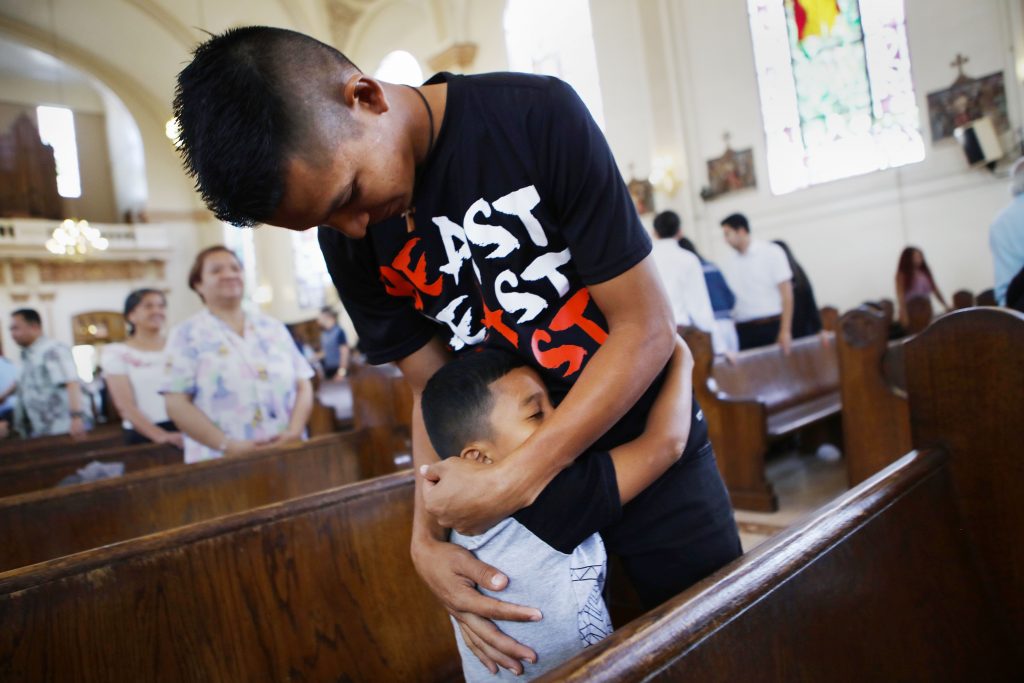
The report benefitted from review by PHR staff, including DeDe Dunevant, director of communications; Michele Heisler MD, MPA, medical director; Derek Hodel, interim director of programs; Donna McKay, MS, executive director; Michael Payne, advocacy officer and interim advocacy director; and Susannah Sirkin, MEd, director of policy.

The report also benefited from external review by PHR Board Members Lois Whitman, JD, MSW and Gail Saltz, MD, by PHR Advisory Council Member Vincent Iacopino, MD, MPH, and by University of Michigan School of Medicine Assistant Professor Kelly Orringer, MD.

Many thanks to the following PHR Asylum Network members, who conducted evaluations which were used in the report: Phyllis Cohen, PhD; Barbara Eisold, PhD; Nathan Ewigman, PhD, MPH; Karla Fredericks, MD, MPH; Eric Goldsmith, MD; Teyah Hults, LPC; Kirandeep Kaur, DO; Eindra Khin Khin, MD; Frances Lang, LICSW; Stuart Lustig, MD, MPH; Patrick McColloster, MD; Thomas McCoy, LCSW, MDiv; Spyros D. Orfanos, PhD; Katherine Peeler, MD; Kristin Samuelson, PhD; Jeffrey Stovall, MD; Jason Thompson, PhD; Anna Van Meter, PhD; Erin Zahradnik, MD; and Jennifer Zhu, MD; and to the New York University Postdoctoral Program in Psychotherapy and Psychoanalysis Immigration and Human Rights Working Group.

The report was edited and prepared for publication by Claudia Rader, MS, PHR senior communications manager, with assistance from Camila Santibanez, research and investigations intern, and Maya Tessler, communications intern.

Endnotes


[1] UN General Assembly, “Convention Against Torture and Other Cruel, Inhuman or Degrading Treatment or Punishment,” 10 December 1984, treaties.un.org/Pages/ViewDetails.aspx?src=TREATY&mtdsg_no=IV-9&chapter=4&clang=_en.

[2] Numbers provided by the U.S. government to the ACLU as of December 2019.

[3] The White House, the United States government, “Remarks by President Trump and President Abdel Fattah Al Sisi of the Arab Republic of Egypt Before Bilateral Meeting,” Apr. 9, 2019, whitehouse.gov/briefings-statements/remarks-president-trump-president-abdel-fattah-al-sisi-arab-republic-egypt-bilateral-meeting/.

[4] United States Department of Homeland Security, “A Review of DHS’ Responsibilities for Juvenile Aliens,” Sep. 2005, 20, oig.dhs.gov/assets/Mgmt/OIG_05-45_Sep05.pdf#.

[5] Ibid., 19.

[6] United States Border Patrol, “U.S. Border Patrol Total Family Unit Apprehensions by Month FY 2013 – FY 2018,” cbp.gov/sites/default/files/assets/documents/2019-Mar/bp-total-monthly-family-units-sector-fy13-fy18.pdf.

[7] Ibid.

[8] Leigh Barrick, Divided by Detention: Asylum Seeking Families’ Experiences of Separation, Aug. 2016, americanimmigrationcouncil.org/sites/default/files/research/divided_by_detention.pdf.

[9] Wil S. Hylton, “The Shame of America’s Family Detention Camps,” New York Times Magazine, Feb. 8, 2015, nytimes.com/2015/02/08/magazine/the-shame-of-americas-family-detention-camps.html.

[10] Jeh Johnson, “Jeh Johnson On Immigration and Trump,” interview by Scott Simon, Weekend Edition, NPR, Jun. 9, 2018, npr.org/templates/transcript/transcript.php?storyId=618496706.

[11] Lisa Riordan Seville and Hannah Rappleye, “Trump Admin Ran ‘Pilot Program’ for Separating Migrant Families in 2017,” NBC News, Jun. 29, 2018, nbcnews.com/storyline/immigration-border-crisis/trump-admin-ran-pilot-program-separating-migrant-families-2017-n887616.

[12]Julia Ainsley, “Trump admin weighed targeting migrant families, speeding up deportation of children,” NBC News, Jan. 17, 2019, nbcnews.com/politics/immigration/trump-admin-weighed-targeting-migrant-families-speeding-deportation-children-n958811.

[13] Ibid.

[14] United States Department of Homeland Security, “Annual Flow Report: Refugees and Asylees: 2017,” Mar. 2019, 8 dhs.gov/sites/default/files/publications/Refugees_Asylees_2017.pdf.

[15] Tamaryn Nelson and Hajar Habbach, “‘If I went back, I would not survive.’ Asylum Seekers Fleeing Violence in Mexico and Central America,” Physicians for Human Rights, Oct. 9, 2019, 6. phr.org/our-work/resources/asylum-seekers-fleeing-violence-in-mexico-and-central-america/.

[16] Matthew Nussbaum and Louis Nelson, “Trump Threatens Mexico over ‘Bad Hombres,’” Politico, Feb. 2, 2017, https://www.politico.com/story/2017/02/trump-threatens-mexico-over-bad-hombres-234524.

[17] Aaron Blake, “Kirstjen Nielsen’s mighty struggle to explain separating families at the border, annotated,” Washington Post, Jun. 19, 2018, washingtonpost.com/news/the-fix/wp/2018/06/19/kirstjen-nielsen-tries-to-explain-separating-families-at-the-border-annotated/.

[18] Bart Jansen, “Trump administration announces plan that would let it detain undocumented children indefinitely,” USA Today, Aug. 21, 2019, usatoday.com/story/news/politics/2019/08/21/trump-administration-proposes-indefinite-detention-migrant-children/2068163001/.

[19] Philip Bump, “How to mislead with statistics, DHS Secretary Nielsen edition,” Washington Post, Jun. 18, 2018, washingtonpost.com/news/politics/wp/2018/06/18/how-to-mislead-with-statistics-dhs-secretary-nielsen-edition.

[20] Ms. L v. U.S. Immigration and Customs Enforcement (“ICE”), 18cv0428 DMS MDD (S.D. Cal. 2018) at 3,

 aclu.org/legal-document/ms-l-v-ice-order-granting-plaintiffs-motion-classwide-preliminary-injunction.

[21] American Civil Liberties Union, “Trump’s Family Separation Crisis: How You Can Help,” Oct. 2, 2018, aclu.org/families-belong-together; Eric Gay, “More than 5,400 children split at border, according to new count,” Associated Press, Oct. 25, 2019, nbcnews.com/news/us-news/more-5-400-children-split-border-according-new-count-n1071791.

[22] Ibid.

[23] United States Department of Health and Human Services, Office of Inspector General, “Care Provider

Facilities Described Challenges Addressing Mental Health Needs of Children in HHS Custody,” Sep. 2019, https://oig.hhs.gov/oei/reports/oei-09-18-00431.pdf.

[24] The White House, United States government, “Affording Congress an Opportunity to Address Family Separation,” Jun. 20, 2019, whitehouse.gov/presidential-actions/affording-congress-opportunity-address-family-separation/.

[25] Ms. L, 18cv0428.             

[26] Ibid., 13.

[27] Jasmine Aguilera, “Everything to Know About The Status of Family Separation,” Time Magazine, Sep. 21, 2019, time.com/5678313/trump-administration-family-separation-lawsuits/.; Camilo Montoya-Galvez, “The U.S. continues to separate migrant families. For one father, a miscommunication proved costly,” CBS News, Dec. 16, 2019, cbsnews.com/amp/news/family-separation-1134-migrant-families-separated-since-end-of-trump-zero-tolerance-policy-aclu/.

[28] American Civil Liberties Union, “ACLU Asks Federal Court to Halt Unlawful Ongoing Family Separations,” Jul. 30, 2019, aclu.org/press-releases/aclu-asks-federal-court-halt-unlawful-ongoing-family-separations.; Camilo Montoya-Galvez, “Court refuses to further restrict administration’s power to separate migrant families,” CBS News, Jan. 13, 2020, cbsnews.com/news/family-separation-court-refuses-to-further-restrict-administrations-power-to-separate-migrant-families-2020-01-13/.

[29] Eric Gay, “More than 5,400 children split at border, according to new count.”

[30] Ms. J.P. v. Sessions, IM-CA-0126, Docket 2:18 (C.D. Cal.), law360.com/articles/1217455/gov-t-owes-mental-health-care-to-separated-migrant-parents.

[31] PHR’s Asylum Network is comprised of more than 1,700 volunteer health professionals – including physicians, psychologists, licensed clinical social workers, physician assistants, and nurse practitioners with varied specialties and subspecialties – located throughout the United States. Asylum Network members complete a full-day training on how to document, according to international standards, physical and psychological signs and sequalae of torture or persecution. Collectively, members of the Asylum Network conduct more than 600 evaluations of asylum seekers each year.

[32] The Istanbul Protocol is the international standard endorsed by the United Nations to assess, investigate, and report alleged instances of torture and other cruel, inhuman, and degrading treatment. UN Office of the High Commissioner for Human Rights, “Manual on the Effective Investigation and Documentation of Torture and Other Cruel, Inhuman or Degrading Treatment or Punishment (‘Istanbul Protocol’),” 2004, HR/P/PT/8/Rev.1. 

[33] Attorneys used these evaluations for different types of cases, including the clients’ asylum claims, appeals for clients who did not pass their credible fear interviews, and lawsuits for damages related to family separation.

[34] Harsh Mander, ‘“Words from the heart’: researching people’s stories,” Journal of Human Rights Practice 2, no. 2 (Jul. 2010): 252–70, jhrp.oxfordjournals.org/content/2/2/252.full.pdf+html.

[35] Anselm Strauss and Juliet Corbin, Basics of qualitative research: Techniques and procedures for developing grounded theory, 2nd ed., (Thousand Oaks, CA, US: Sage Publications, Inc., 1998).; Udo Kelle, ‘“Emergence’ vs. ‘forcing’ of empirical data? A crucial problem of ‘grounded theory’ reconsidered,” Forum Qualitative Sozialforschung, 6, no. 2 (2005): Art. 27., DOI:10.17169/fqs-6.2.467.

[36] MM Hennink, BN Kaiser, and VC Marconi, “Code saturation versus meaning saturation: how many interviews are enough?” Qualitative Health Research 27, no. 4 (2017): 591–608, doi: 10.1177/1049732316665344.

[37] Geoff Payne and Malcom Williams, “Generalization in qualitative research,” Sociology 39, no. 2 (2005): 295–314, 10.1177/0038038505050540; Mira Crouch and Heather McKenzie, “The logic of small samples in interview-based qualitative research,” Social Science Information 45, no. 4 (2006): 483–99, doi: 10.1177/0539018406069584.

[38] In one sensitive case of political persecution, the country of origin was redacted.

[39] In the Squiggle Game, the clinician makes a squiggle on a piece of paper and the child is encouraged to turn it into a picture, which gradually elicits unconscious material. Lawrence R. Berger, “The Winnicott Squiggle Game: A Vehicle for Communicating with the School-Aged Child,” Pediatrics 66, no. 6 (1980): 921-924, pediatrics.aappublications.org/content/66/6/921.

 [40]Steven Dudley, Elyssa Pachico, and Juan José Martínez, “Gangs in Honduras,” Insight Crime, Apr. 21, 2016, bit.ly/2nl8ov0.; UN Human Rights Council, “Report of the Special Rapporteur on Extrajudicial, Summary or Arbitrary Executions on his Mission to Honduras” at 6, Jun. 2017, A/HRC/35/23/Add.l.

[41] Kevin Ackerman, Hajar Habbach, Kathryn Hampton, Lynne Rosenberg, Sarah Stoughton, and Joseph Shin, “’There Is No One Here to Protect You’: Trauma Among Children Fleeing Violence in Central America,” Physicians for Human Rights, June 10, 2019, phr.org/our-work/resources/there-is-no-one-here-to-protect-you/.

[42] There have been several reports of migrants drowning in the Rio Grande while attempting to reach the United States. In the summer of 20219, a father and his 23-month-old daughter were found drowned along the river. The tragic death of these asylum seekers highlights the dangerous journey many make to seek safe haven in the United States. Natalie Gallón, Christina Maxouris, and Steve Almasy, “A Woman Watched Her Husband and Daughter Drown at the Mexican Border, Report Says,” CNN, Jun. 27, 2019, cnn.com/2019/06/26/politics/mexico-father-daughter-dead-rio-grande-wednesday/index.html

[43]  United States Department of Health and Human Services, Office of Inspector General, “Special Review – Initial Observations Regarding Family Separation Issues Under the Zero Tolerance Policy,” Sep. 27, 2018, 12, oig.dhs.gov/sites/default/files/assets/2018-10/OIG-18-84-Sep18.pdf.

[44] United States Department of Health and Human Services, Office of the Inspector General, “DHS Lacked Technology Needed to Successfully Account for Separated Migrant Families,” Nov. 25, 2019, oig.dhs.gov/reports/2020/dhs-lacked-technology-needed-successfully-account-separated-migrant-families/oig-20-06-nov19.

[45] United States Department of Homeland Security, “Myth vs. Fact: DHS Zero-Tolerance Policy,” Jun. 19, 2018, dhs.gov/news/2018/06/18/myth-vs-fact-dhs-zero-tolerance-policy.

[46] In June 2018, a Honduran father committed suicide in a Texas jail after he was separated from his wife and child. Reports mention Customs and Border Patrol physically restraining the distraught and “agitated” father while his child was taken from him. Nick Miroff, “A family was separated at the border, and this distraught father took his own life,” Washington Post, Jun. 9, 2018, washingtonpost.com/world/national-security/a-family-was-separated-at-the-border-and-this-distraught-father-took-his-own-life/2018/06/08/24e40b70-6b5d-11e8-9e38-24e693b38637_story.html

[47] “Family Separation by the Numbers,” American Civil Liberties Union, Oct. 2, 2018, aclu.org/issues/immigrants-rights/immigrants-rights-and-detention/family-separation. However, for many separations, the ACLU was not provided with the duration of separation.

[48] A credible fear interview is an initial screening conducted by the Department of Homeland Security’s United States Citizenship and Immigration Services asylum officers. During the screening, asylum officers ask the asylum seeker a series of questions to establish if there is a “significant possibility” that the respondent has been persecuted or has a well-founded fear of persecution on account of their race, religion, nationality, membership in a particular social group, or political opinion if returned to their country. If an asylum seeker is found to have a credible fear, their case is referred to an immigration judge under the Department of Justice’s Executive Office for Immigration Review.

United States Department of Homeland Security, United States Citizenship and Immigration Services, “Questions & Answers: Credible Fear Screening,” Sep. 4, 2009, uscis.gov/humanitarian/refugees-asylum/asylum/questions-answers-credible-fear-screening.

[49] Ms. L v. ICE, 3:18-cv-428-DMS (S.D. Cal 2018), “Order Granting Preliminary Approval of Proposed Settlement,” muslimadvocates.org/files/2018-10-09-Order-Granting-dckt-256_0.pdf.

[50] Julia Ainsley and Jacob Soboroff, “Trump admin projected it would separate 26,000 migrant kids at border, DHS watchdog says,” NBC News, Nov. 27, 2019, nbcnews.com/politics/immigration/trump-admin-projected-it-would-separate-26-000-migrant-kids-n1092571.

[51] Office of Inspector General, “DHS Lacked Technology Needed to Successfully Account for Separated Migrant Families.”

[52] Resmiye Oral et al., “Adverse childhood experiences and trauma informed care: the future of health care,” Pediatric Research 79 (2016): 227–233, ncbi.nlm.nih.gov/pubmed/26460523.

[53] “US Const.,” amend. 5.; United Nations General Assembly, “International Covenant on Civil and Political Rights,” Dec. 16, 1966, Art. 14 & 16, ohchr.org/en/professionalinterest/pages/ccpr.aspx.

[54] 14th Amendment, Art 2 ICCPR, CERD.

[55] 8th Amendment, Art 7 ICCPR, CAT.

[56] 4th amendment, Art 17 and 23 ICCPR.

[57] 1980 Refugee Act, 1967 Protocol to the Convention relating to the status of refugees.

[58] “Ms. L v. ICE – Order Granting Plaintiffs’ Motion for Classwide Preliminary Injunction,” (American Civil Liberties Union, September 11, 2019), https://www.aclu.org/legal-document/ms-l-v-ice-order-granting-plaintiffs-motion-classwide-preliminary-injunction; “DHS Lacked Technology Needed to Successfully Account for Separated Migrant Families,” Office of Inspector General, November 25, 2019.

[59] “DHS Lacked Technology Needed to Successfully Account for Separated Migrant Families,” Office of Inspector General, November 25, 2019.

[60] DHS OIG report, https://www.oig.dhs.gov/sites/default/files/assets/2018-10/OIG-18-84-Sep18.pdf.

[61] Art 8 and 9, UN CRC.

[62] Susan Ferriss, “Early Reports Warned Migrant Kids Suffered From Separations,” December 16, 2019, The Center for Public Integrity/ Texas Tribune, https://publicintegrity.org/inequality-poverty-opportunity/immigration/migrant-children-family-separations/.

[63] Art 1(1). UN General Assembly, Convention Against Torture and Other Cruel, Inhuman or Degrading Treatment or Punishment, 10 December 1984, United Nations, Treaty Series, vol. 1465, p. 85.

[64] Art 1, UN CAT; “You don’t have any rights here”: Illegal Pushbacks, Arbitrary Detention and Ill Treatment of Asylum-seekers in the United States, Amnesty International, 2018, accessed at: https://www.amnesty.org/en/latest/research/2018/10/usa-treatment-of-asylum-seekers-southern-border/; Beth Van Schaak, “The Torture of Forcibly Separating Children from their Parents,” Just Security, October 18, 2018, https://www.justsecurity.org/61138/torture-forcibly-separating-children-parents/; Redacted GJC et al Brief Amici Curiae, February 2019, https://chrgj.org/wp-content/uploads/2019/02/Redacted-GJC-et-al-Brief-Amici-Curiae-Feb-2019.pdf.

[65] Article 7, UN General Assembly, International Covenant on Civil and Political Rights, 16 December 1966, United Nations, Treaty Series, vol. 999, p. 171.

[66] Manual on the Effective Investigation and Documentation of Torture and Other Cruel, Inhuman or Degrading Treatment or Punishment (“Istanbul Protocol”), 2020 edition, submitted to UN Office of the High Commissioner for Human Rights for consideration for publication.

[67] David Weissbrodt and Cheryl Heilman, Defining Torture and Cruel, Inhuman, and Degrading Treatment, 29 LAW & INEQ. 343 (2011), https://scholarship.law.umn.edu/faculty_articles/366.

[68] Christian M. De Vos, “Mind the Gap: Purpose, Pain, and the Difference between Torture and Inhuman Treatment,” https://digitalcommons.wcl.american.edu/cgi/viewcontent.cgi?article=1206&context=hrbrief.

[69] Art 1, UN CED.

[70] Article 2, UN General Assembly, International Convention for the Protection of All Persons from Enforced Disappearance, 20 December 2006.

[71] A/HRC/36/39/Add.2, Report of the Working Group on Enforced or Involuntary Disappearances on enforced disappearances in the context of migration, 28 July 2017.

[72] DHHS OIG report, https://oig.hhs.gov/oei/reports/oei-09-18-00431.pdf.

[73] “Report of the Working Group on Enforced or Involuntary Disappearances on Enforced Disappearances in the Context of Migration,” United Nations Human Rights Council, July 28, 2017, accessed January 8, 2019, https://reliefweb.int/sites/reliefweb.int/files/resources/G1722672.pdf.

[74] Art 2, UN CED.

[75] Art 17, UN CED.

[76] Art 25, UN CED.

[77] Art 17(3)h, UN CED; Bernard Duhaime and Andreanne Thibault, “Protection of migrants from enforced disappearance: A human rights perspective,” International Review of the Red Cross (2017), 99 (2), 569–587.

[78] See the background section of this report.

[79] Art 14(1), UN CAT.

[80] Art 24, UN CED.

[81] The FCMP was a formal alternative to the Immigration and Customs Enforcement detention program that operated from January 2016 through June 2017, when the Trump administration terminated it.

[82] The Flores settlement is a 1997 court-supervised stipulated settlement agreement which is binding on federal agencies regarding the detention, transfer, and release of migrant children.

Statements

Joint Statement on the Trump Administration’s New Landmine Policy

In response to the January 31st announcement by the White House of the Department of Defense’s new landmine policy, we, the undersigned organizations, strongly condemn the Trump Administration’s decision to lift existing United States prohibitions against the use of landmines. We urge the White House and Department of Defense (DOD) to reconsider and take steps to join the 1997 Mine Ban Treaty. We urge Congress to take immediate measures to block the deployment of landmines and prohibit the development, production, or other acquisition of new antipersonnel landmines.

Landmines are inherently indiscriminate weapons that maim and kill long after conflicts end. Over the past twenty years, the world has rejected antipersonnel landmines through the Mine Ban Treaty – to which 164 countries are states parties, including every other member of NATO. While still not a signatory, the U.S. has functionally adhered to several provisions of the Mine Ban Treaty – except those that would prohibit the U.S. from ordering the use of landmines on the Korean peninsula. This new landmine policy starkly sets the U.S. apart from its allies and has drawn international condemnation, including from the European Union.

The United States has not used antipersonnel landmines since 1991, excluding the use of a single munition in 2002; it has not exported them since 1992 and has not produced them since 1997. In the last five years, only the government forces of Syria, Myanmar, and North Korea, as well as non-state actors in conflict areas, have used landmines. Of the more than 50 countries that once produced landmines, 41 have ceased production. Under this new landmine policy, the U.S. will rejoin a small handful of mine-producing countries. This is not company the U.S. should keep.

Decades after combatants have retreated or laid down arms, landmines continue to threaten civilian lives and undermine the development of post-conflict communities. Farmers cannot farm, children cannot attend school, businesses cannot thrive, and whole communities are displaced. After mild flooding or frequent rain, previously mapped mines can be uprooted and moved to new locations, reintroducing danger to unknowing civilians and destroying the progress of previous mapping efforts.

Landmines are capable of inflicting unspeakable destruction and harm on their victims – projecting metal fragments into deep wounds, destroying one or more limbs, causing burns, traumatic brain injuries, blindness and deafness, and of course fatally wounding through decapitation, blood loss or other horrific means.

Efforts to enhance the “safety” of landmines, including the development of so-called non-persistent or “self-destruct” mines, ignores the fact that they remain indiscriminate. Regardless of the length of their lifespan, they cannot distinguish between a combatant or a civilian while active. If the self-destruct or self-deactivation mechanisms were to fail, they would remain lethal and the potential exists for the components to be repurposed into improvised explosive devices.

The way in which landmines are delivered has changed over time. Rather than being planted and mapped by hand, U.S. mines would be dropped from aircraft or deployed through artillery – indiscriminately scattering them over wide unmarked terrain. This could cause civilian harm, including to humanitarian aid workers and peacekeepers who have no way of knowing if they are in a mined area or where mines might be placed.

The International Campaign to Ban Landmines and its American coordinator Jody Williams received the 1997 Nobel Peace Prize for their efforts to bring about the Mine Ban Treaty. We are proud to be part of the mine ban movement, which continues to make a massive contribution towards global peace and security. Under the provisions of the Treaty, large swaths of territories have been cleared and put back to productive uses. While there are still too many casualties annually, we have seen a dramatic decline since the Treaty came into being. To roll back the progress the global community has made would not only be a tragedy but an affront to the dignity of landmine survivors around the world.

Signed,

United States Campaign to Ban Landmines member organizations:

American Friends Service Committee

Amnesty International USA

Evangelical Lutheran Church in America

Friends Committee on National Legislation

Human Rights Watch

Humanity & Inclusion

Mennonite Central Committee U.S. Washington Office

Physicians for Human Rights

PSALM: Proud Students Against Landmines and Cluster Bombs

West Virginia Campaign to Ban Landmines

Other U.S. organizations:

Association of University Centers on Disabilities

Childhood Education International

Church of the Brethren, Office of Peacebuilding and Policy

CORE Group

Doctors of the World USA

Global Communities

Global Health Partners

Global Ministries of the Christian Church (Disciples of Christ) and the United Church of Christ

HealthRight International

Hesperian Health Guides

Human Rights First

InterAction

Latin America Working Group

Mercy Corps

National Council of Churches

Nonviolence International

Norwegian Refugee Council USA

Peace Direct

Plan International USA

Saferworld, Washington Office

The Episcopal Church

Union for Reform Judaism

United Church of Christ, Justice and Witness Ministries

United Starts Campaign for Burma

Watchlist on Children and Armed Conflict

Win Without War

Women in International Security (WIIS)

Women’s International League for Peace and Freedom

Women’s Refugee Commission

World Renew

Non-U.S. organizations:

AWO International e.V.

Centre for Adolescents and Women’s Health Initiative (CAWHI), Ghana

Medecins du Monde Germany (Aerzte der Welt)

The Conflict and Environment Observatory

War Child

Arms Control Association

Central United Church of Christ

Presbyterian Church (USA)

Rukmini Foundation

Human Security Network in Latin America and the Caribbean REgion (SEHLAC)

APP Argentina

Get Updates from PHR