Blog

The Death of a Chinese Whistleblower

Originally published in Asia Times

The Chinese government saw to it that Dr Li Wenliang suffered before he died. Li, a physician at Wuhan Central Hospital in Wuhan, Hubei province – the epicenter of the now global infectious coronavirus – succumbed to the illness on Thursday. We know of Li because he incurred the wrath of Chinese authorities by challenging Beijing’s initial upbeat narrative in December of a limited outbreak that was well under the control of Chinese authorities.

Li, on the frontlines of the epidemic, watched as people mobbed Wuhan hospitals with symptoms of an obviously much more serious contagion than what the Chinese government was publicly disclosing.

On December 30, Li aired his concerns on social media, warning the public of a possible “SARS-like” virus spreading in Wuhan, a reference to the 2002-2003 outbreak of severe acute respiratory syndrome that authorities covered up for months. That cover-up allowed SARS to spill over China’s borders and eventually kill more than 700 people across 26 countries.

Within days of airing his concerns, Li learned the price that whistleblowers in China routinely pay: Wuhan police briefly detained him and made clear that the cost of his freedom was to sign a statement that posting an online warning about the coronavirus constituted “illegal behavior.” The authorities’ underlying threat to Li was as clear as it was brutal: Stay silent or face the wrath of the Chinese state.

Weeks later, the coronavirus that Li sought a more truthful and robust government response to ended up killing him. Li’s name has now been added to the list of the hundreds of confirmed coronavirus fatalities in China, a list that will only grow, given the more than 31,000 known cases of the illness in the country. Li’s courageous act of defiance and its tragic consequence are stark reminders of how China’s authoritarian system is resolutely antithetical to ensuring the basic health rights of its citizens and the ability of doctors to address public health crises effectively.

I documented the official cover-up of the 2002-2003 SARS outbreak as a Beijing-based foreign correspondent, and the tragedy of Li’s death and the unfolding global menace of the 2019-nCoV coronavirus leaves me with a grim sense of déjà vu. In those pre-social-media days, my colleagues and I heard for weeks vague stories of a mysterious contagious illness, of emergency wards filled with SARS cases, of a government that was lying through its teeth about the severity of the problem.

We chased rumors of “midnight runs” by hospital ambulances and buses loaded with SARS cases put on the road to hoodwink World Health Organizations investigators who were desperate to get a fix on the spread of illness. Those rumors were decisively confirmed only when another brave Chinese whistleblower, Dr Jiang Yanyong, exposed the extent of the government’s whitewash and forced it to cooperate with international authorities in addressing the outbreak.

In its aftermath, there was widespread hope that the Chinese government would learn “the lessons of SARS” and that it would never again sacrifice public health for reasons of perceived political expedience. If only. As the coronavirus spreads across the world, anyone who still maintains that China learned the lessons of SARS is either not paying attention or is parroting a Chinese government narrative long proved false. Instead, since SARS, the Chinese government has repeatedly demonstrated its willingness to deny, censor, and suppress any issues it deems politically “sensitive,” regardless of the public health implications.

Two years after SARS, the government blocked all domestic media reports of the massive spill of the toxic chemical benzene in the Songhua River in Heilongjiang province until wild rumors about the disaster prompted disclosure of what had actually happened.

Later, an official ban on reporting of “all food-safety issues” in the lead-up to and during the 2008 Beijing Olympic Games stifled domestic media coverage of revelations that at least 20 dairy firms were spiking milk products with the chemical melamine. That cover-up contributed to the deaths of six children and illness among 300,000 others. Adding insult to already grievous injury, Chinese authorities handed down a two-and-a-half-year prison term to the father of one of those child victims, on charges of “provoking disorder” for drawing attention to the government’s failure to assist the thousands who became ill.

In 2011, Chinese authorities literally buried the evidence of a horrific high-speed-rail crash that killed 38 people and injured dozens more by dispatching earth-moving equipment to entomb the wrecked train at the crash scene.

vaccine scandal in July 2018 linked to substandard vaccines distributed to thousands of infants was one of the most heavily censored issues in China that year.

Perhaps the most telling indicator of the Chinese government’s hard-wired hostility to transparency is its official reaction to Dr Li Wenliang’s demise. Hours after state media reported his death, official censors scrubbed the Chinese Internet of any mention of his passing without explanation. Until the international community imposes a substantive cost on China’s pathological antipathy to reasoned responses to public health crises – particularly those, like the Wuhan coronavirus, with international dimensions – courageous whistleblowers like Li Wenliang will continue to be unfairly silenced and punished, rather than celebrated and praised.
Blog

A Tale of Two Hospitals: Documenting Attacks on Syrian Health Workers in Oscar-nominated ‘For Sama’ and ‘The Cave’

In a new precedent, two Syrian documentary films, “For Sama” and “The Cave,” have been nominated for Best Documentary Feature in the 92nd Academy Awards. Though filmed in two different cities, in separate hospitals, and featuring different people, both tell a hauntingly similar story of health care under systematic attack by Syrian government forces and their allies. In both films, the voices of the female protagonists are disrupted repeatedly by the sound of bombs, screams, and tears; but these are juxtaposed with scenes of courage, hope, and laughter. Audiences have been awed by the resilience of the Syrian people, and most specifically the resilience of the health care workers in a country torn apart by the devastation of war.

“For Sama” tells the story of a young Syrian woman, Waad al-Kateab, her marriage, and the birth of her daughter, Sama, in Aleppo. Shooting between 2011 and 2016, Waad’s camera captures the escalating suffering of the Syrian people: from the streets, where Syrian government authorities deploy lethal force against peaceful pro-democracy protesters, to the fortified hallways of al-Quds Hospital, where Waad’s husband, Dr. Hamza al-Kateab, works day and night to provide medical care for people wounded in the seemingly endless bombardments by Syrian government and Russian forces.

“I felt guilty. I was making my family live in the most dangerous area in Aleppo – the hospital was the biggest target.”

Dr. Hamza al-Kateab

The gut-wrenching scenes show the hospital under repeated attack while exhausted doctors do the best they can just to keep the injured alive. It is these attacks that are the focus of PHR’s new case study, Al-Quds Hospital – The Last Hospital Standing in Aleppo. This research demonstrates the magnitude of attacks on hospitals in Aleppo, including the one where the “For Sama” protaganists, Waad and Dr. Hamza, are forced to live and raise their first child. During the period leading to the final offensive on Aleppo, PHR documented 10 Syrian government or Russian attacks on five hospitals that were repeatedly targeted until they were put out of service. Additionally, PHR verified three attacks on al-Quds Hospital that caused significant damage and disrupted medical activities.

Dr. Hamza told PHR: “I felt guilty. I was making my family live in the most dangerous area in Aleppo – the hospital was the biggest target.” Yet, with his colleagues, they continued to provide care until they were forced to evacuate after the Syrian government regained full control over the city in December 2016.

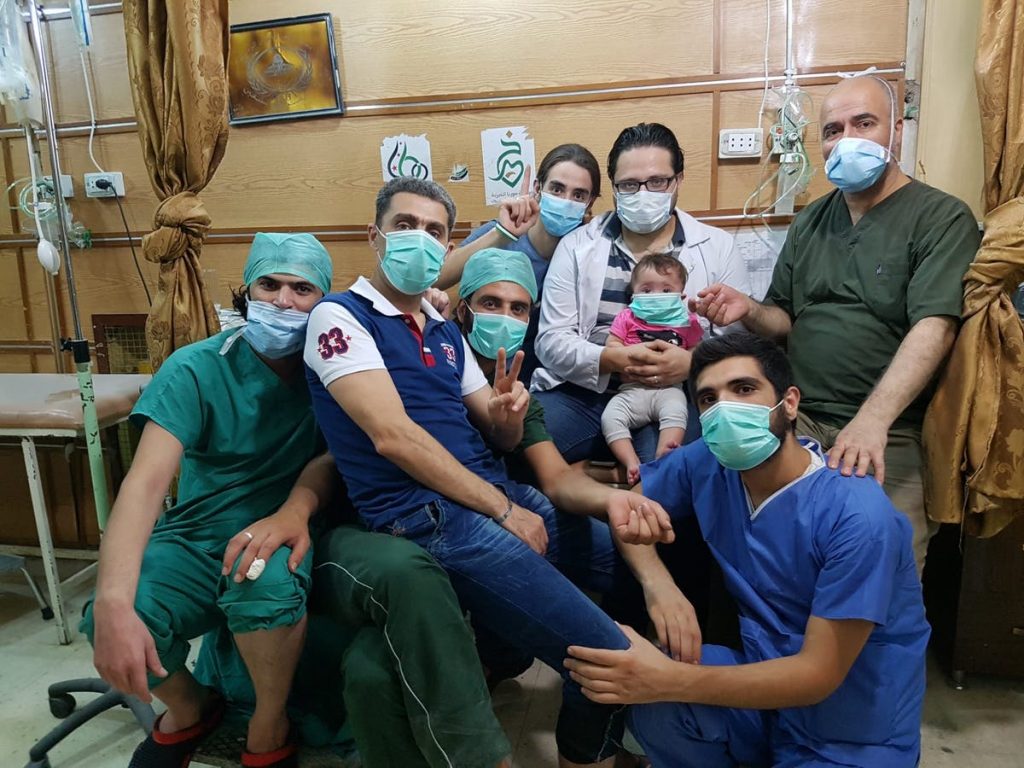
Staff of Al-Quds hospital in Aleppo; Dr. Hamza al-Kateab, center, holds daughter Sama al-Kateab.

After bombing and starving Aleppo and its civilian population into submission or exile, the Syrian government used the same tactic in the Damascus suburb of Eastern Ghouta. There, doctors and nurses alike had to endure multiple military offensives, treat the wounded, and conduct surgeries with very scarce resources due to a suffocating siege.

This is where we find the protagonist of “The Cave,” Dr. Amani Ballour. Dr. Amani and her colleagues operated the Cave Hospital, an underground facility in Kafr Batna, in Eastern Ghouta, and remained there until they were forced to evacuate in February 2018. Directed by Firas Fayyad, “The Cave” walks us through the daily ordeals of Dr. Amani and her colleagues, who balance the hourly challenge of trying to keep their patients alive with their own survival while under unrelenting bombardment.

From the start of the Syrian conflict in 2011 until April 2018, PHR documented 57 attacks on 45 health care facilities in eastern Ghouta; in its latest case study, At Syria’s Cave Hospital, Conducting Surgery under Bombardment and Siege, the research zeroed in on the impact of these attacks on the Cave Hospital. According to Dr. Amani, “We were hit countless times, we even stopped counting the small hits because those became a normal part of our lives – the building would shake, we would pause for few minutes, and then resume our work.”

On its interactive map, PHR documented four attacks on the Eastern Ghouta hospital, one of which lingers heavily in the hearts of those who worked in the hospital. In the words of a survivor, “the missile from that attack penetrated the first floor and exploded in the inpatient care unit in the building’s basement.” That attack killed four hospital staff members – two nurses, the administrative manager, and an ambulance driver.

“We were hit countless times, we even stopped counting the small hits because those became a normal part of our lives – the building would shake, we would pause for few minutes, and then resume our work.”

Dr. Amani Ballour

Intentionally targeting hospitals is a war crime, and one of the most profound violations of ethical, moral, and legal norms and obligations under international humanitarian law and customary international law. The stories of Waad, Dr. Hamza, Dr. Amani, and their colleagues provide the barest glimpse into the many instances of heroism in the face of the near-incomprehensible brutality and tragedy that PHR has been documenting since the start of the Syrian conflict. As the fighting enters its ninth year, we hope these powerful films will remind the world of the terrible human cost of the ongoing conflict in Syria and spur meaningful international action to put an end to the impunity that allows these horrors to continue.


Images courtesy of “For Sama”

Blog

Danger in the Desert: Retracing the Steps of Migrants Seeking Safety in the United States

As an Ob/Gyn in New York, I have spent the last 18 years examining and writing affidavits for women escaping violence and persecution in their home countries to seek asylum in the United States. The stories of what they have survived have always deeply moved me, but due to increasingly harsh U.S. immigration policies, their attempts to flee that violence have themselves become a dramatic and terrifying ordeal.

The stories of these women inspired me to travel as a representative of Physicians for Human Rights (PHR) to the Sonoran Desert with the humanitarian aid organization No More Deaths, a group that leaves life-saving water, canned food, and other supplies for migrants making the perilous journey across the border.

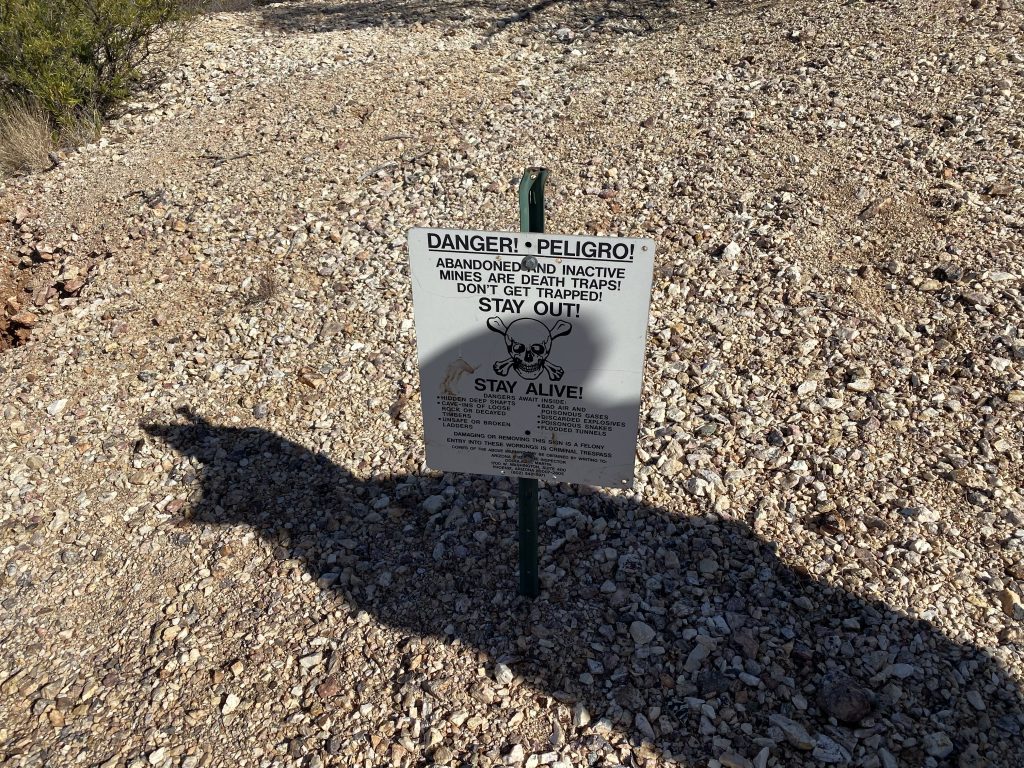
As we embarked upon our day-long journey into the desert, it became immediately apparent why many consider this area to be the deadliest border crossing between Mexico and the United States. There are no marked trails here, just a vast, steep terrain densely covered by thorny bushes.

During the summer months, the temperature frequently reaches 110 degrees; in the winter, temperatures can plummet to as low as 32 degrees at night. Migrants succumb to death from dehydration, hypothermia, heat stroke, accidents, and other dangers. They are often left behind by human smugglers when they cannot keep up or are injured. Many do not survive: since the year 2000, close to 3,000 individual human remains have been recovered in this area.

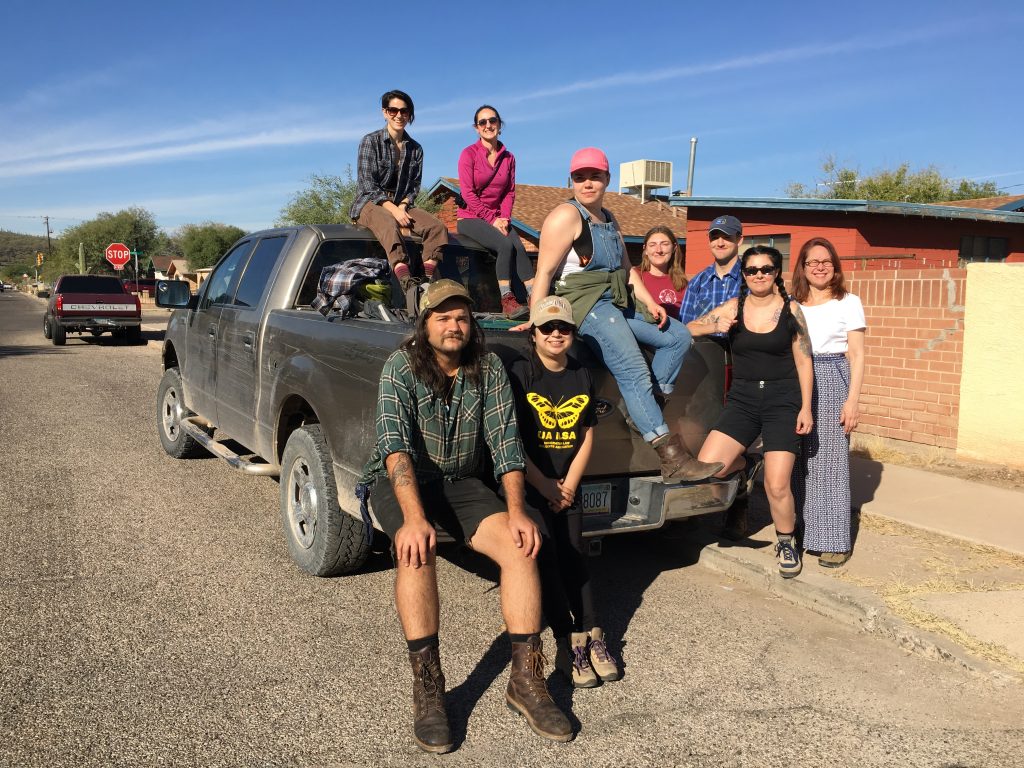
Dr. Patricia Close s with a delegation from No More Deaths as they set out to leave aid in the Sonoran Desert.
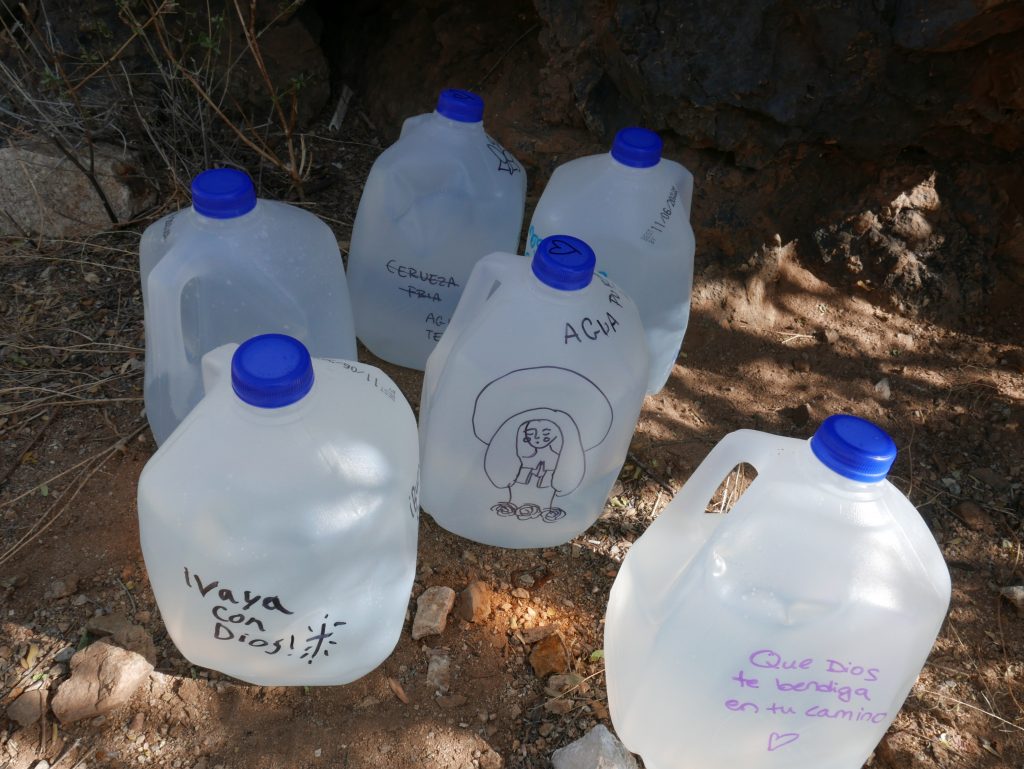
Volunteers write encouraging messages for migrants, including depictions of Our Lady of Guadalupe, and prayers that God might bless them on their journey.

Migrants succumb to death from dehydration, hypothermia, heat stroke, accidents, and other dangers. They are often left behind by human smugglers when they cannot keep up or are injured. Many do not survive: since the year 2000, close to 3,000 individual human remains have been recovered in this area.

As I came face-to-face with the extreme conditions in the desert, I began to think about my asylum clients who had made the same or similar journeys, fleeing brutal violence and persecution to reach safety in the United States.

Alejandra* was the first woman I evaluated from Central America. When I visited her in U.S. immigration detention, she told me she had fled El Salvador to escape gang members after she could not come up with the escalating extortion money they demanded for her to continue running her small store. One day, gang members entered her store, shot her husband, and raped her daughter. When the police eventually arrived, they sexually assaulted her. It wasn’t the first time she had survived such attacks: as a black woman in El Salvador, Alejandra had always been a target for abuse and persecution. When she was younger, she was kidnapped off the street twice by Salvadoran soldiers, tortured, and raped. The soldiers told her that she must be “against the government” because she was black.

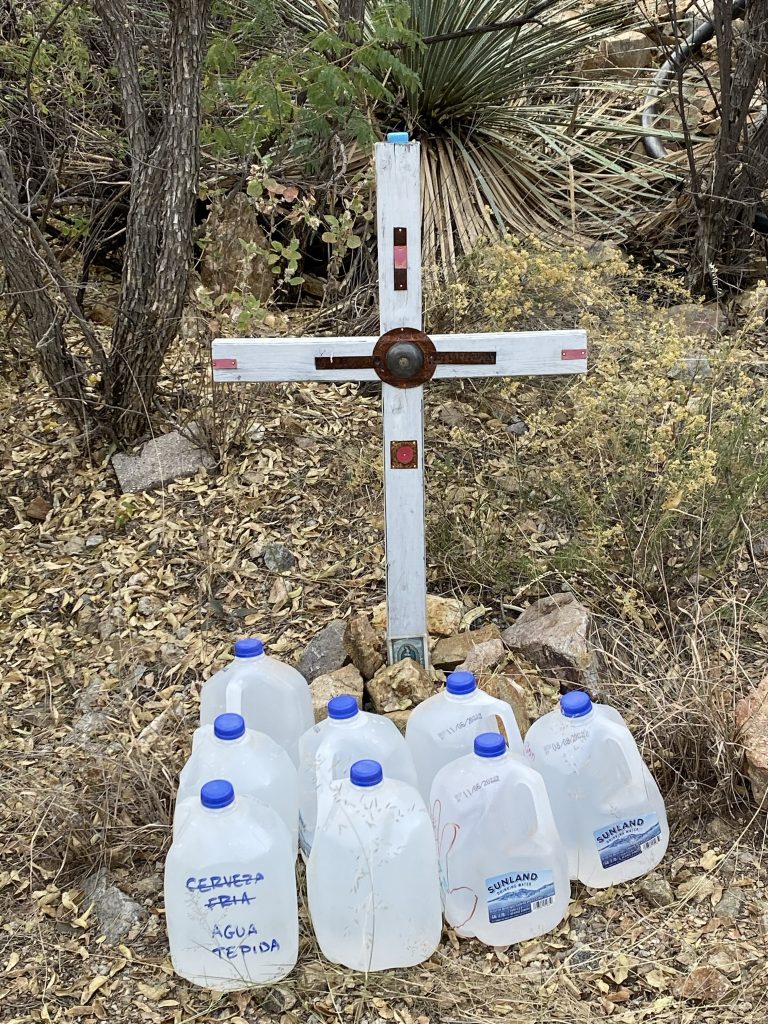
White crosses throughout the desert symbolize the many thousands who have died in their attempts to make the journey.

Thousands of people like Alejandra are ready to risk their lives to come to the United States, because remaining in their home countries is a death sentence.

Luckily, Alejandra’s case for asylum in the United States was supported by the forensic medical evaluation that I provided, which assessed the consistency of her physical symptoms and the persecution she recounted. I was thrilled that, ultimately, her case was successful, and she was able to gain asylum. But thousands of other asylum seekers remain in unsafe conditions along the border, caught in limbo by draconian U.S. immigration policies as they await their chance to cross.

After leaving water at several drop points in the Sonoran Desert, we headed back to our truck and pulled on to the paved road to head back to Tucson. We were soon stopped by armed U.S. Border Patrol agents, who questioned us in detail. We were released once they were satisfied that we were American citizens, but the experience was nonetheless unsettling.

As a physician, the delivery of humanitarian aid by No More Deaths and others volunteering at our southern border is not just a kind gesture – it saves human lives. Of grave concern, however, is the increased harassment and targeting of humanitarian aid workers, attorneys, and journalists working with migrants. The criminal prosecution of these individuals makes the desert an even more deadly place for people who desperately need our help.

The provision of medical care and humanitarian aid to asylum seekers fleeing persecution to find safe haven in the United States should never be a crime. As a PHR Asylum Network member, I will continue to help migrants seek asylum, as is their right under the law.

*Name is a pseudonym

Blog

Oscar Nominee Joins Health Professionals to Deliver a Message: Russia and Syria – Stop Bombing Hospitals

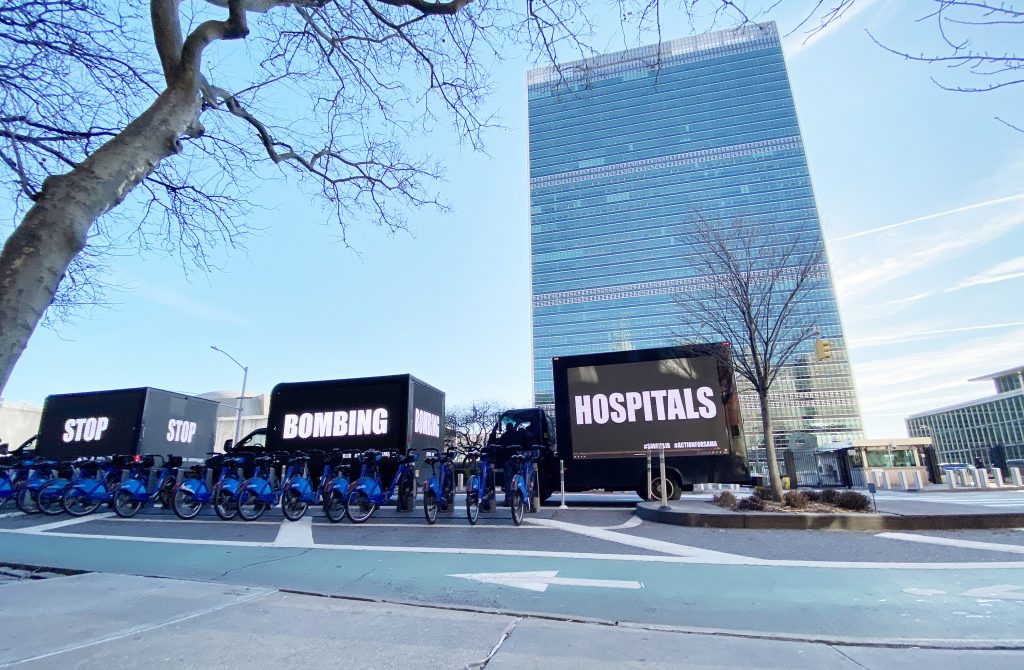
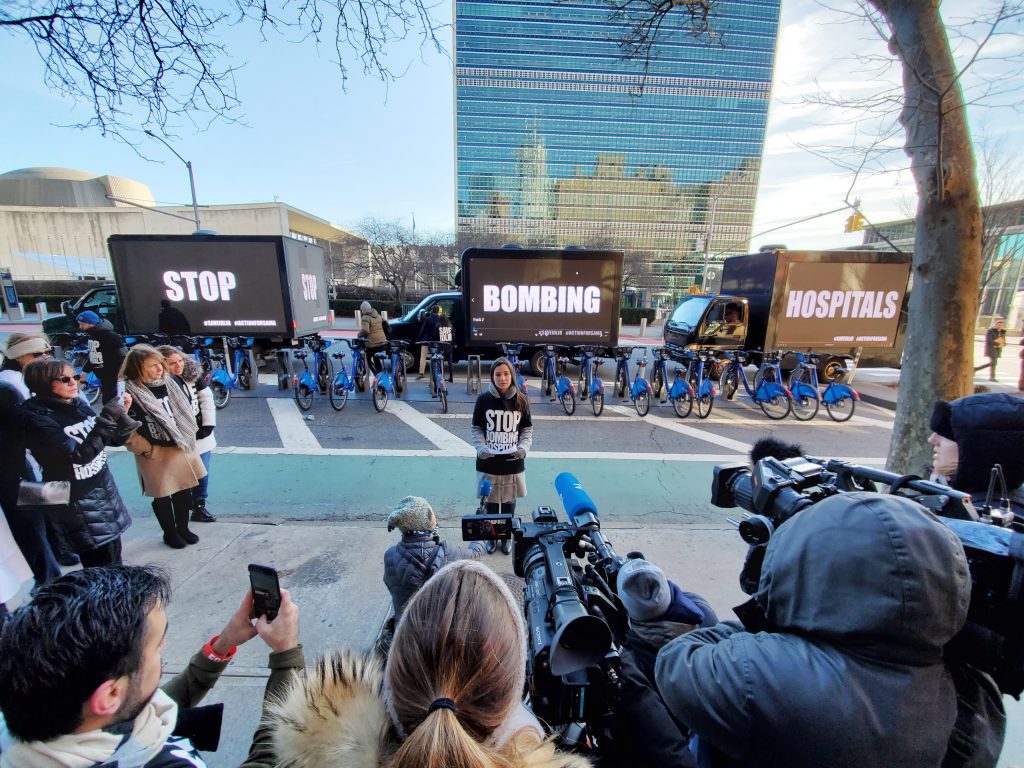
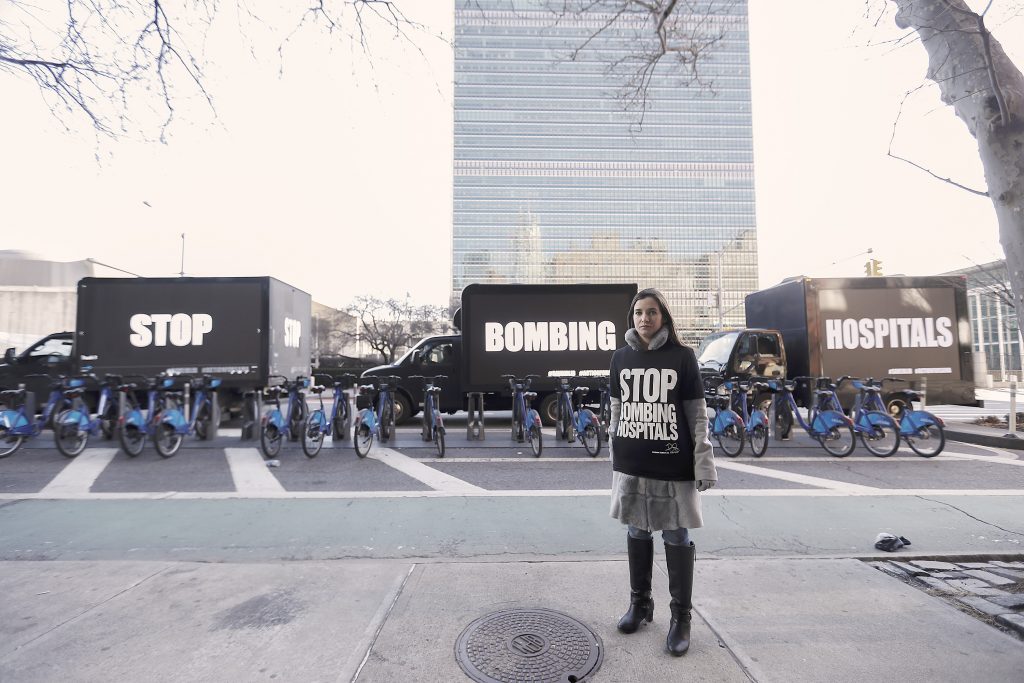
If you were walking along First Avenue in New York city yesterday morning, you may have noticed something peculiar outside the United Nations (UN): three large, black trucks, each with a jumbo screen displaying the words of a simple phrase: “Stop / Bombing / Hospitals.”   

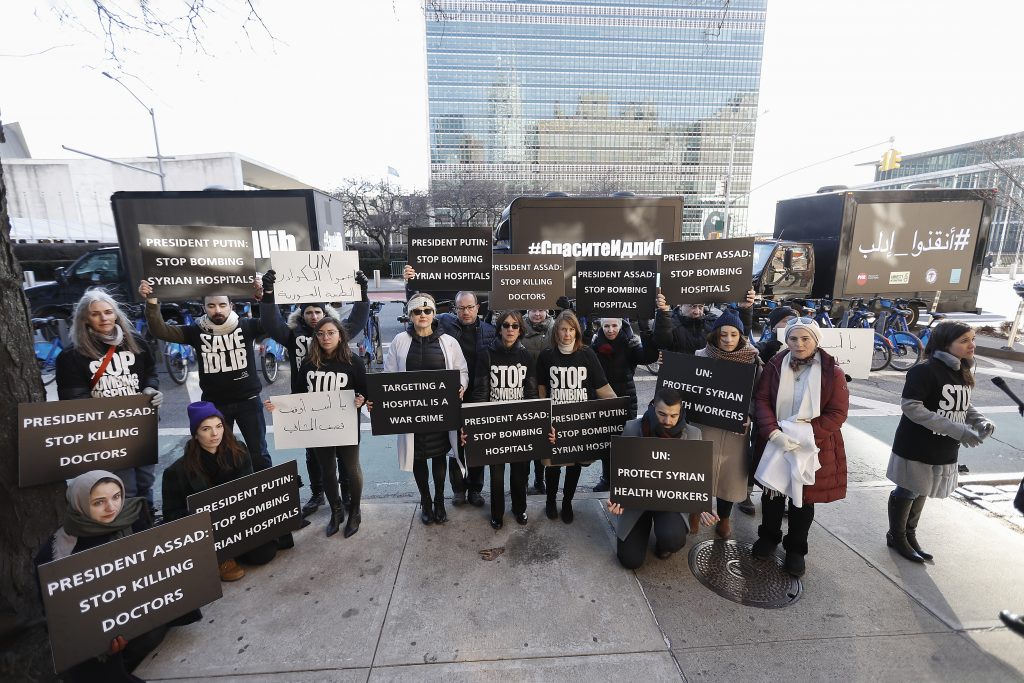
Gathered nearby was a group of doctors and clinicians in white coats, joining colleagues at Physicians for Human Rights (PHR), Action for Sama, the Syrian-American Medical Society (SAMS), the Syria Campaign, and MedGlobal to raise the alarm on the criminal targeting of hospitals in Syria throughout the nine-year conflict.  

Even that morning, news of renewed attacks against health facilities in northwest Syria made the headlines: this time, reporting the killing of 10 civilians, and putting out of service an entire hospital used by tens of thousands in Idlib province. Tragically, yesterday’s attack was only the latest in a consistent pattern of strikes conducted by Syrian government forces and their Russian allies which have devastated the provision of health care to communities and entire cities in Syria.

Our calls yesterday for a halt to assaults on Syria’s health care and civilians occurred at a critical time: the UN is in the midst of an internal investigation into attacks on UN-supported facilities in Idlib that occurred in blatant disregard of a UN-brokered protection mechanism. These sites are legally protected under international humanitarian law; further, they had shared their geographical coordinates with warring factions via the UN’s “deconfliction” mechanism in an effort to avoid being struck. Normally, such a mechanism serves to protect health facilities in a conflict; in Syria, however, the government and its Russian allies have deliberately used the coordinates to carry out targeted strikes.

The UN’s investigation is only a small step toward truth and accountability for these horrific, persistent, and continuous attacks. As advocates await the Board of Inquiry’s conclusions, it’s critical that UN Secretary-General Guterres ensures that the findings are urgently made public and that the well-documented perpetrators of these attacks are named.

But for places like Idlib, time is running out. Joining our protest in front of the UN yesterday was Waad al-Kateab, a journalist, activist, and co-director and star of the Oscar-nominated documentary “For Sama.”

“As a mother, as a filmmaker, as just a human being, I’m asking every person all over the world to do something, to act for the Syrian people,” al-Kateab told the crowd.

As I stood alongside Waad and Syrian health professionals, I thought back to nearly 10 years ago, when PHR began to document attacks on health facilities in Syria. It soon became clear to all of us that this was a deliberate pattern, one that was widespread and systematic. So we began mapping: we examined every attack that we learned about from nurses or emergency medics on the ground, using witness testimony and materials from open sources to meticulously corroborate and document each one. Since we began this online, interactive mapping project, we have now documented 588 separate attacks on Syrian health facilities – each of these sites once a place of healing, but now turned into places of death and suffering by criminal Syrian and Russian bombardments.

Not only have health facilities been targeted. Doctors, nurses, paramedics, and pharmacists have been arrested, detained, tortured, and even executed. Thousands are still missing, despite the anguished searching of their family members and colleagues. Our most recent report, “My Only Crime Was That I Was a Doctor,” is told through the eyes of previously detained health workers, who struggled bravely and faced extreme cruelty as they tried to do their jobs under fire.

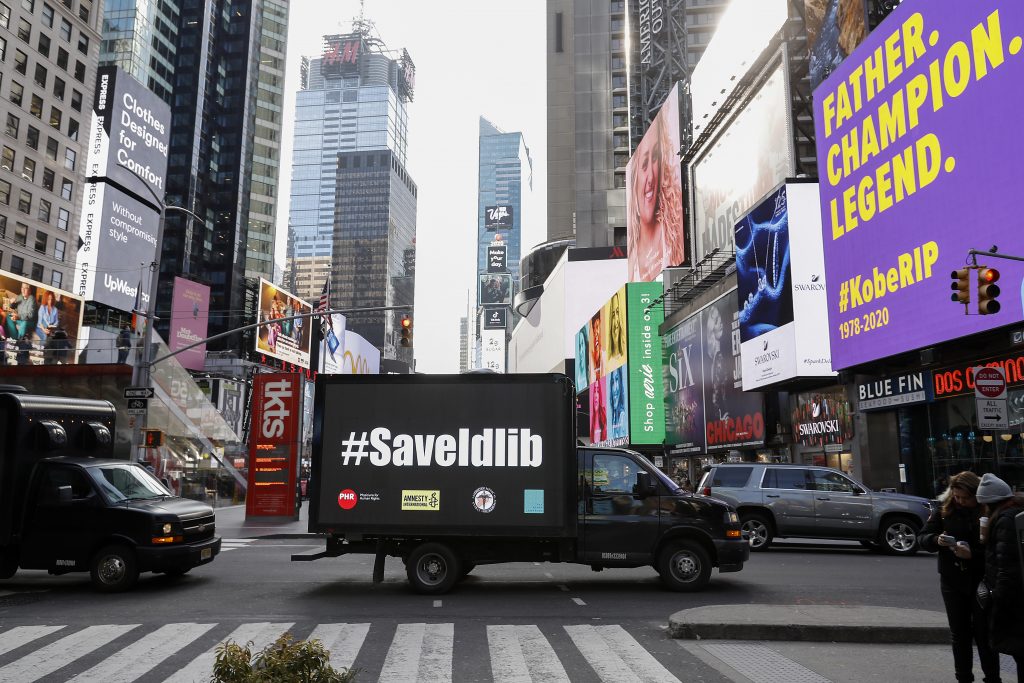
After their appearance at UN headquarters, the billboard trucks made a circle through midtown Manhattan, including Times Square. As the solemn trio drove past, New Yorkers and visitors looked on, a bit bewildered, most likely unaware of the suffering in Syria. They were going about their daily lives – which, after all, is what Syrians also yearn for. In the words of Dr. Ikrem from Idlib, as read to the crowd by Waad:

“I hope in 2020, when I wake up in the morning and read the news, I don’t read about dismembered children. I hope our children will go back to school and live a normal childhood like any other child.” 

PHR and our many partners and colleagues are issuing an urgent call to Russia and Syria to #StopBombingHospitals. We are calling on people of conscience to sign our petition to the UN Secretary-General, to ensure that the truth about the barbaric targeting of health care in the Syrian conflict is known. We are appealing to all UN member states to do everything possible to save civilians in Idlib, as desperate Syrian men, women, boys, and girls remain under siege.

We can ask nothing less.

Blog

How Long Does Trauma Last?: Longer than the U.S. Asylum Filing Deadline

Ellie, a 27 year-old woman from Honduras, was almost killed several times by her ex-partner, who beat her severely, tried to drown her, and even attacked her with a machete. She fled to seek asylum in the United States, where she again suffered abuse at the hands of a different partner. For more than a year, Ellie was unable to sleep or eat and also experienced intrusive memories about the violence she had suffered. Due to her devastating circumstances and the mental trauma that resulted from them, Ellie failed to complete her asylum application within the one-year deadline mandated by U.S. asylum law.

Ellie’s case is not unusual. For many who have experienced similar trauma, a simple retelling of their story can cause overwhelming emotion. It’s often easier to block out these memories than to have to relive them in the course of an asylum claim. Since many asylum adjudicators don’t understand the full effect of mental trauma on refugees, especially long-term, attorneys rely on the expertise of medical professionals to gather impactful medical and psychological evidence that can help prove the legitimacy of their client’s claim. Ellie’s lawyer, for instance, contacted Physicians for Human Rights’ Asylum Network in order to request a psychological evaluation that could confirm the consistency of her symptoms with her story of trauma, and provide a medical explanation for why she missed the one-year filing deadline.

A significant hurdle for many asylum seekers, the one-year rule, enacted by Congress in 1996, requires applicants to submit their completed forms requesting asylum within twelve months of their arrival in the United States. For many refugees who have experienced great trauma, this time frame is far too short. Once they have completed their extremely difficult journey to the United States, asylum seekers must gather documents and evidence, work with experts on their testimony and fill out the lengthy I-589 application. But perhaps the greatest obstacle many asylum seekers face in meeting the deadline is trauma. Rates of mental health disorders in resettled refugees can range as high as 40 percent for anxiety, 44 percent for depression, and 36 percent for post-traumatic stress disorder (PTSD). 

Many, like Ellie, cannot bear to think about the persecutory events that led them to flee their homes – including witnessing the murder of loved ones, direct physical and sexual violence, emotional abuse and neglect, and torture. So instead, they push extremely vivid and horrific experiences to the back of their minds, quite possibly for a time period of more than a year. In fact, one-third of people who develop PTSD can remain symptomatic for more than three years. Filing for asylum requires applicants to rehash their incredibly painful story to their legal team, any clinicians they meet with for forensic documentation, and asylum adjudicators. This can be extremely retraumatizing and make it difficult for some to file a timely asylum application.

There are existing exceptions to the one-year rule, but most are difficult to meet. One is if the applicant faces “extraordinary circumstances.” These can include being legally disabled, having a “serious” mental “disability,” the death or illness of a family member, or extreme isolation within the immigrant community. But, while PTSD constitutes a “serious disability” to some judges, for others it is not a valid excuse to get around the one-year rule. And even when an exception is granted, the claim still must still be filed within a “reasonable” time frame, a term which is left vague. An asylum adjudicator has discretion over determining what is and is not considered “reasonable.”

Overall, the one-year deadline is constricting and unfair to asylum seekers who have experienced extreme physical and mental trauma. In many cases, missing the one-year deadline is the sole reason asylum applications are denied. Ellie’s case is pending, but many others, left to navigate the complex application process without legal representation, have no such recourse. This problem must be fixed. Lengthening the time frame of or completely abolishing this rule must be one of the ways the United States begins to introduce trauma-informed practices and policies into the already complex asylum-seeking process.  

Statements

International Court of Justice Delivers Rebuke of Myanmar’s Abuse of Rohingya Minority

ICJ Rules Rohingya Face “Real and Imminent Risk” and Imposes Benchmarks for Protection

Physicians for Human Rights (PHR) welcomes the International Court of Justice’s (ICJ) decision today to support The Gambia’s request that the government of Myanmar take all necessary actions to protect the country’s Muslim Rohingya minority. This is the ICJ’s first official response to The Gambia’s official complaint of Myanmar’s violations of the United Nations’ 1948 Genocide Convention, linked to the extreme military abuses against Muslim Rohingya civilians. The ICJ decision specifically addressed The Gambia’s request for urgent provisional measures to protect the Rohingya population while the Court undertakes the longer term judicial consideration of The Gambia’s genocide allegations. Today’s ICJ decision constitutes an important milestone toward international accountability for the widespread and systematic violence inflicted by Myanmar’s security forces against the Rohingya in northern Rakhine state in late 2017.

The ICJ decision specified that the Myanmar government must:

  • “Take all measures within its power to prevent” actions that meet the legal definition of acts of genocide.
  • Ensure that the Myanmar military “do not commit acts of genocide, or of conspiracy to commit genocide, of direct and public incitement to commit genocide, of attempt to commit genocide, or of complicity in genocide.”
  • “Take effective measures to prevent the destruction and ensure the preservation of any evidence related to allegations of acts within the scope of Article II of the Genocide Convention.”
  • “Submit a report to [the ICJ] on all measures taken” to support the above rulings within four months of this decision, and subsequently every six months until the ICJ makes its final ruling on the Gambia’s genocide complaint against Myanmar.

In a written statement, Myanmar’s Ministry of Foreign Affairs said that the government “takes note” of the ICJ’s ruling, but failed to clarify its intent to comply. Instead, the statement referenced “unsubstantiated condemnation of Myanmar by human rights actors [that] has presented a distorted picture of the situation in Rakhine,” without providing details. That response underscores the need for robust and unwavering international support for the ICJ’s ruling and for the wider campaign for accountability and justice for the Rohingya.

Specifically, PHR calls on the United Nations Security Council to recognize the gravity of the alleged crimes and the clear threat posed to international peace and security. Furthermore, PHR calls for the UN Security Council and UN member states, where relevant, to ensure strict enforcement of the provisional measures by taking all appropriate actions, including regular meetings on the situation, targeted sanctions against senior Myanmar government and security forces’ officials, and to impose an arms embargo on the country. Failing UN Security Council action, or in the case of any inexcusable use of the veto in a mass atrocity situation, the UN General Assembly and the Human Rights Council as well as individual governments should take all appropriate actions to support peace, justice, and accountability in Myanmar.

PHR has used medical expertise to document and shed light on a pattern of grave human rights violations in Myanmar for more than 15 years. Having indicated in previous research that the human rights abuses against the Rohingya should be investigated as crimes against humanity, a PHR investigation in 2018 used forensic medical evaluations and qualitative interviews to prove that Myanmar security forces had orchestrated a widespread and systematic campaign of violence against the community. Since then, PHR has continued to document and shed light on underreported aspects of the devastating effects of the campaign against the Rohingya, including the long-term disabilities of survivors in the report “Shot While Fleeing”, and has called for Myanmar to be investigated by the International Criminal Court (ICC) or before other justice mechanisms that have jurisdiction to try individuals for serious international crimes, including crimes against humanity and genocide.

Additionally, PHR reiterates its support for parallel legal proceedings underway that give some promise to victims of future justice and accountability. They include the ICC’s investigation into the alleged crimes against humanity of deportation across the Myanmar-Bangladesh border and filed in national courts under the legal principle of universal jurisdiction.

Blog

How to Ensure Election-related Sexual Violence Never Happens Again

Originally published in The Star on January 17, 2020

In the aftermath of the 2007-08 post-election violence, the Commission of Inquiry into the Post-Election Violence (Waki Commission) documented more than 900 sexual violence cases perpetrated by security agents and civilians against women, girls, men and boys.

During this tragic period, Kenya saw large-scale bloodshed, mass displacement, and more than 1,000 deaths. Kenya’s 2017 elections again were marked by widespread sexual violence, with the Kenya National Commission on Human Rights documenting more than 201 cases in 11 counties alone.

Yet these statistics are only the tip of the iceberg. Most survivors of this ordeal do not report because they are terrified of reprisals from the perpetrators (especially where these are duty-bearers such as police officers), of stigma from their families, or re-traumatisation by service providers when reporting to the police or health facilities.

The real number of survivors of sexual violence is, in fact, much higher. Every election in Kenya since the 1990s has been affected by these appalling cycles of sexual violence.

Breaking Cycles of Violence

In December 2019, the UN Office of the High Commissioner for Human Rights, UN Women, and Physicians for Human Rights jointly published a new report – Breaking Cycles of Violence: Gaps in Prevention and Response to Electoral-Related Sexual Violence in Kenya – which analyses gaps in the prevention of and response to electoral-related sexual violence. 

This was based on the experiences of survivors in Nairobi, Kisumu, Bungoma and Vihiga counties, where the majority of cases of sexual violence were documented during the 2017 elections.

Despite the volume of well-documented sexual violence crimes during the 2007 and 2017 elections, we are yet to see a single case result in a conviction. Justice has been delayed and denied, again and again. For the survivors and for this country, this is simply unacceptable.

The report found many challenges that undermined the effective prevention of and response to electoral-related sexual violence.

Yes, Kenya has a progressive Constitution, which recognises the right not to be subjected to any form of violence from public or private sources. And there are other laws and policies and new regulations to strengthen medical, law enforcement, and legal responses to sexual violence. Yet the study revealed that there were significant delays in implementing these laws and policies, resulting in inadequate resources for training and equipping medical service providers and law enforcement officers.

urther, many survivors could not easily access police stations or medical facilities to report these crimes and to seek post-rape care and protective services. Sometimes survivors could not access police stations and health facilities because of unrest. Security measures to mitigate the unrest did not envisage providing safe passages for survivors trying to access these institutions.

Numerous challenges were also identified in ensuring effective and survivor-centred forensic documentation, investigations and prosecutions of crimes of sexual violence.

These challenges cut across all sectors of service provision in cases of election-related sexual violence (ERSV). The delays of over eight years by the Judiciary in completing hearings and delivering judgments in constitutional cases filed by ERSV survivors are further compounded by the lack of government acknowledgement of the violations suffered.

Service providers, especially those in health facilities, did not have the requisite training to undertake forensic medical examinations, and clear and standardised protocols for effective collection, documentation and management of medical forensic evidence.

Therefore, in instances where survivors were in a position to report cases of violation, the healthcare providers were still limited in terms of what services they could offer. This delay, therefore, meant the requisite evidence was not collected. Chances of having a watertight case were greatly reduced by these inadequacies.

Additionally, investigators lacked knowledge of the specificities of ERSV and relied heavily on reporting and provision of corroborating evidence by survivors. There was also limited specialised prosecutorial capacity on how to prosecute and undertake prosecution-led investigations of ERSV.

Put simply, Kenyan government agencies were under-prepared and under-resourced to prevent, mitigate and respond to sexual violence. This was despite the past patterns of sexual violence during elections.

How to Move Forward

In consultation with survivors, government agencies and civil society, OHCHR, UN Women and PHR have proposed a number of recommendations. They include a call for concrete actions to strengthen prevention, protection, and investigation, and prosecutions of electoral-related sexual violence. There is also a need to ensure accountability and reparations for these offences.

The report urges the government to take various steps. These include strengthening the inclusion of risks of sexual violence in early warning mechanisms and security preparedness.

The report further calls on the government to work closely with the county governments to prioritise the adoption and implementation of national health policies, laws, regulations, and guidelines on the management of sexual violence, and to establish safe shelters for survivors.

It also stresses the need to enhance coordination between investigative agencies, the Office of the Director of Public Prosecutions, survivors’ networks and civil society organisations. And, critically, the report highlights the State’s obligation to acknowledge the violations of the rights of survivors, and to commit to a meaningful process of consultations with them and civil society organisations to design and implement a comprehensive reparations policy.

Implementing these system-strengthening measures, and enhancing concerted action will help break the ERSV cycle. The report noted good practices that can be built upon, and that those communities that demonstrated better coordination between duty-bearers and civil society fared better during the electoral violence.

In Nairobi, the National Network of Survivors of Sexual Violence was at the forefront in monitoring electoral activities and reported signs of any risk of violence.

In Kisumu, clinicians at the Jaramogi Oginga Odinga Referral and Teaching Hospital and the County Technical Working Group worked with communities in advance to educate stakeholders on the importance of reporting ERSV cases.

These networks supported survivors to report cases in a timely manner, therefore, ensuring they received much needed post-rape care. Locals were also in a position to direct victims on where to report these cases due to the community awareness that was undertaken.

Of course, the pervasive crisis of sexual violence in Kenya goes beyond our election periods. But by transforming the way we prevent and respond to electoral-related sexual violence, we are also strengthening the way we can prevent and respond at other times.

This is essential given that 45 per cent of women and 44 per cent of men aged between 15 and 49 years in Kenya have experienced sexual and gender-based violence. The lawlessness that is rife during elections only perpetuates the notion that perpetrators will enjoy impunity.

The Breaking the Cycles report is a stark reminder that the threat of ERSV in 2022 will persist unless we act now. With only just over two years to go before the next General Election, the clock is ticking for the government, the security forces, the health sector, civil society, and others to prepare and prevent the recurrence of sexual violence.

Prevention and response must be at the core of all the planning and contingency measures that will be applied ahead of and during the polls, including campaigns.

Everyone has a role to play — from the police, judges to civil society — to better support survivors and to ensure electoral-related violence never happens again. We owe it to our country. We owe it to the survivors.

Blog

India’s ominous threat to Rohingya Muslim refugees

Originally published in Asia Times

The tens of thousands of Rohingya Muslims who have fled to India to escape widespread and systematic violence and discrimination in Myanmar face an existential threat from a new source: India’s government.

Early this month, a senior government minister announced that Indian authorities would move expeditiously to deport the country’s sizable Rohingya refugee population back to Myanmar regardless of the risks to the refugees.

“There are no ‘ifs’ and ‘buts’ … what would happen here is that the next move would be in relation to [the deportation] of Rohingyas,” Jitendra Singh, minister of state for development of the North Eastern Region, stated on January 4. Singh justified that call for Rohingya deportation on the terms of India’s controversial Citizenship (Amendment) Act. The CAA, passed by India’s Parliament on December 12, explicitly denies the rights of Muslim “irregular immigrants,” those who lack UNHCR (United Nations High Commissioner for Refugees) identity cards.

Singh’s comments constitute a visceral threat to the safety of the thousands of Rohingya who have sought safety in India over the past decade. The government estimates that 40,000 Rohingya refugees live in India, of whom fewer than half possess UNHCR identity cards designed to protect them from “harassment, arbitrary arrests, detention and deportation.” Those refugees have fled Myanmar government-imposed institutionalized discrimination, including restrictions on movement, education and health-care access, as well as spasms of deadly violence such as the bloody purge perpetrated against Rohingya in northern Rakhine state in late 2017.

India’s threatened mass deportation of Rohingya would be a catastrophe for those sent back to Myanmar.

The Myanmar government has resisted any moves toward accountability for the security forces implicated in the scorched-earth campaign of mass killings, torture, and sexual violence in northern Rakhine state that drove more than 700,000 Rohingya into neighboring Bangladesh in fear of their lives. Since then, the Myanmar government and security forces have moved systematically to erase any traces of claims that the Rohingya might have had to their former homes in northern Rakhine.

Satellite images have revealed that the locations of former Rohingya villages in Rakhine have been “flattened and scraped by bulldozers.” In what appears to be a blatant form of post-conflict elimination of physical remnants left behind by the dead or fled Rohingya, those villages have been replaced by facilities for the security forces as well as hundreds of new homes built for mostly Buddhist residents from other areas of Rakhine.

The Myanmar government now forcibly confines the remaining Rohingya population in Rakhine state to fenced enclosures with restrictions on travel, education and access to health care. Amnesty International has described the plight of those Rohingya in Rakhine as “women, men and children segregated and cowed in a dehumanizing system of apartheid.” Rohingya who seek to escape the oppression in Rakhine for other parts of Myanmar or to neighboring countries are, if caught by the authorities, subject to prison terms of up to two years for the “crime” of “not having necessary documents for traveling.”

The Indian government should also be mindful that it would be deporting Rohingya to a country that denies them legal recognition by having unilaterally stripped them of their citizenship in 1982. That citizenship denial has helped spur a distressingly popular racist narrative in Myanmar that depicts the Rohingya as illegal migrants rather an ethnic minority with a well-documented centuries-long presence in the country.

Jitendra Singh’s comments are likely to compound the fear felt by Rohingya refugees who lack UNHCR protection. India’s deportation of seven Rohingya men to Myanmar in October 2018 fueled panic among other Rohingya refugees and prompted hundreds of families to flee to neighboring Bangladesh to avoid a similar threat.

Those deportations followed the Indian government’s designation of Rohingya refugees as “a national-security threat” in September 2018 based on unsupported allegations that some Rohingya were in contact with Pakistan-based extremist groups. The Indian government fanned those fears last week by alleging that Pakistan’s Inter-Services Intelligence agency was funding dozens of Rohingya refugees in Bangladesh “so that they can push them into India to carry out terror attacks.”

Those allegations may well prompt the Bangladeshi government to tighten further the restrictive measures it has imposed in recent months on its massive Rohingya refugee population in Cox’s Bazar. The restrictions have included government directives to telecom service providers to cut services in the camps as well as the erection of barbed-wire fencing and guard towers to enforce an existing dusk-to-dawn curfew.

The Indian government should drop its threat of mass deportations of its Rohingya refugee population. Instead, it should apply its significant diplomatic and economic leverage with Myanmar’s government to pressure it to establish the conditions that will allow voluntary, safe and dignified repatriation of Rohingya refugees back to Myanmar. That requires compelling Myanmar to provide accountability for the late-2017 slaughter in northern Rakhine and the restoration of full citizenship rights to the Rohingya.

India has an opportunity to demonstrate leadership in pressuring Myanmar to open the way for eventual repatriation of its Rohingya refugee population, rather than subjecting the Rohingya to mass deportation directly into harm’s way.

Statements

Welcoming a New Era of Growth for PHR’s Global Medical Expertise and Human Rights Advocacy

As we begin the new year, Physicians for Human Rights is launching an aggressive growth plan to significantly expand and globalize our network of scientific and medical experts. Harnessing the extraordinary authority of scientists and health professionals, this strategic approach to growing our organization will build PHR’s expertise and rigor to investigate, document, and advocate to end human rights abuses around the world.

We are pleased to announce the creation of PHR’s global Advisory Council, a roster of world-class scientific and medical experts whose wide-ranging skills and knowledge will help shape and guide PHR’s work. This growing group of exceptional professionals will leverage the best scientific expertise in the area of health and human rights to work alongside PHR’s outstanding staff and volunteers.

Like PHR’s board of directors, the Council brings to PHR a broad and deep knowledge of medicine and science, including forensic medicine, medical ethics, chemical and conventional weapons, torture, sexual violence, survey research, data analysis, women’s health, correctional health, the psychological consequences of human rights violations, monitoring and evaluation methods, training of doctors and data collectors, and medical publishing, among other fields. A full list of this inaugural group of Advisory Council members can be found here.

PHR is also very pleased to announce new leadership in the appointment of Michele Heisler, MD, MPA as PHR’s new medical director and Ranit Mishori, MD, MHS as senior medical advisor. They succeed Vincent Iacopino, MD, PhD, a health and human rights pioneer who is retiring after serving for nearly three decades as PHR medical director and then senior medical advisor.

Dr. Heisler, a former PHR board member and professor of internal medicine and public health at the University of Michigan medical school, has spent a lifetime researching and advocating for the health and human rights of vulnerable populations in the United States and abroad. She began her career in human rights at the Ford Foundation before obtaining her medical degree, and first began volunteering for PHR in medical school. Since then, she has participated in multiple PHR investigations, authored dozens of PHR reports and medical journal articles, and brought these findings to medical, policy, and advocacy forums. As medical director, Dr. Heisler will help strengthen PHR’s impact in promoting health and human rights throughout the world, ensuring that PHR investigations are conducted with the highest methodological and clinical rigor. And she will broaden PHR’s network of medical associations and health professionals globally, building in more peer review at every stage – proposal, study design, analysis, and publications – to ensure the scientific accuracy and authority of our work. She will also help design, secure funding for, and lead new projects.

Dr. Mishori is a professor of family medicine at the Georgetown University School of Medicine and director of the department’s Global Health Initiatives. A former journalist, she is a practicing family physician who has built a multi-dimensional, two-decade career that includes academia, scholarship, clinical care, mentorship, and leadership roles in public health, global health, medical education, the care of underserved populations, and human rights. Dr. Mishori has been a member of PHR’s Asylum Network since 2006 and has worked extensively with our Program on Sexual Violence in Conflict Zones since 2011. As senior medical advisor, Dr. Mishori will provide strategic counsel and support for a range of PHR programs and projects, including PHR’s burgeoning work to promote clinicians in policy discussions and advocacy at the highest domestic and international levels.

Together, Dr. Heisler and Dr. Mishori bring decades of medical, human rights, and leadership expertise to PHR; they have helped train medical colleagues around the world to document human rights abuses and will spearhead our efforts to expand our research and investigations efforts and galvanize a new generation of health professionals to our cause.

In 2019, medical professionals all over the world took to the front lines in the fight for human rights. Sudanese doctors and nurses led pro-democracy protests that toppled a dictator. American medical professionals challenged U.S. efforts to deter and harm asylum seekers. Syrian health workers braved daily bombardment, arrest, and torture to provide medical care to all those in need. Everywhere, medical professionals put their extraordinary skills, ethics, and dedication to work to defend the rights of their fellow humans.

We at PHR are proud to call many of those courageous doctors, nurses, and other health workers our partners. Building on more than 30 years of bringing evidence to the defense of human rights and nurturing and promoting the advocacy voices of health professionals, PHR is now ushering in a new era of medical and scientific excellence. This exciting development is just one of the many ways that we are taking PHR’s rigorous research, programs, and advocacy to new heights.

Blog

The Best Human Rights Films of 2019: PHR’s Picks

Grab your popcorn because the final countdown to the Oscars has begun: on Sunday, February 9, 2020 hundreds of millions of people around the world will tune in to watch the 92nd Academy Awards in Los Angeles, California. The annual culmination of the film awards cycle will hand out the industry’s top honors to nominees in categories including Best Picture, Best Director, Best Documentary Feature, and more.

While I’ll admit that I enjoy the red-carpet fashion and the star-studded glamour of the evening, it’s especially exciting to see how films about human rights issues are recognized. This year we saw some terrific films that captured powerful struggles for freedom, truth, and justice delivered to movie theaters and streaming services around the world. Most of these were documentaries, but others employed some of Hollywood’s top talent to dramatize the urgent, nail-biting true stories of our time. Spanning from torture investigations to immigration policy to policing drugs, these films asked us to witness up close the shocking violence and abuses faced by individuals, families, and communities around the world. But these stories also connected us in a deeper way with the resilience, courage, and unrelenting hope of those who are helping others and fighting injustice, despite impossible circumstances.

Without further ado – and with thanks to my friends and PHR colleagues for their recommendations – here are our picks for the best human rights films of 2019.


Health Care Under Siege in Syria

For Sama

The Oscar-nominated documentary For Sama is simply unlike anything we’ve seen before. Directed by Syrian journalist Waad al-Kateab and British filmmaker Edward Watts, the film follows Waad and her husband, Dr. Hamza, as the conflict in Syria escalates from protests to all-out war. Tender moments of the couple’s courtship, wedding, and the arrival of their first child, Sama, are juxtaposed with grisly footage from inside hospitals and scenes of desperation as communities are obliterated around them. Our staff had the chance to screen the film in our New York offices last year and there wasn’t a person in the room who wasn’t visibly affected. After winning the Prix L’Œil d’Or for Best Documentary at the 2019 Cannes Film Festival and becoming the most nominated documentary in BAFTA history, For Sama this week secured its Oscar nomination for Best Documentary Feature.

How to watch: Check upcoming screenings on For Sama’s website or stream via PBS Frontline

The Cave

Also nominated is the second film released in 2019 about attacks on health in Syria: The Cave, from director Feras Feyyad. Equally shocking as For Sama, the film follows pediatrician and managing physician Dr. Amani Ballour and her colleagues as they provide critical care to civilians in an underground hospital. Gripping scenes show how hospital staff endure aerial bombardment, while Dr. Amani confronts gender roles as she provides life-saving care.

How to Watch: Streaming on Amazon Prime.

Exposing the Truth about the U.S. Torture Program

The Report

A highlight of Adam Driver’s prolific year in film was his portrayal of U.S. Senate staffer Daniel Jones in his grueling task of investigating torture for the U.S. Senate Select Committee on Intelligence. With co-stars Annette Benning and Jon Hamm, The Report is an unflinching look at the extreme measures taken by the U.S. government in the aftermath of the September 11, 2001 attacks, including through extraordinary renditions, torture of suspects at so-called “black sites,” and violations of medical ethics. At a time when the United States is again beating the drums of war, the truth about this dark chapter in recent U.S. history feels urgent now more than ever. 

How to Watch: Streaming on Amazon Prime. Read more about PHR’s work against torture in U.S. national security detention.

The Perils of Seeking Asylum at the U.S.-Mexico Border

Torn Apart: Separated at the Border

As the trailer of this film notes, in 2018, some 3,000 families seeking asylum in the United States were forcibly separated by the U.S. government at the U.S.-Mexico border. Most of these families were fleeing life-threatening violence in their home countries in Central America, only to face the terrifying, traumatizing experience of being forcibly separated once they crossed the border. Directed by Academy Award-winning documentarian Ellen Goosenberg Kent,Torn Apart is a 40-minute documentary that follows two mothers who were separated from their young children for months.

How to Watch: Streaming with subscription on HBO. Learn more about PHR’s recent investigations of trauma among asylum seekers, and stay tuned for forthcoming research on the extreme harms of family separation.

Also of note: Border South

Portraits of the people attempting to make the perilous journey north through Mexico to the U.S. border, who also must pass the remains of those who lost their lives along the way.  How to watch: Check upcoming screenings on the film’s website.

The Terror of the Philippines’ War on Drugs

On the President’s Orders

An up-close look at President Rodrigo Duterte’s deadly campaign against suspected drug dealers and users in the Philippines, On the President’s Orders is a terrifying window into what happens when a government’s attempt to eradicate drugs turns into open season to kill indiscriminately and with impunity. The film features commentary from Phelim Kine, PHR deputy director of programs and director of research and Investigations.

How to watch: Streaming from Frontline.

Also of note: Nightcrawlers.

Another hard look at the extreme violence caused by Duterte’s deadly war on drugs, this time through the eyes of photojournalists. How to watch: Stream from National Geographic on YouTube.

Bonus: What we’re looking forward to in 2020

Mauritanian electrical engineer Mohamedou Salahi was captured and held for 14 years without charges or trial at the U.S. government’s detention facility at Guantánamo Bay. Based on Salahi’s memoir, Prisoner 760 will star Jodie Foster and Benedict Cumberbatch to tell the true story of Salahi’s ordeal. (If you don’t know Salahi’s story, we recommend The New Yorker’s excellent feature on Salahi by journalist Ben Taub, or watch an interview with Salahi and PHR experts here)

Also, stay tuned for Borderland, a forthcoming feature-length documentary from human rights filmmakers Pamela Yates and Paco de Onís about human rights at the U.S. border. The film is set to feature Dr. Scott Allen and Dr. Pamela McPherson, U.S. government contractors who helped expose conditions at U.S. detention facilities and who were honored by PHR at our annual gala last year.


Don’t see your favorites on the list? Tell us on Twitter! @P4HR

Get Updates from PHR