Blog

How U.S. Immigration Policies Threaten Access to Health

He looked out from the window in the door – the only window in the cold, cement room in which he was being held. Inside was only a bed and a urinal. It’s called a “suicide watch room” and he’s being held there because he suffers from mental illness, the guards explained. Far from a therapeutic environment, I thought to myself.

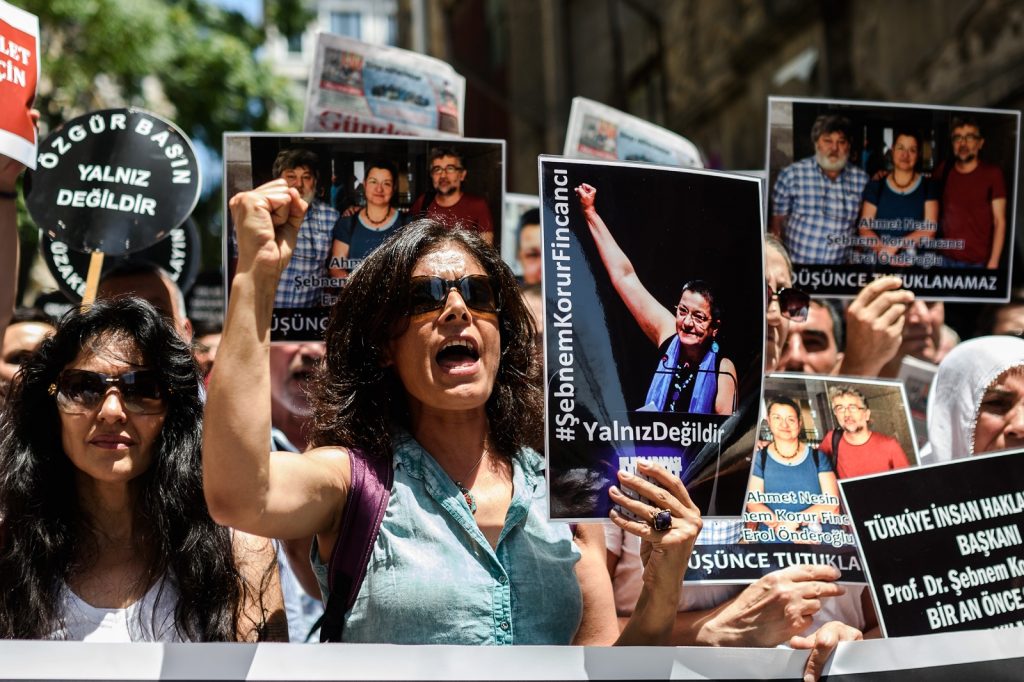
I’ve been a health professional for over two decades and my work has taken me from the United States to Latin America to Türkiye, to the offices of the United Nations and to hospital beds in the Caribbean. Much of what I do is focused on evaluating and developing health systems and behavioral interventions which respect human rights and which enable patients to be treated in the most therapeutic ways possible. So, on this day in August 2018, in the West Texas Detention Center, I was deeply dismayed by the sight of this elderly man – an asylum seeker who crossed the U.S.-Mexico border – locked away in solitary confinement, left to deal with his psychological issues alone, denied any adequate medical care or treatment.

We know from extensive research that detainees in solitary confinement are often subjected to excessive force, harassment, or abuse by authorities. We also know that prolonged solitary confinement can cause severe and often permanent damage to a detainee’s health, including panic attacks, overt paranoia, random violence, and self-harm. Many asylum-seeking migrants suffered persecution and torture in their home countries – or survived gang violence, domestic violence, human trafficking, and other crimes – before reaching the United States. Many of them suffer from post-traumatic stress disorder (PTSD), which, without treatment, can result in a deteriorated psychological state. Within a solitary confinement setting, the PTSD can rapidly be exacerbated.

But this detainee, along with thousands of others, will almost certainly never speak out about the lack of care in this facility. Some of the detainees who spoke to me during my trip to Sierra Blanca, Texas with Physicians for Human Rights (PHR) admitted that they would simply be too afraid to complain about anything. There is a so-called complaints procedure in place in the detention center, but it seems to merely be a bullying tactic masquerading as a feedback mechanism. If a detainee has a grievance or a health-related issue, they can put a note in a “complaint box” for the appropriate authorities to read and consider. But the system is fraught with intimidation. A detainee has to walk up to a guard at a caged-in corner of their detention room, which houses up to 80 migrants, to request the “anonymous” complaint slip. The level of unhappiness that a detainee has to reach in order to have the courage to actually make their grievances known is terrifying. As expected, the complaint box is never full. It became immediately clear to me that fear is the main hurdle preventing detainees from demanding adequate care, including medical treatment and other basic human rights.

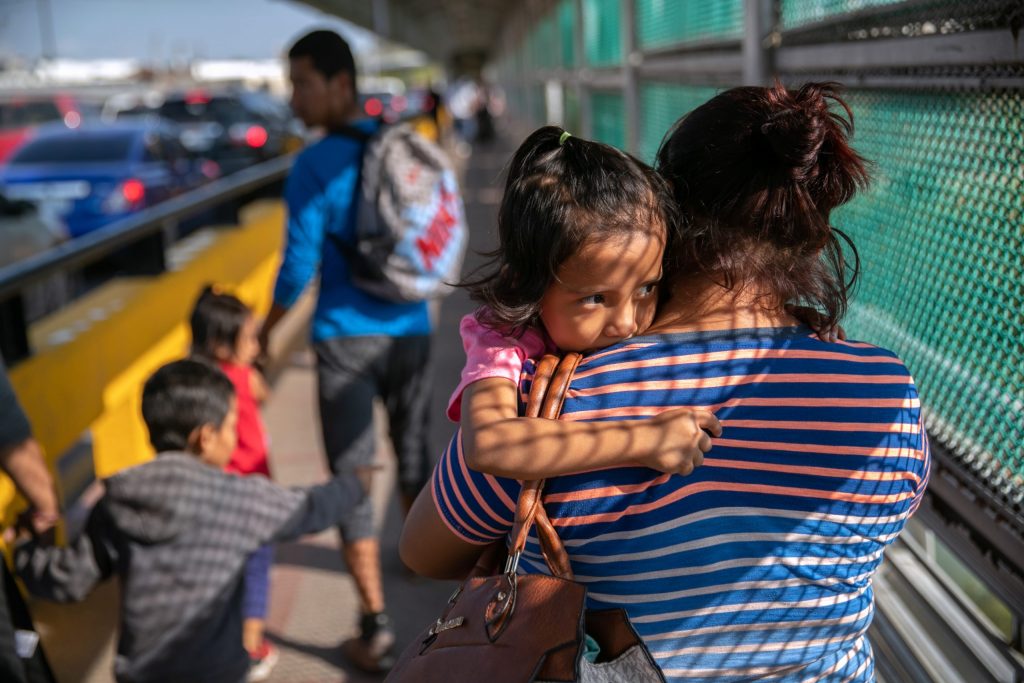
This fear extends outside the walls of detention centers. Within the communities themselves, people – even those who are in the United States legally – are gripped by panic at the thought of having to go to a clinic or hospital to seek treatment. When we were in Brownsville, Texas, my PHR colleagues and I heard stories of border patrol agents parking their vans in front of hospitals, in search of undocumented immigrants. Many sick and injured members of the largely Hispanic community along the border, who often have a family member or two who is undocumented, will simply turn around outside the hospital and walk away, thereby denying themselves medical care. For some, this might include life-saving treatment. But the fear of being apprehended and having their family member exposed to the authorities is too much to handle.

Dr. Deborah Ascheim, who accompanied me on the trip, explained the extent of the intimidation perfectly: “You cannot underestimate the effect that the border patrol agents have on these communities and their access to health. Border patrol is sometimes present in the emergency room or even in the labor and delivery room while a patient is birthing a baby. If they bring someone in, or see someone being brought in who is suspected of being here illegally, the border patrol agents will make themselves present in the very room where the patient is being evaluated by the doctor or nurse. There is no privacy unless the doctor or nurse takes a stand,” she explained. “There are some health care professionals who will tell the border patrol agent to leave. But then the border patrol agent sits in the waiting room and causes those people waiting for treatment to be fearful,” she added.

For me, one of the saddest realizations was that people come to feel that they are without value, or that they are not worthy of being protected or defended – that no one cares about them at all. Some nights, at around 10:30 p.m., white vans turn up at a parking lot outside the bus terminal, not far from the detention center, and the doors open. Dozens of migrants are released, pending their asylum hearings, and they have less than 30 minutes to make it onto the last Greyhound bus. Most will not have sufficient time, money, or directions to go anywhere, and will spend the night in the parking lot. Volunteers arrive to offer food, hygiene products, and even shelter. One night, I saw an elderly man exit the white van and be greeted by 20 smiling faces of volunteers. He was taken aback and a little uncertain. “Who are you?” he said. “Welcome. We’re here to help you,” one volunteer said. And with that, he began to cry.

My mind immediately went back to that man whom I had seen in solitary confinement back in the West Texas Detention Facility, and to how he, too, needed human interaction and some semblance of care and compassion.

Dignity and respect should not be reserved for select people. Regardless of policy or politics, every human being, including those being detained for crossing the U.S.-Mexico border while fleeing violence and persecution, deserve the right to seek asylum, and to access adequate medical treatment. These rights are protected under international law. The time to remain silent has long passed.  
Blog

How Trickery and Trauma at the U.S.-Mexico Border Aided Family Separation

After days of travel, fleeing abuse or persecution at home, a migrant mother finally reaches the United States, unsure of her fate and desperately seeking a better life for her and her family. Clutching her child’s hand, she’s told by the authorities that someone will look after her daughter while she appears before a judge to explain why she crossed the border and is claiming asylum in the United States. She cautiously agrees, because, in truth, she has little choice but to comply. But when she returns from the courtroom she finds that her daughter is gone, and she’s told that she will be deported back to her country of origin. Her child, they explain, will be placed in foster care and will be adopted by an American family. Furthermore, she is not given any information about her child’s whereabouts. 

During a recent visit to the U.S.-Mexico border in Texas, I learned that before President Trump signed an executive order to stop family separation, this kind of scenario played out countless times across the southern border. It was among several horrifying stories I heard relating to the treatment of asylum seekers in the United States and can be described as nothing short of trickery.

Before leaving my home in New York, where I work as the executive director of Physicians for Human Rights (PHR), I had imagined the focus of my trip would be to meet with partners in the medical field to discuss the traumatic impact that the controversial family separation policy had had on migrant families – especially on children – and to understand how our organization could scale up our support for asylum seekers and the organizations working to protect them. Little did I know that I would hear accounts of heart-wrenching brutality inflicted on children and parents alike – not just through neglect and poor physical treatment at every turn in the system, but often the result of sheer premeditated deceit. Many deportations take place under duress or through manipulation, with mothers and fathers deemed “ineligible” for reunification with their children despite the lack of any evidence that they are unfit parents or that they have committed any crime other than the misdemeanor of crossing the border irregularly. This wreaks profound trauma on both the parents and the children, and results in hundreds of immigrant minors, including toddlers, being forcibly orphaned in the United States.

PHR’s volunteer network of clinicians conducts hundreds of physical and psychological assessments of immigrants, including refugees and asylum seekers, each year. We hear stories of asylum-seeking families at the border waiting for days – sometimes for over a week – in the baking hot sun, without regular access to food or shelter, and terrified of losing their place in line by leaving, even temporarily. Our volunteers see children who fled violence and persecution in their countries of origin subjected to neglect and abuse while in detention in the United States. Some, who have sustained physical injuries or who are struggling with emotional trauma, do not receive adequate treatment or counseling, and others are held in cage-like settings and deprived of human touch. This treatment and these conditions are inhumane, punitive, and inexcusable.

While the officially-sanctioned “zero tolerance policy” announced by U.S. Attorney General Jeff Sessions in April was allegedly intended to discourage asylum seekers from traveling to the border in the first place, there is not one shred of evidence that it worked. The overall number of asylum seekers did not decline, and more families are arriving with children than in previous years. In addition, consistent with its practice of treating all immigrants like dangerous felons, the Trump administration has sought to remove court-imposed time limits on the detention of immigrant children. This would allow families, including children, to be locked up indefinitely while their cases progress through the courts. With the erection of a large tent city in Tornillo, Texas, the potential to inflict long-term harm and trauma on detained children increases dramatically. Children do not belong in detention facilities and they do not belong in tent cities, let alone indefinitely.

Today, as a large caravan of asylum seekers from Central America makes its way to the U.S.-Mexico border, we must act without delay to have the claims of asylum seekers heard, reduce harm, and prevent new families from being similarly brutalized. Summarily placing all who cross the border into large tents cities for an indefinite period of time, forgotten and without care, is not the solution. We must fight for a humane immigration system and border enforcement policies that preserve health and human rights. The bottom line is that families do not deserve to be punished for pursuing their legal right to escape persecution and claim asylum.

Blog

French Arrest Warrants Are First Move Toward Syrian Accountability

On Monday, November 5, victims of Syria’s vicious conflict got a hint of something unimaginable only months ago: criminal accountability for Syrian government officials implicated in war crimes and crimes against humanity.

That’s because French prosecutors issued international arrest warrants for three senior Syrian officials, including Director of the National Security Bureau Major General Ali Mamlouk, Air Force Intelligence chief Major General Jamil Hassan, and a second senior Air Force Intelligence official, Abdel Salam Mahmoud. The warrants specify the three Syrian officials’ alleged role in the disappearance and subsequent murder of two French-Syrian nationals, Mazen Dabbagh and Patrick Dabbagh, after they were detained by Syrian Air Force Intelligence in November 2013.

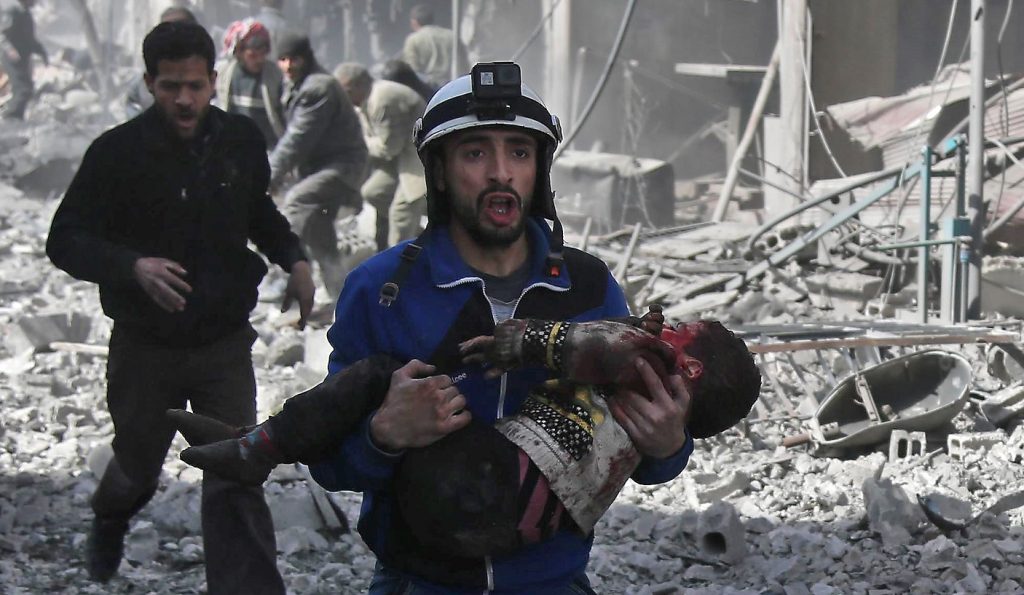
But the significance of the arrest warrants goes well beyond France stating that it will pursue senior Syrian officials linked to the deaths of French citizens. All three suspects are deeply implicated in the prosecution of a conflict that has claimed the lives of at least 400,000 Syrians and displaced millions more since 2011, and which has featured actions that may constitute war crimes and crimes against humanity. Those crimes have included targeted attacks on health care facilities and personnel that have generated a lethal context in which civilians have suffered and died not only from the direct consequences of warfare, but also from denial of adequate medical care, malnutrition, and starvation. In so-called de-escalation zones, hospitals and other health facilities continue to be under constant bombardment and shelling, medical personnel are being killed, and humanitarian aid is subjected to restrictions that impede its timely delivery to populations in need.

The warrants issued this week are an unequivocal indication that, more than seven years into Syria’s grinding conflict, foreign governments are finally willing and able to take concrete legal steps to challenge the impunity enjoyed by Syrian government officials who have been passively or actively complicit in mass killings, torture, and intentional targeting of civilians. And France isn’t alone. In June 2018, German prosecutors likewise issued an international arrest warrant for Major General Hassan alleging his role in the torture, rape, and murder of “hundreds of people between 2011 and 2013.” According to Human Rights Watch, Swedish investigators are pursuing cases against 13 people suspected of committing war crimes in Syria, while German authorities are investigating 17 people suspected of crimes in Syria and Iraq.

The French warrant singled out Abdel Salam Mahmoud for his role in supervising the notorious detention facility at Mezzeh military airport in Damascus that has been the site of horrific abuses during the course of the conflict. A 2012 Human Rights Watch report documented deaths in custody at Mezzeh airport as well as torture of detainees that included beatings, denial of food and water, and electrical shocks.

Research by Physicians for Human Rights (PHR) indicates that Mezzeh has also been a site for the torture and killing of Syrian health workers. Mezzeh guards tortured to death Syrian dentist and activist Ayham Moustafa Ghazoul in 2012, four days after he was detained. PHR open-source research also indicates that Air Force Intelligence Directorate personnel, for whom Major General Hassan has command responsibility, detained, tortured, and killed at least 11 medical personnel since 2012.

PHR has documented attacks on hundreds of health care facilities and the killing of more than 800 medical personnel since the start of the conflict as part of an effort to call attention to these crimes and secure evidence to hold perpetrators accountable. Our online, interactive map of Syria provides location information and details on attacks which PHR independently corroborates – 90 percent of which were very likely committed by the Syrian government and its allies. Our visual mapping of the scale and frequency of attacks on health care serves as a daily reminder of the importance of seeking justice and accountability. 

That PHR data is invaluable to legal mechanisms in any countries or jurisdictions that seek to pursue accountability for war crimes and crimes against humanity in Syria. Meanwhile, those French and German arrest warrants for Ali Mamlouk, Jamil Hassan, and Abdel Salam Mahmoud signal to the Syrian people and their oppressors that, sooner or later, justice is coming.

Statements

35 Yemeni and international organizations call for an immediate cessation of hostilities in Yemen

As humanitarian, human rights and peacebuilding organizations working on Yemen, we welcome tomorrow’s unprecedented coming together of legislators from across nations and parties for the first International Parliamentary Conference for Peace in Yemen to demand their governments work together to end the crisis. With 14 million men, women and children on the brink of famine – half the country’s population – there has never been a more urgent time to act.

We call on governments to secure an immediate cessation of hostilities, suspend the supply of arms at risk of being used in Yemen, guarantee unimpeded access and movement for vital imports, condemn any attacks on civilians and other violations of international humanitarian law by any party and support international investigations into these violations, including the work of UN Group of Eminent Experts on Yemen.  

Events in recent weeks have added to a long list of examples of disregard by Saudi Arabia for the international rules-based system and have brought renewed focus on the need for the international community, particularly the US, the UK and France, to reassess their partnerships with Riyadh. Any supporter of and arms supplier to the Saudi-Emirati-led coalition bears a special moral and legal responsibility to ensure that the coalition complies with international humanitarian law in Yemen. In light of the ongoing unlawful attacks against civilians by all parties in Yemen, widely documented by the UN Group of Eminent Experts, we add our voices to those of over one million of the global public and reiterate the call we have been making for years to all governments to suspend the supply of all arms at risk of being used in Yemen.   

The humanitarian crisis in Yemen is manmade and a direct consequence of the warring parties’ severe restrictions on access to food, fuel, medical imports and humanitarian aid. The collapse of the Yemeni Rial and the non- payment of public sector workers is adding to the catastrophe. In addition, civilian deaths have increased dramatically in recent months – with 450 civilians killed in just 9 days in August – and violence against women and girls has risen significantly since the conflict escalated. We call on governments to redouble their efforts to guarantee unimpeded access to essential items, including fuel, in and throughout Yemen, including through the lifeline port of Hodeidah, where civilians have been caught in renewed fighting over the past few days. Any indiscriminate attacks on civilians and civilian infrastructures, and other violations of international humanitarian law by any party should be publicly condemned by the international community.   

Parliamentarians have a special responsibility to represent the voice of their constituents and hold their governments to account. On the eve of the inaugural Paris Peace Forum convened by President Macron to promote peace and improve global governance, we hope this conference will be a wake-up call. There is no military solution to the war in Yemen. Only an inclusive peace process can solve the humanitarian crisis.  

After almost four years of conflict, Yemenis can’t wait any longer.  

List of signatory organizations: 

  1. ACAT
  2. Action Contre la Faim
  3. Asociacion pro Derechos Humanos de Espana
  4. Avaaz
  5. CARE International
  6. Cairo Institute for Human Rights Studies
  7. Committe on the Administration of Justice 
  8. Control Arms
  9. Friends Committee on National Legislation
  10. FIDH (Fédération internationale des ligues des droits de l’Homme)
  11. Finnish League for Human Rights
  12. Global Centre for the Responsibility to Protect
  13. Gulf Centre for Human Rights
  14. Handicap International
  15. Hellenic League for Human Rights
  16. International Rescue Committee Europe
  17. Latvian Human Rights Committee 
  18. Ligue des Droits de l’Homme
  19. Ligue Belge (Francophone) des Droits de l’Homme 
  20.  Liga voor de Rechten van de Mens
  21. Médecins du Monde
  22. Mercy Corps
  23. Mwatana Organization for Human Rights (Yemen)
  24. Norwegian Refugee Council
  25. Observatoire des Armements
  26. Oxfam
  27. PAX (the Netherlands)
  28. Physicians for Human Rights
  29. Sisters Arab Forum for Human Rights (Yemen)
  30. Saferworld 
  31. Salam for Yemen
  32. Save the Children
  33. SumOfUs
  34. War Child
  35. Yemen Peace Project
Blog

Tens of Millions of Yemeni Lives Are in the Balance

Amal Hussein, the seven-year-old emaciated Yemeni girl whose harrowing portrait drew the world’s attention to the largely overlooked humanitarian catastrophe unfolding in Yemen, died from acute malnutrition on November 1 in a camp for the internally displaced.

In her displacement, her illness, her hunger, and her tragic death, Amal embodies the perpetual suffering of Yemenis through a vicious conflict now entering its fourth year. Out of that conflict – in which civilians are regularly targeted, humanitarian aid strategically blocked, health care facilities attacked, and starvation deployed as a weapon – has grown the world’s worst humanitarian crisis. Today, 22 million Yemenis (75 percent of the total population) are in desperate need of humanitarian aid; 8.4 million do not know where their next meal will come from; and 400,000 children are suffering from severe acute malnutrition – the condition that took Amal’s life.

Yemen is effectively on the brink of a massive famine. Its economy is crumbling. Its infrastructure is in tatters. Its health care system has all but collapsed. This state of affairs is not an arbitrary consequence of war. It is the direct result of how the conflict has been prosecuted by warring parties: with utter disregard for international rules and norms. In fact, the parties to the conflict in Yemen – particularly the Saudi-UAE coalition – have waged their war with a practical cruelty that seems designed to obliterate Yemenis’ capacity to survive.

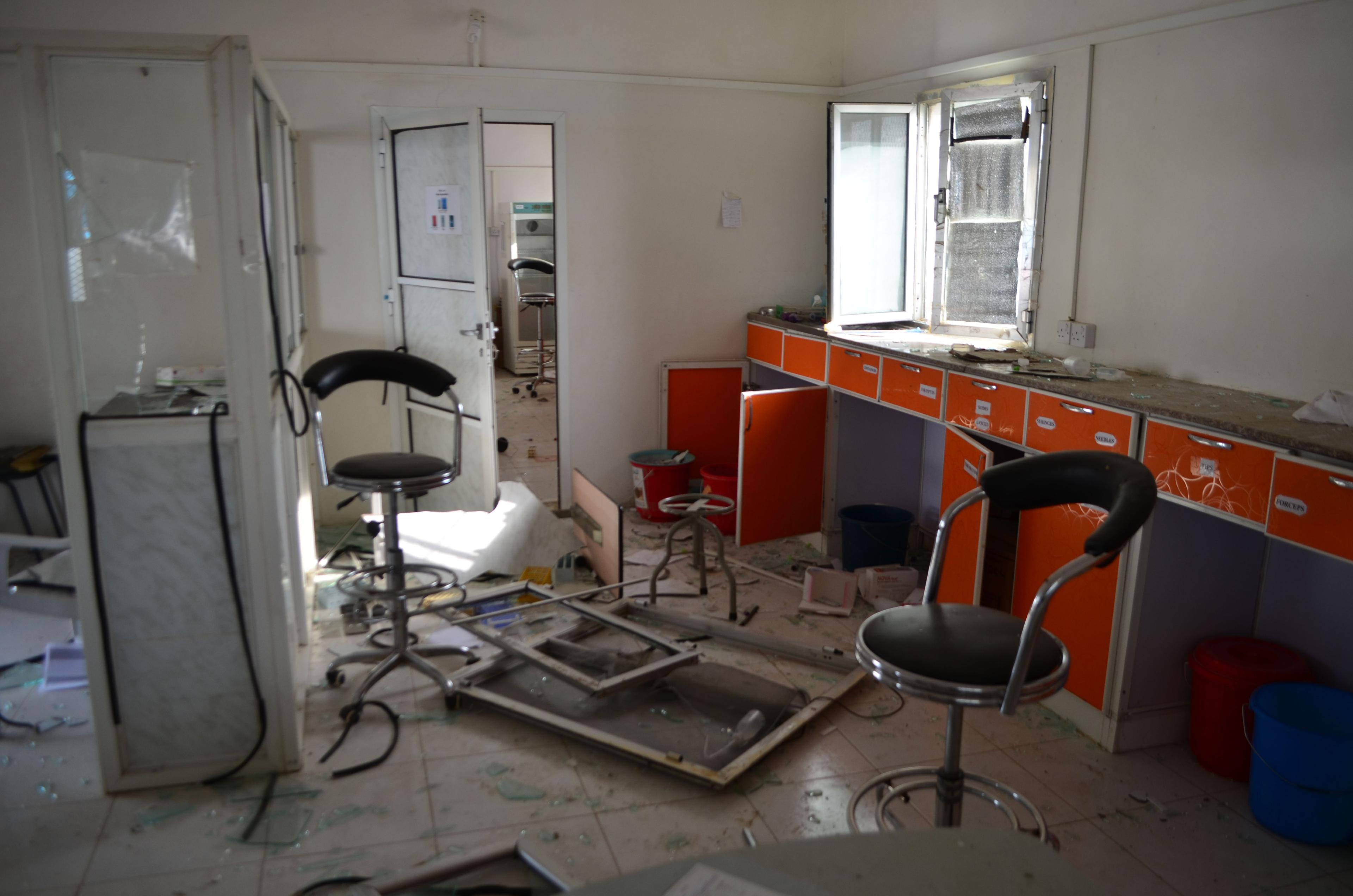
Eleven people were killed and more than 19 wounded in an airstrike on this hospital operated by Doctors Without Borders in Abs, Yemen, in August 2016. 
Photo: Getty Images

Physicians for Human Rights (PHR) has been documenting one facet of this brutal logic of war: the targeting of health care facilities or the failure to take appropriate measures to shield them from attacks. Over the past year, PHR has independently confirmed more than 23 individual attacks on health facilities. Hospitals and clinics have been bombarded, shelled, overrun, and put out of service. A recent attack by the Saudi-led coalition destroyed a clearly demarcated Doctors without Borders clinic in Abs on June 11. More recently, on October 11, a hospital in ad-Durayhimi reportedly sustained heavy damage from airstrikes.

In the context of an extremely vulnerable population and a health care system already reeling under the weight of the conflict, the consequences of such purposeful attacks on public health cannot be overstated. The unthinkable proportions of the cholera outbreak affecting an estimated 1.16 million Yemenis is a case in point. Despite cholera being a treatable disease, thousands of people have already succumbed to the illness, nearly a third of whom were children.

PHR has repeatedly called for a concerted international effort to halt attacks on civilians, has urged countries providing arms to the belligerents to make every effort to ensure that these are not used against civilians and civilian infrastructure, and has pushed for independent investigations into gross violations of international humanitarian law and human rights. However, as the conflict deepened and the resultant humanitarian disaster expanded, such calls by PHR and others rang mostly hollow, especially with Western policymakers largely supportive of the Saudi-led coalition. The horrifying murder of journalist Jamal Khashoggi, apparently by Saudi agents, appears to have forced the gaze of the world and that of policymakers toward the misdeeds of Saudi Arabia and, by association, toward the plight of the Yemeni people.

Days before her death, Amal was discharged from the hospital where she was receiving treatment to make room for other patients. It is devastatingly telling that a child dying from starvation should be sent home by a health care system that has been rendered utterly powerless in tending to her needs. Amal’s death encapsulates the tragedy that has become Yemen today. It also a harbinger of the fate that will befall the Yemeni people should the current opportunity to shift the course of the conflict be squandered.

We in the human rights community and beyond must keep pushing to bring this grinding conflict to an end. However, so long as it endures, the priority should be on the immediate halt of attacks on civilians and civilian infrastructure by all parties to the conflict. We should maintain the pressure on countries that have so far supported the Saudi-UAE coalition with arms, intelligence, and logistics – including the United States. These members of the international community must assume their share of the responsibility for the crisis – something that is already materializing within U.S. policymaking circles – and work on ensuring the compliance of all parties to the conflict with international humanitarian law. We need to keep supporting independent investigations of violations of international humanitarian law in pursuit of accountability for the egregious crimes that have been committed against civilians over the course of the conflict. Lastly, we must sustain our collective call for the unhindered entry and provision of humanitarian aid. It is high time the world begins treating this crisis with the gravity it has required for so long. 

Top photo: A nurse tends to a two-year-old boy suffering from malnutrition in Abs, Yemen in September, 2018. Photo: Getty Images.

Multimedia

Through Evidence, Change is Possible

Who We Are

Our team works tirelessly to expose human rights violations worldwide: 

  • We investigate and document human rights violations, give voice to survivors and witnesses, and plant seeds of reconciliation by ensuring that perpetrators can be held accountable for their crimes.
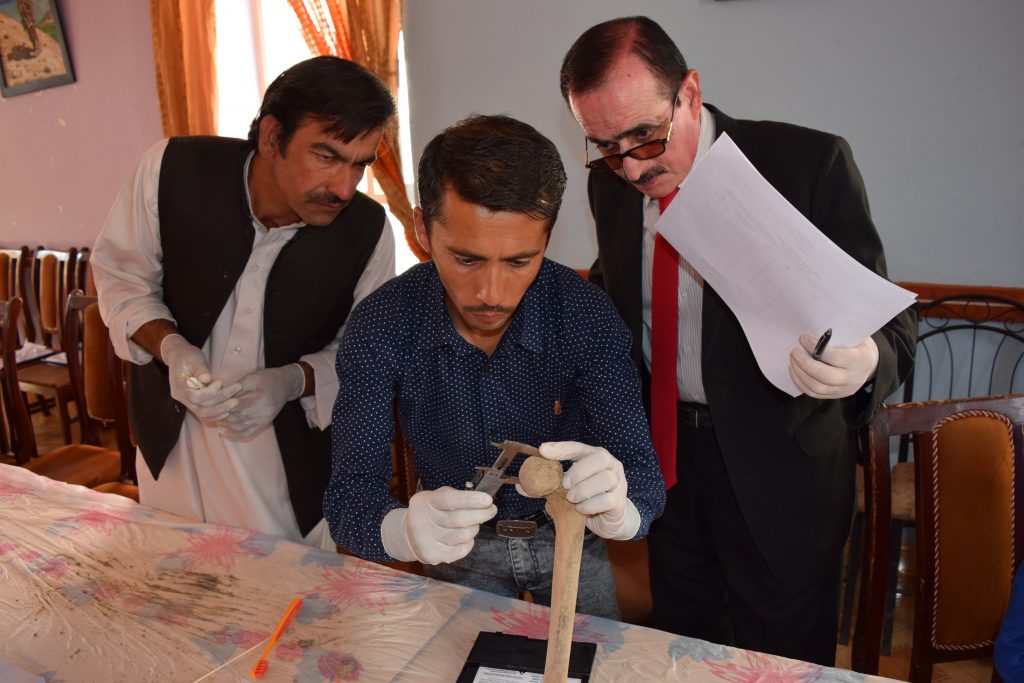
  • We believe that medical ethics are deeply bound to the protection of human rights. PHR uses our core disciplines – science, medicine, forensics, and public health – to inform our research and investigations and to strengthen the skills of frontline human rights defenders.
  • We work closely with hundreds of partners around the world, using facts to wage effective advocacy and campaigning and providing critical scientific evidence so that survivors can seek justice.

How We Work

We Document

We use the power of science and forensic medicine to establish a fact-based record of human rights abuses.

We Empower

We enable front line human rights defenders to expose violations and hold perpetrators accountable.

We Advocate

We use our authoritative voice to protect human rights and end impunity for perpetrators.

Why PHR?

Physicians for Human Rights is a top rated, not-for-profit, tax-exempt 501(c)(3) organization. Your donations are 100% tax deductible, to the extent allowed by law.

PHR shared in the 1997 Nobel Peace Prize for our leading role in the International Campaign to Ban Landmines, and continues to fight for those affected by human rights violations, holding perpetrators accountable, and preventing future violations around the world.

Our Work

COVID-19

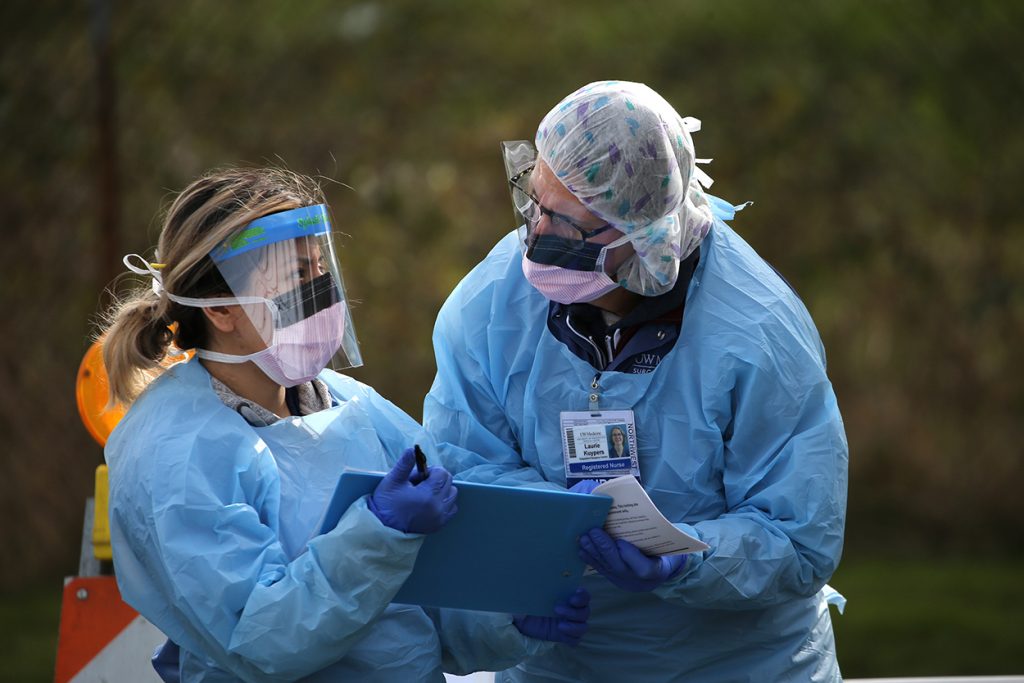
PHR advocates for a science- and rights-driven approach to the COVID-19 pandemic. We defend the right of all people to have access to health care and stand with medical professionals on the front lines of this crisis.

Weapons

PHR exposes the harms caused by prohibited weapons in war and crowd-control weapons used with excessive force in peacetime.

Asylum and Persecution

For more than 30 years, volunteer health professionals in PHR’s Asylum Network have provided such evaluations to survivors of torture and ill-treatment who seek refuge and an opportunity to recover in the United States from the trauma and injury they have endured.

Statements

PHR opposes the proposed changes as announced in DHS Docket No. ICEB-2018-0002

Read the full letter >>

Since the 1990s, a court ruling called the Flores settlement has protected immigrant children and infants in the United States from being detained indefinitely in jail-like conditions by limiting the duration of detention to 20 days and requiring that facilities be state-licensed for child care. The Department of Homeland Security (DHS) has proposed to replace the Flores settlement with a new federal rule which would allow the government to detain children indefinitely in unlicensed facilities.

Physicians for Human Rights (PHR) experts have conducted forensic evaluations of asylum seekers for more than 25 years, including recent evaluations of children and families in immigration detention. The medical and mental health evidence is clear that detention is harmful for children; international human rights law is clear that detention is never in a child’s best interest and violates minimum child protection standards. Alternatives to detention, including case management programming, are a rights-respecting alternative which prevent health harms and ensure compliance with immigration proceedings, and should be relied upon as the preferred policy option.

PHR opposes the proposed changes as announced in DHS Docket No. ICEB-2018-0002 and urges the Department of Homeland Security to ensure that every policy affecting children and families is guided by the best interests of the child, consistent with clinical best practice and humane treatment standards under U.S. and international law.

Read the full letter >>

Yemen: Attacks on Health October 2018 Newsletter

Read the full newsletter here

Summary June – Sept 2018

Since early June, a military offensive in al-Hudaydah has displaced 470,000 people, representing more than half of the city’s population. Failed September peace talks escalated tensions. In the days following the collapse of talks, government forces backed by the Saudi-Emirati-led coalition attemped to retake the city of al-Hudaydah, causing more than 701 deaths.

Attacks exacerbated the lack of sanitation, clean water, and food as health conditions further deteriorated. Suspected cholera cases increased for the 13th consecutive week: 154,527 cases have been reported so far in 2018. Seven million people were on the brink of starvation. As the Yemeni Rial depreciated and prices rose, an additional two million people may face starvation and 3.5 million others could face food shortages.

In August, the UN Group of Eminent Experts (GEE) on Yemen issued a report analyzing the main patterns of violations of international human rights law, international humanitarian law, and international criminal law committed by all parties to the conflict from September 2014 to June 2018. The GEE’s report noted that the Saudi-Emirati-led coalition air strikes have caused the most direct civilian casualties by hitting civilian areas, including medical facilities. In September, the UN Human Rights Council renewed the GEE’s mandate. 

This fact sheet draws upon data from the UN Office for the Coordination of Humanitarian Affairs, World Health Organization, UN Children’s Emergency Fund (UNICEF), media, and independent reporting.

What is an “attack” on health care?

PHR defines attacks on health care and personnel as an action by a state or non-state party to a conflict that disrupts the indiscriminate delivery of care to all wounded and sick, regardless of combatant status. This includes:

  • Attacks on hospitals, health clinics, ambulances, or other facilities via air/ground strikes;
  • Shelling or any military activity causing physical damage to facilities or service disruption;
  • Killing, kidnapping, or other bodily harm inflicted on health care professionals;
  • Pressure, intimidation, or punishment of personnel for treating all wounded and sick without discrimination.

Attacks on health infrastructure

Most health centers remained nonfunctional, adding stress to a struggling system. Airstrikes and artillery attacks increased insecurity for medical personnel, often in repeated patterns. Moreover, seven health facilities in three al-Hudaydah districts (al-Mina, Bayt al-Faqiah, at-Tuhayat) closed temporarily due to security concerns in July. Displaced staff also affected medical services in Jabal Ra’s District and at a nursery of al-Salkhana Hospital in al-Hali District. From June to September, PHR verified 11 attacks on medical facilities. 

  • June 11: A Saudi-Emirati-led coalition bombing destroyed a Doctors Without Borders clinic in Abs.
  • June 16: Yemen’s largest hospital, al-Thawra Hospital in al-Hudaydah, was damaged.
  • July 5: Mortar shells hit al-Hais Hospital in al-Hudaydah.
  • July 26: Mortar shells damaged Zobaid Hospital.
  • July 28: Mortar shells damaged the water network of al-Thawra Hospital in Taizz. 
  • Late July: An attack in al-Hudaydah put the Health Laboratory, the Central Pharmacy, the Tahrir Health Center, and the Emergency Delivery Center out of service.
  • August 21: An attack on al-Thawra Hospital in Taizz caused structural damage, multiple deaths, and injuries.
  • August 8: Armed militants terrorized patients and health workers in al-Jamhouri Hospital in Taizz.
  • August 16: Mortar shells again damaged al-Thawra Hospital in Taizz; three civilians were injured.
  • Late August: al-Amal Medical Center in ad-Dhale’e was affected by attacks.
  • September 29: Mortar shells damaged the Aziz Medical Clinic in at-Tuhayat sub-district in al-Hudaydah.

Health consequences

Cholera is widespread, affecting 22 out of 23 governorates and 305 out of 333 districts in Yemen. A recent increase in cases near Sanaa and al-Hudaydah indicated a possible third epidemic, and ongoing indiscriminate attacks that affect water supplies only increase this likelihood: in July, a main water station in al-Mina District was attacked. A day later, a UNICEF-supported sanitation center in Zabid District was also attacked.

  • From July to September, 43,700 suspected cholera cases were registered in Yemen. Rates rose for a 13th consecutive week in September: 9,425 cases and 15 deaths were reported in one week alone.
  • From April 2017 to August 2018, Yemen reported 1,170,389 cholera cases and 2,427 associated deaths.
  • In June, 1,850 diphtheria cases and 98 associated deaths were registered in 20 governorates. 
  • Recent damages to reproductive health facilities affected 90,000 women in al-Hudaydah. 
  • In August, Taizz governorate registered over 1,500 dengue cases and more than 15 casualties.

Access to humanitarian aid

Al-Hudaydah and al-Saleef ports remain open, yet ongoing conflicts continue to impact humanitarian aid. After the collapse of the peace agreements in early September, attacks closed the only open road that connects al-Hudaydah to the capital of Sanaa, as well as the rest of the country.

  • In August, more than 1.4 million people – an increase of 200,000 since February – resided in highly constrained areas where checkpoints and attacks on humitarian personnel are routine.
  • In June, the UN World Food Programme (WFP) reached 7.5 million people with emergency cash and food vouchers. However, the Famine Early Warning System Network warned that catastrophic symptoms resulting from lack of nutrition are imminent.
  • In September, a mortar shell in al-Hudaydah hit a WFP warehouse that stored supplies to assist 19,200 people. The WFP has warned that ongoing clashes could jeopardize 46,000 tons of wheat expected to arrive in al-Hudaydah by the end of the month.

Recommendations

  • All countries providing arms to any party to the conflict should ensure these are not used to attack civilian objects, including hospitals and other health infrastructure. 
  • The United States must implement reporting and certification provisions of Section 1290 for the recently enacted FY2019 National Defense Authorization Act, providing a forthright and complete assessment of whether Saudi Arabia and the United Arab Emirates meet conditions to receive continued U.S. military support.
  • UN member states must provide political support and adequate financial resources so that the UN Group of Eminent Experts can continue investigating all alleged violations of human rights and humanitarian law, as well as identify those responsible.

Read the full newsletter here

Read PHR’s Attacks on Health May 2018 Newsletter here 
Read PHR’s Attacks on Health February 2018 Newsletter here

Multimedia

Doctors Speak Up: Families Belong Together

Research shows that detention causes irreparable damage for children. Asylum-seeking children must not be treated like criminals. PHR doctors speak up: Children must be immediately reunited with their families.


Blog

PHR sent teams to the U.S.-Mexico border. Here are eight things you should know and two things you can do.

1. There are now more than 12,800 migrant children detained in the United States.

The number of migrant children reported in federal shelters increased fivefold in the last year and a half, reaching a total of 12,800 in September 2018.  The staggering increase is largely a result of sponsors, to whom unaccompanied children are released, being scared away.

“The U.S. administration is using children as bait,” explains PHR’s Asylum Network program officer, Kathryn Hampton. “Sponsors, many of them family members of the children who may be in the United States undocumented, come forward to claim the children and are then arrested on the spot. So it’s no wonder that fewer and fewer people are willing to step forward and sponsor these children, and that the numbers of people detained are growing. It’s essentially a system of mass detention where you’re transferring children to unlicensed facilities, indefinitely, and then detaining their sponsors,” Hampton adds.

2. Some 1,600 migrant children were transferred to a desert tent city at the beginning of October.

In a clandestine, nighttime operation, some 1,600 migrant children were transferred from detention centers around the United States to a tent city in the desert in Tornillo, Texas, at the start of October. The center, which looks like a prison from the outside, lacks adequate standards and oversight mechanisms. This means there are no official systems in place to ensure that the children’s best interests are being looked after.

“It is simply unacceptable that children be held in these inhumane conditions, in unregulated camps which have no mechanisms for accountability,” said Dr. Ranit Mishori, PHR Asylum Network member and medical consultant.

“As health professionals, we wonder what goes on behind these bars, jail walls, behind the fences, and in the tents in the desert. We worry about the basic needs of these children – whether and how they are being met,” Mishori adds.

3. Clinical evidence shows that detention of any kind has negative health effects on children.

PHR’s Asylum Network is made up of more than 1,200 health professionals who do pro bono work throughout the United States – many with migrant children along the U.S.-Mexico border. Our work shows us time and time again that detention causes intense psychological distress in children, often resulting in developmental delays and other life-long symptoms.

Hajar Habbach, PHR’s Asylum Network program associate, visited a detention center in Texas with Dr. Mishori as part of a trip by human rights organizations and faith groups to deliver aid to detained children. “What really struck me was the contradictory setting in which we found ourselves,” she said. “This detention facility, the Ursula facility in McAllen, was across the street from a community baseball field. So, while we were delivering aid to detained migrant children who don’t have adequate access to water, food, clothing, or a proper education, the local children were playing little league baseball across the street,” Habbach added.

Said Dr. Mishori: “In addition to feelings of isolation, detention can cause or exacerbate trauma and contribute to ‘adverse childhood experiences’ or ACEs. Such experiences can disrupt actual brain development, alter the very architecture of the brain, which in turn can result in social, emotional, and cognitive impairment – which can last decades. Extreme and repetitive stress has a name – it is called toxic stress – and it is linked to an increased risk of developing chronic mental health conditions: depression and post-traumatic stress disorder and even physical conditions such as cancer, stroke, diabetes, and heart disease.

4. The U.S. administration is attempting to dismantle protections so that children can be detained indefinitely.

The Trump administration wants to revoke the Flores settlement that prevents the detention of minors for more than 20 days. Revoking this would essentially mean that children can be detained indefinitely.

“Not only do they want to extend detentions indefinitely, they are also attempting to legalize tent cities by eliminating the requirement for state licensing for detention facilities,” explains Hampton. “This would mean that children could be held practically anywhere – even in places where there are no proper mechanisms for accountability or for ensuring that conditions are suitable for these children. And they could be held there without any time limit being placed on their detention.”

Dr. Mishori adds: “The Flores settlement states that the children in custody should be ‘treated with dignity, respect and special concern for their particular vulnerability as minors’, but I cannot see how dignity and respect can be honored when one is confined to a long-term detention facility. The decision to allow indefinite detention goes against the Flores settlement, whose sole purpose is to protect children from harm.”

5. The journey across the U.S.-Mexico border is a treacherous one, and most migrants don’t embark on the journey because they want to – they do it because they have to.

 “Many of those who decide to make the journey are fleeing abuse back home, including gang violence and domestic violence. They don’t want to leave their homes, they have to, in order to save themselves from violence and potential death,” explains Hampton.

Then, along the treacherous journey, they face similar threats. There are snakes and scorpions to contend with, and the water which collects in ravines is contaminated by the feces of livestock who roam the area. Those who drink the water are likely to experience vomiting and diarrhea, which dangerously dehydrates them further.

“Exposure to the elements is the major cause of fatalities, according to forensic reports of local medical examiners – but harsh border patrol apprehension practices, such as high speed nighttime chases with dogs and helicopters, also increase the risk of injury and death. Smugglers also may abandon their charges or deceive them about the difficulties of crossing, leaving them vulnerable and unprepared for the dangers they face,” Hampton added.

PHR Executive Director Donna McKay, who traveled to Texas in August, added: “Despite these threats, people are still deciding to make the brutal journey and the overall number of asylum seekers has not declined. More families are arriving with children than in previous years. The people I spoke with in Texas explained it this way: ‘If your house is burning, you flee. No matter what.’”

6. Hundreds of people die each year trying to cross the border.

In 2013, U.S. Customs and Border Protection counted more than 2,300 people, in just that year, who had to be rescued along the border. Each year before that, and every year since, hundreds of migrants have died while trying to make the treacherous journey in wildly variable temperatures which can exceed 115 degrees Fahrenheit in summer months.

“There are hundreds of fatalities every year,” says Hampton. “And some doctors, nurses, and EMTs are being arrested and prosecuted as ‘smugglers,’ just for providing urgent medical care and water to the migrants. Whenever migrants decide to embark on the journey, they know that they might not make it to the other side alive.”

7. There are still about 400 children who are separated from their parents.

It’s been more than three months since U.S. President Trump signed an Executive Order ending family separations, but today, some 400 children remain separated from their parents. In most of these cases, the parents were deported.

“What we learned was that many deportations take place under duress or through manipulation. In addition, more than 900 parents have been deemed ‘ineligible’ for reunification and stripped of their parental rights, despite the fact that the government has failed to demonstrate in any way that they were unfit, nor that they had committed any crime apart from irregular border crossing,” McKay explains. “These deportations result in hundreds of immigrant children, who have loving and caring parents, being forcibly orphaned in the United States. What’s even more alarming is that, as a result of the U.S. government’s failure to properly document separated families, many of these children are essentially lost in the system, which means they may never be reunited with their parents, ever,” she adds.

An internal report by the U.S. Department of Homeland Security stated that Border Patrol took no measures to ensure that pre-verbal children could be correctly identified after separation.

8. Most detainees are afraid to speak out about the conditions in detention.

“When we walked through the West Texas Detention Facility, the conditions which we observed looked very un-therapeutic. It was clear that many migrants were being treated as criminals. Their crime: seeking asylum,” Hampton says.

“We met a woman who didn’t speak a word of English. She was actually from India, but had entered the United States via Mexico. She spoke only Gujarati when she arrived, but after a full year of detention, she had learned some basic Spanish from her fellow detainees. It was unclear which, if any, accommodations had been made to ensure that she would be able to access information about medical and mental health care in the facility, or to report complaints,” Hampton adds.

“We also met a counselor who didn’t speak a word of Spanish. Imagine trying to counsel someone for their trauma, including sexual violence, and not being able to communicate with them in their own language. What’s worse is that the counselor told us that correctional officers are the only translators available for the counseling sessions and are present when these sensitive doctor-patient issues, including sexual abuse, are being discussed.

“We saw a man who was locked up in a cell, under solitary confinement, for having mental health issues. I can’t imagine a less therapeutic environment, completely isolated in a small concrete room, with a trap door for food trays. We heard these stories time and time again, but people there told us that they are too afraid to speak up or to tell us more details. They kept looking fearfully at the door where the guard was standing outside. They’re afraid of being treated even worse as a result of complaining, or of having their asylum claims rejected if they speak out about anything. It’s a heartbreaking situation,” Hampton says.

Here are two things you can do, today:

1. Tell U.S. Secretary of Homeland Security Kirstjen Nielsen to stop the expansion of family detention at the U.S. border.
Click HERE to send a message and join our unified call to respect children’s constitutional right to protection and abide by the universal human rights principle of the best interests of the child

2.Tell Congress to investigation the harmful effects of family detention.
As health professionals, we know the severe trauma experienced by children in detention and we know the long-term physical and psychological effects. Click HERE to join us today in demanding that Congress immediately hold oversight hearings on the harmful and life-threatening detention facilities at the U.S. southern border. With thousands of children at risk, there is no time to lose.


Get Updates from PHR