Blog

In Syria, Drying Out the Sea to Kill the Fish

On March 28, 2015, Jabhat al-Nusra and allied opposition groups wrested Idlib city from government control in Syria. The following day, the Syrian air force attacked the city’s Red Crescent-run hospital with rockets, causing significant damage and forcing the hospital to close. Two days later, on March 31, the air force bombed and severely damaged the city’s national hospital – the last functioning hospital in the city. Activists reported that opposition groups intercepted radio correspondence in which government military officials ordered air force pilots to destroy the hospital.

The attacks on hospitals in Idlib city are just two examples out of dozens in which Bashar al-Assad’s forces have targeted health care facilities and personnel in opposition-controlled areas in order to counter military advances made by opposition groups. In the past few months, opposition groups have been making considerable gains across the country to the detriment of the Syrian government. The opposition’s April takeover of the Nasib border crossing between Syria and Jordan and nearby military posts in Daraa, the seizures of Idlib city and Jisr al-Shaghour in Idlib governorate between March and May, and recent reports of dissatisfaction among Assad’s core Alawite constituency have all been serious blows to the Syrian government.

Faced with these setbacks, Assad has carpet bombed civilian populations and targeted medical facilities in opposition-controlled areas. Physicians for Human Rights (PHR), which is documenting attacks on medical personnel and facilities in Syria through an interactive map, has recorded an uptick in such attacks when Assad loses ground to the opposition. Syrian government forces launched eight and 14 attacks on medical facilities in March and April, respectively. These numbers represent the greatest number of attacks documented since August and September 2012, when Assad’s government developed and executed what would become one of its signature tactics – attacking medical facilities in opposition-controlled areas in retaliation for military losses.

In response to assaults by opposition groups on Aleppo city, Damascus city and suburbs, and towns across Idlib governorate in August and September 2012, the Syrian government bombed opposition-controlled areas with increasingly heavy weaponry. During approximately the same time frame, from mid-July through the end of September 2012, government forces launched 36 attacks on medical facilities – the greatest number documented in any 10-week period during the war. The vast majority of these attacks (78%) occurred in Aleppo, Idlib, Damascus, and Rif Dimashq governorates, where the Syrian government was facing the most military setbacks.

In recent months, analysts have been predicting Assad’s downfall. They say he’s on his back foot and that his days are numbered, but I’m doubtful. We heard the same predictions in article after article in the summer of 2012 – yet, he remains in power using the same horrific tactics he developed years ago. President Assad, who is a doctor himself, is well-aware that killing a doctor leaves dozens of others without care, fighters and civilians alike. Bombing a hospital causes even greater devastation. It kills doctors and patients, destroys medical infrastructure, and instills fear in communities, which often prevents them from seeking medical care. Activists believe that Assad bombs hospitals not only to prevent fighters from receiving treatment, but also to punish civilians in opposition-controlled areas and ensure that life cannot exist outside of his regime’s control. Syrians have a term for this: drying out the sea to kill the fish.

While there is growing dissatisfaction among Assad’s core constituency, and the self-declared Islamic State now controls half the country, little else has changed in the past three years. The Russian government ensures that Assad has warplanes, helicopters, missiles, and barrel bombs. Iran makes sure that he has additional troops. With their assistance, Assad continues to devastate cities and towns and provoke opposition fighters to join the Islamic State. The United States, lacking the political will to get too involved in another war in the Middle East, is focusing on atrocities committed by the Islamic State, rather than Assad’s government. Until the international community wakes up and collectively forces a diplomatic solution, analysts will continue to muse over Assad’s potential downfall while thousands more civilian lives are lost, families displaced, and hospitals destroyed.

Blog

Tech & Human Rights Blog Series: Bringing Low-Resourced Areas Out of Darkness

This blog post is part of PHR’s Tech & Human Rights Blog Series. The series is meant to highlight the intersection between technology and human rights, and examine the increasing role that technology can play in advancing human rights around the world.

The lights flickered once, twice, and then cut out completely. Members of our party who have spent several years – some their entire lives – in the Democratic Republic of the Congo (DRC) were unfazed and continued to speak without interruption. They waited patiently for the lights to return so they could continue eating. We were having dinner in Bukavu in January 2015, and it was my first visit to the DRC as part of a team gathering feedback on a new version of MediCapt –the mobile application under development by Physicians for Human Rights (PHR), meant to help clinicians more effectively collect, document, and preserve forensic medical evidence of sexual violence to support local prosecutions of such crimes.

Power cuts are a daily reality of working in low-resourced, conflict-affected countries like the DRC, and are only one of many such hurdles. While daunting, these challenges are not insurmountable. Various technologies are helping human rights activists and organizations overcome the logistical and political difficulties one faces when working in remote, conflict-affected areas.

At first, resource-related obstacles appear overwhelming. In the DRC, inevitable power outages are matched by similarly unpredictable Wi-Fi coverage. Outside of urban areas, electricity access is often completely unavailable. Even where electricity and Wi-Fi are stable, challenges of another, more political, nature can emerge. While I was in the DRC in January, all internet access originating in the country had been shut down by the government in the midst of protests around upcoming elections. In fact, internet shutdowns have become a ubiquitous tool for governmental control, used by Bashar al-Assad’s regime in Syria and by Hosni Mubarak in Egypt during the Arab Spring. Thus, any technology that relies on internet connection must take both the possible political and infrastructural barriers into consideration.

Despite such challenges, organizations are finding ways to harness advances in technology to circumvent limitations. For example, developments in solar technology can be instrumental in overcoming low electricity levels. Companies like Greenlight Planet offer ever-better ways to generate and store solar energy, while specifically targeting the needs of low-resourced areas. New devices, such as a compact portable ultrasound created by GE Healthcare, are specifically designed for use with batteries that can be solar-powered and ones that have extended battery life. So when an organization like PHR needs stable electricity to conduct human rights trainings in remote parts of Africa, solar power can help ensure success.

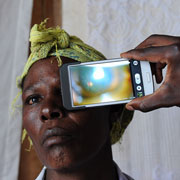
Similarly, organizations like Endaga are developing entrepreneurial ways to improve internet connectivity through the creation of small-scale wireless networks. Strong internet connections can help ensure that doctors who use MediCapt are able to securely document signs of sexual violence in their patients. Other technologies avoid the need for internet connection by using SMS-based systems, such as a program piloted in Kenya to monitor the status of patients diagnosed with HIV/AIDS. This model is useful in places where phone coverage is more prevalent than internet access.

People around the world have also risen to the challenge of overcoming governmental restrictions on technology use. In Hong Kong, for example, protesters used mesh networking to exchange messages even after cell phone service had been cut off. In countries exercising internet censorship, such as China and Iran, virtual private networks (VPNs) have long been a circumvention tool. And while governments are adapting their own practices to address circumvention techniques, the tools keep improving. The recently-released FireTweet app utilizes a peer-to-peer network rather than the traditional VPN structure, making it more difficult for governments to identify and block access.

These creative technologies and developments represent the broad range of solutions being used to address the inherent challenges that human rights organizations face by working in remote and politically volatile environments. Each provides a unique response to the hurdles present in various settings. These advances are essential to the success of tools like PHR’s MediCapt and are the key to allowing technology to significantly advance human rights around the globe.

Blog

Tech & Human Rights Blog Series: Justin and His Search for Justice

En français

This blog post is part of PHR’s Tech & Human Rights Blog Series. The series is meant to highlight the intersection between technology and human rights, and examine the increasing role that technology can play in advancing human rights around the world.

*Names have been changed for security purposes.

Justin is the police officer in charge of sexual violence cases in Bunyakiri, a village surrounded by mountainous forests in Kahuzi-Biega National Park, in the conflict zones of the eastern Democratic Republic of the Congo (DRC). He holds his head in his hands and wonders how he will be able to uphold the law and secure justice for Ange, a 14-year-old girl.

Ange had been raped by her teacher several months earlier in retaliation for her parents’ delay in paying her school fees. While the government declared schools in the DRC free of charge in 2011, it has failed to allocate a budget, leaving teachers without regular pay and supplies to teach.

Ange didn’t say anything to anyone. But after several weeks, her stomach grew. She began to feel nauseous and dizzy, and she felt pain in her abdomen. She finally decided to tell her parents, who took her to a health center and then to the police station to see Justin. But it was late in the afternoon, and the police station closes at sundown in Bunyakiri, where there is no electricity. Ange would have to return the next day.

When Ange finally meets Justin, he listens closely as he writes a part of her statement on a piece of paper. While the police station usually lacks paper and other basic supplies, Justin had fortunately kept some paper and pens from a forensic training with Physicians for Human Rights (PHR). With criminal proceedings hinging on the information he captures, Justin has to select the most important elements of Ange’s disclosures so that the essential narrative can fit on the few precious pieces of paper he has in his possession. Justin also confided in me that at night certain police officers who don’t know how to read will take pieces of paper from police reports found in station offices without doors or closets to use as toilet paper or to light makala, the local type of firewood. And with that, the police archives disappear, even though it is vital to preserve this documentation.

When brought in and questioned by the police, the teacher confessed. He had raped Ange, as well as other young girls who had remained silent so that they could continue to study. Justin sent a message to the prosecutor of the small town of Kalehe, 100 kilometers away from Bunyakiri. The prosecutor asked him to send the police reports as quickly as possible so that the teacher could be arrested. He also asked that all of the known victims receive medical exams so that he could integrate the standard medical certificates into the proceedings.

Justin asked the prosecutor how he would pay for the $40 taxi and armed guard needed to escort the teacher to Kalehe. He asked his district’s police chief how he would pay for the paper needed to record interviews with the other young victims who had been identified – or for the paper that the health center would need for the medical certificates.

Ultimately, Justin asked himself how he would possibly be able to bring the completed case to Kalehe in the requisite 10-day period before the prosecutor would be required by law to request that the rapist be freed and the public action be halted.

Justin and I talked often about these challenges. He called me in relation to Ange’s case, asking, “Mr. Georges, how do you do this in your country?” I answered him nervously, preferring to discuss the challenges of modern policing rather than the sophisticated and technologically-savvy working conditions that my European colleagues enjoy. Justin also asked me about the legal admissibility of digital evidence and its use in court. While there is no electricity in Bunyakiri, the internet does work with the aid of generators and solar batteries. It works quite well, in fact. If Justin could send the victims’ statements, pleadings, and medical certificates, as well as the police reports and photographs, directly to the prosecutor through a web-based system within the requisite 10-day period, he would not have to release the criminal. He would then have three months to transfer the accused to Kalehe. Justin explained to me that a web-based platform would be a simple, but essential, tool in the fight against sexual violence in the DRC.

We at PHR hope that our new mobile phone application, MediCapt, will be this tool for Justin and for police officers all over the DRC who are doing their best to secure justice for victims of sexual violence. MediCapt digitizes the collection and documentation of sexual violence evidence and preserves it for court prosecutions. The app can be used to compile medical evidence, photograph survivors’ injuries, and securely transmit the data to authorities engaged in prosecuting and seeking accountability for such crimes. An upgraded version of MediCapt was piloted in the DRC in early 2015, and we hope to officially launch it later this year.

Though I agree with Justin that a system such as MediCapt would be a vast improvement over the current paper-based system mainly because evidence can be transmitted quickly from one sector to the next, having worked in the DRC for the last five years, I know that there are many other challenges that will need to addressed before sexual violence survivors receive even a modicum of justice.  For example, even if Justin is able to meet all of the legal requirements to keep an alleged perpetrator behind bars, the prison system itself is grossly under-resourced. Some prisons in eastern DRC lack the resources for proper security and care for inmates – there are even some reported cases where the sexual violence survivor’s family has to bring food to the prison for the perpetrator in order for the perpetrator to be kept behind bars. Thus, MediCapt, while a huge improvement, will not be a panacea for all of the issues plaguing the Congolese justice system.

I think often of Justin, and of all the police officers in similar situations, who strive to help their communities, but struggle to do so for lack of paper and pens or because legal deadlines are counted in days in a country that has forever been subjected to the rhythm of the rainy seasons. Despite their best efforts, they are forced all too often to release perpetrators from custody and watch as their communities fracture. They are losing confidence in their institutions, even though a little electricity and a digital network could be enough to prosecute those who carry out such heinous acts of sexual violence, achieve justice for survivors, and reassure these dedicated officers that their work is not all for naught.

Georges Kuzma, a French national, spent the last two years as a Police and Justice Expert Consultant with Physicians for Human Rights’ Program on Sexual Violence in Conflict Zones in Bukavu, DRC, where he has been working for the past five years.

Blog

Tech & Human Rights Blog Series

Tech & Human Rights

PHR’s Tech & Human Rights Blog Series is meant to highlight the intersection between technology and human rights, and to examine the increasing role that technology can play in advancing human rights around the world.

Bringing Low-Resourced Areas Out of Darkness
Justin and His Search for Justice
From the Exam Room to the Courtroom and the Bumpy Road in Between
After Ushahidi – Using New Technologies to Prevent Mass Atrocities
The Power of Digital Documentation and Social Media
Leapfrogging into the Digital Age


Bringing Low-Resourced Areas Out of Darkness
By Grace Gohlke
June 9, 2015

The lights flickered once, twice, and then cut out completely. Members of our party who have spent several years – some their entire lives – in the Democratic Republic of the Congo (DRC) were unfazed and continued to speak without interruption. They waited patiently for the lights to return so they could continue eating… Continue Reading

Back to top

  Mobile App Being Used in Kenya


Police Officers at Minova Training  

Justin and His Search for Justice
By Georges Kuzma
June 3, 2015

Justin is the police officer in charge of sexual violence cases in Bunyakiri, a village surrounded by mountainous forests in Kahuzi-Biega National Park, in the conflict zones of the eastern Democratic Republic of the Congo (DRC)… Continue Reading

Back to top


From the Exam Room to the Courtroom and the Bumpy Road in Between
By Ranit Mishori, MD, MHS
May 26, 2015

The idea was intriguing – perhaps even a no-brainer: create a mobile application that would allow clinicians to document physical findings during medical examinations of sexual violence victims. Then, with the patient’s consent and the click of a button, have them transmit the report to the police… Continue Reading

Back to top

  MediCapt Training


Kenyans Record on Mobile Phones  

After Ushahidi – Using New Technologies to Prevent Mass Atrocities
By Karen Naimer, JD, LLM, MA
May 19, 2015

On December 30, 2007, when Mwai Kibaki announced his reelection as president of Kenya, the country erupted in fierce demonstrations that devolved into three months of brutal, widespread, inter-ethnic clashes. Kenya’s post-election violence was particularly remarkable given that it was witnessed and documented to an unprecedented degree by the country’s residents… Continue Reading

Back to top


The Power of Digital Documentation and Social Media
By Elise Baker
May 12, 2015

One of the questions I am asked most often about my work on the Syria mapping project at Physicians for Human Rights (PHR) is how we are able to conduct our research and documentation without being on the ground in country. How can we get detailed and unbiased information and corroborate 242 attacks on medical facilities and 615 deaths of medical personnel… Continue Reading

Back to top

  Documenting with a Mobile Phone in Syria


MediCapt Training in the DRC  

Leapfrogging into the Digital Age
By Sucharita S.K. Varanasi, JD
May 5, 2015

A few months ago, I was fortunate enough to travel to the Democratic Republic of the Congo (DRC) to pilot a new tool in the fight against sexual violence in conflict. In my capacity as the MediCapt project manager, I field tested the mobile application MediCapt v2.0 – a new and improved version of MediCapt – with our clinicians in the DRC… Continue Reading

Back to top

Blog

Tech & Human Rights Blog Series: From the Exam Room to the Courtroom and the Bumpy Road in Between

This blog post is part of PHR’s Tech & Human Rights Blog Series. The series is meant to highlight the intersection between technology and human rights, and examine the increasing role that technology can play in advancing human rights around the world.

The idea was intriguing – perhaps even a no-brainer: create a mobile application that would allow clinicians to document physical findings during medical examinations of sexual violence victims. Then, with the patient’s consent and the click of a button, have them transmit the report to the police. Justice served. End of story.

Not so for doctors in the Democratic Republic of the Congo (DRC) – one of the world’s poorest countries – known, much to the dismay of everyone I met there, as the “rape capital of the world.”

Physicians in the United States love gadgets and new technology. Some doctors use smartphones as bona fide diagnostic tools: to listen to somebody’s heart, identify a suspicious mole, or review an X-ray or blood sample. Many of us have integrated smartphone apps into our medical care, using them for research, to calculate doses of medications, for hearing tests, to ensure timely immunizations, to assess health risks, and more.

However, mobile technology is not the same in the DRC. With more than 63 percent of Congolese living below the poverty line, Physicians for Human Rights (PHR) considered the viability of mobile technology as a resource for health care workers. Would internet access be unhindered and Wi-Fi connections reliable? Are doctors and their patients comfortable enough with digital technologies that they would agree to transmit sensitive data about brutal rapes and sexual assaults wirelessly?

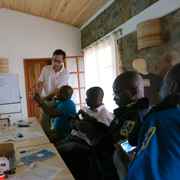
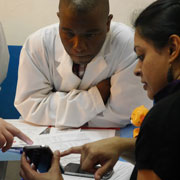
We needed more information before we could delve into the extensive process of publicly launching an app. Thus, in January 2014, PHR introduced the idea of MediCapt to a group of seven doctors in Bukavu, a provincial capital near the Rwandan border plagued by persistent conflict and mass rape. Most were cell phone users, but lacked smart phones and were not experienced with apps.

Yet, the doctors were enthusiastic about an app that would help them document sexual violence and that might take their patients beyond physical and emotional healing. They immediately recognized the potential of collecting important evidence and data, transmitting them directly to the authorities, and tracking the epidemiology of sexual violence.

PHR’s first version of MediCapt was a bit clunky. The conversion of a paper form for the collection of medical information – which these physicians had helped develop the year before – to an electronic format didn’t go quite so smoothly. Rather than streamlining the recording of medical data, the initial app inadvertently created more work for busy doctors in a conflict-affected, low-resource area. As a clinician, I could relate: who wants to create more work for over-stretched doctors?

Power outages were frequent during our sessions with the doctors, and getting acquainted with the smartphones required time. But they were persistent. During a particularly useful session on what their “dream MediCapt app” would look like, we heard about pictograms, electronic signatures, voice recognition, forensic photography, and more.

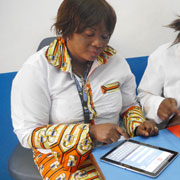
We listened, we tinkered, and one year later, we brought back a leaner MediCapt 2.0. Responding to their needs, we added a pictogram and the ability to take forensic photos. As promised, we made the interface smoother and substantially reduced the number of questions physicians would have to answer. The doctors who had been introduced to the old version were beyond thrilled.

While the progression of MediCapt is both inspiring and exciting, there are still hurdles to address.

For example, office workflow – how tasks and patient-care routines are organized and carried out – can be a major factor in the level of success that doctors have in adopting new technology. A discussion about workflow in physicians’ home institutions in the DRC revealed the true enormity of making all of this work. The broader, infrastructural barriers – including power outages, unreliable Wi-Fi, and uncertain leadership – first have to be addressed. We must also consider how to handle peer jealousy on select physicians getting to use this technology; how to address questions about data security; and whether or not police officers and the judicial system will be as enthusiastic about the app.

As we prepare to publicly launch MediCapt later this year, we are working to address all of these issues.

Importantly, MediCapt will have offline usability, whereby data can be stored and sent at a later time, reducing dependence on Wi-Fi. Internet connections will be required only to upload records. Other innovations, such as solar chargers for mobile phones, may provide options to avert power failures. To address hospital infrastructure and institutional hurdles, including peer jealousy, we are partnering with various hospital administrations to find ways of integrating MediCapt into their own work-flows.

Lastly, we are hoping to integrate MediCapt into workflows in phases, so that at the very least, a doctor can input information into MediCapt and print out the data once they have access to a printer (which is not always easy in the DRC). This would not only reduce the need for manual duplication of patient information, but would also allow for proper preservation of medical evidence when paper copies are compromised.

At its most integrated level – our optimal scenario – MediCapt would become part of the DRC’s national health systems, allowing evidence to be transmitted directly from doctors to the police and eventually introduced in court as evidence. We have a long way to go, but doctors who begin using MediCapt now hold the key to making this a reality.

My Congolese colleagues in their eagerness to try new technologies are not that different from me and my colleagues in the United States. We all want to provide the best care, in the most efficient way, while serving as advocates for our patients.

Integrating this promising app into the daily practice of physicians in a conflict zone will require strong leadership and planning. Fortunately, we have committed partners on the ground who are working with us to make MediCapt and justice for survivors a reality.

Blog

Rohingya Refugee Crisis Results from Decades of Abuse by Burmese Government

I recently met with a Rohingya man in Burma, who was eager to board a boat and flee from Rakhine state. He had a young son, however, his first-born, and was worried that his child might not survive the trip to Malaysia in an open boat. Despite the possible dangers, he was debating risking his child’s safety and making the trek, as he had experienced first-hand the lack of rights and access to opportunities afforded to Rohingya in Rakhine state.

As of last week, an estimated 8,000 Rohingya refugees from Burma (officially the Union of Myanmar) and Bangladesh were adrift on ships in the Indian Ocean, according to the International Organization for Migration. These men, women, and children stranded at sea have risked their lives on overcrowded boats because the Burmese government has made the alternative – trying to survive state-sponsored persecution in Burma – increasingly impossible. While after some delay, several states have come forward to provide the migrants with assistance, any long-term progress will require that Burma fully address the root problem of persecution of the Rohingya.

Over a million Rohingya live in Rakhine state in western Burma. They have faced persecution from the Burmese government since the end of World War II, driven by nationalism, xenophobia, and the state’s divide-and-rule policies, which pit the Rohingya against the Buddhist majority. The government conducted major military campaigns against Rohingya in the late 1970s and mid-1990s, forcing hundreds of thousands to seek refuge in camps in Bangladesh. In 1982, the military dictator Ne Win passed a law that stripped Rohingya of citizenship and the protections that come with it – effectively making them stateless.

Rohingya have also been subjected to forced labor, forced relocations, restrictions on movement, restrictions on marriage and children, sexual violence, extortion, and arbitrary detention by the Burmese government. Taken together, these acts amount to crimes against humanity and have created the potential for genocide. In 2012, Burma’s president asked the UN High Commissioner for Refugees to resettle all Rohingya to third countries or move them to refugee camps; UNHCR rejected this request. The Burmese government refuses to even use the use the word "Rohingya," preferring instead to call the group “Bengali” in order to support their patently false claims that Rohingya are recent arrivals from Bangladesh.

Physicians for Human Rights (PHR) conducted investigations in Bangladesh and in Rakhine state in 2010 and 2013, respectively, and found that sexual violence, land confiscations, and other crimes against humanity had driven hundreds of thousands of Rohingya to Bangladesh – where the Bangladeshi government then obstructed the work of humanitarian organizations and limited access to food aid. Moreover, in the 2013 report, PHR documented that Burmese government forces were responsible for providing cover for Buddhist mobs that were attacking the Rohingya and burning their homes. PHR also found that shelter, water and sanitation, and medicine were woefully inadequate in camps for the internally-displaced in Rakhine state.

Taken together, these abuses have resulted in physical insecurity for the Rohingya and a lack of access to education, health care, housing, land, and work. It is these life-threatening conditions that are leading increasing numbers of Rohingya to flee the country by sea.

Rohingya in Bangladesh, Burma, Malaysia, Thailand, the United Kingdom, and the United States have told PHR that they are aware of the risks of kidnapping, trafficking, slavery, torture, and even death that come with boarding a migrant boat headed to another country. Some families in Burma, still in phone contact with relatives who have fled, have heard the horror stories, first-hand, that are now being reported by the international media. But because the oppression in Burma is worsening, many Rohingya feel that remaining in country is a far worse alternative.

Earlier this week, the Burmese government – with characteristic hypocrisy – denied responsibility for creating the current situation and threatened to boycott a meeting of regional governments to address the crisis if the word “Rohingya” is used. Burma’s government has been seeking international legitimacy since 2010, when a quasi-civilian government was installed. In order to gain such legitimacy, it must end the state-sponsored persecution of Rohingya in Rakhine state and start a meaningful regional dialogue on how to resolve short- and long-term problems.

Other

International NGOs Urge Ban Ki-moon to Negotiate Aid Access to Rakhine State, Myanmar (Burma)

Twenty-six international humanitarian aid and advocacy organisations have written today to the United Nations Secretary-General, urging him to give his “personal attention” to the humanitarian crisis in Rakhine State, Myanmar (Burma) and to take “a personal lead” in negotiating for humanitarian access to all areas of Rakhine State.

In an open letter, the NGOs quote the UN Assistant General-Secretary for Humanitarian Affairs, Kyung-hwa Kang, who said after visiting camps for internally displaced people in Rakhine State in June 2014 that: “I witnessed a level of human suffering in the IDP camps that I have personally never seen before … appalling conditions …. wholly inadequate access to basic services including health, education, water and sanitation.”

Those words echo the words of the Under Secretary-General for Humanitarian Affairs, Baroness Amos, who said after visiting the camps in December 2012: “I have seen many camps during my time but the conditions in these camps rank among the worst. Unfortunately we as the United Nations are not able to get in and do the range of work we would like to do with those people, so the conditions are terrible … It’s a dire situation and we have to do something about it.”

At least 70 per cent of Rohingya currently have no access to safe water or sanitation services. In Maungdaw Township, there is just one doctor per 160,000 people. The World Health Organisation recommends one doctor per 5,000 people. Only two per cent of Rohingya women give birth in a hospital.

In the letter, the NGOs say: “While the crisis is most acute in the camps, it is important to note that around 800,000 Rohingya living outside the camps are also in urgent need of assistance. In some areas the rates of malnutrition are over 20 per cent and the provision of health services is almost non-existent.”

They also argue that “it is essential also that humanitarian aid is not only provided to the Rohingya, but also to all those in need of assistance. Rakhine State is the second poorest state in Myanmar, where 44 per cent of the population lives below the poverty line – almost twenty per cent more than the average in most parts of Myanmar.”

The NGOs conclude their appeal by recalling Ban Ki-moon’s efforts in the aftermath of the humanitarian disaster following Cyclone Nargis. They write: “Mr Secretary-General, in 2008 following the appalling humanitarian crisis after Cyclone Nargis, the regime in Myanmar initially refused access to international aid organisations. You personally took charge of the effort by the international community to negotiate access, and you succeeded. As a result, hundreds of thousands of lives were saved. We believe the crisis in Rakhine State demands a similar response, and we therefore urge you to take a personal lead in negotiating with the Government of Myanmar for humanitarian access to all areas of Rakhine State, for humanitarian aid to be provided to all in need, regardless of race or religion. Hundreds of thousands of people who have little food, medicine or shelter and have been stripped not only of their citizenship but also their basic dignity are looking to you and to the United Nations for help. We appeal to you not to fail them.”

The letter to the UN Secretary-General is available here.

This statement is signed by the following organisations:
Actions Birmanie (Belgium)
ALTSEAN- Burma
Asia Pacific Refugee Rights Network
Association Suisse-Birmanie
Building Social Democracy in Burma (A project under ASD Sweden)
Burma Action Ireland
Burma Campaign UK
Burmese Rohingya Organisation UK
Christian Solidarity Worldwide
Equal Rights Trust
FIDH / International Federation for Human Rights
Humanitarian Aid Relief Trust (HART)
Human Rights Watch
Info Birmanie (France)
Institute for Asian Democracy
International State Crime Initiative, Queen Mary University of London
Norwegian Burma Committee
Physicians for Human Rights
Refugees International
Restless Beings
Rohingya Community Ireland
Society for Threatened Peoples (Germany)
Swedish Burma Committee
Social Democratic Students Burma Project (SDS)
United to End Genocide
US Campaign for Burma

Blog

Tech & Human Rights Blog Series: After Ushahidi – Using New Technologies to Prevent Mass Atrocities

This blog post is part of PHR’s Tech & Human Rights Blog Series. The series is meant to highlight the intersection between technology and human rights, and examine the increasing role that technology can play in advancing human rights around the world.

On December 30, 2007, when Mwai Kibaki announced his reelection as president of Kenya, the country erupted in fierce demonstrations that devolved into three months of brutal, widespread, inter-ethnic clashes. Kenya’s post-election violence was particularly remarkable given that it was witnessed and documented to an unprecedented degree by the country’s residents. This was thanks to the advent of Ushahidi (Swahili for “testimony” or “witness”), a crowdsourced website created in response to the post-election violence, through which people were able to submit eyewitness reports of the turmoil via mobile phones, text messages, and emails. The site became a critical tool used in real time by Kenyans and global actors, including international media, to monitor the political unrest. Data amassed by Ushahidi provided critical information for the report published by the Commission of Inquiry into Post-Election Violence in 2008, and also informed subsequent investigations and prosecutions of Kenyan political leaders at the International Criminal Court (ICC).

Kenya’s “Ushahidi moment” signaled a new era in public response to mass atrocities and armed conflict. Citizen witnesses became empowered to document violence in their communities, share information globally, and – where possible – feed data to domestic or international investigators and prosecutors working toward accountability for crimes. In more recent years, similarly conceived digital crisis maps have been developed for the conflicts in Libya and Syria, and digital evidence has been critical in documenting the 2011 violence in Côte D’Ivoire. However, crowdsourced information has its limitations. It’s hard to track when multiple individuals have reported on the same incidents of violence, which can result in over-reporting, and the data itself is not always reliable or corroborated.

In an effort to address the limitations of crowdsourcing, a second wave of technological responses to mass crimes has ushered in even more sophisticated, vital, and specialized tools. Initiatives are now underway at Witness, the International Bar Association, and Physicians for Human Rights (PHR), among other organizations, to improve the quality of evidence collected to ensure that the data gathered is accurate, credible, authenticated, and complies with rigorous scientific or court-admissible methodologies. The ICC’s Office of the Prosecutor is taking notice of such initiatives. Investigators there are seeking to diversify their own evidence collection techniques to acknowledge new advances in digital documentation, and they have committed to creating a Digital Forensics Team within its Scientific Response Unit.

In the area of sexual violence, one crucial shift has been the use of mobile technologies to empower not just citizen witnesses, but also professional first responders, including clinicians and police officers. These medical and law enforcement professionals are uniquely positioned to collect, document, and transmit critical forensic evidence to prosecutors, and such technologies are aiding justice systems in their ability to more effectively pursue perpetrators.

In line with these efforts, PHR has been developing MediCapt, a mobile phone app meant to assist health professionals conducting medical exams in sexual violence cases. With MediCapt, medical evaluations and corresponding forensic photographs of injuries will be documented in a digital format, stored securely in a cloud, and accessed by police investigators to inform prosecutions. MediCapt has the potential to increase capacity for systematic investigations into mass rape across urban and remote areas, amassing data that can be combined with open-source information to map trends or patterns of locations attacked, types of victims targeted, injuries sustained, weapons used, and languages spoken and military or militia uniforms worn by perpetrators. Not only will this data assist in documenting the prevalence of sexual violence and the widespread or systematic nature of attacks, but it will also provide the factual and legal criteria necessary for reframing a series of seemingly-isolated, individual attacks as mass crimes or crimes against humanity. These indicators may also serve as compelling evidence to hold military or civilian leaders to account for the crimes committed by their subordinates under command responsibility – a key doctrine for war crimes prosecutions.

As technologists continue innovating and addressing a range of challenges like security and storage, we must simultaneously ensure that domestic and international legal systems keep pace. Right now, the ICC and other international criminal tribunals generally use digital evidence only to corroborate witness testimony and documents, but it is rarely admitted as a stand-alone submission. There are signs that this may be changing, but much more can and should be done to help integrate these technologies into domestic and international justice processes. As courts become more comfortable admitting digitally secured medical data as evidence, the burden placed on survivors to testify in person may also decrease. And as we saw with the recent targeted killing of a Kenyan witness slated to take the stand before the ICC, testifying itself can be a dangerous prospect.

Medical and legal first responders must also be trained on the basic methodologies for collecting and documenting forensic evidence in order to fully capitalize on new technologies. And, crucially, judges themselves must receive support and training to better understand and analyze the digital data before them.

We are living in an age in which more people have access to enhanced, low-cost tools to document mass atrocities more promptly and effectively. Such tools will help bolster justice processes seeking to end the culture of impunity. The more fully these justice processes embrace and integrate these tools, the closer we will come to the day when mobile technology, widespread access to the internet, and social media begin to deter these heinous crimes from occurring in the first place.

Blog

Illegal Attacks: Use of Chlorine Gas in Syria

Recent medical reports of chlorine gas attacks in Syria reveal a disturbing trend in the use of chemical warfare against civilians. At least 25 people reportedly suffered chemical exposure during attacks in Idlib just last week, and six people were killed – and dozens of others were wounded – in an attack on Sarmin village in March. The Organization for the Prohibition of Chemical Weapons (OPCW) confirmed gas attacks on Syrian villages back in early 2014 in their fact-finding mission report published last year. In spite of these confirmed attacks, not to mention the March 2015 UN Security Council resolution specifically condemning the use of chlorine gas as a weapon in Syria, the Syrian government continues to use weaponized gas to kill and harm civilians.

In light of these attacks, Physicians for Human Rights (PHR) released a fact sheet on chlorine gas last month. While the OPCW does not categorize chlorine as a chemical weapon per se because of its many legitimate uses, it is being dispersed in large quantities through the use of munitions in Syria – in other words, it is being used illegally as a weapon.

The OPCW characterizes chlorine gas as a choking agent, which inflicts injuries primarily to the respiratory tract. Exposure to high concentrations of chlorine gas can cause corneal burns, burning pain on exposed skin, and pulmonary edema; at certain concentrations, it can cause death within just a few minutes. Chlorine gas has a greater density than air, causing it to sink into low-lying areas such as basements and sewers. In the attack on Sarmin village, a family of six had been hiding from aerial bombardment in a basement; doctors confirmed that all six choked to death from the gas, including three children.

Chlorine gas has sometimes been deployed in Syria through the use of barrel bombs, making these indiscriminate but highly destructive explosive devices – which have had a devastating impact on Syrian cities and villages – that much more deadly. The addition of chlorine gas to these weapons has only increased the number of Syrian civilians injured and/or killed. As seen in the case of the attack on Sarmin village, civilians often hide in basements during aerial bombardments because they are the only places they can go to potentially survive barrel bombs. However, once chlorine gas is added to these bombs, civilians have virtually nowhere left to hide. Their options are either to risk dying from the blast of a barrel bomb, or to hide in a basement and risk dying from chlorine gas.

Syria’s obligations to refrain from using chemical weapons are not ambiguous. As a state party to both the Chemical Weapons Convention and the Geneva Protocol, Syria is clearly prohibited from using chemical weapons and bacteriological methods of warfare. While chlorine is also commonly used in industrial processes, Article II of the Chemical Weapons Convention clarifies that toxic chemicals that can cause “death, temporary incapacitation or permanent harm to humans or animals” can also be considered chemical weapons, “regardless of their origin or of their method of production.” Chlorine gas, as well as other toxic chemicals originally produced for non-harmful purposes, should not be appropriated as chemical weapons by any party to a conflict.

Existing evidence shows that these gas attacks are being carried out through aerial bombardment – a means only available to the Syrian government. The UN Security Council must act to stop the violation of its resolutions against the use of chemical weapons in Syria before more innocent lives are lost.

Blog

Tech & Human Rights Blog Series: The Power of Digital Documentation and Social Media

This blog post is part of PHR’s Tech & Human Rights Blog Series. The series is meant to highlight the intersection between technology and human rights, and examine the increasing role that technology can play in advancing human rights around the world.

One of the questions I am asked most often about my work on the Syria mapping project at Physicians for Human Rights (PHR) is how we are able to conduct our research and documentation without being on the ground in country. How can we get detailed and unbiased information and corroborate 242 attacks on medical facilities and 615 deaths of medical personnel from afar?

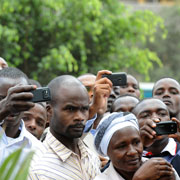
The short answer is technology. The Syrian civil war has been the most widely followed conflict on social media. There is no shortage of activists, citizen journalists, and armed groups using Twitter, Facebook, and YouTube to capture events and spread information – or misinformation in some cases. Often, written posts are short and do not offer details – reporting only that a hospital has been “targeted” – but eyewitness photos and videos can fill in gaps by providing an “on-the-ground” view that would otherwise be impossible to get.

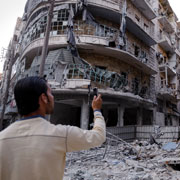
Photos and videos allow us to view the signage on the targeted facility, the medical equipment on the premises (or lack thereof), and the type and extent of material damage. These visual data are key to our documentation, allowing us to identify the facility and its location, confirm whether it was functioning at the time of attack, assess whether the damage matches the weapons reportedly used, corroborate the extent of damage and destruction, establish an accurate timeline for the attack, and – at times – even identify the perpetrator.

However, the power of social media can only be harnessed when Syrian documenters have access to electricity to charge their phones and to the internet to post photos and videos. In the midst of a relentless conflict, power lines are destroyed unintentionally by fighting or intentionally by armed groups; snow storms cut off fragile electricity; and oil prices increase, making fuel for generators prohibitively expensive. Thus, the flow of reliable information stops. Activists may be able to tweet an update or two, but 140 characters does not leave room for the detailed information PHR requires to corroborate attacks on hospitals and deaths of medical personnel.

In January and February of 2015, we saw a notable decline in the number of available images and videos documenting attacks on medical facilities. In January, we did not link to any videos, and February 2015 was the only month in which we had neither photos nor videos. Except for these two months, PHR has, on average, linked to more than four videos and four photos each month on our interactive map for the last year.

There are a number of possible explanations for the decrease in photos and videos; there could have been decreased access to electricity due to winter snow storms, the fighting could have been so intense that there wasn’t time to document, or Syrians may have collectively felt that their documentation wasn’t making enough of a difference to continue risking their lives for it. The observed decrease beginning in 2015 could also just have been a coincidence, rather than an ongoing trend. But whatever the reason, the lack of visual documentation over those two months made corroborating attacks on medical facilities tremendously more difficult.

Fortunately, there are enough Syrians dedicated to documenting human rights violations that we are often able to get information that we need, even if it comes in the form of written reports rather than photos and videos. But this may change in the future. With the conflict into its fifth year and access to technology becoming even more limited, Syrians may grow weary in continuing their online documentation. After all, the world’s response to the countless documented violations has been lackluster, at best.

Technology is only as useful as the information it spreads. If the quality and amount of information coming out of Syria decreases significantly, we will need to think more creatively about how we can continue documenting and bringing ongoing violations to light.

Get Updates from PHR