
Blog

Holiday on ICE: Time for Congress to Stop Joking about Immigration Detention

On Wednesday, March 28, the House Subcommittee on Immigration Policy and Enforcement will hold a hearing on the 2011 Performance Based National Detention Standards (PBNDS), a set of rules intended to govern conditions in immigration detention facilities run by US Immigration and Customs Enforcement (ICE).

These standards have been in the works for several years, and while they are by no means perfect, their publication last month marks an important step away from the use of prison-based detention for immigrants.

But rather than holding a substantive hearing on the improvements and imperfections in PBNDS, the Immigration Subcommittee has chosen to treat them as a joke.

Echoing the ill-informed and juvenile comments by Lamar Smith, the Chairman of the House Judiciary Committee, who labeled the standards “hospitality guidelines for illegal immigrants,” the hearing is entitled “Holiday on ICE.

Like past detention hearings, this one promises to be yet another opportunity for the Subcommittee’s Republican members to demonstrate their ignorance of immigration law and attack the Obama administration’s immigration enforcement policies. Indeed, two of the majority witnesses – Chris Crane of the National ICE Council and Jessica Vaughn of the Center for Immigration Studies – have provided reliably pro-detention and anti-reform testimony in every detention-related hearing held during this Congress.

But instead of replaying this broken record, the Subcommittee would do well to ask any of the 1.2 million people who have passed through the immigration detention system over the past three years – many of whom are not illegal immigrants – how they enjoyed their “holiday” in immigration detention.

Despite the administration’s stated commitment to embracing civil detention for immigrants, the majority of the country’s 250 immigration detention facilities are either jails or jail-like facilities. Even ICE’s new Karnes County Civil Detention Facility, which will open soon as a model for civil immigration detention, is largely based on a prison model.

While the asylum seekers who will ultimately be detained there may be grateful that they can move around freely and make cheap phone calls, nobody who has visited Karnes (or any other detention facility, for that matter) would mistake it for a hotel.

Our country’s immigration system is broken, and Congress has shirked its duty to fix it. Instead of enacting reforms that would decrease the use of immigration detention (which costs over $2 billion each year [pdf]), lawmakers vilify the Obama administration’s meek attempts to improve detention conditions, while accepting contributions from the private prison corporations that receive government contracts to run detention facilities.

Hearings like this should be a chance for our Representatives to learn more about immigration detention and solicit ideas about how to move away from this expensive and destructive system. Instead, House Republicans turn it into a punch line. It’s time for them to realize that nobody is laughing.
Blog

Government Offers Protection for Syrians in the US

In a statement issued on Friday, Homeland Security Secretary Janet Napolitano announced that the Obama administration will designate Syria for Temporary Protected Status (TPS), offering Syrians currently living in the US a chance to stay in the country while the Assad regime continues its brutal suppression of the pro-democracy movement.

Finding that “Syrian nationals already in the United States would face serious threats to their personal safety if they were to return to their home country,” Napolitano announced that she will issue regulations early this week to provide further guidance about eligibility requirements and registration procedures. For Syrians who have fled the violence that has left thousands dead over the past year, this announcement is welcome news.

The government has in the past designated countries for TPS in cases of ongoing armed conflict or civil war, environmental disasters, and other extraordinary and temporary conditions. For example, people escaping the armed conflicts in Sudan and Somalia, as well as Haitians who were in the US when a catastrophic earthquake struck Port-au-Prince in 2010, have been able to remain in the US lawfully with TPS.

While TPS does not confer permanent immigration status on beneficiaries, it does prevent their removal to their home countries while TPS remains in effect. TPS also allows those who qualify to obtain work authorization while they are living in the US.

In this case, Syrians who were in the US on or before a date to be designated by Secretary Napolitano, and who meet the qualifications for TPS will be allowed to remain in the US for 18 months. Depending on the situation in Syria at that time, the Obama administration may choose to extend the TPS designation, as it has in many other cases. While Syrians who arrive in the US after the designation date will not benefit from TPS, they may still be eligible to apply for asylum or other forms of protection.

The violence in Syria has escalated over the past year as protesters have filled the streets to call for the resignation of President Bashar al-Assad and an end to the nearly 50-year reign of the Ba’ath Party. Among the thousands who have been killed by government security forces are at least 55 medical professionals, who have been caught up in government attacks on hospitals and individually targeted for assassination after treating wounded protestors. Physicians for Human Rights has documented these atrocities and issued a report detailing the Syrian government’s assault on the country’s medical system.

The administration’s designation of TPS is an acknowledgement that the crisis in Syria is not likely to end anytime soon. PHR has called on the Syrian government to immediately cease all attacks on civilians and respect the principle of medical neutrality, and urges the UN Security Council to refer Syria to the International Criminal Court so that the most serious perpetrators can be held accountable for their crimes.

Blog

Syria’s Humanitarian Crisis and the Doctors Who Risk Their Lives to Address It

The Syrian government escorted a team of UN technical staff into the country this week. Although this ostensible show of glasnost may look encouraging, restricting UN agencies’ access will result in an unreliable assessment of Syria’s humanitarian needs.

As the number of casualties rises, so does the urgency for humanitarian relief. This week, even Russia – which has until now blocked all UN efforts in Syria – announced willingness to back a UN presidential statement allowing humanitarian corridors and daily breaks in fighting.

And yet while the international community grapples with how best to respond to Syria’s humanitarian crisis, local doctors risk life and limb to care for Syria’s sick and wounded.

Government authorities’ outright assault on medical facilities in the country forces doctors to treat patients in secret through an underground network of clandestine field hospitals. These doctors work in unsterile environments with only the most basic equipment, defying arrest, torture, and even death for the “crime” of providing lifesaving care.

PHR has documented the reported deaths of 55 medical professionals in Syria since the violence began a year ago.

Government attacks on doctors, hospitals, and patients constitute severe violations of medical neutrality; such attacks are also a significant barrier to protecting the health and lives of all Syrians.

Syrian medical students, Red Crescent workers, and courageous health professionals are rushing to the defense of wounded civilians with a speed that the international community must match. Will we do it?

Blog

Forced Labor in Burma Should be Stopped Immediately

The Burmese government signed an agreement last week with the International Labor Organization to end forced labor in the country by 2015. Three years is far too long to wait. Human rights violations should not be phased out; they should be stopped right away.

The Burmese government has the power to stop forced labor immediately: it is the main perpetrator of forced labor in Burma, and a governmental order could, in theory, end this human rights violation tomorrow. The three-year time frame is another reminder that protecting human rights is not a priority of the Burmese government.

Forced labor is a scourge in many areas of Burma, but it is especially common in ethnic minority regions because of the high military presence in these areas and the Burmese military’s tradition of supporting itself from the civilian population.

Members of the military, with few resources of their own, demand food and other necessities from civilians and force them to provide services to the military. Forced portering, construction, and cooking are some of the common demands from the military.  

Two reports last week from the Karen Human Rights Group (KHRG) and Kaladan Press documented the crime of forced labor in Karen and Arakan States. KHRG reported that in the last four months the Burmese Army commandeered civilian vehicles to transport supplies, build roads, and clear roads of landmines by driving in front of military convoys. The military also forced civilian laborers to build roads. Kaladan press reported that NaSaKa (Burmese military border force) troops force about 300 people to build roads each day, and press more into cleaning and maintaining barracks.

Two recent PHR investigations documented forced labor in Kachin and Chin States. In November 2011, PHR reported in Under Siege in Kachin State, Burma that the Burmese Army used Kachin civilians to guide troops, carry supplies and sweep for mines by walking in front of soldiers.

In January 2010, PHR reported in Life Under the Junta that 92% of 621 households surveyed across Chin State reported a household member being forced to work against his or her will for the government or military. In the study in Chin State, PHR found a statistically significant association between household hunger and forced labor. That is, households that experienced forced labor were more likely to have food shortages than households that did not experience forced labor.

Last week’s reports from Karen and Arakan states echoed this finding: Rohingya forced laborers in Arakan reported that they were afraid they would run out of food if they were not able to spend time working in their fields. Karen villagers also said that they do not have enough time to conduct their own work when they are forced to work for the military.

The ethnic areas of Burma have not yet benefitted from democratic reforms recently initiated in the capital, including a loosening of media controls, release of political prisoners, and acceptance of greater freedoms for political opponents. But many ethnic people are wary of the changes they hear about in Rangoon.

In order to rebuild trust with ethnic minorities after 60 years of abuse, the government of Burma needs to make greater efforts to end human rights violations, including forced labor, and hold perpetrators of these crimes accountable.

Forced labor continues multiple ethnic areas in Burma, and the Burmese government should stop this illegal practice immediately. The international community should welcome the initial changes that have benefited those living in Burma’s urban centers, but also recognize that people living in ethnic areas have not experienced any of the changes seen in Rangoon and Mandalay—and it should continue to pressure the Burmese government to protect the human rights of all people in Burma.

Blog

Former Libyan Spy Chief, Wanted Criminal, Should be Tried at the ICC

Reports that Libya’s former spy chief, Abdullah al-Senussi, was apprehended late last week in Nouakchott, Mauritania, have sparked international discussion about where best to prosecute this wanted war criminal.

France has demanded al-Senussi’s extradition from Mauritania, where he was tried in absentia for an attack on a commercial airliner which killed 170 people, including 54 French nationals. Libyans want al-Senussi to return home for prosecution to face justice for his actions, including the crimes against humanity he committed during the recent conflict and those he committed before the conflict began.

While Libya certainly has a compelling interest in seeing justice performed locally, the national institutions are not yet up to this important task. After decades of mismanagement, significant reforms are necessary to establish a fair judiciary.

Basic institutional reforms that must be enacted include the drafting of a fair penal code through a transparent and inclusive process, the appointment or election of well-qualified judges who have been vetted to eliminate those responsible for human rights violations, and creating a domestic security body that can guarantee the safety and well-being of defendants, witnesses, victims, and others before, during, and after the trial. Because Libya’s national judicial system does not have the capacity at this time to fairly try al-Senussi, he should face trial at the International Criminal Court (ICC).

The ICC was designed as a court of last resort – it would try cases only when national governments were unable or unwilling to do so.

On June 27, 2011, the Office of the Prosecutor of the ICC indicted three individuals relating to the recent conflict in Libya: Muammar Qaddafi, Saif al-Islam Qaddafi, and al-Senussi. Muammar Qaddafi later was killed at the hands of opposition forces and Saif al-Islam Qaddafi remains in custody in Libya.

Physicians for Human Rights (PHR) investigated war crimes in Misrata, a town targeted by Qaddafi’s forces during his brutal crackdown on opposition fighters. PHR later conducted a comprehensive forensic evaluation of a massacre site in Tripoli, during which PHR formulated several necessary steps for Libya’s authorities to take in order to preserve forensic evidence for future trials.

In the short term, there must be a thorough assessment of what capabilities exist for identifying the missing and returning remains, and Libyan authorities should halt improper exhumations until a formal identification and exhumation plan is established. In the long term, Libyan authorities must strengthen judicial institutions and revamp national security forces so that security, human rights, and justice become national priorities during the time of political transition.

Trying al-Senussi at the ICC would be an essential step to bringing justice to victims in Libya. But there is more to be done. Other methods of transitional justice, including institution building, are necessary in Libya so that other perpetrators can be held accountable, victims can receive reparation, and the country can begin to come to terms with its violent past.


Blog

Tear Gas or Lethal Gas? Bahrain’s Death Toll Mounts to 34

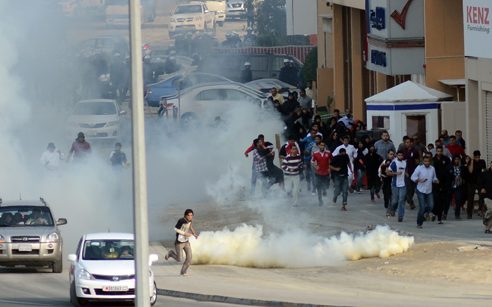
Protestors in Bahrain take cover from tear gas, December 2011

Bahraini anti-government protesters run for cover from tear gas during clashes with riot police near the headquarters of the main Shiite opposition group, Al-Wefaq, in Zinj Village, west of Manama, on December 23, 2011. (AFP/Getty Images)


Based on interviews with local physicians and analysis of news reports, the Government of Bahrain’s oppressive use of tear gas in recent months has reportedly killed both young and old civilians in their homes and in the streets of Manama, the Gulf Kingdom’s capital.

PHR has compiled a list of 34 reported tear-gas-related deaths in Bahrain since the uprising began a year ago. Based on media and other accounts, most civilians who allegedly died from tear gas reportedly have suffered complications from gas inhalation; at least three civilians reportedly died after security forces fired metal tear gas canisters (nearly the size and half the weight of a can of Coke) from grenade launchers into crowds.

Government forces not only assault unarmed street protesters with tear gas during the day, they also attack innocent women, children, and the elderly with tear gas in their homes at night.

Fourteen-year-old Yaseen Jassim Al Asfoor reportedly died from tear gas inhalation after security forces threw three tear gas canisters into his home.

In another recent incident, an elderly woman named Sakeena Marhoon apparently died from repeated exposure to tear gas in her home.

The Government’s use of tear gas is so widespread and excessive that many families are now forced to stuff towels in doors and cracks in windows to protect them from the toxic clouds of gas outside.

Victims of these indefensible deaths and their families are not receiving the justice they deserve. Not only has the government failed to investigate or prosecute any law enforcement officials for employing such excessive force, but authorities also reportedly prohibit doctors from listing tear gas as a cause of death. Instead, coerced doctors have reportedly cited natural or unknown causes of death for some tear-gas related casualties.

While PHR has not analyzed tear gas in Bahrain, our report shows the use of it in confined spaces has deleterious and toxic effects (pdf).

The 1989 JAMA study found that detonating tear gas in small enclosed spaces creates a toxic concentration, which can cause permanent damage to the human body, including chemical pneumonitis, heart failure, fatal pulmonary edema, and death.

Last year PHR investigators in Bahrain found disconcerting evidence that Bahraini authorities may be using unidentified chemical agents in addition to tear gas. Doctors reported to PHR that they had treated patients exposed to tear gas who exhibited atypical symptoms, including non-epileptic seizures and hysteria. Further, Bahraini authorities at the Ministry of Health deny doctors’ requests to analyze the residue and chemical content of exploded tear gas canisters.

The US Department of State condemns the excessive use of force, and the 2012 omnibus spending bill (pdf) includes language requiring the Secretary of State to report on “any crowd control items, including tear gas, made available with appropriated funds or through export licenses to foreign security forces that the Secretary of State has credible information have repeatedly used excessive force to repress peaceful, lawful, and organized dissent.”

Well known to Bahrain’s Shia population who wake up each morning to find their streets littered with empty tear gas canisters, the Government of Bahrain acquires tear gas from Pennsylvania-based companies, whose “USA” label is stamped on each blue canister.

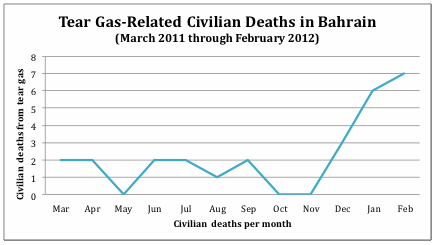
With nearly a fourth of all casualties occurring in February 2012, the US government must press Bahraini authorities to stop their lethal use of tear gas against innocent civilians and abide by international standards as well as their own national code of conduct for law enforcement officials, for the proper use of riot-control agents.

Tear Gas-related Civilian Deaths in Bahrain, Mar 2011-Feb 2012

Fig 1. The figure depicts the number of reported tear gas-related deaths per month in Bahrain over the past 12 months, based on our review of available media. While in the first 9 months after the uprising, reported tear gas deaths remained between 0 and 2 per month, there has been an apparent sharp increase in deaths over the past three months. In November there were 3 deaths attributed to tear gas, and this trend continued in January with 6 deaths and February with 7 deaths.


Blog

Is the Karnes Civil Detention Center the Future of Immigration Detention?

Located about an hour’s drive south from San Antonio, the Karnes County Civil Detention Center includes skylights that provide natural light, open-access courtyards, and a soccer field, volleyball court, and basketball court. Detainees have access to telephones, internet, and email.

Is this new facility the model for future “civil” immigration detention facilities that will replace the 250 jails and jail-like facilities that currently comprise the detention system?

US Immigration and Customs Enforcement (ICE) hopes so. On Tuesday, I and other immigrant advocates toured the center, which will house 608 non-violent immigration detainees in less-restrictive conditions of confinement. Unlike at most other facilities, immigrants detained at Karnes will have 24-hour access to certain parts of the facility, including the medical wing, and will be generally free to move around.

Medical care at Karnes seems to have been given plenty of thought. Within 12 hours of arrival, all detainees undergo medical and mental health evaluations and a chest x-ray. Detainees who put in a request for medical care will be seen within 12 hours, and a physician will be on-site every weekday.

Detainees will also have access to a psychologist, psychiatrist, and dentist, and will have access to prescription and over-the-counter medications.

It is no secret that the immigration detention system is in desperate need of reform. Every night, about 34,000 people with pending immigration claims are held in detention facilities at a cost of about $5.5 million per night.

Most of these immigrants are detained unnecessarily—many are either non-violent criminals or people who have no criminal record at all. Still others come to the US seeking asylum, only to be thrown into detention as soon as they voice their claim.

Conditions in detention centers vary greatly, and over 120 detainees have died in ICE custody since 2003.

Alternatives to detention, such as ankle monitoring bracelets, are available at a much lower cost than detention, but are used for only a fraction of the 400,000 immigrants who pass through the detention system every year.

There are no signs that Congress is planning to significantly curtail the use of immigration detention or enact strong, binding regulations to govern detention conditions. The new Karnes facility appears to be the government’s answer to immigration advocates' calls for reform.

But while the improvements at Karnes will undoubtedly make it a better facility than many others currently in use, it remains to be seen how it will work in practice when the first detainees begin to arrive next month.

And Karnes is by no means perfect. Immigrants who express a fear of returning to their countries will have asylum interviews conducted via videoconference, as will all detainees who have cases in Immigration Court. Hearings conducted over video often mean that detainees are separated from their attorneys, denying them the ability to have private consultations during the hearings. And studies have shown that Judges who conduct hearings over video often have trouble reading body language and observing the demeanor of asylum applicants—both crucial aspects of asylum hearings.

Furthermore, like approximately 40% of all immigration detention facilities, Karnes is remote. San Antonio, the closest major city, is an hour away, making it more difficult for detainees to access legal services and see their families. And Karnes will be run by the GEO Group, a for-profit prison company with an abysmal track record.

And for all its improvements, Karnes is still a jail. Heavy steel doors clang shut behind you, and movements are monitored by staff from a central control room.

ICE has said that the Karnes population will be composed of non-violent immigrants and asylum seekers—exactly the types of people who should not be detained in the first place.

But until Congress and the Obama administration come to terms with the fact that detention is a largely inappropriate and hugely expensive answer to a problem that could be solved through comprehensive immigration reform, facilities like Karnes offer a decent alternative to throwing immigrants in jail.

Indeed, about 100 feet away from Karnes sits the Karnes Correctional Center, a criminal jail also run by GEO that also houses about 300 immigration detainees with criminal convictions, most of whom will never be transferred next door to the civil detention facility.

Blog

UN Identifies Libyan War Criminals; PHR Continues Its Call for Justice

This week, the UN Security Council unanimously voted to extend the United Nations Support Mission in Libya (UNSMIL) for another year. UNSMIL, comprising a small team of international experts, was established last September to support post-conflict reconstruction. The core objectives of the mission include strengthening Libyan institutions, promoting rule of law, supporting transitional justice, and protecting human rights.

Only days prior to the renewal of UNSMIL’s mandate, a UN expert panel turned over a list which identified by name alleged war criminals. Neither the Libyan government nor the International Criminal Court has yet to bring charges against these alleged perpetrators. Even more troubling, the violence seems to be continuing based on reports that opposition forces are still committing abuses.

The UN expert panel recommended that all countries assist Libya’s governing authorities to bring war criminals to justice. Physicians for Human Rights agrees that supporting local Libyan judicial reform is necessary to building a country that is legally accountable to its citizenry. Only when all violators of human rights and international law are brought to justice will Libya secure a lasting peace.

Physicians for Human Rights documented war crimes during the Libyan conflict in two detailed reports on Misrata and Tripoli, and continues to call for justice and accountability in Libya for all perpetrators of mass atrocities.


Blog

Banning Indefinite Detention of Americans

Last week, the United States Senate Committee on the Judiciary held a hearing on the proposed Bill “Due Process Guarantee Act of 2011.” The draft Bill would prohibit the indefinite detention of US citizens and permanent residents without charge or trial carried out on the basis of military force or a declaration of war, “unless an Act of Congress expressly authorizes such detention.”

This might prove to be a significant step forward for how we treat “national security” detainees. However, the act is substantially limited in its scope, since it only protects US citizens and permanent residents—any foreign citizen in the US can still be detained without trial or charge for an indefinite period of time.

At the hearing, Senator Dianne Feinstein, the main sponsor of the Bill, emphasized the constitutional concerns with indefinite detention, the terrible effects indefinite detention has on detainees, and the lack of intelligence advantages of gained by denying arrested suspects their basic rights.

Dr. Scott Allen, a medical advisor at PHR, submitted to the Senate Judiciary Committee written testimony on the medical effects of indefinite detention. His testimony was entered into the Hearing record and was expressly mentioned by Sen. Feinstein.

Sen. Feinstein also acknowledged the possibility of amending the scope of the Bill so that it would extend to individuals beyond US citizens and permanent residents. PHR would welcome such an amendment. As documented in PHR’s report, “Punishment Before Justice: Indefinite Detention in the US”, indefinite detention may cause severe harms in healthy individuals, independent of other aspects or conditions of detention. These harms can occur regardless of legal status and, in some cases, may rise to the level of torture and inhuman treatment. 

The New York Times also recently published a letter to the editor, written by Dr. Scott Allen and Kristine Huskey, on the physical and psychological harms caused by indefinite detention.

PHR continues to condemn indefinite detention in a “war against terrorism” that could last forever, and calls upon Congress and the Administration to reject solutions to national security problems that rely on the use of indefinite detention.

Blog

Proving Torture Allegations: Trouble with Bahraini Trial Continues

Twenty medical professionals in Bahrain continue to fightfor vindication from politically motivated charges against them. Last Thursday,Bahraini courts denied these medicalpersonnel yet another form of justice.

These imprisoned doctors allege Bahraini authorities torturedthem in detention as a means to extract confessions from them. On Thursday,Bahraini courts acquiesced to public pressure and formed a three-membercommittee to investigate these torture claims – but this recently formedcommittee may be far from impartial and unequipped to investigate properlyallegations of torture.

One member of the committee is a forensic doctor who worksat the Ministry of Interior (MOI) -technically this makes him an employee ofthe prosecution.

The court’s formation of this committee also suggests thatthe court has no intention of admitting into evidence an independent reportthat has already determined that many of the medics suffered psychological andphysical torture while detained.

Last summer, the Bahrain Independent Commission for Inquiry (BICI) assembled an international team of forensic experts—among them three Americandoctors—to investigate these allegations of torture. The American doctorsexamined five of the accused medical professionals, and found evidence oftorture.

In November 2011, the BICI published a report which referred to evidence of torture, but the BICI has never made public anymedical forensic records investigating these acts. The defense team has foughtto obtain copies of these medical documents. The court has not made thesereports available to the defense, nor has it allowed them to be admitted intoevidence.

Instead, this new committee casts serious doubt on whetherthe accused doctors can hope for justice. All accused doctors must be examinedby an independent and impartial team of forensic investigators, and those whowere previously examined should receive copies of the medical documentationthat support their torture claims.

Get Updates from PHR