Blog

It Takes a Network to End Mass Rape

PHR’s team just returned from a training session in the DRC, where they are working with international and local partners to hold perpetrators accountable for using rape as a weapon of war. This post is one in a series. Learn more about the project.
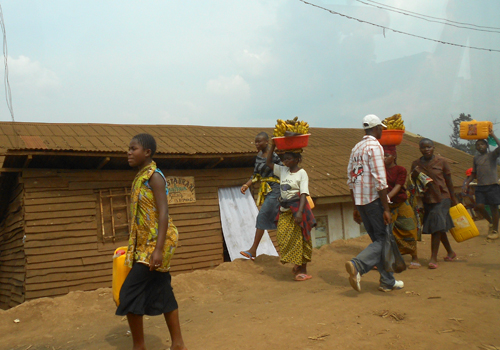
On the road to Panzi Hospital

People walking on the road to Panzi Hospital, DRC. Photo: Dr. Nancy Cabelus, PHR.


On the second morning of PHR’s training in Bukavu, DRC, Dr. Désiré Alumeti Munyali, a pediatric surgeon at Panzi Hospital who was helping with the training, received a call from his colleagues.

A little girl from a nearby community had been brought to the hospital by the Bukavu “gender desk” police officer, who indicated that the child may have been raped by several fishermen. Because of the opportunity to use our expertise in real-time, I accompanied our medical colleague to the examination.

A doctor trained in forensics, Dr. Désiré is a rare professional in this country, and PHR’s close partner.

As we arrived, the young girl leapt into Dr. Désiré's arms as if she knew him well. It appeared that the girl had intellectual disabilities and she screeched and resisted when nurses tried to restrain her. The team explored other ways to calm and listen to this traumatized child. For example, the girl happily played with a cell phone while we discreetly conducted the exam. Several of Dr. Désiré’s colleagues, including the psychiatrist who had also interviewed her, joined us during the evaluation.

The alleged violations had reportedly occurred a month before, so the opportunity to collect evidence was very limited. While the medical examination showed no physical signs of violation, the child’s assault history—which she shared with the doctors while huddling underneath a table—was graphic and credible.

We discussed the allegations and findings with the team and with local police who agreed to an enhanced investigation. The girl’s father had been killed by the military, her mother was hospitalized in a psychiatric facility, and there was no family to care for her. Thankfully, she safely remained in Panzi hospital for the time being.

We shared with our 45 workshop participants the lessons from this tragic yet all-too-common case to demonstrate the complex evaluation of sexual violence in cases of children and those with special needs. As the group teased out the web of questions and interactions on this delicate and distressing case, we revealed the power of a network of medical and legal professionals who are committed to coming together to stop the endemic of rape.
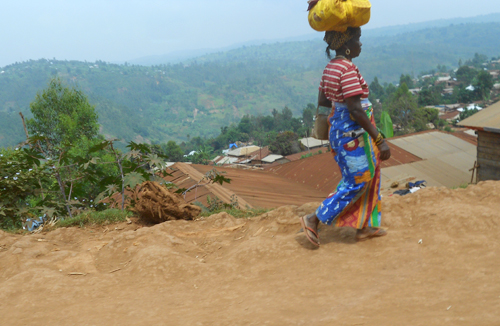
 

On the road to Panzi Hospital

Woman walking on the road to Panzi Hospital, DRC. Photo: Dr. Nancy Cabelus, PHR.


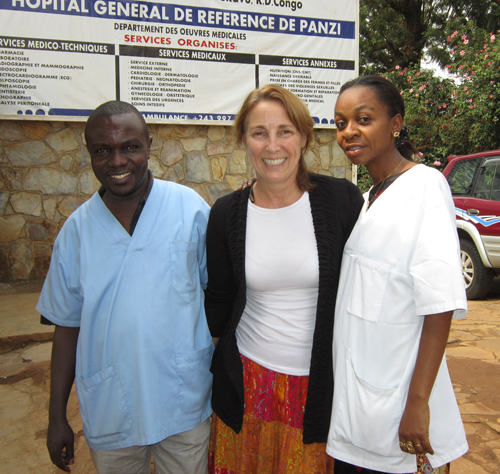
Dr. Coleen Kivlahan with Dr. Desiré Alumeti Munyali and Dr. Reine Bahaya Muluzinyere, of Panzi Hospital

Dr. Coleen Kivlahan with Dr. Desiré Alumeti Munyali and Dr. Reine Bahaya Muluzinyere, of Panzi Hospital. Photo: Karen Naimer, PHR


Dr. Coleen Kivlahan is a Medical Consultant to PHR’s Program on Sexual Violence in Conflict Zones and a family physician.
Blog

As Situation in Syria Worsens, U.S. Embassy in Damascus Closes

In a shocking display of support for President Assad’s useof violence against civilians, Russia and China vetoed a Security Councilresolution designed to end the atrocities in Syria. Russia and China were theonly Security Council members who did not vote for the resolution, which had supportfrom a variety of countries including India, Morocco, Pakistan, and SouthAfrica. The defeat of the resolution against Syria is a dark moment for thepeople of Syria, as the vetoes from Russia and China may embolden the Syriangovernment to continue its ongoing attacks on civilians. PHR has documented violations of medical neutrality [pdf] in Syria –attacks which represent a sliver of Assad’s assault on Syria’s civilianpopulation.

The veto does not preclude the Security Council from passinga new resolution against Syria in the future, which must include not only supportfor the Arab League’s plan to end the violence but also a referral of thesituation to the International Criminal Court (ICC). The report of theIndependent International Commission of Inquiry on Syria, a Commission set upby the Human Rights Council, indicated that human rights violations includingtorture, killings, sexual violence, and unlawful detention were widespread andsystematic. The results of this investigation, coupled with reports from myriadhuman rights organizations, indicate that the Syrian government is committingcrimes against humanity – offenses that fall under the mandate of the ICC. Sincethe Commission’s report was released in November, there has been no effort onthe part of the Syrian government to cooperate with Arab League observers toend the violence nor to abide by its international legal obligations to endhuman rights violations, punish perpetrators, and provide reparation tovictims. Instead, the Assad regime has chosen to continue its campaign ofkillings, torture, detention, and other acts of violence geared towardpolitical opposition and other civilians.

The worsening situation in Syria is reflected in today’sdecision by the U.S. government to close its Embassy in Damascus. Although thismove does not signal the severing of relations between the U.S. and Syria, sucha decision reflects the gravity of the ongoing situation.

As the situation in Syria devolves, Russia and China shouldsee that they have chosen the wrong side of history. When the Security Councilattempts to pass another resolution on Syria, Russia and China will haveanother chance to get it right. They can recover some of their own legitimacyby taking a stand against Assad’s criminality and joining others in the pursuitof peace and accountability.

Blog

Unspeakable Acts: Torture in Burma’s Prisons

This is the third of seven posts from Dina Fine Maron and M. Francesca Monn, writing from Mae Sot, Thailand, a town on the border with Burma. Maron and Monn are PHR interns who are collecting information about medical conditions and human rights abuses inside Burma’s prisons. This research is being completed with the help of Assistance Association for Political Prisoners-Burma (AAPP-B), a Thailand-based advocacy group consisting of former Burmese political prisoners.

“Torture means any act by which severe pain or suffering, whether physical or mental, is intentionally inflicted on a person” – UN definition of torture

Burmese detainees can be subjected to physical and psychological torture, regardless of age, sex, or the official charges held against them. In some cases, this torture has occurred before official charges have been made, both in secret interrogation centers and in the prisons themselves. In 2005, the AAPP published The Darkness We See, chronicling the grisly torture experiences of around two dozen former political prisoners. The following are excerpts from these testimonies.

Female, arrested 1998: “I was with a female warden at this point, and we made a right turn into a room on the ground floor. In this room she opened my shirt and then opened my corset, it had many hooks in the front. Then the female warden patted me down. She told me I could take off the clothes from around my head and only then did I see that I was facing a large window and outside there were maybe seven or eight male wardens watching me. I was totally exposed and they were watching everything.

Every night, eight or ten people came into the room, they were always very drunk. I still hadn't slept but they made me sit on this chair, it was very tall and with very small seat, it had no back to it, and my feet could not touch the ground. It took lots of concentration just to not fall off. They hurled insults at me. They were drunk and screaming at me.

I didn't sleep for three days, I never showered and was having problems keeping food down because of a stomach problem I have. After my interrogation period, I still didn't sleep because I had heard many stories about how female political prisoners were raped, and I was being kept in a men's compound. Female political prisoners were being kept in a cell surrounded by male criminals. I could hear their voices. I was absolutely terrified. After three days I fell asleep in a sitting position.”

The psychological impacts of these tactics remain with former political prisoners throughout their lives. As one former political prisoner described after being imprisoned from 1998 to 2002:

“When I was finally released, I had become a very different person. I have a fear of large crowds now; I think I am much quieter. I was 23 when I was arrested, I was 27 when I was released, and those four and half years in prison should have been my school years. It was difficult for me to interact with other students and I become withdrawn. Before I was arrested, I spoke English pretty well, but by the time I was released my English was very poor. I had never read an English book in prison. I have problems falling asleep and sometimes there are nightmares. People avoided me when I came out of prison, they did not want to try to connect with me. That was fine because I could not relate to them anymore.”

There are countless other stories of the fear tactics, physical defilement, and degradation inflicted upon political prisoners that are documented in AAPP’s report.

The international community has praised the new government in Burma for releasing hundreds of political prisoners. However, hundreds more political dissidents remain behind bars, and the ones who have been released have received no compensation, counseling, or even apology from the government. Documents like The Darkness We See are important for recording what abuses happened under the old regime, and should play an important role in reconciliation processes.

Blog

Words From the Prisoners

This is the sixth of seven posts from Dina Fine Maron and M. Francesca Monn, writing from Mae Sot, Thailand, a town on the border with Burma. Maron and Monn are PHR interns who are collecting information about medical conditions and human rights abuses inside Burma’s prisons. This research is being completed with the help of Assistance Association for Political Prisoners-Burma (AAPP-B), a Thailand-based advocacy group consisting of former Burmese political prisoners.

The following is a compilation of some of the quotes gathered during PHR’s field research or collected in the archives kept by the Assistance Association for Political Prisoners, Burma (AAPP). The identities of the speakers are excluded to protect their privacy. The former political prisoners that were interviewed stressed that the health conditions within the prisons remain largely unchanged.

At Tharawaddy, we were only allowed to shower using 7 cups of water. This is hardly enough. It was an insult to us because next door to the prison is a pig farm, and the pigs were washed using lots of water. We complained about this mistreatment and asked why the pigs were given better treatment then us. They replied that if a 5(j) political prisoner were to die, they only needed to make one report; if a pig were to die, they would need to make up to five reports. The guards made sure we knew that we were less important than the pigs, that our lives were valued less. After we made our complaint, they stopped allowing us to shower altogether and stopped giving us lighting.” –A male former political prisoner, first arrested in 1990, then again in 1996, released in 2002.

“The major health problem is inadequate healthcare and malnutrition. Some veggies grown in prison, I’m embarrassed to say, were only watered with urine.” – A female former political prisoner, arrested 1998 and released in 2002.

“I was kept for 7 days and 6 nights without talking to my family or friends or anyone; I had no sleep that entire time. Every fifteen minutes someone would come to me and ask me a few questions. Nothing important, but they would ask me these questions so that I was not allowed to sleep. For my first three days I didn't even have food or water. Then I was given prison food at the end of my third day, for the last two days they had mixed sand into my food so that it was inedible.” – A female former political prisoner, imprisoned 1991. Release date unknown.

“For ten days I was kept undressed, I was very ashamed. They continued to beat and kick me all the while I was naked. I was beaten at least four times in one day with canes. Then, they gave me too much to drink; I was very emotional and thirsty so I kept drinking the water. Then, they would not allow me to urinate. On December 22nd, I lost consciousness. An MI [military intelligence] doctor then injected me with B12 vitamin. When I regained consciousness, they gave me a 12-point confession to sign. I accepted three points because they only implicated me and no one else. This satisfied them and I was finally allowed to wear my clothes, and given some Quaker oats to eat…"A former male political prisoner arrested in 1996. Release date unknown.

“I want to work not just for my son, but for future generations.” A former male political prisoner who fled Burma, leaving his wife and son behind four years ago. He cannot contact them, he said, out of concern of endangering them. Although imprisoned 1989-1995, he has been actively involved in providing assistance to political prisoners since his release.

Blog

A Walk in the Town

PHR’s team just returned from a training session in the DRC, where they are working with international and local partners to hold perpetrators accountable for using rape as a weapon of war. This is the second in a series. Learn more about the project.

Day 2 in DRC: The PHR team splits up to work on logistics. PHR’s Kenya Coordinator Rachel Muthoga and I, accompanied by our Congolese translators Ignace Kabongo and Safari Nixon, taxied to Bukavu, the main urban center and capital city of South Kivu, in search of bottled water, SIM cards, Congolese francs, and other necessities.

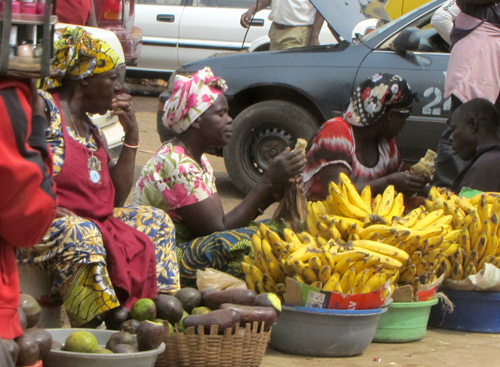
The town was buzzing with activity. Motor bikes and SUVs stirred up dust clouds along the crowded street. On this Tuesday afternoon, all markets were open for business. Women dressed in brilliantly colored fabrics carried large bundles of bananas, corn, garlic, and other food items to sell. Children were running, shouting along the sides of the road. The bustle in the town shows signs of the people’s hope in a peaceful future following years of slaughter, destruction, pillaging, sexual violence, and instability.

Women fruitsellers in Bukavu

Women sell bananas and other produce along the road in Bukavu. Photo: Coleen Kivlahan, PHR.


Women of Bukavu

Women in Bukavu. Photo: Coleen Kivlahan, PHR.

Dr. Nancy Cabelus is a Forensic Consultant to PHR’s Program on Sexual Violence in Conflict Zones. She is a forensic nurse and a former Connecticut State trooper. This was Nancy’s first time in DRC.

Blog

From Bad to Worse: Health in Burma's Prisons

This is the fourth of seven posts from Dina Fine Maron and M. Francesca Monn, writing from Mae Sot, Thailand, a town on the border with Burma. Maron and Monn are PHR interns who are collecting information about medical conditions and human rights abuses inside Burma’s prisons. This research is being completed with the help of Assistance Association for Political Prisoners-Burma (AAPP-B), a Thailand-based advocacy group consisting of former Burmese political prisoners.

Political prisoners and criminals alike have suffered from substandard living conditions in Burmese prisons. Interviews with former political prisoners at the Assistance Association for Political Prisoners, Burma (AAPP) revealed telling details about prison conditions that can lead to detainees’ ill health. Prisoners reported that they were packed together in cramped prison cells, that storage containers overflowed with excrement, and that cell blocks leaked during the rainy season and became breeding grounds for mosquito larvae and bacteria.

Chronic medical conditions present in the general Burmese population, such as hypertension, diabetes, asthma, coronary heart disease, and stomach problems, are severely exacerbated by the poor conditions in the prisons.

According to many former political detainees, infectious diseases are the most common cause of illness in prison. Among other infectious diseases such as malaria and TB, dysentery is considered a normal part of life. Cholera is particularly common in the rainy season, mainly because drinking water and sewage water sources are often in close proximity, leading to contamination of the drinking water. Without adequate stores of medical supplies, sleeping medications and simple analgesics are often the only remedies offered to suffering prisoners.

A 48-year-old male former political prisoner described coughing up blood and despite pleas for assistance from his cellmates for assistance, he was ignored by the guard. When a medic was finally called, the prisoner was only provided a sleeping medication. It wasn’t until three days later when the prisoner managed to show the warden that he was coughing up blood that he was moved into an area of isolation for TB treatment. Even then, his family was forced to obtain and supply the TB medication for the duration of his treatment. At no point did he receive a chest x-ray or other test to confirm the diagnosis.

Complications from interrogation are widespread and are also common sources of ailments. Many political prisoners continue to suffer from severe headaches and life-altering behavior changes long after their prison sentences have ended.

A 48-year-old former political prisoner who was imprisoned on four separate occasions for his political activism described his plan for committing suicide in interviews. All it would take, he said, was a chance during interrogation to put an end to his suffering by repeatedly banging his head against the prison wall. Although the opportunity for him to enact his plan never arose, the fact that he—and his colleagues—experienced suicidal ideations with the intent of acting upon them underscores the severity of the mental health crisis among political prisoners.

Few prisoners were allowed to speak with mental health professionals during their imprisonment, and many still do not feel comfortable asking for assistance because of the pervasive social stigma against mental illness in Burmese culture. Accessing mental health services upon release remains uncommon.

Human rights abuses often occur in prisons when they are closed to public investigation and when inmates have no recourse when they are abused. This is especially the case for political prisoners. Over the last 20 years, PHR has conducted investigations in abuses and medical conditions in prisons in Cambodia and in Afghanistan, Guantánamo Bay, Haiti, and New York State, and has documented abuses and conditions similar to the ones reported by ex-political prisoners in Burma.

Our investigations promoted improved living conditions and the availability of health care in some of the prisons we visited. Documentation is the first step in improving condition in prisons in Burma. We urge the Burmese government to recognize the problems highlighted here and to take immediate action to remedy them.

Blog

Imprisoning Relief Workers: Understanding the Aftermath of Cyclone Nargis

This is the fifth of seven posts from Dina Fine Maron and M. Francesca Monn, writing from Mae Sot, Thailand, a town on the border with Burma. Maron and Monn are PHR interns who are collecting information about medical conditions and human rights abuses inside Burma’s prisons. This research is being completed with the help of Assistance Association for Political Prisoners-Burma (AAPP-B), a Thailand-based advocacy group consisting of former Burmese political prisoners.

When Cyclone Nargis ravaged the southern coast of Burma in May 2008, it left a trail of destruction and devastation in its wake. More than 100,000 people were killed or missing, but in the days following the cyclone the military junta government refused to accept international assistance for its people. Later, it only allowed international aid that was funneled through the government.

This humanitarian crisis drew the eyes of the world to a military state that failed to appropriately respond to a disaster and protect its people. Burmese individuals who stepped in to provide crucial assistance, help bury the dead, or call for humanitarian aid were arrested under loosely-related charges and sentenced to lengthy prison sentences.

These aid workers remained in prison for several years and only recently—amidst heightened political pressure from Western powers—were some of them released. Many high-profile prisoners were released and granted amnesty by the Burmese government in mid-January. However, the identities of these prisoners are still being confirmed and the identities of those in jail remains a mystery.

Many of these medical workers were sentenced under the Electronic Transactions Law, a provision which outlaws the distribution of any materials that are not explicitly approved by the government. Another common charge, the Unlawful Association Act, prohibits contact with or funding of unapproved organizations.

Where noted, it has been confirmed by local media that these individuals were released by the January 12 order:

  • Released: A sports journalist by trade, Thet Zaw was arrested in June 2008, returning from a trip to Irrawaddy delta where he was delivering aid to Cyclone Nargis survivors and videotaping the relief efforts. He was serving an 11 year prison sentence (which had been commuted from a 19 year sentence). In Taungyi prison he has been 400 miles from his family, including his young daughter. His wife reportedly traveled to the prison but was denied access to him. Zaw was charged with insulting religion, making a statement or rumor conducive to public mischief and crimes under the electronic transactions law. This was not Zaw’s first time in prison. According to AAPP, he was previously arrested for his role in the 1988 political uprising and sentenced to serve 3 years in prison. Later, he was convicted of high treason and sentenced to death because his sports magazine questioned the use of $4 million in US donation money to promote football in Burma. That sentence was also later commuted to 3 yrs.
  • Min Thein Tun (aka Thiha) was arrested in July 2008, for his role in distributing relief materials to victims in the Irrawaddy delta region. He had been working, legally, in Malaysia when the cyclone struck and began collecting donations for victims of Nargis through his blog. He was arrested during his third relief distribution trip; since then his blog has been shut down. His family was unable to afford attorneys for his trial, and he was subsequently sentenced to 17 years of imprisonment.

The sentences given to those who were involved in relief efforts for victims of Cyclone Nargis were unwarranted. The new government has taken positive steps by releasing many of these prisoners and encouraging ceasefires in ethnic areas.

PHR encourages the government to release the remaining political prisoners and support, not condemn, individuals and groups who provide aid to their fellow citizens.

Blog

Bending the Arc of the Moral Universe toward Justice: Prosecuting Mass Rape in the DRC

PHR’s team just returned from a training session in the DRC, where they are working with international and local partners to hold perpetrators accountable for using rape as a weapon of war. This is the first in a series. Learn more about the project.

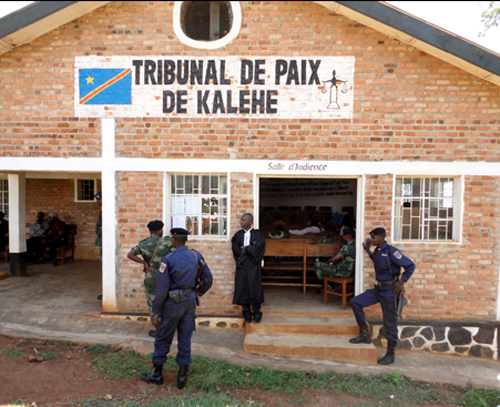
This past October, PHR’s Deputy Director Susannah Sirkin and I had the opportunity to sit in on an appeals hearing in Kalehe, a small village in South Kivu, in the Democratic Republic of the Congo (DRC) for a case concerning abduction, mass rape, sexual enslavement, and murder.

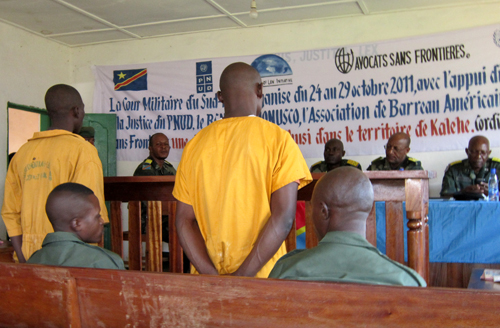
On the day we visited, the accused—two young men dressed in short-sleeved yellow jump-suits—stood blankly facing the front of a modest, one room brick building, clasping their hands behind their backs as two Congolese military officers flanked them on either side. The accused were alleged to have been members of the FDLR militia (the Hutu-dominated “Democratic Forces for the Liberation of Rwanda”) involved in the abduction and sexual enslavement of hundreds of women.

Just outside, in a dusty yard in back of the building, 19 women survivors—some sitting on a flat stone wall and some squatting on the ground with their small children—waited. These women had traveled a long way from their villages, where many of them had been stigmatized by the sexual violation, and rejected by their families and communities. Despite all that these women had been through already, they bravely came to face the accused and to claim their day in court.

The building was serving as a “mobile court” sponsored by the American Bar Association’s Rule of Law Initiative, Avocats Sans Frontières (Lawyers without Borders), the UN Development Program and the Congolese government. For two weeks, the judges would hear cases of mass atrocity in the war-ravaged eastern part of the county.

Even in the most straightforward contexts, justice is difficult to define and ephemeral. But for these courageous women in Kalehe—what is justice really? The women we met at Kalehe are not likely to obtain much, if anything, by way of compensation. But their presence at court that day—to tell their story and face the accused—was a powerful, humbling demonstration that the judicial process has some reparative value. The presence of these women at the little rural courthouse offered profound hope amidst the despair.

Recently, PHR launched its Program on Sexual Violence in Conflict Zones to help improve meaningful access to justice for survivors of sexual violence. PHR is working with many experts in eastern DRC and Kenya, including doctors, nurses, social workers, police officials, lawyers, and judges who often serve as first responders to survivors of sexual violence.

On January 26 to 28, we convened our first forensic training workshop in DRC with these stakeholders. Our shared goal is to improve methods for the forensic collection, documentation, and preservation of evidence so that more cases of sexual violence succeed in court. And through these workshops, we are hoping to facilitate a network for informal communication among professionals on the ground to help bolster the medical and legal process of documenting and prosecuting these crimes.

We are privileged to be working with a wonderfully committed group of individuals and organizations in Kenya and eastern DRC, and over the next few years, we hope to work with similar stakeholders in South Sudan, Uganda, and Central African Republic as well.

The journey toward justice is long but with courage, strength, and persistence, together we will bend the proverbial arc in the right direction.

the accused in the courtroom

Accused rapists face the judges in a DRC tribunal. October 2011.


The mobile court

Judges and guards outside a Tribunal building, DRC. October, 2011. Photo: Susannah Sirkin, PHR.
Blog

For Mentally Ill Immigrants, Help May Be on the Way

For immigrants seeking to avoid deportation and stay in theUS, appearing in Immigration Court is often the most daunting part of acomplicated process that can take years to complete. While immigrants have aright to have an attorney represent them on their applications for asylum,cancellation of removal, and other forms of immigration relief, the governmentdoes not provide lawyers free of charge to those who can’t afford one. Thus themajority of immigrants, and the vast majority of immigrants who are held inimmigration detention facilities, represent themselves in Immigration Courtwithout a lawyer. Their hopes of staying in the US – which in many cases meansthe difference between life and death – hinge on their ability to argue complexlegal points against experienced immigration attorneys backed by the fullresources of the US government.

For most immigrants, this is a difficult task. But for thosesuffering from serious mental illness, it is virtually impossible. Withoutsomeone to speak on their behalf, the mentally ill are often unable toarticulate why they should be allowed to stay in the US. Mentally illimmigrants who are detained may see their conditions worsen while in detention,while those who are not detained may have a difficult time appearing for theirhearings in Immigration Court, putting them at risk for deportation. In short, thosewho may be most likely to be persecuted upon returning to their home countriesare at the greatest risk of being deported.

Last Friday, Representative Pete Stark introduced a bill inthe House of Representatives aimed at rectifying this injustice. The “Ensuring Mental Competence in Immigration Proceedings Act” (H.R. 3881), would allow ImmigrationJudges to order competency hearings during Immigration Court proceedings andterminate proceedings against immigrants who are not competent to representthemselves. If a judge chooses not to terminate proceedings, the Act wouldrequire the judge to appoint counsel to any unrepresented immigrants who areincompetent to represent themselves. The National Association of ImmigrationJudges, who members must spend significant amounts of time guiding mentally illimmigrants through Immigration Court proceedings, issued a letter[pdf] in support of the Act’s goals. And PHR was proudto sign onto another letter[pdf] urging other members of Congress to co-sponsor this importantlegislation.

While comprehensive immigration reform seems to be a longway off, small steps like this are vital for building a fairer and more humaneimmigration system and reducing the enormous backlog in Immigration Courts. "Our current system,” says Representative Stark, “is failingimmigrants with mental illness at a cost to the American taxpayer. Too often,mentally ill immigrants — sometimes U.S. citizens — get deported unfairly orthey end up stuck in costly and inhumane detention. My bill will help remedythese problems." PHR urges Congress to swiftlypass this legislation and show that the US can still protect the mostvulnerable among us.

Blog

U.N. Special Rapporteur to Visit Burma

The U.N. Special Rapporteur on theSituation of Human Rights in Burma, Tomas Ojea Quintana, is visiting Burma thisweek to assess the country’s recent changes and to determine if the changes areleading to a realization of the citizens’ human rights.

A spokesperson from the U.N. Officeof the High Commissioner for Human Rights said that Quintana hopes to discussthe conflict in Kachin State with Burmese officials. PHR has been urging the international community to take stronger action regarding the conflictin Kachin State, and we welcome Quintana’s decision to address the situation.PHR and other human rights organizations have documented ongoing severe humanrights violations by the Burma army in this area yet the government is blockingmuch-needed aid to internally displaced people (IPDs). Though there have beenmany positive changes in the country, the government’s blatant disregard forhuman rights in Kachin State should be a reminder that true reform is stillneeded.

PHR visited Kachin State inSeptember 2011 and reportedthat the Burma Army used civilians for porters and minesweepers and fired intoa civilian village. The report, UnderSiege in Kachin State, Burma, also documented child malnutrition in one IDPcamp in Kachin that was at a “severe” level according to the World HealthOrganization’s scale.

Unfortunately, the situation hasonly worsened since PHR’s visit. Fighting that broke out in June between theBurma Army and the Kachin Independence army (KIA) continues. In Shan and KachinStates, an estimated70,000 civilians are living in camps, shelters, or with family – an increasefrom 30,000 in October. Tens of thousands more have crossed the border into Yunnan Province, China.Overcrowded camps and poor sanitation have led to diarrhea and other diseases,and local aid workers have expressed concernthat diseases will spread.

“No proper internationalassistance has been delivered since the outbreak of the conflict. IDPs have totake shelter in temporary shelters while hundreds of shelters still need to bebuilt,” said La Rip, the head of the Relief Action Network for IDPs andRefugees, told PHR in January.

The IDPs’ needs are not being met.The UN is delivering aid to about 30,000 IDPs who have fled to areas controlledby the Burma army, but it has only sent one shipment of blankets to the 40,000IDPs living in areas controlled by the Kachin Independence Organization (KIO).The Burmese government granted permission for only one aid convoy to travel toKIO areas last December, and has blockedall other UN attempts at reaching those IDPs. In December the UN said that $6.4 million was needed to provide assistance to all IDPs for six months. Butnone of that aid will reach a majority of the IDPs if the government continuesto block access or if this funding is not given directly to community groups that have greater access to populations in need.

The aid is urgently needed giventhe Burma Army’s continued attacks on civilians. A KIO official told PHR lastmonth that, “The incidences of the Burmese Army's atrocities are everywhere:killing, torture, forced labour (portering and asking the civilians to fencethe military posts), and rape are the most cases of the atrocities.”

The Kachin Women’s Association of Thailandtold PHR on Thursday that more than 60 women have been raped by the Burma Armysince the conflict began. Multiple reports have emerged of the Burma army destroyingchurches,torturingcivilians and targeting civilian villagesand IDP sites.

The immediate future looks bleakfor IDPs. Peace talks, which have been sporadic since late last year, haveyielded nothing, and two separate calls by Burma’s president Thein Sein for theBurma Army to stop its offensive in Kachin State have been ignored. A Burmesegovernment negotiator recently said that it could take up to three years oftalks before a lasting truce is reached.

The Burmese government mustcontrol its army and force it to stop attacking civilians in Kachin State. Itmust also allow international aid groups to reach all IDPs in Kachin State, notjust the ones in areas controlled by the army. PHR hopes that SpecialRapporteur Quintana is forceful with these issues.

The changes that are happening inBurma cannot be allowed to obscure atrocities that are ongoing and easilypreventable. The Burmese government, the international community, and SpecialRapporteur Quintana must understand that the government of Burma is accountablefor these ongoing atrocities, and that true changes in the country must includegovernment accountability for past and current abuses.

Get Updates from PHR