Open Letter

Open Letter to WHO Director-General Concerning the Election of the Government of Syria to the WHO Executive Board

June 3, 2021

Dr. Tedros Adhanom Ghebreyesus
Director-General
World Health Organization
Avenue Appia 20
1202 Geneva
Switzerland

Dear Dr. Adhanom Ghebreyesus,

We write to you today to express our deep concern regarding the recent election of Syria to a three-year term as a member of the World Health Organization’s (WHO) Executive Board. We strongly oppose the seating of this government on the board, given its appalling record of 10 years of deliberate, widespread, and systematic attacks on Syrian health facilities and personnel, and clear evidence of discrimination in the delivery of health care, including prevention and treatment during the COVID-19 pandemic.

As you are well aware, members of the Executive Board take part in the advice and implementation of the World Health Assembly’s decisions, policies, and resolutions. The most recent session of the Executive Board that started yesterday includes discussion of WHO reform, the process for the election of the Director-General, and revision of programmatic and financial reports. Such discussions are of critical importance as WHO seeks to carry out its lifesaving mission worldwide. Consequently, these meetings should be reserved for Member States with the highest qualifications and international standing, in order to positively engage and properly represent the best of the health sector at the international level.

Disastrously, the past decade of conflict in Syria has featured systematic targeting of health care and weaponization of humanitarian assistance. Your own colleagues within the UN system, as well as respected human rights organizations, have documented hundreds of attacks on health in Syria – 90 percent of them attributable to the Syrian government and/or its allies. As of March 2021, Physicians for Human rights (PHR) has documented 599 attacks on at least 350 separate health facilities and documented the killing of 930 medical personnel. From March 2011 through March 2021, 540 of these attacks have allegedly been committed by the Syrian government and its allies.[1] While efforts have been made to limit further attacks on health, including the adoption of UNSCR 2286 and the establishment of a Humanitarian Notification System for prevention of attacks on humanitarian facilities in Syria, the attacks have continued. According to the Safeguarding Health in Conflict Coalition, in the period following the adoption of UNSCR 2286, there were 442 documented attacks on health facilities in Syria alone.[2]

The Syrian government continues to violate Syrians’ right to health in some areas of the country, such as Daraa in southern Syria. Daraa is a reconciled area, where the government regained control of the province after a military escalation followed by a reconciliation agreement with opposition forces. The agreement included a commitment from the government to take all the measures required to restore basic services and infrastructure. But according to a recent report published by PHR, the people of Daraa are still suffering from intentional neglect and purposeful obstruction and denial of their right to have safe access to health care services.

When it comes to the ongoing COVID-19 response, the Syrian government has not been transparent about the real number of positive cases and the distribution of vaccines. There are growing concerns that the government is not equitably distributing COVID-19 vaccines that it recently received through COVAX, the global initiative aimed at equitable vaccine access. In the original planning, the Syrian government was to be responsible for sending vaccines into northeast Syria. However, health authorities in the area have not been included in any coordination discussions with the Ministry of Health, and the full amount of promised doses has yet to arrive. Instead, your WHO colleagues on the ground report that 17,500 vaccinations have arrived in the northeast, but it is unclear how the vaccination rollout will proceed, the number of doses available and at which facilities, the timeline for completing vaccinations, and other elements critical to planning and implementation. There is also ambiguity about whether the health workers working with local authorities and NGO partners will have any access to these vaccines.

Syria’s standing with other international bodies has also recently come into question. In April 2021, the Twenty-Fifth Session of the Conference of the States Parties to the Chemical Weapons Convention adopted a decision to suspend certain rights and privileges of Syria under the Convention. This was a result of the Organisation for the Prohibition of Chemical Weapons’ (OPCW) Investigation and Identification Team concluding that there are reasonable grounds to believe that the government of Syria has used chemical weapons. It also expressed deep concern that the government has failed to declare and destroy all of its chemical weapons and production facilities.

As a result of this decision, the government of Syria had the following rights and privileges suspended:

a) To vote in the Conference and the Council; b) To stand for election to the Council; and c) To hold any office of the Conference, the Council, or any subsidiary organs. We strongly urge the WHO to consider taking measures similar to those adopted by the OPCW and decline the right of the government of Syria to stand for elections to leadership positions within the WHO. It is all the more alarming that Syria’s representative on the Executive Board, Dr. Hassan al-Ghabbash, is on the list of Financial Sanctions Targets in the UK.[3]

Based on all of the above, we are seeking your urgent attention to this issue. We call on you, as Director-General, to denounce Syria’s election due to documented evidence of attacks on health and violations of WHO’s core values. Failing to speak out would be to dishonor the more than eight hundred health care workers who were killed due to direct targeting by the Syrian military and its allies. Although we recognize you do not have direct authority in the selection of Executive Board members, we strongly believe that you should take a similar stance to when you revoked the appointment of Zimbabwe’s Robert Mugabe as a goodwill ambassador for the WHO[4] after listening to the concerns and constructive debates raised at the time.

As you yourself forcefully stated: “For me, what is important is to build political leadership and create unity around bringing health to all, based on WHO’s core values.”

We also call for additional procedures to be put in place in order to prevent such an incident from occurring in the future. Specifically, we recommend that: 1) All elections to the Executive Board undergo a formal, public vote by the Members of that particular region; 2) No country may qualify for election to the Executive Board if it has been determined by a United Nations body to have violated International Humanitarian or Human Rights Law in the period preceding the previous election cycle; and 3) Any candidate for the Executive Board must first receive certification from the WHO Secretariat that it is in compliance with WHO’s core values.

We call on you to do everything in your power to overturn the election of Syria to the WHO Executive Board. This is critical in order to maintain the international credibility of the WHO and to send the strongest message possible to the people of Syria and the community of nations that extreme and overt violations of the right to life and health, including targeted attacks on health systems themselves, will not be rewarded.

Thank you for your kind attention to this urgent matter. We look forward to continuing to support the work of WHO in accordance with its core values.

Sincerely,

Donna McKay
Executive Director, Physicians for Human Rights

Dr. Mufaddal Hamadeh
President, Syrian American Medical Society 


[1] Physicians for Human Rights, “Findings of Attacks on Health Care in Syria,” updated as of March 2021, http://syriamap.phr.org/#/en/findings.

[2] Safeguarding Health in Conflict Coalition, “Ineffective Past, Uncertain Future: The UN Security Council’s Resolution on the Protection of Health Care: A Five-year Review of Ongoing Violence and Inaction to Stop It,” May 2021, http://insecurityinsight.org/wp-content/uploads/2021/05/Ineffective-past-Uncertain-Future-A-Five-Year-Review-2016-2020.pdf.

[3] HM Treasury, Office of Financial Sanctions Implementation, Consolidated List of Financial Sanctions Targets in the UK, updated as of March 25, 2021, https://assets.publishing.service.gov.uk/government/uploads/system/uploads/attachment_data/file/973238/Syria.pdf.

[4] World Health Organization, “Director General rescinds Goodwill Ambassador appointment,” October 22, 2017, https://www.who.int/news/item/22-10-2017-director-general-rescinds-goodwill-ambassador-appointment.

Blog

For Millions of Civilians, Syria’s Bab al-Hawa Humanitarian Crossing is a Crucial Lifeline

“If it closes, it will be devastating.”

An enormous humanitarian crisis may face the four million people in Syria’s northwest region, specifically the Idlib governorate, which currently relies on one lifeline to outside aid: the Bab al-Hawa border crossing from Türkiye. In the months leading up to the outbreak of the COVID-19 pandemic in late 2019 and early 2020, Idlib faced heavy aerial bombardment that targeted health workers and destroyed medical infrastructure. The violence was part of a Syrian government strategy in the country’s decade-long conflict of systematically attacking health care facilities and personnel in opposition-held areas.

The intense bombardment led to a major increase in internally displaced people in Idlib, who already numbered more than one million at the start of the pandemic. A recent UN briefing shows an emergency threshold of acute malnutrition, particularly among displaced children in Syria’s northwest. Displacement and malnutrition increase people’s risk of exposure to COVID-19 as well as their risk of severe outcomes if they contract the virus. This population, and an additional three million civilians across Syria’s northwest, are critically reliant on aid distribution reaching them through the Bab al-Hawa border crossing from Türkiye.

Dr. Yasser Najeeb, chair of the Technical Committee of the Syria Immunization Group (SIG) – the main consortium responsible for distributing vaccines –  shared with PHR his on-the-ground perspective regarding the Bab al-Hawa crossing. “There is fear about the Bab al-Hawa crossing possibly closing,” Dr. Najeeb said in a phone call. “If it closes, it will be devastating.”

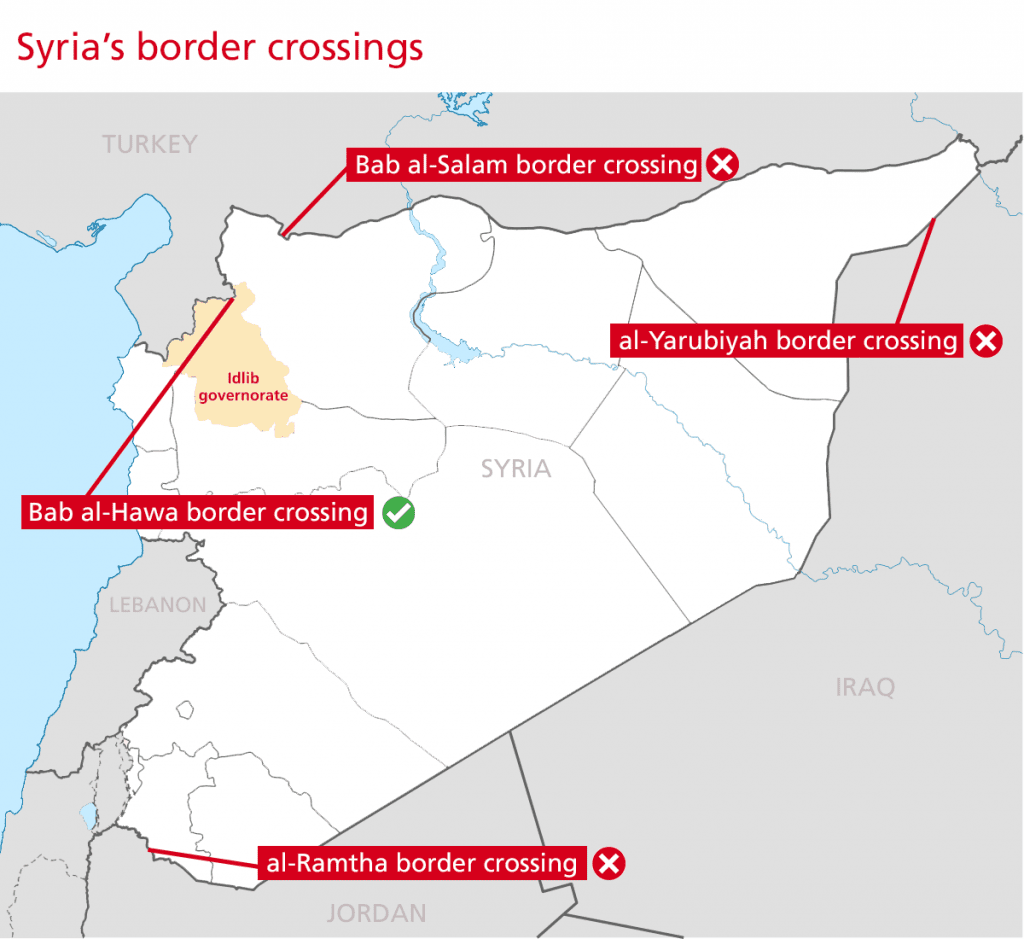
The aid that reaches the northwest through the Bab al-Hawa crossing is designated by the UN Security Council through resolution 2533. The Security Council votes annually to renew these UN-administered border crossings that deliver humanitarian aid convoys to civilians inside Syria. With the most recent annual renewals, more of the border crossings have closed, due to vetoes by permanent Security Council members Russia and China. As of June 2020, only the Bab al-Hawa crossing to Idlib remains open. This renewal is set to expire on July 10, 2021.

The Bab al-Hawa crossing must remain open – not only to supply critical aid, but also to address the ongoing COVID-19 pandemic

Last June, ahead of the 2020 border crossing renewal, PHR’s director of policy, Susannah Sirkin, briefed the Security Council, noting that “despite record-level cross-border aid deliveries into northwest Syria, the humanitarian needs remain overwhelming” and called on the Council to “enable humanitarian assistance through all available channels and to renew the cross-border aid resolution to secure access to lifesaving aid for the four million Syrians in need.” The same call stands today and is just as urgent, if not more so.

Vaccine distribution to the Northwest

More than half of the recorded COVID-19 cases in Syria have been in the northwest, where the COVID-19 tracking system is more sensitive in capturing cases. On April 21, 53,800 AstraZeneca vaccines were delivered to the northwest through the Bab al-Hawa crossing as part of the international COVAX initiative. With this shipment, Dr. Najeeb explained, the SIG plans to first vaccinate doctors and health care providers, then humanitarian workers, and then move to inoculate those over 60 or with comorbidities.

https://twitter.com/RaedAlSaleh3/status/1387855798802464772?s=20
Raed Al-Saleh, head of Syria’s White Helmets, receiving the COVID-19 vaccine.

The plan to vaccinate IDPs is similar to the larger vaccine rollout plan across Idlib. “When we move to vaccinate those in certain age groups and those with comorbidities, this will include those in the camps,” said Dr. Najeeb. The SIG plans to eventually have 10 vaccination centers across the camps, when there are enough vaccines. It hopes to achieve a 60 percent full vaccination rate soon, which would require 2,500,000 people across northwest Syria to be vaccinated. To underscore the challenge of reaching this goal, COVAX, the main current supplier of vaccines, is only scheduled to deliver a total of 1.5 million vaccines to northwest Syria this year, according to current distribution plans, and has fallen behind projections in many parts of the world due to lower-than-expected production. In the immediate term, while pursuing larger-scale supply improvements, high-income countries should send already-purchased doses of the vaccine to COVAX to facilitate larger shipments to Syria’s northwest until the SIG’s goal of two-thirds vaccination is achieved.

In the meantime, the SIG says it has not been made aware of a second shipment date for COVID-19 vaccines. What’s more, the batch delivered in April entered through the Bab al-Hawa crossing – and the continuation of that access depends on a critical Security Council vote before the resolution expires on July 10.

The Bab al-Hawa crossing must remain open – not only to supply critical aid, but also to address the ongoing COVID-19 pandemic, including access to vaccines. Along with maintaining the northwest crossing, the Security Council should also reopen the other three crossings, al-Yarubiyah, al-Ramtha, and Bab al-Salam, particularly as residents in some areas retaken by the Syrian government face documented discrimination that has impeded their access to health. It would be unconscionable for the Security Council to block lifesaving help for the millions of women, men, and children who depend on it in this devastated area of Syria.

Webinar

The Global Imperative to Reduce Vaccine Hesitancy

Physicians for Human Rights (PHR) hosted a discussion on how governments, advocates, and community organizations are working to address COVID-19 vaccine hesitancy.

The conversation was moderated by Heidi Larson, MA, PhD, director of the Vaccine Confidence Project at the London School of Hygiene and Tropical Medicine, where she is professor of anthropology and risk and decision science in the department of infectious disease epidemiology.

Featured panelists:

  • Ayman El-Mohandes, MBBCh, MD, MPH, FAAP is dean of the City University of New York Graduate School of Public Health and Health Policy, where he is also a tenured professor of epidemiology and biostatistics. He is chair-elect of the Association of Schools and Programs in Public Health, a member of the American Pediatric Society, and a fellow of the American Academy of Pediatrics.
  • Rev. Alvin Herring, MS is executive director of Faith in Action, the largest U.S. grassroots, faith-based organizing network. He was invited to participate in the launch of the White House’s COVID-19 Community Corps and is closely collaborating with leaders and organizers across the Faith in Action network to support equitable vaccine access.
  • Ingrid Katz, MD, MHS is associate faculty director at the Harvard Global Health initiative, a practicing associate physician in the department of medicine at Brigham and Women’s Hospital, and serves as research scientist at the Center for Global Health at Massachusetts General Hospital.
  • Charles Shey Wiysonge, MD, MPhil, PhD is director of Cochrane South Africa at the South African Medical Research Council, an Extraordinary Professor of Global Health at Stellenbosch University, and an honorary professor of epidemiology and biostatistics at the University of Cape Town.

See all events in PHR’s COVID-19 Webinar Series.

Blog

Pandemic Burnout: The Toll of COVID-19 on Health Care Workers and Children

Among the many impacts of the COVID-19 pandemic, its effects on mental health have proven to be widespread and substantial. In January 2021, four out of 10 adults in the United States reported symptoms of anxiety or depression disorder – a 400 percent increase from January 2019. Health care workers are particularly exposed: more than half of workers on the front line could be at risk for one or more mental health problems, alongside the health risks involved in working with COVID-19 patients.

Children are also facing a mental health crisis during the pandemic. Emergency department visits by children for mental health issues went up about 30 percent for kids ages 12-17 and 24 percent for children ages 5-11 between March and October of 2020. Unstable learning environments, prolonged isolation, housing insecurity, systemic racism, and various other factors are all making children vulnerable to burnout. Burnout is characterized by symptoms of physical or emotional exhaustion caused by long-term stress.

Children and health care workers of color are especially at risk, compounding the effects of systemic racism.

Physicians for Human Rights (PHR) hosted a discussion on the mental health impacts of the pandemic and solutions to expand and encourage access to mental health care as part of PHR’s COVID-19 webinar series. PHR Board Member Gail Saltz, MD moderated the discussion. She was joined by Felton Earls, MD, emeritus professor of human behavior and development at Harvard T.H. Chan School of Public Health and emeritus professor of social medicine at Harvard Medical School; Jessica Gold, MD, MS, assistant professor and director of wellness, engagement, and outreach at the Washington University School of Medicine; and Matthew Howard, DNP, RN, CEN TCRN, CPEN, CPN, director of scholarship and leadership resources at Sigma Theta Tau International Honor Society of nursing, part-time staff nurse in the emergency department at Eskenazi Health in Indianapolis, and nursing faculty in the graduate and doctoral programs at Northern Kentucky University.

Front Line Workers and Pandemic Burnout

In the webinar, panelists talked about how health care workers are especially susceptible to burnout. Health care work can be psychologically and physically draining, yet this often goes unnoticed. Even before COVID-19, physicians had the highest suicide rate among every profession, and nurses had higher suicide rates than the general population.

Only three percent of psychiatrists are Black, posing further barriers to Black health care workers looking for help.

“Most of us work 12-hour shifts at a facility or a hospital,” Howard, a frontline nurse, said. “We do see patients the entire time. One of the biggest things, in the emergency department at least, is, as we start, we’re gowned, we’re gloved, we’re masked, and we pretty much stay that way the entire time.” This can be extremely mentally and physically taxing, as being fully gowned, masked, and gloved can make someone more hesitant about attending to their own physical needs during their long shift.

Health care workers of color have been at a particular disadvantage during the pandemic, Dr. Gold pointed out. They are dying in more significant numbers than white health care workers and are less likely to seek out mental health services. Importantly, only three percent of psychiatrists are Black, posing further barriers to Black health care workers looking for help.

Much of the struggle comes from rapidly changing work environments, where health care workers are experiencing things that are painful to process. Many have never said out loud that what they are seeing is hard and “That they’re allowed to say that, that they’re allowed to have feelings, that they’re allowed to be struggling, and that coming to me is not a weakness in any sort of way,” Dr. Gold said.

Pandemic Burnout in Children

The pandemic has also left children, particularly those in Black and brown neighborhoods, without the usual mentorship and support they would receive from their communities, families, and educators, according to Dr. Earl. Accessibility is an important factor for children experiencing the pandemic, as a lack of resources can substantially change how children navigate online learning.

In wealthier neighborhoods, schools have the resources to accommodate children in safer ways, including the implementation of hybrid schooling. “Those students who are attending private schools and schools that are open more than closed are having their stress buffered more than those in neighborhoods dealing with racial injustice, at the same time the consequences of the pandemic, and the combined impacts of those two epidemics on children has to be considerable,” Dr. Earl said.

So, what can be done to support health care workers and children experiencing burnout?

One important step is building trust. “Having the experience and the belief that the organizations around you, the schools, the health care centers, the businesses, and government, are working for you and not against you is the most important single factor,” Dr. Earl said.

“Those students who are attending private schools and schools that are open more than closed are having their stress buffered more than those in neighborhoods dealing with racial injustice.”

Felton Earls, MD, emeritus professor of human behavior and development at Harvard T.H. Chan School of Public Health and emeritus professor of social medicine at Harvard Medical School

And while individual efforts to improve burnout are helpful, Dr. Gold stressed that real change needs to be enacted systemically. “The system has to acknowledge it has a problem,” she noted. “We have to say, hey, we’ve had a problem for a long time, and a lecture on burnout is not going to fix it.”

Instead, what is needed are long-term financial investments in addressing the mental health issues facing health care workers, alongside advocacy for more supportive work environments.

As for children, they must be supported in ways that respect their ideas and emotions, Dr. Earl suggested. The impact of the pandemic and systemic racism cannot be reversed or diluted, but there is value in honoring the ways children have been feeling during these difficult times.

Other

Title 42 Border Expulsions: How Biden and the CDC’s Misuse of Public Health Authority Expels Asylum Seekers to Danger

This fact sheet was produced in partnership with Doctors for Camp Closure, Doctors for America, and Human Impact Partners.

A year after the Trump administration introduced a specious order using public health as a pretext to end asylum at the border, President Biden and the Centers for Disease Control and Prevention (CDC) continue to use the order to expel hundreds of thousands of asylum seekers to danger. Carried out under a provision of U.S. health law – section 265 of Title 42 – these expulsions cause extensive suffering and harm under the guise of public health. The Title 42 order was issued despite widespread objections from epidemiologists and health experts, who have refuted its public health justification and issued detailed recommendations on safely processing asylum seekers during the COVID-19 pandemic. At this moment, we have an opportunity to right the wrongs of the past by following science-based public health policies and ensuring the safety of children, families, and adults seeking asylum. The Biden administration must end this expulsion policy, restore asylum at the border, and welcome asylum seekers with respect.

What is the Title 42 order and how is it being used to block asylum seekers?

Early in the pandemic, the Trump administration exploited the emergency to completely close U.S. doors to asylum seekers at the border, while continuing to allow many other, non-asylum- seeking travelers across. On March 20, 2020, the CDC issued an order citing section 265 of U.S. Code Title 42 (U.S. health law), allowing the U.S. federal government to immediately turn away and expel people arriving at the border seeking asylum protection. Such actions constitute violations of U.S. and international law. The order, which can be rescinded at any time, has been used by the Department of Homeland Security to carry out more than 750,000 expulsions and to essentially eliminate asylum at the border, resulting in dire humanitarian consequences, such as the severe overcrowding of families in migrant shelters and encampments in northern Mexico.

There is no public health rationale to categorically exclude asylum seekers while millions of other travelers cross the border without testing or contact tracing.

The Title 42 order is not based on public health rationale or data. It was implemented despite objections from senior CDC medical experts and it has been widely criticized by public health and medical experts, who state that the order has no scientific basis as a public health measure. International borders remain largely open to other travelers. People fleeing persecution are protected under U.S. and international law, and the United Nations Refugee Agency (UNHCR) has confirmed that countries must not deny entry or discriminate against asylum seekers solely because of the COVID-19 pandemic.

However, in spite of promising to bring humanity to the immigration system, President Biden has yet to repeal the Title 42 order; on May 19, 2020, it was extended indefinitely, with the CDC director stating the order will continue “until I determine that the danger of further introduction of COVID-19 into the United States has ceased to be a serious danger to the public health, and continuation of the Order is no longer necessary to protect the public health.” More than 70 million pedestrians and vehicle passengers were permitted to enter the United States through ports of entry on the U.S.-Mexico border from April to December 2020 without testing or tracing, while a much smaller number of asylum seekers have not even had the chance to have their case heard.

Banning only asylum seekers asking for protection in the United States is discriminatory, racist, and puts thousands of lives at risk.

The harsh consequences for children, families, and adults

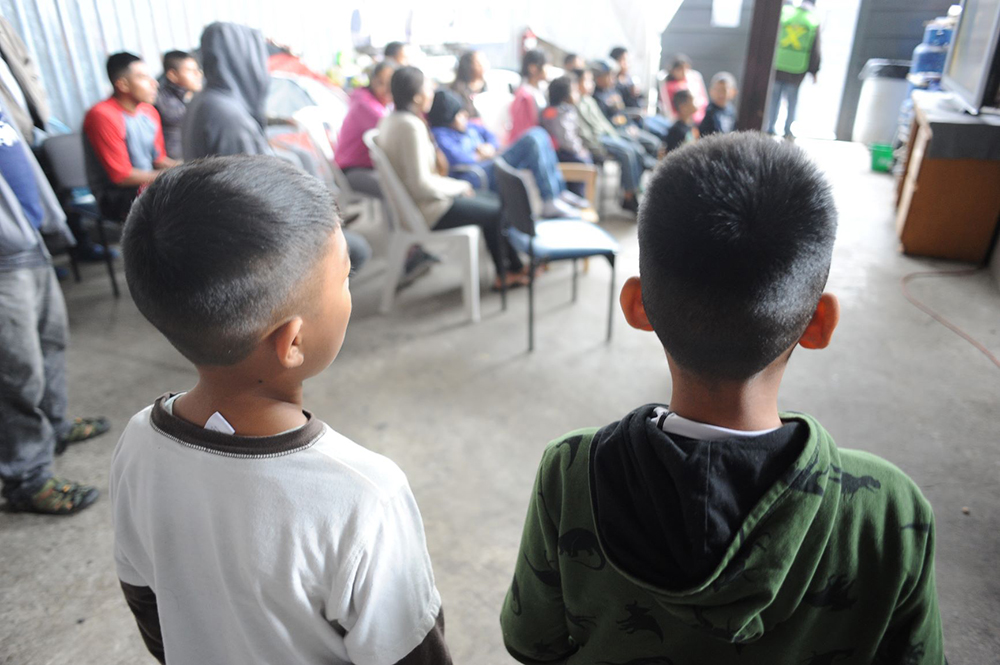
The Biden administration has used the Title 42 order to block or expel asylum-seeking families and adults from Burkina Faso, Cameroon, Cuba, El Salvador, Ethiopia, Ghana, Guatemala, Haiti, Honduras, Jamaica, Mexico, Nicaragua, Nigeria, Russia, Somalia, Venezuela, and Yemen. According to reports, there have been at least 492 violent attacks, including kidnappings, rapes, torture, physical assaults, and verbal threats, against asylum seekers turned away or stranded in Mexico during the current administration. Since February 2021, the U.S. government has put the lives of Haitians in direct danger by sending 27 airplanes with more than 1,400 adults and children, including asylum seekers, directly back to Haiti despite the political instability and violence there.

Shortly after children were exempted from the order due to pressure and litigation, parents stranded in northern Mexico were forced to make the difficult decision to send their children to the United States alone, as that was the only way they could ensure their safety, effectively causing new family separations and increasing the number of unaccompanied children in custody.

Although the Biden administration has started to accept 250 asylum seekers a day, effectively exempting them from the Title 42 order as part of negotiations in a federal court case, the Title 42 order must be revoked completely.

What is the alternative?

Instead of unlawfully shutting down access to asylum, the Biden administration must uphold U.S. values and refugee laws, listen to the guidance from public health and refugee experts, and welcome migrants with respect.

Scientific and medical research continues to show that social distancing, wearing masks, and home isolation are the most effective measures to limit the spread of the outbreak. Science- based public health measures can be implemented at U.S. borders that both protect the health of the American public, U.S. border officers, and communities on both sides of the border, as well as safeguard the lives of those seeking refuge and safety.

How you can take action

The Title 42 order relies on the justification that denying asylum access is good for public health. As such, the expertise of health professionals is crucial in correcting the narrative and demanding an end to the Title 42 border expulsions and this systematic violation of human rights. Here’s how you can take action:

Multimedia

NBC and MSNBC Correspondent Jacob Soboroff Talks with PHR About Family Separation

“I didn’t understand how this could be possible in the United States of America."

Under the Trump administration, more than 5,500 children were forcibly separated from their parents at the U.S.-Mexico border as part of the U.S. government’s policies to punish immigrants. When Jacob Soboroff, NBC News and MSNBC correspondent, first saw the conditions in which children were being held by authorities at the border, it was a sight he says he will never forget: “I didn’t fully understand how this could be possible in the United States of America.”  

Soboroff’s reporting quickly made him one of the leading voices on what was happening to immigrant children and families. His book, Separated: Inside an American Tragedy, also helped amplify PHR’s own clinical and legal findings that family separation constituted torture. As part of PHR’s 2021 gala celebration, PHR spoke with Soboroff on the importance of medical evidence in bringing abuses to light, and why families who endured this traumatic policy deserve justice.  

Miss the livestream of PHR’s 2021 gala? Watch the whole show here!

Multimedia

Dr. Richard Horton: A Leading Voice for Science and Rights Throughout the COVID-19 Pandemic

As editor-in-chief of The Lancet, Dr. Richard Horton led the charge in telling the story of COVID-19; a new virus that was rapidly killing millions and extremely difficult to contain. Dr. Horton made it his mission to encourage nations to mobilize more quickly; since then, Dr. Horton has become one of the sharpest critics of the public-health response to the pandemic in Britain, the United States, and other nations whose governments failed to trust public health experts and science.  

We presented the 2021 Physicians for Human Rights Award to Dr. Richard Horton for his extraordinary leadership and advocacy on global health issues and as a leading scientific and human rights voice at the forefront of the COVID-19 pandemic. The award was presented by Dr. Anthony Fauci, director of the National Institute of Allergy and Infectious Diseases and chief U.S. public health officer.   

As part of PHR’s 2021 celebration, Dr. Richard Horton also talked with Anna Werner of CBS News about the connection between human rights and the scientific community as well as the importance of international collaboration in vaccine rollout. “We have this terrible fracturing of the world where countries able to pay for vaccines are doing so, but not recognizing that the true solution is going to be to vaccinate all peoples of all countries. It’s very much a “me first” approach and it’s an approach that will ultimately fail.” 

Miss the livestream of PHR’s 2021 gala? Watch the whole show here!

Multimedia

The Fight Against COVID-19: Dr. Uğur Şahin and Dr. Özlem Türeci of BioNTech on Developing a Groundbreaking Vaccine and Protecting Frontline Workers

“To all of you who are out there - we are very grateful for what you do. You are our heroes...please don’t lose faith and continue. There is an end to this.”

As a deadly pandemic raged on, Dr. Uğur Şahin and Dr. Özlem Türeci – physicians, immunologists, cancer researchers, and BioNtech founders knew that expansive knowledge of mRNA vaccine technology gave them the potential for creating the first COVID-19 vaccine. In collaboration with Pfizer, Dr. Şahin and Dr. Türeci were able to do just that in an unprecedented 11-month timeframe, enabling many across the globe to protect themselves against COVID-19 quickly. 

As part of PHR’s 2021 gala celebration, PHR board member Ashish K. Jha, MD, MPH, dean of the School of Public Health at Brown University spoke with Dr. Şahin and Dr. Türeci about their path to creating the vaccine and what it means for the world. Dr. Uğur Şahin and Dr. Özlem Türeci also acknowledged the world’s healthcare workers for their heroic actions and sacrifices: “To all of you who are out there – we are very grateful for what you do. You are our heroes…please don’t lose faith and continue. There is an end to this.”  

Miss the livestream of PHR’s 2021 gala? Watch the whole show here!

Multimedia

The “Dr. Fauci of South Texas”: Dr. Ricardo Cigarroa on Advocacy and Accountability

“We all took an oath and we took that oath seriously. We will go where the illness is, even if it means that the illness might overtake us.”

After Laredo Medical Center’s first positive COVID-19 patient in March 2020, it quickly became the epicenter of the pandemic. As cases continued to rise, Dr. Ricardo Cigarroa made the difficult decision to close his cardiology practice and shift his focus to fighting COVID-19 head on. Affectionately called the “Dr. Fauci of South Texas,” Dr. Cigarroa turned his practice into a COVID clinic, made house calls, and accepted all patients who needed care. “We all took an oath and we took that oath seriously. We will go where the illness is, even if it means that the illness might overtake us.”  

Dr. Cigarroa has also been an advocate and leading voice in Laredo, Texas, educating community members in both English and Spanish on how to prevent COVID-19 infections and holding political leaders accountable for properly protecting Texans during the state’s second wave earlier this year. In a moving tribute, Dr. Cigarroa’s Physicians for Human Rights Award was presented to him by his brother, Dr. Francisco Cigarroa, head of pediatric transplant surgery at the University of Texas Health Center and chair of the Ford Foundation’s board of trustees. 

Miss the livestream of PHR’s 2021 gala? Watch the whole show here!

Multimedia

Public Health Over Politics: California’s Dr. Nichole Quick on the Role of Science for Public Safety in the Pandemic

As the coronavirus pandemic began to escalate in Orange County, California, it became clear that additional measures to protect the community needed to be taken. In May 2020, the former Chief Health Officer for Orange County, Dr. Nichole Quick, instituted a county-wide mask mandate. Dr. Quick faced enormous opposition from both the community and county supervisors, ultimately leading to her resignation in June 2020. 

With more than a decade of governmental public health leadership, Dr. Quick’s courage to prioritize public health over politics reflects her strength as a leader and fierce advocate for science. As one of PHR’s 2021 Physicians for Human Rights awardees,  Dr. Quick spoke with Anna Werner, award winning National Consumer Investigative Correspondent at CBS News about the dangerous undermining of public health and science: “We need to elevate the voices of public health professionals, medical professionals, and science so we can avoid these negative consequences in the future.” 

Miss the livestream of PHR’s 2021 gala? Watch the whole show here!

Get Updates from PHR