Webinar

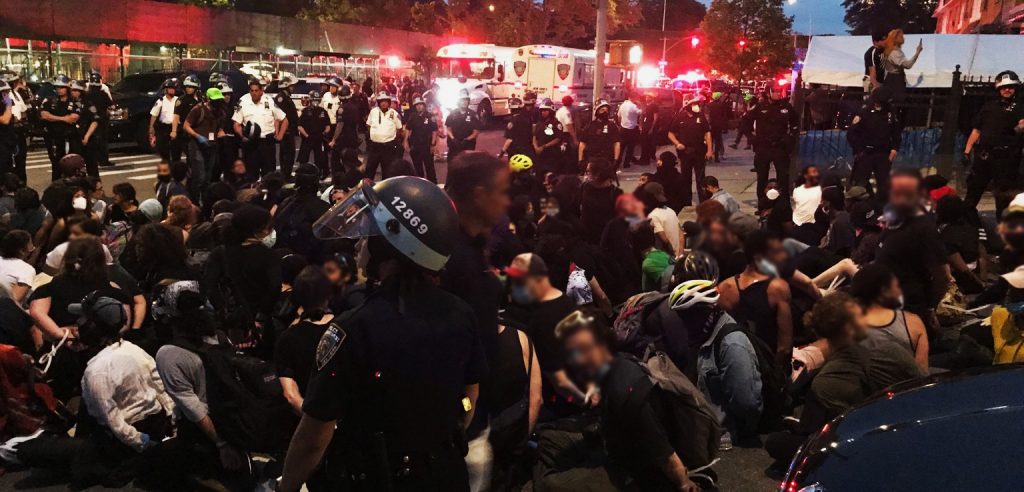
Health Implications of Potential Election-related Violence

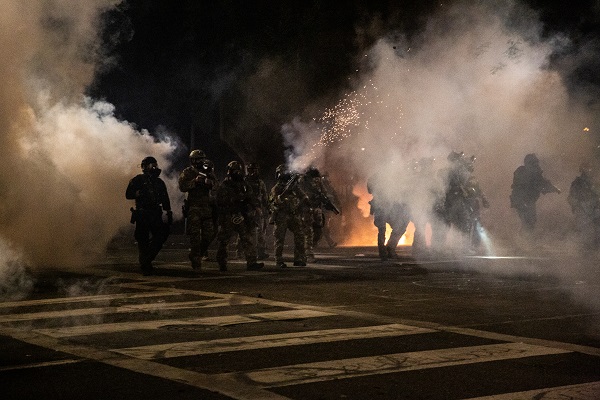
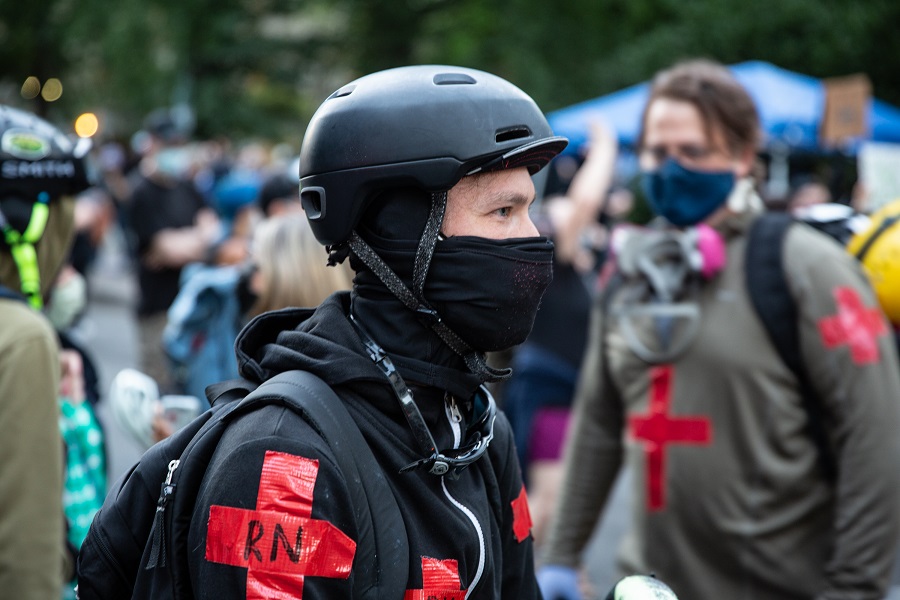
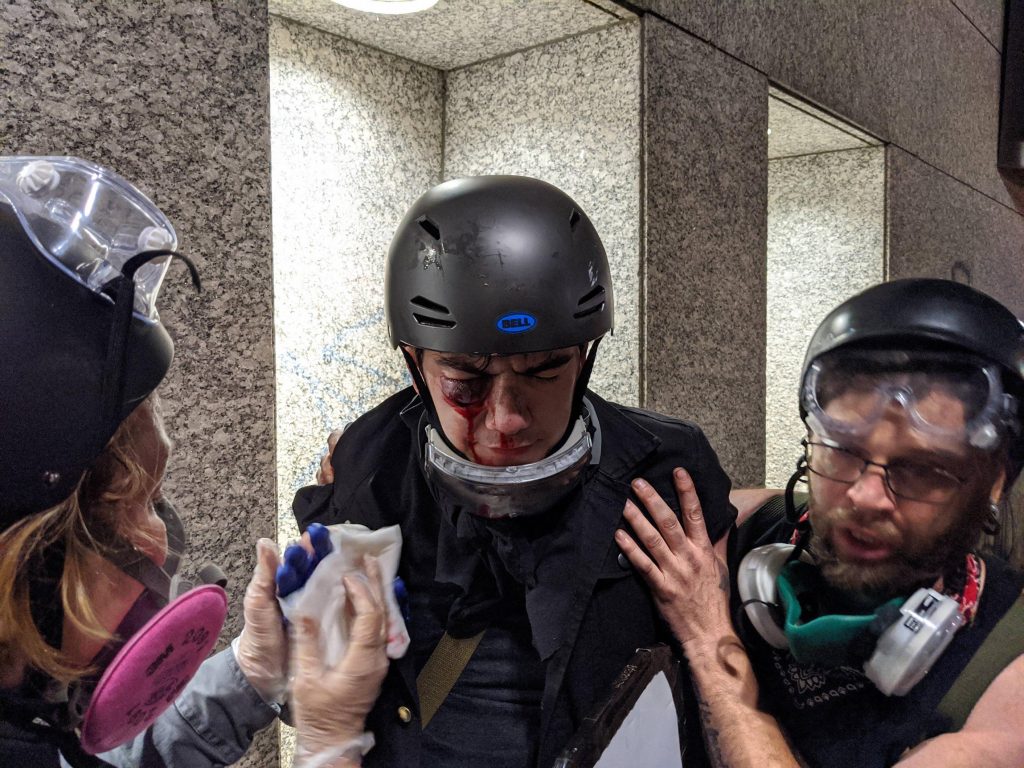
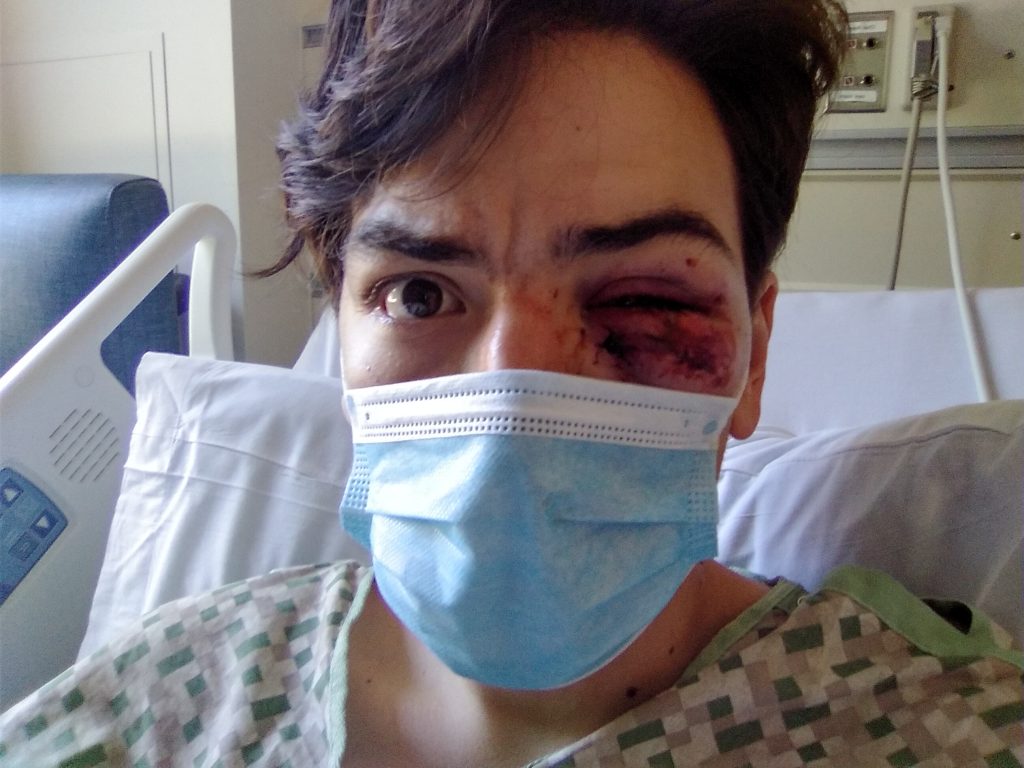
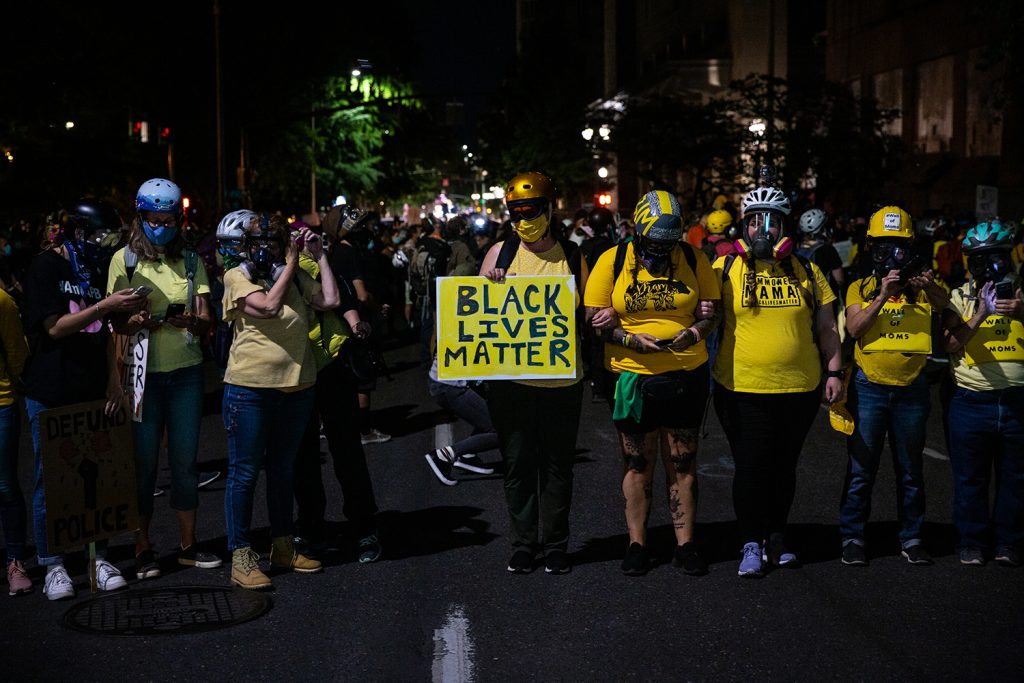
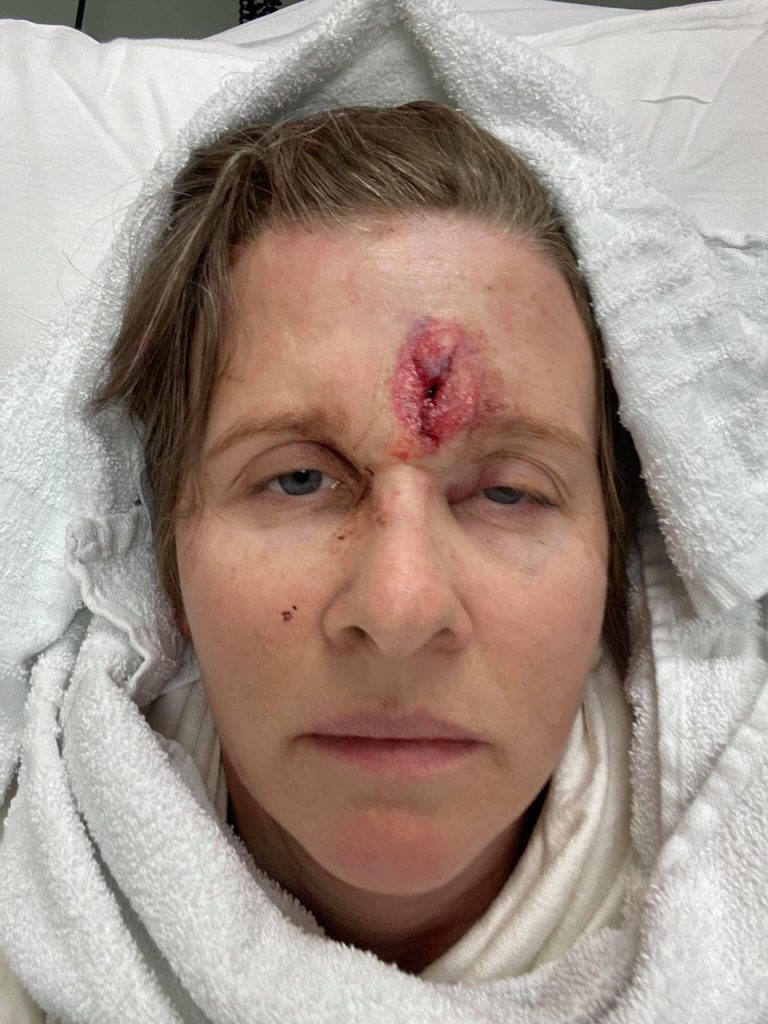
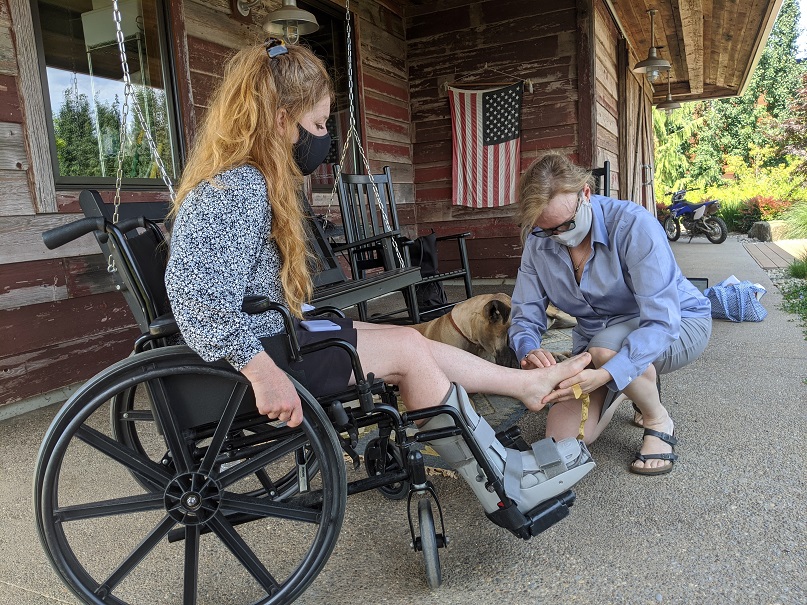
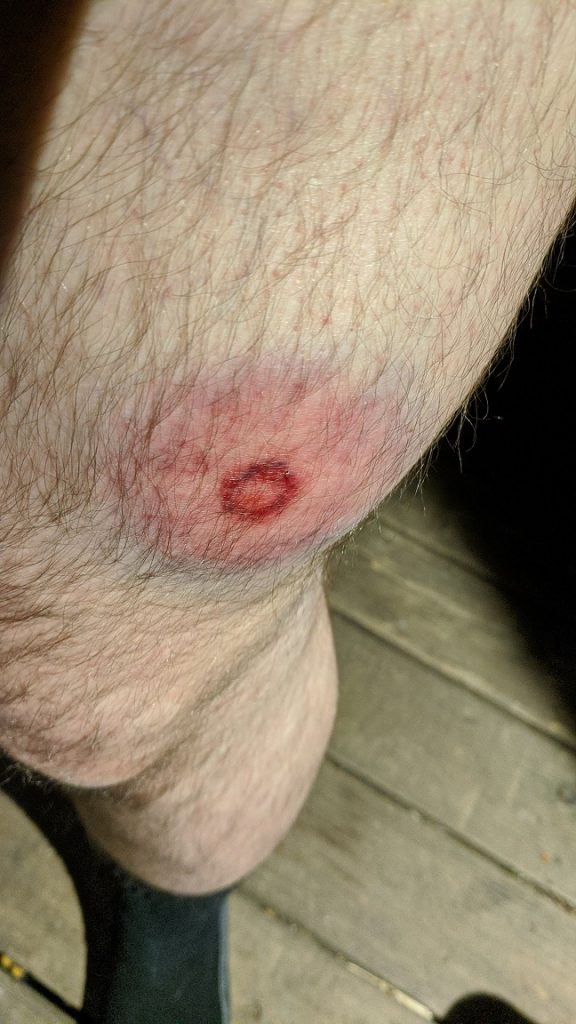
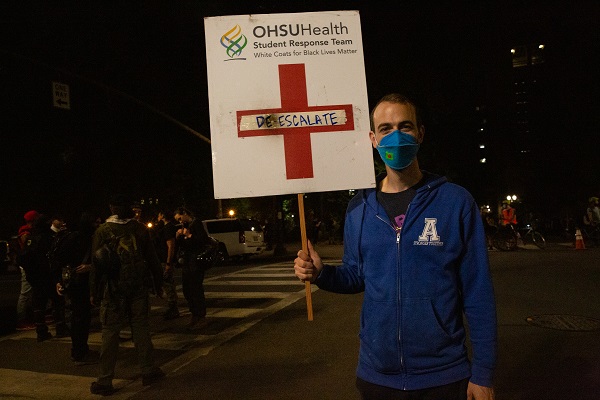
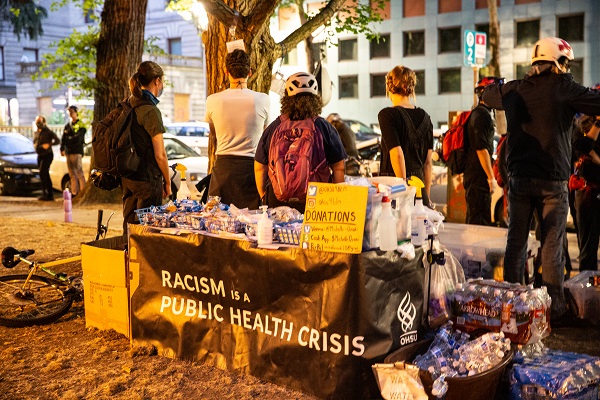
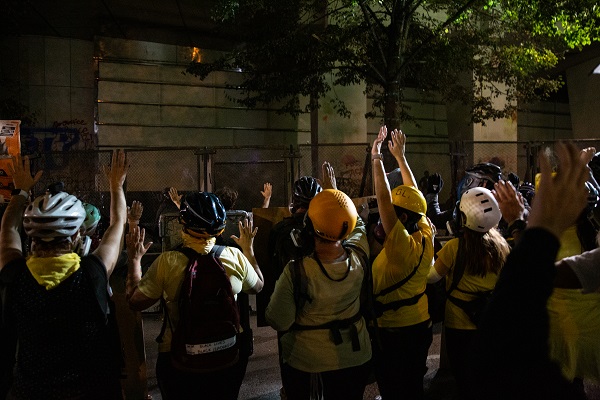
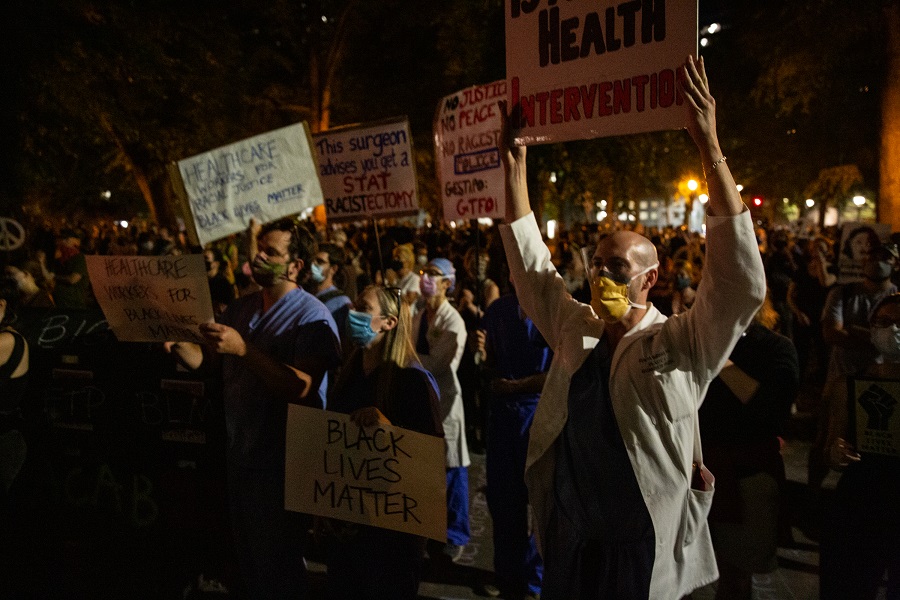
As the United States approaches Election Day, Physicians for Human Rights (PHR) hosted a discussion on Friday, October 23 on how to prepare, from a human rights and medical perspective, to respond to a range of potential election-related violence. We will share research, tools, and guidance prepared by PHR and discuss this timely issue through the lens of the additional challenges associated with the COVID-19 pandemic.

The conversation was moderated by Jennifer Leaning, MD, SMH, professor of the practice of health and human rights at the Harvard T.H. Chan School of Public Health. Dr. Leaning is associate professor of emergency medicine at the Harvard Medical School, former director and now a senior fellow at the FXB Center for Health and Human Rights at Harvard University, and a member of PHR’s advisory council.

Distinguished Panelists:

  • Rohini Haar, MD, MPH, PHR medical advisor, lecturer at the University of California Berkeley School of Public Health, emergency medicine physician, and expert on crowd-control weapons
  • Ranit Mishori, MD, MHS, professor of family medicine at the Georgetown University School of Medicine, interim chief public health officer at Georgetown University, and PHR’s senior medical advisor.

The conversation was moderated by Jennifer Leaning, MD, SMH, PHR Advisory Council.
See all events in PHR’s COVID-19 Webinar Series.

Report

Sexual Violence, Trauma, and Neglect: Observations of Health Care Providers Treating Rohingya Survivors in Refugee Camps in Bangladesh


Executive Summary

In August 2017, the armed forces of Myanmar (Tatmadaw) unleashed a campaign of widespread and systematic attacks on the country’s Rohingya communities, escalating previous episodes of violent human rights abuses committed against the Rohingya population. The United Nations (UN) and multiple human rights groups documented that Myanmar security forces committed rape, gang rape, sexual slavery, forced nudity, genital mutilation and other forms of violence targeting sexual organs, sexual assault, and threats and attempts at rape and sexual assault, followed by the killing of victims. In numerous instances, survivors recounted being forced to witness the rape or sexual assault of family or community members. Following what the Myanmar government called “clearance operations,” more than 720,000 Rohingya fled to neighboring Bangladesh. Analyses of these atrocities suggest that sexual violence is a deliberate strategy used by the Tatmadaw to intimidate, terrorize, punish, and forcibly displace the Rohingya civilian population from their land.

For more than 15 years, Physicians for Human Rights (PHR) has documented the persecution of the Rohingya and other ethnic minorities in Myanmar. In 2017 and 2018, PHR carried out forensic examinations of survivors and gathered qualitative and quantitative data corroborating the serious human rights violations committed against the Rohingya in August 2017.

Few studies have documented the experience of Rohingya refugees through the lens of the people who cared for them in Bangladesh – doctors, nurses, mental health experts, and other health professionals. PHR sought the perspective of health care workers in order to provide an independent corroboration of the patterns of violence sustained by the Rohingya community.

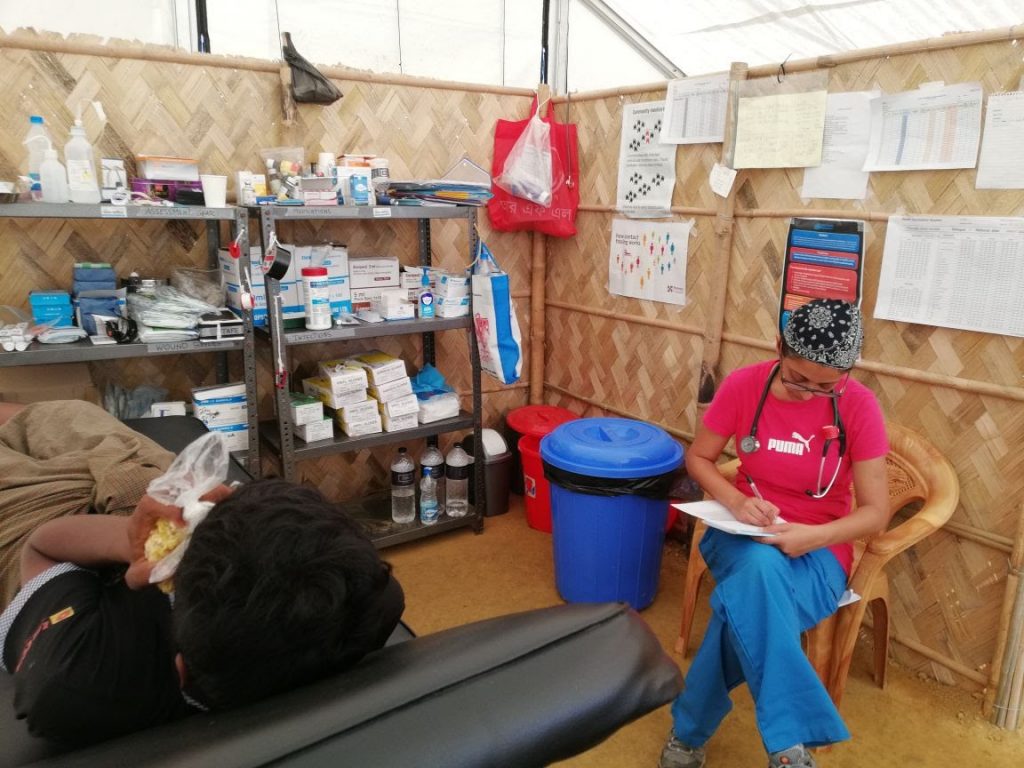
An emergency room physician provides care to a Rohingya patient at a refugee camp health center.

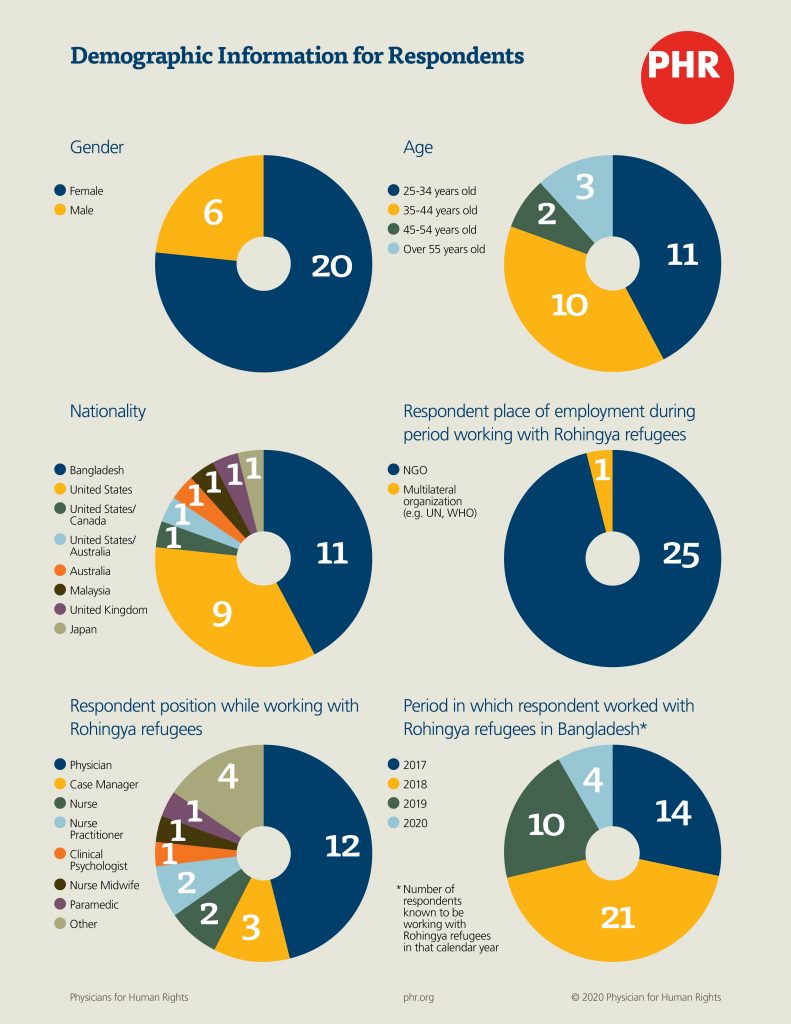
PHR interviewed 26 health care workers from a variety of disciplines who spent time in Bangladesh after August 2017 and worked closely with Rohingya refugees in a variety of health care settings. The interviews documented and explored their perceptions and understanding of patterns of injuries and conditions suffered by Rohingya refugees fleeing Myanmar who were evaluated in Bangladesh after August 2017, with a specific focus on sexual violence.

“Trauma shows up in a lot of ways for a lot of different people. Everyone there is traumatized, I would say, without a doubt.”

A physician working in Cox’s Bazar in 2017 and 2018

Sexual violence against the Rohingya in Myanmar was widespread and followed common patterns, according to accounts by these health care workers. These health professionals’ narratives help corroborate and attest to patterns of perpetration of sexual violence by members of the military and those in uniform, consistent with many other reports.[1]

In interviews conducted by PHR, health workers give further credence to the allegation that the Tatmadaw, the armed forces of Myanmar, was the primary perpetrator of widespread and systematic sexual violence against the Rohingya in Myanmar during the “clearance operations” of August 2017.

Health care workers interviewed as part of this study report that gang rape, sexual humiliation and other attacks on personal dignity, and sexual violence accompanied by other violent acts were typical experiences recalled by their patients and were reported to have been conducted by the Tatmadaw.

Health workers interviewed by PHR universally reported seeing evidence or being told of occurrences and patterns of sexual and gender-based violence committed against women, girls, men, boys, and gender fluid and transgender people by the Myanmar military. All health care workers PHR interviewed observed physical and psychological consequences of such acts against the Rohingya. They also found they were unable to adequately address the widespread and profound physical and psychological after-effects of the violence, due to barriers related to infrastructure, communication, culture, and lack of resources within the humanitarian response health care system in Bangladesh.

Health care workers shared that physical evidence of injuries consequent to rape and patient histories related to sexual violence were most often revealed during provision of care for other reasons, such as gynecological complaints or pregnancy-related care, as opposed to women seeking post-rape care services. The health workers’ recollection of the behavioral and mental health status of their patients further suggests that this sexual violence and other violations had a deep and long-lasting impact on these survivors, with high levels of trauma demonstrated years after the event. The health care workers interviewed consistently described the Rohingya as a population with vast, unmet needs for mental health support.

Finally, health care workers described multiple barriers faced by the Rohingya who fled to Bangladesh in accessing care, particularly in relation to sexual and gender-based violence and associated psychological consequences. These barriers include lack of screening protocols for physical and psychological consequences of sexual violence, limited availability of mental health care services, provider workload, patient privacy concerns, and stigma. These barriers decrease the Rohingya’s access to health services in refugee camps in Bangladesh, delay healing, and may compound the trauma they experienced as a result of the state of Myanmar’s violent campaign.

PHR recommends that meaningful efforts be made by the government of Myanmar to investigate allegations of widespread sexual violence by the Tatmadaw, prosecute those responsible, and work to provide human rights protections to the Rohingya currently living in Myanmar and any who choose to return in the future. PHR also calls on the government of Bangladesh and relevant humanitarian response actors to take all possible measures to address any barriers to care and ensure trauma-informed, survivor-centered approaches to respond to survivors’ needs. Finally, PHR recommends that the government of Myanmar and the regional and international community use all means at their disposal to support a range of justice and accountability efforts and ensure that the government of Myanmar complies with its obligations to prevent and punish the perpetration of grave human rights violations and related crimes, including sexual violence.  

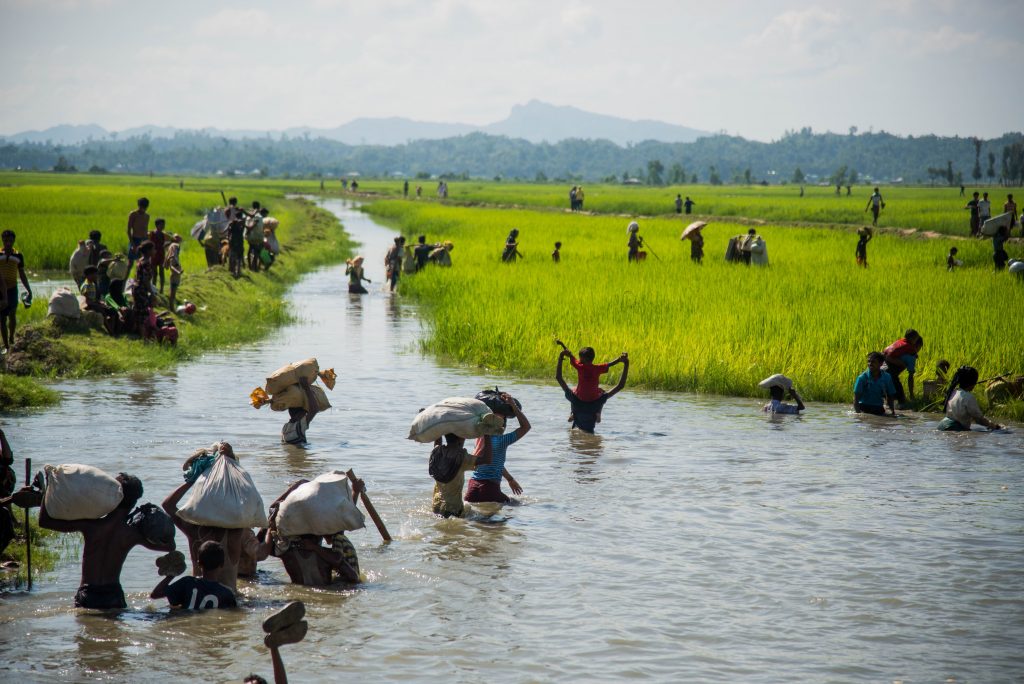
Rohingya flee into Bangladesh in October 2017 to escape a brutal campaign of violence by Myanmar’s military. Photo: Stringer/Anadolu Agency/ Getty Images

Background

In August 2017, the armed forces of Myanmar (Tatmadaw) unleashed a campaign of widespread and systematic violence on Rohingya communities in northern Rakhine state. The acts of 2017 were the culmination of decades of human rights violations and campaigns of violence targeting the Rohingya and other ethnic minorities. The Rohingya people, the majority of whom are Muslim, have lived for centuries in Rakhine state, on the western coast of Myanmar, a predominantly Buddhist country. In 1982, Myanmar’s military junta passed a Citizenship Law that stripped the Rohingya of citizenship; since then, they have been barred from their right to citizenship and have become stateless and subject to numerous human rights violations.[2] These have included restrictions on freedom of movement; denial of the right to health and education; forced displacement; arbitrary and illegal detentions and killings; forced labor; trafficking; and limited political participation,[3] among other violations.[4] The military government also physically constrained movement, imposed fees, and used intimidation tactics that denied Rohingya many fundamental rights, including the rights to health and education.

In October 2016 and August 2017, the Arakan Rohingya Salvation Army, a Rohingya insurgent group,[5] reportedly attacked Myanmar security forces. Following these alleged attacks, Myanmar security forces and local Buddhist civilians swiftly launched brutal “clearance operations.”[6] These counterattacks were, in the words of the 2018 United Nations (UN) Fact Finding Mission report, “immediate, brutal and grossly disproportionate,” targeting hundreds of villages and the entire Rohingya population.[7]

Ultimately, this violence drove more than 720,000 Rohingya to flee Myanmar for neighboring Bangladesh between August 25, 2017 and July 31, 2019. Most arrived in the first three months of the crisis, creating the world’s largest refugee camp near Cox’s Bazar.[8] Rohingya refugees arrived in an environment that was not prepared to accommodate them, to offer them adequate shelter and food, or to provide a health system structure equipped to meet their basic needs.[9] As Rohingya refugees were streaming over the border into Bangladesh, still raw from the physical effects and trauma of the violence committed against them, the Bangladeshi government and international organizations were racing to mobilize an emergency humanitarian response. 

Research since 2017 conducted by Physicians for Human Rights (PHR), other non-governmental organizations, the media, and the UN documented serious human rights violations, including sexual violence, committed against the Rohingya population as part of the government of Myanmar’s “clearance operations.”[10] In a survey conducted by PHR and its partners, the vast majority of 604 Rohingya hamlet leaders reported violence in their hamlet, violence against civilians, and the destruction of fields, homes, and mosques.[11] The majority of respondents reported beatings, over half said people were shot, and more than a quarter reported rape or sexual assault in the hamlet.[12]

Studies documented that sexual violence was deployed as a deliberate, targeted strategy used by the Tatmadaw against the Rohingya civilian population in order to intimidate, terrorize, and punish them, and forcibly displace the Rohingya from their land.[13] These attacks were aggressive, sweeping, methodical, and perpetrated on a massive scale; the UN fact-finding mission found that the attacks  “constituted crimes against humanity, war crimes, and underlying acts of genocide accompanied by inferences of genocidal intent.”[14] Rape, gang rape, sexual slavery, forced nudity, genital mutilation and other forms of violence targeting sexual organs, sexual assault, threats and attempts at rape and sexual assault, followed by the killing of victims were documented by the UN investigators, human rights and humanitarian organizations, and journalists, among others.[15] During the “clearance operations” starting in August 2017, Myanmar security forces raped and sexually assaulted women and girls as part of wider attacks on villages; there were many instances of gang rape with multiple perpetrators, or mass rape, where survivors reported that soldiers gathered them in groups and then raped or gang raped them.[16] Many victims are assumed to have been assaulted by their perpetrators to the point of death or left for dead.[17] Sexual violence against Rohingya men and boys was also documented. This violence often intersected with violence against women and girls, with men and boys forced to witness sexual violence against family or community members. Genital violence and anal rape were also reported as the common forms of sexual violence against males.[18]  

Much of the extensive research and documentation of the violence experienced by Rohingya refugees while in Myanmar by PHR and other organizations has focused on collecting the experiences of individual Rohingya survivors. However, there are no studies that systematically capture the observations and perceptions of health care workers who interacted with many refugees or treated them for their injuries, both physical and psychological, from this violence. Their intimate and detailed knowledge of the health needs of Rohingya refugees who fled Myanmar uniquely positions health care workers to speak to the overall patterns of injuries and violations seen in this population and point to survivors’ ongoing needs. The documentation of this perspective also contributes to the current literature.

“Many of them seemed to be totally blank. No emotion was working on their mind. They couldn’t answer any question they were being asked. They cried continuously…. They described … so many deaths, then rapes and other fears.”

A clinical psychologist working with Rohingya refugees since 2017

Survivors’ responses to trauma are unique and a variety of factors influence their willingness to disclose details about their experience. Health care workers are generally trusted members of civil society and, seen as members of a caring profession, are often the first people to whom survivors may consider disclosing their trauma and intimate details of their experiences. For this reason, health care workers can serve as proxies for survivors. Interviewing health professionals enables the systematic collection of survivor and witness accounts, while protecting patient privacy and avoiding subjecting survivors to potentially traumatizing interviews.

PHR set out, in a methodologically rigorous way, to document and explore patterns of injuries and conditions suffered by Rohingya refugees seen in Bangladesh soon after August 2017, with a specific focus on sexual violence, via interviews with health care workers who worked with Rohingya refugees in Bangladesh between August 2017 and August 2020. We also sought to understand the barriers and facilitators to evaluating patients, documenting human rights violations, and delivering care to Rohingya survivors. The goals of this research were two-fold: first, to corroborate accounts of sexual violence reported as part of the 2017 attacks on the Rohingya with new data from health care workers, and, second, to describe the physical and mental health needs of Rohingya survivors and the availability of services to meet these needs.

Methodology

Physicians for Human Rights (PHR) conducted one-on-one semi-structured interviews with 26 health care workers, working for a variety of humanitarian organizations, who provided direct services to Rohingya refugees in Bangladesh for some period between August 2017 and August 2020. The research team included American and Bangladeshi social scientists and physicians who have experience documenting or responding to sexual and gender-based violence. Data was collected in two phases between November 2019 and August 2020. The study received institutional review board approval through Georgetown University and exemption through the PHR Ethics Review Board.

Study Population

The study was designed to explore Rohingya refugees’ experience of sexual and other forms of violence through interviews with health care workers who had worked with them in Bangladesh.  Health care workers can provide narratives about individual patients based on their medical evaluations and clinical encounters. Given the number of patients seen over time by health care workers, they can also speak to the overarching patterns and trends in experiences of sexual violence and physical and psychological after-effects. Health care providers often have access to information that others do not, as people may be more open to sharing information that is more personal or private. Given known underreporting of sexual violence among the Rohingya,[19] speaking with health care workers who provided care to survivors for other health concerns allowed for collection of clinical perspectives on sexual violence that may not have been formally reported. For the purposes of this research, health care providers were defined broadly to include physicians, nurses, midwives, community health care workers, mental health and psychosocial support workers, case managers, and health volunteers. Health care workers were included if they had worked with Rohingya patients in Bangladesh any time after August 2017. Though those working in the refugee camps during the period immediately after August 2017 and into early 2018 were more likely to capture the acute effects of the violence, health care workers providing care to Rohingya survivors after 2018 were also able to share stories of survivors’ experiences of violence in Myanmar and speak to the long-term physical and mental impacts of this violence.

The study was specifically designed to capture information on sexual violence suffered by Rohingya refugees without speaking directly with survivors. PHR chose these methods to avoid subjecting survivors to potentially re-traumatizing interviews and to ensure that PHR was not contributing to repeat documentation of the same Rohingya survivors. No identifying information from the stories of individual survivors was collected.

Sampling Strategy

Respondents were identified through a chain referral sampling approach. Sampling and conduct of interviews occurred in two phases. During the first phase, members of the U.S.-based study team identified individuals and organizations engaged in work in Cox’s Bazar, Bangladesh, where the Rohingya refugee camps are located. During the second phase, Bangladeshi team members identified potential respondents currently working with the Rohingya refugees. Throughout both phases, study inclusion criteria and emergent findings were used to identify important profiles of respondents to ensure sample diversity and data responsive to the research objectives.[20] As is standard practice with qualitative research, “data saturation,” the point at which no new information or themes are observed in the data, was used to establish the final sample size to support maximizing variability and ensure sufficient data to identify themes and patterns.[21]

Data Instruments

The data collection instruments included a semi-structured interview guide and a brief demographic form to capture the health professionals’ education, employment, and work experience with the Rohingya. The interview guide covered eight key areas, including: 1) respondents’ professional background and contextual details of work with the Rohingya; 2) general experiences treating Rohingya patients; 3) knowledge of and experiences treating Rohingya patients in relation to injuries due to physical violence; 4) knowledge and experiences treating Rohingya patients in relation to sexual and gender-based violence; 5) knowledge and experiences related to the mental health status of Rohingya patients; 6) stigma and factors associated with disclosure among Rohingya regarding sexual and gender-based violence; 7) knowledge related to human trafficking of Rohingya refugees; and 8) challenges in addressing trauma and health care. While the overall topics in the interview guide remained the same throughout the project, as data was collected and analyzed, changes were incorporated into the questions and probes to ensure coverage of emergent themes.

Data Collection and Management

All interviews except one were conducted virtually using Zoom, Skype, and WhatsApp. Each interview took approximately 50 minutes. Interviews were conducted in English by two physicians and one social scientist based in the United States, and data was transcribed verbatim by a professional transcription service (Rev). Interviews conducted in Bangla were conducted by one social scientist based in Bangladesh, and data was transcribed into Bangla and then translated into English by a team of qualified transcribers and translators. Translated transcripts were reviewed by the interviewer, fluent in both English and Bangla, for accuracy of translation. Transcribed interviews were uploaded into a qualitative data management program (Dedoose).[22] Transcribed data was reviewed by team members and a coding dictionary was developed. Codes covered the research objectives (e.g., sexual violence, mental health) as well as emergent issues from the data review (e.g., patient-provider relationships).

After the completion of a first round of coding, the coders conducted a qualitative intercoder reliability assessment on a sample of transcripts, which indicated an overall consistency in the use of the codes. 

Data Analysis

The research team reviewed the coded data, representing excerpted portions of the interview transcripts, to identify cogent themes and patterns and create a cohesive narrative responsive to the project’s research objectives and reflective of the data. The analytical process was iterative and employed regular team debrief sessions to further reflect upon and analyze this data. 

The data analysis plan included the following steps: 1) creating documents compiling all excerpted text for each of the codes; 2) reviewing and cleaning the documents to reduce duplications due to multiple coders; 3) identifying themes and creating tables for each code word; 4) cross-referencing themes across codes to establish linkages; 5) selecting illustrative examples for each theme; and 6) developing summaries based on the data within the search documents to address the research objectives. These data analysis summaries are interpreted within the context of other data and published sources on sexual and gender-based violence among the Rohingya and the medical, legal, and social implications of the findings. Data included in this report is that which addresses the specific objectives regarding sexual violence and associated physical and psychological trauma, and availability of resources to address that trauma.

Limitations

As a qualitative study, the interpretation and analysis of data is subject to interpretation biases introduced by the researchers. The research team was multidisciplinary, drawn from a variety of cultural backgrounds, and worked collaboratively to address potential biases in the interpretation of results. As previously noted, a qualitative exercise to check for consistency in the application of codes in the data analysis phase was employed to address this potential limitation.

As study respondents were asked to recall patient histories and their experiences from events dating as far back as 2017, recall bias is inherent in the data presented. However, some of our respondents had written notes, a journal, or a blog from their time spent in Cox’s Bazar; as they were given a summary of the main research themes prior to interviews, this allowed them a chance to review prior to the interview. Some respondents did not begin treating Rohingya patients until 2018 or later; they were therefore not able to comment directly on injuries sustained in Myanmar, but could speak to the longer-term impacts, both physical and mental, of the violence experienced by their patient population.  

The sample of study respondents represented a diversity of geographic and cultural backgrounds but did not include respondents who were Rohingya. Observations regarding culturally mediated behaviors must therefore be viewed as highly contextual. The survivors’ stories recounted in these interviews were communicated through multiple cultural and linguistic filters, and, often, relay conversations conducted through the help of an interpreter. Despite these limitations, there were significant similarities across the collected narratives in terms of the experiences of the Rohingya.

As with all qualitative research, our sample was relatively small and not random. Therefore, there are limitations in terms of the generalizability of this data regarding the experiences of the many health care workers and their organizations involved in the humanitarian efforts over the past three years in Cox’s Bazar.

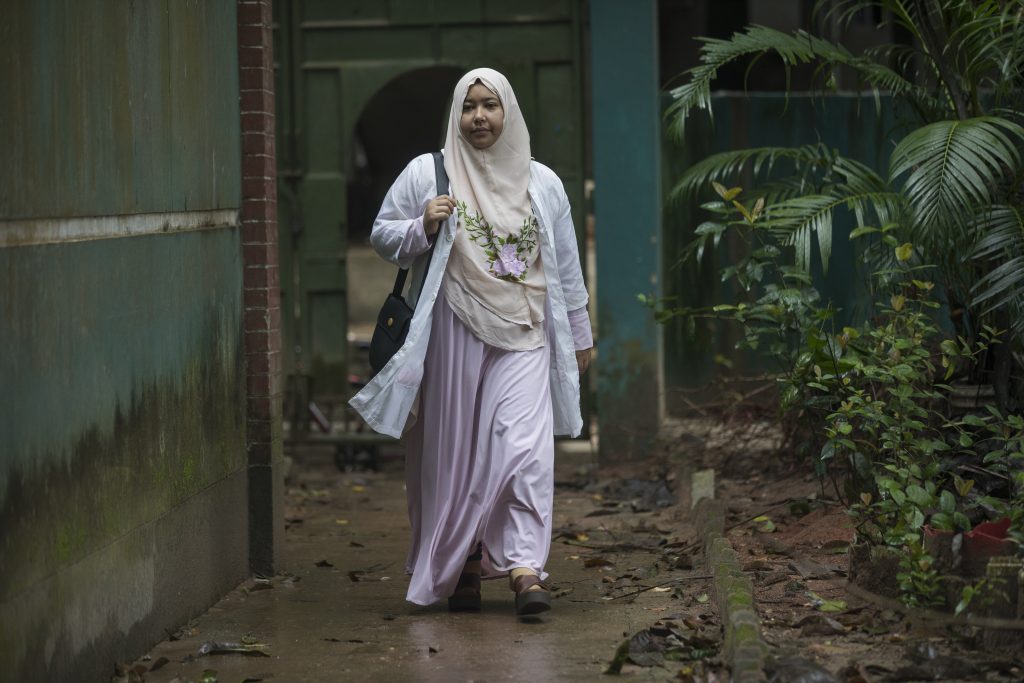
Above: Dr. Monira Hossain, a health worker who provided care to Rohingya survivors in Bangladesh. Photo: Salahuddin Ahmed for Physicians for Human Rights

Findings

Health care workers in Physicians for Human Rights’ (PHR) sample universally reported seeing evidence or being told of occurrences and patterns of sexual and gender-based violence committed against Rohingya women, girls, men, boys, and gender fluid and transgender people by the Myanmar military. All health care workers PHR interviewed observed some of the physical and psychological consequences of such acts against the Rohingya. Health care workers found they were unable to adequately address the widespread and profound physical and psychological after-effects, due to barriers related to infrastructure, communication, culture, and lack of resources within the humanitarian response health care system in Bangladesh.

Health care workers who treated survivors consistently described patterns of sexual violence perpetrated against the Rohingya, including gang rape and sexual violence accompanied by other violent acts such as beatings, shooting, and killing of family members.

PHR’s findings are organized into two sub-sections that capture, first, the health care workers’ accounts of Rohingya survivors’ experiences of sexual violence, focusing on the patterns of perpetration, and, second, their accounts of the interactions of Rohingya survivors with the humanitarian response system in Bangladesh.

Survivor Experiences

Sexual and Gender-Based Violence (SGBV) Experienced by the Rohingya in Myanmar

Health professionals interviewed by PHR universally shared accounts recounting widespread sexual violence against Rohingya women and girls, perpetrated by members of the Myanmar military, men in uniform, or police.

According to many of the health care workers interviewed by PHR, Rohingya women and girls articulated their histories of sexual violence during the course of clinical and other health services that were not specific to SGBV-related concerns, such as during mental health evaluations, routine gynecological care, maternal health visits, or related to vague physical symptoms encountered in primary care clinics.

“Providers were mostly focused on physical symptoms and I think they were overwhelmed…. At the clinic itself, we didn’t have the time, or we didn’t have the personnel to deal with mental health problems.”

A nurse working at a primary health clinic in Kutupalong camp in 2018

Health care workers who treated survivors consistently described patterns of sexual violence perpetrated against the Rohingya, including gang rape and sexual violence accompanied by other violent acts, such as beatings, shooting, and killing of family members.

“Most of the cases are very similar. Families killed in front of them and raped, [survivors] escaped in the bush across the border.” A nurse midwife working in Kutupalong camp in 2017

“They give some example[s] like, when the army [was] at their villages and initially they [were] trying to beat them, and if there is any female … they raped them, and after rape, they killed them.” A clinical psychologist working in Cox’s Bazar in 2018

Health care workers told PHR that their patients reported that men and women were separated during the violent attacks and that the men were killed after being separated from the women. The women, who were forced to watch the men be killed, were then raped; many of them described leaving Myanmar for Bangladesh following these violent attacks. One health professional described hearing similar stories following this pattern:

“Most of the women tell me [a] very, very similar story. When they were in Myanmar … a group of men who had uniform[s] [which] look like a police or army, something like that, came to their house and … [t]hey were raped in front of their family. After that, they took all the men…. They beat them and killed them, and they put all men into the fire and all women are taken to somewhere else in [an] empty house and they had to take off their clothes and they were naked. Men who ha[d] a kind of uniform look came to the house and they raped those women every day until they became unconscious. When those women [woke] up, [there was] fire around the house, so they tried to run away to the river which is a border to Bangladesh, and they crossed the river … to come to Bangladesh.” A nurse midwife working in Kutupalong camp in 2017

Another health professional described an almost identical tactic shared with them by patients of separating and killing the men and raping the women.

“When the Myanmar military would come to a village, they would immediately split the men and the women into two groups and they would pretty much immediately kill the men in front of the family and bury them in mass graves, and then the women would most likely be raped at that time and then either … moved to a different section or … out of that village.” A nurse working at a primary health clinic in Kutupalong camp in 2018

Multiple health care workers who spoke to PHR heard from their patients aboutwomen being confined in houses where they were repeatedly raped:

“She and, I think, around 14 other women had been taken and locked into a house, and … they were all gang raped.” A nurse practitioner working in an outpatient clinic in 2017

When asked about who committed these acts of sexual and gender-based violence, the majority of health care professionals interviewed by PHR recalled patients describing the perpetrators as members of the Myanmar military, men in uniform, or police.

“She was raped by one of the Myanmar military personnel.” An emergency room physician working in Kutupalong camp in December 2017

“It was the military … those who are associated with the army of that country.” A psychosocial support officer and case manager working in Balukhali camp since 2018

“About those who perpetrated them [the rapes], they said that [it was] a group of military people.” A clinical psychologist working with Rohingya refugees since 2017

The perpetrators were described as acting in groups and engaging in gang rapes in a systematic, organized fashion.

“Her age is between 42 to 45 years. The situation was the same, 25 militaries attacked their home at night all of a sudden. After the attack, the men of the house ran to the hill near the river, escaping through the kitchen door. After the men ran away, the woman was alone … her son was hiding in [the] poultry house. For that [her son hearing her gang rape while hiding] she is still ashamed and wishes to die. This woman is also a victim of gang-rape by three military [men]. Her physical condition was so bad that it was beyond describable in words. Her uterus was very badly damaged. It used to bleed a lot after every few days. And she had a lot of pain.” A paramedic and psychosocial support officer working in Cox’s Bazar since 2017

Many of the health care workers interviewed in this study reported learning that rape had been committed by multiple perpetrators. One health care worker discussed the case of a young girl about 12 or 13 years old.

“Six of them fled from their home together, along with many other people of their locality. Some women got separated…. Seeing an abandoned house … they took shelter in that house. There were five women in total who took shelter there, including her [the young girl’s] mother, elder sister, and aunt. Then four to five military officers attacked there. They blindfolded their eyes and tied up their hands and feet. Once they were tied up, they became victims of gang rape. After the gang rape, they decided to burn these women. Their eyes were [blind]folded…. One person’s hand was tied up with another person’s. But how this teenage girl managed to untie her hands only Allah knows that. She freed her hands. Then she removed the blindfolds off her eyes and saw that they were bringing some hay from a little away, dried hay. The military men, the military men were bringing dried hay to burn these women. She was tied to her mother. Her mother was done for a long time and she was senseless. Her mother was not moving, she couldn’t understand whether her mother was alive, so she fled away from there to a piece of land where arum [a flowering plant] was being farmed that was just beside there. She entered that arum-land and, while doing so, she said she became senseless. According to what she [said], I think that they were given something that made them senseless…. After that, when the girl crawled into that land, she was shot. The flesh on her back got teared at different parts. Then she crawled with all her energy, crossing over a lot of dead bodies, she told that she informed others of the many dead bodies lying down there through gestures. And that her mother and others with her were burnt. Her mother and others were burnt. All of them. She saw that happening…. She had no clothes on her. She said that none of them had. Then one man put off his lungi while wearing just a piece of fabric, wrapped her with that lungi. She was covered in blood. In that condition, he took her on his shoulder with much struggle, two or three days/could not recall properly … they came to the border of Bangladesh.” A paramedic and psychosocial support officer working in Cox’s Bazar since 2017

Multiple health care workers interviewed for this study reported hearing of instances where their patients were forced to witness acts of violence, including sexual violence, against family members:

“They had to leave their country all of a sudden, their houses were set on fire, their farming lands, their farming lands were set on fire, and even something like killing his brother by shooting in front of him or raping his sister in front him has also happened.”  A coordinator of services for male and transgender Rohingya survivors since 2018

“To make them talk, it takes time to get started and, of course, they cry. Also, they say I want to die, or I want to commit suicide, this kind of a thing.”

A nurse midwife working in Kutupalong camp in 2017

Disclosure of Experiences of Sexual Violence

Rohingya women generally revealed a history of sexual violence incidents during provision of care for other reasons, such as gynecological complaints, as opposed to encounters for post-rape care services, according to health care workers.

“She had complaints of vaginal discharge, so I asked her if I could examine her vaginally. And then, when I did the exam, it looked like she had some trauma, just from the scars on her perineum. So, I asked her a few questions about that, and then she started crying and talked to me about her experience of rape at the hands of the military, the Myanmar military.” A nurse practitioner working at an outpatient clinic in Kutupalong camp in 2017

Health care providers also described patients sharing experiences of sexual violence only after being asked directly during the medical intake.

“Because I knew that there was a history of sexual violence among the population, I was alert to the possibility of that. And then I asked … if she had had any problems with the military, or with anybody, when she was leaving Myanmar. And she hesitated a minute and then she started crying and said that she and I think around 14 other women had been taken and locked into a house, and that they were all gang raped. And some of them did not survive, but she was able to survive. She was now 40 years old.” A nurse practitioner working at an outpatient clinic in Kutupalong camp in 2017

Many of the health care workers learned of their patients’ experiences of sexual violence while the women were receiving pregnancy-related care. Respondents recalled seeing higher numbers of pregnant women during months that corresponded to the patients having conceived during the period of violence inflicted on the villages in Myanmar, in and around August 2017.

“Of course, they had no way to check if they are pregnant or not and by the time they notice, it’s already 20 weeks and that was a time they come to the clinic. That was in November, because the crisis happened the end of August and most of the incidents happened the end of August up to beginning of September.” A nurse midwife working in Kutupalong camp in 2017

One health care worker noted an increase in births in the spring of 2018, which they perceived as correlated with conception having occurred during the events leading up to and during the August 2017 violence.

“It was … nine months after August of 2017. So, there was a huge increase in the births because of all the women who were raped.” A physician working in Kutupalong camp in 2018

These estimations of increased pregnancy and birth rates are consistent with published studies and observations by other organizations[23] suggesting rates above the historical baseline among Rohingya refugees fleeing to Bangladesh.[24]

A few health professionals stated that they suspected that many children seen in their clinics were born of rape.

“The second time I went back [to the camps] in July [2018], that would have been … 11 months [after the violence], so many of the babies that were products of rape had been born. It was untalked about. Nobody said anything and the babies would be brought in…. They’d be accepted into the community, into the family. Obviously, the mom was there, but there was no discussion of how that baby came into being.” A pediatrician working in Cox’s Bazar in 2017 and 2018

Some health care workers were specialists in women’s health who managed sexual and reproductive health, and who described women asking to terminate their pregnancies (reportedly related to rape prior to arrival in Bangladesh).

“They were interested in this [abortion]. They were interested because everyone in the family knew that she was unmarried. Moreover, she couldn’t tolerate the fact that she was going to be the mother of a child [born of rape].” A paramedic and psychosocial support officer working in Cox’s Bazar since 2017

A health care worker described how difficult it was for survivors to both grapple with their unwanted pregnancy and contemplate asking for a termination of their pregnancy, given cultural and religious norms and legal restrictions on abortion in Bangladesh.[25]

“The midwife came and said, ‘Madam, a patient … has come, she wants [to have a] miscarriage, which means she does not want to keep the baby anymore … she … [wants to] have an abortion…. What can I say?…. When I started talking to that woman, she would burst into tears…. After asking her some questions deeply, like, ‘Why do you want to ruin the baby?’ She was told the Islamic thing that it is a great sin to ruin a baby. Then we would see that many became [emotional] and one or two [women were] saying that ‘I have a child; it is not mine and I … I was not even married. I don’t want to keep this baby.’” A clinical supervisor and health post manager in Balukhali camp since 2018

Despite the legal restrictions on abortion in Bangladesh, the accepted family planning strategy of menstrual regulation to “regulate the menstrual cycle when menstruation is absent for a short duration” is allowed up to 12 weeks after a women’s last menstrual cycle.[26] This approach provided an avenue for humanitarian organizations in Cox’s Bazar to offer comprehensive reproductive health options for Rohingya survivors.[27] A few clinicians told PHR that women also used informal or traditional abortion practices to attempt a self-induced abortion. When these attempts led to complications, they would present to clinics for care.

“[They had had] failed attempted terminations when they came.… [The staff] would call me because the patients were very unwell. At that point, obviously, we didn’t really discuss what had happened in terms of whether they were, who was responsible for that. We didn’t know, but we definitely saw a significant number of termination[s] …  self-induced terminations of pregnancy when we were there”. A physician working with Rohingya refugees in 2017 and 2018

Sexual Violence Experienced by Non-Female Patients

The perpetration of sexual violence was not limited to women and girls. Health workers also shared stories of providing care to non-female-identified patients – including men and boys and gender fluid and transgender individuals – who were survivors of sexual violence in Myanmar, though they were often very reluctant to share details.

“We have found … adults and young boys, they also became victims of physical violence…. There are one or two who had become victims of sexual violence, there are one or two like this.” A clinical psychologist working with Rohingya refugees since 2017

Accounts of these experiences included narratives of direct sexual violence, as well as instances of being forced to witness the rape or sexual assault of family members and extortion and duress related to their sexual orientation or gender identity.

“Those who became victims among the gender diverse population [gender fluid, transgender], they became such victims even [in Myanmar] …They were victims of different type[s] of teasing, they were victims of different types of harassment. But what they feared … the most [in Myanmar] was that they … [would be] killed….  Those groups [Rohingya “thugs” in Bangladesh] used these people [coerced the gender fluid or transgender person into sexual acts] [by threatening] to rape the sisters…[or] to rape his mother.” A coordinator of services for male and transgender Rohingya survivors since 2018

Mental Health Status of Survivors

Many of the women who had been raped exhibited signs of mental health conditions such as depression and post-traumatic stress disorder (PTSD), according to the health workers who treated them.

“We … found that most of them [the refugees] were suffering from PTSD. They had full-blown symptoms. We noticed that … [they] even didn’t feel comfortable in talking to us. We were taking care of them, but they couldn’t manage to trust us completely…. At that time, there were some symptoms in them like their response, anxiety, hastiness, I mean very unstable, and some were in depression, like they were depressed and were not talking at all…. And it was like they came through such a crisis, many of them seemed to be totally blank. No emotion was working on their mind. They couldn’t answer any question they were being asked. They cried continuously. Upon being asked about anything, the first answers they gave were about what they had seen there. How they have come here. They described the difficulties of the situation, how much they had to walk, so many deaths, then rapes and other fears. That they were scared, these things were very common in them.” A clinical psychologist working with Rohingya refugees since 2017

“To make them talk, it takes time to get started and, of course, they cry. Also, they say I want to die, or I want to commit suicide, this kind of a thing.” A nurse midwife working in Kutupalong camp in 2017

While some health care workers found that patients were able to verbalize their traumatic experiences and encouraged this, others found that patients were reluctant to express their feelings and share their experiences, displaying passivity during their treatment and remaining silent and motionless. Health professionals drew parallels between the trauma they witnessed in Rohingya populations and the trauma they saw in other victims of abuse.

“Most of the stories of trauma came from the patient’s mouth, like, ‘This is what happened to me,’ not necessarily ‘This is an injury, here are the scars.’ They said the trauma stories. I tried to have them express it as often as I could because my philosophy [is that for] patients who have gone through this, it’s part of the healing. We might be the only person that they might be able to narrate this story to. Whenever I had the opportunity or if I wasn’t as busy, I would try in a mindful way, just kind of ask the patient if they would be willing to share what happened…. I’m not a psychologist, I’m not a clinical psychiatrist, but I felt like I had to act like one for a lot of the patients because they’re coming in with vague symptoms like … muscle aches or stomach pain. That’s sometimes somatization of trauma. That was an often thing that we saw as well.” A volunteer physician working in Cox’s Bazar in 2018

One clinician described their patient:

“I found her absent-minded. She didn’t look at me, didn’t talk, and only kept on crying. I observed different kind(s) of abnormal behavior.” A paramedic and psychosocial support officer working in Cox’s Bazar since 2017

Psychosomatic complaints were very common, and with further probing, were presumed to stem from trauma.

“A huge number of our patients had somatic complaints, like very vague. Like, ‘I’ve had a headache or a stomachache or backache.’ And then, when you dig deeper into how long have these things been going on, it’s been going on as long as they left their home or as long as they’ve been living in the camps. So, we certainly saw a lot of patients who we couldn’t find anything wrong with them clinically and it seemed like the providers would attribute it to just a stress reaction that’s manifested in a physical way. And that was very, very common.” An emergency nurse working in satellite health clinics in December 2017

“We try to identify the causes in medical science like blood loss or nutritional deficiency, it could be seen that those were not found. But … [if] she is feeling weak … or cannot concentrate in anything, then we would assume that it was a psychosomatic disorder and of course it was a mental disorder and surely they were suffering from some mental problem.” A clinical supervisor and health post manager in Balukhali camp since 2018

Continued Experiences of Sexual Violence

Sexual violence experienced by many of the female refugees did not stop at the Myanmar-Bangladesh border. Once the refugees were settled in Cox’s Bazar, health care providers began to hear stories about and see evidence of intimate partner violence (IPV) perpetrated by Rohingya men. These incidents were attributed to the trauma of violence experienced in Myanmar and stress related to life in refugee camps. Multiple health care workers interviewed for this study described regularly seeing injuries resulting from IPV. This represents an ongoing source of violence and trauma for Rohingya survivors.

“Trauma shows up in a lot of ways for a lot of different people. Everyone there is traumatized, I would say, without a doubt. So, men taking that out on their wives is definitely something that we saw for sure.” A physician working in Cox’s Bazar in 2017 and 2018

“Hitting, punching, kicking on any part of the body, including the head, and even if you’re pregnant it could still be the abdomen…. We’ve had women whose husbands have tried to hang them, whose husbands have tried to poison them, who have been burned. A nurse practitioner working at an outpatient clinic in Kutupalong camp in 2017

Survivors’ Interaction with the Humanitarian System in Bangladesh

“What you realize is, as a doctor, you feel like everyone’s going to present to health care immediately, but there’s so many conflicting priorities for people in that setting that they have to try and deal with because they basically often have nothing.” A physician working with Rohingya refugees in 2017 and 2018

During the early days of the Rohingya influx into Bangladesh in late 2017 and early 2018, refugees had very limited access to health resources, as the existing infrastructure was inadequate to handle the arrival of such a large number of people. As refugees began arriving in Cox’s Bazar, the response was coordinated by the government of Bangladesh, through the Refugee Relief and Repatriation Commission, the UN High Commission for Refugees (UNHCR), and the International Organization for Migration. While the Cox’s Bazar region was already home to displaced Rohingya refugees, the influx starting in August 2017 quadrupled this population in the span of two months, putting an enormous strain on the environment and existing infrastructure.[28] At that time, lifesaving care and the provision of basic necessities, food, water, clothing, housing, and sanitation were prioritized. Mental health and non-acute physical health problems were often deprioritized and left unattended. The health system also had to handle outbreaks of infectious diseases, such as diphtheria and measles. As a result, the Rohingya’s extensive health needs resulting from the violence – including sexual violence – experienced in their home villages in Myanmar and during the long journey to Bangladesh were not addressed immediately.

As the crisis evolved, international agencies and NGOs arrived in the camps to set up health centers, health clinics, and community-based services for the Rohingya, with different mandates and specializations. Often, these health posts were staffed with a mix of Bangladeshi and international health care professionals serving in long-term and short-term positions, some of which were volunteer response positions.

Respondents reported that, in the beginning of the crisis, there was little coordination between the various humanitarian assistance groups, resulting in overlap in some services, inadequate care for certain groups (e.g., pregnant women), and a haphazard referral system. Over time, organizations started coordinating a response to the crisis using the cluster approach, where organizations are grouped by sector to reduce overlaps and gaps in service.[29] The health sector was coordinated jointly by the government of Bangladesh, through the Civil Surgeon’s Office of Cox’s Bazar District and the World Health Organization.[30] Through this approach, a health infrastructure developed to support standardization and quality improvement and extension of needed social support to survivors.

An ongoing barrier to Rohingya survivors is that Bangladesh has not granted the Rohingya official documentation and legal status as refugees. Without this status, Rohingya survivors do not have the rights that it would afford and face denial of freedom of movement and access to public services, which, in turn, prevents them from accessing essential basic legal protections and services for survivors of sexual violence.[31] 

“One of the other challenges … was the Rohingya not having refugee status and … if we ever needed to transport them to a higher level of care, actually being able to transport them past a certain [geographic] point to other hospitals was difficult. A physician at a Balukhali inpatient department in 2017 and 2018

However, in addition to challenges that Rohingya survivors faced to access services because of the chaotic care environment, they also faced key barriers to reporting human rights violations due to a variety of cultural and systemic issues outlined below. As demonstrated in the survivor stories above, these barriers did not prohibit survivors from sharing their experiences, but, without special consideration to these challenges, the burden fell on survivors to navigate a care environment that was not well suited to their needs.

Stigma

Social stigma and fear that they would be rejected or blamed by their own families and communities hindered some survivors from disclosing their experiences of rape or sexual assault. Female survivors were reluctant to discuss and disclose sexual and gender-based violence that occurred in Myanmar out of fear they would not be able to get married or would be rejected by their husband. 

“So, one evening, my midwife came with one nine-months pregnant lady and they were saying that she never had any antenatal checkup. I was wondering why and after a while we … [learned] that she was raped nine months ago and just because it’s a matter of shame to disclose it within their community, or to come to the facility here. They kept her inside the house; she didn’t receive any antenatal checkup or anything.” A medical officer working at a health post in Camp 17 since 2018

“It’s like they didn’t even talk about it [rape] among themselves, and they didn’t want to know, because of the fear of ramifications. And they probably felt so helpless, too. So, it sounds like even among the family groups, they really didn’t talk about what happened when those raids would happen.” A nurse practitioner working at an outpatient clinic in Kutupalong camp in 2017

In many cases, as demonstrated in the survivor stories shared above, survivors chose to disclose their experiences to health care workers, whom they trusted. However, stigma around sexual and gender-based violence was so great that one health care worker shared that, at times, they felt unsafe reporting pregnancies resulting from rape, for fear of retaliation from the survivor’s family and community members. 

“I was afraid myself, because they were staring at me and still, I can remember, they were saying that something happened [related to] satanic belief, like … [some] really bad thing happened to her.… They were asking me, ‘Is it abdominal tumor or not?’ Although I was 100 percent sure this is a case of pregnancy, but as I lived really close to [the] Rohingya community within a tent, a single doctor, no other support, I had to write it as abdominal tumor with a query mark…. Still, I can remember the case because it was not an abdominal tumor, but I wrote it just because of my own safety.” A medical officer at a health post in Camp 17 in 2018

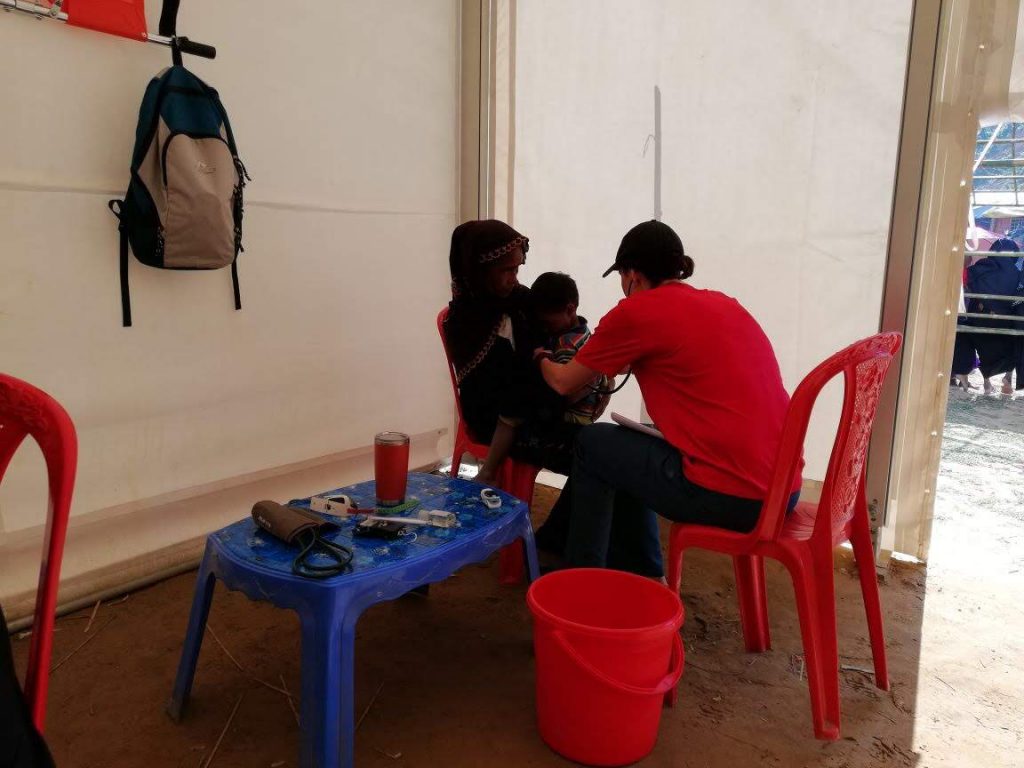
An emergency nurse provides care to a Rohingya woman and child in a satellite health clinic in a Bangladesh refugee camp.

Challenges with Communication and Rapport Building

Respondents shared that they felt that a long history of denial of health care, negligence, and abuse in Myanmar made the Rohingya reluctant to seek care in Bangladesh and made it difficult for Rohingya patients to speak openly with health professionals.[32]

“They haven’t ever seen a provider in Myanmar. We were the first clinician they’ve ever seen in their lifetime…. There [were] definitely many, many cases where it was clear that this was absolute neglect of having access to health care. I would say pretty much every patient we saw, we were the first clinician they had ever seen in their lifetime, even the elderly patients.” A volunteer physician working in Cox’s Bazar in 2018

Rohingya were perceived by respondents to be “private people.” They would come to health centers to see a doctor for treatment but would remain silent and reluctant to discuss their problems or what had happened to them in Myanmar.

“When they come to the doctor, [they feel] they are to state why they are there, and they are not there to have a social conversation about their problems. So, they barely go into any details about anything that they have suffered unless people really sit down and ask about it.” An emergency room physician working in Cox’s Bazar in December 2017

Some respondents noted that this privacy and reluctance to share may come from the dehumanization and violations experienced in Myanmar.

“I sensed that a lot of them felt like they were treated their entire life as though they weren’t even a human being.” A volunteer physician working in Cox’s Bazar in 2018

Respondents noted that active listening, comforting with physical touch, body language, and showing care worked as strategies to treat physical illness and develop trust.

Importantly, none of the study respondents were Rohingya health care workers. As a result, observations regarding “openness” to discuss personal issues and other culturally mediated behaviors are highly contextual and viewed through an outsider’s lens.

Building rapport with the Rohingya was a challenge for health care workers across specialties and countries of origin. A lack of direct communication, the use of a translator, absence of Rohingya health workers or support staff, and cultural barriers made it difficult to understand Rohingya patients’ actions and motivations.

“I think their culture is so different that it was very hard to understand what they were thinking or feeling. It seemed like they were scared. Anything you tell them, they will say, ‘Yes, yes, yes.’ – they wouldn’t ask any questions. And to me, that’s a pretty bad sign because they do not understand anything that you’re saying. And then, no matter what you said, whether it’s right or wrong, they wouldn’t ask for clarification or ever say that they didn’t understand.” A volunteer physician working with Rohingya refugees in January 2018

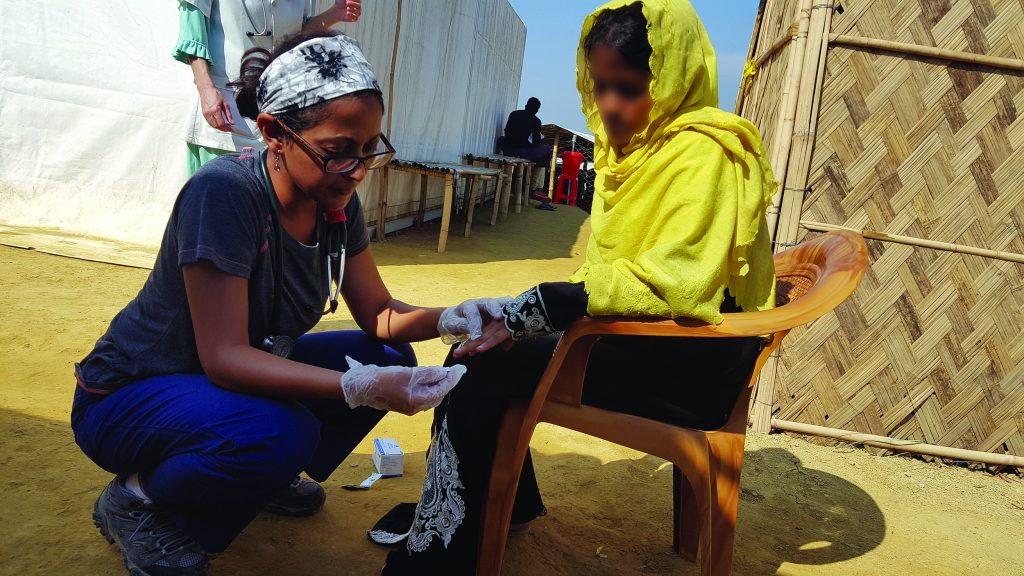
An emergency room physician treats a young Rohingya patient in a Bangladesh refugee camp.

Gender sensitivities

Sensitivities around the interactions between males and females and expectations of modesty provided an additional cultural barrier to the provision of care. Female patients were resistant to any kind of physical examination and categorically disallowed male providers to conduct these.

“I’m a western man, western white man speaking with a Rohingya woman patient and even if there was just kind of a simple gynecological complaint, many Rohingya women would prefer just to continue with their complaint than allowing a strange man to examine them, even with another woman in the room.” An outpatient attending physician in Kutupalong camp in 2018 and 2019

According to the health professionals, when working with male translators, special steps had to be taken to make female patients feel comfortable providing information.

“When we did exams, he would step behind the curtain and translate from behind the curtain.” A physician working in Kutupalong camp in 2018

If the gender dynamics in the exam room were not culturally appropriate, the patient might not disclose important information or deliver a complete history that would help in assuring the necessary treatment. Respondents shared stories where the workload and staffing at health centers did not make it possible to observe cultural best practices (e.g. having a female physician and female translator for female patients). In these cases, some health care providers felt that they were not able to deliver culturally competent care. When the patient, translator, and doctor were of the same sex, they would be most comfortable in relaying information between them and the chances of getting the right information from the patients was far higher.

“We have hired two female Bangladeshi translators who translate for the female providers, and they do a very good job of that. People seem to feel comfortable with them and to really confide in them. But if I have to use a male translator … then it’s often happened that people will come back later and tell me ‘I had this problem at that time, but I didn’t tell you because you had a male translator.’” A nurse practitioner working at an outpatient clinic in Kutupalong camp in 2017

Some health care workers reported that conducting clinical encounters through interpreters from the Rohingya community made provision of care easier, as they had someone to help provide culturally appropriate care and, in some cases, patients were able to be more open with translators than with providers. Some health care workers described their translators as a key partner in the exam room, able to skillfully navigate the discussion of challenging topics with Rohingya survivors.

“Part of what was so amazing about him was that it did feel like he was able to get women to open up. To me, being able to tell somebody that they were suicidal is a huge trust. He built rapport with them and was able to really help them figure out…. They did a lot of talking.” A physician working in Kutupalong camp in 2018

Some health care workers, on the other hand, shared that working through interpreters actually made provision of care to survivors more challenging in terms of addressing stigma and building rapport. They also shared that a lack of detailed medical terminology in the Rohingya language was a major challenge. Most of the time, they would use translators to understand the specifics of the health problems, but not all the interpreters were familiar with the Rohingya cultural context, as they were not Rohingya themselves, but local Bangladeshis.

“I think that was made worse by the fact that the dialect that our interpreters had, which was like a Bangladeshi dialect, … wasn’t exactly the same as the Rohingya language. So, there was maybe some language barrier there, too … because sometimes from their tone I couldn’t tell if they were necessarily being sensitive in the way that they were asking questions or the answers that they were giving.” A volunteer physician working with Rohingya refugees in January 2018

Translators were also often not trained in medical interpretation. Health professionals shared that they sometimes felt the interpreters were summarizing rather than translating the whole story told by the Rohingya patient, a frequent issue when conducting interviews and obtaining medical information through translation. They hypothesized that this might be because of limited skills in translating verbatim, lack of training or awareness of medical terminology, fear of secondary trauma for themselves, or the hospital/health center being too busy and time with patients being limited, increasing pressure to summarize.

Provider workload

One frequently discussed impediment to providing care for survivors was the health care providers’ workload, many referrals, long wait times for patients, and limited time allotment to evaluate patient needs. The pressure of provider workload made it particularly difficult to provide trauma-informed care to survivors of sexual violence.

“When people would call, and I would answer my phone sometimes like 30 to 60 times an hour of people referring patients. I was just unable to…. We just have such a large number of [patients]. It was very challenging for us.” A physician working with Rohingya refugees in 2017 and 2018

“Sometimes we have to see 80, 90 patients, one person, one doctor, and it’s so difficult for one doctor to see 80 plus patients. It’s very challenging for us.” A medical officer working in the Rohingya response since February 2018

Respondents reported that hundreds of patients would be lined up to receive services even before the clinic opened. Respondents noted that addressing trauma within the short visits was not feasible.

“They would start lining up, I don’t know, three, four in the morning. We’d get there … there’d be 300 of them.… I don’t think that there was a lot of care. There was no ob/gyn care at all. There was no mental health care other than [organization redacted].” A pediatrician working in Cox’s Bazar in 2017 and 2018

Privacy Concerns

Respondents also discussed the physical structure of the clinics, which made it difficult to ensure privacy and adequate time for patients to discuss trauma.

“Our clinic was like bamboo, like thin bamboo walls…. There was really limited privacy overall.” A nurse working at a primary health clinic in Kutupalong camp in 2018

Health professionals stated that the lack of privacy and inadequate resources to maintain confidentiality during counseling held the patients back from opening up about their experiences.

“We tried to provide the counseling, and for the counseling we need ideal setups. So, sometimes it is very tough when we try to make confidentiality and rapport building, and sometimes there is … [a] secret issue. Lots of noises over there, so clients sometimes feel discomfort to give enough information. Sometimes … [beside] the room, there is another room, they are talking and working and even they are laughing sometimes.” A clinical psychologist working in Cox’s Bazar in 2018

Barriers to effective referral systems

Initially, there was a lack of coordination among the health services and clear referral pathways were not in place. Over time, as partners became more aware of each other and the camp-level coordination system was more established, a clearer system for referral was developed. For sexual violence survivors, respondents shared that they had to take an active role in the referral process, both by contacting organizations in advance to confirm availability and share patient information confidentially, and to follow up to ensure that the patient was seen. PHR noted uneven referral pathways and different referral systems used by different providers.

“We sent her to Cox’s Bazar, explained the situation to the doctor over the phone. So, they, too, maintained the confidentiality of the matter. I arranged for that so that my patient could get the better treatment, the right treatment. I kept a record of that in the register over there.” A paramedic and psychosocial support officer working in Cox’s Bazar since 2017

“There was a lot of network problems some days ago and phones could hardly be reached. During that time, we found it hard to refer.… Before referring, … I need to confirm that the concerned person is available there. Otherwise, the survivor would take the trouble of going there and coming back without any result. In fact, we telephone our relevant focal person, GBV [gender-based violence] focal or legal assistant, and we check if they are available and only then send the survivor.” A psychosocial support officer and case manager working in Balukhalicamp since 2018

“We are closely involved with the protection sector of those concerned camps. If we need referral for any case, if we need to provide treatment beyond our authority, then we send the person to the concerned sector of the concerned camp by maintaining a referral slip.” A coordinator of services for male and transgender Rohingya survivors since 2018

Respondents noted that the government of Bangladesh played a key role in the referral system, as the camp in charge (CIC) – the government’s administrative head of each refugee camp – supports referral systems and has to approve patient movement outside of the camp, which is especially critical for survivors seeking psychological support that is not available in the camp.

“One of the main objectives of the camp orientation meetings was to encourage support between one service provider and another. The CICs used to play an important role in this. When we would find that we are not getting any result after referring, we used to tell the CIC and [they] would then take effective action.” A GBV case management officer working in camps in Teknaf and Ukhia since March 2018

Inconsistent Screening Protocols

The availability and use of screening protocols for both physical and psychological conditions varied over time and between institutions. Workload and inexperience of some of the health care providers affected consistent use of screening protocols.

“I think that the screening that we did was probably poor and I think the amount of people we were seeing per day was so high, I think people just didn’t have maybe the right training or we just had too many patients and I don’t think that we were equipped to deal with it. We certainly did not do any screening like in our triage area, that’s for sure, that was where the nurses were, they were just doing blood pressure, vital signs…. I think that providers were mostly focused on physical symptoms and I think they were overwhelmed, and I think they didn’t know what resources even existed or they assume that no resources existed. At the clinic itself, we didn’t have the time, or we didn’t have the personnel to deal with mental health problems. And I think it was unclear at the time exactly what resources existed. I know at the time, there was one, I believe there was one like psychiatrist for the entire Kutupalong camp –so I was told — for 700,000 people.” A nurse working at a primary health clinic in Kutupalong camp in 2018

The screening protocols that were used often focused on general mental health screening, using tools commonly employed in clinical settings in the “global north,” written and validated in English and not necessarily in local languages and cultural contexts. Screening protocols or instruments targeted specifically to sexual violence were rarely, if ever used, for a variety of reasons.

“Were there any protocols to screen every female, or every female coming in with some gynecological issues or mental health issues? No, there were no protocols for that…. So, for me personally, it was just if somebody came in with gynecological complaints, and then, when I examined them, if it seemed at all like it could be more than vaginal candida, a yeast infection, then I would often ask them if they had had any history … if they had any trouble with sexual violence in the past. I was not doing a routine screening.” A nurse practitioner working at an outpatient clinic in Kutupalong camp in 2017

“If I did suspect [some] kind of depression, I just went through SIG-E-CAPS.[33] I wouldn’t use anything like PHQ9,[34] nor would I use the PTSD questionnaire. Just because I think especially with the PTSD questionnaire …  it’s like 20 questions and all that just needs to be translated. And sometimes, too, there were a lot of difficult translation issues because our translators were not medical translators. They knew English because they had studied. They were Rohingya that somehow in Burma managed to study chemistry or law or some other field. And so oftentimes they just didn’t really know the English word for a lot of things, medical things, concepts and whatnot.” An outpatient attending physician in Kutupalong camp in 2018 and 2019

“Sometimes, I think in the psychological point of view, language is a very challenging barrier, and also there is no standard based tools, psychological tools. Which tools we use … in Myanmar refugee[s], and which skills are used in [a] Malaysian[35] context. We try to use that, but those for the refugee context, they don’t have any standardized tools.” A clinical psychologist working in Cox’s Bazar in 2018

Limited mental health services

Despite the need for mental health experts and resources, there were limited programs available within the camps and an inadequate number of health care workers with a background or training in mental health care. Many respondents shared that they were reluctant to approach patients about their experiences in Myanmar. This reluctance was a result of both fears of retraumatizing patients and inadequate referral resources for those who were experiencing psychological trauma.

“I didn’t have the resources I needed to be able to go into that with people. I didn’t have any mental health backup, so it didn’t feel appropriate to go into it. That felt more like it would have been for my curiosity and not for their therapeutic treatment. If I had had mental health treatment there, 100 percent [I] would have asked everybody, but I just didn’t.” A physician working in Kutupalong camp in 2018

With limited personnel trained in mental health services, there were also concerns about follow up with patients and knowing whether they were getting the help that they needed.

“If anyone needs that, a specialized GBV service like … legal [services], or they need protection, we try to refer [the patient elsewhere], and it sometimes works. And sometimes it is also the problem like, if a client comes to us, [and] … she needs the psychological services, we are providing one or two sessions. When they go to another organization, and solv[e] … that problem, they’re not returning to us [for] … follow-up…. So, sometime … we don’t know what is the condition of [those] … cases. This is the problem.” A clinical psychologist working in Cox’s Bazar in 2018

“I think just, well what are we going to do now with this information? Because United States Preventive Services Task Force,[36] they just say only screen for depression if there are resources available to treat it. And I think especially in the first maybe six to eight months of the crisis, there still wasn’t a lot in the way of mental health or psychosocial support.” An outpatient attending physician in Kutupalong camp in 2018 and 2019

After the initial influx of Rohingya refugees, as the mental health needs of survivors became clearer, local organizations and international NGOs recognized the need for mental health services, including specialized services for sexual and gender-based violence. In some cases, they were able to introduce these services, but these services were not widely available or easily accessible for all survivors.

“At the time I was there, [organization redacted] was accepting referrals for women who had faced gender-based violence with the rape cases. Any time there was a suspected case of gender-based violence, we would send the patients to that program. It would be like a written referral and our staff would explain to the patient where they’re located within the town. As far as counseling services, at that time there was, I would say, next to nothing, except for those cases of severe gender-based violence.” A volunteer physician working in Cox’s Bazar in 2018

“Mental health services are just so much in need. One of the times I was there, I was lucky. We had a dual trained internist and psychiatrist…. She did a group [therapy] visit one day, which was organized by the Rohingya. The women didn’t want to talk initially, … [but] by the end of the group visit, they were hugging, and they were hugging her, they were smiling. This was maybe a 30-minute, 45-minute session. Just to see that healing within one session…. I think the most effective thing besides treating some of the medical issues was actually just being a set of ears listening to them, validating that they’re human…. Just something simple like touching them and validating that they are human, looking at them in their eyes and making that connection, I felt that was more powerful than the antibiotics and the nebulizer treatment that I was giving them.” A volunteer physician working in Cox’s Bazar in 2018

Health care workers shared that men, boys, and transgender people were less likely than women to disclose their experiences and limited services for this population further marginalized them. Services for sexual violence survivors were often concentrated on women and girls and often offered in “women-friendly spaces” where men, boys, and transgender people would not be welcomed. Organizations providing services responsive to the specific needs of men, boys, and transgender people were less numerous and often spread thin in order to be able to provide services and case management across many camps.

“We are trying to provide them at least with their primary demand that is … the required treatment, so that he remains free from the risk of getting HIV, so that he doesn’t have to come for other diseases.… We are trying to keep him healthy … through our own health services and … the other service centers, or the services provided by the like-minded NGOs.… They cannot share their sexual treatments with any other places because of their identity.… They fear of having their identity disclosed. So, after we came here, at least they found this support that they can share their feelings with the counselors we have here … the ones at the community level here.” A coordinator of services for male and transgender Rohingya survivors since 2018

Conclusion

Health care workers prepare to receive Rohingya patients at a refugee camp health center in Bangladesh.

Sexual violence against the Rohingya in Myanmar was widespread and followed common patterns, according to accounts by health care workers who cared for Rohingya refugees who fled to Bangladesh following the violence in Myanmar in 2017.

These health professionals’ narratives help corroborate and attest to patterns of perpetration of sexual violence by members of the Myanmar military and those in uniform, consistent with many other reports.[37]

In interviews conducted by Physicians for Human Rights (PHR), health care providers give further credence to the allegation that the Tatmadaw, the armed forces of Myanmar, was the primary perpetrator of widespread and systematic sexual violence against the Rohingya in Myanmar during the “clearance operations” in August 2017.

Health care workers interviewed as part of PHR’s study report that gang rape, sexual humiliation and other attacks on personal dignity, and sexual violence accompanied by other violent acts were typical experiences recalled by their patients.

Sexual and gender-based violence was perpetrated not only against women and girls, but also against men, boys, and gender-fluid and transgender people.

Health workers reported learning about a multitude of atrocities and violations that included killings, rape, violence against both the victim and their family, beatings, destruction of property, burning of homes and fields, and murder. Additionally, health care workers interviewed in this study reported hearing accounts of survivors being forced to witness the rape or sexual assault of family or community members as a tactic the Tatmadaw employed to perpetrate violence, intimidate, and forcibly displace the Rohingya from their land.

Some health workers noted higher than expected rates of births in the spring of 2018 and attributed them to pregnancies conceived as a result of rapes that occurred in Myanmar in the summer of 2017. Many women, they noted, sought to end these pregnancies with the help of health professionals or independently.

Sexual violence had a deep and longlasting impact on the mental health of Rohingya survivors. Health care workers consistently described the Rohingya as a population with vast, as yet unmet needs for mental health support.

Health professional accounts also demonstrate that survivors of sexual violence did not often report their experiences and faced strong cultural pressure and stigma to remain silent. This was particularly true for survivors who were not female identified: men, boys, gender fluid, and transgender. Because of this stigma, many survivors were identified only when they sought health care for other reasons, including for gynecological complaints and unwanted pregnancies resulting from or presumed to have resulted from rape. This points to a high likelihood for an underestimation of the true number of those affected by sexual and gender-based violence (SGBV), and, as a result, to a potentially large number of survivors of sexual violence who have not sought care and have an unmet need for post-rape and post-violence services.  

Sexual violence had a deep and long-lasting impact on the mental health of Rohingya survivors treated by health care workers in this study. Health care workers consistently described the Rohingya as a population with vast, as yet unmet needs for mental health support.

The refugee experiences recounted by health care workers indicate repeated trauma experienced by Rohingya survivors: from the initial act of sexual violence in Myanmar, through their flight to Bangladesh, to their lack of access to appropriate medical care or psychosocial and mental health support upon arrival in Bangladesh. Additionally, survivors experienced ongoing traumatization due to continued SGBV (largely due to intimate partner violence) in the camps and ongoing unmet mental health needs.

In addition, the health care workers described multiple barriers faced by Rohingya in relation to seeking health care, particularly in relation to SGBV and associated psychological consequences. These barriers include limited availability of mental health care services, lack of screening protocols for physical and psychological conditions, provider workload, communication challenges, patient privacy concerns, and stigma. These barriers not only decrease the Rohingya’s access to health services but compound the trauma they experienced as a result of the state of Myanmar’s violent “clearance operations”.

Justice and Accountability

The narratives of health professionals who had an intimate lens into the Rohingya experience underscore the impact of sexual and gender-based violence on all aspects of Rohingya survivors’ lives – their security, physical and mental health and well-being, and economic, political, and social status, among other areas — as well as the enduring consequences of sexual violence for Rohingya communities. Survivors’ experiences are further compounded by the stigma associated with sexual violence and increased vulnerability as a result of displacement, with limited opportunities for rehabilitation or redress to date. The observations of health workers also shed light on the lack of access to appropriate medical care or psychosocial and mental health support upon the Rohingya’s arrival in Bangladesh and survivors’ limited choices about their reproductive health. Meanwhile, the protracted nature of the violations documented by Physicians for Human Rights (PHR) and other organizations suggest that forced repatriation of the Rohingya to Myanmar may lead to further atrocities.[38] [39]

As a preliminary matter, justice for the Rohingya will require recognition of the basic rights to which they are entitled under international law, regardless of their legal status.[40] [41] The state of Myanmar must honor its obligations derived from international human rights law, customary international law, and international humanitarian law.[42] [43] Accordingly, Myanmar not only has a duty to respect, protect, and fulfill the basic rights of all Rohingya currently living in Myanmar and those who choose to return in the future, but to do so without discrimination. [44] [45] Myanmar’s human rights obligations also give rise to its duties to investigate and prosecute violations of international human rights and international humanitarian law committed against the Rohingya and to provide survivors access to effective remedies.[46] The state of Bangladesh is also obligated to adopt all possible measures to address any barriers to care and to the Rohingya’s needs.[47] This includes investigating and prosecuting intimate partner violence and other forms of sexual violence committed against the Rohingya while in Bangladesh.

“ I asked … if she had had any problems with the military, or with anybody, when she was leaving Myanmar. And she hesitated a minute and then she started crying and said that she and I think around 14 other women had been taken and locked into a house, and that they were all gang raped. And some of them did not survive, but she was able to survive.”

A nurse practitioner working at an outpatient clinic in Kutupalong camp in 2017

Myanmar is further bound by non-derogable peremptory norms of general international law (jus cogens[48]) which prohibit, among other things (inter alia), acts such as genocide, crimes against humanity, and torture.[49] Since judicial authorities have long held that sexual violence may serve as the basis for these acts,[50] the state of Myanmar has an obligation to cease these grave violations by the Tatmadaw and other security forces against the Rohingya and to prosecute those responsible.[51] Myanmar is also prohibited from upholding the Tatmadaw’s violent attacks on the Rohingya as lawful, or supporting in any way the commission of these serious breaches of international law.[52] Whereas the violent attacks on the Rohingya have continued, all states also have obligations to invoke Myanmar’s responsibility to prevent these atrocities against the Rohingya, consistent with Myanmar‘sobligations to the international community as a whole.[53]

Since the government of Myanmar has yet to initiate credible investigations[54] into escalating waves of violence against the Rohingya more than three years on, this study highlights the important role that health care workers in Bangladesh who treated the Rohingya can play in substantiating the occurrence of mass atrocities and sexual crimes to facilitate investigations and prosecution in international and domestic jurisdictions.[55] As of this writing, there are several processes ongoing at the international level that seek justice and accountability for serious crimes committed against the Rohingya. These include a case filed at the International Court of Justice by The Gambia against Myanmar for violation of the Genocide Convention,[56] an ongoing investigation by the Office of the Prosecutor at the International Criminal Court into crimes against humanity of deportation, other inhuman acts, and persecution on the grounds of ethnicity and/or religion,[57] [58] and a criminal complaint filed by Rohingya and Latin American human rights groups against Myanmar officials for crimes against humanity and genocide under Argentina’s universal jurisdiction law.[59] The UN also established an Independent Investigative Mechanism for Myanmar, which became operational in August 2019 and which continues to develop case files and analyze materials to be shared with competent authorities.[60] 

This report not only adds to the body of documentation demonstrating that the Tatmadaw perpetrated mass atrocities against the Rohingya in Myanmar, but, in sharing the highly credible observations of health care workers, may lay the foundation for reconceptualization of the types of acts that lead to convictions for sexual crimes.[61] [62] The documentation also casts light on the circumstances in which sexual violence occurred in the Myanmar context and may contribute to determinations about how these crimes are adjudicated.[63] Beyond considering the Tatmadaw’s modus operandi, relevant analysis would also factor in the geographic and temporal scope of the violations, that they are “systematic or widespread” in nature, and that they coerce displacement. Consideration should also be given to variance in the treatment of different population groups, pregnancy or abortion rates, and the extent of damage to Rohingya survivors and communities.

PHR thoroughly documented the long-term trauma experienced by survivors and the social, religious, and cultural constraints to their participation in accountability processes. This report’s findings may bolster other evidence gathered, avoiding the potential re-traumatization of survivors, in trying to establish the occurrence of atrocities and related sexual crimes.[64] The observations of health workers treating the Rohingya may also inform protective measures and other forms of assistance for survivors,[65] including the potential relocation of international judicial hearings closer to Cox’s Bazar.[66]

In view of the pervasive physical and psychological sequelae documented in this study, Rohingya victims who were directly and indirectly harmed by the Tatmadaw’s attacks are entitled to reparations from individual perpetrators and the state of Myanmar for the harm suffered.[67] Under the laws of state responsibility, the international community is also due reparations for Myanmar’s breaches of its erga omnes obligations.[68] As a matter of urgency, judicial processes reviewing the Rohingya’s claims should be accompanied by reparations programs and victims’ funds that address the deeply entrenched gender discrimination and inequalities that perpetuate sexual violence and are compensatory, retributive, and restorative in nature.[69] The contributions of survivors and health professionals in reparations program design will be crucial, as specialized medical care may be required to respond to the serious injuries and health complications documented among Rohingya survivors.[70]

The compelling observations of health care workers detailed in this report further accentuate the need for international justice and accountability efforts to be complemented by other forms of transitional justice that prioritize the needs and perspectives of Rohingya survivors and their communities.[71] These efforts may include, but are not limited to, formal and local or community-based truth and reconciliation initiatives, other reparations and compensation programs, the reform of discriminatory laws and institutions, and the preservation of historical memory to honor the Rohingya’s experiences – all designed to prevent recurrence of the violations in question.[72] The accounts of health care providers treating the Rohingya can help inform the factual record of events that guide these processes, while also providing insight into the context, the terminology that Rohingya survivors may use to describe sexual violence, and the role of trauma and stigma in influencing their decisions about justice and the future.[73] 

Recommendations

The findings of this report – specifically regarding the scale, brutality, and patterns of sexual violence experienced by the Rohingya in Myanmar, the ongoing experiences of intimate partner violence experienced in Bangladesh, and the severe barriers to care – demand concerted action at the national, regional, and international level. As the state of Myanmar has repeatedly failed to abide by its responsibility to protect the Rohingya and prevent atrocities, it is incumbent on states and other international actors to take appropriate measures to support survivors’ immediate needs for effective, long-term care, victim-centered justice processes, and greater steps towards accountability and guarantees of non-recurrence. In line with states’ and other international actors’ legal obligations and responsibilities to support justice and accountability for survivors, Physicians for Human Rights calls for the immediate and meaningful consideration of the following recommendations:

To the Government of Myanmar:

  • Initiate prompt, independent, and impartial criminal investigations into all allegations of grave human rights violations, including the use of sexual violence as a tactic of war, by the Tatmadaw;
  • Formally acknowledge the scale and severity of crimes, including sexual violence, committed against the Rohingya by the Tatmadaw and other security forces, and ensure that perpetrators of human rights violations are brought to justice in an independent civil court with provisions for victims to access remedies;
  • Urgently undertake legislative reforms that guarantee human rights protections to all ethnic groups, including the Rohingya, in line with obligations under international law;
  • Guarantee the safe, dignified, and voluntary repatriation of Rohingya refugees by ensuring robust, codified protections of their human rights, including guarantees of citizenship, restoration of homes and land, and official commitments to prevent any repetition of these crimes.

To the Government of Bangladesh:

  • Facilitate access to appropriate medical care for survivors of sexual violence, specifically Rohingya survivors, including psychosocial support;
  • Ensure that Rohingya refugees have access to legal protections, immediately granting the Rohingya legal status and official documentation as refugees, and ensure that any plans to repatriate or relocate the Rohingya is premised on safe, dignified, and voluntary return;
  • Facilitate efforts to investigate all allegations of grave human rights violations, including sexual violence committed against the Rohingya in Myanmar, including ensuring access to conduct investigations and gather evidence;
  • Take increased action to strengthen investigation of and response to rape, sexual assault, and violence within marriage to ensure Rohingya survivors receive adequate protection and access to medical and psychosocial support.

To Humanitarian Agencies, Donors, and Local Service Providers:

  • Work toward greater access to comprehensive, survivor-centered care for survivors of sexual violence, including ensuring immediate and long-term access to psychosocial and mental health support for all Rohingya refugees, in recognition of the trauma associated with Myanmar’s “clearance operations” experienced by this population;
  • Promote greater access to justice for survivors of sexual violence, including ensuring that those who want to disclose incidents have access to legal support and mechanisms;
  • Create and implement reporting and documentation mechanisms for sexual and gender-based violence (SGBV), as well as formal mechanisms to have forensic evidence collected and preserved by trained members of the health sector;
  • Promote greater involvement of the Rohingya community in health care service provision and access to justice, particularly related to SGBV and mental health;
  • Train and educate service providers across all disciplines and specialties in standards of appropriate, high-quality survivor care that considers and respects survivors’ desires about reporting;
  • Ensure health providers and interpreters are adequately trained to identify signs of abuse in vulnerable populations, including child, male, lesbian, gay, bisexual, transgender, queer/questioning, and intersex survivors, to ensure these groups receive adequate medical and psychosocial care;
  • Introduce standardized protocols for the systematic documentation of sexual violence to support access to justice for survivors of SGBV and related crimes;
  • Create communication materials and campaigns that de-stigmatize SGBV and encourage reporting and seeking health support through available medical and mental health services.

To the International Community:

  • Pursue all available means to ensure that all perpetrators of grave violations of human rights, including sexual violence, against the Rohingya are held to account;
  • Support the development of a comprehensive international criminal justice process with the necessary financial, technical, legal, and political resources required, ensuring a survivor-centered approach;
  • Ensure Myanmar’s compliance with the provisional measures issued by the International Court of Justice to take all measures within its power to protect the Rohingya from genocide, as well as to prevent the perpetration of any further atrocity crimes;
  • Recognize that forced witnessing of sexual crimes and sexual humiliation are forms of inhumane acts intentionally causing great suffering, or serious injury to body or to mental or physical health, and should be prosecuted as such;
  • Pursue reparations for survivors of sexual violence within judicial processes that are transformative, rehabilitative, and retributive, while ensuring survivor-centered approaches to program design and implementation;
  • Ensure international justice and accountability efforts are complemented by other forms of transitional justice designed to prevent recurrence of atrocities and which prioritize the needs and perspectives of Rohingya survivors and their communities;
  • Support the safe, dignified, and voluntary repatriation of refugees only with assurances for, and international monitoring of, safety and individual choice, with explicit human rights protections, including citizenship, for the Rohingya.


Acknowledgements

This report was co-written by Shahanoor Akter Chowdhury, MA, MSS, PHR consultant; Lindsey Green, MA, PHR senior program coordinator, Program on Sexual Violence in Conflict Zones; Linda Kaljee, PhD, senior research investigator, Henry Ford Health System, Global Health Initiative; Thomas McHale, SM, PHR deputy director, Program on Sexual Violence in Conflict Zones; and Ranit Mishori, MD, MHS, PHR senior medical advisor, professor of family medicine, Georgetown University School of Medicine.

Research design and implementation was conducted by the report authors as well as by Sharid Bin Shafique, MSS, PHR consultant, and Annekathryn Goodman, MD, MPH, professor of obstetrics, gynecology and reproductive biology, Harvard Medical School, director of Strength and Serenity MGH Global Initiative to End Gender-Based Violence, Massachusetts General Hospital.

Legal analysis was provided by Pratima Narayan, JD, senior program manager, Global Initiative for Justice, Truth and Reconciliation, International Coalition of Sites of Conscience.

Staff of PHR contributed to the writing and editing of this report, including DeDe Dunevant, director of communications; Michele Heisler, MD, MPA, medical director; Karen Naimer, JD, LLM, MA, director of programs; Michael Payne, senior advocacy officer and interim advocacy director; Lawrence Robinson, MA, advocacy coordinator; and Susannah Sirkin, MEd, director of policy.

External review was provided by a range of experts in the fields of medicine, law, and human rights in Myanmar, including Adam Richards, MD, PhD, MPH, PHR board member, senior technical advisor, Community Partners International, and Yasmin Ullah, Rohingya human rights activist.

The report was edited and prepared for publication by Claudia Rader, MS, PHR senior communications manager. Hannah Dunphy, PHR digital communications manager, managed the digital presentation.

Bibliography

Adams, Patrick. “Opinion | How Bangladesh Made Abortion Safer.” The New York Times, December 28, 2018, sec. Opinion. https://www.nytimes.com/2018/12/28/opinion/rohingya-bangladesh-abortion.html.

AFP. “Rape in Myanmar Is ‘Silent Emergency.’” Bangkok Post, March 2, 2020. https://www.bangkokpost.com/world/1869804/rape-in-myanmar-is-silent-emergency.

Ahmed, Kaamil. “Nine Months on, a Race against Time to Find Pregnant Rohingya Rape Survivors.” The New Humanitarian, April 16, 2018. https://www.thenewhumanitarian.org/feature/2018/04/16/nine-months-race-against-time-find-pregnant-rohingya-rape-survivors.

Aljazeera. “Myanmar Finds War Crimes but No Genocide in Rohingya Crackdown.” Aljazeera, January 21, 2020. https://www.aljazeera.com/news/2020/01/21/myanmar-finds-war-crimes-but-no-genocide-in-rohingya-crackdown/.

Bachelet, Michelle. “Increasing Women’s Access to Justice in Post-Conflict Societies.” United Nations. United Nations. Accessed September 28, 2020. https://www.un.org/en/chronicle/article/increasing-womens-access-justice-post-conflict-societies.

“‘Bangladesh Is Not My Country’: The Plight of Rohingya Refugees from Myanmar.” New York, New York: Human Rights Watch, August 2018.

Baro, Daniela. “Children Witnessing Atrocities against Parents or Caregivers, a Human Rights Perspective.” International Rehabilitation Council for Torture Victims 16, no. 3 (2006): 30.

Bassiouni, M. Cherif. “International Crimes: Jus Cogens and Obligatio Erga Omnes.” Law and Contemporary Problems 59, no. 4 (October 1, 1996): 63–74.

Beech, Hannah, Saw Nang, and Marlise Simons. “‘Kill All You See’: In a First, Myanmar Soldiers Tell of Rohingya Slaughter – The New York Times.” The New York Times, September 8, 2020. https://www.nytimes.com/2020/09/08/world/asia/myanmar-rohingya-genocide.html.

Bensouda, Fatou. “Statement of the Prosecutor of the International Criminal Court, Fatou Bensouda, Following Judicial Authorisation to Commence an Investigation into the Situation in Bangladesh/Myanmar,” November 22, 2019. https://www.icc-cpi.int/Pages/item.aspx?name=20191122-otp-statement-bangladesh-myanmar.

Brouwer, Anne-Marie de. “Cases of Mass Sexual Violence Can Be Proven without Direct Victim Testimony.” Contemporary Issues Facing the International Criminal Court, January 1, 2016, 282–94. https://doi.org/10.1163/9789004304451_034.

CEDAW. “CEDAW General Recommendation No. 32 on the Gender-Related Dimensions of Refugee Status, Asylum, Nationality and Statelessness of Women.” UN, 2014. http://digitallibrary.un.org/record/807254.

Chamber I. “Judgement” Prosecutor v. Jean-Paul Akayesu, No. ICTR-96-4 (International Criminal Tribunal for Rwanda September 2, 1998).

Chynoweth, Sarah. “‘It’s Happening to Our Men as Well’: Sexual Violence Against Rohingya Men and Boys.” Women’s Refugee Commission, November 2018. https://www.un.org/sexualviolenceinconflict/wp-content/uploads/report/auto-draft/Rohingya-Report-Final-.pdf.

Correa, Cristian. “Getting to Full Restitution: Guidelines for Court-Ordered Reparations in Cases Involving Sexual Violence Committed during Armed Conflict, Political Violence, or State Repression,” April 2017. https://www.ictj.org/sites/default/files/ICTJ-Briefing-Court-Reparations-2017.pdf.

Dedoose, Web Application for Managing, Analyzing, and Presenting Qualitative and Mixed Method Research Data. (version 8.3.35). Los Angeles, CA: SocioCultural Research Consultants, LLC, 2020. www.dedoose.com.

Eggett, Craig. “Clarification and Conflation: Obligations Erga Omnes in the Chagos Opinion.” EJIL: Talk! (blog), May 21, 2019. https://www.ejiltalk.org/clarification-and-conflation-obligations-erga-omnes-in-the-chagos-opinion/.

Fetters, Tamara, Sayed Rubayet, Sharmin Sultana, Shamila Nahar, Shadie Tofigh, Lea Jones, Ghazaleh Samandari, and Bill Powell. “Navigating the Crisis Landscape: Engaging the Ministry of Health and United Nations Agencies to Make Abortion Care Available to Rohingya Refugees.” Conflict and Health 14, no. 1 (December 2020): 50. https://doi.org/10.1186/s13031-020-00298-6.

Gelineau, Kristen. “Rohingya Methodically Raped by Myanmar’s Armed Forces.” Associated Press, December 11, 2017.

Gilmore, Sunneva. “Meeting the Needs of Victims of Sexual Violence through Reparations.” IntLawGrrls (blog), November 1, 2019. https://ilg2.org/2019/11/01/meeting-victims-needs-through-reparations-for-sexual-violence/.

Global Justice Center. “Discrimination To Destruction: A Legal Analysis of Gender Crimes Against the Rohingya.” Global Justice Center, September 2018. https://globaljusticecenter.net/files/Discrimination_to_Destruction.pdf.

———. “Myanmar/Burma’s Binding Obligations Under International Law,” November 2012. https://www.globaljusticecenter.net/documents/BindingObligations.pdf.

Gorlick, Brian. “The Rohingya Refugee Crisis, International Justice, and Rethinking Solutions.” Andrew & Renata Kaldor Centre for International Refugee Law at UNSW Sydney, September 21, 2020. https://www.kaldorcentre.unsw.edu.au/publication/rohingya-refugee-crisis-international-justice-and-rethinking-solutions.

Guttmacher Institute. “Menstrual Regulation and Unsafe Abortion in Bangladesh.” Guttmacher Institute, March 2017. https://www.guttmacher.org/fact-sheet/menstrual-regulation-unsafe-abortion-bangladesh.

Haar, Rohini J., Karen Wang, Homer Venters, Satu Salonen, Rupa Patel, Tamaryn Nelson, Ranit Mishori, and Parveen K. Parmar. “Documentation of Human Rights Abuses among Rohingya Refugees from Myanmar.” Conflict and Health 13, no. 1 (December 2019): 42. https://doi.org/10.1186/s13031-019-0226-9.

Henckaerts, Jean-Marie, Louise Doswald-Beck, Carolin Alvermann, and International Committee of the Red Cross, eds. Customary International Humanitarian Law. Cambridge ; New York: Cambridge University Press, 2005.

Htusan, Esther. “Lack of Health Care Deadly for Burma’s Rohingya.” Washington Post, May 8, 2014, sec. World. https://www.washingtonpost.com/world/lack-of-health-care-deadly-for-burmas-rohingya/2014/05/08/ac5a9ae8-d6e6-11e3-8a78-8fe50322a72c_story.html.

Human Rights Watch. “Myanmar’s Investigative Commissions: A History of Shielding Abusers.” Human Rights Watch, September 2018. https://reliefweb.int/sites/reliefweb.int/files/resources/201809myanmar_commissions.pdf.

Hutchinson, Susan. “Gendered Insecurity in the Rohingya Crisis.” Australian Journal of International Affairs 72, no. 1 (January 2, 2018): 1–9. https://doi.org/10.1080/10357718.2017.1402291.

Institute on Statelessness and Inclusion. “Statelessness and Human Rights: The Convention on the Elimination of All Forms of Discrimination Against Women,” 2018. https://www.refworld.org/docid/5f50a8e54.html.

Inter-Agency Standing Committee. “Reference Module for Cluster Coordination at Country Level,” July 2015. https://www.humanitarianresponse.info/sites/www.humanitarianresponse.info/files/documents/files/cluster_coordination_reference_module_2015_final.pdf.

International Center for Transitional Justice. “When No One Calls It Rape: Addressing Sexual Violence Against Men and Boys,” December 7, 2016. https://www.ictj.org/publication/sexual-violence-men-boys.

International Court of Justice. “Press Release: The Court Indicates Provisional Measures in Order to Preserve Certain Rights Claimed by The Gambia for the Protection of the Rohingya in Myanmar,” January 23, 2020. https://www.icj-cij.org/files/case-related/178/178-20200123-PRE-01-00-EN.pdf.

———. “Press Release: The Republic of The Gambia Institutes Proceedings against the Republic of the Union of Myanmar and Asks the Court to Indicate Provisional Measures,” November 11, 2019. https://www.icj-cij.org/files/case-related/178/178-20191111-PRE-01-00-EN.pdf.

———. “Reparation for Injuries Suffered in the Service of the United Nations, Advisory Opinion,” April 11, 1949. https://www.icj-cij.org/files/case-related/4/004-19490411-ADV-01-00-EN.pdf.

International Criminal Court. “Rules of Procedure and Evidence,” September 2002. https://www.icc-cpi.int/iccdocs/pids/legal-texts/rulesprocedureevidenceeng.pdf.

International Law Commission. “Draft Articles on Responsibility of States for Internationally Wrongful Acts, with Commentaries,” 2001.

———. “Report of the International Law Commission on the Work of Its Fifty-Third Session (23 April–1 June and 2 July–10 August 2001),” 2001, 209.

———. “Responsibility of States for Internationally Wrongful Acts,” 2001. https://doi.org/10.1007/978-1-4020-8367-9_22.

Ives, Mike. “Rohingya Face Health Care Bias in Parts of Asia, Study Finds.” The New York Times, December 5, 2016, sec. World. https://www.nytimes.com/2016/12/05/world/asia/rohingya-myanmar-health-care.html.

Johnson, Jeffrey C. Selecting Ethnographic Informants. Vol. 22. Qualitative Research Methods. Newbury Park, CA: SAGE Publications, 1990.

Khin, Maung Tun. “Complainant Files a Criminal Complaint of Genocide and Crimes against Humanity Committed against the Rohingya Community in Myanmar–Universal Jurisdiction,” 2019. https://burmacampaign.org.uk/media/Complaint-File.pdf.

Lavery, Kirsten. “The Path Towards Justice: Accountability for International Crimes Against the Rohingya of Burma.” United States Commission on International Religious Freedom, 2020.

Lupig, Diane. “Investigation and Prosecution of Sexual and Gender-Based Crimes before the International Criminal Court.” Journal of Gender, Social Policy & the Law 17 (2009): 62.

Medecins Sans Frontieres. “‘No One Was Left’ Death and Violence Against the Rohingya in Rakhine State, Myanmar.” Medecins Sans Frontieres, March 2018. https://msf.or.ke/sites/default/files/msfpublications/no-one-was-left.pdf.

Messner, Nicole, Andrea Woods, Agnes Petty, Parveen K. Parmar, Jennifer Leigh, Ernest Thomas, Douglass Curry, et al. “Qualitative Evidence of Crimes against Humanity: The August 2017 Attacks on the Rohingya in Northern Rakhine State, Myanmar.” Conflict and Health 13, no. 1 (December 2019): 41. https://doi.org/10.1186/s13031-019-0227-8.

Mills, Laura, and Rupa Patel. “Shot While Fleeing: Rohingya Disabled by Myanmar Authorities’ Targeted Violence.” Physicans for Human Rights, June 25, 2019. https://phr.org/our-work/resources/shot-while-fleeing-rohingya-disabled-by-myanmar-authorities-targeted-violence/.

Ministerie van Buitenlandse Zaken. “Joint Statement of Canada and the Kingdom of the Netherlands.” Diplomatieke_verklaring. Ministerie van Algemene Zaken, December 9, 2019. https://www.government.nl/documents/diplomatic-statements/2019/12/09/joint-statement-of-canada-and-the-kingdom-of-the-netherlands.

Morse, Jaimie. “Documenting Mass Rape: Medical Evidence Collection Techniques as Humanitarian Technology.” Genocide Studies and Prevention 8, no. 3 (October 2014): 63–79. https://doi.org/10.5038/1911-9933.8.3.6.

Morse, Janice M. “The Significance of Saturation:” Qualitative Health Research, July 1, 2016. https://doi.org/10.1177/104973239500500201.

“MSF Shocked at Shutdown in Myanmar.” BBC News, February 28, 2014, sec. Asia. https://www.bbc.com/news/world-asia-26379804.

Human Rights Watch. “Myanmar Bars Rohingya Candidates from Elections, Again,” August 18, 2020. https://www.hrw.org/news/2020/08/18/myanmar-bars-rohingya-candidates-elections-again.

Fortify Rights. “Myanmar: Ensure Rohingya Participation in Elections,” August 12, 2020. https://www.fortifyrights.org/mya-inv-2020-08-12/.

UN News. “Myanmar: Upcoming Elections an Opportunity to Take a New Inclusive Democratic Path,” August 28, 2020. https://news.un.org/en/story/2020/08/1071232.

Nu, Wai Wai, and Maggi Quadrini. “Myanmar’s Justice System Is Failing Survivors of Sexual Violence.” The Diplomat, February 13, 2020. https://thediplomat.com/2020/02/myanmars-justice-system-is-failing-survivors-of-sexual-violence/.

Office of the High Commissioner for Human Rights. “CESCR General Comment No. 14: The Right to the Highest Attainable Standard of Health (Art. 12),” August 11, 2000.

Office of the Prosecutor. Situation in the People’s Republic of Bangladesh/Republic of the Union of Myanmar, No. ICC-01/19-7 (International Criminal Court July 4, 2019).

Oosterveld, Valerie. “Sexual and Gender-Based Violence in Post-Conflict Sierra Leone: The Contribution of Transitional Justice Mechanisms to Domestic Law Reform.” In Evaluating Transitional Justice: Accountability and Peacebuilding in Post-Conflict Sierra Leone, edited by Kirsten Ainley, Rebekka Friedman, and Chris Mahony, 129–51. Rethinking Peace and Conflict Studies. London: Palgrave Macmillan UK, 2015. https://doi.org/10.1057/9781137468222_7.

Parmar, Parveen K., Jennifer Leigh, Homer Venters, and Tamaryn Nelson. “Violence and Mortality in the Northern Rakhine State of Myanmar, 2017: Results of a Quantitative Survey of Surviving Community Leaders in Bangladesh.” The Lancet Planetary Health 3, no. 3 (March 1, 2019): e144–53. https://doi.org/10.1016/S2542-5196(19)30037-3.

Patten, Pramila. Statement by the Special Representative of the Secretary-General on Sexual Violence in Conflict, Ms. Pramila Patten, § UN Security Council Briefing on Myanmar (2017). https://www.un.org/sexualviolenceinconflict/statement/statement-by-the-special-representative-of-the-secretary-general-on-sexual-violence-in-conflict-ms-pramila-patten-security-council-briefing-on-myanmar-12-december-2017/.

Physicians for Human Rights. “Patterns of Anti-Muslim Violence in Burma: A Call for Accountability and Prevention.” New York, NY: Physicians for Human Rights, 2013.

———. “Stateless and Starving: Persecuted Rohingya Flee Burma and Starve in Bangladesh.” Cambridge, Mass.: PHR, 2010.

———. “The Chut Pyin Massacre: Forensic Evidence of Violence against the Rohingya in Myanmar.” Physicians for Human Rights, July 2018. https://rohingya.phr.org/wp-content/uploads/2018/07/PHR-Chut-Pyin-report-July-2018.pdf.

———. “Where There Is Police, There Is Persecution: Government Security Forces and Human Rights Abuses in Myanmar’s Northern Rakhine State.” New York, NY: Physicians for Human Rights, 2016.

———. “Widespread and Systematic: Violence against the Rohingya in Myanmar.” Physicians for Human Rights, August 2018. https://doi.org/10.1163/2210-7975_HRD-2259-20180060.

Prosecutor v. Anto Furundizja, No. IT-95-17/1 (International Criminal Tribunal for the former Yugoslavia December 10, 1998).

Redress. “Making Sense of Reparations at the International Criminal Court.” Koninklijke Brill NV, June 20, 2018. https://doi.org/10.1163/2210-7975_HRD-5555-20180007.

Riley, Andrew, Yasmin Akther, Mohammed Noor, Rahmat Ali, and Courtney Welton-Mitchell. “Systematic Human Rights Violations, Traumatic Events, Daily Stressors and Mental Health of Rohingya Refugees in Bangladesh.” Conflict and Health 14, no. 1 (August 20, 2020): 60. https://doi.org/10.1186/s13031-020-00306-9.

Ryan, Sophie. “When Women Become the War Zone: The Use of Sexual Violence in Myanmar’s Military Operations.” Global Responsibility to Protect 12, no. 1 (February 17, 2020): 37–63. https://doi.org/10.1163/1875984X-01201004.

Sellers, Patricia Viseur. “The Prosecution of Sexual Violence in Conflict: The Importance of Human Rights as Means of Interpretation.,” 2007, 41.

“Situation Refugee Response in Bangladesh.” Accessed July 20, 2020. https://data2.unhcr.org/en/situations/myanmar_refugees.

Strategic Executive Group. “JRP for Rohingya Humanitarian Crisis:  March-December 2018,” 2018. https://reporting.unhcr.org/sites/default/files/JRP%20for%20Rohingya%20Humanitarian%20Crisis%20-%20March%202018.PDF.

Sultana, Razia. “Rape by Command. Sexual Violence as a Weapon against the Rohingya.” Kaladan Press Network, February 2018. https://www.kaladanpress.org/images/document/2018/RapebyCommandWeb3.pdf.

Opinio Juris. “The International Court of Justice and the Rohingya: The Long Road Ahead for Accountability,” November 6, 2019. http://opiniojuris.org/2019/11/06/the-international-court-of-justice-and-the-rohingya-the-long-road-ahead-for-accountability/.

The Office of the Prosecutor, International Criminal Court. “Policy Paper on Sexual and Gender-Based Crimes,” June 2014.

Thuy Seelinger, Kim, Helene Silverberg, and Robin Mejia. “The Investigation and Prosecution of Sexual Violence.” Human Rights Center, University of California Berkeley, May 2011. https://www.law.berkeley.edu/wp-content/uploads/2015/04/The-Investigation-and-Prosecution-of-Sexual-Violence-SV-Working-Paper.pdf.

Tsai, Jennifer, and Simon Robins. “Strengthening Participation in Local-Level and National Transitional Justice Processes: A Guide for Practitioners.” International Coalition of Sites of Conscience, June 2018. https://www.sitesofconscience.org/wp-content/uploads/2018/06/Strengthening-Participation-Toolkit-online.pdf.

UN Committee on the Elimination of Discrimination Against Women (CEDAW). “CEDAW General Recommendation No. 24: Article 12 of the Convention (Women and Health),” 1999. https://www.refworld.org/docid/453882a73.html.

———. “Concluding Observations on the Report of Myanmar Submitted under the Exceptional Reporting Procedure.” UN, March 18, 2019. http://digitallibrary.un.org/record/3800291.

———. “General Recommendation No. 30 on Women in Conflict Prevention, Conflict and Post-Conflict Situations,” November 1, 2013. https://www.refworld.org/docid/5268d2064.html.

UN Human Rights Committee. “General Comment No. 36 (2018) on Article 6 of the International Covenant on Civil and Political Rights, on the Right to Life,” October 20, 2018. https://tbinternet.ohchr.org/Treaties/CCPR/Shared%20Documents/1_Global/CCPR_C_GC_36_8785_E.pdf.

UN Human Rights Council. “Report of the Independent International Fact-Finding Mission on Myanmar.” UN Human Rights Council, September 12, 2018. https://documents-dds-ny.un.org/doc/UNDOC/GEN/G18/274/54/PDF/G1827454.pdf?OpenElement.
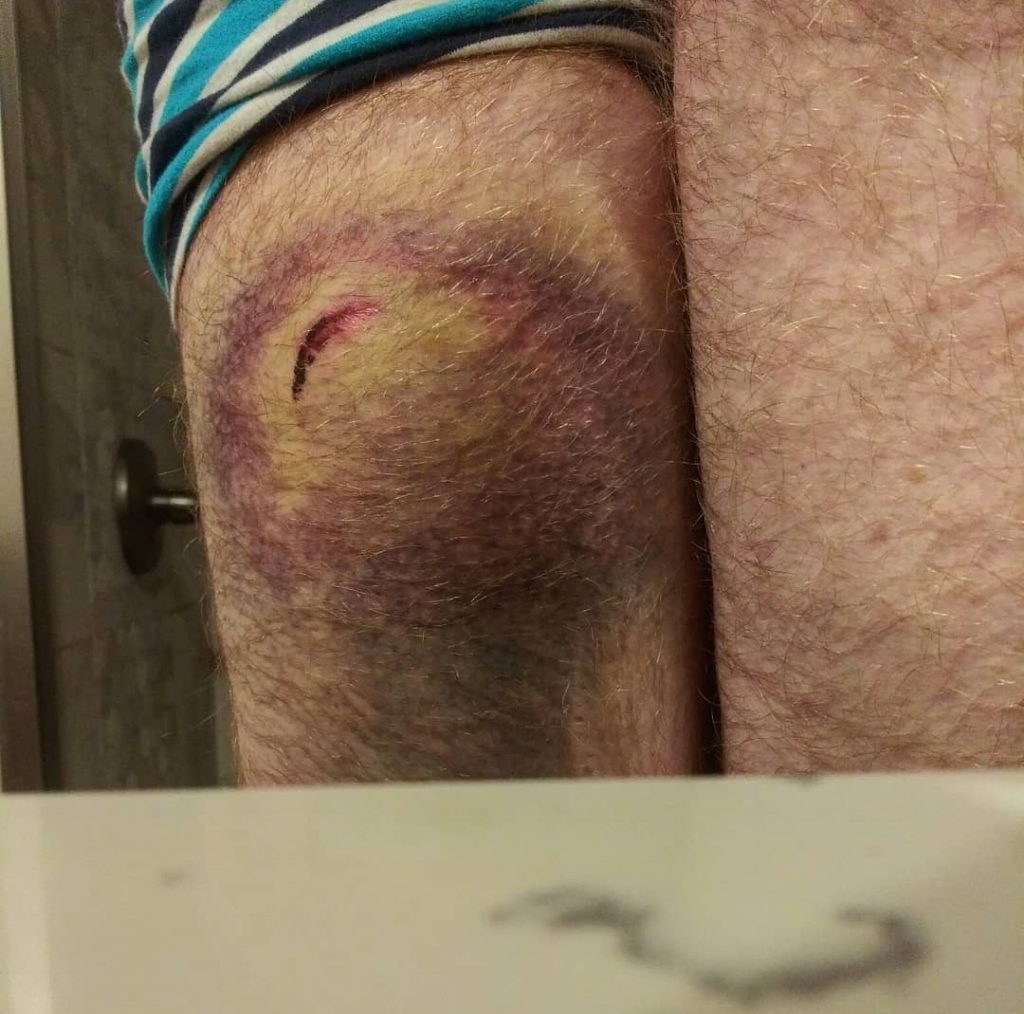
———. “Sexual and Gender-Based Violence in Myanmar and the Gendered Impact of Its Ethnic Conflicts.” UN Human Rights Council, August 22, 2019. https://www.ohchr.org/Documents/HRBodies/HRCouncil/FFM-Myanmar/sexualviolence/A_HRC_CRP_4.pdf.

UN News. “For Rohingya Refugees, Imminent Surge in Births Is Traumatic Legacy of Sexual Violence – Special Report.” UN News, May 11, 2018. https://news.un.org/en/story/2018/05/1009372.

———. “Reparations for Sexual Violence in Conflict – ‘What Survivors Want Most, yet Receive Least,’” October 30, 2019. https://reliefweb.int/report/world/reparations-sexual-violence-conflict-what-survivors-want-most-yet-receive-least.

UN Secretary General. “Guidance Note of the Secretary-General : Reparations for Conflict-Related Sexual Violence.” UN, 2014. http://digitallibrary.un.org/record/814902.
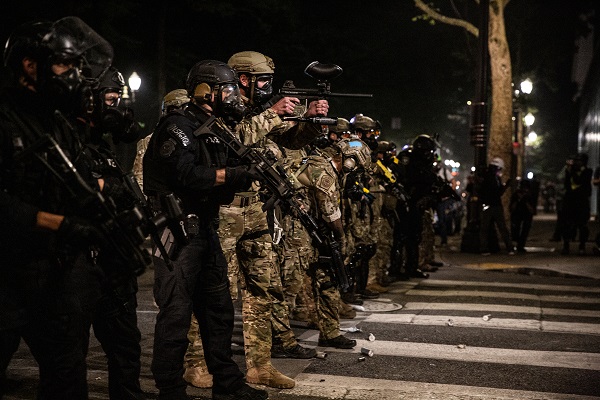
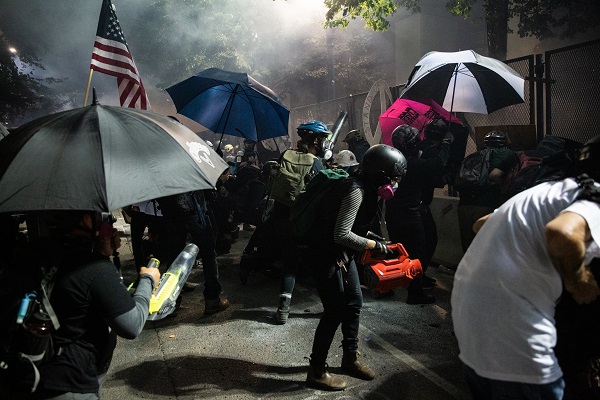
UN Special Rapporteur on the promotion of truth, justice, reparation and guarantees of non-recurrence. “The Foundation of the Mandate and the Importance of a Comprehensive Approach That Combines the Elements of Truth-Seeking, Justice Initiatives, Reparations and Guarantees of Non-Recurrence in a Complementary and Mutually Reinforcing Manner.” United Nations, December 27, 2016. https://undocs.org/en/A/HRC/34/62.

United Nations. “Charter of the United Nations: 1 UNTS XVI, Arts. 55(c) and 56, 103,” October 24, 1945. https://www.un.org/en/charter-united-nations/index.html.

———. “Universal Declaration of Human Rights: 217 A (III), Art. 15,” December 10, 1948. https://www.un.org/en/universal-declaration-human-rights/.

———. “Vienna Convention on the Law of Treaties,” May 23, 1969. https://www.refworld.org/docid/3ae6b3a10.html.

United Nations Committee on Economic, Social and Cultural Rights. “CESCR General Comment No. 22 (2016) on the Right to Sexual and Reproductive Health (Article 12 of the International Covenant on Economic, Social and Cultural Rights) E/C.12/GC/22,” May 2, 2016. https://undocs.org/E/C.12/GC/22.

United Nations General Assembly. “Basic Principles and Guidelines on the Right to a Remedy and Reparation for Victims of Gross Violations of International Human Rights Law and Serious Violations of International Humanitarian Law,” March 21, 2006. https://www.ohchr.org/EN/ProfessionalInterest/Pages/RemedyAndReparation.aspx.

———. “Convention on the Rights of Persons with Disabilities,” December 13, 2006. https://www.refworld.org/docid/4680cd212.html.

———. “Convention on the Rights of the Child,” November 20, 1989. https://www.ohchr.org/Documents/ProfessionalInterest/crc.pdf.

———. “International Covenant on Civil and Political Rights,” December 16, 1966. https://www.ohchr.org/Documents/ProfessionalInterest/ccpr.pdf.

———. “International Covenant on Economic, Social and Cultural Rights,” December 16, 1966. https://www.refworld.org/docid/3ae6b36c0.html.

———. “Optional Protocol to the Convention on the Rights of the Child on a Communications Procedure : Resolution / Adopted by the General Assembly,” January 27, 2012. https://www.refworld.org/docid/5290acdc4.html.

United Nations High Commissioner for Refugees. “Convention Relating to the Status of Refugees.” Refworld, July 28, 1951. https://www.refworld.org/docid/3be01b964.html.

———. “Human Rights and Arbitrary Deprivation of Nationality: Report of the Secretary-General,” December 19, 2013. https://www.refworld.org/docid/52f8d19a4.html.

———. “The Rights of Non-Citizens,” 2006. https://www.refworld.org/docid/46ceabb22.html.

Van Shaak, Beth. “Obstacles on the Road to Gender Justice: The International Criminal Tribunal for Rwanda as Object Lesson.” American University Journal of Gender, Social Policy & the Law 17, no. 2 (2009).

Frontier Myanmar. “We, the Rohingya, Can’t Wait for Justice from Faraway Courts,” May 28, 2020. https://www.frontiermyanmar.net/en/we-the-rohingya-cant-wait-for-justice-from-faraway-courts/.

Wheeler, Skye. “All of My Body Was Pain”: Sexual Violence against Rohingya Women and Girls in Burma. New York: Human Rights Watch, 2017.

WHO and United Nations Office on Drugs and Crime (UNODC). “Strengthening the Medico-Legal Response to Sexual Violence.” World Health Organization, November 2015. http://www.who.int/reproductivehealth/publications/violence/medico-legal-response/en/.

“Who Are the Rohingya Group behind Attacks?” BBC News, September 6, 2017, sec. Asia. https://www.bbc.com/news/world-asia-41160679.

Endnotes


[1] Wheeler, All of My Body Was Pain; UN Human Rights Council, “Sexual and Gender-Based Violence in Myanmar and the Gendered Impact of Its Ethnic Conflicts”; UN Human Rights Council, “Report of the Independent International Fact-Finding Mission on Myanmar”; Patten, Statement by the Special Representative of the Secretary-General on Sexual Violence in Conflict, Ms. Pramila Patten; Chynoweth, “‘It’s Happening to Our Men as Well’: Sexual Violence Against Rohingya Men and Boys”; Gelineau, “Rohingya Methodically Raped by Myanmar’s Armed Forces”; Medecins Sans Frontieres, “‘No One Was Left’ Death and Violence Against the Rohingya in Rakhine State, Myanmar”; Ryan, “When Women Become the War Zone”; Global Justice Center, “Discrimination To Destruction: A Legal Analysis of Gender Crimes Against the Rohingya”; Sultana, “Rape by Command. Sexual Violence as a Weapon against the Rohingya.”

[2] Parmar et al., “Violence and Mortality in the Northern Rakhine State of Myanmar, 2017”; Physicians for Human Rights, “Where There Is Police, There Is Persecution”; Physicians for Human Rights, “Stateless and Starving”; Physicians for Human Rights, “Patterns of Anti-Muslim Violence in Burma.”

[3] As of this writing, Rohingya are barred from participating in Myanmar’s November 2020 election, both as voters and candidates.

[4] Haar et al., “Documentation of Human Rights Abuses among Rohingya Refugees from Myanmar”; “Myanmar,” August 28, 2020; “Myanmar,” August 12, 2020; “Myanmar Bars Rohingya Candidates from Elections, Again.”

[5] “Who Are the Rohingya Group behind Attacks?”

[6] Physicians for Human Rights, “The Chut Pyin Massacre: Forensic Evidence of Violence against the Rohingya in Myanmar.”

[7] Physicians for Human Rights; UN Human Rights Council, “Report of the Independent International Fact-Finding Mission on Myanmar.”

[8] “Situation Refugee Response in Bangladesh.”

[9] “Bangladesh Is Not My Country.”

[10] Physicians for Human Rights, “Widespread and Systematic”; Parmar et al., “Violence and Mortality in the Northern Rakhine State of Myanmar, 2017”; Physicians for Human Rights, “The Chut Pyin Massacre: Forensic Evidence of Violence against the Rohingya in Myanmar”; UN Human Rights Council, “Report of the Independent International Fact-Finding Mission on Myanmar”; Medecins Sans Frontieres, “‘No One Was Left’ Death and Violence Against the Rohingya in Rakhine State, Myanmar.”

[11] Parmar et al., “Violence and Mortality in the Northern Rakhine State of Myanmar, 2017.”

[12] Physicians for Human Rights, “Widespread and Systematic.”

[13] UN Human Rights Council, “Sexual and Gender-Based Violence in Myanmar and the Gendered Impact of Its Ethnic Conflicts”; UN Human Rights Council, “Report of the Independent International Fact-Finding Mission on Myanmar”; Beech, Nang, and Simons, “‘Kill All You See’: In a First, Myanmar Soldiers Tell of Rohingya Slaughter – The New York Times.”

[14] UN Human Rights Council, “Sexual and Gender-Based Violence in Myanmar and the Gendered Impact of Its Ethnic Conflicts”; Sultana, “Rape by Command. Sexual Violence as a Weapon against the Rohingya.”; Ryan, “When Women Become the War Zone”; Wheeler, All of My Body Was Pain; Gelineau, “Rohingya Methodically Raped by Myanmar’s Armed Forces”; Global Justice Center, “Discrimination To Destruction: A Legal Analysis of Gender Crimes Against the Rohingya.”

[15] UN Human Rights Council, “Sexual and Gender-Based Violence in Myanmar and the Gendered Impact of Its Ethnic Conflicts”; Wheeler, All of My Body Was Pain; Ryan, “When Women Become the War Zone”; Chynoweth, “‘It’s Happening to Our Men as Well’: Sexual Violence Against Rohingya Men and Boys”; Medecins Sans Frontieres, “‘No One Was Left’ Death and Violence Against the Rohingya in Rakhine State, Myanmar”; Patten, Statement by the Special Representative of the Secretary-General on Sexual Violence in Conflict, Ms. Pramila Patten; Global Justice Center, “Discrimination To Destruction: A Legal Analysis of Gender Crimes Against the Rohingya.”

[16] Wheeler, All of My Body Was Pain; UN Human Rights Council, “Sexual and Gender-Based Violence in Myanmar and the Gendered Impact of Its Ethnic Conflicts.”

[17] Medecins Sans Frontieres, “‘No One Was Left’ Death and Violence Against the Rohingya in Rakhine State, Myanmar”; Global Justice Center, “Discrimination To Destruction: A Legal Analysis of Gender Crimes Against the Rohingya.”

[18] Chynoweth, “‘It’s Happening to Our Men as Well’: Sexual Violence Against Rohingya Men and Boys.”

[19] UN Human Rights Council, “Sexual and Gender-Based Violence in Myanmar and the Gendered Impact of Its Ethnic Conflicts.”

[20] Johnson, Selecting Ethnographic Informants.

[21] Morse, “The Significance of Saturation.”

[22] Dedoose, Web Application for Managing, Analyzing, and Presenting Qualitative and Mixed Method Research Data.

[23] Ahmed, “Nine Months on, a Race against Time to Find Pregnant Rohingya Rape Survivors”; UN News, “For Rohingya Refugees, Imminent Surge in Births Is Traumatic Legacy of Sexual Violence – Special Report.”

[24] Hutchinson, “Gendered Insecurity in the Rohingya Crisis.”

[25] Guttmacher Institute, “Menstrual Regulation and Unsafe Abortion in Bangladesh.”

[26] Guttmacher Institute.

[27] Adams, “Opinion | How Bangladesh Made Abortion Safer”; Fetters et al., “Navigating the Crisis Landscape.”

[28] Strategic Executive Group, “JRP for Rohingya Humanitarian Crisis:  March-December 2018.”

[29] Inter-Agency Standing Committee, “Reference Module for Cluster Coordination at Country Level.”

[30] Strategic Executive Group, “JRP for Rohingya Humanitarian Crisis:  March-December 2018.”

[31] “Bangladesh Is Not My Country.”

[32] Ives, “Rohingya Face Health Care Bias in Parts of Asia, Study Finds”; “MSF Shocked at Shutdown in Myanmar”; Htusan, “Lack of Health Care Deadly for Burma’s Rohingya.”

[33] Mnemonic for: Sleep, Interest, Guilt, Energy, Concentration, and Appetite, Psychomotor, and Suicidal ideation.

[34] PHQ-9 is the depression module of Patient Health Questionnaire (PHQ). A self-administered version of the PRIME-MD diagnostic instrument for common mental disorders.

[35] In this quotation Malaysia is used as an example of a different context for which screening tools would be used.

[36] “U.S. Preventive Services Task Force is an independent, volunteer panel of national experts in disease prevention and evidence-based medicine. The Task Force works to improve the health of all Americans by making evidence-based recommendations about clinical preventive services.” (https://www.uspreventiveservicestaskforce.org/uspstf/)

[37] Wheeler, All of My Body Was Pain; UN Human Rights Council, “Sexual and Gender-Based Violence in Myanmar and the Gendered Impact of Its Ethnic Conflicts”; UN Human Rights Council, “Report of the Independent International Fact-Finding Mission on Myanmar”; Patten, Statement by the Special Representative of the Secretary-General on Sexual Violence in Conflict, Ms. Pramila Patten; Chynoweth, “‘It’s Happening to Our Men as Well’: Sexual Violence Against Rohingya Men and Boys”; Gelineau, “Rohingya Methodically Raped by Myanmar’s Armed Forces”; Medecins Sans Frontieres, “‘No One Was Left’ Death and Violence Against the Rohingya in Rakhine State, Myanmar”; Ryan, “When Women Become the War Zone”; Global Justice Center, “Discrimination To Destruction: A Legal Analysis of Gender Crimes Against the Rohingya”; Sultana, “Rape by Command. Sexual Violence as a Weapon against the Rohingya.”

[38] In its General Recommendations, The Convention on the Elimination of all Forms of Discrimination Against Women (CEDAW) has also observed ”State parties have an obligation to ensure that no woman will be expelled or returned to another State where her life, physical integrity, liberty and security of person would be threatened, or where she would risk suffering serious forms of discrimination, including serious forms of gender-based persecution or gender-based violence…”

[39] International Court of Justice, “Press Release: The Court Indicates Provisional Measures in Order to Preserve Certain Rights Claimed by The Gambia for the Protection of the Rohingya in Myanmar”; CEDAW, “CEDAW General Recommendation No. 32 on the Gender-Related Dimensions of Refugee Status, Asylum, Nationality and Statelessness of Women.”

[40] Notwithstanding Myanmar’s domestic laws and regional commitments, the Rohingya are entitled to protection under public international law.

[41] United Nations, “Charter of the United Nations: 1 UNTS XVI, Arts. 55(c) and 56, 103”; United Nations, “Universal Declaration of Human Rights: 217 A (III), Art. 15”; United Nations High Commissioner for Refugees, “Convention Relating to the Status of Refugees”; United Nations High Commissioner for Refugees, “Human Rights and Arbitrary Deprivation of Nationality.”

[42] In addition to the Genocide Convention, Myanmar has ratified, inter alia, the Four Geneva Conventions of 12 August 1949, as well as the International Covenant on Economic, Social and Cultural Rights; Convention on the Elimination of All Forms of Discrimination against Women (CEDAW); the Convention on the Rights of the Child (CRC); Convention on the Rights of Persons with Disabilities (CRPD); Optional Protocol to the Convention on the Rights of the Child on a communications procedure (CRC-OP-SC).

[43] Global Justice Center, “Myanmar/Burma’s Binding Obligations Under International Law”; United Nations General Assembly, “International Covenant on Economic, Social and Cultural Rights”; United Nations General Assembly, “Convention on the Rights of the Child”; United Nations General Assembly, “Convention on the Rights of Persons with Disabilities”; United Nations General Assembly, “Optional Protocol to the Convention on the Rights of the Child on a Communications Procedure”; Henckaerts et al., Customary International Humanitarian Law.

[44] States have a duty to guarantee the human rights of all persons within their territories or under their jurisdictions, without distinction. Further, states may only distinguish between citizens and non-citizens where it serves a legitimate State objective and is necessary and proportional to the achievement of this objective.

[45] United Nations, “Universal Declaration of Human Rights: 217 A (III), Art. 15”; United Nations High Commissioner for Refugees, “The Rights of Non-Citizens”; UN Human Rights Council, “Report of the Independent International Fact-Finding Mission on Myanmar.”

[46] UN Human Rights Council, “Report of the Independent International Fact-Finding Mission on Myanmar”; United Nations, “Universal Declaration of Human Rights: 217 A (III), Art. 15”; United Nations General Assembly, “Basic Principles and Guidelines on the Right to a Remedy and Reparation for Victims of Gross Violations of International Human Rights Law and Serious Violations of International Humanitarian Law.”

[47] United Nations General Assembly, “International Covenant on Economic, Social and Cultural Rights”; United Nations Committee on Economic, Social and Cultural Rights, “CESCR General Comment No. 22 (2016) on the Right to Sexual and Reproductive Health (Article 12 of the International Covenant on Economic, Social and Cultural Rights) E/C.12/GC/22”; Office of the High Commissioner for Human Rights, “CESCR General Comment No. 14: The Right to the Highest Attainable Standard of Health (Art. 12)”; UN Committee on the Elimination of Discrimination Against Women (CEDAW), “Refworld | CEDAW General Recommendation No. 24”; UN Committee on the Elimination of Discrimination Against Women (CEDAW), “General Recommendation No. 30 on Women in Conflict Prevention, Conflict and Post-Conflict Situations”; United Nations General Assembly, “Convention on the Rights of the Child”; United Nations General Assembly, “International Covenant on Civil and Political Rights”; UN Human Rights Committee, “General Comment No. 36 (2018) on Article 6 of the International Covenant on Civil and Political Rights, on the Right to Life”; United Nations High Commissioner for Refugees, “Convention Relating to the Status of Refugees”; Institute on Statelessness and Inclusion, “Refworld | Statelessness and Human Rights.”

[48] Norms accepted and recognized by the international community as a whole.

[49] United Nations, “Vienna Convention on the Law of Treaties”; International Law Commission, “Report of the International Law Commission on the Work of Its Fifty-Third Session (23 April–1 June and 2 July–10 August 2001)”; Eggett, “Clarification and Conflation.”

[50] Chamber I, “Judgement” Prosecutor v. Jean-Paul Akayesu.

[51] International Law Commission, “Responsibility of States for Internationally Wrongful Acts”; UN Human Rights Council, “Report of the Independent International Fact-Finding Mission on Myanmar”; Bassiouni, “International Crimes”; International Law Commission, “Draft Articles on Responsibility of States for Internationally Wrongful Acts, with Commentaries.”

[52]International Law Commission, “Report of the International Law Commission on the Work of Its Fifty-Third Session (23 April–1 June and 2 July–10 August 2001)”; International Law Commission, “Draft Articles on Responsibility of States for Internationally Wrongful Acts, with Commentaries.”

[53] International Law Commission, “Report of the International Law Commission on the Work of Its Fifty-Third Session (23 April–1 June and 2 July–10 August 2001)”; Eggett, “Clarification and Conflation.”

[54] Aljazeera, “Myanmar Finds War Crimes but No Genocide in Rohingya Crackdown”; Human Rights Watch, “Myanmar’s Investigative Commissions: A History of Shielding Abusers.”

[55] Morse, “Documenting Mass Rape”; The Office of the Prosecutor, International Criminal Court, “Policy Paper on Sexual and Gender-Based Crimes”; Van Shaak, Beth, “Obstacles on the Road to Gender Justice: The International Criminal Tribunal for Rwanda as Object Lesson”; Nu and Quadrini, “Myanmar’s Justice System Is Failing Survivors of Sexual Violence”; AFP, “Rape in Myanmar Is ‘Silent Emergency.’”

[56] International Court of Justice, “Press Release: The Republic of The Gambia Institutes Proceedings against the Republic of the Union of Myanmar and Asks the Court to Indicate Provisional Measures”; Ministerie van Buitenlandse Zaken, “Joint Statement of Canada and the Kingdom of the Netherlands.”

[57] While the Office of the Prosecutor at the ICC submitted her request for an investigation, specifying the crimes enumerated in articles 7(1)(d), (h) and (k) of the Rome Statute, she expressly requested authorization to investigate other conduct that emerges during the course of her investigations which may violate art. 5. These include the crimes of genocide; crimes against humanity; war crimes; and the crime of aggression.

Office of the Prosecutor, Situation in the People’s Republic of Bangladesh/Republic of the Union of Myanmar; Bensouda, “Statement of the Prosecutor of the International Criminal Court, Fatou Bensouda, Following Judicial Authorisation to Commence an Investigation into the Situation in Bangladesh/Myanmar.”

[59] Lavery, “The Path Towards Justice: Accountability for International Crimes Against the Rohingya of Burma”; Khin, “Complainant Files a Criminal Complaint of Genocide and Crimes against Humanity Committed against the Rohingya Community in Myanmar–Universal Jurisdiction.”

[60] UN Independent Investigative Mechanism for Myanmar (IIMM), available at https://iimm.un.org/. The mandate of the UN Independent International Fact-Finding Mission on Myanmar (FFM) which served as a precursor to the IIMM concluded in September 2019. 

[61] Acknowledging the sexual acts that constitute criminal offenses vary by jurisdiction; forced witnessing and sexual humiliation are not currently specified within the definitions of sexual violence.  While this does not in itself preclude prosecuting these violations, the manner in which the courts have reviewed these cases has not been consistent. 

[62] WHO and United Nations Office on Drugs and Crime (UNODC), “Strengthening the Medico-Legal Response to Sexual Violence”; Baro, “Children Witnessing Atrocities against Parents or Caregivers, a Human Rights Perspective”; Prosecutor v. Anto Furundizja; Chamber I, “Judgement” Prosecutor v. Jean-Paul Akayesu; Chynoweth, “‘It’s Happening to Our Men as Well’: Sexual Violence Against Rohingya Men and Boys.”

[63] WHO and United Nations Office on Drugs and Crime (UNODC), “Strengthening the Medico-Legal Response to Sexual Violence”; Baro, “Children Witnessing Atrocities against Parents or Caregivers, a Human Rights Perspective”; Prosecutor v. Anto Furundizja; Chamber I, “Judgement” Prosecutor v. Jean-Paul Akayesu; Lupig, “Investigation and Prosecution of Sexual and Gender-Based Crimes before the International Criminal Court”; Thuy Seelinger, Silverberg, and Mejia, “The Investigation and Prosecution of Sexual Violence”; Chynoweth, “‘It’s Happening to Our Men as Well’: Sexual Violence Against Rohingya Men and Boys.”

[64] Brouwer, “Cases of Mass Sexual Violence Can Be Proven without Direct Victim Testimony”; Thuy Seelinger, Silverberg, and Mejia, “The Investigation and Prosecution of Sexual Violence.”

[65] UN Committee on the Elimination of Discrimination Against Women (CEDAW), “Concluding Observations on the Report of Myanmar Submitted under the Exceptional Reporting Procedure”; Sellers, “The Prosecution of Sexual Violence in Conflict: The Importance of Human Rights as Means of Interpretation.”

[66] Office of the Prosecutor, Situation in the People’s Republic of Bangladesh/Republic of the Union of Myanmar.

[67] UN Secretary General, “Guidance Note of the Secretary-General”; United Nations General Assembly, “Basic Principles and Guidelines on the Right to a Remedy and Reparation for Victims of Gross Violations of International Human Rights Law and Serious Violations of International Humanitarian Law.”

[68] International Law Commission, “Draft Articles on Responsibility of States for Internationally Wrongful Acts, with Commentaries”; International Court of Justice, “Reparation for Injuries Suffered in the Service of the United Nations, Advisory Opinion.”

[69] UN Committee on the Elimination of Discrimination Against Women (CEDAW), “General Recommendation No. 30 on Women in Conflict Prevention, Conflict and Post-Conflict Situations”; International Criminal Court, “Rules of Procedure and Evidence”; Redress, “Making Sense of Reparations at the International Criminal Court”; Correa, “Getting to Full Restitution: Guidelines for Court-Ordered Reparations in Cases Involving Sexual Violence Committed during Armed Conflict, Political Violence, or State Repression.”

[70] UN News, “Reparations for Sexual Violence in Conflict – ‘What Survivors Want Most, yet Receive Least’”; Gilmore, “Meeting the Needs of Victims of Sexual Violence through Reparations.”

[71] “We, the Rohingya, Can’t Wait for Justice from Faraway Courts”; “The International Court of Justice and the Rohingya”; Gorlick, “The Rohingya Refugee Crisis, International Justice, and Rethinking Solutions.”

[72] UN Special Rapporteur on the promotion of truth, justice, reparation and guarantees of non-recurrence, “The Foundation of the Mandate and the Importance of a Comprehensive Approach That Combines the Elements of Truth-Seeking, Justice Initiatives, Reparations and Guarantees of Non-Recurrence in a Complementary and Mutually Reinforcing Manner”; Bachelet, “Increasing Women’s Access to Justice in Post-Conflict Societies”; Tsai and Robins, “Strengthening Participation in Local-Level and National Transitional Justice Processes: A Guide for Practitioners”; Oosterveld, “Sexual and Gender-Based Violence in Post-Conflict Sierra Leone”; International Center for Transitional Justice, “When No One Calls It Rape.”

[73] Riley et al., “Systematic Human Rights Violations, Traumatic Events, Daily Stressors and Mental Health of Rohingya Refugees in Bangladesh.”

Webinar

The Path to a COVID-19 Vaccine and Implications for Universal Delivery

Part I and II

For many infectious diseases, vaccines are the key tool in the toolbox for prevention and control. Yet, even when there is a safe and effective vaccine available in adequate supply, the practical challenges to delivery can be formidable.

Physicians for Human Rights explored some of these challenges of COVID-19 vaccines through a human rights lens in a two-part series moderated by Nina Schwalbe, MPH, adjunct assistant professor of population and family health at Columbia University’s Mailman School of Public Health.

Part I

This first conversation focused on the implications of vaccine hesitancy from a global perspective. The World Health Organization describes this issue as “a delay in acceptance or refusal of vaccines despite availability of vaccination services.” This dangerous global phenomenon challenges public health systems and puts people at risk. How are public health professionals confronting a lack of public trust?

Joined by panelists:

  • Robert Kanwagi, MPH, program coordinator for the Ebola Vaccine Deployment Acceptance and Compliance Program
  • Heidi Larson, MA, PhD, director of the Vaccine Confidence Project at the London School of Hygiene and Tropical Medicine, where she is a professor of anthropology and risk and decision science in the department of infectious disease epidemiology

Part II

From managing a finite number of doses and dealing with varying efficacy among these, to cold chain requirements, to side effects, there are a plethora of challenges to getting vaccines to the populations that need them most. Following an overview of the COVID-19 vaccine pipeline, panelists in our second conversation shared their views on overall challenges to vaccines roll-out, in particular when it comes to reaching the most marginalized.

Joined by Panelists:

  • Bruce Gellin, MD, MPH, president for global immunization at the Sabin Vaccine Institute, who chairs the WHO’s Global Action Plan for Influenza Vaccines Advisory Group
  • Robin Nandy, MBBS, MPH, principal advisor and chief of immunization at UNICEF

See all events in PHR’s COVID-19 webinar series.

Report

“Now they seem to just want to hurt us”: Dangerous Use of Crowd-control Weapons against Protestors and Medics in Portland, Oregon

Foreword

Dr. Şebnem Korur Fincancı

Chairperson of the Human Rights Foundation of Turkey, PHR Advisory Council

Dr. Metin Bakkalcı

Secretary General of the Human Rights Foundation of Turkey

Regardless of where we are, we are living in a reign of violence in which we can’t breathe. We are witnessing a global downward trend in terms of respect for fundamental human rights, freedom, democracy, and the rule of law. In most parts of the world, the human rights environment is radically transforming in a way that brings into question the basic concept of human rights: holding, possessing, claiming, and asserting rights legally as a human being. This deterioration in the human rights environment has accelerated over the course of the COVID-19 pandemic.

Nonetheless, hope and solidarity are always present. Otherwise, how could the last words of George Floyd be owned by millions of people in the United States and elsewhere in the world? Yes, we will come out of this dark period, thanks to the invaluable efforts against tyranny of large groups of people who cannot be silenced.

The report you are about to read, which documents unlawful use of force by law enforcement officers during Black Lives Matter protests in June and July 2020 in Portland, Oregon, is another effort that gives us reason to believe in a humane world that stands against violence, torture, and racism.

For 34 years, Physicians for Human Rights (PHR) has documented abuse of force by governments and their security and police forces in countries around the world. Among many others, PHR worked closely with our organizations in Türkiye to document police violence against peaceful demonstrators and pressures on health care professionals during the 2013 Gezi Park protests in Türkiye.

This current report reveals that the violence exerted by law enforcement officers against peaceful demonstrators in Portland constitutes unlawful use of force that could amount to cruel, inhuman, or degrading treatment.[1]  

Health care workers are usually the very first witnesses of state violence throughout the world. Their caring and equally courageous efforts are brought to light once again, thanks to this report.

As their friends and colleagues from Türkiye, we extend our thanks to PHR for conducting this study and preparing this report, which is so invaluable for the people of the United States and the whole world, particularly for those subjected to state violence.  


“We came out here dressed in T-shirts and twirling Hula-Hoops and stuff, and they started gassing us, so we came back with respirators, and they started shooting us, so we came back with vests, and they started aiming for the head, so we started wearing helmets, and now they call us terrorists. Who’s escalating this? It’s not us.” 

Mac Smiff, Portland journalist and Black organizer
MSNBC, July 29, 2020
Federal agents using tear gas, pepper ball, and rubber bullet weaponry against protestors in Portland, Oregon in July 2020. Photo: Andrew Stanbridge for Physicians for Human Rights

Executive Summary

The May 25, 2020, in-custody police killing of George Floyd sparked a wave of public demonstrations across the United States and around the world against police violence and racism. Thousands of residents in Portland, Oregon organized and joined in large demonstrations under the banner “Black Lives Matter” (BLM). While these demonstrations – many of which took place in front of the Multnomah County Justice Center (“the Justice Center”), the adjacent Mark O. Hatfield United States Courthouse (“federal courthouse”), and the city parks of Lownsdale and Chapman Squares in downtown Portland – were overwhelmingly peaceful, a small minority of protestors set small fires and broke into storefronts.

As early as May 29, President Donald Trump made public statements expressing eagerness to send the military to U.S. cities to respond with force to the demonstrations. On June 26, President Trump issued an Executive Order to send federal officers to cities around the country with the stated purpose of protecting monuments, statues, and federal property. On July 1, federal officers emerged for the first time from the boarded-up federal courthouse and fired pepper balls at demonstrators. Most officers were clad in either black or camouflage military uniforms, without clear identification of their agency or their name. Although the demonstrations had dwindled to a couple of hundred people by July 3, the arrival of federal troops reignited the protests. The month of July saw nightly protests of thousands of people being met with massive barrages of tear gas, rubber bullets, and other crowd-control weapons fired by Portland police and federal agents.

A Physicians for Human Rights (PHR) investigation conducted in Portland from July 24 to July 31, 2020 examined evidence of excessive use of force by Portland Police Bureau (PPB) officers and federal agents in July 2020, through a focus on both attacks against volunteer protest medics and the medics’ own experiences treating injured protestors. The team also examined whether there was interference with emergency medical assistance and whether in any cases medics were specifically targeted. The team interviewed 20 health professionals, former emergency medical technicians (EMTs) and paramedics, and other volunteers who regularly worked as medics at the Portland protests in June and July 2020. PHR interviewed in person and conducted targeted medical examinations of four medics who had sustained clinically significant injuries from PPB and/or federal agent use of force. PHR also spoke with three injured medics by phone, each of whom provided photographic documentation of their injuries. PHR interviewed in person and conducted medical examinations of two protestors who sustained injuries during the weekend of July 24-25, and PHR conducted phone interviews with two protestors injured that weekend who provided photographic documentation of their injuries. In addition, PHR spoke with six elected Portland, county, and state officials who had attended the demonstrations, four leaders of Black activist and community organizations coordinating and providing leadership for the demonstrations, and representatives of legal organizations. Finally, PHR interviewed four current paramedics with American Medical Response, Inc. and four Portland Fire Department and county officials in charge of emergency medical response. All interviews were completed between July 25 and August 10, 2020.

This study’s findings provide evidence that PPB officers and federal agents engaged in a consistent pattern of disproportionate and excessive use of force against both protestors and medics over the course of June and July 2020. Medics further reported treating an increasing number of serious injuries among protestors from kinetic impact projectiles following the arrival of federal agents on July 1. Volunteer medics experienced and witnessed indiscriminate attacks by both PPB officers and federal agents. In some cases, medics reported that these attacks appeared to be specifically targeting medics, including the use of tear gas and projectiles. A number of medics sustained serious injuries while providing medical assistance to protestors due to the use of force by PPB officers and federal agents.

PHR also documented that, except for rare reported instances, paramedics affiliated with the PPB and Fire Department did not provide medical care to injured protestors. Furthermore, because the PPB deemed the area unsafe, official ambulances were prevented for much of July from arriving within a perimeter of several blocks outside the downtown protest site to assist and transport injured demonstrators to emergency rooms. This left a gap that civil society had to fill. While there did not appear to be a consistent pattern of law enforcement destruction of medical supplies, there were a few reported incidents.

The U.S. Department of Justice has not developed national guidelines detailing the lawful use of so-called less-lethal weapons, and U.S. Department of Homeland Security (DHS) national policy on use of force also does not contain any detailed guidance related to the lawful use of these weapons.[2] The 1990 UN Basic Principles on the Use of Force and Firearms by Law Enforcement Officials has limited mention of “less-lethal” weapons, focusing on the use of firearms. However, the 2020 UN Human Rights Guidance on Less Lethal Weapons in Law Enforcement (“UN Guidance”) provides more detail on how weapons may or may not be used in order to respect the human rights principles of necessity and proportionality and the U.S. government’s obligation to prevent cruel or inhuman treatment and protect the right to life. Potentially unlawful use of these weapons should not be considered to comply with the U.S. constitutional standard of reasonableness, that is, that the use of force is “objectively reasonable” in light of the specific circumstances.[3] When comparing the cases that PHR documented, there were many incidents where potentially unlawful use of “less-lethal” weapons occurred in Portland, including: use of batons on people not engaged in violent behavior; use of chemical irritants without sufficient toxicological information made available for treatment by medical responders; irritant-containing projectiles fired at individuals, including at the head and face; and kinetic impact projectiles fired at the head and face. The use of crowd-control weapons against those only passively resisting dispersal was also reported to cause mental pain and suffering to demonstrators, resulting in potential psychological trauma. Such use represents unlawful use of these weapons and may constitute cruel, inhuman, or degrading treatment.

The volume and type of weapons deployed could be expected to require emergency medical attention. Yet, there were no measures to coordinate between the county EMS, city Fire Department, city police and contracted ambulance service to prevent a gap in services, with the result that civil society had to try to fill this gap. Meanwhile, volunteers seeking to provide assistance were also threatened and attacked by local police and federal forces.

The UN Guidance states that when the government is deploying crowd-control weapons in a protest setting, the government is obligated to ensure that protestors have timely access to emergency medical services, including by actively protecting medical personnel, whether they are acting officially or as volunteers. The DHS use of force policy of 2018, which states that medical care should take place “as soon as practicable following a use of force and the end of any perceived public safety threat,” is not in compliance with these international standards and unacceptably increases the health risks for protestors.[4] According to the cases documented by PHR, the government did not actively protect volunteer medics, even those who were clearly marked and offering particular aid to people who had been incapacitated by serious injuries. Moreover, the official ambulance service, when called, was often not allowed to come directly to even seriously injured protestors at the downtown protest site, as the PPB declared the area unsafe.

Many people PHR interviewed believed that the combination of potentially unlawful use of “less-lethal” weapons and failure to ensure and protect emergency medical services discouraged people from attending peaceful assemblies who would otherwise have done so. The repeated use of excessive force escalated tensions between demonstrators and law enforcement. To date, law enforcement officials who seriously injured demonstrators with excessive use of force or who have overseen such use have not been held accountable.

PHR recommends the following actions to the City of Portland:

•    Establish an official oversight body of lawyers and others empowered to monitor and observe each demonstration, and then report to the City Council and police oversight board. Official ongoing monitoring at protests is essential;

•    Create a safe zone very near to the protest area where medical personnel have safe access to attend to any injured person, whether acting officially or as volunteers, along with a safe way to transfer patients from the protest area to the safe medical area;            

•    Prohibit police crowd-control tactics that create a disproportionate risk of serious injury or death, including the use of rubber bullets and “kettling” (confining groups of protestors in a small area);

•    Release reports on police use of force that explain in each instance why the use of force was necessary and proportionate for each deployment of crowd-control weapons or firearms and which measures were taken to ensure access to emergency medical services;

•    Require police to be equipped with body and dashboard cameras and clear identification of names;  

•    Facilitate an independent review process accessible to people who have been subjected to the use of force, such as an evaluation similar to a Department of Justice pattern or practice study.

PHR makes further recommendations for the U.S. Congress, U.S. Department of Justice, U.S. Department of Homeland Security, Oregon Attorney General’s office, and the Multnomah County EMS and Portland Fire Department, which are detailed later in this report.

Volunteer medics at the Portland, Oregon protests. Photo: Andrew Stanbridge for Physicians for Human Rights

Background

Local Police Responses to Nationwide Demonstrations Supporting Black Lives Matter in the United States

The killing of George Floyd in police custody in Minneapolis on May 25, 2020, following that of Ahmaud Arbery by three white men in Atlanta and Breonna Taylor by police officers in Louisville, precipitated a wave of public demonstrations across the United States and around the world. These killings further compounded outrage about the disproportionate rates of COVID-19 infection and death among Black and other communities of color. In response, in the United States, hundreds of thousands of people of all races joined in public demonstrations to demand an end to systemic racism, widespread racial inequality, and police violence. On June 6 alone, half a million people in nearly 550 places across the United States turned out to show their support for the Black Lives Matter (BLM) movement.[5]

In the United States, these demonstrations were met with varied local police responses. In cities such as Camden, NJ, Flint, MI, and Newark, NJ, police officers joined with protestors in peacefully marching.[6] In other cities, police in full riot gear confronted demonstrators, volunteers providing medical assistance (“medics”), legal observers, and journalists, while brandishing shields and batons and deploying a barrage of chemical irritants and kinetic impact projectiles (KIPs). In some areas, local police presence was augmented by federal agents, as was the case in Portland, Oregon from July 1 to July 29. Although there were some instances of vandalism and violent acts, the overwhelming majority of demonstrations in all U.S. cities through these months were peaceful.[7] Nonetheless, scores of protestors were injured as a result of police use of excessive force, often in peaceful settings. In many documented instances, such attacks were used as the first response against peacefully assembled crowds.[8] Nationwide, between May 26 and July 31, 2020, Physicians for Human Rights (PHR) confirmed 115 cases of head injuries documented by news and social media from rubber bullets, other impact munitions, and tear gas canisters.[9] 

Provision of Medical Assistance and Aid to Injured Protestors in U.S. Protests

The UN Basic Principles on the Use of Force and Firearms by Law Enforcement Officials specify that when law enforcement officials resort to force in the context of protests, they “shall ensure that medical assistance shall be rendered to any injured or affected person at the earliest possible moment.”[10] These guidelines impose a positive obligation on officials to ensure effective access to medical care and transport. Since U.S. protests began in May 2020, such official medical assistance at the site of protests has often been absent or withheld. Therefore, informal networks of volunteer medics and civil society organizations have often been required to rise to the occasion and tend to the injured.

These networks of volunteers, often referred to as “street” or “protest” medics,[11] include emergency medical technicians (EMTs), paramedics, physicians, and nurses, as well as lay-people with first aid training, to support protestors’ health needs. Many function as the first point of contact for assessment and treatment of a wide variety of injuries. In the face of the COVID-19 pandemic, many also provide masks and hand sanitizer to protestors. Other medics stay close to medical supply tents or vehicles to provide more advanced levels of care and assist with transport as necessary to urgent care facilities. In the face of the use of chemical irritants and KIPs over the past few months in some cities, many medics have provided eye washes to help remove chemical irritants from tear gas and pepper spray and have treated contusions, fractures, and lacerations from batons and projectiles.

Most medics wear clear markings and universally recognizable insignia to identify themselves as medical volunteers. These include red crosses and “MEDIC” markings on helmets, jackets, backpacks, sleeves, and other visible areas. Some clinicians wear white coats to signal their ability to provide medical aid. To date, there have been no systematic investigations of police treatment of volunteer medics, despite these individuals rendering assistance in many different U.S. cities. There have, however, been documented incidents of police injuring medics who are visibly well-marked, as well as damaging medical supplies and medical posts with clear signage. Human rights organizations and media outlets documented in May and June 2020 local police attacks on medics resulting in injuries in, at a minimum, Seattle, WA, Columbus, OH, Minneapolis, MN, Asheville, NC, Austin, TX, and Tampa, FL.[12] 

For more than three decades, PHR has documented the health harms caused by so-called less-lethal crowd-control weapons (CCWs) like tear gas, stun grenades, pepper balls, rubber bullets, and other impact munitions. These CCWs are defined as “offering a substantially reduced risk of death when compared to conventional firearms.”[13] Less lethal does not mean non-lethal. PHR has reviewed cases upon cases of serious injuries, disability, and death from misuse of CCWs around the world, including in Bahrain, Panama, South Korea, Turkey, and multiple other countries. Projectiles, when fired at close range or directly at people’s heads, necks, or chests, have caused loss of eyesperforated chestsbrain damagecardiogenic shock, and even death. They should never be used for crowd control against largely peaceful demonstrators. Law enforcement officials have a legal obligation to apply non-violent means before resorting to the use of force. “Less-lethal” weapons should only be employed against individuals committing violent acts if other means remain ineffective and when strictly necessary to obtain a lawful and legitimate law enforcement objective. Any use of these must be preceded by clear warnings. In the face of multiple serious injuries caused by police use of force in the U.S. Black Lives Matter demonstrations, there is a heavy burden of proof on these law enforcement agencies to show that these actions do not amount to excessive force that fails to comply with the international human rights principles of necessity, proportionality, precaution, legality, and accountability. The rights to freedom of expression and peaceful assembly are protected by the U.S. Constitution and international treaties ratified by the United States; any use of force deployed against demonstrators must be used as a last resort after carefully weighing all other enforcement options. In addition, police violence against clearly marked medics providing medical assistance in demonstrations, especially where official emergency services are not accessible, creates serious health risks that call into question whether the state is upholding the obligation to facilitate freedom of assembly and to protect the rights to life and health.

Portland, Oregon

Oregon has a long history of discrimination against Black people. This history has relevance to the events of 2020.  Since white settlers began large-scale emigration into indigenous land in the 1840s, many of Oregon’s policies were explicitly discriminatory against Black people. The provisional territorial government prohibited Black people from entering or residing in Oregon, imposing punishment by whipping for breaking this law.[14] When Oregon joined the Union, the 1857 Oregon state constitution banned Black people from living in or holding property in Oregon, the only state in the Union with such a clause;[15] the clause was not formally removed from the state constitution until 1926.[16] Oregon did not ratify the 14th Amendment (Equal protection clause, ratified 1868) to the U.S. Constitution until 1973 and did not ratify the 15th Amendment (right of Black people to vote, ratified 1870) until 1959.[17] In the 1920s, Oregon had the highest number of Ku Klux Klan members per capita of any U.S. state.[18] Today, Portland is one of the whitest large cities in the country, with only 6.3 percent Black residents, while 72.2 percent of residents are white.[19] Recent county data show that Portland residents who live in communities of color east of 82nd Avenue have contracted COVID-19 at more than double the rate of people living in less diverse communities west of 82nd Avenue.

Before the 2020 protests, the Portland Police Bureau (PPB) had been found to engage in a pattern of excessive use of force. In the 2012 case U.S. v. City of Portland, the U.S. District Court for the District of Oregon found that the Portland police had deployed unconstitutional and improper use of force against people experiencing a mental health crisis.[20] This case resulted in a 2014 Settlement Agreement on necessary police reforms, including, but not limited to, use of force, training, crisis intervention, officer accountability, and communication and transparency.[21]  In 2015 and 2016, the U.S. Department of Justice found that the PPB was only partially compliant with nearly every provision of the agreement. In 2017, Mayor Edward Tevis Wheeler disbanded the city’s Community Oversight Advisory Board, a volunteer citizen board organized to monitor police reforms arising from the settlement, while also setting up a new system for monitoring compliance without community oversight.[22] Meanwhile, community groups, such as Don’t Shoot Portland, organized to advocate for police reforms after the 2014 police shooting of Michael Brown in Ferguson, Missouri, including holding demonstrations[23] and supporting family members of people killed by police.[24]

Health professionals protesting against racial injustice and police violence in Portland, Oregon. Photo: Andrew Stanbridge for Physicians for Human Rights

In late May 2020, residents of Portland, Oregon organized and joined in large BLM demonstrations. These demonstrations, many of which took place in front of the Multnomah County Justice Center (“the Justice Center”), the adjacent Mark O. Hatfield United States Courthouse (“federal courthouse”), and the city parks of Lownsdale and Chapman Squares in downtown Portland, were overwhelmingly peaceful. On May 29, President Donald Trump made public statements expressing eagerness to send the military to U.S. cities to respond with force to the demonstrations. On June 26, President Trump issued an Executive Order to send federal officers to cities around the country, with the stated purpose of protecting monuments, statues, and federal property.[25] On July 1, federal officers came out of the boarded-up federal courthouse and fired pepper balls at demonstrators.[26] Most officers were clad in either black or camouflage military uniforms, without clear identification of their agency or their name. Within a week, Portland police announced that federal officers were making arrests and using tear gas against demonstrators. Although the demonstrations had dwindled to a couple of hundred people by July 3, the arrival of federal troops reignited the protests. The month of July saw nightly protests of thousands of people being met with massive barrages of tear gas, rubber bullets, and other crowd-control weapons fired by both Portland police and federal agents. On September 10, 2020, the mayor of Portland, who is also the Portland police commissioner, issued a directive ending the use of ortho-chloro benzylidenemalononitrile (CS) gas for crowd control.[27]

By mid-July, thousands of protestors joined nighttime demonstrations around the Portland federal courthouse, including groups of moms and dads, veterans, lawyers, teachers, health care professionals, chefs, and fire fighters. Photo: Andrew Stanbridge for Physicians for Human Rights
U.S. Border Patrol agents closing in on protestors at the Portland, Oregon federal courthouse. Medics interviewed by PHR said the largely peaceful protests were met with increasing violence after the arrival of federal agents in early July. Photo: Andrew Stanbridge for Physicians for Human Rights

Timeline of Key Events in the Portland Protests from May through August 2020, as Documented in the Media

Late May 2020: Residents in Portland, Oregon organize and join in large, overwhelmingly peaceful Black Lives Matter demonstrations.

May 29, 2020: More than a thousand people participate in a vigil in North Portland and march to the Multnomah County Justice Center (“the Justice Center”) in downtown Portland, adjacent to the Mark O. Hatfield United States Courthouse (“federal courthouse”) and across the street from the city parks of Lownsdale and Chapman Squares, the site of most large demonstrations since then.

June 1: Authorities construct the first of several fences around the Justice Center that become the focus of nightly conflict between the Portland Police Bureau (PPB) and protestors until the fence is removed on June 26. Graffiti is sprayed on the neighboring federal courthouse and first floor windows are broken.[28]

June 26: President Trump issues an Executive Order to send federal officers to cities around the country, with the stated purpose of protecting monuments, statues, and federal property.[29]

July 1: For the first time, federal officers begin their nightly exit from the federal courthouse and fire pepper balls at demonstrators. Most officers are wearing black or camouflage military uniforms without clear identification of their agency or their names.  

July 10: Portland police announce on social media that federal officers are making arrests and using tear gas against downtown demonstrators. President Trump formally announces that he has sent federal agents assigned to agencies within the Department of Homeland Security (DHS) and the U.S. Marshals to Portland.

By July 17:  Media sources report extensive use of chemical irritants and kinetic impact projectiles (KIPs) by federal agents and Portland Police Bureau (PPB) forces against multiple protestors over the prior weeks with numerous reported injuries. Oregon Attorney General Ellen Rosenblum files a lawsuit seeking a temporary restraining order barring the DHS and other federal agencies from seizing and detaining protestors.[30]

By July 22: Portland, Multnomah County, and state elected leaders are unified in their stated opposition to the presence of federal officers in Portland, [31] and the number of people participating in demonstrations at the federal courthouse surges to the thousands. Federal officials construct a fence around the federal courthouse.

July 25: More than 5,000 people join in the nighttime demonstration around the federal courthouse. New groups join the Black and other organizations participating in the protests,  including groups such as the “Wall of Moms” (now Moms United for Black Lives), who come each night starting July 19 dressed in yellow and linking arms to form a physical barrier to protect protestors.[32] Other groups include the Disabled Comrade Collective, Wall of Vets, Wall of Dads, lawyers, teachers, health care professionals, chefs, and fire fighters. Groups such as Snack Bloc and Riot Ribs provide free food.[33]

July 29: Oregon State Governor Kate Brown and acting U.S. Secretary of Homeland Security Chad Wolfe release statements that Oregon and the U.S. federal government have reached a deal to withdraw federal agents in exchange for an increased presence by Oregon State Police. 

July 30-August 10*[1]: Small protests in Portland continue at diverse locations in the city, no longer centered downtown, with continued reported use of tear gas, mace, and force by the PPB and scattered acts of violence by some protestors. 

September 10: The mayor of Portland, who is also the Portland police commissioner, issues a directive ending the use of CS tear gas for crowd control.[34]

Methods and Limitations

This report’s findings are based largely on a one-week investigation conducted by Physicians for Human Rights (PHR) in Portland, Oregon from July 24 to July 31, 2020, as well as phone interviews thereafter. The PHR team, consisting of the executive director, medical director, and a program staff member, examined evidence of excessive use of force by Portland Police Bureau (PPB) and federal officers in July 2020 through a focus on attacks against volunteer protest medics and the experiences of medics treating injured protestors. PHR researchers also examined whether there was interference with emergency medical assistance and whether in any cases medics were specifically targeted. In order to assess the nature and extent of purported abuses, the PHR team conducted interviews with medics providing assistance at the protests in front of the Multnomah County Justice Center and Mark O. Hatfield United States Courthouse, injured protestors who had received medical assistance from medics, and others who witnessed the reported incidents. The team also met with Portland, Multnomah County, and Oregon state elected officials, Oregon Attorney General Ellen Rosenblum and staff members, and representatives of legal organizations filing lawsuits on behalf of injured protestors. The team examined further background information from other sources, including the American Civil Liberties Union of Oregon, Amnesty International, Human Rights Watch, and multiple traditional and social media sources. 

Sampling Strategy 

PHR used chain, or snowball, sampling to identify potentially eligible volunteer medics who provided assistance at the Portland demonstrations from May through July 2020. While this method is not designed to produce a representative sample of respondents, it constituted the only option that allowed for effective contact with eligible participants with whom outreach can be difficult. As there are high levels of caution and wariness among some medics, working through established medic networks and existing relationships helped quickly develop necessary trust among potential participants. The team sought to form as diverse a sample as possible by engaging with representatives from each of the main associations of street medics in Portland (e.g., Rosehip Medical Collective, Portland Action Medics, the Ewoks, the Witches, MEDBLOC), as well as representatives from OHSU4BLM, the medic group supported by the Oregon Health & Science University, key Black activist and community organizations, and local medical associations. Medics interviewed were all 21 years of age or older, had provided volunteer medical assistance at least within the month of July 2020, and, except for one interviewed medic, all had worn clear insignia identifying them as medics (e.g., red crosses) when working as medics during the protests. The protestors interviewed and examined had been injured by federal officers over the weekend of July 24-25 and had been treated by the medics we interviewed.

Human Subject Protections 

The PHR researchers obtained written informed consent from each interviewee for the interviews, for audio-recording the interviews, and, in cases of injuries, for photo documentation. Before each interview, PHR ascertained whether the interviewee wished to remain anonymous. For those who requested this, PHR made every effort to protect their identities, using pseudonyms in this report and in notes. PHR’s Ethics Review Board provided guidance to and approved this study based on regulations outlined in Title 45 CFR Part 46.

Semi-structured Interviews 

The physician researcher (Michele Heisler, MD, MPH) conducted in-person semi-structured interviews and, in the cases of people reporting injuries, targeted medical examinations between July 24 and July 30, 2020. She assessed interviewees for symptoms of post-traumatic stress disorder (PTSD) using the abbreviated PCL-C, a six-item validated scale.[35] Through August 10, 2020, the PHR team interviewed by phone several additional medics and witnesses. In addition, PHR interviewed elected and other governmental officials and representatives of the Fire Department, official paramedics, and representatives of Don’t Shoot Portland, a leading Black activist organization coordinating demonstrations in Portland.

On the ground at the Portland protests, PHR Medical Director Dr. Michele Heisler (far left) and Executive Director Donna McKay (second from left) speak with journalist Nicholas Kristof (center) and with Shelby van Leuven and Michelle Ozaki (right, far right), student coordinators of the volunteer medic group affiliated with Oregon Health & Science University. Photo: Andrew Stanbridge for Physicians for Human Rights

The team adapted health and human rights instruments used by PHR in similar settings where excessive force and attacks on health care workers have occurred. The semi-structured interviews of medics focused on details of any incident of violence the interviewee had experienced, their experiences caring for injured demonstrators, and the type and nature of injuries they had treated.

The PHR team interviewed 20 health professionals, former emergency medical technicians (EMTs), and paramedics, and other volunteers who regularly worked as medics over the two-month period during the 2020 Portland protests. PHR conducted targeted medical examinations of four medics who sustained significant injuries from PPB and/or federal agent use of force, whom we interviewed in person. PHR spoke with three injured medics by phone who provided photographic documentation of their injuries. PHR interviewed in person and conducted targeted medical examinations of two protestors who sustained injuries the weekend of July 24-25 and conducted phone interviews with two protestors injured that weekend who provided photographic documentation of their injuries. In addition, PHR spoke with six elected Portland, Multnomah County, and Oregon state officials who had attended the demonstrations, four leaders of Black activist and community organizations coordinating and providing leadership for the demonstrations, and representatives of legal organizations. Finally, PHR interviewed four current paramedics with American Medical Response, Inc. and four Portland Fire Department and Multnomah county officials in charge of emergency medical response. All interviews were completed between July 25 and August 10, 2020.

Qualitative Data Analysis 

Drawing on interview notes and recordings, PHR researchers wrote case reports based on each interview of injured individuals. The clinician researcher provided diagnostic interpretations of the results of the targeted medical assessments and assessed the credibility of the accounts. PHR analyzed all interview transcripts thematically. The team also sought to verify interviews with reports from other witnesses, traditional and social media accounts, publicly available video footage, legal records, official medical records documentation, and other sources.

Limitations

As this was a rapid-response field investigation conducted over a short time (six days), it is subject to limitations in duration, scope, and access. The scope of the current investigation did not permit a full analysis of all written and video documentation of all events. It is also important to note that many demonstrators and medics who experienced injuries from local and federal security official violence did not seek formal care. Some accepted care from medics but refused to go to emergency departments, while others refused even medic assistance. Thus, documented accounts likely represent only a portion of total injuries. Moreover, PHR only interviewed a small number of medics. Their experiences may not generalize to a larger group. They do, however, illustrate the experiences of volunteer medics during the Portland demonstrations. This investigation should thus be considered a snapshot in time, with partial rather than complete community accounts and incomplete prevalence reporting of human rights violations. Notwithstanding these limitations, the study produced sufficient data to make informed conclusions and recommendations.

Federal agents fire tear gas and pepper balls at protestors in Portland, Oregon. Photo: Andrew Stanbridge for Physicians for Human Rights

Key Findings

Physicians for Human Rights’ (PHR) investigation revealed a number of disturbing findings regarding the use of force by local and federal officers in Portland. Volunteer medics reported treating an increased number of serious injuries among protestors from kinetic impact projectiles (KIPs) over the course of July 2020, following the arrival of federal agents early that month. Medics experienced and witnessed indiscriminate attacks, both by the Portland Police Bureau (PPB) and by federal officers. In some cases, medics reported that these attacks appeared to be targeting medics. A number of medics sustained serious injuries while providing medical assistance to protestors due to the use of force by PPB and federal agents. Except for rare reported instances, there was a lack of official medical assistance at the protests, which prompted volunteer medics to organize to provide assistance for injured demonstrators. There were also two reported incidents of law enforcement destruction of medical supplies.  

A. Medics reported increasing number of serious injuries among protestors from kinetic impact projectiles after engagement by federal forces

The types of injuries resulting from law enforcement use of force that medics reported treating included: eye and skin irritation from tear gas and pepper spray; burns from flash grenades; abrasions; avulsions; contusions; sprains; lacerated scalps, necks, hands, and feet; bone fractures; trauma-induced seizures; and traumatic brain injuries. 

Several medics described their perceptions that the number and severity of injuries they were treating had increased since early July, when federal agents had joined the PPB, with more patients requiring transport to emergency departments. Interviewees noted a dramatic increase in head injuries. One coordinator of the OHSU4BLM medic group, Michelle Ozaki,[36] reported that, earlier in the protests, medics transported people to the emergency department only once or twice a week, usually with head injuries or concussions.

She described how this had changed after the arrival of federal officers:

“In the last two weeks, on Saturday alone, three people we treated had injuries serious enough to be taken to an emergency department. The federal officials and local police do not seem to be wanting to disperse protestors anymore, they seem to be wanting to hurt protestors. We are now seeing more head injuries. They are throwing flash bangs and tear gas canisters at head level, whereas before they would roll the canisters on the ground. Last Saturday [July 25], I was at 4th and Main and my feet were surrounded by tear gas canisters. The ground was littered with canisters…. Yes, now they seem to just want to hurt us.” 

“Nat Griffin,”[37] a former emergency medical technician (EMT) and current nursing student, also described an increase in injuries. Griffin regularly drove and staffed the “Medical Utility Vehicle” (MUV), a decommissioned ambulance used by the volunteer medics to provide support for the injured:

“For the past week or two, we are calling an ambulance at least once – sometimes three times – a night. One night, we had to transport three people to the ED [emergency department] because either the ambulance didn’t come, the ambulance was not where [the 911 dispatcher] said it would be, and in one case, the person asked us to take them instead. I have treated more impact wounds since the [federal agents] came.… There has been an enormous uptake of 303 rounds … made of hard glass and plastic that will hit and shatter on impact. These [often cause] deep lacerations … [in] strategic places, usually right where the body armor just finishes. Usually just one round to the throat, jaw, and head.”

Federal agents from the Department of Homeland Security pepper spray and detain a protestor who had been kneeling peacefully on the street. The protestor was then dragged into the federal courthouse. Photo: Andrew Stanbridge for Physicians for Human Rights

“Izzy Landis,”[38] a former EMT and medic who owns and manages the MUV, described more extreme and intentional violence, particularly from the federal agents:

“We started seeing baton wounds, trauma to the hand. Usually, PPB did not get close enough to hit people with batons…. This was new. Federal agents would race after an individual who was not necessarily doing anything … grab him, turn him over on his back, tear his mask off, and spray mace in his face. I saw this happen… from about 20 to 30 yards. I saw lots of baton injuries, shoving people out of the way, wrist, hand, and head injuries. They shoot [impact munitions] from the top floors, also.

“Just in the last two to three weeks, I have treated three major avulsions, medium or full-thickness wounds with chunks of skin missing. The most concerning was a full-thickness wound/avulsion on a woman’s left neck under her chin. [See photo #2.] That was from Friday morning, July 24 … just after midnight. She was standing around in Chapman Park, not doing anything…. As we were treating her, we could hear gargling through the wound. It was right near her trachea and carotid [artery]. I could see her jaw [bone] through the wound.”

“Federal agents would race after an individual who was not necessarily doing anything … grab him, turn him over on his back, tear his mask off, and spray mace in his face.”

“Izzy Landis,” former EMT and volunteer medic.

Photo: Volunteer medic Izzy Landis treated this woman, who was shot under her chin during the protests on July 24. “We could hear gargling through the wound… It was right near her trachea and carotid… I could see her jaw [bone] through the wound,” Landis told PHR.

Nate Cohen,[39] a former EMT and volunteer medic, noted that he had treated the highest number of clinically significant injuries in the last four nights he worked as a medic at the protests [July 23-25, July 29] than he had treated in more than 100 protests over the years at which he had worked as a medic. He described treating multiple minor pepper ball injuries that left welts about the size of a nickel or a quarter. He treated a severe two-inch deep laceration on a protestor’s lateral patella from an impact round or canister. He treated two other people who had been injured by tear gas canisters, one breaking a protestor’s hand. He described only seeing federal officials the nights he was out; he did not see officials dressed as PPB officers.

“The violence the feds are doing is the worst I have ever seen. It is a higher level of aggression, which is saying something compared to PPB. They are using weapons much more indiscriminately, directly hitting people with canisters, shooting canisters directly at people. The angle launch of canisters is much lower with the feds. With PPB, they are still launching into the crowd, but they are shooting high, so they arc – though still can hit people when they fall. What we have noticed is feds shoot at head-level in a straight line. People have to dive to get out of the way. One friend was shot directly in the abdomen with a tear gas canister. Four to five friends have been badly injured. Many more head injuries from being shot directly in the head. The feds don’t seem to have training in how to use these weapons in the way they are designed.”

“Bill Daniele,”[40] a former Army combat medic and volunteer at the protests, told PHR that he perceived an increased level of force since the arrival of federal agents in July: “I do feel that they seem to be more aggressively injuring medics. It is definitely true that if you break the medical support demonstrators receive, then you break the crowd.”

In a July 30 interview with PHR, Deputy Fire Chief Steve Bregman, who oversees Rapid Response Team (RRT) medics embedded with the local police, also stated his belief that, when the federal agents arrived, there was an “uptick” in injuries of protestors.

“I do feel that they seem to be more aggressively injuring medics. It is definitely true that if you break the medical support demonstrators receive, then you break the crowd.”

Bill Daniele, former Army medic and volunteer medic

PHR’s investigation team attended and observed the federal courthouse protests on July 24-25. To gain a snapshot of injured protestors who were treated by medics, we interviewed several protestors who were injured by law enforcement use of force that weekend.

1. Akitora Ishii,[41] volunteer helping serve food – impact munitions injury to the eye

Akitora Ishii, a recent college graduate, was helping serve food with Riot Ribs in Lownsdale Square early on July 26, when an impact munition launched by federal officials hit him in the eye.

“I [served hot dogs] until they [the officers] stormed the park again, somewhere from 3:15 to 3:45 a.m. I didn’t really see a lot of what led to the rush … but then I heard explosions go off and saw people running, moving out of the park. I took cover by the grills after the explosion. I tried to look around and see what was going on. 

There were a few [shields on the ground] about seven feet away. I popped up to see which way to run and then I got hit. I was wearing goggles when I was hit. Very soon after, I was stuck in a cloud of tear gas. I called out for help … and only called out twice before someone was at my side. He held my shoulders and guided me to the rest of his street medic team. I knew I got hit pretty bad but could hear people reacting: ‘Oh my God, there is so much blood!’ The medics concluded ‘We need to not touch this at all until he gets to the ER.’ It was a shock to go from handing out hot dogs to hungry people to being shot in the face.”

In the emergency department (ED), physicians tried to flush out the debris from Ishii’s eye, which was difficult due to the swelling, and stitch the lacerations. He noted that the ED doctor described seeing fine metallic powder on his face and in the wounds and his eye. Later that day, he required general anesthesia for ophthalmologists to fully clean out his eye.

“It was a shock to go from handing out hot dogs to hungry people to being shot in the face.”

Akitora Ishii, volunteer food server.

Two weeks after the injury, Ishii described the pain as better but still present. He had 80-90 percent of his vision back in the mornings, but by the end of each day, that declined to 10-20 percent of vision. There was still blood in his eye (hyphema), but doctors were hopeful that his pre-incident vision will return.

Participants in the “Wall of Moms” (now Moms United for Black Lives), who began coming to the protests on July 18, dressed in yellow and linking arms to form a protective physical barrier between federal agents and protestors. Photo: Andrew Stanbridge for Physicians for Human Rights

2. Kristen Jessie-Uyanik,[42] participant in “Wall of Moms” – head injury from KIP

Kristen Jessie-Uyanik is a 41-year-old information technology consultant and mother of three, who began to attend protests at the Justice Center when the “Wall of Moms” formed. She participated several nights from Sunday, July 19 until Saturday, July 25. Jessie-Uyanik described the events leading to her being shot by a projectile directly in her forehead by federal officials as she stood with her arms linked with other moms on July 25:

We marched in as a group to the Justice Center after 10 p.m…. There was an enormous crowd. I was 10 feet away from the fence [separating the federal officials and protestors] … in the first row…. The feds came out of the building at about 10:45 p.m. and just stood there…. Nobody was trying to take the fence apart…. I put my goggles back on and stood there, observing the scene. The people in my vicinity were just standing there. 

Between 10:53 and 11 p.m., I heard a boom and felt something hit my forehead very hard and knock me back while I was linking arms with other moms. I slumped and wondered what had happened. I did not feel pain. I felt my forehead and felt nothing at first. Then, I felt the warmth and the blood. I realized I was not fine. I screamed, ‘My eyes!,’ according to somebody near me. It was right between my eyes. I was slumped down and being held by people on either side. My cousin told me to take off my helmet…. There was a lot of blood on my helmet. A tall person picked me up and I felt that I was hoisted above other people. He started to yell, ‘Medic!’ and run with me west from Third to Fourth.”

Medics transported Jessie-Uyanik to the MUV, which drove her to the intersection several blocks away, where the 911 dispatcher said the ambulance would be. After waiting “what seemed like a long time,” the MUV drove her to a hospital emergency department. There, a CT scan did not find observable brain injury, bleeding, or skull fractures. Doctors stitched the forehead laceration. 

At the time of PHR’s interview with Jessie-Uyanik on July 26 – less than 24 hours after the incident – she had a vertical 4- x 2-cm-deep laceration on her lower forehead between her eyebrows closed with seven stitches, consistent with an injury from a sharp projectile. She continued to have severe pain at the site, headache, and nausea.

“I heard a boom and felt something hit my forehead very hard and knock me back while I was linking arms with other moms…. I felt my forehead and … felt the warmth and the blood…. It was right between my eyes.”

Kristen Jessie-Uyanik, protestor shot in the head with a projectile

The PHR team spoke with two other “Wall of Moms” participants who were standing directly behind Jessie-Uyanik, in the second row of women. They both confirmed her account. Kelly Campbell[43] posted an account on Facebook[44] and described the events to PHR by phone:

“It was about 10:50 p.m., we heard a sound like ‘pew, pew, pew,’ and she [Jessie-Uyanik] moaned and stumbled backwards. There had been no provocation. We were all just standing there. Suddenly they burst out – it seems to happen suddenly at shift changes…. My friends and I helped carry her back to a medic and her goggles fell on the ground and were full of blood. Some of her blood was on my arm. We then noticed that the filter on the side of the mask of my friend standing next to me had a big gouge out of it, presumably from whatever was fired. This happened with no warning, no provocation, no order to disperse … and before tear gas was deployed. A federal officer shot a nonviolent protestor in the face, from maybe 25 feet away. I knew these kinds of things were happening but to witness it first-hand and up close was a shock.”

The PHR team also spoke with the woman standing next to Campbell, a single mother of two who did not want to be identified.[45] She described what happened:

“I was behind Kristen. I was staring up at the [federal] officials behind the fence…. She was standing there completely quiet, just standing there…. I said, ‘Are you okay?’ She said, ‘No. I was shot in the head.’…. I yelled for a medic, who are usually in the back. She was starting to lose consciousness, she was bleeding profusely…. Finally [a medic] came up and grabbed her in a fire fighter hold, slung her over his shoulder, and sprinted away with her. I was covered with her blood on my right forearm to my hand…. My friend noticed that my filter was ripped from the shrapnel or whatever it was. The filter had protected my face. It would have ripped into my face if I had not been wearing the filter…. That evening, nobody had even started any provocations. Nobody had thrown fireworks or tried to disassemble the fence.”

3. Ellen Urbani,[46] participant in the “Wall of Moms” – foot injured by projectile

Ellen Urbani is a 50-year-old author and mother of two who joined the “Wall of Moms” the third day after it formed on July 18. She described the events on July 24, when she was shot in her left foot with a projectile by federal officials while she was standing peacefully with arms linked with other moms. The projectile broke her big toe, “as if you split the bone with a hatchet.”

Urbani stated that she had initially hesitated to join the protest because she has severe asthma and had broken her right ankle two weeks earlier and was still on crutches. The arrival of federal officials, however, convinced her to join the “Wall of Moms.” Wearing a N100 respirator, swim goggles, and a snowboard helmet, she participated in the protests from July 22 to July 24.

Ellen Urbani, who was shot in the foot by federal agent while standing in the “Wall of Moms” at the Portland protests, being examined by PHR Medical Director Dr. Michele Heisler. Photo: Andrew Stanbridge for Physicians for Human Rights

On the night of Friday, July 24, Urbani wore an immobilization cast on her right leg but did not bring her crutches. As she did on prior nights, she linked arms with other moms in front of the Justice Center. At about 10:45 p.m., a protest coordinator instructed them to put their gear on, so she put her respirator and helmet on. She described suddenly being enveloped with tear gas:

“I could smell it but because of the respirator I could breathe. People were collapsing to the ground choking and coughing, one person vomited, people were stumbling…. We were at the corner of the federal courthouse. I realized I was being pulled to the front line, but since I could breathe, I felt it was fine…. I personally did not witness any provocation, violence or illegal behavior from the crowd…. I am standing with a group of peaceful people exercising their rights and not doing anything wrong….

[The federal officials] kept throwing tear gas…. We all had arms linked…. The federal officials were shooting flash bang grenades. The noise was concussive, the whole line would shudder…. We were enveloped with tear gas. You could not see anything. My head kept getting hit with hard projectiles that made me feel I was being shot with automatic fire. I had my helmet on. It really hurt…. I kept thinking that I couldn’t believe how relentless they were.

What I perceived next was that the gas lifted…. I realized I was right in front of the courthouse…. Everybody in front of us was gone. I thought, ‘Oh shit. We are the front line. We are defenseless on the front line.’ We were assaulted with gas, pepper balls…. Then I knew that they were there to hurt us. Everybody had retreated and there were five moms with arms linked standing in the street.

“My head kept getting hit with hard projectiles that made me feel I was being shot with automatic fire…. I kept thinking that I couldn’t believe how relentless they were…. We were assaulted with gas, pepper balls…. Then I knew that they were there to hurt us.”

Ellen Urbani, protestor shot in the foot

That was the moment I got shot. I suddenly felt a smashing pain on my left foot. The pain was overwhelming. I thought, ‘They shot me!’ I was so surprised. Then, I thought, ‘Oh my God. They broke my good foot.’ My friend bent over and was also hit in the foot. It felt like somebody had taken a sledgehammer and swung it as hard as possible on the front of my foot. I stayed on my feet, and she went down…. We were at most 10 feet [away from the officers]. We realized they were shooting us at pointblank range.”

Urbani described to us how medics helped remove her and her friend to an open space, examined her foot, and took her to the hospital. At the emergency department, X-rays showed a vertical fracture through the metatarsal bone of her big toe. At the time of our interview, Urbani was using a wheelchair to avoid putting weight on that foot.

4. “Jason Nozak,”[47] a nurse who joined a health professional march – thigh injured by a projectile

Jason Nozak, a registered nurse, told PHR he was shot in the thigh with a projectile fired by federal agents while participating in a health professionals march in front of the Portland Justice Center.

Jason Nozak, a registered nurse, described joining the health professional group marching in front of the Justice Center and federal courthouse on the evening of July 24. He and his partner, also a nurse, dressed in their nurse scrubs, bike helmets, and half-face respirators with P100 particulate filters. He carried a shield (plastic rain barrel, three feet tall) stenciled with the caduceus (the medical symbol of intertwined snakes) and “RN, registered nurse” in text to indicate “we are medical professionals, we are nurses, protesting.” He described how, at about 11 p.m., federal agents began shooting pepper balls and impact rounds from air-powered rifles and launching tear gas canisters.

Nozak described suddenly feeling as if somebody had taken a baseball bat and “whacked” him in the thigh. He found it difficult to walk but was not completely disabled. He described the impact site where the skin was damaged to be about the size of a nickel, and a surrounding circular area of bruising about the size of his hand. [See Photo #9.) He noted that if the federal officials had hit his knee, the impact seemed hard enough to possibly have shattered the patella.


Dr. Bryan Wolf, a diagnostic radiologist at Oregon Health & Science University, worked to de-escalate tension and violence at the Portland protests. Photo: Andrew Stanbridge for Physicians for Human Rights

Bryan Wolf, MD is a 37-year-old diagnostic radiologist and faculty member at Oregon health & Science University (OHSU) who served as the faculty liaison for the OSHU4BLM volunteer medical response group. As he saw the safety risks the student volunteers faced from projectiles and tear gas, Dr. Wolf helped raise funds to buy them safety equipment, including gas masks, goggles, and helmets. An activist later donated bullet-proof vests.

On July 2, Dr. Wolf wrote OHSU leadership, resigning as a faculty volunteer due to concerns about the safety risks the students were facing from law enforcement use of force. He then devoted himself to efforts to de-escalate tensions and violence. He dressed in his white lab coat and carried a sign that read “DE-ESCALATE” superimposed on a large red cross, often positioning himself between protestors and law enforcement officials and begging police to put their barrels down and not to shoot. In interviews with PHR, Dr. Wolf described multiple incidents in which he was shot by projectiles; he described the incidents from June 10 to July 4 in formal testimony to the Oregon state legislature. He told PHR he felt so traumatized that he did not go to the protests between July 4 and July 18. On July 19, while he was standing in his white coat holding his sign, federal agents shot Dr. Wolf directly with impact munitions. Since July 19, he continues to provide radiologic diagnostic care at OHSU, where he has reviewed a number of cases of head and neck wounds from KIPs fired by federal officers.

PHR’s Dr. Michele Heisler measuring injuries sustained by Dr. Bryan Wolf after he was shot in the side by federal agents with impact munitions. The crescent-shaped abrasion and bruise are consistent with a projectile injury. Photo: Physicians for Human Rights

On our targeted medical exam on July 25, Dr. Wolf had several significant lesions from July 19 that were consistent with projectile injuries: a 2-cm abrasion shaped like a crescent one inch above his right Iliac Crest surrounded by a 10- x 2-cm eccymosis, and a 2- x 1-cm. abrasion surrounded by a 11- x 4-cm eccymosis on his left medial calf 11 cm proximal to his ankle. He reported moderate to severe PTSD symptoms on the abbreviated PCL-C scale.


Clouds of tear gas and smoke munitions engulf protestors on July 29, the final night of federal troop involvement in Portland, Oregon. Everyone interviewed by PHR who attended the protests described severe pain, disorientation, and discomfort from chemical irritant exposure. Photo: Andrew Stanbridge for Physicians for Human Rights

B. Volunteer medics both witnessed and experienced indiscriminate attacks, including attacks apparently targeting medics 

1. Massive use of tear gas:

Both PPB and federal officials employed massive amounts of chemical irritants against demonstrators, including pepper spray and balls, and CS tear gas. PHR and other medical groups have documented the potential adverse health effects from these weapons, and current research is ongoing on the effects of such large quantities deployed in the Portland protests.[48] Since this investigation took place, on September 10, 2020, the mayor of Portland, who is also the Portland police commissioner, issued a directive ending the use of CS gas for crowd control in Portland.[49]

All interviewees who attended the Portland demonstrations were exposed to some form of chemical irritant and described the resulting severe pain, disorientation, and discomfort.

2. Medics reported being targeted by projectiles

Several medics PHR spoke to described what they believed were targeted attacks on medics by law enforcement officers firing projectiles. 

Izzy Landis, the medic who managed the MUV, described how she was burned by a flash grenade while attending to an injured protestor at the Justice Center in early June:

“It was broad daylight after the 8 p.m. curfew. The [PPB] were driving around in militarized vehicles, wearing riot gear. My patient … had fallen while running with the crowd [from the Justice Center], hit his head, and had a 1-inch superficial laceration. I was stopping the bleed and applying disinfectant…. I was bent over caring for the patient…. I had a red backpack with a huge ‘Street Medic First Aid’ patch, red crosses on arms, on my hat. They [police] were … throwing flash grenades and tear gas at people. There was a group of people 30 feet away from me, and I was apart from them with the patient. Rather than throwing at the large crowd, police threw a flash grenade at my heel. I had a burn where my pants ended and boot began. It felt like the worst sun burn I ever had. It was maybe a second-degree burn.”

Landis believes that both the local and federal officials were targeting medics. She said she is always clearly marked as a medic; nonetheless, she said, “There have been days that I have been trying to walk to treat a patient and suddenly there is tear gas and flash grenades right in front of me.”

Chris Wise,[50] a former EMT and volunteer medic at the protests, suffered numerous injuries at the hands of law enforcement, three of them serious, and noted his concern about whether on occasion he was deliberately targeted:

“It is hard not to feel that they are at times deliberately shooting at me. One time I was shot with pepper balls three times, right in the middle of a group of people. They were aiming … [with] the [type of] munitions [where] you pick a target and shoot that target. Each of these times, they chose to shoot at me and not at somebody else. Tear gas is one thing. Being hit by a tear canister is another…. The tear gas canister that hit me in the head – somebody had to aim that. It was thrown by about 100 feet and must have [been] aimed at me.”

Wise described another example when he believed he was targeted by a PPB officer. On June 28, dressed as a medic, Wise witnessed an officer at close range spray a protestor’s eyes with bear mace. He rushed to the protestor to pull her out of harm’s way and flush her eyes with water. When he reached the protestor, the officer turned to him and sprayed him directly in the eyes at a distance of approximately 6 inches. His eyes burned and he was unable to see, so others helped him seek shelter and flushed his eyes for 45 minutes.

“It is hard not to feel that they are at times deliberately shooting at me. One time I was shot with pepper balls three times…. Each of these times they chose to shoot at me and not at somebody else…. The tear gas canister that hit me in the head – somebody had to aim that.”

Chris Wise, former EMT and volunteer medic

Dr. Anita Randolph,[51] a neuroscience post-doctoral researcher who helped organize the OHSU4BLM medic group, has regularly volunteered as a medic at the protests and has investigated the health effects of tear gas.[52] She described incidents when it seemed law enforcement had targeted medics at the protests:

“All medics are very clearly marked. Red crosses are all over. Usually groups of medics are at the perimeter of where there is a crowd of demonstrators, watching from the back lines until about 10-11 p.m. Then, they put on their helmets and go into the crowd to see if anybody needs help. I don’t think the shooting of medics is always indiscriminate. Sometimes you see police point at a medic clearly marked with red crosses and then that person is shot with a rubber bullet. I have seen that. They shoot and then pat each other on the back.”

Nearly all medics PHR interviewed continued to wear clearly marked insignia, despite some believing that medic insignia led them to being targeted by police. “Joan Garcia,”[53] the one medic who reported not wearing insignia at the protests, said, “I feel that I would be targeted if I wore a red cross. I feel that they are targeting people with red crosses and journalists first, any sort of press or legal observers from the ACLU…. I know one medic who has been hit with different projectiles 11 times, all while clearly being marked with a red cross.”

All medics we interviewed emphasized that they share a code of ethics that their role when working as medics is not to join the protests but to provide medical assistance to all who need it. We asked each person we interviewed if they had ever heard reports of or witnessed anyone marked as a medic with red crosses and/or other medic insignia engaging in violent behaviors. Unanimously, the answer was: “No.” As a coordinator of OHSU4BLM stated, “In all our nights out, we have never seen anyone wearing a red cross engaging in any act of violence.”

“Sometimes you see police point at a medic clearly marked with red crosses and then that person is shot with a rubber bullet. I have seen that. They shoot and then pat each other on the back.”

Dr. Anita Randolph, neuroscience post-doctoral researcher and volunteer medic

C. Medics sustained serious injuries by PPB and federal agents while providing medical assistance to protestors 

1. Christopher Wise,[54] volunteer medic – injured by rubber bullets

Christopher Wise is one of several Black medics and a former EMT who has rendered medical aid at the Portland protests most nights since May 29. When he works as a medic, he always wears a denim jacket with red crosses on both shoulders, a red cross over his left breast pocket, and “Medic” spelled in large block letters. Wise described suffering multiple minor injuries and three clinically significant injuries from law enforcement use of force.

On June 2, a Portland police officer shot Wise in the shin with a rubber bullet. During a tear gas attack, Wise pulled a fallen protestor out of the cloud of tear gas, moved him to a bench, and began to examine his minor injuries. While he was bent over the protestor, he felt a sharp pain in his leg: “I looked down and there was no hole in the pant, but under the pant leg there was an almost complete avulsion [skin was completely torn off].” He washed the wound and continued to attend to his patient. About a week later, a physician looked at the wound and said it was infected. Wise was prescribed a course of antibiotics. Nearly two months later, upon PHR’s examination of Wise, the wound had still not completely closed.

“As one of the few Black medics, I think it is really important that I am out there treating people. They are trying to intimidate us. If there aren’t medics, people will be afraid to come out. There won’t be anybody to treat them if they get injured. I have to be there.”

Christopher Wise, volunteer medic

On July 4, after the Portland police declared the demonstration a “riot” and fired tear gas, the police formed a riot line and began pushing protestors away from the Justice Center to the north. Wise described walking backward facing the police to monitor for potential injuries. “We were backing up, and the officer yelled, ‘Move!’ and, rushing by several protestors, tackled me to the ground. I fell to the ground straight backwards and put my arms back to brace myself. I sprained my left shoulder. I landed on my palm and had a severe avulsion about the size of a quarter.”

On July 21, Wise was working as a medic, standing just behind the first row of protestors between the federal courthouse and the Justice Center. A group of federal officers were standing at the intersection of Main and 3rd Streets. Protestors in the first row were kneeling and holding wooden shields to block projectiles. Chris was standing and, at 6 feet 5 inches, he was taller than many around him. He described what happened:

“I saw a little light coming toward me like a firecracker. I turned my head and crouched a little bit. It hit my right temple. If I had not moved it would have hit me … in the eye. I immediately had tinnitus, ringing in my ears. I took one hand and put pressure on the wound. I knelt on one knee until the tinnitus went away. They said they had to get me to the ED right away. I kept providing medical care … mainly eye washes and treating abrasions…. I felt tired … was nauseous, slight worsening of balance. I was having trouble ordering my thoughts.” 

Later that day, Wise went to the Providence St. Vincent Medical Center Emergency Department. With his authorization, PHR secured his medical records from that visit. The records described his diagnoses as a concussion, with severe bruising and an abrasion-laceration of the right temple. (See photo #11) PHR conducted a medical examination of Wise on July 29, which showed resolving wounds consistent with his description of his injuries from June 2, July 4, and July 21.[55]

In light of the attacks on him, PHR asked Wise why he continued to go to the protests to work as a medic. He replied, “As one of the few Black medics, I think it is really important that I am out there treating people. They are trying to intimidate us. If there aren’t medics, people will be afraid to come out. There won’t be anybody to treat them if they get injured. I have to be there.”

2. Nate Cohen,[56] volunteer medic at protests – injured by a tear gas canister

Nate Cohen is a graduate student and former EMT who has been involved in racial justice advocacy since 2016, working closely with the group Don’t Shoot Portland. He estimates he has worked as a medic at about 100 protests. He did not experience significant injuries from law enforcement at the Portland protests until July 25, when he was shot in the chest with a tear gas canister at a range of 20 feet. That night, he wore multiple insignia marking his status as a medic.

Cohen described the events leading to his injury at about 1 a.m.:

“They were lobbing tear gas and shooting pepper balls. I was aware that I seemed to be the only medic there. I was running around giving people eye washes, helped       somebody who had fallen…. I checked on people who were hunched over to check they were okay. I was working my way back and forth across the front line of protestors….

One official pointed at me and spoke to another. I then ran across the street to see if they would keep looking at me, and they did. I saw a part of a triple canister land behind a group of journalists and legal observers who were clearly marked standing on the northeast corner of 3rd and Salmon. I saw the canister land and spew gas. I ran up and doused it with a water bottle to extinguish it. I was hunched down over it. I checked on a person next to it who was hunched over a lamp post, checked on a journalist who was leaning against a car taking photos over the hood of a car…. The car was between me and the feds. They were less than 20 feet away. I straightened up after checking on the journalist.

When I stood up straight and looked towards the feds, I felt something slam into my chest that almost made me lose my balance. The impact pushed me back a few steps. I looked down and saw a burning canister spewing gas at my feet. I was in so much pain, I don’t remember anything else.”

Cohen noted that a photojournalist friend had been livestreaming and captured audio at the time when he was hit. He recalled somebody yelling “The feds just shot a medic in the chest.” He was taken in a private car to a local emergency department. X-rays there did not show any fractures, and an EKG showed that the impact had not induced any arrythmias. This was of concern, as Cohen has a rare variant of Wolff Parkinson White syndrome that predisposes to potentially fatal arrythmias. Cohen was diagnosed with a chest wall contusion with an abrasion but no lacerations or avulsions.

Volunteer medic Nate Cohen was shot in the chest by a tear gas canister, which left a hematoma and an abrasion creating an almost full circle outlining the size of the canister. Photo: Andrew Stanbridge for Physicians for Human Rights

“When I stood up straight and looked towards the feds, I felt something slam into my chest that almost made me lose my balance. The impact pushed me back a few steps. I looked down and saw a burning canister spewing gas at my feet. I was in so much pain, I don’t remember anything else.”

Nate Cohen, former EMT and volunteer medic

At the time of PHR’s interview five days later, Cohen described continuing to feel significant pain over the site. On physical exam, he had a 15- x 12-cm hematoma over his left breast, extending over the nipple, with a 4-cm full abrasion where the canister hit, creating an almost full circle outlining the size of the canister (a 5.5- cm diameter canister). He scored as having moderate PTSD symptoms on the abbreviated PCL-C.

3. Bill Daniele, volunteer medic at protests – injured by tear gas canister and rubber bullet

Bill Daniele is a former Army combat medic who has worked as a volunteer medic at the Portland protests most nights since the killing of George Floyd.

Bill described that, until July, he had never witnessed tear gas canisters being shot directly at protestors. By late July, he had treated several protestors with injuries from tear gas canisters. Then, on July 18, he was shot himself:

I was working as a medic. I was clearly marked … bright pink crosses … on a white helmet, ‘Medic’ in black sharpie on my backpack, and crosses on both shoulders. I was coming from the back of the Justice Center. Somebody standing near the front line was calling for a respirator, so I was heading toward them to see if they were okay. I saw that one of the Border Patrol officials was looking right at me and tracking me…. He was standing about 10-20 feet from me on the street corner with some other [agents]…. He pointed me out to the guy holding the grenade launcher. I was holding my hands up in the surrender position over my head saying as loud as I could, ‘I am a medic checking injuries. Don’t shoot.’ But the guy pointed the grenade launcher and shot me with a 40-mm CS canister that hit my left thigh…. I turned in pain … and they hit me with a rubber bullet on my right lateral thigh.”

Bill said he still felt considerable pain from these injuries but was continuing to work as a medic. On physical exam by PHR, he had a large resolving hematoma/ecchymosis on his left thigh approximately 14 x 10 cm, with no abrasions/excoriations evident. His right thigh had an approximately 4- x 4-cm resolving ecchymosis with an erythematous abrasion in middle. He has been diagnosed with PTSD since his military service, so we did not administer the PCL-C PTSD scale.

“I was working as a medic. I was clearly marked…. I was holding my hands up in the surrender position over my head saying as loud as I could, ‘I am a medic checking injuries. Don’t shoot.’ But the guy pointed the grenade launcher and shot me with a 40-mm CS canister that hit my left thigh…. I turned in pain … and they hit me with a rubber bullet on my right lateral thigh.”

Bill Daniele, former Army medic and volunteer medic

4. “Michael Blake,”[57] frontline volunteer medic – injured by a projectile

Michael Blake is an EMT who has worked as a frontline volunteer medic three to four times a week since the second day of the protests in late May. He always wears large orange crosses on his helmet, arms, and backpack, despite his belief that wearing medical insignia makes him more of a target for the police.

Blake described a number of incidents in which he suffered minor injuries from flash bangs or projectiles. He described two occasions (June 11, June 30) in which he was hit with batons by PPB officers while he was clearly identified as a medic but suffered “only bruises.”

Michael Blake was shot in the back of his left thigh with a projectile by the Portland police while working as a medic at the Portland protests.

Blake’s most serious injury occurred on June 2, when a PPB officer about 80-100 feet behind him shot him in the back of his thigh with a projectile.

“There was a small group of PPB officers behind the fence at the Justice Center and there was a small group of protestors in front of the fence at about 9:30-10:00 p.m…. Nobody was being violent…. All at once, the police started firing tear gas and flash bangs. Everybody was screaming. Five individuals were unable to move – one was a young man with a walker, three of them were on all fours wheezing, coughing, vomiting, and one was a teenage girl having a panic attack. She was wheezing, crying, yelling for her mom, saying she was going to die. They kept firing tear gas and flash bangs. Six people were lying on the ground. The PPB left and did not arrest any of us. It was maybe 2-3 minutes but that is a long time when you can’t breathe.

“Later, … I was 80-100 feet ahead of [PPB officers] with my hands up, crosses on my back, and they shot me right in the back of my left thigh. It was a 7 out of 10 pain. It made me drop to my knees…. It still hurts two months later.” 

“All at once, the police started firing tear gas and flash bangs. Everybody was screaming. Five individuals were unable to move – one was a young man with a walker, three of them were on all fours wheezing, coughing, vomiting, and one was a teenage girl having a panic attack. She was wheezing, crying, yelling for her mom, saying she was going to die.”

Michael Blake, EMT and volunteer medic

As this was a phone interview, PHR did not conduct a medical examination. On the abbreviated PCL-C, Blake scored as having severe PTSD symptoms.

D. Due to a lack of official medical assistance, volunteer medics had to organize to provide help for injured demonstrators

All of the people PHR interviewed stated that, except for a few instances, they did not witness official EMTs or paramedics associated with the PPB or Portland or Multnomah County Fire Departments provide medical assistance to protestors at the demonstration sites in Portland. Several interviewees noted that there was a period of about two weeks in June when a group of paramedics from the Portland Fire Department provided medical assistance at demonstrations that occurred in East Portland, but they were then withdrawn and did not appear again. Deputy Fire Chief Steve Bregman confirmed to PHR that, for two weeks in June, paramedics from the Fire Department worked as a special First Aid team at the events in East Portland. He noted that, due to the peaceful nature of those events, the teams did not have many patient encounters. As the number of marches dwindled by the end of June, the Fire Department decided there was less need for a special team and that emergencies could be handled by 911, so the team was re-assigned. He also said that there are 12-15 RRT medics present, who have special emergency and trauma training and are equipped with body armor and ballistic helmets.

Because official ambulances were not permitted to access the Portland protest area, volunteer medics raised funds to purchase and outfit a decommissioned ambulance as a “Medical Utility Vehicle” to provide support for the injured. Photo: Andrew Stanbridge for Physicians for Human Rights

Beginning June 11, students, employees, and faculty from OHSU, as OHSU4BLM, maintained a medical supply and assistance post in Chapman Square from approximately 7 p.m. to 11 p.m. nightly. By June 23, several volunteers with medical supplies remained after the post was packed up to continue providing medical assistance. Over the two months that OHSU volunteers worked as medics at the protests, they noted only one incident when a paramedic affiliated with the PPB aided an injured demonstrator. Student coordinator Michelle Ozaki described that incident:

“I treated one of the first patients who really needed an ambulance. It was June 26, about 11:30 p.m. There was a patient hit with a flash bang that exploded on the back of his head. He had a laceration on the back of his head that was bleeding profusely. We called an ambulance immediately. I was applying pressure, trying to find out his name. was out of it. He could barely respond. He passed out within a few minutes.

We … were told that the ambulance would go to somewhere 4-5 blocks away. We were right at 3rd and Main at an intersection that was clear and would have been easy to go to…. [The patient] was about 5’7″, 150 pounds, maybe … and about six of us tried to move him to where the ambulance would be. After we had carried him about half a block, he started to have seizures. A few minutes later, two police medics wearing vests with ‘Medic’ written on it came out of the Justice Center. Our volunteer was still on the phone with 911, and they must have alerted the police what happened…. The PPB medics assessed him and radioed somebody and then that same ambulance came right to the spot and took him away.

That was the first time we realized that ambulances were not going to come when we called.”

Medics from each of the principal medic associations in Portland provided medical assistance at the 2020 Portland protests. Most interviewed medics stated that, due to mutual aid, there were enough medics to tend to even serious injuries on most nights. However, they all recounted significant challenges in transporting people requiring emergency department treatment.

In Portland, 911 calls are received by the Bureau of Emergency Communications, which may communicate both simultaneously or individually with PPB, firefighters, and ambulance dispatch. A single ambulance company, American Medical Response, Inc. (AMR), provides all ambulance service for Multnomah County. In PHR’s interviews with medics, Multnomah County officials, and officials in charge of emergency medical services for the county, fire, and police departments, there was consensus that if the police deem that an area, such as the downtown demonstration sites, is unsafe, then the official AMR ambulances are directed not to enter that zone. Thus, in the case of the demonstration site at Chapman and Lownsdale Squares, when a call was placed to 911, the dispatcher would inform the caller where at that time it was considered safe to meet the ambulance (e.g., Broadway and 5th). Although the exact location where those caring for an injured demonstrator were told to meet the ambulance shifted, medics PHR interviewed, including four AMR paramedics, confirmed it was usually two or more blocks away from the demonstration site.

Volunteer medics at a first aid station at the Portland protests. Medics would often have to carry the injured several blocks from the protest area to where official ambulances were permitted to wait. Photo: Andrew Stanbridge for Physicians for Human Rights

In the face of the difficulties in transporting injured demonstrators several blocks to meet ambulances, some street medics secured financial support to purchase a decommissioned ambulance. That vehicle, called the “Medical Utility Vehicle” (MUV), with multiple signs on it stating that it is not an ambulance, was stationed at an intersection adjoining the demonstration site (4th and Main) throughout July. Though its primary function was to transport patients to the ambulance meeting point, the MUV was sometimes used to transport patients directly to the hospital when an ambulance was not accessible.

In an interview with Sharon Meieran, MD,[58] a Multnomah County commissioner and emergency medicine physician, she described one incident she witnessed in which a protestor suffered what she called a “catastrophic” injury that illustrated the dangers of not having ambulances able to come right to the downtown demonstration site:

I was at the demonstration in Lownsdale Square … on July 19 at 11:50 p.m. I was across the street from the federal courthouse when the federal agents came out. In the commotion, one of the protestors had a piece of the heavy fence in front of the courthouse fall on his ankle. It was a catastrophic injury with what appeared to be multiple breaks. It was crushed open with a laceration and lots of bleeding. I am an emergency department doctor. I said, ‘You have to call an ambulance immediately.’ Everybody around looked at me as if I were crazy to suggest we could get an ambulance. The injured man was white and appeared to be in shock. Right when they were lying him down, the federal officials started shooting tear gas. I thought ‘If this guy who is going into shock is hit with tear gas, I don’t know what will happen.’ Happily, some kind soul in a private car drove near and offered to help. The people around me helped get him into the car, and he was taken to an ED.”

Izzy Landis, the former EMT who manages the MUV, described an incident that reinforced to her the necessity of fully outfitted ambulance services being able to arrive at the site of injuries:

Donovan LaBella, one week after he was shot in the forehead with an impact munition by federal agents at the Portland protests.

“I was one of the medics who treated Donovan LaBella [who was shot in the forehead with an impact munition by federal agents on July 11]. He was holding a boombox and was shot directly between the eyes. By the time I got there … there were about seven medics there. I saw that the guy holding his head did not know what he was doing. We did not have a back board, gurney, c-collar, or c-board. I did a brief c-spine assessment and walked him carefully the several blocks [to 4th and Salmon] to meet the ambulance. I was terrified the whole time that [Donovan] was experiencing more damage having to walk.

Nat Griffin, who often drove the MUV, expressed frustration about the requirements official ambulances must follow: “We have a structure that does not allow [ambulances] to respond to situations that the police have declared are dangerous. Yet, in this case, it is the police that make it dangerous.”


Teressa Raiford, founder and current executive director of Don’t Shoot Portland, spoke to PHR about the need for volunteer medics at protests against police killings of Black people:

“Especially after the protests in 2014 in response to the police killing of Michael Brown in Ferguson, we recognized that not only were we being assaulted by police officials but they were not giving directives to provide medical support or aid when we were injured by police in demonstrations. So, we and other groups worked to provide more trainings for medics to provide medical assistance during protests. I have been protesting for 10 years, and I have never seen an official paramedic or EMT providing medical assistance to protestors at any of the demonstrations.”

Teressa Raiford (center), founder and executive director of Don’t Shoot Portland, told PHR’s Dr. Michele Heisler (left) and Donna McKay (right) that, in a decade of participating in protests, she has never seen an official paramedic or EMT providing medical assistance to protestors.

Raiford drew the analogy between the need for volunteer medics at protests and the need for mutual aid systems in Black communities:

“What is the role of the [official] medical system in showing up to gun-related or gang-related injuries [in Black communities]? The obstacle to not show up at protests is the same one. They don’t show up, because we don’t matter.”


E. Law enforcement officials destroyed humanitarian supplies, including medical supplies.

In Chapman and Lownsdale Squares, several organizations had medical stations assembled daily to serve as medical assistance posts. These were clearly marked as medics’ stations. The OHSU volunteers’ post had a large banner draped across it displaying the OHSU logo under a tent marked with a medic symbol and other first-aid signs. Another medic group, the “Witches,” had a white tent adjacent to where the Riot Ribs food collective prepared free food daily. Both groups maintained large quantities of medical supplies, such as saline and water in squirt bottles for eye washes, chemical weapon wipes, ice packs, bandages, gauze, tape, disinfectant and antibacterial ointments, ear plugs, hand sanitizer, masks, gloves, and over-the-counter pain medications, as well as cold bottles of water and snacks for nourishment. All supplies were donated by community members, local businesses, and other private donors.

Interviewees described two examples of destruction of medical supplies stored by OHSU4BLM and the “Witches.” Two of the coordinators for the OHSU4BLM group, Michelle Ozaki and Shelby van Leuven, described to PHR an event that occurred on June 13 after one of their medics, Michael Martinez, had been arrested by the PPB while packing up the OHSU4BLM medical tent and supplies.[59] After his arrest, PPB officers told the other volunteers to leave without the supplies, assuring them that the supplies would be there upon their return:

Van Leuven described their efforts to retrieve their medical supplies:

“At 3 a.m., we decided to go back to get the [supplies]. We went to some officers and asked them for our stuff. They said that we should have not come out, this is a war zone. We said that we were just trying to treat injured protestors, please give us our stuff back. When we went to our pile, only non-useful supplies had been left…. Close to $1,000 worth of materials was gone. One of our faculty stormed down to the police station. She demanded that they give us our stuff back. They took her to the dumpster behind the station where some of our supplies were that they gave her. They never returned some of the stuff. We never got back our tent or banner.”

The medical supplies table of the volunteer medic group OHSU4BLM, affiliated with Oregon Health & Science University. Their original medical tent and banner were destroyed by the Portland Police Bureau after they arrested a volunteer medic while he was packing up their supplies. Photo: Andrew Stanbridge for Physicians for Human Rights

Sources also reported that during the month of July, on several occasions, large quantities of tear gas and pepper spray were directed at supplies of food and equipment belonging to Riot Ribs, and at the medical supplies in the “Witches’” adjacent tent. They were drenched in the toxic chemicals and had to be thrown away.

No other groups we interviewed reported having medical supplies destroyed or damaged.

Several medics mentioned that officials were destroying cases of water bottles, but only one medic, Joan Garcia, reported witnessing this:

“Probably the most essential medical supply we need is water. So, people donating water would drop off on the sidewalk big bottles … and cases of water. A week or two ago, I saw one PPB officer stomping on and destroying a whole case of water. I have also seen groups of officials when I am manning the live feed [that monitors the demonstration site] destroying water.”

“Wall of Moms” protestors holding up their hands in front of the federal courthouse in Portland, Oregon. Photo: Andrew Stanbridge for Physicians for Human Rights
Federal agents firing tear gas impact munitions at protestors in Portland. Photo: Andrew Stanbridge for Physicians for Human Rights

Legal Framework

Use of force must be legal, necessary, proportionate, and planned to minimize both use of force and harm

As an international human rights organization, Physicians for Human Rights has the responsibility to assesses the Portland Police Bureau (PPB) and federal actions in Portland, documented in this report, according to international human rights law and norms. Separately, in the context of evaluating consistency with a country’s own laws, PHR also examined how the actions of police and federal agents may comport with U.S. constitutionally protected rights and regulations and restrictions on the use of force.

State use of force is not directly regulated in international human rights treaties, though it is clear that any restrictions on rights – for example, for reasons of public safety – must meet strict requirements. A combination of state practice, interpretation of existing treaties, and two main soft law documents[60] have generated widespread consensus that state use of force is limited by four main principles: legality, necessity, proportionality, and precaution. This means that law enforcement should deploy force only when: 1) there is a legal basis and lawful purpose for that use of force; 2) the type and duration of force used is strictly necessary to achieve the lawful purpose; 3) the imperative of using force to achieve the lawful purpose outweighs any harm that will, or is likely to, be caused; and 4) the operation has been planned in advance to minimize both use of force and harm. Human rights principles of the state obligation of non-discrimination and accountability also apply in all contexts. Limiting use of force according to these principles is essential to restrict law enforcement’s power so that people are not intimidated from exercising their rights and freedoms.[61] The state’s positive obligation to plan operations in advance to minimize use of force may mean that even necessary and proportionate use of force in the circumstances prevailing at the time may be unlawful if law enforcement has not taken adequate precautions in advance in the planning, organizing, and controlling of operations specifically to avoid excessive use of force.[62] After an assembly – especially one where force was used – there must be full accountability for the actions of law enforcement officials in accordance with human rights law. Where death has resulted, the procedural element of the right to life further demands an effective and impartial investigation.[63] In the United States, use of excessive force by law enforcement is governed by Fourth Amendment protections from unlawful searches and seizures, although the standard of “objective reasonableness” supports qualified immunity, impeding accountability.

The Portland police crowd-control policy[64] bans use of fire hoses, dogs, and tasers in crowd dispersal and states that kinetic impact munitions and chemical irritants should not be deployed “indiscriminately,”[65] without specifying any further guidance on lawful use. (Police use of tear gas has since been banned in Portland as of September 2020 by a mayoral directive.[66]) The U.S. Department of Justice has not developed national guidelines detailing the lawful use of so-called less-lethal weapons, and the U.S. Department of Homeland Security (DHS) national policy on use of force also does not contain any detailed guidance related to lawful use of “less-lethal” weapons.[67] The 1990 UN Basic Principles on the Use of Force and Firearms by Law Enforcement Officials makes limited mention of “less-lethal” weapons, focusing on the use of firearms. However, the  2020 UN Human Rights Guidance on Less Lethal Weapons in Law Enforcement details how weapons may or may not be used in order to respect the long accepted principles of necessity and proportionality and the obligation to prevent cruel and inhuman treatment and protect life, which bind all law enforcement agencies and governmental authorities in the United States.

Potentially unlawful use of “less-lethal” weapons should not be considered to comply with the U.S. constitutional standard of reasonableness; that is, that the use of force is “objectively reasonable” in light of the specific circumstances.[68] Use of crowd-control weapons likely to be unlawful include: use of batons on sensitive areas such as the head, neck, spine, kidneys, and abdomen or on individuals not engaged in violent behavior (UN guide, para. 7.1.5); use of chemical irritants where there is not sufficient toxicological information available to confirm that it will not cause unwarranted health problems or where there is not imminent threat of injury (UN guide 7.2.3); irritant projectiles should not be fired at individuals and never at the head or face (UN guide 7.3.6); and kinetic projectiles should not be fired at the head, face, or neck (UN guide 7.5.8). Such use represents possible unlawful use of force and may constitute cruel, inhuman, or degrading treatment.

Proportionality must be constantly reassessed and calibrated to changing crowd dynamics,[69] as use of specific tactics may result in cruel, inhuman, or degrading treatment. For example, the European Court of Human Rights found aiming a tear gas canister directly at the bodies of protestors, rather than in an arc or rolled along the ground, to be a violation of the prohibition on torture or other forms of cruel, inhuman, and degrading treatment and an excessive use of force to disperse even non-peaceful protestors. Where death results, this is a violation of the right to life. The Court mentioned, in particular, that one protestor was severely injured in the head by direct impact from the canister,[70] a tactic and injury which PHR has also documented in this report. The United States has a positive obligation to actively prevent any acts of torture or cruel, inhuman, or degrading treatment, as stated in ratified international treaties, including in Article 1 of the UN Convention Against Torture and Article 7 of the UN International Covenant on Civil and Political Rights (ICCPR).[71] A proportionality assessment must also take into account the potential negative psychological impact of use of force, as well as physical harm, including “mental suffering and emotions of humiliation and distress.”[72]

Protestors at the fencing encircling the federal courthouse in Portland, Oregon carry umbrellas to protect against munitions as well as to obscure their identities. Some carry leaf blowers to blow tear gas back at law enforcement. Photo: Andrew Stanbridge for Physicians for Human Rights

According to international human rights legal principles, “any extra-custodial use of force that does not pursue a lawful purpose (legality), or that is unnecessary for the achievement of a lawful purpose (necessity), or that inflicts excessive harm compared to the purpose pursued (proportionality) contradicts established international legal principles governing the use of force by law enforcement officials and amounts to cruel, inhuman or degrading treatment or punishment.” [73]

So-called less-lethal or crowd-control weapons are designed to avoid loss of life. They are also, however, designed to inflict pain as a way of controlling the target.[74] Some of these weapons are indiscriminate in their effects, resulting in harm to bystanders or to vulnerable groups of protestors,[75] such as those with asthma or with limited mobility. “Less-lethal” weapons are also deployed much more frequently and with less accountability and often more randomly than firearms. The result is that the overall repressive effect of these types of weapons is high, due to their widespread use.[76]

Law enforcement should transparently and promptly release reports of use of force which should explain in detail how the use of force was necessary and proportionate, especially where injuries have resulted.[77] People who have been subjected to use of force are entitled to access an independent review process, including through a judicial process.[78]

Medical professionals protesting in Portland, Oregon. Freedom of assembly is a fundamental right.
Photo: Andrew Stanbridge for Physicians for Human Rights

Freedom of assembly is a fundamental human right

The right to peaceful assembly is a fundamental human right. The United States recognizes the right to peaceful assembly in the First Amendment to the U.S. Constitution as well as in international treaties ratified by the United States. These include Article 21 of the ICCPR and Article 5(d)(ix) of the International Convention on the Elimination of All Forms of Racial Discrimination, which have been ratified by the United States and are legally binding upon it.[79] In addition, the UN Human Rights Council has recently adopted a General Comment[80] on the Right of Peaceful Assembly and the Office of the United Nations High Commissioner for Human Rights (OHCHR) has issued detailed guidance[81] on the lawful use of “less-lethal” weapons, as noted above. Although this interpretive guidance is soft law, it represents the authoritative interpretation of treaty law provisions which the U.S. government has legally committed to uphold.

States have an obligation both not to interfere with the right to peaceful assembly and to actively promote an environment where people can safely and peacefully protest.[82] Authorities should provide a “heightened level of accommodation and protection” to protests and other forms of expression with a political message.[83] The state should facilitate protests to take place within “sight and sound” of their target, such as a building or public monument or area related to the goals of the protest.[84] Creating a perimeter around buildings such as courthouses or other official buildings or monuments should be avoided unless there is strong and reasonable justification.[85]

The state obligation to facilitate peaceful assembly includes scenario planning, risk assessment, contingency planning, and precautionary measures, all of which should be transparently disclosed.[86] Ongoing dialogue should take place among law enforcement, community organizers, and protestors to build trust and to defuse tensions, including avoiding law enforcement body language and equipment that may be perceived as intimidation.[87] Best practices include a “safety triangle” where law enforcement, local officials, and protestors have a designated communication mechanism.[88] While only the right of “peaceful” assemblies is protected, a certain level of disruption must be accepted. And even where there is violent conduct and the right of peaceful assembly is no longer protected, people retain all of their other rights, including the right to life and the right against ill-treatment.

The UN Human Rights Committee has stated that only when protestors are taking actions which could result in injury, death, or serious damage to property could those actions be considered as violent.[89] There should be a presumption of peacefulness of an assembly until proven otherwise, and any isolated acts by some participants should not be attributed to the whole demonstration.[90]

The tactic of “kettling,” which was used in Portland, where law enforcement seeks to contain a group of protestors, should only be used to address active violence or threat in that specific area. When kettling is used indiscriminately or punitively, it violates the right to assembly and may violate other rights, notably to liberty and security.[91] Force which causes more than slight injury should not be used against people who are passively resisting dispersal.[92] Even in situations of non-peaceful assembly, where the right to assemble may be restricted, those individuals still retain all other rights, including the right to non-discrimination, due process, and to be protected from cruel, inhuman, and degrading treatment.[93]

The state is also obligated to provide training to ensure that state agents can effectively implement these obligations. Key areas of necessary training include training in soft skills such as negotiation and de-escalation,[94] crowd management, lawful use of force, and proper use of any crowd-control weapons.[95]

Everyone has the right to non-discriminatory access to emergency services to protect and fulfill the right to life

Timely and effective medical assistance is essential to preventing serious health consequences and even death, especially when law enforcement resorts to the use of force. The circumstances of use of force expands the duty to uphold the right to life and requires specific actions to fulfill the duty. So-called less-lethal weapons can be lethal or result in very serious injuries, depending on the type of weapon, how it is used, and the health status of the affected person.[96] When deploying force as a crowd-control measure, law enforcement officials are obligated to ensure that medical assistance is provided to injured people as soon as possible,[97] as a  necessary precaution in order to prevent loss of life.[98] Failure of the state to ensure non-discriminatory access to lifesaving and emergency medical care, including through interfering with the work of health workers, may constitute a violation of the obligation to protect the right to life.[99] The right to life is the paramount right, and all people are protected from arbitrary deprivation of life in the 5th and 14th Amendments to the U.S. Constitution and Article 6 of the ICCPR.

Impediment of humanitarian action, such as interfering with provision of medical assistance during a protest,[100] may be considered as a particular type of use of force. It therefore must be justified as necessary and proportionate.[101] The UN Special Rapporteur on extrajudicial, summary or arbitrary executions has asserted that “the active obstruction of life-saving services and/or the criminalization of acts of solidarity and compassion constitute violations of the State’s obligation to protect the right to life.”[102]

The government bears responsibility for medical evacuation and not to obstruct or interfere with volunteers

Protest organizers or participants should not be required to establish their own medical services, security, cleaning, or other services.[103] Law enforcement should actively protect medical personnel, journalists, and legal observers from harm, where they are present.[104] Even in cases where an assembly has turned violent, human rights defenders such as journalists and medical personnel should be allowed to continue their work and be protected from interference as they provide assistance.[105] The UN Guidance on Less-Lethal Weapons in Law Enforcement states, “Medical personnel should be provided with safe access to attend to any injured, whether they are acting officially or as volunteers.”[106] The DHS use of force policy, which states that medical care should take place “as soon as practicable following a use of force and the end of any perceived public safety threat,” is not in compliance with these international standards and unacceptably increases the health risks for protestors.[107]

Where medics and other health workers are actively treating protestors who have been affected by crowd-control weapons, such as tear gas and rubber bullets, they are both exercising their right to freedom of assembly and protecting and promoting the right of others to do so. A lack of available medics has been connected to a negative impact on the exercise of the right to freedom of assembly, with some people not protesting out of fear of not receiving medical assistance if harmed by crowd-control weapons.[108] Conversely, when medics are actively providing care,  their actions constitute “expressive conduct” in that they are exercising their freedom of speech, as well as sending a “particularized message” about the right to peaceful assembly,[109] i.e. a message that someone will care for the medical needs and safety of protestors, journalists, and legal observers.

According to OHCHR, a human rights defender is someone who promotes or protects human rights, including by contributing to the implementation of human rights treaties through providing health care and other essential services, which are “material means necessary to make human rights a reality.” Human rights defenders thus often include doctors, other health professionals, and medics who treat victims of human rights violations.[110]

Conclusion

Physicians for Human Rights’ (PHR) investigation found a consistent pattern of disproportionate and excessive use of force by Portland Police Bureau (PPB) and federal agents against both protestors and medics over the course of June and July 2020. Medics further reported treating an increasing number of serious injuries among protestors from kinetic impact projectiles (KIPs) following the arrival of federal agents on July 1. Crowd numbers also grew substantially with the arrival of federal forces. Volunteer medics experienced and witnessed indiscriminate attacks by both PPB and federal officers. In a large number of described cases, medics reported that these attacks appeared to be specifically targeting medics, including with tear gas, tear gas cannisters, and kinetic impact projectiles. Five interviewed medics sustained serious injuries while providing medical assistance to protestors due to the use of force by PPB and federal agents. PHR also documented a lack of official medical assistance for injured protestors during the protests, leaving a gap that civil society had to fill, and was obstructed in doing so. There were also a few reported incidents of law enforcement destruction of medical supplies.

When comparing key elements of the cases that PHR documented with the identified items in the UN Human Rights Guidance on Less Lethal Weapons in Law Enforcement, there were many incidents where unlawful use of “less-lethal” weapons occurred in Portland, including: use of batons on individuals not engaged in violent behavior; use of chemical irritants without sufficient toxicological information available; irritant projectiles fired at individuals, including at the head and face; and kinetic projectiles fired at the head and face. The use of crowd-control weapons against those only passively resisting dispersal was also reported to cause mental pain and suffering to demonstrators, resulting in potential psychological trauma. Such use represents possible unlawful use of these weapons and may constitute cruel, inhuman, or degrading treatment.

The volume and type of weapons deployed could be expected to require emergency medical attention. Yet, no governmental measures were taken to coordinate between the county EMS, city Fire Department, city police, and contracted ambulance service to prevent a gap in services provision, with the result that civil society had to try to fill this gap, while volunteers seeking to provide assistance were also being threatened and attacked by police forces. The UN Guidance states that when governments are deploying crowd-control weapons in a protest setting, they are obligated to ensure that protestors have timely access to emergency medical services, including by actively protecting medical personnel, whether they are acting officially or as volunteers. According to the cases documented by PHR, the government did not actively protect volunteer medics, even those who were clearly marked and offering particular aid for individuals who had been incapacitated by serious injuries. Moreover, official emergency services rarely came directly to even seriously injured protestors at the downtown protest site.

The combination of unlawful use of “less-lethal” weapons and the failure to ensure and protect emergency medical services discourages people from attending peaceful assemblies who would otherwise do so. The repeated use of excessive force, especially when medical personnel are victims of that force, escalated tensions between demonstrators and law enforcement in Portland. And to date, law enforcement officials who have seriously injured medical personnel through their excessive use of force have not been held accountable.

Recommendations

To the U.S. Congress

  • [111] and consider additional legislation clearly setting out the responsibilities of federal, state, and local officials to facilitate peaceful assemblies and to protect protestors in accordance with international standards;
  • [112]
  • use of de-escalation techniques, dashboard and body cameras, and clear identification, as well as elimination of tactics which are likely to cause injury;

To the Department of Justice

  • Review and revise DOJ guidelines to law enforcement agencies on the policing of protests, including protection of emergency medical services for protestors and bystanders;
  • Gather and publish timely information on police use of force aggregated from state and local law enforcement, and advise local and state law enforcement in the collection of this data;
  • Develop national guidelines on the use of tear gas and kinetic impact projectiles (KIPs) to ensure that these weapons are used in accordance with international human rights law. Such guidance should conform to PHR’s recommendation that KIPs never be used for crowd control.  
  • Ensure impartial, timely investigations of all allegations of unlawful use of force by law enforcement.

To the Department of Homeland Security

  • Never deploy federal law enforcement without the consent or against the wishes of municipal, county, and state officials, except in exceptional circumstances to protect individuals’ constitutional rights;
  • Rigorously evaluate all use of force policies and practices for negative impact on health, including through consultations with independent medical experts;
  • Provide training for any federal agent involved in crowd control on best practices in de-escalation, mediation, and other crowd-control measures, as well as human rights standards for facilitating protests, lawful use of force and of crowd-control weapons, and the necessity to ensure access to emergency medical services for those affected by use of force;
  • Ensure the independence and timeliness of internal investigations into allegations of human rights violations by DHS employees;
  • Provide the DOJ with data about all instances of use of force by DHS employees, including deployment of crowd-control weapons.

To the Oregon Attorney General’s Office

  • Conduct effective and impartial investigations into excessive use of force against protestors and the targeting of protest medics by state, local, and federal law enforcement officers, in collaboration with affected communities and community organizations, and bring the full force of the law to bear in ensuring accountability.

To the Multnomah County EMS and Portland Fire Department

  • Coordinate local and county resources to ensure that there is ready access to emergency services near the injury site, since protest organizers should not be required to establish their own medical services;
  • Coordinate with volunteers from civil society, such as medics providing assistance in protests, regarding preventative measures, treatment, and transfer of patients;
  • Request that city, police, contracted ambulance services, and other stakeholders  coordinate regarding creating a safe zone directly adjacent to the protest area, where medical personnel have safe access to attend to any injured person or persons, whether they are acting officially or voluntarily, and provide a safe way to transfer patients from the protest area to the safe medical area.

To the City Government of Portland

  • Establish an official oversight body of lawyers and others empowered to patrol and observe demonstrations and report to the City Council and police oversight board.  Official ongoing monitoring at protests is essential;
  • Create a safe zone very near to the protest area where medical personnel have safe access to attend to anyone injured, whether they are acting officially or as volunteers, and create a safe way to transfer patients from the protest area to the safe medical area;
  • If approved by protest organizers and in communication with them, deploy police medics to provide treatment to anyone injured, including protestors and bystanders, and allow ambulances and protest medics to provide care to injured people;
  • Facilitate effective citizen oversight and accountability through empowering a truly independent and funded citizen oversight board, building on the lessons learned of the 11-member voluntary police oversight body created in 2001;
  • Prohibit police tactics and techniques which create a risk of serious injury or death, including the use of kinetic impact projectiles and “kettling,” or containing protestors, unless absolutely necessary to prevent serious injury or death;
  • Release reports on police use of force which explain in each instance why the use of force was necessary and proportionate for every deployment of crowd-control weapons or firearms and which measures were taken to ensure access to emergency medical services; require body and dashboard cameras and clear identification of names, and facilitate an independent review process accessible to people who have been subjected to use of force;
  • Review and revise the training provided to the Portland Police Bureau, ensuring that it includes thorough training on the lawful use of force and firearms, de-escalation techniques, and rights-respecting crowd management;

To Relevant UN Bodies

  • The United Nations Special Rapporteur on the rights to freedom of peaceful assembly and of association, and other relevant UN Special Procedures mandate holders should request a visit to the United States to investigate and report local and federal law enforcement actions during the protests in Portland, Oregon;
  • The UN Human Rights Council should remain apprised of the situation in the United States and continue to monitor and discuss human rights violations in the context of U.S. policing and the right to peaceful assembly.

Acknowledgments

This report was written by Physicians for Human Rights (PHR) staff members Kathryn Hampton, MS, senior officer, asylum program; Michele Heisler, MD, MPA, medical director; and Donna McKay, MS, executive director.

The report was reviewed and edited by PHR staff, including DeDe Dunevant, director of communications; Ranit Mishori, MD, MHS, senior medical advisor; Karen Naimer, JD, LLM, MA, director of programs; Joanna Naples-Mitchell, JD, U.S. researcher; Michael Payne, senior advocacy officer and interim advocacy director; and Susannah Sirkin, MEd, director of policy.

The report has benefited from external re­view by Stuart Casey-Maslen, PhD, honorary professor, Center for Human Rights, University of Pretoria; Brianna Da Silva Bhatia, MD, Kaiser Permanente, Portland, Oregon; Christof Heyns, LLM, LLB, PhD, professor of human rights law, director of the Institute for International and Comparative Law in Africa, University of Pretoria; Howard Hu, MD, MPH, ScD, professor and Flora L. Thorton Chair, Keck School of Medicine, University of Southern California, PHR Advisory Council; Jennifer Leaning, MD, SMH, professor of the practice of health and human rights, Harvard Chan School of Public Health, PHR Advisory Council; Leonard Rubenstein, JD, professor of the practice, Johns Hopkins Bloomberg School of Public Health; Gerson Smoger, JD, PhD, Smoger and Associates, PHR Advisory Council; and Bryan Wolf, MD, assistant professor, Oregon Health & Science University. 

The report was edited and prepared for publication by Claudia Rader, MS, PHR senior communications manager, with assistance from Isa Berliner and Rebecca Lee, communications interns. Taylor Tee, communications intern, provided research support. Hannah Dunphy, digital communications manager, managed the digital presentation.

PHR is deeply indebted to the many volunteer medics and injured demonstrators who agreed to share their stories, as well as to the health professionals, local and state elected officials, lawyers, and non-governmental organizations who care deeply for the lives and well-being of all those living in Portland, irrespective of political, racial, or ethnic identity. They collectively made this study possible.


This updated version reflects a correction to Portland Deputy Fire Chief Steve Bregman’s statement regarding RRT medics present at the protests.

Endnotes

*The date of writing this report.


[1] See Cestaro v. Italy (application no. 6884/11) and Bartesaghi Gallo and Others v. Italy (applications nos. 12131/13 and 43390/13).

[2]  United States Department of Homeland Security, “Policy Statement 044-05: Department Policy on the Use of Force,” Sep. 7, 2018, dhs.gov/sites/default/files/publications/mgmt/law-enforcement/mgmt-dir_044-05-department-policy-on-the-use-of-force.pdf.

[3] Graham v. Connor, 490 U.S. 386 (1989); Tennessee v. Garner, 471 U.S. 1 (1985).

[4] United States Department of Homeland Security, “Policy Statement 044-05: Department Policy on the Use of Force,” Sep. 7, 2018, 4, dhs.gov/sites/default/files/publications/mgmt/law-enforcement/mgmt-dir_044-05-department-policy-on-the-use-of-force.pdf.

[5] Larry Buchanan, Quoctrung Bui, and Jugal K. Patel, “Black Lives Matter May Be the Largest Movement in U.S. History,” New York Times, July 3, 2020, nytimes.com/interactive/2020/07/03/us/george-floyd-protests-crowd-size.html. 

[6] Ankita Rao, “Police marching with protesters: how some cities got it right and others didn’t,” The Guardian, June 2, 2020, theguardian.com/us-news/2020/jun/02/police-marching-with-protesters-george-floyd-reform. 

[7] Derrick Bryson Taylor, “George Floyd Protests: A Timeline,” New York Times, July 10, 2020, nytimes.com/article/george-floyd-protests-timeline.html.

[8] Talia Buford, Al Shaw, Moiz Syed, Lucas Waldron, “We Reviewed Police Tactics Seen in Nearly 400 Protest Videos. Here’s What We Found.,” ProPublica, July 16, 2020, projects.propublica.org/protest-police-tactics/.

[9] Physicians for Human Rights, “Shot in the Head,” Sept 14, 2020, https://phr.org/our-work/resources/shot-in-the-head/.

[10] “Basic Principles on the Use of Force and Firearms by Law Enforcement Officials” adopted September 1990, United Nations Office of the High Commissioner of Human Rights; Christof Heyns and Maina Kiai, “Joint report of the Special Rapporteur on the rights to freedom of peaceful assembly and of association and the Special Rapporteur on extrajudicial, summary or arbitrary executions on the proper management of assemblies,” United Nations Human Rights Council, Feb. 4, 2016, A/HRC/31/66, para. 40. 

[11] Officially, to be designated a “street medic,” one has to complete 20 hours of training–or six hours of bridge training if one is a licensed health professional–including an apprenticeship with a current street medic. For the purposes of this report, PHR will refer to all volunteers providing medical assistance at protests as ‘medics.’ Paramedics or EMTs working with the police, Fire Department, or ambulance companies will be referred to as “official paramedics/EMTs.”

[12] “The World is Watching: Mass Violations by U.S. Police of Black Lives Matter Protesters’ Rights,” Amnesty International, accessed August 3, 2020, amnestyusa.org/worldiswatching/; Jonathan Pedneault, “Police Targeting ‘Street Medics’ in US Protests,” Human Rights Watch, June 17, 2020, hrw.org/news/2020/06/17/police-targeting-street-medics-us-protests.

[13] Agnes Callamard, “Police in the U.S. are abusing tear gas and rubber bullets in possible violations of international law,” the Washington Post, June 1, 2020, https://www.washingtonpost.com/opinions/2020/06/01/police-us-are-abusing-tear-gas-rubber-bullets-possible-violations-international-law/.

[14] J. Henry Brown, Brown’s Political History of Oregon: Provisional Government (Portland: Wiley B. Allen, 1892, 132–135.

[15] Greg Nokes, “Black Exclusion Laws in Oregon,” The Oregon Encyclopedia, July 6, 2020 https://www.oregonencyclopedia.org/articles/exclusion_laws/#.X2pkpWhKg2w; “National and Oregon Chronology of Events,” Black in Oregon 1840-1870, Oregon Secretary of State, sos.oregon.gov/archives/exhibits/black-history/Pages/context/chronology.aspx.

[16] “Later Developments,” Black in Oregon 1840-1870, Oregon Secretary of State, sos.oregon.gov/archives/exhibits/black-history/Pages/context/later-developments.aspx.

[17] Ibid.

[18] Christina Capatides, “Portland’s racist past smolders beneath the surface,” CBS News, October 29, 2017, cbsnews.com/news/portland-race-against-the-past-white-supremacy/.

[19] Alana Samuels, “The Racist History of Portland, the Whitest City in America,” The Atlantic, July 22, 2016, theatlantic.com/business/archive/2016/07/racist-history-portland/492035.

[20] Office of Public Affairs, “Court Approves Police Reform Agreement in Portland, Oregon,” U.S. Department of Justice, August 29, 2014, justice.gov/opa/pr/court-approves-police-reform-agreement-portland-oregon.

[21] U.S. Attorney’s Office District of Oregon, “Compliance Status Assessment Report for the Settlement Agreement in United States v. City of Portland,” U.S. Department of Justice, September 14, 2015, justice.gov/usao-or/pr/us-v-city-portland-compliance-assessment-report.

[22] Maxine Bernstein, “Nearly defunct Portland police oversight board begs for renewed life,” The Oregonion, Jan. 27, 2017, oregonlive.com/portland/2017/01/nearly-defunct_portland_police.html.

[23] Laura Frazier, “Don’t Shoot PDX leader arrested during Ferguson shooting anniversary protest,” The Oregonian, Aug 10, 2015, oregonlive.com/portland/2015/08/dont_shoot_portland_leader_arr.html.

[24] “Portland protest marks anniversary of Quanice Hayes’ death,” KGW8, Feb. 9, 2018, kgw.com/article/news/local/portland-protest-marks-anniversary-of-quanice-hayes-death/283-516726073.

[25] The White House, United States Government, “Executive Order on Protecting American Monuments, Memorials, and Statues and Combating Recent Criminal Violence.” June 26, 2020, whitehouse.gov/presidential-actions/executive-order-protecting-american-monuments-memorials-statues-combating-recent-criminal-violence.

[26] Alex Ward, “The unmarked federal agents arresting people in Portland, explained,” Vox, July 20, 2020, vox.com/2020/7/20/21328387/portland-protests-unmarked-arrest-trump-wold.

[27] City of Portland, “Mayor Wheeler Directive On the Use of CS Gas,” Mayor Ted Wheeler press release, Sept. 10, 2020, portland.gov/wheeler/news/2020/9/10/mayor-wheeler-directive-use-cs-gas.

[28] Molly Harbarger, “Portland’s Justice Center fence: A daunting place after dark for both protesters and police,” The Oregonian, Jun 28, 2020 oregonlive.com/news/2020/06/portlands-justice-center-fence-a-daunting-place-after-dark-for-both-protesters-and-police.html%3FoutputType%3Damp.

[29] The White House, United States Government, “Executive Order on Protecting American Monuments, Memorials, and Statues and Combating Recent Criminal Violence,” June 26, 2020, whitehouse.gov/presidential-actions/executive-order-protecting-american-monuments-memorials-statues-combating-recent-criminal-violence.

[30] Aaron Mesh, “Oregon Attorney General Sues to Stop Federal Arrests of Portland Protesters,” Willamette Week, July 17, 2020, wweek.com/news/courts/2020/07/17/oregon-attorney-general-sues-to-stop-federal-arrests-of-portland-protesters/.

[31] Rebecca Ellis, “Portland Mayor Accuses Trump Of Using Federal Agents As ‘Personal Army,’” Oregon Public Broadcasting, July 17, 2020, opb.org/news/article/ted-wheeler-Federal-police-donald-trump/.

[32] Marissa J. Lang, “‘What choice do we have?’: Portland’s ‘Wall of Moms’ faces off with federal officers at tense protests,” The Washington Post, July 22, 2020, washingtonpost.com/nation/2020/07/22/portland-moms-protests/.

[33] Brooke Jackson-Glidden, “This Makeshift Kitchen Provided Free Food Outside Portland’s Justice Center. Now, Police Have Locked Them Out,” Eater Portland, July 16, 2020, pdx.eater.com/2020/7/16/21327332/riot-ribs-portland-mutual-aid-kitchen-free-food-for-protesters-locked-out-by-police https://pdx.eater.com/2020/7/16/21327332/riot-ribs-portland-mutual-aid-kitchen-free-food-for-protesters-locked-out-by-police.

[34] City of Portland, “Mayor Wheeler Directive On the Use of CS Gas,” Mayor Ted Wheeler press release, Sept. 10, 2020, portland.gov/wheeler/news/2020/9/10/mayor-wheeler-directive-use-cs-gas.

[35] A.J. Stein, A.J. Lang, “The Abbreviated PCL-C: The Post-Traumatic Checklist – 6-item Civilian Version,” Behavior Research and Therapy, 42 (2005): 585-594, brown-cme.com/wp-content/uploads/Abbreviated-PCL-C.pdf; D. Herman, J. Huska, T. Keane, B. Litz, and F. Weathers, “The PTSD Checklist (PCL): Reliability, Validity, and Diagnostic Utility,” October 1993, brown-cme.com/wp-content/uploads/Abbreviated-PCL-C.pdf.

[36] Interviewed in person on July 28, 2020.

[37] Interviewed in person on July 29, 2020. “Nat Griffin” is a pseudonym, which PHR is using at his request.

[38] Interviewed in person on July 25, 2020. “Izzy Landis” is a pseudonym, which PHR is using at her request.

[39] Interviewed in person on July 30, 2020.

[40] Interviewed in person July 28, 2020. “Bill Daniele” is a pseudonym, which PHR is using at his request.

[41] Interviewed by phone August 5, 2020.

[42] Interviewed in person July 26, 2020.

[43] Interviewed by phone August 3, 2020.

[44] Kelly Campbell, “Standing in the second row of the wall of moms tonight in front of the InJustice Center, I witnessed a mom in front of me get shot in the face with something (rubber bullets?) by federal law enforcement from behind the fence,” Facebook, July 26, 2020, facebook.com/559923479/posts/10158391970038480/.

[45] Interviewed by phone August 2, 2020.

[46] Interviewed in person July 28, 2020.

[47] Interviewed by phone August 8, 2020. “Jason Nozak” is a pseudonym, which PHR is using at his request.

[48] A. Morman, Z. Williams, D. Smith, A.C. Randolph, “Riot Control Agents: Systemic Reassessment of Adverse effects on Health, Mental Stability, and Social inequities,” Don’t Shoot PDX, June 26, 2020, dontshootpdx.org/wp-content/uploads/2020/06/DSPFinal-RCAreport4SocialChange-AM.AR_.ZW_.DS-.pdf.

[49] City of Portland, “Mayor Wheeler Directive On the Use of CS Gas,” Mayor Ted Wheeler press release, Sept. 10, 2020, portland.gov/wheeler/news/2020/9/10/mayor-wheeler-directive-use-cs-gas.

[50] Interviewed in person July 29, 2020.

[51] Interviewed in person July 27, 2020.

[52] A. Morman, Z. Williams, D. Smith, A.C. Randolph, “Riot Control Agents: Systemic Reassessment of Adverse effects on Health, Mental Stability, and Social inequities,” Don’t Shoot PDX, June 26, 2020, dontshootpdx.org/wp-content/uploads/2020/06/DSPFinal-RCAreport4SocialChange-AM.AR_.ZW_.DS-.pdf.

[53] Interviewed in person July 27, 2020. “Joan Garcia” is a pseudonym, which PHR is using at her request.

[54] Interviewed in person July 29, 2020.

[55] Our medical exam showed: 1) A left shin wound: an indurated, erythematous area of 3 x 2 cm, with a 1- x 1.2-cm open scabbed area and slight tenderness to palpation. 2) A 1- x 2-cm well-heeled scar on the left shoulder, left palm with two parallel 2- x 1-cm scabbed areas. 3) A laceration on the right temple with resolving hematoma, crusted wound of 1.2 x 0.3 cm, resolving ecchymosis right eye with 1.5-cm x 0.5-resolving hematoma, slight edema right eye, no tenderness to palpation jaw,+ tenderness to palpation at wound site, pain over the wound in diameter of 1.5 cm. +pain on mastication. On the abbreviated PCL-C psychological assessment, he did not report PTSD symptoms.

[56] Interviewed in person July 30, 2020.

[57] Interviewed by phone August 5, 2020. “Michael Blake” is a pseudonym, which PHR is using at his request.

[58] Interviewed by phone August 6, 2020.

[59] Wise, Martinez, Durkee, and Guest v. City of Portland, 3:20-cv-01193 (District of Oregon, 2020), aclu-or.org/sites/default/files/field_documents/20200722_001_martinez_wise_durkee_guest_complaint.pdf.

[60] “The Basic Principles on the Use of Force and Firearms by Law Enforcement Officials” adopted September 1990, United Nations Office of the High Commissioner of Human Rights; “Code of Conduct for Law Enforcement Officials,” adopted Dec. 17, 1979, United Nations Office of the High Commissioner of Human Rights.

[61] Christof Heyns, “Report of the Special Rapporteur on Extrajudicial, Summary or Arbitrary Executions,” United Nations Human Rights Council, April 28, 2014, A/HRC/26/36, para. 27.

[62] Nils Melzer, “Extra custodial use of force and the prohibition of torture and other cruel, inhuman or degrading treatment or punishment,” United Nation Human Rights Council, July 20, 2017, A/72/178, para. 12.

[63] “The Minnesota Protocol on the Investigation of Potentially Unlawful Death,” United Nations Office of the High Commissioner of Human Rights, 2016; “The Revised United Nations Manual on the Effective Prevention and Investigation of Extra-legal, Arbitrary and Summary Executions,” United Nations Office of the High Commissioner of Human Rights, 2017, esp. paras. 2, 8, 9, 15–21.

[64] https://www.portlandoregon.gov/police/article/649358

[65] The City of Portland, Oregon, Crowd Management/Crowd Control directive, https://www.portlandoregon.gov/police/article/649358

[66] City of Portland, “Mayor Wheeler Directive On the Use of CS Gas,” Mayor Ted Wheeler press release, Sept. 10, 2020, portland.gov/wheeler/news/2020/9/10/mayor-wheeler-directive-use-cs-gas.

[67] United States Department of Homeland Security, “Policy Statement 044-05: Department Policy on the Use of Force,” Sep. 7, 2018, dhs.gov/sites/default/files/publications/mgmt/law-enforcement/mgmt-dir_044-05-department-policy-on-the-use-of-force.pdf.

[68] Graham v. Connor, 490 U.S. 386 (1989), and Tennessee v. Garner, 471 U.S. 1 (1985).

[69] Nils Melzer, “Extra custodial use of force and the prohibition of torture and other cruel, inhuman or degrading treatment or punishment,” United Nations Human Rights Council, July 20, 2017, A/72/178, para. 5.

[70] Abdullah Yaşa and Others v. Turkey, 44827/08 (Eureopean Court of Human Rights 2013).

[71] UN General Assembly, Convention Against Torture and Other Cruel, Inhuman or Degrading Treatment or Punishment, 10 December 1984, United Nations, Treaty Series, vol. 1465, p. 85.

[72] Nils Melzer, “Extra custodial use of force and the prohibition of torture and other cruel, inhuman or degrading treatment or punishment,” United Nations Human Rights Council, July 20, 2017, A/72/178, para. 10.

[73] Ibid., conclusion

[74] Ibid., para. 54.

[75] Ibid., para. 55.

[76] Elizabeth Andersen and Christof Heyns, “Interview with Christof Heyns: Major New UN comment on Right of Peaceful Assembly,” Just Security, July 29, 2020, justsecurity.org/71736/interview-with-christof-heyns-unhrc-general-comment-37-on-the-right-of-peaceful-assembly/.

[77] UN Human Rights Committee General Comment No.37, “Right of Peaceful Assembly,” International Covenant on Civil and Political Rights (Art. 21), adopted July 23, 2020, para. 91.

[78] Christof Heyns, “Report of the Special Rapporteur on Extrajudicial, Summary or Arbitrary Executions,” United Nations Human Rights Council, April 28, 2014, A/HRC/26/36, para. 85, principles 22-26.

[79] UN General Assembly, “International Covenant on Civil and Political Rights,” Dec. 16 1966, United Nations, Treaty Series, vol. 999, p. 171; UN General Assembly, “International Convention on the Elimination of All Forms of Racial Discrimination”, Dec. 21 1965, United Nations, Treaty Series, vol. 660, p. 195.

[80] UN Human Rights Committee General Comment No.37, “Right of Peaceful Assembly,” International Covenant on Civil and Political Rights (Art. 21), adopted July 23, 2020, para. 91, tbinternet.ohchr.org/_layouts/15/treatybodyexternal/Download.aspx?symbolno=CCPR%2fC%2fGC%2f37&Lang=en.

[81] United Nations Human Rights, “Guidance On Less-lethal Weapons in Law Enforcement” 2020, United Nations Office of the High Commissioner of Human Rights, ohchr.org/Documents/HRBodies/CCPR/LLW_Guidance.pdf.

[82] Christof Heyns and Maina Kiai, “Joint report of the Special Rapporteur on the rights to freedom of peaceful assembly and of association and the Special Rapporteur on extrajudicial, summary or arbitrary executions on the proper management of assemblies,” United Nations Human Rights Council, Feb. 4, 2016, A/HRC/31/66, para 13.

[83] UN Human Rights Committee General Comment No.37, “Right of Peaceful Assembly,” International Covenant on Civil and Political Rights (Art. 21), adopted July 23, 2020, para. 32.

[84] Christof Heyns and Maina Kiai, “Joint report of the Special Rapporteur on the rights to freedom of peaceful assembly and of association and the Special Rapporteur on extrajudicial, summary or arbitrary executions on the proper management of assemblies,” United Nations Human Rights Council, Feb. 4, 2016, A/HRC/31/66, para. 24.

[85] UN Human Rights Committee General Comment No.37, “Right of Peaceful Assembly,” International Covenant on Civil and Political Rights (Art. 21), adopted July 23, 2020, para. 56.

[86] Christof Heyns and Maina Kiai, “Joint report of the Special Rapporteur on the rights to freedom of peaceful assembly and of association and the Special Rapporteur on extrajudicial, summary or arbitrary executions on the proper management of assemblies,” United Nations Human Rights Council, Feb. 4, 2016, A/HRC/31/66, para. 37.

[87] Ibid., para. 38.

[88] Elizabeth Andersen and Christof Heyns, “Interview with Christof Heyns: Major New UN comment on Right of Peaceful Assembly,” Just Security, July 29, 2020, justsecurity.org/71736/interview-with-christof-heyns-unhrc-general-comment-37-on-the-right-of-peaceful-assembly/.

[89] UN Human Rights Committee General Comment No.37, “Right of Peaceful Assembly,” International Covenant on Civil and Political Rights (Art. 21), adopted July 23, 2020, para. 15.

[90] Ibid., para. 17.

[91] UN Human Rights Committee General Comment No.37, “Right of Peaceful Assembly,” International Covenant on Civil and Political Rights (Art. 21), adopted July 23, 2020, para. 84.

[92] Ibid., para. 86.

[93] Christof Heyns and Maina Kiai, “Joint report of the Special Rapporteur on the rights to freedom of peaceful assembly and of association and the Special Rapporteur on extrajudicial, summary or arbitrary executions on the proper management of assemblies,” United Nations Human Rights Council, Feb. 4, 2016, A/HRC/31/66, para. 9.

[94] Ibid., para. 42; UN Human Rights Committee General Comment No.37, “Right of Peaceful Assembly,” International Covenant on Civil and Political Rights (Art. 21), adopted July 23, 2020, para. 78.

[95] UN Human Rights Committee General Comment No.37, “Right of Peaceful Assembly,” International Covenant on Civil and Political Rights (Art. 21), adopted July 23, 2020, para. 87; United Nations Human Rights, “Guidance On Less-lethal Weapons in Law Enforcement” 2020, United Nations Office of the High Commissioner of Human Rights, paras. 6.3.1–6.3.4 and Section 7.3,  ohchr.org/Documents/HRBodies/CCPR/LLW_Guidance.pdf.

[96] Rohini J. Haar and Vincent Iacopino, “Lethal in Disguise,” Physicians for Human Rights, Mar. 1, 2016, https://phr.org/our-work/resources/lethal-in-disguise/; Christof Heyns, “Report of the Special Rapporteur on Extrajudicial, Summary or Arbitrary Executions,” United Nations Human Rights Council, April 28, 2014, A/HRC/26/36, para. 104.

[97] “Basic Principles on the Use of Force and Firearms by Law Enforcement Officials” adopted September 1990, United Nations Office of the High Commissioner of Human Rights, principle 5; Nils Melzer, “Extra custodial use of force and the prohibition of torture and other cruel, inhuman or degrading treatment or punishment,” United Nation Human Rights Council, July 20, 2017, A/72/178, para. 12; Christof Heyns and Maina Kiai, “Joint report of the Special Rapporteur on the rights to freedom of peaceful assembly and of association and the Special Rapporteur on extrajudicial, summary or arbitrary executions on the proper management of assemblies,” United Nations Human Rights Council, Feb. 4, 2016, A/HRC/31/66, para. 40.

[98] Christof Heyns, “Report of the Special Rapporteur on Extrajudicial, Summary or Arbitrary Executions,” United Nations Human Rights Council, April 28, 2014, A/HRC/26/36, paras. 51 and 77.

[99] Saving lives is not a crime, para 21. “Saving lives is not a crime”: Politically Motivated Legal Harassment Against Migrant Human Rights Defenders by the USA, Amnesty International, 2018, amnesty.org/en/documents/amr51/0583/2019/en/.

[100] Ibid., para. 29.

[101] Ibid., para. 25-26.

[102] Ibid., para. 13.

[103] UN Human Rights Committee General Comment No.37, “Right of Peaceful Assembly,” International Covenant on Civil and Political Rights (Art. 21), adopted July 23, 2020, para. 64.

[104] UN Human Rights Committee General Comment No.37, “Right of Peaceful Assembly,” International Covenant on Civil and Political Rights (Art. 21), adopted July 23, 2020, para. 74

[105] Elizabeth Andersen and Christof Heyns, “Interview with Christof Heyns: Major New UN comment on Right of Peaceful Assembly,” Just Security, July 29, 2020, justsecurity.org/71736/interview-with-christof-heyns-unhrc-general-comment-37-on-the-right-of-peaceful-assembly/.

[106] United Nations Human Rights, “Guidance On Less-lethal Weapons in Law Enforcement” 2020, United Nations Office of the High Commissioner of Human Rights, para. 6.3.6, ohchr.org/Documents/HRBodies/CCPR/LLW_Guidance.pdf.

[107]  United States Department of Homeland Security, “Policy Statement 044-05: Department Policy on the Use of Force,” (Section III.G), Sep. 7, 2018, dhs.gov/sites/default/files/publications/mgmt/law-enforcement/mgmt-dir_044-05-department-policy-on-the-use-of-force.pdf.

[108] Wise, Martinez, Durkee, and Guest v. City of Portland, 3:20-cv-01193 (District of Oregon, 2020), para. 60, aclu-or.org/sites/default/files/field_documents/20200722_001_martinez_wise_durkee_guest_complaint.pdf.

[109] Ibid., para. 184.

[110] Special Rapporteur on the situation of human rights defenders, “Who is a defender” (2020), United Nations Office of the High Commissioner of Human Rights, https://www.ohchr.org/en/issues/srhrdefenders/pages/defender.aspx; see also Declaration on Human Rights Defenders, UN General Assembly Resolution A/RES/53/144, Declaration on the Right and Responsibility of Individuals, Groups and Organs of Society to Promote and Protect Universally Recognized Human Rights and Fundamental Freedoms, Article 1.

[111] U.S. Congress, House, Protecting our Protesters Act of 2020, HR 7315, introduced in House June 24, 2020, congress.gov/bill/116th-congress/house-bill/7315?s=1&r=5.

[112] U.S. Congress, House, Department of Homeland Security Office of Civil Rights and Civil Liberties Authorization Act of 2020, HR 4713, 116th Cong., 2nd sess., introduced in House March 11, 2020, congress.gov/bill/116th-congress/house-bill/4713.

Webinar

Pandemic and Possibility: What will a Transformation Take?

On Thursday, October 1, Physicians for Human Rights hosted a conversation to delve deeper into the transformational potential of the COVID-19 pandemic. The conversation was moderated by Jonathan Cohen, JD, MPhil, director of the public health program at the Open Society Foundations, and May van Schalkwyk, BMedSc (Hons), MBBS, MPH, National Institute for Health Research doctoral research fellow at the London School of Hygiene and Tropical Medicine.

Distinguished panelists

  • Sandro Galea, MD, MPH, DrPH, dean and Robert A. Knox Professor at Boston University School of Public Health
  • Nancy Krieger, PhD, professor of social epidemiology in the department of social and behavioral sciences at the Harvard T.H. Chan School of Public Health (HSPH), and director of the HSPH Interdisciplinary Concentration on Women, Gender, and Health
  • Mariana Mazzucato, PhD, professor of the economics of innovation and public value at University College London where she is founding director of the Institute for Innovation and Public Purpose

See all events in PHR’s COVID-19 Webinar Series.

Blog

Doctors and Politicians Must Sometimes Deliver Bad News

Originally published on Medscape, on September 24, 2020

I am a family physician. If I withheld critical information from my patients, I would be sued for malpractice and stripped of my medical license.

But that’s what the president did. He withheld information critical to the nation’s health. To me, that’s leadership malpractice.

Revelations, including audio recordings, from Bob Woodward’s new book Rage have made it clear that the president knew coronavirus was deadly serious. In his own words, President Trump states that he misled the American public so as to “not create a panic.”

“I always like to play it down,” he said.

When I heard the tapes, I thought about the many conversations I’ve had over the years with patients who have faced daunting health challenges.

If my patient tested positive for HIV, would I hide the news to “not create a panic”? Having such information can both empower the patient and protect others.

If I ran diagnostics for a patient that revealed an imminent medical crisis, would I minimize that danger when speaking with my patient?

No. Of course not. I would be imperiling that patient’s life and flagrantly violating the health professional’s foundational principle of “do no harm.” The consequences for my patients would be grave, and my professional career would be over. No hospital or clinic in the country would hire me if I acted so recklessly with these life-and-death issues.

The consequences of the president’s behavior have been catastrophic. Over 200,000 of our relatives, friends, and neighbors are dead.

As President Trump now explains his actions, he presents his decision as a binary choice between “creating a panic” and telling hard truths.

All health professionals, and most human beings, know that you can best deliver difficult news by communicating promptly, accurately, and empathetically. Sharing this type of information with your patient — or with the public, in Trump’s case — is not only the responsible thing to do, it’s an ethical imperative.

As Kristin Urquiza, a woman whose father died from COVID-19, put it, “Sure, my dad did not panic. Instead, he died.”

Doctors, nurses, and health workers are trusted to deliver tough news and act decisively to protect health. We should expect the same from policymakers.

The consequences of the president’s behavior have been catastrophic. Over 200,000 of our relatives, friends, and neighbors are dead. Millions of jobs lost and an economy in crisis. First days of school taking place in the living room in front of a laptop screen.

As a physician and as a human being, I demand that those who are elected to keep the country safe deliver the hard news and act to save lives.

My medical advice includes:

  1. Enacting a national mask mandate with teeth, which will save lives
  2. Dramatically expanding rapid COVID-19 testing and processing, which will help us track cases and their contacts and to safely reopen essential services
  3. Providing health and essential workers with the resources and protective equipment they need to do their jobs safely, which will benefit all of us
  4. Prioritizing the opening of schools and health facilities over bars and football games, which will help to keep our kids and teachers safe
  5. Creating a 9/11-style “COVID Commission” to independently investigate the United States’ response to COVID, catalogue everything that’s gone wrong, expose its root causes, trace responsibility, and better prepare for the next inevitable pandemic

The United States just marked a grim milestone. We owe it to the 200,000 of our patients who have died from COVID-19 and their surviving families, caretakers, and communities to not “play it down.”

Multimedia

“A Targeted Attack on the Bronx”

Police Violence and Arrests of Health Workers at a New York City Protest


A case study by Phelim Kine, former PHR director of research and investigations, and Joanna Naples-Mitchell, JD, PHR U.S. researcher.


In June 2020, Physicians for Human Rights (PHR) learned of reports of severe police use of force against protesters, street medics, and others at a Black Lives Matter demonstration in Mott Haven, the Bronx on June 4. Among the many disturbing images from that night were those of volunteer medics in scrubs, standing handcuffed near unmasked police officers during a global pandemic. The reports that police officers had interfered with injured protesters’ access to care from the volunteer medics and arrested the medics – who had attended the demonstration to provide medical assistance to the demonstrators and not to protest – were of particular concern to PHR, given our long history of advocacy for the protection of health workers and access to health care in the context of conflict and civil unrest.

PHR reached out to four of the street medics – three physicians and a nurse, all based in New York City – to better understand the events of that night. As Black Lives Matter protests continued over the course of the summer of 2020, so, too, did reports of police violence against protestors and attacks on street medics across the country. In light of these disturbing national trends, PHR sought to document the health workers’ experiences on June 4 in Mott Haven to further public understanding of ongoing human rights violations against protestors and medics across the country.

PHR found that the four health workers’ accounts corroborated the reports of police violence. NYPD officers employed unlawful and excessive force against peaceful protestors, medics, and others. They created dangerously crowded conditions by “kettling” – or trapping – the protestors and medics in the setting of a pandemic. They arrested volunteer medics in violation of New York City’s curfew regulations, human rights law, and respect for the ethical duties of health care workers and the rights of the injured to receive medical care. They subjected volunteer medics and others to dangerous detention conditions during a global pandemic. PHR is particularly concerned by reports that the New York City Police Department (NYPD) response was especially brutal because the protest organizers were disproportionately low-income, Black, Latinx, and working class and by reports that protestors of color experienced the worst of the police violence in Mott Haven that night. All of this reported conduct warrants prompt, independent, impartial, and effective investigation.

Demonstrators gather to protest the death of George Floyd at the Hub, the retail and restaurant heart of the South Bronx on June 4, 2020 in the Bronx borough of New York City. Photo: David Dee Delgado/Getty Images

Introduction

The killing of George Floyd on May 25, 2020 by Minneapolis, Minnesota police has sparked ongoing protests in cities across the United States.[i] Those protests decry police brutality and the disproportionate number of Black people killed by police in the United States.[ii] Most of the demonstrations have been peaceful, but many have been marred by police violence and excessive force against protestors.[iii] The use of force has included police beatings of peaceful protestors as well as police deployment of “less-lethal” crowd-control weapons (CCWs), such as tear gas, pepper spray, and rubber bullets.[iv]

Police have also used force against volunteer street medics at protests across the country, with incidents reported in Asheville, Austin, Brooklyn, Los Angeles, Minneapolis, Pittsburgh, and elsewhere.[v] On July 22, 2020, the American Civil Liberties Union (ACLU) filed a lawsuit against the Department of Homeland Security, U.S. Marshals Service, and the City of Portland on behalf of volunteer street medics who said they had been attacked by local police and federal officers during protests in Portland, Oregon.[vi] The following week, Physicians for Human Rights (PHR) sent an expert team to Portland to further investigate use of force against protestors and medics during protests there in June and July.[vii] PHR also published a visual investigation, “Shot in the Head,” showing that at least 115 people across the United States were injured by law enforcement officers firing crowd-control weapons at protestors during the summer of 2020.[viii]

In New York City, one of the most egregious incidents against peaceful protestors and street medics occurred on June 4, 2020 in the Mott Haven neighborhood of the Bronx.[ix] Multiple credible eyewitnesses have described how police trapped, or kettled, peaceful protestors at the intersection of Brook Avenue and 136th street and then began pushing, punching, pepper spraying, and beating them with batons prior to the start of a citywide 8 p.m. curfew.[x]

“It was targeted and very much intentional… The Bronx, unlike other boroughs, is almost entirely poor Black and Latinx … and the demonstration had been organized by working class Black and Brown groups.”

Volunteer medics told PHR that the injuries they saw inflicted by police on protestors included blunt force injuries such as broken bones, head trauma, abdominal trauma, and breathing difficulties caused by pepper spray. The medics had attended the protest in scrubs and red cross insignias to provide critical services in the absence of enough official emergency services. While there were some official paramedics present, sources reported that there was an insufficient number to provide immediate medical assistance to all demonstrators injured by police violence. A volunteer medic told PHR that there appeared to be only two New York City Fire Department (FDNY) paramedics present. A legal observer said in written testimony for a hearing organized by New York State Attorney General Letitia James that she saw just two Emergency Service unit trucks parked near the site of the protest.[xi] By arresting the volunteer medics, police officers effectively deprived many injured protestors of immediate medical assessment and care. The Bronx Defenders, a public defender nonprofit that provides legal services for low-income Bronx residents, stated in their testimony at the Attorney General’s hearing, “With all of the medics arrested, protestors who had been brutalized were unable to receive immediate medical attention.”[xii]

Police officers arrested at least 260 people, including protestors and volunteer medics, and detained at least 11 legal observers.[xiii] Those arrested also included Devaughnta “China” Williams, a Black man on his way home from his job as a janitor at a city building. Despite being exempt from curfew as an essential worker, he was nonetheless charged with breaking curfew and jailed for a week before the Legal Aid Society secured his release.[xiv] The arrests of volunteer medics and legal observers occurred despite prior guidance from the mayor’s office that both groups were considered “essential” and exempt from curfew.[xv] Legal observers at the protest carried printouts stating that people who provided “jail, legal, and medical support” were exempt.[xvi] At the attorney general’s hearing, New York State Senator Alessandra Biaggi testified that she had received repeated assurances that individuals providing such support would not be subject to the curfew.[xvii] Senator Biaggi condemned “the NYPD’s failure to follow Governor Andrew Cuomo and Mayor Bill de Blasio’s orders that jail, legal, and medical support volunteers were deemed essential during the curfew.”[xviii]

“With all of the medics arrested, protestors who had been brutalized were unable to receive immediate medical attention.”

The Bronx Defenders

In media reports, several demonstrators attributed the extreme violence of the New York Police Department (NYPD) response to NYPD hostility toward Black organizers, who worked with the groups Take Back the Bronx and Bronxites for NYPD Accountability.[xix] PHR spoke with an organizer from Take Back the Bronx who corroborated these accounts, saying, “It was targeted and very much intentional… The Bronx, unlike other boroughs, is almost entirely poor Black and Latinx … and the demonstration had been organized by working class Black and Brown groups like Take Back the Bronx.”[xx] New York Police Commissioner Dermot Shea attempted to justify police abuses by stating that officers had information that the police had seized both a firearm and gasoline from some protestors, indicating their “intent to destroy property, injure cops and to cause mayhem.” However, neither of those items was included in a subsequent tally of items police confiscated from protestors that evening.[xxi]

One particularly alarming aspect of this incident was how police violated the principle of noninterference with medical services. Under international human rights law and out of respect for medical ethics standards, states are obligated to ensure effective protection for health care workers at all times, and to provide unencumbered access to emergency health care for all.[xxii] These obligations remain in force regardless of any context of conflict, civil unrest, emergency, or alleged criminal activity. Interference by a third party, including punishment or harassment of health care professionals for providing medical treatment in accordance with international medical ethics, is prohibited by international law.

Dr. Mike Pappas and RN Jillian Primiano (far left) with protestors in Mott Haven, the Bronx on June 4, 2020. One medic said that the medics joined arms when police approached to try to prevent injury to protestors. Photo: David Dee Delgado/Getty Images

Findings

PHR interviewed[xxiii] four New York City health workers – three physicians and a nurse – who attended the Mott Haven protest as volunteers to provide medical assistance to those in need. According to the four medics, police officers prevented them from providing care to injured protestors, arrested them, and detained three of the four in conditions antithetical to public health.

The abuses the medics reported witnessing or being subjected to included:

  • Dangerous police violence and excessive force against peaceful protestors;
  • The creation of dangerously crowded conditions by kettling the protestors and medics in the setting of a pandemic;
  • The denial of volunteer medic access to injured protestors (which meant injured people could not receive immediate medical care);
  • Being pushed, threatened, detained, and arrested, despite the fact that their clothing, documents, and actions clearly identified them as health workers whose sole purpose was rendering necessary medical care; and
  • Being placed in dangerously overcrowded and unsanitary detention conditions with many people who lacked masks, exacerbating health risks during the COVID-19 pandemic.


NYPD prepares to make arrest as protesters break the citywide curfew on June 4, 2020 in the Bronx borough of New York City. (Photo by David Dee Delgado/Getty Images)

The Events of June 4, 2020 in Mott Haven

When Dr. Mike Pappas,[xxiv] a family physician, learned that a group called Take Back the Bronx would be organizing a protest in the Mott Haven area of the Bronx on June 4, 2020, he asked the organizers how health care workers could be helpful, and the organizers said they needed medics.

Dr. Pappas, family physician Dr. “Sarah Johnson,”[xxv] emergency room physician Dr. “Elizabeth Smith,”[xxvi] and emergency room nurse Jillian Primiano[xxvii] all attended the June 4 protest in Mott Haven as medics. Dr. Johnson observed “escalating violence by the police” that she believed disproportionately targeted people of color.

All four medics told PHR that they wore their medical scrubs to the protest. Dr. Johnson wore a badge that identified her as a doctor, and she and Dr. Smith both carried letters that identified them as essential workers exempt from curfew. Dr. Pappas said he and other medics wore N95 masks and used duct tape to attach medical crosses to their clothing to make it clear they were attending as medics and were available to provide care if needed. Dr. Johnson brought first aid equipment, including saline solution, wound dressings, and water.

Dr. Pappas’s group arrived at the protest at 6:30 p.m. and went to the front of the march to collect medical supplies. At that time, protest organizers were beginning speeches near 138th Street and Brook Avenue.

Dr. Pappas said his group then went to the back, out of the march. He estimated that there were 10 or more medics interspersed throughout the crowd. The group started marching around 7 p.m., recalled Primiano.

Dr. Johnson marched near the rear of what she described as a peaceful protest, handing out masks to the protestors.

“We were just making sure nobody at the back was hurt or anyone back there was getting into trouble with the public or the police,” Dr. Pappas said. “The protest was quite peaceful.”

Police officers had been following the protestors all along, but as 8 p.m. approached, Primiano said, police officers started entering the crowd on bikes.

Kettling of Protestors and Volunteer Medics

At around 7:40 p.m., Dr. Pappas said, they noticed a sudden, unexpected increase in the number of police following the group – “a line as far as the eye [could] see of white police vehicles.”

The medics opted to hang back an extra two feet so that they could create an extra separation between protestors and police. According to the medics, marchers turned left down a small street and started heading downhill. At the end of the road, there was a T intersection to a main road. Police officers were blocking the protestors on both sides, and more police were behind them. News reports and videos show that police officers were wearing riot gear.[xxviii]

The protestors started yelling that the police officers were trying to kettle them, according to Dr. Pappas.

He and Primiano debated whether to leave. Dr. Pappas told PHR that they were worried that if they left, the people left behind would get hurt. Even if they decided to leave, they would first have to get past the riot police on both sides of the street.

Around 7:55 p.m., Dr. Pappas saw that there was no way out, as they had been kettled by the police. “We were blocked at the front and blocked at the rear by police at the intersection of 136th Street and Brook Street,” Dr. Johnson said.

NYPD arrest protesters for breaking the citywide 8:00PM curfew on June 4, 2020 in the Bronx borough of New York City. Photo: David Dee Delgado/Getty Images

Dr. Pappas recalled that the police started approaching the protestors around 8 p.m., the start of the official curfew. Dr. Johnson said that the officers played a recording that said only essential workers could stay outside.

Dr. Johnson saw one man who was hit in the head by police and started bleeding from a forehead laceration. Several people were having difficulty breathing and one man was coughing so hard he was throwing up.

“Jillian and I were standing on the road, trapped there, nowhere to go,” Dr. Pappas said. “We decided to lock arms.”

Dr. Smith suddenly noticed protestors running past her. Then the protestors stopped, turned around, and started walking toward the intersection. She stopped there for a short period, then turned around and saw police with batons approaching them. Two of the other medics were on the ground, and one was covering their head.

She was now facing the back row of riot police. “They pushed inwards, so everyone crushed together, so there [was] no space for us to move.”

https://twitter.com/jangelooff/status/1268698274371944451?s=20

Witness to Police Violence and Excessive Force

According to Primiano, the police began arresting protestors shortly after 8 p.m.

“I felt some chemical irritant in my mouth,” Dr. Smith said, “and heard a guy saying that he had been pepper sprayed.” She passed a bottle of water to him to rinse his eyes but could not physically reach him.

Dr. Johnson saw one man who was hit in the head by police and started bleeding from a forehead laceration. She saw several people who were having difficulty breathing and one man was coughing so hard he was throwing up. Based on the description of what those people were smelling or tasting, Dr. Johnson said she believed it was some kind of crowd-control gas. When she was able to turn around in the tightly packed crowd, she saw police officers beating people. At one point, she saw police officers on cars beating protestors from above with batons, which she said was especially dangerous.

Dr. Pappas said that police officers were not violent toward him, but he saw significant violence used against others:

“We were blocked off in a sea of cops. I was standing there watching people being carted out on stretchers [by New York City Fire Department medics] with head injuries.”

Dr. Mike Pappas

“I saw officers jumping off cars onto people, striking downward from cars, throwing people to the ground, blocking anyone trying to get in to treat the injured. [Police officers] said they had [official] medics and did not need our help.”

Dr. Pappas said he also saw police officers arrest an official legal observer, whom they detained for about 30 minutes to one hour but eventually let go after “ongoing pleading from protestors.”

Dr. Pappas told PHR that protestors began yelling that the police could not arrest the medics. The medics stood there as the police officers continued to push protestors closer together. “We were blocked off in a sea of cops,” Dr. Pappas said. “I was standing there watching people being carted out on stretchers [by New York City Fire Department medics] with head injuries.” Pappas recalled that there was at least one ambulance waiting at the top of the hill, and people were being wheeled up the hill on stretchers.

According to Primiano, only two New York City Fire Department (FDNY) paramedics were assigned to triage the injured protestors. Police officers kept saying to her that they had medics and did not need her. She said, “Let me in, you don’t have enough,” but they said no.

Dr. Pappas said the police told Primiano that if she went in, she would be arrested.

Primiano saw people in zip-tie handcuffs. She said that some people’s hands were losing circulation, while others told her that they could not feel their hands.

“I saw officers jumping off cars onto people, striking downward from cars, throwing people to the ground, blocking anyone trying to get in to treat the injured.”

Dr. Mike Pappas, protest volunteer medic

Interference with Access to Immediate Medical Care and Arrests of Volunteer Medics

In a testimony similar to Dr. Pappas’s, Dr. Johnson told PHR that the “police closed in on us around 8 p.m.” She, Primiano, Dr. Pappas, a fourth medic, and a legal observer had come together at the back of the group of protestors. Dr. Johnson said that the medics tried to join arms when police approached to try to prevent injury to protestors.

Primiano said, “The police kept pushing us back a little further, a little further. Then they said we had to leave. Then they pushed and threatened me, told me to get out. They said we were not ‘on shift.’”

Dr. Mike Pappas’s Arrest

Meanwhile, a riot police officer ordered Dr. Pappas to come over to where the officer was. Dr. Pappas showed him his medic insignia, and the officer said it was no problem and to just come with him. Dr. Pappas did not resist and went with the officer. He said he would go where the police officer wanted him to go. Then the officer told him, no, he was under arrest. He put Dr. Pappas in handcuffs.

“This is not a good look,” Dr. Pappas said, for the officer to arrest a health worker. The officer responded that Dr. Pappas was no longer working as a medic because he was blocking a road. “How can I not block the road?” Dr. Pappas asked, since they were surrounded by police on all sides.

While he was being arrested, Dr. Pappas was getting phone calls from a patient who needed his care.  “I was blocked from caring for both protestors and my longtime patient,” he said. At the same time, he was receiving text messages saying that medics were needed elsewhere at the protest.

Nurse Jillian Primiano’s Arrest

According to Primiano, a police officer started to handcuff her, too, and then another officer asked if she was a nurse and told her to provide her ID. Then he told her to get out of there.

Primiano did not leave. Instead, she started filming the police. “I saw police hitting people with batons, holding people in chokeholds.” Police officers let one woman leave the crowd who had an injured knee. The medics created an impromptu medical corner where they attempted to gather the injured protestors for emergency treatment. “I had access to four to five injured protestors,” she said, “while many others were left crying [and untreated].”

Afterward, Primiano went to the 40th precinct to look for Dr. Pappas, but the police said he was not there. She decided to join a jail support group – volunteers who help track arrested protestors through the system – who had papers allowing them to be out after curfew.[i] They were going to provide jail support at Queens Central Booking, where they were told most of the protestors had been taken.

The group was getting into the car to head to Queens when Primiano was arrested. She told police she was a nurse assisting jail support. They continued arresting her and said they did not know what jail support was. They said she was not working and gave her a summons for violating curfew.

Primiano told PHR that she believes she was arrested precisely because she was working as a medic for the protestors. “They knew and were pissed at us as health workers for being [in the eyes of the police] ‘against them.’”

“The police kept pushing us back a little further, a little further. Then they said we had to leave. Then they pushed and threatened me, told me to get out.”

Jillian Primiano, RN, protest volunteer medic  

Dr. Sarah Johnson’s Arrest

According to Dr. Johnson, “I was pushed to the ground [by police] and then pulled up.” She told the arresting officer she was a doctor with a letter substantiating her essential worker status. “He didn’t engage with me at all. He just called over another [police officer] who didn’t look at my paperwork.” A third officer came over, questioning Dr. Johnson about the protest and asking if she had seen anyone throw anything. Dr. Johnson recalled how she felt after the officers placed her in handcuffs:

“The cuffs were very tight. I lost feeling in my hands very quickly and still don’t have feeling in my right thumb. Several people in the crowd were crying out because their cuffs were too tight. I could see swollen hands and hands that were becoming discolored [due to the tight handcuffs].”

Dr. Johnson said that the officers ended up re-cuffing her (taking off her tight handcuffs and putting on looser cuffs), but she did not see them do so for anyone else. “[It] had everything to do with me being a white woman in scrubs, I’m sure,” she said. According to Dr. Johnson, the police seemed to reserve the worst treatment for people of color at the protest.

Dr. Elizabeth Smith’s Arrest

Dr. Smith said she was arrested around 8:15 p.m. A police officer grabbed her and threw her to the ground. She later told a second officer, who was assigned to process her arrest and who police referred to as her arresting officer, that she was a street medic and had a letter explaining this along with her health worker ID. The officer responded that Dr. Smith should not have been there.

While in handcuffs, she heard someone to her left yelling for a medic. She asked her assigned arresting officer if she could go over there, and the officer said no.

“Seeing the violence inflicted on people, I could have taken care of those people,” Dr. Smith said.

“It was traumatizing to see what happened to others … [and] to have my concerns about that be ignored was really distressing.”

Dr. Elizabeth Smith, protest volunteer medic  

A man near her said that his handcuffs were too constrictive, which Dr. Smith thought was clear from their appearance. She told her assigned arresting officer about the man’s discomfort. “He was sobbing in agony, it was so painful.” Dr. Smith told PHR. Another officer eventually removed his handcuffs, but it was difficult to do because they were so tight.

Dr. Smith was placed in a police van. In the van, one of the people arrested with Dr. Smith said his handcuffs were so tight he was losing feeling in his hands.

The assigned arresting officer said that she didn’t have the tool to remove the handcuffs. Dr. Smith said she tried raising the same concern with other officers.

Dr. Smith told the officers she was concerned and said the protestor in the tight zip-tie handcuffs could suffer permanent nerve damage if the handcuffs were not removed or loosened. Her assigned arresting officer responded that if she was concerned, she “should have stayed home.”

Dr. Smith reflected, “It was traumatizing to see what happened to others … [and] to have my concerns about that be ignored was really distressing.”


Dangerously Overcrowded and Unsanitary Conditions of Detention

Dr. Mike Pappas’s Detention

The vast majority of police officers had no masks on when arresting, interacting with, or processing protestors, Dr. Pappas reported.

He said he was “stuffed” into a police van and taken to the 40th Precinct. His arresting officer handed him to another officer so the first one could go back and, in the words of the officer, “get more bodies.” Dr. Pappas told PHR he thought the police officers referred to the protestors as “bodies” as a way to dehumanize them: “They were bragging to each other how many [protestors] they had arrested.”

The officers took Dr. Pappas to a small back room that he described as “totally overcrowded,” roughly 8 by 10 feet, and then uncuffed him. Dr. Pappas still had his N95 and a surgical mask on. He was packed into the cell with about 16 other people, and only about two others had masks on. “We were so cramped in the cell,” he said, “people [were] basically standing on top of each other.” There was only “one tiny bench” in the cell. He said:

“If you cared about your health, you would not be out protesting.”

Police officer to medic Dr. Mike Pappas  

“I told everybody [about] the public health risk. It was easily 80 degrees in the room, and everyone was sitting next to each other, hot and dehydrated. When we asked if we could have water, [officers] gave us two ‘toddler bottles’ [of water and] said ‘Here, share these.’ For 16 people. When we asked [the police] for water and asked why they weren’t wearing masks [or] why they wouldn’t provide us masks, they would laugh and say, ‘If you cared about your health, you would not be out protesting.’”

Dr. Sarah Johnson’s Detention

Dr. Johnson was taken directly to a precinct in a police van. She was wearing an N95 mask. Most of the people in the van and in her cell had been exposed to pepper spray, so their masks had been contaminated. She told PHR that only three of about 21 people in her cell were still wearing a mask, and her arresting officer was not wearing one, either. One person in the cell identified herself as having diabetes and said she was feeling “off.”

Although she had brought a glucose tester and insulin to the protest, police had confiscated them and would not allow her to use them in the cell, a clear health risk. There was one toilet with toilet paper, but nowhere to wash or sanitize hands.

Dr. Elizabeth Smith’s Detention

In Dr. Smith’s cell, there were 14 people, with a bench that fit four people, and the rest of the detainees were standing shoulder-to-shoulder. Most people had masks, she said.

At one point, someone who did not have a mask asked for a mask. A police officer pushed it through the grate. The woman asked how she could grab it, since she was in handcuffs. The officer replied that she could grab it “with her teeth.”

The police held Dr. Smith in the cell for some time. Then they took her out of the cell, cut off her cuffs, took her bag, had her take off her shoes, and put her in another cell with eight to 12 other women. She recalled:

“My hands and wrists were swollen from the tightness of the cuffs. There was a toilet in full public view, with blood on the seat and feces under it. There was a sink, but I didn’t trust the water.”

Dr. Smith said they were given cups of water by the police. The cell was larger than the first one, and they had more space but still not nearly enough. They took turns sitting on the bench.

“I was there until shortly before 2:30 am,” Dr. Smith said. That was when she was given her citation. She asked what she was being cited for, and the officer said “curfew.”


Current Status of Medics’ Cases

When PHR followed up with each of the four medics in late August and early September 2020, the medics all confirmed that they still had a summons to appear in Bronx Criminal Court on October 2, 2020 for curfew violations and/or disorderly conduct. The curfew violations qualified as class B misdemeanors, punishable by a fine of up to $500, up to three months in jail, or both.[i]

On September 1, 2020, the Bronx County District Attorney, Darcel D. Clark, announced that she was filing a motion with the court to dismiss more than 300 summonses for curfew violations and disorderly conduct issued at the June 4 protest in Mott Haven.[ii] More than a week after the announcement, PHR followed up with two of the medics, who both said they were still waiting to learn how this would affect their cases.[iii]

As of September 3, 2020, 107 people had filed notices indicating plans to sue the city based on the actions of the NYPD in Mott Haven on June 4. No officers have yet been disciplined for their conduct that night.[iv]


Relevant Legal and Ethical Frameworks

Medical Ethics

Doctors, nurses, and other health professionals have an ethical responsibility to prevent illness and care for the wounded and sick without regard to politics, race, or religion. Attacks on medical professionals prevent them from providing unbiased care to those in need. The American Medical Association is the U.S. affiliate of the World Medical Association, whose International Code of Medical Ethics and Medical Ethics Manual describe the duties of physicians, which include administering emergency care and adhering to principles of non-discrimination.[v] Governments must not infringe upon the duties of medical professionals and must not target or punish those who seek to uphold these internationally recognized principles.

U.S. and International Law

Police Violence and Excessive Force by Law Enforcement

The United States recognizes the right to peaceful assembly in the First Amendment to the U.S. Constitution and in international treaties it has ratified. These include the International Covenant on Civil and Political Rights (ICCPR) (1966), which protects the right to freedom of assembly, including the right to hold public or private meetings, marches, processions, demonstrations, and sit-ins.[vi]

In the context of policing protests, the role of the police is to facilitate freedom of assembly and freedom of expression, while ensuring public safety. The mere fact that an assembly may be considered unlawful under domestic law does not justify the use of crowd-control weapons or dispersing the assembly.

The U.S. Supreme Court has held that excessive force by law enforcement officers violates the Fourth Amendment prohibition on unreasonable searches and seizures.[vii] Under international law, the state has a duty to protect those exercising their right to peacefully assemble from any type of violence, including violence from law enforcement agents and any individuals who engage in acts of violence. However, any action taken involving the use of force to protect against violence must be lawful and proportionate, and any failure to follow these principles must be the subject of an independent, impartial, and effective investigation.

International legal principles, including the UN Basic Principles on the Use of Force and Firearms by Law Enforcement Officials (1990),[viii] stipulate that law enforcement agencies should adopt rules and regulations for the use of force within the following parameters:

  • The use of force must be minimized, targeted, proportional, and directed at de-escalating violence.
  • The use of “less-lethal” incapacitating weapons must be carefully controlled.
  • The deployment of “less-lethal” incapacitating weapons must occur in a manner that minimizes the risk of endangering uninvolved persons.
  • Restraint must be shown in all use of force by law enforcement agents, with a view to minimizing injury and loss of life.
  • Any use of force against a public assembly should be followed by a proper reporting and accountability process to determine whether the use of force was lawful, necessary, and proportionate.

According to the UN Human Rights Committee, the treaty body that monitors compliance with the ICCPR, kettling or containment, defined as a situation “where law enforcement officials encircle and close in a section of the participants,” should only be used “where it is necessary and proportionate to do so, in order to address actual violence or an imminent threat emanating from that section.” When kettling is used “indiscriminately or punitively, it violates the right of peaceful assembly, and may also violate other rights such as freedom from arbitrary detention and freedom of movement.”[ix]

Interference with Access to Medical Care and Arbitrary Arrest of Caregivers

Governments have the obligation to protect physicians’ duty to impartially treat the sick and injured.

The ICCPR protects the right to life, forbids arbitrary arrest and detention, and describes very limited situations in which deviation from this principle is allowed. The arbitrary arrest and detention of medical personnel violates these provisions.[x] The International Covenant on Economic, Social and Cultural Rights (ICESCR), which the United States has signed but not yet ratified, codifies the right to health and explicitly calls on governments to provide access to medical care in a non-discriminatory manner for those in need.[xi] The willful blocking of medical care or the arbitrary arrest of caregivers violate both of these treaties. The UN Special Rapporteur on extrajudicial, summary or arbitrary executions has noted that states’ obligation to respect the right to health includes avoiding “policies or practices that directly or indirectly impede access to healthcare for ‘unpopular’ groups,” including those involved in protest movements.[xii]

The United Nations Basic Principles on the Use of Force and Firearms by Law Enforcement Officials state that whenever the lawful use of force is unavoidable, law enforcement officials should ensure that assistance and medical aid are rendered to any injured or affected persons at the earliest possible moment.[xiii] States are obligated to provide such medical assistance and protest organizers should not be responsible for providing or paying for such services, according to the UN Special Rapporteur on the rights to freedom of peaceful assembly and of association and the UN Special Rapporteur on extrajudicial, summary or arbitrary executions.[xiv] The Special Rapporteur for Freedom of Expression of the Inter-American Commission on Human Rights (IACHR) has stated that the officers in charge should prioritize medical care and provide accurate and timely information to relatives or close friends of those affected.[xv]

Detention Conditions

The U.S. Supreme Court has held that detaining people in conditions that are unreasonably dangerous can violate the Constitution; this includes conditions that expose people to “a serious, communicable disease.”[xvi]

In March 2020, the Office of the UN High Commissioner for Human Rights and the World Health Organization released interim guidance on COVID-19 and detention, stating, “Persons deprived of their liberty face higher vulnerabilities as the spread of the virus can expand rapidly due to the usually high concentration of persons deprived of their liberty in confined spaces and to the restricted access to hygiene and health care in some contexts.”[xvii]

International human rights mechanisms have established that overcrowding and poor detention conditions violate the prohibition against cruel, inhuman, and degrading treatment; the prohibition against torture; the right to health; the right to safe drinking water and sanitation; and the right to food, among others. These rights are enshrined in multiple treaties, including the Convention Against Torture and the International Covenant on Economic, Social and Cultural Rights.[xviii] The Special Rapporteur for Freedom of Expression of the IACHR has stated “The authorities may not compel persons detained in demonstrations to remain for an unreasonably long period of time under climatic conditions posing a risk to health.”[xix]


Conclusion

Based on the four medics’ testimony and the many public accounts, videos, and photos from the events in Mott Haven on June 4, PHR does not find any evidence that the NYPD’s use of force against protestors was justified. NYPD officers employed unlawful and excessive force against peaceful protestors, medics, and others. They created perilously crowded conditions by kettling the protestors and medics in the setting of a pandemic. They beat protesters while interfering with their access to immediate medical care for their injuries from volunteer medics. They arrested volunteer medics in violation of New York City’s curfew regulations, human rights law, and respect for the ethical duties of health care workers and the rights of the injured to receive medical care. They subjected volunteer medics and others to dangerous detention conditions during a global pandemic.

PHR is particularly concerned by reports that the NYPD’s response was especially brutal at this protest because the organizers were disproportionately low-income, Black, Latinx, and working class and by reports that protestors of color experienced the worst of the police violence in Mott Haven that night. The Take Back the Bronx organizer with whom PHR spoke said that the severity of the violence represented “a targeted attack on the Bronx, a borough that is almost entirely populated by poor people of color.”[xx]

All of this reported conduct warrants prompt, independent, impartial, and effective investigation.


Recommendations

To the U.S. government, states, and municipalities:

  • Ensure that protestors are fully able to exercise their right to peacefully assemble without facing violence or obstruction from law enforcement officers;
  • Prohibit police tactics and techniques which create a disproportionate risk of serious injury or death, including kettling;
  • Safeguard protestors’ rights to receive medical care from both official and volunteer medics at and near the sites of demonstrations;
  • Coordinate local and county resources to ensure that there is ready access to emergency services near the injury site, since protest organizers should not be required to establish their own medical services;
  • Coordinate with volunteers from civil society, such as medics providing assistance in protests, regarding preventative measures, treatment, and transfer of patients;
  • Create a safe zone very near the protest area where medical personnel have safe access to attend to any injured people, whether they are acting officially or as volunteers, and a safe way to transfer patients from the protest area to the safe medical area;
  • Dismiss and decline to prosecute all existing charges against street medics and peaceful protestors;
  • Work with outside medical professionals to develop adequate, medically informed policies surrounding arrest and detention in the midst of a pandemic. This should include training and discipline for those who do not follow these policies.
  • Identify, investigate, and take punitive action against law enforcement officers implicated in violence against peaceful protestors;
  • Identify, investigate, and take punitive action against law enforcement officers who obstruct health workers from delivering essential medical care to protestors injured by police violence;
  • Identify, investigate, and take punitive action against law enforcement officers who subject protestors and health workers to conditions of detention which greatly increase the risk of transmission of the novel coronavirus.

Acknowledgments

This case study was researched and written by Phelim Kine, former PHR director of research and investigations, who interviewed the four health workers, and Joanna Naples-Mitchell, JD, PHR U.S. researcher.

The case study was reviewed by PHR staff, including DeDe Dunevant, director of communications; Michele Heisler, MD, MPA, medical director; Donna McKay, MS, executive director; Karen Naimer, JD, LLM, MA, director of programs; Tamaryn Nelson, MPA, former interim director of research and investigations; Michael Payne, senior advocacy officer and interim advocacy director; and Susannah Sirkin, MEd, director of policy.

It benefited from external review by Deborah D. Ascheim, MD, vice-chair of the PHR board of directors.

The case study was edited and prepared for publication by Claudia Rader, MS, senior communications manager. Hannah Dunphy, digital communications manager, prepared the digital presentation.

End Notes

[i] Gwynne Hogan and Sydney Pereira, “1,300 Protesters Still Face Fines And Jail Time For Violating De Blasio’s Curfew,” Gothamist,July 10, 2020, https://gothamist.com/news/1300-protesters-still-face-fines-and-jail-time-violating-de-blasios-curfew.

[ii] Darcel D. Clark, District Attorney, Bronx County, “Bronx DA Darcel D. Clark announces move to dismiss over 300 summonses for violating curfew in June 4 protest,” September 1, 2020, https://www.bronxda.nyc.gov/downloads/pdf/pr/2020/24-2020%20bronx-da-announces-dismissal-protest-summonses.pdf; https://gothamist.com/news/bronx-da-will-toss-more-300-summonses-issued-protesters-violating-de-blasios-curfew.

[iii] PHR phone calls with “Dr. Johnson,” September 8, 2020, and “Dr. Smith,” September 12, 2020.

[iv] Christopher Robbins, “Bronx DA Will Toss More Than 300 Summonses Issued To Protesters For Violating De Blasio’s Curfew,” Gothamist, September 1, 2020, https://gothamist.com/news/over-100-protesters-legal-observers-plan-sue-over-nypds-violent-mass-arrests-mott-haven.

[v] World Medical Association (WMA), WMA International Code of Medical Ethics, adopted by the 3rd General Assembly of the World Medical Association, London, England, October 1949, most recently amended by the 57th WMA General Assembly, Pilanesberg, South Africa, October 2006, https://www.wma.net/policies-post/wma-international-code-of-medical-ethics/.

[vi] United Nations General Assembly, International Covenant on Civil and Political Rights (ICCPR), December 16, 1966, United Nations, Treaty Series, vol. 999, p. 171, art. 21.

[vii] Tennessee v. Garner, 471 U.S. 1 (1985); Graham v. Connor, 490 U.S. 386 (1989).

[viii] United Nations, UN Basic Principles on the Use of Force and Firearms by Law Enforcement Officials, adopted by the Eighth United Nations Congress on the Prevention of Crime and the Treatment of Offenders, Havana, Cuba, 27 August to 7 September 1990, https://www.ohchr.org/en/professionalinterest/pages/useofforceandfirearms.aspx.

[ix] United Nations Human Rights Committee, General Comment No. 37, Article 21: right of peaceful assembly, CCPR/C/GC/37 (July 27, 2020) https://tbinternet.ohchr.org/_layouts/15/treatybodyexternal/Download.aspx?symbolno=CCPR%2fC%2fGC%2f37&Lang=en at para. 84.

[x] ICCPR, arts. 6, 9.

[xi] International Covenant on Economic, Social and Cultural Rights (ICESCR), December 16, 1966, United Nations Treaty Series 993, p.3, art. 2.

[xii] United Nations, Human Rights Council, “Report of the Special Rapporteur of the Human Rights Council on extrajudicial, summary or arbitrary executions: Saving lives is not a crime,” A/73/314 (August 7, 2018), https://undocs.org/A/73/314 at para. 21.

[xiii] United Nations Basic Principles on the Use of Force and Firearms by Law Enforcement Officials (1990), para. 5(c).

[xiv] United Nations, Human Rights Council, “Joint report of the Special Rapporteur on the rights to freedom of peaceful assembly and of association and the Special Rapporteur on extrajudicial, summary or arbitrary executions on the proper management of assemblies,” A/HRC/31/66 (February 4, 2016), https://ap.ohchr.org/documents/dpage_e.aspx?si=A/HRC/31/66 at para. 40.

[xv] Organization of American States, Inter-American Commission for Human Rights, Special Rapporteur for Freedom of Expression, “Protest and Human Rights,” OEA/SER.L/V/II, CIDH/RELE/INF.22/19 (September 2019), https://www.oas.org/en/iachr/expression/publications/Protesta/ProtestHumanRights.pdf at para. 162.

[xvi] Helling v. McKinney, 509 U.S. 25, 33 (1993); see also City of Revere v. Massachusetts Gen. Hosp., 463 U.S. 239, 244-46 (1983). Helling is an Eighth Amendment case, which would only apply post-conviction, but the 14th Amendment applies to pretrial detention, as mentioned in Revere. To prevail on these kinds of claims, one typically has to show a degree of deliberate indifference in addition to unsafe conditions.

[xvii] Inter-Agency Standing Committee, “Interim Guidance, COVID-19: Focus on Persons Deprived of Their Liberty,” Office of the High Commissioner for Human Rights and World Health Organization, March 2020, https://interagencystandingcommittee.org/system/files/2020-03/IASC%20Interim%20Guidance%20on%20COVID-19%20-%20Focus%20on%20Persons%20Deprived%20of%20Their%20Liberty.pdf at p.2.

[xviii] ICESCR; UN General Assembly, Convention Against Torture and Other Cruel, Inhuman or Degrading Treatment or Punishment, December 10, 1984, United Nations, Treaty Series, vol. 1465, p. 85; ICESCR; see also UN General Assembly, United Nations Standard Minimum Rules for the Treatment of Prisoners (the Nelson Mandela Rules), Resolution adopted by the General Assembly on December 17, 2015, 70th session, A/RES/70/175, https://undocs.org/A/RES/70/175.

[xix] Organization of American States, Inter-American Commission for Human Rights, Special Rapporteur for Freedom of Expression, “Protest and Human Rights,” OEA/SER.L/V/II, CIDH/RELE/INF.22/19 (September 2019), https://www.oas.org/en/iachr/expression/publications/Protesta/ProtestHumanRights.pdf at para. 162.

[xx] Physicians for Human Rights phone call with organizer from Take Back the Bronx, September 9, 2020, and written correspondence, September 12, 2020.

[i] Masha Gessen, “A Long Night With the Jail-Support Crew Outside One Police Plaza After Protests in New York, New Yorker,  May 30, 2020 https://www.newyorker.com/news/our-columnists/a-long-night-with-the-jail-support-crew-outside-one-police-plaza.

[i] Evan Hill, Ainara Tiefenthäler, Christiaan Triebert, Drew Jordan, Haley Willis, and Robin Stein, “How George Floyd Was Killed in Police Custody,” New York Times, May 31, 2020, https://www.nytimes.com/2020/05/31/us/george-floyd-investigation.html; John Eligon, Richard A. Oppel Jr. and Sarah Mervosh, “New Charges for Former Minneapolis Police Officers as Protests Persist,” New York Times, June 3, 2020, https://www.nytimes.com/2020/06/03/us/george-floyd-officers-charged.html; Derrick Bryson Taylor, “George Floyd Protests: A Timeline,” New York Times, July 10, 2020, https://www.nytimes.com/article/george-floyd-protests-timeline.html.

[ii] Deidre McPhillips, “Deaths From Police Harm Disproportionately Affect People of Color,” U.S. News, June 3, 2020, https://www.usnews.com/news/articles/2020-06-03/data-show-deaths-from-police-violence-disproportionately-affect-people-of-color.

[iii] Maanvi Singh and Nina Lakhani, “George Floyd killing: peaceful protests sweep America as calls for racial justice reach new heights,” The Guardian, June 7, 2020, https://www.theguardian.com/us-news/2020/jun/06/protests-george-floyd-black-lives-matter-saturday; “George Floyd: Videos of police brutality during protests shock US,” BBC News, June 5, 2020, https://www.bbc.com/news/world-us-canada-52932611; Adam Gabbatt, “Protests about police brutality are met with wave of police brutality across US,” The Guardian, June 6, 2020, https://www.theguardian.com/us-news/2020/jun/06/police-violence-protests-us-george-floyd.

[iv] Physicians for Human Rights, “Crowd-Control Weapons and Social Protest in the United States,” June 2020, https://phr.org/our-work/resources/crowd-control-weapons-and-social-protest-in-the-united-states/.

[v] Melissa Gira Grant and Katie McDonough, “Protest Medics on Being Targeted by the Police, in Their Own Words,” The New Republic, June 3, 2020, https://newrepublic.com/article/157985/protest-medics-targeted-police-words; Ryan Prior, “Street medics brave danger to treat wounded protesters,” CNN, June 5, 2020, https://www.cnn.com/2020/06/05/health/street-medic-protests-wellness/index.html; Andrew Weber, “’They Shot All Of Us’: An Austin Medic Recalls A Weekend Of Police Violence Amid Peaceful Protests,” KUT, June 4, 2020, https://www.kut.org/post/they-shot-all-us-austin-medic-recalls-weekend-police-violence-amid-peaceful-protests. Human Rights Watch, “Police Targeting ‘Street Medics’ at US Protests,” June 17, 2020, https://www.hrw.org/news/2020/06/17/police-targeting-street-medics-us-protests.

[vi] American Civil Liberties Union, “ACLU Sues Feds, Portland Police for Attacking Medics at Protests,” July 22, 2020, https://www.aclu.org/press-releases/aclu-sues-feds-portland-police-attacking-medics-protests.

[vii] Physicians for Human Rights, “Preliminary Findings: Use of Crowd-Control Weapons on Protestors in Portland, Oregon,” August 4, 2020, https://phr.org/our-work/resources/preliminary-findings-use-of-crowd-control-weapons-on-protestors-in-portland-oregon/.

[viii] Physicians for Human Rights, “Shot in the Head,” September 14, 2020, https://storymaps.arcgis.com/stories/29cbf2e87b914dbaabdec2f3d350839e

[ix] Jake Offenhartz, “Leaked Emails Show De Blasio Staffers Were Trapped In Violent Bronx Protest Crackdown — But Mayor Still Praised Police,” Gothamist, June 18, 2020, https://gothamist.com/news/bronx-protest-police-brutality-city-hall-staff-caught-kettle-de-blasio.

[x] “Protests in N.Y.C.: Latest Updates,” New York Times, June 5, 2020, https://www.nytimes.com/2020/06/05/nyregion/protests-nyc.html; Síle Moloney & David Greene , “Mott Haven: Corralling and Beatings by Police At Protest, 260 Arrested, Including Bystanders, NYPD Changes,” Norwood News, June 7, 2020, https://www.norwoodnews.org/mott-haven-corralling-and-beatings-by-police-at-protest-260-arrested-including-bystanders-nypd-changes/; Yoav Gonen, Carson Kessler, and Peter Senzamici, “In Their Own Words: Dozens of Protesters Detail Violent Encounters with NYPD, “ The City, June 10, 2020, https://www.thecity.nyc/2020/6/10/21287326/protesters-detail-violent-encounters-with-nypd; Jen Kirbyjen, “The ‘kettling’ of protesters, explained,” Vox, June 6, 2020, https://www.vox.com/2020/6/6/21282509/george-floyd-protests-kettling-new-york-nypd; Jake Offenhartz, Nick Pinto, and Gwynne Hogan, “NYPD’s Ambush Of Peaceful Bronx Protesters Was ‘Executed Nearly Flawlessly,’ City Leaders Agree,” June 5, 2020, https://gothamist.com/news/nypds-ambush-of-peaceful-bronx-protesters-was-executed-nearly-flawlessly-city-leaders-agree.

[xi] Katrina Feldkamp, “Statement Made to: Letitia James, NY Attorney General, Office of the Attorney General,” June 16, 2020, https://ag.ny.gov/sites/default/files/2020-06-oag-nypd-writtentestimony.pdf.

[xii] Bronx Defenders, “Written Testimony of the Bronx Defenders,’ New York State Attorney General Letitia James, Virtual Public Hearing on Police/General Public Interactions During Recent Protests, June 17, 2020, https://www.bronxdefenders.org/wp-content/uploads/2020/07/BxD-AG-Hearing-Testimony.Police_General-Public-Interactions-During-Recent-Protests.pdf.

[xiii] “After Curfew, Protesters Are Again Met With Strong Police Response in New York City,” New York Times, June 4, 2020, https://www.nytimes.com/2020/06/04/nyregion/nyc-protests-george-floyd.html; Jake Offenhartz, “‘Round Up The Green Hats’: NYPD Accused Of Deliberately Targeting Legal Observers In Brutal Bronx Mass Arrest,” Gothamist, https://gothamist.com/news/round-green-hats-nypd-accused-deliberately-targeting-legal-observers-brutal-bronx-mass-arrest.

[xiv] Jake Offenhartz, “Caught In De Blasio’s Curfew, Essential Worker Spends Week In Jail After NYPD Mass Arrests Bronx Protesters,” Gothamist, June 11, 2020, https://gothamist.com/news/caught-de-blasios-curfew-essential-worker-spends-week-jail-after-nypd-crushes-bronx-protest; Allison Frankel, “New York Protester Jailed for a Week Highlights Parole Abuses,” Human Rights Watch, June 15, 2020, https://www.hrw.org/news/2020/06/15/new-york-protester-jailed-week-highlights-parole-abuses; Legal Aid Society, LAS Secures Release of Essential Worker Caught In NYPD’s Bronx Protest Crackdown,” June 11, 2020, https://www.legalaidnyc.org/news/las-secures-release-essential-worker-caught-nypd-bronx-protest-crackdown/.

[xv] Eli Northrup (@EliNorthrup), “Received confirmation from @NYCMayorsOffice that legal and medical support for arrested protestors are “essential” and exempt from the curfew,” Twitter, June 1, 2020, https://twitter.com/EliNorthrup/status/1267622081778397187; Gideon Orion Oliver (@gideonoliver), “I MPORTANT – and welcome – update about how the Mayor’s Office interprets the curfew,” Twitter, June 1, 2020, https://twitter.com/gideonoliver/status/1267641636315639808; Gustavo Rivera

(@NYSenatorRivera), “@SenatorBiaggi, AM @Fernandez4NY, @AMDanQuart & I shouldn’t have needed to sign a letter for @NLGNYC or @BronxDefenders,” Twitter, June 18, 2020, https://twitter.com/NYSenatorRivera/status/1273759753823571970; Gideon Orion Oliver (@gideonoliver), “For example, the @NLGNYCnews had written assurances,” Twitter, September 4, 2020, https://twitter.com/gideonoliver/status/1267641636315639808.

[xvi] Emma Whitford, “NYC Legal Observers Detained At George Floyd Protest,” Law360, June 5, 2020, https://www.law360.com/articles/1280305.

[xvii] PIX11 Web Team, “’It felt like warfare’: Protesters detail clashes with police during NY attorney general hearing,” PIX11, June 17, 2020, https://www.pix11.com/news/local-news/protesters-to-detail-clashes-with-police-during-ny-attorney-general-hearing.

[xviii] Senator Alessandra Biaggi, “In my testimony during the New York State Attorney General’s Public Hearing,” Facebook, June 17, 2020, https://www.facebook.com/SenatorBiaggi/posts/in-my-testimony-during-the-new-york-state-attorney-generals-public-hearing-on-po/1702632133221104; Alessandra Biaggi (@SenatorBiaggi), “In my testimony, I spoke about the NYPD’s failure,” Twitter, June 17, 2020, https://twitter.com/SenatorBiaggi/status/1273362196073000967.

[xix] Jake Offenhartz, Nick Pinto, and Gwynne Hogan, “NYPD’s Ambush Of Peaceful Bronx Protesters Was ‘Executed Nearly Flawlessly,’ City Leaders Agree,” June 5, 2020, https://gothamist.com/news/nypds-ambush-of-peaceful-bronx-protesters-was-executed-nearly-flawlessly-city-leaders-agree.

[xx] Physicians for Human Rights phone call with organizer from Take Back the Bronx, September 9, 2020, and written correspondence, September 12, 2020.

[xxi] Craig McCarthy and Bruce Golding, “NYPD Commissioner Dermot Shea says Bronx protest was about ‘mayhem,’” New York Post, June 5, 2020, https://nypost.com/2020/06/05/nypd-commissioner-says-violent-nyc-protest-was-only-about-mayhem/.

[xxii] See “Relevant Legal and Ethical Frameworks.”

[xxiii] The interviews were conducted via phone call and recorded via typed notes. Physicians for Human Rights interview with Dr. Mike Pappas, June 8, 2020; Nurse Jillian Primiano, June 9, 2020; Dr. “Sarah Johnson,” June 10, 2020; Dr. “Elizabeth Smith,” June 11, 2020.

[xxiv] Dr. Mike Pappas has given Physicians for Human Rights written consent to publish his story with his real name.

[xxv] “Dr. Sarah Johnson” has given Physicians for Human Rights written consent to publish her story with a pseudonym.

[xxvi] “Dr. Elizabeth Smith” has given Physicians for Human Rights written consent to publish her story with a pseudonym.

[xxvii] Nurse Jillian Primiano has given Physicians for Human Rights written consent to publish her story with her real name.

[xxviii] Jake Offenhartz, “Leaked Emails Show De Blasio Staffers Were Trapped In Violent Bronx Protest Crackdown — But Mayor Still Praised Police,” Gothamist, June 18, 2020, https://gothamist.com/news/bronx-protest-police-brutality-city-hall-staff-caught-kettle-de-blasio; Jake Offenhartz (@jangelooff), “Just before 8 this group of heavily armored  bike cops intercepted the group,” Twitter, June 4, 2020, https://twitter.com/jangelooff/status/1268694880622166016.

Open Letter

U.N. Human Rights Council: Help Bridge Yemen’s “Acute Accountability Gap”

States should help pave the way towards credible accountability and redress for the people of Yemen by renewing and strengthening international investigations into war crimes, other serious violations of international humanitarian law, and grave human rights abuses during this 45th Session of the UN Human Rights Council (the Council), 24 organizations said today.

Yemen is suffering from an “acute accountability gap,” according to the UN Group of Eminent Experts (GEE) on Yemen, which released its third report on September 9, 2020. With COVID-19 threatening the lives and livelihoods of millions across Yemen, peace talks floundering, and airstrikes, shelling and attacks impacting civilians once again increasing, the reality for millions of Yemeni civilians is growing ever more bleak. This session, the Human Rights Council has the opportunity to pave the way towards credible accountability and redress for victims and survivors in Yemen.

PHR joined 23 Yemeni, regional, and international civil society organizations to call on the Council to endorse the GEE’s report, including its findings on accountability, and to take concrete steps this Council session to pave the way towards credible justice for Yemen.

“Warring parties have perpetrated abuses with near total impunity in Yemen. The parties to the conflict have routinely violated international humanitarian law and have decimated Yemen’s health system, inflicting widespread death and suffering on civilians. The international community must do more to hold the warring parties to account.”

Michael Payne, Interim Advocacy Director, Physicians for Human Rights.
Multimedia

Video: PHR’s Documentation of the Harms of Family Separation Highlighted on ‘A Late Show’ with Stephen Colbert

Journalist Jacob Soboroff cites PHR, saying "Children have been tortured inside America's immigration detention centers."

Jacob Soboroff, author of Separated: Inside and American Tragedy, a New York Times-bestselling book on family separation that features PHR’s work, joined Stephen Colbert on A Late Show to discuss his book and a range of other asylum and immigration topics. His interview highlighted PHR’s conclusion of cases of family separation meeting the criteria for torture, as outlined in PHR’s 2020 report, “You Will Never See Your Child Again”: The Persistent Psychological Effects of Family Separation.

Webinar

COVID-19 Threats to Meatpacking Plant Workers

The dangerous world of work in meatpacking factories is often hidden from the public eye. The COVID-19 pandemic has further threatened the health of plant workers, who are forced to toil in cramped spaces that do not allow for social distancing. Workers often lack the necessary personal protective equipment.

Distinguished panelists

  • Axel Fuentes, executive director of the Rural Community Workers Alliance, a Missouri-based organization that works to build and strengthen the engagement of low-wage immigrant and refugee workers in their local communities to secure improved community health systems and services, and ensure workplace safety for food industry workers.
  • David Muraskin, JD, MSc, food project litigation director and senior attorney with Public Justice, where he focuses on litigation to promote sustainable alternatives to the industrial animal agriculture system. He represents ranchers, farmers, and consumers exploited by corporate consolidation in the food industry.
  • Melissa Perry, ScD, MHS, professor and chair of the environmental and occupational health department at George Washington University’s Milken Institute School of Public Health. She is a leading public health researcher whose studies have investigated factors in occupational injury and disease, particularly in meatpacking plants.

The conversation was moderated by Anna Werner, consumer investigative national correspondent for CBS News. Her recent reporting has covered the thousands of confirmed COVID-19 cases and multiple COVID-19-related employee deaths tied to meat processing plants across the United States.

See all events in PHR’s COVID-19 Webinar Series

Get Updates from PHR