Fact Sheet

Crowd-Control Weapons and Social Protest in the United States

In response to recent protests against racism and police brutality sparked by the killing of George Floyd by police in May 2020, law enforcement officers across the United States have deployed crowd-control weapons, such as tear gas, rubber bullets, and pepper spray to disperse large crowds. While these weapons are often referred to as “non-lethal” or “less than lethal,” our research and investigations have shown that CCWs often cause severe injury and even death.

Physicians for Human Rights (PHR) has studied the overuse and misuse of crowd-control weapons (CCWs), which include a range of weapons typically used by law enforcement in a wide range of countries and contexts to discourage and disperse public protests.

This primer compiles an overview of the weapons used by law enforcement on protesters in the United States beginning in May 2020, including how they work, how they are used, and the serious health effects they can cause.
Webinar

Empowering Health Professionals as Human Rights Advocates

PHR’s senior medical advisor, Dr. Ranit Mishori, moderated a discussion on advocacy and the health professions, including how to become an advocate and activist, the debate over whether health professionals should use their platform for advocacy, engagement opportunities, and how to balance this work with other professional and family obligations.

Our panelists were:

  • Alejandro Moreno, MBBS, MPH, JD, FACP, assistant dean and director of the University of Texas at Austin Dell Medical School’s department of medical education and associate professor of medicine, who frequently testifies as an expert witness in cases involving human rights violations
  • Michelle Munyikwa, PhD, an MD candidate at the Perelman School of Medicine at the University of Pennsylvania, who has conducted fieldwork on migration, politics, and equity and is co-chair of the PHR Student Advisory Board
  • Rachel Pearson, MD, assistant professor of pediatrics and medical humanities at the University of Texas Health Science Center at San Antonio and a Ford Foundation Global Fellow
  • Sural Shah, MD, MPH, chief of the division of primary care at Olive View-UCLA Medical Center, an assistant professor of clinical medicine in the division of internal medicine-pediatrics at the David Geffen School of Medicine at UCLA, and a member of PHR’s Asylum Network

The conversation was moderated by Ranit Mishori, MD, MHS, senior medical advisor at PHR. She is a professor of family medicine at Georgetown University School of Medicine and serves as interim chief public health officer of Georgetown University.

See all events in PHR’s COVID-19 Webinar Series.

Blog

Voices from the COVID-19 Pandemic: “If one case is found in the camps, thousands could be infected, and it will be difficult to contain the spread of the virus.”

A Q&A with Dr. Nagham Hasan, A Yazidi Activist and Gynecologist

In August 2014, ISIS invaded the Yazidi villages of Sinjar in northern Iraq, killing, abducting, and “disappearing” thousands of Yazidi women, men, and children. Dr. Nagham Hasan, a Yazidi activist and gynecologist, has dedicated her life to the Yazidi cause and visits survivors of sexual enslavement and torture at the hands of ISIS in the many camps housing displaced people in order to provide medical and psychological support. “It is not because I’m a doctor; it is because I believe in human rights,” she told PHR. We asked Dr. Hasan how COVID-19 is affecting her community. Below is an extract from our interview.

PHR: What was the situation like in the camps before COVID-19?

Dr. Nagham Hasan: The camps before COVID-19 were in dire shape. People live in overcrowded tents with no electricity or protection from winter storms or excruciating summer heat. Recently, these conditions have been exacerbated by the lack of employment opportunities in the camps. Support by international actors also decreased dramatically after the Iraqi government liberated the city of Mosul from ISIS in 2017. Since then, aid organizations have started to reallocate their resources towards rebuilding and supporting the newly liberated areas. Although they still support the camps, it’s minimal compared to the need.


PHR: How would you describe the level of preparedness for COVID-19 in these camps, on a governmental, institutional, and community level?

Dr. Nagham Hasan: The government established groups to conduct awareness campaigns in the camps – on how the virus is transmitted, how to wash hands, how to maintain social distance, and how to report suspected cases. They also disinfected camps by spraying the tents. Donated sanitary supplies and food packages have been distributed in some of the camps. I still go visit my regular patients in the camps, wearing a mask and gloves. I also coordinate with health clinics there to let me know if there are any critical cases, and I send an ambulance to transport those patients to the hospital for the medical attention they need.

“It is not because I’m a doctor; it is because I believe in human rights.”

I also started a new initiative to sew facemasks from sanitized medical fabric to be distributed in the camps, as well as to first responders. We distributed 500 masks so far. It might seem like a small number, but this is the best we could do so far with the resources we have. Despite all of that, the need far exceeds what has been distributed by all the parties who are currently supporting the camps.


PHR: How are IDPs coping with their new reality?

Dr. Nagham Hasan: Overall, nothing has changed. Since 2014, Yazidi survivors continue to suffer. They suffer from the trauma associated with the crimes ISIS committed against them and their families. They suffer because they don’t know the fate of many of their family members who are still missing. They suffer from waking up every day in small tents in camps where the most basic needs are considered luxuries. Now, they suffer the most from not being able to go back to their homes. I have seen cases of increased sleep disorders, anxiety, and depression that led to suicide. Physically, there are illnesses and conditions that were spreading well before COVID-19 – and the majority have weak immune systems due to malnutrition. Poverty has reached unprecedented levels, since many IDPs have lost their livelihood on account of the lockdown. A family called me the other day complaining that their kids go to sleep hungry every night. On top of all that, they now have to face another layer of trauma imposed by COVID-19, which negatively impacts their already deteriorated physical and psychological health. They live in constant fear and uncertainty of the future.


PHR: What is your biggest fear amid the COVID-19 pandemic?

Dr. Nagham Hasan: My biggest fear is if COVID-19 reaches IDPs who already live in cramped conditions. A combination of crowded camps, lack of resources, and limited awareness campaigns make camps a fertile ground for the spread of the virus. There is no doubt that if one case is found in the camps, thousands could be infected, and it will be difficult to contain the spread of the virus thereafter.

“My biggest fear is if COVID-19 reaches IDPs who already live in cramped conditions.”


PHR: What is needed at this stage to improve the level of preparedness?

Dr. Nagham Hasan: IDPs in general, and Yazidis in particular, must not be forgotten. To protect these people, the government and international organizations must continue to conduct awareness campaigns, to work collaboratively to provide masks, gloves, and hygiene and sanitary supplies, and to make sure all camps are included in the implementation plan. And the government must financially support the IDPs. The battle against this virus is a long one, and I worry that IDPs will not continue to abide to the movement restrictions because they want to work and feed their families.


PHR: What is your hope for the fight against COVID-19?

Dr. Nagham Hasan: This crisis is keeping us physically apart, but in so many places it is bringing out the best of humanity. My hope is that IDPs are integrated in all of the national, regional, and global efforts to combat COVID-19.

Blog

As First COVID-19 Death Is Recorded in Rohingya Camps in Bangladesh, Health Workers Brace for Impact

Health workers on the ground in the overcrowded refugee camps in Cox’s Bazar, Bangladesh, where an estimated 855,000 Rohingya refugees currently reside, have been waiting anxiously for weeks for their turn to come.

On June 2, the news finally broke: the first death from COVID-19 was recorded in the refugee camps and at least 29 other refugees have tested positive for the coronavirus.

Now that this grim milestone has been reached, it is up to the many international and national organizations providing essential care and services in the camps to address this looming crisis, as they change priorities and shift already limited resources to mitigate the risks associated with coronavirus and to ensure effective response. Myriad challenges exist, but central to these groups’ shared mission is how to maintain humanitarian assistance, such as health care and food provision, while doing what they can to halt the transmission of the virus.

Public Health Challenges

The Rohingya fled widespread and systematic violence in their communities in Myanmar in August 2017, and are now residents in the world’s largest refugee settlement.

Cramped living conditions in the camps make it impossible to practice physical distancing to prevent the spread of the coronavirus or to self-isolate if infected, as advised by the World Health Organization. Health infrastructure in the camps is not able to meet the demands of the current non-COVID-19 caseload and is therefore not likely to have the capacity to respond to additional pressures if and when an outbreak of COVID-19 occurs. There are currently only five hospitals across the collection of 34 camps housing nearly a million people, though humanitarian organizations have been working to quickly build isolation and treatment centers.

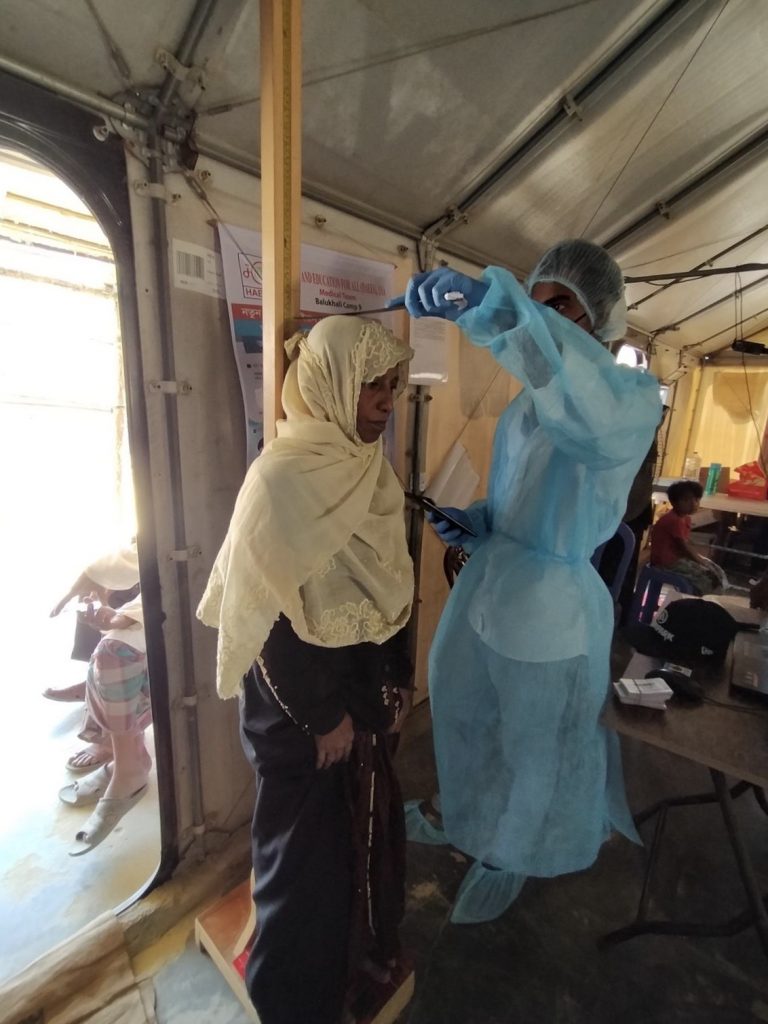
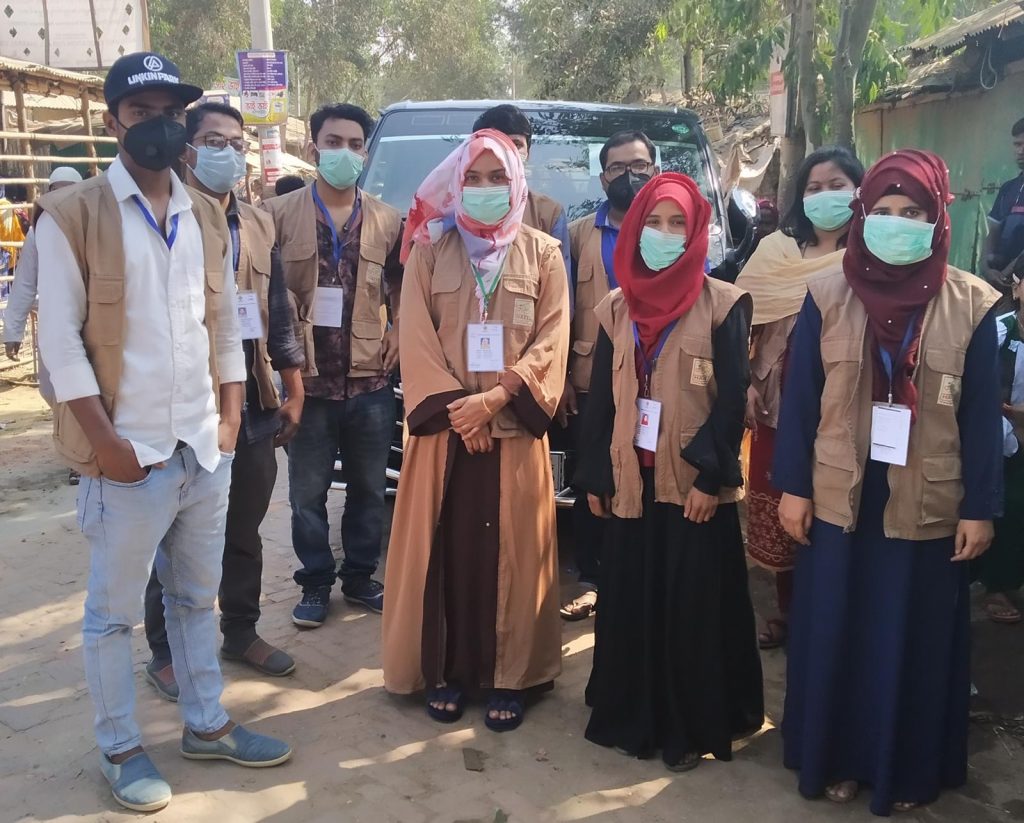
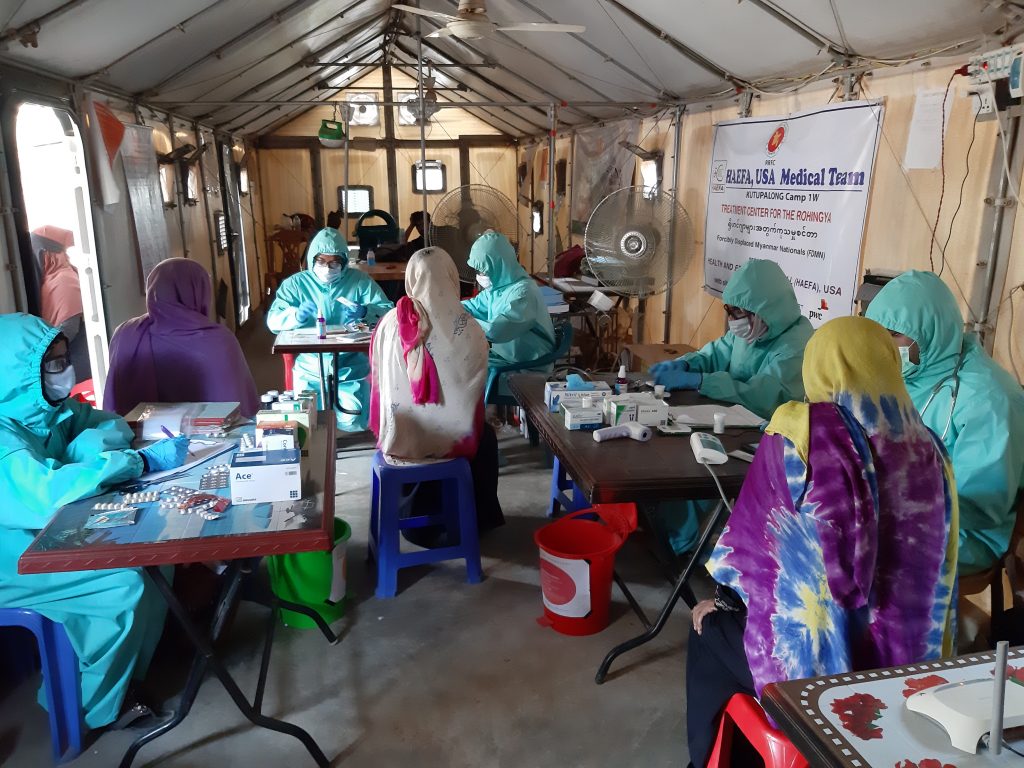
One such organization is Health and Education for All (HAEFA). HAEFA runs two health centers in Kutupalong and Balukhali camps, which, before the COVID-19 pandemic, provided medical care to between 6,000 and 7,000 patients a month.

More than one in five refugees is at high risk for developing severe complications if infected with the coronavirus.

HAEFA President Dr. Ruhul Abid, associate professor at Brown University Alpert Medical School and at Rhode Island Hospital, believes that, in addition to continuing to provide care to patients, HAEFA must support prevention in the community to protect the most vulnerable from the spread of the coronavirus: “The main protective mechanisms people can use against COVID-19 are social distancing and hygiene. In a place like [the] Rohingya camps, this is not possible. HAEFA is planning to provide cloth masks, bar soaps, toilet brushes, bleach, and household hand-washing stations to our elderly patients with comorbidities such as hypertension, diabetes, asthma, and tuberculosis. They are most vulnerable and may have severe outcomes if infected with COVID-19. It is our responsibility to help them protect themselves,” he said.

Kutupalong Camp, April 2020 (Photo courtesy of HAEFA)

An average of 150 patients per day are still coming to HAEFA clinics for a variety of routine services but its staff must now enforce physical distancing in patient waiting areas and during examinations. Staff are urging patients to use the new hand-washing stations built outside the health centers.

The implementation of recommended public health measures to prevent the spread of the coronavirus is not without its challenges. Spaces are very limited, and health literacy is generally low. Dr. Ataul Labib, a medical officer at Kutupalong Medical Center, told PHR: “We have to work very carefully here. The patient has to be seen [while] maintaining distance. Everyone is using PPE [personal protective equipment] when seeing patients. Everyone washes their hands repeatedly after examining each patient. We didn’t have to do this before COVID-19.” The imperative for HAEFA staff to implement and enforce these practices is pressing, as the organization estimates that more than one in five refugees is at high risk for developing severe complications if infected with the coronavirus.

Balukhali Camp, April 2020 (Photo courtesy of HAEFA)

Essential Care Is Still Essential

Despite the changes to patient care practices at HAEFA health centers, patients are still seeking care for diabetes and hypertension, in addition to acute illnesses not related to coronavirus. Jannataul Mawa, a medical assistant at Balukhali Medical Center, noted that because of a lockdown and restrictions on all but essential services in the camps put in place by the government of Bangladesh, many of their regular patients stopped seeking treatment for chronic illnesses, which risks exacerbating these conditions and impacting their overall health.

Cox’s Bazaar, May 2020 (Photo courtesy of HAEFA)

This is particularly concerning because the Rohingya have experienced decades of systemic discrimination in Myanmar, long before they were forced to flee into Bangladesh. Some members of the Rohingya community had never been under a physician’s care before arriving in Bangladesh.

This lack of access – resulting in untreated, underlying health conditions and complications – increases the population’s vulnerability to coronavirus. Other health concerns will not pause because of the coronavirus pandemic and deferring treatment could increase mortality from other diseases that go untreated in addition to coronavirus. For these reasons, every effort should be made to ensure that essential and routine care can continue, despite the pandemic.

Communication Is Key

The health system within the Cox’s Bazar refugee camps relies on coordination between organizations and an active referral system to send patients to the health centers best equipped to address specific issues, whether they be mental health, surgery, or maternal health. To achieve an effective coronavirus response, these systems are even more critical. Communication restrictions put in place by the government of Bangladesh since September 2019 have severely limited the flow of information and internet access in the camps. Not only do these restrictions prevent the Rohingya communities’ access to accurate information on health services and the prevention of coronavirus, they severely hamper the ability of the camps’ health system, already a patchwork of health centers run by many different organizations, to coordinate responses and referrals effectively.

Cox’s Bazaar, May 2020 (Photo courtesy of HAEFA)

Supporting and Protecting the Caregivers

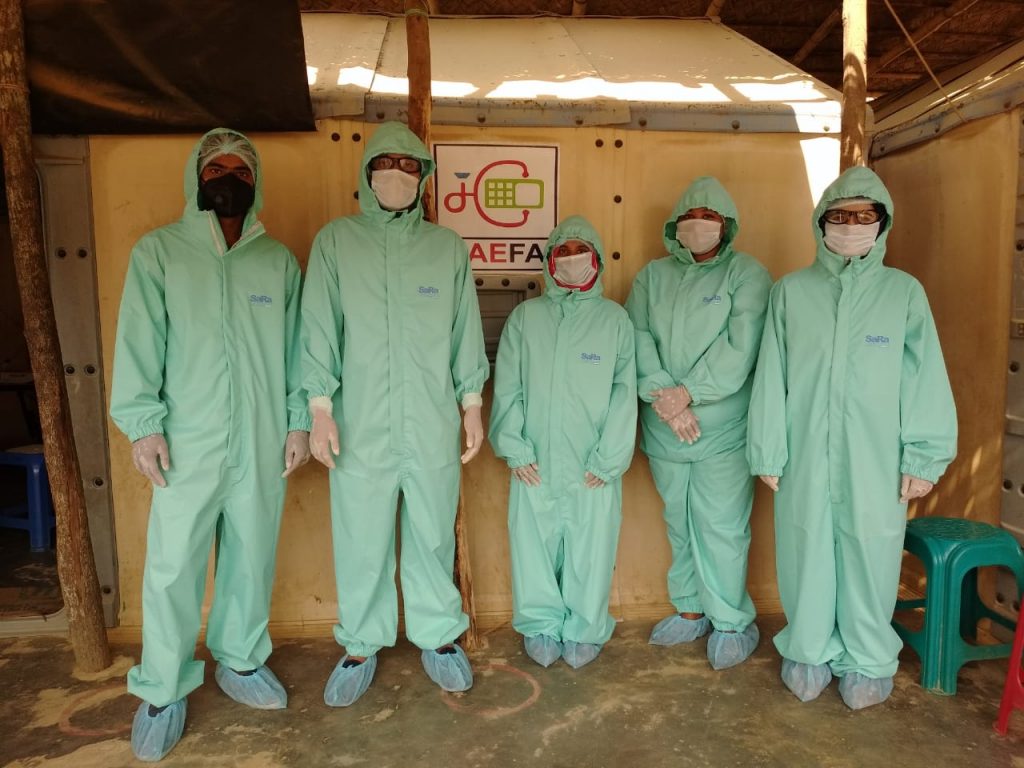
As the COVID-19 pandemic continues, organizations like HAEFA are also consumed with thinking about the safety of their staff. In the short term, HAEFA staff say they need PPE in order to provide clinical care. Since March 2020, HAEFA has focused on ensuring adequate PPE is available for health care workers and is implementing a training program for 3,000 health care workers on how to treat COVID-19 efficiently and protect themselves. To that end, HAEFA recently helped organize a training-of-trainers with Project HOPE and Brown University’s Watson Institute and Center of Human Rights for health care professionals in Bangladesh.

Now that coronavirus has entered the refugee camps in Cox’s Bazar, frontline health workers like those at HAEFA must rely on protective tools, effective communication, and continuation of essential care as their first line of defense against a pandemic whose reach into this community is still unknown and whose effects could be catastrophic.

Read more about HAEFA on their website.

Open Letter

Open Letter to U.S. Congressional Leadership on Federal Policing

PHR is a signatory to a letter from The Leadership Conference on Civil and Human Rights (The Leadership Conference), a coalition charged by its diverse membership of more than 220 national organizations to promote and protect civil and human rights in the United States. The letter urges U.S political leadership to take swift and decisive legislative action in response to ongoing fatal police killings and other violence against Black people across the United States country.

Read the letter here.

Blog

Life as a Future Physician in the Time of COVID-19

By Meredith Peck, D.O.

On March 17, 2020, the Association of American Medical Colleges (AAMC) issued the following statement: “The AAMC strongly supports medical schools pausing all student clinical rotations, effective immediately, until at least March 31.” This statement signified an overwhelming life change for medical students across the country.

COVID-19 has impacted all humans alive at this point in history. However, medical students occupy a unique position in the context of this pandemic. We are staring into a future that none of our mentors has seen before. There is not a generation of physicians alive that has experienced anything like this. We are prepared for a career in medicine, but are we prepared for a pandemic? Are we prepared for our patients to die because there is no treatment available to cure them? Are we prepared to expose ourselves to a deadly virus because personal protective equipment (PPE) is unavailable? Are we prepared for the societal, economic, and cultural fallout that will inevitably accompany a global pandemic? We do not have answers to these questions, but we do have our stories to tell.

We are prepared for a career in medicine, but are we prepared for a pandemic?

The Physicians for Human Rights (PHR) Student Program is an international network of medical school PHR chapters and asylum evaluation clinics. The program is led by a student advisory board (SAB), whose members are dedicated to the promotion of human rights and who have committed themselves to advocacy work in medical school. Three students from the PHR SAB spoke to us about the way the pandemic has changed their world:

  • Shefali Sood is a third-year medical student at New York University (NYU) School of Medicine, where she has conducted extensive research on the implications of climate change on human rights and helped establish a student-run asylum clinic.
  • Jessica Beer is a fourth-year medical student at Georgetown School of Medicine, where she held a leadership role in the Georgetown asylum clinic. She recently matched into Anesthesiology at Georgetown and is interested in pain management for refugee torture survivors.
  • Michelle Munyikwa is a 2021 MD/PhD candidate at the University of Pennsylvania Perelman School of Medicine, and wrote her dissertation on refugees and asylum seekers in the United States. She was elected as the SAB’s co-director for 2020-2021.

Medical Student, Interrupted

The COVID-19 pandemic has affected medical students in all four years of training. Two years of medical school are generally spent in the classroom, reading biochemistry textbooks and memorizing muscles and nerves in anatomy labs. The remaining two years are spent in hospitals and clinics, learning patient care and management, honing physical examination skills, exploring different specialties in month-long stints called rotations, personal self-development, and applying to residency, the specialized training that follows medical school.

Shefali Sood was on a pediatric neurology rotation in New York when cases in the United States began to increase in early March. “There was a feeling in the air that a disaster was coming, and we were not adequately prepared,” she recalls. Remembering a specific patient, a child diagnosed with tuberculosis who needed management of her epileptic drugs, Sood says: “N-95 masks were already in short supply… [we] were unable to enter the patient’s room… we waved at the patient through the glass window and did our best to assess her neurological exam and function from 10 feet away.”  

Medical schools across the country began to respond to rising cases in hospitals where their students were rotating. “At first, the school made changes to the kinds of patients we could see,” MD/PhD candidate Michelle Munyikwa explains. “No respiratory complaints, no going into rooms that required PPE, and definitely no seeing patients who were confirmed positive.” However, as the situation worsened, and the AAMC ended rotations, institutions drastically altered their curriculums. Sood summarized the NYU response: “For MS3 [medical school year 3] and MS2 students, the school cancelled all in-person elective and clerkship rotations involving direct patient care. The MS1 students are completing their pre-clinical requirements online and remotely.”

But moving medical education to online learning is not the same as moving a philosophy or math class online. Digitized medical education means no anatomy labs, no histology labs, no osteopathic medicine labs. The hands-on component of medical education was terminated.

Rumors circulated of medical schools graduating MS4s early to enter the work force. Eventually, Sood recalls, “it became national news that NYU Grossman School of Medicine allowed MS4 students who completed required rotations to graduate early and help on the frontlines.” This came as a shock to many students and demonstrated the severity of the crisis in New York: hospitals were so overwhelmed that they would take fourth year medical students who had not yet completed even the first year of residency to help lessen the toll of COVID-19.

Uprooted Lives

Like the rest of the country, medical students experienced major life changes associated with social distancing and state shutdowns. Jessica Beer, who is married with two elementary-school-aged kids, describes the closing of her kids’ school coinciding with the cancellation of her Washington, DC emergency medicine rotation: “I was in a unique position watching the pandemic unfold in the U.S. from the front line…. [and in] what felt like the blink of an eye, I switched from being a medical student to being a homeschool teacher.”

In New York City, the epicenter of the U.S. COVID-19 cases, Sood was living in medical student housing and recalls “as my roommates began returning home, I was the only one in my apartment…it was very isolating.” Living across the street from Bellevue Hospital, Sood describes her new reality as “harrowing.” “You could hear ambulances pass every 20 minutes or so as cases began to build and could see triage tents and even morgues being constructed from your window.”

“Stay at home” orders came at a particularly devastating time for fourth year medical students like Beer. March 20, 2020 is Match Day, the day that every fourth-year medical student in the country learns of their acceptance into a residency program. Match Day is the culmination of three years of exhaustive work and knowledge acquisition followed by months of sub-internships, residency applications, and interviews. Traditionally, medical schools host a gathering and classmates open envelopes revealing their residency position together, in solidarity, after having weathered the joys and obstacles of medical school as a class. While Beer notes that her institution hosted a nice virtual match day, for many, the Match Day celebration was cancelled. A few weeks later, medical school graduations were cancelled as well. When asked what plans their institutions have for these celebrations, Sood replies “everything has been cancelled;” “Nothing! All digital,” says Munyikwa. Disappointment is an understatement in describing the loss felt by medical students who wanted to celebrate the culmination of the labors endured to earn their degree.

Poised to Serve

In the face of a global pandemic, U.S. medical students are torn. We chose to dedicate our lives to serving others, to ensuring our fellow humans co-exist safely and in good health. We want to be involved, but we are still students in many ways, very early in our training. We have all taken exams on infectious disease and been fitted for N95 masks, so we know enough to be scared. Sood is concerned about the continuation of her clinical years due to the lack of PPE and the direct supervision medical students require. Beer admits to feeling “torn about being on the sidelines” as she watches doctors and nurses she has worked with struggle and sacrifice in the face of COVID-19. Munyikwa, who is interested in a career in infectious disease, expressed feelings of “guilt for not being more involved or able to help.” Despite her fears about the lack of protection for health care workers, though, she says she would “go [to the front lines] if we were told to without reservation.”

Meanwhile, Beer has been volunteering with her hospital system’s telehealth efforts. Her team monitors patients diagnosed with COVID-19 after they are discharged from the hospital using an application where the patients can record their vital signs and symptoms to ensure no worsening or recurrence of disease. Sood has been continuing her education, taking online electives in ophthalmology and clinical anatomy in addition to research projects she can make progress on remotely. She has also been volunteering to notify patients by phone who tested positive for COVID-19, saying “I have chart-reviewed almost 500 patients to notify them of their COVID status.” Munyikwa has been keeping herself busy with “some combination of helping design curricula, flinging all my free time into my hobbies, fretting about residency, and cooking a lot.” She describes this as “the most unstructured time in my life in a long time.”

An Uncertain Future

When asked about their most pressing concerns for the future, students’ worries run the gamut. Sood says she is “very concerned about my future training and exposure to specialties and different fields….[The pandemic] is putting unnecessary stress on students who are missing out on this period of exploration.”

“My biggest concern on a daily basis is how tenuous our federal government’s response to this crisis has been and I worry that it is further eroding the fabric of our country.”

Beer, who is living out the pandemic in Washington, DC, states: “My biggest concern on a daily basis is how tenuous our federal government’s response to this crisis has been and I worry that it is further eroding the fabric of our country.”

As members of the PHR student advisory board, these students are acutely aware of the pandemic’s global impact. “My husband and I were both peace corps volunteers,” says Beer, “and so I worry for those in the developing world because I know this will be hitting them very hard.” Munyikwa, an immigrant herself, says “I am concerned about my loved ones who live abroad in countries with fewer resources.”

The future physicians of the United States know that treating patients is more complicated than ordering blood tests and prescribing drugs. Health is multifaceted, and medical students are taught that good health cannot be achieved without the cohesive functioning of all these factors. Although our lives have been uprooted by COVID-19, we know that many of our future patients have already endured more than we can imagine. Says Munyikwa: “While this is an unprecedented opportunity to share our political reality and support the most vulnerable among us, I fear that we will see instead more isolationism, xenophobia, and violence. I hope I’m wrong.” The world must come together during this time to build a stronger, more resilient global community. As future physicians, we have an enormous role to play in post-pandemic global transformation, and I believe we are up to the task.


Meredith Peck is a member of the 2020 graduating class of the Touro College of Osteopathic Medicine. She was elected the 2019-2020 PHR SAB co-Director after serving as the Touro PHR chapter vice president in 2017 and organizer of the 2018 National PHR Student Conference. She will be starting her residency in Anesthesiology at Maine Medical Center in June 2020.


Webinar

Protecting Health Care Workers Amid the COVID-19 Pandemic

In collaboration with the leadership of the World Medical Association and the International Council of Nurses, Physicians for Human Rights published a Comment piece in The Lancet on May 20, 2020 entitled, “Attacks Against Health-Care Personnel Must Stop, Especially as the World Fights COVID-19.”

In this webinar discussion, Richard Horton, FRCP, FMedSci, Editor-in-Chief and Publisher of The Lancet and a PHR Board Member, leads a discussion with the authors of this piece. The discussion highlights recent attacks on health care workers and necessary actions to protect them (and in turn, the patients and communities they serve) amid the COVID-19 pandemic and going forward.

Distinguished panelists

  • Howard Catton, RN, MA, CEO, International Council of Nurses
  • Michele Heisler, MD, MPA, Medical Director, Physicians for Human Rights; Professor of Internal Medicine and Public Health, University of Michigan Medical School
  • Otmar Kloiber, MD, PhD, Secretary General, World Medical Association

See all events in PHR’s COVID-19 Webinar Series.

Statements

Declaration by the Health Care in Danger Community of Concern: Violence Against Health Care

First, we would like to express our heartfelt support for all the health workers responding to the COVID-19 pandemic, and for those working tirelessly in so many other areas of health care as well. Health-care workers and facilities and medical vehicles should never be a target of violence, and we urge governments, communities and weapon bearers to respect and protect health care at all times, and to contribute to creating a protective environment in which health care can be provided safely. 

Unfortunately, the sad reality is that health workers have for a long time been subject to many shocking forms of violence. The recent displays of public support for COVID-19 responders are heart‑warming, but many responders are nevertheless experiencing harassment, stigmatization and physical violence. Some health-care professionals and the people they were caring for have even been killed. At least 208 reports of such incidents have emerged since the beginning of the pandemic, and each day brings new stories of intimidation and harm. 

Violence against health care must not be tolerated. We stand firmly against it, and are working as a global community to build a world where health workers and patients are safe and respected. We call on everyone reading this message to join with us and protect health care from violence. And not only individuals: we call on all governments to act against misinformation and to ensure that health care is protected by domestic law, that all health-care professionals have a safe working environment, and that mental health support is offered not only to victims of violence, but also to those working under increased levels of stress.

Signatories:

Robert Mardini, Director General, International Committee of the Red Cross

Jagan Chapagain, Secretary General, International Federation of the Red Cross and Red Crescent Societies

Christina Wille, Director, Insecurity Insight

Major General Geert Laire Secretary-General, International Committee of Military Medicine

Annette Kennedy President, International Council of Nurses

Eric de Roodenbeke, C.E.O., International Hospital Federation

Tammy Yu, Liason Officer for Human Rights and Peace Issues, International Federation of Medical Students’ Associations

Philippe de Botton, President, Médecins du Monde

Donna McKay, Executive Director, Physicians for Human Rights

Leonard Rubenstein, Chair, Safeguarding Health in Conflict Coalition

Emma K. Stokes, President, World Confederation for Physical Therapy

David Gordon, President, World Federation of Medical Education

Frank Ulrich Montgomery, Chair of the Council, World Medical Association

Blog

Voices from the Pandemic: A Looming COVID-19 Outbreak in Tijuana

Dr. Hannah Janeway and Tamaryn Nelson jointly document the plight of asylum seekers on the U.S.-Mexico border. This is part of an ongoing series of first-person reports from PHR-affiliated health care workers providing care for at-risk populations during the coronavirus pandemic.

At first, they cannot hear me from beneath the mask, so I take a few steps backward to ensure I am six feet away and lower it. Then my voice carries like a shock wave. I have their full attention now, as I go over COVID-19 statistics and prevention strategies. Deaths in Italy and New York. Hospitals not having ventilators and uncertainty about supply in the United States, one of the richest countries in the world.

This is not the first migrant shelter in Tijuana, Mexico where I have spoken on these stark realities, nor will it be my last. Pre-pandemic, my patients in this border city already had high risks to their health due to violence from organized crime, barriers to accessing healthcare and difficult living conditions. I know their stories from the Saturdays that I have spent here inside the shelters treating their wounds and rashes, or from my contact with them at the clinic I help run downtown. Their trust flows in my direction, which is why being the bearer of bad news to them is so hard.

“How many of you have used the Mexican health care system?” I ask. “If you get sick, do you think they will care for you well? Do you think they will be able to save your life?” Heads are shaking “no” now. They know, as I do, that Mexico’s already overburdened public health care system and its scarce resources may not reach them.

The shelter’s director starts speaking, trying to impress upon them the gravity of the situation. I am looking out at a sea of faces, individuals and families who have fled unimaginable violence – gang rapes, torture, murders, and hangings – to now face a pandemic in some of the most precarious conditions.

The director continues. Her strong voice communicates her conviction about undertaking this largely unrecognized and risky work. She’s speaking about how much she cares, about why she doesn’t want the migrants leaving the confines of this shelter, where they are huddled together in tents with no space to turn. Social distancing in these conditions feels near impossible to us all in this moment. And then they start to cry in unison, a powerful unleashing of emotion from these most resilient people, as they face yet another challenge to their existence.

I have been working part-time in Tijuana for over a year now. Every day feels as pressing as today, but the long-term prospects for these asylum seekers have never seemed worse. Every outbreak of infectious disease I have seen in these crowded, cramped shelters has spread like wildfire. Varicella, mumps, norovirus. And now the threat of COVID-19.

It is not surprising that media reports show that Tijuana is one of the epicenters in Mexico, with more than 1,240 confirmed COVID-19 cases and more than 290 registered deaths, but estimates suggest that the limited testing available here masks much higher numbers. As a physician from the United States, I have had to wrestle with this and with the knowledge that our country has created a situation where families are essentially trapped at the border, waiting for the pandemic to blaze through these communities.

The U.S. administration has accelerated its inhumane treatment of asylum seekers since the COVID-19 pandemic. Until early April, the United States subjected asylum seekers arriving at U.S. border crossings to “metering,” a process illegal under international law that limits the number of people allowed to enter the United States each day to make their case for protection. Some asylum seekers waited up to a year simply to cross and present their case. Even when these asylum seekers were finally able to do so, most of them were then sent back to Mexico through the so-called “Migrant Protection Protocols” policy, which required asylum seekers to await the processing of their case in Mexico. This left asylum seekers with no access to immigration lawyers and exposed them to alarming levels of violence.

When the coronavirus became widespread in the United States in April, the Trump administration banned all non-essential travel across its borders, which effectively shut down the asylum process on the U.S.-Mexico border and left thousands of asylum seekers dangerously exposed to this pandemic. This political move masked as a public health policy has trapped asylum seekers in a country they do not know, in one of the most dangerous cities in the world, without access to adequate health care, housing, or economic opportunities.

As a doctor, I will do what I can in the face of this crisis, as the inevitable wave of COVID-19 infections sweeps through migrant communities on both sides of the border. But, until the U.S. government revokes the unlawful and abjectly cruel policies that deny asylum seekers the right to seek protection, they will remain at high risk of infection and death from COVID-19 and from a range of other diseases that can sicken or kill people who lack access to care.

Every day, I witness firsthand how the coronavirus knows no borders, and I am convinced that discriminatory immigration policies will not stop its spread. If the United States really wants to end this pandemic, we must prioritize public health strategies driven by science and respect for human rights. We should not be using the pandemic as a pretext to refuse the right to asylum for those seeking a safe haven.

Webinar

Reopening: Balancing Public Health, Safety, Human Rights, and the Economy

As the United States and the world move toward reopening, how do we best balance public health and safety imperatives with economic interests and civil liberties?

PHR Advisory Council member Jennifer Leaning, MD, SMH, professor of the practice of health and human rights at the Harvard T.H. Chan School of Public Health and associate professor of emergency medicine at Harvard Medical School, former director and now senior fellow at the FXB Center for Health and Human Rights at Harvard University leads a conversation on the challenges and implications of economic reopening, through a health and human rights lens.

Distinguished panelists:

Ashish Jha, MD, MPH is the K.T. Li Professor of Global Health at the Harvard T.H. Chan School of Public Health and director of the Harvard Global Health Institute. He is a professor of medicine at Harvard Medical School and a practicing general internist.

Martin McKee, MD, DSc, is a professor of European public health at the London School of Hygiene and Tropical Medicine and research director of the European Observatory on Health Systems and Policies.

See all events in PHR’s COVID-19 Webinar Series.

Get Updates from PHR