Webinar

The Impacts of COVID-19 on Children

On June 26, 2020, PHR medical expert Dr. Katherine Peeler moderated a discussion on the unique impacts of COVID-19 on children, including schooling, inequities, and vaccines. The panel featured Sabreen Akhter, Laura Alderman, Dr. Jyotsna Bhattacharya, and Dr. Kimberly Montez.

Distinguished panelists

  • Sabreen Akhter, DO is an emergency physician of pediatric medicine at Seattle Children’s Hospital, who also serves on the medical team for the Pediatric Emergency and Critical Care Kenya (PECC-Kenya) fellowship.
  • Laura Alderman, LPC-S, LMFT, NCC is the executive director of Step Forward in Shreveport, Louisiana, and is a licensed child and family therapist who has conducted training on childhood trauma for hundreds of professionals and educators.
  • Jyotsna Bhattacharya, MD, FAAP is a pediatric hospitalist and infectious disease physician at Kings County Hospital, SUNY Downstate Medical Center in Brooklyn who serves as associate program director of the Pediatric Hospital Medicine Fellowship.

This conversation was moderated by Katherine Peeler, MD, a practicing pediatric critical care physician at Boston Children’s Hospital, instructor of pediatrics at Harvard Medical School, and medical director of Harvard Medical School’s Asylum Clinic, who serves as a PHR medical expert.
See all events in PHR’s COVID-19 Webinar Series

Webinar

Health and Immigration Detention Amid the COVID-19 Pandemic:

Physicians for Human Rights and The Cornell Law School Migration and Human Rights Program present partnered to share timely information for families and friends of people in detention about health and immigration detention in the time of COVID-19.

Speakers:

  • William Lopez, PhD, MPH Clinical Assistant Professor University of Michigan School of Public Health
  • Ranit Mishori, MD, MHS Senior Medical Advisor Physicians for Human Rights
  • Alan Shapiro, MD Clinical Assistant Professor Albert Einstein College of Medicine

See all events in PHR’s COVID-19 Webinar Series.

Blog

Governors Must Protect the Health Workers Who Protect Us

Doctors and nurses shouldn’t have to risk their lives to do their jobs. If the federal government won’t act, states should.

Originally published by Bloomberg Opinion

The federal government’s response to Covid-19 has been haphazard, mismanaged and ultimately deadly. Yet the Trump administration is trumpeting the country’s “success” against the pandemic, with the vice president recently declaring that the U.S. response to Covid-19 is “cause for celebration.”

As doctors, we are not celebrating. With more than 125,000 people in the United States dead from Covid-19 and new cases climbing in 29 states, this is no time to let down our guard. And while the issue may have faded from the headlines, health workers in many parts of the country still lack personal protective equipment (PPE). Doctors’ and nurses’ pleas for masks and gloves may no longer be trending on social media, but the nationwide PPE crisis persists.

We have seen colleagues and friends forced to make impossible decisions — putting their own lives at risk to care for Covid-19 patients because they didn’t have the proper protective equipment. Some health workers have lost their jobs for speaking out about these shortages. The danger is real: At least 939 health workers have died from Covid-19 in the U.S., according to National Nurses United, and this is likely an undercount. These deaths were largely preventable.

Whether we’re still in the first wave of Covid-19 infections or preparing for the second, this much is true: We cannot abandon medical workers again by not providing the protective equipment they need. But to date, the federal Occupational Safety and Health Administration (OSHA) has only issued voluntary worker-protection standards in health care settings. This leaves these standards unenforceable. Many complaints about potentially life-threatening safety issues have gone unaddressed.

it is crucial that Maryland Governor Larry Hogan and New York Governor Andrew Cuomo, who serve as chair and vice-chair of the National Governors Association, respectively, exercise their leadership to push for universal protections for health care workers across the nation.

With the Trump administration attempting to simply wish away the pandemic, it’s again up to the states to shape the next phase of our response to Covid-19. Crucially, this includes a responsibility to protect the health workers on the front lines in the weeks and months ahead.

This is why thousands of health professionals, including our organization, Physicians for Human Rights, are calling on governors in all 50 states to exercise their authority to protect front-line health workers during the pandemic. That means setting clear and enforceable workplace safety standards, and mandating the provision of personal protective equipment. Governors should also enact clear standards for social distancing and hygiene measures, and enhance whistle-blower protections.

This week, Virginia proposed the country’s first-ever pandemic emergency workplace safety standards — the clearest signal yet of OSHA’s neglect of its duty to protect health workers. The new state regulations are expected to include mandatory guidelines for PPE, sanitation and other workplace safety guidance, as well as protections from retaliation for health workers who speak out about safety concerns. This is an encouraging development, but whether it will save lives depends largely on the state’s enforcement practices.

Some states, including Maryland and New York, have OSHA-approved state plans that meet or exceed national standards. That means they can impose stricter safety rules in public health-care facilities, and in some cases private ones, too. In places where there is no state plan, governors and state legislatures must step in and institute emergency standards for worker safety and enforcement that go beyond OSHA’s voluntary measures. OSHA’s non-enforceable standards currently set a very low bar for health worker safety during a pandemic. The states aiming higher will save lives.

We have seen colleagues and friends forced to make impossible decisions — putting their own lives at risk to care for Covid-19 patients because they didn’t have the proper protective equipment.

Given these gaps, it is crucial that Maryland Governor Larry Hogan and New York Governor Andrew Cuomo, who serve as chair and vice-chair of the National Governors Association, respectively, exercise their leadership to push for universal protections for health care workers across the nation. States can look to the California model, where there are standards set and generally enforced by the state for social distancing, face masks, hand sanitizing, washing and gloves. California also boasts regular workplace disinfection, increased ventilation and notification of infections.

Beyond passing new standards, it is essential that states enforce them. Once issued, relevant state agencies should be mandated to enforce standards under their own authority. States’ attorneys general should likewise be mandated to enforce these standards through the courts. States should also not overlook the critical importance of protecting health workers from discrimination or dismissal for speaking out in the face of dangerous conditions. Likewise, health workers should not face retribution for bringing additional personal protection to their jobs when employers are unable to provide adequate PPE.

As physicians, we know that the U.S. is still facing the biggest public health emergency in our lifetimes. The leadership of governors across the country has been vital in mitigating an even deadlier disaster. As we enter the fifth month of the coronavirus crisis, state-level leaders must rise to meet the moment. That means protecting the health workers who protect all of us.


Statements

PHR Welcomes UN Human Rights Council Demands for Demonstrable Commitments from the Government of Myanmar towards Justice and Accountability

Physicians for Human Rights (PHR) welcomes the adoption of UN Human Rights Council resolution L.23 on the situation of human rights in Myanmar. As an organization that has used science and medicine to document and prevent human rights abuses in Myanmar for more than 15 years – finding evidence of widespread and systematic violence targeting Myanmar’s Muslim Rohingya minority in northern Rakhine state in late August 2017, as well as broader rights abuses against ethnic and religious minorities – PHR has advocated for more concerted action from the international community to ensure meaningful accountability for crimes committed in the county.

The Council’s resolution renews the mandate of the Special Rapporteur on the situation of human rights in Myanmar and issues critical demands for the Myanmar authorities to take tangible steps towards justice and accountability for the commission of grave violations of human rights in the country.

With reports of grave human rights violations ongoing in many parts of Myanmar, the Council’s resolution highlights urgent areas of concern and immediate steps that Myanmar authorities must take to comply with international law.

In order to make progress towards justice and accountability for victims of grave rights violations in Myanmar, PHR echoes key concerns raised by the resolution, including:

  • The grave concern regarding “the culture of impunity that exists in the Myanmar security forces, and at the continuing forced displacement of civilians, mass and systemic human rights violations and abuses, and killings,” which is particularly troubling with conflict ongoing in Rakhine, Chin, Kachin, and Shan States;
  • The Myanmar government’s obligation to comply with the order of the International Court of Justice (ICJ) to prevent and punish the crimes of genocide, to actively protect the Rohingya as a protected group under the 1948 Genocide Convention, and to ensure the preservation of evidence of any grave crimes committed;
  • The need for the Myanmar government to end impunity for crimes committed, citing the deplorable release of members of the Myanmar military convicted by court martial of the unlawful killings of Rohingya civilians in Inn Din, Rakhine State;
  • The call for the Myanmar government to address particular widespread crimes, such as sexual and gender-based violence, and to accede to core international human rights treaties that most states have ratified;[1]
  • The demand that the Myanmar government act to restore “full citizenship and voting rights of all ethnic minorities in Myanmar, including the Rohingya, and to ensure free and fair participation of the Rohingya and other minorities in the elections to be held in 2020 in Myanmar,” and take steps to ensure free and fair elections with the monitoring of the international community, further ensuring the transition to a democratic, representative civilian government.

With such widespread evidence of grave crimes committed across Myanmar – as documented by the United Nations and organizations such as PHR – it is critical that the Myanmar government take heed of obligations delineated by the ICJ and the Human Rights Council. PHR is dismayed to see regional states on the Council, such as India, Indonesia, Japan, and Nepal, abstain on the resolution. Rather than turning a blind eye to the universal threats of grave human rights violations, states must take even greater action at the national, regional and international level to support justice in Myanmar.

There must be costs and consequences if the Myanmar government fails to comply with the ICJ’s provisional measures and the demands of UN bodies such as the Human Rights Council. PHR continues to call for the UN Security Council to hold regular meetings on the situation in Myanmar and for all states to consider appropriate legal actions, including targeted sanctions and arms embargoes, to protect civilians, especially ethnic minorities, and support the accountability and justice that are necessary for a sustainable peace in Myanmar.


[1] The resolution specifically calls on the Myanmar government to accede to the International Covenant on Civil and Political Rights, the International Convention on the Elimination of All Forms of Racial Discrimination, the International Convention for the Protection of All Persons from Enforced Disappearance, and the Convention against Torture and Other Cruel, Inhuman or Degrading Treatment or Punishment.

Blog

Voices from the COVID-19 Pandemic: “If COVID takes hold, the effects will be devastating.”

A Q&A with Helen Perry and Andrea Leiner, of the humanitarian organization Global Response Management (GRM), on asylum seekers in Matamoros, Mexico.

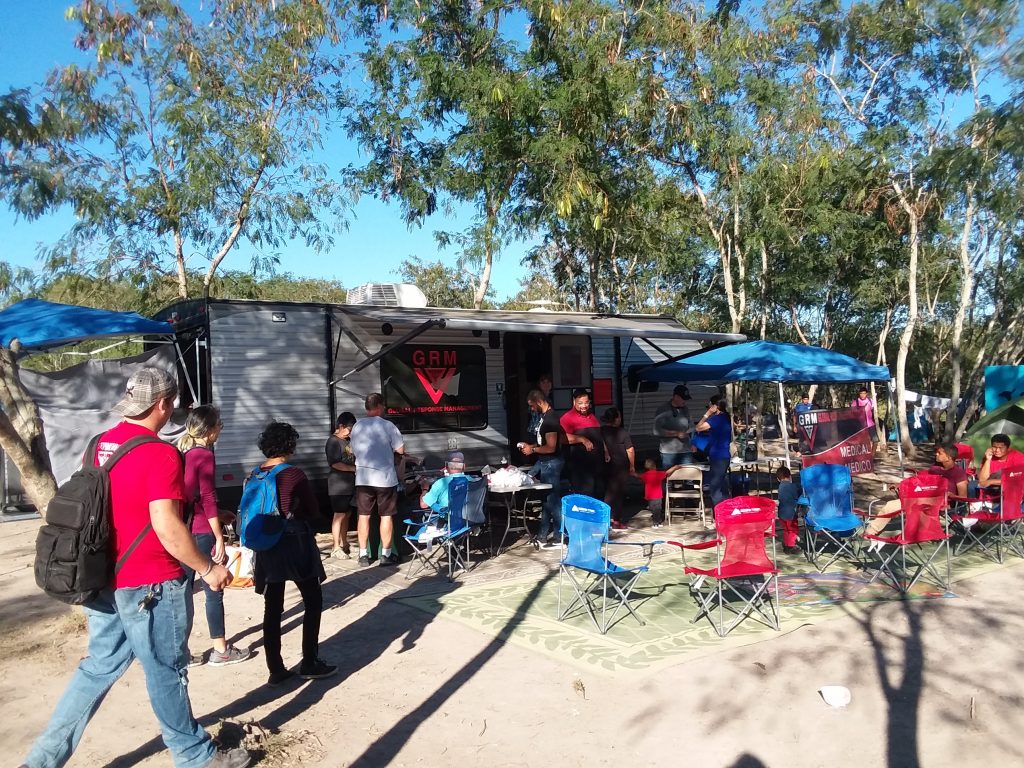
Conditions in the Matamoros camp – an informal settlement of 3,000 asylum seekers just across the border from Brownsville, Texas – are poor, with families living in tents and using makeshift latrines and showers. Asylum seekers have reported kidnappings and sexual and physical assaults to GRM staff. The clinic, whose staff includes asylum seeking health professionals, serves around 50 patients per day, including a large proportion of small children and teenagers. Over 400 patients who received treatment at the clinic were critically ill and would have died or suffered severe health impacts without GRM’s clinic, including myocardial infarctions, stroke, ruptured appendixes, acute hypoxia, and anaphylactic shock. There have been no confirmed COVID-19 cases in the camp yet, but cases in the local region are increasing.

The following is an extract from a recent email exchange with Helen Perry and Andrea Leiner. Note that some of the descriptions they provide are graphic.


PHR: How would you describe the condition of the health sector in Tamaulipas today and its main challenges? Do migrants have access to health services locally?

Perry: The public health infrastructure in Mexico has been severely impacted by austerity measures put in place by the Mexican government over the past few years. As a result, access to health care in Mexico is limited for many Mexicans, let alone for asylum seekers and refugees who are coming into the area. Imagine if 3,000 people, all with acute and chronic health needs, suddenly showed up in Dallas, Texas. Our own health care infrastructure would be overwhelmed – imagine, then, what the case would be in places around the world that are already experiencing health care disparities. This is on top of the fact that there is still significant bias and prejudice against Central and South American asylum seekers in Mexico. We have had multiple patients report to us that they do not want to seek health care from Mexican entities because of the prejudice they have experienced.

PHR: How would you describe the level of preparedness for COVID-19 in Tamaulipas at the governmental, institutional, and community level?

Perry: Again, we are talking about an area of the world with significant health care disparities at baseline. Governments across the globe have struggled with how to adequately prepare and respond, and Tamaulipas is no different in this regard. We have seen organized crime organizations step up to provide sanitary resources and food distribution to families, and I think that is a testament to how dire the situation is. Many of the local hospitals are closed to patients with signs or symptoms of COVID-19 and we have heard multiple reports of people being turned away at the door from seeking health care at public facilities. The city of Matamoros has a population of around 500,000 and only about 10 intensive care beds and 10 ventilators. The capabilities locally are incredibly limited, and COVID-19 is only exacerbating that.

“The city of Matamoros has a population of around 500,000 and only about 10 intensive care beds and 10 ventilators.”

PHR: How are migrants coping with this new reality?

Perry: We have definitely seen an increase in mental anguish in the past few months. Not only are families worried about COVID-19, they are also concerned because of the total halt to U.S. asylum proceedings and immigration processing. The reality for many of these families is that the gangs that threatened them in their home countries often still have access to them in Mexico, not to mention the threat of other organized crime groups targeting them.

PHR: How did you come to be doing this work in Matamoros, Mexico?

Perry: After landing from search and recovery efforts in the Bahamas following Hurricane Dorian, I received a call that there was a humanitarian catastrophe on the border. We immediately headed to Brownsville, Texas and crossed the border into Matamoros, where thousands of people were seeking asylum at the foot of the bridge and had been turned away [due to the introduction of the Migrant Protection Protocols (MPP) or “Remain in Mexico’” policy]. They were now homeless and had nowhere safe to go. We began seeing patients immediately on the sidewalk and continued until we established a full-time clinic in the center of the makeshift camp.

“We began seeing patients immediately on the sidewalk and continued until we established a full-time clinic in the center of the makeshift camp.”

PHR: How are conditions in Matamoros different or similar to the other humanitarian settings where you have worked in the past?

Perry: I think it is important to realize that the vast majority of people living in this camp are not “migrants.” A “migrant” is someone who changes locations for a better economic opportunity. These are refugees, who are fleeing severe harm. These are people fleeing the type of violence that we saw from ISIS. Women coming home to find their children lit on fire while still alive, because they could not afford that month’s extortion fee. Children hunted down and murdered in the streets, publicly executed for knowing the names of gang members. Women, sexually mutilated and tortured because their family member worked for an opposing gang.

These are all stories I have listened to firsthand, and it is the same type of violence we saw when we worked in Mosul, Iraq when it was under ISIS control. We once did an exam on a woman who had been tortured and mutilated by the cartel. We had to document her injuries for her medical records and her court case. We normally use a 6-inch paper measuring tape to measure scars. In her case we had to use a 60-inch cloth measuring tape to adequately document some of the scarring on her body, which stretched from her ankles to her chin. Her breasts had been cut off and they had carved the name of the gang on her abdomen.

I once talked to a woman who had fled Honduras with her 10-year-old daughter. She worked for the police and had ended up on a cartel hit list. She and her daughter had less than 24 hours to gather all their belongings and flee for their lives. She knew the cartel would be watching the caravans, so they traveled alone, and only at night, staying off the main roads. She recounted to me how she and her daughter were attacked and raped multiple times on the way. I cried as she told me her story and expressed to her how truly sorry I was, as a fellow human being, that she had to go through that experience, and that her daughter would be traumatized for life.

I’ll never forget how she stopped me, smiled, and said, “You don’t understand: the trauma she has experienced is nothing compared to what her life would have been if we had stayed. It’s nothing compared to what she would have had to go through. I’m grateful we made it. Grateful to be here. To have this opportunity. And that people like you are here to care for us.”

“You don’t understand: the trauma she has experienced is nothing compared to what her life would have been if we had stayed. I’m grateful we made it. And that people like you are here to care for us.”

PHR: What has been the impact of the pandemic on GRM operations, as well as the health of people in the encampment? What adaptations have you put in place?

Leiner: There is global competition for resources and health care professionals due to the pandemic. Procuring supplies and booking volunteers has been challenging, given the limitation on flights, increased border security, etc. When everyone is competing for the same resources, vulnerable populations tend to get left behind.

Perry: We implemented a three-pronged strategy: prevention, fortification, and treatment. For prevention, we focused on education, building hand-washing stations (96 total), and distributing face masks. For fortification, we covered everyone with multivitamins and identified people with comorbidities in order to evaluate their treatment regimen. For treatment, we established an isolation area and built a field hospital specifically for mild and moderately ill COVID patients.

PHR: What has been the greatest achievement of this program so far?

Leiner: Throughout the entire operation, we have faced one obstacle after another – the elements, regulations, transporting materials into Mexico, treating patients with limited resources, and now a pandemic that could spread like rapid-fire through an already depleted population. But we have an amazing team that sees obstacles as challenges to overcome and we never stop pushing forward as advocates for our patients. If not us, then who?

“We never stop pushing forward as advocates for our patients. If not us, then who?”

PHR: What is your top priority now for ensuring access to health services in the encampment?

Leiner: Access is the key word. We work each day to make sure that asylum seekers in Matamoros have access to quality health care and medical professionals. Continued funding for this operation and awareness of the situation are also two areas of focus for us.

PHR: What is your greatest concern, as health professionals, for people living in the encampment?

Perry: The changes with the MPP and the U.S. asylum process have created a situation where already traumatized and vulnerable people are now living in tents along the Rio Grande, exposed and under constant threat from the elements. We are entering flooding and hurricane season, which could be catastrophic for our camp. Also, the threat of COVID reaching the camp weighs heavily on our minds. We have worked around the clock to put prevention measures in place in the camp, but we know that if COVID takes hold, the effects will be devastating.

“The threat of COVID reaching the camp weighs heavily on our minds. We have worked around the clock to put prevention measures in place in the camp, but we know that if COVID takes hold, the effects will be devastating.”

PHR: How can health professionals and other advocates support your work?

Leiner: Join us! Volunteer, donate, stay current on our social media and newsletter posts. We are all stronger together.


Connect with GRM on its website or on Twitter: @GRM_Global

Global Response Management (GRM) is a humanitarian organization which provides emergency and pre-hospital care in areas impacted by crisis and conflict. Having previously served as a nurse in the U.S. Army, GRM Executive Director Helen Perry, ACNP, MSN, CCRN, CEN, joined the organization in 2017 to provide care in Mosul, Iraq, and later to Rohingya refugees in Cox’s Bazar, Bangladesh. GRM Director of Strategic Plans Andrea Leiner, FNP-BC, ACNP-S, MSN, decided to enter the medical field after watching the devastation of 9/11 firsthand from her office.

Open Letter

Open Letter to the Secretary-General on the 2020 Annual Report on Children and Armed Conflict

On June 22, 2020, PHR joined 23 other human rights organizations to convey concerns about transparency and accountability in the 2020 Annual Report of the UN Secretary-General on Children and Armed Conflict

Read the full letter here.

Blog

In the DRC, COVID-19 Threatens Hard-won Gains in the Fight against Sexual Violence

Lire en francais.

For many years, the Democratic Republic of Congo (DRC) has been combatting gender-based violence and particularly sexual violence related to the armed conflicts that have afflicted the country for more than two decades. While political forces and members of civil society have together made strides on this issue in recent years, the emergence of COVID-19 has overshadowed most political, security, and even humanitarian concerns in the DRC.

Following the declaration of a state of emergency on March 24, Congolese federal and provincial authorities have taken measures to respond to the growing threat of COVID-19. For example, the governor of Kinshasa ordered a lockdown of the Gombe municipality, restricted travel between cities with reported cases, ordered the population to wear masks, and banned public gatherings of more than 20 people. However, members of civil society have deemed some of these measures excessive or poorly enforced.

Stakeholders fear an increase in gender-based violence due to authorities ordering school closures, restricting movement, and requiring people to self-isolate in their homes.

In the city of Bukavu in South Kivu, where I work for PHR’s Program on Sexual Violence in Conflict Zones, what we fear above all is not these measures, but rather the ability of our health facilities to care for patients in critical condition, particularly those who require respiratory aids. Very few health facilities have the capacity to offer this type of care and the number of available ICU beds is extremely limited. As a point of reference, the main public hospital in Bukavu shared that they only have 30 available ICU beds for a population of nearly 900,000 residents.

Alongside concerns about COVID-19, the DRC faces a plethora of other persistent public health problems that the pandemic is exacerbating, including sexual and gender-based violence (SGBV). Stakeholders who work on this issue fear an increase in gender-based violence due to authorities ordering school closures, restricting movement, and requiring people to self-isolate in their homes.

Bukavu’s Police Child Protection Unit is already reporting cases of domestic violence in which perpetrators, generally spouses, are acting out under the stress that comes from supporting a household during these challenging economic times. Paradoxically, some health facilities are reporting a decrease in patients, which may be a result of survivors’ fears of being exposed to the virus while seeking treatment. This could also signal that survivors are deciding not to risk infection by seeking psychological support in health facilities. This would be especially disastrous at a time when vulnerabilities are exacerbated and gender-based violence is on the rise.

Particularly concerning is the situation of those who live in rural areas who depend on services offered in nearby cities. Many services – health care included – are not available in rural areas, as they rely on the government resources and humanitarian assistance only available in cities. Without a doubt, restrictions on movement between cities and more remote regions will deprive rural residents of access to health services.     

Paradoxically, some health facilities are reporting a decrease in patients, which may be a result of survivors’ fears of being exposed to the virus while seeking treatment.

As in every sector, actors in the fight against sexual violence are trying to mitigate the negative impacts of COVID-19 on their work and ensure the continued availability of services for survivors of sexual violence. Yet, they face major obstacles, such as the difficulty of adapting services to follow new containment measures. Most services offered to survivors require physical contact, which is now often restricted. Moreover, police have been mobilized to enforce social distancing measures, often at the expense of other critical duties such as preventing and combatting sexual violence. In some provinces, populations face additional health and security issues, rendering the fight against sexual violence even more challenging. Adding COVID-19 further complicates a situation which was already precarious.

The Congolese government should integrate an SGBV lens in its response to COVID-19. This is the only way to ensure that survivors continue to receive critical treatment, that those who provide these services can continue to do so in a safe environment, and that we preserve our hard-won gains in the fight to end impunity for crimes of sexual violence.

Blog

En RDC, le COVID-19 menace les acquis dans la lutte contre les violences sexuelles

Depuis plusieurs années, la République Démocratique du Congo (RDC) lutte contre les violences basées sur le genre et plus spécifiquement les violences sexuelles liées aux conflits armés, qui ont marqué le pays pendant plus de deux décennies. Tandis que les forces politiques et les différentes plateformes de la société civile s’étaient résolues à avancer sur un chemin de compromis dans les années récentes, l’arrivée du COVID-19 est venu mettre en sourdine les préoccupations politiques, sécuritaires voire humanitaires du moment.

Nos autorités centrales et provinciales en RDC ont pris des mesures s’articulant sur l’instauration de l’état d’urgence, décrété par le président de la république depuis le 24 mars 2020. C’est ainsi que le gouverneur de Kinshasa avait confiné la commune de La Gombe ; que les échanges entre les villes contaminées et les territoires environnants ont été restreints ; que le port du masque est devenu obligatoire et que les rassemblements de plus de vingt personnes ont été proscrits … des mesures parfois jugées par des associations de la société civile excessives et peu encadrées.

Pour la ville de Bukavu, au Sud Kivu, où je travaille pour le Programme sur les violences sexuelles en zones de conflits pour Physicians for Human Rights (PHR), à côté de toutes ces mesures, ce qui est le plus redouté, c’est la capacité de prise en charge des malades jugés graves, pour qui la mise sous assistance respiratoire deviendrait nécessaire. En effet, le nombre des structures sanitaires aux normes pour ce genre de prise en charge restent très limitées et leur capacité de lits très réduite. Pour référence, l’Hôpital provincial général de référence de Bukavu avait annoncé n’avoir que 30 lits de réanimation pour une population de presque 900 000 personnes.

Concomitamment à cette crainte de la pandémie, subsistent des problèmes persistants de la santé publique en RDC qui risquent d’être exacerbés à cause de la pandémie. Il s’agit, entre autres, des violences basées sur le genre. Ce que redoutent les acteurs VBG, c’est l’augmentation des violences liées au genre à cause de certaines mesures comme la fermeture des écoles, la restriction des mouvements ou le confinement obligatoire des populations.

En effet, l’Escadron de Protection de l’Enfant et la Lutte contre les Violence Sexuelle de Bukavu signale déjà des cas des violences domestiques dont les auteurs, conjoints des victimes, exercent une violence gratuite dont la justification trouverait son fondement dans l’autonomie financière des ménages mise en mal en ce temps économiquement difficile. Paradoxalement, certaines structures sanitaires avaient déjà signalé une baisse de fréquentation des patients qui serait consécutive à la peur d’infection nosocomiale. Le risque est de voir les victimes des violences sexuelles s’abstenir également de solliciter la prise en charge psycho-médicale dans les structures médicales pour la même raison. Cela serait très désastreux en ce temps où les vulnérabilités sont renforcées et que les violences basées sur le genre augmentent.

Le milieu rural qui dépend des services offerts par la ville soulève des inquiétudes particulières. En effet, plusieurs services, notamment sanitaires, ne sont pas présent dans les zones rurales ou lorsqu’ils y sont, nécessitent des ressources provenant des centres urbains, point d’entrée de l’appui gouvernemental et de l’aide humanitaire.  Les mesures de restriction des mouvements vers les territoires des villes isolées privent des bénéficiaires de l’accès aux services de soins dans une certaine mesure.

Comme chaque secteur d’activité, les acteurs de lutte contre les violences cherchent à atténuer les conséquences du COVID-19 sur l’offre des services à apporter aux victimes des violences sexuelles. Toutefois, les défis restent énormes puisque ces services sont difficilement adaptables aux mesures adoptées par les politiques. En effet, la plupart des services offerts aux victimes dans leur processus de résilience nécessite un contact physique qui aujourd’hui est de manière réglementaire ou volontaire restreint. Et pour faire respecter ces mesures barrière et de distanciation, les services de polices sont prioritairement mobilisés, souvent au dépend des autres missions comme la prévention et la lutte contre les violences sexuelles pourtant significatives en cette période. Dans certaines provinces, les populations doivent faire face à des problématiques sécuritaires et sanitaire qui rendait déjà la lutte contre les violences sexuelles difficiles voire impossibles. Le COVID-19 vient donc y compliquer une situation qui était déjà chaotique à certains égards. 

Je crois fermement que l’Etat congolais devra intégrer dans sa politique de riposte les problématiques VBG pour être certain que les victimes continuent de recevoir l’aide nécessaire pour que les acteurs qui leur offrent de l’assistance puissent continuer la lutte contre les violences sexuelles dans un environnement de sécurité maîtrisée. Cela permettra de conserver les acquis des efforts actuellement visibles dans la lutte contre l’impunité qui devient de plus en plus une réalité grâces aux appuis des différents partenaires de la prise en charge holistique des victimes des violences sexuelles.

Webinar

Protests, Police Violence, and the Pandemic

PHR hosted a conversation on the role of health professionals and human rights activists in advocating against excessive use of force and offer a medical perspective on the misuse of CCWs and how people can protect themselves.

Distinguished panelists

  • Mustafa Abdullah, senior regional organizing director for the American Civil Liberties Union
  • Sebnem Korur Financi, MD, president of the Human Rights Foundation of Turkey, emeritus professor of forensic medicine at Istanbul University, and member of PHR’s Advisory Council
  • Alden Landry, MD, MPH, assistant professor of emergency medicine at Beth Israel Deaconess Medical Center, and assistant dean for the Office for Diversity Inclusion and Community Partnership, associate director and advisor for the William B. Castle Society, and director of health equity education at Harvard Medical School
  • Teresa Y. Smith, MD, MSEd, an emergency physician who serves as associate dean of graduate medical education and affiliations and as a clinical advisory dean at SUNY Downstate Health Sciences University/Kings County Hospital Center

This conversation was moderated by Rohini Haar, MD, MPH, a medical expert and research and investigations advisor at PHR, lecturer at the University of California Berkeley School of Public Health, and expert on CCWs, moderated the discussion.

See all events in PHR’s COVID-19 Webinar Series.

Why Testing Does Not Make Deportations Safe During the COVID-19 Pandemic

During the COVID-19 pandemic, despite travel restrictions at our borders and a suspension of many asylum proceedings, the United States continues deportations. With infection rates much higher than in most other countries, U.S. deportation practices risk exporting the novel coronavirus (SARS-CoV-2) from the United States to receiving countries, many of which have little to no capacity to safely quarantine deportees, compounded by weak healthcare systems that could collapse under the strain of large outbreaks of the disease.

Coronavirus testing (viral testing for an acute infection) and antibody testing (that tests for past exposure) have been proposed as ways to make deportation flights safe during the pandemic. However, testing inaccuracies and implementation limitations render these approaches woefully inadequate to ensure that the United States is not endangering people’s lives and spreading the coronavirus to other countries.

Coronavirus Testing

First, testing for the novel coronavirus is not sufficient to make deportations safe. Immigration and Customs Enforcement (ICE) is authorized to use rapid tests for a small sample of detainees prior to their flights. However, after a study by New York University (NYU) researchers reporting a false-negative rate of almost 50 percent, the Food and Drug Administration warned the public that these rapid tests may yield inaccurate results. Even if ICE began using the more reliable non-rapid RT-PCR tests among detainees, considered to be the “gold standard” in testing, false negatives could still occur (up to 30 percent), due to inappropriate timing of testing after exposure to the virus, or issues with specimen collection.

Second, coronavirus testing may be futile in the context of ICE transfers between detention facilities. With congregate living arrangements making social distancing impracticable and frequent transfers between detention facilities increasing risk of infection, it would be impossible to ensure that detainees with negative test results did not become infected between the time of their tests and their deportation flights.

Antibody Testing

Like viral testing, widespread antibody testing would not ensure safe deportations. Antibody tests are intended to detect people who have been infected with the virus, but antibody tests have multiple issues rendering them ineffective for clinical or population-based management, which is critical to control the COVID-19 pandemic.

Depending on the test kits used, multiple antibody test kits have been shown to have very low levels of accuracy, even in people who are confirmed to have had COVID-19. This poor accuracy is especially pronounced in light of the low base rate of infection in many parts of the United States, which greatly reduces the predictive value of antibody tests. When prevalence of infection is low, even extremely accurate antibody tests are likely to yield false-positive results and thus would provide a false sense of safety in the context of deportations.

Additionally, antibody tests can yield negative results in patients whose infections are more recent (within the first week of infection) and who have not yet started producing antibodies. These tests also miss infections among immunocompromised people whose immune system does not produce antibodies effectively.

Most importantly, using antibody testing as a green light to board deportation flights assumes that past infection confers immunity or prevents reinfection. While this may be true based on experience with other viral infections, we do not yet have the evidence to show that having been infected with SARS-Cov-2 makes the person immune, or even if it does, for what length of time.

In addition to the limitations of testing, deportation cannot be safe if reception in the deportee’s native country is not safe. Possible lock-downs in receiving countries make it difficult for deportees to travel to their homes to shelter in place with family and friends or make other arrangements. Forced quarantines in inadequate facilities can lead to mixing of infected and non-infected people. Deportees often are coming from challenging circumstances where they likely lack the resources to find other solutions.

For these critical, public health reasons and based on the science and evidence, Physicians for Human Rights urges the United States government to stop all deportations immediately and to reject claims that testing could make deportations safe during this pandemic.

Get Updates from PHR