
Blog

Finally… Kenya’s Sex Offenders Register Launched

What would you do if your child was kidnapped, held in a secret location, and defiled? For one father, it led him to give up everything he has spent his life working for, including his job, in the pursuit of justice for his daughter.

As Alexander Mwenga narrates the chronology of the events his family experienced, it is evident that he is still in a lot of pain over what he, and they, suffered in this pursuit of justice. His tale is one of many defeats in the hands of a justice system which is meant to protect the weakest in society, such as his daughter.
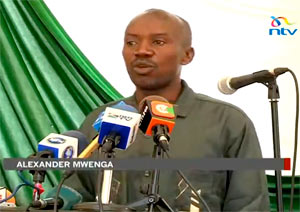
Alexander Mwenga speaks at the Kenya launch event

Mr. Alexander Mwenga, who lost a daughter to kidnapping, sexual assault, and death, speaks at the launch event of the Kenya Sex Offenders Register.

Almost every arm of the justice system in Kenya is indicted in the story of his many losses and the doors closed to him, including his daughter’s death. However, today maybe there is hope, as Kenyans are gathered to acknowledge some milestones in the strengthening of the system created to safeguard the right of Kenyans to be free from sexual violence.

At the April 24, 2012 launch event, the Sexual Offences Task Force achieved the milestone of handing over the completed draft of the Chief Justice Rules on Practice and Procedure, which are required to implement certain provisions of the Sexual Offences Act.

The Chief Justice also used the occasion to launch the Sexual Offenders Register, another huge milestone. This is a database, created by the Judiciary, that will hold the record of all convicted sexual offenders, including their names, identification card numbers, the crime committed and the age of their victim.

This kind of database is unprecedented in Kenya and has long been needed as the key mechanism for tracking sex offenders and ensuring they do not repeat these offences. Now, with the database in place, it will be possible to enforce restrictions on offenders, such as preventing them from working in schools or with children in other settings.

The presence at the gathering of the Attorney General, the Office of the Director of Public Prosecutions, the Government Chemist (who is charged with analyzing forensic evidence) and other key stakeholders, along with strong representation from civil society to publicly endorse these rules, made this a major event. This widespread show of support from government and non-governmental organizations for the development of the law is heartening. What now remains is for the Chief Justice to gazette the rules (make them law).

As the launch drew to a close, I had a chance to chat with the Chief Justice, Willy Mutunga. He noted the important role that forensic evidence plays in the successful prosecution of sexual violence cases. He lauded PHR’s efforts to support the capacity in forensic evidence collection and stated his intention to include PHR and other similar organizations in the working of the Council for the Administration of Justice. It was a meaningful endorsement for our work.

As I left the venue, it was with a realization that this has been a long journey, and the country has come a long way to the point where we can have a sex offender’s registry. It is worth pausing to celebrate these milestones.

Other

William Davis Testifies on Burma Before Canadian House of Commons

Testimony of William Davis, MA, MPH, Burma Project Director, Physicians for Human Rights (PHR) Before the Subcommittee on International Human Rights of the House of Commons

(Ottawa, Ontario, Canada—Thursday, May 10, 2012)

> Download this testimony (pdf)

"Good afternoon, Chairman Reid, and distinguished members of the Subcommittee. Thank you for extending an invitation to Physicians for Human Rights to testify about the human rights situation in Burma. It is an honor to testify before you today.

I would like to submit my full written statement as well as our report on Kachin State, and an update on human rights violations in Kachin State from the Kachin Women’s Association of Thailand. I ask that they will be ordered part of the record.

Physicians for Human Rights (PHR) is an independent, non-profit organization that uses medical and scientific expertise to investigate human rights violations and advocate for justice, accountability, and the health and dignity of all people. We are supported by the expertise and passion of health professionals and concerned citizens alike.

PHR has been investigating human rights violations against Burmese civilians, dissidents, minorities, and refugees since 2004. As Burma Project Director for PHR, I have conducted investigations in Burma’s rural areas, including in Kachin, Karen and Shan States, and in most countries bordering Burma. I have written a report titled Under Siege in Kachin State, Burma, which documents the human rights and humanitarian situation in that area of renewed conflict. I look forward to sharing my experiences with you today.

Burma has made a lot of news headlines lately. There have been extensive discussions among policymakers as well as in the international media about the changes that appear to be bringing Burma from a pariah state to a country on a path to genuine democracy. It is true that there have been some changes – in Rangoon, for example, people are now allowed greater media freedoms, and iconic Aung San Suu Kyi t-shirts and memorabilia are no longer forbidden. The Nobel Peace Prize laureate even sits in Parliament, and several hundred of her fellow political prisoners have been released.

While these changes are important, the same problems that have plagued the people of Burma for decades – including rampant forced labor, attacks on civilians, the use of landmines, and lasting impunity for those who commit heinous human rights violations – these problems continue to this day.

The Burmese Army continues to attack civilians in ethnic areas, especially in Kachin State where an estimated 75,000 civilians remain displaced. The Government of Burma until very recently has blocked access of humanitarian groups to this vulnerable population, thereby further exacerbating the precarious condition of those displaced. The Assistance Association for Political Prisoners-Burma (AAPP) has confirmed that 471 political prisoners remain in jail today. An additional 475 prisoners are still being verified. Prisoners of conscience who were released earlier this year have not been given amnesty by the government and they could be sent back to jail at any time, and arrests are continuing. March saw the highest number of arrests in two years: including 43 people have been jailed in relation to development projects for things like refusing forced relocation orders and for distributing T-shirts protesting a gas pipeline. The Government of Burma also continues to violate human rights in other areas, and remains dominated by a military that is not subject to any institutional accountability mechanism that could punish or deter crimes.

Burma’s ethnic minorities make up nearly a third of the country’s population, and they continue to bear the brunt of the military’s crimes. Minority groups remain extremely skeptical of the changes in Burma, and for good reason. Ethnic people have faced abuse and oppression by the Burmese government for more than 60 years, and they are understandably reluctant to embrace the announced changes coming from their government without concrete and credible improvements and meaningful accountability for the Burmese Army. They do not trust the government, and they so far have not benefitted from the changes in Burma.

I have interviewed Karen, Shan, Mon, Kachin, Chin, Arakan, and Burman people inside Burma and in most of the countries along its borders. From all of them I’ve heard a common theme, “We want to go home but we’re still afraid of the government”.

Indeed, in Kachin State I spoke with one man who was forced to walk in front of Burmese army troops to clear the path of landmines. I interviewed several more who had been forced to carry weapons and supplies for the Burmese Army. These abuses are not new: a grandfather told me how the Burmese Army tried to drown his wife in a bucket of water in the 1970s. Last year when the ceasefire in Kachin failed, he and his wife fled, not wanting to re-live the experience. The past and continuing abuses do not bode well for future reconciliation: a 15 year old Kachin boy who had been forced to guide Burmese Army troops between villages was scared and angry at the Army. He told me he wanted to join a Kachin insurgent group so he could fight the Burmese.

In the months since I was in Kachin State, I have been in regular contact with groups there who are monitoring the human rights situation as well as ongoing humanitarian needs. They have told me that human rights abuses are continuing and, as more civilians are displaced, the need for international humanitarian aid is increasing.

Before the 2010 elections in Burma, development and humanitarian relief programs in ethnic areas were funded mainly through groups operating outside the fold of the Burmese government. This was because the central government blocked aid to conflict areas and made it clear that it was not interested in helping ethnic people.

Since the 2010 election, the Burmese government has talked of starting development projects in ethnic areas, and in response some donor countries are shifting their funds from community-based groups operating in ethnic and border regions to groups working deeper inside the country. This is not a trade-off and the shift is premature. The talk of development from Naypidaw thus far is just talk, and the only effects felt in ethnic areas are the decreases in aid. It is not yet clear if the central government in Burma actually intends to serve the needs of ethnic people or not. If it does, starting development programs will take some time, and community-based organizations that are already running these programs should continue to receive funding until a system is in place for them to work in partnership with Naypidaw. The ethnic leaders I have spoken with are willing to cooperate with the government to promote the welfare of their people.

Community-based groups work inside the country and receive only funding and supplies from across international borders. They have been serving their people for decades and they already have the human resources, expertise, and local trust to implement development programs. Pulling their funding will disempower these communities and force them to rely of the central government for support. This is dangerous. When the central government reorganized state governments in 2008, it failed to establish ministries of health or education in Chin State. The central government has not convinced ethnic peoples that it is trustworthy enough to provide aid for them.

I heard several examples of this when I interviewed Chin refugees in India. I asked them if they would go back to Burma now that the government is changing and they all told me that they would not. They are not yet convinced that the government will not harm them and they are choosing to remain as exiles. Most Chin people I spoke with said that they left Burma because they feared the military and did not feel safe there—and they do not yet feel that it is safe to return. A Chin man told me that the Burmese government had deceived him his whole life, and that he doesn’t believe them when they say they are now a democracy. He said he will only return when the generals are no longer in power. Another man told me “Democracy is Burma is not for Chin people, it is not for the ethnics.” Others said, “There is still no freedom in Chin State.”

Lastly, I want to comment on the situation of the Rohingya. A Muslim minority in Western Burma, they remain one of the most heavily persecuted groups in that country. They do not have citizenship, and they suffer from forced labor, forced migration, restrictions on movement, and several other human rights violations. Now, it appears that they will be excluded from the planned 2014 census. This will further marginalize them. If the changes in Burma are slow to reach other ethnic groups, the Rohingya will be the last to feel any benefit from change. This group should be the measure of progress of human rights in Burma.

The government of Burma has done much to convince the international community that it has changed, but it has yet to convince its own people. Generations of human rights abuses cannot be erased after just two elections in Burma. Even if the government’s intentions are honorable, it will take a long time to build trust with its own ethnic people. Promoting development and allowing aid into ethnic areas is a start. Stopping abuses, pursuing reparative justice and acknowledging that abuses have happened would go much further. The government of Burma should continue its reforms and the international community should support and encourage them.

Mr. Chairman, distinguished Members of the Committee, in closing I would like to share with you some specific recommendations which my organization has been advocating.

Recommendations

There international community is faced with some important decisions regarding policy toward Burma. While some may celebrate the recent changes in Burma, I urge you to remain cautious and consider what impact these changes have had on people living in rural Burma. Because human rights violations, impunity for those who commit them, and military hierarchy continue to mark Burma’s internal policies, we as the international community should do what we can to encourage more substantive improvements that will have a lasting positive impact on all people of Burma.

In order to ensure that Burma’s future is one decided by its people – including ethnic minorities – I recommend that the Government of Canada use its influence to press for the following reforms in Burma:

  1. An end to gross violations of international human rights law and humanitarian law, including an end to attacks on civilians;
  2. Meaningful collective negotiations that lead to a political settlement with ethnic nationality groups;
  3. Unfettered humanitarian access to people in need in areas of conflict;
  4. Release of all remaining political prisoners; and
  5. Constitutional reform that will enable a civilian government to hold the military accountable.

I also recommend that the Government of Canada commit to the following:

  1. Ensure that the list of individuals and entities still sanctioned under the Burma Regulations is updated, broad, and includes those individuals who have profited from human rights violations such as forced labor and displacement.
  2. Continue providing assistance to support displaced persons, refugees and migrants from Burma along its borders. There has been an impulse by some in the international community to limit assistance to the border regions, but the need is great and I urge you to increase your support for communities in need in these areas.

Mr. Chairman, Members of this Committee, I thank you for your attention and I am ready to answer any questions you may have for me."

Blog

House Republicans Set the Wrong Priorities for Immigration Detention

The immigration detention system is expensive, abusive, and unnecessary. While Immigration and Customs Enforcement (ICE) has taken significant steps to improve conditions in the nation’s 250 detention facilities in recent years, it is up to Congress and the President to appropriate money for immigration detention and determine how many immigrants may be detained every night.

So it was heartening to see that President Obama’s proposed 2013 budget for ICE included sensible changes to the detention system [pdf]. His budget would decrease immigration detention bed space while increasing the budget for alternatives to detention (ATDs). While these changes don’t go nearly far enough towards ending the government’s over-reliance on immigration detention, they show a clear commitment to reducing its use, while saving taxpayers tens of millions of dollars in the process.

But House Republicans had a different idea. Yesterday, the House Appropriations Committee released its 2013 appropriations for the Department of Homeland Security [pdf], including Immigration and Customs Enforcement (ICE). While their proposal trimmed even more money from the administration’s total request for ICE, it reversed President Obama’s reasonable requests aimed at creating a more humane immigration system.

For example:

  • Under the Republican budget, over half ($2.75 billion) of the entire ICE budget of $5.2 billion would be spent on detention and removal operations;
  • Of that $2.75 billion, only $91 million would be spent on ATDs, which cost on average over $100 less per person per day than detention and are highly effective at ensuring that immigrants in removal proceedings appear in Immigration Court. While this is still an increase over the $72.4 million appropriated in the 2012 budget, the administration requested $111.59 million for ATDs;
  • The vast majority of that money would be spent on immigration detention, holding detention bed space at the 2012 level of 34,000 beds, contrary to the administration’s request to reduce that number to 32,800.

In some respects, House Republicans’ insistence on detaining more and more immigrants is not surprising. Republicans on the House Immigration Policy and Enforcement Subcommittee routinely paint all immigrants as violent criminals, harping on isolated incidents of deaths caused by immigrants driving while drunk.

Despite ample evidence of abusive conditions in immigration detention facilities, including a number of preventable deaths in ICE custody over the past several years, these same Republicans recently held a hearing comparing immigration detention to a “holiday”. And the private prison corporations that run about half of all immigration detention beds spend millions lobbying Republicans and Democrats alike to appropriate money for detention—money that goes directly into the pockets of their CEOs, who earn millions of dollars from the suffering of immigrants.

But it is puzzling that Republicans, after spending much of the last three years calling for drastic reductions in federal expenditures (and nearly shutting down the government several times in the process), would not welcome an opportunity to save money by reforming the wasteful immigration detention system.

While this proposed budget is almost certain to pass in the Republican-led House, its prospects in the Senate are less clear.

If you’re concerned about our country’s disgraceful immigration detention system, contact your Senators and tell them that you want a sensible ICE budget that reduces our reliance on immigration detention.

Statements

All Charges Against the Medical Professionals in Bahrain Must be Expunged

Following the final day of the trial for 20 Bahraini medical professionals who were convicted of charges including occupying a hospital and attempting to overthrow the government, Physicians for Human Rights (PHR) today called for the court to expunge all politically motivated charges. The appellate court is scheduled to issue the final verdicts on June 14.

Eighteen of the accused medical professionals have alleged that they suffered torture while in detention. PHR has continually called for independent, thorough investigations of all torture allegations by independent and qualified forensic experts. The medical evaluations of all detainees in Bahrain should be conducted according to the gold standard of torture investigations – the U.N. Istanbul Protocol, which PHR helped to develop. 

Statements

PHR Applauds Administration Submission of UN Convention on the Rights of Persons with Disabilities to Senate

Physicians for Human Rights (PHR) applauds the Obama administration's decision to submit the United Nations Convention on the Rights of Persons with Disabilities (CRPD) to the US Senate for ratification. Although the US signed the convention in 2009, Senate ratification is required for the US to become fully bound by the Convention.

The CRPD mandates respect for the dignity of disabled people, non-discrimination, and full participation of the disabled everywhere. Ratification of this treaty would provide global protections against discrimination; requiring equal access to health care, employment, and education. It would also eliminate barriers to mobility and accessibility in public places, similar to Americans with Disabilities Act (ADA), the landmark US domestic law protecting individuals with disabilities. The US Government’s commitment to the global protection of disability rights would, as President Obama stated in his message to the Senate, “position the United States to occupy the global leadership role to which our domestic record already attests.”

Ratification of the CRPD would give the US an opportunity to further demonstrate its leadership on disability rights in September, when new members will be elected to lead the UN Committee on the Rights of Persons with Disabilities.

PHR strongly urges the Senate to ratify this treaty to demonstrate the US leadership on this important issue.

Statements

State Department Issues Country Reports on Human Rights Practices

PHR Applauds Inclusion of Medical Neutrality Violations, Urges Greater and More Systematic Documentation of Such Information

Today the State Department released its annual Country Reports on Human Rights Practices. Physicians for Human Rights (PHR) applauds Assistant Secretary for Democracy, Human Rights and Labor, Michael Posner, and the staff of the State Department for their tireless work in producing these reports, which catalogue a number of human rights violations in nearly 200 countries during 2011.

PHR also thanks the Administration for breaking new ground in its human rights reporting by including a greater focus on medical neutrality in this year’s country reports. During the past year, PHR has documented violations of medical neutrality during the Arab Spring, including violations in Bahrain, Egypt, Libya, and Syria. Such violations include the arrest and torture of medics, militarization of health facilities, obstruction of health care access, and related abuses, which have a detrimental impact on the entire community.

However, PHR encourages the Administration to standardize the collection of information regarding violations of medical neutrality across the globe.  The Administration should, as a matter of policy, adhere to the principle set forth in the Medical Neutrality Protection Act (HR 2643) which would mandate the inclusion of medical neutrality in each individual country report, similar to other legally mandated reporting requirements.

The inclusion of information on attacks on health care in the Libya report, for example, is a clear recognition of the significance of the principle of medical neutrality, but this important theme is absent from other country reports. PHR has collected information from partner organizations in Burma, for example, that relates to attacks on medical professionals and the obstruction of access to medical treatment. Documenting and disseminating information regarding attacks on health care on an international level will not only raise the profile of this alarming trend, but will also mobilize states to take concerted action to stop these violations, deter future attacks, and hold perpetrators accountable.

Report

Under the Gun: Ongoing Assaults on Bahrain’s Health System

In February 2011, the Government of Bahrain began targeting health professionals who treated protesters. In April 2012, PHR’s Richard Sollom, Deputy Director, and Holly Atkinson, MD, FACP, past President of PHR’s Board and volunteer expert, authored a report showing the devastation on Bahrain’s health system that have resulted from the Government of Bahrain’s continued assault on doctors, patients, and the healthcare system.

Statements

Restriction of Tear Gas Sales to Middle East and North Africa Countries is Positive Step

Physicians for Human Rights (PHR) applauds Congressman Keith Ellison (D-MN) for introducing an amendment to the National Defense Authorization Act (NDAA) that restricts the sale of tear gas and riot control items to Middle East and North Africa countries undergoing a transition to democracy. The amendment, which successfully passed the US House of Representatives, requires the Secretary of Defense to certify to the House and Senate Armed Services Committees that the security forces of such governments are not using excessive force to repress peaceful protesters before such items would be provided.

PHR has condemned the rampant and improper use of tear gas in Bahrain, where security forces have targeted civilians at protests and in their homes. PHR researchers documented health complications and deaths of those attacked, including men, women, children, and the elderly. Rep. Ellison’s amendment would require greater scrutiny of the treatment of peaceful protestors worldwide, and would ensure that funds authorized by the NDAA are not used to support human rights abuses committed against civilians by their own governments.

Statements

PHR Testifies Before Canadian Parliament on Human Rights Situation in Burma

Bill Davis, PHR’s Burma Project Director, testified yesterday before the Canadian Parliamentary House of Commons on the human rights situation in Burma.

Canada recently lifted nearly all sanctions against Burma, following the election of Nobel Laureate Aung San Suu Kyi to Burma’s Parliament. The election of the democracy icon was a turning point for the international community, and other countries joined Canada in loosening sanctions on the country. In his testimony, Davis stressed the need to push for more human rights improvements in the country, including the release of all remaining political prisoners, an end to attacks on civilians, and the establishment of effective accountability measures for perpetrators of human rights violations.

During the hearing, Davis shared stories from people he interviewed during his investigations in Burma:

In Kachin State I spoke with one man who was forced to walk in front of Burmese army troops to clear the path of landmines. I interviewed several more who had been forced to carry weapons and supplies for the Burmese Army. These abuses are not new: a grandfather told me how the Burmese Army tried to drown his wife in a bucket of water in the 1970s. Last year when the ceasefire in Kachin failed, he and his wife fled, not wanting to re-live the experience.

Continued human rights violations in Burma’s ethnic areas remain a blight on any progress the Government of Burma has made, and violations must be addressed before the country can build a genuinely peaceful future, said Davis.

Davis also stressed the urgent humanitarian need, especially in areas of conflict such as northern Kachin State. PHR today calls on the Government of Canada to provide much-needed humanitarian assistance both inside Burma and to refugees and migrants along its borders.

Read the full transcript here.

Blog

Four Imprisoned Bahraini Medical Professionals Should be Released Immediately

Today at his appellate court trial in Bahrain, hospital administrator Younis Ashoori could have been freed from arbitrary detention. The trumped up charges against him could have been overturned, proving to Bahrain’s citizens and the world that the Bahraini government would not dare to uphold a three-year conviction handed down last June by military court. Sadly, this was not the case.

Younis’ alleged “crime” was delivering oxygen and medical support to a camp of demonstrators during last year’s protests.

In a tactic used earlier this week against imprisoned hunger striker Abdulhadi Al-Khawaja, the Government of Bahrain today postponed the appeals trial until May 9, denying Younis justice. Younis is in his 60s and suffers from serious medical conditions. Continued detention without appropriate medical care places his life in danger.

PHR met with Younis’ wife last week in Bahrain, to review the tragedy that she and her husband have endured. Younis reportedly went to the Muharaq Maternity Hospital on 20 March 2011 where he worked, despite reportedly suffering severe pain due to kidney stones.

A police officer apprehended Younis, pushed him into a car, and arbitrarily detained him. Authorities reportedly tortured Younis following his capture, and forced him to sign confessions while blindfolded.

Younis’ story has received some publicity, but not enough. Though he is a medical professional, he is not being prosecuted in connection with the 48 other medics who are in high profile trials in Bahrain for felony and misdemeanor charges. PHR continues to strongly criticize these trials.

Younis is one of a group of four other medical professionals who remain in detention. The Bahraini government has never given any reason for its decision to try the four separately. Nor has the government explained why it has refused to release Younis and his three colleagues from detention while their convictions are under appeal.

Allegedly, all four have been tortured while in custody. PHR is gravely concerned about Younis and the other three medical professionals who remain in detention. They are Hassan Matooq, sentenced to three years for participating in a public gathering; Ahmed Almushatat, sentenced to two years for transferring medications to injured protesters; and Hassan Alarabi, sentenced to six months for participating in unlicensed protest.

In early April, the Bahraini government denied PHR’s repeated requests to visit these four individuals in prison to verify their physical and mental condition. PHR has submitted numerous requests to the ministries of human rights, interior, and foreign affairs, without success.

The Bahraini government must stop punishing medical professionals for fulfilling their ethical duty to help the injured. PHR calls on the Government of Bahrain to immediately release Younis and the three others who are currently imprisoned.

There is no reason to treat these four men more harshly than the other medical professionals facing retrial, and imprison them while their cases are under appeal.


PHR also calls on the Bahraini government to uphold the rights of these civilians and convene an independent medical committee to properly investigate allegations of torture at the hands of government forces.

Get Updates from PHR